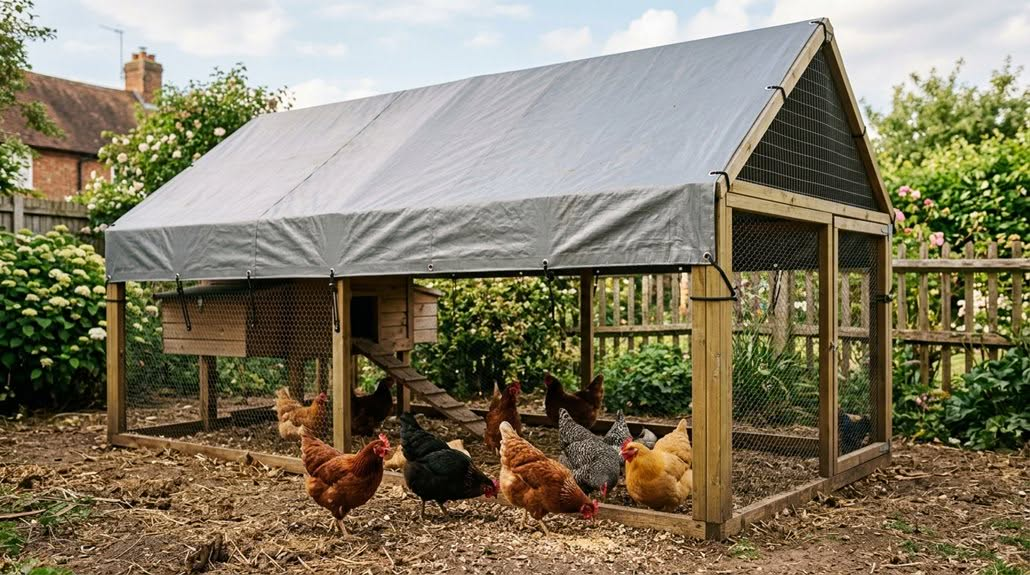

Quick Answer: Yes, healthy adult chickens can safely go all night without food and water. Chickens naturally sleep through the night without eating or drinking, typically for 8-12 hours depending on the season. However, baby chicks under 6 weeks old, chickens in extreme heat, and birds that are sick or stressed may need overnight access to water to prevent dehydration and health complications.
Key Takeaways
- Adult chickens naturally fast overnight and do not eat or drink while roosting, making overnight food and water removal safe for healthy birds
- Baby chicks need 24/7 water access until at least 6 weeks old because their small bodies dehydrate quickly
- Extreme temperatures change the rules: chickens need overnight water when temperatures exceed 85°F or during heat waves
- Most backyard chicken keepers remove food at night to prevent rodents but keep water available during hot weather
- Chickens drink most actively in early morning and may consume up to 50% of their daily water intake in the first two hours after waking
- Frozen waterers in winter are common and healthy adult chickens can wait until morning for fresh water if temperatures drop below freezing overnight
- Coop placement matters: keeping food and water outside the coop reduces moisture, ammonia buildup, and pest problems
- Watch for warning signs: chickens that don’t drink in the morning, have pale combs, or show lethargy may be dehydrated from overnight water deprivation
How Long Can Chickens Survive Without Water?
Adult chickens can survive approximately 48-72 hours without water under moderate temperatures, but survival time drops dramatically in hot weather. Chickens can tolerate a single overnight period (8-12 hours) without water with no ill effects, but going longer than 24 hours without water causes measurable stress, reduced egg production, and potential organ damage.
The key factors that determine how long chickens can go without water include:
- Ambient temperature: At 95°F or above, chickens may show signs of heat stress within 4-6 hours without water
- Humidity levels: High humidity reduces a chicken’s ability to cool through panting, increasing water needs
- Age and size: Smaller birds and chicks dehydrate faster than large adult chickens
- Activity level: Free-ranging chickens need more water than confined birds
- Diet composition: Chickens eating dry feed need more water than those consuming fresh vegetables or kitchen scraps
Common mistake: Assuming chickens will be fine for a full weekend without water. Even healthy adult chickens should never go more than 24 hours without fresh water access, regardless of temperature.
Is It Okay to Lock Chickens in Coop at Night Without Food?
Yes, locking chickens in their coop at night without food is perfectly safe and actually recommended by most poultry experts. Chickens do not eat during the night because they cannot see well in darkness and naturally fast while roosting from dusk until dawn.
Removing or restricting nighttime food access offers several benefits:
- Reduces rodent attraction: Mice and rats are nocturnal and will raid feeders left in coops overnight
- Prevents feed spoilage: Moisture from chicken droppings and respiration can make feed moldy
- Discourages pecking order disputes: Dominant birds cannot guard food resources in the dark
- Maintains cleaner coops: Less feed means less waste and scattered grain in bedding
Most backyard chicken keepers place feeders outside the coop in a covered run area, making them accessible only during daylight hours. This setup naturally limits feeding to active hours without requiring manual removal each evening.
Decision rule: Keep food outside the coop if you have a secure run. If your chickens are confined to the coop 24/7, place feeders inside but expect more frequent cleaning and potential pest issues.
Do Chickens Need Water Available 24 Hours a Day?
Healthy adult chickens do not need water available 24 hours a day under normal conditions, but continuous access is ideal for optimal health and egg production. Chickens naturally do not drink at night, so removing water after dark and providing it again at first light meets their biological needs without issue.
However, certain situations require 24-hour water access:
When chickens need overnight water:
- Temperatures above 85°F during the day or 70°F at night
- Heat waves or high humidity conditions
- Chickens showing signs of heat stress (panting, wings held away from body)
- Sick or recovering birds that may drink at unusual times
- Broody hens that leave the nest briefly at night
- Newly introduced chickens still adjusting to coop routines
When overnight water is optional:
- Moderate temperatures (40-75°F)
- Healthy, established flocks with predictable routines
- Winter conditions where water would freeze solid overnight
- Coops with significant moisture or ammonia problems
For more guidance on maintaining proper chicken water management year-round, consider your specific climate and flock health status.
What Happens If Chickens Don’t Have Water Overnight?
If healthy adult chickens don’t have water overnight for a single night under moderate temperatures, typically nothing negative happens. Chickens naturally fast and do not drink while roosting, so an 8-12 hour period without water aligns with their normal behavior and causes no physiological stress.
However, repeated nights without water or overnight deprivation during hot weather can cause:
- Reduced egg production: Hens may skip laying or produce smaller eggs
- Dehydration symptoms: Pale combs, sunken eyes, lethargy, and reduced appetite
- Increased morning water consumption: Chickens may drink excessively and quickly, potentially causing crop issues
- Weakened immune response: Chronic mild dehydration makes chickens more susceptible to disease
- Heat stress complications: In hot weather, overnight dehydration compounds daytime heat exposure
Edge case: Chickens that free-range extensively during the day and consume moisture-rich foods like grapes, carrots, or bananas may tolerate overnight water deprivation better than birds on dry feed only.
Should I Put Food and Water Inside the Chicken Coop at Night?
Most experienced chicken keepers recommend keeping both food and water outside the coop in a covered run area rather than inside the sleeping quarters. Chickens do not eat or drink at night, so placing these resources inside the coop creates problems without providing benefits.
Reasons to keep food and water outside the coop:
- Moisture control: Water spills increase humidity and ammonia levels in enclosed coops
- Pest prevention: Rodents and wild birds cannot access feeders in secure runs
- Cleaner bedding: Less trampled feed and water means drier, healthier litter
- Better ventilation: Reduced moisture improves air quality and prevents respiratory issues
- Easier maintenance: Feeders and waterers stay cleaner when separated from roosting areas
Exceptions when inside placement makes sense:
- You have no covered run and chickens must stay in the coop during the day
- Extreme cold makes outdoor waterers freeze immediately
- Predator pressure prevents safe run access during early morning hours
- You’re using automatic waterers that require indoor installation
Quick tip: If you must keep water inside during hot weather, use a nipple waterer mounted on the wall rather than an open container to minimize spills and moisture.
Can Baby Chicks Go Without Water at Night?
No, baby chicks should never go without water at night. Chicks under 6 weeks old need continuous 24-hour access to fresh water because their small body size, high metabolic rate, and rapid growth make them extremely vulnerable to dehydration.
Critical differences between chicks and adult chickens:
| Factor | Baby Chicks (0-6 weeks) | Adult Chickens |
|---|---|---|
| Dehydration timeline | 4-8 hours can be fatal | 48-72 hours to serious risk |
| Overnight water needs | Required 24/7 | Optional in moderate weather |
| Body temperature regulation | Poor, depends on external heat | Excellent self-regulation |
| Water-to-body-weight ratio | Higher, lose moisture faster | Lower, retain moisture better |
| Nighttime activity | May move and drink under heat lamp | Completely inactive while roosting |
Age-based water guidelines:
- 0-2 weeks: Check water every 4-6 hours, including overnight; chicks may drink at any time under heat lamp
- 3-6 weeks: Continue 24-hour access but can tolerate brief (2-3 hour) gaps if necessary
- 7-12 weeks: Transition to adult schedule; can go overnight without water if temperatures are moderate
- 12+ weeks: Treat as adult chickens with seasonal water management
Common mistake: Assuming chicks follow the same overnight fasting pattern as adult chickens. Chicks remain active under heat lamps and will drink throughout the night.
Chickens Not Drinking Water in the Morning After Night
If chickens don’t drink water enthusiastically first thing in the morning, this signals a potential health problem or water quality issue. Healthy chickens typically consume 30-50% of their daily water intake within the first two hours after leaving the roost, making morning drinking behavior an excellent health indicator.
Possible reasons for reduced morning water consumption:
- Water quality problems: Dirty, algae-filled, or frozen water that chickens refuse to drink
- Illness or parasites: Sick chickens often show reduced thirst as an early symptom
- Dehydration from previous day: Severely dehydrated chickens may be too weak to drink normally
- Waterer placement issues: New waterer location or type that chickens haven’t learned to use
- Bullying at the waterer: Dominant birds preventing others from accessing water
- Crop impaction: Chickens with blocked crops cannot drink normally
Troubleshooting steps:
- Check water freshness and cleanliness immediately
- Observe each chicken individually for signs of illness (lethargy, pale comb, closed eyes)
- Verify waterer is functioning correctly (nipples not stuck, water flowing freely)
- Offer water in multiple locations to rule out territorial disputes
- Monitor throughout the day; healthy chickens should drink within 30 minutes of waking
When to worry: If multiple chickens ignore water for more than 1-2 hours after dawn, or if individual birds show other symptoms like drooping wings or isolation from the flock, consult a veterinarian experienced in poultry care.
Do Chickens Eat and Drink at Night or Just Sleep?
Chickens just sleep at night and do not eat or drink during darkness. Chickens have poor night vision and become essentially inactive from dusk until dawn, remaining motionless on their roosts for 8-12 hours depending on the season and daylight length.
Why chickens don’t eat or drink at night:
- Vision limitations: Chickens cannot see well enough in darkness to locate food or water safely
- Natural circadian rhythm: Chickens are diurnal (daytime active) with strong biological drives to roost at sunset
- Digestive rest period: The overnight fast allows the digestive system to process the day’s food intake
- Predator avoidance: Remaining still and silent on roosts reduces detection by nocturnal predators
- Energy conservation: Sleeping conserves energy for egg production and daytime foraging
Rare exceptions:
- Chickens may briefly shift position on roosts but won’t leave to eat or drink
- Broody hens occasionally leave nests for 10-15 minutes at night but this is uncommon
- Chickens disturbed by predators or loud noises may move but won’t feed
- Artificial lighting can disrupt natural rhythms and cause abnormal nighttime activity
This natural overnight fasting pattern is why removing food at night causes no welfare concerns and why water deprivation overnight is tolerable for healthy adult birds under normal conditions.
Common Mistakes When Feeding Chickens at Night
The most common mistake when managing nighttime chicken feeding is leaving food accessible inside the coop overnight, which attracts rodents and creates sanitation problems without benefiting the chickens. Since chickens don’t eat at night, any food left in the coop serves only to feed pests.
Top nighttime feeding mistakes to avoid:
- Placing feeders inside the coop: Creates moisture, attracts pests, and wastes feed that gets soiled by droppings
- Leaving feeders uncovered outdoors: Rain and dew spoil feed, and wild birds consume or contaminate it
- Overfeeding before dark: Excess feed left in runs overnight attracts raccoons, opossums, and rats
- Ignoring seasonal changes: Winter’s shorter days mean earlier feeding cutoff times
- Mixing water and feed locations: Chickens splash water into nearby feeders, causing mold
- Using feeders that spill easily: Scattered grain on coop floors attracts rodents and creates waste
- Forgetting to check feed before dark: Empty feeders at dusk mean hungry chickens all evening and morning
Best practices for nighttime feeding management:
- Remove or cover outdoor feeders at dusk if rodent pressure is high
- Use treadle feeders that close automatically, preventing pest access
- Establish a consistent feeding schedule so chickens eat their fill before roosting
- Store feed in metal containers, never in the coop or run overnight
- Clean up any spilled feed from runs before locking chickens in for the night
For more comprehensive guidance on chicken nutrition and feeding schedules, consider your flock’s specific needs and local pest challenges.
Automatic Chicken Waterer for Overnight Use
Automatic chicken waterers designed for overnight use fall into two main categories: nipple waterers and float-valve systems. Both provide continuous water access without the spills and contamination common with open containers, making them ideal for hot weather or situations requiring 24-hour water availability.
Nipple waterer systems:
- Chickens peck a metal pin to release water drops
- Minimal spillage keeps coops dry
- Can freeze in winter, limiting cold-weather use
- Requires training period for chickens to learn the system
- Best for: Year-round use in moderate climates, inside coop installation
Float-valve automatic waterers:
- Self-refilling from a water source (bucket, tank, or plumbed line)
- Maintains constant water level in a small cup or trough
- More prone to spillage than nipples but easier for chickens to use
- Can accommodate multiple chickens drinking simultaneously
- Best for: Outdoor run installation, hot climates, large flocks
Heated waterer options for winter:
- Heated bases prevent freezing down to -20°F
- Thermostatically controlled to activate only when needed
- Higher electricity cost but ensures water access in extreme cold
- Essential for overnight water access in northern climates during winter
Decision rule: Choose nipple waterers for inside-coop installation where spillage must be minimized. Choose float-valve systems for outdoor runs where multiple chickens need simultaneous access and occasional spills are acceptable.
How Hot Does It Need to Be for Chickens to Need Overnight Water?
Chickens need overnight water access when daytime temperatures exceed 85°F or nighttime temperatures remain above 70°F. At these temperatures, chickens experience ongoing heat stress that continues after sunset, and they may drink during evening hours before fully settling on roosts.
Temperature-based water guidelines:
- Below 75°F: Overnight water optional for healthy adult chickens
- 75-85°F: Provide overnight water if chickens show any heat stress during the day
- 85-95°F: Overnight water strongly recommended for all chickens
- Above 95°F: Overnight water essential; check multiple times daily for adequate supply
Additional factors that increase overnight water needs:
- High humidity: Heat index above 90°F requires overnight water regardless of actual temperature
- Poor coop ventilation: Stuffy coops trap heat and increase nighttime water needs
- Black or dark-feathered breeds: Absorb more heat and need more water than light-colored birds
- Heavy breeds: Large birds like Brahmas and Orpingtons struggle more with heat
- Molting chickens: Growing new feathers increases metabolic demands and water needs
For detailed strategies on keeping chickens cool during extreme heat, consider both daytime and overnight water management as part of a comprehensive heat-stress prevention plan.
Quick tip: If you’re uncomfortable sleeping without water nearby, your chickens probably need overnight water access too. Use your own comfort level as a rough guide during heat waves.
Will Chickens Be Okay If Waterer Freezes at Night?
Yes, healthy adult chickens will be okay if their waterer freezes at night, provided you supply fresh water first thing in the morning. Chickens naturally do not drink overnight, so frozen water during darkness causes no harm as long as liquid water becomes available at dawn when chickens wake and begin their daily routine.
Winter water management strategies:
- Morning priority: Provide fresh water within 30 minutes of sunrise
- Multiple daily water changes: Bring out warm water 2-3 times daily to extend liquid availability
- Heated waterers: Invest in thermostatically controlled bases for consistent access
- Insulated containers: Use rubber or insulated waterers that freeze more slowly than metal
- Strategic placement: Position waterers in sunny spots that thaw naturally during the day
Temperature thresholds for frozen waterers:
- Above 32°F: Water remains liquid; no special measures needed
- 20-32°F: Water may freeze overnight but thaws during the day
- 0-20°F: Water freezes quickly; requires heated waterer or multiple daily changes
- Below 0°F: Heated waterer essential unless you can provide fresh water every 3-4 hours
Common mistake: Worrying excessively about overnight frozen water while neglecting to provide fresh water promptly at dawn. The morning water supply is far more critical than overnight access during freezing weather.
Edge case: Chickens confined to coops 24/7 during blizzards or extreme cold need a heated waterer inside the coop to ensure access during extended confinement periods. For guidance on winter chicken keeping, consider your region’s typical winter severity.
Difference Between Adult Chickens and Chicks Water Needs Overnight
The fundamental difference between adult chickens and chicks regarding overnight water needs is that adult chickens can safely fast for 8-12 hours while chicks cannot go more than 4-6 hours without risking dehydration and death. This difference stems from body size, metabolic rate, and thermoregulation capabilities.
Physiological differences affecting water needs:
Adult chickens (12+ weeks):
- Large body mass retains moisture effectively
- Fully developed feathers provide insulation
- Efficient thermoregulation maintains stable body temperature
- Lower metabolic rate relative to body size
- Inactive at night, reducing water loss through respiration
Baby chicks (0-6 weeks):
- Tiny body mass loses moisture rapidly
- Incomplete feathering requires external heat source
- Poor thermoregulation depends on brooder temperature
- High metabolic rate for rapid growth
- May remain active under heat lamp, continuing to drink
Practical management differences:
| Management aspect | Adult chickens | Baby chicks |
|---|---|---|
| Water check frequency | Once at dawn, once at dusk | Every 4-6 hours including overnight |
| Overnight water requirement | Optional in moderate weather | Mandatory 24/7 |
| Waterer type | Standard or automatic | Shallow chick-specific waterers |
| Waterer placement | Outside coop in run | Inside brooder near heat source |
| Temperature monitoring | General comfort | Critical; affects water consumption |
Transition period (7-12 weeks): Adolescent chickens gradually develop adult water-management capabilities. During this phase, provide 24-hour water access but monitor to ensure they’re developing normal overnight fasting behavior.
FAQ
Can chickens go 12 hours without water?
Yes, healthy adult chickens can safely go 12 hours without water under moderate temperatures (40-75°F). This duration matches their natural overnight fasting period from dusk to dawn. However, baby chicks, sick chickens, or birds in hot weather (above 85°F) should not go more than 4-6 hours without water access.
Should I lock my chickens in the coop at night?
Yes, you should lock chickens in their coop at night to protect them from nocturnal predators like raccoons, foxes, and owls. Chickens have poor night vision and cannot defend themselves or flee effectively in darkness, making them extremely vulnerable to predation if left in open runs overnight.
Do chickens drink water at night?
No, chickens do not drink water at night under normal circumstances. Chickens are diurnal and remain motionless on roosts from dusk until dawn, neither eating nor drinking during darkness. Their poor night vision prevents them from safely navigating to food or water sources.
How long can chickens go without food?
Adult chickens can survive 3-5 days without food, though this causes significant stress and health problems. A single overnight fast of 8-12 hours is completely natural and healthy. Baby chicks should never go more than 8 hours without food access during their first few weeks of life.
What temperature is too hot for chickens at night?
Nighttime temperatures above 70°F can cause heat stress in chickens, especially if combined with high humidity or poor ventilation. When nighttime temperatures exceed 70°F, provide overnight water access and ensure adequate coop ventilation to help chickens regulate their body temperature.
Can I leave my chickens for a weekend?
Healthy adult chickens can be left for a weekend (48 hours) if you provide adequate food and water before leaving, but this is the maximum safe duration. Use large-capacity feeders and waterers, ensure predator-proof housing, and have a neighbor check on them if possible. Never leave baby chicks unattended for more than 8-12 hours.
Why are my chickens not drinking water in the morning?
Chickens that don’t drink water in the morning may be experiencing water quality issues, illness, waterer malfunction, or bullying from dominant flock members. Healthy chickens drink heavily within 30 minutes of waking. Check water cleanliness, observe for signs of illness, and ensure all chickens can access the waterer without interference.
Do chickens need light at night?
No, chickens do not need light at night and actually require darkness for proper rest and hormone regulation. Chickens need 8-12 hours of darkness daily for optimal health. Artificial lighting at night disrupts their natural circadian rhythm and can cause stress, reduced immunity, and abnormal behavior.
How much water does a chicken drink per day?
Adult chickens drink approximately 1-2 cups (250-500ml) of water per day under moderate temperatures, but consumption can double or triple during hot weather. Laying hens drink more than non-layers, and water consumption increases significantly when temperatures exceed 85°F.
Should chicken feeders be inside or outside the coop?
Chicken feeders should be outside the coop in a covered run area whenever possible. This placement reduces moisture, prevents pest attraction, keeps bedding cleaner, and improves coop air quality. Only place feeders inside the coop if chickens have no access to a secure outdoor run.
Can chickens eat before bed?
Yes, chickens can and should eat before bed. Chickens naturally fill their crops in the evening before roosting, providing energy reserves for the overnight fast. However, remove or secure any uneaten feed after chickens roost to prevent attracting rodents and other pests to the coop area.
What happens if chickens run out of water during the day?
If chickens run out of water during the day, they quickly become stressed, stop laying eggs, and begin showing signs of dehydration within 4-6 hours in hot weather. Severe dehydration can cause organ damage and death within 24-48 hours. Always ensure chickens have continuous water access during daylight hours.
Conclusion
Healthy adult chickens can safely go all night without food and water because they naturally fast while roosting from dusk until dawn. This 8-12 hour period without eating or drinking aligns perfectly with their biological rhythms and causes no health problems under normal conditions. However, baby chicks under 6 weeks old require 24-hour water access, and adult chickens need overnight water during heat waves when temperatures exceed 85°F during the day or 70°F at night.
The key to successful overnight chicken management is understanding that chickens are diurnal creatures with poor night vision who remain completely inactive while roosting. They consume most of their daily water intake in the first few hours after waking, making morning water availability far more critical than overnight access. Most experienced chicken keepers keep food and water outside the coop in covered runs, naturally limiting access to daylight hours while maintaining cleaner, drier, and pest-free sleeping quarters.
Action steps for optimal overnight chicken care:
- Provide fresh water first thing every morning, especially after hot days or cold nights with frozen waterers
- Keep food and water outside the coop unless chickens are confined 24/7 or temperatures require overnight water access
- Monitor baby chicks separately with continuous 24-hour water access until at least 6 weeks old
- Install automatic or heated waterers if you live in extreme climates or cannot provide morning water consistently
- Watch for morning drinking behavior as a health indicator; chickens that don’t drink within 30 minutes of waking may be ill
- Adjust your routine seasonally, providing overnight water during summer heat waves and accepting frozen waterers during winter nights
By aligning your management practices with chickens’ natural overnight fasting behavior while remaining attentive to age, temperature, and health factors, you’ll maintain a healthy, productive flock without unnecessary worry about overnight food and water access. For more guidance on chicken welfare and seasonal care, continue learning about your flock’s specific needs throughout the year.