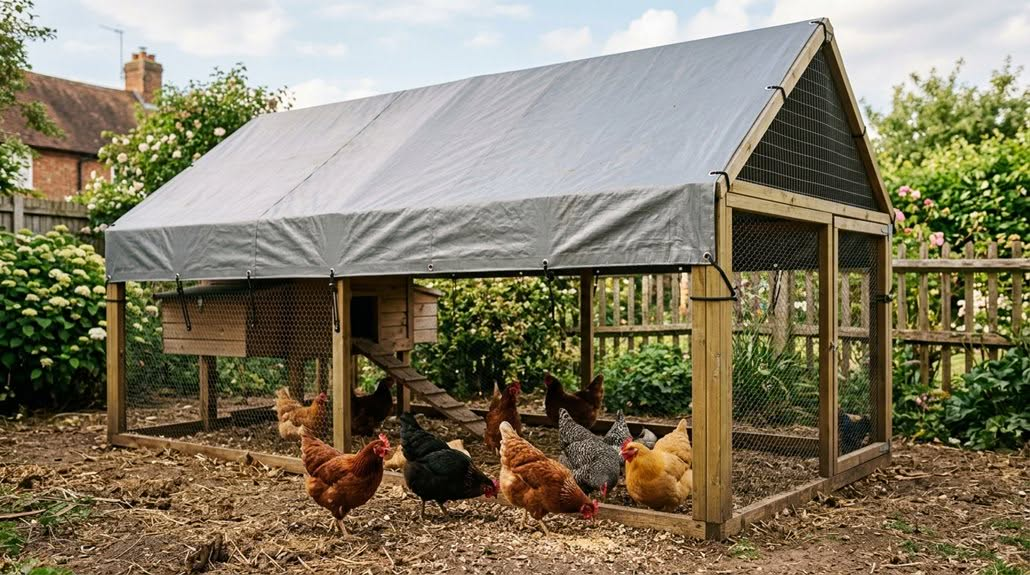

Quick Answer: The price gap between cheap and expensive chicken coops reflects differences in materials, construction quality, predator protection, and longevity. Budget coops ($150-400) typically use thin plywood and basic hardware that may last 2-4 years, while premium coops ($1,000-2,500) feature rot-resistant cedar, reinforced predator barriers, and can last 10-15 years or more. The real cost difference shows up in durability, maintenance needs, and how well your flock stays safe from predators and weather.
Key Takeaways
- Material quality drives most of the price difference: cheap coops use thin plywood and chicken wire, while expensive models feature cedar, pressure-treated lumber, and galvanized hardware cloth
- Budget coops ($150-400) typically last 2-4 years and require frequent repairs, while premium coops ($1,000-2,500) can last 10-15 years with minimal maintenance
- Predator protection is where cheap coops fail most often: flimsy latches, gaps in construction, and weak wire mesh allow raccoons, foxes, and other predators easy access
- Mid-range coops ($500-800) offer the best value for most backyard chicken keepers, balancing decent materials with reasonable longevity
- Cleaning ease varies dramatically: expensive coops include removable trays, proper ventilation, and thoughtful access doors that save hours of maintenance time
- You can upgrade a cheap coop over time, but the total cost often exceeds buying a quality coop upfront
- For a flock of 6 chickens, expect to spend $600-1,200 for a coop that balances quality and budget
What Makes Expensive Chicken Coops Cost More Than Cheap Ones
Expensive chicken coops cost more because they use superior materials, better construction methods, and include features that extend lifespan and reduce maintenance. The price premium pays for rot-resistant wood like cedar or redwood, heavy-gauge galvanized hardware cloth instead of chicken wire, and professional joinery techniques that create weather-tight seals.
Here’s where your money goes in a premium coop:
- Wood quality: Cedar, redwood, or pressure-treated lumber vs. thin untreated pine or plywood
- Hardware: Galvanized steel latches, hinges, and predator-proof locks vs. basic hook-and-eye closures
- Wire mesh: 1/2-inch or 1/4-inch hardware cloth vs. flimsy chicken wire that predators tear through
- Roof construction: Shingled, waterproof roofing with proper overhang vs. thin metal or plastic that leaks
- Joinery: Mortise-and-tenon or pocket-screw construction vs. staples and basic nails
- Paint/stain: Weather-resistant finishes that protect wood vs. no finish or cheap paint that peels
- Ventilation design: Properly placed vents with predator-proof covers vs. inadequate airflow
- Access features: Multiple doors, removable dropping trays, and egg collection boxes vs. single entry point
Common mistake: Assuming all wood coops are equal. A $300 coop with “real wood” often uses 1/4-inch plywood that warps and rots within two years, while a $1,500 coop uses 3/4-inch cedar boards that resist decay for over a decade.
Is a Cheap Chicken Coop Good Enough for Backyard Chickens
A cheap chicken coop can work for backyard chickens if you’re willing to invest time in modifications and accept a shorter lifespan. Budget coops are adequate for beginners testing chicken keeping or for temporary housing, but they rarely provide sufficient predator protection or weather resistance without upgrades.
When a cheap coop works:
- You have minimal predator pressure in your area
- The coop will be placed under a covered area or shed
- You’re handy and can reinforce weak points immediately
- You’re keeping chickens temporarily or as a trial run
- You plan to upgrade within 1-2 years
When you should spend more:
- You live in areas with raccoons, foxes, coyotes, or hawks
- Your climate includes harsh winters, heavy rain, or extreme heat
- You want a coop that lasts 5+ years without major repairs
- You lack time or skills for frequent maintenance and repairs
- You’re keeping heritage breeds or expensive chickens
The biggest risk with cheap coops is predator loss. A single raccoon attack can kill an entire flock in one night if the coop has weak latches or gaps in the wire mesh. That emotional and financial cost often exceeds the money saved on a budget coop.
How Long Do Cheap Chicken Coops Last Compared to Expensive Ones
Cheap chicken coops typically last 2-4 years before requiring major repairs or replacement, while expensive coops can last 10-15 years or more with basic maintenance. The lifespan difference comes down to material quality, construction methods, and how well the coop withstands weather exposure and daily wear.
Budget coop lifespan ($150-400):
- 2-4 years average before structural failure
- Plywood begins delaminating after first winter
- Hardware rusts and breaks within 18-24 months
- Roof leaks develop in first year
- Floor rot common by year 3
Mid-range coop lifespan ($500-900):
- 5-8 years with regular maintenance
- Pressure-treated lumber resists rot longer
- Better hardware lasts 4-5 years before replacement
- Roof may need re-sealing every 3-4 years
- Floor holds up if kept dry and clean
Premium coop lifespan ($1,000-2,500):
- 10-15+ years with minimal maintenance
- Cedar or redwood naturally resist rot and insects
- Galvanized hardware lasts the life of the coop
- Quality roofing rarely needs replacement
- Solid construction maintains structural integrity
Real-world example: A $250 Amazon coop required $180 in repairs (new roof, reinforced wire, replaced floor) by year 2, then collapsed in year 4. Total cost: $430 for 4 years. An $800 mid-range coop needed only $50 in minor repairs over 7 years and is still in use. Cost per year: $121 vs. $108, plus the premium coop continues serving the flock.
What Materials Are Used in Expensive vs Cheap Chicken Coops
Cheap chicken coops use thin plywood (1/4-inch), untreated pine, chicken wire, and basic hardware, while expensive coops feature cedar or redwood lumber (3/4-inch or thicker), galvanized hardware cloth, and commercial-grade fasteners. The material difference directly impacts durability, predator resistance, and weather protection.
Budget coop materials:
- 1/4-inch to 3/8-inch plywood or OSB (oriented strand board)
- Untreated pine or fir framing
- Chicken wire (thin, easily torn by predators)
- Basic hook-and-eye latches
- Thin corrugated metal or plastic roofing
- Staples and small nails for assembly
- No weather-resistant finish
Premium coop materials:
- 3/4-inch cedar, redwood, or pressure-treated lumber
- Solid wood boards instead of plywood
- 1/2-inch or 1/4-inch galvanized hardware cloth
- Spring-loaded or carabiner-style predator-proof locks
- Asphalt shingles or metal roofing with proper underlayment
- Deck screws, lag bolts, and reinforced joinery
- Weather-resistant stain or paint
Why it matters: Chicken wire has 1-inch hexagonal openings that raccoons easily tear apart or reach through to grab chickens. Hardware cloth has 1/2-inch or smaller square openings made from heavier gauge wire that predators cannot penetrate. This single material difference prevents most predator losses.
For more guidance on chicken coop planning and coop design, check out our detailed resources.
Do Expensive Chicken Coops Protect Chickens Better From Predators
Expensive chicken coops provide significantly better predator protection through reinforced construction, quality hardware cloth, secure locking mechanisms, and proper design that eliminates entry points. Budget coops often have gaps, weak wire, and simple latches that raccoons, foxes, and other predators easily defeat.
Predator vulnerabilities in cheap coops:
- Chicken wire tears easily and has openings large enough for predators to reach through
- Hook-and-eye latches that raccoons open with their dexterous paws
- Gaps between panels where wood warps or construction is sloppy
- Thin floors that predators dig under or chew through
- Inadequate run coverage allowing hawks and owls access
- Weak hinges that predators pry open
Predator protection in premium coops:
- 1/2-inch hardware cloth on all openings, including ventilation
- Spring-loaded latches or carabiner locks that require opposable thumbs
- Tight joinery with no gaps larger than 1/4 inch
- Solid floors or hardware cloth buried 12-18 inches underground
- Covered runs with overhead protection
- Reinforced corners and edges predators target
Critical upgrade: If you buy a cheap coop, immediately replace all chicken wire with 1/2-inch hardware cloth and upgrade to spring-loaded latches. These two modifications prevent 80-90% of predator losses and cost $60-100 depending on coop size.
Learn more about chicken coop safety to keep your flock secure.
Cheap Chicken Coop vs Expensive: Which Is Easier to Clean
Expensive chicken coops are significantly easier to clean because they include removable dropping trays, multiple access doors, proper ventilation, and thoughtful design that reduces labor time. Budget coops typically have single entry points, no dropping trays, and awkward layouts that make weekly cleaning a frustrating chore.
Cleaning features in budget coops:
- Single small door requiring you to crawl inside
- No dropping tray (must scrape floor manually)
- Poor ventilation leading to ammonia buildup
- Nesting boxes accessed only from inside
- Roosting bars difficult to remove or clean under
Cleaning features in premium coops:
- Multiple access doors at convenient heights
- Slide-out dropping trays under roosting bars
- External nesting box access for egg collection
- Proper ventilation reducing moisture and odor
- Removable roosting bars for deep cleaning
- Smooth interior surfaces that don’t trap debris
Time comparison: Cleaning a budget coop takes 30-45 minutes weekly because you must enter the coop, manually scrape droppings, and work in cramped spaces. A well-designed premium coop with a dropping tray takes 10-15 minutes: slide out the tray, dump into compost, spray clean, and slide back in.
For detailed maintenance tips, visit our guide on chicken coop cleaning.
What Features Do You Get With a $500 Chicken Coop vs a $2000 One
A $500 chicken coop typically includes basic shelter with pressure-treated lumber, standard hardware cloth, and minimal features, while a $2,000 coop offers cedar construction, automatic doors, superior ventilation, extensive run space, and premium hardware that simplifies daily care. The feature gap centers on convenience, durability, and thoughtful design.
$500 mid-range coop features:
- Pressure-treated or basic cedar frame
- 1/2-inch hardware cloth on windows and vents
- Manual doors with decent latches
- Basic nesting boxes (2-3 boxes)
- Simple roosting bars
- Asphalt shingle roof
- Houses 4-6 chickens comfortably
- Some ventilation (may need improvement)
- 1-2 access doors
- Basic run attachment (often needs reinforcement)
$2,000 premium coop features:
- Full cedar or redwood construction
- 1/4-inch hardware cloth throughout
- Automatic door opener with timer or light sensor
- Insulated walls for temperature control
- Multiple large nesting boxes with external access
- Removable dropping trays
- Superior ventilation with adjustable vents
- Houses 6-10 chickens with generous space
- 3-4 access doors at various heights
- Large covered run with buried predator barrier
- Built-in storage for feed and supplies
- Decorative elements and curb appeal
Choose the $500 range if: You’re a beginner, have a small flock (4-6 birds), are handy enough to make minor improvements, and want to test chicken keeping before committing to premium housing.
Choose the $2,000 range if: You’re committed to long-term chicken keeping, want minimal maintenance, have a larger flock (8-12 birds), lack time for frequent repairs, or live in areas with extreme weather or heavy predator pressure.
Are Expensive Chicken Coops Worth It for Beginners
Expensive chicken coops are worth it for beginners who are committed to keeping chickens long-term and want to avoid the learning curve of repairs and predator losses. However, a mid-range coop ($600-900) often provides better value for new chicken keepers who are still learning flock management and may adjust their setup as they gain experience.
When beginners should invest in premium coops:
- You’ve researched chicken keeping for 6+ months and are certain about the commitment
- You lack carpentry skills or time for DIY repairs
- Your area has significant predator pressure
- You’re keeping expensive heritage breeds or show birds
- You want a coop that matches your home’s aesthetic
- You plan to keep chickens for 10+ years
When beginners should start with mid-range:
- You’re testing whether chicken keeping fits your lifestyle
- You’re handy and enjoy DIY projects
- You may expand or change your flock size
- You want to learn coop management before investing heavily
- Your budget is limited but you can afford quality basics
Smart beginner strategy: Buy a quality mid-range coop ($600-900) that includes solid construction and predator protection, then add premium features like automatic doors, better ventilation, or dropping trays as you learn what matters most for your specific situation and climate.
Many beginners also benefit from understanding chicken housing basics before making a major purchase.
Common Problems With Cheap Chicken Coops From Amazon
Cheap chicken coops from Amazon commonly suffer from warped wood, inadequate predator protection, poor ventilation, misleading size claims, and difficult assembly with missing or incorrect hardware. These coops often arrive with thin materials that deteriorate within months and require immediate modifications to keep chickens safe.
Top problems reported by buyers:
- Warped and split wood: Thin plywood arrives already warped or splits during assembly
- Undersized dimensions: “Fits 4-6 chickens” coops barely accommodate 2-3 birds comfortably
- Chicken wire instead of hardware cloth: Predators easily tear through or reach inside
- Flimsy latches: Simple hooks that raccoons open on first attempt
- Poor instructions: Missing steps, incorrect diagrams, or no instructions at all
- Missing hardware: Screws, hinges, or essential parts not included
- Inadequate ventilation: Leads to respiratory issues and ammonia buildup
- Leaky roofs: Thin metal or plastic roofing that doesn’t seal properly
- Unstable structure: Wobbles or tips in moderate wind
- No weatherproofing: Untreated wood that rots after first rain
Real buyer experience: A popular $280 Amazon coop with 4-star reviews required buyers to immediately spend $80-120 on hardware cloth replacement, better latches, roof sealant, and wood stain just to make it functional. Total cost approached mid-range coop prices without the quality.
If you already bought a cheap coop: Replace chicken wire with 1/2-inch hardware cloth, upgrade all latches to spring-loaded or carabiner style, seal the roof with waterproof coating, and add ventilation holes covered with hardware cloth. These modifications cost $60-150 but dramatically improve safety and longevity.
Best Mid-Range Chicken Coop That Balances Cost and Quality
The best mid-range chicken coops ($600-900) feature pressure-treated or cedar frames, 1/2-inch hardware cloth, solid roofing, removable dropping trays, and adequate space for 4-8 chickens. Look for coops from established brands that specialize in poultry housing rather than generic outdoor furniture companies selling chicken coops as a side product.
Key features to prioritize in mid-range coops:
- Solid wood construction: 1/2-inch or thicker boards, not thin plywood
- Hardware cloth: 1/2-inch galvanized mesh on all openings
- Quality latches: Spring-loaded or carabiner-style locks
- Proper ventilation: Adjustable vents near the roof line
- Dropping tray: Removable for easy cleaning
- Multiple access points: At least 2-3 doors for cleaning and egg collection
- Weatherproof roof: Asphalt shingles or sealed metal with overhang
- Adequate space: 3-4 square feet per chicken inside, 8-10 square feet per chicken in run
- Raised design: Elevated 12-18 inches off ground for predator protection and storage
Brands worth considering: Omlet, Carolina Coops, Horizon Structures, and local Amish builders often deliver better value than mass-market Amazon coops. Custom-built coops from local carpenters sometimes cost less than prefab premium coops while offering superior quality.
Red flags to avoid: Coops advertised as “fits 8-10 chickens” but measuring less than 32 square feet interior space, coops with chicken wire instead of hardware cloth, coops with no ventilation beyond the door, and coops with reviews mentioning “arrived damaged” or “missing parts” frequently.
For space planning, check our resource on coop space requirements.
Do Cheap Chicken Coops Need More Repairs and Maintenance
Cheap chicken coops require significantly more repairs and maintenance, typically needing major fixes every 6-12 months compared to premium coops that may go years without issues. Budget coops demand constant attention to replace rotted wood, reinforce weak points, fix leaks, and upgrade predator protection that fails repeatedly.
Common repairs needed for cheap coops:
- Year 1: Replace chicken wire with hardware cloth ($40-80), upgrade latches ($20-30), seal roof leaks ($15-40), reinforce floor ($30-60)
- Year 2: Replace rotted floor boards ($50-100), fix warped doors ($20-40), replace rusted hinges ($15-25), add ventilation ($20-40)
- Year 3: Replace roof entirely ($60-120), reinforce frame ($40-80), replace deteriorated siding ($80-150)
- Year 4: Often requires complete replacement or rebuild
Maintenance time comparison:
- Budget coop: 2-4 hours monthly on repairs plus weekly cleaning struggles
- Mid-range coop: 30-60 minutes monthly on minor maintenance plus efficient weekly cleaning
- Premium coop: 15-30 minutes monthly on basic upkeep plus quick weekly cleaning
Hidden costs: Beyond materials, cheap coops cost you time, frustration, and potential flock losses. A predator attack due to failed hardware can kill $200-500 worth of chickens in one night, plus the emotional toll of losing birds you’ve raised.
Smart approach: Calculate total cost of ownership over 5 years, not just purchase price. A $300 coop requiring $150 yearly in repairs costs $1,050 over 5 years. An $800 mid-range coop requiring $50 yearly in minor maintenance costs $1,050 over 5 years but provides better protection and easier daily care.
What Should I Not Cheap Out on When Buying a Chicken Coop
Never cheap out on predator protection (hardware cloth and locks), roof quality, and floor construction when buying a chicken coop. These three elements directly impact flock safety, coop longevity, and whether your chickens survive their first year. Skimping on these features costs more in losses and repairs than the initial savings.
Non-negotiable quality elements:
- Hardware cloth over chicken wire: The $40-60 difference prevents 90% of predator losses
- Quality locks: Spring-loaded latches ($5-8 each) vs. hook-and-eye ($1-2) prevent raccoon entry
- Solid roof: Proper shingled or sealed metal roofing ($80-150) vs. thin plastic ($20-40) prevents leaks and rot
- Treated or rot-resistant floor: Pressure-treated lumber or hardware cloth floor ($60-100) vs. thin plywood ($20-30) prevents collapse and predator entry from below
- Adequate ventilation: Proper vents with predator-proof covers ($30-60) prevent respiratory disease
Where you can save money:
- Decorative trim and aesthetic details
- Paint color and finish (basic stain works fine)
- Automatic door openers (add later if desired)
- Built-in storage (use separate containers)
- Fancy nesting box designs (simple boxes work equally well)
- Run size (can expand later)
Cost-effective strategy: Buy a structurally sound coop with excellent predator protection and weatherproofing, even if it lacks premium features. You can add automatic doors, better ventilation, or dropping trays later. You cannot easily fix a coop with a rotted floor or one that predators breach repeatedly.
Understanding prefab chicken coops helps you evaluate what features matter most.
How Much Should I Spend on a Chicken Coop for 6 Chickens
Plan to spend $600-1,200 on a chicken coop for 6 chickens to get adequate space, predator protection, and durability that lasts 5-10 years. This budget range provides 18-24 square feet of interior space (3-4 square feet per bird) plus a secure run, quality materials, and features that make daily care manageable.
Budget breakdown for 6 chickens:
Minimum viable ($600-800):
- Mid-range prefab coop with basic features
- Pressure-treated lumber construction
- 1/2-inch hardware cloth
- Manual doors with quality latches
- Basic nesting boxes and roosting bars
- Small attached run (may need expansion)
- Adequate for mild climates and low predator pressure
Recommended range ($900-1,200):
- Quality prefab or custom-built coop
- Cedar or premium pressure-treated construction
- 1/4-inch hardware cloth throughout
- Removable dropping tray
- Multiple access doors
- Larger covered run with buried predator barrier
- Better ventilation and weatherproofing
- Suitable for most climates and predator situations
Premium option ($1,500-2,000):
- Custom-built or high-end prefab
- Full cedar construction
- Automatic door opener
- Insulated walls for extreme climates
- Extensive run space
- Superior hardware and finishes
- Minimal maintenance requirements
Cost per chicken guideline: Budget $100-200 per chicken for the coop and run combined. This formula scales reasonably well from small backyard flocks (4-6 birds) to larger operations (12-20 birds), though per-bird costs decrease slightly with larger coops.
Don’t forget additional costs: Feeders ($20-40), waterers ($25-60), bedding ($15-30 monthly), feed ($25-40 monthly), and initial flock purchase ($20-50 per bird). Total first-year costs for 6 chickens typically run $1,200-1,800 including the coop.
Can I Upgrade a Cheap Chicken Coop Over Time Instead of Buying Expensive
You can upgrade a cheap chicken coop over time, but the total cost often equals or exceeds buying a quality coop initially, and you’ll still have a structure with inferior bones and shorter lifespan. Strategic upgrades work best when you start with a coop that has solid framing and adequate size but lacks premium features.
Upgrades that add value:
- Replace chicken wire with hardware cloth ($60-120): Essential first upgrade, dramatically improves predator protection
- Install spring-loaded latches ($20-40): Prevents raccoon entry, easy DIY project
- Add dropping tray ($40-80): Significantly reduces cleaning time
- Improve ventilation ($30-60): Cut additional vents and cover with hardware cloth
- Weatherproof the roof ($40-100): Add proper shingles or seal existing roof
- Install automatic door ($80-200): Adds convenience for daily opening/closing
- Expand or cover run ($100-300): Increases space and predator protection
Upgrades with poor ROI:
- Replacing thin framing lumber (labor-intensive, expensive)
- Fixing warped or rotted siding repeatedly (temporary fix)
- Rebuilding floor after rot sets in (often costs more than new coop)
- Replacing entire roof structure (not just surface)
When upgrading makes sense: You bought a coop with solid pressure-treated framing and adequate size but it came with chicken wire, basic latches, and minimal features. Spending $150-250 on strategic upgrades transforms it into a functional mid-range coop.
When upgrading doesn’t make sense: Your coop has thin plywood construction, undersized dimensions, or structural issues like warping or rot. You’ll spend $300-500 on upgrades and still have a coop that fails within 3-4 years.
Smart alternative: Sell your cheap coop while it’s still functional (many buyers accept the limitations for temporary use) and put that money toward a quality mid-range coop. A $250 coop might sell for $100-150 after one year, reducing your net loss to $100-150 rather than throwing good money after bad on upgrades.
For more tips on chicken coop management, explore our comprehensive guides.
Conclusion
Understanding where your money goes in cheap vs expensive chicken coops helps you make a smart investment that protects your flock and fits your budget. The price difference between a $300 budget coop and a $1,500 premium coop reflects real value in materials, construction quality, predator protection, and longevity that directly impacts your chickens’ safety and your daily workload.
For most backyard chicken keepers, a mid-range coop in the $600-900 range offers the best balance of quality and affordability. These coops provide solid construction, adequate predator protection, and reasonable durability without the premium price tag of luxury models.
Take action now:
- Calculate your total budget including coop, run, feeders, waterers, and first-year supplies
- Assess your predator pressure and climate challenges honestly
- Prioritize hardware cloth, quality locks, and solid roofing over aesthetic features
- If buying budget, plan immediate upgrades to predator protection (hardware cloth and latches)
- Consider local custom builders who often deliver better value than mass-market prefab coops
- Factor in your available time for maintenance and repairs when choosing price range
Remember that your chicken coop is a long-term investment in your flock’s safety and your enjoyment of chicken keeping. Spending an extra $300-500 upfront for quality construction saves money, time, and heartbreak over the coop’s lifetime. Your chickens depend on you for protection from predators, shelter from weather, and a clean living environment. Choose a coop that delivers on those essentials, and both you and your flock will thrive for years to come.