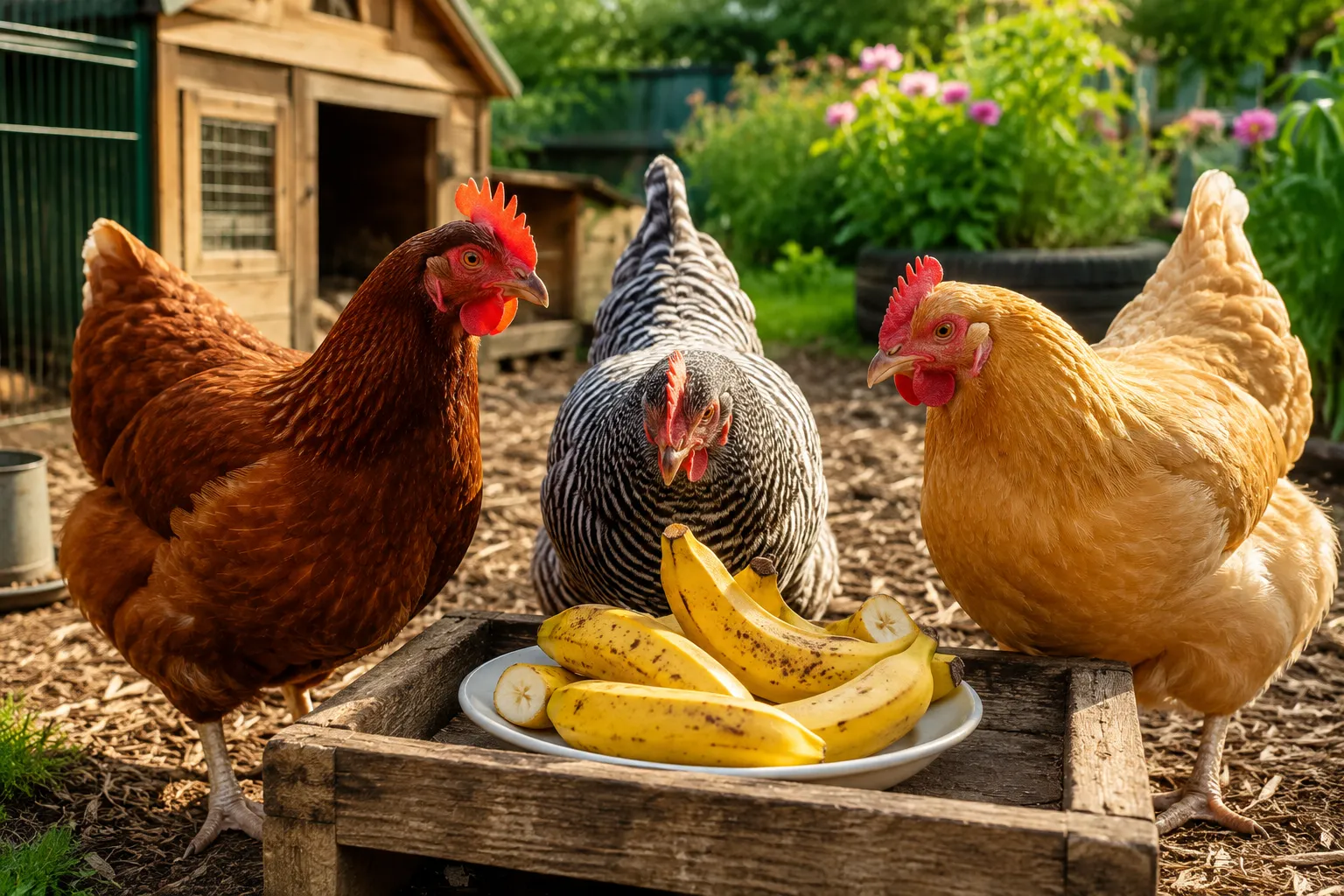
Quick Answer: Yes, chickens can safely eat bananas, including the peel, in moderation. Bananas provide potassium, vitamin B6, and natural sugars that chickens enjoy, but they should only make up a small portion of your flock’s diet, no more than 10% of their daily food intake. Overfeeding bananas can lead to digestive issues and weight gain due to their high sugar content.
Key Takeaways
- Chickens can eat all parts of a banana including the flesh, peel, and even overripe fruit
- Limit banana treats to 10% of daily diet to prevent nutritional imbalances and obesity
- Bananas are safe for adult chickens but should be mashed or cut into small pieces for baby chicks
- The peel is edible and nutritious but should be washed thoroughly and cut into manageable pieces
- Overripe bananas are perfectly safe and often easier for chickens to digest than firm ones
- Frozen bananas make excellent summer treats that help chickens cool down in hot weather
- Too many bananas can cause loose droppings due to high sugar and moisture content
- Mashing or slicing improves digestibility and prevents choking, especially for smaller birds
- Bananas don’t significantly boost egg production but contribute to overall health when fed properly
- Banana leaves and stems are safe if free from pesticides, though chickens may not prefer them
Are Bananas Safe for Chickens to Eat?
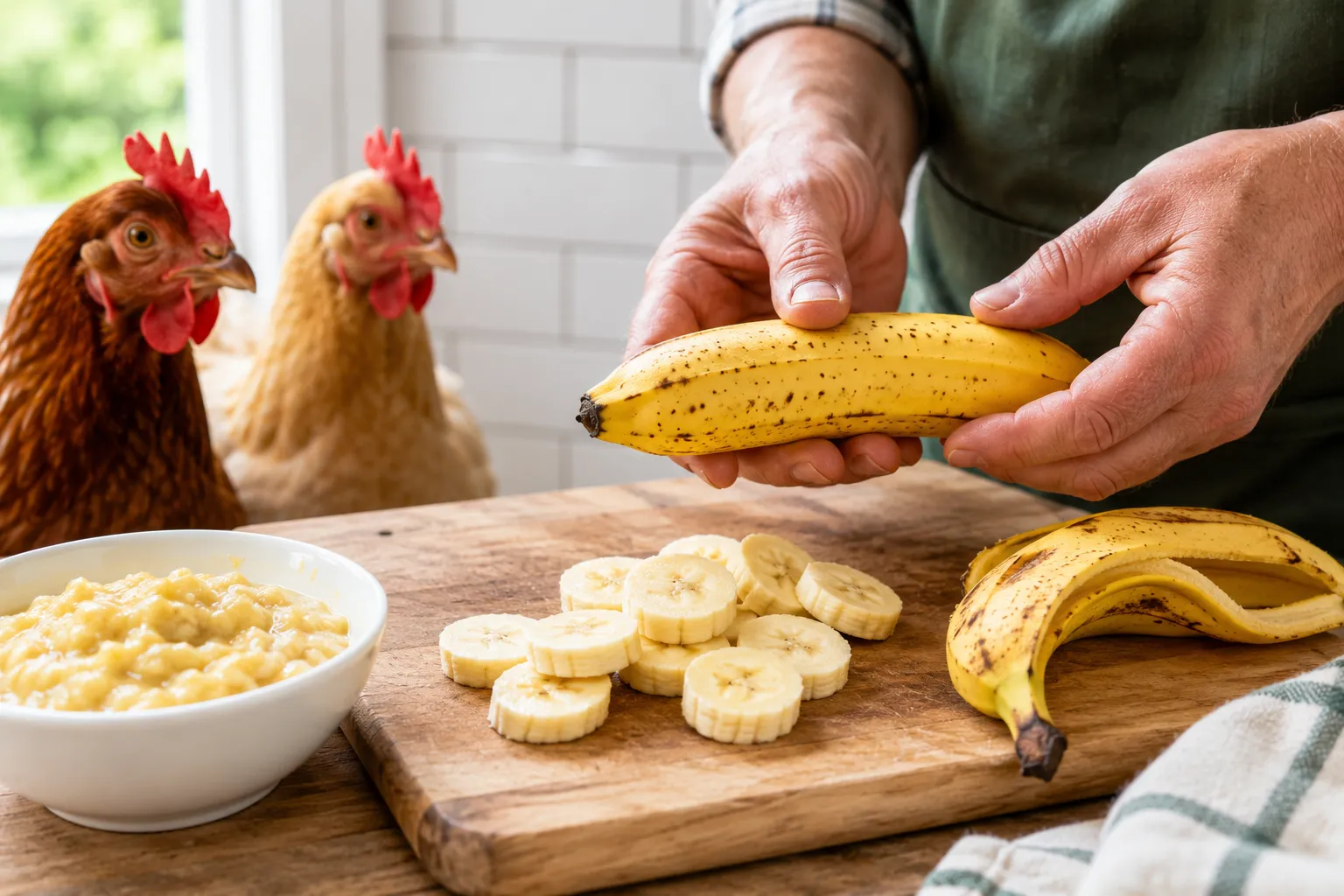
Bananas are completely safe for chickens to eat and pose no toxic risk to your flock. Unlike some fruits that contain harmful compounds (such as apple seeds with cyanide or avocado with persin), bananas are non-toxic in all their parts, flesh, peel, and even the stringy bits.
The nutritional profile of bananas makes them a beneficial occasional treat:
- Potassium: Supports muscle function and egg production
- Vitamin B6: Aids in protein metabolism and immune health
- Vitamin C: Boosts immune system function
- Fiber: Promotes healthy digestion
- Natural sugars: Provides quick energy
However, the key word is “occasional.” Bananas should never replace a chicken’s primary diet of quality layer feed, which is formulated to provide complete nutrition. Think of bananas as dessert, enjoyable and beneficial in small amounts, but problematic if they become a staple.
Common mistake to avoid: Don’t assume that because chickens love bananas, they should eat them daily. Chickens will eagerly consume treats even when it’s not in their best interest, so portion control is your responsibility as their keeper.
Can Chickens Eat Banana Peels or Just the Fruit?
Chickens can safely eat both banana peels and the fruit inside. The peel actually contains more fiber and additional nutrients compared to the flesh, including higher concentrations of potassium and antioxidants. Many chicken keepers are surprised to discover their flock enjoys the peel as much as, or even more than, the soft fruit.
How to prepare banana peels for chickens:
- Wash the peel thoroughly to remove pesticides, wax, or dirt
- Cut the peel into strips or small pieces (1-2 inches)
- Offer alongside the fruit or separately
- Remove any uneaten pieces after a few hours to prevent spoilage
Some chickens take to banana peels immediately, while others need time to recognize them as food. If your flock ignores the peel at first, try mashing it with the fruit or cutting it into smaller pieces.
Choose organic bananas if: you plan to regularly feed the peels to your chickens, as conventional banana peels may contain higher pesticide residues. If using conventional bananas, a thorough wash under running water helps reduce chemical exposure.
How Much Banana Can I Give My Chickens Per Day?
A safe guideline is to limit banana treats to approximately 10% of your chickens’ total daily food intake. For a standard-sized laying hen, this translates to roughly 1-2 tablespoons of banana per bird, 2-3 times per week maximum.
Practical portioning guide:
| Flock Size | Banana Amount | Frequency |
|---|---|---|
| 3-5 chickens | Half a banana | 2-3 times per week |
| 6-10 chickens | 1 whole banana | 2-3 times per week |
| 11-20 chickens | 2 bananas | 2-3 times per week |
The 90/10 rule applies to all treats, not just bananas. If you’re offering multiple treat types throughout the week (vegetables, fruits, mealworms), the combined total should still stay under 10% of their diet. The remaining 90% should consist of quality layer feed that provides complete nutrition.
Why this matters: Chickens that fill up on treats may not consume enough layer feed to meet their calcium, protein, and vitamin requirements. This can lead to poor egg quality, weak shells, decreased laying, and long-term health problems.
Decision rule: If you notice soft-shelled eggs, decreased laying, or weight gain in your flock, reduce or temporarily eliminate treats including bananas while you assess their primary feed intake.
Do Bananas Cause Digestive Problems in Chickens?
Bananas typically don’t cause digestive problems when fed in appropriate amounts, but overfeeding can lead to loose droppings due to their high moisture and sugar content. A chicken’s digestive system is designed to process grains, seeds, insects, and vegetation, foods much lower in simple sugars than bananas.
Signs your chickens may be eating too many bananas:
- Watery or unusually loose droppings
- Sticky vent feathers
- Decreased interest in layer feed
- Weight gain or lethargy
- Reduced egg production
The high fiber content in banana peels can actually support healthy digestion when offered in moderation. Fiber helps maintain gut motility and supports beneficial bacteria in the digestive tract. However, too much fiber combined with high sugar can overwhelm the system.
Common mistake: Giving chickens an entire bunch of overripe bananas at once because you don’t want them to go to waste. While your intentions are good, this sudden influx of sugar and moisture will likely cause digestive upset across your flock.
Better approach: Freeze extra bananas in portions and offer them gradually over several weeks, or share them with other animals, compost them, or use them in your own baking.
Can Baby Chicks Eat Bananas or Only Adult Chickens?
Baby chicks can eat small amounts of mashed banana starting around 2-3 weeks of age, but it should be introduced very gradually and in tiny portions. Chicks under two weeks old should receive only starter feed and water, as their digestive systems are still developing and extremely sensitive.
Guidelines for feeding bananas to chicks:
- 2-3 weeks old: Tiny taste (less than 1/4 teaspoon mashed banana per chick)
- 4-8 weeks old: Small amounts (1/2 teaspoon per chick, once or twice weekly)
- 8+ weeks old: Gradually increase to adult portions as they mature
Always mash or puree bananas for young chicks to prevent choking. Their beaks and throats are small, and they haven’t yet developed the full range of eating behaviors that adult chickens use to break down food.
Critical requirement: If you feed treats to chicks, you must also provide chick grit,tiny, insoluble particles that help them grind food in their gizzard. Without grit, chicks cannot properly digest anything beyond their starter feed, and impacted crops can result.
Choose starter feed if: your chicks are under two weeks old or showing any signs of digestive upset. Treats can wait, proper growth and development during these critical early weeks is far more important than variety.
Are Overripe or Brown Bananas Okay for Chickens?
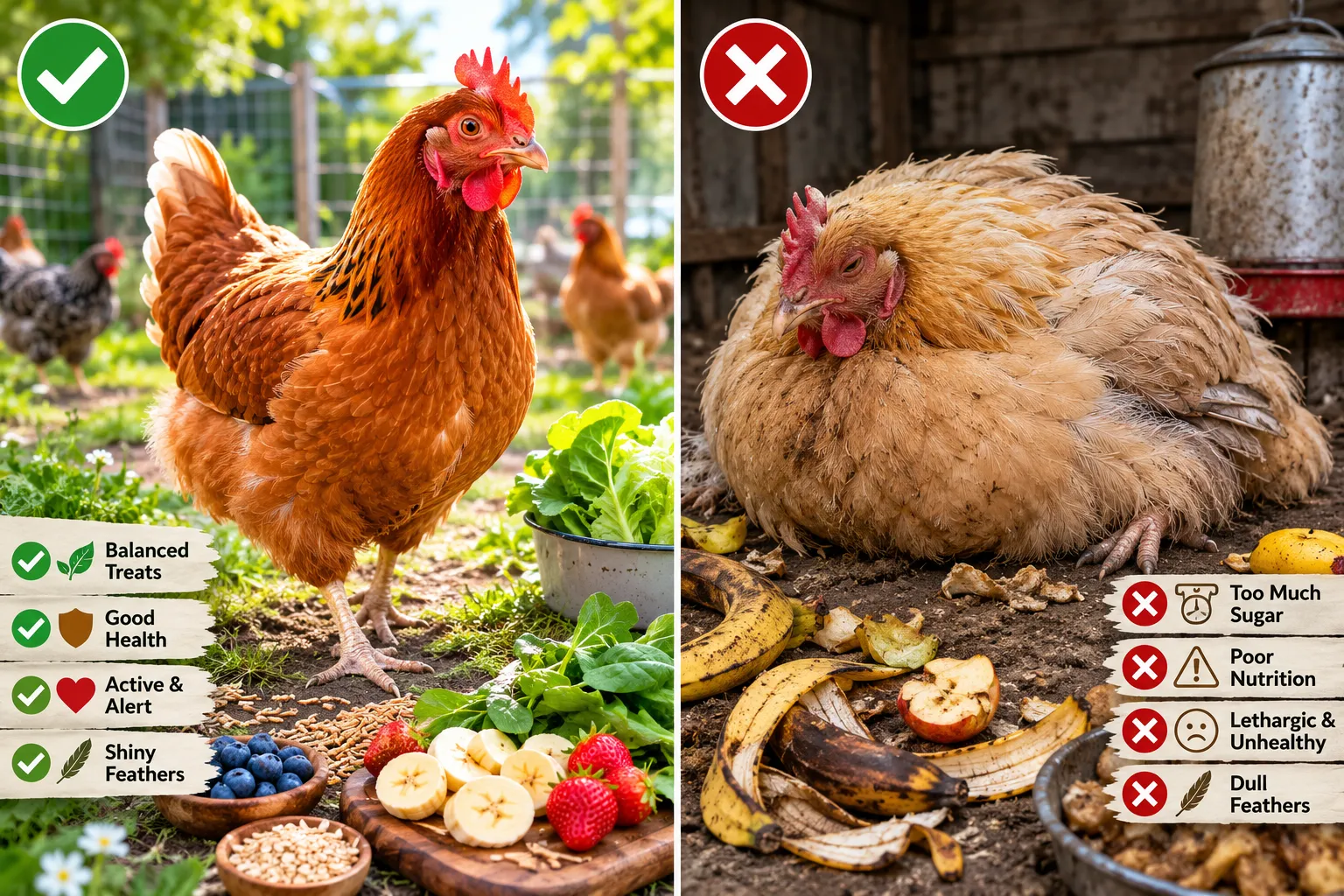
Overripe and brown bananas are perfectly safe for chickens and are often preferred by the flock. As bananas ripen, their starches convert to simple sugars, making them sweeter and softer, both qualities that chickens find appealing. The brown spots indicate increased antioxidant levels, not spoilage.
Benefits of feeding overripe bananas:
- Softer texture is easier to eat and digest
- Sweeter taste increases palatability
- Higher antioxidant content
- Reduces food waste in your household
- Easier to mash for younger birds
However, there’s a difference between overripe and spoiled. Avoid feeding bananas that show signs of mold, fermentation (alcohol smell), or extensive black rot. While chickens have hardy digestive systems, moldy fruit can contain mycotoxins that may cause illness.
Storage tip: Freeze overripe bananas (peeled or unpeeled) in portions appropriate for your flock size. Frozen bananas last for months and make refreshing summer treats that help chickens regulate body temperature during hot weather.
What Fruits Are Better Than Bananas for Chickens?
While bananas are a good treat, several fruits offer superior nutritional profiles with lower sugar content. Berries, melons, and certain vegetables provide more vitamins and minerals per calorie, making them better choices for regular treat rotation.
Top fruit alternatives to bananas:
- Berries (blueberries, strawberries, raspberries): High in antioxidants, lower in sugar, excellent for immune health
- Watermelon: Hydrating, low-calorie, rich in vitamins A and C
- Pumpkin: High in fiber, supports digestive health, natural dewormer properties
- Apples (without seeds): Good fiber source, satisfying crunch, longer-lasting treat
- Grapes (cut in half): High water content, easy to portion, rich in vitamins
Comparison of treat options:
| Treat | Sugar Content | Key Benefits | Best For |
|---|---|---|---|
| Bananas | High | Potassium, quick energy | Occasional treat, cold weather |
| Berries | Medium | Antioxidants, immune support | Regular rotation, all seasons |
| Watermelon | Low | Hydration, vitamins | Summer heat, hydration |
| Leafy greens | Very low | Calcium, protein, fiber | Daily supplementation |
Decision rule: Choose berries and greens for regular treats (3-4 times weekly), and reserve higher-sugar fruits like bananas and grapes for occasional treats (1-2 times weekly). This approach provides variety while maintaining nutritional balance.
Can Chickens Eat Frozen Bananas as a Summer Treat?
Frozen bananas make excellent summer treats that help chickens stay cool during hot weather. The cold temperature provides relief from heat stress while the natural sugars offer a quick energy boost. Many chicken keepers report that frozen fruit treats are among their flock’s favorite summer activities.
How to prepare frozen banana treats:
- Peel ripe bananas and cut into chunks or slices
- Place pieces on a parchment-lined tray, spaced apart
- Freeze for 2-3 hours until solid
- Store in freezer bags with portions labeled
- Offer directly from freezer on hot days (above 85°F)
You can also freeze bananas whole with the peel on, then cut them into sections while still frozen. The peel becomes easier to eat when frozen and provides entertainment as chickens work to peck through it.
Creative frozen treat ideas:
- Mix mashed banana with plain yogurt, freeze in ice cube trays
- Freeze banana slices with berries for variety
- Stuff banana chunks into a hanging suet feeder and freeze
- Create “banana popsicles” by freezing banana pieces on skewers
Best timing: Offer frozen treats during the hottest part of the day (typically 2-4 PM) when chickens are most heat-stressed. This timing maximizes the cooling benefit and gives them something engaging to do during inactive afternoon hours.
Do Bananas Make Chickens Gain Too Much Weight?
Bananas can contribute to weight gain in chickens if fed in excessive amounts due to their high sugar and calorie content. A medium banana contains approximately 105 calories and 27 grams of carbohydrates, significant for a bird that only needs 250-300 calories per day total.
Signs your chickens may be overweight:
- Difficulty walking or reduced mobility
- Heavy breathing or panting when not heat-stressed
- Decreased egg production
- Fatty deposits visible around the abdomen
- Reluctance to roost or fly up to perches
Overweight chickens face serious health risks including fatty liver disease, reduced egg production, joint problems, and decreased lifespan. Breeds already prone to weight gain (such as Orpingtons, Brahmas, and Cochins) require extra vigilance with treat portions.
Weight management strategy:
- Measure treats rather than eyeballing portions
- Increase flock activity with scattered feeding or treat puzzles
- Provide adequate space for foraging and exercise
- Monitor individual birds for weight changes
- Reduce or eliminate treats if weight gain occurs
Choose lower-calorie treats if: you have heavy breeds, limited free-range space, or notice any birds gaining excess weight. Leafy greens, cucumbers, and zucchini provide volume and entertainment with minimal calories.
What Happens If Chickens Eat Too Many Bananas?
Chickens that consume too many bananas may experience digestive upset, nutritional imbalances, and behavioral changes. The immediate effects typically include loose or watery droppings, decreased appetite for layer feed, and increased thirst due to high sugar intake.
Short-term effects of banana overfeeding:
- Diarrhea or loose, sticky droppings
- Messy vent feathers requiring cleaning
- Reduced consumption of layer feed
- Increased water intake
- Hyperactivity followed by lethargy
Long-term consequences:
- Nutritional deficiencies: Insufficient protein, calcium, and essential vitamins from reduced layer feed intake
- Poor egg quality: Thin shells, irregular laying, smaller eggs
- Obesity: Excess calories stored as fat
- Fatty liver disease: Serious condition caused by high-sugar diets
- Reduced immunity: Poor nutrition weakens disease resistance
Most chickens will recover quickly once banana intake is reduced and normal feeding resumes. Ensure fresh water is always available to help flush excess sugars through their system.
Recovery protocol: If your flock has overindulged in bananas, remove all treats for 3-5 days and offer only quality layer feed and water. Monitor droppings for return to normal consistency (formed with white urate cap). If symptoms persist beyond a week, consult a veterinarian familiar with poultry.
Should I Mash Bananas or Give Them Whole to Chickens?
The best preparation method depends on your chickens’ age, the banana’s ripeness, and your feeding goals. Both whole and mashed bananas work well, but each approach offers different benefits for flock management and nutrition.
Mashed banana advantages:
- Easier for young or small birds to consume
- Can be mixed with layer feed to encourage picky eaters
- Reduces waste from dropped pieces
- Allows precise portion control
- Easier to combine with supplements if needed
Whole or large-piece advantages:
- Provides entertainment and mental stimulation
- Encourages natural pecking behaviors
- Takes longer to consume, reducing boredom
- Less messy than mashed banana
- Allows chickens to self-regulate intake
Preparation methods by situation:
- Baby chicks (2-8 weeks): Always mash or puree
- Standard laying hens: Slices, chunks, or whole, all work well
- Bantams or small breeds: Cut into smaller pieces or mash
- Hot weather: Freeze in chunks for longer-lasting treats
- Sick or recovering birds: Mash for easier consumption
Common mistake: Placing a whole banana on the ground where it gets trampled and dirty. Instead, use a hanging treat holder, elevated platform, or clean dish to keep treats sanitary and reduce waste.
Pro tip: Cut bananas into sections with peel on and hang them from a string at chicken head-height. This creates an engaging “piñata” effect that provides entertainment while preventing ground contamination.
Are Bananas Good for Egg Production in Chickens?
Bananas provide some nutrients that support overall health, but they don’t directly boost egg production and shouldn’t be relied upon for laying performance. Egg production depends primarily on adequate protein (16-20%), calcium, specific vitamins, and consistent day length, nutrients that bananas don’t provide in meaningful amounts.
What laying hens actually need for egg production:
- Protein: 16-20% (bananas contain less than 2%)
- Calcium: 3-4% of diet (bananas contain minimal calcium)
- Vitamin D: Essential for calcium absorption (not present in bananas)
- Consistent lighting: 14-16 hours daily
- Fresh water: Eggs are 74% water
Bananas offer potassium and B vitamins that contribute to general health, which indirectly supports consistent laying. A healthy chicken is more likely to maintain regular egg production than a stressed or malnourished one. However, the high sugar content can actually reduce layer feed consumption, potentially decreasing egg production if treats are overfed.
Better choices for supporting egg production:
- Protein-rich treats: Mealworms, scrambled eggs, black soldier fly larvae
- Calcium sources: Crushed oyster shells, crushed eggshells (baked and crushed)
- Leafy greens: Kale, spinach, lettuce for vitamins and minerals
- Quality layer feed: Formulated specifically for laying hens
Decision rule: If your goal is to maximize egg production, limit bananas to occasional treats and focus on high-protein supplements and quality layer feed. If you’re keeping chickens primarily as pets and egg production is secondary, bananas make a fine regular treat in moderation.
Can Chickens Eat Banana Leaves and Stems?
Chickens can safely eat banana leaves and stems, though most birds show less interest in these parts compared to the fruit and peel. Banana leaves are non-toxic and contain fiber, but they’re tough and less palatable than the fruit. In regions where banana plants grow, some chicken keepers report their free-range flocks occasionally nibbling on leaves.
Considerations for feeding banana plant parts:
- Pesticide exposure: Only offer leaves from untreated plants
- Toughness: Mature leaves are fibrous and difficult for chickens to tear
- Palatability: Most chickens prefer softer plant materials
- Nutritional value: Lower than the fruit itself
- Preparation: Chopping or shredding increases consumption
If you have access to banana plants, young tender leaves are more likely to be accepted than mature ones. Some chicken keepers chop banana leaves and mix them with other greens to increase fiber intake, particularly for flocks with limited pasture access.
Better leafy options: If you’re looking to supplement your flock’s diet with greens, chickens generally prefer lettuce, kale, Swiss chard, comfrey, or grass clippings (from untreated lawns) over banana leaves. These alternatives are more nutritious and more readily consumed.
Use banana leaves if: you have an abundant supply from your own pesticide-free plants and want to reduce waste. Otherwise, focus on more palatable and nutritious greens that your flock will actually eat.
Frequently Asked Questions
Can chickens eat banana bread or baked goods with bananas?
Chickens can eat small amounts of plain banana bread, but it’s not recommended as a regular treat. Baked goods contain added sugar, salt, butter, and flour that provide empty calories without nutritional benefits. If offering banana bread, limit it to tiny portions and ensure it doesn’t contain chocolate, xylitol, or excessive salt, which are toxic to chickens.
How do I know if my chickens like bananas?
Offer a small piece to your flock and observe their reaction. Some chickens immediately recognize bananas as food and eagerly consume them, while others may be hesitant at first. If they ignore it initially, try mashing it or mixing it with familiar foods. Not all chickens have the same preferences, individual taste varies just like in humans.
Can I compost uneaten banana pieces from my chickens?
Yes, any banana pieces your chickens don’t eat can go directly into your compost bin. Remove uneaten treats within 2-4 hours to prevent spoilage, pest attraction, and mold growth in the coop area. Banana peels break down quickly in compost and add valuable nutrients to your garden soil.
Are there any chicken breeds that shouldn’t eat bananas?
All chicken breeds can safely eat bananas in moderation. However, breeds prone to obesity (Orpingtons, Brahmas, Cochins, Silkies) should receive smaller portions due to their tendency to gain weight easily. Bantam breeds need proportionally smaller pieces to prevent overconsumption relative to their body size.
Can bananas help chickens during molting?
Bananas provide some B vitamins that support overall health during molting, but they don’t contain the high protein levels that chickens need to regrow feathers. During molt, focus on protein-rich treats like mealworms, scrambled eggs, or black soldier fly larvae rather than fruit. Protein requirements increase from 16% to 20-22% during molting periods.
Will feeding bananas change the taste of eggs?
No, feeding bananas in appropriate amounts will not change the taste of your chickens’ eggs. Egg flavor is primarily influenced by the hen’s primary diet (layer feed) and access to pasture. Only extremely strong-flavored foods consumed in large quantities (like fish or onions) have the potential to affect egg taste.
Can I feed my chickens banana chips or dried bananas?
Plain dried bananas without added sugar or preservatives can be fed in very small amounts, but they’re more calorie-dense than fresh bananas and should be offered sparingly. Avoid commercial banana chips that contain added sugar, honey, or oils. Fresh bananas are a better choice because they provide hydration along with nutrients.
How long can I leave banana treats in the coop?
Remove banana treats within 2-4 hours, especially in warm weather. Bananas spoil quickly and can attract flies, rodents, and other pests. Spoiled fruit may also develop mold that can harm your flock. If your chickens haven’t finished the banana within a few hours, you’ve offered too much.
Can chickens eat green, unripe bananas?
Chickens can eat unripe green bananas, but they’re less appealing due to their firm texture and starchy, less sweet taste. Green bananas contain more resistant starch, which is harder to digest. Most chickens strongly prefer ripe or overripe bananas. If you have green bananas, let them ripen before offering them to your flock.
Do bananas help chickens with diarrhea or digestive issues?
No, bananas are not recommended for chickens with diarrhea. The high moisture and sugar content can actually worsen loose droppings. If your chickens have digestive issues, remove all treats and offer only layer feed and fresh water. If diarrhea persists beyond 24-48 hours or is accompanied by other symptoms, consult a veterinarian.
Can I mix bananas with other treats for my chickens?
Yes, bananas can be mixed with other chicken-safe treats to create variety. Popular combinations include banana with berries, mashed banana mixed with oats, or banana with plain yogurt (in small amounts). Always ensure the combined treat portion stays within the 10% guideline of total daily food intake.
Are organic bananas necessary for chickens?
Organic bananas are preferable if you regularly feed the peels to your chickens, as conventional banana peels may contain pesticide residues. If you only feed the fruit and discard the peel, conventional bananas are fine. Always wash any produce thoroughly before offering it to your flock, regardless of whether it’s organic or conventional.
Conclusion
Bananas make a safe, nutritious, and enjoyable treat for chickens when offered in moderation as part of a balanced diet. Both the fruit and peel provide beneficial nutrients like potassium, vitamin B6, and fiber that support overall health, but they should never replace quality layer feed as the foundation of your flock’s nutrition.
The key to successfully incorporating bananas into your chicken care routine is portion control and frequency. Limit banana treats to no more than 10% of your chickens’ daily food intake, roughly 1-2 tablespoons per bird, 2-3 times per week. This approach allows your flock to enjoy the benefits and entertainment value of bananas without risking nutritional imbalances, digestive upset, or weight gain.
Action steps for feeding bananas to your chickens:
- Start with small portions to gauge your flock’s interest and tolerance
- Wash peels thoroughly if feeding conventional bananas
- Cut into appropriate sizes for your birds’ age and breed
- Offer during hot weather as frozen treats for added cooling benefits
- Monitor your flock for any signs of digestive upset or weight gain
- Rotate bananas with other nutritious treats like berries and leafy greens
- Always ensure layer feed remains the primary food source (90% of diet)
- Remove uneaten portions within 2-4 hours to prevent spoilage
Remember that every flock is different. Some chickens will devour bananas enthusiastically, while others may show little interest. Pay attention to your birds’ individual preferences and adjust accordingly. By treating bananas as an occasional supplement rather than a dietary staple, you’ll keep your flock healthy, happy, and producing quality eggs for years to come.