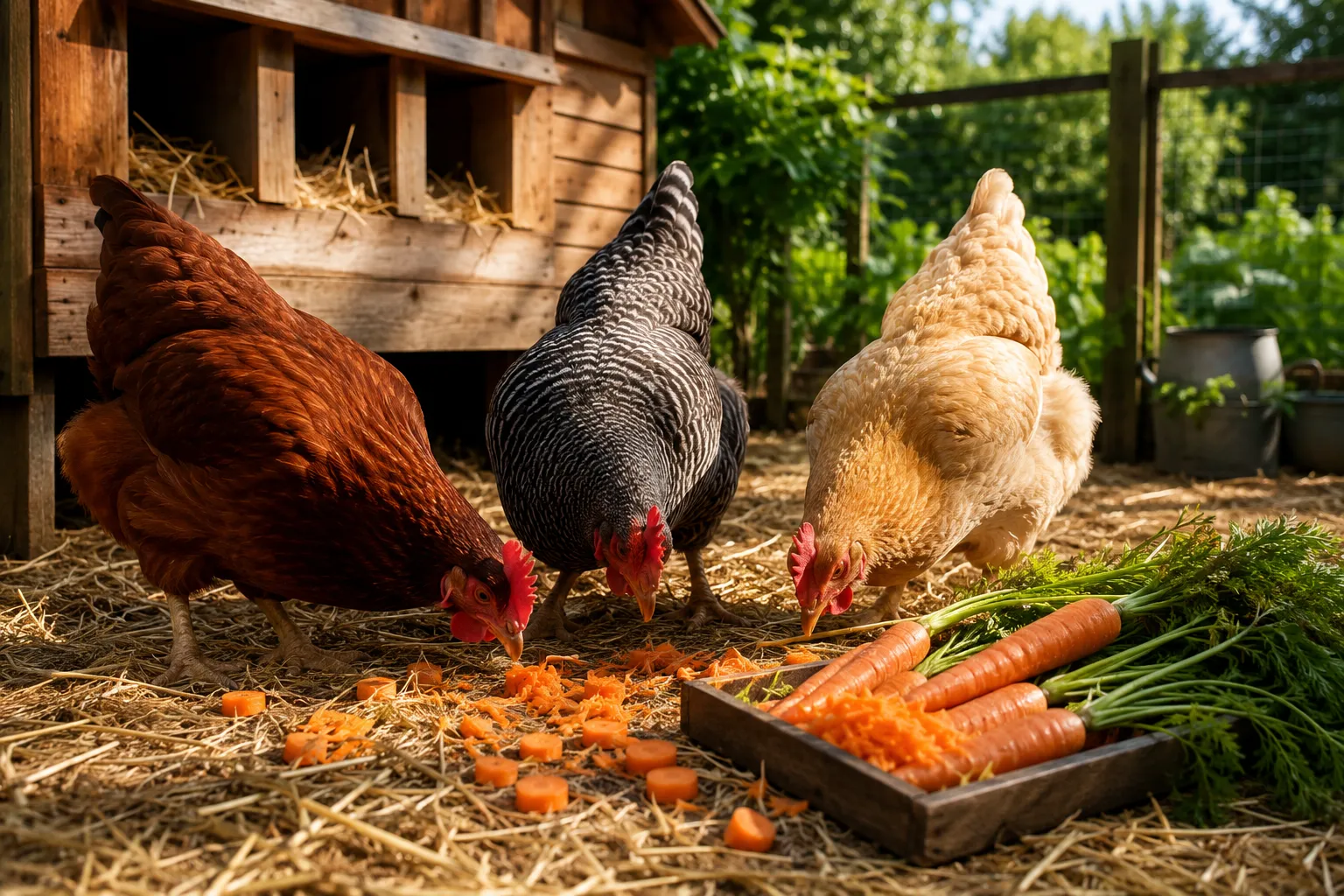
Quick Answer: Yes, chickens can safely eat carrots in all forms, raw, cooked, whole, chopped, grated, and including the peels and greens. Carrots provide valuable nutrients like beta-carotene, fiber, and vitamins that support chicken health, feather quality, and egg yolk color. They should be offered as a supplemental treat rather than a staple, making up no more than 10% of a chicken’s daily diet alongside their complete layer feed.
Key Takeaways
- Chickens can safely eat all parts of carrots: roots, peels, tops, and greens
- Raw carrots are perfectly safe and often preferred; cooking is optional but can make them easier to eat
- Grating, chopping, or cutting carrots into small pieces prevents choking and makes them easier for chickens to consume
- Carrots provide beta-carotene (vitamin A), which enhances egg yolk color and supports immune function
- Limit carrot treats to 10% of daily diet, about 1-2 ounces per chicken per day
- Baby chicks can eat finely grated carrots starting around 3-4 weeks old
- Whole carrots pose a choking risk; always cut or grate them first
- Frozen carrots are safe after thawing; canned carrots should be avoided due to high sodium content
Are Carrots Safe for Chickens to Eat?
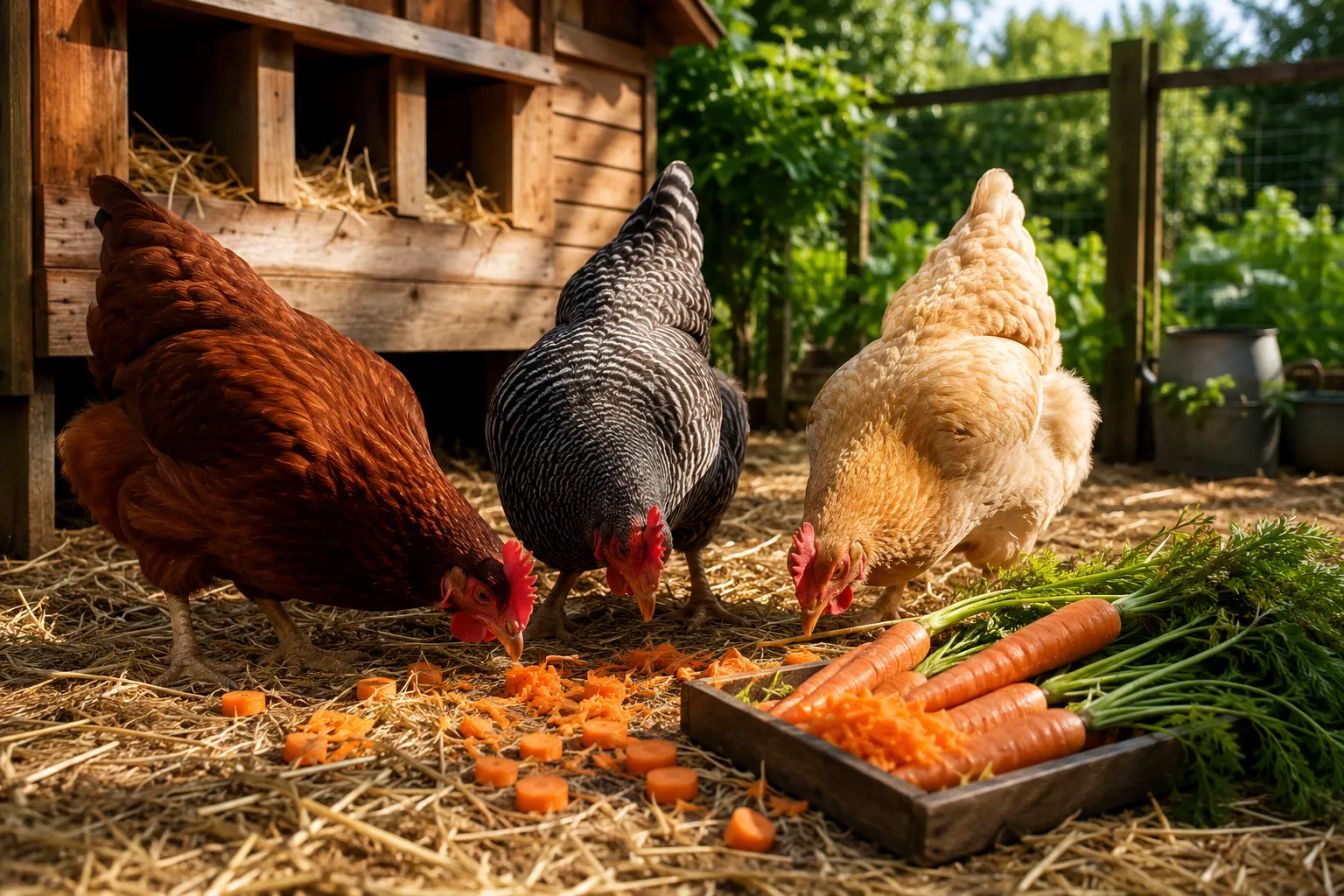
Carrots are completely safe for chickens and rank among the healthiest vegetable treats you can offer your flock. Unlike some foods that contain toxins or anti-nutritional compounds, carrots pose no health risks to chickens when prepared properly.
The entire carrot plant is non-toxic to poultry. This includes:
- The orange root (the carrot itself)
- The peel or skin (no need to remove it)
- The green leafy tops (carrot greens)
- The core (no need to remove)
Carrots belong to the Apiaceae family and contain beneficial compounds rather than harmful ones. They’re rich in beta-carotene, fiber, vitamins K and C, and potassium, all nutrients that support chicken health without causing digestive upset or toxicity.
Common mistake: Some chicken keepers worry that the hard texture of raw carrots might harm their birds. In reality, chickens have powerful beaks and digestive systems designed to break down tough plant material. The bigger concern is choking on large pieces, not the hardness itself.
Choose carrots if: You want an affordable, readily available treat that provides genuine nutritional benefits rather than empty calories. Carrots work especially well in winter when fresh greens are scarce.
Can Chickens Eat Raw Carrots or Do They Need to Be Cooked?
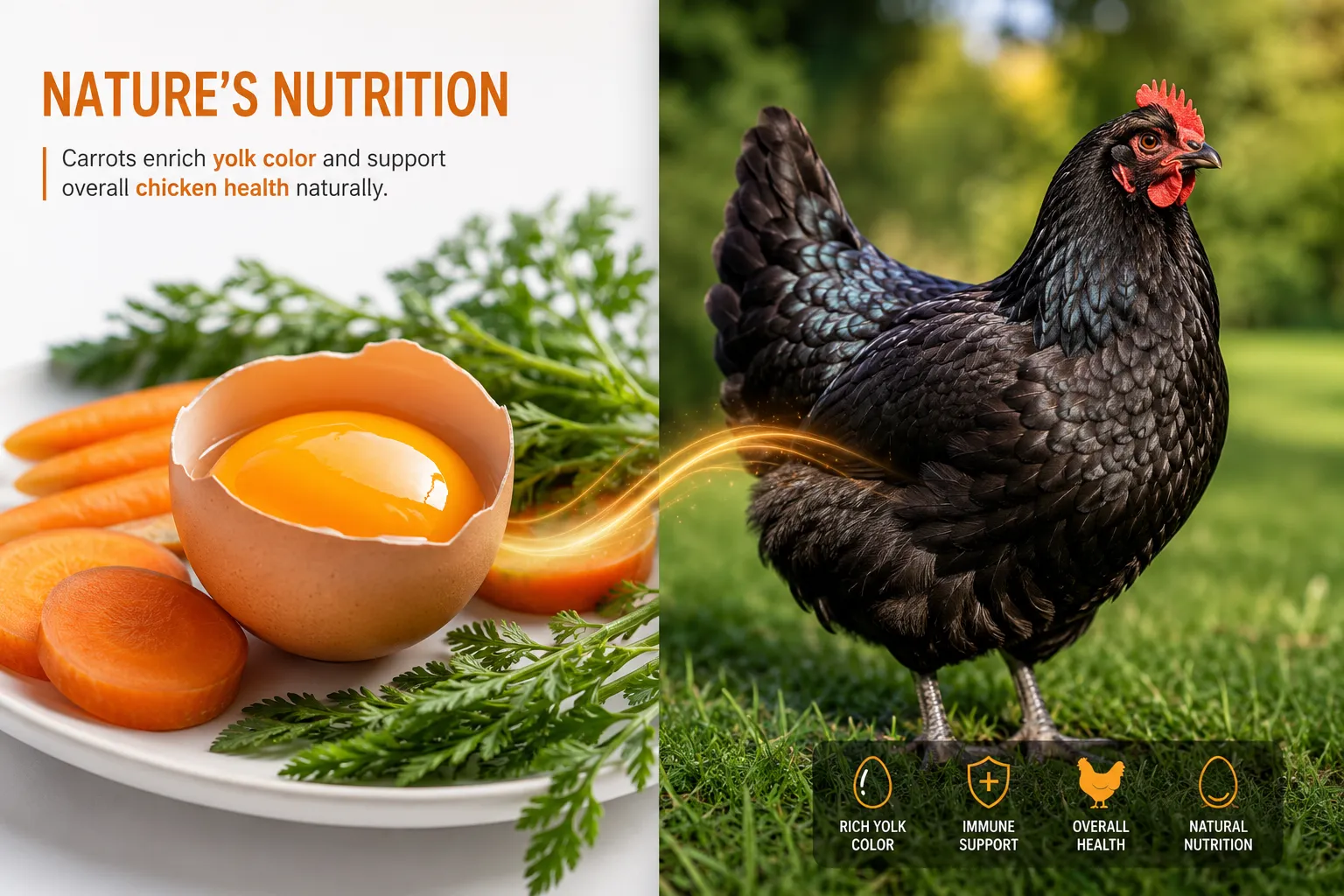
Chickens can eat raw carrots without any issues, and cooking is entirely optional based on your preference and convenience. Raw carrots retain maximum nutritional value and provide enrichment through pecking and foraging behavior.
Benefits of raw carrots:
- Full nutrient retention (heat can degrade some vitamins)
- Natural texture encourages pecking and keeps chickens entertained
- No preparation time beyond washing and chopping
- Stays fresh longer in the coop without spoiling quickly
Benefits of cooked carrots:
- Softer texture makes them easier for older chickens or those with beak issues to eat
- Slightly sweeter taste may appeal to picky eaters
- Can be mashed and mixed with other foods
- Easier for very young chicks to consume
Most backyard chicken keepers prefer offering raw carrots because they require less work and chickens naturally enjoy pecking at firm vegetables. However, steaming or boiling carrots for 5-10 minutes until fork-tender is perfectly safe if you prefer that method.
Edge case: If you have chickens recovering from illness or with damaged beaks, lightly steamed carrots may be easier for them to consume than raw ones.
How to Prepare Carrots for Chickens
Proper preparation ensures your chickens can safely enjoy carrots while maximizing nutritional benefits and preventing choking hazards. The key is making pieces small enough for chickens to handle comfortably.
Step-by-step preparation methods:
- Wash thoroughly, Rinse carrots under cool water to remove dirt, especially if using store-bought carrots with pesticide residue
- Choose your cutting method:
- Grated: Use a box grater for fine shreds (best for young chickens and easy eating)
- Chopped: Cut into 1/4 to 1/2-inch cubes or coins
- Julienned: Slice into thin matchsticks
- Halved lengthwise: Cut large carrots in half and let chickens peck at them (provides entertainment)
- Leave peels on, No need to peel; the skin contains nutrients and fiber
- Offer immediately or store, Fresh-cut carrots can be refrigerated for 2-3 days in an airtight container
Hanging method for enrichment: Thread whole or large carrot pieces onto a string and hang them at chicken head-height. This creates a “chicken piñata” that encourages natural pecking behavior and keeps your flock entertained for hours.
Common mistake: Tossing whole, uncut carrots into the coop. While chickens will eventually peck them down, whole carrots can be frustrating for birds to eat and may lead to aggressive competition or choking attempts.
Can Chickens Eat Carrot Tops and Greens?
Yes, carrot tops and greens are completely safe and nutritious for chickens to eat. In fact, the leafy greens often contain more vitamins and minerals per ounce than the carrot root itself.
Carrot greens provide:
- High levels of vitamin K (supports blood clotting and bone health)
- Calcium and magnesium
- Antioxidants and chlorophyll
- Fiber for digestive health
How to serve carrot tops:
- Rinse thoroughly to remove dirt and debris
- Offer whole and let chickens tear them apart (provides enrichment)
- Chop finely and mix with other greens
- Hang in bunches for chickens to jump and peck at
Some chickens prefer the sweeter carrot root over the slightly bitter greens, but most flocks will eagerly consume both. The greens are particularly valuable in winter when fresh forage is limited.
Decision rule: If you buy carrots with tops attached from farmers’ markets or grow your own, always save the greens for your chickens rather than composting them. They’re a free source of nutrition your flock will appreciate.
How Much Carrot Can I Feed My Chickens Per Day?
Chickens should receive carrots as a supplemental treat, not a dietary staple, with treats making up no more than 10% of their total daily food intake. For an average-sized laying hen (5-7 pounds), this translates to approximately 1-2 ounces of carrots per day.
Feeding guidelines by flock size:
- Single chicken: 1-2 tablespoons of grated or chopped carrot
- Small flock (3-5 chickens): 1/4 to 1/2 cup total
- Medium flock (6-12 chickens): 1/2 to 1 cup total
- Large flock (12+ chickens): 1-2 cups total
The remaining 90% of their diet should consist of a nutritionally complete layer feed formulated to provide all essential proteins, vitamins, minerals, and amino acids chickens need for health and egg production.
Why the 10% rule matters: Chickens that fill up on treats like carrots may not consume enough layer feed to meet their nutritional requirements. This can lead to:
- Reduced egg production
- Thin or weak eggshells (calcium deficiency)
- Poor feather quality
- Weakened immune system
Practical tip: Offer carrots in the afternoon after your chickens have had time to eat their layer feed in the morning. This ensures they prioritize their complete nutrition before enjoying treats.
Do Carrots Provide Any Nutritional Benefits for Chickens?
Carrots deliver several meaningful nutritional benefits that support chicken health, egg quality, and overall vitality. While they shouldn’t replace complete layer feed, they offer valuable supplemental nutrition.
Key nutrients in carrots and their benefits:
| Nutrient | Benefit for Chickens |
|---|---|
| Beta-carotene (Vitamin A) | Converts to vitamin A; supports immune function, vision, and respiratory health; enhances egg yolk color |
| Fiber | Promotes healthy digestion and gut motility |
| Vitamin K | Supports blood clotting and bone health |
| Potassium | Regulates fluid balance and muscle function |
| Vitamin C | Antioxidant that supports immune health (chickens produce their own but supplemental amounts help during stress) |
| Water content (88%) | Provides hydration, especially valuable in hot weather |
Beta-carotene and egg yolk color: The beta-carotene in carrots is particularly valuable for backyard chicken keepers who want rich, golden-orange egg yolks. Chickens convert beta-carotene into both vitamin A (for health) and deposit some directly into egg yolks (for color). Regular carrot feeding can noticeably deepen yolk color within 1-2 weeks.
Immune support: The antioxidants in carrots help chickens combat oxidative stress, particularly during molting, extreme weather, or when fighting off infections.
Choose carrots over empty-calorie treats if: You want treats that contribute genuine nutrition rather than just entertainment value. Carrots offer more health benefits than bread, crackers, or corn (which are high in carbohydrates but low in vitamins).
Can Baby Chicks Eat Carrots?
Baby chicks can eat carrots starting around 3-4 weeks of age, but only when the carrots are finely grated or minced into very small pieces. Younger chicks (under 3 weeks) should stick exclusively to chick starter feed to ensure proper growth and development.
Guidelines for feeding carrots to chicks:
- 0-3 weeks old: No treats of any kind; only chick starter feed and water
- 3-8 weeks old: Introduce finely grated carrot in tiny amounts (1/4 teaspoon per chick, 2-3 times per week)
- 8+ weeks old: Can handle small chopped pieces; gradually increase portion size
Why wait until 3-4 weeks? Young chicks have delicate digestive systems that need the precisely balanced nutrition in starter feed. Introducing treats too early can:
- Displace essential nutrients needed for rapid growth
- Cause digestive upset or pasty butt
- Lead to developmental issues
Grit requirement: When you introduce carrots or any solid treats, chicks also need access to chick-sized grit (small, insoluble stones) to help grind food in their gizzards. Without grit, they may struggle to digest fibrous vegetables.
Safe introduction method: Mix a tiny amount of finely grated carrot into their starter feed rather than offering it separately. This ensures they continue eating their complete feed while sampling the new food.
Can Chickens Choke on Whole Carrots?
Yes, chickens can choke on whole carrots or large carrot pieces, making proper preparation essential for safety. While chickens don’t chew food like mammals, they can struggle with pieces too large to swallow comfortably.
Choking risk factors:
- Whole carrots (especially thick ones)
- Large chunks over 1 inch in diameter
- Long, thick carrot sticks that can lodge in the throat
- Competitive feeding situations where chickens try to swallow quickly
How chickens eat: Chickens use their beaks to break food into smaller pieces, then swallow chunks whole. The food travels to the crop (a storage pouch), then to the gizzard where it’s ground with the help of grit. If a piece is too large to pass through the esophagus comfortably, it can become stuck.
Safe size guidelines:
- Grated or shredded: Always safe
- Chopped pieces: No larger than 1/2 inch
- Carrot sticks: No thicker than a pencil
- Halved carrots: Only if chickens can peck at them rather than trying to swallow whole
Signs of choking in chickens:
- Stretching neck repeatedly
- Opening and closing beak without eating
- Shaking head vigorously
- Gasping or making unusual sounds
- Standing still with neck extended
Emergency response: If a chicken appears to be choking, gently feel along the neck/crop area. Sometimes you can massage a stuck piece downward. In severe cases, contact a veterinarian immediately.
Prevention: Always cut carrots into appropriately sized pieces and supervise your flock during their first few carrot feedings to ensure they handle the pieces well.
Are Carrot Peels Safe for Chickens?
Carrot peels are completely safe for chickens and contain valuable nutrients and fiber. There’s no need to peel carrots before offering them to your flock, in fact, leaving the peel on provides additional nutritional benefits.
Benefits of carrot peels:
- High fiber content supports digestive health
- Concentrated nutrients just below the skin
- Adds texture variety to their diet
- Reduces food waste in your kitchen
When to wash vs. peel:
- Organic carrots: Simple rinse is sufficient
- Conventional carrots: Wash thoroughly under running water to remove pesticide residue, but peeling is still unnecessary
- Very dirty carrots: Scrub with a vegetable brush under water
Kitchen scrap opportunity: If you peel carrots for your own cooking, save the peels for your chickens rather than composting them. Chickens will eagerly eat peels that might otherwise go to waste.
Edge case: If carrots show signs of rot, mold, or significant damage, discard those portions rather than feeding them to chickens. While chickens have robust digestive systems, moldy vegetables can contain harmful mycotoxins.
What Vegetables Are Better Than Carrots for Chickens?
While carrots are excellent treats, several other vegetables offer equal or superior nutritional profiles for chickens. The “best” vegetable depends on your specific goals, whether you’re targeting protein, calcium, hydration, or variety.
Top vegetable alternatives to carrots:
For higher protein:
- Peas (7-8g protein per cup vs. 1g in carrots)
- Broccoli (2.5g protein per cup plus calcium)
- Spinach (high protein and iron)
For calcium (important for laying hens):
- Kale (significantly higher calcium than carrots)
- Collard greens
- Turnip greens
For hydration (hot weather):
- Cucumbers (96% water vs. 88% in carrots)
- Watermelon (92% water plus natural sugars for energy)
- Zucchini (95% water)
For variety and enrichment:
- Pumpkin (seeds have natural deworming properties)
- Squash (all varieties are chicken-safe)
- Cabbage (can be hung whole for entertainment)
Comparison table:
| Vegetable | Key Benefit | Best Season |
|---|---|---|
| Carrots | Beta-carotene, egg yolk color | Year-round |
| Leafy greens | Calcium, protein, vitamins | Spring/Summer |
| Pumpkin | Natural dewormer, fiber | Fall |
| Cucumbers | Hydration, cooling | Summer |
Decision rule: Rotate vegetables seasonally to provide variety and take advantage of what’s affordable and available. Carrots work especially well in winter when fresh greens are expensive or unavailable.
Can Chickens Eat Carrots Every Day or Just as a Treat?
Chickens can eat small amounts of carrots daily, but they should always be offered as a supplemental treat rather than a dietary staple. Daily carrot feeding is safe as long as you maintain the 10% treat rule and ensure chickens consume their complete layer feed first.
Daily feeding approach:
- Offer 1-2 tablespoons of grated carrot per chicken each day
- Feed in the afternoon after morning layer feed consumption
- Rotate with other vegetables 2-3 times per week for variety
- Monitor egg production and shell quality to ensure adequate nutrition
Benefits of daily small amounts:
- Consistent beta-carotene intake maintains rich egg yolk color
- Provides daily enrichment and foraging activity
- Helps chickens stay hydrated (carrots are 88% water)
- Supports immune function with regular antioxidant intake
Risks of overfeeding carrots:
- Displacement of complete feed leading to nutritional deficiencies
- Reduced calcium intake (carrots are low in calcium)
- Potential for thin eggshells or decreased laying
- Digestive upset from too much fiber
Alternative approach: Some chicken keepers prefer offering larger amounts of carrots 2-3 times per week rather than small daily portions. Both methods work as long as total weekly treat intake stays around 10% of diet.
Monitor your flock: If you notice decreased egg production, thin shells, or weight loss after introducing daily carrots, reduce the amount or frequency. Every flock has slightly different nutritional needs based on breed, age, and activity level.
Do Carrots Help with Egg Yolk Color in Chickens?
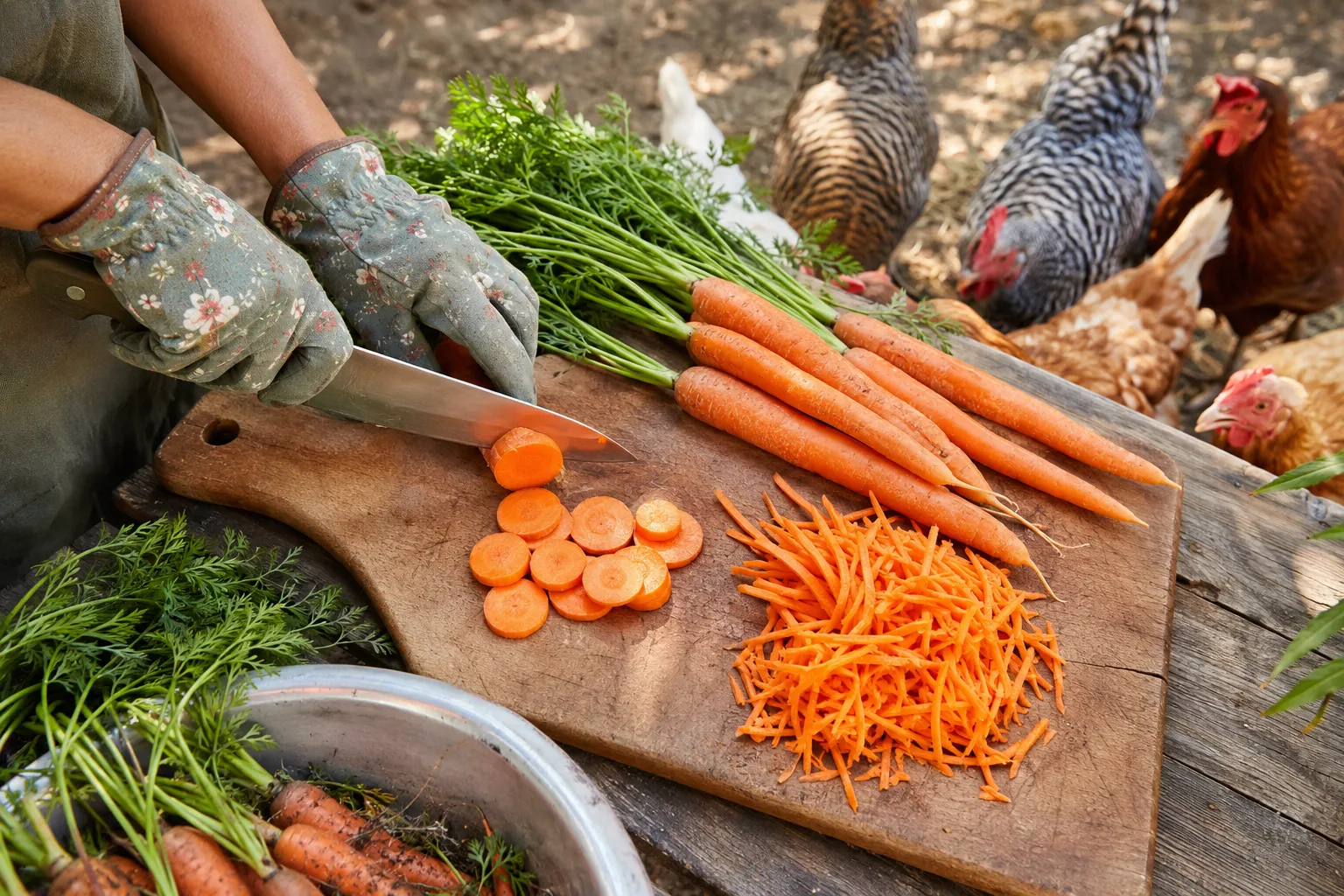
Yes, carrots significantly enhance egg yolk color due to their high beta-carotene content. Regular carrot feeding can transform pale yellow yolks into deep golden-orange yolks within 1-2 weeks of consistent feeding.
How it works: Chickens deposit carotenoid pigments (including beta-carotene from carrots) directly into developing egg yolks. The more carotenoids in their diet, the richer the yolk color becomes. This is purely cosmetic and doesn’t affect nutritional value, but many consumers associate darker yolks with higher quality or better nutrition.
Timeline for visible results:
- Week 1: Slight color improvement noticeable
- Week 2: Significant deepening of yolk color
- Week 3-4: Maximum color intensity achieved
- After stopping: Color gradually fades over 2-3 weeks
Other foods that enhance yolk color:
- Marigold petals (very effective)
- Dark leafy greens (kale, spinach)
- Pumpkin and squash
- Red peppers
- Tomatoes
Comparison: Carrots are moderately effective for yolk color. Marigold petals and dark greens typically produce even deeper orange yolks, but carrots are more readily available and affordable for most backyard chicken keepers.
Important note: Yolk color is cosmetic only. A pale yellow yolk from a chicken eating only layer feed has the same nutritional value as a deep orange yolk from a chicken eating carrots and greens. However, many people prefer the appearance of darker yolks and associate them with pasture-raised or healthier chickens.
Choose carrots for yolk color if: You want a simple, affordable way to improve yolk appearance without buying specialized supplements or growing specific plants.
What Foods Should Chickens Never Eat?
While chickens can safely eat carrots and many other vegetables, several common foods are toxic or harmful to poultry and must be avoided completely.
Toxic foods for chickens:
Absolutely never feed:
- Chocolate, Contains theobromine, which is toxic to chickens
- Avocado, Skin and pit contain persin, a fungicidal toxin
- Green potatoes or potato skins, Contain solanine, a toxic compound
- Dried or undercooked beans, Contain phytohaemagglutinin (lectin) that’s toxic; cooked beans are safe
- Onions and garlic (in large amounts), Can cause anemia and taint egg flavor
- Rhubarb leaves, Contain oxalic acid, which is toxic
- Apple seeds, Contain cyanide compounds (flesh is safe)
- Moldy or spoiled food, Can contain harmful mycotoxins
- Salty foods, Chickens are very sensitive to salt; excess causes toxicity
- Alcohol, Even small amounts are dangerous
- Caffeine, Found in coffee, tea, soda; toxic to chickens
Foods to limit or avoid:
- Bread and baked goods, Low nutritional value, fills them up without providing nutrients
- Sugary treats, Can lead to obesity and fatty liver disease
- Processed foods, Often contain salt, preservatives, and additives harmful to chickens
- Citrus (in large amounts), May reduce calcium absorption; small amounts are generally safe
Safe food rule: When in doubt, stick to vegetables, fruits (in moderation), grains, and insects. If a food seems questionable, research it specifically or skip it entirely.
Common mistake: Assuming that because chickens will eat something, it must be safe. Chickens are opportunistic eaters and will consume many things that aren’t good for them, so it’s up to you to control their diet.
Can Chickens Eat Frozen or Canned Carrots?
Chickens can safely eat frozen carrots after they’ve been thawed, but canned carrots should be avoided due to high sodium content and preservatives. Frozen carrots retain most of their nutritional value and make a convenient option when fresh carrots aren’t available.
Frozen carrots:
- Safety: Completely safe after thawing
- Preparation: Thaw at room temperature or rinse with warm water; no need to cook
- Nutrition: Retain 80-90% of nutrients compared to fresh
- Texture: Slightly softer than fresh, making them easier for chickens to eat
- Benefit: Can be offered as a cooling treat in summer (partially thawed)
Canned carrots:
- Safety concern: High sodium content (salt is used as preservative)
- Recommendation: Avoid or rinse extremely thoroughly if you must use them
- Nutrition: Lower vitamin content due to processing
- Better alternative: Use fresh or frozen instead
Frozen carrot feeding tips:
- Thaw completely before offering to prevent crop issues from cold food
- In hot weather, offer partially frozen carrots as a cooling treat
- Mix thawed frozen carrots with other vegetables for variety
- Store frozen carrots properly to prevent freezer burn
Cost consideration: Frozen carrots are often more affordable than fresh, especially in winter, making them a budget-friendly option for chicken keepers with larger flocks.
Decision rule: Choose frozen carrots when fresh aren’t available or affordable, but always thaw them first. Skip canned carrots unless you can thoroughly rinse away the sodium.
Frequently Asked Questions
Can chickens eat carrot seeds?
Yes, chickens can safely eat carrot seeds. The seeds are non-toxic and provide additional nutrients, though they’re quite small and chickens may not show much interest in them compared to the carrot itself.
Will carrots change the taste of eggs?
No, carrots do not affect egg taste. They only influence yolk color. Unlike onions or garlic (which can taint egg flavor), carrots are neutral and won’t alter how your eggs taste.
Can chickens eat purple or rainbow carrots?
Yes, all carrot varieties, orange, purple, yellow, white, and rainbow, are safe for chickens. Purple carrots contain anthocyanins (additional antioxidants) and may provide even more health benefits than standard orange carrots.
How long do cut carrots last in the chicken coop?
Fresh-cut carrots should be removed after 2-4 hours if uneaten, especially in warm weather. They can spoil, attract pests, or grow mold if left too long. In winter, they may last slightly longer but should still be removed daily.
Can chickens eat carrot pulp from juicing?
Yes, carrot pulp left over from juicing is excellent for chickens. It retains most of the fiber and some nutrients, though much of the beta-carotene and water-soluble vitamins are removed with the juice.
Will carrots help chickens during molting?
Yes, the beta-carotene and vitamins in carrots support immune function and overall health during the stressful molting period. However, protein-rich treats (like mealworms or scrambled eggs) are more beneficial during molt when chickens need extra protein for feather regrowth.
Can roosters eat carrots?
Yes, roosters can eat carrots just like hens. The same preparation methods, portion sizes, and safety guidelines apply to roosters. Carrots support their overall health, though they obviously don’t benefit from the egg yolk color enhancement.
Do carrots help with chicken boredom?
Yes, carrots provide excellent enrichment. Hanging whole or halved carrots encourages natural pecking behavior and keeps chickens entertained for extended periods, reducing boredom-related issues like feather pecking or aggression.
Can chickens eat carrot cake or cooked carrot dishes?
No, avoid feeding chickens carrot cake, carrot muffins, or other prepared dishes. These contain sugar, salt, butter, flour, and other ingredients that aren’t healthy for chickens. Stick to plain, fresh carrots.
Will carrots attract rodents to my chicken coop?
Fresh carrots are less likely to attract rodents than grains or processed foods, but any uneaten food can draw pests. Remove uneaten carrot pieces within a few hours and feed only what your flock will consume in one session.
Can chickens eat baby carrots?
Yes, baby carrots (which are actually just small or cut regular carrots) are safe for chickens. Cut them in half lengthwise or chop them to prevent choking, as their round shape can be a hazard if swallowed whole.
Do organic carrots matter for chickens?
Organic carrots eliminate pesticide exposure, which is beneficial but not essential. If using conventional carrots, wash them thoroughly under running water. The nutritional difference between organic and conventional carrots is minimal for chickens.
Conclusion
Carrots are one of the safest, most nutritious treats you can offer your backyard chickens. From the bright orange roots to the leafy green tops, every part of the carrot plant provides valuable nutrients that support immune function, enhance egg yolk color, and keep your flock entertained through natural foraging behavior.
The key to successful carrot feeding lies in proper preparation and portion control. Always cut or grate carrots into appropriately sized pieces to prevent choking, limit treats to 10% of your chickens’ daily diet, and ensure they consume their complete layer feed first. Whether you choose to offer carrots raw or cooked, fresh or frozen, your chickens will benefit from the beta-carotene, fiber, and vitamins these vegetables provide.
Your next steps:
- Start with small amounts of grated carrot to introduce your flock to this new treat
- Observe how your chickens respond and adjust preparation methods based on their preferences
- Rotate carrots with other safe vegetables to provide dietary variety
- Monitor egg yolk color over 2-3 weeks to see the beta-carotene benefits
- Save carrot peels and tops from your kitchen prep as free treats for your flock
Remember that treats like carrots should complement, not replace, a nutritionally complete layer feed. When offered responsibly, carrots become a healthy, affordable way to enhance your chickens’ diet while strengthening the bond between you and your flock.