
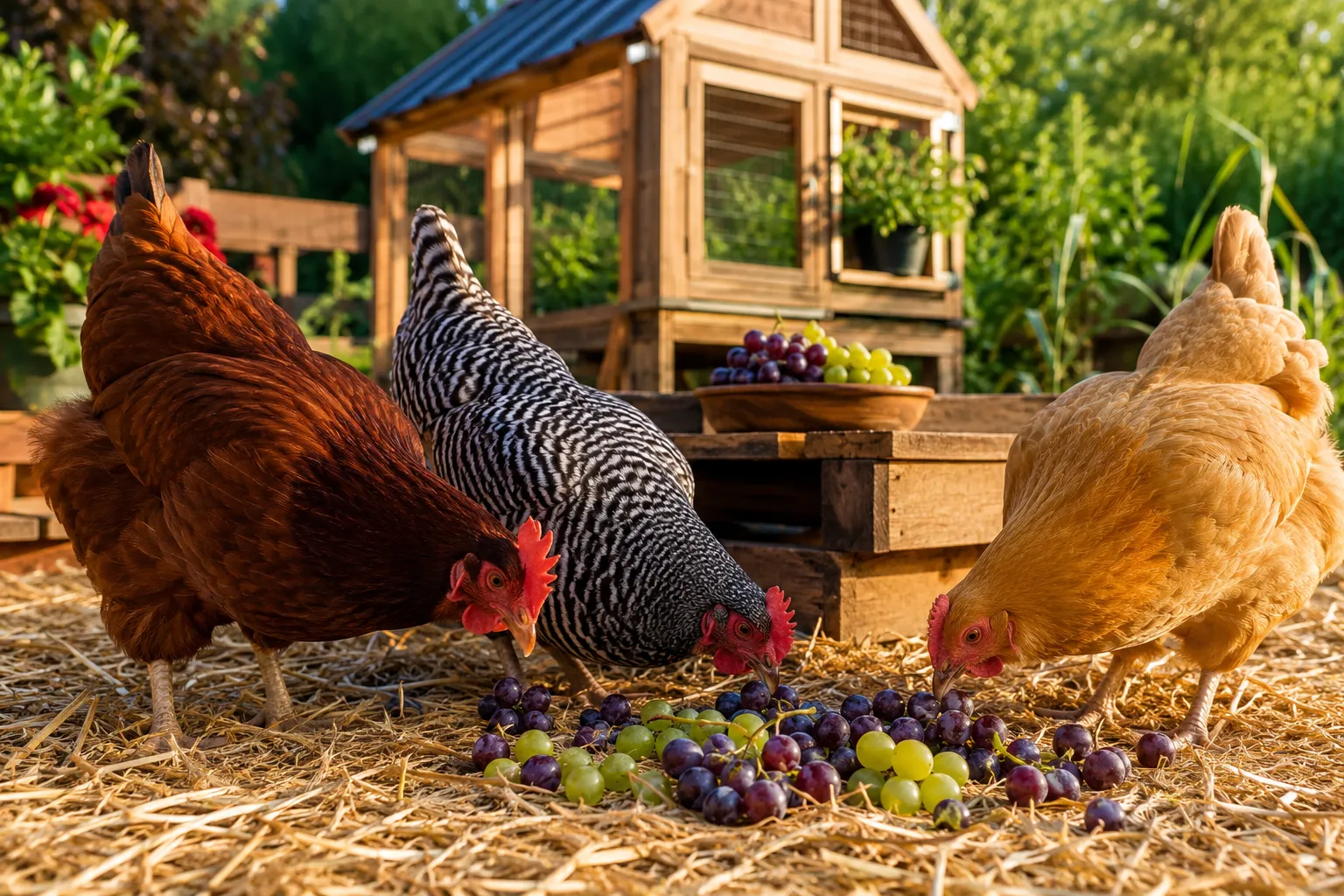
Quick Answer: Yes, chickens can eat grapes safely and most chickens love them as an occasional treat. Grapes provide hydration, vitamins, and natural sugars that chickens enjoy, but they should only make up a small portion of your flock’s diet, no more than 10% of their daily food intake. Always cut grapes in half to prevent choking, especially for smaller birds, and feed them in moderation to avoid digestive issues.
Key Takeaways
- Chickens can safely eat grapes as a healthy treat when fed in moderation (no more than 10% of daily diet)
- Cut grapes in half before feeding to prevent choking hazards, particularly for bantam breeds and younger birds
- Both red and green grapes are safe, along with the seeds and skin, no need to remove them
- Limit portions to 2-3 grapes per chicken per day to avoid excess sugar and digestive upset
- Frozen grapes make excellent cooling treats during hot summer months
- Raisins are safe but offer less hydration than fresh grapes and should be fed sparingly
- Grape stems and vines are safe in small amounts but offer little nutritional value
- Baby chicks under 4 weeks should stick to starter feed; introduce grapes only after they’re eating grit
- Too many grapes can cause diarrhea, reduced appetite for balanced feed, and potential weight issues
- Organic grapes reduce pesticide exposure but aren’t strictly necessary if you wash conventional grapes thoroughly
Can Chickens Eat Grapes?
Yes, chickens can absolutely eat grapes, and they’re considered one of the safest and most popular fruit treats for backyard flocks. Grapes are non-toxic to chickens and provide beneficial nutrients including vitamins A, C, and K, along with antioxidants and natural hydration. According to poultry nutrition experts like Lisa Steele from Fresh Eggs Daily, grapes rank among the top healthy treats that chickens go crazy for.
Grapes contain approximately 80% water, making them an excellent hydrating snack during warm weather. The natural sugars provide quick energy, while the antioxidants support overall health and immune function. However, because grapes are high in sugar compared to a chicken’s regular layer feed, they should always be offered as an occasional treat rather than a dietary staple.
Key benefits of feeding grapes to chickens:
- High water content helps with hydration (especially important in summer heat)
- Rich in vitamins that support immune health and egg production
- Natural antioxidants promote overall wellness
- Low in fat and calories when fed in appropriate portions
- Easy to digest when properly prepared
The main consideration when feeding grapes to chickens is portion control. While grapes are healthy, too many can displace the balanced nutrition chickens get from their formulated feed, potentially affecting egg production and overall health.
Are Grapes Safe For Chickens to Eat?
Grapes are completely safe for chickens to eat when prepared and portioned correctly. Unlike some fruits that contain toxic compounds (such as avocado or unripe tomatoes), grapes pose no inherent toxicity risk to chickens. The seeds, skin, and flesh are all safe for chicken consumption, and you don’t need to remove any parts before feeding.
The primary safety concern with grapes is choking hazard. Whole grapes can become lodged in a chicken’s throat, particularly for smaller breeds like bantams or Silkies. This risk is easily mitigated by cutting grapes in half or into quarters before offering them to your flock.
Safety checklist for feeding grapes:
- ✅ Always wash grapes thoroughly to remove pesticides and dirt
- ✅ Cut grapes in half lengthwise to prevent choking
- ✅ Remove any moldy or spoiled grapes from the batch
- ✅ Ensure chickens have access to grit to help digest the fruit
- ✅ Introduce grapes gradually if your flock hasn’t had them before
- ✅ Monitor for any unusual reactions or digestive upset
Pesticide residue is another consideration. Grapes consistently rank on the Environmental Working Group’s “Dirty Dozen” list of produce with high pesticide levels. While chickens are generally hardy, washing grapes thoroughly under running water helps reduce chemical exposure. Organic grapes eliminate this concern but aren’t strictly necessary if conventional grapes are properly cleaned.
Do Chickens Like Grapes?
Most chickens absolutely love grapes and will eagerly compete for them when offered. The sweet taste, juicy texture, and satisfying pop when chickens bite into them make grapes one of the most popular treats among backyard flocks. Many chicken keepers report that their birds recognize the container grapes come in and will rush over in anticipation.
However, individual preferences vary. Some chickens may be hesitant to try grapes initially, especially if they’ve never encountered them before. Chickens can be surprisingly cautious about new foods, and it may take a few attempts before a skeptical bird decides to give grapes a try. Once they taste them, though, most become enthusiastic fans.
Factors that influence whether chickens like grapes:
- Previous exposure: Chickens raised with varied treats are more adventurous eaters
- Flock dynamics: Dominant birds often try new foods first, and others follow their lead
- Grape variety: Some chickens prefer sweeter red grapes over tart green varieties
- Temperature: Frozen grapes are especially popular during hot weather
- Presentation: Cut grapes are often more appealing than whole ones because chickens can see the juicy interior
If your chickens seem uninterested in grapes at first, try cutting them into smaller pieces or mixing them with other favorite treats. You can also try different grape varieties, some flocks prefer the sweetness of red grapes, while others enjoy the slightly tart flavor of green grapes.
Should Chickens Eat Grapes?
Chickens should eat grapes as an occasional treat, not as a dietary staple. While grapes offer nutritional benefits, they cannot replace the balanced nutrition that quality layer feed provides. The general rule for all chicken treats, including grapes, is the 90/10 principle: 90% of a chicken’s diet should come from formulated feed, with only 10% from treats, scraps, and supplemental foods.
Grapes work best as a reward, enrichment activity, or special snack rather than a regular menu item. Feeding grapes 2-3 times per week is reasonable for most flocks, but daily grape feeding can lead to nutritional imbalances and behavioral issues like treat-seeking at the expense of eating proper feed.
When grapes are particularly beneficial:
- Hot summer days: The high water content helps prevent dehydration
- Training and bonding: Grapes make excellent rewards for taming chickens
- Boredom relief: Hanging grape clusters provides entertainment and reduces pecking behaviors
- Molting season: The vitamins support feather regrowth (though protein is more critical)
- Flock integration: Treats can distract birds during the stress of introducing new members
When to limit or avoid grapes:
- If chickens are overweight or getting insufficient exercise
- During periods when egg production is already compromised
- If you notice digestive upset or watery droppings after feeding grapes
- For chickens with diabetes or other metabolic conditions (rare but possible)
The key is balance. Grapes should enhance your chickens’ diet and quality of life without compromising their nutritional foundation.
How Many Grapes Can I Give My Chickens Per Day?
A standard-sized chicken should eat no more than 2-3 grapes per day, while bantam breeds should receive only 1-2 grapes. This portion size keeps treats within the recommended 10% of daily caloric intake and prevents digestive issues from excess sugar and water content.
For context, an average laying hen requires approximately 120-150 grams of layer feed daily to maintain health and egg production. Three medium grapes weigh about 15 grams and contain roughly 10 calories, which fits comfortably within the treat allowance without displacing essential nutrition from formulated feed.
Portion guidelines by flock size:
- Small flock (3-5 chickens): One small bunch (about 10-15 grapes total)
- Medium flock (6-10 chickens): One medium bunch (about 20-30 grapes total)
- Large flock (11+ chickens): Two bunches or one large bunch (adjust based on exact numbers)
Many chicken keepers find it easier to think in terms of “a handful per few chickens” rather than counting individual grapes. The important thing is ensuring that grapes don’t become such a large part of the diet that chickens lose interest in their regular feed.
Signs you’re feeding too many grapes:
- Watery or loose droppings
- Chickens ignoring their layer feed
- Decreased egg production
- Weight gain or obesity
- Chickens constantly begging for treats instead of foraging
If you notice any of these issues, scale back on grape portions and ensure your flock has constant access to quality layer feed and fresh water.
Do I Need to Cut Grapes in Half For Chickens?
Yes, you should always cut grapes in half before feeding them to chickens, especially for smaller breeds and younger birds. While adult chickens have strong beaks and can theoretically break down whole grapes, the round shape and slippery texture create a genuine choking risk. Cutting grapes in half lengthwise eliminates this danger and makes the fruit easier for chickens to eat.
Chickens don’t chew their food the way mammals do. Instead, they peck and swallow pieces whole, relying on their gizzard (a muscular organ) to grind food with the help of grit. A whole grape can slip down the throat before the chicken has a chance to break it apart, potentially blocking the airway or crop.
Best practices for preparing grapes:
- Rinse grapes thoroughly under cool running water
- Remove any that are moldy, shriveled, or damaged
- Cut each grape in half lengthwise with a sharp knife or kitchen shears
- For bantam breeds or young pullets, consider quartering larger grapes
- Remove stems (though small amounts of stem are not harmful)
- Serve in a clean dish or scatter on the ground for foraging enrichment
Some chicken keepers skip cutting grapes for their large heritage breeds like Brahmas or Jersey Giants, but even these larger birds benefit from halved grapes. The few seconds it takes to cut grapes is worthwhile insurance against a potentially fatal choking incident.
If you’re feeding frozen grapes (which many chickens love on hot days), they’re actually easier to cut when partially frozen. Let them thaw for just a few minutes, then slice them while they’re still firm.
Can Baby Chicks Eat Grapes Or Only Adult Chickens?
Baby chicks under 4 weeks old should not eat grapes or any treats other than their starter feed. Young chicks have delicate digestive systems that require the precise nutritional balance found in chick starter, which contains the right protein levels (typically 18-20%) for rapid growth and development. Introducing treats too early can cause digestive upset and nutritional imbalances that affect long-term health.
After 4 weeks of age, you can begin introducing small amounts of treats like grapes, but only if the chicks have access to chick grit. Grit, tiny stones that collect in the gizzard, is essential for grinding food, and chicks raised on starter feed alone don’t need it until they start eating whole foods. Without grit, chicks cannot properly digest grapes or other fibrous treats.
Age-based guidelines for feeding grapes to chickens:
- 0-4 weeks: No grapes; chick starter only
- 4-8 weeks: Tiny pieces of grape (quarter-sized) once or twice weekly, with grit available
- 8-16 weeks: Small grape portions (1-2 halves) 2-3 times weekly
- 16+ weeks (laying age): Standard adult portions (2-3 grapes per bird)
When you do introduce grapes to older chicks, cut them into very small pieces, much smaller than you would for adult chickens. A 6-week-old pullet is still developing and doesn’t have the beak strength or digestive capacity of a mature hen.
Signs that chicks aren’t ready for grapes:
- Ignoring the fruit in favor of starter feed (this is actually good, don’t push it)
- Difficulty pecking or breaking apart even small pieces
- Watery droppings after eating grapes
- Reduced interest in starter feed
Remember that the treat rule is even more important for growing chicks. Their nutritional needs are higher than adult chickens, and displacing starter feed with treats can lead to developmental problems, weak bones, and poor feather growth.
Can Chickens Eat Grape Seeds And Skin?
Yes, chickens can safely eat both grape seeds and grape skin, there’s no need to remove either before feeding. Unlike apple seeds, which contain trace amounts of cyanide, grape seeds are completely non-toxic to chickens. The seeds are small enough that chickens either swallow them whole or break them apart with their beaks, and the gizzard grinds them down without issue.
Grape skin actually contains many of the fruit’s beneficial nutrients, including fiber, antioxidants, and polyphenols. The skin provides a bit of texture that chickens seem to enjoy, and it helps slow down consumption compared to peeled fruit. Some chicken keepers worry that the skin might be harder to digest, but chickens are well-equipped to handle it.
Nutritional benefits of grape components:
- Flesh: High water content, natural sugars, vitamin C
- Skin: Fiber, antioxidants (resveratrol), polyphenols, vitamin K
- Seeds: Healthy fats, vitamin E, trace minerals (though most pass through undigested)
The only part of the grape plant you should remove before feeding is the main stem. While small stem pieces won’t harm chickens, they offer virtually no nutritional value and can be tough to eat. The tiny individual stems that attach each grape to the bunch are fine to leave on, chickens will simply ignore them or eat them along with the fruit.
Some chicken keepers report that their flocks actually prefer grapes with seeds (like Concord grapes) over seedless varieties, possibly because of the slightly different texture and flavor. Both types are equally safe, so feel free to feed whichever variety you have available or can get at a better price.
Can Chickens Eat Raisins?
Yes, chickens can eat raisins safely, but they should be fed even more sparingly than fresh grapes because the drying process concentrates the sugar content. A single raisin contains roughly the same amount of sugar as a fresh grape but with much less water, making it easier to overfeed and potentially cause digestive issues.
Raisins offer some advantages over fresh grapes: they’re shelf-stable, easy to store, and convenient to use as training treats because of their small size. However, they lack the hydration benefit that makes fresh grapes particularly valuable during hot weather. If you do feed raisins, consider soaking them in water for 10-15 minutes first to rehydrate them and make them easier to digest.
Raisins vs. fresh grapes comparison:
| Factor | Fresh Grapes | Raisins |
|---|---|---|
| Sugar content | ~15g per 100g | ~60g per 100g |
| Water content | ~80% | ~15% |
| Shelf life | 1-2 weeks refrigerated | Several months |
| Choking risk | Moderate (cut in half) | Low (already small) |
| Hydration benefit | High | Minimal |
| Best use | Summer treats, enrichment | Training rewards, winter treats |
Feeding guidelines for raisins:
- Limit to 3-5 raisins per chicken per day (less than fresh grapes due to sugar concentration)
- Soak in water before feeding to improve digestibility
- Mix with other treats or scratch grains rather than feeding alone
- Avoid raisins with added sugar, chocolate coating, or yogurt coating
- Check that raisins are free from mold before feeding
Some chicken keepers use raisins as a special winter treat when fresh fruit is expensive or less available. Others find them useful for training chickens to come when called or to enter the coop at night. Just remember that the concentrated sugar means portion control is even more important than with fresh grapes.
Can Chickens Eat The Stems Of Grapes?
Chickens can eat small amounts of grape stems without harm, but these woody pieces offer minimal nutritional value and aren’t particularly appealing to most birds. The thin individual stems that attach each grape to the main bunch are soft enough that chickens can consume them without issue, though many chickens will simply leave them behind in favor of the fruit itself.
The thicker main stem of a grape bunch is tougher and more fibrous. While not toxic, it’s difficult for chickens to break apart and digest. Most chickens will ignore these larger stems entirely, but if a bird does consume a piece, it will likely pass through the digestive system intact without causing problems.
What about grape vines and leaves?
Grape vines and leaves are also safe for chickens in moderation. If you have grapevines in your yard, don’t worry if your free-ranging flock nibbles on the foliage. However, grape leaves are quite fibrous and not particularly nutritious for chickens, so they’re unlikely to eat large quantities. The vines themselves are too woody for chickens to consume in meaningful amounts.
Safe vs. unsafe parts of grapes:
- ✅ Grape flesh: Highly nutritious and safe
- ✅ Grape skin: Safe and contains beneficial antioxidants
- ✅ Grape seeds: Completely safe, non-toxic
- ✅ Small individual stems: Safe but low nutritional value
- ⚠️ Large bunch stems: Safe but tough, difficult to digest
- ✅ Grape leaves: Safe in small amounts, very fibrous
- ✅ Grape vines: Too woody to eat in quantity, but non-toxic
The bottom line: don’t stress about removing every tiny stem from your grapes before feeding them to chickens, but there’s no benefit to deliberately feeding stems either. Focus on the fruit itself, which is where all the nutritional value lies.
Grapes vs Raisins For Chickens: Which Is Better?
Fresh grapes are generally better for chickens than raisins because they provide hydration along with nutrients and contain less concentrated sugar per piece. For most backyard flock situations, fresh grapes offer more benefits and are easier to portion appropriately. However, raisins have their place as convenient training treats or winter supplements when fresh fruit is less available.
The choice between grapes and raisins often comes down to practical considerations: what you have on hand, the season, and your specific goals for feeding treats.
Choose fresh grapes when:
- It’s hot weather and your flock needs extra hydration
- You want to provide enrichment (whole bunches can be hung for pecking entertainment)
- You’re feeding multiple chickens at once (easier to distribute)
- You want maximum nutritional benefit with less sugar concentration
- Fresh grapes are affordable and readily available
Choose raisins when:
- You’re training individual chickens or working on taming
- You need a shelf-stable treat option
- It’s winter and fresh fruit is expensive
- You want a treat that’s easy to carry in your pocket
- You’re mixing treats into homemade chicken treat recipes
Nutritional comparison per 100g:
- Fresh grapes: 69 calories, 18g carbs, 16g sugar, 81g water
- Raisins: 299 calories, 79g carbs, 59g sugar, 15g water
The dramatically higher calorie and sugar content in raisins means you need to feed much smaller portions to stay within the 10% treat guideline. Three fresh grapes equal roughly 10 calories, while just 3-4 raisins contain the same amount.
Many experienced chicken keepers keep both on hand: fresh grapes for regular treats and enrichment, and a small container of raisins for training purposes or as emergency treats when they run out of fresh options.
How Often Should I Feed Grapes To My Backyard Chickens?
Feed grapes to your backyard chickens 2-3 times per week at most, treating them as an occasional reward rather than a daily staple. This frequency allows your flock to enjoy the benefits and enrichment that grapes provide without compromising their nutritional balance or creating an expectation that displaces interest in their regular layer feed.
Some chicken keepers successfully feed small amounts of grapes daily without issues, but this approach requires careful attention to portion sizes and overall diet balance. If you choose daily grape feeding, limit portions to just 1-2 grape halves per bird and ensure they’re eating their full ration of layer feed.
Sample weekly treat schedule:
- Monday: Layer feed only (no treats)
- Tuesday: Grapes (2-3 per bird)
- Wednesday: Scratch grains or mealworms
- Thursday: Layer feed only
- Friday: Vegetable scraps (leafy greens, squash, etc.)
- Saturday: Grapes (2-3 per bird)
- Sunday: Mixed fruit treats or foraging enrichment
This type of rotation ensures variety, prevents treat fixation, and keeps any single treat from dominating the diet. It also makes treat time more exciting for your chickens, they’ll be more enthusiastic about grapes if they don’t get them every single day.
Adjust feeding frequency based on:
- Season: More frequent in summer for hydration, less in winter when activity is lower
- Flock health: Reduce treats if you notice weight gain or decreased egg production
- Feed consumption: If chickens aren’t finishing their layer feed, cut back on all treats
- Availability: Feed grapes when they’re affordable and in season; don’t feel obligated to buy expensive out-of-season grapes
Remember that treats are meant to supplement, not replace, your chickens’ primary nutrition source. If you’re ever unsure whether you’re feeding too many treats, err on the side of less. A chicken that gets fewer treats but maintains optimal health and egg production is better off than one that gets daily treats but suffers nutritional deficiencies.
Will Feeding Grapes To Chickens Affect Egg Production?
Feeding grapes in appropriate amounts (2-3 per bird, 2-3 times weekly) will not negatively affect egg production and may even provide minor benefits through hydration and vitamin supplementation. However, overfeeding grapes can reduce egg production by displacing the balanced nutrition that hens need from layer feed, particularly protein and calcium.
Laying hens require approximately 16-18% protein and 3-4% calcium in their diet to produce strong eggs consistently. Grapes contain less than 1% protein and minimal calcium. If grapes and other treats make up more than 10% of a hen’s diet, she won’t consume enough layer feed to meet these requirements, and egg production will suffer.
How treats affect laying hens:
- Appropriate treat amounts (≤10% of diet): No negative impact; may improve hen happiness and reduce stress
- Moderate overfeeding (10-20% of diet): Gradual decline in egg production, thinner shells, smaller eggs
- Heavy overfeeding (>20% of diet): Significant production drop, shell quality issues, potential health problems
Some chicken keepers report that their hens lay better during summer when they receive regular grape treats, but this is likely due to the hydration benefit rather than any specific nutrient in grapes. Well-hydrated hens in hot weather maintain better production than dehydrated ones.
Signs that treats are affecting egg production:
- Fewer eggs than normal for your flock size and breed
- Thin or soft eggshells
- Smaller eggs than usual
- Hens leaving layer feed uneaten in favor of waiting for treats
- Weight loss or poor feather condition
If you notice any of these issues, immediately reduce or eliminate treats for 1-2 weeks and ensure your flock has constant access to quality layer feed and oyster shell (for calcium supplementation). Most flocks will return to normal production once their diet is rebalanced.
The key message: grapes are fine for laying hens when fed responsibly, but they should never compete with layer feed for crop space.
Can Chickens Eat Frozen Grapes In Summer?
Yes, chickens can eat frozen grapes, and they make an excellent cooling treat during hot summer weather. Frozen grapes provide the same nutritional benefits as fresh grapes while offering additional relief from heat stress, which can be a serious concern for chickens in temperatures above 85°F (29°C). Many chicken keepers consider frozen grapes one of the best summer enrichment options for their flocks.
Chickens don’t sweat and can struggle to regulate body temperature in extreme heat. Frozen treats help lower their core temperature from the inside while providing hydration. The entertainment value of pecking at frozen grapes also keeps chickens occupied and reduces heat-related stress behaviors.
Benefits of frozen grapes for chickens:
- Helps prevent heat stress and heat stroke
- Provides hydration in a form that encourages consumption
- Offers entertainment and enrichment during hot afternoons
- Slows down consumption, preventing gorging
- Easy to prepare in advance and store
How to prepare frozen grapes for chickens:
- Wash grapes thoroughly and remove any spoiled ones
- Cut grapes in half (easier to do before freezing, but you can also cut them partially frozen)
- Spread grape halves on a baking sheet in a single layer
- Freeze for 2-3 hours until solid
- Transfer to a freezer bag or container for storage
- Feed directly from freezer on hot days
Creative ways to serve frozen grapes:
- Scatter them in shaded areas for a cooling foraging game
- Mix with frozen berries and melon chunks for a “fruit salad” treat
- Freeze grapes in ice cubes or ice blocks with herbs for extended entertainment
- Hang frozen grape clusters from a string for pecking enrichment
- Place in a shallow pan of cold water for a refreshing snack
Some chickens are initially suspicious of frozen grapes because they look and feel different from fresh ones. If your flock seems hesitant, try offering a mix of fresh and frozen grapes so they can discover that the frozen ones are equally tasty.
Temperature guidelines for frozen treats:
- 85-95°F (29-35°C): Frozen grapes 3-4 times per week
- 95-105°F (35-40°C): Frozen grapes daily, along with other cooling measures
- Above 105°F (40°C): Multiple frozen treats daily, plus shade, ventilation, and fresh water
Remember that frozen treats are a supplement to, not a replacement for, proper heat management. Ensure your coop has adequate ventilation, provide multiple water sources, create shaded areas, and consider using fans or misters during extreme heat.
What Happens If Chickens Eat Too Many Grapes?
If chickens eat too many grapes, they’ll typically experience digestive upset, most commonly manifesting as watery or loose droppings. The high water and sugar content in grapes can overwhelm the digestive system when consumed in excess, leading to temporary diarrhea that usually resolves within 24-48 hours once the chicken returns to a normal diet.
Beyond immediate digestive issues, regularly overfeeding grapes can cause more serious long-term problems including nutritional deficiencies, obesity, reduced egg production, and behavioral issues like treat-seeking and aggression around feeding time.
Short-term effects of eating too many grapes:
- Watery, loose, or unusually colored droppings
- Reduced appetite for regular feed
- Mild lethargy or reduced activity
- Crop fullness or slight crop impaction (rare)
- Increased thirst
Long-term effects of chronic grape overfeeding:
- Nutritional deficiencies (especially protein and calcium)
- Weight gain and obesity
- Decreased egg production
- Poor shell quality
- Behavioral problems (treat fixation, aggression)
- Weakened immune system due to poor overall nutrition
What to do if your chickens ate too many grapes:
- Remove all treats immediately and provide only layer feed and water
- Monitor droppings for 24-48 hours; watery droppings should improve quickly
- Ensure constant access to fresh water to prevent dehydration from loose droppings
- Check crops in the morning; they should be empty after overnight digestion
- Watch for lethargy or other illness signs; contact a vet if symptoms worsen
- Wait 3-5 days before reintroducing any treats, then start with much smaller portions
Most chickens recover quickly from a one-time grape binge with no intervention beyond returning to their regular diet. The digestive upset is uncomfortable but rarely dangerous unless the chicken was already in poor health.
When to contact a veterinarian:
- Diarrhea persists beyond 48 hours
- Chicken becomes lethargic or stops eating entirely
- Signs of dehydration (sunken eyes, pale comb, skin tenting)
- Crop doesn’t empty overnight (possible impaction)
- Chicken shows signs of pain or distress
Prevention is always better than treatment. Measure grape portions, feed treats at consistent times rather than free-choice, and educate family members (especially children) about proper treat amounts to avoid accidental overfeeding.
What Other Fruits Can Chickens Eat?
Chickens can safely eat a wide variety of fruits including apples, strawberries, blueberries, watermelon, cantaloupe, peaches, pears, and bananas. Most fruits make excellent occasional treats that provide vitamins, hydration, and enrichment. However, avoid avocado (toxic to chickens), citrus fruits in large amounts (can reduce calcium absorption), and any fruit with large pits that pose choking hazards.
Safe fruits for chickens:
- Berries: Strawberries, blueberries, raspberries, blackberries, cranberries
- Melons: Watermelon, cantaloupe, honeydew (including rinds)
- Stone fruits: Peaches, plums, cherries, apricots (remove pits)
- Apples & pears: Safe but remove seeds (contain trace cyanide)
- Tropical fruits: Bananas, mango, papaya, pineapple (in moderation)
- Other: Grapes, raisins, figs, kiwi
Fruits to avoid or limit:
- ❌ Avocado: Contains persin, which is toxic to chickens
- ⚠️ Citrus: Oranges, lemons, limes, grapefruit (may reduce calcium absorption in large amounts)
- ⚠️ Rhubarb: Leaves are toxic; stalks are safe but very tart
- ⚠️ Green tomatoes: Unripe tomatoes contain solanine (ripe tomatoes are safe)
- ⚠️ Apple seeds: Contain cyanide compounds (small amounts okay, but best removed)
Fruit preparation tips:
- Remove large pits and seeds that could cause choking
- Cut large fruits into manageable pieces
- Remove any moldy or spoiled portions
- Wash thoroughly to remove pesticides
- Offer variety rather than the same fruit repeatedly
- Adjust portions based on fruit sugar content
Comparing popular chicken fruits:
| Fruit | Water Content | Sugar Level | Best Feature | Serving Suggestion |
|---|---|---|---|---|
| Grapes | High (81%) | Medium | Hydration, convenience | Cut in half, 2-3 per bird |
| Watermelon | Very high (92%) | Medium | Maximum hydration | Large chunks with rind |
| Strawberries | High (91%) | Low-medium | Vitamin C | Whole or halved |
| Blueberries | Medium (84%) | Medium | Antioxidants | Whole, easy to scatter |
| Apples | Medium (86%) | Medium | Fiber, crunch | Sliced, seeds removed |
| Bananas | Low (75%) | High | Potassium, energy | Mashed or sliced |
Many chicken keepers create “fruit salad” treats by mixing several types of fruit, which provides variety and prevents any single fruit from dominating the diet. This approach also helps you use up small amounts of leftover fruit from your kitchen.
Remember that all fruits should follow the same 10% treat rule as grapes. Variety is beneficial, but total treats, whether grapes, blueberries, or watermelon, should never exceed 10% of your flock’s daily food intake.
Are Green Grapes Better Than Red Grapes For Chickens?
Both green and red grapes are equally safe and nutritious for chickens, with only minor differences in nutritional content that don’t significantly impact chicken health. The choice between green and red grapes comes down to availability, price, and personal preference rather than any meaningful nutritional advantage. Most chickens will happily eat either variety.
Red and purple grapes contain slightly higher levels of antioxidants, particularly resveratrol, due to their darker pigmentation. However, the difference is modest, and chickens receive antioxidants from many sources in their regular diet. Green grapes tend to be slightly more tart, while red grapes are often sweeter, but chickens don’t seem to show a strong preference for one over the other.
Nutritional comparison (per 100g):
- Green grapes: 69 calories, 18g carbs, 0.7g protein, 0.2g fat
- Red grapes: 69 calories, 18g carbs, 0.7g protein, 0.2g fat
- Purple grapes: 69 calories, 18g carbs, 0.7g protein, 0.2g fat (higher antioxidants)
The nutritional profiles are virtually identical for chicken-keeping purposes. The main practical difference is that red and purple grapes may stain lighter-colored chicken feathers temporarily if birds get juice on themselves while eating, though this washes off naturally.
Factors that matter more than grape color:
- Freshness: Fresh, firm grapes of any color are better than old, soft ones
- Organic vs. conventional: Pesticide exposure matters more than color
- Size: Smaller grapes are easier to cut and portion
- Price: Buy whichever variety is more affordable
- Seedless vs. seeded: Both are safe; seedless are more convenient
Some chicken keepers report that their flocks prefer one color over another, but this varies by individual flock and may simply reflect what the chickens were introduced to first. If you want to test your flock’s preference, offer both colors simultaneously and see which disappears faster.
The bottom line: don’t stress about grape color. Buy whichever variety is fresh, affordable, and convenient, and your chickens will be perfectly happy with your choice.
Are Organic Grapes Necessary For Chickens Or Regular Ones Fine?
Regular conventional grapes are fine for chickens as long as you wash them thoroughly before feeding. While organic grapes eliminate pesticide exposure entirely, they’re not strictly necessary for chicken health, and the cost difference may not be justified for most backyard flock owners. Washing conventional grapes under running water for 30-60 seconds removes most pesticide residue and makes them safe for your birds.
Grapes consistently rank on the Environmental Working Group’s “Dirty Dozen” list of produce with the highest pesticide residues, which is why some chicken keepers prefer organic. However, chickens are generally more resilient to low-level pesticide exposure than humans, and the amounts remaining after washing are typically minimal.
Pros and cons of organic vs. conventional grapes:
Organic grapes:
- ✅ No synthetic pesticide residue
- ✅ No need for extensive washing
- ✅ Peace of mind for health-conscious keepers
- ❌ Significantly more expensive (often 50-100% higher cost)
- ❌ Shorter shelf life in some cases
- ❌ Less widely available
Conventional grapes:
- ✅ More affordable and accessible
- ✅ Longer shelf life due to preservatives
- ✅ Widely available year-round
- ✅ Safe when properly washed
- ❌ Require thorough washing
- ❌ May contain pesticide residue if not washed
How to properly wash conventional grapes:
- Place grapes in a colander
- Rinse under cool running water for 30-60 seconds
- Gently rub grapes with your hands to remove surface residue
- For extra cleaning, soak in a solution of 1 part vinegar to 3 parts water for 5 minutes
- Rinse again under running water
- Pat dry or let air dry before feeding
When organic grapes make sense:
- You’re already buying organic produce for your household
- You have a small flock and cost difference is minimal
- You’re feeding grapes daily (higher cumulative exposure)
- Your chickens are show birds or breeding stock
- You have access to affordable organic options
When conventional grapes are fine:
- You’re feeding grapes only 2-3 times weekly
- Budget is a concern
- You wash produce thoroughly
- Your flock is large and organic costs would be prohibitive
Many experienced chicken keepers buy conventional grapes and simply wash them well, reserving organic purchases for produce they feed more frequently or that’s harder to clean (like leafy greens). This balanced approach manages both cost and health concerns effectively.
Remember that the benefits of feeding grapes at all, hydration, vitamins, enrichment, far outweigh the minimal risk from properly washed conventional grapes. Don’t skip grapes entirely just because organic isn’t affordable; just wash conventional grapes thoroughly and feed them with confidence.
FAQs About Grapes for Chickens
Is there any fruit chickens cannot eat?
Yes, chickens should never eat avocado, which contains persin, a toxin that can cause heart damage and death in birds. Also avoid feeding large amounts of citrus fruits (oranges, lemons, limes), as they may interfere with calcium absorption. Unripe tomatoes and rhubarb leaves are toxic due to solanine and oxalic acid respectively. Remove apple seeds and stone fruit pits before feeding, as they contain trace cyanide compounds.
Can chickens hear you talk?
Yes, chickens can hear you talk and are quite sensitive to sound. Chickens have excellent hearing and can detect a wider range of frequencies than humans. They recognize individual voices and can learn to associate specific sounds with feeding time or danger. Many chicken keepers successfully train their flocks to come when called using consistent verbal cues, demonstrating that chickens not only hear but also process and remember human speech patterns.
What makes chickens the happiest?
Chickens are happiest when they can express natural behaviors: foraging for food, dust bathing, roosting at night, and socializing with their flock. Providing a secure coop, varied diet with occasional treats like grapes, access to outdoor space for scratching and exploring, dust bathing areas, and enrichment activities (hanging treats, perches at different heights) all contribute to chicken happiness. A stable flock hierarchy without overcrowding also reduces stress significantly.
Can I feed my chickens whole grapes?
No, you should not feed chickens whole grapes due to choking risk. Always cut grapes in half lengthwise before offering them to your flock, regardless of chicken size or breed. The round, slippery shape of whole grapes can become lodged in a chicken’s throat or crop, potentially causing fatal blockages. Cutting grapes takes only seconds and eliminates this danger entirely while making the fruit easier for chickens to eat and enjoy.
Conclusion
Grapes make an excellent occasional treat for chickens when fed responsibly. Yes, chickens can eat grapes safely, both the flesh, skin, and seeds, and most flocks absolutely love them. The key to success is moderation: limit portions to 2-3 grapes per bird, feed them 2-3 times weekly rather than daily, and always cut grapes in half to prevent choking.
Remember that grapes should enhance your chickens’ diet, not replace it. Keep treats to 10% or less of total food intake, ensure your flock always has access to quality layer feed, and provide variety by rotating grapes with other healthy treats like berries, melons, and vegetables. Frozen grapes make particularly valuable summer treats that help prevent heat stress while providing hydration and entertainment.
Action steps for feeding grapes to your flock:
- Purchase fresh grapes (organic or thoroughly washed conventional)
- Cut grapes in half lengthwise before feeding
- Start with small portions (1-2 grapes per bird) to gauge interest and tolerance
- Monitor droppings for 24 hours after first feeding
- Establish a treat schedule that keeps grapes to 2-3 times weekly
- Adjust portions based on flock size, chicken breed, and individual health
- Try frozen grapes during hot weather for added cooling benefits
By following these guidelines, you’ll provide your chickens with a treat they love while maintaining their health, egg production, and overall well-being. Grapes are just one tool in your chicken-keeping toolkit, use them wisely, and your flock will thrive.