
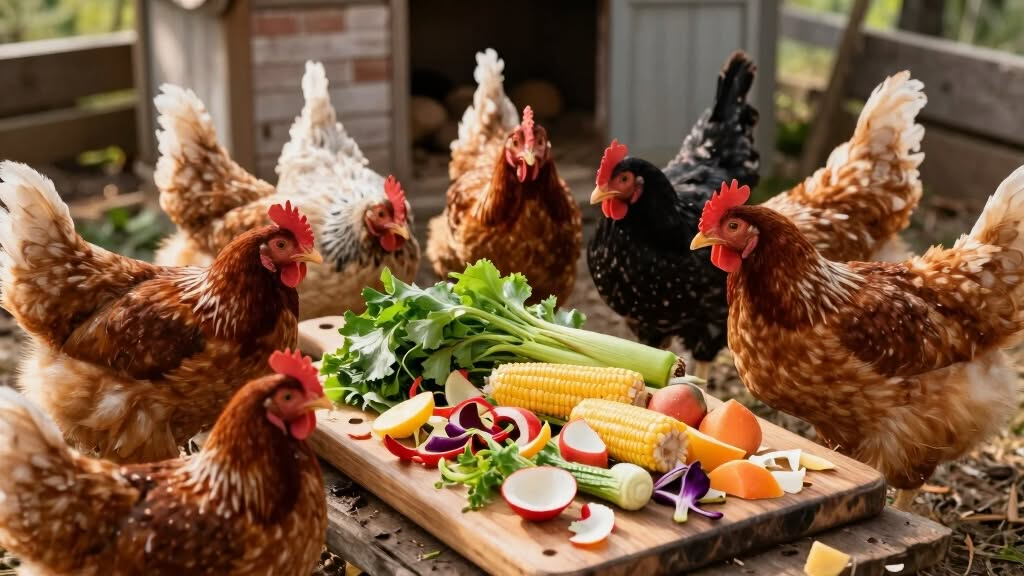
Backyard chicken keepers waste an average of 30% of their kitchen scraps because they’re unsure what’s safe to feed their flock. Kitchen scraps for chickens can reduce feed costs by up to 25% while cutting household waste, but only when you know which foods are safe, which are toxic, and how much to offer without compromising egg quality or bird health.
Key Takeaways
- Kitchen scraps should make up no more than 10-20% of a chicken’s daily diet, with complete layer feed forming the foundation
- Safe scraps include most fruits, vegetables, cooked grains, and small amounts of dairy, while avocado, chocolate, raw beans, and moldy food are toxic
- Raw potato peels and green potatoes contain solanine, a toxin that can harm chickens and should always be avoided
- Citrus fruits and banana peels are safe in moderation, though excessive citrus may reduce calcium absorption
- Baby chicks under 8 weeks should not eat kitchen scraps and need only starter feed and clean water
- Moldy or spoiled food can cause serious illness and should never be fed to chickens, despite their reputation as “garbage disposals”
- Proper preparation matters: chop large pieces, avoid excessive salt or seasoning, and remove pits and seeds from stone fruits
- Kitchen scraps alone cannot sustain chickens because they lack the balanced protein, calcium, and nutrients found in formulated feed
What Kitchen Scraps Are Safe for Chickens to Eat?
Most fruits, vegetables, cooked grains, and small amounts of protein-rich foods are safe for chickens. The safest kitchen scraps include leafy greens like lettuce and kale, vegetable trimmings such as carrot tops and peels, cooked rice and pasta, bread in moderation, most berries and melons, and small amounts of cooked meat or scrambled eggs.
Safe vegetable scraps:
- Leafy greens (lettuce, spinach, kale, cabbage)
- Squash and pumpkin (including seeds)
- Cucumbers and zucchini
- Broccoli and cauliflower (stems and florets)
- Cooked sweet potato and winter squash
- Bell peppers (any color)
- Peas and green beans
Safe fruit scraps:
- Berries of all types
- Melon rinds and flesh (watermelon, cantaloupe)
- Apple cores (remove seeds in large quantities)
- Banana peels and flesh
- Grapes, whole or halved
- Pears and stone fruit flesh (remove pits)
Safe grains and proteins:
- Cooked rice, pasta, oatmeal
- Stale bread and crackers (unsalted)
- Plain popcorn (air-popped, no butter)
- Cooked eggs (scrambled or hard-boiled)
- Small amounts of plain cooked meat
- Plain cheese in tiny amounts
Common mistake: Many chicken keepers assume all vegetable scraps are equally nutritious. While chickens will eat iceberg lettuce, it offers almost no nutritional value. Choose darker leafy greens and nutrient-dense vegetables when possible.
Can Chickens Eat Banana Peels and Citrus Fruits?
Yes, chickens can safely eat banana peels and citrus fruits in moderation. Banana peels are completely safe and many chickens enjoy them, though some may ignore them due to the tough texture. Citrus fruits like oranges, lemons, and grapefruit are also safe, but should be limited because excessive citrus may interfere with calcium absorption and affect egg production.
Banana peel feeding tips:
- Chop peels into small pieces for easier eating
- Organic peels are preferable to avoid pesticide residue
- Some chickens prefer ripe, softened peels over firm ones
- Mix with other scraps if your flock is hesitant
Citrus fruit guidelines:
- Offer small amounts (a few segments per bird) once or twice weekly
- Remove seeds and excessive pith
- Monitor for loose droppings, which may indicate too much citrus
- Avoid feeding citrus daily or in large quantities
The concern about citrus stems from its acidity and vitamin C content, which in very large amounts can reduce calcium absorption. Since laying hens need substantial calcium for strong eggshells, it’s wise to keep citrus as an occasional treat rather than a daily staple. For more information on safe fruits for chickens, check our detailed guides.
Foods That Are Toxic to Chickens
Several common kitchen scraps are genuinely dangerous to chickens and should never be fed to your flock. Avocado (especially the skin and pit), chocolate, raw or dried beans, green potatoes and tomatoes, onions and garlic in large amounts, and anything moldy or spoiled can cause serious illness or death.
Definitely toxic – never feed:
- Avocado: Contains persin, which causes heart damage and respiratory distress
- Chocolate: Theobromine is toxic to chickens, just as it is to dogs
- Raw or dried beans: Contain phytohaemagglutinin, which is poisonous (cooked beans are safe)
- Green potatoes and potato peels: High in solanine, a dangerous toxin
- Moldy or spoiled food: Can contain mycotoxins that cause severe illness
- Raw meat: Risk of bacterial contamination and disease transmission
Feed with extreme caution or avoid:
- Onions and garlic: Large amounts can cause anemia; tiny amounts are usually tolerated
- Salty or heavily seasoned foods: Can cause salt poisoning and kidney damage
- Sugary foods: Contribute to obesity and nutritional imbalance
- Processed junk food: Offers no nutritional value and displaces proper feed
- Alcohol: Even small amounts are toxic to birds
- Apple seeds in quantity: Contain cyanide compounds (a few seeds are harmless)
Edge case: Some chicken keepers report feeding small amounts of garlic as a natural wormer. While tiny amounts may be tolerated, there’s no solid evidence it works, and large amounts are definitely harmful. When in doubt, skip it.
How Much Kitchen Scraps Should I Feed My Chickens Daily?
Kitchen scraps should make up no more than 10-20% of your chickens’ total daily diet, with the remaining 80-90% coming from a complete layer feed. For a standard-sized laying hen eating about 1/4 pound of feed per day, that translates to roughly 1-2 tablespoons of scraps per bird, or about one cup of scraps for a small flock of 6-8 chickens.
Practical feeding limits:
- Small flock (4-6 birds): 1/2 to 1 cup of scraps daily
- Medium flock (8-12 birds): 1 to 2 cups of scraps daily
- Large flock (15+ birds): 2 to 3 cups of scraps daily
- Adjust based on scrap density: Leafy greens take more volume than dense foods like cooked pasta
Why the 10-20% rule matters:
Complete layer feed is scientifically formulated to provide the exact balance of protein (16-18%), calcium (3-4%), vitamins, and minerals that laying hens need. When scraps exceed 20% of the diet, chickens may not consume enough layer feed to meet their nutritional requirements, leading to poor egg production, thin shells, and health problems.
Decision rule: If your chickens are leaving layer feed uneaten in favor of scraps, you’re feeding too many treats. They should eagerly eat their complete feed first, with scraps as a supplement.
Can Chickens Eat Raw Potato Peels or Is It Dangerous?
Raw potato peels are dangerous for chickens and should never be fed to your flock. Raw potatoes, especially the peels and any green portions, contain solanine, a toxic compound that can cause digestive upset, neurological symptoms, and even death in chickens. Cooked potatoes with the peels removed are safe in moderation.
Why raw potatoes are toxic:
- Solanine is a natural pesticide produced by potato plants
- Green potatoes and sprouts have the highest concentrations
- Cooking does not eliminate solanine, but peeling removes most of it
- Symptoms include weakness, diarrhea, difficulty breathing, and paralysis
Safe potato feeding:
- Peel potatoes before cooking
- Offer only fully cooked potato flesh (baked, boiled, mashed)
- Remove any green portions or sprouts before cooking
- Feed in moderation as part of the 10-20% scrap allowance
Related concern: Green tomatoes, tomato leaves, and eggplant leaves also contain solanine and should be avoided. Ripe red tomatoes are safe. For more information on solanine poisoning, see our safety guides.
Chicken Feed vs Kitchen Scraps: Which Is Better?
Complete layer feed is essential and far superior to kitchen scraps for meeting chickens’ nutritional needs. Layer feed provides a scientifically balanced mix of 16-18% protein, 3-4% calcium, essential vitamins, and minerals that chickens cannot obtain from scraps alone. Kitchen scraps serve as a valuable supplement that reduces waste and provides enrichment, but they cannot replace formulated feed.
Why layer feed is non-negotiable:
- Precise protein levels support egg production and feather growth
- Calcium and phosphorus ratios ensure strong eggshells
- Vitamins A, D, E, and B-complex prevent deficiency diseases
- Consistent nutrition leads to predictable egg production
- Quality control ensures safety and digestibility
What kitchen scraps contribute:
- Variety and mental stimulation (foraging behavior)
- Cost savings on feed bills (when used appropriately)
- Waste reduction for your household
- Seasonal treats that chickens enjoy
- Some additional vitamins and antioxidants
Choose layer feed if: You want consistent egg production, strong shells, healthy birds, and simplified feeding. Choose to supplement with scraps if you want to reduce waste, save a bit on feed costs, and provide enrichment, but never replace more than 20% of the feed ration.
What Vegetables Should You Never Give to Chickens?
Never feed chickens raw potatoes or potato peels, green tomatoes or tomato leaves, raw dried beans, rhubarb leaves, or large amounts of raw onions. These vegetables contain compounds that are toxic to chickens, ranging from solanine in nightshade plants to oxalic acid in rhubarb leaves.
Vegetables to completely avoid:
- Raw potatoes and peels: Solanine toxicity
- Green tomatoes and all tomato plant parts (leaves, stems): Solanine
- Rhubarb leaves: Oxalic acid causes kidney damage (stalks are safe in small amounts)
- Raw or dried beans: Phytohaemagglutinin (cooked beans are safe)
- Eggplant leaves and flowers: Solanine (ripe eggplant flesh is safe)
Vegetables to limit or use with caution:
- Raw onions: Can cause hemolytic anemia in large amounts
- Asparagus: Safe but can give eggs an off-flavor if fed in excess
- Raw cabbage and kale: Large amounts may interfere with thyroid function
- Beets: Can cause red droppings (harmless but alarming)
Common mistake: Assuming that because chickens will eat something, it must be safe. Chickens are curious and will peck at almost anything, but they don’t instinctively know what’s toxic. It’s your job to screen out dangerous foods.
Can Baby Chicks Eat the Same Scraps as Adult Chickens?
No, baby chicks under 8 weeks old should not eat kitchen scraps. Chicks need only starter feed (18-20% protein) and clean water until they’re fully feathered and transitioned to grower or layer feed. Their digestive systems are delicate, and scraps can cause nutritional imbalances, digestive upset, and developmental problems during this critical growth phase.
Chick feeding timeline:
- 0-8 weeks: Starter feed only (18-20% protein), no scraps
- 8-16 weeks: Grower feed (16-18% protein), tiny amounts of soft scraps if desired
- 16+ weeks (or first egg): Layer feed (16% protein, 3-4% calcium), normal scrap allowance
Why chicks need only starter feed:
- Rapid growth requires precise protein and amino acid ratios
- Developing digestive systems can’t handle variety
- Nutritional imbalances can cause leg deformities and failure to thrive
- Grit is needed to digest anything other than crumbles, and chicks don’t naturally seek it
If you must offer treats to older chicks (8+ weeks):
- Tiny amounts of finely chopped soft foods only
- Scrambled egg, plain yogurt, or mashed banana
- Always provide chick grit if offering anything but feed
- Never exceed 5% of diet
Do Kitchen Scraps Affect Egg Taste or Quality?
Yes, kitchen scraps can affect egg taste, yolk color, and occasionally shell quality. Strong-flavored foods like onions, garlic, and fish can impart off-flavors to eggs, while foods rich in carotenoids (like dark greens and squash) produce deeper orange yolks. Excessive scraps that displace layer feed can lead to thin shells and reduced production.
How scraps influence eggs:
- Yolk color: Dark leafy greens, squash, and corn deepen yolk color to rich orange
- Flavor: Onions, garlic, fish, and asparagus can cause unpleasant egg flavors
- Shell quality: Too many scraps mean less calcium intake, resulting in thin or soft shells
- Production rate: Nutritional imbalances from excessive scraps reduce laying frequency
To maintain egg quality:
- Keep scraps to 10-20% of diet maximum
- Avoid feeding strong-flavored foods within 4-6 hours of egg collection
- Ensure constant access to layer feed and calcium supplements (oyster shell)
- Monitor shell thickness and adjust scrap amounts if shells become thin
Positive note: Many backyard chicken keepers prize the deep orange yolks that result from a varied diet including scraps. As long as the base diet remains complete layer feed, these colorful yolks are a sign of good nutrition, not a problem.
Can Chickens Eat Moldy or Spoiled Food Scraps?
No, chickens should never eat moldy or spoiled food scraps. Despite their reputation as barnyard “garbage disposals,” chickens are susceptible to mycotoxins produced by mold, which can cause serious illness, liver damage, and death. Spoiled food also harbors harmful bacteria that can make chickens sick.
Why moldy food is dangerous:
- Molds produce mycotoxins that damage organs
- Aflatoxin (from moldy grains and nuts) is especially deadly
- Symptoms include lethargy, loss of appetite, and sudden death
- Chickens cannot “burn off” toxins the way some assume
What counts as spoiled:
- Any food with visible mold (even small spots)
- Slimy or foul-smelling vegetables
- Fermented or rotting fruit (unless intentionally fermented properly)
- Meat or dairy past safe consumption dates
- Anything you wouldn’t eat yourself
Safe alternative: If you want to use kitchen scraps that are slightly past prime, compost them first, then feed the resulting compost worms or insects to your chickens. This breaks down potential toxins and provides protein-rich treats.
How to Prepare Kitchen Scraps for Chickens Safely
Chop scraps into bite-sized pieces, remove any toxic parts (pits, seeds, peels), avoid heavily seasoned or salty foods, and offer scraps in a clean container separate from their main feed. Fresh scraps should be removed within a few hours to prevent spoilage, and chickens should always have access to grit to help digest fibrous materials.
Preparation checklist:
- Wash produce to remove pesticides and dirt
- Chop large items into pieces smaller than a golf ball
- Remove pits, large seeds, and toxic parts (avocado skin, apple seeds in quantity)
- Avoid seasoning: No salt, butter, oils, or spices
- Cool cooked foods before offering to prevent crop burn
- Provide grit (small stones) to help chickens grind fibrous scraps
Feeding methods:
- Scatter on ground: Encourages natural foraging behavior
- Hang vegetables: Cabbage or lettuce heads hung at chest height provide entertainment
- Use a dedicated scrap dish: Keeps scraps separate from feed and makes cleanup easy
- Compost first, then feed insects: Worms and bugs from compost are protein-rich treats
Timing tip: Offer scraps in the afternoon after chickens have eaten their fill of layer feed. This ensures they get complete nutrition first and treat scraps as supplemental.
Are Coffee Grounds and Tea Bags Safe for Chickens?
Coffee grounds and tea bags are not recommended for chickens. While small amounts are unlikely to cause immediate harm, coffee grounds contain caffeine, which can be toxic to birds in larger quantities, and tea bags may contain caffeine plus strings and staples that pose choking hazards. It’s safer to compost these items rather than feed them to your flock.
Why to avoid coffee and tea:
- Caffeine is a stimulant that can cause heart problems in birds
- Chickens may consume more than intended if grounds are mixed with other scraps
- Tea bags often contain non-digestible materials (strings, tags, staples)
- No nutritional benefit to offset the risk
Better alternatives for similar scraps:
- Vegetable and fruit scraps provide vitamins without risk
- Cooked oatmeal offers similar texture to grounds but is nutritious
- Herbal tea leaves (caffeine-free) in tiny amounts are less risky but still not ideal
What to do with coffee grounds: Add them to your compost pile, where they’ll enrich the soil. Later, your chickens can enjoy the worms and insects that thrive in that compost, getting protein without the caffeine risk.
Can Backyard Chickens Survive Only on Kitchen Scraps?
No, backyard chickens cannot survive or thrive on kitchen scraps alone. Scraps lack the balanced protein, calcium, vitamins, and minerals that chickens need for health, egg production, and longevity. A diet of only scraps leads to malnutrition, poor egg production, thin shells, feather loss, and shortened lifespan.
What happens without complete feed:
- Protein deficiency: Leads to feather picking, poor feathering, and reduced egg production
- Calcium deficiency: Causes soft-shelled or shell-less eggs and bone weakness
- Vitamin deficiencies: Result in neurological problems, poor immunity, and failure to thrive
- Inconsistent nutrition: Creates unpredictable health and production outcomes
Minimum requirements for healthy chickens:
- Complete layer feed as 80-90% of diet
- Constant access to clean water
- Calcium supplement (oyster shell or crushed eggshells) offered free-choice
- Grit for digestion if they don’t free-range on soil
- Kitchen scraps as 10-20% supplement only
Real-world example: Free-ranging chickens that appear to “live on scraps and bugs” are actually consuming a diverse diet of insects (high protein), seeds, grasses, and minerals from soil. Even they benefit from supplemental layer feed to ensure consistent nutrition. For more on chicken nutrition, explore our feeding guides.
What Happens If Chickens Eat Avocado or Chocolate?
If chickens eat avocado or chocolate, they can experience serious illness or death. Avocado contains persin, which causes heart damage, respiratory distress, and fluid accumulation around the heart and lungs. Chocolate contains theobromine, which is toxic to birds and causes hyperactivity, seizures, heart arrhythmias, and death.
Avocado poisoning symptoms:
- Difficulty breathing and labored respiration
- Weakness and lethargy
- Sudden death in severe cases
- All parts are toxic, but skin and pit have highest concentrations
Chocolate poisoning symptoms:
- Hyperactivity and restlessness
- Vomiting and diarrhea
- Rapid heart rate
- Tremors, seizures, and death in severe cases
- Dark chocolate and baking chocolate are most dangerous
What to do if your chicken eats these foods:
- Remove the food source immediately
- Observe the bird closely for symptoms
- Contact a veterinarian experienced with poultry
- Provide fresh water and keep the bird calm
- Separate affected birds from the flock to monitor closely
Prevention: Store avocados and chocolate securely, educate family members about chicken toxins, and never scrape plates with these foods into the scrap bucket. For more information on toxic foods for chickens, review our complete safety guides.
Frequently Asked Questions
Can chickens eat bread?
Yes, chickens can eat bread in moderation as an occasional treat. Offer small amounts of whole grain bread, and avoid moldy bread or large quantities, which can cause crop impaction and nutritional imbalances.
Are eggshells safe to feed back to chickens?
Yes, crushed eggshells are an excellent calcium source for laying hens. Bake shells at 350°F for 10 minutes, crush finely, and offer free-choice to prevent egg-eating behavior from developing.
Can chickens eat rice?
Yes, both cooked and uncooked rice are safe for chickens. Cooked rice is easier to digest, while uncooked rice is fine despite the myth that it expands dangerously in their stomachs.
How do I know if I’m feeding too many scraps?
If your chickens leave layer feed uneaten, produce thin-shelled eggs, or show signs of nutritional deficiency (feather loss, lethargy, reduced laying), you’re feeding too many scraps. Reduce to 10% of diet.
Can chickens eat meat scraps?
Yes, chickens can eat small amounts of cooked meat scraps. Avoid raw meat (bacterial risk), processed meats high in salt, and large quantities that might encourage aggressive behavior.
Are tomatoes safe for chickens?
Ripe red tomatoes are safe and nutritious for chickens. Avoid green tomatoes, tomato leaves, and stems, which contain solanine and are toxic.
Can chickens eat pasta?
Yes, cooked pasta is safe for chickens in moderation. Plain pasta is best; avoid heavily sauced or seasoned pasta, which may contain garlic, onions, or excessive salt.
What should I do with kitchen scraps my chickens won’t eat?
Compost scraps that chickens refuse, then use the finished compost in your garden. The worms and insects that develop in compost make excellent high-protein treats for chickens.
Can chickens eat peanut butter?
Yes, chickens can eat small amounts of unsalted, unsweetened peanut butter. Offer it sparingly as a high-calorie treat, and thin it with water to prevent choking.
How long can kitchen scraps sit in the coop before they spoil?
Remove uneaten scraps within 2-4 hours in warm weather and 6-8 hours in cool weather. Spoiled food attracts pests and can make chickens sick.
Can chickens eat cheese?
Yes, chickens can eat small amounts of plain cheese as an occasional treat. Avoid moldy cheese and limit quantities, as chickens don’t digest dairy as efficiently as other foods. Learn more in our guide to feeding cheese to chickens.
Are banana peels safe for chickens?
Yes, banana peels are completely safe and nutritious for chickens. Chop them into small pieces for easier eating, and choose organic when possible to avoid pesticide residue. Read our complete banana feeding guide for more details.
Conclusion
Understanding kitchen scraps for chickens, safe lists and limits, transforms your flock’s health and your household’s waste stream. The key is balance: keep scraps to 10-20% of your chickens’ diet, avoid toxic foods like avocado and chocolate, and always provide complete layer feed as the foundation. Safe scraps include most fruits, vegetables, and cooked grains, while raw potatoes, moldy food, and heavily seasoned items should never reach your coop.
Start by creating a dedicated scrap container in your kitchen labeled with safe and unsafe foods. Review the toxic food list with everyone in your household, and commit to offering scraps only after your chickens have eaten their layer feed each day. Monitor egg quality and shell strength as indicators that your feeding program is working. With these practices in place, you’ll reduce waste, save on feed costs, and keep your flock healthy and productive for years to come.
For more guidance on safe foods for chickens and healthy chicken treats, explore our complete library of feeding guides.