
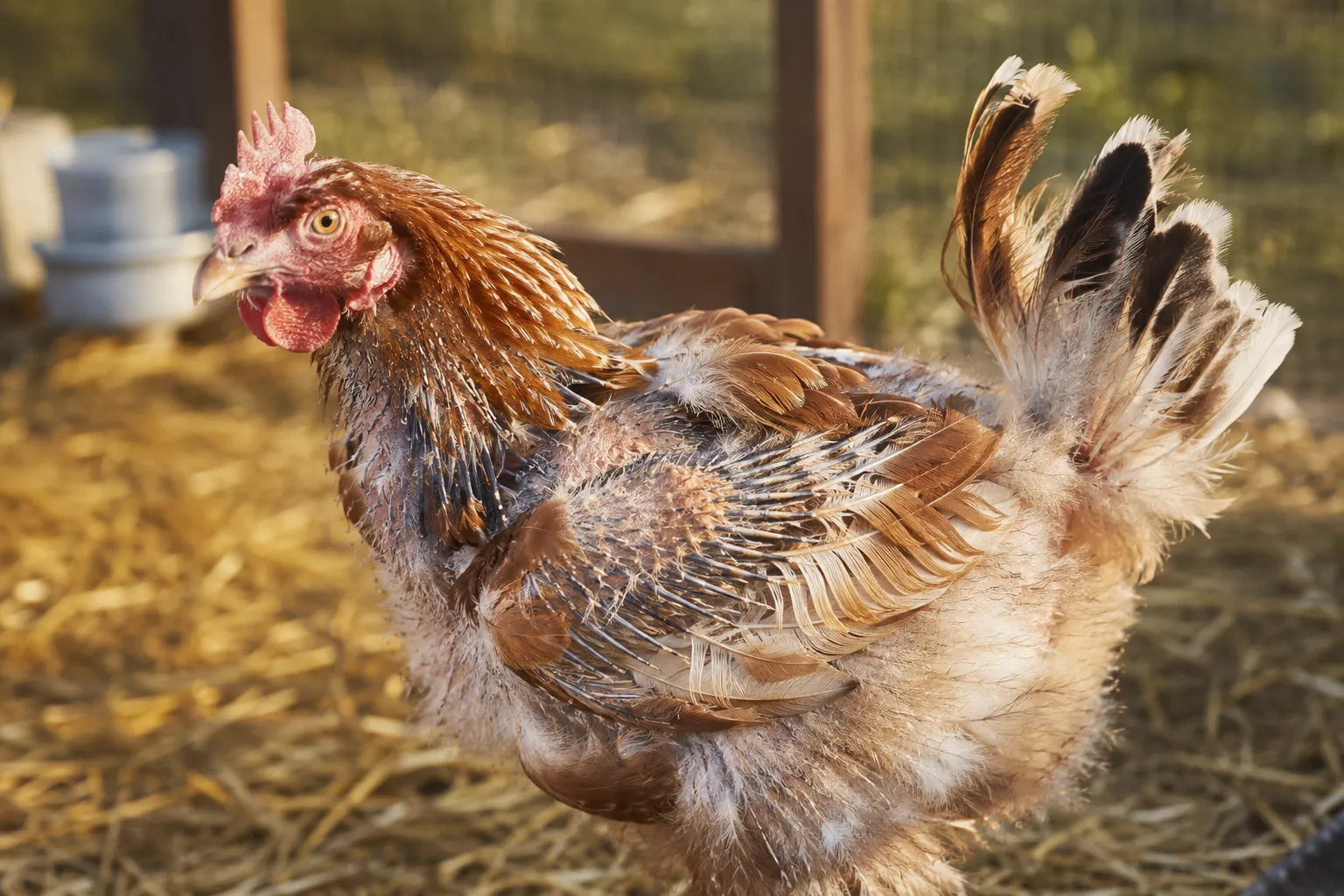
Quick Answer: Chickens lose feathers primarily due to molting, a natural annual process where they shed old plumage and grow new feathers, typically in fall. However, feather loss can also result from mites, lice, stress, feather pecking, poor nutrition, or illness. Molting follows a predictable pattern starting at the head and neck, while parasites or stress cause irregular patchy loss.
Key Takeaways
- Molting is normal: Adult chickens molt once yearly, usually in fall, losing and regrowing feathers over 8-16 weeks
- Egg production stops: Most hens stop or drastically reduce laying during molt to redirect protein to feather growth
- Protein is essential: Feathers are 80-85% protein, so molting chickens need 20-22% protein feed versus the standard 16%
- Pattern matters: Symmetrical feather loss starting at the head indicates molting; random bald patches suggest parasites or pecking
- First molt timing: Chickens typically experience their first adult molt at 16-18 months of age
- Stress triggers loss: Extreme heat, predator attacks, sudden diet changes, or overcrowding can cause out-of-season feather loss
- Check for parasites: Mites and lice cause intense itching, skin irritation, and feather damage that looks different from molting
- Winter molts happen: While uncommon, some chickens molt in winter due to artificial lighting changes or breed variation
- Roosters molt too: Male chickens follow the same molting pattern as hens, though timing may vary slightly
- Duration varies: Fast molters finish in 8-10 weeks; slow molters take 12-16 weeks or longer
What Is Molting in Chickens?
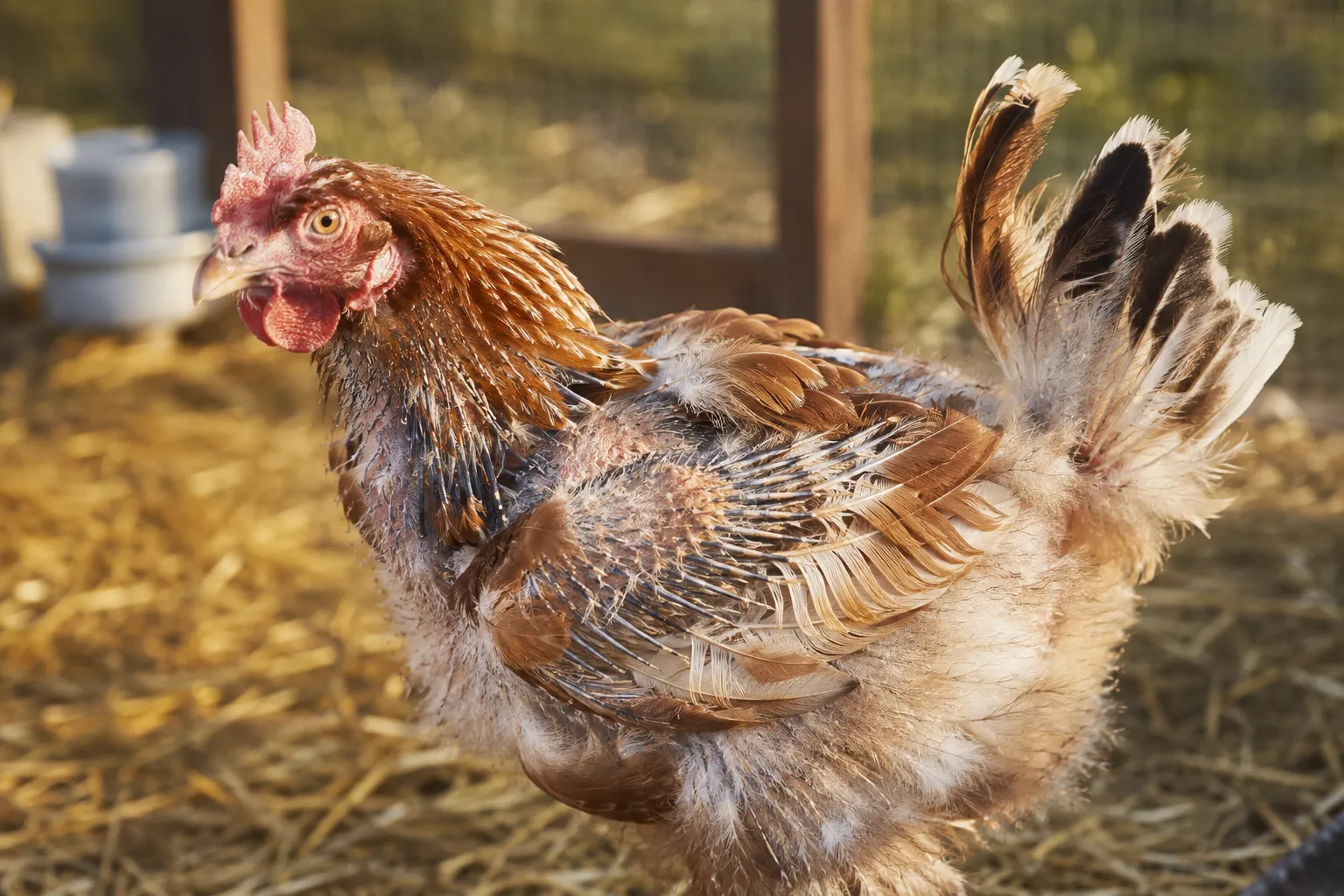
Molting is the natural process where chickens shed old, worn feathers and grow fresh plumage. This biological cycle allows birds to replace damaged feathers, maintain insulation, and prepare for seasonal changes. During a molt, chickens lose feathers in a predictable sequence, starting from the head and neck, then moving down the body to wings and tail.
The process is controlled by hormones triggered by decreasing daylight hours in late summer and fall. As days shorten, the pituitary gland reduces production of hormones that support feather retention, causing follicles to release old feathers. New pin feathers (also called blood feathers) emerge from the same follicles within days.
Key characteristics of normal molting:
- Follows a head-to-tail pattern with symmetrical loss on both sides
- Takes 8-16 weeks depending on whether the chicken is a fast or slow molter
- New pin feathers appear as small, waxy tubes that gradually unfurl
- Chickens may look ragged but skin remains healthy and pink
- Behavior remains normal aside from possible irritability when pin feathers emerge
Choose molting as the explanation if: Your chicken loses feathers symmetrically in fall, shows new pin feather growth, maintains normal appetite and behavior, and has no signs of skin irritation or parasites.
How Long Does Chicken Molting Last?
Chicken molting typically lasts 8-16 weeks from the first feather drop to complete plumage regrowth. Fast molters shed feathers quickly and regrow them in 8-10 weeks, while slow molters take 12-16 weeks or longer. The duration depends on genetics, age, nutrition, and overall health.
Molting timeline breakdown:
- Weeks 1-2: Initial feather loss begins at head and neck; egg production slows or stops
- Weeks 3-6: Heavy shedding continues down the body; chicken looks most ragged; pin feathers emerge
- Weeks 7-10: Pin feathers unfurl into new plumage; body feathers mostly regrown
- Weeks 11-16: Wing and tail feathers complete growth; egg production may resume
Younger chickens in their first or second molt often finish faster than older hens. Poor nutrition, stress, or health issues can extend the molting period significantly. Some chickens experience a “soft molt” where they lose fewer feathers gradually over several months rather than a dramatic shed.
Common mistake: Expecting egg production to resume immediately after feathers regrow. Most hens need an additional 2-4 weeks after visible feather regrowth before laying resumes, as their reproductive system also needs recovery time.
When Do Chickens Molt for the First Time?
Chickens experience their first adult molt at 16-18 months of age, typically in their second fall season. Before this, chicks go through several juvenile feather changes that are not true molts: they lose downy fluff at 1-6 weeks, grow juvenile feathers at 6-12 weeks, and develop adult plumage by 16-20 weeks.
The first adult molt is often less dramatic than subsequent molts. Young hens may lose fewer feathers and complete the process faster than older birds. Some first-time molters continue laying eggs intermittently, while others stop completely.
Juvenile feather changes versus adult molt:
- Baby chick down (0-6 weeks): Fluffy down replaced by first feathers
- Juvenile molt (6-12 weeks): Partial feather replacement as chicks grow
- Adult plumage (16-20 weeks): Final juvenile feathers replaced by mature feathers
- First adult molt (16-18 months): Complete feather replacement following adult pattern
Edge case: Chickens hatched in spring typically molt in their second fall (around 18 months), while those hatched in summer may molt slightly earlier (around 16 months) to align with seasonal daylight changes.
Why Is My Chicken Losing Feathers Outside of Molting Season?
Chickens can lose feathers outside the typical fall molting period due to stress, parasites, nutritional deficiencies, feather pecking, or illness. Stress-induced feather loss occurs when chickens experience extreme temperature changes, predator attacks, sudden flock changes, or overcrowding. Unlike molting, stress-related loss appears irregular and may affect specific body areas.
Common non-molting causes of feather loss:
- Mites and lice: Parasites cause intense itching, leading to feather damage and loss, especially around the vent, under wings, and on the back
- Feather pecking: Dominant birds or bored chickens pull feathers from flock mates, creating bald spots on the back, tail, or head
- Rooster mating: Over-mating causes feather loss on hens’ backs and shoulders where roosters grip during breeding
- Poor nutrition: Protein or amino acid deficiencies prevent proper feather maintenance, causing brittle, broken feathers
- Broody behavior: Broody hens pluck breast feathers to create a bare brood patch for better egg contact
- Vent pecking: Prolapse, egg binding, or bright red vents attract pecking from other chickens
Stress triggers that cause out-of-season feather loss:
- Sudden changes in coop environment or flock composition
- Extreme heat waves (over 95°F for extended periods)
- Predator attacks or persistent threats
- Abrupt diet changes or feed shortages
- Overcrowding (less than 3-4 square feet per bird indoors)
Decision rule: If feather loss occurs in spring or summer with irregular patterns, check for parasites first, then evaluate stress factors and flock dynamics before assuming illness.

How Can I Tell If My Chicken Is Molting or Sick?
A molting chicken shows symmetrical feather loss with healthy pink skin and normal behavior, while a sick chicken displays irregular feather loss accompanied by lethargy, appetite changes, respiratory symptoms, or skin abnormalities. The pattern, timing, and accompanying symptoms distinguish molting from illness.
Signs your chicken is molting (not sick):
- Feather loss follows a predictable head-to-tail pattern
- Both sides of the body lose feathers symmetrically
- New pin feathers visible as small tubes emerging from follicles
- Skin appears healthy, pink, and free from scabs or irritation
- Appetite remains strong (often increases due to protein needs)
- Activity level normal, though bird may be more irritable
- Occurs in fall or after stressful events
- Other flock members may be molting simultaneously
Signs your chicken may be sick:
- Random, patchy feather loss with no pattern
- Skin shows redness, scabs, sores, or unusual discoloration
- No new pin feathers emerging after several weeks
- Lethargy, hunched posture, or reluctance to move
- Loss of appetite or reduced water intake
- Respiratory symptoms (wheezing, nasal discharge, coughing)
- Diarrhea or abnormal droppings
- Swollen joints, limping, or coordination problems
Common mistake: Assuming all feather loss during fall is molting. Parasites like mites are most active in warm fall weather and can coincide with molting season, requiring close inspection of skin and feathers.
What’s the Difference Between Molting and Feather Loss from Mites?
Molting causes symmetrical feather loss with clean, healthy skin and visible new pin feathers, while mite infestations create irregular bald patches with skin irritation, scabs, and damaged feather shafts. Mites are tiny parasites that feed on blood and skin, causing intense itching that leads chickens to scratch and damage their own feathers.
Molting characteristics:
- Feathers fall out cleanly from the follicle
- Skin remains smooth and pink
- New growth appears within days as pin feathers
- No itching or excessive preening
- Follows seasonal timing (usually fall)
- Affects entire flock around the same time
Mite infestation characteristics:
- Feathers appear chewed, broken, or have damaged shafts
- Skin shows redness, scabs, or tiny moving dots (mites)
- Bald patches concentrate around vent, under wings, on legs
- Chickens scratch excessively, especially at night
- May see tiny red, gray, or black mites on skin or roosts
- Can occur any time of year but peaks in warm weather
- May affect only some flock members initially
How to check for mites: Examine your chicken at night with a flashlight, focusing on the vent area, under wings, and along the breast. Red mites appear as tiny moving dots. Northern fowl mites stay on the bird constantly and cluster around the vent. Check feather shafts for tiny eggs or debris at the base.
Edge case: Chickens can molt and have mites simultaneously. If your molting chicken shows excessive scratching, check carefully for parasites even if the timing suggests normal molting.
Do Chickens Stop Laying Eggs During Molting?
Most chickens stop laying eggs or drastically reduce production during molting because feather regrowth requires enormous amounts of protein and energy. Egg production and feather growth both demand high protein resources, and the chicken’s body prioritizes feather replacement for survival over reproduction.
Feathers are composed of 80-85% protein, primarily keratin. Growing a complete new set of feathers requires roughly the same protein amount as producing 8-12 weeks of eggs. Since chickens cannot sustain both processes simultaneously, egg production ceases in 90% of molting hens.
What to expect during molt:
- Egg production stops within 1-2 weeks of molt starting
- Some young, healthy hens may lay sporadically during a light molt
- Egg production resumes 2-6 weeks after feathers fully regrow
- First eggs after molt may be smaller or have thin shells
- Annual egg production decreases slightly with each successive molt
Factors affecting whether a hen lays during molt:
- Age: Young hens (first molt) more likely to lay occasionally than older birds
- Molt severity: Soft molts may allow continued laying; hard molts always stop production
- Nutrition: Excellent high-protein diet may support minimal laying in some birds
- Breed: Production breeds stop completely; some heritage breeds lay sporadically
Common mistake: Forcing egg production during molt by extending artificial light. This prevents proper molting, leading to poor feather quality and long-term health problems. Allow the natural cycle to complete.
What Should I Feed Chickens During Molt to Help Feather Regrowth?
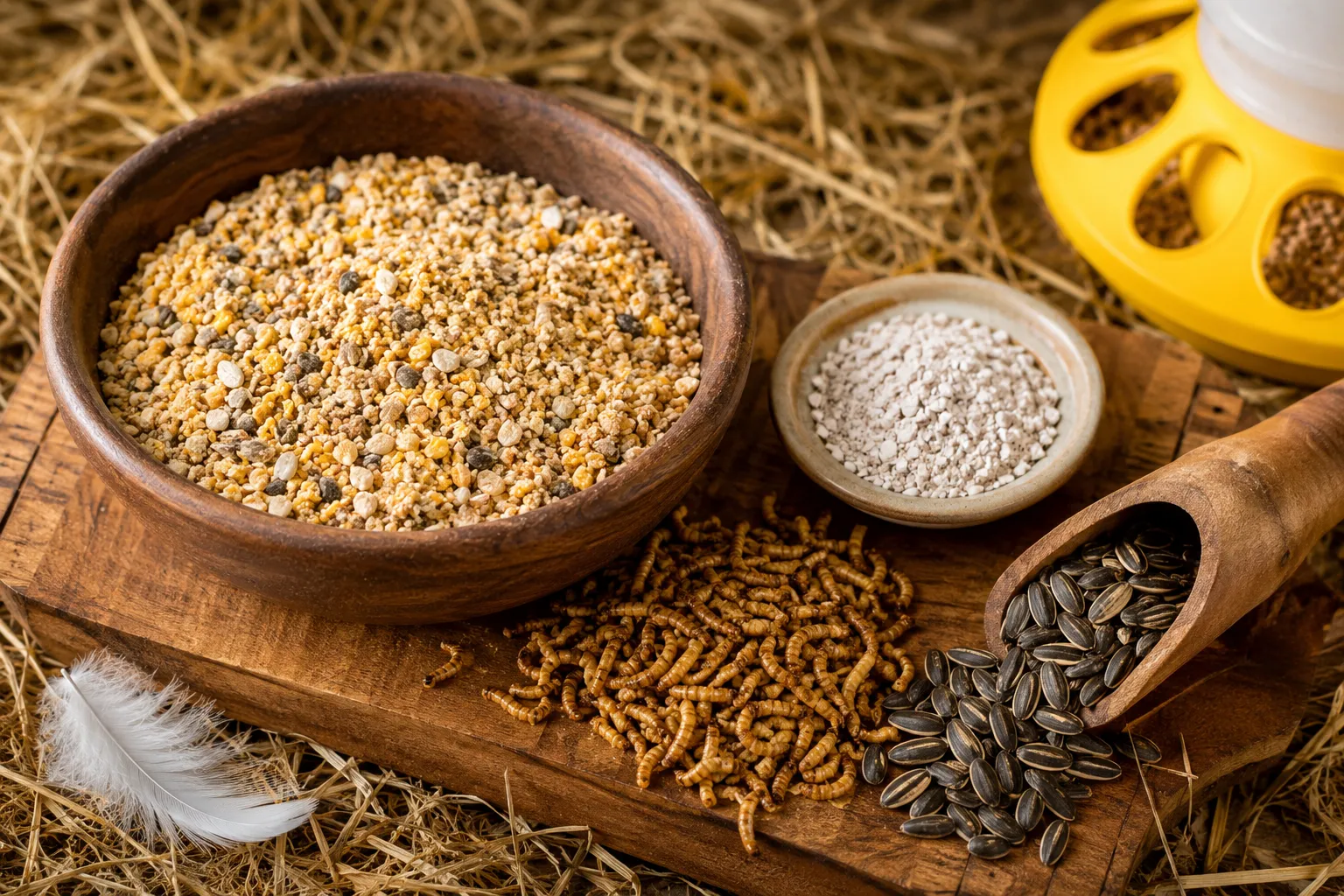
Feed molting chickens a diet containing 20-22% protein, compared to the standard 16% layer feed, to support rapid feather regrowth. Switch to gamebird feed, flock raiser, or all-flock feed during the molt period, and supplement with high-protein treats like mealworms, black oil sunflower seeds, scrambled eggs, or fish.
Best feed options during molt:
- Gamebird or turkey grower feed (22-24% protein): Ideal for molting, widely available
- Flock raiser or all-flock feed (18-20% protein): Good option if gamebird feed unavailable
- Layer feed plus protein supplements (16% base + supplements): Acceptable if you cannot switch feeds
High-protein supplement options:
- Mealworms (dried or live): 50-60% protein; offer 1-2 tablespoons per bird daily
- Black oil sunflower seeds: 20-25% protein; offer as 10% of daily diet
- Scrambled or boiled eggs: Excellent complete protein; 2-3 times weekly
- Canned fish (tuna, mackerel, sardines): High protein and omega-3s; once weekly
- Peas, lentils, or cooked beans: Plant-based protein; mix into regular feed
Feeding schedule during molt:
- Switch to higher protein feed when molt begins
- Offer protein supplements daily or every other day
- Continue free-choice calcium (oyster shell) in separate container
- Ensure constant access to fresh water (feather growth requires hydration)
- Return to regular layer feed 2-3 weeks after feathers fully regrow
Common mistake: Continuing layer feed (16% protein) throughout molt. While chickens survive on this, feather regrowth takes significantly longer and new feathers may be weaker or of poorer quality.
Should I Add Protein Supplements During Chicken Molt?
Yes, adding protein supplements during molt significantly improves feather regrowth speed and quality, especially if you cannot switch to higher-protein feed. Supplements like mealworms, sunflower seeds, and fish provide concentrated protein and essential amino acids that support keratin production for new feathers.
The amino acids methionine and cysteine are particularly important for feather development. These sulfur-containing amino acids form the structural bonds in keratin. Animal-based proteins (mealworms, fish, eggs) provide better amino acid profiles for feather growth than plant proteins alone.
Best protein supplements ranked by effectiveness:
- Mealworms (dried or live): Highest protein density, excellent amino acid profile, chickens love them
- Fish (canned or cooked): Complete protein with omega-3s for feather quality
- Eggs (scrambled or boiled): Perfect amino acid balance, highly digestible
- Black oil sunflower seeds: Good protein plus healthy fats for feather sheen
- Meat scraps (cooked, unseasoned): High-quality animal protein
- Legumes (cooked beans, lentils, peas): Plant-based option, lower bioavailability
How much to supplement:
- Offer protein treats totaling 10-15% of daily diet
- For a 5-pound hen eating 1/4 pound feed daily: 1-2 tablespoons mealworms or equivalent
- Spread supplements throughout the day rather than one large portion
- Reduce supplements if chickens ignore regular feed
Edge case: Over-supplementing protein (above 24-26%) can stress kidneys and cause loose droppings. If you notice watery droppings or reduced feed consumption, cut back on supplements.
Molting vs Feather Pecking: How to Tell the Difference
Molting creates symmetrical feather loss with intact skin and new pin feather growth, while feather pecking causes irregular bald patches concentrated on the back, tail, and head with broken feather shafts and sometimes bloody skin. Feather pecking is a behavioral problem where chickens pull out or eat feathers from flock mates.
Molting appearance:
- Feathers fall out naturally in a predictable pattern
- Feather shafts are clean and complete when shed
- Bald areas appear on both sides of body equally
- Skin is smooth without wounds
- New pin feathers emerge quickly
Feather pecking appearance:
- Bald spots appear suddenly on back, base of tail, or head
- Broken feather shafts visible sticking out of skin
- Feather loss concentrated where other chickens can reach
- May see blood spots or wounds on skin
- No new feather growth while pecking continues
- Victim bird appears stressed or tries to avoid others
Why chickens peck feathers:
- Boredom: Insufficient space, lack of enrichment, or confinement
- Overcrowding: Less than 3-4 square feet per bird indoors
- Protein deficiency: Low-protein diet triggers feather eating
- Bright lights: Overly bright coop lighting increases aggression
- Flock hierarchy: Bullying or establishing pecking order
- Curiosity: Blood or red skin attracts pecking behavior
How to stop feather pecking:
- Increase coop and run space if overcrowded
- Add enrichment: hanging vegetables, perches at different heights, dust bath areas
- Check protein levels and increase if below 16%
- Reduce lighting intensity or switch to red bulbs
- Apply anti-pecking spray or pinless peepers to aggressive birds
- Separate severely injured birds until healed
Decision rule: If only one or two chickens show feather loss on their backs while others are fully feathered, suspect pecking rather than molting.
Why Is Only One of My Chickens Losing Feathers?
When only one chicken loses feathers while others remain fully feathered, the cause is typically feather pecking, over-mating by a rooster, parasites concentrated on that bird, or individual illness rather than molting. Molting usually affects the entire flock within a few weeks of each other, though timing can vary by 2-4 weeks between individuals.
Common reasons for single-bird feather loss:
- Feather pecking victim: Low-ranking bird targeted by flock mates
- Rooster over-mating: Favorite hen shows back and shoulder feather loss
- Parasite concentration: Weakened bird attracts more mites or lice
- Broody behavior: Hen plucks own breast feathers to create brood patch
- Individual illness: Compromised immune system affects feather retention
- Early molter: First bird in flock to begin seasonal molt
How to determine the cause:
- Check the location: Back/shoulder loss suggests mating or pecking; breast loss indicates brooding; vent area suggests parasites
- Observe flock behavior: Watch for pecking, chasing, or excessive rooster attention
- Inspect skin closely: Look for mites, lice, wounds, or irritation
- Assess timing: If fall and bird shows pin feathers, likely early molt
- Evaluate overall health: Check appetite, activity level, and droppings
Solutions by cause:
- Over-mating: Use a hen saddle/apron to protect back; reduce rooster-to-hen ratio (ideal is 1:8-10)
- Pecking victim: Separate temporarily; add enrichment; check protein levels
- Parasites: Treat entire flock even if only one shows symptoms
- Early molt: Increase protein for that bird; others will likely follow soon
Do Roosters Molt the Same Way as Hens?
Yes, roosters molt following the same head-to-tail pattern as hens, though their molt may begin slightly later in the season and their ornamental feathers (saddle, hackle, and tail sickles) take longer to regrow fully. Roosters do not experience the egg production shutdown that hens do, but fertility may decrease during heavy molt.
Rooster molting characteristics:
- Follows identical head-to-tail sequence as hens
- May begin 2-4 weeks later than hens in the same flock
- Long tail sickles and saddle feathers take 12-16 weeks to reach full length
- Comb and wattles may appear slightly paler during molt
- Crowing may decrease slightly during peak feather loss
- Fertility drops during heavy molt but rarely stops completely
Differences from hen molting:
- Roosters maintain some breeding activity throughout molt
- Ornamental feathers grow slower than body feathers
- Roosters may appear more ragged longer due to slow tail regrowth
- No egg production changes (obviously)
- May become less aggressive during peak molt
Common mistake: Assuming a rooster is sick when his long tail feathers take months to regrow. Sickle feathers can take 3-4 months to reach full show-quality length, even after body feathers are complete.
Can Chickens Molt in Winter or Only in Fall?
Chickens can molt in winter, though it is less common and potentially more dangerous due to cold stress. Winter molts typically occur when artificial lighting is suddenly removed, when chickens experience severe stress, or in breeds with different seasonal patterns. Fall molting is standard because it allows feathers to regrow before the coldest weather arrives.
Why fall molting is normal:
- Decreasing daylight hours trigger hormonal changes
- Allows complete feather regrowth before winter cold
- Aligns with natural end of breeding season
- Temperatures remain mild during vulnerable featherless period
Causes of winter molting:
- Artificial light changes: Removing supplemental lighting suddenly triggers molt
- Severe stress: Predator attacks, illness, or flock disruption
- Late hatching: Birds hatched in summer may molt on delayed schedule
- Breed variation: Some heritage breeds follow different patterns
- Southern climates: Mild winters allow safe late molting
Risks of winter molting:
- Chickens lose insulation during coldest weather
- Increased feed consumption to maintain body heat
- Higher risk of frostbite on exposed skin
- Potential for respiratory illness if coop is drafty
- Longer recovery time due to cold stress
How to help chickens molting in winter:
- Ensure coop is draft-free but well-ventilated (no moisture buildup)
- Provide extra bedding for insulation
- Increase protein feed to 20-22% to speed feather regrowth
- Offer high-calorie treats (cracked corn, sunflower seeds) for warmth
- Do not use heat lamps (fire risk and prevents cold acclimation)
- Check for frostbite on combs, wattles, and exposed skin daily
Decision rule: If your chickens molt in winter due to artificial light removal, maintain the natural lighting schedule going forward to prevent future winter molts.
Common Mistakes When Caring for Molting Chickens
The most common mistakes when caring for molting chickens include continuing low-protein layer feed, handling birds roughly when pin feathers are emerging, expecting immediate egg production after feather regrowth, and adding artificial light to speed the process. These errors prolong molt duration, reduce feather quality, and stress the birds.
Top mistakes and how to avoid them:
1. Keeping chickens on 16% layer feed
- Problem: Insufficient protein slows feather regrowth significantly
- Solution: Switch to 20-22% protein feed or add daily protein supplements
2. Handling molting chickens unnecessarily
- Problem: Emerging pin feathers are extremely sensitive and painful when touched
- Solution: Minimize handling during weeks 2-6 of molt; if necessary, support body weight without touching feathered areas
3. Expecting eggs immediately after feathers regrow
- Problem: Reproductive system needs recovery time after molt
- Solution: Allow 2-4 additional weeks after visible feather completion before expecting eggs
4. Adding artificial light to prevent or speed molt
- Problem: Disrupts natural hormonal cycles, causes poor feather quality, shortens hen’s productive life
- Solution: Allow natural molting cycle to complete; accept seasonal egg production changes
5. Bathing molting chickens
- Problem: Wet feathers and exposed skin increase cold stress and infection risk
- Solution: Avoid baths during molt unless medically necessary; spot-clean only if required
6. Assuming all feather loss is molting
- Problem: Delays treatment of parasites, illness, or behavioral problems
- Solution: Always check for mites, lice, and pecking wounds even during molting season
7. Isolating molting chickens from the flock
- Problem: Creates reintegration challenges and increases stress
- Solution: Keep molting birds with flock unless injured or being pecked
8. Over-supplementing calcium during molt
- Problem: Excess calcium without egg production can stress kidneys
- Solution: Offer calcium free-choice so non-laying birds can self-regulate intake
Frequently Asked Questions
How can I tell if my chicken is molting or has mites?
Molting shows symmetrical feather loss with healthy pink skin and new pin feathers, while mites cause irregular bald patches with skin irritation, scabs, and visible tiny parasites. Check at night with a flashlight around the vent and under wings for moving mites.
How long does it take for chicken feathers to grow back after molting?
Chicken feathers typically regrow completely in 8-16 weeks after molting begins, depending on whether the bird is a fast or slow molter. Pin feathers emerge within days of old feathers falling out, but full plumage development takes 2-4 months.
Will my chickens lay eggs during molting?
Most chickens stop laying eggs completely during molting because feather regrowth requires the same protein resources as egg production. About 90% of hens cease laying, while some young, healthy birds may lay sporadically during light molts.
What is the best feed for molting chickens?
The best feed for molting chickens contains 20-22% protein, such as gamebird feed, turkey grower, or flock raiser. Supplement with mealworms, sunflower seeds, scrambled eggs, or fish to provide additional protein and amino acids for feather growth.
Can stress cause chickens to lose feathers?
Yes, stress from predator attacks, extreme heat, overcrowding, sudden flock changes, or poor nutrition can trigger out-of-season feather loss. Stress-induced loss appears irregular and patchy, unlike the symmetrical pattern of normal molting.
At what age do chickens start molting?
Chickens experience their first adult molt at 16-18 months of age, typically in their second fall season. Before this, chicks go through several juvenile feather changes that are not true molts.
Should I separate a molting chicken from the flock?
No, do not separate molting chickens from the flock unless they are being pecked or injured. Molting birds should remain with their flock to avoid reintegration stress and maintain social hierarchy.
How do I know if my chicken is a fast or slow molter?
Fast molters shed feathers rapidly over 2-3 weeks and complete regrowth in 8-10 weeks total, appearing very ragged briefly. Slow molters lose feathers gradually over 4-6 weeks and take 12-16 weeks to fully regrow, never looking extremely bare.
Can I give my chickens extra protein during molt?
Yes, you should increase protein to 20-22% during molt through higher-protein feed or daily supplements like mealworms, sunflower seeds, eggs, or fish. Extra protein significantly improves feather regrowth speed and quality.
Why is my chicken losing feathers on her back only?
Feather loss concentrated on the back typically indicates over-mating by a rooster or feather pecking by flock mates. Use a hen saddle to protect the area and evaluate rooster-to-hen ratio (should be 1:8-10) or flock behavior.
Do chickens molt every year?
Yes, adult chickens molt once annually, typically in late summer or fall when daylight hours decrease. The timing and severity may vary by individual, age, breed, and environmental factors.
How can I help my chicken through molting?
Help molting chickens by providing 20-22% protein feed, minimizing handling during pin feather emergence, offering protein-rich treats daily, ensuring draft-free shelter, and allowing 8-16 weeks for complete regrowth before expecting egg production.
Conclusion
Understanding why chickens lose feathers helps backyard flock owners distinguish between normal molting and problems requiring intervention. Molting is a natural annual process that follows a predictable head-to-tail pattern, typically occurs in fall, and requires 8-16 weeks for complete feather regrowth. During this time, most hens stop laying eggs and redirect protein resources to growing new plumage.
The key to supporting molting chickens is increasing dietary protein to 20-22% through gamebird feed or supplements like mealworms, sunflower seeds, and eggs. Avoid handling birds when sensitive pin feathers are emerging, and allow the natural cycle to complete without artificial lighting manipulation.
However, not all feather loss is molting. Irregular bald patches, skin irritation, or out-of-season loss may indicate mites, lice, feather pecking, over-mating, stress, or illness. Check for parasites, evaluate flock dynamics, and assess overall health when feather loss doesn’t follow typical molting patterns.
Next steps for chicken keepers:
- Observe your flock’s feather loss pattern and timing to determine if molting or another cause
- Switch to higher-protein feed (20-22%) when molting begins
- Add daily protein supplements like mealworms or sunflower seeds
- Check for mites and lice even during molting season
- Allow 8-16 weeks for complete regrowth plus 2-4 weeks before expecting eggs
- Address overcrowding, boredom, or rooster ratio if pecking or over-mating occurs
- Keep records of when each bird molts to predict future cycles
By recognizing normal molting characteristics and providing proper nutrition during this vulnerable period, chicken keepers can ensure their flock regrows healthy, protective plumage and returns to full egg production when the cycle completes.


