
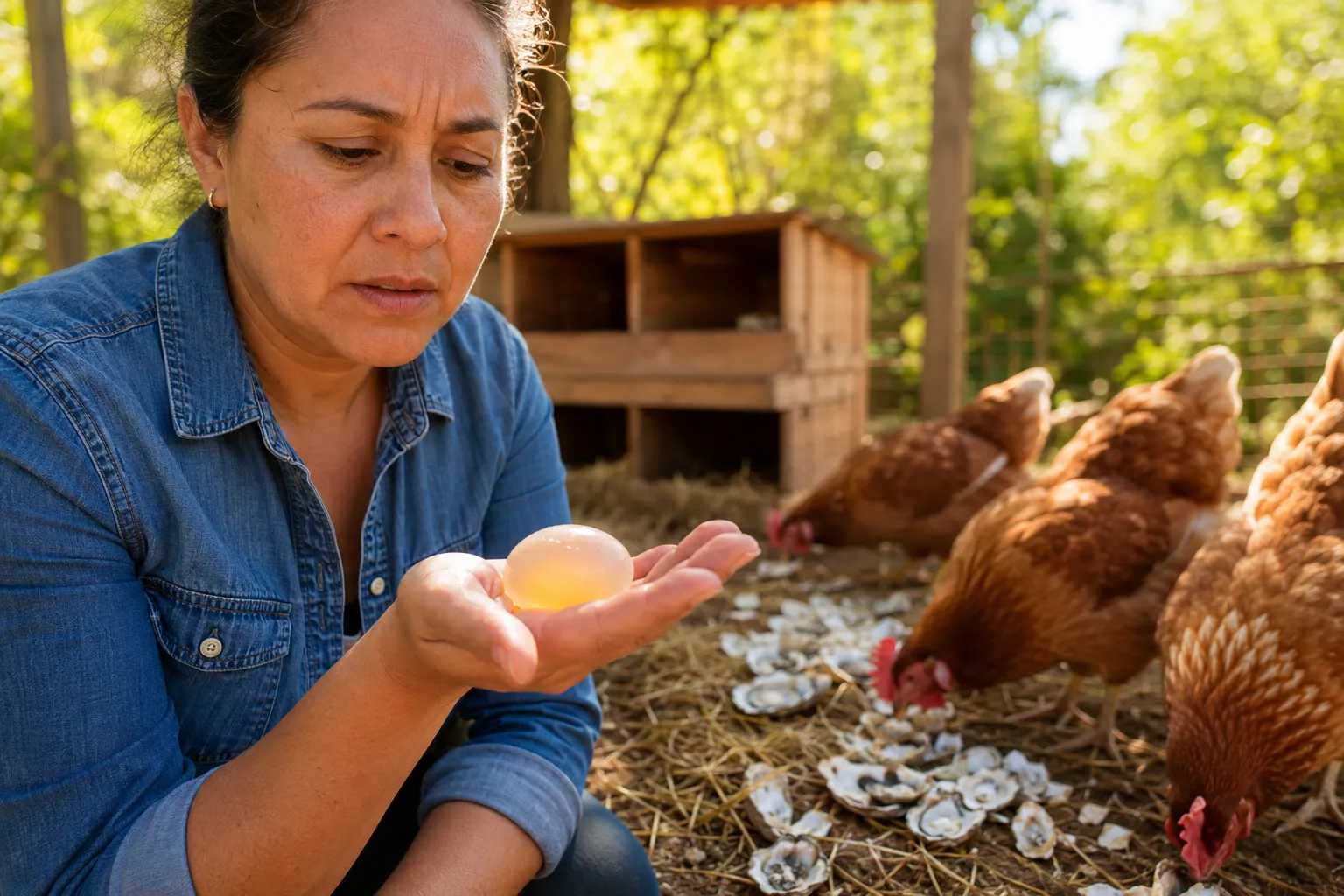
Quick Answer: Soft-shelled eggs happen when a hen’s shell gland doesn’t deposit enough calcium carbonate onto the egg membrane before laying. The most common causes are calcium deficiency, vitamin D3 shortage, stress, age-related decline in older hens, or reproductive tract infections like infectious bronchitis. Most cases resolve within 1-2 weeks once you address the underlying nutritional or environmental issue.
Key Takeaways
- Calcium deficiency is the leading cause of soft-shelled eggs; laying hens need 4-5 grams of calcium daily
- Vitamin D3 is essential for calcium absorption, hens without sunlight access often develop shell problems
- Stress from predators, flock changes, or heat can temporarily disrupt the shell formation process
- Occasional soft eggs (1-2 per month) are normal, especially in young pullets or during extreme weather
- Oyster shell free-choice is the gold standard supplement; offer it separately from regular feed
- Infectious bronchitis and other diseases can cause persistent soft eggs that won’t resolve with supplements alone
- Most soft-shell problems resolve in 7-14 days once proper calcium and vitamin D3 are provided
- Soft-shelled eggs are safe to eat if the membrane is intact and the egg is fresh, though they spoil faster
What Causes Soft Shell Eggs in Chickens?
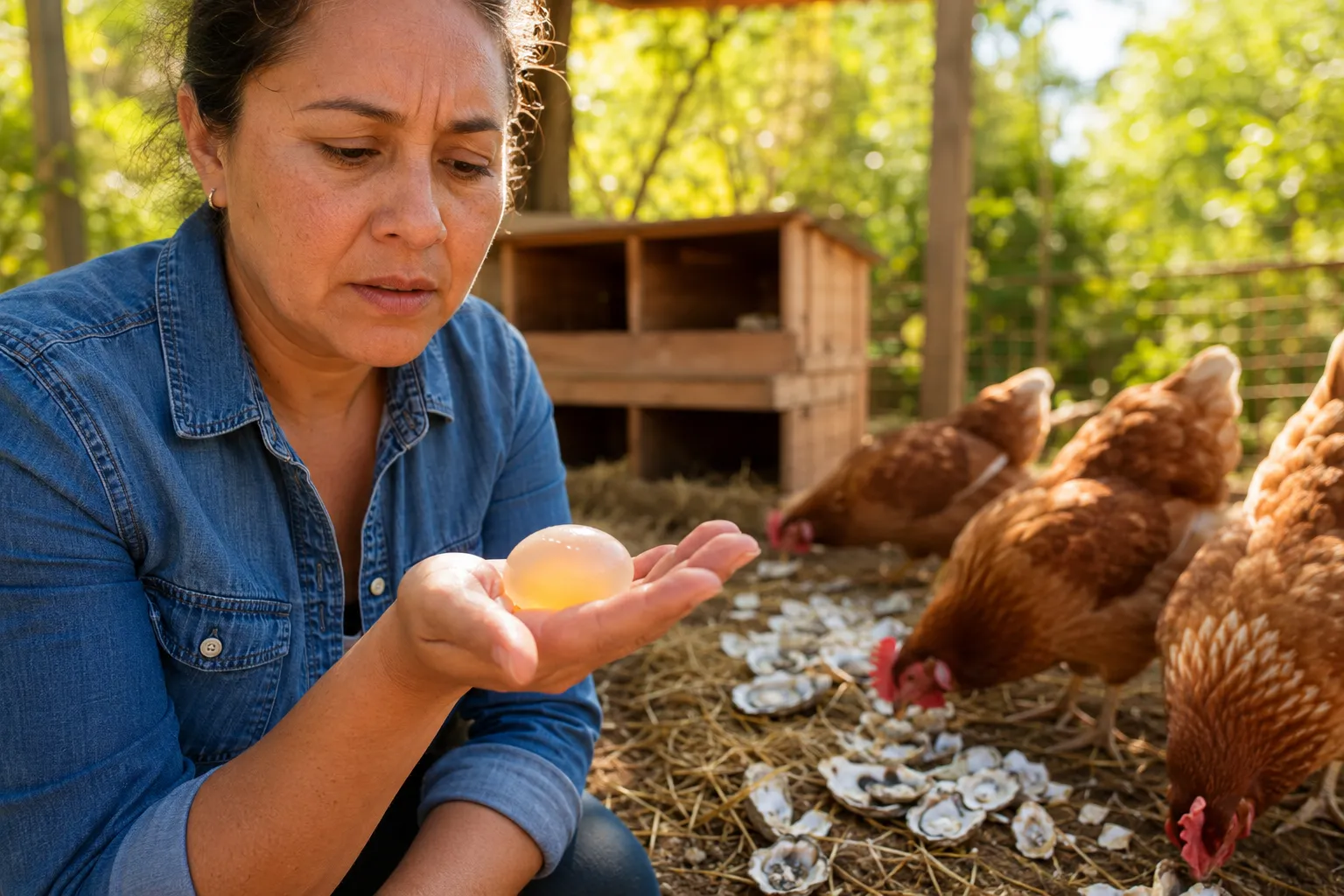
Soft-shelled eggs result from incomplete calcification in the shell gland (uterus) during the 20-hour egg formation process. The egg membrane forms normally, but the hen’s body fails to deposit the calcium carbonate crystals that create a hard shell.
Primary causes include:
- Nutritional deficiencies, Insufficient calcium or vitamin D3 in the diet prevents proper shell formation
- Age factors, Young pullets just starting to lay and hens over 3 years old both produce more soft eggs
- Stress triggers, Predator scares, extreme heat, flock disruptions, or sudden diet changes
- Disease, Infectious bronchitis, Newcastle disease, or egg peritonitis damage the reproductive tract
- Genetic factors, Some breeds and individual hens are simply more prone to shell defects
- Toxins, Mycotoxins from moldy feed can interfere with calcium metabolism
The shell gland needs a steady supply of ionized calcium in the bloodstream during the critical 15-hour calcification window. If calcium isn’t available, whether from diet, bone reserves, or absorption problems, the hen lays the egg with only its thin membrane intact.
Common mistake: Assuming all soft eggs mean the same thing. A young pullet laying her first few soft eggs is completely different from a mature hen suddenly producing them after years of normal laying. Context matters for diagnosis.
Difference Between Soft Shell Eggs and No Shell Eggs
Soft-shelled eggs have a leathery, flexible membrane with some calcium deposits, while shell-less eggs (also called “rubber eggs”) have only the thin inner and outer membranes with no calcification at all.
Soft-shelled eggs:
- Feel rubbery but have some firmness
- Show white calcium patches or a thin chalky coating
- Usually indicate mild to moderate calcium deficiency
- More common in young or stressed birds
Shell-less eggs:
- Completely transparent or translucent membrane only
- Feel like a water balloon
- Indicate severe calcium shortage or shell gland damage
- Often signal disease or serious nutritional crisis
Both types form when the shell gland fails to deposit calcium, but shell-less eggs represent a more severe disruption. If your hen lays completely shell-less eggs for more than 2-3 days despite calcium supplementation, veterinary examination is warranted to rule out infectious bronchitis or reproductive tract damage.
How Much Calcium Does a Laying Hen Need Per Day?
A laying hen requires 4 to 5 grams of calcium daily to produce one egg with a strong shell. An eggshell contains approximately 2 grams of calcium, and the hen needs additional calcium for bone maintenance and metabolic functions.
Calcium requirements by production stage:
| Stage | Daily Calcium Need | % of Diet |
|---|---|---|
| Pullets (pre-lay) | 1-2 grams | 1-2% |
| Active layers | 4-5 grams | 3.5-4.5% |
| Molting hens | 2-3 grams | 2-3% |
| Older hens (3+ years) | 5-6 grams | 4-5% |
Standard layer feed contains 3.5-4% calcium, which meets baseline needs but often isn’t enough for peak production or older birds. This is why free-choice calcium supplementation is critical, it lets each hen self-regulate her intake based on individual needs.
Choose free-choice oyster shell if: Your hens are actively laying and you want to prevent soft eggs before they start. Hens instinctively consume more calcium in the afternoon and evening when shell formation occurs.
Best Calcium Supplements for Chickens Laying Soft Eggs
Oyster shell is the most effective calcium supplement for backyard flocks because it provides large, slowly-dissolving calcium particles that release throughout the night when shell formation peaks.
Top calcium supplement options:
Crushed oyster shell (preferred)
- Large particle size (2-4mm) dissolves slowly in the gizzard
- Provides sustained calcium release during overnight shell formation
- Offer free-choice in a separate container
- Hens self-regulate intake based on need
Crushed eggshells
- Free and readily available
- Bake at 250°F for 10 minutes to sterilize
- Crush into 2-3mm pieces (not powder)
- Slightly less bioavailable than oyster shell
Limestone (calcium carbonate)
- Effective but dissolves faster than oyster shell
- Better as a feed ingredient than free-choice supplement
- Often used in commercial layer feeds
Calcium citrate or gluconate
- Highly absorbable emergency supplement
- Useful for acute deficiency or sick birds
- More expensive; not practical for daily use
Avoid: Powdered calcium supplements mixed into feed. Fine particles dissolve too quickly in the crop and pass through before shell formation begins. The hen needs large particles that sit in the gizzard and release calcium gradually overnight.
Application tip: Place oyster shell in a separate hopper or bowl, not mixed with feed. Hens will eat 2-4 grams of oyster shell daily when laying, typically consuming more in late afternoon.
Can Stress Make Chickens Lay Soft Shelled Eggs?
Yes, stress disrupts the hormonal signals that control shell formation, causing temporary soft-shelled eggs even in well-fed hens. The stress response diverts calcium away from the shell gland and can speed up egg passage through the oviduct before calcification completes.
Common stress triggers:
- Predator encounters, Even unsuccessful attacks cause adrenaline spikes that affect laying for 3-7 days
- Extreme heat, Temperatures above 85°F reduce feed intake and calcium consumption
- Flock changes, Adding or removing birds disrupts pecking order and causes anxiety
- Sudden diet changes, Switching feed brands abruptly can trigger digestive upset
- Loud noises, Construction, fireworks, or storms near the coop
- Overcrowding, Less than 4 square feet per bird in the coop creates chronic stress
Stress-induced soft eggs typically resolve within 5-10 days once the stressor is removed. If soft eggs persist beyond two weeks, the problem is likely nutritional or disease-related rather than purely stress.
Edge case: Some high-production breeds are more stress-sensitive. Leghorns and other commercial layers may produce soft eggs from minor stressors that wouldn’t affect heritage breeds like Orpingtons or Wyandottes.
How Long Does It Take to Fix Soft Shell Egg Problem?
Most nutritional soft-shell problems resolve within 7 to 14 days once proper calcium and vitamin D3 supplementation begins. The timeline depends on the severity of deficiency and whether the hen has depleted her bone calcium reserves.
Expected recovery timeline:
- Days 1-3: Hen begins consuming oyster shell; soft eggs may continue
- Days 4-7: Calcium stores replenish; shell quality starts improving
- Days 8-14: Normal hard shells return consistently
- Week 3+: If no improvement, suspect disease or reproductive damage
Factors that speed recovery:
- Immediate access to free-choice oyster shell
- Vitamin D3 supplementation (2000-4000 IU per hen weekly)
- Outdoor access for natural sunlight exposure
- Reduced stress and stable environment
- High-quality layer feed (16-18% protein)
Factors that delay recovery:
- Severe calcium depletion requiring bone remineralization
- Concurrent vitamin D3 deficiency
- Ongoing stress or environmental problems
- Underlying disease like infectious bronchitis
- Poor gut health affecting calcium absorption
If shell quality hasn’t improved after 14 days of proper supplementation, consult a poultry veterinarian. Persistent soft eggs despite adequate calcium usually indicate reproductive tract disease or damage that won’t resolve with nutrition alone.
Is It Safe to Eat Soft Shelled Chicken Eggs?
Soft-shelled eggs are safe to eat if the membrane is intact, the egg is fresh, and it’s been stored properly. However, they spoil much faster than normal eggs because the membrane is more porous than a hard shell.
Safety guidelines:
✅ Safe to eat when:
- Membrane is completely intact with no tears or leaks
- Egg was collected within 2-3 hours of laying
- Stored in refrigerator immediately
- Consumed within 24-48 hours
- Cooked thoroughly (not raw or soft-boiled)
❌ Discard if:
- Membrane is broken or leaking
- Egg has been at room temperature for more than 2 hours
- Any off smell or discoloration
- More than 3 days old, even refrigerated
- Visible dirt or fecal contamination on membrane
The thin membrane allows bacteria to penetrate much more easily than a hard shell. Salmonella and other pathogens can enter within hours at room temperature. Always cook soft-shelled eggs fully,scrambled, hard-boiled, or baked, never consume them raw or sunny-side up.
Practical tip: Crack soft-shelled eggs directly into a bowl rather than trying to peel them. The membrane often tears during handling, making traditional peeling impossible.
Do Older Chickens Lay More Soft Shell Eggs?
Yes, hens over 3 years old produce more soft-shelled eggs as their reproductive system ages and calcium metabolism becomes less efficient. Egg production declines by approximately 20% per year after peak laying age, and shell quality deteriorates alongside quantity.
Age-related shell quality decline:
- Year 1 (pullets): Occasional soft eggs during first month of laying, then normal shells
- Years 1-2 (peak production): Rare soft eggs, excellent shell quality
- Years 3-4: 5-10% increase in thin or soft shells, especially in winter
- Years 5+: 15-25% of eggs may have shell defects; some hens stop laying entirely
Why older hens struggle with shells:
- Shell gland tissue becomes less responsive to hormonal signals
- Calcium absorption in the intestine decreases with age
- Bone calcium reserves deplete after years of egg production
- Larger eggs (common in older hens) require more calcium than the body can mobilize
Management for older layers:
- Increase dietary calcium to 4.5-5% (higher than standard layer feed)
- Provide vitamin D3 supplements year-round
- Offer probiotics to improve calcium absorption
- Reduce stressors that older birds tolerate less well
- Consider retiring hens from laying duty after 4-5 years
Many backyard chicken keepers choose to keep older hens as pets even after laying declines, accepting occasional soft eggs as normal aging rather than a problem requiring intervention.
When to Worry About Soft Shelled Eggs in Chickens
Occasional soft eggs (1-2 per month) are normal and not cause for concern, but persistent soft eggs, more than 3 in a week or continuing beyond 14 days despite supplementation,signal a problem requiring intervention.
Worry if you see:
🚨 Immediate veterinary attention needed:
- Soft eggs accompanied by lethargy, loss of appetite, or labored breathing
- Egg binding (hen straining for hours without laying)
- Swollen, hard abdomen or penguin-like posture
- Soft eggs with blood or unusual discharge
- Sudden onset in multiple hens simultaneously (suggests infectious disease)
⚠️ Monitor closely and supplement:
- One hen producing 3+ soft eggs per week
- Soft eggs continuing beyond 2 weeks with proper calcium available
- Progressive worsening (shells getting thinner over time)
- Soft eggs plus other symptoms like reduced activity or pale comb
✅ Normal, don’t worry:
- 1-2 soft eggs in a pullet’s first month of laying
- Single soft egg after a stressful event (predator scare, storm)
- Occasional soft egg during extreme heat waves
- One soft egg per month in an otherwise healthy flock
Decision rule: If a hen is eating well, active, and producing mostly normal eggs with only occasional soft ones, continue calcium supplementation and monitor. If she’s producing more soft eggs than hard ones, or showing any other symptoms, seek veterinary diagnosis.
Can Infectious Bronchitis Cause Soft Eggs?
Yes, infectious bronchitis (IB) is one of the most common disease causes of persistent soft-shelled eggs. This highly contagious viral respiratory disease permanently damages the shell gland in many infected hens, causing lifelong shell quality problems even after respiratory symptoms resolve.
How infectious bronchitis affects egg shells:
- Virus directly infects and damages shell gland epithelial cells
- Scar tissue replaces functional calcium-secreting tissue
- Damage is often permanent, even in recovered birds
- Hens may produce soft eggs, misshapen eggs, or stop laying entirely
Symptoms of infectious bronchitis:
- Respiratory signs: coughing, sneezing, nasal discharge, gasping
- Sudden drop in egg production across the flock
- Soft-shelled, shell-less, or wrinkled eggs
- Watery egg whites in normal-shelled eggs
- Symptoms appear 18-36 hours after exposure
Key difference from nutritional causes: IB affects multiple hens simultaneously and includes respiratory symptoms. Calcium deficiency typically affects individual birds and has no respiratory component.
Treatment and management:
- No cure for the virus itself; treatment is supportive only
- Isolate affected birds to prevent spread
- Provide excellent nutrition and reduce stress
- Some hens recover laying ability; others never produce quality shells again
- Vaccination available for breeding flocks and high-value birds
If your entire flock suddenly develops soft eggs along with coughing or sneezing, suspect infectious bronchitis and consult a veterinarian immediately. Early diagnosis helps prevent spread and allows for supportive care that improves recovery odds.
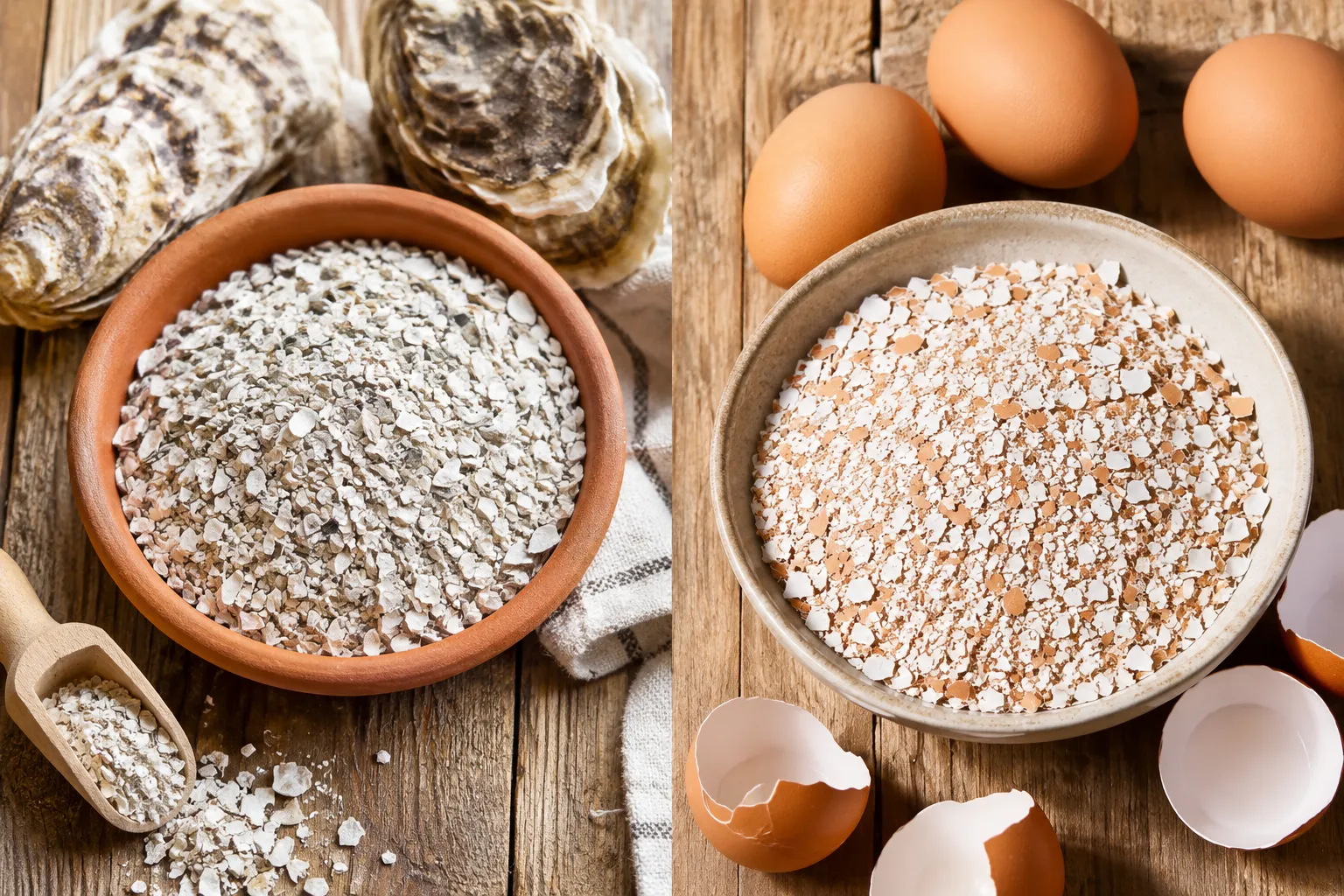
Oyster Shell vs Crushed Eggshells for Chickens
Both oyster shell and crushed eggshells provide calcium carbonate, but oyster shell is superior for preventing soft eggs due to its larger particle size and slower dissolution rate.
Oyster shell advantages:
- Consistent particle size (2-4mm) optimized for slow release
- Dissolves gradually in gizzard over 8-12 hours during shell formation
- No preparation required; ready to use
- No risk of teaching hens to eat their own eggs
- Widely available and inexpensive ($15-25 per 50-pound bag)
Crushed eggshell advantages:
- Completely free; uses waste product
- Environmentally sustainable
- Equally effective if prepared correctly
- Good option for small flocks or budget-conscious keepers
Crushed eggshell disadvantages:
- Requires baking (250°F for 10 minutes) to kill bacteria
- Must be crushed to 2-3mm pieces, not powder
- Time-consuming to prepare in quantity
- Some keepers worry about encouraging egg-eating behavior (though research doesn’t support this concern)
Preparation method for eggshells:
- Collect shells and rinse out any remaining egg white
- Bake at 250°F for 10 minutes to sterilize
- Crush into 2-3mm pieces using a food processor or rolling pin
- Store in airtight container
- Offer free-choice like oyster shell
Choose oyster shell if: You have more than 6-8 hens or want a convenient, ready-to-use solution. Choose crushed eggshells if: You have a small flock, want zero-waste sustainability, or can’t access oyster shell locally.
Many keepers use both, offering oyster shell as the primary supplement and adding crushed eggshells as a bonus calcium source.
My Chicken Only Lays Soft Eggs Occasionally, Is That Normal?
Yes, occasional soft eggs (1-2 per month) are completely normal and not a cause for concern in an otherwise healthy laying hen. The shell formation process is complex, and minor disruptions from stress, weather, or hormonal fluctuations can cause isolated soft eggs.
Normal occasional soft egg triggers:
- First 2-4 weeks of laying in young pullets
- Extreme temperature swings (heat waves or cold snaps)
- Minor stress events (loud noises, brief predator encounters)
- Hormonal fluctuations during seasonal transitions
- Individual hen variation (some birds are simply more prone)
When occasional becomes concerning:
- More than 2 soft eggs per week from one hen
- Increasing frequency over time
- Soft eggs plus other symptoms (lethargy, reduced appetite)
- Multiple hens affected simultaneously
What to do about occasional soft eggs:
- Ensure free-choice oyster shell is always available
- Verify layer feed is fresh (not expired or stored improperly)
- Provide outdoor access for natural vitamin D3
- Monitor for patterns (same hen repeatedly, specific weather conditions)
- Keep records to distinguish “occasional” from “frequent”
Edge case: Some individual hens produce 1-2 soft eggs monthly throughout their entire laying life despite perfect nutrition and environment. This appears to be genetic variation in shell gland efficiency. As long as the hen is healthy and most eggs are normal, this quirk doesn’t require treatment.
What Age Do Chickens Stop Laying Soft Shell Eggs?
Pullets typically stop laying soft eggs by 6-8 weeks after their first egg, once their reproductive system fully matures and hormonal cycles stabilize. However, soft eggs can return at any age due to nutritional deficiency, stress, or disease.
Soft egg patterns by age:
Weeks 1-4 of laying (18-22 weeks old):
- 20-40% of pullets lay 1-3 soft eggs during this period
- Reproductive system is still calibrating
- Shell gland learning to coordinate calcium deposition
- Normal and expected; usually resolves without intervention
Weeks 5-8 of laying (23-26 weeks old):
- Soft eggs become rare (less than 5% of eggs)
- Shell quality improves as hormones stabilize
- Most pullets producing consistently hard shells by week 8
Peak laying years (6 months to 3 years):
- Soft eggs rare except during stress or deficiency
- Best shell quality of hen’s life
- Occasional soft egg (1-2 per month) still normal
Mature and senior hens (3+ years):
- Soft eggs gradually increase in frequency
- 10-25% of eggs may have shell defects by year 5
- Age-related decline, not a problem to “fix”
Important distinction: Pullets naturally outgrow early soft eggs as their bodies mature. Older hens develop soft eggs due to declining reproductive function. The first requires patience; the second requires enhanced nutrition and realistic expectations.
If a pullet is still laying frequent soft eggs after 10-12 weeks of laying, investigate nutritional deficiency or disease rather than assuming she’ll outgrow it.
Vitamin D Deficiency in Chickens and Egg Shells
Vitamin D3 deficiency prevents calcium absorption in the intestine, causing soft-shelled eggs even when dietary calcium is adequate. Hens need vitamin D3 to transport calcium from the gut into the bloodstream where it can reach the shell gland.
How vitamin D3 affects shell formation:
- Enables calcium absorption in the small intestine
- Regulates calcium mobilization from bone reserves
- Required for calcium transport into shell gland cells
- Deficiency causes soft eggs despite adequate calcium intake
Vitamin D3 sources for chickens:
Sunlight (best source)
- UV-B rays convert precursors in skin to active vitamin D3
- 15-30 minutes of direct sunlight daily meets needs
- Window glass blocks UV-B; hens need outdoor access
- Winter sunlight at northern latitudes may be insufficient
Fortified layer feed
- Contains 1500-2000 IU vitamin D3 per kilogram
- Adequate for hens with some sun exposure
- May be insufficient for confined birds or winter months
Supplements
- Poultry vitamin D3 supplements (not human D2)
- 2000-4000 IU per hen weekly for deficient birds
- Added to water or given directly
Signs of vitamin D3 deficiency:
- Soft-shelled eggs despite calcium supplementation
- Rickets (bowed legs, difficulty walking) in severe cases
- Reduced egg production
- Thin, brittle bones prone to fracture
- Pale, weak appearance
Risk factors for deficiency:
- Hens kept entirely indoors without UV-B light
- Northern climates during winter months (October-March)
- Heavy tree cover blocking direct sunlight
- Older hens with reduced vitamin D3 synthesis
Prevention strategy: Provide outdoor access to direct sunlight whenever possible. For confined flocks or winter months, supplement with poultry-specific vitamin D3 at 2000 IU per hen weekly. Cod liver oil (1 teaspoon per gallon of water once weekly) provides both vitamin D3 and vitamin A.
Common mistake: Assuming calcium supplementation alone will fix soft eggs. If hens lack vitamin D3, they can’t absorb the calcium you’re providing, and soft eggs persist despite oyster shell availability.

Frequently Asked Questions
Can a chicken lay a soft egg and a hard egg on the same day?
No, hens typically lay one egg per 24-26 hour cycle. If you find both a soft and hard egg on the same day, they came from different hens in your flock.
Will soft-shelled eggs hatch if incubated?
No, soft-shelled eggs are not viable for hatching. The porous membrane allows moisture loss and bacterial contamination, and embryos cannot develop properly without a hard shell.
Can too much calcium cause soft eggs?
No, excess calcium doesn’t cause soft eggs. Hens excrete surplus calcium through droppings. However, too much calcium in young pullets (before laying starts) can cause kidney damage.
Do soft eggs mean my hen is sick?
Not necessarily. Single or occasional soft eggs usually indicate nutritional deficiency or stress. Persistent soft eggs with other symptoms (lethargy, respiratory issues) may signal disease.
Should I give my chicken Tums for soft eggs?
No, Tums (calcium carbonate antacid) dissolves too quickly and isn’t formulated for poultry. Use oyster shell or crushed eggshells designed for slow calcium release instead.
Can worms cause soft-shelled eggs?
Yes, heavy intestinal worm burdens interfere with nutrient absorption, including calcium. Regular deworming (every 6 months) helps prevent this issue.
Will apple cider vinegar help with soft eggs?
Apple cider vinegar (1 tablespoon per gallon of water) may slightly improve calcium absorption by acidifying the gut, but it’s not a substitute for proper calcium supplementation.
How do I know if my hen has enough calcium?
Consistently hard-shelled eggs are the best indicator. You can also observe whether hens are actively eating oyster shell, laying hens typically consume 2-4 grams daily.
Can I prevent soft eggs completely?
Not entirely. Even with perfect nutrition, occasional soft eggs happen due to stress, weather, or individual variation. You can minimize frequency but not eliminate it completely.
Do roosters affect egg shell quality?
No, roosters have no impact on shell formation. Shell quality depends entirely on the hen’s nutrition, health, and reproductive system function.
Should I remove soft eggs from the nesting box immediately?
Yes, remove them promptly. Soft eggs break easily, creating a mess and potentially teaching hens to eat eggs. Collect eggs at least twice daily.
Can changing feed brands cause soft eggs?
Yes, sudden feed changes can temporarily disrupt digestion and calcium absorption. Transition gradually over 7-10 days by mixing old and new feed.
Conclusion
Soft-shelled eggs are one of the most common concerns for backyard chicken keepers, but they’re usually straightforward to resolve. The vast majority of cases stem from calcium deficiency, vitamin D3 shortage, or temporary stress, all manageable with proper supplementation and flock management.
Your action plan:
- Provide free-choice oyster shell immediately in a separate container from feed
- Ensure outdoor access for natural vitamin D3 from sunlight, or supplement 2000 IU weekly
- Verify layer feed quality (16-18% protein, 3.5-4% calcium, not expired)
- Reduce stress by maintaining stable flock composition and protecting from predators
- Monitor for 14 days,most nutritional cases resolve within two weeks
- Consult a veterinarian if soft eggs persist beyond two weeks or if respiratory symptoms appear
Remember that occasional soft eggs (1-2 per month) are normal in healthy flocks, especially in young pullets just starting to lay or during extreme weather. Focus your concern on persistent patterns rather than isolated incidents.
By understanding why chickens lay soft-shelled eggs and addressing the root causes systematically, you’ll help your flock produce strong, healthy eggs while maintaining their overall well-being. The investment in quality calcium supplementation and proper nutrition pays dividends in both egg quality and long-term hen health.


