Quick Answer: Chickens take dust baths to clean their feathers, control parasites like mites and lice, regulate body temperature, and maintain healthy skin and plumage. This instinctive behavior involves rolling in fine dirt or dust to coat their feathers, which absorbs excess oils, suffocates external parasites, and keeps their feathers in optimal condition for insulation and waterproofing.
Key Takeaways
- Dust bathing is essential hygiene for chickens, serving as their primary method of staying clean and parasite-free
- Parasite control is the main benefit, as fine particles suffocate mites, lice, and other external parasites
- All chicken breeds naturally dust bathe, starting as early as a few days old
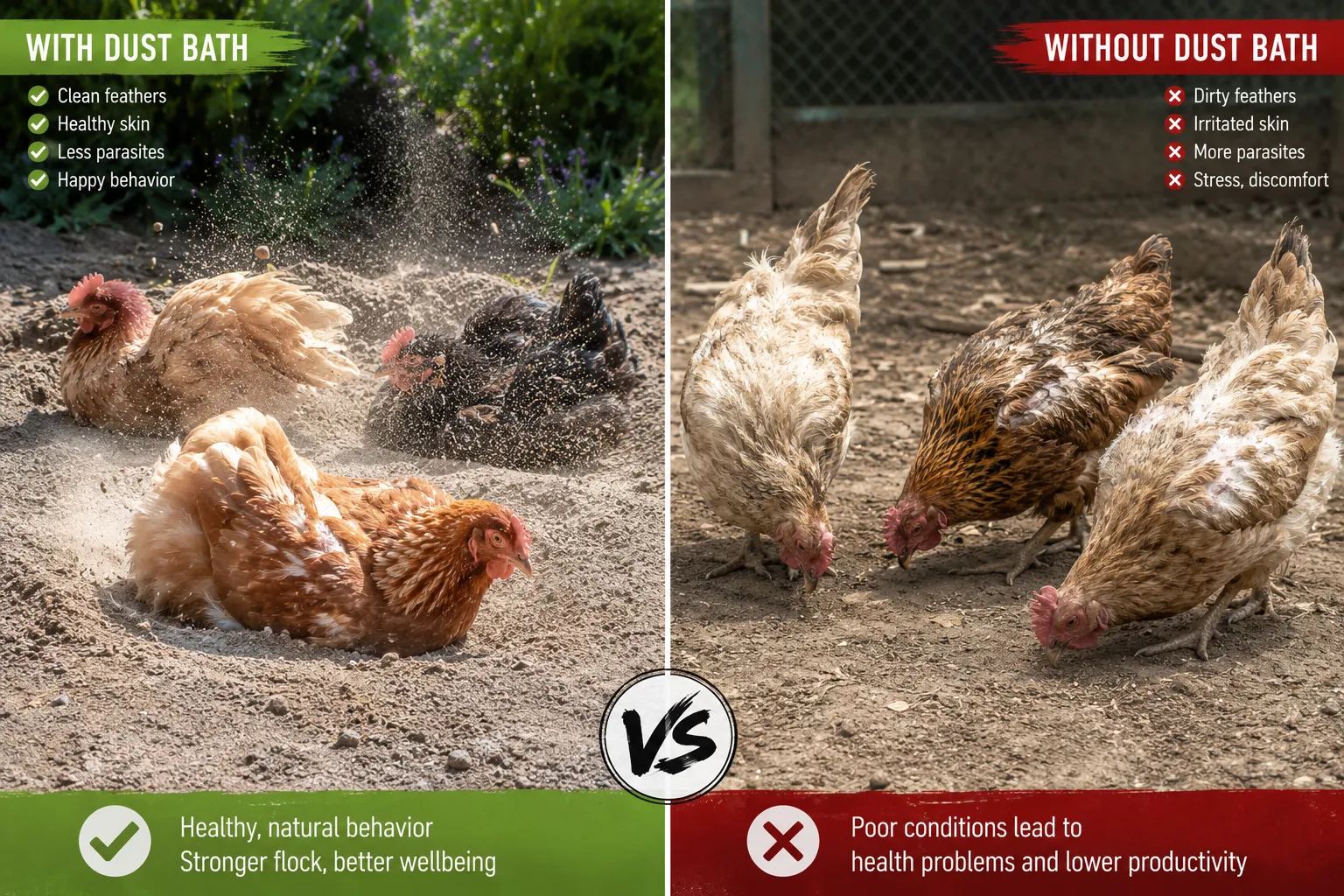
- Lack of dust bath access leads to increased parasite loads, poor feather condition, and stressed birds
- Ideal dust bath materials include fine sand, wood ash, diatomaceous earth, and dry dirt in combination
- Chickens typically dust bathe several times per week, more frequently in warm weather
- Indoor chickens need designated dust bath containers to satisfy this instinctive behavior
- A proper dust bath area should be dry, sheltered, and at least 6-12 inches deep
What Is a Dust Bath for Chickens?
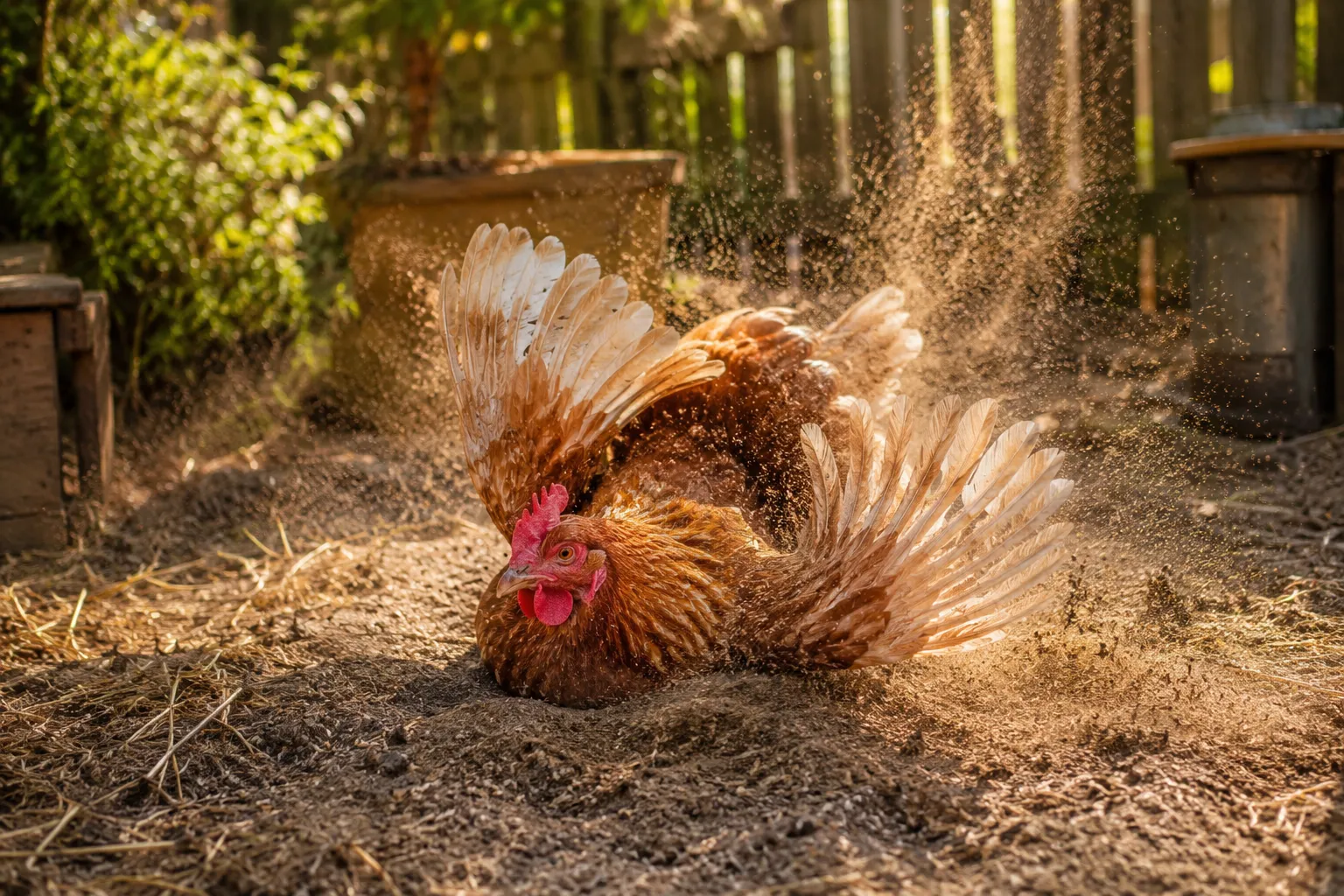
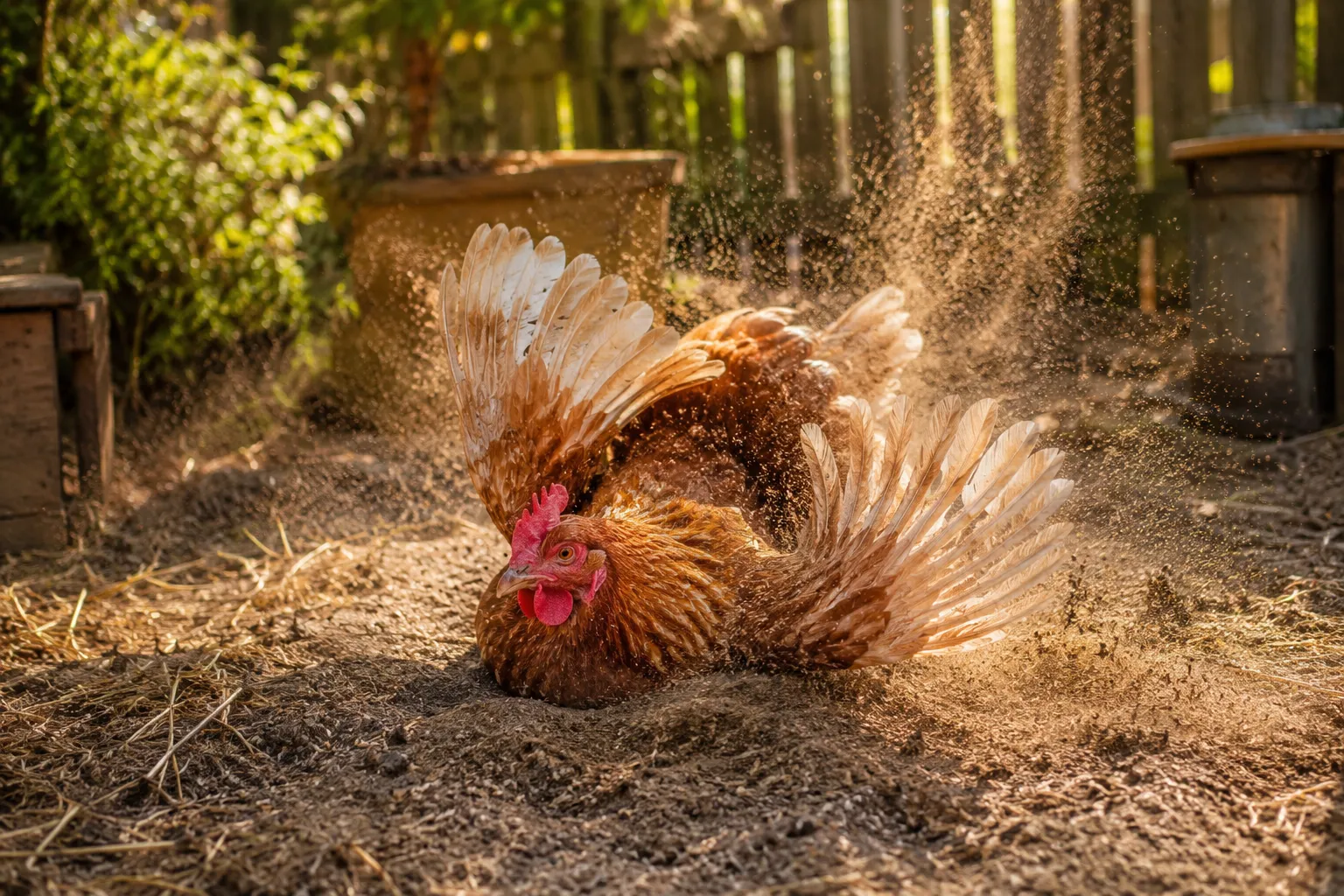
A dust bath is a shallow depression or container filled with fine, dry materials where chickens roll, flap, and wiggle to coat their feathers with dust. This behavior is completely instinctive and serves as the chicken’s version of bathing, since chickens don’t clean themselves with water like many other birds.
During a dust bath session, chickens will:
- Scratch and dig to create a comfortable hollow
- Lie down on their sides or backs
- Use their wings to toss dust over their bodies
- Rub their heads and necks into the material
- Shake vigorously to distribute particles throughout their plumage
The entire process typically lasts 15-30 minutes and often becomes a social activity, with multiple chickens bathing together. Chickens appear deeply relaxed during dust bathing, sometimes closing their eyes and entering an almost trance-like state.
Choose a dust bath location if: your chickens free-range and can select their own spots naturally, or if you’re keeping confined chickens and need to provide a dedicated bathing area. Free-range chickens will create their own dust baths in dry, loose soil, often under bushes or in protected areas.
Why Do Chickens Roll Around in Dirt?
Chickens roll around in dirt primarily to maintain feather health and eliminate parasites. When chickens coat their feathers with fine dust particles, the material absorbs excess oil (preen oil) that accumulates on feathers, removes dead skin cells, and physically dislodges parasites and their eggs.
The rolling motion serves several specific purposes:
- Distributes dust evenly across all feather layers, including down feathers close to the skin
- Creates friction that helps remove debris, old feather sheaths, and parasite eggs
- Reaches difficult areas like under wings and around the vent that chickens can’t preen effectively with their beaks
- Stimulates blood flow to the skin, promoting healthy feather growth
This behavior is so deeply ingrained that chickens will go through the motions of dust bathing even on wire flooring where no dust exists, a behavior called “sham dust bathing” that indicates the bird’s strong need for this activity.
Common mistake: Assuming chickens rolling in dirt are sick or injured. This vigorous, seemingly chaotic behavior is completely normal and healthy. However, if a chicken is lethargic and lying in dirt without the characteristic wing-flapping and shaking, that may indicate illness.
How Do Dust Baths Help Chickens Get Rid of Mites?
Dust baths control mites and lice through physical suffocation and desiccation. Fine dust particles clog the breathing pores (spiracles) of external parasites, while also absorbing the moisture these tiny creatures need to survive. The abrasive action of the dust also damages the waxy coating on parasite exoskeletons, causing them to dehydrate and die.
The anti-parasite mechanism works in three ways:
- Immediate suffocation of adult mites and lice as dust blocks their respiratory system
- Desiccation by absorbing moisture from parasite bodies and eggs
- Physical removal as chickens shake out dust along with dead parasites and debris
Key materials for parasite control:
- Diatomaceous earth (food-grade) contains microscopic sharp edges that damage parasite exoskeletons
- Wood ash is highly alkaline and desiccating, creating an inhospitable environment for parasites
- Fine sand provides abrasive action that helps dislodge parasites and eggs
- Dry dirt offers the base material that chickens instinctively seek
Regular dust bathing significantly reduces parasite loads, though it may not eliminate heavy infestations entirely. Chickens with access to quality dust baths typically have 60-80% fewer external parasites compared to those without bathing opportunities.
Edge case: Chickens with severe mite infestations may avoid dust bathing because the parasites cause skin irritation that makes the activity uncomfortable. In these cases, treat the infestation directly first, then provide dust bath access for prevention.
Dust Bath vs Water Bath for Chickens
Chickens use dust baths, not water baths, as their primary cleaning method because their feather structure and natural oils aren’t designed for frequent water immersion. While chickens can tolerate rain and will occasionally wade in shallow water, water bathing removes essential preen oils that protect feathers and can lead to chilling if birds can’t dry quickly.
Key differences:
| Aspect | Dust Bath | Water Bath |
|---|---|---|
| Frequency | Several times per week | Rarely, only in extreme heat |
| Purpose | Parasite control, oil regulation, feather maintenance | Cooling only |
| Natural behavior | Instinctive and essential | Occasional, situational |
| Feather impact | Maintains natural oils | Strips protective oils |
| Drying time | Immediate (shake off dust) | Requires significant time |
Chickens do enjoy shallow water for cooling their feet and legs during hot weather, and some breeds will wade in puddles, but this is different from bathing behavior. The dust bath remains the chicken’s primary hygiene tool.
Choose water access if: you’re providing cooling options during extreme heat (above 85°F), but always keep it shallow (1-2 inches maximum) and never force chickens into water. Choose dust baths for all regular cleaning and parasite prevention needs.
What Happens If Chickens Don’t Have Access to Dust Baths?
Chickens without dust bath access develop higher parasite loads, poor feather condition, increased stress levels, and behavioral problems. The inability to perform this instinctive behavior causes frustration and can lead to feather pecking, aggressive behavior, and reduced overall health.
Specific consequences include:
- Parasite infestations: Mite and lice populations increase rapidly without regular dust bathing, leading to anemia, weight loss, and reduced egg production
- Feather deterioration: Excess preen oil builds up, making feathers greasy, matted, and less effective for insulation
- Skin problems: Dead skin cells and debris accumulate, causing irritation and potential infections
- Behavioral issues: Frustrated chickens may engage in feather pecking (pulling out their own or others’ feathers) or develop stereotypic behaviors
- Reduced egg production: Stressed, uncomfortable chickens lay fewer eggs and may stop laying entirely
Chickens kept on wire flooring or in environments without appropriate bathing materials will attempt sham dust bathing, going through the motions without actual dust. This behavior demonstrates the depth of their need for this activity.
Timeline: Negative effects begin appearing within 2-3 weeks of dust bath deprivation, with parasite populations becoming noticeable within a month and behavioral problems developing within 6-8 weeks.
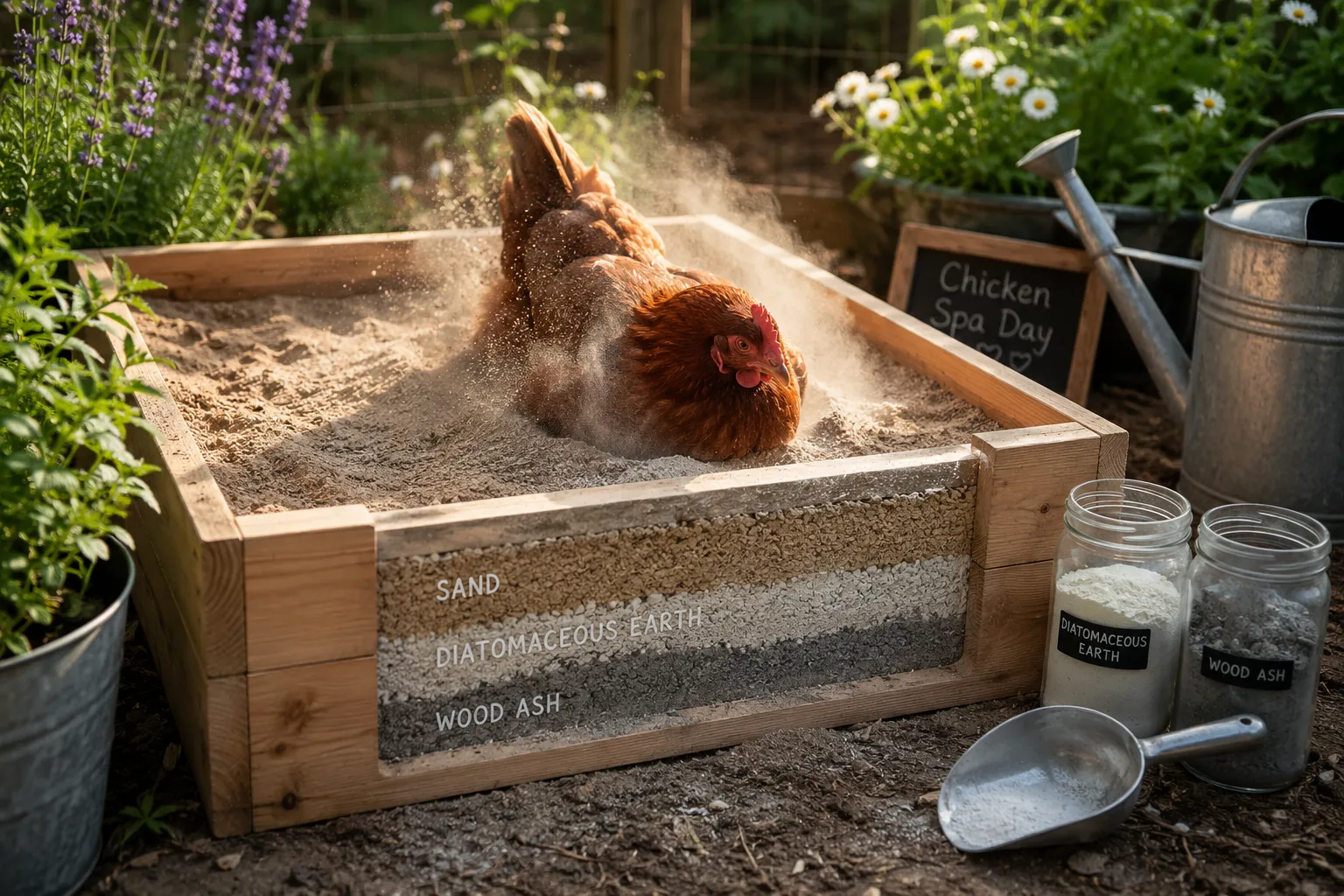
How to Make a Dust Bath for Backyard Chickens
Creating a dust bath requires a container or designated area filled with 6-12 inches of fine, dry bathing material in a sheltered location. The simplest approach uses a large plastic storage tub, wooden box, or tire filled with a mixture of sand, dirt, and amendments, placed in a covered area to keep materials dry.
Step-by-step setup:
- Select a container: Use a box, tub, or tire at least 24 inches wide and 12 inches deep for standard breeds (smaller for bantams)
- Choose location: Place in a covered area like under a coop overhang, in a run shelter, or inside the coop if space allows
- Add base layer: Fill with 4-6 inches of fine sand or dry dirt as the foundation
- Mix in amendments: Add 1-2 inches of wood ash and 1 cup of food-grade diatomaceous earth per 5 gallons of base material
- Maintain dryness: Cover the bath or place it where rain can’t reach, as wet material becomes useless
- Refresh regularly: Add fresh material weekly and completely replace every 4-6 weeks
Container options ranked by effectiveness:
- Wooden box (best): Durable, natural, easy to access, can be built to any size
- Large plastic tub: Affordable, weatherproof, but can be slippery and may tip
- Old tire: Free, holds material well, but limited size and can be difficult to clean
- Ground depression: Most natural, but requires covered area to stay dry
Common mistake: Making the dust bath too shallow. Chickens need depth to properly fluff and coat all feather layers. A 3-inch-deep bath won’t allow the full range of bathing behaviors.
Best Materials for Chicken Dust Bath
The best dust bath combines fine sand as a base (50-60%), wood ash (20-30%), dry dirt or topsoil (10-20%), and food-grade diatomaceous earth (5-10%). This mixture provides the right texture for coating feathers, effective parasite control, and materials chickens instinctively seek.
Material breakdown:
Fine sand (construction or play sand):
- Provides excellent texture for coating feathers
- Stays loose and doesn’t compact
- Offers good abrasive action against parasites
- Readily available and affordable
Wood ash (from untreated wood only):
- Highly alkaline, creating hostile environment for parasites
- Extremely desiccating to mites and lice
- Helps absorb excess oils
- Free if you have a wood stove or fireplace
Dry dirt or topsoil:
- Natural material chickens recognize instinctively
- Adds minerals and variety to the mix
- Helps bind other materials together
- Should be free of pesticides and chemicals
Food-grade diatomaceous earth:
- Microscopic sharp edges damage parasite exoskeletons
- Highly effective for mite and lice control
- Safe for chickens when food-grade (not pool-grade)
- Use sparingly as it can be drying to skin in large amounts
Avoid these materials:
- Cat litter (contains chemicals and clumps when wet)
- Cedar shavings (aromatic oils can irritate respiratory systems)
- Treated wood ash (contains harmful chemicals)
- Clay-heavy soil (compacts and doesn’t coat feathers well)
Choose this mix if: you want maximum parasite control and feather health. For budget-conscious options, plain sand with wood ash still provides excellent results.
Do All Chicken Breeds Take Dust Baths?
All chicken breeds take dust baths, as this behavior is instinctive across all varieties of domestic chickens (Gallus gallus domesticus). From tiny Serama bantams to large Jersey Giants, from Mediterranean breeds to Asian breeds, dust bathing is universal, though frequency and enthusiasm may vary slightly by individual personality rather than breed.
The behavior appears regardless of:
- Breed size: Bantams, standard, and large fowl all dust bathe
- Feather type: Clean-legged, feather-legged, frizzled, and silkie-feathered birds all engage in the behavior
- Purpose: Egg layers, meat birds, and ornamental breeds all dust bathe
- Origin: Breeds developed in different climates and regions worldwide all exhibit this behavior
Slight variations you might notice:
- Silkies and other fluffy-feathered breeds may dust bathe more frequently due to their unique feather structure
- Heavier breeds may create larger, deeper dust bath depressions
- More active breeds like Leghorns may dust bathe more vigorously than calmer breeds like Orpingtons
- Individual chickens have preferences for bathing times (morning vs afternoon) and social vs solitary bathing
The universality of dust bathing across breeds confirms it’s a fundamental chicken behavior, not a learned or breed-specific trait.
Can Chickens Use Sand for Dust Bathing?
Chickens can and do use sand effectively for dust bathing, making it one of the best single-ingredient options for a dust bath. Fine construction sand or play sand provides the right particle size to coat feathers, offers good abrasive action against parasites, and stays loose and dry in covered areas.
Benefits of sand for dust bathing:
- Ideal particle size: Fine enough to penetrate feather layers but not so fine it becomes dusty in the air
- Doesn’t compact: Stays loose even with repeated use
- Easy to maintain: Simple to sift through and remove droppings
- Affordable: Widely available at hardware stores for $5-8 per 50-pound bag
- Multi-purpose: Can also be used as coop or run flooring
Sand types ranked:
- Construction sand (best): Fine, consistent particle size, affordable
- Play sand: Very fine, safe, but can be dustier
- River sand: Natural, varied particle sizes, good drainage
- Avoid: Beach sand (salt content) or very coarse sand (less effective coating)
While plain sand works well, adding wood ash (20-30% of total volume) and a small amount of diatomaceous earth significantly improves parasite control. However, if you can only provide one material, sand alone is far better than no dust bath at all.
Edge case: In very humid climates, sand may absorb moisture and become less effective. In these areas, store sand in covered containers and consider adding extra wood ash to help keep the mixture dry.
My Chickens Aren’t Dust Bathing: Is Something Wrong?
Chickens that aren’t dust bathing may lack suitable materials, have insufficient space, face weather-related issues, or in rare cases, may be ill. Most commonly, the problem is environmental rather than health-related, particularly if the available dust bath is too wet, too small, or located in an uncomfortable area.
Troubleshooting checklist:
Check the materials:
- Is the dust bath wet? (Chickens won’t use damp material)
- Is it deep enough? (Needs 6-12 inches minimum)
- Is the texture right? (Should be fine and loose, not compacted or clay-heavy)
Assess the location:
- Is it in a safe, protected area? (Chickens won’t bathe where they feel vulnerable)
- Is there enough space? (Multiple chickens need room to bathe simultaneously)
- Is it too hot or cold? (Extreme temperatures may reduce bathing frequency)
Consider the flock:
- Are they new chickens still adjusting? (May take 1-2 weeks to settle in)
- Is there a dominant bird blocking access? (Provide multiple bathing areas)
- Are they molting? (Some chickens reduce bathing during heavy molt)
Health red flags:
- Lethargy combined with no dust bathing
- Visible parasites or constant scratching
- Respiratory symptoms (dust bathing creates airborne particles that sick birds may avoid)
Timeline: Healthy chickens typically dust bathe 2-4 times per week in warm weather, less frequently in winter. If you’ve never observed dust bathing after 2 weeks with proper materials and conditions, investigate further.
Quick fix: Try creating a fresh dust bath with new, dry sand and wood ash in a sunny, protected spot. Most chickens will investigate and begin using it within hours if conditions are right.
How Often Do Chickens Need to Dust Bathe?
Chickens typically dust bathe 2-4 times per week during warm weather and 1-2 times per week in winter, with each session lasting 15-30 minutes. Frequency varies based on temperature, parasite pressure, individual preference, and access to quality bathing materials.
Factors affecting frequency:
Temperature and season:
- Summer (above 75°F): More frequent bathing (3-4 times weekly) for cooling and increased parasite control
- Winter (below 40°F): Reduced frequency (1-2 times weekly) as chickens conserve energy and parasites are less active
- Spring/Fall: Moderate frequency (2-3 times weekly) during comfortable temperatures
Parasite pressure:
- Higher mite or lice populations trigger more frequent bathing
- Chickens with active infestations may bathe daily until parasite load decreases
- Clean flocks with good prevention may bathe less frequently
Individual variation:
- Some chickens are “bath enthusiasts” who bathe daily
- Others are more casual bathers who go 3-4 days between sessions
- Younger birds (under 1 year) often bathe more frequently than older hens
Flock dynamics:
- Social bathing encourages more frequent sessions
- Isolated chickens may bathe less often
- Dominant birds may bathe more if they control access to prime bathing spots
You don’t need to schedule or enforce dust bathing. Chickens will regulate their own bathing frequency when given continuous access to quality materials. The key is ensuring the dust bath is always available and in good condition.
Warning sign: If chickens suddenly increase bathing frequency dramatically (multiple times daily), check for parasite infestations or skin irritation.
Is Diatomaceous Earth Safe for Chicken Dust Baths?
Food-grade diatomaceous earth is safe for chicken dust baths when used in appropriate amounts (5-10% of total dust bath mixture), but it should never be the sole material due to its drying properties and respiratory concerns when airborne. Pool-grade or filter-grade diatomaceous earth is never safe for chickens and should be strictly avoided.
Safety guidelines:
Safe use:
- Mix 1 cup of food-grade DE per 5 gallons of base material (sand/dirt)
- Blend thoroughly so it’s not concentrated in one area
- Apply in well-ventilated areas to minimize airborne dust
- Store in sealed containers to prevent moisture absorption
Potential concerns:
- Respiratory irritation: Fine particles can irritate lungs if chickens are exposed to high concentrations in enclosed spaces
- Skin drying: Excessive DE can dry out skin and feathers with prolonged direct contact
- Eye irritation: Airborne particles may irritate eyes during application
Best practices:
- Never use DE as 100% of dust bath material
- Apply when chickens aren’t present, allowing dust to settle
- Ensure good ventilation in coops where dust baths are located
- Wear a dust mask yourself when mixing or applying DE
Food-grade vs pool-grade:
- Food-grade: Safe for chickens, contains amorphous silica, effective against parasites
- Pool-grade: Toxic, contains crystalline silica, causes severe respiratory damage, never use
The effectiveness of DE for parasite control is well-established, but it’s most beneficial as one component of a mixed dust bath rather than the primary ingredient. Wood ash and sand provide similar benefits with fewer concerns.
Do Baby Chicks Take Dust Baths?
Baby chicks begin dust bathing as early as 2-3 days old, making it one of the earliest instinctive behaviors they exhibit. Even chicks raised in brooders without adult chickens to learn from will spontaneously begin going through dust bathing motions, demonstrating the behavior is entirely innate rather than learned.
Chick dust bathing timeline:
- Days 2-5: First attempts at dust bathing, often in bedding material
- Week 2: More coordinated bathing with wing flapping and rolling
- Week 3-4: Full dust bathing behavior indistinguishable from adult chickens
- Week 6+: Regular bathing schedule established
Providing dust baths for chicks:
In the brooder (weeks 1-6):
- Offer a shallow dish (2-3 inches deep) filled with fine sand
- Place away from heat lamp to prevent overheating during bathing
- Use plain sand only (no DE or ash for very young chicks)
- Expect some mess as chicks will kick material around
After brooder (6+ weeks):
- Introduce full dust bath mixture gradually
- Provide appropriately sized bathing area (smaller than adult bath)
- Supervise initial access to ensure chicks don’t ingest large amounts of DE or ash
Benefits for chicks:
- Early parasite prevention
- Behavioral enrichment and stress reduction
- Practice of natural instincts
- Social bonding during group bathing
Watching baby chicks dust bathe is both entertaining and reassuring, as it confirms they’re exhibiting healthy, natural behaviors. The comical sight of tiny chicks flopping around in sand is a sign of contentment and well-being.
Can Indoor Chickens Dust Bathe Without Making a Mess?
Indoor chickens can dust bathe with minimal mess using covered containers, strategic placement, and appropriate materials, though some dust and scattered material is inevitable with this naturally vigorous behavior. The key is containment and accepting that dust bathing is essential enough to warrant minor cleanup.
Low-mess solutions:
Container selection:
- High-sided plastic storage tub: 18-24 inches tall to contain most kicked material
- Covered cat litter box (extra-large): Built-in hood reduces scatter
- Wooden box with partial lid: Allows bathing while limiting dust spread
- Cement mixing tub: Deep, durable, and easy to clean
Placement strategies:
- Position on washable floor (tile, linoleum) rather than carpet
- Place in bathroom, laundry room, or mudroom for easy cleanup
- Use a large tarp or shower curtain underneath to catch overflow
- Keep away from air vents that might spread dust throughout the house
Material choices for less mess:
- Use slightly coarser sand (less airborne dust than fine sand)
- Reduce wood ash percentage (most dusty component)
- Avoid diatomaceous earth indoors (respiratory concerns in enclosed spaces)
- Keep materials slightly damp (not wet) to reduce dust clouds
Maintenance routine:
- Sweep or vacuum around bath area daily
- Wipe down nearby surfaces weekly
- Replace bathing material monthly
- Consider outdoor bathing sessions in good weather
Realistic expectations:
Indoor chickens will scatter some material and create dust. A chicken that dust bathes vigorously is a healthy, happy chicken, so the mess is a positive sign. Budget 5-10 minutes daily for cleanup if keeping chickens indoors full-time.
Alternative: If mess is unacceptable, provide supervised outdoor dust bathing sessions 2-3 times weekly in a portable container, then return chickens indoors after they’ve shaken off excess dust.
FAQ
How long does a typical dust bath session last?
A typical dust bath session lasts 15-30 minutes, though some chickens may spend up to an hour bathing if they’re particularly relaxed or if multiple chickens are bathing socially. Chickens usually shake off excess dust and resume normal activities once finished.
Can I use fireplace ash in my chicken dust bath?
Yes, you can use fireplace ash from untreated wood only. Never use ash from treated lumber, painted wood, or materials containing chemicals, as these can be toxic to chickens. Wood ash from clean firewood is safe and highly effective for parasite control.
Why do my chickens dust bathe in their food or water area?
Chickens dust bathe in food or water areas when they lack access to a proper dust bath elsewhere. This behavior indicates you need to provide a designated bathing area with appropriate materials. Chickens will use whatever loose material is available when their instinct to bathe is strong.
Is it normal for chickens to dust bathe in groups?
Yes, group dust bathing is completely normal and often preferred. Chickens are social creatures and many enjoy bathing together, which also serves as a bonding activity. Provide enough space for multiple chickens to bathe simultaneously to prevent competition and stress.
Do roosters dust bathe as much as hens?
Roosters dust bathe with the same frequency as hens, typically 2-4 times per week. The behavior is not gender-specific and serves the same purposes for both sexes: parasite control, feather maintenance, and temperature regulation.
Can chickens dust bathe too much?
Excessive dust bathing (multiple times daily for extended periods) may indicate a parasite problem, skin irritation, or stress. While dust bathing itself isn’t harmful, sudden increases in frequency warrant investigation to rule out underlying health issues.
What’s the minimum dust bath size for a small flock?
For a small flock of 3-4 standard chickens, provide a dust bath at least 24 inches wide, 24 inches long, and 12 inches deep. Bantam breeds can use smaller baths (18x18x8 inches), while larger flocks need multiple bathing areas or significantly larger containers.
Should I add herbs to my chicken dust bath?
Adding dried herbs like lavender, mint, or rosemary to dust baths is optional and may provide mild insect-repelling properties and pleasant scent, but it’s not necessary for effective parasite control. If you add herbs, use them sparingly (5% of total mixture) and ensure they’re completely dry.
How do I know if my dust bath mixture is too wet?
A dust bath mixture is too wet if it clumps when squeezed, feels damp to the touch, or doesn’t create a dust cloud when disturbed. Chickens will refuse to use wet material. The mixture should be completely dry, loose, and flow freely through your fingers.
Can chickens share a dust bath with other poultry species?
Yes, chickens can share dust baths with other poultry like ducks, turkeys, and guinea fowl, though ducks prefer water bathing and may not use dust baths frequently. Ensure the bathing area is large enough to accommodate all species without competition.
Do chickens need different dust bath materials in winter vs summer?
Chickens use the same dust bath materials year-round, but you may need to protect the bath from rain and snow in winter and refresh it more frequently in summer when parasite pressure is higher. The basic mixture of sand, ash, and DE remains effective in all seasons.
Will chickens dust bathe in snow?
Chickens generally won’t dust bathe in snow, as they instinctively seek dry, loose material. During winter, provide an indoor or covered dust bath area with dry materials to ensure chickens can maintain their bathing routine even when outdoor areas are snow-covered.
Conclusion
Dust bathing is a fundamental chicken behavior that serves critical functions for health, hygiene, and well-being. By understanding why chickens take dust baths and providing appropriate materials and space, you’re supporting their natural instincts and helping prevent parasites, maintain feather quality, and reduce stress in your flock.
Take these action steps today:
- Assess your current setup: Check if your chickens have access to a proper dust bath with dry, fine materials in a protected location
- Create or improve a dust bath: Mix sand, wood ash, and diatomaceous earth in a container at least 12 inches deep, placed in a covered area
- Monitor usage: Observe your flock to ensure all chickens are dust bathing regularly (2-4 times weekly)
- Maintain the bath: Refresh materials weekly, replace completely monthly, and keep the mixture dry
- Watch for problems: Increased bathing frequency may signal parasites, while no bathing may indicate environmental issues
Remember that dust bathing isn’t optional for chickens, it’s as essential as food, water, and shelter. Whether you’re keeping backyard layers, show birds, or pet chickens, providing quality dust bath access is one of the simplest and most effective ways to keep your flock healthy, comfortable, and thriving in 2026 and beyond.