

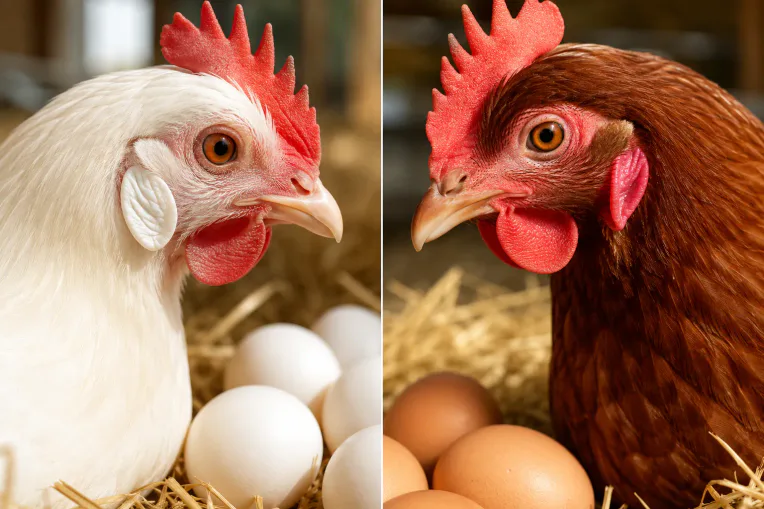
Quick Answer: Egg shell color is determined entirely by the breed of chicken that laid it, specifically by pigments deposited during shell formation in the hen’s oviduct. The color has nothing to do with nutrition, diet, or egg quality, it’s purely genetic. Brown eggs come from chickens with red ear lobes, white eggs from chickens with white ear lobes, and blue or green eggs from specific breeds carrying unique pigment genes.
Key Takeaways
- Genetics alone determine shell color,the breed of chicken dictates whether eggs will be white, brown, blue, green, or speckled
- Ear lobe color is the visual indicator,chickens with white ear lobes lay white eggs, while red or brown ear lobes typically mean brown eggs
- All egg colors are equally nutritious,shell color does not affect taste, nutritional value, or egg quality
- Blue and green eggs are safe to eat,they come from specific breeds like Ameraucanas and Olive Eggers and are perfectly normal
- Individual hens lay consistent colors,the same chicken will always lay the same color egg throughout her life (though shade may vary slightly)
- Diet affects yolk color, not shell color,what chickens eat changes yolk pigmentation but never alters the shell color
- Store eggs are uniform due to breed selection,commercial farms use single breeds (usually white Leghorns or brown hybrids) for consistency
- Speckles and spots are normal,they’re caused by pigment irregularities during shell formation and don’t indicate problems
- Pale eggs often signal stress or age,when hens are stressed, molting, or older, pigment deposition may weaken temporarily
- Colorful eggs require specific breeds,you need Ameraucanas, Marans, Olive Eggers, or Easter Eggers to get blue, green, or chocolate eggs
What Determines Egg Shell Color in Chickens?
Egg shell color is determined by pigments deposited onto the calcium carbonate shell as it forms inside the hen’s oviduct during the final 20 hours before laying. Two main pigments create the color palette: protoporphyrin (which produces brown tones) and oocyanin (which creates blue and green hues). Every chicken breed has a genetic blueprint that controls which pigments are produced and when they’re applied during shell formation.
The process works like this:
- White eggs receive no pigment at all, the shell remains the natural calcium carbonate white
- Brown eggs get coated with protoporphyrin pigment in the outer layers of the shell
- Blue eggs have oocyanin deposited early in shell formation, penetrating through all layers
- Green eggs result from blue oocyanin base plus brown protoporphyrin overlay
- Speckled or spotted eggs occur when pigment is applied unevenly or in concentrated bursts
The most reliable predictor of egg color is the chicken’s ear lobe color. This simple visual cue works for most breeds: white ear lobes almost always mean white eggs, while red or brown ear lobes typically indicate brown eggs. Blue and green egg layers are exceptions that require specific breed genetics regardless of ear lobe color.
Common mistake: Many new chicken keepers assume diet or environment affects shell color. While feed impacts yolk color dramatically (more on that later), the shell color is locked in by genetics and cannot be changed through nutrition or management.
Do Brown Eggs Taste Different Than White Eggs?
Brown eggs and white eggs taste identical when the chickens are raised under the same conditions and fed the same diet. Shell color is purely cosmetic and has zero impact on flavor, texture, or cooking properties. Any perceived taste difference comes from factors like chicken diet, freshness, farming method, or breed characteristics unrelated to shell pigmentation.
The myth that brown eggs taste better likely stems from marketing and consumer perception. In many regions, brown eggs cost more and are associated with farm-fresh or organic production, leading people to expect superior flavor. In reality, a brown egg from a factory farm and a white egg from a backyard hen fed kitchen scraps will taste completely different, but the shell color isn’t the reason.
What actually affects egg taste:
- Diet composition,chickens eating diverse foods (bugs, greens, seeds) produce richer-tasting eggs
- Freshness,eggs lose flavor and moisture as they age
- Breed characteristics,some heritage breeds produce eggs with richer yolks regardless of shell color
- Free-range vs. confined,access to varied forage improves flavor complexity
Choose brown or white based on: availability, price, or personal preference for appearance. Don’t pay extra for brown eggs expecting better taste unless you know the chickens were raised differently.
Why Did My Chicken’s Eggs Change Color Suddenly?
A sudden change in egg shell color usually indicates stress, illness, age, or a disruption in the hen’s reproductive system. While individual hens cannot change their base egg color (a brown-egg layer will never lay white eggs), the intensity and consistency of pigmentation can vary significantly based on the hen’s health and environment.
Common causes of lighter or faded egg color:
- Stress,predator scares, flock changes, or environmental disruptions reduce pigment production
- Illness or parasites,sick hens often lay paler eggs as their bodies prioritize survival over pigmentation
- Age,older hens (3+ years) typically lay lighter-colored eggs as pigment glands become less efficient
- Molting,during feather regrowth, egg production pauses or resumes with lighter pigmentation
- Heat stress,extreme temperatures can temporarily affect pigment deposition
- Nutritional deficiency,severe malnutrition may weaken pigment production (though shell color is less affected than yolk color)
What to check if egg color changes:
- Observe the hen’s behavior, is she lethargic, isolated, or showing signs of illness?
- Check for external parasites (mites, lice) that cause stress
- Review recent flock changes or environmental disruptions
- Note the hen’s age, natural fading is normal in older birds
- Ensure adequate nutrition and fresh water access
Edge case: If a hen lays an egg with dramatically different color (like a brown-egg layer suddenly producing a white egg), she may have a reproductive issue or infection. Monitor closely and consult a veterinarian if other symptoms appear.
The good news: temporary color changes due to stress usually resolve once the hen’s environment stabilizes. Eggs remain safe to eat regardless of shade variation.
Are Blue and Green Eggs Safe to Eat?
Blue and green eggs are completely safe to eat and are nutritionally identical to brown or white eggs. The unique colors come from the oocyanin pigment produced by specific chicken breeds, particularly Ameraucanas, Araucanas, Cream Legbars, and Olive Eggers. This pigment is a natural byproduct of the hen’s biology and poses no health concerns whatsoever.
In fact, blue and green eggs are highly prized by backyard chicken keepers and specialty egg producers. They’re often called “Easter eggs” due to their festive appearance and command premium prices at farmers markets. The pigment penetrates through the entire shell (unlike brown pigment which only coats the surface), so if you crack open a blue egg, you’ll see the blue color extends to the inner shell membrane.
Popular breeds for colored eggs:
- Ameraucana,true blue eggs, recognized breed standard
- Araucana,blue eggs, rumpless breed from Chile
- Easter Egger,mixed heritage, lays blue, green, or olive eggs (not a standardized breed)
- Olive Egger,cross between blue egg layer and dark brown egg layer, produces olive to khaki green eggs
- Cream Legbar,blue eggs, auto-sexing breed from Britain
Why they’re actually desirable: Beyond their novelty, these breeds are often hardy, friendly, and excellent layers. The egg quality is superb, and the colorful shells make egg cartons visually stunning for selling or gifting.
Which Chicken Breeds Lay White Eggs vs Brown Eggs?
White egg layers are typically Mediterranean breeds developed for high production efficiency, while brown egg layers include a wider variety of heritage and dual-purpose breeds. The distinction is purely genetic, with white-egg breeds lacking the pigment genes that brown-egg breeds possess.
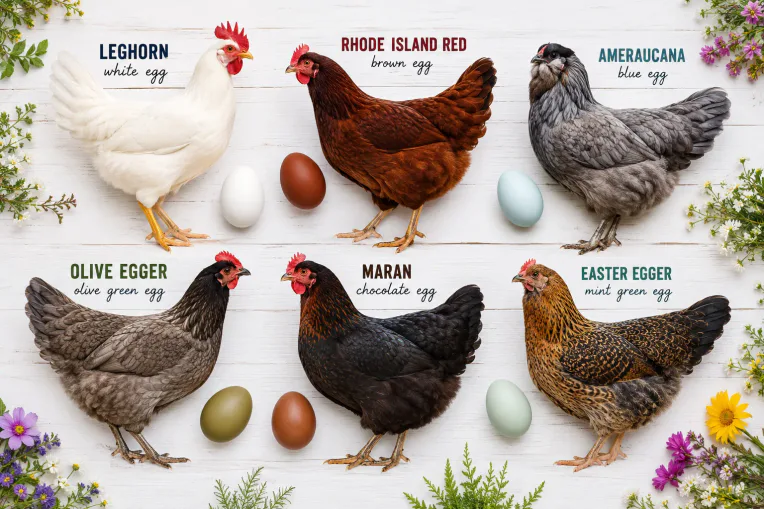
Popular white egg laying breeds:
- White Leghorn,the commercial industry standard, lays 280-320 white eggs per year
- Ancona,hardy Mediterranean breed, 200-220 white eggs annually
- Andalusian,rare breed, 150-180 white eggs per year
- Polish,ornamental breed with distinctive crest, 150-200 white eggs
- Hamburg,active forager, 200-250 small white eggs
Popular brown egg laying breeds:
- Rhode Island Red,classic American breed, 250-300 medium brown eggs
- Plymouth Rock,dual-purpose heritage breed, 200-280 light brown eggs
- Orpington,large, docile breed, 180-200 light brown eggs
- Sussex,British heritage breed, 250-280 cream to light brown eggs
- Wyandotte,cold-hardy breed, 200-240 brown eggs
- Australorp,record-holding layer, 250-300 light brown eggs
Dark brown and specialty egg layers:
- Maran,French breed famous for chocolate brown eggs, 150-200 per year
- Welsummer,terracotta brown speckled eggs, 180-200 annually
- Penedesenca,rare Spanish breed, very dark brown eggs, 150-180 per year
- Barnevelder,Dutch breed, dark brown eggs, 180-200 per year
Decision rule: Choose white egg layers if you want maximum production and efficiency (especially Leghorns). Choose brown egg layers if you want dual-purpose birds (meat and eggs), cold hardiness, or heritage breed characteristics. Choose specialty breeds like Marans if you want dark chocolate eggs for visual appeal.
Do Egg Shell Colors Affect Nutritional Value?
Egg shell color has absolutely no impact on nutritional value, protein content, vitamin levels, or any other health metric. The nutrition inside an egg is determined by the hen’s diet, age, and overall health, not by the genetics that control shell pigmentation. A white egg and a brown egg from hens fed identical diets and raised in the same conditions will have identical nutritional profiles.
This is one of the most persistent myths in egg marketing. Studies comparing white, brown, blue, and green eggs have found no significant nutritional differences based on shell color alone. What does matter is what the chicken ate and how she was raised.
Factors that actually affect egg nutrition:
- Pasture access,hens eating grass, bugs, and seeds produce eggs with more omega-3 fatty acids and vitamin E
- Feed quality,supplementation with flaxseed, fish meal, or algae increases omega-3 content
- Hen age,younger hens (first year of laying) produce eggs with slightly firmer whites
- Freshness,nutrients degrade slowly over time, so fresher eggs retain more vitamins
What changes with diet (not shell color):
- Yolk color,ranges from pale yellow to deep orange based on carotenoid intake (more on this below)
- Omega-3 levels,can be significantly increased through feed supplementation
- Vitamin D,higher in eggs from hens with sun exposure
- Vitamin A,influenced by green forage and carotenoid-rich feeds
Common mistake: Paying premium prices for brown eggs assuming they’re more nutritious. If you want better nutrition, look for eggs from pastured hens or those labeled “high omega-3”, shell color is irrelevant.
Why Are Some Eggs Speckled or Have Dark Spots?
Speckled eggs occur when pigment is deposited unevenly during the final stages of shell formation, creating concentrated spots or freckles on the surface. This is completely normal and happens most frequently in breeds that lay darker brown eggs, particularly Welsummers, Marans, and Penedesencas. The speckles are simply extra pigment and don’t indicate any problem with the egg.
The speckling pattern is influenced by several factors:
- Genetics,some breeds are predisposed to speckled eggs (it’s actually a desirable trait in Welsummers)
- Individual variation,even within a breed, some hens produce more speckled eggs than others
- Stress or disruption,temporary stress during shell formation can cause irregular pigment application
- Age,older hens sometimes develop more speckled patterns as pigment glands become less consistent
Types of spots and what they mean:
- Brown speckles on brown eggs,normal pigment variation, purely cosmetic
- White spots or calcium deposits,excess calcium during shell formation, harmless
- Blood spots on shell surface,rare, usually from minor trauma during laying, egg is still safe
- Dark spots that wipe off,likely dirt or debris, not part of the shell
When to worry: If spots appear suddenly on eggs from a hen that normally lays smooth shells, and the hen shows other signs of illness (lethargy, reduced appetite, abnormal droppings), consult a veterinarian. Otherwise, speckled eggs are a charming variation that many people find more attractive than uniform shells.
Edge case: Some hens lay eggs with such heavy speckling that the base color is barely visible. This is normal for certain Welsummer and Maran individuals and is actually prized by breeders.
Are Colored Eggs More Expensive Than White Eggs?
Colored eggs (brown, blue, green, or chocolate) typically cost more than white eggs in retail settings, but this price difference has nothing to do with quality or nutrition. The higher cost reflects production economics: brown and specialty egg layers are usually less efficient producers than white Leghorns, require more feed per egg, and are often raised in smaller-scale or pasture-based operations with higher overhead costs.
Why white eggs are cheaper commercially:
- Leghorn efficiency,white Leghorns lay 280-320 eggs per year and have excellent feed conversion
- Smaller body size,Leghorns are lightweight birds that require less feed for maintenance
- Industry standardization,decades of breeding for production efficiency
- Scale,most commercial operations use only white egg layers for consistency
Why colored eggs cost more:
- Lower production,heritage brown egg breeds typically lay 180-250 eggs per year
- Larger birds,breeds like Orpingtons and Marans are heavier and eat more feed
- Specialty market,blue and green eggs are niche products with limited supply
- Small-scale production,often from farms with higher per-egg costs
- Marketing premium,consumers perceive colored eggs as more natural or premium
Backyard keeper perspective: If you’re raising your own chickens, the cost difference is negligible. Feed costs are similar across breeds, and the joy of collecting a rainbow of egg colors often outweighs any minor efficiency differences. Many keepers specifically choose a mixed flock to get variety in their egg basket.
Decision rule: If buying eggs, choose based on farming practices (pasture-raised, organic) rather than shell color. If raising chickens, choose breeds you enjoy, the production difference won’t significantly impact your household egg supply.
Can the Same Chicken Lay Different Colored Eggs?
No, an individual chicken cannot lay different colored eggs, each hen is genetically programmed to lay one specific shell color throughout her entire laying life. A hen that lays brown eggs will always lay brown eggs, and a blue egg layer will always lay blue eggs. The base color is determined by her genetics and cannot change.
However, the shade or intensity of that color can vary somewhat based on several factors:
Normal shade variation:
- First eggs,pullets (young hens) often lay lighter or smaller eggs initially
- Seasonal changes,some hens lay slightly darker eggs in cooler weather
- Laying cycle,eggs laid early in a clutch may be darker than those at the end
- Age,older hens typically lay progressively lighter shades as pigment glands weaken
- Stress,temporary stress can lighten pigmentation without changing the base color
What stays consistent:
- Base color,brown stays brown, blue stays blue, white stays white
- Pigment type,a hen with protoporphyrin (brown) genes will never produce oocyanin (blue)
- Pattern,if a hen lays speckled eggs, she’ll continue that pattern (though intensity may vary)
Common confusion: In mixed flocks, keepers sometimes can’t tell which hen laid which egg, leading to the mistaken belief that one hen is laying multiple colors. Identifying individual layers requires observation during laying time or using nest box cameras.
Edge case: Very rarely, a hen with a reproductive disorder might lay an abnormal egg with unusual pigmentation, but this is a one-time anomaly, not a pattern change. If a hen suddenly lays a completely different color egg, it’s more likely you have another hen you didn’t know about or misidentified which bird laid the egg.
What Causes Pale or Light Colored Egg Shells?
Pale or faded egg shells result from reduced pigment production during shell formation, most commonly caused by stress, age, illness, or environmental factors that disrupt the hen’s normal laying cycle. While the calcium shell structure remains intact, the pigment glands in the oviduct produce less protoporphyrin (for brown eggs) or oocyanin (for blue eggs), resulting in washed-out or lighter colors.
Primary causes of pale eggs:
- Hen age,the most common cause; hens over 3 years old naturally produce lighter eggs as pigment glands become less efficient
- Stress,predators, flock disruption, moving coops, or handling can temporarily reduce pigmentation
- Heat stress,extreme summer temperatures affect overall egg quality including color intensity
- Illness or parasites,sick hens divert energy away from pigment production
- Poor nutrition,severe deficiencies can weaken all aspects of egg production
- Molting recovery,eggs laid immediately after molting are often paler until the hen fully recovers
- Lighting changes,sudden changes in day length can disrupt laying cycles
What to do about pale eggs:
- Assess hen health,check for signs of illness, parasites, or injury
- Reduce stressors,ensure stable flock dynamics and predator-proof housing
- Verify nutrition,provide quality layer feed with adequate protein (16-18%)
- Monitor age,accept that older hens naturally lay lighter eggs
- Ensure comfort,provide shade in summer, warmth in winter, and clean nesting areas
When it’s normal: If your hens are over 2-3 years old and otherwise healthy, progressively lighter eggs are completely normal. The eggs are still perfectly safe and nutritious, they just look different.
When to investigate: If a young hen (under 2 years) suddenly lays very pale eggs and shows other symptoms like lethargy, reduced appetite, or abnormal droppings, consult a veterinarian to rule out illness.
Do I Need Special Chickens for Colorful Eggs?
Yes, if you want blue, green, olive, or chocolate brown eggs, you need specific breeds that carry the genetic traits for those colors. Standard brown and white egg layers cannot produce these specialty colors no matter how they’re fed or managed. The good news is that these specialty breeds are widely available, relatively easy to care for, and make excellent backyard chickens.
For blue eggs, choose:
- Ameraucana,true breed standard, consistent sky blue eggs
- Araucana,rumpless breed, blue eggs, can be harder to find
- Cream Legbar,auto-sexing breed, blue eggs, excellent layers
For green eggs, choose:
- Easter Egger,mixed heritage, lays blue, green, mint, or olive eggs (color varies by individual)
- Olive Egger,intentional cross between blue and dark brown layers, produces olive to khaki eggs
- Isbar,Swedish breed, green to moss-colored eggs
For chocolate brown eggs, choose:
- Maran (especially Black Copper Maran), darkest brown eggs available
- Welsummer,terracotta brown with speckles
- Penedesenca,very dark brown, rare Spanish breed
- Barnevelder,dark brown eggs, Dutch heritage breed
Building a rainbow egg basket: Many backyard keepers create mixed flocks specifically for egg color variety. A popular combination includes:
- 2-3 white egg layers (Leghorns) for high production
- 2-3 brown egg layers (Rhode Island Reds or Australorps) for classic brown eggs
- 2-3 blue/green layers (Ameraucanas or Easter Eggers) for colorful variety
- 1-2 dark brown layers (Marans) for chocolate eggs
Important note: Easter Eggers are not a standardized breed, they’re mixed-heritage chickens that carry the blue egg gene. Individual Easter Eggers may lay blue, green, olive, or even light brown eggs, so you won’t know the exact color until they start laying around 5-6 months of age.
Decision rule: If egg color variety is important to you, buy from hatcheries or breeders who can guarantee breed genetics. If you just want productive layers and don’t care about color, standard brown or white egg breeds are more economical and efficient.
Why Are Store-Bought Eggs All the Same Color?
Store-bought eggs are uniform in color because commercial egg operations use single-breed flocks for consistency, efficiency, and consumer expectations. In the United States, most commercial operations use either white Leghorns (producing white eggs) or brown hybrid layers like ISA Browns or Lohmann Browns (producing brown eggs). This standardization makes sorting, grading, and packaging more efficient while meeting consumer preferences in different markets.
Commercial production logic:
- Breed selection,operations choose the single most efficient breed for their market
- Uniformity,consistent egg size, color, and quality simplifies grading and packaging
- Consumer expectation,regional preferences drive color choice (white eggs dominate in some areas, brown in others)
- Efficiency,white Leghorns are the most efficient producers, making white eggs cheaper to produce
- Scale,flocks of 100,000+ birds require standardization for automated processing
Regional differences:
- Northeast and West Coast US,strong preference for brown eggs, perceived as more natural
- Southeast and Midwest US,white eggs more common and often preferred
- Europe,brown eggs dominate the market
- Asia,varies by country, with some markets preferring white eggs
Why you don’t see blue or green eggs in stores: Specialty colored eggs require specific breeds that are less efficient layers and don’t fit the commercial production model. These eggs are typically sold at farmers markets, specialty stores, or directly from small farms at premium prices.
The irony: Many consumers believe brown eggs are more natural or farm-fresh, but commercial brown eggs come from the same intensive production systems as white eggs, just from different breeds. The actual farming practices (cage-free, pasture-raised, organic) matter far more than shell color for animal welfare and egg quality.
What’s changing: Some specialty egg brands now offer mixed-color cartons with blue and green eggs, sourced from smaller farms with heritage breed flocks. These command premium prices and appeal to consumers seeking variety and supporting alternative farming models.
Is Egg Shell Color Related to Yolk Color?
Egg shell color and yolk color are completely independent traits controlled by different factors. Shell color is genetic and determined by the hen’s breed, while yolk color is nutritional and determined entirely by the hen’s diet. A white egg can have a deep orange yolk, and a brown egg can have a pale yellow yolk, the shell color tells you nothing about what’s inside.
What determines yolk color:
Yolk color comes from carotenoid pigments in the hen’s diet. Chickens cannot synthesize carotenoids, so yolk color directly reflects what they eat:
- Pale yellow yolks,grain-only diet with minimal carotenoids (typical of confined commercial hens)
- Medium yellow yolks,standard layer feed with some corn and alfalfa meal
- Golden yolks,diet including corn, marigold petals, or carotenoid supplements
- Deep orange yolks,pasture access with grass, bugs, and diverse forage, or feed supplemented with paprika, marigold, or algae
Common carotenoid sources:
- Grass and leafy greens,provide lutein and zeaxanthin (orange-yellow pigments)
- Corn,contains xanthophylls (yellow pigments)
- Marigold petals,concentrated source of lutein (often added to feed)
- Insects and worms,contain various carotenoids
- Paprika or red pepper,can create very orange yolks
- Algae supplements,provide astaxanthin (reddish-orange pigment)
Why this matters: Yolk color is often used as a proxy for egg quality, with darker yolks associated with pasture-raised hens and better nutrition. However, yolk color can be manipulated through feed additives, so it’s not a foolproof indicator. A hen fed cheap grain plus marigold extract will produce orange yolks without the nutritional benefits of true pasture access.
The bottom line: Judge eggs by farming practices and freshness, not by shell or yolk color alone. A pale yolk from a pastured hen eating mostly grass can be just as nutritious as an orange yolk from a confined hen fed carotenoid supplements, though the orange yolk may have more vitamin A and antioxidants if it comes from genuine forage.
Common mistake: Assuming brown eggs automatically have darker yolks. Shell color and yolk color vary independently, so you need to know both the breed (for shell color) and the diet (for yolk color) to predict what you’ll get.
Frequently Asked Questions
Can you eat eggs with different colored shells together?
Yes, absolutely. Eggs of all shell colors can be cooked and eaten together with no issues. The shell color doesn’t affect cooking properties, flavor, or how eggs interact with each other in recipes. Mix white, brown, blue, and green eggs freely in any dish.
Do older chickens lay lighter colored eggs?
Yes, hens typically lay progressively lighter-colored eggs as they age, especially after 2-3 years of laying. The pigment glands in the oviduct become less efficient over time, resulting in faded or washed-out shell colors. This is completely normal and doesn’t affect egg quality or safety.
Why do my brown eggs sometimes have white streaks?
White streaks or patches on brown eggs occur when pigment deposition is disrupted during shell formation, often due to stress, illness, or calcium irregularities. The white areas are simply unpigmented shell showing through. These eggs are safe to eat and the pattern may or may not repeat in future eggs.
Are blue eggs more fragile than brown or white eggs?
No, shell strength is determined by calcium deposition and shell thickness, not pigment color. Blue eggs have the same shell structure as other colors and are equally durable. Perceived fragility differences come from breed characteristics (some breeds naturally have thinner shells) or individual hen health, not the blue pigment itself.
Can I make my chickens lay darker eggs by changing their feed?
No, you cannot change shell color through diet. Shell color is genetic and fixed for each individual hen. However, you can dramatically change yolk color through diet by adding carotenoid-rich foods like greens, corn, or marigold petals. The shell will remain the same color regardless of what the hen eats.
Do roosters affect egg shell color?
No, roosters have no influence on egg shell color. Shell color is determined entirely by the hen’s genetics. A rooster only contributes genes to fertilized chicks, which will eventually grow up to lay eggs according to their own genetics. The presence or absence of a rooster doesn’t change the color of eggs your current hens lay.
Why do some eggs look pink or purple?
Pink or purple-tinted eggs occur when a hen that lays blue eggs also deposits a light coating of brown pigment, creating a lavender or mauve appearance. This is most common in certain Easter Egger individuals and some Cream Legbar lines. The color is natural and the eggs are perfectly safe to eat.
Can stress cause a hen to stop laying colored eggs and lay white instead?
No, a hen cannot change her base egg color from brown or blue to white due to stress. However, severe stress can cause pigment to fade significantly, making a brown egg appear very pale tan or cream. The hen is still depositing some pigment, just much less than normal. True white eggs only come from hens genetically programmed to lay white.
Do fertilized eggs have different colored shells than unfertilized eggs?
No, fertilization has no effect on shell color. A fertilized egg and an unfertilized egg from the same hen will have identical shell colors. Fertilization only affects the tiny germinal disc inside the egg, not the shell formation process or pigmentation.
How can I tell which hen laid which colored egg?
The most reliable method is direct observation, watch your nesting boxes to see which hen is laying. Alternatively, use nest box cameras or separate hens into individual pens temporarily during morning laying time. Some keepers learn to identify eggs by size and shape patterns specific to individual hens, but color alone isn’t enough in mixed flocks.
Are speckled eggs more likely to be fertilized?
No, speckles have nothing to do with fertilization. Speckled patterns result from irregular pigment deposition during shell formation and occur in both fertilized and unfertilized eggs. The only way to determine if an egg is fertilized is to crack it open and look for the bullseye pattern on the yolk or to incubate it and candle after several days.
Do different colored eggs have different shelf lives?
No, shell color doesn’t affect how long eggs stay fresh. Shelf life depends on storage conditions (refrigeration, humidity), the bloom coating (which seals the shell), and initial freshness. Properly stored eggs of any color last 3-5 weeks in the refrigerator regardless of whether they’re white, brown, blue, or green.
Conclusion
The rainbow of egg colors in your basket is one of the delightful perks of keeping backyard chickens, and now you understand exactly why those colors appear. Shell color is purely genetic, determined by your hen’s breed and the pigments her body produces during egg formation. Brown, white, blue, green, and chocolate eggs are all equally nutritious and delicious, with differences in appearance only.
Key actions for chicken keepers:
- Choose breeds intentionally if you want specific egg colors, Ameraucanas for blue, Marans for chocolate brown, Leghorns for white
- Don’t worry about color variations in individual hens, slight shade changes due to age or stress are normal
- Focus on hen health rather than shell color, a healthy, well-fed hen produces quality eggs regardless of color
- Enjoy the variety and use your colorful eggs as a selling point if you share or sell your extras
Remember that while shell color is fixed by genetics, you can influence yolk color through diet by providing diverse forage, greens, and quality feed. The most important factors for egg quality are hen health, freshness, and farming practices, not the color of the shell. Whether your eggs are snowy white, rich brown, or robin’s egg blue, they’re all wonderful products of your backyard flock.


