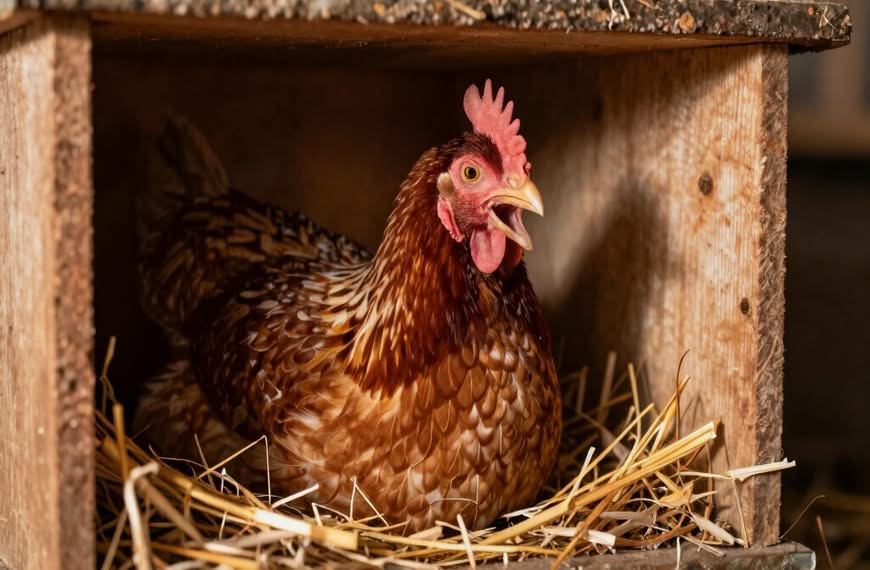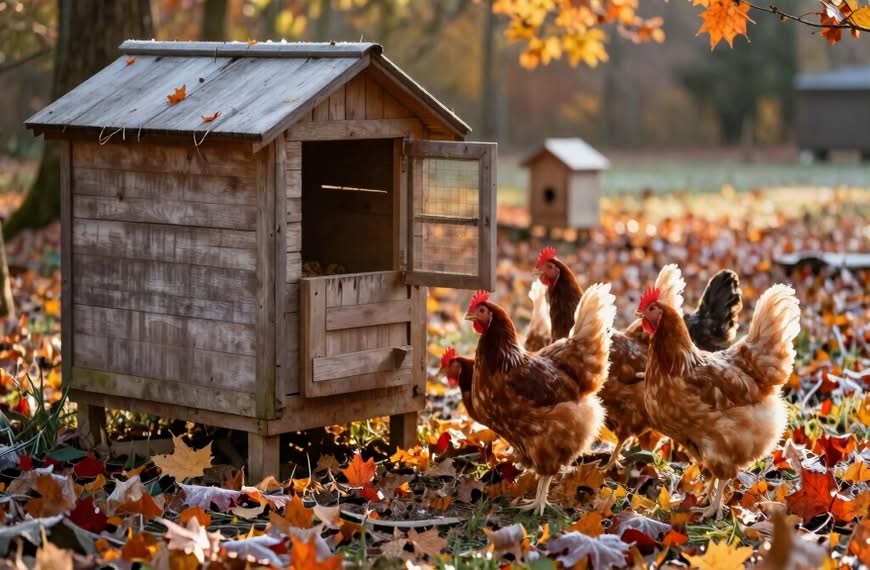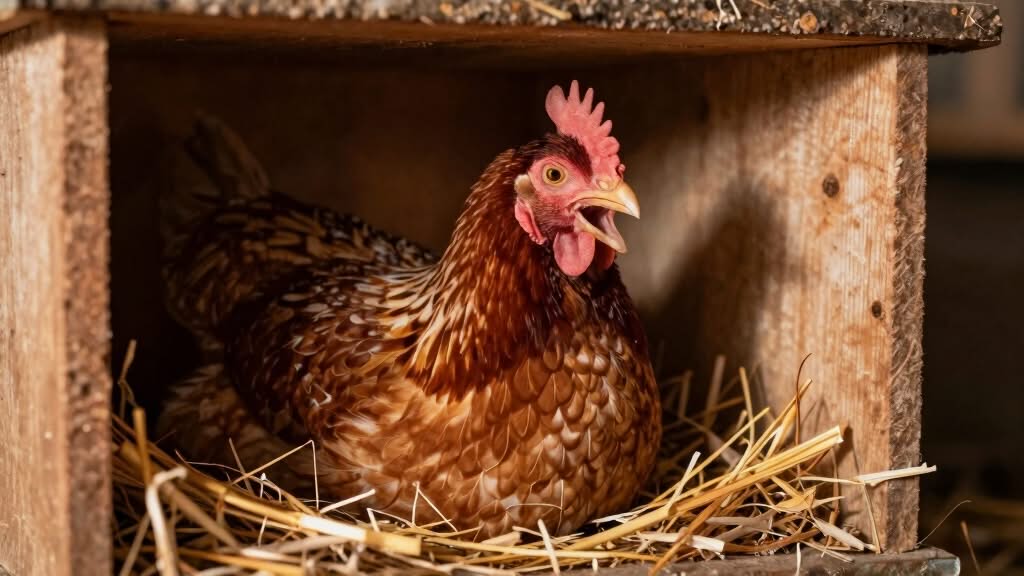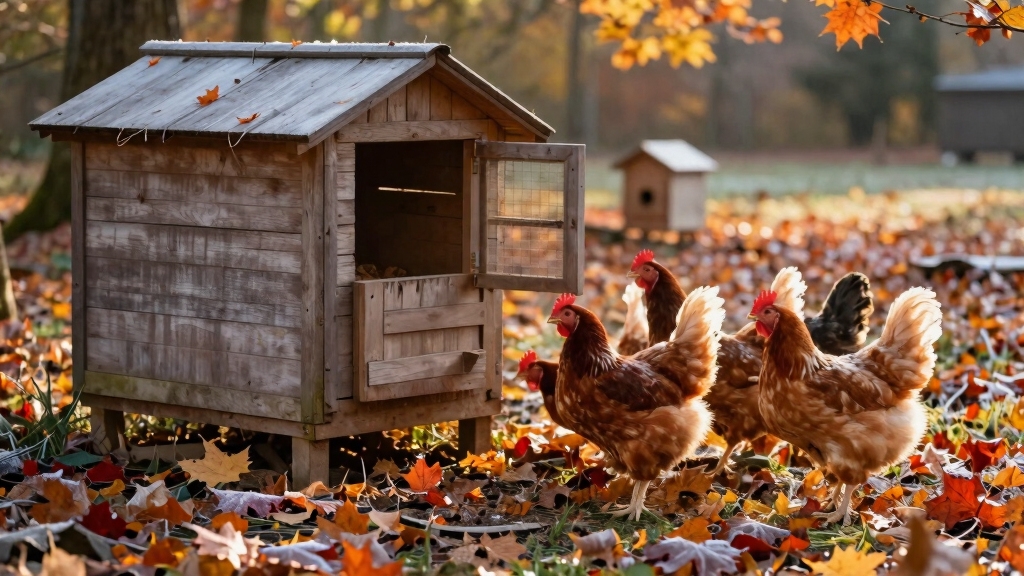
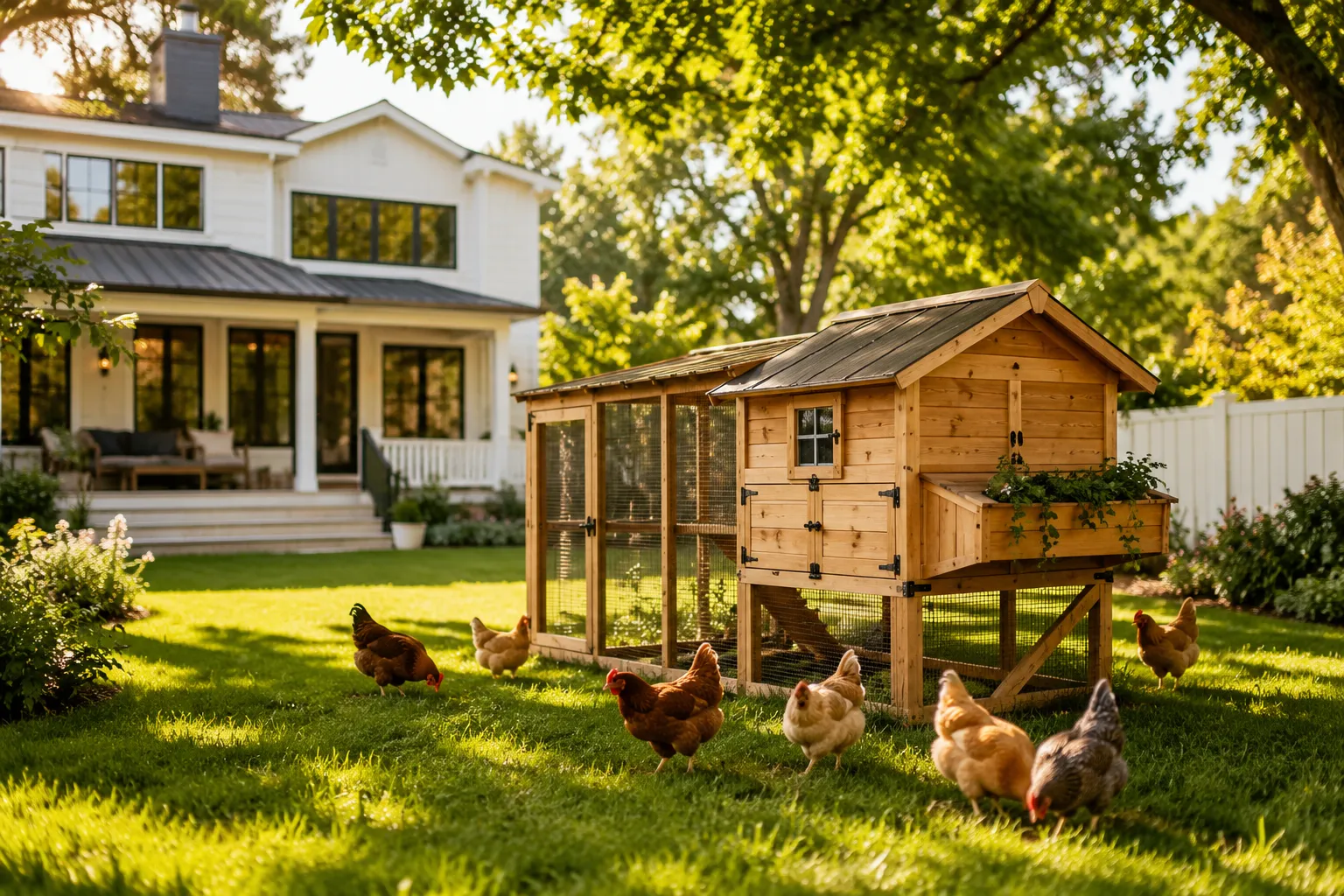
Quick Answer: The best location for a chicken coop is 20-50 feet from your house, on well-drained ground with morning sun and afternoon shade, positioned away from property lines and prevailing winds. The coop should face south or southeast in most climates, have easy access to water and electricity, and comply with local zoning setbacks (typically 10-25 feet from fences).
Key Takeaways
- Distance matters: Place your coop 20-50 feet from your house for convenience without noise or odor issues
- Sun and shade balance: Morning sun with afternoon shade keeps chickens comfortable year-round
- Drainage is critical: Elevated, well-drained ground prevents mud, disease, and structural damage
- Check local laws first: Zoning regulations often require 10-25 foot setbacks from property lines
- Face south or southeast: This orientation maximizes natural light while minimizing harsh afternoon heat
- Small yards need vertical thinking: Use compact coop designs and maximize vertical space when working with limited square footage
- Avoid common mistakes: Don’t place coops in low-lying areas, directly under trees, or too close to vegetable gardens
- Climate adaptation: Hot climates need more shade and ventilation; cold climates benefit from windbreaks and southern exposure
- Neighbor relations: Inform neighbors early and position coops to minimize impact on adjoining properties
What Is the Best Location for a Chicken Coop?
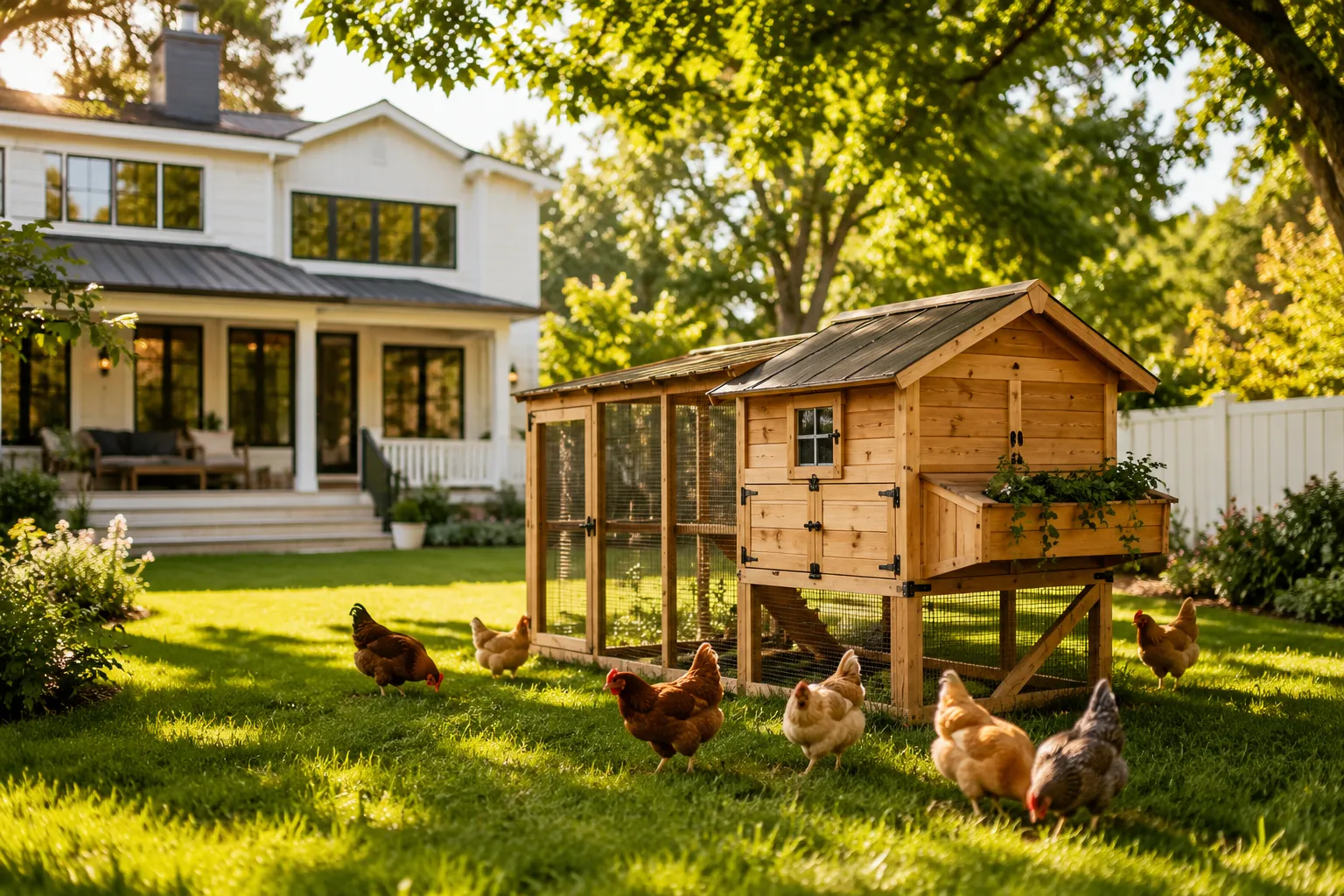
The best location for a chicken coop combines good drainage, partial sun exposure, convenient access from your home, and compliance with local regulations. Your ideal spot should be on slightly elevated or level ground that drains well after rain, receives morning sunlight but has afternoon shade, and sits far enough from your house to avoid noise and odor while remaining close enough for daily care.
When evaluating potential locations, walk your property during different times of day to observe sun patterns, drainage after rainfall, and wind direction. The spot you choose will affect your chickens’ health, egg production, and your daily workload for years to come.
Key criteria for the best location:
- Drainage: Avoid low spots where water pools; chickens need dry ground
- Accessibility: Year-round access for daily feeding, watering, and egg collection
- Sun exposure: 4-6 hours of morning sun, shade during hottest afternoon hours
- Wind protection: Natural or artificial windbreaks for winter comfort
- Utility access: Proximity to water source and optional electricity for winter heating or lighting
- Visibility: Ability to monitor chickens from your home for security
Choose elevated ground if possible. Even a slight slope (1-2 feet higher than surrounding areas) dramatically improves drainage and reduces mud, which causes foot problems and increases parasite loads in chickens.
How Far Should a Chicken Coop Be From the House?
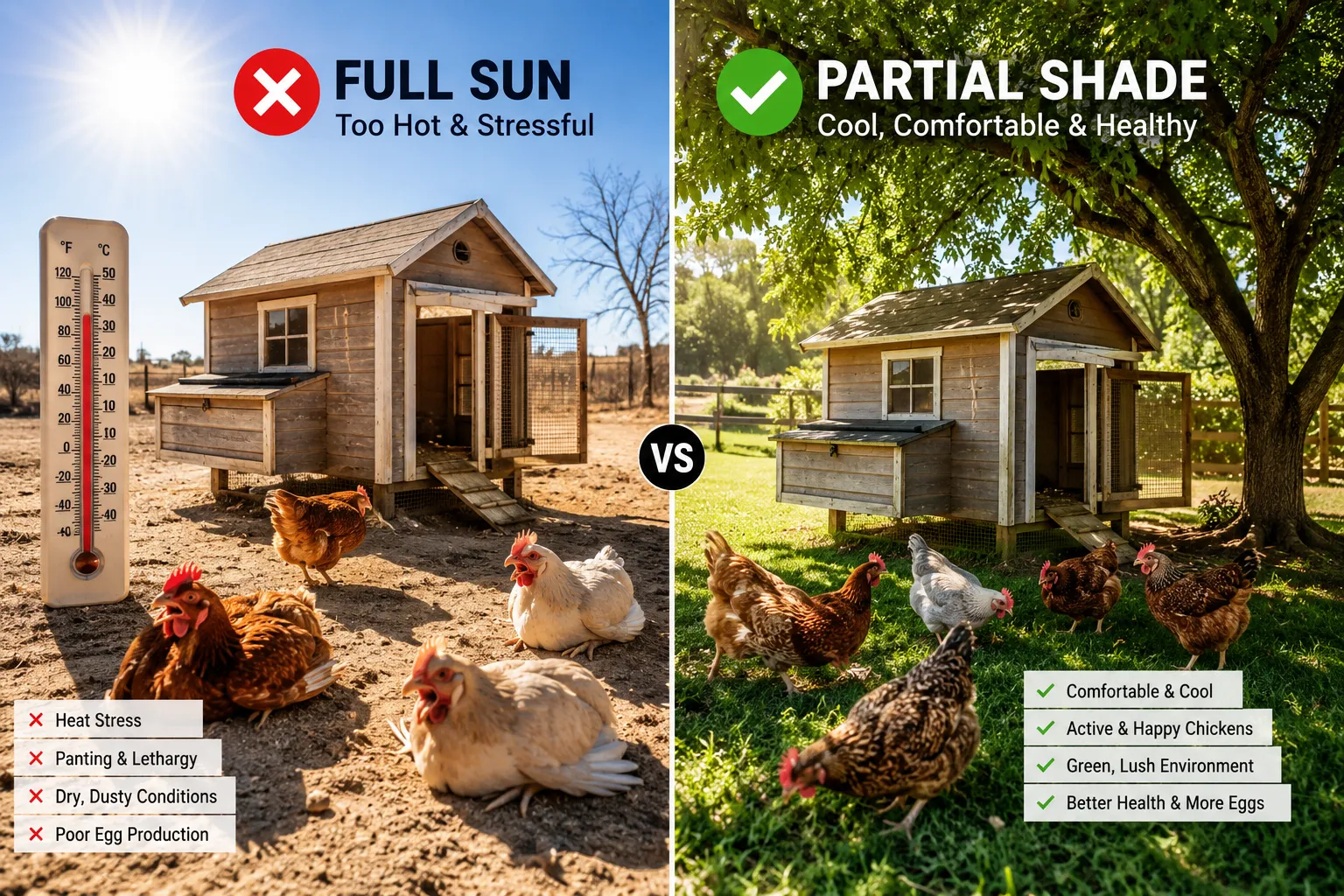
A chicken coop should be positioned 20-50 feet from your house to balance convenience with comfort. This distance keeps daily chores manageable while preventing noise, odors, and flies from affecting your living space. Coops closer than 20 feet often create nuisance issues, especially during hot weather or if maintenance lapses.
The exact distance depends on your property size, prevailing wind direction, and coop size. If prevailing winds blow away from your house, you can place the coop closer (20-30 feet). If winds blow toward your home, increase the distance to 40-50 feet or more.
Distance guidelines by flock size:
- 3-6 chickens: 20-30 feet minimum
- 7-12 chickens: 30-40 feet recommended
- 13+ chickens: 40-50+ feet to manage odor and noise
Common mistake: Placing the coop too far away leads to neglected daily care during bad weather or busy periods. If you must walk more than 100 feet in rain or snow, you’re more likely to skip health checks or delay egg collection.
Should a Chicken Coop Be in Sun or Shade?
A chicken coop should receive morning sun and afternoon shade for optimal chicken health and comfort. Chickens need sunlight for vitamin D production and natural warmth, but they’re highly susceptible to heat stress and cannot tolerate prolonged exposure to temperatures above 85°F without shade and ventilation.
The ideal setup provides 4-6 hours of direct morning sunlight (which helps dry out the coop and run after overnight moisture) followed by natural shade during the hottest afternoon hours between 2-6 PM. This pattern keeps chickens active and laying well while preventing heat-related deaths in summer.
Sun and shade by season:
- Summer: Prioritize afternoon shade; chickens can die from heat stress above 95°F
- Winter: Maximize sun exposure; chickens tolerate cold well but need light for laying
- Spring/Fall: Balanced exposure supports consistent egg production
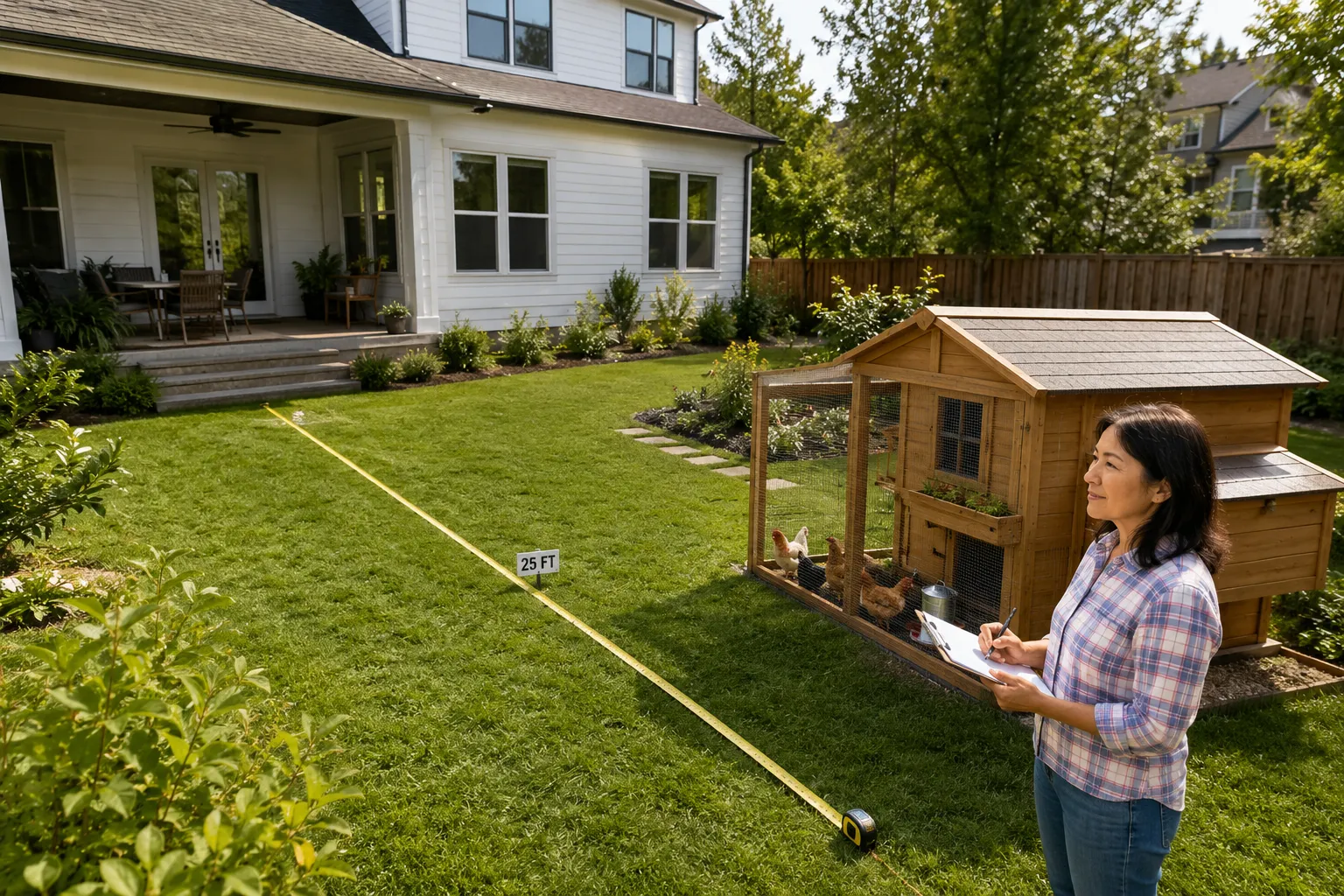
Natural shade sources include mature deciduous trees (which provide summer shade but allow winter sun), buildings, or strategically placed shade cloth. Avoid planting coops directly under evergreen trees, which block winter sun and drop needles that don’t decompose well in chicken runs.
What Direction Should a Chicken Coop Face?
A chicken coop should face south or southeast in most climates to maximize natural light and warmth while minimizing harsh afternoon sun. South-facing coops receive consistent sunlight throughout the day and year, which keeps the interior dry, warm in winter, and naturally lit for better egg production.
Southeast orientation works especially well in hot climates because it captures gentle morning sun while the coop’s back wall shields chickens from intense western afternoon heat. North-facing coops stay too dark and cold in winter; west-facing coops overheat in summer.
Orientation by climate zone:
- Cold climates (zones 3-5): Face due south for maximum winter sun and warmth
- Moderate climates (zones 6-8): Southeast orientation balances light and temperature
- Hot climates (zones 9-11): Southeast or east-facing to minimize afternoon heat exposure
Door and window placement matters. Position the main door on the south or east side for easy access and natural light. Place windows on south and east walls, with smaller or no windows on north and west walls to control temperature extremes.
Chicken Coop Placement Mistakes to Avoid
The most common chicken coop placement mistakes include positioning coops in low-lying areas with poor drainage, placing them too close to property lines without checking setback requirements, and failing to account for prevailing wind direction. These errors lead to muddy runs, neighbor complaints, legal issues, and increased disease risk.
Critical mistakes and their consequences:
- Low-lying or poorly drained areas: Creates constant mud, increases parasites, causes foot infections, and leads to structural rot
- Too close to property lines: Violates zoning laws (often requiring 10-25 foot setbacks) and strains neighbor relations
- Directly under large trees: Excessive shade in winter, falling branches, predator access, and acidic soil from leaf litter
- Downwind from your house: Odors blow directly toward living spaces during prevailing wind conditions
- Too far from water source: Makes daily watering a chore, especially in summer when chickens need frequent refills
- On steep slopes: Difficult to build level structures, creates erosion, and makes daily access dangerous in ice or rain
The “winter access” test: Before finalizing your location, walk the path from your back door to the proposed coop site during or after heavy rain. If the path becomes muddy, icy, or difficult to navigate, you’ll skip daily checks during bad weather. Choose a location with year-round easy access or commit to building a proper pathway.
Can I Put a Chicken Coop Near My Fence?
You can place a chicken coop near your fence only if it complies with local setback requirements, which typically mandate 10-25 feet of clearance from property lines. Many municipalities classify chicken coops as accessory structures subject to the same setback rules as sheds or garages, and violations can result in fines or forced removal.
Beyond legal requirements, positioning coops at least 15-20 feet from shared fence lines maintains good neighbor relations by minimizing noise, odor, and visual impact on adjoining properties. Roosters (if allowed) crow as early as 4 AM, and even hens create noise during laying and when disturbed.
Before placing a coop near a fence:
- Check zoning codes: Call your local planning department or visit their website for specific setback requirements
- Review HOA rules: Homeowners associations often have stricter rules than municipal codes
- Talk to neighbors: Inform adjoining neighbors of your plans before building
- Consider wind direction: Don’t position coops where prevailing winds carry odors toward neighbors’ outdoor living spaces
- Plan for expansion: Leave room to add more chickens or expand your run without violating setbacks
Choose the back corner if possible. The rear corner of your property farthest from neighbors’ homes typically offers the best combination of setback compliance and minimal impact while keeping the coop accessible from your house.
How Much Space Do Chickens Need in a Backyard?
Chickens need a minimum of 3-4 square feet per bird inside the coop and 8-10 square feet per bird in an outdoor run for healthy, productive living. A small flock of 4-6 chickens requires a coop footprint of roughly 16-24 square feet (such as a 4×6 foot structure) plus a run of 32-60 square feet.
These are minimum standards; more space always improves chicken health, reduces aggression, and makes management easier. Overcrowding leads to feather pecking, increased disease transmission, reduced egg production, and higher mortality rates.
Space requirements by flock size:
| Flock Size | Coop Space | Run Space | Total Footprint |
|---|---|---|---|
| 3-4 birds | 12-16 sq ft | 24-40 sq ft | 36-56 sq ft |
| 5-6 birds | 18-24 sq ft | 40-60 sq ft | 58-84 sq ft |
| 8-10 birds | 30-40 sq ft | 80-100 sq ft | 110-140 sq ft |
| 12-15 birds | 45-60 sq ft | 120-150 sq ft | 165-210 sq ft |
Free-range considerations: If your chickens free-range for several hours daily, you can use the lower end of run space requirements. However, you still need adequate covered run space for days when weather or predators keep birds confined.
Chicken Coop Location for Small Yards vs Large Properties
Small yards (under 5,000 square feet) require strategic coop placement that maximizes limited space while maintaining setback compliance and neighbor goodwill. Position coops in back corners, use vertical designs to minimize footprint, and consider mobile “chicken tractors” that can be moved to fresh ground. Small-yard coops typically house 3-6 birds maximum and must be meticulously maintained to prevent odor complaints.
Large properties (over 10,000 square feet) offer flexibility to position coops for optimal sun exposure, drainage, and convenience without space constraints. You can place coops farther from property lines, create larger runs, and position structures to take advantage of natural windbreaks and shade. However, don’t place coops so far from your house that daily care becomes burdensome.
Small yard strategies:
- Use compact coop designs (4×6 or 4×8 feet) with vertical nesting boxes
- Position coops to serve as privacy screens or garden focal points
- Implement strict cleaning schedules to prevent odor buildup
- Choose quiet breeds (avoid roosters) to minimize noise complaints
- Consider mobile coops that can be relocated seasonally
Large property advantages:
- Flexibility to create multiple separate flocks or breeding pens
- Room for extensive runs or true free-range setups
- Ability to position coops for optimal solar orientation without compromise
- Space for composting areas away from living spaces
- Option to rotate chickens through different pasture areas
The “sight line” principle for small yards: Position your coop so it’s visible from your kitchen window but not the dominant feature neighbors see from their outdoor spaces. This keeps chickens easy to monitor while minimizing visual impact.
Do I Need Permission From Neighbors to Put Up a Chicken Coop?
You don’t legally need permission from neighbors to put up a chicken coop if your plans comply with local zoning ordinances, setback requirements, and any applicable HOA rules. However, informing neighbors of your plans before construction builds goodwill, addresses concerns early, and often prevents complaints that could lead to enforcement actions.
Many chicken-keeping conflicts arise from surprise rather than the chickens themselves. Neighbors who learn about your flock after hearing crowing or noticing odors are more likely to file complaints than those you’ve consulted beforehand.
Best practices for neighbor relations:
- Inform adjoining neighbors at least 2-3 weeks before starting construction
- Share your plans: Explain flock size, coop location, and maintenance practices
- Address concerns proactively: Offer to adjust placement if neighbors have legitimate worries
- Commit to cleanliness: Explain your cleaning schedule and odor-control measures
- Offer eggs: A dozen fresh eggs monthly often converts skeptics into supporters
- Start small: Begin with 3-4 hens (no roosters) to demonstrate responsible management
What to check before building:
- Municipal codes: Verify chicken-keeping is allowed and note any permit requirements
- Setback rules: Confirm minimum distances from property lines and structures
- Flock limits: Many cities cap backyard flocks at 4-8 birds
- Rooster restrictions: Most urban and suburban areas prohibit roosters
- HOA covenants: Review any homeowners association rules, which often exceed municipal requirements
Common mistake: Assuming silence equals approval. Some neighbors won’t voice concerns until problems develop, then file formal complaints. Direct conversation prevents this scenario.
How to Keep Chicken Coop From Smelling in the Yard
Keeping a chicken coop from smelling requires proper placement on well-drained ground, adequate ventilation, regular cleaning (weekly minimum), and appropriate bedding management. A properly maintained coop should have minimal odor beyond a mild, earthy smell similar to a barn. Strong ammonia or fecal odors indicate inadequate ventilation, overcrowding, or neglected cleaning.
Location directly affects odor control. Coops on poorly drained ground stay damp, which accelerates ammonia production and bacterial growth. Position coops where air circulates freely and moisture evaporates quickly.
Odor prevention strategies:
- Deep litter method: Maintain 3-4 inches of absorbent bedding (pine shavings, hemp, or straw) and add fresh layers weekly
- Ventilation: Install vents near the roof peak to allow ammonia (which rises) to escape
- Weekly spot-cleaning: Remove soiled bedding from under roosts and nesting boxes
- Monthly deep cleaning: Replace all bedding and scrub surfaces with vinegar solution
- Proper drainage: Ensure water doesn’t pool in or around the coop
- Appropriate flock density: Don’t exceed 4 square feet per bird inside the coop
Natural odor absorbers like food-grade diatomaceous earth (sprinkled lightly on bedding) or herbs (lavender, mint, oregano) mixed into nesting boxes help control smells while providing health benefits. Avoid using lime or harsh chemicals, which can harm chickens’ respiratory systems.
The “nose test”: If you can smell your coop from 10 feet away on a calm day, it needs immediate cleaning and better ventilation. Neighbors will definitely notice odors you can detect from that distance.
Is It Better to Put Chickens on Grass or Dirt?
Chickens do best on grass initially, but they will eventually convert any confined area to bare dirt through scratching, dust bathing, and foraging behavior. A grassy run provides natural forage, insect protein, and softer ground, but requires rotation or a large enough space (25+ square feet per bird) to allow grass recovery. Most backyard setups end up with dirt runs that require active management to prevent mud and maintain hygiene.
The choice between grass and dirt depends on your run size, climate, and management style. Large runs (100+ square feet per bird) can maintain grass with proper rotation. Small runs (8-10 square feet per bird) will become dirt within weeks regardless of initial conditions.
Grass run advantages:
- Natural forage and insects supplement diet
- Softer surface for chickens’ feet
- Better appearance and less dust
- Natural odor control through plant absorption
Grass run challenges:
- Requires large space or rotation system to prevent complete destruction
- Can become muddy in wet climates
- Difficult to maintain in small urban coops
- Chickens will eventually kill grass in high-traffic areas
Dirt run advantages:
- Easier to maintain in small spaces
- Provides natural dust bathing material
- Drains better than grass in many soil types
- More realistic for most backyard setups
Dirt run challenges:
- Can become muddy without proper drainage
- Requires regular raking and fresh material addition
- Creates more dust in dry climates
- Less natural foraging opportunity
Best compromise: Create a large grass run with a smaller dirt area near the coop for dust bathing. Use chicken wire or temporary fencing to rotate chickens through different grass sections, allowing recovery time. Add sand or pea gravel to high-traffic areas near coop doors to prevent mud.
Chicken Coop Placement for Hot Climates vs Cold Climates
Hot climate chicken coops (zones 9-11) should prioritize shade, ventilation, and cooling, with placement under deciduous trees or on the east side of buildings where afternoon shade is guaranteed. Position coops to catch prevailing breezes, install large ventilation openings (up to 1 square foot per bird), and face openings east or southeast to avoid western sun. In areas with summer temperatures above 95°F, shade and airflow are more critical than insulation.
Cold climate chicken coops (zones 3-5) need southern exposure for maximum winter sun, protection from prevailing winter winds, and moderate insulation without sacrificing ventilation. Position coops on the south side of windbreaks (buildings, fences, or evergreen trees) but not so close that winter sun is blocked. Cold-hardy chickens tolerate temperatures well below 0°F if they stay dry and draft-free, making ventilation without drafts the key design challenge.
Hot climate priorities:
- Maximum shade: 70-80% of run should be shaded during afternoon hours
- Cross-ventilation: Large openings on opposite walls to create airflow
- Reflective roofing: Light-colored or reflective roof materials to reduce heat absorption
- Misting systems: Optional misters or sprinklers for extreme heat days (100°F+)
- Elevated coops: Raising coops 2-3 feet allows air circulation underneath
- Dust bathing areas: Shaded spots with sand or dry dirt for natural cooling
Cold climate priorities:
- Southern exposure: Maximize winter sun for natural warmth and light
- Windbreaks: Natural or artificial barriers on north and west sides
- Insulated walls: R-10 to R-15 insulation in walls and ceiling (but maintain ventilation)
- Deep litter: 6-8 inches of bedding provides insulation and generates composting heat
- Small doors and windows: Minimize heat loss while maintaining adequate ventilation
- Roost placement: Position roosts away from drafts but under ventilation openings
Moderate climate flexibility (zones 6-8): These regions can use standard coop designs with southeast orientation, balanced ventilation, and seasonal management adjustments. Focus on good drainage and flexible ventilation that can be adjusted seasonally.
How Close Can a Chicken Coop Be to a Vegetable Garden?
A chicken coop should be positioned at least 10-15 feet from vegetable gardens to prevent chickens from accessing and destroying plants while minimizing the risk of contaminating produce with manure-borne pathogens. While chicken manure is excellent fertilizer after composting, fresh manure can carry E. coli and Salmonella that pose food safety risks if applied directly to edible crops.
The ideal setup places coops near but not adjacent to gardens, allowing you to easily transport composted manure while keeping chickens physically separated from growing vegetables. Free-ranging chickens will destroy most vegetable gardens within hours if given access.
Safe distances and practices:
- Minimum separation: 10-15 feet between coop and garden beds
- Barrier fencing: Install 4-foot fencing around gardens to prevent chicken access
- Compost first: Age chicken manure for 6-12 months before applying to vegetable gardens
- Seasonal access: Allow chickens into garden beds only after harvest or during fallow periods
- Upwind placement: Position coops downwind from gardens to prevent manure dust on crops
Strategic integration benefits:
- Easy transport of composted manure to garden beds
- Chickens can clean up garden pests and debris after harvest
- Shared infrastructure (water lines, pathways, tool storage)
- Visual cohesion in backyard homesteading setups
Food safety guidelines: The USDA recommends a 120-day interval between applying raw chicken manure and harvesting crops that contact soil (like lettuce or carrots), or a 90-day interval for crops that don’t contact soil (like tomatoes or peppers). Composting manure to 130-150°F for several weeks eliminates most pathogens and allows immediate application.
What Are the Zoning Laws for Backyard Chicken Coops?
Zoning laws for backyard chicken coops vary significantly by municipality but typically regulate flock size (often 4-8 bird maximum), setback distances from property lines (10-25 feet), rooster prohibitions, and permit requirements. Urban and suburban areas usually classify chickens as accessory agricultural uses subject to specific ordinances separate from general pet regulations.
Before purchasing chickens or building a coop, contact your local planning or zoning department to obtain specific regulations for your address. Many cities have adopted chicken-friendly ordinances in recent years, but enforcement of older restrictive codes still occurs in some areas.
Common zoning restrictions:
- Flock size limits: Typically 4-8 hens maximum in urban/suburban areas
- Rooster prohibitions: Most residential zones prohibit roosters due to noise
- Setback requirements: 10-25 feet from property lines, 20-50 feet from neighboring dwellings
- Lot size minimums: Some cities require minimum lot sizes (5,000-10,000 square feet)
- Permit requirements: Building permits for coops over certain sizes (often 120-200 square feet)
- Slaughter prohibitions: Many ordinances prohibit on-site slaughter
- Commercial restrictions: Egg sales may require additional permits or be prohibited
Where to find your local rules:
- Municipal website: Search “[your city] chicken ordinance” or check the zoning code
- Planning department: Call or visit in person for specific guidance
- HOA documents: Review covenants, conditions, and restrictions (CC&Rs)
- County regulations: Unincorporated areas follow county rather than city rules
- State laws: Some states have “right to farm” laws that protect backyard chickens
Variance and exceptions: If your property doesn’t meet standard requirements, you may be able to apply for a variance or conditional use permit. This process typically requires notifying neighbors, attending a hearing, and demonstrating that your proposal won’t negatively impact surrounding properties.
Enforcement reality: Some municipalities have chicken-friendly laws but only enforce them in response to complaints. Others proactively inspect coops. Understanding your local enforcement approach helps you assess risk and plan accordingly.
FAQ
How many chickens should a beginner start with?
Beginners should start with 3-5 chickens to learn basic care without being overwhelmed. This size flock provides enough eggs for a small family (2-4 eggs daily) while keeping costs, space requirements, and daily workload manageable. Starting small also limits financial loss if chicken-keeping doesn’t work out.
Can I move a chicken coop after it’s built?
You can move a chicken coop after construction if it’s designed as a mobile unit or small enough to lift (under 200 pounds). Permanent coops built on foundations cannot be moved without disassembly. Consider building on skids or using a “chicken tractor” design if you want relocation flexibility.
Do chicken coops need electricity?
Chicken coops don’t require electricity for basic operation, but power enables supplemental lighting (to maintain winter egg production), heated waterers (to prevent freezing), and ventilation fans (for summer cooling). Most backyard coops operate successfully without electricity using natural light and manual watering systems.
How often should I clean my chicken coop?
Clean your chicken coop weekly by removing soiled bedding from high-traffic areas and monthly by replacing all bedding and scrubbing surfaces. Daily spot-cleaning of obvious messes and quarterly deep cleaning with disinfectant maintains optimal health. Neglecting weekly cleaning leads to ammonia buildup and respiratory problems.
What’s the best ground surface under a chicken coop?
The best ground surface under a chicken coop is well-drained soil, sand, or pea gravel that prevents water accumulation and allows easy cleaning. Avoid placing coops directly on grass (which dies quickly) or in low spots where water pools. A 2-4 inch layer of sand or gravel over landscape fabric provides excellent drainage and easy maintenance.
Should I insulate my chicken coop?
Insulate your chicken coop only in extreme cold climates (zones 3-4) where winter temperatures regularly drop below -10°F. Most climates don’t require insulation because chickens tolerate cold well and insulation can trap moisture, causing respiratory problems. Prioritize ventilation over insulation in all climates.
How do I protect my chicken coop from predators?
Protect your chicken coop from predators by burying hardware cloth 12-18 inches deep around the perimeter, covering all openings larger than 1 inch with hardware cloth (not chicken wire), installing secure latches on all doors, and adding a covered roof to prevent aerial attacks. Motion-activated lights and secure nighttime housing are essential.
Can chickens live in a coop full-time without a run?
Chickens can survive in a coop full-time without a run, but they’ll be less healthy, produce fewer eggs, and exhibit more behavioral problems than chickens with outdoor access. Minimum space requirements increase to 10 square feet per bird for coop-only setups. Most chicken-keepers consider outdoor access essential for bird welfare.
What size coop do I need for 6 chickens?
For 6 chickens, you need a coop with 24 square feet of interior space (such as 4×6 or 3×8 feet) plus a run with 48-60 square feet (such as 6×8 or 6×10 feet). These are minimum standards; larger spaces improve health and reduce aggression. Add 4 square feet of coop space and 8-10 square feet of run space for each additional bird.
Do I need a permit to build a chicken coop?
Permit requirements for chicken coops vary by location, but many municipalities require building permits for structures over 100-200 square feet or those with permanent foundations. Small coops (under 120 square feet) on skids often don’t require permits, but you should verify with your local building department before construction to avoid fines or forced removal.
How far should a chicken coop be from a well or water source?
A chicken coop should be at least 50-100 feet from wells, springs, or other drinking water sources to prevent contamination from manure runoff. Most health departments and environmental agencies require minimum separation distances to protect groundwater quality. Position coops downhill from water sources when possible and ensure proper drainage away from wells.
What’s the best bedding material for chicken coops?
The best bedding materials for chicken coops are pine shavings, hemp bedding, or straw, which absorb moisture well, control odors, and compost easily. Avoid cedar shavings (toxic to chickens), newspaper (doesn’t absorb well), and hay (molds quickly). Pine shavings offer the best balance of cost, availability, and performance for most chicken-keepers.
Conclusion
Choosing where to put a chicken coop in your yard requires balancing multiple factors: legal compliance, chicken health, neighbor relations, and your own convenience. The ideal location sits 20-50 feet from your house on well-drained, elevated ground with morning sun and afternoon shade, facing south or southeast. It complies with local setback requirements (typically 10-25 feet from property lines), provides easy year-round access, and positions the coop where prevailing winds carry odors away from living spaces.
Start by checking your local zoning ordinances and HOA rules to understand flock size limits, setback requirements, and permit needs. Then walk your property during different times of day to observe sun patterns, drainage, and wind direction. Mark potential locations and evaluate each against the criteria outlined in this guide.
Your next steps:
- Research local regulations by contacting your planning department or reviewing municipal codes online
- Inform your neighbors of your plans before starting construction to build goodwill
- Map your property noting sun exposure, drainage patterns, and distances from property lines
- Choose your location based on the guidelines in this article, prioritizing drainage and sun exposure
- Plan for expansion by leaving room to add birds or extend your run without violating setbacks
- Start small with 3-5 chickens to learn basic care before expanding your flock
Remember that coop placement is a long-term decision that affects daily care, chicken health, and neighbor relations for years. Taking time to choose the right location now prevents costly mistakes and ensures a successful, enjoyable chicken-keeping experience.