
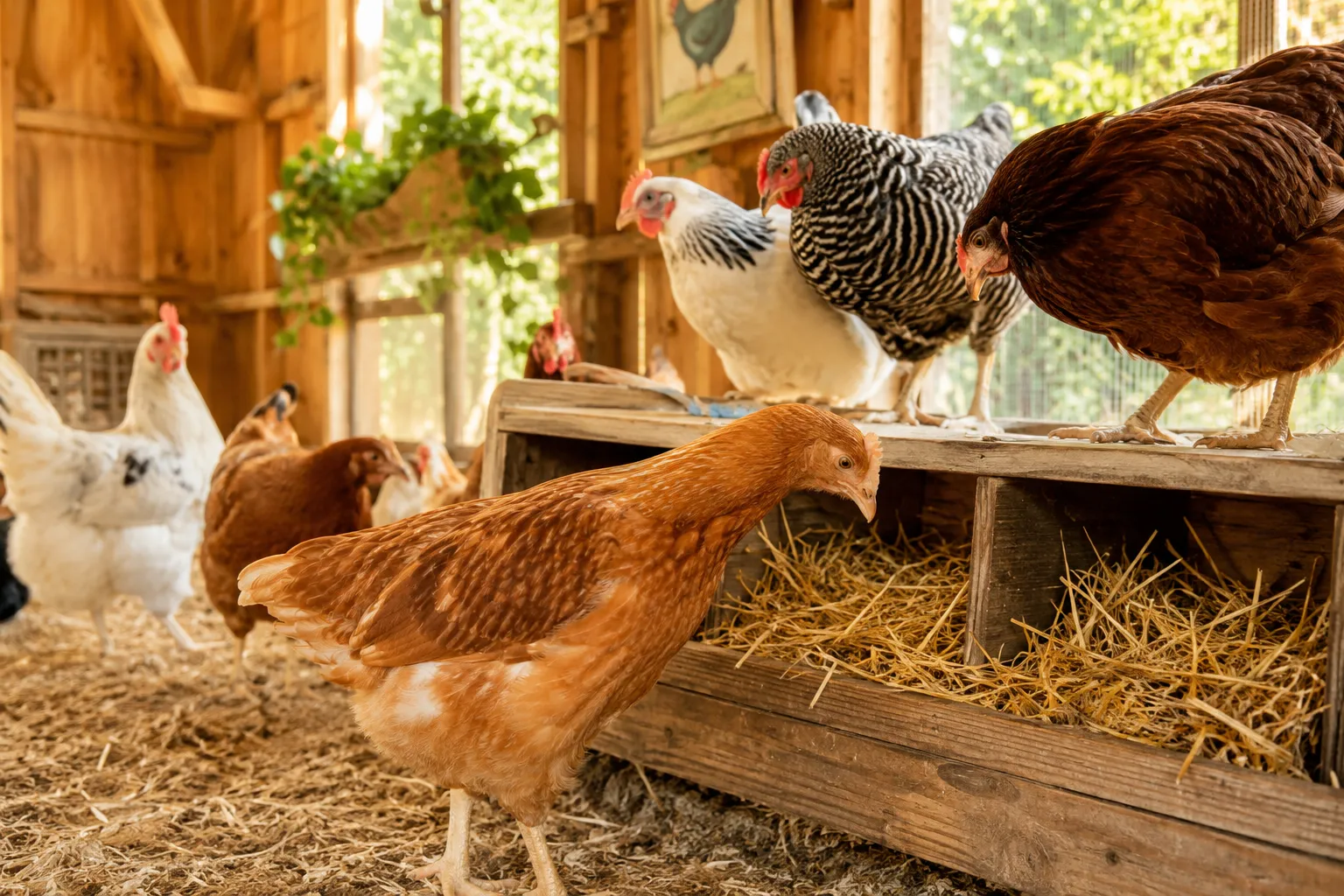
Most hens start laying eggs between 18 and 24 weeks of age, though this varies significantly by breed, season, and individual bird health. Lighter breeds like Leghorns often begin as early as 16-17 weeks, while heavier heritage breeds may not lay their first egg until 28-30 weeks. Understanding when your specific hens will start laying helps you prepare proper nutrition, nesting boxes, and realistic expectations for your flock.
Key Takeaways
- Average laying age: Most hens begin laying between 18-24 weeks (4.5-6 months) of age
- Breed matters significantly: Production breeds start earlier (16-20 weeks) while heritage breeds take longer (24-30 weeks)
- Physical signs appear first: Red comb and wattles, squatting behavior, and nesting box exploration signal laying is imminent
- Season affects timing: Pullets maturing in spring/summer typically start laying sooner than those maturing in fall/winter
- First-year production: Expect 200-280 eggs in the first year from good layers, with peak production in months 2-10
- Nutrition is critical: Switch to layer feed (16-18% protein with added calcium) 1-2 weeks before expected laying
- No rooster needed: Hens lay eggs without a rooster; roosters are only necessary for fertile eggs
- Patience pays off: Delayed laying (up to 30 weeks) is often normal, not a problem, especially for larger breeds
- Early laying risks: Pullets laying before 16 weeks may produce small eggs and face higher health risks
- Individual variation: Even within the same breed and hatch date, hens may start laying 2-4 weeks apart
What Age Do Chickens Start Laying Eggs?
Chickens typically start laying eggs between 18 and 24 weeks of age, which translates to roughly 4.5 to 6 months old. This is the average range for most common backyard breeds, but individual birds can vary by several weeks on either side of this window.
The age at which a hen begins laying depends on several interconnected factors:
Breed type is the single biggest predictor. Production breeds developed specifically for egg-laying (like Golden Comets, ISA Browns, and Leghorns) often start at 16-20 weeks. Dual-purpose breeds (Rhode Island Reds, Plymouth Rocks, Australorps) typically begin at 20-24 weeks. Heritage and ornamental breeds (Brahmas, Cochins, Silkies) may not lay until 24-30 weeks or even later.
Season and daylight play a major role. Hens need approximately 14-16 hours of daylight to trigger laying. Pullets that reach maturity in spring or early summer usually start laying on schedule. Those maturing in fall or winter often delay laying until the following spring when daylight increases, unless you provide supplemental lighting.
Nutrition and health directly impact development. Pullets fed high-quality grower feed with proper protein levels (18-20% until point of lay) develop on schedule. Undernourished birds, those recovering from illness, or birds under stress may delay laying by weeks or months.
Individual genetics matter even within the same breed. Two Rhode Island Red pullets from the same hatch, raised identically, might start laying two weeks apart simply due to individual variation.
How to Tell If a Hen Is About to Start Laying
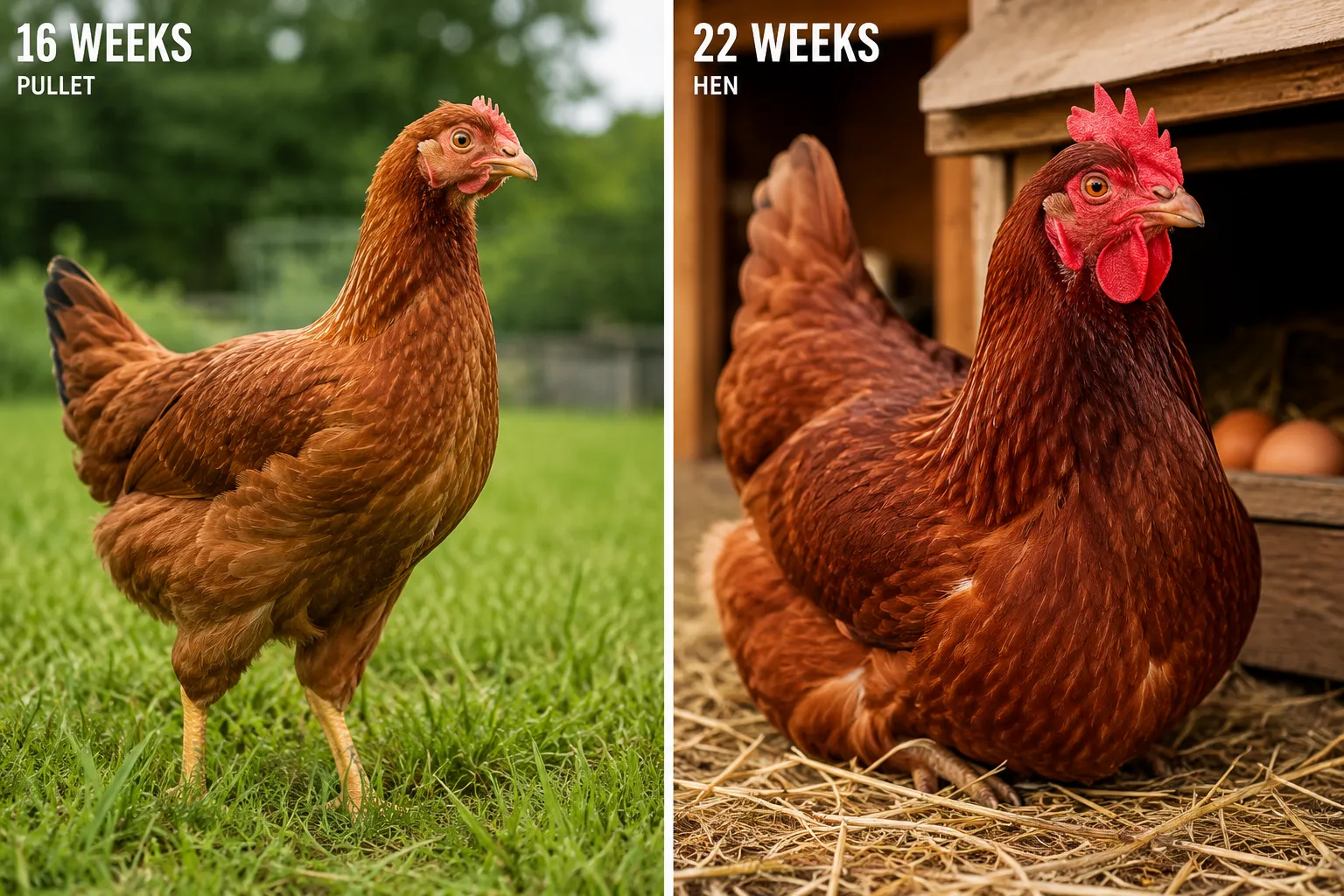
A hen approaching point of lay shows several clear physical and behavioral changes that typically appear 1-3 weeks before the first egg. The most reliable sign is comb and wattle development: these facial features change from pale pink or yellow to bright, vibrant red and increase noticeably in size.
Watch for these specific indicators:
Physical changes:
- Comb becomes larger, redder, and feels warmer to the touch
- Wattles enlarge and deepen in color
- Pelvic bones (on either side of the vent) widen to 2-3 finger widths apart
- Vent becomes larger, moist, and pinkish (rather than small and pale)
- Overall body fills out and matures in appearance
Behavioral signs:
- Squatting: When you approach or reach toward her, she crouches low with wings slightly out (this is a mating position response triggered by laying hormones)
- Spending time in or near nesting boxes, rearranging bedding material
- Increased vocalization, especially a distinctive “egg song” (loud, repetitive clucking)
- Restless behavior, pacing, or seeming unable to get comfortable
- Increased appetite, particularly interest in calcium sources like oyster shell
The squatting behavior is particularly reliable. Once a pullet starts squatting when you approach, expect eggs within 1-2 weeks in most cases. Not all hens show every sign, but the combination of red comb, squatting, and nesting box interest is a strong predictor that laying is imminent.
Do All Chicken Breeds Start Laying at the Same Age?
No, chicken breeds vary significantly in their laying age, with differences of 10-14 weeks between the earliest and latest breeds. This variation reflects the different purposes for which breeds were developed over centuries.
Production/hybrid breeds (16-20 weeks):
- Golden Comet, Red Star, Black Star: 16-18 weeks
- ISA Brown, Bovans Brown: 17-19 weeks
- White Leghorn: 16-20 weeks
- These breeds were specifically developed for commercial egg production and early maturity
Dual-purpose breeds (20-24 weeks):
- Rhode Island Red: 18-22 weeks
- Plymouth Rock: 20-24 weeks
- Australorp: 20-22 weeks
- Wyandotte: 20-24 weeks
- Sussex: 20-24 weeks
- These breeds balance egg production with meat quality
Heritage and heavy breeds (24-30+ weeks):
- Brahma: 24-28 weeks
- Cochin: 24-30 weeks
- Orpington: 22-26 weeks
- Marans: 24-26 weeks
- These larger birds take longer to reach physical maturity
Ornamental and bantam breeds (24-32+ weeks):
- Silkie: 24-30 weeks
- Polish: 20-24 weeks
- Serama: 16-20 weeks (bantams often mature faster relative to body size)
Choose your breed based on your priorities. If early eggs matter most, select production hybrids. If you want a beautiful, dual-purpose flock and can wait a bit longer, heritage breeds offer other benefits like better foraging ability, broodiness, and longevity.
Rhode Island Red vs Leghorn Laying Age Comparison
Rhode Island Reds typically start laying at 18-22 weeks of age, while Leghorns often begin at 16-20 weeks, making Leghorns about 2-4 weeks earlier on average. This difference reflects their distinct breeding purposes and body types.
Leghorns are lightweight, high-energy birds developed purely for egg production. They mature quickly, eat less feed, and channel most of their energy into egg production rather than body mass. A Leghorn pullet weighs about 3-4 pounds at point of lay and will produce 280-320 white eggs in her first year. The trade-off: they’re flighty, less cold-hardy, and rarely go broody.
Rhode Island Reds are dual-purpose birds bred for both eggs and meat. They take slightly longer to mature because they’re building a larger, more robust frame (5-6 pounds at point of lay). They typically produce 250-280 brown eggs in the first year. The benefits: calmer temperament, better cold tolerance, some will go broody, and they’re more self-sufficient foragers.
| Characteristic | Leghorn | Rhode Island Red |
|---|---|---|
| Typical laying age | 16-20 weeks | 18-22 weeks |
| First-year production | 280-320 eggs | 250-280 eggs |
| Egg color | White | Brown |
| Mature weight | 3-4 lbs | 5-6 lbs |
| Temperament | Flighty, active, nervous | Calm, friendly, docile |
| Cold hardiness | Moderate (large comb) | Excellent |
If maximum egg production and early laying are your priorities, Leghorns win. If you want a friendlier, more versatile bird that’s better for families and mixed-purpose flocks, Rhode Island Reds are worth the short wait.
Why Is My 6-Month-Old Hen Not Laying Yet?
A 6-month-old (24-week) hen that hasn’t started laying is usually experiencing a normal delay due to breed, season, or individual variation, not a health problem. At 24 weeks, many heritage breeds are just reaching their natural point of lay, and environmental factors often extend this timeline.
Common reasons for delayed laying at 6 months:
Breed expectations: If your hen is a Brahma, Cochin, Orpington, or other heavy breed, 24-28 weeks is completely normal. Check your specific breed’s typical laying age before worrying.
Seasonal daylight: This is the most common cause. Hens need 14-16 hours of light daily to stimulate laying hormones. A pullet reaching 24 weeks in October or November will often wait until February or March when daylight increases naturally. You can add supplemental lighting (turn lights on early morning to reach 14-16 total hours) to trigger laying, though some keepers prefer to let birds follow natural cycles.
Stress or recent changes: Moving to a new coop, introducing new flock members, predator pressure, or other stressors can delay laying by 2-4 weeks. Once the hen settles, laying typically begins.
Nutrition gaps: Hens on low-protein feed, lacking access to fresh water, or not receiving proper minerals may delay laying. Ensure she’s getting 16-18% protein layer feed and free-choice calcium (oyster shell).
Molting: If a pullet goes through an early molt (losing and regrowing feathers), she’ll delay laying until the molt completes. This is less common but possible.
Hidden laying: Before assuming she’s not laying, thoroughly check for hidden nests. Hens sometimes lay in bushes, corners, or other spots rather than nesting boxes.
When to worry: If your hen reaches 30-32 weeks with no eggs and shows no signs of approaching lay (pale comb, no squatting, no nesting behavior), consult a veterinarian. Internal laying, reproductive abnormalities, or other health issues are possible but uncommon.
Most 6-month-old non-layers simply need more time or better lighting. Be patient, especially with heritage breeds and winter pullets.
What to Feed Chickens When They Start Laying Eggs
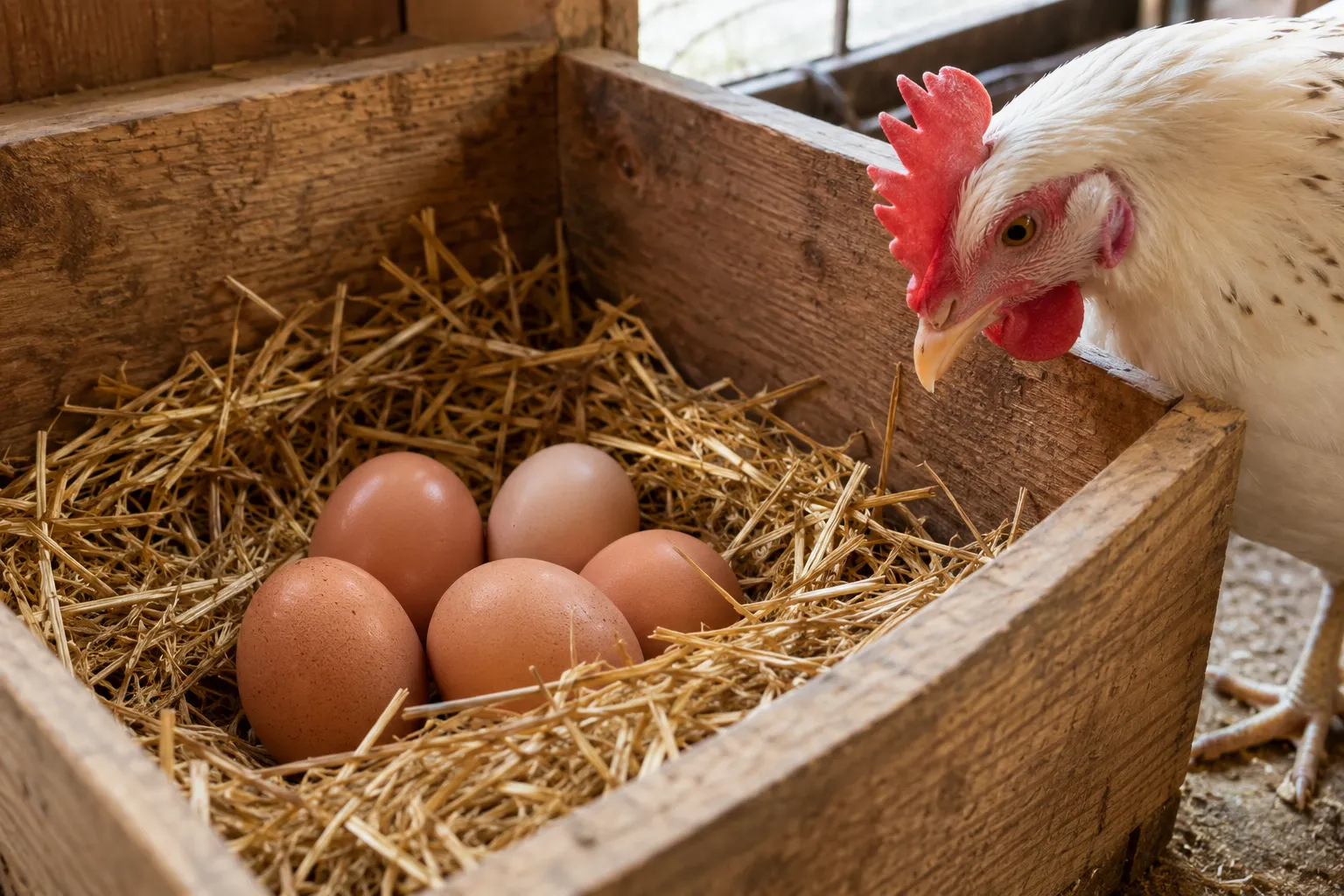
Switch your pullets to layer feed containing 16-18% protein and 3-4% calcium approximately 1-2 weeks before you expect first eggs, or immediately when you see the first egg. Layer feed provides the specific nutrients hens need to produce strong eggshells and maintain their own body condition during the demanding laying cycle.
Layer feed essentials:
Protein content: 16-18% protein supports egg production without excess that can stress kidneys. This is lower than grower feed (18-20%) but optimized for laying hens. Brands like Purina Layena, Nutrena NatureWise, and Scratch and Peck Organic Layer all meet these requirements.
Calcium: Layer feed contains 3-4% calcium, but most hens need supplemental calcium as well. Provide free-choice oyster shell or crushed eggshells in a separate container. Hens will self-regulate, eating extra calcium when they need it for shell formation. Never mix calcium into feed for young pullets (under 18 weeks) as excess calcium damages developing kidneys.
Feeding schedule:
- Provide layer feed free-choice (always available) or measure out approximately 1/4 pound per hen per day
- Offer oyster shell in a separate dish, not mixed into feed
- Provide fresh, clean water at all times (hens drink 2-3x more when laying)
- Limit treats and scratch grains to less than 10% of total diet to avoid diluting nutrition
What NOT to feed:
- Don’t continue grower feed after laying starts (insufficient calcium)
- Avoid all-flock or flock-raiser feeds unless you supplement with extra calcium
- Don’t feed layer feed to roosters, chicks, or non-laying pullets (excess calcium harms them)
Mixed-age flocks: If you have chicks, pullets, and laying hens together, feed all-flock or grower feed to everyone and provide oyster shell separately. Only the laying hens will eat the calcium supplement, protecting younger birds from excess calcium.
The transition to layer feed is critical. Hens laying eggs without adequate calcium will pull calcium from their own bones, leading to weak shells, soft eggs, and eventually skeletal problems and egg binding.
How Many Eggs Will a Hen Lay in the First Year?
A healthy hen from a good laying breed will produce approximately 200-280 eggs in her first year of laying, with peak production occurring between months 2-10 after the first egg. Production breeds and hybrids reach the higher end of this range, while heritage breeds typically produce 180-220 eggs in year one.
First-year production by breed category:
High-production hybrids (250-300 eggs):
- Golden Comet, ISA Brown, Red Star: 280-300 eggs
- These birds are bred specifically for maximum first-year output
Production breeds (240-280 eggs):
- White Leghorn: 280-320 eggs
- Australorp: 250-280 eggs
- Rhode Island Red: 250-280 eggs
Dual-purpose breeds (200-250 eggs):
- Plymouth Rock: 220-250 eggs
- Wyandotte: 200-240 eggs
- Sussex: 220-250 eggs
Heritage breeds (150-200 eggs):
- Orpington: 180-220 eggs
- Brahma: 150-180 eggs
- Marans: 180-200 eggs
What affects first-year totals:
Start date matters: A hen that begins laying in March and lays through December will produce more total eggs than one starting in September (fewer months of production in year one).
Molting: Most hens don’t molt in their first year, but if they do, expect 2-3 months of reduced or stopped production.
Winter slowdown: Even first-year layers reduce production in winter without supplemental lighting. Expect 2-4 eggs per week instead of 5-7.
Broodiness: Heritage breeds that go broody (wanting to hatch eggs) stop laying for 3-4 weeks, reducing annual totals.
Realistic expectations: Don’t expect an egg every single day. Even excellent layers produce 5-6 eggs per week at peak, taking occasional days off. A hen laying 250 eggs per year averages about 5 eggs per week across the full year, accounting for seasonal variation.
Track your flock’s production with a simple calendar or app. This helps you identify problems early and understand your specific birds’ patterns.
Can Pullets Lay Eggs Too Early?
Yes, pullets can begin laying too early, typically defined as before 16 weeks of age, which can lead to small eggs, prolapse risk, and long-term reproductive problems. While early laying might seem like a positive trait, it often indicates the bird’s body hasn’t fully matured before the reproductive system activated.
Risks of early laying (before 16 weeks):
Egg binding and prolapse: A pullet’s body and pelvic bones may not be fully developed. Laying large eggs through an immature reproductive tract increases the risk of eggs getting stuck (egg binding) or tissue prolapsing outside the vent. Both conditions are medical emergencies.
Tiny first eggs: Pullets that start very early often lay “fairy eggs” or “fart eggs” (tiny eggs, sometimes without yolks) for several weeks. While these are harmless, they indicate the reproductive system is immature.
Shortened laying life: Some evidence suggests hens that start laying very early may burn out faster, with reduced production in years 2-3 compared to hens that started at a normal age.
Nutritional stress: A young pullet’s body is still growing. Diverting resources to egg production before growth completes can result in a smaller adult bird with weaker bones.
What causes early laying:
- Breed genetics: Production hybrids are bred for early maturity; 16-17 weeks is normal for them, not “too early”
- Artificial lighting: Excessive light exposure (more than 16 hours daily) can trigger premature laying
- High-protein feed: Feeding layer feed (with added calcium) to young pullets can sometimes trigger early laying
- Warm climate: Pullets in consistently warm environments may mature slightly faster
Prevention: Keep pullets on grower feed (not layer feed) until 18 weeks or first egg, whichever comes first. Provide natural daylight cycles without excessive artificial light for young birds. If a pullet does start laying before 16 weeks, monitor her closely for signs of distress, ensure she has access to calcium, and watch for egg binding symptoms (straining, lethargy, penguin-like posture).
Most pullets starting at 16-17 weeks are fine, especially in production breeds. The concern is primarily for birds laying at 13-15 weeks, which is genuinely premature.
Best Chicken Breeds for Early Egg Production
The best chicken breeds for early egg production are production hybrids and lightweight Mediterranean breeds that consistently begin laying at 16-20 weeks and produce 280-320 eggs in their first year. These birds were specifically developed or selected for rapid maturity and high output.
Top breeds for early eggs:
1. Golden Comet (Red Star, Cinnamon Queen)
- Laying age: 16-18 weeks
- First-year production: 280-300 brown eggs
- Pros: Extremely reliable, friendly, sex-linked (can identify pullets at hatch)
- Cons: Hybrid vigor declines after year 2-3
2. ISA Brown
- Laying age: 17-19 weeks
- First-year production: 300-320 brown eggs
- Pros: Calm temperament, excellent feed conversion
- Cons: Commercial hybrid, not available from all hatcheries
3. White Leghorn
- Laying age: 16-20 weeks
- First-year production: 280-320 white eggs
- Pros: Purebred (not hybrid), heat-tolerant, efficient eaters
- Cons: Flighty, nervous, less cold-hardy due to large comb
4. Black Star (Black Sex-Link)
- Laying age: 17-20 weeks
- First-year production: 250-280 brown eggs
- Pros: Hardy, sex-linked, good foragers
- Cons: Hybrid, production declines after year 2
5. Australorp
- Laying age: 18-22 weeks
- First-year production: 250-280 light brown eggs
- Pros: Purebred, calm, cold-hardy, holds world record (364 eggs in 365 days)
- Cons: Slightly later than hybrids, can go broody
Choose production hybrids if: You want maximum eggs as quickly as possible and plan to replace your flock every 2-3 years. These birds are egg-laying machines but don’t maintain peak production as long as purebreds.
Choose Leghorns or Australorps if: You want a purebred flock that you can breed, with good production and longer productive life (4-5 years of decent laying).
Avoid heavy heritage breeds (Brahmas, Cochins, Orpingtons) if early eggs are your priority. They’re wonderful birds but won’t lay until 24-28 weeks at earliest.
Common Mistakes When Waiting for First Eggs
New chicken keepers often make several preventable mistakes while waiting for their pullets to start laying, leading to delayed production, health problems, or missed eggs. Understanding these pitfalls helps you avoid frustration and support your hens properly.
Mistake #1: Switching to layer feed too early
Feeding layer feed before 18 weeks or before the first egg appears can damage young pullets’ kidneys due to excess calcium. Keep birds on grower feed (18-20% protein, lower calcium) until you see clear signs of imminent laying or reach 18 weeks minimum. The exception: if one hen in a group starts laying early, you can switch the whole group to layer feed and provide grower feed separately to younger birds if needed.
Mistake #2: Not providing nesting boxes early enough
Set up nesting boxes when pullets reach 16-17 weeks, before they start laying. Hens that lay their first eggs on the floor or in corners often continue that habit. Place boxes in a quiet, dim area of the coop, about 18-24 inches off the ground, with soft bedding material. Use fake eggs or golf balls to show hens where to lay.
Mistake #3: Expecting eggs every day immediately
First eggs are irregular. A pullet might lay one egg, skip three days, lay two more, skip another day, and gradually build to a consistent schedule over 2-4 weeks. This is completely normal. Don’t panic if early laying is erratic.
Mistake #4: Ignoring seasonal daylight
Waiting for eggs from pullets maturing in October-December without supplemental lighting is an exercise in frustration. Either accept that laying will wait until spring, or add lights to provide 14-16 hours of total daylight. Use a timer to turn lights on in early morning (not evening, which stresses birds) to extend the day.
Mistake #5: Insufficient calcium
Not providing oyster shell or crushed eggshells separately once laying begins leads to thin-shelled or soft eggs. Hens need more calcium than layer feed alone provides. Always offer free-choice calcium in a separate container.
Mistake #6: Panicking over small or odd first eggs
First eggs are often tiny, oddly shaped, or have thin shells. Some pullets lay “fairy eggs” (yolkless eggs the size of a grape). This is normal for the first 1-2 weeks as the reproductive system calibrates. Eggs will normalize quickly.
Mistake #7: Not checking for hidden nests
Before concluding your hens aren’t laying, search thoroughly. Check under bushes, in tall grass, behind stored equipment, and in any secluded corners. Hens sometimes prefer their own chosen spots over your carefully prepared nesting boxes.
Mistake #8: Comparing your flock to others
Your neighbor’s Golden Comets started laying at 16 weeks, but your Orpingtons are 22 weeks with no eggs. This doesn’t mean something is wrong. Breed differences are real and significant. Compare your birds to their breed standard, not to different breeds.
Patience and proper preparation prevent most problems. Trust the process, provide good nutrition and housing, and the eggs will come.
Do Hens Need a Rooster to Start Laying?
No, hens do not need a rooster to start laying eggs or to lay regularly throughout their productive life. Hens lay eggs as part of their natural reproductive cycle regardless of whether a rooster is present. The rooster’s only role is fertilizing eggs, which is necessary only if you want to hatch chicks.
How laying works without a rooster:
Hens are born with thousands of tiny ova (egg yolks) in their ovaries. When a pullet reaches maturity, hormones triggered by daylight and physical development cause these ova to mature one at a time. Each mature ovum is released into the oviduct, where it travels for about 24-26 hours while the egg white, membranes, and shell form around it. The completed egg is laid whether or not it was fertilized by a rooster.
Unfertilized vs. fertilized eggs:
- Without a rooster: All eggs are unfertilized and will never develop into chicks, no matter how long a hen sits on them
- With a rooster: Eggs may be fertilized if the rooster has mated with the hen in the 7-10 days before the egg was laid
- No difference in appearance, taste, or nutrition: You cannot tell fertilized from unfertilized eggs by looking at them in the carton (only by candling after several days of incubation)
Reasons to keep a rooster:
- You want to hatch chicks and raise your own replacements
- Flock protection (roosters alert hens to predators and sometimes defend the flock)
- Natural flock behavior and dynamics
- Some people enjoy having a complete flock
Reasons NOT to keep a rooster:
- Noise (roosters crow loudly, often starting before dawn)
- Neighborhood restrictions or ordinances prohibiting roosters
- Aggression (some roosters attack people, especially children)
- Over-mating can injure hens (bare backs, broken feathers)
- Unnecessary for egg production
For backyard egg production, a rooster is completely optional and often more trouble than benefit. Your hens will lay just as many eggs, just as regularly, without one.
What Time of Year Do Hens Usually Start Laying?
Hens typically start laying in spring and early summer (March through July in the Northern Hemisphere) because this is when pullets hatched in late winter and early spring reach 18-24 weeks of age and daylight hours are increasing or at their peak. However, the time of year a hen starts laying depends more on when she hatched than on the season itself.
Seasonal patterns:
Spring-hatched pullets (February-April hatch):
- Reach laying age in July-September
- Start laying readily due to long summer days (14+ hours of natural light)
- Lay well through fall, may slow or stop in winter without supplemental light
- This is the ideal hatch timing for natural egg production
Summer-hatched pullets (May-July hatch):
- Reach laying age in September-November
- May start laying in fall but often delay until spring due to decreasing daylight
- These birds typically don’t lay much in their first winter
Fall-hatched pullets (August-October hatch):
- Reach laying age in December-February
- Almost always delay laying until March-April when daylight increases
- Frustrating for keepers expecting eggs at 20 weeks, but biologically normal
Winter-hatched pullets (November-January hatch):
- Reach laying age in April-June
- Usually start laying on schedule due to increasing spring daylight
- Good option if you can brood chicks in winter
Daylight requirements:
Hens need approximately 14-16 hours of light daily to maintain laying. As daylight drops below 14 hours in fall, pullets approaching maturity often delay laying until spring. You can override this with supplemental lighting, adding artificial light in the morning (not evening) to reach 14-16 total hours.
Best practice: If you want eggs year-round without supplemental lighting, hatch or purchase pullets in late winter (February-March) so they mature in summer and establish laying before winter. If you’re willing to use lights, hatch timing matters less.
The season doesn’t determine if a hen can lay, but it strongly influences whether she will start on schedule or wait for better conditions.
How Long After Getting Chickens Will They Lay Eggs?
The time between acquiring chickens and getting your first eggs depends entirely on the age of the birds when you get them and how much stress the move caused. Pullets purchased at point-of-lay (16-20 weeks) typically start laying within 2-6 weeks of arrival, while chicks require the full 18-24 weeks from hatch to first egg.
Timeline by starting age:
Day-old chicks: 18-24 weeks from the day you bring them home (varies by breed). You’re raising them through the entire growth period, so expect the full wait time. The advantage: chicks adapt easily to new environments and bond with their keeper.
Started pullets (8-15 weeks): Add the remaining weeks to reach 18-24 weeks of age. For example, 12-week-old pullets need another 6-12 weeks before laying. These birds are past the delicate chick stage but still require grower feed and time to mature.
Point-of-lay pullets (16-20 weeks): These birds are sold specifically because they’re about to start laying. Expect first eggs within 2-6 weeks of bringing them home. The delay accounts for stress from moving, adjusting to a new environment, and establishing pecking order if joining an existing flock.
Laying hens (already laying): Hens that were actively laying before you acquired them typically stop for 1-3 weeks after moving due to stress, then resume their normal schedule. Some hens restart within days if the move was smooth and the new environment is good.
Factors that extend the timeline:
Moving stress: Transportation, new surroundings, different feed, and new flock mates all cause stress that can delay laying by 1-4 weeks beyond normal expectations.
Season: Acquiring pullets in fall or winter adds delay if they reach laying age during short days. They may wait until spring regardless of their age.
Health issues: Birds that arrive with respiratory infections, parasites, or other health problems won’t lay until they recover.
Flock integration stress: Adding new birds to an established flock involves fighting and pecking order establishment, which delays laying. Quarantine and gradual introduction help minimize this.
How to minimize delays:
- Purchase from reputable sources (healthy birds adapt faster)
- Provide high-quality feed appropriate to their age
- Minimize stress during transport (short trips, proper ventilation, avoid extreme temperatures)
- Set up housing before birds arrive so they can settle immediately
- Keep lighting, feeding schedule, and environment as consistent as possible
If you buy point-of-lay pullets in spring and provide good care, expect eggs within 3-4 weeks. If you start with chicks, embrace the 5-6 month journey and enjoy watching them grow.
Is It Normal for Only Some Hens to Lay at 5 Months?
Yes, it’s completely normal for only some hens in a same-age group to be laying at 5 months (20 weeks) while others haven’t started yet. Individual variation within a breed can span 2-4 weeks, meaning hens from the same hatch date may start laying anywhere from 18-26 weeks even when raised identically.
Why hens from the same flock start at different times:
Individual genetics: Even within a breed, each hen has unique genetics affecting her maturation rate. Some birds are simply early bloomers while others are late starters, similar to how human siblings reach puberty at different ages.
Pecking order position: Dominant hens often start laying earlier than subordinate hens. The stress of being low in the pecking order can delay maturity by 1-2 weeks.
Slight age differences: If you purchased “pullets” from a hatchery or feed store, they may not all be exactly the same age. A batch of “8-week-old pullets” might include birds ranging from 7-9 weeks, creating a 2-week spread that carries through to laying age.
Body condition: Hens that are slightly heavier or in better body condition often start laying before thinner flock mates. Adequate body fat reserves signal that the hen can support egg production.
Breed mixing: If your flock includes multiple breeds (for example, a Rhode Island Red, a Leghorn, and an Orpington all hatched the same week), they’ll start laying weeks apart due to breed differences, not individual variation.
What to expect:
In a group of same-breed, same-age pullets, expect the first hen to start laying around 18-20 weeks (for most breeds), with the rest following over the next 2-4 weeks. It’s common to get one egg per day for a week, then two per day, then three, as each hen comes online.
When to investigate:
If most of your flock is laying but one or two hens still show no signs by 28-30 weeks (pale comb, no squatting, no nesting behavior), those individuals may have health issues or be late-maturing individuals of a heritage breed. Check for:
- Parasites (lice, mites, worms)
- Illness or injury
- Extreme low position in pecking order (being bullied away from food)
- Possibility the bird is actually a rooster (rare but happens with straight-run chicks)
Don’t panic if your flock starts laying in stages. Staggered start times are normal and actually beneficial, as you gradually increase egg collection rather than suddenly being overwhelmed with dozens of eggs daily.
Frequently Asked Questions
How can I tell if my hen has laid her first egg?
Check nesting boxes daily, watch for the “egg song” (loud, proud clucking after laying), and look for a hen with a slightly dirty vent or wet feathers near the vent. First-time layers often announce their accomplishment loudly and may seem confused or proud after laying.
Will my hen lay an egg every day?
No, even the best layers produce 5-6 eggs per week at peak production, not 7. Hens take occasional days off, and production naturally decreases in winter, during molting, and as they age. Expecting an egg every single day leads to disappointment.
What does a pullet egg look like?
First eggs (pullet eggs) are noticeably smaller than standard eggs, often 30-40% smaller. They may have thin shells, odd shapes, or unusual colors. Some pullets lay tiny “fairy eggs” without yolks. Eggs reach normal size within 2-4 weeks as the reproductive system matures.
Can stress stop a hen from starting to lay?
Yes, significant stress (predator attacks, frequent moving, aggressive flock mates, poor nutrition) can delay the onset of laying by 2-4 weeks or more. Minimizing stress and providing a calm, secure environment helps pullets start laying on schedule.
Should I use artificial light to make my pullets lay sooner?
You can provide 14-16 hours of light daily to trigger laying in pullets that have reached appropriate age (18+ weeks) but are delaying due to short winter days. However, don’t use artificial light to force very young pullets (under 16 weeks) to lay early, as this can cause health problems.
Do hens lay better in warm or cold weather?
Hens generally lay best in moderate temperatures (45-75°F). Extreme heat (above 85°F) significantly reduces laying, while cold weather has less impact if hens are healthy and well-fed. Daylight length matters more than temperature for most breeds.
How long do hens lay eggs?
Hens lay most productively in years 1-3, with production declining 10-20% each year after that. Most hens continue laying at reduced rates through age 5-7, and some lay sporadically into their teens. Commercial operations replace hens after 18-24 months, but backyard hens can be productive much longer.
What if my hen lays a soft-shelled egg?
Occasional soft or thin-shelled eggs are normal in new layers as their systems calibrate. If soft eggs continue beyond the first 2-3 weeks, increase calcium supplementation (oyster shell), check for stress, and ensure adequate vitamin D (sunshine or supplemented feed). Persistent soft eggs may indicate illness.
Can I eat the first eggs my hen lays?
Yes, pullet eggs are safe and delicious to eat. They’re smaller than standard eggs but often have richer yolks. Many people consider them a delicacy. Wash them before use if they’re dirty, and refrigerate promptly.
Will my hen go broody instead of continuing to lay?
Some breeds (Silkies, Cochins, Orpingtons) frequently go broody (wanting to hatch eggs), which stops laying for 3-4 weeks. Other breeds (Leghorns, production hybrids) rarely or never go broody. Broodiness is breed-dependent and more common after the first few months of laying.
How many nesting boxes do I need?
Provide one nesting box for every 3-4 hens. Hens often share favorite boxes rather than each using her own. A flock of 6 hens typically does fine with 2-3 boxes, though they may all crowd into one preferred box.
What’s the best bedding for nesting boxes?
Soft, clean materials like straw, pine shavings, or aspen shavings work well. Avoid cedar (toxic fumes) and hay (molds easily). Add fresh bedding weekly and replace completely when soiled. Some keepers use nesting pads or artificial turf for easy cleaning.
Conclusion
Understanding when hens start laying eggs transforms the waiting period from anxious uncertainty into informed anticipation. Most hens begin laying between 18 and 24 weeks of age, with significant variation based on breed, season, nutrition, and individual genetics. Production breeds like Golden Comets and Leghorns start earliest (16-20 weeks), while heritage breeds like Brahmas and Cochins take longer (24-30 weeks).
Watch for clear physical signs that laying is imminent: bright red combs and wattles, squatting behavior when approached, and interest in nesting boxes. These indicators typically appear 1-3 weeks before the first egg. Prepare by switching to layer feed with 16-18% protein, providing free-choice calcium (oyster shell), and setting up clean, inviting nesting boxes in quiet areas of your coop.
Remember that delayed laying is usually normal, not problematic. Pullets maturing in fall and winter often wait until spring to begin laying due to insufficient daylight. Individual hens in the same flock may start laying 2-4 weeks apart, and first eggs are often small, oddly shaped, or irregular in timing. Patience, proper nutrition, and appropriate housing will support your hens through this transition.
Take these steps now to prepare for first eggs:
- Verify your pullets’ age and breed to set realistic expectations for laying timeline
- Transition to layer feed at 18 weeks or when you see signs of imminent laying
- Provide free-choice oyster shell in a separate container
- Set up nesting boxes at 16-17 weeks with soft bedding and fake eggs
- Ensure 14-16 hours of light daily (natural or supplemented) once birds reach 18+ weeks
- Check for hidden nests if expected eggs don’t appear in nesting boxes
- Track production with a simple calendar to identify patterns and problems
Your hens will reward your preparation and patience with fresh eggs for years to come. Enjoy the journey from fluffy chicks to productive layers, and celebrate that first egg as the milestone it truly is.


