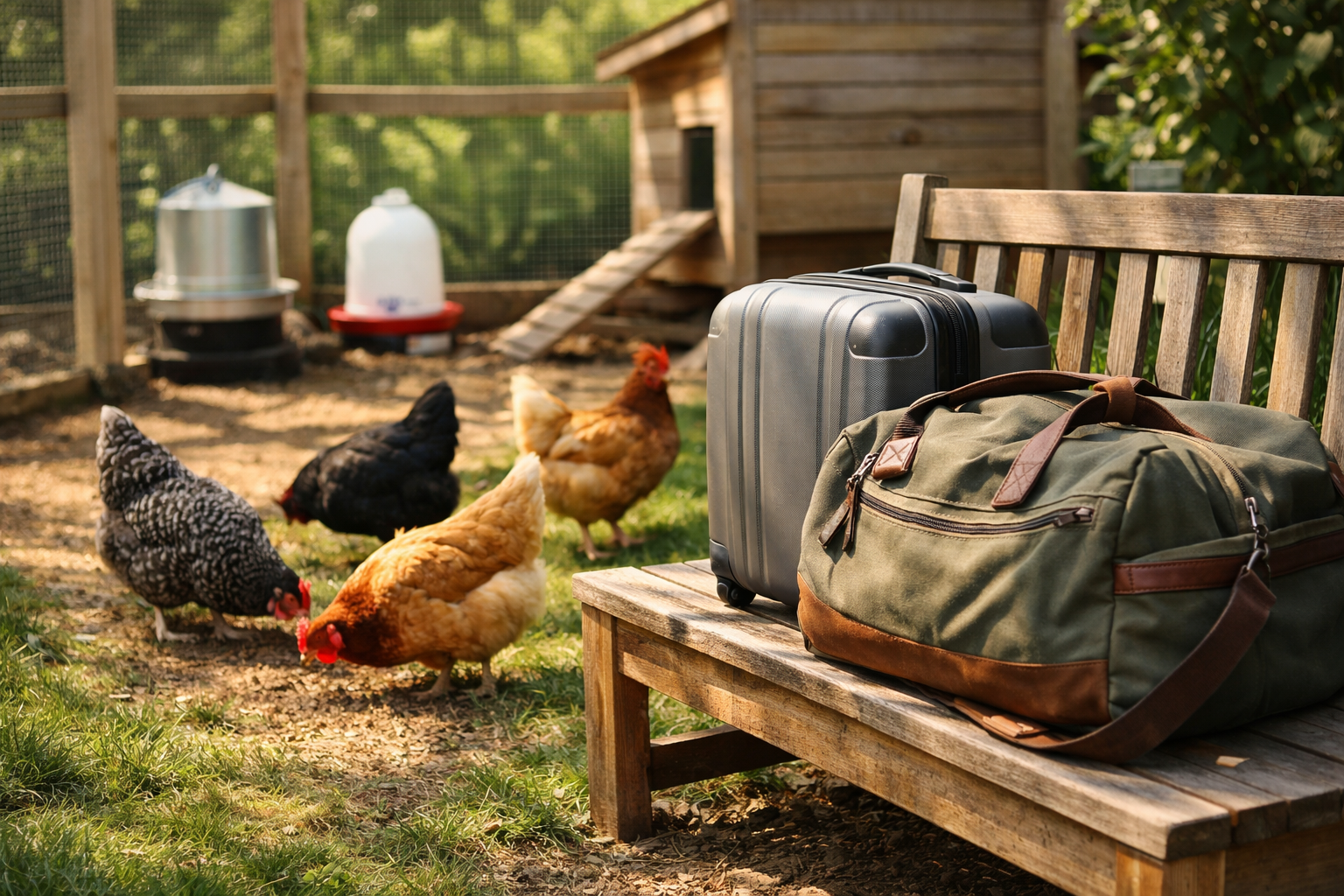
Quick Answer: When planning what to do with chickens when you go on vacation, you have three main options: hire a trusted chicken sitter, use automatic feeders and waterers for short trips (3 days or less), or board your flock at a farm or pet care facility. The best choice depends on trip length, flock size, and your chickens’ specific needs. Most chicken keepers find that a combination of automatic systems plus a neighbor or friend checking in daily works best for trips up to a week.
Key Takeaways
- Chickens need daily care and should not be left completely alone for more than 2-3 days maximum
- Automatic feeders and waterers can extend unsupervised time but require backup checks in case of equipment failure
- A trusted chicken sitter (neighbor, friend, or professional) is the safest option for trips longer than 3 days
- Professional chicken boarding costs $2-5 per bird per day, while chicken-sitting services range from $15-30 per visit
- Prepare a detailed care instruction sheet with feeding amounts, egg collection, and emergency contacts
- Predator-proof your coop thoroughly before leaving, as nighttime attacks are more likely without your presence
- Test all automatic systems for at least a week before your departure to catch potential failures
- Chickens are not low-maintenance enough for frequent travelers without reliable backup care
- Most vacation-related chicken deaths result from waterer failures, predator attacks, or heat stress
- Neighbors can easily care for chickens with proper instructions, making them often better than paid services
How Long Can Chickens Be Left Alone Without Care?
Chickens should not be left completely alone for more than 2-3 days, and even that requires automatic feeders, waterers, and ideal weather conditions. Beyond 72 hours, the risks of equipment failure, predator attacks, health emergencies, and environmental problems increase dramatically.
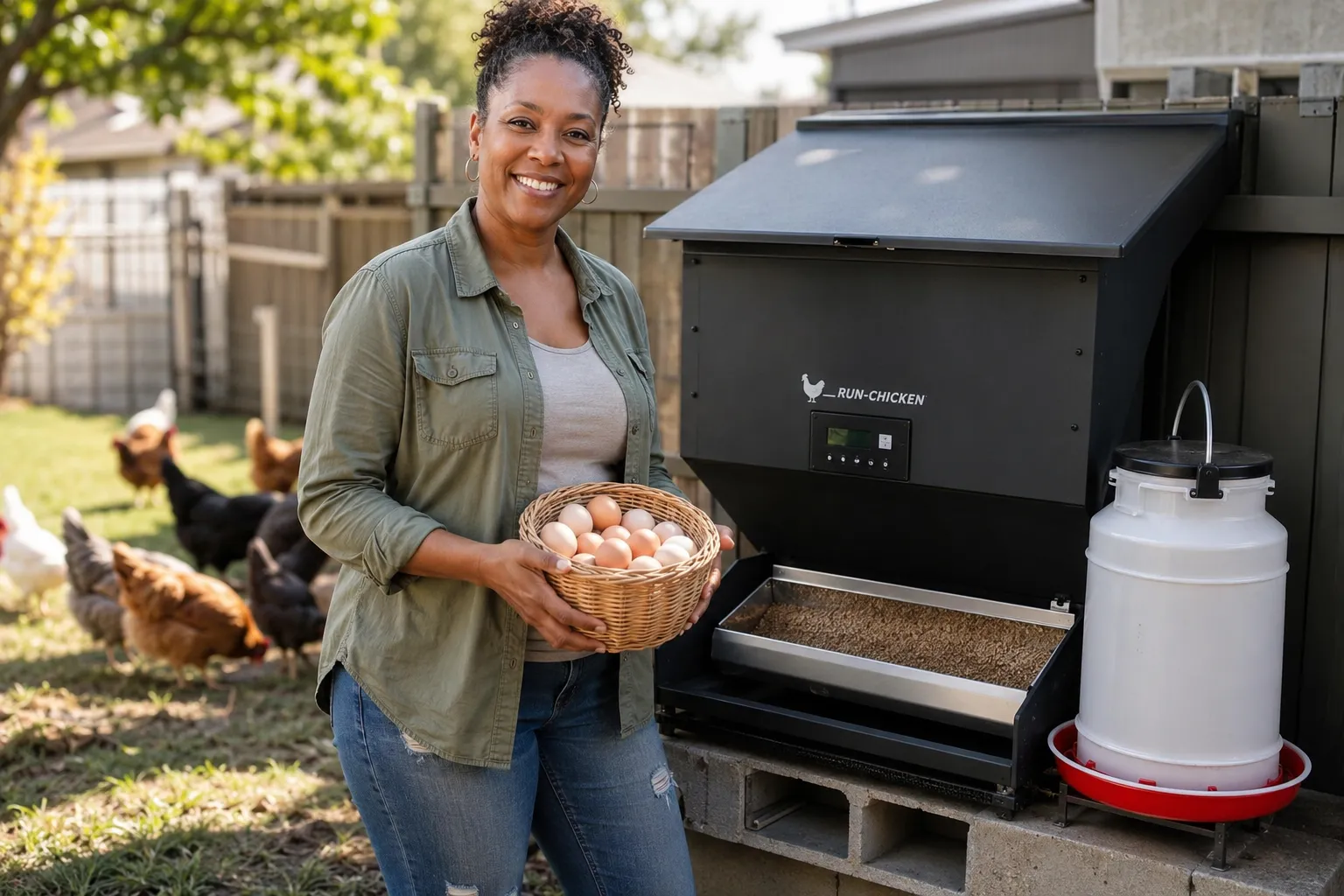
For a 1-2 day absence, chickens can manage with oversized feeders and waterers that you fill before leaving. For 3 days, you need reliable automatic systems and should only attempt it if weather will be mild (not extreme heat or cold). For any trip longer than 3 days, arrange for someone to check on your flock at least once daily.
The main risks of leaving chickens unattended include:
- Waterer failure (the most common and dangerous problem)
- Feeder jams or running out of food
- Predator breaches when no one is present to secure the coop at night
- Egg binding or other health emergencies with no intervention
- Extreme weather requiring coop adjustments
- Bullying or injury among flock members
Common mistake: Assuming that because chickens are “farm animals” they can fend for themselves. Modern backyard chickens depend on daily human care for food, water, and protection.
Do Chickens Need Daily Care or Can They Skip Days?
Chickens require daily attention for water, food, egg collection, and security checks, though the time commitment is only 10-15 minutes per day under normal circumstances. While they can technically survive a day or two without human intervention if automatic systems are in place, skipping daily care increases health and safety risks significantly.
Daily chicken care tasks include:
- Morning: Open coop door, check water freshness, top off feed, collect eggs
- Evening: Close and secure coop door, final water check, count birds
- Weekly: Clean waterers, refill feeders, spot-clean high-traffic areas
- Monthly: Deep clean coop, check for parasites, inspect equipment
The most critical daily task is ensuring fresh, accessible water. Chickens can survive several days without food if necessary, but dehydration can kill a chicken in 24-48 hours, especially in warm weather.
Choose chickens if: You can commit to twice-daily checks (morning and evening) or have reliable backup care for vacations. Skip chickens if: You travel frequently for work and lack a consistent caretaker.
Is It Safe to Leave Chickens Alone for 3 Days?
Leaving chickens alone for 3 days is possible but risky, and should only be attempted with automatic systems, mild weather, and a secure coop. This is the absolute maximum time for unsupervised care, and many experienced chicken keepers recommend against it.
To safely leave chickens for 3 days, you must have:
- Large-capacity automatic waterer (at least 5 gallons for 6 chickens)
- Gravity or timed automatic feeder with 3+ days of capacity
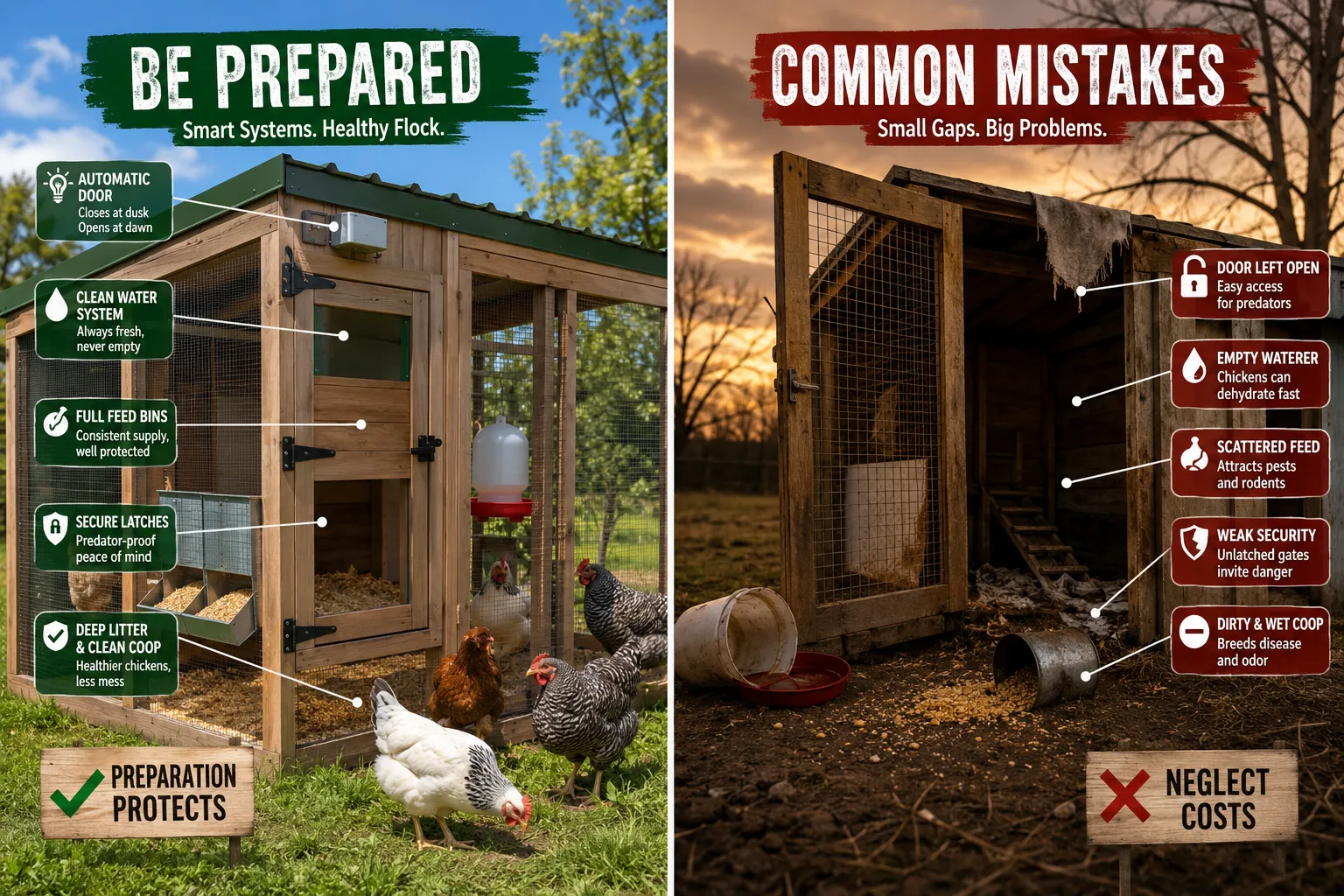
- Automatic coop door that opens at dawn and closes at dusk
- Predator-proof coop and run with no weak points
- Mild weather forecast (60-75°F, no storms)
- Healthy flock with no current health issues
Edge case: If you have a large, secure run where chickens can stay safely 24/7, you can skip the automatic door. However, this only works if predators absolutely cannot breach the run, which is rare in most suburban and rural settings.
Even with perfect preparation, equipment can fail. A waterer can tip over, a feeder can jam, or a predator can find a weakness you missed. The safest approach is to have a neighbor do a quick 5-minute check on day 2, even if you have automatic systems.
What Is the Best Way to Find a Chicken Sitter?
The best chicken sitters are nearby neighbors or friends who can visit daily, as they’re more reliable and invested than strangers, plus chickens are less stressed by familiar people. Start by asking neighbors who already have chickens or other livestock, as they understand the routine and potential problems.
Where to find chicken sitters:
- Neighbors and friends: Offer to reciprocate by caring for their pets or garden
- Local chicken groups: Facebook groups, Meetup, or BackYard Chickens forum members
- Rover or Care.com: Search for sitters with “farm animals” or “chickens” experience
- Local 4-H or FFA members: Teenagers with livestock experience looking for side income
- Farm-sitting services: Specialized services in rural areas (search “farm sitter [your area]”)
- Veterinary clinics: Ask your vet if staff members do side pet-sitting
What to pay: Neighbors and friends often do it for free in exchange for eggs or future reciprocation. Professional sitters typically charge $15-30 per visit, depending on location and flock size.
Vetting a chicken sitter:
- Have them visit at least once before your trip to meet the chickens and learn the routine
- Walk through the entire process together, including emergency scenarios
- Provide written instructions with photos
- Give them two ways to contact you plus a local emergency contact
- Ask them to send a photo or text update each day
Common mistake: Hiring someone who claims they “love animals” but has never handled chickens. Chickens behave differently than cats or dogs, and inexperienced sitters may not notice health problems or secure the coop properly.
Chicken Care Services vs Asking a Friend: Which Is Better?
Asking a trusted friend or neighbor is usually better than hiring a professional service for chicken care, because chickens are relatively simple to care for, the cost savings are significant, and familiar people cause less stress to your flock. However, professional services are more reliable if you lack nearby friends or need guaranteed availability.
| Factor | Friend/Neighbor | Professional Service |
|---|---|---|
| Cost | Free to $50 total (eggs or reciprocation) | $15-30 per visit ($105-210/week) |
| Reliability | Variable (depends on relationship) | High (contractual obligation) |
| Chicken stress | Low (familiar person) | Moderate (stranger) |
| Experience | Variable (requires training) | Usually experienced with multiple species |
| Availability | Limited (their schedule) | Flexible (business hours) |
| Best for | Regular vacations, budget-conscious | Last-minute trips, no local friends |
Choose a friend/neighbor if: You have someone reliable nearby who you trust with your property, you vacation occasionally (not constantly), and you can reciprocate the favor.
Choose a professional service if: You travel frequently, lack nearby friends, need guaranteed availability, or have a large or complex flock requiring experienced care.
Hybrid approach: Many chicken keepers use automatic systems plus a neighbor who checks every 2-3 days, combining cost savings with safety backup.
Can Neighbors Take Care of Chickens Easily?
Yes, neighbors can easily take care of chickens with minimal training, as the daily routine is straightforward and takes only 10-15 minutes. Chickens are actually easier than many pets because they don’t need walks, playtime, or complex feeding schedules.
What makes chicken care neighbor-friendly:
- Simple routine: Fill water, top off food, collect eggs, close door at night
- Flexible timing: Morning tasks can happen anytime between 7 AM and 10 AM
- Low interaction: Chickens don’t require handling or attention
- Visual health checks: Problems are usually obvious (limping, lethargy, missing birds)
- Forgiving: Small mistakes rarely cause serious problems
How to make it even easier for your neighbor:
- Create a one-page instruction sheet with photos and your contact info
- Pre-measure feed into daily containers so they don’t have to guess amounts
- Use automatic waterers so they only need to check levels, not refill daily
- Install an automatic coop door so they don’t have to come at dawn and dusk
- Leave a “chicken emergency kit” with first aid supplies and vet contact info
- Offer a generous thank-you (eggs, gift card, or reciprocal pet-sitting)
What to teach them:
- How to check if water is clean and accessible
- How much feed to provide (chickens self-regulate, so overfilling is fine)
- Where and how to collect eggs
- How to count birds to ensure none are missing or hiding
- What normal chicken behavior looks like versus signs of distress
- How to secure the coop at night if you don’t have an automatic door
Common mistake: Overcomplicating the instructions with too much detail. Keep it simple: water, food, eggs, count birds, lock up. Save the complex health information for true emergencies only.
Automatic Chicken Feeder and Waterer for Vacation
Automatic feeders and waterers are essential backup systems for vacation chicken care, but should not be your only plan for trips longer than 3 days. These systems extend the time between human checks but cannot replace daily monitoring entirely.
Best automatic waterer options:
- Gravity waterers (5+ gallon): Simple, reliable, no power needed ($25-40)
- Nipple waterers with large reservoir: Stays cleaner, less spillage ($30-60)
- Heated waterers: Essential for winter vacations in cold climates ($40-80)
- Automatic refill systems: Connect to garden hose with float valve ($50-100)
Best automatic feeder options:
- Gravity feeders (20+ lb capacity): Reliable, no power, lasts 1-2 weeks for small flocks ($30-50)
- Timed feeders: Dispense set amounts at scheduled times, prevents waste ($60-150)
- Treadle feeders: Chickens step on platform to access food, keeps pests out ($80-120)
Critical setup rules:
- Test for at least one week before your trip to identify problems
- Elevate waterers to prevent bedding and dirt contamination
- Place feeders under cover to keep food dry
- Use two waterers so if one fails, chickens have backup
- Fill to maximum capacity even if it seems like overkill
- Check for leaks, jams, and tip-over risk during testing period
Edge case: In extreme heat (above 90°F), chickens drink 2-3 times their normal water intake. A waterer that normally lasts a week may empty in 3-4 days. Always oversize your water capacity for summer vacations.
What Happens If Automatic Waterer Fails While I’m Gone?
If an automatic waterer fails while you’re away, chickens can die from dehydration within 24-48 hours, especially in warm weather, which is why automatic systems should never be your sole plan for trips longer than 2 days. Waterer failures are the leading cause of vacation-related chicken deaths.
Common waterer failure causes:
- Tipping over due to chickens jumping on it or wind
- Freezing in cold weather (below 32°F)
- Algae or debris clogging nipples or flow valves
- Leaking from cracked containers or loose connections
- Running dry faster than expected in hot weather
Prevention strategies:
- Install two separate waterers in different locations
- Use a waterer stand or hang from ceiling to prevent tipping
- Add a backup gravity waterer even if you have an automatic system
- Have your sitter check water first on every visit
- Use waterer heaters in winter or insulated containers
- Clean thoroughly before your trip to prevent clogs
Emergency backup plan: Leave a large, shallow pan (like a cement mixing tub) filled with water in the run. Even if your primary waterers fail, chickens can drink from this for 1-2 days until help arrives. Change this water before you leave so it’s fresh.
What to tell your chicken sitter: “The most important thing you can do is make sure they have clean, accessible water. If the waterer is empty or dirty, fill it immediately. Everything else can wait, but water cannot.”
How Much Does It Cost to Board Chickens While on Vacation?
Boarding chickens at a farm, kennel, or specialized facility costs $2-5 per bird per day on average, making it expensive for larger flocks but reasonable for 3-4 chickens on a week-long trip. A week of boarding for four chickens typically runs $56-140, depending on location and services included.
What affects boarding costs:
- Location: Urban and suburban areas charge more than rural areas
- Flock size: Some facilities offer bulk discounts for larger flocks
- Services included: Basic care versus premium (free-range time, special diets)
- Facility type: Working farms charge less than specialized pet resorts
- Season: Peak vacation times (summer, holidays) may have higher rates
Where to find chicken boarding:
- Local farms: Call farms that sell eggs or offer agritourism
- Exotic pet boarding facilities: Some accept chickens alongside rabbits and birds
- Veterinary clinics: Especially those specializing in avian or farm animals
- 4-H or FFA programs: May offer boarding through member families
- Chicken rescue organizations: Sometimes provide boarding to support their mission
What’s typically included:
- Daily feeding and watering
- Egg collection (you may or may not get to keep eggs)
- Basic health monitoring
- Secure housing (often in a group setting with other boarded chickens)
What’s usually extra:
- Transportation to and from the facility
- Special diets or supplements
- Veterinary care if needed
- Private housing (versus group boarding)
Pros of boarding: Professional care, no need to trust someone with your property keys, good for long trips.
Cons of boarding: Expensive for large flocks, stress of transport and new environment, exposure to other birds (disease risk), limited availability in some areas.
Choose boarding if: You have a small flock (2-4 birds), are taking an extended vacation (2+ weeks), or lack any reliable local caretakers.
What Do I Need to Prepare Before Leaving Chickens for a Week?
Before leaving chickens for a week, prepare detailed care instructions, test all automatic systems, deep clean the coop, stock extra supplies, predator-proof thoroughly, and have your caretaker do at least one practice visit. Preparation should start 2-3 weeks before departure, not the day before.
Complete pre-vacation checklist:
3 weeks before:
- Find and confirm your chicken sitter
- Test automatic feeders and waterers daily
- Inspect coop for needed repairs
- Schedule a practice visit with your sitter
1 week before:
- Deep clean coop and run
- Check all latches, locks, and fencing for predator entry points
- Trim overgrown vegetation near coop that predators could hide in
- Stock up on feed (buy extra in case sitter needs it)
- Refill grit and oyster shell containers
3 days before:
- Have sitter do a supervised practice run of the full routine
- Take photos of healthy chickens for sitter reference
- Prepare daily feed portions if helpful
- Write emergency contact list (you, neighbor, vet)
Day before departure:
- Fill all feeders and waterers to maximum
- Collect all eggs so sitter starts fresh
- Do final predator check at dusk
- Leave thank-you gift and payment for sitter
- Send sitter a text confirming first visit time
Essential documents to leave:
- One-page daily routine with photos
- Emergency contact sheet (your phone, backup local contact, vet)
- Health information (any ongoing issues, medications)
- Permission to seek vet care with spending limit
- Map of property showing coop, feed storage, water source
- “What’s normal” guide with photos of healthy chickens and typical behavior
Common mistake: Waiting until the last minute to test automatic systems. A feeder that jams on day 3 or a waterer that leaks slowly won’t reveal problems in a 24-hour test.
Mistakes People Make When Leaving Chickens Unattended
The most common mistakes when leaving chickens unattended are relying solely on automatic systems without backup checks, failing to predator-proof thoroughly, not testing equipment in advance, and providing inadequate instructions to caretakers. These errors account for most vacation-related chicken deaths and injuries.
Top 10 vacation chicken mistakes:
- Leaving chickens completely alone for more than 3 days without any human check-ins
- Not testing automatic systems for at least a week before departure
- Using only one waterer instead of having a backup
- Assuming the coop is predator-proof without doing a thorough inspection
- Giving caretakers overly complex instructions that overwhelm them
- Not having a practice visit with your chicken sitter before you leave
- Leaving during extreme weather (heat waves, cold snaps) without climate control plans
- Forgetting to leave emergency contact information and vet details
- Not providing enough feed/supplies for the sitter (running out mid-trip)
- Failing to secure the coop properly because “it’s only a few days”
Why these mistakes happen:
- Overconfidence: “My chickens are tough, they’ll be fine”
- Underestimating risks: Not realizing how quickly problems escalate
- Last-minute planning: Rushing preparation in the final days
- Assuming chickens are like other pets: They have unique vulnerabilities
- Cost-cutting: Trying to avoid paying for proper care
How to avoid them:
- Start planning 3-4 weeks before your trip
- Invest in quality automatic systems and test them thoroughly
- Always have a human backup, even for short trips
- Do a predator audit at dusk when you can see weak points
- Keep instructions simple and visual
- Budget for proper care (it’s cheaper than losing chickens)
How to Keep Predators Away From Chickens When Not Home
Keep predators away from chickens when you’re not home by securing all coop openings with hardware cloth (not chicken wire), using an automatic door that closes at dusk, installing motion-activated lights, and eliminating hiding spots near the coop. Predator attacks increase when your routine presence and deterrent effect are absent.
Essential predator-proofing steps:
Physical barriers:
- Replace chicken wire with 1/2″ hardware cloth on all openings
- Bury fencing 12-18 inches deep or use an apron to prevent digging
- Cover run top with netting or hardware cloth (hawks, owls)
- Seal any gaps larger than 1 inch (weasels can fit through tiny spaces)
- Use spring-loaded or carabiner latches (raccoons can open simple hooks)
Automatic security:
- Automatic coop door: Closes at dusk, opens at dawn (essential for vacation)
- Motion-activated lights: Startle nocturnal predators
- Security cameras: Let you and your sitter monitor remotely
- Electric fencing: Outer perimeter defense (requires training)
Environmental deterrents:
- Trim vegetation within 10 feet of coop (removes predator cover)
- Remove food sources (secure feed in metal containers, clean up spills)
- Eliminate standing water that attracts wildlife
- Keep grass short so you can spot digging attempts
What your sitter should check:
- All birds accounted for at evening count
- No signs of digging around fence perimeter
- All latches secure before leaving
- No predator scat or tracks near coop
- Motion lights functioning properly
Most dangerous predators when you’re away:
- Raccoons: Extremely persistent, can open latches, hunt at night
- Foxes: Dig under fences, hunt dawn and dusk
- Hawks: Daytime hunters, target free-ranging chickens
- Weasels: Fit through tiny gaps, kill multiple birds
- Dogs: Neighbor dogs may investigate when you’re not around
Edge case: If you have a known predator problem (recent attacks or sightings), consider keeping chickens locked in a secure coop and covered run for the duration of your trip, even if they normally free-range. The temporary confinement is safer than the risk.
Chickens Dying While Owner on Vacation: Common Problems
Chickens dying while their owner is on vacation most commonly results from dehydration due to waterer failure, predator attacks through inadequate coop security, or heat stress during summer trips. These three causes account for approximately 80% of vacation-related chicken deaths, and all are preventable with proper preparation.
Leading causes of vacation chicken deaths:
1. Dehydration (40% of cases):
- Waterer tips over, leaks, or runs dry
- Nipple waterers clog with debris
- Water freezes in cold weather
- Chickens can’t access waterer (blocked by bedding, other birds)
Prevention: Two separate waterers, daily sitter checks, backup water source
2. Predator attacks (30% of cases):
- Coop door left open accidentally
- Weak points in fencing exploited
- Automatic door malfunctions
- Increased predator boldness when humans absent
Prevention: Thorough predator audit, automatic door, secure latches, sitter training
3. Heat stress (10% of cases):
- Inadequate ventilation during heat waves
- Water runs out faster than expected
- No shade in run during peak sun
- Chickens can’t access cool areas
Prevention: Extra ventilation, oversized waterers, shade cloth, avoid summer trips during heat waves
4. Other causes (20%):
- Illness that goes unnoticed without daily observation
- Egg binding with no intervention
- Bullying or injury among flock members
- Equipment failure (feeder jams, door breaks)
- Accidental poisoning (access to toxic plants or chemicals)
Warning signs your sitter should report immediately:
- Lethargic or isolated chicken
- Limping, wing drooping, or labored breathing
- Bloody stool or discharge
- Swollen abdomen or straining
- Missing feathers or wounds
- Unusual vocalizations or behavior
What to tell your sitter: “If anything seems off or you’re not sure if something is normal, text me a photo or video immediately. I’d rather answer 10 false alarms than miss one real problem.”
Are Chickens Low Maintenance Enough for Frequent Travelers?
No, chickens are not low maintenance enough for frequent travelers unless you have a permanent, reliable caretaker arrangement in place. While daily chicken care only takes 10-15 minutes, chickens cannot be left alone for extended periods and require consistent daily attention that makes them incompatible with a frequent-travel lifestyle without dedicated backup.
Why chickens don’t work for frequent travelers:
- Daily water needs: Cannot skip even one day safely
- Predator vulnerability: Require evening coop security
- Health monitoring: Problems escalate quickly without daily observation
- Weather sensitivity: Need adjustments for heat, cold, storms
- Social animals: Stress increases with inconsistent care routines
Chicken care time commitment:
- Daily: 10-15 minutes (morning and evening)
- Weekly: 30-60 minutes (cleaning, maintenance)
- Monthly: 2-3 hours (deep cleaning, health checks)
- Vacation planning: 2-4 hours per trip (finding care, preparing)
Compare to other backyard livestock:
- Quail: Slightly easier (smaller, quieter, less predator-attractive)
- Rabbits: Similar maintenance, also need daily care
- Ducks: Higher maintenance (messier, more water needs)
- Goats: Much higher maintenance (fencing, hoof care, vet needs)
When chickens CAN work for travelers:
- You have a permanent chicken-sitting arrangement (neighbor, family member, paid service)
- You travel predictably (same weeks each year) so caretaker can plan
- You have a co-owner who shares responsibility
- You’re willing to pay for professional care ($100-200+ per week)
- Your trips are short and infrequent (2-3 times per year, under a week each)
Better pet options for frequent travelers:
- Fish with automatic feeders
- Cats (with automatic feeders/water and litter robot)
- Reptiles (can go days between feeding)
- No pets (focus on travel lifestyle)
Choose chickens if: You travel occasionally (2-4 times per year) and have reliable backup care. Skip chickens if: You travel monthly or unpredictably and lack a permanent caretaker.
Frequently Asked Questions
Can I leave my chickens alone for a weekend? Yes, you can leave chickens alone for a weekend (2 days) if you provide oversized feeders and waterers, ensure the coop is secure, and weather will be mild. However, having a neighbor do one quick check on Saturday is much safer and only takes 5 minutes.
How much water do chickens need per day? Chickens need approximately 1 pint (2 cups) of water per bird per day in moderate weather, but this doubles or triples in hot weather above 85°F. For a week-long vacation with 6 chickens, provide at least 10-15 gallons of water capacity to account for heat and spillage.
Will my chickens stop laying eggs if I go on vacation? Chickens may reduce egg production slightly due to stress from routine changes and unfamiliar caretakers, but they typically resume normal laying within a few days of your return. Make sure your sitter collects eggs daily to prevent broodiness.
Can I take my chickens with me on vacation? While technically possible for short car trips, traveling with chickens is highly stressful for them and impractical for most vacations. Chickens don’t adapt well to new environments and require the same daily care setup wherever they go. Leaving them home with a sitter is almost always better.
What if my chicken sitter cancels at the last minute? Have a backup plan ready: a second potential sitter’s contact info, knowledge of local boarding facilities, or a neighbor who can do emergency checks. If truly stuck, automatic systems can cover 2-3 days while you find emergency help or cut your trip short.
Should I get chickens if I travel for work frequently? No, frequent work travel and chicken keeping are incompatible unless you have a permanent co-caretaker (spouse, family member, or paid service). Chickens need daily care and cannot be left alone for business trips without reliable backup every single time.
How do I find a vet who will see chickens in an emergency? Before you ever need one, research vets in your area who treat chickens (call and ask specifically about poultry). Many small animal vets don’t see chickens, but exotic animal vets and large animal/farm vets usually do. Save this contact info for your chicken sitter.
Can I use a pet camera to monitor my chickens while away? Yes, a pet camera or security camera in the coop is an excellent addition to your vacation setup. It lets you verify your sitter completed tasks, monitor flock behavior, and spot problems early. However, a camera cannot replace a physical caretaker who can refill water or secure the coop.
What’s the best automatic coop door for vacations? The best automatic coop doors use light sensors (not timers) to open at dawn and close at dusk, have battery backup in case of power outages, and include manual override options. Popular reliable brands include ChickenGuard, Omlet, and Run Chicken. Expect to spend $150-300 for a quality unit.
How long can chickens go without food? Healthy adult chickens can survive 3-5 days without food (though this is not recommended), but they cannot survive more than 24-48 hours without water. This is why waterer failure is far more dangerous than feeder problems during vacations.
Should I reduce my flock size if I travel often? If you travel frequently and struggle to find reliable care, reducing your flock to 2-4 chickens makes care easier to arrange and less expensive. Smaller flocks are also easier for inexperienced sitters to manage and cheaper to board if needed.
What should I do with eggs while I’m gone? Instruct your sitter to collect eggs daily and either keep them (as payment), refrigerate them for you, or leave them in a cool location if your trip is short. Eggs left in nesting boxes for more than a few days may encourage broodiness or attract predators.
Conclusion
Planning what to do with chickens when you go on vacation requires preparation, reliable backup care, and realistic assessment of trip length and risks. While automatic feeders and waterers can extend the time between human checks, chickens should never be left completely alone for more than 2-3 days, and even that carries significant risk.
The safest vacation approach combines automatic systems with a trusted caretaker who checks your flock at least once daily. Whether you choose a neighbor, friend, or professional service, invest time in training them properly and testing all equipment well before your departure. The small cost and effort of arranging proper care is far less than the heartbreak and expense of losing chickens to preventable problems.
Your next steps:
- Assess your travel frequency and decide if chickens fit your lifestyle
- Identify potential caretakers now, before you need them
- Invest in quality automatic systems and test them for at least a week
- Predator-proof your coop thoroughly with hardware cloth and secure latches
- Create a simple care instruction sheet with photos and emergency contacts
- Build a relationship with a chicken-friendly vet before emergencies arise
- Start with short trips (2-3 days) to test your system before longer vacations
Remember that chickens are living creatures depending on you for their survival. With proper planning and reliable backup care, you can enjoy your vacation knowing your flock is safe, healthy, and well-cared for until you return.