
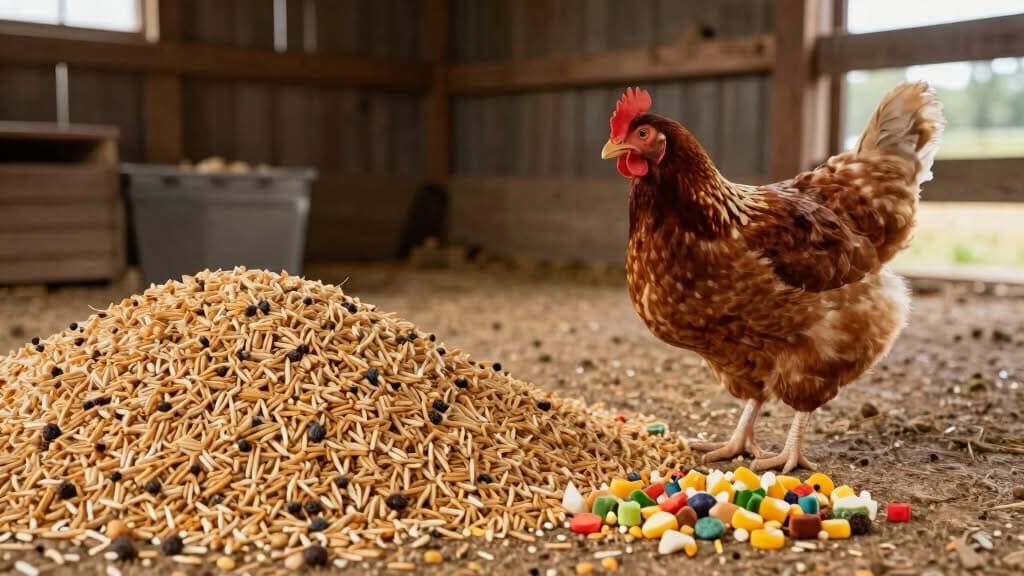
Quick Answer: The 90/10 rule for chickens is a feeding guideline stating that 90 percent of a chicken’s daily diet should come from nutritionally complete layer feed or grower feed, while treats, scraps, and supplements should make up no more than 10 percent. This ratio ensures chickens receive balanced nutrition for optimal health, consistent egg production, and proper growth without nutritional deficiencies caused by excessive treats.
Key Takeaways
- The 90/10 rule means 90% complete feed, 10% treats maximum to maintain balanced chicken nutrition
- Exceeding 10% treats can lead to nutritional imbalances, reduced egg production, and health problems
- “Treats” include kitchen scraps, fruits, vegetables, mealworms, scratch grains, and table foods
- The rule applies to adult laying hens; chicks and growing birds need stricter feed protocols
- Measuring treats by volume or visual portion size works better than weighing for most backyard keepers
- High-quality scraps still count toward the 10% limit because they displace complete feed
- Chickens that refuse feed in favor of treats need behavioral correction and treat reduction
- Following the 90/10 rule supports healthy egg production, strong shells, and proper feather quality
What Does the 90/10 Rule Mean for Feeding Chickens?
The 90/10 rule for chickens is a straightforward feeding principle: 90 percent of what your flock eats each day should be nutritionally complete commercial feed formulated for their life stage, while the remaining 10 percent can consist of treats, kitchen scraps, garden produce, or supplemental foods.
Commercial layer feed is scientifically formulated to provide the precise balance of protein (typically 16-18%), calcium, phosphorus, vitamins, and trace minerals that laying hens need. When chickens fill up on treats instead of this balanced feed, they miss out on essential nutrients even if the treats themselves are healthy.
Think of it this way: if a hen’s crop (stomach) holds about one cup of food and she fills half of it with watermelon and bread, she’s only getting half the protein, calcium, and vitamins she needs that day. Over time, this creates deficiencies that affect everything from egg production to immune function.
Why this ratio matters:
- Maintains proper calcium levels for strong eggshells
- Ensures adequate protein for egg production and feather growth
- Prevents nutritional deficiencies that cause health problems
- Keeps hens at healthy body weight
- Supports consistent laying patterns
The 90/10 split isn’t arbitrary. Poultry nutritionists developed this guideline based on research showing that small amounts of dietary variety benefit chickens (providing enrichment and minor nutritional bonuses) without compromising their intake of essential nutrients.
How Much of a Chicken’s Diet Should Be Layer Feed vs Treats?
For adult laying hens, at least 90 percent should be complete layer feed and no more than 10 percent should be treats. In practical terms, if your flock consumes about one quarter-pound (roughly half a cup) of feed per bird per day, each chicken should get no more than about two tablespoons of treats daily.
Layer feed provides:
- 16-18% protein for egg production and body maintenance
- 3.5-4.5% calcium for strong eggshells
- Essential amino acids like methionine and lysine
- Vitamins A, D, E, and B-complex
- Trace minerals including selenium, zinc, and manganese
Treats, even healthy ones like vegetables and fruits, typically contain far less protein (often under 2%) and minimal calcium. They’re mostly water and carbohydrates, which provide energy but not the building blocks hens need for eggs and health.
Practical measurement guide:
- Small flock (3-6 hens): One handful of treats total per day
- Medium flock (7-12 hens): Two handfuls of treats total per day
- Large flock (13+ hens): Scale proportionally, about 2 tablespoons per bird
Most backyard chicken keepers don’t need to weigh feed and treats precisely. A good rule of thumb: if you can toss all the treats you’re giving and watch your flock finish them within 10-15 minutes, you’re probably in the right range.
Can I Give My Chickens Too Many Treats?
Yes, absolutely. Overfeeding treats is one of the most common mistakes backyard chicken keepers make, and it leads to multiple health and production problems even when the treats themselves are nutritious foods.
When chickens eat too many treats, they consume less of their balanced feed simply because they’re full. This creates nutritional gaps that accumulate over days and weeks.
Problems caused by excessive treats:
- Thin or soft eggshells from calcium deficiency
- Reduced egg production due to insufficient protein
- Obesity from high-carbohydrate treats like corn and bread
- Feather quality issues including slow molting and poor regrowth
- Weakened immune system from vitamin and mineral deficiencies
- Digestive upset and watery droppings
- Aggressive behavior as hens compete for preferred treats
Chickens are opportunistic eaters with strong preferences for sweet, starchy, and high-fat foods. Given unlimited access to treats, most chickens will choose watermelon, corn, and mealworms over their layer pellets every time, even though this choice harms their health.
The 10 percent limit exists specifically because chickens can’t self-regulate their diet for optimal nutrition. They eat for taste and immediate satisfaction, not for balanced nutrition.
What Happens If Chickens Eat More Than 10 Percent Treats?
When chickens regularly consume more than 10 percent of their diet as treats, the first sign is usually declining egg production and poor shell quality. Hens need approximately 4 grams of calcium daily to produce an egg, and if they’re not eating enough layer feed, they can’t meet this requirement.
Short-term effects (days to weeks):
- Thin, fragile, or soft-shelled eggs
- Fewer eggs overall
- Increased egg-eating behavior (hens eating their own eggs)
- Loose or watery droppings
- Reduced interest in layer feed
Long-term effects (weeks to months):
- Osteoporosis: Hens pull calcium from their own bones to make eggshells, weakening their skeletal structure
- Fatty liver disease: Especially from high-carb treats like bread and pasta
- Protein deficiency: Leading to poor feather condition, slow molting, and muscle wasting
- Vitamin deficiencies: Particularly vitamins A, D, and E, affecting vision, bone health, and reproduction
- Increased disease susceptibility: Weakened immune function makes hens vulnerable to infections
One common scenario: a well-meaning keeper gives their small flock of four hens a full head of lettuce, two apples, and leftover rice daily. While each item seems healthy, this volume of treats means the hens eat perhaps 60-70% layer feed instead of 90%. Within a month, egg production drops noticeably, and shells become thin and prone to breaking.
The good news: most nutritional problems from treat overfeeding reverse within 2-4 weeks once the diet returns to the proper 90/10 ratio.
90/10 Rule vs Free Feeding Chickens: Which Is Better?
The 90/10 rule and free feeding aren’t opposing strategies; they work together. Free feeding means keeping layer feed available at all times so chickens can eat whenever they’re hungry, while the 90/10 rule governs how much supplemental food you add beyond that always-available feed.
Most backyard chicken experts recommend free feeding layer pellets or crumbles combined with controlled treat portions that follow the 90/10 guideline.
Free feeding layer feed (recommended):
- Keeps feeders full of complete feed at all times
- Allows hens to eat according to their individual needs
- Supports consistent egg production
- Reduces competition and stress in the flock
- Works well when combined with limited, measured treats
Rationed feeding (less common for layers):
- Providing a specific measured amount of feed once or twice daily
- More labor-intensive and requires precise calculation
- Can lead to competition and bullying
- Sometimes used in commercial operations but rarely ideal for backyard flocks
The key is this: free feed the complete layer feed, but strictly limit treats to 10 percent of total intake. If you free feed both layer feed and treats (like leaving a bowl of scratch grain out all day), chickens will overeat the treats and under-consume the balanced feed.
Best practice: Keep layer feed available 24/7 in hanging feeders or treadle feeders. Offer treats once daily in a measured amount, preferably in the afternoon so hens eat their layer feed first thing in the morning when they’re hungriest.
What Counts as Treats in the 90/10 Chicken Rule?
Anything that isn’t complete layer feed, grower feed, or starter feed counts toward the 10 percent treat allowance. This includes many foods that chicken keepers consider healthy or natural.
Foods that count as treats:
- Kitchen scraps: Vegetable peelings, fruit scraps, leftover cooked grains, pasta, bread
- Fresh produce: Whole fruits, vegetables, leafy greens, herbs
- Protein treats: Mealworms, crickets, earthworms, cooked eggs, fish
- Scratch grains: Cracked corn, wheat, oats, barley, mixed scratch
- Seeds and nuts: Sunflower seeds, pumpkin seeds (in moderation)
- Dairy: Yogurt, cottage cheese (small amounts)
- Table scraps: Any human food shared with chickens
Foods that don’t count as treats:
- Complete layer feed (pellets, crumbles, or mash)
- Grit (insoluble granite grit for digestion)
- Oyster shell (free-choice calcium supplement)
- Clean water
Many chicken keepers are surprised that scratch grains count as treats. While scratch is made from grains, it’s nutritionally incomplete, high in carbohydrates but low in protein (typically 8-10% vs. the 16-18% in layer feed) and lacking the vitamins, minerals, and calcium hens need.
Common misconception: “But it’s just vegetables from my garden, not junk food!” Even healthy, organic produce counts toward the 10% limit because it displaces complete feed. A hen’s crop has limited capacity, and every bite of cucumber is one less bite of calcium- and protein-rich layer feed.
Do I Need to Follow the 90/10 Rule for Backyard Chickens?
Yes, the 90/10 rule applies to backyard chickens just as much as commercial flocks. In fact, backyard chickens may need this guideline even more because backyard keepers tend to give more treats than commercial operations, often out of affection and the desire to provide variety.
The rule is particularly important if you want:
- Consistent egg production: Hens laying 4-6 eggs per week need optimal nutrition
- Strong eggshells: Preventing thin shells and egg breakage
- Healthy hens: Supporting immune function, feather quality, and longevity
- Cost efficiency: Reducing feed waste and vet bills from nutrition-related problems
When you might adjust the ratio:
- Winter: Some keepers increase scratch grains slightly (to 15%) for extra calories in extreme cold, but this should be temporary
- Molting season: Maintain or even reduce treats to ensure maximum protein intake for feather regrowth
- Non-laying periods: Pullets before point-of-lay and older hens past their laying prime can tolerate slightly more treats, but 90/10 remains a good baseline
The 90/10 rule isn’t about depriving chickens of enjoyment. Treats provide mental stimulation, foraging enrichment, and strengthen the bond between keeper and flock. The guideline simply ensures that enrichment doesn’t come at the cost of health.
Reality check: If your hens are laying well, have strong shells, maintain healthy weight, and show glossy feathers and bright eyes, your feeding program is working. If any of these indicators decline, the first place to look is treat intake.
Is the 90/10 Rule Necessary for Healthy Egg Production?
Yes, following the 90/10 rule is essential for maintaining healthy, consistent egg production. Laying hens have extraordinarily high nutritional demands, producing an egg every 24-26 hours requires significant protein, calcium, and energy.
A single egg contains approximately:
- 6 grams of protein
- 2 grams of calcium (in the shell)
- Multiple B vitamins, vitamin A, vitamin D, and selenium
- Essential fatty acids
To produce this egg, a hen must consume roughly 20 grams of protein and 4 grams of calcium daily, plus adequate calories and micronutrients. Layer feed is precisely formulated to meet these needs. Treats are not.
Impact of treat overfeeding on egg production:
| Treat Percentage | Typical Impact on Laying |
|---|---|
| 0-10% | Optimal production, strong shells, consistent laying |
| 15-20% | Slight decrease in production, occasional thin shells |
| 25-35% | Noticeable drop in eggs, frequent shell problems |
| 40%+ | Significant production decline, very poor shell quality, potential laying cessation |
Hens that consume excessive treats often show a pattern: they lay well for a few days, then skip days, then lay eggs with progressively thinner shells. This happens because they’re depleting their body’s calcium reserves between eggs, and those reserves aren’t being replenished by adequate feed intake.
Peak production requires:
- 16-18% protein (layer feed provides this; most treats provide 1-3%)
- 3.5-4.5% calcium (layer feed provides this; treats provide almost none)
- Adequate calories without excess fat
- Complete vitamin and mineral profile
The 90/10 rule isn’t just about quantity of eggs, it’s about quality and sustainability. Hens can temporarily maintain production while eating poorly by pulling nutrients from their own bodies, but this leads to health problems and shortened productive lifespan.
Common Mistakes When Feeding Chickens Treats
Even experienced chicken keepers sometimes fall into treat-feeding traps that compromise flock health. Recognizing these mistakes helps you avoid them.
Mistake 1: Treating multiple times per day
Giving treats at breakfast, lunch, and dinner quickly exceeds the 10% limit. Consolidate treats into one daily feeding, preferably in the afternoon.
Mistake 2: “It’s healthy, so it doesn’t count”
Organic kale and homegrown tomatoes are nutritious, but they still displace layer feed. All non-feed foods count toward the 10% limit regardless of quality.
Mistake 3: Free-feeding scratch grains
Leaving scratch available all day leads to overconsumption. Scratch should be measured and offered separately from layer feed, not mixed in.
Mistake 4: Giving treats when hens aren’t eating their feed
If feeders are still full of layer pellets, adding treats teaches hens to hold out for tastier food. Only offer treats when hens have been actively eating their feed.
Mistake 5: Using treats for training without accounting for volume
Training chickens to come when called or enter the coop at night is great, but using handfuls of mealworms multiple times daily adds up quickly. Use tiny portions for training.
Mistake 6: Overestimating how much feed chickens eat
Many keepers think “10% isn’t much,” but a hen eating 1/4 pound of feed daily should get only about 2 tablespoons of treats, less than most people intuitively give.
Mistake 7: Seasonal treat overload
Garden harvest season and holiday leftovers lead to treat spikes. Be especially mindful during times of abundance.
Mistake 8: Assuming free-ranging replaces the rule
Free-range chickens that forage for insects, seeds, and greens are still getting “treats” from their environment. Reduce supplemental treats accordingly, especially in spring and summer when foraging is abundant.
How to Measure 10 Percent Treats for Chickens
Most backyard chicken keepers don’t need scales or complex calculations. Simple visual and volume-based methods work well for maintaining the 90/10 ratio.
Method 1: The handful rule
For a small flock of 4-6 hens, one generous handful of treats per day keeps you within the 10% guideline. For larger flocks, add one handful per additional 4-5 birds.
Method 2: The tablespoon method
Each hen should receive approximately 2 tablespoons of treats daily. Measure this out for a few days until you develop an eye for the right portion size.
Method 3: The 10-minute rule
Scatter treats and observe. If your flock finishes everything within 10-15 minutes and returns to their feeder, the portion is appropriate. If treats sit around for 30+ minutes, you’re giving too much.
Method 4: Weekly batch measurement
For a flock of 6 hens, measure out about 3/4 to 1 cup of treats total for the entire week. Divide this into seven daily portions. This prevents day-to-day overfeeding.
Practical tips:
- Use a dedicated treat container: A small bowl or cup that holds the right daily amount
- Chop treats into smaller pieces: Makes portions look more generous and encourages foraging behavior
- Mix treat types: Combining vegetables, fruits, and protein treats in one serving provides variety without increasing volume
- Adjust for free-ranging: If your flock free-ranges for several hours daily, reduce supplemental treats by about half
Visual reference for 10% treats (6-hen flock):
- 1 medium apple, chopped
- 2 cups of mixed vegetable scraps
- 1/4 cup of mealworms
- 2 handfuls of mixed scratch grains
- 1 small head of lettuce
Choose one of these per day, not all of them combined.
Does the 90/10 Rule Apply to Chicks or Just Adult Chickens?
The 90/10 rule primarily applies to adult laying hens. Chicks and growing birds have different nutritional needs and require stricter feeding protocols.
For chicks (0-8 weeks):
Chicks should eat 95-100% starter feed with minimal to no treats. Starter feed contains 18-20% protein, which is essential for rapid growth. Treats can cause:
- Nutritional imbalances during critical development
- Digestive problems in immature systems
- Pasty butt (fecal matter stuck to vent)
- Slowed growth rates
If you give chicks any treats at all, limit them to less than 5% of diet and only after 2-3 weeks of age. Appropriate early treats include tiny amounts of finely chopped hard-boiled egg or chick grit for digestion.
For pullets (8-18 weeks):
Growing pullets should eat 90-95% grower feed (14-16% protein). You can introduce small amounts of treats (5-10%) after 8 weeks, but prioritize growth and development over variety.
For laying hens (18+ weeks):
This is when the standard 90/10 rule applies. Once hens begin laying, they transition to layer feed and can handle 10% treats without compromising nutrition.
For roosters and non-laying hens:
The 90/10 guideline works well, though roosters and non-laying hens can tolerate slightly more treats (up to 15%) since they don’t have the calcium and protein demands of egg production.
Key point: Young birds are building their entire body structure, bones, organs, immune system, and reproductive system. Compromising nutrition during growth has lasting consequences. Save the treat variety for adulthood.
What Are Good Treats That Fit the 90/10 Rule?
Not all treats are created equal. Some provide more nutritional value within that 10% allowance, while others are essentially empty calories.
High-value treats (nutrient-dense):
- Mealworms and insects: High protein (20%+), excellent for molting season
- Dark leafy greens: Kale, collards, Swiss chard (vitamins A, K, calcium)
- Berries: Blueberries, strawberries, raspberries (antioxidants, low sugar)
- Cooked eggs: Excellent protein source, especially during stress or illness
- Pumpkin and squash: Vitamins A and C, fiber, seeds provide natural deworming properties
- Herbs: Oregano, parsley, basil (antimicrobial properties, respiratory support)
Moderate treats (some nutritional value):
- Melon: Hydrating in summer but mostly water and sugar
- Tomatoes: Vitamin C but acidic; remove leaves and stems (toxic)
- Cooked rice and oats: Energy source but low protein
- Sunflower seeds: Healthy fats but high calorie; use sparingly
Low-value treats (limit or avoid):
- Bread and pasta: High carbohydrate, minimal nutrition, contributes to obesity
- Corn and scratch grains: Energy but low protein; better as winter supplement
- Sugary fruits: Grapes, bananas, apples (high sugar, feed in moderation)
- Processed foods: Chips, crackers, baked goods (no nutritional value)
Toxic foods to never feed:
- Avocado (skin and pit)
- Chocolate
- Raw or dried beans
- Onions and garlic (in large amounts)
- Moldy or spoiled food
- Raw potato peels and green potatoes
- Rhubarb leaves
Strategic treat timing:
- Morning: Minimal treats; let hens eat layer feed when hungriest
- Afternoon: Best time for treats; hens have already consumed most of their daily feed
- Evening: Small amount of scratch grains in winter for overnight warmth
My Chickens Won’t Eat Their Feed, Only Treats: What Do I Do?
This is a behavioral problem caused by treat overfeeding, and it requires a reset period to correct. Chickens that hold out for treats have learned that refusing their feed eventually results in tastier food.
Immediate action plan:
Step 1: Stop all treats completely for 5-7 days. This sounds harsh, but it’s necessary to reset their expectations and appetite for layer feed.
Step 2: Ensure fresh, quality feed. Check that feed isn’t stale, moldy, or infested with pests. Replace if necessary. Some hens prefer crumbles over pellets or vice versa.
Step 3: Remove feeders at night and offer fresh feed first thing in the morning when hens are hungriest. This creates a positive association with layer feed.
Step 4: After the reset period, reintroduce treats gradually, start with just 5% of diet and slowly increase to 10% over two weeks.
Step 5: Offer treats only in the afternoon after hens have had all morning to eat their layer feed.
Why this works:
Chickens won’t starve themselves. When treats aren’t an option, they’ll eat their layer feed. The reset period typically takes 3-5 days before hens return to normal feed consumption patterns.
Prevention strategies:
- Never give treats when feeders are still full from the previous day
- Make layer feed more appealing by offering it fresh daily
- Use treat time as training/bonding time, not multiple daily feedings
- Scatter treats to encourage foraging rather than gorging
- Mix small amounts of herbs into layer feed for added appeal
Signs your reset is working:
- Feeders emptying at normal rates (1/4 pound per hen daily)
- Hens eagerly approaching feeders in the morning
- Improved egg production and shell quality
- Return to normal droppings (firm, brown with white cap)
Can I Skip the 90/10 Rule If I Use High-Quality Scraps?
No, even high-quality, organic, nutrient-dense scraps must stay within the 10% limit. The issue isn’t the quality of the treats, it’s the displacement of complete layer feed.
Here’s why quality doesn’t override the rule:
Reason 1: Calcium requirements
Even the most nutritious vegetables contain minimal calcium compared to layer feed. Kale has about 150mg of calcium per cup; a hen needs 4,000mg daily for egg production. No amount of “quality” scraps meets this need.
Reason 2: Protein completeness
Layer feed contains balanced amino acids in the precise ratios chickens need. Even protein-rich treats like cooked beans or lentils lack the complete amino acid profile of formulated feed.
Reason 3: Micronutrient balance
Commercial feed includes carefully measured vitamins and minerals, selenium, manganese, zinc, vitamins A, D, E, and B-complex, in forms chickens can absorb. Garden vegetables don’t provide this comprehensive nutrition.
Reason 4: Bioavailability
Some nutrients in plant foods aren’t easily absorbed by chickens. For example, the iron in spinach is less bioavailable than the iron in layer feed. Quality doesn’t equal usability.
The organic garden scenario:
A keeper with an organic garden might think, “I’m giving my chickens pesticide-free vegetables, fresh herbs, and homegrown fruits, surely this is better than commercial feed.” While these treats are excellent within the 10% allowance, they cannot replace scientifically formulated feed.
Better approach:
- Use your high-quality scraps as the 10% treat portion
- Choose the most nutrient-dense options (leafy greens, berries, herbs)
- Feel good that your 10% is more nutritious than most
- But still maintain 90% complete feed for baseline nutrition
The 90/10 rule exists precisely because even the best treats can’t match the comprehensive nutrition of layer feed. Quality treats are wonderful, just keep them in proportion.
Conclusion
The 90/10 rule for chickens is a simple yet powerful guideline that ensures your flock receives complete, balanced nutrition while still enjoying the variety and enrichment that treats provide. By keeping at least 90 percent of their diet as quality layer feed and limiting treats to 10 percent or less, you support optimal egg production, strong shells, healthy feathers, and long-term wellness.
Remember that this rule applies to all non-feed items, from kitchen scraps and garden produce to scratch grains and mealworms, regardless of how healthy those treats might be. The key is consistency: measure portions, offer treats at appropriate times (preferably afternoons), and always ensure layer feed is freely available.
Your action steps:
- Audit your current feeding: Track what and how much you’re giving for one week to see if you’re within the 90/10 ratio
- Measure your treats: Use the handful or tablespoon method to establish appropriate daily portions
- Adjust timing: Move treat feeding to afternoon so hens eat layer feed first
- Monitor results: Watch for improved egg production, shell quality, and overall flock health over 2-4 weeks
- Stay consistent: Make the 90/10 rule a permanent habit, not a temporary fix
If your hens are currently treat-dependent or showing signs of nutritional deficiency, implement a treat reset for 5-7 days before gradually reintroducing treats at the proper ratio. Your flock’s health, productivity, and longevity depend on this nutritional foundation, and they’ll still love you even when treats are properly limited.
Frequently Asked Questions
How do I calculate 10 percent treats for my flock size?
For most backyard flocks, use approximately 2 tablespoons of treats per hen daily, or one generous handful per 4-5 birds. A hen typically eats 1/4 pound of feed daily, so 10% equals roughly 0.025 pounds or about 2 tablespoons per bird.
Can I give more treats in winter to help chickens stay warm?
You can slightly increase scratch grains (to about 15% of diet) during extreme cold for extra calories, but this should be temporary and limited to the coldest months. Scratch provides energy for warmth but still lacks the protein and calcium of layer feed.
Do free-range chickens need the 90/10 rule?
Yes, because insects, seeds, and plants they forage count as “treats” in their diet. If your flock free-ranges extensively, reduce supplemental treats by about half to maintain the overall 90/10 balance.
What if my chickens are overweight, should I reduce their feed?
Don’t reduce layer feed; instead, eliminate or drastically reduce treats (to 5% or less) and increase exercise opportunities. Obesity in chickens almost always results from too many high-carb treats like corn, bread, and scratch grains.
Is scratch the same as layer feed?
No, scratch is a treat. Scratch grains typically contain only 8-10% protein compared to layer feed’s 16-18%, and scratch lacks the calcium, vitamins, and minerals hens need. Never substitute scratch for layer feed.
Can I mix treats into layer feed to control portions?
This can work if you’re mixing small amounts of dried herbs or a sprinkle of seeds, but avoid mixing large volumes of treats into feed. It’s better to offer treats separately so you can monitor consumption and ensure hens eat their feed first.
How long does it take to see improvement after fixing treat overfeeding?
Most hens show improved egg production and shell quality within 2-4 weeks of returning to the 90/10 ratio. Feather quality and body condition may take 6-8 weeks to fully improve, especially if hens are molting.
Should I follow the 90/10 rule for meat chickens (broilers)?
Meat chickens have different nutritional needs and grow much faster than layers. Follow the feed recommendations specific to your broiler breed, which typically means 95-100% grower feed with minimal treats to support rapid, healthy growth.
What’s the best treat to give within the 10 percent allowance?
Mealworms, dark leafy greens, and berries offer the most nutritional value. Mealworms provide protein (especially valuable during molting), greens offer vitamins and minerals, and berries provide antioxidants with less sugar than other fruits.
Can I save up treat allowances, skip treats for a few days then give more?
It’s better to maintain consistency rather than feast-or-famine patterns. Daily small portions support steady nutrition and prevent gorging behavior. If you skip treats for a few days, don’t compensate with a large portion later.
Do oyster shells and grit count toward the 10 percent?
No, free-choice oyster shell (calcium supplement) and grit (digestive aid) don’t count as treats. These are nutritional and digestive necessities that should always be available separately from feed.
My hens lay well despite lots of treats, do I still need to follow the rule?
Young, healthy hens can temporarily maintain production while eating poorly by depleting their body’s nutrient reserves. This catches up with them eventually, leading to health problems and shortened productive lifespan. Following the 90/10 rule now prevents problems later.