
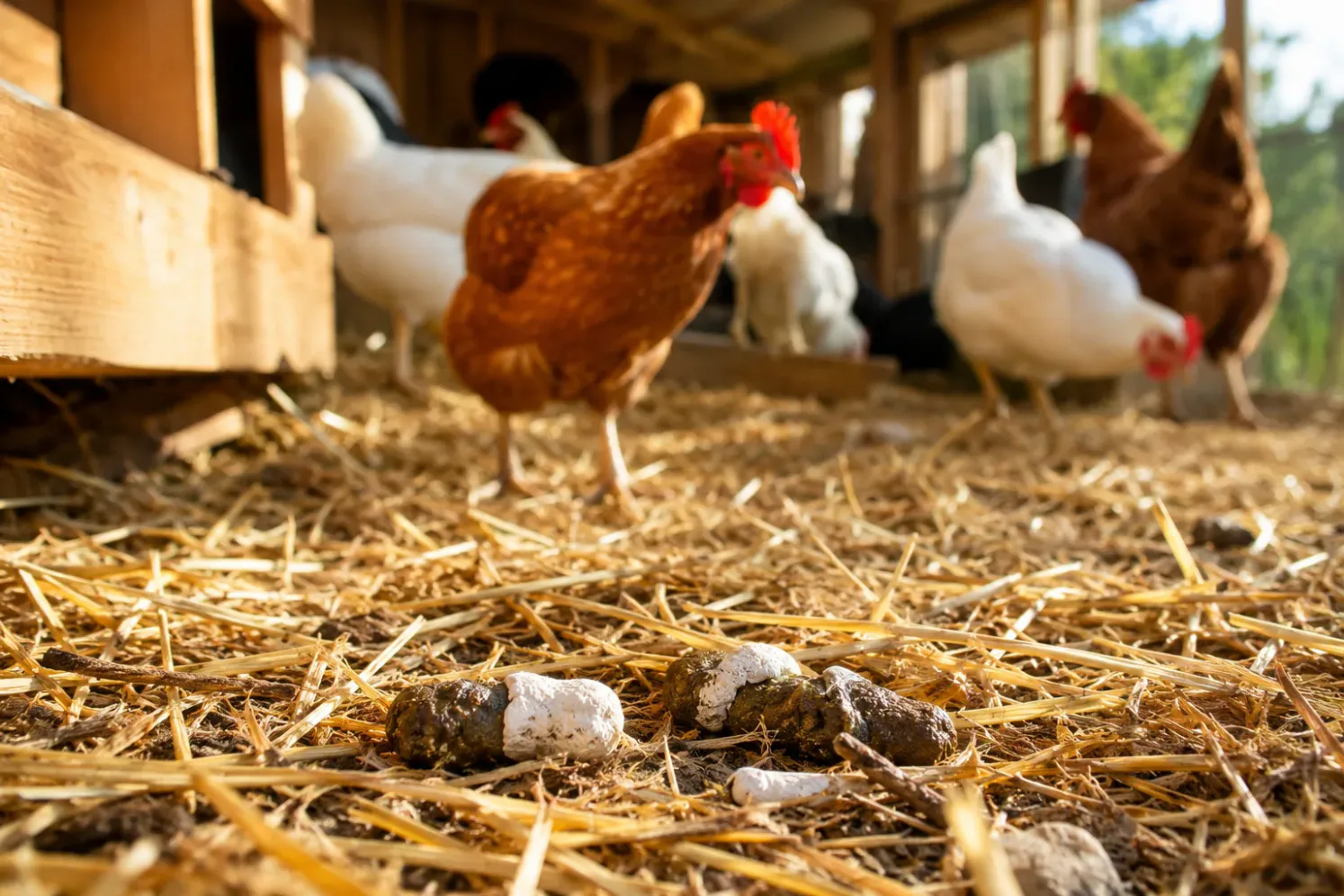
Quick Answer: Healthy chicken poop is firm, tubular, and brown or greenish-brown with a white or cream-colored cap (urate) on top. The droppings should hold their shape, measure about 1-2 inches long, and appear moist but not watery. Chickens also produce cecal droppings every 8-10 poops, which are normal but look foamy, mustard-brown, and smell stronger than regular droppings.
Key Takeaways
- Normal chicken poop is tubular, brown, and topped with white urates, this indicates proper digestion and kidney function
- Cecal droppings occur every 8-10 poops and look like pudding or mustard, which is completely normal
- Chickens poop 15-30 times daily depending on size, diet, and activity level
- Watery droppings aren’t always illness, heat stress, excess water intake, or watery treats can cause temporary loose stools
- White poop may signal kidney problems when it’s pure white without brown feces
- Green poop is normal if chickens eat greens but can indicate starvation or liver issues if persistent without dietary cause
- Bloody droppings require immediate attention as they often indicate coccidiosis or internal injury
- Regular poop monitoring is the best early warning system for backyard chicken health problems
What Does Healthy Chicken Poop Look Like?
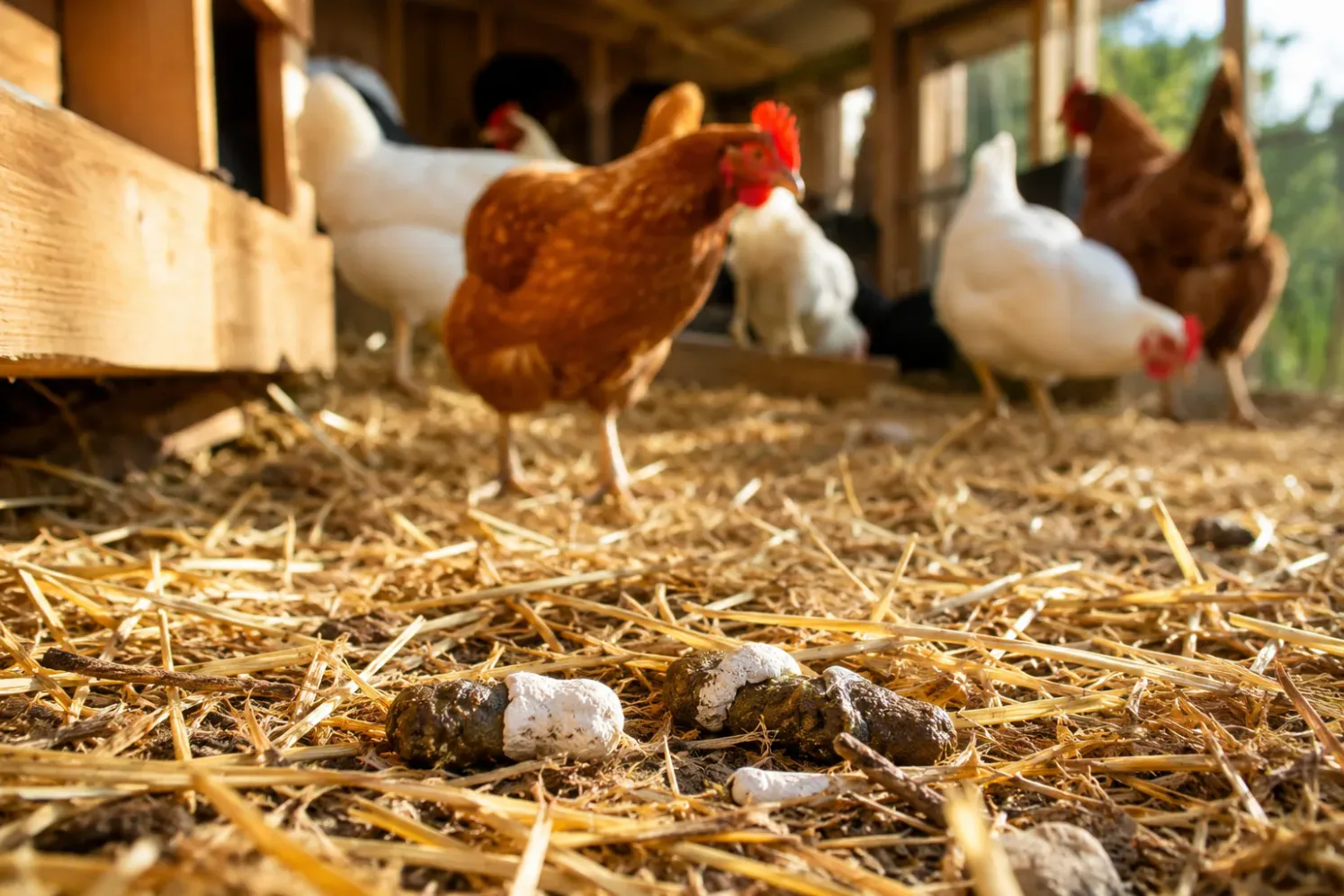
Healthy chicken droppings are firm, tubular, and brown to greenish-brown in color with a distinctive white or cream-colored cap on one end. The brown portion is the fecal matter from the intestines, while the white cap is urate, the chicken equivalent of urine, since chickens excrete solid uric acid instead of liquid urine.
Key characteristics of normal chicken poop:
- Shape: Tubular or coiled, holds its form when fresh
- Size: Typically 1-2 inches long, proportional to chicken size
- Texture: Moist and slightly firm, not runny or rock-hard
- Color: Brown, greenish-brown, or tan
- White cap: Clearly visible urate portion on top
- Smell: Mild, earthy odor (not foul or putrid)
The appearance can vary slightly based on diet. Chickens eating lots of greens produce darker, greenish droppings, while those on primarily grain diets have lighter brown poop. Both are perfectly normal as long as the structure and white cap remain consistent.
Choose this as your baseline: If your chickens’ droppings match this description most of the time, their digestive system is functioning properly.
Normal Chicken Poop Color and Texture

Normal chicken droppings range from light tan to dark brown, often with greenish tints depending on diet. The texture should be firm enough to hold a tubular shape but moist enough to leave a slight mark on bedding.
Color variations that are normal:
- Brown to dark brown: Standard color from grain-based feed
- Greenish-brown: Common when chickens eat grass, weeds, or leafy vegetables
- Tan or light brown: Typical for chickens on lighter-colored feeds
- Reddish-brown: Can occur after eating berries, tomatoes, or red peppers
Texture indicators of health:
The ideal consistency is similar to soft-serve ice cream that holds its shape. Fresh droppings should be moist but not liquid, and they’ll dry to a chalky, crumbly texture within a few hours in warm weather.
Common mistake: Many new chicken keepers panic when they see greenish poop, but this is usually just a reflection of fresh greens in the diet. Only worry if the green is accompanied by lethargy, loss of appetite, or other symptoms.
What Does Cecal Poop Look Like in Chickens?
Cecal droppings are special, periodic poops that look dramatically different from normal droppings, they’re foamy, pudding-like, mustard-brown to dark chocolate in color, and smell noticeably stronger. Chickens produce cecal poop every 8-10 droppings as their ceca (two pouches at the junction of the small and large intestines) empty their contents.
Identifying cecal droppings:
- Consistency: Loose, pudding-like, or foamy
- Color: Mustard yellow, tan, brown, or dark chocolate
- Smell: Stronger, more pungent than regular poop
- Frequency: Roughly 1 in every 8-10 droppings
- Volume: Often larger than normal droppings
Cecal poop is completely normal and actually indicates healthy gut fermentation. The ceca are where chickens ferment fibrous plant material, similar to how a cow’s rumen works. The distinctive smell comes from the bacterial fermentation process.
Decision rule: If you see pudding-like brown droppings once or twice per chicken per day, that’s cecal poop and nothing to worry about. If every dropping looks like this, then you have a genuine diarrhea problem that needs attention.

How Often Should Chickens Poop Normally?
Chickens poop 15-30 times per day on average, with smaller bantam breeds pooping less frequently and larger breeds more often. The frequency increases during active hours when chickens are eating and decreases at night when they roost.
Factors affecting poop frequency:
- Size: Larger chickens poop more often than bantams
- Diet: High-fiber diets increase frequency
- Water intake: More water means more frequent droppings
- Activity level: Active, free-ranging chickens poop more than confined birds
- Temperature: Hot weather increases water consumption and poop frequency
What’s normal throughout the day:
You’ll notice the largest accumulation of droppings under roosting bars in the morning, since chickens hold their poop overnight and release it when they wake up. During the day, droppings appear scattered around the run or coop as chickens move about.
When to worry: If a chicken stops pooping entirely for 24 hours or suddenly poops much more frequently (every few minutes), this indicates a problem. Complete absence suggests crop impaction or intestinal blockage, while excessive frequency may indicate infection or parasites.
Difference Between Healthy and Unhealthy Chicken Droppings
Healthy droppings are formed, brown with white caps, and produced regularly, while unhealthy droppings show changes in color, consistency, smell, or frequency that persist beyond a single day. The key is recognizing patterns rather than panicking over one odd dropping.
Healthy vs. unhealthy comparison:
| Aspect | Healthy | Unhealthy |
|---|---|---|
| Shape | Tubular, coiled, holds form | Completely liquid, no structure |
| Color | Brown, greenish-brown, tan | Pure white, bright yellow, black, red |
| White cap | Present and distinct | Absent or excessive |
| Smell | Mild, earthy | Foul, putrid, unusually strong |
| Consistency | Firm but moist | Watery, foamy (all droppings), or rock-hard |
| Frequency | 15-30 times daily | Constant diarrhea or no poop for 24+ hours |
Red flags that require action:
- Blood (red streaks or clots) in droppings
- Pure white droppings without any brown feces
- Black, tar-like droppings (possible internal bleeding)
- Bright yellow, sulfur-colored poop
- Droppings with visible worms or rice-like segments
- Persistent watery diarrhea lasting more than 48 hours
- Sudden complete absence of droppings
Context matters: A single odd dropping after a chicken gorges on watermelon is different from three days of consistent diarrhea. Always consider the chicken’s behavior, appetite, and overall condition alongside poop changes.
Is Watery Chicken Poop Always a Sign of Illness?
Watery chicken poop is not always a sign of illness, temporary loose droppings commonly occur from heat stress, drinking excess water, eating watery treats like watermelon or cucumbers, or stress from predators or flock changes. However, watery droppings that persist for more than 48 hours or accompany other symptoms do indicate a health problem.
Common non-illness causes of watery poop:
- Hot weather: Chickens drink 2-3 times more water in heat, diluting droppings
- Watery treats: Melons, cucumbers, tomatoes, and berries increase moisture
- Fresh grass access: Sudden access to lush pasture after confinement
- Stress: Moving coops, new flock members, or predator scares
- Broody hens: Broody hens hold poop for long periods, then release large, loose droppings
When watery poop signals illness:
If watery droppings continue for more than two days and the chicken shows lethargy, loss of appetite, ruffled feathers, or isolation from the flock, investigate for:
- Coccidiosis (especially in chicks and young birds)
- Worm overload
- Bacterial infections (E. coli, Salmonella)
- Viral diseases (Marek’s, Newcastle)
- Crop or digestive impaction
Quick test: Remove watery treats and provide only dry feed and fresh water for 24 hours. If droppings firm up, the cause was dietary. If they remain watery, suspect illness.
What Causes White Chicken Poop?
Pure white chicken poop without any brown fecal matter indicates excess uric acid production, typically caused by kidney problems, dehydration, or a diet too high in protein. Occasional white droppings mixed with normal brown ones are fine, but consistently pure white poop requires attention.
Primary causes of white droppings:
- Kidney disease or damage: Prevents proper uric acid processing
- Dehydration: Concentrates urates, making them more prominent
- Excessive protein: Overloads the kidneys with nitrogen waste
- Infectious bronchitis: Damages kidney tissue in laying hens
- Gout: Uric acid crystal buildup in joints and organs
What to check:
First, ensure your chickens have constant access to clean, fresh water. Dehydration is the most common and easily fixed cause. Second, review your feed’s protein content, layer feed should be 16-18% protein, while grower feed runs 18-20%. Feeding too much high-protein scratch or treats can overload the system.
When to worry: If white droppings persist for more than three days despite good hydration, or if the chicken shows other symptoms like lethargy, swollen joints, or reduced egg production, consult a veterinarian. Kidney damage in chickens is often irreversible, so early intervention matters.
When to Worry About Chicken Poop Color
Worry about chicken poop color when you see red (blood), black (digested blood), bright yellow (liver issues), or pure white (kidney problems) droppings that persist beyond a single occurrence. One-off color changes after eating colorful foods are normal, but consistent abnormal colors indicate health problems.
Color-coded warning system:
🔴 Red droppings (immediate action needed):
- Fresh blood indicates coccidiosis, vent injury, or intestinal damage
- Check for external injuries first
- Coccidiosis is most common in birds under 6 months
- Start treatment within 24 hours for best outcomes
⚫ Black or tar-like droppings (urgent):
- Digested blood from upper digestive tract
- Possible causes: internal parasites, ulcers, or poisoning
- Requires veterinary diagnosis
🟡 Bright yellow or sulfur-colored (concerning):
- Liver problems or severe infection
- Often accompanied by lethargy and loss of appetite
- May indicate avian tuberculosis or other systemic disease
🟢 Bright green (context-dependent):
- Normal if chickens ate lots of grass or greens
- Concerning if persistent without green foods, may indicate starvation (bile-stained) or liver disease
🟤 Brown with excessive white (monitor):
- Slightly more white than usual is often just hydration variation
- Consistently excessive white suggests kidney stress
Safe color variations: Reddish-brown after eating berries, dark brown after eating bugs or soil, greenish-brown after grazing, all normal.
Common Chicken Poop Problems and Solutions
The most common chicken poop problems include diarrhea (persistent watery droppings), constipation (hard, dry droppings or no droppings), bloody droppings from coccidiosis, and worm-infested droppings showing visible parasites. Each has specific causes and solutions.
Problem 1: Persistent diarrhea
Causes: Coccidiosis, worms, bacterial infection, spoiled feed, stress
Solutions:
- Isolate affected birds to prevent spread
- Provide electrolytes in water to prevent dehydration
- Treat for coccidiosis with amprolium (Corid) if birds are under 6 months
- Deworm if overdue (every 6 months for backyard flocks)
- Remove wet bedding daily to prevent reinfection
- Offer probiotics to restore gut health
Problem 2: Constipation or impaction
Causes: Dehydration, crop impaction, egg binding, intestinal blockage
Solutions:
- Increase water availability and add electrolytes
- Offer moist foods like scrambled eggs or soaked feed
- Check crop for hardness (impaction) or sponginess (sour crop)
- Massage crop gently if impacted, working material downward
- Provide grit to help grind food in the gizzard
- Consult vet if no improvement in 24 hours
Problem 3: Bloody droppings
Causes: Coccidiosis (most common), intestinal injury, severe worm load
Solutions:
- Start coccidiosis treatment immediately (amprolium for 5-7 days)
- Improve coop sanitation, coccidiosis spreads through contaminated droppings
- Ensure feeders and waterers are elevated off the ground
- Consider vaccination for future chicks
- Deworm if coccidiosis is ruled out
Problem 4: Foamy droppings (all droppings, not just cecal)
Causes: Bacterial infection, yeast overgrowth, spoiled feed
Solutions:
- Check feed for mold or rancid smell
- Add apple cider vinegar to water (1 tablespoon per gallon)
- Provide probiotics
- Improve ventilation to reduce moisture in coop
- Consider antibiotic treatment if bacterial infection suspected
Prevention beats treatment: Clean water, quality feed, dry bedding, good ventilation, and regular deworming prevent 90% of poop problems.
How to Tell If Chicken Has Worms From Poop
You can tell if a chicken has worms from poop by looking for visible worms (roundworms look like spaghetti, tapeworm segments look like rice grains), checking for blood or mucus in droppings, and observing whether droppings are consistently loose or poorly formed. However, many worm infestations show no visible signs in droppings until the load is severe.
Visible signs in droppings:
- Roundworms (Ascaridia): White or cream-colored, 1.5-3 inches long, look like spaghetti
- Cecal worms: Tiny, thread-like, rarely visible without magnification
- Tapeworm segments: Small, white, rice-like pieces that may move
- Capillary worms: Thread-like, very small, difficult to see
Indirect signs suggesting worms:
- Persistent loose or poorly formed droppings
- Weight loss despite good appetite
- Pale comb and wattles (anemia from worm load)
- Reduced egg production
- Lethargy and ruffled feathers
- Droppings with mucus or blood
When you won’t see worms: Many worm species live in the intestinal lining or cecal pouches and don’t appear in droppings until the infestation is severe. Gapeworms live in the trachea, and chickens cough them up rather than passing them in poop.
Best practice: Assume backyard chickens have some worm load and deworm preventively every 6 months using fenbendazole (Safeguard or Panacur) or another broad-spectrum dewormer. Don’t wait until you see worms in droppings, as this indicates a heavy infestation.
Is Green Chicken Poop Normal or Bad?
Green chicken poop is normal when chickens eat grass, weeds, leafy vegetables, or other green foods, producing greenish-brown droppings that are otherwise well-formed with white caps. However, bright green or lime-colored droppings without dietary cause can indicate starvation (bile-stained droppings) or liver disease, especially if accompanied by lethargy or loss of appetite.
Normal green poop scenarios:
- Free-ranging chickens eating fresh grass and clover
- After feeding kale, lettuce, spinach, or other greens
- Spring and summer when pasture is lush
- Chickens eating green weeds or garden trimmings
Abnormal green poop scenarios:
- Bright lime green without green foods: Suggests bile is passing through too quickly (infection or liver problem)
- Green with no food intake: Starvation causes bile-stained droppings as the digestive system empties
- Green with lethargy and ruffled feathers: Possible Marek’s disease, Newcastle disease, or other viral infections
- Green with foul smell: Bacterial infection affecting the liver or intestines
Decision rule: If your chickens have access to grass or greens and are active with good appetites, green poop is normal. If they’re confined to a run with no greens and producing green droppings, or if the green is accompanied by illness symptoms, investigate further.
Quick test: Remove all green foods for 24 hours. If droppings return to brown, the cause was dietary. If they remain green, suspect illness.
What Does Bloody Chicken Poop Mean?
Bloody chicken poop means there is bleeding somewhere in the digestive tract, most commonly from coccidiosis (a parasitic infection), intestinal injury, or severe worm infestation. Fresh red blood indicates bleeding in the lower intestines or cloaca, while dark or black droppings suggest bleeding higher in the digestive system.
Primary causes of bloody droppings:
Coccidiosis (most common, especially in young birds):
- Caused by Eimeria parasites that damage intestinal lining
- Most dangerous in chicks and birds under 6 months
- Symptoms: bloody droppings, lethargy, ruffled feathers, huddling
- Treatment: Amprolium (Corid) for 5-7 days, supportive care
- Prevention: Keep brooder/coop dry, don’t overcrowd, vaccinate chicks
Intestinal injury:
- From eating sharp objects, aggressive pecking, or internal trauma
- Usually affects individual birds rather than the whole flock
- Check vent area for external injuries or prolapse
Severe worm load:
- Heavy infestations of roundworms or cecal worms can cause intestinal bleeding
- Usually accompanied by weight loss and poor condition
- Treatment: Immediate deworming with fenbendazole
Other causes:
- Blackhead disease (histomoniasis) in turkeys and chickens
- Necrotic enteritis (bacterial infection)
- Poisoning from toxic plants or chemicals
Immediate action steps:
- Isolate affected birds to prevent disease spread
- Start coccidiosis treatment (safest to assume this cause)
- Provide electrolytes and vitamins in water
- Deep clean and disinfect coop and run
- Monitor all flock members for symptoms
- Consult a vet if no improvement in 48 hours
Don’t confuse with: Reddish-brown droppings after eating berries, beets, or tomatoes, these lack the streaky blood appearance and the chicken shows no other symptoms.
How to Monitor Backyard Chicken Health Through Droppings
Monitor backyard chicken health through droppings by conducting daily visual checks of the coop floor and droppings boards, learning what’s normal for your flock, and watching for sudden changes in color, consistency, frequency, or smell. Droppings are the earliest and most reliable indicator of digestive problems, parasites, and many diseases.
Daily monitoring routine:
Morning check (5 minutes):
- Inspect droppings under roosting bars for overnight accumulation
- Look for normal brown tubular shape with white caps
- Note any unusual colors, blood, or excessive liquid
- Check that each chicken has produced droppings
Evening check (2 minutes):
- Scan coop floor and run for daytime droppings
- Identify any cecal droppings (should see 1-2 per chicken daily)
- Watch for patterns, is one area wetter than others?
What to document:
Keep a simple log (phone notes work fine) when you notice changes:
- Date and description of abnormal droppings
- Which chicken(s) affected (if identifiable)
- Recent diet changes or treats
- Weather conditions (heat waves affect droppings)
- Any behavioral changes in the flock
Baseline knowledge for your flock:
Every flock’s normal varies slightly based on:
- Diet: Free-range vs. confined, treats given, feed type
- Water source: Automatic waterers vs. manual refills
- Season: Summer droppings are wetter due to increased water intake
- Breed: Larger breeds produce larger droppings
Red flag checklist:
Investigate immediately if you see:
- ✓ Blood or black tar-like droppings
- ✓ Pure white droppings for 3+ days
- ✓ Bright yellow or green droppings without dietary cause
- ✓ Persistent diarrhea (48+ hours)
- ✓ No droppings from a chicken for 24+ hours
- ✓ Visible worms or worm segments
- ✓ Foul smell (worse than normal chicken poop)
Best practice: Take photos of unusual droppings with your phone. This helps you track changes over time and provides valuable information if you need to consult a veterinarian or online poultry forum.
Common mistake: Obsessing over every single dropping. Chickens are individuals, and one odd poop doesn’t mean disaster. Look for patterns over 24-48 hours before taking action.
Chicken Poop Chart Reference
Understanding the full spectrum of chicken droppings helps you quickly identify normal variations versus genuine problems. Use this reference guide to compare what you see in your coop.
Normal droppings:
- Standard poop: Brown tubular with white cap, firm, 1-2 inches
- Cecal poop: Pudding-like, mustard to dark brown, foamy, strong smell, 1 in 8-10 droppings
- Greenish poop: After eating greens, otherwise normal structure
- Reddish-brown: After eating berries or red vegetables
Concerning droppings (investigate):
- Watery (persistent): Possible infection, worms, or coccidiosis
- Excessive white: Kidney stress or dehydration
- All foamy: Bacterial infection or yeast overgrowth
- Very hard/dry: Dehydration or impaction
Urgent droppings (immediate action):
- Fresh blood: Coccidiosis or injury
- Black/tarry: Internal bleeding
- Bright yellow: Liver problems
- Pure white (no brown): Kidney failure
- With visible worms: Heavy parasite load
Frequency guide:
- Normal: 15-30 droppings per day
- Cecal: 1-3 per day per chicken
- Overnight accumulation: Large pile under roost by morning
FAQ
How can I tell the difference between cecal poop and diarrhea?
Cecal poop occurs roughly once every 8-10 droppings, is pudding-like and brown, and the chicken is otherwise healthy and active. Diarrhea affects most or all droppings, is watery rather than pudding-like, persists for more than 24 hours, and often accompanies lethargy or loss of appetite.
What does coccidiosis poop look like?
Coccidiosis droppings contain fresh red blood, appear watery or loose, and may include mucus. Affected chickens often produce bloody droppings multiple times per day, show lethargy, have ruffled feathers, and huddle with a hunched posture. Young birds under 6 months are most susceptible.
Can chicken poop color change with diet?
Yes, chicken poop color changes significantly with diet. Greens produce greenish-brown droppings, berries create reddish tints, corn makes yellow-tan poop, and high-protein feeds result in darker brown droppings. These dietary color changes are normal as long as the structure and white cap remain consistent.
How long does it take for chicken poop to return to normal after illness?
Chicken poop typically returns to normal 2-5 days after successful treatment begins, depending on the illness. Coccidiosis-affected droppings improve within 48 hours of starting amprolium treatment, while worm-related issues may take 5-7 days after deworming. Complete recovery can take 1-2 weeks.
Should I be concerned if I don’t see the white cap on chicken poop?
Occasional droppings without a visible white cap are normal, especially if the chicken recently drank a lot of water or the urates mixed into the feces. However, if you never see white caps for several days, this may indicate kidney problems or severe dehydration requiring veterinary attention.
What does chicken poop look like when they have worms?
Chicken poop with worms may show visible roundworms (white, spaghetti-like, 1.5-3 inches), tapeworm segments (rice-like pieces), or simply appear consistently loose and poorly formed. However, many worm infestations show no visible signs in droppings until the load is severe, so preventive deworming every 6 months is recommended.
Is it normal for chicken poop to smell bad?
Normal chicken poop has a mild, earthy smell that’s noticeable but not overwhelming. Cecal droppings smell stronger due to fermentation. However, foul, putrid, or unusually strong ammonia smells indicate infection, poor coop ventilation, or dirty bedding that needs immediate attention.
Can stress cause changes in chicken poop?
Yes, stress causes temporary changes in chicken poop, typically making droppings looser or more watery. Common stressors include predator scares, flock hierarchy changes, moving to a new coop, extreme weather, or handling. Stress-related changes usually resolve within 24-48 hours once the stressor is removed.
What does chicken poop look like when they’re egg-bound?
Egg-bound hens often produce no droppings or very small, hard droppings because the stuck egg blocks the cloaca. You may see straining at the vent with no results, a swollen abdomen, and lethargy. Egg binding is a medical emergency requiring immediate intervention.
How do I know if my chicken has diarrhea or just ate something watery?
If only one or two droppings are watery after the chicken ate watermelon, cucumbers, or drank excess water, it’s dietary. If most droppings remain watery for more than 24 hours, the chicken shows lethargy or loss of appetite, or multiple chickens are affected, it’s genuine diarrhea requiring investigation.
Should I clean chicken poop daily?
Clean droppings boards or trays under roosts daily to reduce ammonia and disease risk, but full coop bedding can use the deep litter method with weekly spot-cleaning and complete changes every 3-6 months. Runs should have droppings raked or removed weekly, more often in wet weather.
What does healthy chick poop look like compared to adult chicken poop?
Healthy chick poop is smaller (proportional to their size), softer in texture, and often lighter brown or tan compared to adult droppings. Chicks also produce cecal droppings, though less frequently than adults. The white urate cap should still be visible on normal chick droppings.
Conclusion
Understanding what healthy chicken poop looks like is one of the most valuable skills for backyard chicken keepers in 2026. Normal droppings are tubular, brown with white caps, and produced 15-30 times daily, with occasional cecal droppings that look dramatically different but are completely normal. By learning to recognize your flock’s baseline and monitoring for changes in color, consistency, frequency, and smell, you’ll catch health problems early when they’re most treatable.
Take these action steps today:
- Establish your baseline, Spend a week observing your flock’s normal droppings, noting color, consistency, and frequency
- Set up a monitoring routine, Check droppings boards each morning and scan the coop floor daily
- Take reference photos, Photograph normal droppings and any unusual ones for comparison and veterinary consultation
- Stock your chicken first aid kit, Keep amprolium (Corid) for coccidiosis, electrolytes, probiotics, and a broad-spectrum dewormer on hand
- Improve coop sanitation, Clean droppings boards daily and maintain dry bedding to prevent disease spread
Remember that one odd dropping doesn’t signal disaster. Look for patterns over 24-48 hours, consider recent diet changes and weather conditions, and trust your instincts. When in doubt, isolate the affected bird, provide supportive care, and consult a veterinarian or experienced poultry keeper. Your chickens’ droppings tell their health story, learning to read that story keeps your flock thriving.


