
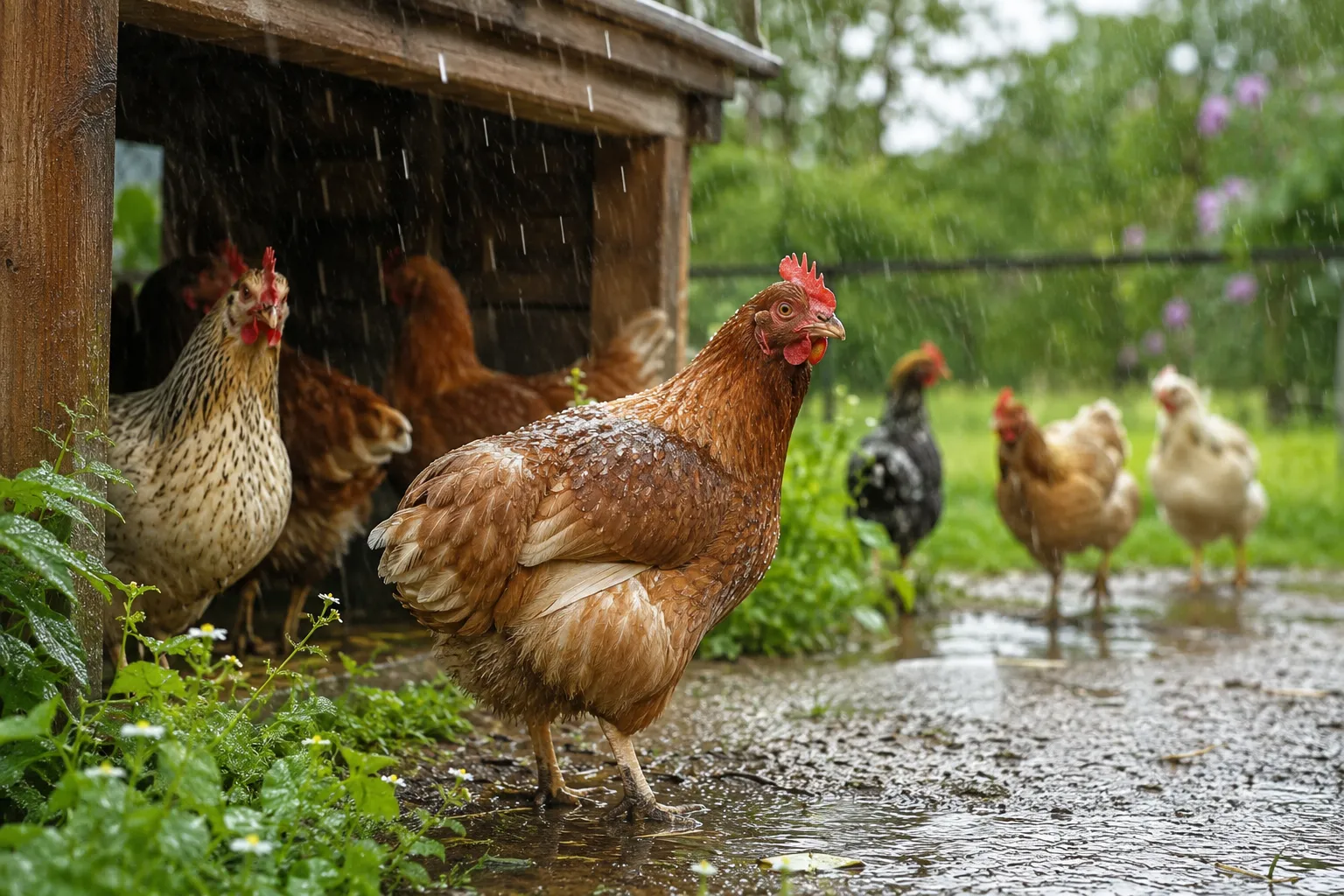
Quick Answer: Most chickens will seek shelter when it rains, moving under coops, covered runs, or natural cover like trees and bushes. However, some chickens don’t mind light rain and will continue foraging, dust bathing, or exploring their yard. Individual chicken behavior varies based on breed, age, weather severity, and personal preference.
Key Takeaways
- Chickens typically seek shelter during rain but some breeds and individual birds tolerate light precipitation better than others
- Chicken feathers provide natural water resistance through oil coating, but prolonged exposure can lead to waterlogging
- Standing in the rain doesn’t always mean distress, chickens may enjoy cooling off or drinking fresh rainwater
- Baby chicks need complete protection from rain as they lack the waterproofing oils that adult chickens develop
- Covered runs are essential in rainy climates to prevent muddy conditions, respiratory issues, and feather damage
- Ducks handle rain far better than chickens due to superior waterproofing and different behavioral adaptations
- Forcing chickens inside usually isn’t necessary unless conditions are severe (storms, freezing rain, or extreme cold)
- A puffed-up chicken sitting in rain may be sick and needs immediate attention and warming
- Proper drainage and dry bedding are more important than keeping chickens completely out of rain
- Most free-range chickens will self-regulate and come inside when they’ve had enough
Do Chickens Like Being Out in the Rain?
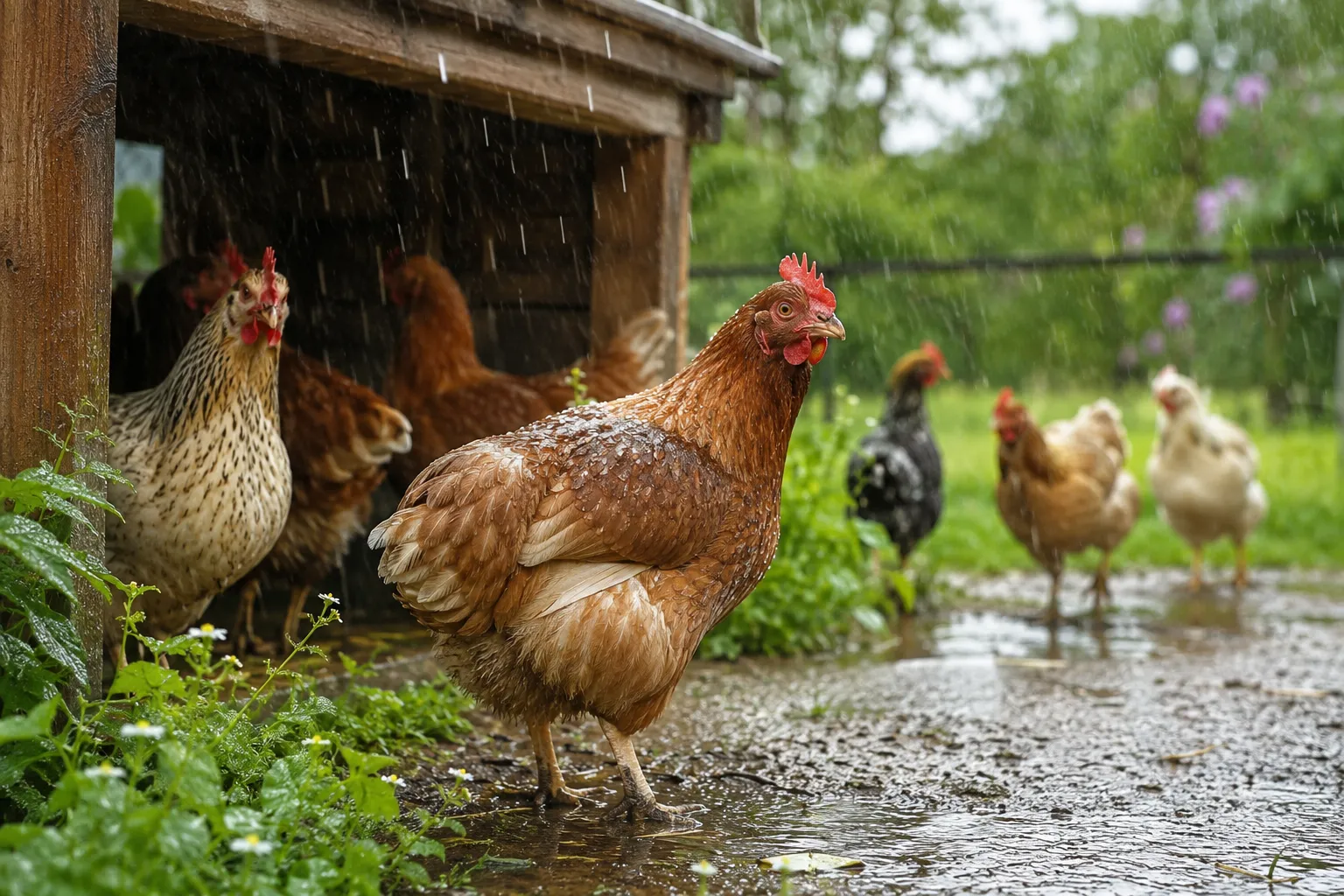
Chicken preferences for rain vary significantly by individual bird, breed, and rain intensity. Most chickens tolerate light drizzle or mist without issue and may continue their normal activities, but heavy downpours typically send them running for cover.
Factors that influence rain tolerance:
- Breed characteristics, Heavy-feathered breeds like Cochins and Orpingtons often dislike rain more than sleek breeds like Leghorns
- Temperature, Warm summer rain is more tolerable than cold autumn or spring showers
- Rain intensity, Light misting versus heavy downpour makes a huge difference
- Individual personality, Some chickens are simply more adventurous or less bothered by weather
Many chickens actually enjoy brief exposure to light rain because it provides fresh drinking water, cools them down on hot days, and creates opportunities to hunt for worms that surface during wet weather. You’ll often see chickens pecking at rain puddles or catching droplets.
Common mistake: Assuming all chickens hate rain equally. Watch your flock’s behavior patterns, you’ll likely notice some birds head straight for shelter while others barely react to the same weather conditions.
Why Do Chickens Stand in the Rain Instead of Going Inside?
Chickens standing in the rain when shelter is available usually do so for specific reasons, not because they’re confused or stuck. They may be drinking fresh rainwater, enjoying the cooling effect on a humid day, or simply preferring the outdoor environment to a crowded coop.
Primary reasons chickens choose rain over shelter:
- Fresh water access, Rain provides clean drinking water, and chickens instinctively tilt their heads back to catch droplets
- Temperature regulation, On warm, humid days, rain helps chickens cool down since they can’t sweat
- Foraging opportunities, Worms and insects surface during rain, creating a feeding bonanza
- Coop avoidance, Overcrowded, poorly ventilated, or dirty coops may be less appealing than standing in light rain
- Pecking order dynamics, Lower-ranking birds may choose rain over entering a coop dominated by aggressive flock members
If your chickens consistently refuse shelter during rain, evaluate your coop conditions. Check for adequate space (3-4 square feet per bird inside, 8-10 square feet per bird in the run), proper ventilation, clean bedding, and sufficient roosting bars for all birds.
Decision rule: If chickens stand in light rain but rush inside during heavy rain, their behavior is normal. If they refuse shelter even in severe weather, investigate coop problems or health issues.
Can Chickens Get Sick from Being in the Rain?
Chickens can develop health problems from prolonged rain exposure, but brief periods in light rain rarely cause illness in healthy adult birds. The main risks come from getting chilled when wet feathers lose insulating properties, respiratory issues from damp conditions, and stress from extended cold exposure.
Health risks associated with rain exposure:
- Respiratory infections, Damp, cold conditions can trigger or worsen respiratory diseases like infectious bronchitis or mycoplasma
- Hypothermia, Wet feathers conduct heat away from the body, especially dangerous in cold weather
- Bumblefoot and foot problems, Constantly wet, muddy conditions soften foot pads and increase infection risk
- Feather damage, Waterlogged feathers can break more easily and take time to dry and re-oil
- Stress-related illness, Chronic stress from poor weather conditions weakens immune systems
Who’s most vulnerable: Young chickens, elderly birds, molting chickens (who have fewer feathers), and breeds with excessive feathering (like Silkies, whose fluffy feathers lack normal waterproofing) face higher risks.
Healthy adult chickens with proper shelter access, good nutrition, and dry roosting areas can handle occasional rain exposure without problems. The key is ensuring they can dry off completely and warm up afterward.
How to Protect Chickens from Rain and Wet Weather
Protecting chickens from rain focuses on providing adequate shelter, maintaining dry areas, and ensuring proper drainage rather than keeping birds completely dry at all times. A well-designed setup allows chickens to choose their preferred level of rain exposure.
Essential rain protection strategies:
- Covered run or shelter, Provide at least 50% covered space in outdoor runs using corrugated roofing, tarps, or permanent structures
- Elevated coop design, Raise coops 12-18 inches off the ground to prevent flooding and improve drainage
- Proper drainage, Grade the ground away from coops and runs, add gravel or sand in high-traffic areas
- Waterproof roofing, Ensure coop roofs are completely watertight with proper overhang (12+ inches)
- Dry roosting areas, Chickens need completely dry places to sleep and preen their feathers
- Ventilation without drafts, Upper vents allow moisture to escape while preventing rain from blowing in
- Multiple shelter options, Provide various covered areas so chickens can spread out and avoid crowding
Quick checklist for rainy day preparation:
- Check roof for leaks before storm season
- Clear gutters and drainage channels
- Stock extra dry bedding (pine shavings, straw, or sand)
- Ensure waterers are under cover to prevent overflow
- Verify all birds can access shelter simultaneously
Edge case: In areas with extended rainy seasons (Pacific Northwest, tropical climates), consider deep litter method or sand flooring in covered runs to manage moisture more effectively than traditional bedding.
Do Chickens Need a Covered Run for Rainy Days?
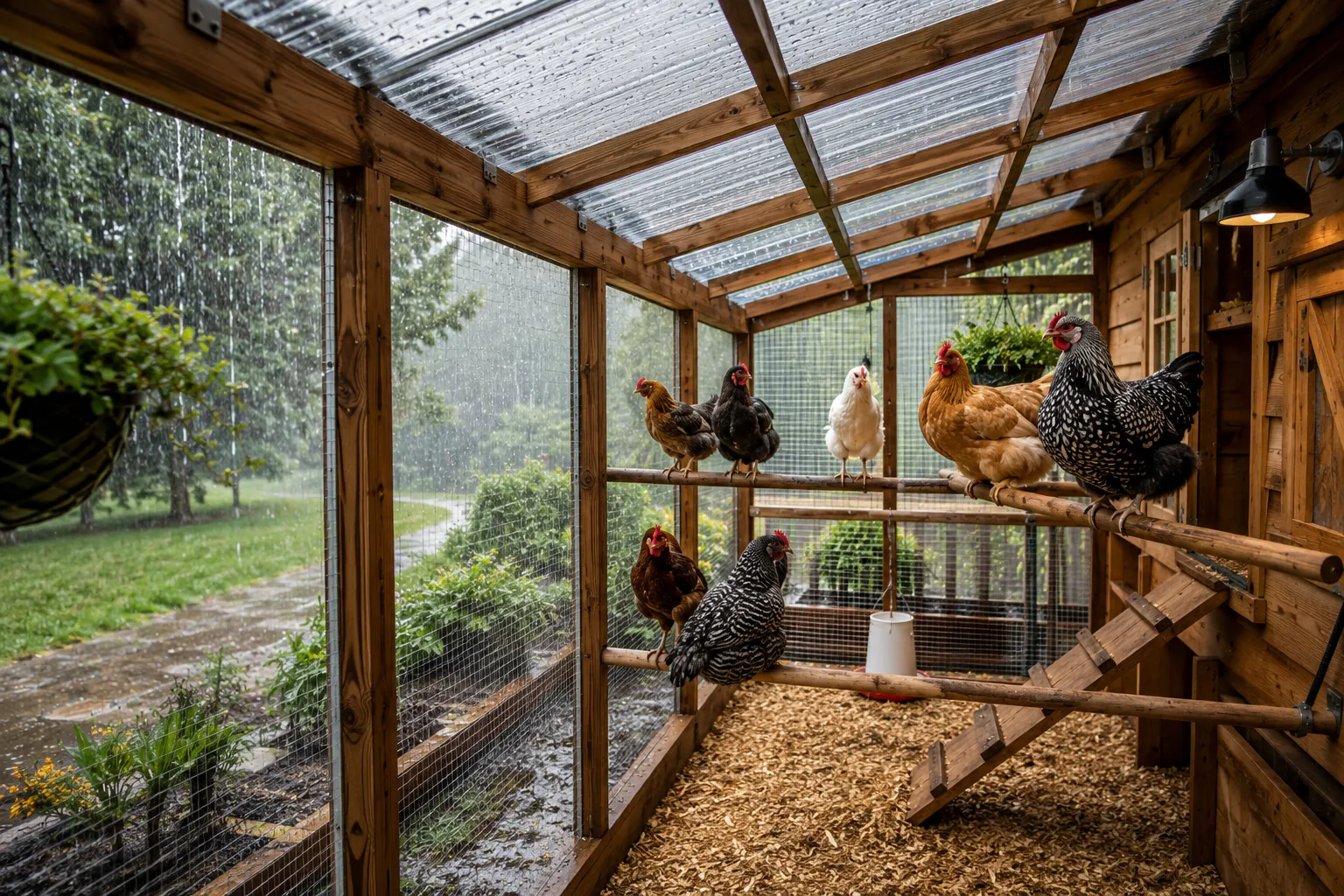
Chickens benefit significantly from covered runs in any climate that experiences regular rainfall, though the coverage percentage can vary based on local weather patterns. A covered run prevents muddy conditions, provides weather choice, and protects birds from aerial predators while maintaining outdoor access.
Benefits of covered runs:
- Mud prevention, Keeps high-traffic areas dry, reducing foot problems and parasite loads
- Year-round outdoor access, Chickens can exit the coop even during rain, preventing boredom and aggression
- Bedding stays dry, Covered areas maintain usable dust bathing spots and dry ground
- Feed protection, Keep feeders under cover to prevent waste and mold
- Flexible weather protection, Birds self-regulate their rain exposure
Coverage recommendations by climate:
- Rainy climates (Pacific Northwest, UK, tropical areas): 75-100% coverage recommended
- Moderate rainfall (most of US, temperate zones): 50-75% coverage adequate
- Arid climates (Southwest US, Mediterranean): 25-50% coverage for shade and occasional storms
Materials for covered runs: Corrugated metal or plastic roofing, clear polycarbonate panels (allows light while blocking rain), tarps (temporary solution), or permanent roof structures. Ensure proper pitch for water runoff and secure attachment to withstand wind.
Choose covered runs if: You experience more than 30 inches of annual rainfall, have heavy clay soil that doesn’t drain well, keep chickens in a small space where mud accumulates quickly, or want to maximize outdoor time regardless of weather.
What Happens If Chickens Get Too Wet in the Rain?
When chickens become thoroughly soaked, their feathers lose insulating ability and they risk hypothermia, especially in temperatures below 50°F (10°C). Waterlogged feathers also become heavy, making movement difficult, and create conditions for skin problems and feather damage.
Immediate effects of waterlogged chickens:
- Heat loss, Wet feathers conduct body heat away 25 times faster than dry feathers
- Increased energy expenditure, Birds burn more calories trying to maintain body temperature
- Reduced mobility, Heavy, wet feathers make flying to roosts or escaping predators harder
- Shivering and lethargy, Visible signs of cold stress
- Huddling behavior, Birds cluster together trying to conserve warmth
What to do if chickens are soaked:
- Move birds to a dry, draft-free area immediately
- Gently towel-dry if possible (chickens may resist handling)
- Provide supplemental heat source if temperatures are cold (heat lamp, ceramic heater)
- Ensure access to food and water, wet chickens need extra calories
- Monitor for signs of respiratory distress (wheezing, open-mouth breathing, discharge)
- Allow birds to preen and re-oil feathers naturally once dry
Recovery time: Most healthy adult chickens dry completely within 2-4 hours in a sheltered area. Feathers regain full waterproofing as birds preen and distribute oil from their uropygial gland (preen gland) over the next 24 hours.
Warning signs requiring intervention: A chicken that remains puffed up, lethargic, or unresponsive after drying may be developing hypothermia or illness and needs immediate warming and possibly veterinary care.
Do Baby Chicks Need More Protection from Rain Than Adult Chickens?
Baby chicks require complete protection from rain until they develop adult feathers with waterproofing oils, typically around 6-8 weeks of age. Chicks lack the uropygial gland development and feather structure that protects adult birds, making them extremely vulnerable to hypothermia when wet.
Why chicks are more vulnerable:
- No waterproofing, Downy fluff absorbs water like a sponge rather than repelling it
- Poor temperature regulation, Chicks can’t maintain body temperature effectively until fully feathered
- Rapid heat loss, Small body size means faster cooling when wet
- Higher mortality risk, Wet, cold chicks can die within 30-60 minutes
Protection requirements by age:
- 0-3 weeks: Keep completely dry and warm (90-95°F initially, decreasing 5°F per week)
- 3-6 weeks: Still need full rain protection but can tolerate slightly cooler temperatures
- 6-8 weeks: Developing waterproof feathers; can handle brief light rain exposure
- 8+ weeks: Treat similarly to adults with gradual weather introduction
Transitioning chicks to outdoor weather: Introduce young chickens to outdoor conditions gradually during dry weather, starting with short supervised periods. Watch for signs of distress (huddling, chirping loudly, lethargy) and return birds to warmth immediately if they get wet.
Common mistake: Assuming partially feathered chicks (4-6 weeks) can handle rain because they look like small chickens. These birds are still highly vulnerable and need continued protection until fully feathered.

Chickens vs Ducks in Rain: Which Handle It Better?
Ducks handle rain dramatically better than chickens due to superior waterproofing, different feather structure, and behavioral adaptations for aquatic environments. While chickens tolerate rain, ducks actively thrive in wet conditions and can spend hours in heavy rain without any negative effects.
Key differences in rain tolerance:
| Feature | Chickens | Ducks |
|---|---|---|
| Waterproofing | Moderate oil coating, can become waterlogged | Extensive oil coating, nearly waterproof |
| Feather structure | Looser, allows water penetration | Tight, overlapping, sheds water efficiently |
| Preen gland size | Smaller, produces less oil | Larger, produces abundant waterproofing oil |
| Natural behavior | Seek shelter in rain | Actively enjoy rain and water |
| Foot design | Scaled feet, prefer dry ground | Webbed feet, designed for wet conditions |
| Cold tolerance when wet | Poor, risk hypothermia | Excellent, maintain warmth even when soaked |
Why ducks love rain: Ducks evolved as waterfowl and their entire physiology supports wet environments. Their dense down layer provides insulation even when outer feathers are wet, and they instinctively preen frequently to maintain waterproofing.
Housing implications: If keeping both species together, design shelters that accommodate both preferences. Ducks need access to water for cleaning their bills and eyes but don’t require the same dry, elevated roosting bars that chickens prefer. Chickens need more covered dry areas than ducks do.
Choose chickens if: You want birds that naturally seek shelter and require less water management. Choose ducks if: You have wet property, ponds, or live in rainy climates and want birds that won’t be bothered by constant moisture.
Common Mistakes Keeping Chickens Dry During Storms
Many chicken keepers make well-intentioned errors that either create new problems or fail to address the real risks chickens face during wet weather. Understanding these mistakes helps create better protection strategies.
Top mistakes and corrections:
Sealing coops too tightly, Attempting to keep rain out by blocking ventilation creates dangerous ammonia buildup and respiratory problems. Fix: Maintain upper ventilation while preventing drafts at bird level.
Using only tarps for permanent coverage, Tarps deteriorate quickly, flap in wind (stressing birds), and often leak at attachment points. Fix: Use tarps as temporary solutions only; invest in proper roofing for permanent structures.
Ignoring drainage, Focusing on roof coverage while allowing water to pool around coops creates muddy, unsanitary conditions. Fix: Grade ground away from structures, add gravel or sand in problem areas, install gutters.
Overcrowding during storms, Insufficient shelter space forces chickens to crowd or remain outside. Fix: Provide covered area for all birds simultaneously (minimum 8 square feet per bird in runs).
Keeping wet bedding, Leaving damp bedding in coops creates ammonia, mold, and respiratory issues. Fix: Remove wet bedding immediately and replace with dry material; increase bedding depth in rainy seasons.
Forcing chickens inside unnecessarily, Herding birds into coops during light rain stresses them and may cause more problems than the weather. Fix: Let chickens self-regulate unless conditions are severe.
Neglecting foot care, Muddy conditions increase bumblefoot risk but often go unaddressed. Fix: Provide dry standing areas, check feet regularly, treat any injuries promptly.
Edge case: In hurricane-prone areas, secure coops and runs against wind damage and flooding. Move chickens to garages or basements if severe flooding is predicted, as chickens can’t swim well and will drown in rising water.
Should I Force My Chickens Inside When It Rains?
Forcing chickens inside during rain is usually unnecessary and can create more stress than the weather itself, unless conditions are severe (heavy storms, freezing rain, extreme cold, or flooding). Chickens are capable of self-regulating their weather exposure when given adequate shelter options.
When to intervene:
- Severe thunderstorms with lightning, high winds, or hail
- Freezing rain or sleet that can coat feathers with ice
- Temperatures below 32°F (0°C) combined with rain
- Flooding conditions that threaten coop or run areas
- Individual sick or injured birds who aren’t seeking shelter on their own
- Baby chicks or young birds under 8 weeks old
When to let chickens choose:
- Light to moderate rain with temperatures above 50°F (10°C)
- Brief summer showers
- Drizzle or mist
- Any situation where birds have access to adequate covered shelter
How to encourage (not force) chickens inside: Offer treats in the coop, ensure the coop is more appealing than standing in rain (clean, dry, well-ventilated), and provide multiple entry points to avoid bottlenecks from pecking order disputes.
Why forcing creates problems: Herding chickens stresses them, may cause injuries from panicked birds flying into obstacles, disrupts flock hierarchy, and teaches birds to fear their keeper rather than trust their own instincts.
Decision rule: If you wouldn’t be concerned about a healthy adult standing outside in the same conditions for 30 minutes, your chickens are probably fine. If you’d worry about hypothermia or safety, bring the birds in.
Do Free-Range Chickens Come in from the Rain on Their Own?
Free-range chickens typically return to their coop or seek natural shelter when rain becomes uncomfortable, though timing varies by individual bird and weather severity. Most chickens have strong homing instincts and know where their shelter is located, returning voluntarily when they’ve had enough exposure.
Natural sheltering behavior:
- Light rain: Many chickens continue foraging, using trees, bushes, or equipment as temporary cover
- Moderate rain: Most birds head toward covered areas within 5-15 minutes
- Heavy rain: Nearly all chickens seek shelter immediately
- Evening rain: Chickens return to roost on schedule regardless of weather
Factors affecting return timing:
- Foraging success, Birds finding abundant food (worms, insects) may stay out longer
- Temperature, Warm rain is less motivating than cold rain
- Flock dynamics, Subordinate birds may delay entering if dominant birds occupy shelter
- Distance from coop, Free-range birds far from shelter take longer to return
- Previous experience, Chickens learn from past weather events
What to do if birds don’t return: Check that the path to shelter is clear, no predators are blocking access, and the coop isn’t overcrowded or occupied by aggressive birds. In rare cases, you may need to gently herd stragglers toward shelter, especially as darkness approaches.
Training free-range chickens: Establish consistent routines (feeding at the same time, closing coops at dusk) so birds learn to return predictably. Use treats or calls to reinforce coming home behavior.
Can Waterlogged Feathers Cause Problems?
Waterlogged feathers create several problems for chickens beyond immediate discomfort, including compromised insulation, increased energy expenditure, mobility issues, and potential for skin infections. While temporary waterlogging isn’t dangerous for healthy adults in warm weather, prolonged saturation poses real risks.
Problems caused by waterlogged feathers:
- Hypothermia risk, Wet feathers lose 90% of their insulating value
- Increased weight, Waterlogged feathers can double a chicken’s weight, making movement and roosting difficult
- Feather damage, Wet feathers are more prone to breaking and splitting
- Skin problems, Prolonged moisture against skin can cause irritation, fungal infections, or bacterial issues
- Preening difficulties, Extremely wet feathers are harder to re-oil and restore
- Energy drain, Birds use significant calories trying to stay warm when wet
Recovery process: Chickens naturally recover from waterlogged feathers through preening, which distributes oil from the uropygial gland. This process takes 2-6 hours depending on how saturated the feathers became. Birds need a dry, sheltered area to preen effectively.
Breeds most susceptible: Silkies (whose hair-like feathers lack normal structure), heavily feathered breeds (Cochins, Brahmas), and any chicken in molt (with fewer feathers) face higher risks from waterlogging.
Prevention: Provide adequate covered areas, ensure coops have proper drainage, and monitor birds during extended rainy periods. If you notice a chicken remaining wet and lethargic, move them to a warm, dry area immediately.
Best Bedding for Chicken Coops in Rainy Climates
The best bedding for rainy climates manages moisture effectively, dries quickly, provides insulation, and resists mold growth. Sand and pine shavings are top choices, while straw and hay often create problems in consistently wet conditions.
Top bedding options for wet climates:
1. Sand (construction or river sand, not play sand)
- Drains extremely well, dries quickly
- Easy to clean (scoops like cat litter)
- Doesn’t harbor mold or parasites
- Provides dust bathing opportunities
- Heavy (difficult to change completely)
- Can be cold in winter without supplemental insulation
2. Pine shavings (large flake)
- Absorbs moisture well, composts easily
- Provides good insulation
- Pleasant smell, widely available
- Works well with deep litter method
- Requires regular turning and spot-cleaning
- Can become soggy if not managed properly
3. Hemp bedding
- Superior absorbency (4x more than shavings)
- Naturally antimicrobial, resists mold
- Low dust, good for respiratory health
- More expensive than traditional options
- Not available everywhere
4. Deep litter method (any of above materials)
- Builds up 6-12 inches of bedding over months
- Generates heat through composting
- Manages moisture through microbial action
- Requires proper management to avoid ammonia buildup
- Add fresh layer weekly, turn monthly, clean out 1-2 times yearly
Avoid in rainy climates:
- Straw, Stays wet, molds easily, harbors parasites
- Hay, Even worse than straw for moisture retention
- Newspaper, Becomes soggy and slippery when wet
- Cedar shavings, Aromatic oils can cause respiratory issues
Maintenance schedule for rainy climates: Spot-clean daily, add fresh bedding 2-3 times weekly, turn bedding weekly (if using deep litter), completely replace bedding monthly (traditional method) or 1-2 times yearly (deep litter method).
Why Is My Chicken Puffed Up Sitting in the Rain?
A chicken sitting puffed up in the rain is likely sick, cold-stressed, or in distress and needs immediate attention. While healthy chickens may fluff feathers briefly to shake off water, a bird that remains puffed up and stationary in rain is showing clear warning signs of a problem.
What puffed-up posture indicates:
- Attempting to conserve heat, Fluffing feathers creates air pockets for insulation
- Illness, Sick chickens often appear puffed and lethargic
- Hypothermia, Bird is already dangerously cold
- Respiratory distress, Breathing problems cause birds to sit still and puff up
- Pain or injury, Chickens hide pain but may become immobile
Immediate action steps:
- Remove bird from rain immediately, Bring inside to warm, dry area
- Dry the bird gently, Use towels to remove excess water
- Provide supplemental heat, Heat lamp, heating pad, or warm room (85-90°F)
- Check for other symptoms, Discharge from eyes/nose, labored breathing, injury, pale comb
- Offer food and water, Sick birds need calories and hydration
- Isolate from flock, Prevent disease spread and allow recovery without competition
- Monitor closely, Check every 30-60 minutes for improvement or decline
When to call a vet: If the bird doesn’t show improvement within 2-3 hours, has obvious respiratory distress, shows neurological symptoms (head tilting, circling), or continues to decline despite warming.
Prevention: Regular health checks help catch illness before birds become critically compromised. A healthy chicken should never choose to sit puffed up in rain when shelter is available.
FAQ
How long can chickens stay in the rain?
Healthy adult chickens can tolerate light rain for several hours without problems, but should have access to shelter within 30-60 minutes during heavy rain or cold conditions. The combination of rain intensity, temperature, and wind determines safe exposure time.
Will chickens drown in the rain?
Chickens will not drown from rain falling on them, but they can drown in flooding or deep water accumulation. Chickens are poor swimmers and need dry ground or shallow puddles only.
Do chickens get cold when wet?
Yes, wet chickens lose body heat rapidly because water conducts heat away from their bodies much faster than air. This is especially dangerous when temperatures are below 50°F (10°C).
Should I dry my chickens after rain?
Generally no, healthy chickens dry themselves through preening. Only intervene if a bird is soaked and showing signs of cold stress (shivering, lethargy, puffed up) or if temperatures are very cold.
Can chickens be outside in winter rain?
Chickens can handle winter rain if they have immediate access to dry, draft-free shelter and temperatures are above freezing. Freezing rain or sleet requires bringing birds inside to prevent ice coating on feathers.
Why do my chickens refuse to go in the coop when it rains?
Chickens avoiding the coop during rain usually indicates coop problems: overcrowding, poor ventilation, dirty conditions, aggressive flock members, or predators/pests inside. Inspect and address these issues.
Do chicken feathers repel water?
Chicken feathers have moderate water resistance from oil coating but are not fully waterproof like duck feathers. Light rain beads off initially, but prolonged exposure causes water penetration.
How do I know if my chicken is too wet?
A chicken is too wet if feathers are completely soaked (not just damp), the bird appears heavy or struggles to move, shivers, acts lethargic, or has a drooping posture. Immediate drying and warming are needed.
What temperature is too cold for wet chickens?
Any temperature below 50°F (10°C) poses risks for wet chickens, with danger increasing significantly below 40°F (4°C). Below freezing, wet chickens face severe hypothermia risk within minutes.
Can rain cause respiratory infections in chickens?
Rain itself doesn’t cause infections, but prolonged damp, cold conditions stress chickens and make them more susceptible to respiratory pathogens already present in the environment. Proper shelter and dry roosting areas prevent most rain-related illness.
Do roosters protect hens from rain?
Roosters don’t typically provide physical rain protection, but good roosters may alert hens to seek shelter, find covered areas first, and ensure hens reach safety before roosting themselves.
Should I cover my chicken run in winter?
Covering at least 50-75% of runs in winter provides essential protection from rain, snow, and wind while maintaining outdoor access. This prevents cabin fever, reduces aggression, and keeps exercise areas usable year-round.
Conclusion
Understanding what chickens do in the rain helps you create better housing, make informed decisions during storms, and recognize when intervention is needed versus when birds are simply being chickens. Most healthy adult chickens handle rain reasonably well when given choices, they’ll seek shelter when uncomfortable and venture out when conditions are tolerable.
The key to successful chicken keeping in any climate is providing options rather than restrictions. Covered runs, proper drainage, dry roosting areas, and adequate ventilation create environments where chickens can self-regulate their weather exposure safely. Pay special attention to vulnerable birds (chicks, elderly, molting, or sick chickens) who need extra protection.
Your next steps:
- Evaluate your current setup for rain protection, do all birds have simultaneous access to covered, dry areas?
- Improve drainage around coops and runs before the next rainy season
- Stock appropriate bedding materials for your climate
- Learn to recognize normal rain behavior versus distress signals in your flock
- Create a severe weather plan for storms, flooding, or extreme conditions
Remember that chickens are remarkably adaptable birds who’ve survived in diverse climates for thousands of years. With proper shelter, good nutrition, and attentive care, your flock will handle rainy weather just fine, and you might even catch them enjoying a refreshing summer shower.


