
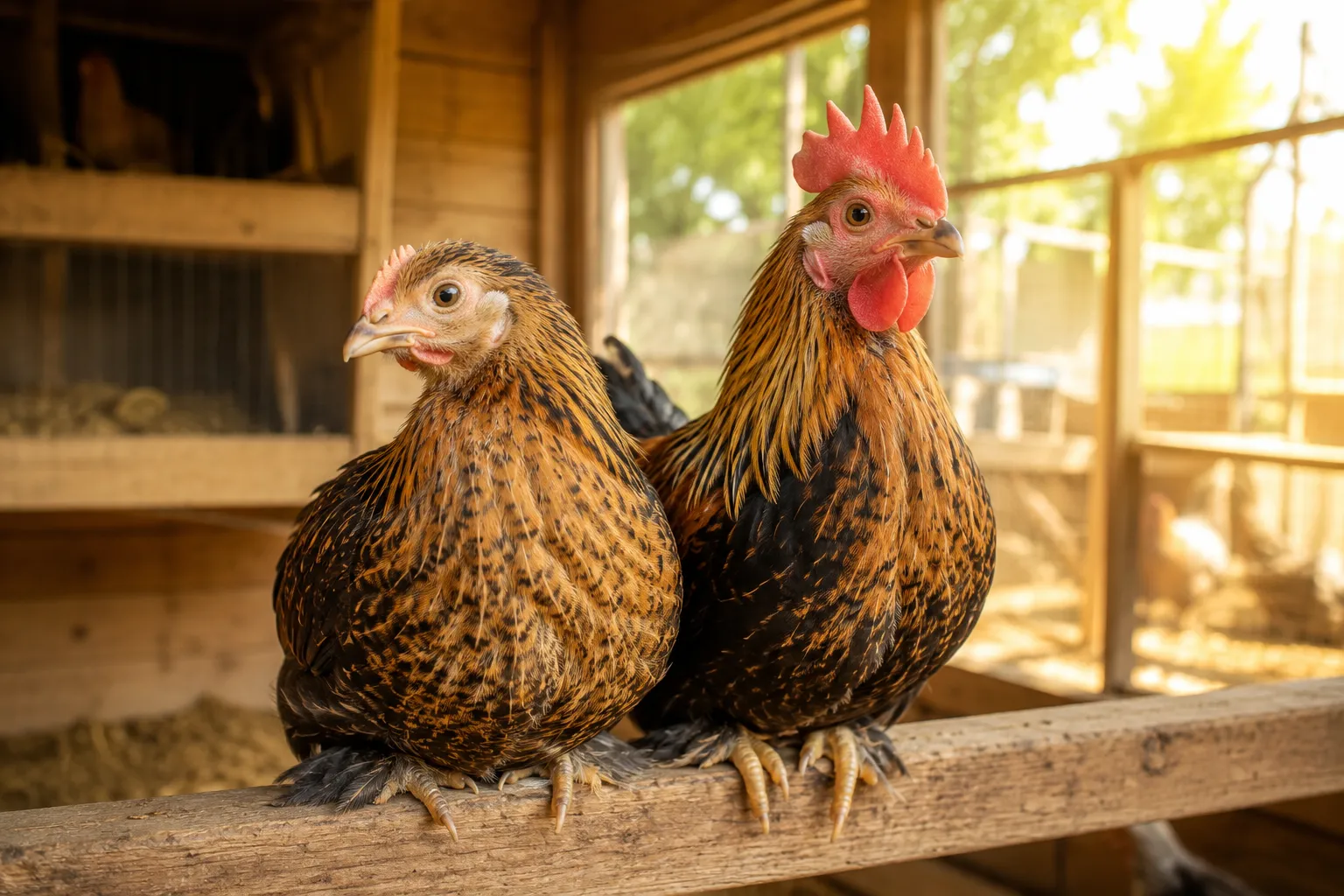
Quick Answer: You can tell a pullet from a cockerel by examining comb size (cockerels develop larger, redder combs earlier), feather shape (cockerels grow pointed saddle and hackle feathers while pullets have rounded feathers), leg thickness (cockerels have sturdier legs), and behavior (cockerels stand taller and may attempt crowing as early as 4-8 weeks). Most physical differences become obvious between 6-12 weeks of age, though some breeds show clear signs earlier.
Key Takeaways
- Comb development is one of the earliest indicators: cockerels develop larger, brighter red combs by 4-6 weeks while pullets have smaller, paler combs
- Feather shape differs significantly: cockerels grow pointed hackle (neck) and saddle (back) feathers, while pullets have rounded feathers throughout
- Behavioral cues emerge early: cockerels stand taller, chest out, and may attempt crowing by 8-12 weeks
- Accuracy improves with age: sexing is most reliable at 8-12 weeks when multiple physical traits become obvious
- Breed matters: some breeds like Leghorns show clear differences early, while others like Silkies remain difficult to sex until 4-6 months
- Feather sexing works only in specific breeds bred for the trait and requires expertise within the first 24-48 hours
- Vent sexing is 90-95% accurate but requires professional training and can harm chicks if done incorrectly
- Hatchery accuracy for pullet orders typically ranges from 90-95%, meaning you may still get an occasional cockerel
- Multiple indicators together provide the most reliable identification rather than relying on a single trait
What Is the Difference Between a Pullet and a Cockerel?
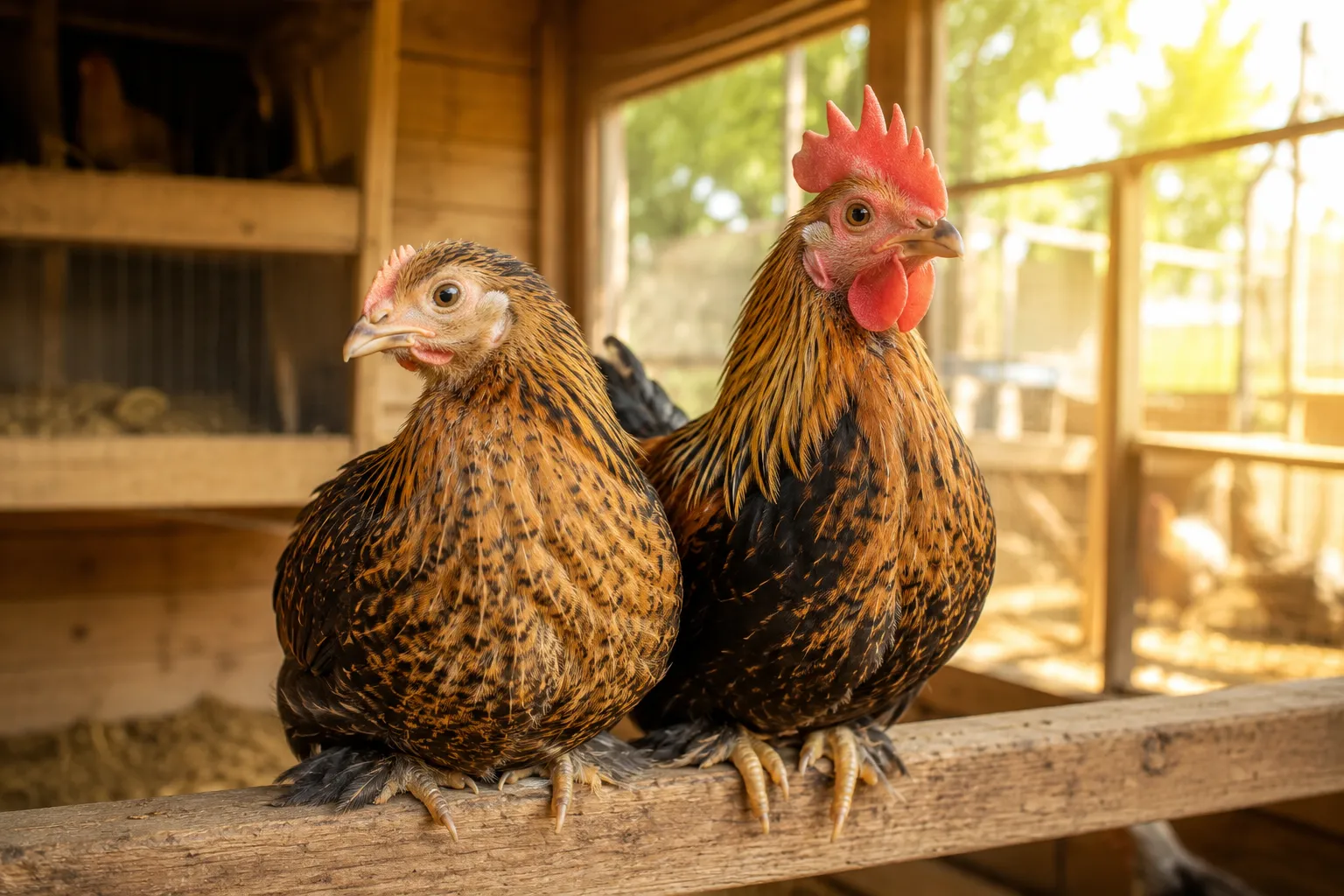
A pullet is a young female chicken under one year old, while a cockerel is a young male chicken under one year old. Once they reach maturity (around 12 months), pullets become hens and cockerels become roosters.
The terms specifically refer to age and sex:
- Pullet: Female chicken from hatch to approximately 12 months, before she’s laid eggs consistently
- Cockerel: Male chicken from hatch to approximately 12 months, before full sexual maturity
- Hen: Mature female chicken over one year old
- Rooster (or cock): Mature male chicken over one year old
Understanding this distinction matters because most backyard chicken keepers want pullets for egg production, while cockerels are often unwanted due to noise restrictions, aggression concerns, or simply because they don’t lay eggs. Identifying which is which early helps you plan your flock accordingly.
How Early Can You Tell If a Chick Is Male or Female?
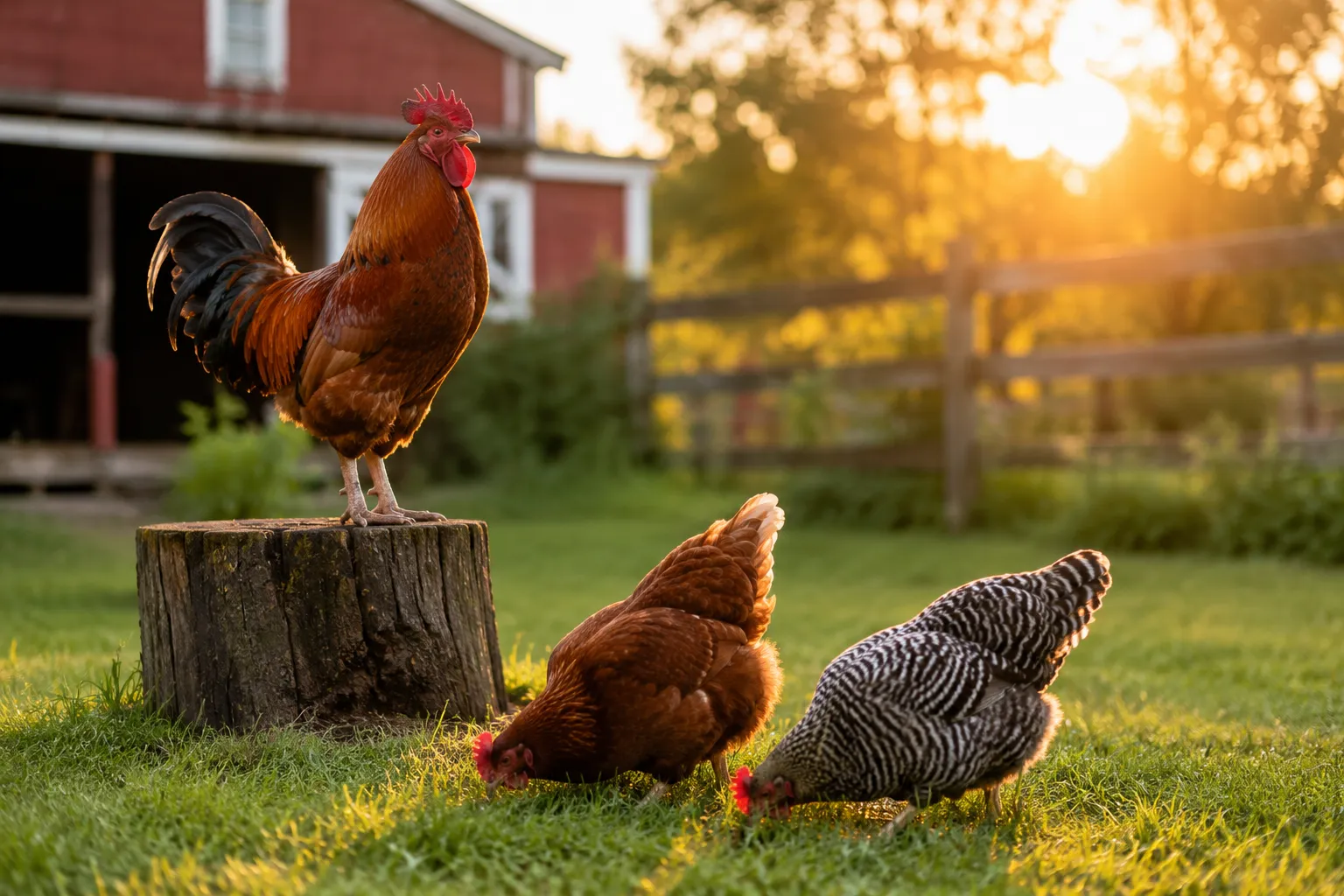
You can begin seeing subtle differences between male and female chicks as early as 3-4 weeks, but reliable identification typically happens between 6-12 weeks when multiple physical characteristics become obvious. Professional vent sexing can be done within 24 hours of hatching but requires specialized training.
Timeline for sexing accuracy:
- Day 1-2: Vent sexing (90-95% accurate, requires expert) or feather sexing in specific breeds
- Week 3-4: Very subtle comb differences may appear in some breeds
- Week 4-6: Comb size and color differences become more noticeable
- Week 6-8: Hackle feathers begin showing pointed shape in cockerels
- Week 8-12: Multiple traits confirm sex with high confidence
- Week 12+: Saddle feathers, spurs, and crowing make identification certain
The earlier you try to sex chicks, the less accurate visual methods become. Most backyard chicken keepers find that waiting until 6-8 weeks provides clear enough differences without requiring professional skills.
Common mistake: Trying to sex chicks too early based on a single trait (like slightly larger size) often leads to misidentification. Wait for multiple confirming characteristics.
Physical Signs That a Chick Is a Rooster Not a Hen
Cockerels develop several distinct physical features that differentiate them from pullets, with differences becoming progressively more obvious as they mature. The most reliable signs include comb development, feather shape, body structure, and leg characteristics.
Key physical indicators:
Comb and wattles:
- Cockerels develop larger, brighter red combs earlier (often by 4-6 weeks)
- Wattles (the fleshy lobes under the beak) appear larger and redder sooner
- Pullets have smaller, paler pink combs that develop more slowly
Feather characteristics:
- Hackle feathers (neck): Cockerels grow long, pointed, shiny feathers; pullets have short, rounded feathers
- Saddle feathers (lower back): Cockerels develop long, pointed feathers that drape over the tail; pullets have shorter, rounded feathers
- Overall plumage in cockerels often appears shinier and more vibrant
Body structure:
- Cockerels stand taller with a more upright, confident posture
- Chest appears broader and more prominent
- Overall body frame looks larger and more muscular
Legs and feet:
- Cockerels develop thicker, sturdier legs earlier
- Spur buds (small bumps on the back of the leg) become more prominent
- Feet appear larger in proportion to body size
Choose visual identification if you’re examining chicks older than 6 weeks and can observe multiple traits together. This approach works for most backyard situations without requiring professional intervention.
Do Pullets and Cockerels Have Different Comb Sizes?
Yes, cockerels develop noticeably larger and brighter red combs much earlier than pullets, often by 4-6 weeks of age. This is one of the earliest and most reliable visual indicators for sexing young chickens.
By 6 weeks, a cockerel’s comb typically stands taller, has more defined points, and shows a deeper red color compared to a pullet’s smaller, paler pink comb. The difference becomes increasingly dramatic as the birds mature.
Comb development comparison:
| Age | Cockerel Comb | Pullet Comb |
|---|---|---|
| 3-4 weeks | Slightly larger, beginning to pinken | Small, pale yellow-pink |
| 5-6 weeks | Noticeably larger, turning red | Still small, light pink |
| 8-10 weeks | Large, bright red, well-defined | Moderate size, pink to light red |
| 12+ weeks | Very large, deep red, prominent | Smaller, red but less prominent |
Important consideration: Comb size alone isn’t foolproof, especially in breeds with naturally small combs (like Silkies) or in very young chicks. Always look for multiple confirming traits rather than relying solely on comb development.
How to Sex Chickens by Feather Growth
Feather sexing works only in specific breeds that have been bred for sex-linked feather growth patterns, and it must be done within the first 24-48 hours after hatching when wing feathers are visible. In these breeds, female chicks develop wing feathers faster than males, creating a visible length difference.
How feather sexing works:
When examining day-old chicks, gently extend one wing and look at the primary (longest) and covert (shorter, overlapping) feathers:
- Fast-feathering females: Primary feathers are noticeably longer than covert feathers, creating a clear two-layer pattern
- Slow-feathering males: Primary and covert feathers are approximately the same length, appearing as one layer
Breeds where feather sexing works:
- Sex-link hybrids (Red Star, Black Star, Golden Comet)
- Some commercial layer strains specifically bred for the trait
- Certain crosses where the trait has been intentionally introduced
Breeds where feather sexing does NOT work:
- Most heritage and pure breeds (Rhode Island Red, Plymouth Rock, Orpington, etc.)
- Silkies, Cochins, and other ornamental breeds
- Any breed not specifically bred for sex-linked feathering
Edge case: Even in appropriate breeds, feather sexing requires practice and good lighting. The window of opportunity is extremely narrow, after 3-4 days, the feather length difference disappears as chicks grow. Most backyard chicken keepers find this method impractical unless buying from a hatchery that has already sexed the chicks this way.

What Age Can You Accurately Tell Pullet From Cockerel?
You can accurately identify pullets from cockerels with high confidence at 8-12 weeks of age when multiple physical characteristics, comb size, feather shape, body posture, and early behavioral differences, all align to confirm sex. Before 6 weeks, accuracy drops significantly for visual methods.
Accuracy by age:
- 0-3 weeks: Very difficult without professional vent sexing; 50-60% accuracy for visual guessing
- 4-6 weeks: Moderate accuracy (70-80%) based primarily on comb development
- 6-8 weeks: Good accuracy (85-90%) with comb, body structure, and early hackle feathers
- 8-12 weeks: High accuracy (95%+) with multiple confirming traits
- 12+ weeks: Near certain (99%+) with saddle feathers, crowing, and full physical development
For backyard chicken keepers without professional training, waiting until 8 weeks provides the best balance of early identification and reliable accuracy. By this age, you’ll see clear differences in comb size, feather shape (especially hackle feathers), leg thickness, and posture.
Decision rule: If you need to make housing or flock decisions early, examine chicks at 6-8 weeks and look for at least three confirming characteristics before making a determination. If traits are mixed or unclear, wait another 2-4 weeks.
Saddle Feathers vs Hackle Feathers in Young Chickens
Hackle feathers grow on the neck, while saddle feathers grow on the lower back just before the tail. In cockerels, both sets develop into long, pointed, shiny feathers that drape distinctively, whereas in pullets, these feathers remain short and rounded.
Hackle feathers (neck):
- Cockerels: Long, narrow, pointed feathers with a glossy sheen that cascade down the neck and shoulders, typically appearing by 8-10 weeks
- Pullets: Short, rounded, fluffy feathers that lie close to the neck, maintaining a uniform appearance
Saddle feathers (lower back):
- Cockerels: Long, pointed feathers that arch over the back toward the tail, creating a distinctive flowing appearance, usually visible by 10-14 weeks
- Pullets: Short, rounded feathers that blend smoothly with the back plumage without any draping effect
These feather differences are among the most reliable sex indicators because they’re controlled by male hormones. Once saddle and hackle feathers develop their characteristic pointed shape in a cockerel, there’s virtually no chance of misidentification.
Visual tip: Hold a feather up to the light. Cockerel hackle and saddle feathers have a distinct pointed tip and often show an iridescent quality. Pullet feathers have rounded, blunt tips and appear more matte.
Can You Tell by Behavior If a Chicken Is Male or Female?
Yes, behavioral differences between cockerels and pullets become noticeable as early as 6-10 weeks, with cockerels displaying more dominant, upright postures and pullets showing more submissive, ground-focused behaviors. However, behavior alone shouldn’t be your only indicator, as individual personality varies widely.
Typical cockerel behaviors:
- Upright stance: Stands tall with chest out, head held high
- Dominance displays: Challenges other birds, attempts to establish pecking order aggressively
- Crowing attempts: Begins practicing crowing between 8-16 weeks (sounds comical at first)
- Protective behavior: Positions himself between perceived threats and other chickens
- Mating behavior: Attempts to mount pullets (usually after 12-16 weeks)
- Food calling: Makes specific sounds to call hens to food (tidbitting)
Typical pullet behaviors:
- Ground-focused: Spends more time foraging with head down
- Submissive posture: Crouches when approached by dominant birds
- Quieter vocalizations: Softer peeps and clucks, no crowing attempts
- Flock integration: Stays closer to other hens, less confrontational
- Nesting behavior: Shows interest in nesting boxes around 16-20 weeks
Common mistake: Assuming a bold, confident pullet is a cockerel. Some pullet breeds (especially Mediterranean types like Leghorns) are naturally assertive and may stand tall or challenge other birds. Always confirm behavioral observations with physical traits.
Edge case: In all-female flocks without a rooster, one dominant hen may adopt rooster-like behaviors including mounting other hens and even attempting to crow. This doesn’t mean she’s male, it’s a response to the absence of a rooster.
Are There Breeds Where It’s Harder to Tell Males From Females?
Yes, some breeds are notoriously difficult to sex visually, with Silkies being the most challenging because their fluffy plumage obscures physical features and their combs develop slowly. Other difficult breeds include Sebrights, Polish, and some bantam varieties where sexual dimorphism is less pronounced.
Difficult-to-sex breeds:
Silkies:
- Fluffy feathers hide body shape and feather patterns
- Small walnut combs develop slowly in both sexes
- Often requires waiting until 5-6 months for crowing or egg-laying to confirm sex
- Even experienced breeders struggle before 4 months
Sebrights:
- Hen-feathered breed where males have rounded feathers like females
- Cockerels lack the typical pointed hackle and saddle feathers
- Requires close examination of comb, wattles, and behavior
Polish:
- Large crests obscure comb development
- Similar body structure in both sexes when young
- Best identified by behavior and subtle crest shape differences
Some bantam breeds:
- Smaller overall size makes subtle differences harder to spot
- Proportionally smaller combs in both sexes
Easier-to-sex breeds:
- Leghorns: Very pronounced comb differences early
- Rhode Island Reds: Clear feather and comb distinctions by 6 weeks
- Plymouth Rocks: Obvious size and feather differences
- Sex-link hybrids: Often color-sexable at hatch (different colors for males and females)
Choose easier breeds if you’re new to chicken keeping and need to identify sex early for planning purposes. If you’re set on a difficult breed, plan to wait longer for confirmation or purchase sexed birds from a reputable breeder who has more experience.
Common Mistakes When Trying to Identify Chicken Gender
The most common mistake is relying on a single trait too early, such as assuming a slightly larger chick at 3 weeks is definitely a cockerel. Accurate sexing requires observing multiple physical characteristics together, ideally after 6-8 weeks of age.
Frequent identification errors:
Judging by size alone:
- Chicks grow at different rates regardless of sex
- The largest chick in a batch may be a pullet who simply hatched first or eats more
- Size becomes a more reliable indicator only after 10-12 weeks when combined with other traits
Misreading early comb development:
- Some pullets naturally develop combs faster than others
- Breed variation means some breeds have larger combs in both sexes
- A slightly pinker comb at 4 weeks doesn’t confirm sex without other indicators
Confusing personality with sex:
- Bold, assertive pullets are often mistaken for cockerels
- Shy, submissive cockerels exist and may not display typical male behavior early
- Behavior should support physical evidence, not replace it
Sexing too early:
- Attempting to identify sex at 2-3 weeks leads to frequent errors
- Waiting until 6-8 weeks dramatically improves accuracy
- Impatience causes more mistakes than any other factor
Ignoring breed characteristics:
- Applying Rhode Island Red sexing timelines to Silkies leads to frustration
- Not researching breed-specific development patterns
- Expecting all breeds to show the same clear differences at the same age
Not examining multiple traits:
- Looking only at combs or only at feathers
- Missing the complete picture that comes from comb + feathers + legs + behavior
- Making determinations based on one strong indicator while ignoring contradictory signs
Best practice: Create a simple checklist at 8 weeks: comb size and color, hackle feather shape, leg thickness, body posture, and any behavioral observations. If at least 4 out of 5 indicators point the same direction, you can be confident in your identification.
Is Vent Sexing Accurate for Backyard Chicken Keepers?
Vent sexing is 90-95% accurate when performed by trained professionals within the first 24-48 hours after hatching, but it’s not recommended for backyard chicken keepers because it requires extensive training and can seriously injure or kill chicks if done incorrectly. The technique involves examining the chick’s internal vent structure, which is extremely delicate.
How vent sexing works:
A trained sexer gently squeezes the chick’s abdomen to expel fecal matter, then carefully opens the vent (cloaca) to examine internal structures. Males have a small genital eminence (bump), while females have a different internal structure. The differences are subtle and require significant experience to identify reliably.
Why backyard keepers should avoid it:
- Injury risk: Improper technique can tear delicate tissue, causing fatal infections
- Stress: The process is stressful for day-old chicks even when done correctly
- Training requirement: Professional vent sexers train for months to achieve accuracy
- Time sensitivity: Only works reliably in the first 48 hours; becomes harder as chicks grow
- Better alternatives exist: Waiting 6-8 weeks for visual sexing is safer and nearly as accurate
When vent sexing makes sense:
- Commercial hatcheries with trained staff
- Large-scale operations where early sexing provides significant economic benefit
- Situations where you’re purchasing from a hatchery that has already vent-sexed the chicks
For backyard flocks, the risk-to-benefit ratio doesn’t favor vent sexing. Visual identification at 6-12 weeks provides excellent accuracy without any risk to your chicks.
Do Hatcheries Guarantee Pullet Accuracy When You Buy Chicks?
Most hatcheries guarantee 90-95% accuracy for pullet orders, meaning you should expect 9-10 pullets out of every 10 chicks ordered, but occasional cockerels will slip through. Hatcheries typically offer refunds or credits for misidentified birds but won’t cover costs associated with raising an unwanted cockerel.
Typical hatchery policies:
Accuracy rates:
- Pullet orders: 90-95% accuracy (1 in 10-20 may be cockerels)
- Straight run (unsexed): Approximately 50/50 mix, no guarantee
- Cockerel orders: Usually 100% accurate (easier to identify males)
Refund policies:
- Most offer refund or credit for the purchase price of misidentified chicks
- You typically must provide photo evidence of male characteristics
- Claims usually must be made within a specific timeframe (often 8-12 weeks)
- Shipping costs are rarely refunded
Why errors happen:
- Vent sexing, while accurate, isn’t perfect
- Human error during high-volume sexing operations
- Some breeds are harder to sex than others
- Day-old chicks show very subtle differences
What to do if you get a cockerel:
- Verify the sex using multiple physical traits at 8-12 weeks
- Document with photos showing comb, hackle feathers, and body structure
- Contact the hatchery within their specified timeframe
- Have a backup plan: Many urban/suburban chicken keepers can’t keep roosters due to noise ordinances
Decision rule: If you absolutely cannot keep a rooster (due to local laws or noise concerns), order 1-2 extra pullets beyond your desired flock size to account for potential cockerels. This gives you buffer room and ensures you’ll have enough hens even if one turns out to be male.
What Happens If I Accidentally Raise a Cockerel in the City?
If you accidentally raise a cockerel in an area with rooster restrictions, you’ll need to rehome him, surrender him to a farm sanctuary, or potentially face fines if neighbors complain about crowing noise. Most cities that allow backyard chickens specifically prohibit roosters due to noise concerns.
Legal considerations:
- Check local ordinances: Most urban areas ban roosters entirely or limit them to properties over a certain acreage
- Noise complaints: Neighbors can file complaints that result in fines or forced removal
- Fines: Violations often carry fines ranging from $50-500 depending on jurisdiction
- Repeat violations: Can result in losing your right to keep chickens entirely
Crowing reality:
- Cockerels begin crowing between 8-16 weeks (sometimes earlier)
- Roosters crow multiple times per day, starting before dawn
- Crowing can reach 90 decibels (as loud as a lawnmower)
- “No-crow” collars exist but are controversial and don’t eliminate noise entirely
Rehoming options:
Farm placement:
- Contact local farms that keep breeding flocks
- Many small farms welcome free roosters for flock protection
- Rural homesteaders often accept roosters
Sanctuary surrender:
- Farm animal sanctuaries sometimes accept roosters
- May have waiting lists or limited space
- Better outcome than abandonment
Breed-specific rescues:
- Some chicken rescues specialize in rehoming roosters
- Often require applications and may charge surrender fees
Online rehoming:
- Craigslist, Facebook groups, and local farming forums
- List as “free to good home” for better response
- Screen potential adopters to ensure proper care
What NOT to do:
- ❌ Abandon the rooster in a park or rural area (illegal and cruel)
- ❌ Keep him illegally and hope neighbors don’t notice (they will)
- ❌ Attempt to “silence” him through inhumane methods
Preventive planning: Before ordering chicks, research local rooster rehoming options so you have a plan ready if needed. Some hatcheries and feed stores maintain lists of farms willing to accept roosters.
Frequently Asked Questions
Can you tell if a chick is male or female by egg shape?
No, egg shape has no correlation with the sex of the chick that will hatch from it. This is a persistent myth with no scientific basis. The only way to know a chick’s sex before hatching is through specialized in-ovo DNA testing, which is not practical for backyard flocks.
At what age do cockerels start crowing?
Most cockerels begin attempting to crow between 8-16 weeks of age, though some precocious males start as early as 6 weeks and others wait until 20 weeks. Early crowing attempts sound raspy and comical before developing into the full rooster crow by 5-6 months.
Do all cockerels become aggressive?
No, aggression varies widely by individual temperament and breed. Many cockerels remain gentle and protective rather than aggressive, especially if handled regularly from a young age. Breeds like Orpingtons and Brahmas tend toward calmer temperaments, while game breeds may be more aggressive.
Can two roosters live together peacefully?
Two roosters can coexist if they have enough space (generally 1 rooster per 10-12 hens minimum) and were raised together from chicks. However, fighting is common, especially in confined spaces or when hens are present. Bachelor flocks of roosters without hens sometimes work in very large spaces.
Will a pullet ever crow like a rooster?
Rarely, a dominant hen in a rooster-free flock may attempt crow-like vocalizations, but they sound distinctly different from a true rooster crow. This is behavioral mimicry, not a sex change. If a bird develops full rooster crowing, it was always male.
How accurate is color sexing in sex-link chickens?
Color sexing in sex-link hybrids (like Red Stars or Black Stars) is 95-98% accurate at hatch because sex is linked to feather color genes. Males and females hatch different colors, making identification immediate and reliable without handling.
Can you keep just one chicken, and does sex matter?
Chickens are flock animals and suffer stress when kept alone. If you must keep only one, a pullet is preferable because cockerels need other chickens for social structure and may become aggressive or depressed in isolation. Minimum recommended flock size is 3-4 birds.
Do cockerels grow faster than pullets?
Generally yes, cockerels tend to grow slightly faster and larger than pullets, but individual variation is significant. By 12-16 weeks, cockerels are usually noticeably larger, but size alone at 4-6 weeks is not a reliable sex indicator.
What should I do if I’m still unsure of my chicken’s sex at 12 weeks?
If multiple physical traits are still ambiguous at 12 weeks, wait another 4 weeks. By 16 weeks, crowing (male) or squatting behavior when approached (female) will provide definitive confirmation. Some difficult breeds like Silkies may require waiting until 5-6 months.
Are there DNA tests for sexing chickens?
Yes, avian DNA sexing tests are available through veterinary labs and cost approximately $20-40 per bird. A small blood sample or feather is sent to the lab for analysis. This is 99%+ accurate but impractical for most backyard flocks given the cost and the fact that visual sexing becomes obvious by 8-12 weeks.
Will a rooster protect the flock from predators?
Many roosters will alert the flock to danger and some will physically defend hens against predators like hawks or dogs. However, a rooster cannot protect against nighttime predators (when chickens are roosting) and is not a substitute for proper coop security with hardware cloth and locks.
Can you train a rooster not to crow?
No, crowing is an instinctive behavior driven by hormones and cannot be trained away. “No-crow” collars that restrict airflow are controversial, don’t eliminate crowing entirely, and may cause stress or injury. If crowing is unacceptable in your situation, you cannot keep a rooster.
Conclusion
Learning how to tell a pullet from a cockerel becomes straightforward once you know what to look for and when to look. The key is patience, waiting until 6-8 weeks when multiple physical characteristics align gives you reliable accuracy without requiring professional skills or risky techniques.
Focus on the big three indicators: comb size and color, feather shape (especially hackle and saddle feathers), and body posture. When these traits all point in the same direction, you can be confident in your identification. Add behavioral observations as supporting evidence, but never rely on behavior alone.
Your action plan:
- Wait until 6-8 weeks before making sex determinations for best accuracy
- Examine multiple traits together: comb, hackle feathers, leg thickness, posture, and behavior
- Research your specific breed since some show differences earlier or later than others
- Have a rooster plan before ordering chicks, especially if you live in an area with rooster restrictions
- Document your observations with photos at 6, 8, and 10 weeks to track development
- Connect with local chicken keepers who can provide guidance and potential rehoming options if needed
Remember that even experienced chicken keepers occasionally misidentify sex in young birds, especially in difficult breeds. If you’re unsure, waiting another 2-4 weeks will almost always provide clarity. By 12 weeks, the combination of physical traits and early crowing attempts (or lack thereof) makes identification nearly certain.
Whether you’re planning a backyard egg-laying flock or raising heritage breeds, understanding these differences helps you make informed decisions early and avoid surprises down the road. With practice, you’ll develop an eye for the subtle cues that distinguish pullets from cockerels, making future identifications faster and more confident.


