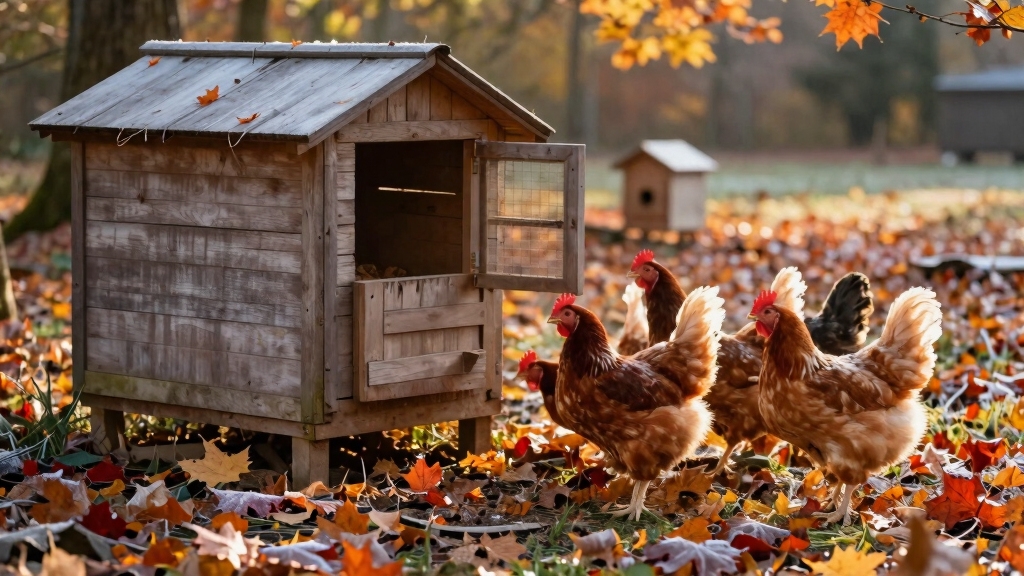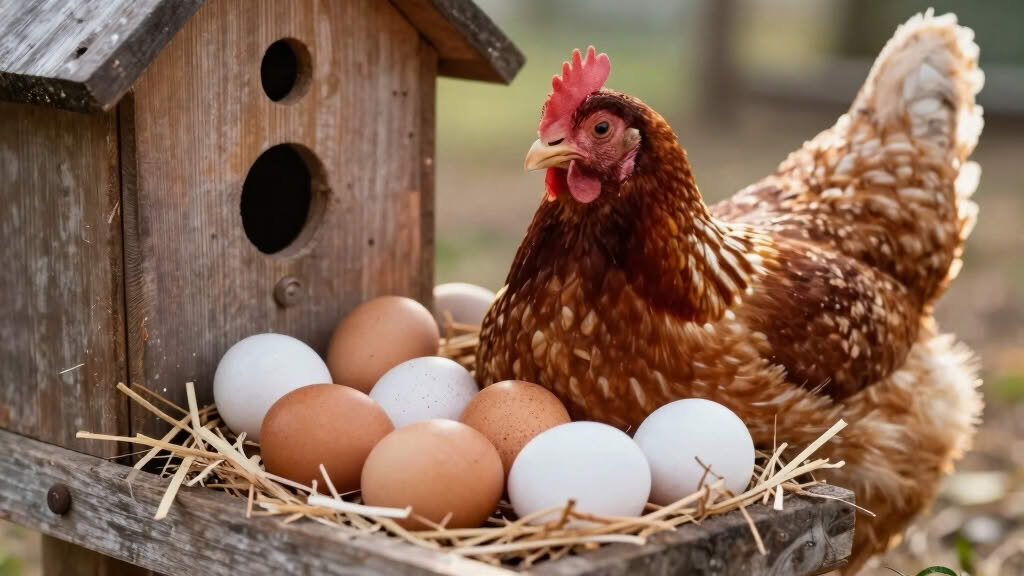
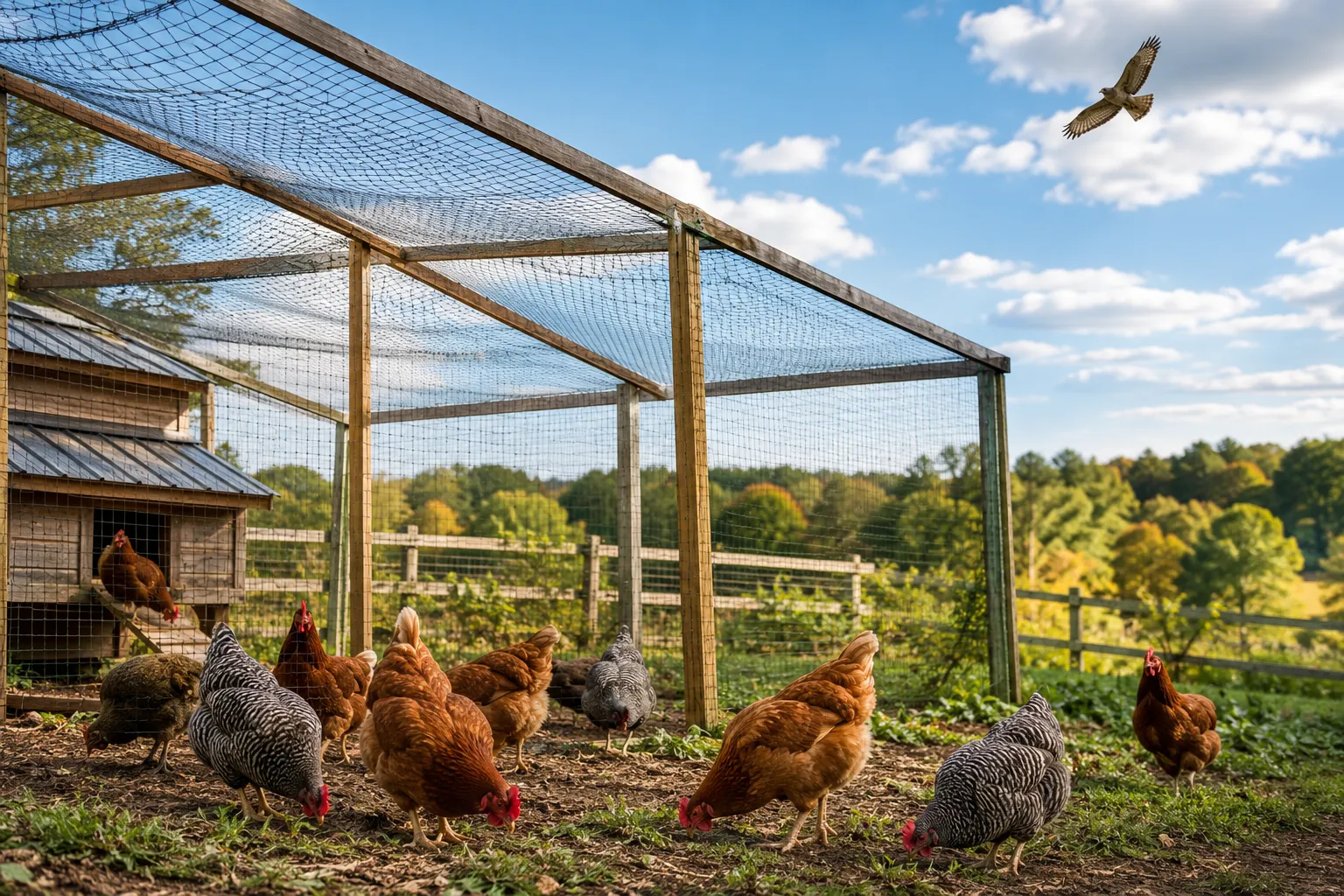
Hawks kill an estimated 10-20% of backyard chickens in rural and suburban areas each year, making them one of the most persistent aerial predators chicken keepers face. Learning how to protect chickens from hawks requires a combination of physical barriers, visual deterrents, and smart flock management strategies that address both daytime hunting patterns and the hawks’ exceptional vision.
Key Takeaways
- Covered runs are the most effective protection, hardware cloth or welded wire mesh over chicken runs stops 95% of hawk attacks
- Hawks hunt primarily during daylight hours, most attacks occur between 10 AM and 4 PM when chickens are active
- Multiple deterrents work better than one, combining reflective tape, roosters, and overhead cover creates layered defense
- Free-range chickens need natural cover, shrubs, trees, and structures provide escape routes when hawks dive
- Shooting hawks is federally illegal, all hawk species are protected under the Migratory Bird Treaty Act with penalties up to $15,000
- Netting fails when installed incorrectly, sagging nets become perches for hawks rather than barriers
- Certain breeds are more vulnerable, small bantams and white chickens are targeted more frequently than larger, darker breeds
- Fake owls lose effectiveness quickly, hawks adapt to stationary decoys within 3-5 days unless moved regularly
- Guard animals provide active protection, roosters and livestock guardian dogs patrol and alert to aerial threats
What Are the Best Ways to Protect Chickens From Hawks
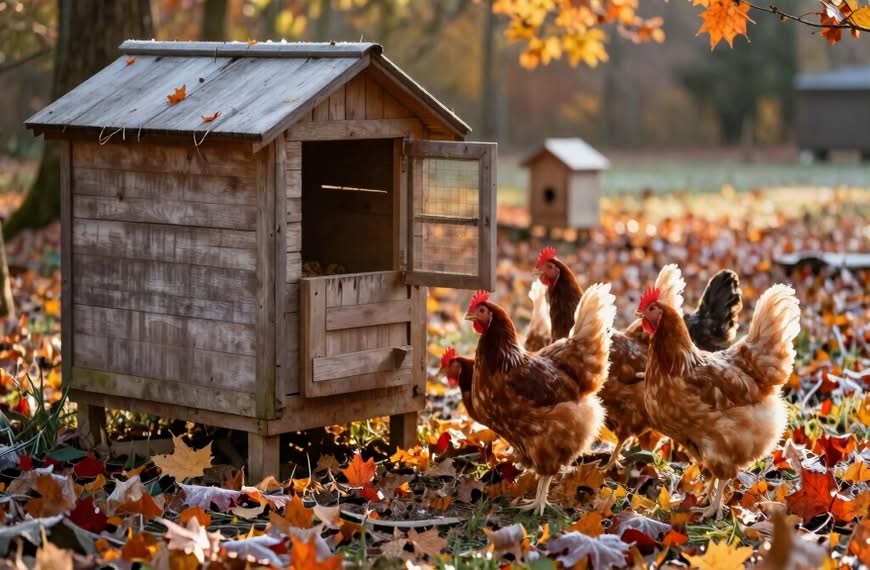
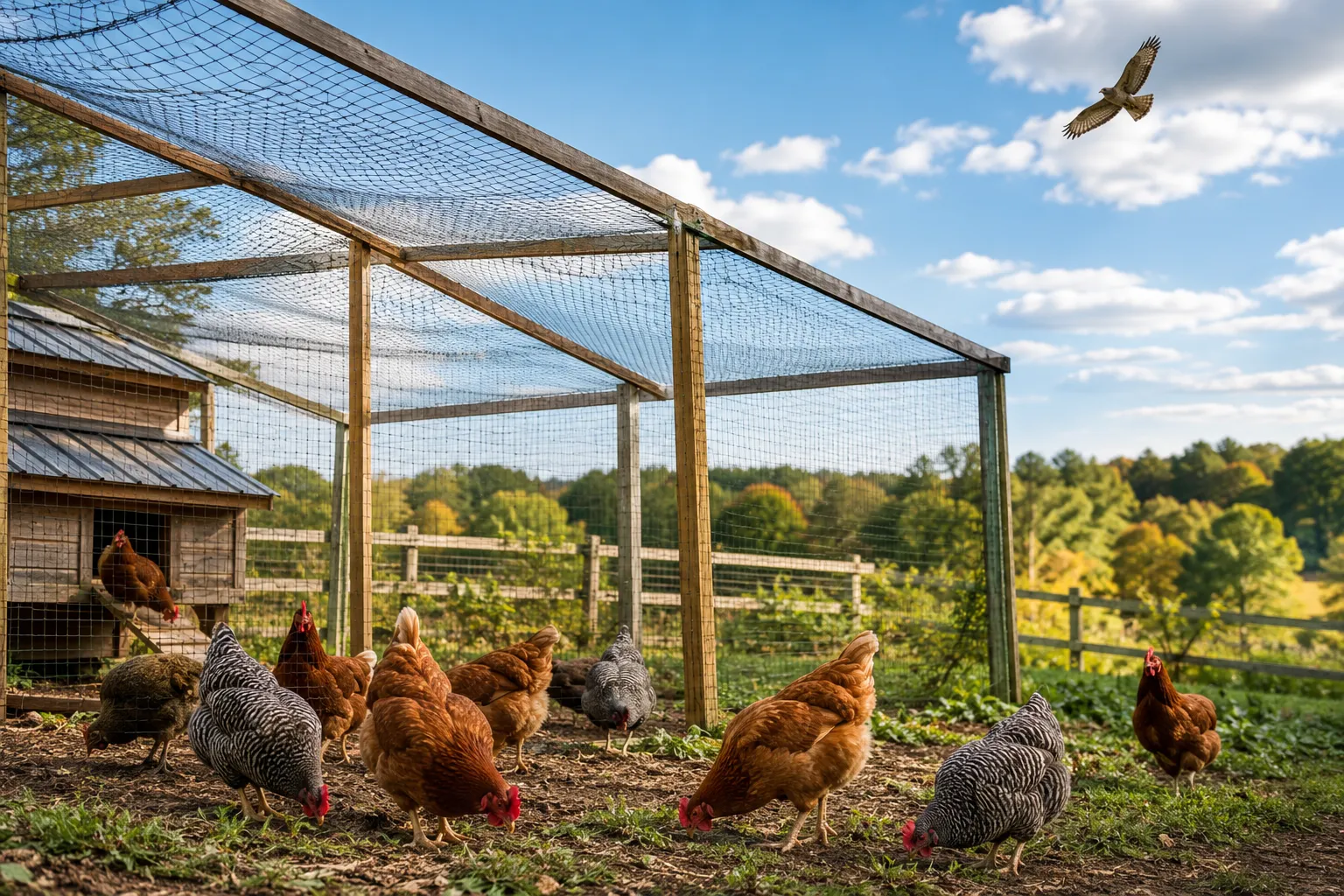
The most effective protection combines overhead physical barriers with visual deterrents and natural cover. A covered run using hardware cloth or welded wire mesh provides 95% protection, while adding reflective tape, roosters, and strategic landscaping creates multiple defense layers that address different hawk hunting behaviors.
Physical barriers that work:
- Hardware cloth (1/2-inch mesh), strongest option, prevents hawks from reaching through
- Welded wire fencing (2×4-inch), affordable for large runs, stops dive attacks
- Poultry netting (heavy-duty), budget option but requires proper tension to avoid sagging
- Polycarbonate panels, provides weather protection plus predator defense
Active deterrents:
- Roosters, alert the flock and physically defend against hawks
- Livestock guardian dogs, patrol the area and chase off aerial predators
- Human presence, hawks avoid areas with regular activity
Visual deterrents:
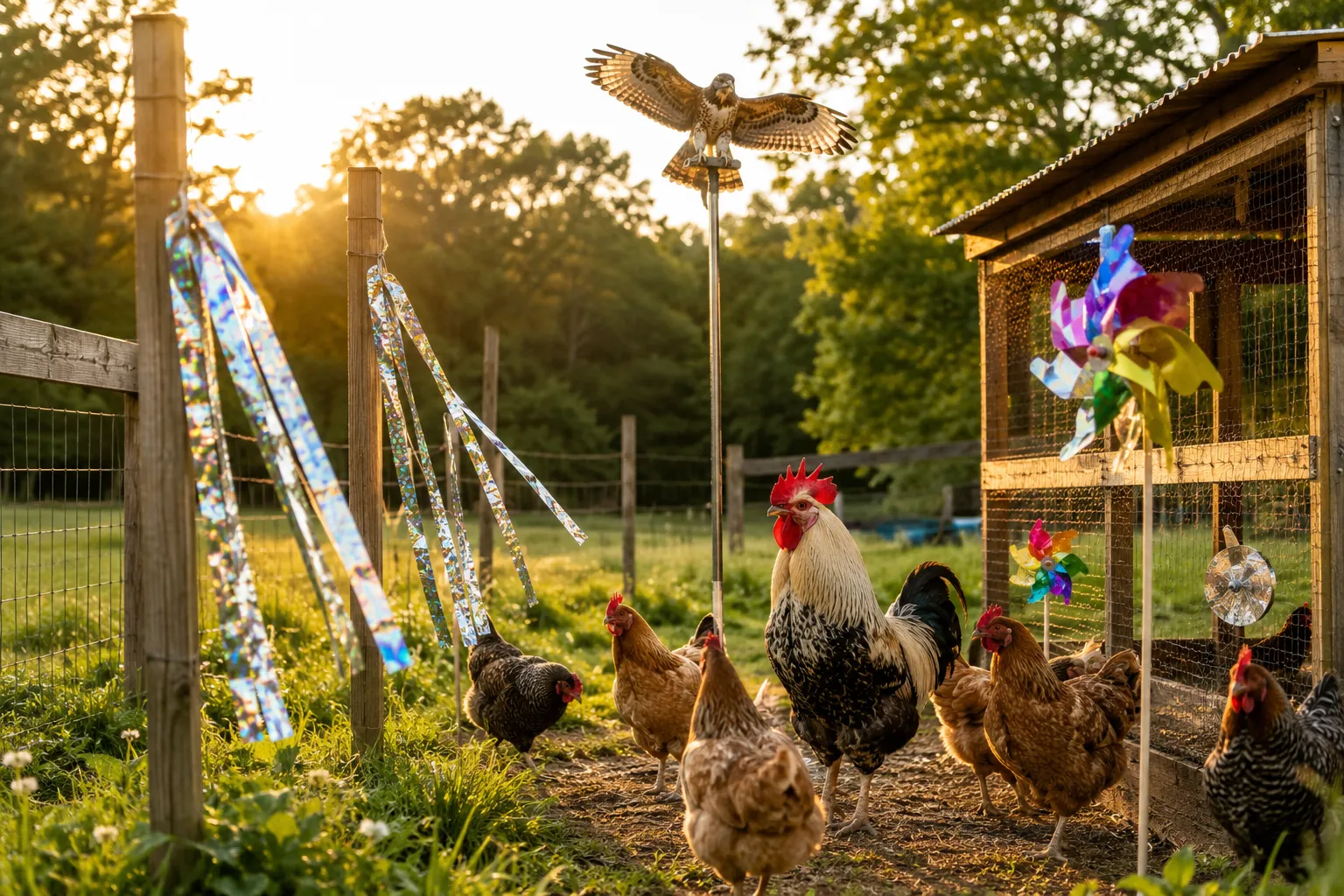
- Reflective holographic tape creating movement and light flashes
- Hanging CDs or aluminum pie pans that spin in wind
- Predator decoys (owls, eagles) rotated every 3-4 days
- Brightly colored pinwheels and flags
Choose covered runs if your chickens stay in a defined area most of the day. Choose layered deterrents if you free-range and need flexible protection across larger spaces.
Do Chicken Runs Need to Be Covered to Keep Hawks Out
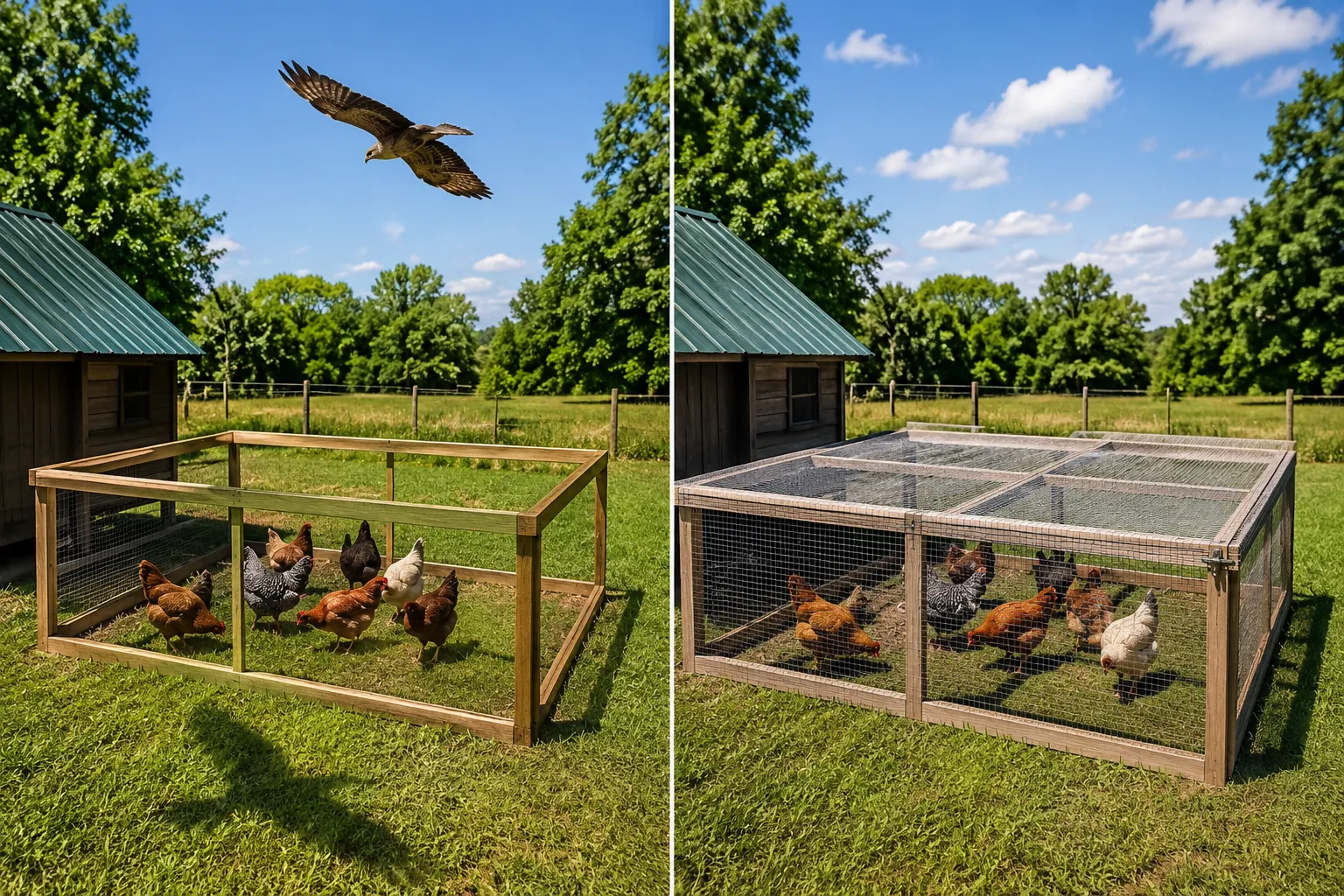
Yes, covering chicken runs is the single most reliable way to stop hawk attacks. Hawks hunt by diving from above at speeds up to 120 mph, and an uncovered run offers no defense against this hunting method. Even a 6-foot fence provides zero protection from aerial predators.
Coverage options ranked by effectiveness:
- Hardware cloth (1/2-inch or 1/4-inch), 95-100% effective, lasts 10+ years, prevents all predators
- Welded wire (2×4-inch), 90-95% effective, more affordable, stops hawks but not smaller predators
- Heavy-duty poultry netting, 70-80% effective if properly tensioned, can sag over time
- Fishing line grid (6-inch spacing), 60-70% effective, budget option that disrupts dive paths
Common mistake: Installing netting with too much slack. Sagging nets become landing platforms where hawks can perch and wait for opportunities. Proper installation requires tension every 4-6 feet with support posts or cables.
When partial covering works: If your run exceeds 1,000 square feet, cover the areas where chickens congregate most (near feeders, coops, dust baths) and leave open sections with dense shrub cover for escape routes.
How Much Does It Cost to Build a Covered Chicken Run
Building a covered chicken run costs between $3-12 per square foot depending on materials and run size. A typical 10×10-foot run (100 square feet) ranges from $300-1,200 for materials, with hardware cloth at the premium end and poultry netting at the budget end.
Material cost breakdown (100 sq ft run):
| Material | Cost per sq ft | 100 sq ft total | Lifespan |
|---|---|---|---|
| Hardware cloth (1/2″) | $8-12 | $800-1,200 | 10-15 years |
| Welded wire (2×4″) | $4-6 | $400-600 | 8-12 years |
| Poultry netting (heavy) | $3-5 | $300-500 | 3-5 years |
| Fishing line grid | $0.50-1 | $50-100 | 1-2 years |
Additional costs to budget:
- Support posts and framing: $100-300
- Fasteners (staples, screws, zip ties): $30-60
- Gate hardware: $40-80
- Tools (if not owned): $50-150
Labor: DIY installation takes 8-16 hours for a 100 sq ft run. Professional installation adds $500-1,500 depending on complexity and location.
Budget tip: Start by covering the most vulnerable 50% of your run (where chickens spend most time) and expand coverage as budget allows.
Rooster vs Guard Dog for Protecting Chickens From Predators
Roosters provide immediate on-the-ground defense and cost nothing beyond regular chicken care, while guard dogs offer broader property protection but require training, daily care, and annual costs of $800-1,500. For hawk protection specifically, roosters are more effective because they stay with the flock and respond instantly to aerial threats.
Rooster advantages:
- Zero additional cost, eats same feed as hens
- Always with the flock, provides 24/7 proximity protection
- Instant alarm system, distinctive warning calls alert hens to danger
- Physical defense, will attack hawks that land near chickens
- No training required, protective instinct is natural
Rooster limitations:
- Can only defend against hawks that land (not diving attacks)
- May become aggressive toward humans
- Illegal in many urban/suburban areas due to noise
- One rooster typically protects 8-12 hens maximum
Guard dog advantages:
- Patrols larger areas, protects entire property, not just immediate flock area
- Deters multiple predators, effective against ground and aerial threats
- Active chasing, will pursue hawks away from property
- Year-round protection, works in all seasons and weather
Guard dog limitations:
- Annual cost: $800-1,500 (food, vet care, training)
- Requires 6-12 months training for livestock guardian work
- Needs secure fencing to prevent roaming
- Some breeds have high prey drive and may threaten chickens initially
Choose a rooster if you have a small flock (under 20 birds), limited budget, and rural property where crowing is allowed. Choose a guard dog if you have acreage, multiple livestock species, and can commit to daily dog care and training.
Will Reflective Tape or Shiny Objects Scare Hawks Away From Chickens
Reflective tape and shiny objects provide 40-60% reduction in hawk approaches when properly installed, but they work best as part of a layered defense rather than standalone solutions. Hawks have exceptional vision and initially avoid areas with unexpected light flashes and movement, but they adapt to stationary deterrents within 1-2 weeks.
What works:
- Holographic bird tape, creates rainbow flashes and crackling sounds in wind
- Spinning objects, CDs, aluminum pie pans, or pinwheels that move constantly
- Multiple installation points, deterrents every 10-15 feet around run perimeter
- Regular repositioning, move deterrents every 5-7 days to prevent habituation
Installation tips for maximum effectiveness:
- Hang tape strips 4-6 feet above ground where they catch sunlight
- Create movement by leaving 12-18 inches of loose tape that twists in breeze
- Install near chicken congregation areas (feeders, water, coop entrance)
- Combine with sound deterrents (wind chimes, bells) for multi-sensory effect
Why effectiveness drops over time: Hawks are intelligent raptors that learn to distinguish real threats from harmless objects. A hawk that observes chickens near reflective tape for several days without consequence will eventually ignore the deterrent.
Common mistake: Installing reflective tape once and leaving it in place permanently. This creates a static visual that hawks quickly recognize as non-threatening.
Best practice: Use reflective deterrents as your second layer of defense behind physical barriers or natural cover, and rotate their positions weekly.
Are Certain Chicken Breeds Better at Avoiding Hawk Attacks
Yes, larger heritage breeds with dark plumage and strong flight ability experience 30-50% fewer successful hawk attacks compared to small bantams and white production breeds. Hawks preferentially target smaller, lighter-colored birds that contrast with ground cover and appear easier to carry.
Most vulnerable breeds:
- Bantams (all varieties), small size makes them easy targets and light enough to carry
- White Leghorns, high visibility against grass and soil
- Silkies, poor flight ability, fluffy plumage reduces speed
- Polish, head crest limits upward vision and predator awareness
More hawk-resistant breeds:
- Jersey Giants, 10-13 lbs, too heavy for most hawks to lift
- Brahmas, large size (9-12 lbs), calm temperament keeps them near cover
- Barred Plymouth Rocks, striped pattern provides camouflage, good awareness
- Rhode Island Reds, dark coloring, alert personality, strong fliers
Behavioral factors that matter:
- Foraging range, breeds that stay closer to coop have more escape options
- Flock cohesion, breeds that stick together benefit from group vigilance
- Flight ability, chickens that can fly 4-6 feet can reach tree branches or coop roofs
- Alertness, nervous breeds often spot hawks sooner than docile breeds
Reality check: Even the most hawk-resistant breed needs proper protection. Breed selection reduces risk but doesn’t eliminate it. A determined hawk will attack any unprotected chicken given opportunity.
Choose larger, darker breeds if you free-range without full overhead cover and want to reduce (not eliminate) hawk predation risk.
What Time of Day Do Hawks Hunt Chickens
Hawks hunt chickens primarily between 10 AM and 4 PM, with peak activity from late morning through early afternoon when thermal air currents make soaring easier and prey animals are most active. Red-tailed hawks and Cooper’s hawks, the two species most likely to target backyard chickens, rarely hunt during dawn, dusk, or nighttime hours.
Hunting pattern by time:
- Dawn (5-7 AM): Minimal hawk activity, hawks are roosting and warming up
- Mid-morning (9-11 AM): Activity increases as thermals develop, hawks begin hunting circuits
- Midday (11 AM-2 PM): Peak hunting time, maximum soaring efficiency
- Afternoon (2-4 PM): Continued high activity, hawks make final hunting passes
- Evening (4-6 PM): Activity drops sharply, hawks return to roosts
- Night: Zero activity, hawks have poor night vision
Seasonal variations:
- Spring (March-May): Extended hunting hours due to nesting hawks feeding chicks
- Summer (June-August): Peak activity shifts earlier (9 AM-1 PM) to avoid heat
- Fall (September-November): Consistent midday hunting as juvenile hawks learn to hunt
- Winter (December-February): Shorter hunting window (10 AM-3 PM), more aggressive due to food scarcity
Practical application: If you free-range your chickens, confine them to covered runs during the 10 AM-4 PM window and allow supervised free-ranging during early morning and late afternoon when hawk risk drops by 70-80%.
Exception: During winter food shortages, hawks may hunt outside normal hours and take greater risks approaching humans and structures.
Can I Shoot a Hawk If It Attacks My Chickens Legally
No, shooting a hawk is illegal under federal law regardless of whether it’s attacking your chickens. All hawk species are protected by the Migratory Bird Treaty Act, which carries penalties of up to $15,000 in fines and six months imprisonment for killing a raptor without a federal permit.
Legal framework:
- Migratory Bird Treaty Act (1918), protects all raptors including hawks, eagles, owls, and falcons
- No self-defense exception, protecting livestock does not create legal justification
- State laws cannot override, even in agricultural states, federal law takes precedence
- Permit requirements, only issued in extreme circumstances with documented proof of significant economic loss
What you CAN legally do:
- Harassment techniques, loud noises, water spray, throwing objects near (not at) the hawk
- Passive deterrents, any non-lethal method including netting, decoys, reflective tape
- Protective structures, covered runs, enclosed coops, fencing
- Guard animals, dogs, roosters, or other livestock that chase hawks
If a hawk kills your chicken:
- Document the incident with photos and written records
- Report to USDA Wildlife Services if losses become significant
- Request a site assessment for non-lethal control recommendations
- In rare cases of repeated, documented losses, Wildlife Services may issue a depredation permit
Reality check: Even with a depredation permit, the permit holder must be a federal agent or specifically authorized individual, not the property owner. The permitting process takes weeks to months and requires extensive documentation.
Common misconception: “Shoot, shovel, and shut up” is still illegal and risks federal prosecution if discovered. Wildlife officers investigate raptor deaths, and veterinary forensics can identify gunshot wounds months later.
Why Do My Chickens Keep Getting Attacked Even With Netting Up
Chickens continue getting attacked through netting because of four common installation failures: excessive sagging that creates landing platforms, gaps larger than 4 inches where hawks squeeze through, netting installed too low (under 6 feet) allowing ground-level access, or lightweight netting that hawks tear with talons.
Installation problems and fixes:
Problem 1: Sagging netting
- Hawks land on slack netting and walk across it to reach chickens below
- Fix: Install support cables or posts every 6-8 feet, tension netting to 30-40 lbs pull force
Problem 2: Gap exploitation
- Hawks find and use any opening larger than their body width (4-5 inches)
- Fix: Inspect perimeter weekly, secure netting to posts with staples every 6 inches, overlap sections by 12 inches
Problem 3: Ground-level attacks
- Netting that doesn’t extend to ground or fence line leaves entry points
- Fix: Secure netting bottom to fence or ground with landscape staples every 12 inches
Problem 4: Material failure
- Lightweight netting (under 30 lb test) tears when hawks land or strike
- Fix: Upgrade to heavy-duty poultry netting (50+ lb test) or switch to welded wire
Problem 5: Side access
- Overhead netting without side protection allows hawks to land on fence and reach through
- Fix: Extend netting down fence sides at least 18 inches or install hardware cloth on upper fence sections
Diagnostic test: Inspect your netting installation at midday when sunlight reveals gaps and sagging. Any section where you can push the netting down more than 6 inches with hand pressure is vulnerable.
When to upgrade: If you’ve fixed installation issues and attacks continue, the netting material itself is inadequate. Switch to welded wire (2×4-inch) or hardware cloth for permanent solution.
Do Fake Owls Really Keep Hawks Away From Chicken Coops
Fake owls provide 3-5 days of deterrent effect when first installed, but hawks quickly recognize stationary decoys as non-threatening and ignore them within a week. Effectiveness increases to 2-3 weeks if you move the decoy to a new location every 3-4 days and choose models with reflective eyes or motion-activated features.
Why initial effectiveness drops:
- Hawks observe the decoy from multiple angles and distances over several days
- Lack of movement signals the “owl” is not a living predator
- Hawks notice chickens feeding normally near the decoy without fear
- Wind and weather cause visible wear that further reduces realism
Features that extend effectiveness:
- Rotating head mechanisms, battery or solar-powered movement
- Reflective or holographic eyes, creates illusion of tracking movement
- Large size, 16-18 inch decoys representing great horned owls (hawk predators)
- Realistic paint and texture, cheap plastic owls fail faster than detailed resin models
Best practices for decoy use:
- Start with 2-3 decoys rotated through 6-8 positions around your property
- Move each decoy every 3-4 days to new location
- Combine with other deterrents (reflective tape, noise makers) for layered effect
- Remove decoys for 2-3 weeks every month to prevent complete habituation
- Position decoys on elevated perches (fence posts, roof edges) where real owls would sit
Alternative decoys:
- Hawk silhouettes, flat cutouts hung from lines, create flying predator illusion
- Predator balloons, large eye-pattern balloons that move in wind
- Scarecrows, human figures with moving elements (flags, spinners)
Reality check: No decoy provides long-term protection alone. Use decoys as part of a comprehensive strategy that includes physical barriers and active deterrents.
How to Protect Free Range Chickens From Hawks Without a Roof
Protecting free-range chickens without overhead covering requires creating a landscape with dense natural cover, multiple escape routes, and visual deterrents that make hunting difficult and risky for hawks. The goal is to eliminate the open-ground hunting advantage hawks rely on.
Landscape modifications that work:
Natural cover (most important):
- Shrub clusters, plant 4-6 foot tall shrubs in groups of 3-5 every 20-30 feet
- Low-branching trees, chickens can quickly run underneath for protection
- Brush piles, stack branches 3-4 feet high, creates instant hiding spots
- Tall ornamental grasses, 3-4 foot grasses provide visual barriers
Structural cover:
- A-frame shelters, simple plywood or metal panels propped at 45-degree angles
- Pallet structures, stacked pallets create covered spaces chickens can access
- Lean-to shelters, 4×8 foot covered areas placed throughout range
- Parked equipment, tractors, trailers, or large implements provide overhead protection
Strategic placement:
- Position cover every 15-20 feet so chickens are never more than 10 feet from safety
- Create “escape corridors” leading from open areas to dense cover
- Place cover near favorite foraging spots (compost areas, garden edges)
Active management:
- Supervised ranging, allow free-ranging only when someone is outside working
- Rooster patrol, one rooster per 8-10 hens provides mobile alarm system
- Time restrictions, confine chickens during peak hawk hours (10 AM-4 PM)
- Flock size, larger flocks (15+ birds) benefit from group vigilance
Visual deterrents for open areas:
- Reflective tape strung between posts at 6-8 foot height
- Colorful flags or windsocks that move constantly
- Hanging CDs or reflective pinwheels every 15-20 feet
Choose free-range with cover if you have acreage to landscape, time for supervision, and want to balance chicken welfare with predator risk. Accept that free-ranging always carries higher predation risk than covered runs.
What to Do If a Hawk Is Circling My Chicken Coop
When a hawk circles your coop, immediately move your chickens into a covered run or enclosed coop, then use active harassment techniques to make the area unattractive for hunting. A circling hawk is actively hunting and will strike within minutes if chickens remain exposed.
Immediate actions (first 5 minutes):
- Herd chickens to safety, use a long stick or broom to guide them toward covered areas
- Create loud noise, bang pots, use air horn, shout continuously
- Use water deterrent, spray hose toward (not at) the hawk to disrupt hunting focus
- Wave bright objects, flags, tarps, or reflective materials to create visual chaos
- Stay outside, your presence alone reduces strike probability by 60-70%
Short-term response (same day):
- Keep chickens confined for 2-3 hours after hawk leaves
- Install temporary deterrents (reflective tape, balloons) in areas where hawk was circling
- Check for gaps in existing netting or fencing that attracted hawk attention
- Document the incident (time, hawk species if identifiable, behavior)
Long-term prevention:
- Identify the hunting pattern, hawks often return to successful hunting grounds daily
- Modify the schedule, if hawk appears at same time daily, adjust free-range hours
- Increase cover, add shrubs or structures in areas where hawk was focusing
- Install permanent deterrents, overhead lines, netting, or wire grid
Understanding hawk behavior:
- Circling means active hunting, hawk has identified prey and is planning approach
- Height matters, low circling (under 100 feet) indicates imminent strike
- Return visits, hawks remember productive hunting locations and return daily
- Persistence, a hawk that’s successfully hunted your property will return for weeks
When to call for help:
- Contact USDA Wildlife Services if the same hawk returns daily for more than a week
- Request a site assessment for professional deterrent recommendations
- Document repeated visits with photos and written log for potential depredation permit
Don’t: Throw objects at the hawk, use firearms, or attempt to trap it. All these actions are illegal and ineffective.
Are Hawks More Dangerous to Chickens Than Other Predators
Hawks rank as the third most dangerous predator for backyard chickens after raccoons and foxes, accounting for 15-20% of predation losses in areas with established hawk populations. However, hawks are the most dangerous daytime predator and the only common aerial threat that can strike chickens in otherwise secure yards.
Predator danger ranking (by frequency of attacks):
- Raccoons (30-35% of losses), intelligent, strong, attack at night, kill multiple birds
- Foxes (20-25% of losses), hunt dawn/dusk, dig under fences, take entire birds
- Hawks (15-20% of losses), daytime attacks, target exposed birds, usually take one bird
- Dogs (10-15% of losses), domestic and feral, kill multiple birds without eating them
- Opossums (8-10% of losses), nighttime, slower, typically kill one bird at a time
- Weasels/mink (5-8% of losses), small entry points, kill multiple birds, drink blood
Why hawks are uniquely challenging:
- Aerial approach, bypass ground-level fencing and barriers
- Daytime hunting, attack when chickens are active and visible
- Speed advantage, dive attacks at 60-120 mph give chickens no escape time
- Precision strikes, target individual birds with high success rate
- Legal protection, cannot be trapped, relocated, or killed like other predators
Geographic variation:
- Rural areas, hawks, foxes, and coyotes dominate
- Suburban areas, hawks, raccoons, and domestic dogs most common
- Urban areas, hawks and rats primary threats
Seasonal patterns:
- Spring, hawk attacks increase 40-50% due to nesting hawks feeding chicks
- Summer, raccoon and opossum activity peaks
- Fall, juvenile hawks learning to hunt create second spike in attacks
- Winter, all predator pressure increases due to food scarcity
Protection priority: Secure your coop and run against nighttime predators (raccoons, foxes) first, then address daytime hawk threats. A chicken that survives the night but gets taken by a hawk at noon is still a loss, but statistically, nighttime predators kill more birds annually.
Comprehensive protection requires: Predator-proof coop (hardware cloth, secure latches), covered run for daytime, and supervised free-ranging if you allow it.
FAQ
How high can hawks see chickens from?
Hawks can spot chickens from 1,000-3,000 feet altitude using vision that’s 4-8 times sharper than human eyesight. Red-tailed hawks typically hunt from 200-500 feet where they can identify individual birds and plan dive attacks.
Will a rooster fight off a hawk?
Yes, roosters will attack hawks that land near the flock, using spurs and wings to drive them away. However, roosters cannot defend against diving hawks and are most effective after a hawk has landed or missed its initial strike.
What size chicken is too big for a hawk to carry?
Most hawks cannot carry chickens heavier than 4-5 pounds, though they will kill larger birds and eat them on the ground. Red-tailed hawks, the largest common species, can lift up to 5 pounds but prefer prey under 3 pounds.
Do chicken hawks hunt in pairs?
No, hawks are solitary hunters except during breeding season when mated pairs may hunt the same territory separately. If you see two hawks, they’re likely defending territory boundaries rather than coordinating attacks.
Can hawks attack through chicken wire?
Yes, hawks can reach through standard chicken wire (1-inch hexagonal mesh) with their talons to grab chickens. Hardware cloth with 1/2-inch or smaller mesh is required to prevent this type of attack.
How do I know if a hawk killed my chicken?
Hawk kills show precise talon punctures in the back and breast, with the bird often partially eaten starting at the breast. Hawks typically pluck feathers before eating, leaving a circular pattern of feathers at the kill site.
Will guinea fowl protect chickens from hawks?
Guinea fowl provide excellent alarm systems with loud calls when hawks appear, but they cannot physically defend chickens from hawk attacks. Their primary value is early warning that gives chickens time to seek cover.
Do wind chimes keep hawks away?
Wind chimes provide minimal deterrent effect, reducing hawk approaches by only 10-15%. Hawks quickly habituate to constant sounds and focus on visual cues when hunting. Chimes work best combined with visual deterrents.
Can I get a permit to remove a problem hawk?
Depredation permits are rarely issued to private citizens and require extensive documentation of significant economic loss (typically 10+ birds over 30 days). USDA Wildlife Services handles permit applications and enforcement.
What’s the best time to let chickens free range to avoid hawks?
Early morning (6-9 AM) and late afternoon (4-7 PM) offer the lowest hawk activity, with 70-80% less risk than midday hours. Winter months require even more restricted timing due to compressed hawk hunting windows.
Do scarecrows work to keep hawks away from chickens?
Traditional scarecrows provide 3-7 days of deterrent effect before hawks recognize them as non-threatening. Adding moving elements (spinning arms, reflective tape, flags) extends effectiveness to 2-3 weeks if repositioned regularly.
Will a hawk return after killing one of my chickens?
Yes, hawks return to successful hunting sites daily or every few days until the food source is eliminated or becomes too difficult to access. Expect return visits for 2-4 weeks after a successful kill.
Conclusion
Protecting chickens from hawks in 2026 requires a multi-layered approach that combines physical barriers, visual deterrents, and smart flock management. Covered runs with hardware cloth or welded wire provide the most reliable protection, stopping 95% of attacks, while free-range setups need dense natural cover, strategic landscaping, and active supervision during peak hawk hunting hours between 10 AM and 4 PM.
Start by assessing your current setup and identifying the biggest vulnerabilities. If you’re experiencing active hawk pressure, prioritize immediate solutions: cover your run with appropriate netting or wire, add a rooster to your flock for alarm and defense, and install reflective tape or moving deterrents around your chicken area. For long-term success, invest in permanent covered structures and landscape modifications that create multiple escape routes and hiding spots.
Remember that no single method provides complete protection. The most successful chicken keepers combine overhead barriers with visual deterrents, guard animals, and modified free-range schedules that avoid peak hawk activity. Document any repeated hawk visits and adjust your strategy based on observed patterns. With consistent effort and the right combination of deterrents, you can reduce hawk predation by 80-90% while still providing your flock with a quality outdoor experience.
Take action today by evaluating your current protection level and implementing at least two new deterrent methods this week. Your chickens depend on you for their safety, and the investment in proper hawk protection pays for itself by preventing losses and reducing stress for both you and your flock.