Quick Answer
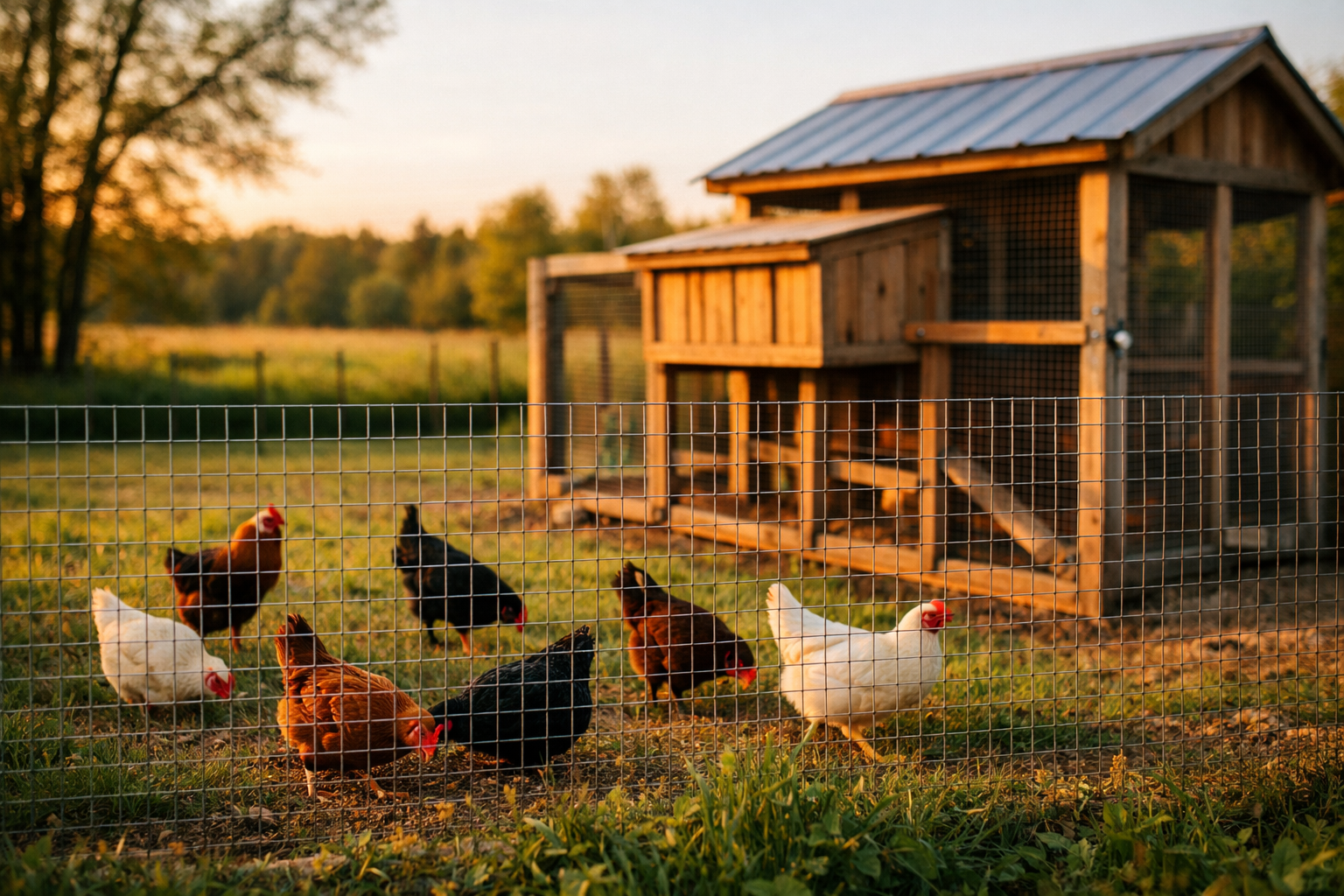
Protecting chickens from foxes and coyotes requires a multi-layered approach combining secure fencing (at least 6 feet tall with buried aprons), hardware cloth instead of chicken wire, automatic coop doors that close at dusk, and optional guardian animals or motion-activated deterrents. Foxes and coyotes are persistent, intelligent predators that hunt primarily at dawn and dusk, so physical barriers must be reinforced at ground level where predators dig, and overhead where they can climb. Most backyard chicken losses occur because of gaps in fencing, weak latches, or allowing birds to free-range without supervision during high-risk hours.
Key Takeaways
- Hardware cloth (1/2-inch or 1/4-inch mesh) is essential, chicken wire stops chickens but not determined predators
- Bury fencing 12-18 inches deep or use an apron extending 2 feet outward to prevent digging
- Minimum fence height of 6 feet for coyotes; foxes can scale 6-foot barriers but are deterred by angled tops
- Automatic coop doors that close at dusk eliminate the risk of forgetting to lock up birds
- Foxes hunt primarily at dawn and dusk; coyotes are more opportunistic and will attack during daylight
- Roosters provide alarm calls but cannot physically defend hens against foxes or coyotes
- Guardian dogs (Great Pyrenees, Anatolian Shepherds) are more effective than llamas for active predator deterrence
- Electric fencing adds a psychological barrier when combined with physical fencing
- Motion-activated lights and sounds have limited long-term effectiveness as predators habituate quickly
- Free-range chickens need supervised ranging hours or mobile electric netting to reduce predation risk
What Are the Signs That a Fox or Coyote Killed My Chickens
Missing birds with no trace, scattered feathers near fence lines, and bite marks on the neck or head indicate fox or coyote attacks. Foxes typically take one bird per visit and often cache (bury) the body for later, while coyotes may kill multiple birds in a single attack and consume them on-site or drag them away.
Key identification markers:
- Fox kills: Clean bite to the back of the head or neck, bird often missing entirely, small paw prints (2 inches wide), attack usually at dawn or dusk, single bird taken
- Coyote kills: Multiple birds killed, bodies partially eaten or scattered, larger paw prints (2.5-3 inches), scat containing feathers nearby, attacks any time but often early morning
- Entry points: Holes dug under fencing, bent or torn wire, tracks leading to and from the coop
If you find a pile of feathers with the body intact but uneaten, the predator was likely scared off mid-attack. Foxes are more cautious and will abandon a kill if they sense danger, while coyotes are bolder and may return within hours.
Best Fencing Height to Keep Coyotes Out of Chicken Coop
A minimum fence height of 6 feet is necessary to deter coyotes, though determined animals can clear this barrier. For maximum protection, extend the fence to 7-8 feet or add a 2-foot angled extension at the top leaning outward at 45 degrees, which prevents climbing.
Fencing specifications:
- Standard protection: 6-foot welded wire or chain link with no gaps larger than 2 inches
- Enhanced protection: 7-8 feet tall with outward-angled top extension
- Material: Welded wire, chain link, or livestock panels (avoid chicken wire for perimeter)
- Buried barrier: 12-18 inches deep or a 2-foot horizontal apron at ground level
Coyotes are athletic jumpers and can scale vertical fences by using momentum and their hind legs to push upward. The angled top extension disrupts their ability to gain purchase and flip over. If you live in an area with high coyote pressure, consider adding a single strand of electric wire 6 inches above the top of the fence as an additional psychological deterrent.
Do Electric Fences Work for Protecting Chickens From Predators
Electric fencing is highly effective when used as part of a layered defense system, delivering a memorable shock that trains predators to avoid the area. A properly installed electric fence with at least 5,000 volts will deter both foxes and coyotes, but it must be maintained and tested regularly to remain effective.
Installation best practices:
- Voltage: Minimum 5,000 volts (use a low-impedance energizer rated for predator control)
- Wire placement: Multiple strands at 6 inches, 12 inches, and 18 inches from the ground, with an optional top wire at nose height (4-5 feet)
- Grounding: Proper grounding system with at least three 6-foot ground rods in moist soil
- Vegetation management: Keep grass and weeds trimmed to prevent grounding out the fence
- Testing: Check voltage weekly with a fence tester
Electric netting (portable mesh fencing with built-in electrified strands) works well for rotational grazing or temporary protection. Choose netting at least 42 inches tall for chickens and 48 inches for areas with high predator pressure.
Common mistake: Installing electric fence as the only barrier. Chickens can fly over or slip through electric netting, and a power failure leaves them completely unprotected. Always combine electric fencing with physical barriers.
Hardware Cloth vs Chicken Wire: Which Is Better for Foxes
Hardware cloth with 1/2-inch or 1/4-inch mesh is the only reliable choice for predator protection, as foxes and coyotes can tear through standard chicken wire within minutes. Chicken wire (1-inch hexagonal mesh) is designed to contain chickens, not to keep predators out.
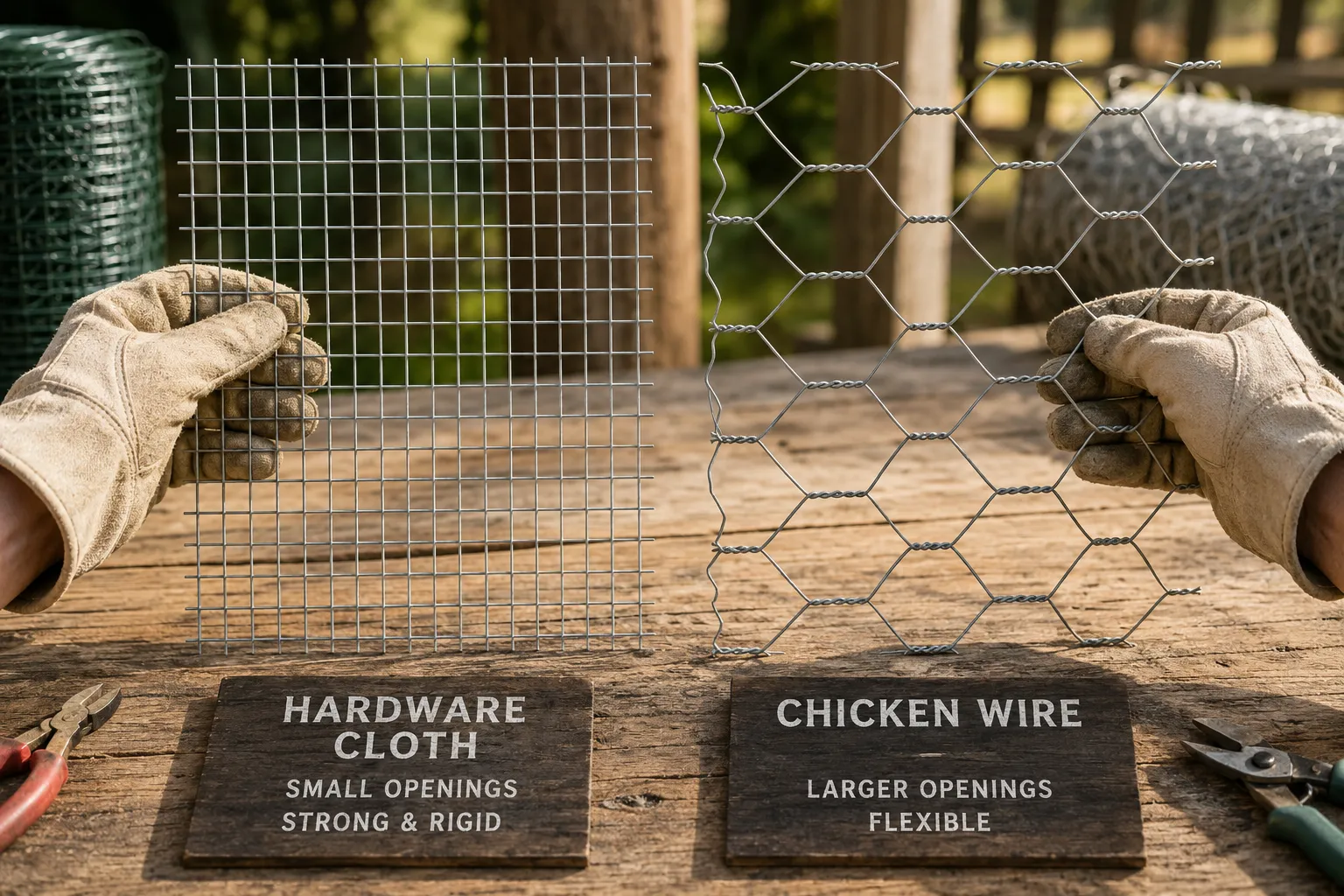
| Feature | Hardware Cloth | Chicken Wire |
|---|---|---|
| Mesh size | 1/4″ or 1/2″ square | 1″ hexagonal |
| Wire gauge | 19-23 gauge (thicker, stronger) | 20-22 gauge (thinner, weaker) |
| Predator resistance | Resists biting, tearing, clawing | Easily torn by foxes and coyotes |
| Cost per roll | $80-$150 (25-foot roll) | $30-$50 (25-foot roll) |
| Best use | Coop walls, run flooring, windows, vents | Temporary garden fencing only |
Use hardware cloth for all vulnerable areas: coop windows, ventilation openings, run walls, and the first 3 feet of any perimeter fence. For runs, consider burying hardware cloth 12 inches deep or laying it flat on the ground as an apron to prevent digging.
Choose 1/2-inch mesh if you also need protection from weasels, mink, or snakes. Choose 1/4-inch mesh for maximum security but expect higher material costs and more difficult installation due to the rigidity of the smaller mesh.
How Much Does a Predator-Proof Chicken Coop Cost
Building or upgrading to a predator-proof chicken coop typically costs between $800 and $3,000, depending on flock size, materials, and whether you build or buy. A basic 4×8-foot coop with a secure 8×10-foot run for 6-8 chickens costs approximately $1,200-$1,800 when using quality materials.
Cost breakdown for a DIY predator-proof setup:
- Hardware cloth (100 square feet): $200-$350
- Lumber and framing: $300-$600
- Roofing materials: $100-$200
- Automatic coop door: $150-$300
- Secure latches and hardware: $50-$100
- Concrete or pavers (for foundation): $100-$200
- Paint or weatherproofing: $50-$100
Pre-built predator-resistant coops range from $1,500 for small models to $5,000+ for walk-in designs with attached runs. Verify that any pre-built coop uses hardware cloth (not chicken wire) and has secure latching mechanisms before purchasing.
Budget-saving tip: Prioritize hardware cloth for the coop itself and the first 3 feet of the run, then use welded wire fencing for upper sections where predators are less likely to apply sustained pressure.
Will a Rooster Protect Hens From Foxes and Coyotes
Roosters cannot physically defend hens against foxes or coyotes but provide valuable early warning through alarm calls that alert hens to take cover. A rooster’s primary defense mechanism is vigilance and vocal warnings, not combat capability.
What roosters can and cannot do:
Roosters will:
- Sound alarm calls when they spot predators
- Position themselves between perceived threats and hens
- Encourage hens to seek shelter or freeze in place
- Maintain watch while hens forage
Roosters cannot:
- Fight off a fox or coyote (they weigh 6-10 pounds vs. 15-40+ pounds for predators)
- Prevent attacks on free-ranging flocks
- Protect the coop at night when birds are roosting
A rooster may buy hens a few extra seconds to escape or hide, which can make the difference between life and death if the attack happens during daylight hours when birds are alert. However, relying on a rooster as your primary defense is inadequate. Physical barriers, secure housing, and supervised ranging are essential regardless of whether you keep a rooster.
Do Motion-Activated Lights Scare Away Coyotes From Chickens
Motion-activated lights provide short-term deterrence but lose effectiveness within days to weeks as coyotes and foxes habituate to the stimulus. These devices work best as part of a multi-layered approach rather than as standalone protection.
Effectiveness factors:
- Initial impact: High, predators are startled and may avoid the area for several nights
- Long-term impact: Low to moderate, predators learn that lights pose no actual threat
- Best use case: Supplementing physical barriers and alerting you to nighttime activity
- Placement: Mount 8-10 feet high, angled toward approach paths and fence lines
Improving effectiveness:
- Combine lights with sound deterrents (radios, ultrasonic devices) that activate simultaneously
- Rotate deterrent types every 2-3 weeks to prevent habituation
- Use red or amber lights instead of white (less disruptive to chickens’ sleep)
- Pair with trail cameras to monitor whether predators are testing your defenses
Reality check: Urban and suburban coyotes are already accustomed to streetlights, porch lights, and vehicle headlights. Motion-activated lights may briefly startle a young or inexperienced predator but will not deter a hungry adult with a established hunting pattern.
Can Foxes Dig Under Chicken Coop Fencing
Foxes are excellent diggers and will tunnel under fencing within 20-30 minutes if no buried barrier exists. They typically dig at corners and along fence lines where the soil is softer or where they’ve detected chicken scent.
Preventing digging:
- Buried apron method (easiest): Lay hardware cloth or welded wire flat on the ground extending 24 inches outward from the fence base, then cover with 2-3 inches of soil or mulch
- Buried vertical barrier (most secure): Dig a trench 12-18 inches deep along the fence line and bury hardware cloth or welded wire vertically
- Concrete or paver perimeter: Pour a 6-inch concrete footer or lay pavers along the fence base
- L-footer method: Bend hardware cloth into an L-shape with 12 inches buried vertically and 12 inches extending horizontally underground
Signs of digging attempts: Fresh dirt piles near the fence, shallow depressions along the perimeter, or exposed roots where predators have started excavating. Check your perimeter weekly and fill any holes immediately with rocks or concrete to discourage further attempts.
Foxes prefer digging to climbing, so ground-level security is more critical than fence height when dealing specifically with fox pressure. Coyotes will both dig and jump, requiring protection at both levels.
What Time of Day Do Foxes and Coyotes Hunt Chickens
Foxes hunt primarily during crepuscular hours (dawn and dusk), while coyotes are more opportunistic and will attack chickens during daylight, especially in areas where they’ve become habituated to human activity. Both predators are most active when chickens are transitioning between the coop and outdoor areas.
Hunting patterns:
Foxes:
- Peak activity: 30 minutes before sunrise and after sunset
- Secondary activity: Overnight hours (midnight to 3 AM)
- Behavior: Cautious, prefer low-light conditions, avoid human presence
- Strategy: Stalk and ambush, often return to the same location multiple nights
Coyotes:
- Peak activity: Dawn (5-8 AM) and dusk (6-9 PM)
- Secondary activity: Midday in suburban areas with low human traffic
- Behavior: Bold, increasingly comfortable hunting during daylight
- Strategy: Opportunistic, may hunt in pairs or small groups
High-risk periods for your flock:
- Morning release from coop (6-8 AM)
- Evening return to coop (6-8 PM)
- Overnight if coop is not secured
- Midday free-ranging in areas with habituated coyote populations
Protection strategy: Use automatic coop doors that open 30 minutes after sunrise and close at dusk. If you free-range your flock, supervise morning and evening hours or keep birds confined during these peak predation windows.
Are Guardian Dogs or Llamas Better for Protecting Chickens
Guardian dogs are significantly more effective than llamas for active predator deterrence, particularly against coyotes and foxes. Livestock guardian dogs (LGDs) are bred specifically to patrol, confront, and chase off predators, while llamas provide passive deterrence through their size and territorial behavior.
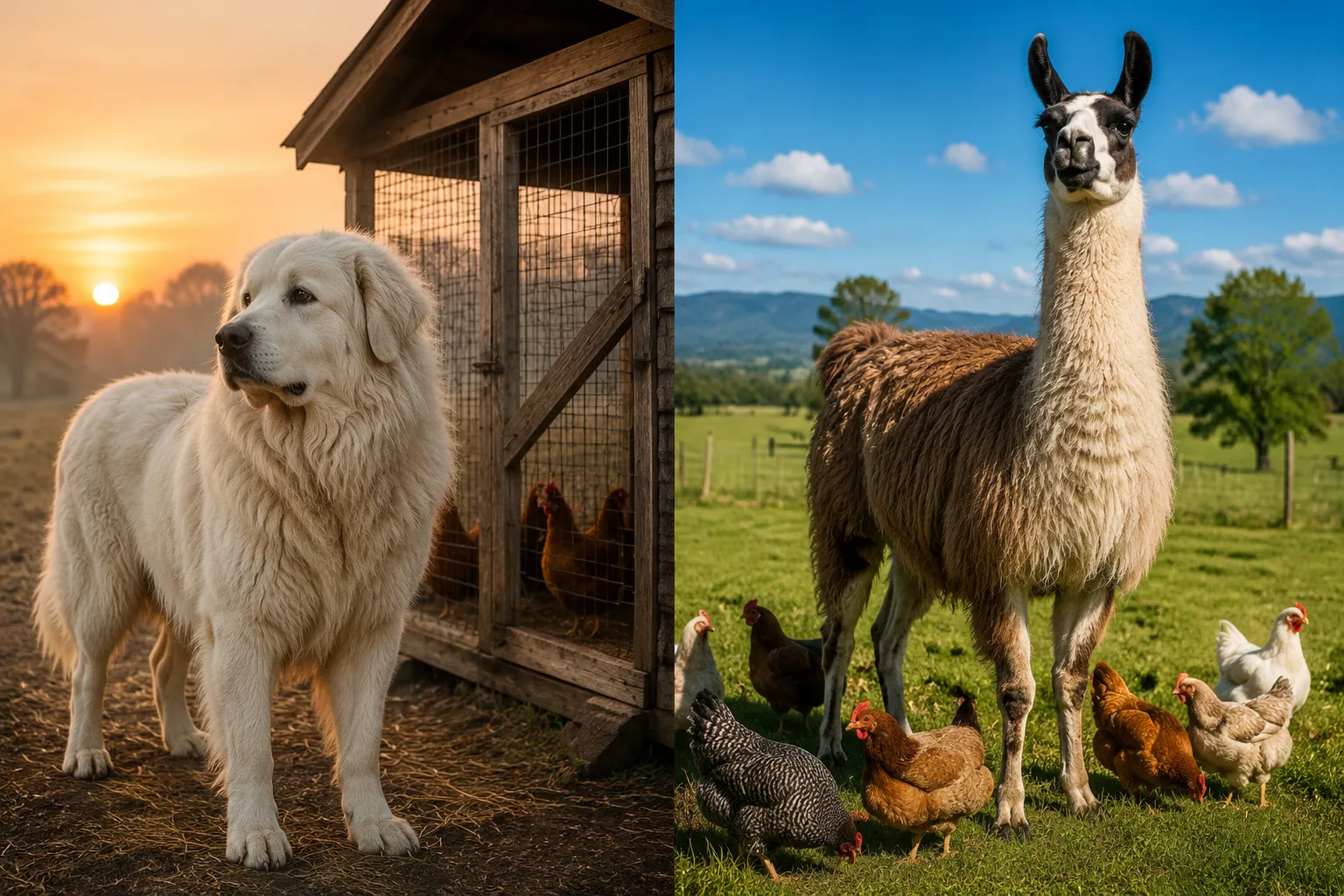
Livestock Guardian Dogs:
Best breeds: Great Pyrenees, Anatolian Shepherd, Maremma, Akbash
Advantages:
- Actively patrol and mark territory
- Will confront and chase predators
- Work at night when predation risk is highest
- Bond with chickens and view them as their flock
- Effective against multiple predator types
Considerations:
- Require training and socialization (6-12 months)
- Need secure fencing to prevent roaming
- May accidentally injure chickens during play (especially as puppies)
- Food and veterinary costs ($800-$1,500 annually)
Guardian Llamas:
Advantages:
- Low maintenance compared to dogs
- Naturally territorial and alert
- Will alarm call and chase smaller predators
- Graze alongside chickens
Limitations:
- Less effective against determined coyotes or packs
- Will not patrol at night
- May not bond with chickens as strongly as dogs
- Can be aggressive toward dogs (including your own pets)
Choose a guardian dog if: You have persistent coyote or fox pressure, acreage to patrol, and can commit to training and daily care.
Choose a llama if: You have a large pasture, moderate predator pressure, and want a low-maintenance option that also provides fiber or companionship for other livestock.
Neither option works well for small urban coops where space is limited. In those situations, focus on physical barriers and secure housing instead.
Common Mistakes When Building a Predator-Proof Chicken Run
The most common mistakes include using chicken wire instead of hardware cloth, failing to secure the roof, and neglecting to bury or extend fencing at ground level. These oversights create easy entry points that foxes and coyotes will exploit within days of discovering your flock.
Critical errors to avoid:
- Chicken wire for walls: Predators tear through it easily; use hardware cloth or welded wire
- No roof or netting: Hawks, owls, and climbing predators enter from above; cover runs completely
- Gaps at ground level: Bury fencing 12-18 inches or use an apron; predators dig under within minutes
- Weak latches: Use carabiner clips or padlocks; raccoons and foxes can open simple hook-and-eye latches
- Gaps around doors: Leave no space larger than 1/2 inch; predators squeeze through surprisingly small openings
- Rotting wood at ground level: Elevate posts on concrete blocks or use pressure-treated lumber rated for ground contact
- Windows without hardware cloth: Cover all openings, including ventilation gaps
- Assuming small gaps are safe: If you can fit two fingers through an opening, a weasel can fit its entire body
Testing your run: Walk the perimeter at dusk and look for any gaps where light shows through. Tug on all fencing to check for loose sections. Try to lift or push fence panels to identify weak attachment points. If you can find a way in, so can a predator.
Maintenance schedule: Inspect fencing monthly for rust, holes, or damage. Check latches weekly. Trim vegetation that could provide cover for stalking predators or allow them to jump onto the roof.
Will Coyotes Attack Chickens During the Day
Yes, coyotes increasingly attack chickens during daylight hours, especially in suburban and urban areas where they’ve become habituated to human activity. Unlike foxes, which are primarily nocturnal and crepuscular, coyotes are adaptable and will hunt whenever opportunity presents itself.
Factors increasing daytime attacks:
- Habituation: Coyotes in populated areas lose fear of humans and adjust hunting schedules
- Food scarcity: During drought, winter, or when natural prey is scarce, coyotes become more bold
- Denning season (April-June): Parents with pups need more food and take greater risks
- Easy targets: Free-ranging chickens without supervision are low-risk, high-reward prey
Regional patterns: Daytime coyote attacks are most common in California, Arizona, Texas, and suburban areas throughout the western United States. Eastern coyotes (larger and more cautious) tend to maintain more nocturnal patterns but will still attack during dawn and dusk.
Protection during daylight hours:
- Supervise free-ranging chickens or use mobile electric netting
- Keep chickens in covered runs during peak coyote activity (early morning, late afternoon)
- Remove attractants (fallen fruit, pet food, garbage) that draw coyotes into your yard
- Install motion-activated sprinklers or alarms as supplemental deterrents
If you see a coyote during the day, practice hazing: make loud noises, wave your arms, throw objects near (not at) the animal, and advance toward it while maintaining eye contact. This reinforces fear of humans and may discourage future visits.
How to Protect Free-Range Chickens From Predators
Protecting free-range chickens requires supervised ranging during low-risk hours, mobile electric fencing, and environmental modifications that reduce predator cover and ambush opportunities. True free-ranging (unsupervised, unfenced) carries significant predation risk that cannot be fully eliminated.
Strategies for safer free-ranging:
Timing and supervision:
- Range only during midday hours (10 AM – 4 PM) when predator activity is lowest
- Supervise directly or use guardian animals
- Call chickens back to a secure run during high-risk dawn and dusk hours
Mobile electric netting:
- Use 42-48 inch electrified poultry netting that can be moved to fresh pasture
- Provides physical and psychological barrier while allowing rotational grazing
- Check and move daily to prevent vegetation from grounding the fence
Environmental modifications:
- Clear brush and tall grass within 30 feet of ranging areas (eliminates stalking cover)
- Remove wood piles, abandoned equipment, and debris where predators hide
- Trim low tree branches that provide perches for aerial predators
- Install scarecrows, reflective tape, or predator decoys (rotate locations weekly)
Flock management:
- Keep roosters for alarm calls
- Choose heritage breeds with stronger flight and evasion instincts
- Train chickens to return to the coop on command using treats
- Range larger flocks (12+ birds) rather than small groups (more eyes watching for danger)
Realistic expectations: Even with precautions, free-range flocks experience 10-30% annual losses to predation in areas with active fox and coyote populations. If losing birds is unacceptable, keep chickens in a covered run or range them only in a securely fenced yard with supervision.
Do Ultrasonic Deterrents Work on Foxes and Coyotes
Ultrasonic deterrents have minimal to no effectiveness against foxes and coyotes, and most studies show predators either ignore the devices or habituate within days. These products are heavily marketed but lack credible evidence of long-term predator deterrence.
Why ultrasonic devices fail:
- Frequency limitations: Canids (foxes, coyotes, dogs) hear ultrasonic frequencies but are not inherently disturbed by them
- Rapid habituation: Predators quickly learn that the sound poses no actual threat
- Environmental interference: Wind, rain, and vegetation reduce effective range
- Inconsistent output: Many devices have limited range (15-30 feet) and require line-of-sight
What research shows: Field studies on ultrasonic deterrents for coyotes and foxes consistently find no significant reduction in predation or territory use. Predators may briefly investigate or avoid the device on first encounter, then ignore it completely within 24-72 hours.
Better alternatives:
- Audible deterrents: Radios tuned to talk stations, randomly timed alarms, or propane cannons (where permitted)
- Physical barriers: Hardware cloth, electric fencing, secure coops
- Guardian animals: Dogs or llamas that actively patrol
- Scent deterrents: Predator urine (wolf, mountain lion) may provide short-term deterrence but requires frequent reapplication
Bottom line: Save your money. Ultrasonic devices create a false sense of security while providing no meaningful protection. Invest instead in proven physical barriers and management practices.
Frequently Asked Questions
What is the best fence for keeping foxes and coyotes away from chickens?
A 6-foot welded wire or chain link fence with hardware cloth on the bottom 3 feet, buried 12-18 inches deep or with a 2-foot ground apron, provides the best protection. Add an outward-angled top extension for areas with high coyote pressure.
Can a fox or coyote open a chicken coop latch?
Foxes and coyotes cannot manipulate complex latches, but they can lift simple hook-and-eye closures or push open poorly secured doors. Use carabiner clips, padlocks, or slide bolts that require opposable thumbs to open.
How do I know if a coyote is stalking my chickens?
Signs include tracks around the coop perimeter, scat containing feathers or fur, chickens acting nervous or refusing to leave the coop, and sightings of coyotes near your property at dawn or dusk. Trail cameras provide definitive evidence.
Will a fence without a roof protect chickens from foxes?
A fence without a roof protects against foxes entering at ground level but leaves chickens vulnerable to aerial predators (hawks, owls) and climbing predators. Foxes rarely climb but can scale fences if motivated. Always cover runs with hardware cloth or netting.
Do solar-powered predator lights work?
Solar-powered predator lights (flashing LED devices) provide minimal deterrence and lose effectiveness within days as predators habituate. They work best as supplemental measures combined with physical barriers, not as standalone protection.
How often do I need to check my chicken coop for predator damage?
Inspect your coop and run weekly for holes, loose fencing, rust, or digging attempts. Check latches and doors daily to ensure they’re functioning properly. After storms or high winds, do an immediate inspection for damage.
Can chickens survive a fox or coyote attack?
Chickens rarely survive direct attacks from foxes or coyotes due to the predators’ killing efficiency. Injured survivors require immediate veterinary care for puncture wounds, broken bones, or shock. Prevention is far more effective than treatment.
What time should I lock my chickens in the coop?
Lock chickens in the coop at dusk, ideally 30 minutes before sunset, when predator activity increases. Automatic coop doors eliminate the risk of forgetting and ensure birds are secured even if you’re away from home.
Do fake owls or coyote decoys scare away real predators?
Fake owls and coyote decoys provide minimal deterrence and lose effectiveness within days. Real predators quickly identify stationary objects as non-threatening. If you use decoys, move them daily and combine with other deterrent methods.
How much does it cost to make a chicken coop predator-proof?
Upgrading an existing coop to predator-proof standards costs $300-$800 for materials (hardware cloth, secure latches, automatic door, ground barriers). Building a new predator-proof coop from scratch costs $1,200-$3,000 depending on size and features.
Will chickens free-range if there are coyotes nearby?
Chickens will free-range in areas with coyote activity, but they’ll be more nervous and stay closer to cover. However, their natural foraging instinct often overrides caution, making them vulnerable. Supervised ranging or secure runs are safer options.
Can I train my dog to protect chickens from predators?
Pet dogs (non-livestock guardian breeds) can be trained to coexist with chickens but rarely provide effective predator protection. Livestock guardian breeds require 6-12 months of specialized training to reliably protect poultry without harming them.
Conclusion
Protecting chickens from foxes and coyotes in 2026 requires a comprehensive defense strategy that addresses multiple entry points and hunting behaviors. The foundation of any protection plan is secure physical barriers: hardware cloth instead of chicken wire, fencing buried or extended at ground level, and covered runs that prevent both climbing and aerial attacks. Automatic coop doors, secure latches, and regular maintenance close the gaps that predators exploit.
Supplemental measures like guardian animals, electric fencing, and motion-activated deterrents add layers of protection but cannot replace solid infrastructure. Understanding predator behavior, when they hunt, how they enter, and what attracts them, allows you to anticipate threats and address vulnerabilities before losing birds.
Take action today: Walk your coop perimeter and identify weak points. Upgrade to hardware cloth on vulnerable areas. Install an automatic door if you don’t already have one. Bury fencing or add ground aprons where predators could dig. These investments protect your flock and provide peace of mind that your birds are secure day and night.
Remember that predator pressure varies by region and season. Stay vigilant, adapt your strategies as needed, and connect with local chicken keepers to learn what works in your specific area. With proper planning and consistent maintenance, you can create a safe environment where your chickens thrive without constant predation losses.