
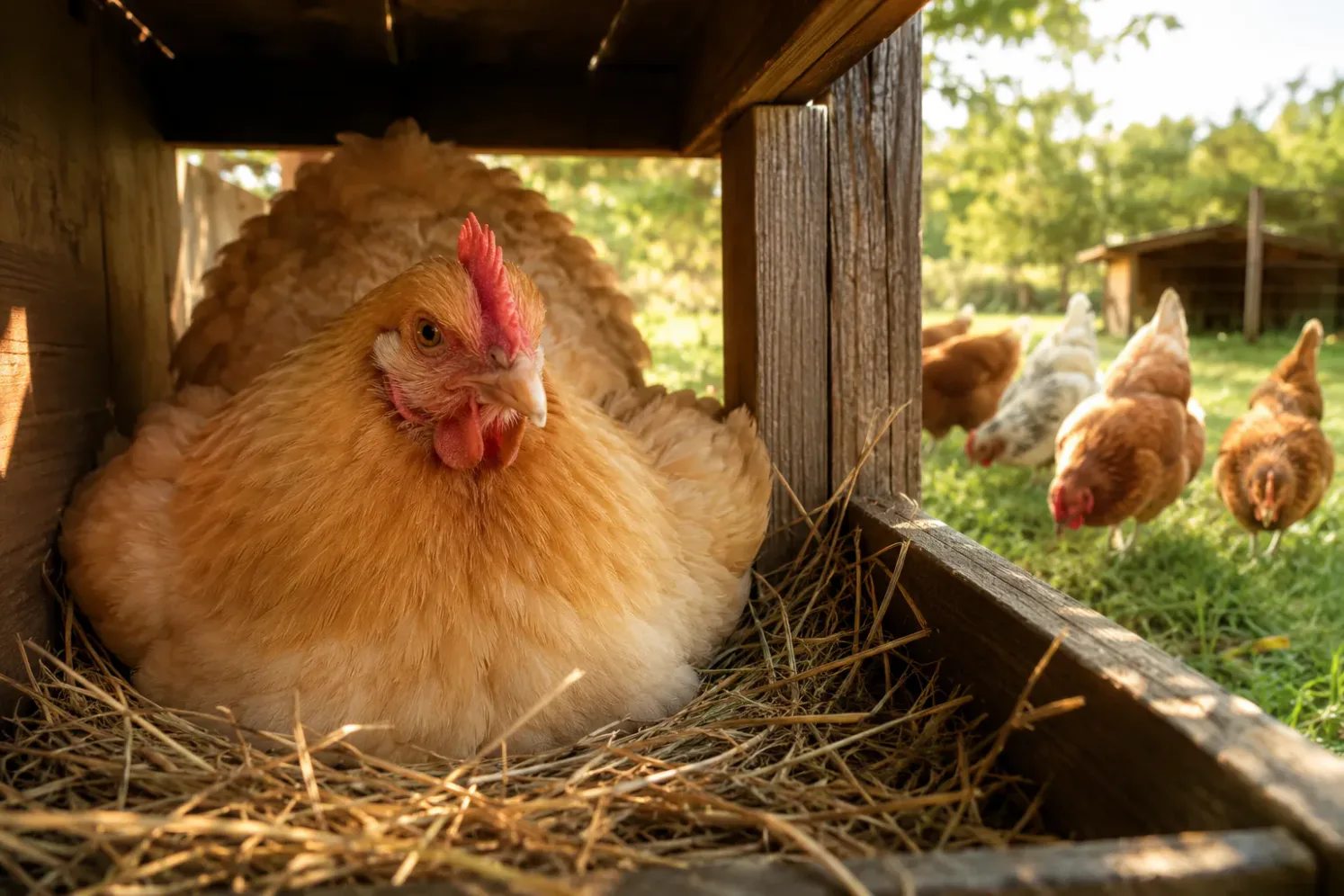
Quick Answer: Breaking a broody hen requires removing her from the nesting environment and cooling her body temperature for 3-7 days using a wire-bottom cage in a well-lit, cool area. The process disrupts her hormonal cycle and typically succeeds within a week when done consistently, though some hens require multiple attempts or longer intervention periods.
Key Takeaways
- Broodiness is a natural hormonal state where hens stop laying eggs and sit on nests to incubate, triggered by rising temperatures and longer daylight hours
- Breaking a broody hen takes 3-7 days on average, though stubborn hens or certain breeds may require up to 10-14 days
- The wire-bottom cage method works best because it cools the hen’s underside and prevents nesting behavior
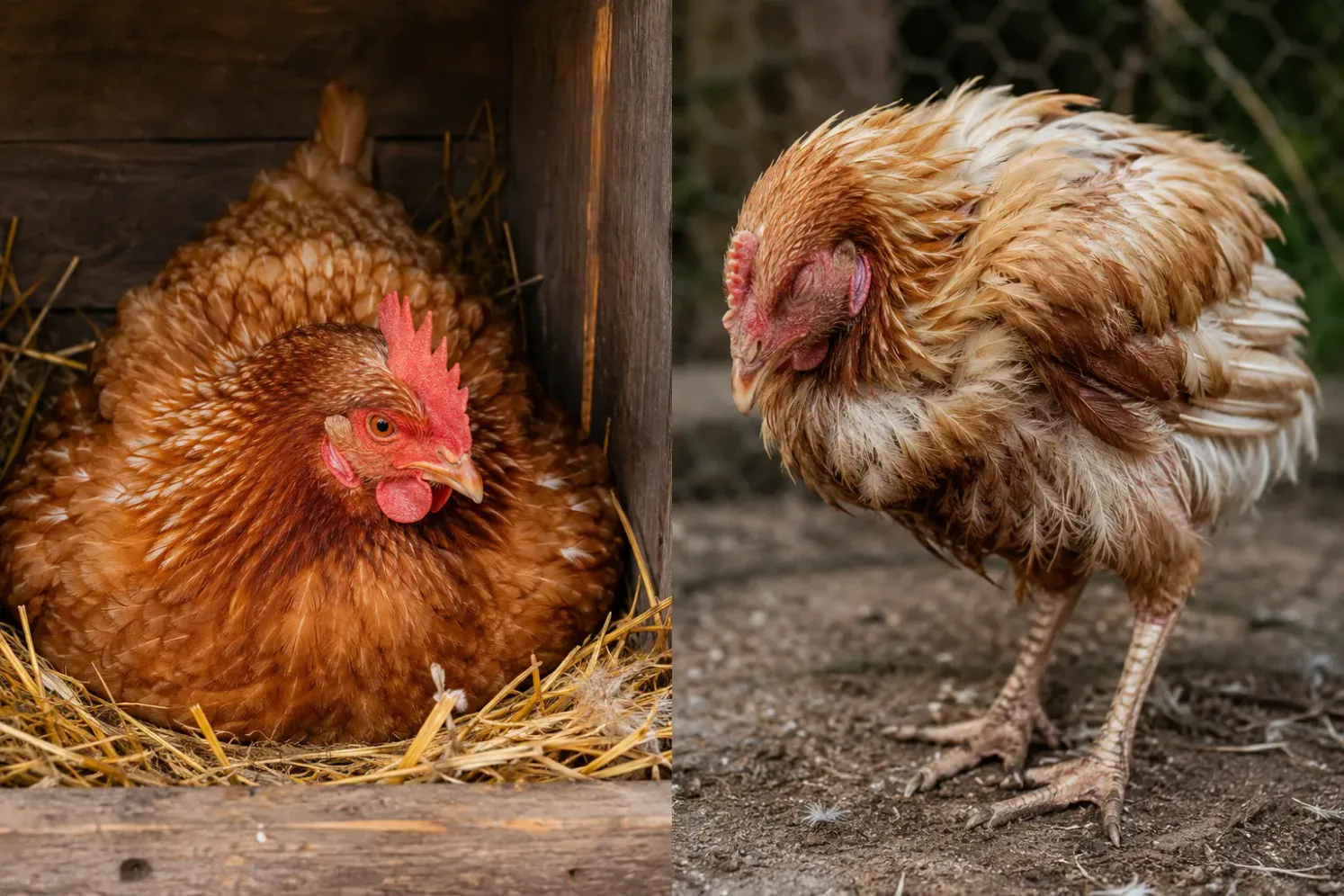
- A broody hen sits flattened with puffed feathers and vocalizes when disturbed, while a sick hen appears lethargic with closed eyes and poor feather condition
- Breaking broodiness is not cruel when done properly with adequate food, water, and shelter, it actually protects the hen’s health
- Silkies, Cochins, Orpingtons, and Brahmas go broody most frequently and are hardest to break
- Common mistakes include breaking too early (under 3 days), returning the hen to the coop too soon, or using methods that don’t adequately cool her body
- If a hen returns to broodiness immediately after breaking, she likely wasn’t kept in the breaker cage long enough or was returned to the same nesting box
What Does It Mean When a Hen Goes Broody?
A broody hen has entered a hormonal state focused entirely on incubating eggs and hatching chicks. Her body temperature rises, she stops laying new eggs, and she’ll sit on a nest for 21 days (the chicken incubation period) whether or not the eggs are fertile. This natural instinct is triggered by environmental factors like warmer weather, longer daylight hours, and the presence of eggs in the nest.
Physical and behavioral signs of broodiness include:
- Sitting flattened on the nest for 23+ hours per day
- Puffed-up feathers and spread wings when approached
- Aggressive pecking or growling sounds when disturbed
- Leaving the nest only once daily for quick food and water
- Pulling out chest feathers to create a bare brood patch
- Pale comb and wattles due to hormonal changes
The broody hen’s body temperature increases by several degrees, particularly on her underside, to keep eggs warm. She enters a trance-like state and may lose significant body weight if allowed to continue for the full 21-day cycle. Not all hens go broody, modern production breeds have had this instinct largely bred out, while heritage and bantam breeds retain strong brooding tendencies.
How Long Does It Take to Break a Broody Hen?
Breaking a broody hen typically takes 3-7 days of consistent intervention, though the timeline varies based on the hen’s breed, how long she’s been broody, and the method used. Most backyard chicken keepers see success within 5 days when using the wire-bottom cage method properly.
Timeline factors that affect breaking duration:
- Breed stubbornness: Silkies and Cochins often require 7-10 days, while production breeds may break in 2-3 days
- Broodiness duration: A hen broody for 2 weeks will take longer to break than one caught after 2 days
- Season and temperature: Hens are harder to break during peak summer when natural hormones are strongest
- Individual determination: Some hens are simply more persistent and may need 10-14 days
The key indicator that a hen has broken is her behavior when returned to the coop. A successfully broken hen will immediately resume normal activities, scratching, foraging, dust bathing, and roosting at night. She won’t return to the nesting box except to lay eggs. If she goes straight back to sitting on the nest, she needs more time in the breaker cage.
Most hens resume laying eggs 1-3 weeks after breaking, as their reproductive system needs time to restart after the hormonal interruption.
Broody Hen vs Sick Hen: How to Tell the Difference
A broody hen sits purposefully with alert eyes and puffed feathers, while a sick hen appears lethargic with drooping posture and closed or dull eyes. This distinction is critical because treating a sick hen as broody can be fatal, and vice versa.
Key differences to identify broodiness versus illness:
| Behavior/Sign | Broody Hen | Sick Hen |
|---|---|---|
| Posture | Flattened, spread wings, sitting firmly | Hunched, drooping, standing weakly or lying down |
| Eyes | Bright, alert, watching surroundings | Closed, half-closed, or dull and unfocused |
| Feathers | Puffed up deliberately, chest may be bare | Ruffled, unkempt, not deliberately fluffed |
| Response to approach | Aggressive pecking, growling, defensive | No response or weak movement away |
| Comb and wattles | Pale but firm (hormonal) | Pale/purple and floppy (circulation issue) |
| Droppings | Large, infrequent, very smelly (normal for broody) | Watery, bloody, or unusual color |
| Appetite | Eats and drinks during brief daily breaks | Refuses food and water or can’t reach them |
The definitive test: gently lift the hen off the nest. A broody hen will vocalize loudly, peck at your hands, and return immediately to the nest when released. A sick hen will move slowly or not at all, showing little interest in returning to any particular spot.
Choose to break a hen only after confirming she’s broody, not ill. If you see any signs of respiratory distress, bloody droppings, or complete lethargy, consult a veterinarian before attempting any breaking methods.
Should I Let My Hen Stay Broody or Break Her?
Break a broody hen if you don’t want chicks, if she’s losing excessive weight, or if you need her to resume laying eggs. Let her stay broody only if you have fertile eggs for her to hatch and can commit to supporting her through the 21-day incubation plus 6-8 weeks of chick rearing.
Reasons to break broodiness:
- Health risks: Broody hens lose 10-20% of body weight and become vulnerable to parasites and predators
- Egg production: A broody hen stops laying for 4-8 weeks minimum (3 weeks brooding + recovery time)
- Flock dynamics: Broody hens occupy nesting boxes other hens need, causing stress and egg-eating
- No fertile eggs: Without a rooster, sitting on unfertilized eggs serves no purpose
- Repeat brooders: Some hens go broody every few weeks, severely impacting their health
Reasons to allow broodiness:
- You have fertile eggs and want naturally hatched chicks
- The hen is a heritage breed where broodiness should be preserved
- You can provide a safe, separate brooding area away from the main flock
- The hen is in good body condition and the weather is appropriate
Most backyard chicken keepers without roosters should break broodiness promptly. Allowing a hen to sit for 21 days on unfertilized eggs is stressful for her body and provides no benefit. If you want chicks, you can always allow broodiness during a planned breeding season rather than letting it happen randomly.
Best Methods to Break a Broody Hen Fast
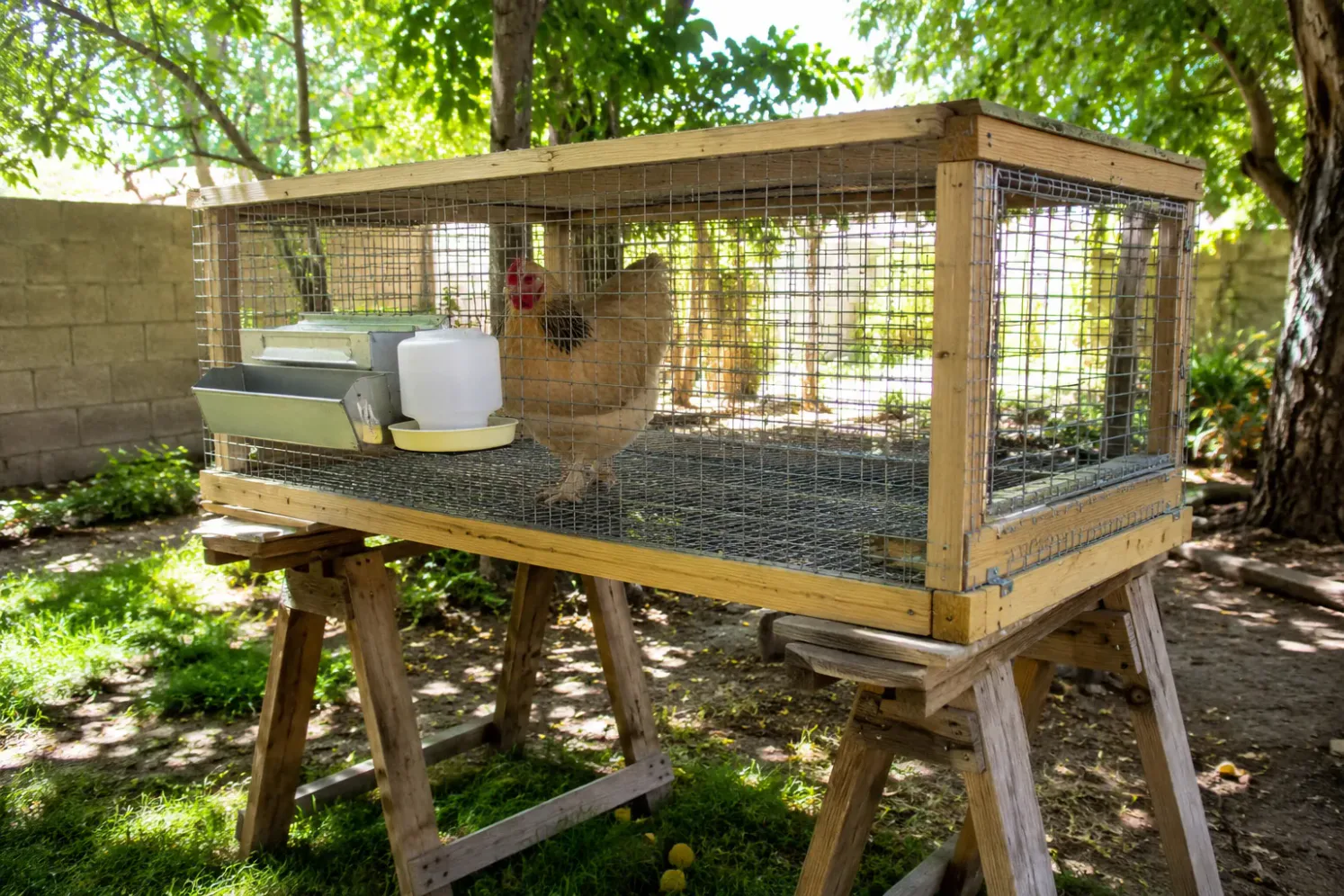
The wire-bottom cage method breaks broodiness fastest by cooling the hen’s elevated body temperature and preventing nesting behavior. Place the hen in a cage with a wire or slatted bottom, elevated off the ground, in a well-lit, cool area with food and water for 3-7 days.
Step-by-step wire cage method:
- Build or obtain a breaker cage: Use a dog crate, rabbit hutch, or build a 2×2 foot cage with wire or wooden slat bottom spaced 1-2 inches apart
- Choose the location: Place in a cool, well-ventilated area with good lighting, a garage, covered porch, or shaded yard spot works well
- Elevate the cage: Set on sawhorses, cinder blocks, or a table so air circulates freely underneath
- Remove the hen: Take her off the nest in the evening when she’s calmer
- Provide essentials: Attach food and water containers; check and refill daily
- Monitor daily: Observe her behavior, droppings, and body condition
- Test after 3 days: Return her to the coop in the evening and watch her behavior the next morning
- Repeat if needed: If she returns to the nest immediately, put her back in the breaker cage for 2-3 more days
Why this method works: The wire bottom prevents the hen from settling into a nesting position and allows air to cool her underside, which signals her body to stop the brooding hormone cycle. The bright lighting and activity also help reset her biological clock.
Alternative methods (less effective):
- Removing from nest multiple times daily: Labor-intensive and rarely works alone; hen simply returns
- Ice pack method: Placing frozen gel packs under the hen for 20 minutes 2-3 times daily; works but requires constant supervision
- Dunking method: Briefly submerging the hen’s underside in cool water; controversial and stressful, not recommended as a primary method
The wire cage method has the highest success rate because it addresses the root cause, elevated body temperature, continuously rather than intermittently.
Broody Hen Breaking Cage Setup
A proper broody breaker cage measures at least 2×2 feet with a wire or slatted bottom, elevated 12-24 inches off the ground, and includes secure food and water containers. The cage must prevent nesting while providing adequate space, ventilation, and protection from weather and predators.
Essential cage specifications:
- Bottom: Wire mesh (1-inch spacing) or wooden slats spaced 1-2 inches apart, wide enough for air circulation but not so wide the hen’s feet fall through
- Size: Minimum 2×2 feet for standard breeds, 1.5×1.5 feet for bantams, enough room to stand, turn, and move comfortably
- Height: 18-24 inches tall so the hen can stand fully upright
- Sides and top: Solid wire or mesh to prevent escape and protect from predators
- Location: Shaded area protected from rain but with good airflow; avoid direct sun or complete darkness
Setup checklist:
- Secure food container (hanging feeder or clip-on dish)
- Water container that won’t tip (poultry waterer or heavy dish)
- Elevation platform (sawhorses, cinder blocks, or sturdy table)
- Weather protection (tarp or roof if outdoors)
- Predator security (ensure no gaps larger than 1 inch)
Common setup mistakes to avoid:
- Using solid flooring, defeats the cooling purpose
- Placing in direct sunlight, can cause heat stress
- Insufficient elevation, air must circulate underneath
- No weather protection, hen needs shelter from rain and wind
- Overcrowding, never put multiple hens in one small breaker cage
The cage should be uncomfortable enough to discourage nesting but not cruel or dangerous. The hen should be able to eat, drink, preen, and rest normally, just not settle into a brooding position.
How Much Does It Cost to Break a Broody Hen?
Breaking a broody hen costs between zero and $50 depending on whether you build a cage from materials on hand or purchase a ready-made option. Most backyard chicken keepers spend $15-30 on basic supplies if they don’t already have suitable equipment.
Cost breakdown by approach:
DIY from scrap materials: $0-10
- Repurpose old dog crate, rabbit hutch, or wire shelving
- Use scrap lumber and leftover wire mesh
- Elevate with items already available (sawhorses, cinder blocks, buckets)
Basic new build: $20-40
- Wire mesh or hardware cloth: $10-15
- Lumber for frame: $8-12
- Zip ties or staples: $3-5
- Food and water containers (if needed): $5-10
Ready-made option: $30-60
- Small dog crate with wire bottom: $30-50
- Rabbit hutch: $40-60
- Elevation materials: $5-10
Ongoing costs: Minimal, just the regular chicken feed and water the hen would consume anyway. No special diet or supplements are required during the breaking period.
The investment pays for itself quickly if you value egg production. A hen that goes broody for 6 weeks (3 weeks sitting + 3 weeks recovery) loses approximately 30-40 eggs worth of production, valued at $9-20 at 2026 retail egg prices.
My Hen Went Back to Being Broody After I Broke Her, What Did I Do Wrong?
A hen that returns to broodiness immediately after breaking was likely removed from the breaker cage too soon, returned to the same nesting box with eggs present, or is a particularly stubborn breed that needs extended intervention. The most common mistake is testing the hen after only 2-3 days instead of waiting for clear behavioral changes.
Why hens return to broodiness:
- Insufficient breaking time: Removed from cage before hormones fully reset (needs minimum 3-5 days, often longer)
- Eggs still present: Returning to a nest box with eggs triggers the instinct immediately
- Same nesting location: The familiar nest spot reinforces the broody behavior
- Peak broody season: Summer months make breaking harder; hormones are stronger
- Breed predisposition: Silkies, Cochins, and Orpingtons often require 10+ days and multiple attempts
How to prevent relapse:
- Keep her in the breaker cage longer: Add 2-3 extra days beyond when you think she’s broken
- Remove all eggs before her return: Clear nesting boxes completely
- Block her preferred nest: Close off or fill the specific box she was using for 1-2 weeks
- Return her in the evening: She’ll roost for the night instead of immediately seeking a nest
- Watch for 48 hours: Monitor closely for two full days after return
- Repeat immediately if needed: Don’t wait, put her straight back in the breaker cage if she returns to sitting
Some hens, particularly heritage breeds during peak season, may require 2-3 breaking cycles before they fully stop. This is normal for determined brooders. If a hen goes broody 4+ times in one season despite proper breaking, consider whether her genetics make her better suited as a broody mother rather than an egg layer.
Is Breaking a Broody Hen Cruel or Harmful?
Breaking a broody hen is not cruel when done properly with adequate food, water, shelter, and a safe cage setup, in fact, it protects the hen from the health risks of extended broodiness including severe weight loss, malnutrition, and parasite infestation. The temporary discomfort of the breaking process is far less harmful than allowing a hen to sit on unfertilized eggs for 21 days.
Health benefits of breaking broodiness:
- Prevents 10-20% body weight loss that occurs during extended sitting
- Reduces risk of mites, lice, and other parasites that thrive on stationary hens
- Protects from predators (broody hens are vulnerable, especially at night)
- Prevents malnutrition from eating only once daily
- Allows the hen to resume normal social interaction and exercise
Welfare considerations:
The wire-bottom cage method mimics natural conditions that would discourage broodiness in the wild, exposure to elements, inability to settle comfortably, and disruption of the nesting environment. Wild jungle fowl (chicken ancestors) would naturally abandon broodiness if conditions became unsuitable.
What constitutes cruel treatment (avoid these):
- Dunking or spraying with cold water repeatedly (causes stress and hypothermia risk)
- Withholding food or water to “speed up” breaking
- Using a cage so small the hen cannot stand or turn
- Leaving the hen in direct sun without shade
- Keeping in the breaker cage for weeks beyond what’s necessary
- Rough handling or punishment
The key is proportionality. A hen kept in a proper breaker cage for 5-7 days with food, water, and shelter experiences temporary inconvenience. A hen allowed to sit on unfertilized eggs for 21 days experiences significant physical decline, stress when no chicks hatch, and potential health complications.
Choose breaking methods that prioritize the hen’s long-term health over short-term comfort, just as you would with any animal husbandry practice.
Dunking Method vs Wire Cage: Which Works Better for Broody Hens?
The wire cage method works better than dunking because it provides continuous cooling and prevents nesting behavior 24/7, while dunking offers only brief temperature reduction 2-3 times daily and adds significant stress. Wire cages have a success rate of 80-90% within 5-7 days, while dunking alone rarely breaks stubborn brooders.
Wire cage advantages:
- Continuous intervention rather than intermittent
- Less stressful, no repeated handling
- Addresses root cause (body temperature and nesting ability)
- Allows hen to eat, drink, and rest normally between cooling
- Requires less daily labor and monitoring
Dunking method details:
The dunking method involves briefly submerging the hen’s underside (chest and abdomen) in cool (not cold) water for 30-60 seconds, 2-3 times daily. The theory is that cooling her brood patch interrupts the hormonal cycle.
Why dunking is less effective:
- Cooling effect lasts only 1-2 hours before body temperature rises again
- Requires catching and handling the hen multiple times daily (stressful)
- Risk of hypothermia if water is too cold or hen isn’t dried properly
- Hen returns to warm nesting box between dunkings, reinforcing the behavior
- Time-intensive for chicken keepers with busy schedules
When dunking might be appropriate:
- As a supplement to wire cage method for extremely stubborn hens
- In very hot climates where additional cooling helps
- For hens with health issues that make cage confinement risky
Best practice combination: Use the wire cage as the primary method, and if the hen hasn’t broken after 5-6 days, add one daily cool water dunk as supplemental intervention. Never use dunking as the sole breaking method, it’s simply not effective enough for most hens.
How Many Times Can You Break a Broody Hen in One Year?
You can safely break a broody hen 3-5 times per year without causing lasting harm, though frequent broodiness indicates a strong genetic predisposition that may make the hen better suited for hatching chicks than egg production. Some heritage breed hens go broody 6-8 times annually and require repeated breaking throughout the laying season.
Factors affecting broodiness frequency:
- Breed: Silkies and Cochins may go broody monthly; production breeds rarely go broody at all
- Season: Most broodiness occurs March-September when daylight and temperatures peak
- Individual genetics: Some hens within broody breeds are more persistent than others
- Flock dynamics: Seeing other broody hens can trigger copycat behavior
Managing repeat brooders:
- Break promptly: Don’t let her sit for days before intervening, catch it early
- Extend breaking time: Add 2-3 extra days in the breaker cage for repeat offenders
- Block favorite nests: Rotate which nesting boxes are available
- Reduce daylight: If possible, limit her exposure to extended summer daylight
- Consider her role: If she goes broody 5+ times, she might be more valuable as a broody mother
When to stop breaking:
If a hen goes broody 6+ times in one season despite proper breaking protocols, continuing to break her becomes a welfare concern. At this point, consider:
- Allowing her to hatch a clutch of fertile eggs (if you have a rooster)
- Rehoming her to someone who needs a broody hen
- Accepting reduced egg production and breaking only when necessary
- Culling if she’s severely impacting her own health
There’s no hard limit on how many times you can break a hen, but repeated cycles indicate she’s fighting her strongest natural instinct. Balance your need for eggs against her genetic programming.
Broody Hen Won’t Eat or Drink During Breaking, Is This Normal?
A broody hen eating and drinking less than usual during the first 1-2 days of breaking is normal as she adjusts to the new environment, but complete refusal of food and water for 24+ hours indicates a problem requiring intervention. Most hens resume normal eating within 48 hours once they accept they cannot nest.
Normal behavior during breaking:
- Reduced appetite for first 24-48 hours
- Drinking small amounts but not eating much
- Eating primarily in early morning or evening
- Consuming 30-50% of normal intake initially, increasing daily
Warning signs requiring action:
- Zero food or water intake for 24+ hours
- Lethargic behavior, closed eyes, or hunched posture
- Droppings absent or watery/bloody
- Rapid weight loss or protruding keel bone
- Panting or signs of heat stress
How to encourage eating and drinking:
- Offer treats: Mealworms, scrambled eggs, or favorite foods to stimulate appetite
- Fresh water: Change water twice daily; add electrolytes if needed
- Hand feeding: Offer food directly if she won’t approach the feeder
- Check container placement: Ensure food and water are easily accessible and secure
- Reduce stress: Cover part of the cage to create a calmer environment
When to remove from breaker cage early:
If a hen refuses all food and water for 36+ hours despite encouragement, remove her from the breaker cage and consult a veterinarian. She may have an underlying health issue unrelated to broodiness, or the stress of breaking may be too severe for her individual temperament.
Most hens adapt within 2 days and begin eating normally. By day 3-4, appetite should be close to baseline. If not, reassess whether breaking is appropriate for this particular hen at this time.
What Breeds Are Most Likely to Go Broody and Hardest to Break?
Silkies, Cochins, Orpingtons, and Brahmas go broody most frequently and are hardest to break, often requiring 7-14 days in a breaker cage compared to 3-5 days for less broody breeds. These heritage breeds retain strong maternal instincts that modern production breeds have had selectively bred out.
Most broody breeds (hardest to break):
- Silkies: Go broody every 3-4 weeks; extremely persistent; often require 10-14 days
- Cochins: Large, fluffy breeds with strong nesting instinct; 7-10 days typical
- Orpingtons: Gentle, maternal; go broody 4-6 times per season; 7-10 days
- Brahmas: Large heritage breed; moderate broodiness; 5-8 days
- Sussex: Heritage strain more broody than hatchery stock; 5-7 days
- Australorps: Some lines broody, others not; 5-7 days when broody
Moderately broody breeds:
- Wyandottes, Plymouth Rocks, Marans, Faverolles (occasional broodiness, 4-6 days to break)
Rarely broody breeds (easiest to break):
- Leghorns: Production breed; rarely go broody; 2-3 days if they do
- Rhode Island Reds: Modern hatchery stock rarely broody; 3-4 days
- Sex Links: Hybrid vigor eliminates broodiness; 2-3 days
- Hamburgs, Minorcas, Andalusians: Mediterranean breeds; minimal broody instinct
Why breed matters:
Heritage breeds were developed when natural incubation was essential for flock reproduction. Modern production breeds were selected specifically for continuous laying without broody interruptions. If you want eggs without broodiness, choose production breeds. If you want natural mothers, choose heritage breeds and accept the breaking challenge.
Bantam consideration: Bantam versions of any breed tend to be broodier than standard-sized versions. Silkie bantams are notoriously difficult to break, sometimes requiring 3-4 breaking cycles per season.
Common Mistakes People Make When Trying to Break a Broody Hen
The most common mistake when breaking a broody hen is removing her from the breaker cage too early, before her hormones have fully reset, resulting in immediate return to broodiness. Other frequent errors include using a cage with solid flooring, returning her to a nest box with eggs present, and inconsistent intervention.
Top breaking mistakes and how to avoid them:
1. Breaking for only 2-3 days
- Problem: Hormones need 5-7 days minimum to reset
- Solution: Keep her in the breaker cage for at least 5 days, longer for stubborn breeds
2. Using solid-bottom cage
- Problem: Doesn’t cool her underside; she can still settle into nesting position
- Solution: Use wire or slatted bottom with air circulation underneath
3. Returning her to the same nest with eggs
- Problem: Triggers immediate return to broodiness
- Solution: Remove all eggs and block her preferred nesting box for 1-2 weeks
4. Testing too early
- Problem: Checking if she’s broken after 1-2 days wastes time
- Solution: Wait minimum 3 days before testing; 5 days is better
5. Inconsistent intervention
- Problem: Removing her from nest multiple times daily but letting her return
- Solution: Use continuous intervention (breaker cage) rather than intermittent
6. Inadequate cage elevation
- Problem: No air circulation underneath defeats the cooling purpose
- Solution: Elevate cage 12-24 inches off ground on stable platform
7. Breaking during peak broody season without extra time
- Problem: Summer hormones are strongest; standard 5 days may not suffice
- Solution: Add 2-3 extra days for hens broken in June-August
8. Giving up after one attempt
- Problem: Some hens need 2-3 breaking cycles
- Solution: Immediately return her to breaker cage if she goes back to sitting
9. Not monitoring food and water intake
- Problem: Hen becomes dehydrated or malnourished during breaking
- Solution: Check daily; ensure containers are accessible and full
10. Using punishment or rough handling
- Problem: Increases stress without improving success rate
- Solution: Handle calmly; breaking works through environmental change, not discipline
The key to successful breaking is patience and consistency. Most failures occur because chicken keepers underestimate how long the process takes or give up too soon.
FAQ
How do I know if my hen is broody or just sitting on eggs?
A broody hen sits on the nest 23+ hours per day, puffs her feathers, and becomes aggressive when approached. A hen simply laying an egg sits for 30-60 minutes, remains calm, and leaves voluntarily. If she’s been on the nest continuously for 2+ days, she’s broody.
Can I break a broody hen by just removing eggs daily?
No, removing eggs alone rarely breaks broodiness. The hen will continue sitting on an empty nest because her hormones drive the behavior, not the presence of eggs. You must use a breaker cage or similar method to interrupt the hormonal cycle.
Will breaking a broody hen stop her from ever going broody again?
No, breaking addresses the current broody cycle but doesn’t prevent future broodiness. Hens with strong broody genetics will go broody again, sometimes within weeks. Each cycle must be broken separately.
Should I break a broody hen in winter?
Yes, if she goes broody in winter and you don’t want chicks. However, ensure the breaker cage is protected from cold, wind, and precipitation. Winter broodiness is less common but still requires intervention if unwanted.
Can multiple hens share one breaker cage?
No, each hen needs her own breaker cage. Crowding creates stress, prevents adequate cooling, and makes it impossible to monitor individual progress. Use separate cages even if breaking multiple hens simultaneously.
How soon after breaking will my hen start laying eggs again?
Most hens resume laying 1-3 weeks after successfully breaking broodiness. The reproductive system needs time to restart. Younger hens typically resume faster than older hens.
Is it safe to break a broody hen in extreme heat?
Yes, but provide extra shade, fresh water, and monitor for heat stress. The breaker cage should be in the coolest available location with good airflow. Avoid breaking during heat waves above 95°F if possible.
What if my hen has been broody for 2 weeks before I tried to break her?
She’ll likely take longer to break, expect 7-10 days instead of 3-5. The longer she’s been broody, the stronger the hormonal cycle. Start the breaking process immediately and be patient.
Can I use a dog crate as a broody breaker cage?
Yes, if it has a wire bottom or you can remove the solid tray. Elevate it on blocks or sawhorses and ensure adequate ventilation. Many chicken keepers successfully use wire dog crates.
Will a broody hen hurt herself trying to escape the breaker cage?
A properly constructed cage with smooth edges and appropriate spacing prevents injury. Some hens will test the cage initially but settle down within 24 hours. Monitor for any signs of injury during the first day.
Should I put bedding in the breaker cage?
No, bedding defeats the purpose by allowing the hen to nest and insulating her from cooling air. The wire or slatted bottom should be bare. Provide food and water only.
Can I break a broody hen if she’s molting?
Use caution when breaking a molting hen, as she’s already stressed and losing nutrients for feather regrowth. If possible, wait until molting completes. If you must break her, provide high-protein treats and monitor closely for excessive stress.
Conclusion
Breaking a broody hen protects her health while maintaining your flock’s egg production, and the process succeeds within 5-7 days when done correctly using a wire-bottom breaker cage. The key is acting promptly when broodiness begins, using continuous cooling intervention rather than intermittent methods, and keeping the hen in the breaker cage long enough for her hormones to fully reset, even if that means 10-14 days for stubborn heritage breeds.
Your action plan:
- Confirm the hen is broody, not sick, by checking her behavior and physical condition
- Build or obtain a wire-bottom cage elevated 12-24 inches off the ground
- Place the cage in a cool, well-lit, protected area with food and water
- Keep the hen in the breaker cage for minimum 5 days, longer for persistent brooders
- Test by returning her to the coop in the evening and observing the next morning
- If she returns to the nest immediately, put her back in the breaker cage for 2-3 more days
- Remove all eggs and block her preferred nesting box before her return
Remember that some hens, particularly Silkies, Cochins, and Orpingtons, may require multiple breaking cycles throughout the season. This is normal for heritage breeds with strong maternal instincts. If a hen goes broody 5+ times annually despite proper breaking, consider whether she’d be more valuable as a broody mother for hatching chicks rather than as an egg layer.
Breaking broodiness is a standard chicken keeping skill that becomes easier with experience. Most backyard flock owners successfully break their first broody hen within a week and develop efficient systems for managing repeat brooders in subsequent seasons.


