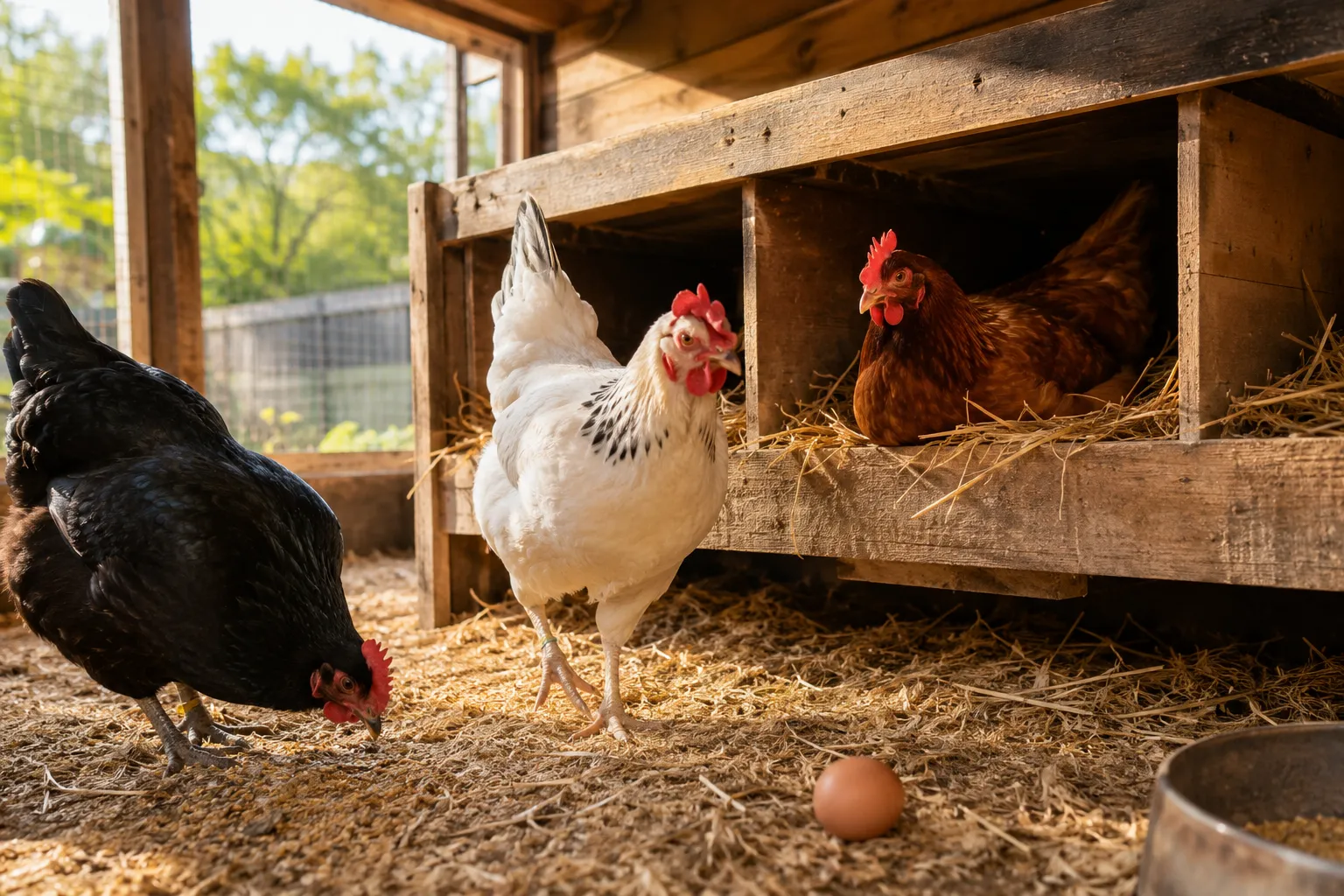
Quick Answer: Most healthy backyard chickens lay 3-6 eggs per week, depending on breed, age, season, and care. Peak-laying breeds like Leghorns and Rhode Island Reds can produce 5-7 eggs weekly during their prime years (18 months to 2 years old), while heritage breeds typically lay 2-4 eggs per week. Production drops significantly in winter, during molting, and as hens age past three years.
Key Takeaways
- Average production: Healthy hens lay 3-6 eggs per week, or roughly 150-300 eggs per year depending on breed
- Peak laying age: Chickens produce the most eggs between 6 months and 2 years old
- No rooster needed: Hens lay eggs without a rooster present; roosters are only required for fertile eggs
- Seasonal changes: Egg production drops 30-80% in winter due to reduced daylight hours
- Breed matters: High-production breeds lay 280-320 eggs yearly, while heritage breeds lay 100-180 eggs
- Common disruptions: Stress, poor nutrition, molting, illness, and age all reduce laying frequency
- Lifespan: Most chickens lay consistently for 2-3 years, then production gradually declines
- Daily laying myth: Even the best layers don’t produce an egg every single day year-round
How Many Eggs Does a Chicken Lay Per Week?
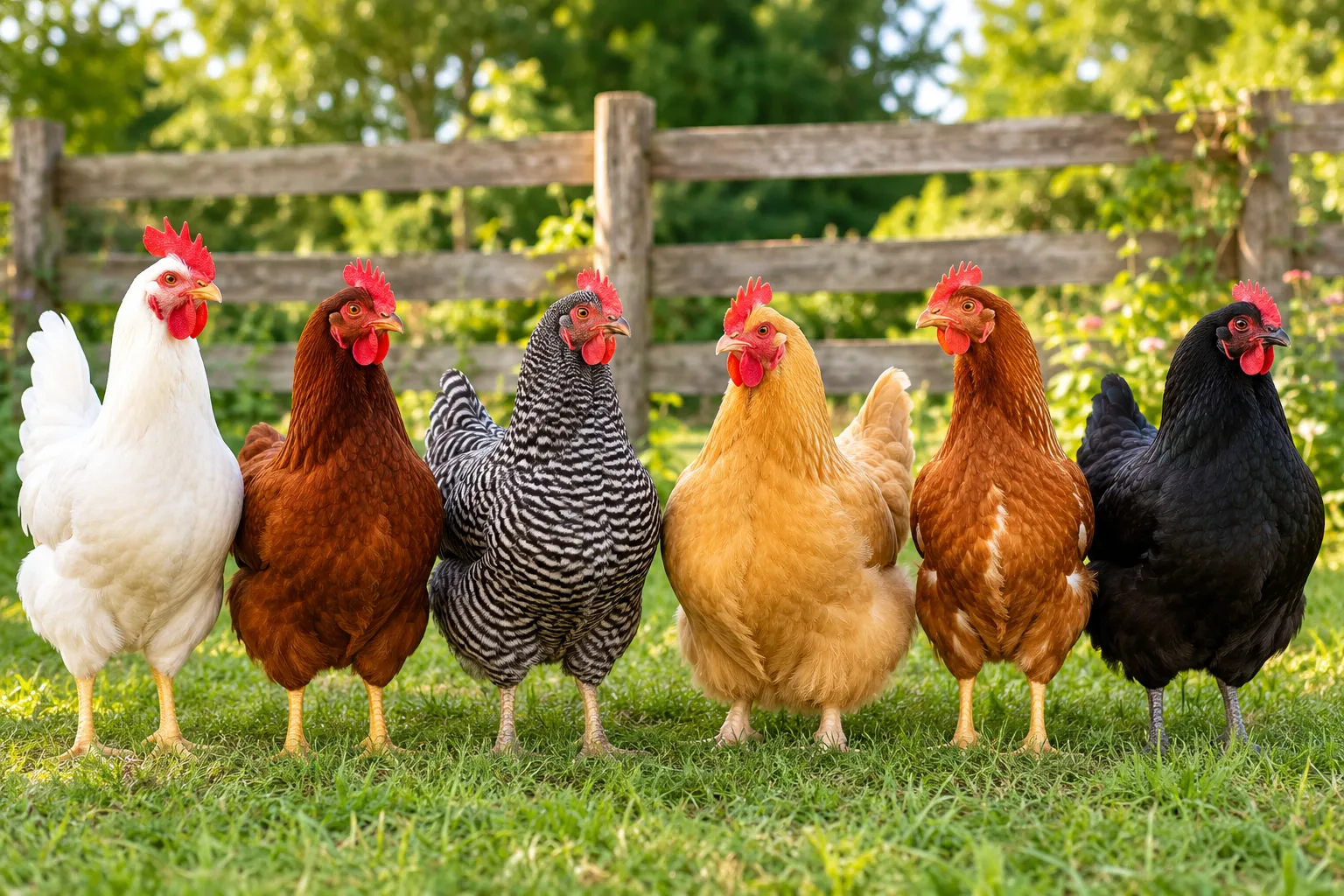
A typical backyard chicken lays 3-6 eggs per week during her prime laying years. High-production breeds like White Leghorns, Golden Comets, and ISA Browns often produce 5-7 eggs weekly, while heritage breeds such as Brahmas or Silkies lay 2-3 eggs per week.
The weekly egg count depends on several factors:
- Breed type: Commercial laying breeds are bred specifically for high production, while dual-purpose and heritage breeds prioritize other traits like meat quality or cold hardiness
- Age of the hen: Pullets (young hens) start slowly, peak at 18-24 months, then gradually decline
- Season: Spring and summer bring peak production; winter can reduce output by half or more
- Health and nutrition: Well-fed chickens with access to quality layer feed, clean water, and calcium supplements lay more consistently
- Stress levels: Predator threats, flock changes, coop moves, or overcrowding disrupt laying patterns
Choose high-production breeds if your primary goal is maximum egg yield. Choose heritage breeds if you value hardiness, broodiness, or dual-purpose qualities over sheer egg numbers.
Common mistake: Expecting every hen to lay daily. Even champion layers take rest days, and a 5-6 egg per week average is excellent production.
What Age Do Chickens Start Laying Eggs?
Most chickens begin laying eggs between 18-24 weeks of age (roughly 4.5-6 months old). The exact timing varies by breed, with production breeds starting earlier and heritage breeds taking longer to mature.
Typical start times by breed category:
- Early layers (18-20 weeks): Leghorns, Sex Links (Golden Comets, Red Stars), ISA Browns
- Average layers (20-24 weeks): Rhode Island Reds, Plymouth Rocks, Australorps, Wyandottes
- Late layers (24-28 weeks): Brahmas, Cochins, Silkies, Orpingtons, most heritage breeds
Factors that delay first eggs:
- Hatching late in the season (fall/winter chicks may wait until spring)
- Poor nutrition during the growing phase
- Stress from frequent moves or flock disruptions
- Insufficient daylight hours (hens need 14-16 hours of light to trigger laying)
How to tell a pullet is about to start laying: Look for a reddening comb and wattles, squatting behavior when you approach, increased interest in nesting boxes, and a pelvic width of about two fingers between the pelvic bones.
The first eggs are typically small (called “pullet eggs”) and may have irregular shapes or soft shells. Production normalizes within 2-4 weeks as the hen’s reproductive system matures.
Do Chickens Lay Eggs Every Day or Just Sometimes?
Chickens do not lay eggs every single day, even at peak production. Most healthy hens lay 4-6 days per week during their prime years, taking periodic rest days as part of their natural cycle.
The egg-laying process takes approximately 24-26 hours from start to finish. After a hen lays an egg, her body begins forming the next one, but the process isn’t perfectly synchronized to a 24-hour clock. This means a hen laying in the morning one day might lay in the afternoon the next, eventually pushing her cycle into evening. When this happens, she typically skips a day and resets to a morning schedule.
Why hens don’t lay daily:
- Biological cycle: The 25-26 hour egg formation cycle naturally creates skip days
- Energy demands: Producing an egg requires significant calcium and protein resources
- Seasonal adjustments: Shorter winter days trigger hormonal changes that reduce frequency
- Age-related decline: Older hens take longer between eggs
- Molting periods: Hens stop laying entirely for 8-16 weeks during their annual feather replacement
What to expect from your flock:
- A flock of 6 hens averaging 5 eggs per week each = 30 eggs weekly (4-5 eggs most days)
- Individual hens may lay 3-4 days in a row, skip a day, then resume
- Production breeds maintain higher consistency than heritage breeds
Edge case: Some exceptional production hens lay 6-7 days per week during peak season, but this intensity is unsustainable long-term and may lead to health issues like prolapse or calcium deficiency.
Why Did My Chicken Stop Laying Eggs Suddenly?
Sudden drops in egg production typically result from stress, seasonal changes, molting, illness, or nutritional deficiencies. Identifying the cause requires observing your flock’s behavior, environment, and recent changes.
Most common reasons for sudden laying stops:
Environmental stress:
- Predator attacks or scares (even unsuccessful ones)
- New flock members or pecking order disruptions
- Coop relocation or major renovations
- Extreme temperature swings
- Loud noises or construction nearby
Seasonal factors:
- Decreasing daylight hours in fall/winter
- Extreme heat (above 90°F) or cold (below 20°F)
- Sudden weather changes
Health issues:
- Internal or external parasites (mites, lice, worms)
- Respiratory infections
- Egg binding or reproductive disorders
- Injury or hidden illness
Nutritional problems:
- Switch to low-quality feed
- Insufficient protein (layer feed should be 16-18% protein)
- Calcium deficiency
- Lack of fresh water
Natural cycles:
- Annual molt (typically fall, lasts 8-16 weeks)
- Broodiness (hen wants to hatch eggs)
- Age-related decline
Troubleshooting steps:
- Check for visible signs of illness, injury, or parasites
- Review any recent changes to routine, feed, or environment
- Ensure 14-16 hours of light daily (add supplemental light in winter if needed)
- Verify feed quality and freshness (moldy feed causes problems)
- Provide free-choice oyster shell for calcium
- Observe flock dynamics for bullying or stress
When to worry: If a hen stops eating, becomes lethargic, has labored breathing, or shows swelling around the vent, consult a veterinarian immediately. These signs indicate serious illness requiring prompt treatment.
Best Chicken Breeds for Egg Production
The highest-producing chicken breeds lay 280-320 eggs per year (5-6 eggs weekly) and maintain consistent production for 2-3 years. These breeds were developed specifically for commercial and backyard egg operations.
Top 5 breeds for maximum egg production:
| Breed | Eggs/Year | Egg Color | Temperament | Climate Tolerance |
|---|---|---|---|---|
| White Leghorn | 280-320 | White | Active, flighty | Heat-tolerant |
| Golden Comet | 280-300 | Brown | Friendly, docile | Adaptable |
| ISA Brown | 300-320 | Brown | Calm, hardy | Cold-tolerant |
| Rhode Island Red | 250-280 | Brown | Active, assertive | Very hardy |
| Australorp | 250-280 | Brown | Calm, friendly | Excellent cold tolerance |
Other excellent layers:
- Plymouth Rock (Barred Rock): 200-280 brown eggs, dual-purpose, extremely cold-hardy
- Sussex: 250-280 cream/light brown eggs, friendly, good foragers
- Wyandotte: 200-240 brown eggs, beautiful plumage, cold-hardy
- Black Star/Red Star (Sex Links): 250-300 brown eggs, easy to sex as chicks
Choose production breeds if:
- Maximum egg yield is your primary goal
- You plan to replace your flock every 2-3 years
- You want consistent year-round production (with supplemental light)
Choose heritage or dual-purpose breeds if:
- You value longevity and hardiness over peak production
- You want chickens that go broody and raise chicks
- You prefer a calmer, more sustainable backyard flock
- You want meat production in addition to eggs
Common mistake: Mixing too many breeds without understanding their different production levels, then being disappointed when heritage breeds don’t match hybrid layer output.
Do Chickens Lay Eggs Without a Rooster?
Yes, hens lay eggs without a rooster present. A rooster is only necessary if you want fertile eggs that can hatch into chicks. Unfertilized eggs are identical in appearance, nutrition, and taste to fertilized eggs.
How it works:
Hens ovulate and produce eggs as part of their natural reproductive cycle, regardless of whether they’ve mated with a rooster. The egg-laying process is triggered by hormones responding to daylight hours and the hen’s age, not by fertilization.
Fertilized vs. unfertilized eggs:
- Unfertilized (no rooster): Cannot develop into chicks, safe to eat, no visible difference when cracked
- Fertilized (rooster present): Can hatch if incubated at 99-102°F for 21 days, safe to eat if collected daily and refrigerated, may show a small white spot (germinal disc) on the yolk
Benefits of keeping a rooster:
- Flock protection and predator alertness
- Fertile eggs for hatching replacement birds
- Natural mating behavior and flock dynamics
- Some keepers enjoy the morning crowing
Benefits of a hen-only flock:
- No noise complaints from neighbors
- Less aggressive behavior in the coop
- No risk of over-mating injuries to hens
- All eggs are unfertilized (preferred by some consumers)
Edge case: Some hens become broody (wanting to hatch eggs) even without a rooster. They’ll sit on unfertilized eggs for weeks, stopping their own laying. You’ll need to break the broodiness if you want them to resume production.
How Long Do Chickens Lay Eggs Before They Stop?
Chickens lay eggs most productively for 2-3 years, then production gradually declines over their remaining lifespan of 5-10 years. Most backyard hens continue laying at reduced rates until age 5-6, though some heritage breeds lay sporadically into their senior years.
Typical laying timeline:
- Months 5-6: First eggs begin (pullet eggs, small and irregular)
- Months 6-18: Production ramps up to peak levels
- Months 18-36: Peak production (highest egg count and consistency)
- Years 3-4: Production drops 10-20% annually
- Years 5-6: Production drops to 40-60% of peak
- Years 7+: Sporadic laying, many hens stop entirely
Annual decline rates:
After peak production, hens typically lose 10-25% of their laying capacity each year. A hen producing 280 eggs in year one might lay 220 in year three, 150 in year five, and 50-80 in year seven.
Factors affecting laying lifespan:
- Breed: Production hybrids burn out faster (2-3 years peak) than heritage breeds (3-5 years moderate production)
- Health: Well-cared-for hens lay longer than those with chronic issues
- Nutrition: Consistent high-quality feed extends productive years
- Stress: Low-stress environments preserve laying capacity
- Molting: Each annual molt signals declining production
Can old chickens still lay eggs?
Yes, but infrequently. Hens aged 6-8 years may lay 1-2 eggs per month or stop entirely. Some heritage breed hens continue laying a few dozen eggs annually into their senior years, while production breeds typically stop by age 5-6.
Decision point: Many backyard keepers maintain older hens as pets after their laying years end, while commercial operations and some homesteaders cull hens at 2-3 years when production drops. This choice depends on your goals, space, and attachment to individual birds.
Do Chickens Lay Fewer Eggs in Winter?
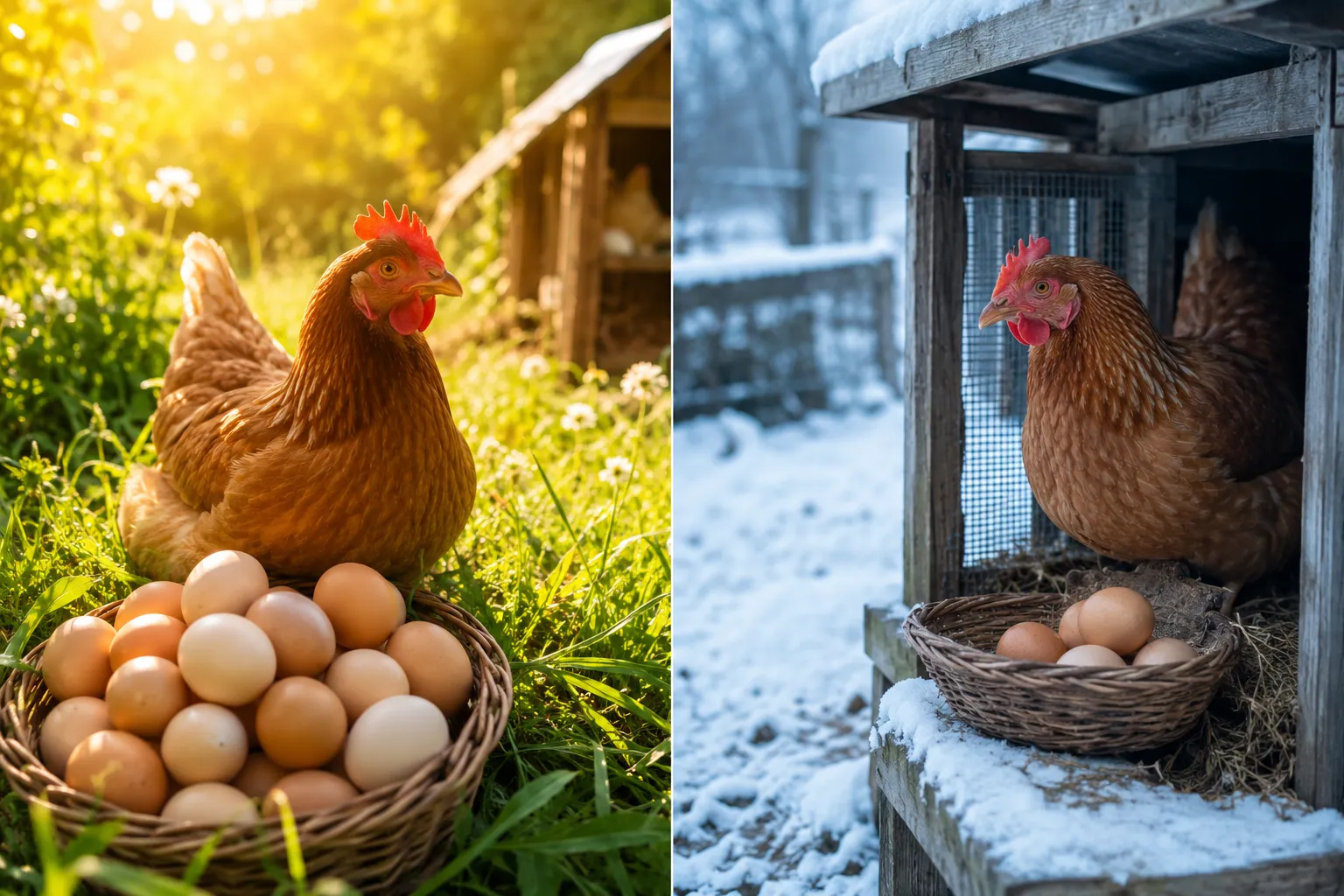
Yes, chickens lay significantly fewer eggs in winter due to reduced daylight hours, which trigger hormonal changes that slow or stop egg production. Most hens reduce laying by 30-80% during winter months unless provided with supplemental lighting.
Why winter reduces egg production:
Chickens need 14-16 hours of daylight to maintain peak laying. As fall days shorten, the hen’s pituitary gland reduces production of reproductive hormones, signaling her body to conserve energy for survival rather than egg production. This natural cycle allows wild birds to avoid raising chicks during harsh conditions.
Typical winter production patterns:
- No supplemental light: Production drops 50-80%, many hens stop entirely
- With supplemental light: Production drops 20-40%, most hens continue laying
- Coldest months (December-February): Lowest production even with light
- Spring return: Production rebounds rapidly as daylight increases naturally
Other winter factors affecting laying:
- Cold stress: Energy diverted to staying warm rather than producing eggs
- Frozen water: Dehydration stops laying quickly
- Poor nutrition: Hens need extra calories in cold weather
- Molting timing: Many hens molt in fall, stopping laying for 8-16 weeks
- Reduced activity: Less foraging means fewer nutrients
Should you add supplemental light?
Add light if:
- You need consistent egg supply year-round
- Your hens are young (first or second winter)
- You provide excellent nutrition and care
- You use a timer for gradual, consistent lighting (not sudden changes)
Skip supplemental light if:
- You want to follow natural cycles
- Your hens are older (3+ years) and need rest
- You’re comfortable with seasonal egg fluctuations
- You prioritize hen longevity over winter production
How to add light safely: Use a timer to provide 14-16 hours of total light (natural + artificial). Add light in the morning rather than evening, so hens aren’t caught off roost when lights suddenly go out. Increase gradually (15 minutes per week) rather than all at once.
What to Feed Chickens to Increase Egg Laying
Feed chickens a complete layer feed containing 16-18% protein, supplemented with calcium (oyster shell), fresh water, and occasional treats to maximize egg production. Proper nutrition directly impacts laying frequency, egg size, and shell quality.
Essential components of a laying hen diet:
1. Layer feed (primary diet):
- Protein content: 16-18% for active layers
- Form: Pellets, crumbles, or mash (pellets reduce waste)
- Quality: Fresh feed stored in sealed containers (discard moldy feed immediately)
- Amount: Free-choice access or 1/4 pound per hen daily
2. Calcium supplementation:
- Oyster shell: Offer free-choice in a separate container
- Why it matters: Each egg shell requires 2 grams of calcium; deficiency causes soft or thin shells
- Don’t over-supplement: Excess calcium in feed harms non-laying birds; free-choice lets hens self-regulate
3. Fresh, clean water:
- Critical importance: Eggs are 74% water; dehydration stops laying within 24-48 hours
- Amount: Hens drink 1-2 cups daily, more in hot weather
- Temperature: Prevent freezing in winter, provide cool water in summer
4. Grit:
- Purpose: Helps grind food in the gizzard
- When needed: Essential if hens eat anything besides commercial feed
- Type: Insoluble granite grit (not calcium-based)
Beneficial supplements and treats (10% or less of diet):
- Protein-rich treats: Mealworms, black soldier fly larvae, scrambled eggs, fish
- Vegetables: Leafy greens, squash, cucumbers, pumpkin
- Grains: Scratch grains (corn, wheat, oats) in moderation
- Kitchen scraps: Vegetable peels, fruit (avoid avocado, chocolate, onions, raw beans)
Foods that harm laying:
- Too many treats: Dilutes nutrition, reduces laying
- Bread and junk food: Empty calories, nutritional deficiency
- Salty or sugary foods: Health problems
- Toxic foods: Avocado, chocolate, raw beans, moldy feed
Common nutritional mistakes:
- Feeding scratch grains as primary diet (too low in protein and calcium)
- Mixing calcium into feed instead of offering free-choice (harms non-layers)
- Allowing feed to get wet or moldy
- Inconsistent feeding schedules causing stress
- Insufficient water access
Feeding strategy for maximum production: Provide unlimited access to quality layer feed, free-choice oyster shell, constant fresh water, and limit treats to 10% of diet. This simple approach meets all nutritional needs without complicated supplementation.
How to Tell If a Chicken Is About to Lay an Egg
A hen about to start laying shows physical changes including a reddened comb and wattles, squatting behavior when approached, increased vocalization, and frequent visits to nesting boxes. These signs typically appear 1-2 weeks before the first egg.
Physical signs of laying readiness:
- Comb and wattles: Change from pale pink to bright red and increase in size
- Pelvic bones: Widen to about two fingers’ width apart (check by gently feeling the bones on either side of the vent)
- Vent: Becomes larger, moist, and pale (compared to the small, dry, yellow vent of non-layers)
- Body weight: Pullets fill out and look more mature
Behavioral signs:
- Squatting: Hen crouches low when you approach or touch her back (submissive mating position)
- Nesting box interest: Spends time exploring boxes, rearranging bedding
- Singing: “Egg song” (loud, repetitive clucking) before or after laying
- Restlessness: Pacing, appearing uncomfortable, going in and out of boxes
- Increased appetite: Eating more to support egg production
Day-of-laying behaviors:
On the actual day a hen lays, she typically becomes restless 1-2 hours before, visits the nesting box multiple times, and may vocalize more. After laying, many hens announce their accomplishment with a loud “egg song” that can last several minutes.
First-time layers: Pullets laying their first eggs may seem confused, lay eggs on the coop floor or in odd locations, and take several weeks to establish consistent nesting box habits. Provide multiple boxes with soft bedding and place fake eggs or golf balls to encourage proper nesting.
False alarms: Some hens show nesting behavior but don’t lay, especially if they’re broody (wanting to hatch eggs) or if environmental stress interrupts the laying cycle.
Common Reasons Chickens Aren’t Laying Eggs
Chickens stop laying due to age, molting, insufficient daylight, poor nutrition, stress, illness, broodiness, or hidden eggs. Systematic troubleshooting helps identify and resolve the issue.
Top 10 reasons for no eggs:
1. Age factors:
- Too young (under 18-24 weeks)
- Too old (past peak production years)
- Natural decline in older hens
2. Molting:
- Annual feather replacement (8-16 weeks without eggs)
- Typically occurs in fall
- Completely normal and necessary
3. Insufficient daylight:
- Less than 14 hours of light daily
- Winter months without supplemental lighting
- Sudden changes in light schedule
4. Nutritional deficiencies:
- Low-quality or old feed
- Insufficient protein (below 16%)
- Calcium deficiency
- Lack of fresh water
5. Stress:
- Predator threats or attacks
- Flock disruptions (new birds, pecking order fights)
- Coop changes or moves
- Loud noises or disturbances
6. Illness or parasites:
- Respiratory infections
- Mites, lice, or worms
- Reproductive disorders
- Injury
7. Broodiness:
- Hen wants to hatch eggs
- Sits on nest 24/7
- Stops laying until broodiness breaks
8. Hidden eggs:
- Laying in secret locations outside coop
- Under bushes, in tall grass, or hidden corners
- Common in free-range flocks
9. Egg eating:
- Hens or predators eating eggs before collection
- Broken eggs teach hens to eat them
- Requires immediate intervention
10. Environmental extremes:
- Extreme heat (above 90°F)
- Extreme cold (below 20°F)
- Poor ventilation
- Overcrowding
Systematic troubleshooting checklist:
- ✓ Verify hen age and breed expectations
- ✓ Check for molting (missing feathers, new pin feathers)
- ✓ Measure daylight hours (natural + artificial)
- ✓ Inspect feed quality and protein content
- ✓ Ensure constant access to fresh water
- ✓ Look for signs of illness or parasites
- ✓ Search for hidden nests
- ✓ Review recent changes or stressors
- ✓ Check for broodiness (hen sitting constantly)
- ✓ Examine coop conditions (space, ventilation, cleanliness)
When multiple hens stop simultaneously: This usually indicates environmental or nutritional issues rather than individual health problems. Check feed quality, water access, daylight hours, and recent stressors first.
Difference Between Backyard Chickens and Commercial Laying Hens
Backyard chickens typically lay 3-5 eggs per week in natural conditions with varied diets and outdoor access, while commercial laying hens are bred for maximum production (5-7 eggs weekly) in controlled environments optimized for efficiency. The differences extend to breed selection, housing, nutrition, lifespan, and management practices.
Key differences:
Production levels:
- Backyard: 150-250 eggs per year average, seasonal variation
- Commercial: 280-320 eggs per year, consistent year-round production
Breeds:
- Backyard: Mix of heritage, dual-purpose, and production breeds chosen for temperament and hardiness
- Commercial: Exclusively high-production hybrids (White Leghorns, ISA Browns, Hy-Line)
Housing:
- Backyard: Coops with outdoor runs or free-range access, 2-4 square feet per bird indoors
- Commercial: Cage-free barns or enriched colony cages, higher density, climate-controlled
Lighting:
- Backyard: Natural daylight or optional supplemental light
- Commercial: Controlled 14-16 hour light cycles year-round for consistent production
Nutrition:
- Backyard: Layer feed plus treats, kitchen scraps, foraged insects and plants
- Commercial: Precisely formulated feed for maximum efficiency, no variation
Lifespan:
- Backyard: Often kept 5-10 years as pets after laying declines
- Commercial: Culled at 18-24 months when production drops below profitable levels
Health management:
- Backyard: Individual attention, veterinary care for sick birds, lower disease pressure
- Commercial: Flock-level management, biosecurity protocols, higher disease risk due to density
Egg quality differences:
Backyard eggs often have richer yolks (darker orange) due to varied diet and outdoor access, while commercial eggs are more uniform in size and appearance. Nutritional content is similar when both receive quality feed, though backyard eggs from pasture-raised hens may have higher omega-3 fatty acids and vitamins.
Which is better?
Neither is objectively better, they serve different purposes. Backyard chickens provide fresh eggs, pest control, fertilizer, and companionship for small-scale keepers. Commercial operations efficiently supply affordable eggs to millions of consumers. Your choice depends on your goals, space, time commitment, and values.
Frequently Asked Questions
Can chickens lay two eggs in one day?
No, chickens cannot lay two eggs in one day. The egg formation process takes 24-26 hours from ovulation to laying, making it biologically impossible for a hen to produce two complete eggs within 24 hours. If you find two eggs in one nest box, they came from different hens.
Do chickens need light at night to lay eggs?
No, chickens need darkness at night for proper rest. They require 14-16 hours of light total per day for optimal laying, but this should be followed by 8-10 hours of complete darkness. Constant light causes stress and health problems without improving production.
Why are my chicken eggs getting smaller?
Eggs get smaller due to stress, heat, nutritional deficiencies (especially protein or calcium), illness, or as hens age past their peak years. Young pullets also lay small eggs initially. Ensure quality layer feed, fresh water, and comfortable conditions to maintain egg size.
How can I tell if my hen is egg-bound?
An egg-bound hen appears lethargic, stands with a wide stance or penguin-like posture, strains repeatedly without producing an egg, has a swollen abdomen, and may have labored breathing. This is a medical emergency requiring immediate intervention, soak her in warm water and contact a veterinarian if the egg doesn’t pass within a few hours.
Do chickens lay eggs in the winter without a heat lamp?
Yes, chickens lay in winter without heat lamps if they have adequate shelter, food, and water. Cold-hardy breeds tolerate temperatures well below freezing. Heat lamps are generally unnecessary and pose fire risks. Production drops due to reduced daylight, not cold temperatures.
What time of day do chickens usually lay eggs?
Most chickens lay eggs in the morning, typically between 7 AM and 11 AM. Some hens lay in early afternoon. Laying time is influenced by when the hen wakes up and her individual cycle. Hens rarely lay at night since egg formation pauses during sleep.
Can you eat eggs immediately after a chicken lays them?
Yes, freshly laid eggs are safe to eat immediately. However, they’re easier to peel for hard-boiling after aging in the refrigerator for 7-10 days. Fresh eggs have a protective coating (bloom) that keeps them safe at room temperature for 2-3 weeks if unwashed.
How many nesting boxes do I need for my chickens?
Provide one nesting box for every 3-4 hens. Chickens often share favorite boxes rather than using one per bird, so you don’t need a 1:1 ratio. Boxes should be 12x12x12 inches for standard breeds, filled with soft bedding, and placed in a quiet, darker area of the coop.
Why do my chickens lay eggs on the floor instead of in nesting boxes?
Floor laying occurs when boxes are too high, too small, dirty, in a bright location, or when hens haven’t been trained to use them. Place fake eggs or golf balls in boxes to encourage use, ensure boxes are accessible before hens start laying, and keep them clean and inviting.
Do different colored eggs taste different?
No, egg shell color (white, brown, blue, green) doesn’t affect taste or nutrition. Egg flavor depends on the hen’s diet, not shell color. Hens eating varied diets with access to insects and greens produce richer-tasting eggs regardless of shell color.
How long can eggs stay in the nesting box before collecting?
Collect eggs daily for best quality and to prevent breakage or egg eating. Eggs can safely remain in clean nesting boxes for several days in moderate temperatures, but daily collection prevents problems and ensures freshness. In hot weather (above 85°F), collect twice daily.
Will chickens stop laying if you take their eggs?
No, removing eggs doesn’t stop laying. Hens continue producing eggs regardless of collection unless they become broody (wanting to hatch a clutch). Regular egg collection actually prevents broodiness and maintains consistent production.
Conclusion
Understanding how often chickens lay eggs empowers you to set realistic expectations, choose appropriate breeds, and provide the care your flock needs for optimal production. Most backyard hens lay 3-6 eggs per week during their peak years, with significant variation based on breed, age, season, nutrition, and management practices.
Key actions to maximize your flock’s egg production:
- Choose breeds aligned with your goals: Select high-production hybrids for maximum eggs or heritage breeds for hardiness and longevity
- Provide quality nutrition: Offer 16-18% protein layer feed, free-choice oyster shell, and constant fresh water
- Ensure adequate light: Maintain 14-16 hours of daylight during laying season, either naturally or with supplemental lighting
- Minimize stress: Keep a stable flock, protect from predators, and maintain clean, comfortable housing
- Monitor health: Watch for signs of illness, parasites, or nutritional deficiencies and address issues promptly
- Accept natural cycles: Understand that molting, winter slowdowns, and age-related decline are normal
Remember that even the best-managed flock won’t produce an egg per hen per day year-round. Seasonal variation, individual differences, and natural rest periods are part of keeping healthy, happy chickens. Focus on providing excellent care rather than pushing for maximum production, and your hens will reward you with years of fresh eggs and enjoyable backyard companionship.
Whether you’re planning your first flock or troubleshooting production issues with existing birds, the principles remain the same: good genetics, proper nutrition, adequate light, low stress, and attentive care create the foundation for consistent egg laying. Start with realistic expectations based on your chosen breeds, and you’ll enjoy the satisfaction of collecting fresh eggs from your own backyard flock.