
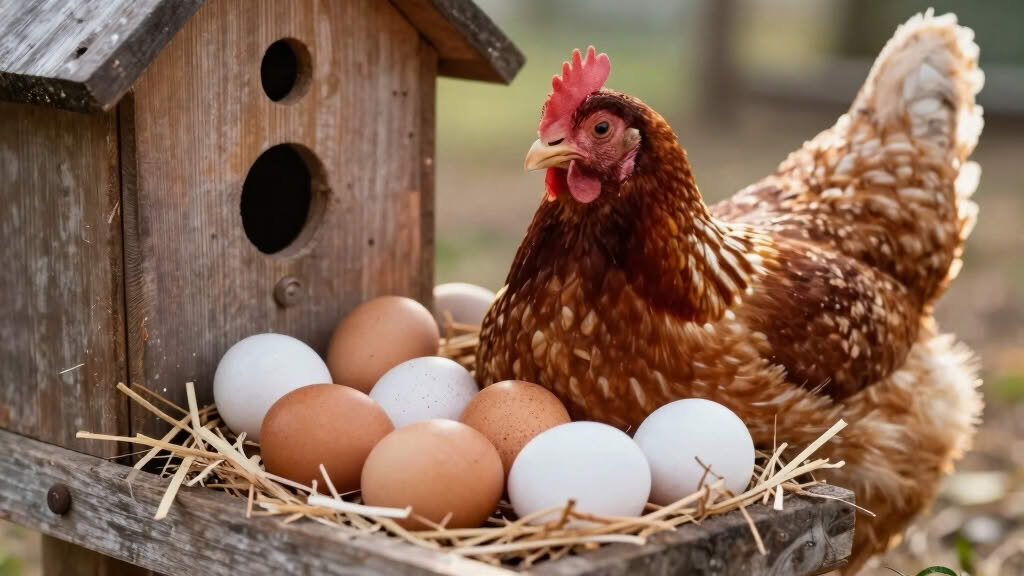
A backyard hen typically lays between 200 and 280 eggs per year, depending on her breed, age, and living conditions. High-production breeds like Leghorns can reach 300 eggs annually, while heritage breeds often produce 150-200 eggs. Understanding how many eggs per year does a hen lay helps backyard chicken keepers set realistic expectations and choose the right breeds for their needs.
Key Takeaways
- Average production: Most backyard hens lay 200-280 eggs per year, with peak production in their first two years
- Breed matters: Commercial breeds like Leghorns produce 280-320 eggs annually, while heritage breeds average 150-200
- Age affects output: Hens lay most eggs between 6 months and 2 years old, then decline by 10-20% each year
- Seasonal changes: Egg production drops significantly in winter due to reduced daylight hours
- Health and diet: Proper nutrition, clean water, and stress-free environments directly impact laying rates
- Commercial vs. backyard: Industrial hens are bred for maximum output but have shorter productive lives than backyard birds
- Cost consideration: A hen producing 250 eggs per year can save $50-75 compared to store-bought organic eggs
How Many Eggs Does a Chicken Lay Per Year on Average?
The average backyard chicken lays approximately 250 eggs per year during her prime laying years. This breaks down to roughly 4-5 eggs per week, though production varies by season, breed, and individual bird health.
Most hens begin laying around 18-24 weeks of age and reach peak production within their first year. During this prime period, a healthy hen from a good laying breed will produce:
- High-production breeds: 280-320 eggs annually
- Dual-purpose breeds: 200-250 eggs annually
- Heritage breeds: 150-200 eggs annually
- Ornamental breeds: 100-150 eggs annually
The first two years represent peak productivity. After age two, expect a gradual decline of 10-20% per year. By year five, many hens produce only 50-60% of their original output, though they can continue laying for several more years at reduced rates.
Common mistake: New chicken keepers often expect consistent daily eggs year-round. In reality, even the best layers take breaks during molting (feather replacement), extreme weather, and shorter winter days.
Do All Chicken Breeds Lay the Same Number of Eggs?
No, chicken breeds vary dramatically in egg production, with some laying three times as many eggs as others. Breed selection is the single biggest factor determining how many eggs per year does a hen lay in your backyard flock.
High-Production Breeds (280-320 eggs/year):
- White Leghorn
- Golden Comet
- ISA Brown
- Black Star
Excellent Backyard Layers (250-280 eggs/year):
- Rhode Island Red
- Australorp
- Sussex
- Plymouth Rock
Moderate Layers (150-200 eggs/year):
- Orpington
- Wyandotte
- Brahma
- Marans
Light Layers (100-150 eggs/year):
- Silkie
- Polish
- Cochin
- Serama
Choose high-production breeds if maximizing eggs is your priority. Select dual-purpose or heritage breeds if you value cold hardiness, broodiness (natural incubation), or meat production alongside eggs. Ornamental breeds make wonderful pets but won’t fill your egg basket.
What Affects How Many Eggs a Hen Lays Annually?
Multiple environmental and biological factors influence annual egg production beyond breed genetics. Understanding these variables helps backyard keepers optimize their flock’s output.
Key factors that impact laying rates:
Daylight hours: Hens need 14-16 hours of light daily to maintain peak production. Shorter winter days naturally reduce laying unless supplemental lighting is provided.
Age: Peak production occurs from 6 months to 2 years old. After that, expect a 10-20% annual decline in output.
Nutrition: Layer feed with 16-18% protein, plus calcium supplementation (oyster shells), is essential. Poor nutrition directly reduces egg quantity and quality.
Stress levels: Predator threats, overcrowding, frequent handling, or flock disruptions trigger stress hormones that halt laying.
Health status: Parasites (mites, lice, worms), respiratory infections, and reproductive disorders all decrease production.
Molting: Annual feather replacement requires significant protein and energy, stopping egg production for 8-16 weeks.
Temperature extremes: Heat above 85°F and cold below 20°F both reduce laying rates as hens divert energy to temperature regulation.
Water access: Even brief water shortages can stop laying for days. Hens need constant access to clean, fresh water.
Decision rule: If your hen suddenly stops laying but appears healthy, check for hidden nest sites before assuming a health problem. Hens often find creative laying spots outside the coop.
Best Egg Laying Chicken Breeds for Backyard Flocks
Rhode Island Reds, Australorps, and Golden Comets consistently rank as the top backyard layers, combining high production (250-300 eggs/year) with hardiness and friendly temperaments.
Top 5 backyard laying breeds:
1. Rhode Island Red
- Annual production: 250-300 brown eggs
- Temperament: Hardy, independent, occasionally bossy
- Best for: Beginners wanting reliable layers in any climate
2. Australorp
- Annual production: 250-280 light brown eggs
- Temperament: Calm, friendly, excellent foragers
- Best for: Families with children, cold climates
3. Golden Comet (hybrid)
- Annual production: 280-320 brown eggs
- Temperament: Docile, people-oriented
- Best for: Maximum egg production in small spaces
4. Sussex
- Annual production: 250-280 cream/light brown eggs
- Temperament: Curious, friendly, good foragers
- Best for: Free-range setups, dual-purpose needs
5. Leghorn
- Annual production: 280-320 white eggs
- Temperament: Active, flighty, independent
- Best for: Experienced keepers prioritizing production over handling
Avoid these mistakes: Don’t mix aggressive breeds (like some Rhode Island Reds) with docile breeds (like Silkies) without monitoring flock dynamics. Don’t choose Mediterranean breeds (Leghorns, Anconas) if you want friendly, handleable birds.
How Long Do Chickens Lay Eggs Before They Stop?
Chickens can lay eggs for 5-10 years, but production declines significantly after age three. Most backyard hens remain productive enough to justify their feed costs for 3-5 years, while commercial operations typically replace layers after just 18-24 months.
Typical laying timeline:
- Months 0-5: Pre-laying pullet stage
- Months 6-24: Peak production (90-100% of breed potential)
- Years 2-3: High production (70-80% of peak)
- Years 3-5: Moderate production (50-60% of peak)
- Years 5-7: Low production (30-40% of peak)
- Years 7+: Sporadic laying (10-20% of peak)
Hens never completely stop laying unless they develop reproductive disorders. However, by age seven, most hens lay only 1-2 eggs per week compared to 5-6 eggs weekly during their prime.
Cost consideration: A three-year-old hen eating $20 of feed monthly while producing 12 eggs (worth $6-8) operates at a loss. Many backyard keepers continue caring for older hens as pets rather than culling based on productivity.
Why Did My Hen Stop Laying Eggs Suddenly?
Sudden egg production stops usually result from stress, molting, broodiness, or hidden health issues rather than permanent reproductive failure. Most hens resume laying once the underlying cause is addressed.
Common causes of sudden laying stops:
Molting (most common): Annual feather replacement typically occurs in fall, stopping egg production for 2-4 months. Look for feather loss around the neck and back.
Broodiness: Some breeds enter a hormonal state focused on hatching eggs, refusing to leave the nest. Breaking broodiness restores laying within 1-2 weeks.
Stress events: New flock members, predator attacks, coop moves, or loud construction can halt laying for days to weeks.
Hidden nests: Free-range hens often create secret laying spots. Search bushes, under porches, and in tall grass before assuming health problems.
Parasites: Heavy mite or lice infestations drain energy and stop production. Check under wings and around the vent for tiny moving specks.
Poor nutrition: Switching feeds, running out of layer pellets, or calcium deficiency can stop laying within days.
Egg binding: A stuck egg causes distress and stops further production. Affected hens appear lethargic with a penguin-like stance.
Troubleshooting steps: Check for molting first (easiest to identify), then inspect for parasites, verify feed quality, search for hidden nests, and finally assess for illness requiring veterinary care.
Difference Between Commercial Layers and Backyard Hens Egg Production
Commercial laying hens produce 300-320 eggs annually in their single productive year, while backyard hens average 200-250 eggs per year but remain productive for 3-5 years. The difference reflects breeding priorities: industrial operations maximize short-term output, while backyard breeds balance production with longevity and hardiness.
Commercial operation characteristics:
- Hybrid breeds engineered for maximum production
- Controlled 16-hour lighting year-round
- Precisely formulated high-protein feeds
- Climate-controlled housing
- Culled at 18-24 months when production drops
- Average 310-320 eggs in their productive year
Backyard flock characteristics:
- Heritage or dual-purpose breeds
- Natural daylight cycles (unless supplemented)
- Standard layer feed with treats and foraging
- Outdoor access and variable weather exposure
- Kept for 5-10+ years as production declines
- Average 200-250 eggs annually during peak years
Why the difference matters: Commercial operations treat chickens as production units, replacing them when output declines. Backyard keepers typically value their birds as individuals, accepting lower productivity in exchange for longer lifespans, natural behaviors, and breed diversity.
How Many Eggs Do Rhode Island Reds Lay Per Year?
Rhode Island Reds lay 250-300 brown eggs per year during their peak production years, making them one of the most reliable backyard laying breeds. Individual birds vary, with some exceptional hens reaching 280-300 eggs annually while others produce closer to 200.
Rhode Island Red production details:
- First year: 260-300 eggs (peak production)
- Second year: 240-280 eggs
- Third year: 200-240 eggs
- Fourth year and beyond: 150-200 eggs
These hardy birds continue laying through cold winters better than many breeds, though production still drops during the shortest days. Rhode Island Reds typically begin laying around 18-20 weeks of age and maintain good production for 3-4 years before significant decline.
Egg characteristics: Medium to large brown eggs, occasionally with darker speckles. Shell quality remains good throughout their productive years.
Temperament note: Rhode Island Reds rank as excellent layers but can be assertive or aggressive, especially toward more docile breeds. They work best in flocks of similarly hardy, confident birds.
Do Hens Lay Eggs in Winter or Do They Stop?
Most hens significantly reduce egg production in winter due to shorter daylight hours, though they rarely stop completely unless temperatures drop below 20°F or daylight falls below 12 hours daily. Winter production typically drops to 30-50% of summer output without supplemental lighting.
Winter laying patterns:
Without supplemental light:
- November-January: 1-2 eggs per week (down from 5-6)
- Coldest weeks: Some hens stop entirely
- Production resumes as days lengthen in February
With supplemental light (14-16 hours total):
- Maintains 70-80% of summer production
- Requires timer-controlled coop lighting
- Adds stress and may shorten overall productive lifespan
Factors affecting winter production:
- Breed: Mediterranean breeds (Leghorns) are more light-sensitive than cold-hardy breeds (Australorps, Wyandottes)
- Coop temperature: Insulated coops maintain better production than drafty structures
- Nutrition: Higher protein and calorie intake supports both warmth and egg production
- Molting timing: Hens molting in fall won’t resume laying until winter ends
Decision rule: Add supplemental lighting if you need consistent winter eggs, but accept that forcing year-round production may reduce total lifetime egg output. Many backyard keepers allow natural winter breaks, viewing them as healthy rest periods.
How to Increase Egg Production in Backyard Chickens
Optimizing nutrition, lighting, and stress management can increase backyard flock production by 15-30% without compromising bird health. Focus on the factors you can control rather than pushing hens beyond their genetic potential.
Proven strategies to boost laying:
1. Provide 14-16 hours of light daily
Install a timer-controlled light to extend daylight during short winter days. Add light in the morning rather than evening to allow natural roosting behavior.
2. Feed high-quality layer pellets (16-18% protein)
Avoid cheap feeds with excessive filler. Supplement with protein-rich treats like mealworms, black soldier fly larvae, or scrambled eggs.
3. Offer free-choice calcium
Keep crushed oyster shells available separately from feed. Hens self-regulate calcium intake based on shell production needs.
4. Ensure constant fresh water access
Use heated waterers in winter and shaded, cool water in summer. Even brief water shortages halt production.
5. Minimize stress and disruption
Maintain consistent routines, protect against predators, avoid frequent flock changes, and provide adequate space (4 square feet per bird in the coop, 10 square feet in the run).
6. Control parasites proactively
Inspect monthly for mites and lice. Provide dust bathing areas with diatomaceous earth mixed into sand or dry dirt.
7. Maintain ideal temperatures
Provide shade and ventilation in summer, insulation and draft protection in winter. Extreme temperatures divert energy from egg production.
8. Replace older hens strategically
Add new pullets annually to maintain flock productivity as older birds decline. A mixed-age flock provides more consistent output.
Common mistake: Overfeeding treats (corn, scratch grains, kitchen scraps) dilutes protein intake and reduces laying. Treats should comprise no more than 10% of total diet.
At What Age Do Chickens Start Laying Eggs?
Most chickens begin laying eggs between 18 and 24 weeks of age, though breed, season, and nutrition affect the exact timing. Larger heritage breeds often start later (24-28 weeks) while production hybrids may begin as early as 16 weeks.
Typical laying start ages by breed type:
- Production hybrids: 16-20 weeks (Golden Comets, ISA Browns)
- Light breeds: 18-22 weeks (Leghorns, Anconas)
- Dual-purpose breeds: 20-24 weeks (Rhode Island Reds, Australorps)
- Heavy breeds: 24-28 weeks (Orpingtons, Brahmas)
- Bantams: 20-26 weeks (varies by breed)
Signs a pullet is about to start laying:
- Comb and wattles turn bright red and enlarge
- Squatting behavior when approached (submissive posture)
- Increased vocalization and restlessness
- Exploring nesting boxes
- Pelvic bones widen (space for egg passage)
First eggs: Expect small “pullet eggs” initially, sometimes with soft shells or irregular shapes. Size and quality normalize within 2-4 weeks as the reproductive system matures.
Seasonal factor: Pullets reaching laying age in fall may delay production until spring due to decreasing daylight. Those maturing in spring typically start on schedule.
Is It Worth Keeping Chickens Just for Eggs? Cost Analysis
Keeping backyard chickens for eggs costs $15-25 per dozen when accounting for feed, housing, and healthcare, making them more expensive than store-bought eggs but comparable to premium organic eggs priced at $6-8 per dozen. The financial value depends on how you calculate setup costs and whether you value fresh eggs, entertainment, and pest control beyond pure economics.
Annual cost breakdown (4-hen flock):
Ongoing costs:
- Feed: $400-600 (layer pellets, treats, supplements)
- Bedding: $100-150 (pine shavings, straw)
- Healthcare: $50-100 (preventive care, occasional treatment)
- Total annual: $550-850
First-year setup costs:
- Coop and run: $500-2,000 (DIY to pre-built)
- Feeders and waterers: $50-100
- Pullets: $80-120 (4 birds at $20-30 each)
- Total first year: $1,180-3,070
Production estimate: 4 hens averaging 250 eggs each = 1,000 eggs annually (83 dozen)
Cost per dozen (year one): $14-37 including setup
Cost per dozen (ongoing years): $6.60-10.25
Break-even analysis: If you value fresh eggs at $6 per dozen (organic store price), you’ll recover ongoing costs but not initial setup. If you value them at $8-10 per dozen (farmers market premium), chickens become cost-neutral after year two.
Non-financial benefits:
- Superior egg quality (richer yolks, fresher)
- Pest control (chickens eat ticks, grubs, insects)
- Fertilizer production (nitrogen-rich manure)
- Entertainment and educational value
- Food security and self-sufficiency
Decision rule: Keep chickens for eggs if you value fresh, high-quality food and enjoy animal husbandry. Don’t keep them purely to save money unless you already have infrastructure and can source cheap feed.
Common Mistakes That Reduce Egg Laying in Hens
Poor nutrition, inadequate lighting, and unmanaged stress account for most preventable production losses in backyard flocks. Avoiding these common errors can maintain production at 80-90% of breed potential.
Top mistakes that reduce laying:
1. Feeding scratch grains as primary diet
Scratch is candy, not complete nutrition. It lacks the protein and calcium needed for egg production. Use layer pellets as the base diet, limiting scratch to 10% of intake.
2. Inconsistent water access
Dirty, frozen, or empty waterers halt production within hours. Check water twice daily, especially in extreme weather.
3. Overcrowding the coop
Less than 4 square feet per bird creates stress, aggression, and reduced laying. Provide adequate space or reduce flock size.
4. Allowing hidden nests
Free-range hens laying in secret spots appear to have stopped production. Search thoroughly before assuming health problems.
5. Ignoring parasites
Mites and lice drain energy and stress birds, cutting production by 20-40%. Inspect monthly and treat at first signs.
6. Skipping calcium supplementation
Layer feed contains calcium, but free-choice oyster shells allow hens to self-regulate for optimal shell quality and production.
7. Disrupting the flock frequently
Adding new birds, moving the coop, or changing routines triggers stress responses that stop laying for days or weeks.
8. Expecting year-round production without light
Natural daylight cycles mean winter slowdowns. Accept seasonal variation or add supplemental lighting.
9. Keeping only old hens
A flock of 4+ year-old birds produces 50% less than mixed ages. Add pullets annually to maintain output.
10. Providing inadequate nesting boxes
Fewer than one box per 3-4 hens causes competition and stress. Provide clean, dark, private nesting areas.
Do Older Hens Lay Fewer Eggs Than Young Chickens?
Yes, older hens lay significantly fewer eggs than young chickens, with production declining 10-20% annually after age two. A five-year-old hen typically produces only 40-50% of the eggs she laid during her first year, though individual variation exists.
Age-based production decline:
| Hen Age | Production Level | Eggs/Year (250-egg breed) |
|---|---|---|
| 6-18 months | Peak (100%) | 250-280 |
| 18-30 months | High (90-95%) | 225-265 |
| 2-3 years | Good (70-80%) | 175-200 |
| 3-4 years | Moderate (50-60%) | 125-150 |
| 4-5 years | Low (40-50%) | 100-125 |
| 5+ years | Minimal (20-30%) | 50-75 |
Why production declines:
- Reproductive system ages and becomes less efficient
- Egg follicles deplete (hens are born with finite follicles)
- Hormonal changes reduce laying frequency
- Overall health and vigor decrease with age
Egg quality changes: Older hens often lay larger eggs with thinner shells and weaker membranes. The eggs remain safe to eat but may have reduced shelf life.
Flock management strategy: Maintain a mixed-age flock by adding 2-3 pullets annually. This provides consistent production as older birds decline while allowing you to keep retired hens as pets if desired.
Ethical consideration: Many backyard keepers continue caring for older, low-producing hens rather than culling them. This is a personal choice balancing economics, ethics, and attachment to individual birds.
Frequently Asked Questions
How many eggs does a hen lay in her lifetime?
A hen can lay 1,500-2,500 eggs over her lifetime, depending on breed and how long she lives. High-production breeds may reach 2,000-2,500 eggs across 5-7 years, while heritage breeds average 1,200-1,800 eggs over similar lifespans.
Can a chicken lay 2 eggs in one day?
No, chickens cannot lay two eggs in one day. Egg formation takes 24-26 hours, making daily production the biological maximum. If you find two eggs, either multiple hens are laying or a hen held an egg overnight and laid it alongside the current day’s egg.
Do chickens need a rooster to lay eggs?
No, hens lay eggs without a rooster present. Roosters are only necessary for fertile eggs that can hatch into chicks. Unfertilized eggs are identical in nutrition and taste to fertilized eggs.
How long after chickens start laying do they lay regularly?
Pullets typically establish regular laying patterns 2-4 weeks after their first egg. Initial production may be sporadic with small or oddly shaped eggs before the reproductive system fully matures.
What time of day do chickens usually lay eggs?
Most hens lay eggs in the morning, typically between 7 AM and 11 AM. Some individuals lay in early afternoon, but evening laying is rare. Consistent daily routines help establish predictable laying times.
Do chickens lay eggs every day?
High-production breeds lay 5-6 eggs per week (not quite daily), while most backyard breeds average 4-5 eggs weekly during peak production. No chicken lays 365 eggs per year due to molting, weather, and natural rest periods.
How can you tell if a chicken is going to lay an egg soon?
A hen about to lay will spend time in the nesting box, vocalize with distinctive “egg song” clucking, and may appear restless. Her abdomen feels full and firm, and she may squat when approached.
Why are my chickens laying small eggs?
Small eggs are normal for young pullets just starting to lay. If mature hens suddenly lay small eggs, check for stress, poor nutrition, extreme heat, or health issues. Egg size typically increases with hen age until year three.
How many nesting boxes do I need for my hens?
Provide one nesting box for every 3-4 hens. Chickens often share favorite boxes rather than using individual spaces, so four boxes easily serve a flock of 12-15 birds.
Can you eat eggs from old chickens?
Yes, eggs from older hens are safe and nutritious to eat. They may have thinner shells and larger yolks relative to white, but quality remains good if hens are healthy and well-fed.
Do different colored eggs taste different?
No, egg shell color (white, brown, blue, green) does not affect taste or nutrition. Flavor differences come from diet, freshness, and hen health, not genetics determining shell color.
How do I know if my hen is egg-bound?
An egg-bound hen appears lethargic, stands with a penguin-like posture, strains without producing an egg, and may have a swollen abdomen. This is a medical emergency requiring warm baths, lubrication, and potentially veterinary intervention.
Conclusion
Understanding how many eggs per year does a hen lay empowers backyard chicken keepers to choose appropriate breeds, set realistic expectations, and optimize flock management for consistent production. Most backyard hens produce 200-280 eggs annually during their peak years, with breed, age, nutrition, and environment all playing crucial roles in actual output.
The key to maximizing your flock’s productivity lies in selecting breeds matched to your goals, providing excellent nutrition with adequate protein and calcium, maintaining proper lighting during short winter days, and minimizing stress through good husbandry practices. Remember that even the best layers experience natural production declines after age two and seasonal slowdowns during winter months and molting periods.
Take action now:
- Evaluate your current flock: Track individual hen production for 2-3 weeks to identify high and low performers
- Audit nutrition and environment: Verify feed quality, water access, lighting duration, and coop conditions
- Plan for succession: Add 2-3 pullets annually to maintain consistent flock productivity as older birds decline
- Set realistic goals: Accept that backyard flocks won’t match commercial production, and value the non-financial benefits of fresh eggs and chicken keeping
Whether you’re keeping chickens primarily for eggs or enjoying them as productive pets, understanding their natural laying patterns and needs ensures both happy hens and a steady supply of fresh eggs for your kitchen.


![How Many Chickens for a Dozen Eggs a Week? [2026 Guide]](https://chickencoopguide.com/storage/2026/07/how-many-chickens-for-a-dozen-eggs-a-week-2026-guide-870x570.jpg)

![How Many Chickens for a Dozen Eggs a Week? [2026 Guide]](https://chickencoopguide.com/storage/2026/07/how-many-chickens-for-a-dozen-eggs-a-week-2026-guide.jpg)