
Quick Answer
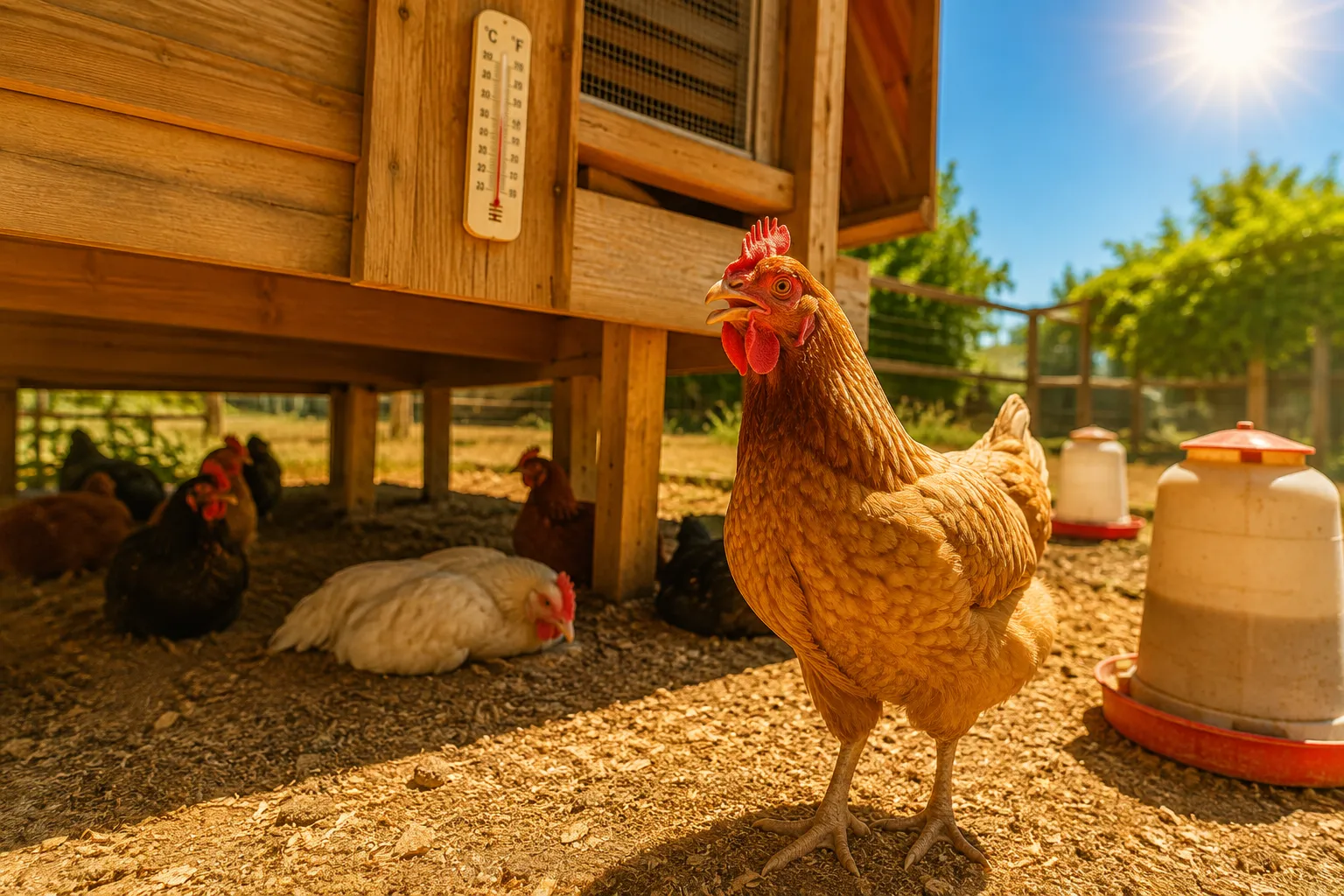
Chickens begin experiencing heat stress when temperatures climb above 85°F (29°C), and temperatures exceeding 95°F (35°C) become dangerous, especially when combined with high humidity. Unlike humans, chickens cannot sweat and rely on panting and behavioral changes to regulate body temperature. When ambient temperature approaches or exceeds a chicken’s normal body temperature of 105-107°F (40-42°C), heat stroke becomes a life-threatening emergency.
Key Takeaways
- Critical threshold: Chickens start showing heat stress above 85°F, with serious danger above 95°F
- Humidity matters: High humidity prevents evaporative cooling through panting, making moderate temperatures more dangerous
- Breed differences: Heavy, cold-hardy breeds like Orpingtons struggle more than Mediterranean breeds like Leghorns
- Warning signs: Open-mouth panting, wing spreading, lethargy, and pale combs signal heat stress
- Immediate action: Cool water, shade, ventilation, and frozen treats can prevent heat stroke
- Heat stroke is deadly: Without intervention, overheated chickens can die within hours
- Prevention works best: Proactive cooling measures before temperatures peak save lives
- Chicks need different care: Young birds have different temperature needs than adults
- Water is essential: Chickens drink 2-3 times more water in hot weather than in cool conditions
- Never delay treatment: Heat stroke requires immediate cooling and veterinary attention
What Temperature Is Dangerous for Chickens?
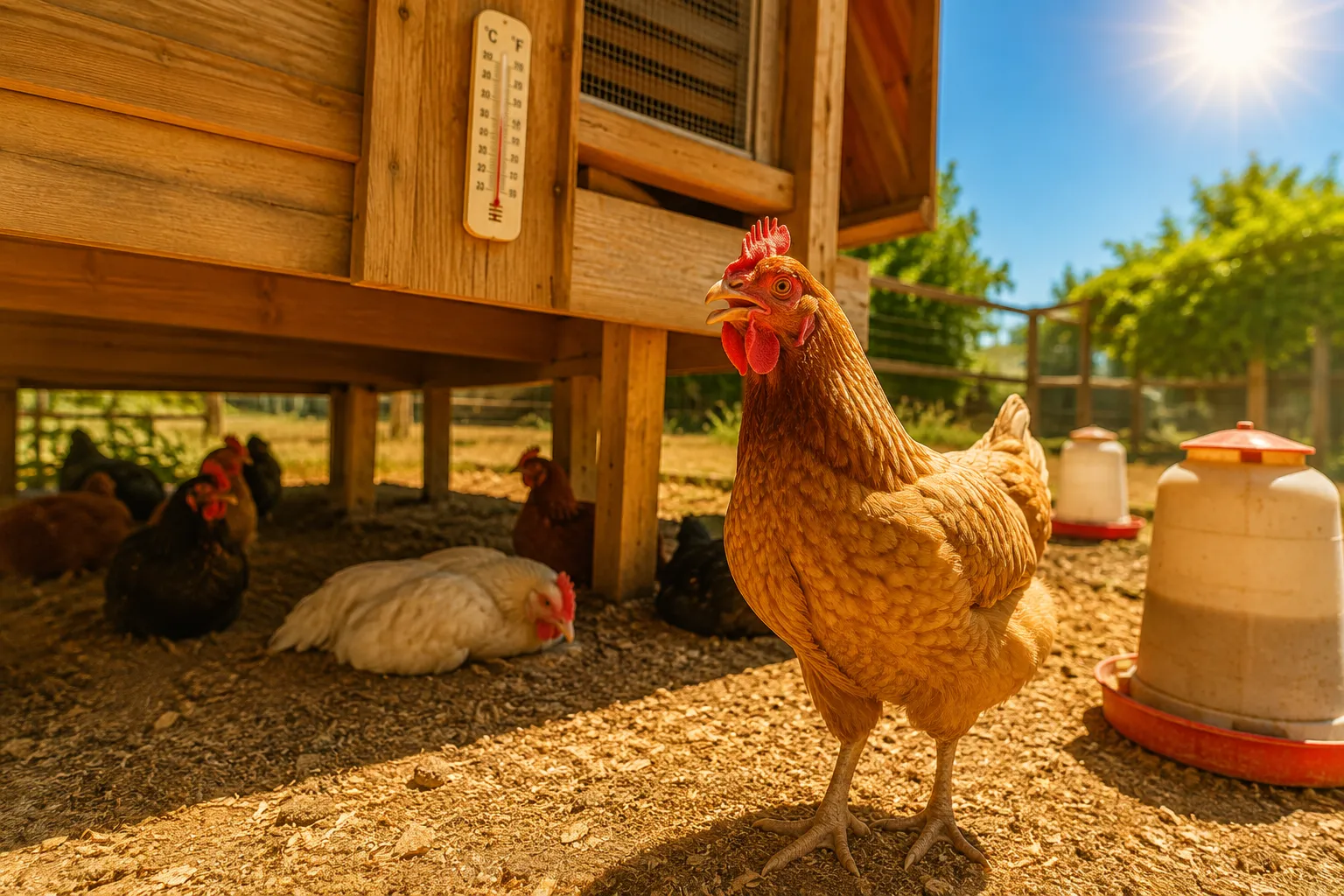
Chickens face heat stress when temperatures exceed 85°F (29°C), and the danger escalates significantly above 95°F (35°C). The risk depends on humidity levels, breed, age, and how quickly temperatures rise.
Temperature danger zones:
- 75-85°F (24-29°C): Comfortable range for most adult chickens; monitor heavy breeds
- 85-90°F (29-32°C): Early heat stress begins; chickens start panting and seeking shade
- 90-95°F (32-35°C): Moderate heat stress; increased water consumption and reduced activity
- 95-100°F (35-38°C): Severe heat stress; immediate cooling measures required
- Above 100°F (38°C): Life-threatening conditions; heat stroke risk is high
Humidity amplifies danger. A chicken can tolerate 90°F with low humidity better than 85°F with 80% humidity because high moisture in the air prevents effective evaporative cooling through panting. The combination of temperature and humidity creates a “heat index” that determines actual risk.
Common mistake: Assuming chickens can handle heat because they’re “farm animals.” Chickens are more vulnerable to heat than cold and can die within hours of heat stroke onset.
How Do Chickens Cool Themselves Down in Hot Weather?
Chickens cool themselves primarily through panting, behavioral changes, and increased blood flow to their combs and wattles, since they lack sweat glands. These cooling mechanisms become less effective as temperature and humidity rise.
Primary cooling methods:
- Panting: Chickens breathe rapidly with open beaks to evaporate moisture from their respiratory system
- Wing spreading: Holding wings away from the body exposes skin and increases air circulation
- Wattle and comb circulation: Blood flows to these unfeathered areas to release heat
- Reduced activity: Chickens become lethargic to minimize heat-generating movement
- Dust bathing: Digging into cool soil helps lower body temperature
- Shade seeking: Moving to covered areas reduces direct sun exposure
Why this matters: Understanding these natural cooling behaviors helps you recognize when they’re not working. If a chicken is panting heavily but still appears distressed, its cooling system is overwhelmed.
Choose shade structures if your coop lacks natural tree cover. Artificial shade cloth blocking 70-90% of sunlight significantly reduces heat stress compared to full sun exposure.
Signs of Heat Stress in Chickens
Heat-stressed chickens display visible behavioral and physical changes including open-mouth panting, outstretched wings, reduced activity, and pale combs. Recognizing these signs early allows intervention before heat stroke develops.
Early warning signs:
- Open-beak breathing or panting
- Wings held away from body
- Reduced eating and increased drinking
- Seeking shade or cool ground
- Decreased egg production
- Pale or lighter-colored combs and wattles
Advanced heat stress indicators:
- Heavy, labored panting
- Lethargy or inability to stand
- Stumbling or loss of balance
- Diarrhea or watery droppings
- Seizures or convulsions
- Unconsciousness
Decision rule: If you observe early signs, implement cooling measures immediately. If you see advanced signs, treat as a heat stroke emergency requiring aggressive cooling and potential veterinary care.
Difference Between Heat Stress and Heat Stroke in Chickens
Heat stress is the body’s struggle to maintain normal temperature through increased panting and behavioral changes, while heat stroke occurs when cooling mechanisms fail completely and body temperature rises to dangerous levels causing organ damage. Heat stress is reversible with intervention; heat stroke can be fatal.
Heat stress characteristics:
- Body temperature elevated but below critical levels
- Chicken is alert but uncomfortable
- Responds to cooling measures within 30-60 minutes
- No permanent damage if addressed promptly
Heat stroke characteristics:
- Body temperature exceeds 113°F (45°C)
- Chicken may be unresponsive or seizing
- Organ systems begin failing
- Requires immediate emergency treatment
- Can result in death even with treatment
The progression: Heat stress becomes heat stroke when the chicken’s cooling capacity is overwhelmed. This transition can happen quickly, within 1-2 hours in extreme conditions.
Edge case: Chickens recovering from illness or with respiratory issues progress from stress to stroke faster because their cooling systems are already compromised.

Best Ways to Keep Chickens Cool in Summer
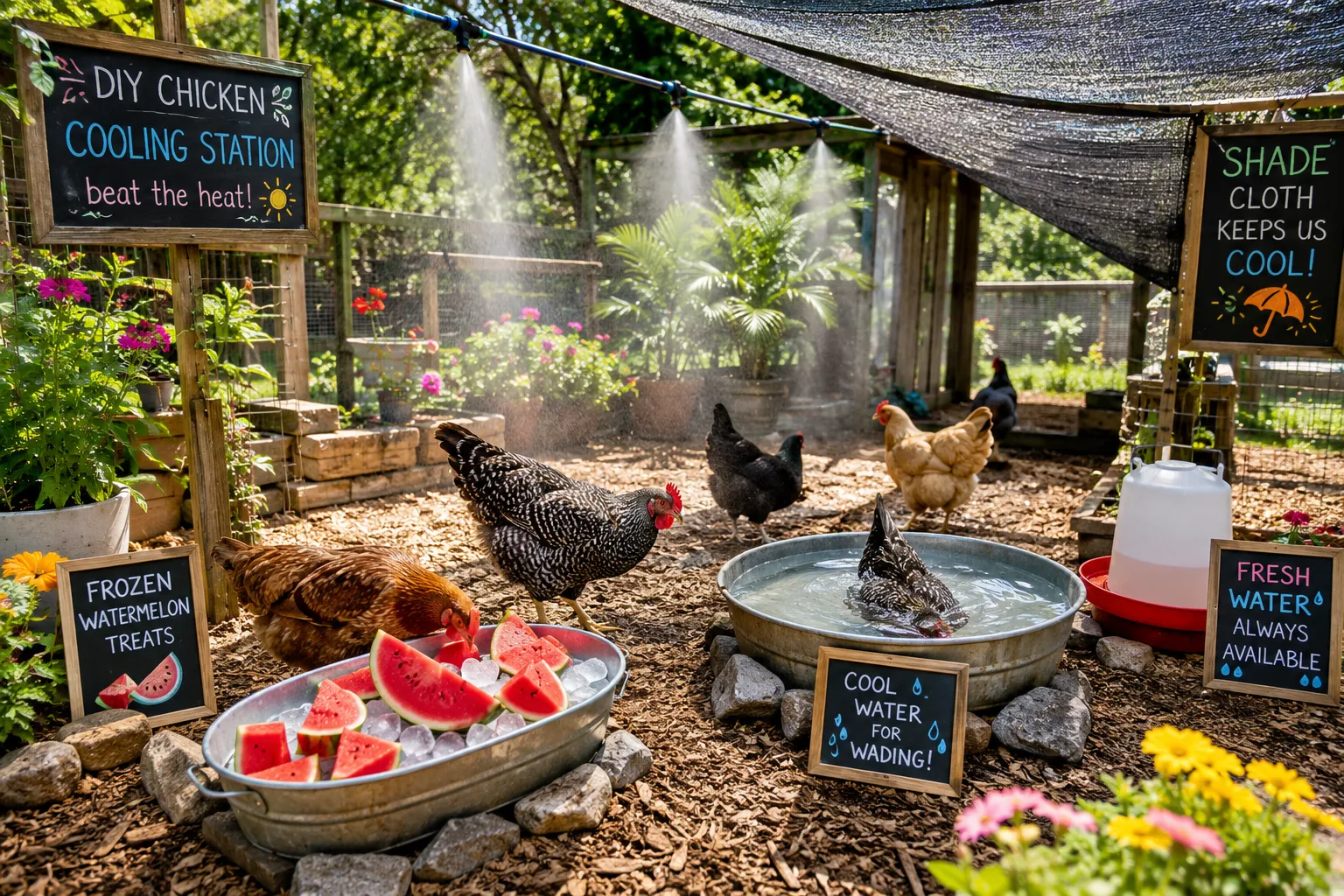
The most effective cooling strategies combine shade, ventilation, cold water access, and evaporative cooling methods like misters or frozen treats. Implementing multiple cooling methods provides redundancy when temperatures spike unexpectedly.
Essential cooling measures:
- Provide abundant shade: Use trees, shade cloth, or tarps to cover 75% or more of the run area
- Ensure ventilation: Open coop windows and vents to create cross-breeze; avoid blocking airflow
- Supply fresh, cool water: Offer multiple water stations; refresh every 2-3 hours during peak heat
- Add frozen water bottles: Place large frozen bottles in the coop for chickens to sit near
- Create wading areas: Shallow pans (1-2 inches deep) allow chickens to cool their feet
- Install misters: Fine mist systems cool the air through evaporation without soaking chickens
Advanced cooling techniques:
- Freeze large blocks of ice in milk jugs and place in the run
- Offer frozen fruits and vegetables as treats
- Wet down the ground in shaded areas for cool dust bathing
- Use fans to increase air circulation (ensure cords are protected)
- Apply reflective paint or insulation to coop roofs
Common mistake: Closing coop doors and windows to “keep heat out.” Chickens need maximum airflow during hot weather; trapped air becomes dangerously hot even in shade.
Do Certain Chicken Breeds Handle Heat Better Than Others?
Mediterranean and lighter-bodied breeds like Leghorns, Andalusians, and Minorcas tolerate heat significantly better than heavy, cold-hardy breeds like Brahmas, Cochins, and Orpingtons. Body size, feather density, and comb type all influence heat tolerance.
Heat-tolerant breeds:
- Leghorns: Light body, large single comb for heat dissipation
- Andalusians: Mediterranean origin, excellent heat adaptation
- Minorcas: Large combs and wattles, light feathering
- Egyptian Fayoumis: Desert-adapted, highly heat resistant
- Naked Necks: Reduced feathering provides natural cooling
Heat-sensitive breeds:
- Brahmas: Heavy body mass, dense feathering
- Cochins: Thick plumage, large size
- Orpingtons: Heavy dual-purpose breed with dense feathers
- Wyandottes: Rose combs (less heat dissipation), moderate size
- Silkies: Unique feathering traps heat
Choose heat-tolerant breeds if you live in consistently hot climates (southern U.S., desert regions). If you already have heat-sensitive breeds, provide extra cooling measures and monitor them more closely during heat waves.
Can Chickens Die from Being Too Hot?
Yes, chickens can die from heat stroke within 2-4 hours if their body temperature exceeds safe levels and they cannot cool down. Heat-related deaths are common during sudden heat waves when chickens haven’t acclimated and owners haven’t implemented cooling measures.
Mortality risk factors:
- Sudden temperature spikes (10°F+ increase in 24 hours)
- High humidity combined with high temperature
- Lack of shade or ventilation
- Limited water access
- Obesity or poor health
- Heavy breeds in extreme heat
- Overcrowded coops with poor airflow
Timeline of heat death: A healthy chicken in 105°F heat with no cooling options may show severe distress within 1-2 hours and die within 3-4 hours. Heat stroke damage to organs can cause delayed death 24-48 hours after the heat event.
Prevention is critical because once heat stroke begins, survival rates drop significantly even with treatment. Proactive cooling measures before temperatures peak are far more effective than emergency intervention.
How to Treat a Chicken with Heat Stroke
Immediately move the chicken to shade and begin gradual cooling with room-temperature water applied to feet, legs, and under wings while offering cool drinking water. Rapid cooling can cause shock, so avoid ice-cold water or ice directly on the bird.
Emergency treatment steps:
- Move to cool location: Transfer to shaded, well-ventilated area immediately
- Apply cool water: Dip feet and legs in room-temperature water; wet feathers under wings
- Offer drinking water: Provide cool (not ice-cold) water with electrolytes if available
- Increase air circulation: Use a fan on low setting directed near (not at) the chicken
- Monitor closely: Check every 10-15 minutes for improvement or deterioration
- Avoid ice: Never apply ice directly; gradual cooling prevents shock
Electrolyte solution recipe: Mix 1 tablespoon sugar, 1/4 teaspoon salt, and 1/4 teaspoon baking soda in 1 quart of water to help restore hydration and electrolyte balance.
When to seek veterinary care: If the chicken doesn’t respond within 30 minutes, shows seizures, remains unconscious, or has difficulty breathing, contact an avian veterinarian immediately.
Recovery period: Keep the chicken in a cool, quiet area for 24-48 hours after heat stroke. Organ damage may not be immediately apparent, and relapses can occur if the bird is returned to heat too quickly.
What Temperature Do Chickens Need Shade and Water?
Chickens require access to shade and fresh water whenever temperatures exceed 75°F (24°C), with increased importance as temperatures climb toward 85°F (29°C) and above. Water consumption doubles or triples in hot weather compared to moderate temperatures.
Water requirements by temperature:
- Below 75°F: Standard water access (1-2 cups per chicken daily)
- 75-85°F: Increased water needs (2-3 cups per chicken daily); check twice daily
- 85-95°F: High water consumption (3-4 cups per chicken daily); refresh every 2-3 hours
- Above 95°F: Critical water needs (4+ cups per chicken daily); provide multiple stations
Shade requirements:
- Provide shade covering at least 50% of outdoor space when temperatures exceed 75°F
- Increase to 75-100% shade coverage above 85°F
- Ensure shade is available during peak sun hours (10 AM – 4 PM)
Water station placement: Position waterers in shaded areas to keep water cool. Direct sun can heat water to 90°F+ within an hour, making it less effective for cooling.
Common mistake: Assuming one waterer is sufficient during heat waves. Chickens may crowd around water sources, preventing subordinate birds from drinking. Offer at least one waterer per 5-6 chickens during extreme heat.
Mistakes People Make Keeping Chickens Cool in Heat
The most common mistakes include waiting until chickens show distress before acting, providing insufficient water stations, blocking ventilation, and assuming chickens will naturally find ways to cool down. Proactive preparation prevents heat-related deaths.
Critical mistakes to avoid:
- Reactive instead of proactive: Waiting for heat stress signs rather than preparing before heat arrives
- Insufficient water: Providing only one waterer for a large flock or failing to refill frequently
- Poor ventilation: Closing coop openings or blocking airflow with solid walls
- No shade planning: Relying on inadequate natural shade or coop-only shade
- Ignoring humidity: Focusing only on temperature without considering moisture levels
- Overcrowding: Too many chickens in limited space generates excess body heat
- Feeding during peak heat: Offering high-protein feeds that increase metabolic heat production
- Neglecting breed differences: Treating all chickens the same regardless of heat tolerance
Better approach: Check weather forecasts weekly during summer and implement cooling measures 24 hours before predicted heat waves. This gives chickens time to discover and use cooling resources.
Edge case: Chickens molting (regrowing feathers) are more vulnerable to both heat and cold. They need extra monitoring during temperature extremes because their insulation is compromised.
Is 100 Degrees Too Hot for Chickens?
Yes, 100°F (38°C) is dangerously hot for chickens and requires immediate implementation of all available cooling measures to prevent heat stroke. At this temperature, chickens are at high risk of death without aggressive intervention, especially if humidity is above 50%.
What happens at 100°F:
- Panting becomes heavy and constant
- Chickens stop eating entirely
- Water consumption increases 3-4 times normal
- Egg production drops or stops
- Heat stroke risk is severe
- Mortality can occur within 2-3 hours without cooling
Emergency measures for 100°F+ weather:
- Provide multiple shade options covering entire outdoor area
- Set up misters or sprinklers to cool ambient air
- Offer frozen treats every 2-3 hours
- Place multiple large frozen water bottles in coop and run
- Ensure cross-ventilation with fans if possible
- Check flock every 30-60 minutes for distress signs
- Prepare emergency cooling supplies (towels, water, electrolytes)
Decision rule: If temperatures are forecast to reach 100°F, consider keeping chickens in the coolest available location (basement, garage with ventilation, or shaded coop) rather than allowing free-range access to potentially hotter areas.
Do Baby Chicks Handle Heat Differently Than Adult Chickens?
Baby chicks require supplemental heat for the first 4-6 weeks of life but become vulnerable to overheating if brooder temperatures aren’t reduced weekly. Chicks need 90-95°F in week one, decreasing by 5°F weekly until they’re fully feathered, after which they handle heat like adults.
Chick temperature schedule:
- Week 1: 90-95°F under heat lamp
- Week 2: 85-90°F
- Week 3: 80-85°F
- Week 4: 75-80°F
- Week 5: 70-75°F
- Week 6+: Ambient temperature (if fully feathered)
Signs chicks are too hot:
- Moving away from heat source to brooder edges
- Panting with open beaks
- Lying flat with wings spread
- Reduced eating and excessive drinking
Signs chicks are too cold:
- Huddling tightly under heat source
- Chirping loudly and constantly
- Piling on top of each other
Critical difference: While adult chickens struggle with heat above 85°F, young chicks still need warmth in that range until they develop full feathering. The transition period (weeks 4-6) requires careful monitoring as chicks become more heat-sensitive but may not be fully feathered.
Best practice: Provide a temperature gradient in the brooder so chicks can self-regulate by moving toward or away from the heat source.
Frozen Treats and Foods to Cool Down Chickens
Frozen fruits, vegetables, and ice blocks provide both hydration and entertainment while helping chickens cool down internally. Watermelon, cucumbers, and berries are particularly effective because of their high water content.
Best frozen treats for chickens:
- Watermelon: 92% water content; freeze in chunks or whole slices
- Cucumbers: Hydrating and low-calorie; freeze slices or whole
- Berries: Blueberries, strawberries, and raspberries freeze well
- Grapes: Cut in half to prevent choking; freeze on trays
- Corn: Freeze whole ears for extended pecking activity
- Leafy greens: Freeze cabbage or lettuce heads for pecking entertainment
- Fruit ice blocks: Freeze berries or melon chunks in water in large containers
How to serve frozen treats:
- Freeze treats overnight in containers or bags
- Offer during hottest part of day (12 PM – 4 PM)
- Place in shaded areas to slow melting
- Provide multiple treat stations to prevent competition
- Remove uneaten treats after 2-3 hours to prevent spoilage
Avoid these foods: Never freeze and offer avocado, chocolate, raw beans, or moldy foods, as these are toxic to chickens regardless of temperature.
Frequency guideline: Treats should comprise no more than 10% of daily diet, even during heat waves. Frozen treats are cooling aids, not meal replacements.
When to Bring Chickens Indoors During Heat Wave
Bring chickens indoors when outdoor temperatures exceed 105°F (40°C) or when heat index (temperature plus humidity) creates life-threatening conditions that outdoor cooling measures cannot adequately address. Indoor locations must have ventilation and be cooler than outdoor temperatures.
Criteria for bringing chickens inside:
- Temperature forecast above 105°F for multiple hours
- Heat index above 110°F due to high humidity
- Chickens showing severe heat stress despite outdoor cooling measures
- Power outage preventing fans or misters from operating
- Lack of adequate outdoor shade or cooling options
- Vulnerable birds (elderly, molting, or recovering from illness)
Suitable indoor locations:
- Basement: Usually coolest area; ensure ventilation
- Garage: Only if cooler than outside and well-ventilated (never with running vehicles)
- Bathroom: Easy to clean; provide ventilation
- Laundry room: Tile floors easy to clean; keep away from appliances
- Covered porch: If significantly cooler and shaded
Indoor setup requirements:
- Secure containment (dog crate, large box, or temporary pen)
- Absorbent bedding (towels, newspaper, or pine shavings)
- Multiple water stations
- Ventilation (fan, open window, or air conditioning)
- Protection from household hazards (other pets, toxic plants, chemicals)
Common mistake: Bringing chickens into air-conditioned spaces that are too cold (below 65°F). Sudden temperature changes can cause shock. Aim for indoor temperatures of 70-75°F.
Return outdoors when: Temperature drops below 95°F and chickens show normal behavior (alert, eating, normal breathing). Transition during cooler morning or evening hours.
FAQ
At what temperature do chickens start to overheat?
Chickens begin experiencing heat stress when temperatures exceed 85°F (29°C), with the risk increasing significantly above 90°F. Humidity levels above 60% make moderate temperatures more dangerous by preventing effective evaporative cooling through panting.
How can you tell if a chicken is too hot?
A chicken that’s too hot will pant with an open beak, hold wings away from its body, appear lethargic, seek shade constantly, and may have pale combs. Severe overheating causes stumbling, inability to stand, or unconsciousness requiring immediate intervention.
Can chickens recover from heat stroke?
Chickens can recover from heat stroke if treated immediately with gradual cooling, fresh water, and electrolytes, but survival depends on how quickly intervention begins. Organ damage from severe heat stroke may cause delayed death 24-48 hours later even with treatment.
Should I hose down my chickens in hot weather?
Misting chickens lightly or wetting their feet and legs helps cool them, but avoid soaking their feathers completely as wet plumage reduces insulation and can cause stress. Focus on cooling the environment with misters rather than directly spraying birds.
What is the ideal temperature range for chickens?
Adult chickens are most comfortable between 65-75°F (18-24°C). They tolerate cold better than heat and can handle temperatures down to 20°F with proper shelter, but struggle significantly when temperatures exceed 85°F.
Do chickens need a fan in hot weather?
Fans significantly improve chicken comfort in hot weather by increasing air circulation and evaporative cooling. Position fans to create cross-ventilation without blowing directly on roosting chickens, and ensure electrical cords are protected from pecking.
How much water do chickens drink in hot weather?
Chickens drink 2-4 times more water in hot weather than in moderate temperatures, consuming up to 4 cups per bird daily when temperatures exceed 95°F. Provide multiple water stations and refresh every 2-3 hours during extreme heat.
Can chickens have ice cubes?
Yes, chickens can safely peck at ice cubes or frozen water bottles. Adding ice cubes to waterers keeps drinking water cool, and large frozen bottles placed in the coop or run provide cool spots for chickens to rest near.
What time of day is hottest for chickens?
The hottest and most dangerous time for chickens is typically 12 PM to 4 PM when sun intensity peaks and ambient temperatures reach their maximum. Implement cooling measures before noon and monitor chickens closely during these peak hours.
Should I stop feeding chickens in extreme heat?
Reduce or delay feeding during extreme heat because digestion generates metabolic heat. Offer feed during cooler morning and evening hours, and reduce high-protein feeds that increase internal heat production. Chickens naturally eat less in hot weather.
How long does it take for a chicken to die from heat?
A chicken experiencing heat stroke can die within 2-4 hours without intervention, though timeline varies based on temperature, humidity, breed, and individual health. Sudden temperature spikes above 100°F with high humidity create the fastest mortality risk.
Are dark-colored chickens more susceptible to heat?
Dark feathers absorb more solar radiation than light feathers, making dark-colored chickens slightly more vulnerable to heat stress in direct sun. However, breed characteristics (body size, feather density, comb type) have greater impact on heat tolerance than feather color alone.
Conclusion
Understanding how hot is too hot for chickens means recognizing that temperatures above 85°F begin causing stress, while conditions above 95°F become life-threatening without proper cooling measures. The combination of temperature and humidity determines actual risk, with high moisture levels making moderate temperatures dangerous by preventing effective evaporative cooling.
Take action now by assessing your current setup before the next heat wave arrives. Install shade structures covering at least 75% of your chicken run, ensure multiple water stations are available, and prepare frozen treats and cooling supplies in advance. Check weather forecasts regularly during summer months and implement cooling measures 24 hours before predicted temperature spikes.
Monitor your flock closely during hot weather, checking every few hours for signs of heat stress like panting, wing spreading, or lethargy. Know the difference between manageable heat stress and emergency heat stroke, and have a treatment plan ready including cool water, electrolytes, and your veterinarian’s contact information.
Remember that prevention works better than treatment. Chickens that die from heat stroke often do so because owners didn’t recognize the danger until too late. By understanding your birds’ heat tolerance, recognizing warning signs early, and maintaining multiple cooling options, you can keep your flock safe and productive even during the hottest summer weather in 2026 and beyond.


