
Quick Answer
Raising backyard chickens ranks as moderately easy, roughly a 4 out of 10 on the difficulty scale for most households. Daily care takes 10-20 minutes and involves feeding, watering, egg collection, and basic observation. The learning curve is steepest in the first three months, but once routines are established, chickens require less hands-on attention than most dogs and comparable effort to maintaining a vegetable garden.
Key Takeaways
- Daily time commitment: 10-20 minutes for basic care (feeding, watering, egg collection), plus 30-60 minutes weekly for coop cleaning
- Startup costs: $500-$1,500 for coop, run, and initial supplies; ongoing costs average $20-$40 monthly per chicken
- Difficulty compared to pets: Easier than dogs (no walks, less training), slightly more involved than cats due to daily outdoor tasks
- Space requirements: Minimum 2-3 square feet per bird inside the coop, 8-10 square feet per bird in the outdoor run
- Full-time work compatibility: Completely feasible; chickens don’t need midday attention and can handle 8-10 hour stretches alone
- Biggest beginner mistakes: Underestimating predator threats, skipping quarantine for new birds, and inadequate coop ventilation
- Seasonal challenges: Winter requires heated waterers and insulation; summer needs shade and ventilation but both are manageable
- Vacation planning: Chickens need daily care; you’ll need a reliable chicken-sitter or neighbor for trips longer than 24 hours
- Family-friendly rating: Excellent for kids ages 5+ with supervision; teaches responsibility and provides gentle, predictable interaction
- Break-even point: Most backyard flocks offset feed costs with egg production within 12-18 months
What Does Raising Backyard Chickens Actually Involve Day to Day?
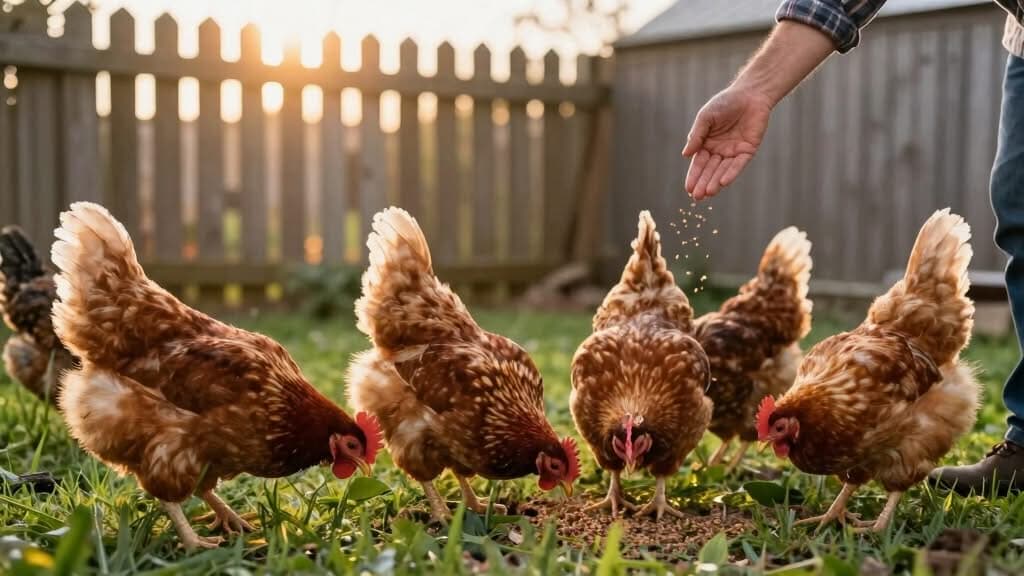
Daily chicken care consists of five core tasks that take 10-20 minutes total. You’ll feed your flock (scattering pellets or filling feeders), refresh water (checking for cleanliness and adequate supply), collect eggs (usually laid by mid-morning), observe each bird for signs of illness or injury, and secure the coop at dusk if you don’t have an automatic door.
Morning routine (5-10 minutes):
- Let chickens out of the coop or open automatic door
- Fill feeders with layer pellets (about 1/4 pound per bird daily)
- Check and refill waterers with fresh, clean water
- Collect eggs from nesting boxes
- Quick visual health check while birds are active
Evening routine (5-10 minutes):
- Ensure all chickens have returned to roost (count heads)
- Close and latch coop door to protect from nocturnal predators
- Top off feeders if needed
- Quick scan for any issues (broken fencing, spilled water)
Weekly tasks (30-60 minutes):
- Clean droppings from roosts and high-traffic areas
- Replace soiled bedding in nesting boxes
- Scrub and refill waterers thoroughly
- Inspect coop for damage, gaps, or pest infestations
Choose chickens if you enjoy brief outdoor tasks twice daily and don’t mind getting your hands dirty occasionally. Skip them if you travel frequently without reliable backup or live in areas with strict HOA restrictions.
How Much Time Per Day Does It Take to Care for Chickens?
Expect to spend 10-20 minutes daily on essential chicken care once your routine is established. This breaks down to roughly 5-10 minutes in the morning (feeding, watering, egg collection) and 5-10 minutes in the evening (securing the coop, head count). Add 30-60 minutes weekly for coop maintenance and bedding changes.
Time requirements increase during specific situations:
Factors that add time:
- Chick-raising phase: Brooding baby chicks requires checking heat lamps and water 2-3 times daily for the first 8 weeks (add 10-15 minutes daily)
- Health issues: A sick bird may need isolation, medication, or vet visits (variable, but plan for 30+ minutes when it occurs)
- Extreme weather: Winter ice removal from waterers or summer heat management adds 5-10 minutes daily
- Larger flocks: Each additional 3-4 birds adds roughly 5 minutes to daily routines
Time-saving strategies:
- Install automatic coop doors ($150-$300) to eliminate evening lock-up
- Use larger feeders and waterers (5-gallon capacity) to reduce daily refills
- Implement deep litter method for bedding, requiring full cleanouts only 2-4 times yearly
- Position coop near your home to minimize walking time
Most people find the time commitment fits easily into morning coffee routines or evening wind-down periods. The tasks are simple enough that children ages 8+ can handle them with minimal supervision.
Is Raising Chickens Harder Than Having a Dog or Cat?
Raising chickens is generally easier than keeping a dog and roughly comparable to cat ownership in terms of daily effort. Chickens don’t require walks, formal training, or constant companionship, but they do need daily outdoor tasks regardless of weather and cannot be left alone for more than 24 hours without care.
Chickens vs. Dogs:
- Easier: No walks, no house training, no separation anxiety, lower vet costs (average $50-$150 annually vs. $500+ for dogs)
- Harder: Must go outside twice daily in all weather; predator protection requires secure infrastructure; can’t take them with you easily
Chickens vs. Cats:
- Easier: No litter box, no furniture scratching, no indoor mess, provide food (eggs) rather than just consuming resources
- Harder: Require outdoor housing and weather protection; can’t skip a day of care; need vacation coverage
Key difference: Chickens are livestock, not pets. They don’t seek affection, won’t come when called (usually), and their care is task-based rather than relationship-based. If you want an animal companion for emotional connection, chickens won’t fulfill that role. If you want a productive, low-drama addition to your homestead routine, they excel.
Common mistake: Treating chickens like indoor pets. They’re messy, carry salmonella on their feathers and feet, and shouldn’t be handled excessively or brought inside living spaces.
How Much Does It Cost to Start Raising Chickens and Monthly Expenses?
Initial startup costs for a small backyard flock of 4-6 chickens range from $500 to $1,500, depending on whether you build or buy your coop. Ongoing monthly expenses average $20-$40 per chicken annually, or roughly $7-$15 per bird per month, with feed representing the largest recurring cost.
Startup costs breakdown:
| Item | Budget Option | Mid-Range | Premium |
|---|---|---|---|
| Coop (4-6 birds) | $200-$400 (DIY) | $500-$800 (kit) | $1,000-$2,000 (custom) |
| Run/fencing | $100-$200 | $300-$500 | $600-$1,000 |
| Feeders & waterers | $30-$50 | $60-$100 | $150-$250 (automatic) |
| Bedding & supplies | $40-$60 | $60-$100 | $100-$150 |
| Chicks or pullets | $15-$75 (3-6 birds) | $90-$150 | $150-$300 (heritage breeds) |
| Total | $385-$785 | $1,010-$1,650 | $2,000-$3,700 |
Monthly ongoing costs (per bird):
- Feed: $5-$10 (layer pellets, about 1/4 pound daily)
- Bedding: $1-$2 (pine shavings or straw)
- Treats/supplements: $0.50-$1 (optional grit, oyster shell, mealworms)
- Healthcare: $0.50-$2 (averaged over year; includes occasional medications)
- Utilities: $1-$3 (winter heat lamp electricity, if needed)
Total monthly per bird: $8-$18, or $32-$72 for a four-bird flock.
Cost-saving tips:
- Build your own coop from reclaimed materials (can cut costs by 50-70%)
- Buy pullets (young hens) instead of day-old chicks to skip brooding equipment
- Purchase feed in bulk (50-pound bags) for 20-30% savings
- Use deep litter method to reduce bedding purchases
Most backyard flocks produce 3-5 eggs per bird weekly. At current grocery prices ($4-$7 per dozen for quality eggs), a four-bird flock producing 12-20 eggs weekly saves $50-$100 monthly, offsetting feed costs within the first year.
What Are the Biggest Mistakes Beginners Make with Backyard Chickens?
The three most common beginner mistakes are underestimating predator threats, skipping biosecurity protocols when adding new birds, and providing inadequate coop ventilation. These errors account for the majority of early flock losses and health problems in backyard settings.
Critical mistakes and fixes:
1. Inadequate predator protection
- The mistake: Using chicken wire (keeps chickens in but doesn’t keep predators out), leaving gaps larger than 1/2 inch, or assuming daytime-only threats
- The consequence: Raccoons, foxes, weasels, hawks, and even neighborhood dogs kill chickens; losses often happen suddenly and can wipe out entire flocks overnight
- The fix: Use 1/2-inch hardware cloth on all coop openings, bury fencing 12 inches deep, install secure latches (raccoons can open simple hooks), and cover runs with netting or wire to prevent aerial attacks
2. No quarantine for new birds
- The mistake: Adding new chickens directly to an existing flock without a 30-day isolation period
- The consequence: Introducing diseases (Marek’s, coccidiosis, respiratory infections) that spread to your entire flock
- The fix: Keep new birds in a separate coop or cage at least 10 feet from your flock for 30 days; watch for symptoms before integration
3. Poor ventilation
- The mistake: Sealing coops too tightly to keep out drafts, especially in winter
- The consequence: Ammonia buildup from droppings causes respiratory disease; moisture accumulation leads to frostbite on combs and wattles
- The fix: Install ventilation openings near the roof (above roosting height) that allow air exchange without creating drafts on roosting birds; aim for 1 square foot of ventilation per 10 square feet of floor space
Other frequent errors:
- Overcrowding: Less than 2-3 square feet per bird inside causes stress, pecking, and disease (provide 4 square feet per bird for best results)
- Inconsistent feeding: Switching feed brands abruptly or running out causes digestive upset and egg production drops
- Ignoring early illness signs: Chickens hide weakness; by the time symptoms are obvious, disease is often advanced (check daily for lethargy, reduced appetite, or abnormal droppings)
- No backup plan: Failing to arrange chicken-sitters before vacation leads to last-minute scrambles or neglected birds
Choose to start with 3-4 birds rather than a large flock. Mistakes with a small group are easier to manage and less costly to correct.
Can You Raise Chickens If You Work Full Time?
Yes, raising chickens is completely compatible with full-time work schedules. Chickens don’t require midday attention and can safely stay in their coop and run for 8-10 hours while you’re at work, as long as they have adequate food, water, and shelter from weather and predators.
Why chickens work for 9-to-5 schedules:
- Morning care takes 5-10 minutes before leaving for work
- Chickens are most active at dawn and dusk, aligning with before-work and after-work routines
- They entertain themselves during the day by foraging, dust bathing, and roosting
- Automatic feeders and large waterers (3-5 gallon capacity) can sustain a small flock for 2-3 days without refilling
Optimal setup for working owners:
- Automatic coop door: Opens at sunrise and closes at dusk ($150-$300); eliminates the need to rush home
- Large-capacity feeders and waterers: Reduces daily refill requirements
- Covered run: Allows chickens outdoor access even during rain or snow when you can’t free-range them
- Weekend deep-clean schedule: Reserve coop maintenance for Saturday or Sunday when you have more time
Potential challenges:
- Extreme weather events: Unexpected heat waves or cold snaps during work hours may require midday checks (consider a neighbor or pet-sitter for backup)
- Egg collection timing: Eggs left in nesting boxes all day are fine in moderate weather but may freeze in winter or overheat in summer (insulated coops help)
- Emergency response: If a predator breaches the coop or a bird falls ill during work hours, you can’t respond immediately (good infrastructure minimizes this risk)
Many successful chicken keepers work full-time jobs, including nurses, teachers, and office workers with long commutes. The key is front-loading your setup with quality infrastructure so daily tasks remain quick and predictable.
What Happens If You Forget to Let Chickens Out in the Morning?
If you forget to let chickens out in the morning, they’ll remain safely in the coop until you remember, with minimal consequences for a single occurrence. Chickens can stay confined for 24 hours as long as they have food, water, and adequate space (minimum 2-3 square feet per bird), though they’ll be eager to exit and may be noisier than usual.
Short-term effects (one missed morning):
- Chickens will eat, drink, and lay eggs inside the coop as normal
- Boredom may lead to increased pecking or minor squabbles
- Droppings accumulate faster in the coop, requiring slightly more cleanup
- Egg production remains unaffected for a single day
Repeated or extended confinement problems:
- Behavioral issues: Chickens become stressed, leading to feather pecking, egg eating, or aggression
- Health concerns: Ammonia buildup from droppings in poorly ventilated coops causes respiratory irritation
- Reduced egg production: Stress and lack of exercise can decrease laying after 3-4 days of confinement
Prevention strategies:
- Set phone alarms or calendar reminders for morning chicken care
- Install an automatic coop door with light sensor or timer
- Ask a neighbor to check if you’ll be away overnight
- Create a visible checklist near your coffee maker or front door
Common scenario: Oversleeping on a weekend or leaving early for an appointment. Your chickens will be fine. Let them out when you remember, and they’ll quickly resume normal foraging behavior. This isn’t a crisis, just a minor disruption to their routine.
Are Chickens Good for Families with Young Kids?
Chickens are excellent for families with children ages 5 and older, offering hands-on lessons in responsibility, biology, and food systems while providing gentle, predictable interactions. Younger children (ages 2-4) can participate with close supervision, though they’ll need help with tasks and hand-washing protocols to prevent salmonella transmission.
Benefits for kids:
- Responsibility training: Daily feeding and egg collection create consistent, age-appropriate chores
- Educational value: Children learn about animal behavior, reproduction, nutrition, and where food comes from
- Gentle temperament: Most chicken breeds (Orpingtons, Australorps, Silkies) are calm and tolerate handling well
- Immediate rewards: Collecting fresh eggs provides daily positive reinforcement
- Outdoor time: Chicken care encourages kids to spend time outside in all seasons
Age-appropriate tasks:
- Ages 5-7: Collecting eggs, scattering feed, observing chickens (with supervision)
- Ages 8-10: Filling feeders and waterers, basic coop cleaning, counting chickens at bedtime
- Ages 11+: Full daily care, coop maintenance, health monitoring, independent responsibility
Safety considerations:
- Salmonella risk: Chickens carry salmonella bacteria on feathers, feet, and shells; enforce strict hand-washing after all chicken contact and before eating
- Rooster aggression: Avoid roosters in family flocks; they can be territorial and may spur or chase children
- Pecking behavior: Teach children to approach calmly and avoid sudden movements; even gentle hens will peck at shiny objects (jewelry, buttons)
- Egg handling: Supervise young children during collection to prevent dropping or crushing eggs
Best breeds for families:
- Buff Orpingtons (docile, friendly, cold-hardy)
- Australorps (calm, excellent layers, good with handling)
- Silkies (fluffy, gentle, often broody, great for petting)
- Easter Eggers (friendly, colorful eggs, good foragers)
Avoid flighty Mediterranean breeds (Leghorns, Anconas) or game birds with families, as they’re less tolerant of handling and more prone to stress.
Is It Worth Raising Chickens Just for Eggs or Too Much Work?
Raising chickens for eggs is worth the effort for most households that value fresh, high-quality eggs and don’t mind 15-20 minutes of daily outdoor tasks. A small flock of 4-6 hens produces 12-24 eggs weekly, offsetting feed costs within 12-18 months while providing eggs with richer yolks, firmer whites, and better flavor than most store-bought options.
When it’s worth it:
- You consume at least 1-2 dozen eggs weekly and prefer knowing their source
- You enjoy brief daily outdoor routines and find them relaxing rather than burdensome
- You have space for a coop (minimum 32 square feet for four birds) and secure run
- You value food security and reducing grocery dependence
- You’re interested in composting (chicken manure is excellent for gardens)
When it’s not worth it:
- You travel frequently (more than one weekend monthly) without reliable chicken-sitters
- You live in areas with extreme predator pressure and can’t invest in secure infrastructure
- Your HOA or local ordinances prohibit chickens
- You’re primarily motivated by cost savings alone (break-even takes 1-2 years)
- You have severe allergies to dust, feathers, or animal dander
Real cost-benefit analysis:
- Investment: $500-$1,500 startup, $30-$70 monthly for four hens
- Production: 12-24 eggs weekly (varies by breed and season)
- Grocery equivalent: $50-$100 monthly savings compared to $5-$7/dozen quality eggs
- Break-even timeline: 12-24 months depending on initial investment
Intangible benefits beyond eggs:
- Pest control (chickens eat ticks, mosquitoes, and garden pests)
- Fertilizer production (composted manure improves soil)
- Entertainment value (chickens have distinct personalities and are surprisingly engaging to watch)
- Educational opportunities for children
- Increased self-sufficiency and food system awareness
Most chicken keepers report that the lifestyle benefits and egg quality outweigh the time investment, even if pure financial savings are modest. If you view chickens as a hobby that produces food rather than a money-making venture, you’ll likely find them worthwhile.
Do Chickens Need a Lot of Land or Can You Raise Them in a Small Yard?
Chickens thrive in small yards and don’t require extensive land. A minimum of 2-3 square feet per bird inside the coop and 8-10 square feet per bird in an outdoor run is sufficient, meaning a flock of four chickens needs only a 12-square-foot coop and 40-square-foot run, easily fitting in most suburban backyards.
Space requirements by setup:
Minimum (confined run only):
- Coop: 2-3 sq ft per bird (8-12 sq ft for four chickens)
- Run: 8-10 sq ft per bird (32-40 sq ft for four chickens)
- Total footprint: 40-52 sq ft (roughly 6×8 feet)
Recommended (better health and behavior):
- Coop: 4 sq ft per bird (16 sq ft for four chickens)
- Run: 10-15 sq ft per bird (40-60 sq ft for four chickens)
- Total footprint: 56-76 sq ft (roughly 7×11 feet)
Free-range (part-time yard access):
- Same coop and run minimums, plus supervised time in larger yard
- Allows chickens to forage, reducing feed costs by 10-20%
- Requires secure fencing or supervision to prevent escape and predation
Small-yard strategies:
- Vertical space: Use multi-level roosts and elevated nesting boxes to maximize floor space
- Compact breeds: Bantams require 30-40% less space than standard breeds
- Rotation grazing: Use portable chicken tractors (movable coops) to give chickens fresh ground every few days
- Enrichment: Add perches, dust bath areas, and hanging treats to prevent boredom in smaller spaces
Urban and suburban considerations:
- Check local ordinances (many cities allow 4-6 hens but prohibit roosters)
- Position coops at least 10-20 feet from property lines to minimize neighbor complaints
- Use sound-dampening materials if hens’ egg-laying cackles might disturb close neighbors
- Maintain excellent coop hygiene to prevent odor issues in tight quarters
You don’t need a farm or acreage to raise chickens successfully. Many urban chicken keepers maintain healthy, productive flocks in yards smaller than 1,000 square feet by optimizing coop design and providing adequate enrichment.
What Are Easier Alternatives to Chickens for Fresh Eggs?
Quail are the easiest alternative to chickens for fresh egg production, requiring 75% less space, quieter vocalizations, and faster maturity (laying eggs at 6-8 weeks versus 18-24 weeks for chickens). However, quail eggs are smaller (5 quail eggs equal roughly 3 chicken eggs) and quail are more fragile, with shorter lifespans of 2-3 years compared to chickens’ 5-8 years.
Quail vs. Chickens:
- Space: Quail need only 1 square foot per bird in cages or aviaries
- Noise: Quail coo softly; chickens cackle loudly after laying
- Egg size: Quail eggs are 1/5 the size of chicken eggs (specialty item, harder to use in standard recipes)
- Lifespan: Quail live 2-3 years; chickens live 5-8 years with 2-4 years of peak laying
- Regulations: Some cities that prohibit chickens allow quail as they’re classified differently
Ducks (moderate difficulty, not easier):
- Produce larger eggs with richer yolks, excellent for baking
- Require water source for bathing (kiddie pool minimum)
- Messier than chickens (ducks splash water constantly)
- More cold-hardy but less heat-tolerant than chickens
- Noisier (female ducks quack loudly)
Why chickens remain the best choice for most:
- Eggs are standard size for recipes and meal planning
- Longer productive lifespan spreads startup costs over more years
- Hardier and more forgiving of beginner mistakes
- Better established support networks (vets, feed stores, online communities)
- Dual-purpose breeds provide both eggs and meat if desired
Non-poultry alternatives (not recommended for eggs):
- Buying from local farms: No care required, supports local agriculture, but costs $5-$8/dozen
- Egg co-ops: Share costs and responsibilities with neighbors who keep chickens
- CSA subscriptions: Community Supported Agriculture often includes egg shares
If your primary constraint is space or noise restrictions, quail are worth considering. For most backyard situations, chickens offer the best balance of egg production, ease of care, and long-term value.
How Hard Is It to Keep Chickens Alive in Winter?
Keeping chickens alive in winter is moderately easy in most climates, as chickens are naturally cold-hardy and can tolerate temperatures well below freezing with proper coop preparation. The main challenges are preventing water from freezing, maintaining adequate ventilation without drafts, and ensuring chickens have enough calories to generate body heat.
Winter survival basics:
- Temperature tolerance: Most chicken breeds handle temperatures down to 0°F (-18°C) without supplemental heat if the coop is draft-free and dry
- Cold-hardy breeds: Orpingtons, Wyandottes, Brahmas, and Australorps have thick feathering and small combs (less frostbite risk)
- Vulnerable breeds: Mediterranean breeds (Leghorns) and large-combed varieties (Leghorns, Minorcas) are more susceptible to frostbite
Essential winter preparations:
Coop modifications:
- Add insulation to walls and ceiling (not required but helpful in extreme climates)
- Ensure ventilation openings remain clear (moisture is more dangerous than cold)
- Seal drafts at roost level while maintaining upper ventilation
- Use deep litter method (12+ inches of bedding) for natural heat generation
Water management:
- Use heated waterers or heated bases ($30-$60) to prevent freezing
- Check water 2-3 times daily in extreme cold if you don’t have heated options
- Position waterers in the sunniest coop area to slow freezing
Feeding adjustments:
- Increase feed by 10-15% (chickens burn more calories staying warm)
- Offer cracked corn or scratch grains in evening (digestion generates heat overnight)
- Ensure constant access to food during daylight hours
Common winter mistakes:
- Adding heat lamps: Creates fire risk and prevents chickens from acclimating; if power fails, sudden temperature drop can kill birds
- Sealing coop too tightly: Traps moisture and ammonia, causing respiratory disease and frostbite
- Neglecting water checks: Dehydration kills faster than cold
- Letting chickens outside in deep snow: Chickens dislike walking on snow; provide cleared paths or covered outdoor areas
When supplemental heat is necessary:
- Temperatures consistently below -10°F (-23°C)
- Chicks under 8 weeks old (not fully feathered)
- Sick or injured birds with compromised health
Most backyard chicken keepers in northern climates (USDA zones 3-5) successfully overwinter flocks without heat lamps by focusing on draft prevention, ventilation, and adequate nutrition. Winter egg production drops by 30-50% due to shorter daylight hours, but chickens remain healthy and resume full production in spring.
When Is Raising Chickens Not a Good Idea for Someone?
Raising chickens is not a good idea if you travel frequently without reliable backup care, live in areas with strict HOA restrictions or predator pressure you can’t mitigate, or expect chickens to be a profitable venture rather than a productive hobby. Chickens also aren’t suitable for people with severe dust allergies, limited mobility that makes daily outdoor tasks difficult, or those seeking low-commitment pets.
Clear disqualifiers:
Legal and logistical:
- HOA or city ordinances prohibit poultry (check before purchasing)
- Rental property without landlord permission
- No secure outdoor space (apartment balconies are inadequate)
- Frequent travel (more than one weekend monthly) without chicken-sitter arrangements
Lifestyle incompatibilities:
- Severe allergies to dust, feathers, or animal dander
- Physical limitations preventing daily outdoor tasks in all weather
- Inconsistent schedule making twice-daily care unreliable
- Expecting immediate return on investment (break-even takes 1-2 years)
Unrealistic expectations:
- Wanting chickens as cuddly indoor pets (they’re outdoor livestock)
- Assuming chickens are “set and forget” like fish (they need daily attention)
- Planning to profit from egg sales (small-scale operations rarely generate meaningful income after expenses)
- Believing chickens will eliminate all food waste (they can’t eat onions, avocado, chocolate, or many other scraps)
Environmental challenges:
- Extreme climates without ability to invest in climate-controlled coops
- High predator density (urban coyotes, rural foxes) without budget for secure infrastructure
- Very small yards (under 200 sq ft) with no vertical space options
- Neighbors extremely close (under 10 feet) who may complain about noise or odor
Better alternatives for these situations:
- Frequent travelers: Buy eggs from local farms or farmers markets
- Allergy sufferers: Join a CSA or egg co-op
- Apartment dwellers: Consider quail in approved indoor setups (check local laws)
- Limited mobility: Arrange for a neighbor or service to maintain chickens in exchange for eggs
Be honest about your commitment level before starting. Chickens live 5-8 years, and rehoming them mid-life is challenging. If you have doubts, volunteer at a local farm or offer to chicken-sit for a friend to test whether the reality matches your expectations.
What Do You Do with Chickens When You Go on Vacation?
When you go on vacation, you need to arrange for a chicken-sitter to provide daily care, as chickens cannot be left alone for more than 24 hours without fresh water, food, and coop security checks. Options include hiring a pet-sitter, asking a neighbor or friend to help (often in exchange for eggs), or boarding chickens at a farm or specialized facility.
Vacation care options:
Neighbor or friend exchange:
- Offer free eggs for the duration of your trip plus a few weeks after
- Provide written instructions with photos for feeding, watering, and coop closing
- Do a practice run before your trip to ensure they’re comfortable with tasks
- Leave emergency contact info for a local vet or experienced chicken keeper
Professional pet-sitter:
- Cost: $15-$30 per visit (once or twice daily)
- Many dog/cat sitters also handle chickens
- Verify they have poultry experience or provide detailed training
- Use services with insurance and backup sitters
Farm boarding:
- Some small farms or feed stores offer chicken boarding ($3-$7 per bird per day)
- Requires transporting chickens to facility
- Risk of disease exposure from other birds (ensure your flock is healthy before boarding)
Automated systems for short trips (2-3 days maximum):
- Large-capacity feeders (5+ pounds) and waterers (5+ gallons)
- Automatic coop door for morning/evening security
- Security cameras to monitor remotely
- Only viable for very short absences and in mild weather
Preparation checklist:
- Clean coop thoroughly before leaving (reduces sitter’s workload)
- Stock extra feed and bedding in clearly labeled containers
- Post emergency vet contact info and your contact info prominently
- Show sitter where supplies are stored
- Demonstrate how to check for common problems (empty water, predator damage)
- Leave cash for emergency vet visits if needed
What not to do:
- Leave chickens unattended for more than 24 hours (water can spill, predators can breach coops, birds can fall ill)
- Assume automated systems are foolproof (equipment fails; always have backup)
- Wait until the last minute to arrange care (good sitters book up, especially during holidays)
Many chicken keepers develop reciprocal arrangements with other local chicken owners, trading care during vacations. This works well because both parties understand the tasks and can troubleshoot problems. Join local poultry groups or online forums to find potential care-swap partners in your area.
Conclusion
Raising backyard chickens earns an honest difficulty rating of 4 out of 10, making it accessible to most households willing to commit 15-20 minutes daily to outdoor tasks. The learning curve is steepest in the first three months as you establish routines, predator-proof your setup, and learn to read your birds’ behavior, but once systems are in place, chickens become a low-maintenance addition to your daily rhythm.
The key to success lies in front-loading your effort: invest in quality infrastructure (secure coop, hardware cloth fencing, adequate space), choose cold-hardy and docile breeds appropriate for your climate and family situation, and establish backup care arrangements before you need them. Most beginner failures stem from underestimating predator threats or skipping biosecurity protocols, both of which are preventable with proper preparation.
Your next steps:
- Verify legality: Check local ordinances and HOA rules before purchasing any supplies
- Calculate costs: Budget $500-$1,500 for startup and $30-$70 monthly for a four-bird flock
- Assess your space: Ensure you have room for a minimum 40-50 square foot coop and run
- Identify backup care: Find a neighbor, friend, or pet-sitter willing to help during vacations
- Start small: Begin with 3-4 pullets (young hens) of beginner-friendly breeds like Buff Orpingtons or Australorps
- Join local groups: Connect with experienced chicken keepers through social media, feed stores, or poultry clubs for ongoing support
Chickens won’t make you rich, but they’ll provide fresh eggs, garden fertilizer, pest control, and a surprisingly engaging daily routine that connects you to your food system. For most people who enjoy brief outdoor tasks and value knowing where their food comes from, the modest time investment delivers rewards far beyond the breakfast table.