
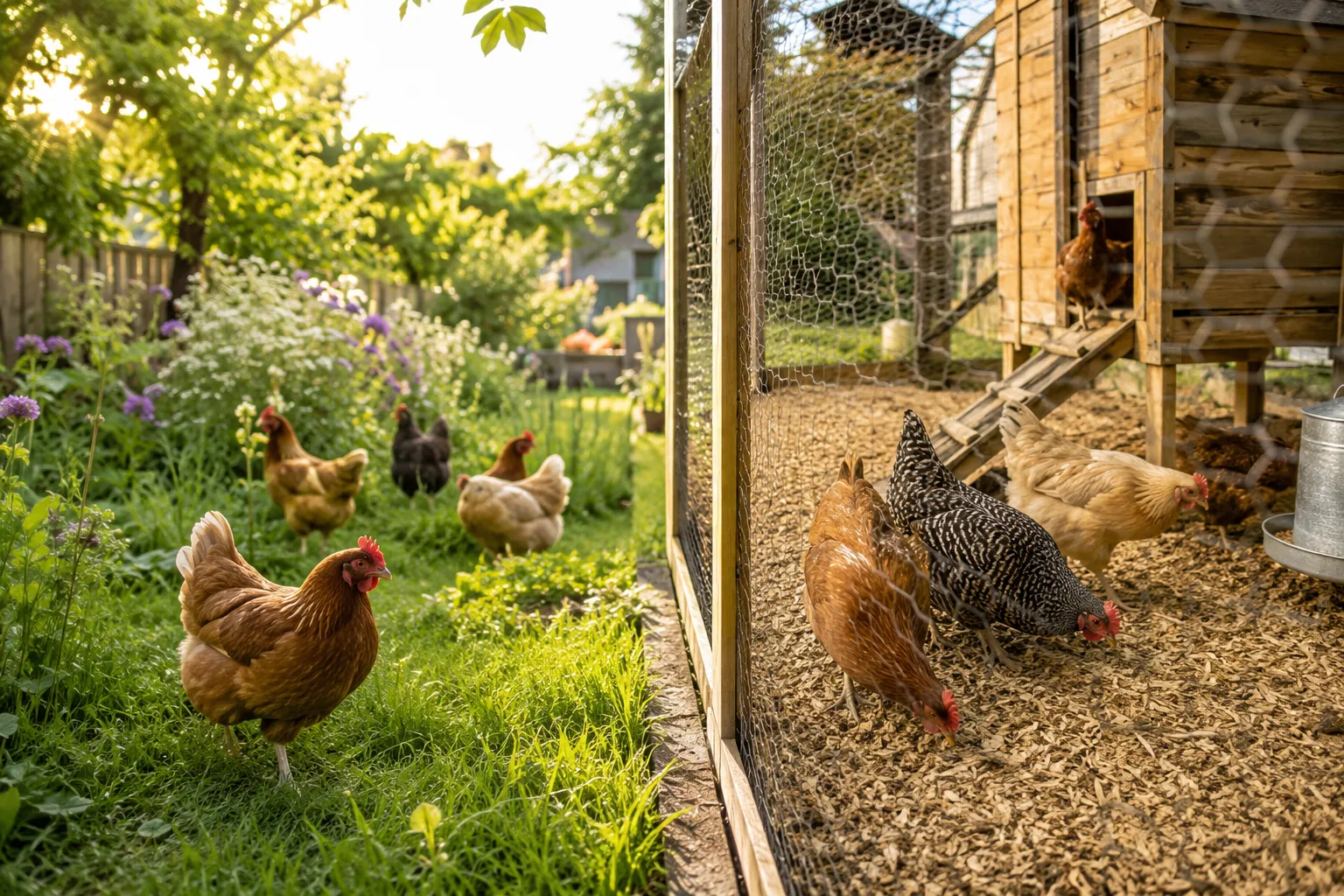
Quick Answer: Free-range chickens roam your property freely and forage naturally but face higher predator risks and may damage gardens, while chickens kept in runs stay protected in enclosed spaces with controlled environments but require more intensive management and space planning. The best choice depends on your property size, predator pressure, time availability, and whether you prioritize natural behavior or security and garden protection.
Key Takeaways
- Free-range chickens enjoy natural foraging behavior and require less daily management but face significant predator threats
- Chicken runs provide maximum security and garden protection but need adequate space (minimum 10 square feet per bird) and regular cleaning
- Free-range setups cost less initially ($200-500) compared to quality runs ($800-2,000+) but may result in higher chicken replacement costs
- Egg quality and production rates are similar between both methods when chickens receive proper nutrition
- Beginners often succeed better with runs until they understand local predator patterns and chicken behavior
- A hybrid approach combining supervised free-range time with secure run housing offers benefits of both systems
- Free-range chickens will damage gardens, lawns, and landscaping without proper fencing or designated areas
- Run-kept chickens need environmental enrichment, varied diet supplements, and diligent coop maintenance to stay healthy and content
What Does Free Range Mean for Chickens?
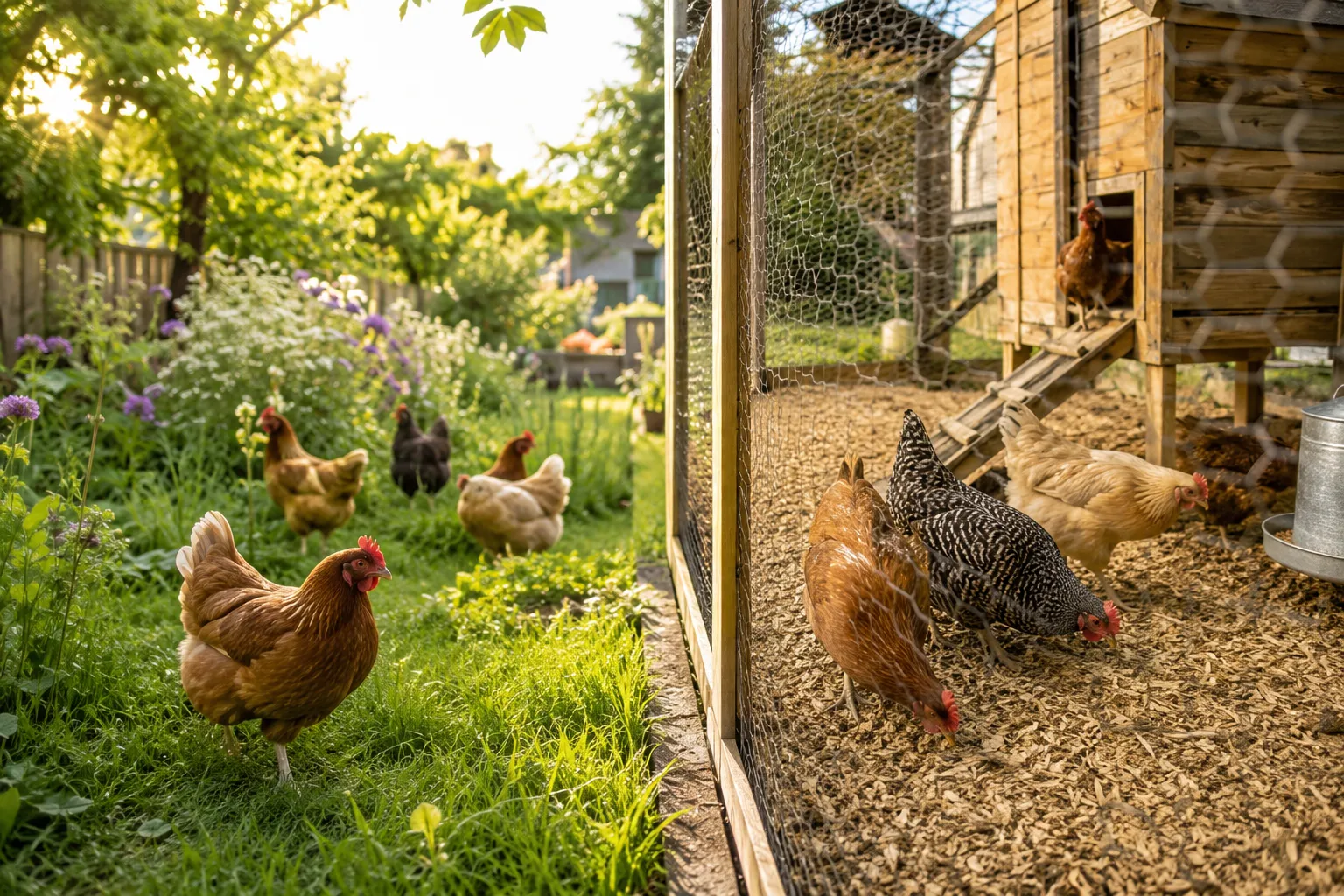
Free-range chickens have unrestricted or minimally restricted access to roam outdoors during daylight hours, foraging naturally for insects, seeds, and vegetation across your property. This method allows birds to express instinctive behaviors like scratching, dust-bathing, and exploring varied terrain throughout the day.
True free-range setups differ significantly from commercial “free-range” labels. In backyard contexts, it typically means:
- Chickens exit the coop at dawn and roam wherever they choose
- No physical barriers restrict their movement during the day
- Birds return to a secure coop at dusk for overnight protection
- Property boundaries (fences) may contain them, but they’re not confined to small areas
Choose free-range if you have acreage, low predator pressure, no close neighbors, and don’t mind chickens accessing most of your yard. This method works best when you’re home frequently to monitor flock safety and can accept some property damage as a trade-off for natural chicken behavior.
What Is a Chicken Run?
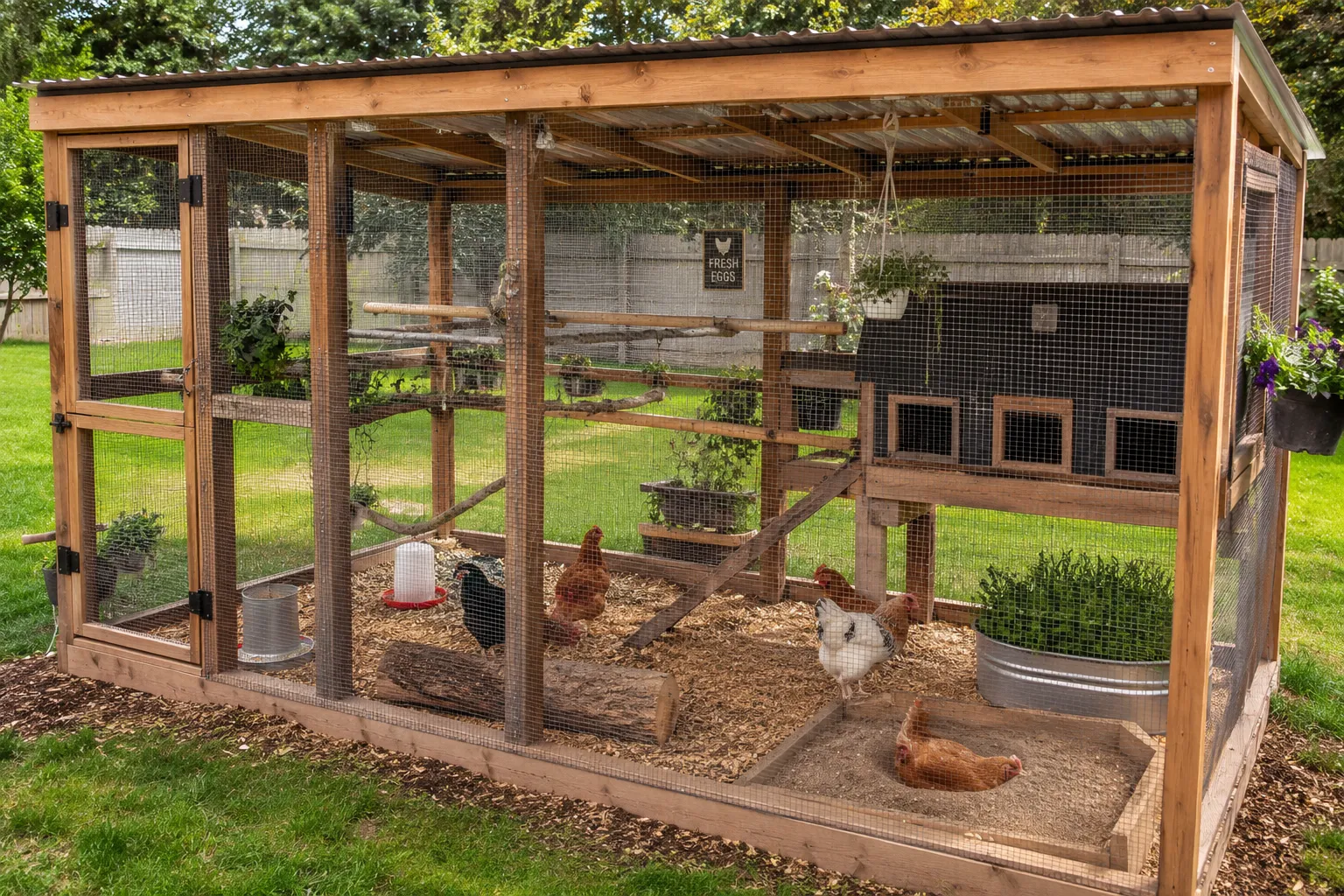
A chicken run is a fenced, enclosed outdoor area attached to or near the coop where chickens spend their time in a controlled, protected space. Runs typically feature wire mesh walls, a covered or partially covered roof, and enough square footage for chickens to move, scratch, and engage in basic natural behaviors.
Standard run features include:
- Wire fencing (hardware cloth is strongest) on all sides and often the top
- Minimum 10 square feet per standard-sized chicken (more is better)
- Weather protection through partial roofing or tarps
- Predator-proofing with buried wire or hardware cloth aprons
- Enrichment items like perches, dust bath areas, and hanging treats
Runs range from simple DIY structures using basic lumber and chicken wire to elaborate permanent installations with concrete foundations and metal roofing. The enclosure connects to the coop via a small door, allowing chickens to move between sleeping quarters and outdoor space while remaining contained.
Choose a run if you have predator problems, limited space, close neighbors, valuable landscaping, or need absolute control over where your chickens go. Runs work well for urban and suburban chicken keepers who must keep birds contained by local ordinances or property constraints.
Free-Range vs Run: Which Is Better for Backyard Chickens?
Neither method is universally better, the right choice depends on your specific circumstances, priorities, and property characteristics. Free-range excels for large properties with low predator pressure where natural behavior is the priority, while runs work better for smaller yards, high-risk areas, or when garden protection matters most.
Decision framework:
Choose free-range when:
- You have 1+ acres with secure perimeter fencing
- Daytime predators (hawks, dogs) are rare in your area
- You’re home during the day to respond to threats
- Garden damage is acceptable or you have designated chicken-free zones
- You want minimal daily maintenance
Choose a run when:
- Your property is under one acre or in a suburban setting
- Local predators (foxes, raccoons, hawks, neighborhood dogs) are common
- You work away from home during daylight hours
- You have landscaping, gardens, or outdoor spaces chickens shouldn’t access
- Local ordinances require contained chickens
Common mistake: Assuming free-range is always more humane. Chickens killed by predators or stressed by constant threats may actually have lower welfare than content run-kept birds with proper space and enrichment.
Pros and Cons of Free-Ranging Chickens
Free-ranging offers significant benefits for chicken welfare and keeper convenience but introduces serious risks that result in flock losses for many backyard keepers.
Advantages:
- Natural foraging reduces feed costs by 20-30% as chickens find insects, seeds, and vegetation
- Minimal daily maintenance,no run to clean, just coop management
- Excellent exercise and mental stimulation from exploring varied terrain
- Natural pest control as chickens eat ticks, grubs, and garden insects
- Lower initial setup costs (just a secure coop needed)
- Healthier birds with stronger immune systems from diverse diet and activity
Disadvantages:
- High predator losses,many keepers lose 30-50% of free-range flocks annually to hawks, foxes, dogs, and other predators
- Garden and landscaping destruction as chickens scratch mulch, eat vegetables, and create dust baths in flower beds
- Poop everywhere on patios, porches, driveways, and walkways
- Difficulty monitoring health when birds scatter across large areas
- Neighbor complaints if chickens wander onto adjacent properties
- Lost eggs when hens hide nests in bushes or outbuildings
Edge case: Free-range works surprisingly well in dense suburban areas where neighborhood dogs are leashed and local hawks have adapted to avoid human activity. Conversely, rural properties with heavy forest cover often have intense predator pressure that makes free-ranging impractical.

Advantages of Keeping Chickens in a Run
Runs provide security and control that many chicken keepers find essential, especially in areas with predator pressure or space constraints. When properly designed, runs support healthy, productive chickens while protecting both the flock and your property.
Key benefits:
- Maximum predator protection with properly constructed hardware cloth and covered tops
- Complete garden protection,chickens can’t access vegetable beds, flower gardens, or landscaping
- Controlled diet and health monitoring since all birds are in one observable area
- Easier egg collection with designated nesting boxes in the attached coop
- Compliance with local ordinances that require contained poultry
- Predictable maintenance schedule with defined cleaning areas
- No neighbor conflicts from wandering chickens or property damage
Requirements for success:
Runs must provide adequate space (10-15 square feet per bird minimum), environmental enrichment (perches, dust baths, hanging vegetables), and regular maintenance. Chickens in undersized or barren runs develop behavioral problems like feather-picking and aggression.
Choose runs over free-range if you’ve already lost chickens to predators, have valuable landscaping, work full-time away from home, or live in areas with leash-law violations from neighborhood dogs.
Do Free-Range Chickens Lay Better Eggs Than Run Chickens?
Egg quality and production rates are nearly identical between free-range and run-kept chickens when both groups receive proper nutrition, adequate space, and good care. The primary difference appears in yolk color rather than nutritional content or laying frequency.
What research and experience show:
- Production rates depend on breed, age, daylight hours, and nutrition, not ranging method
- Yolk color is often deeper orange in free-range eggs due to varied diet with more insects and greens, but you can achieve similar results by supplementing run chickens’ diet with greens and quality feed
- Nutritional content shows minimal measurable differences in controlled comparisons
- Shell strength relates to calcium availability and hen age, not ranging method
The real factors affecting egg quality:
- Breed selection,some breeds lay more or larger eggs regardless of housing
- Feed quality,layer feed with 16-18% protein and calcium supplementation
- Stress levels,both free-range and run chickens lay poorly when stressed
- Age,hens lay best in years 1-3, declining afterward
- Daylight,14-16 hours needed for peak production
Common mistake: Believing free-range automatically means better eggs. Stressed free-range chickens constantly fleeing predators may actually lay less than content run-kept birds with proper care.
How Much Does It Cost to Build a Chicken Run vs Free-Range Setup?
Free-range setups require minimal initial investment (just a secure coop), typically costing $200-500 for a basic structure, while quality chicken runs add $800-2,000+ depending on size, materials, and predator-proofing level. However, long-term costs shift when factoring in chicken replacement and property damage.
Free-range setup costs:
- Secure coop only: $200-500 (DIY) or $800-2,000 (purchased)
- Automatic coop door: $150-300 (optional but recommended)
- Perimeter fencing (if needed): $500-3,000 depending on property size
- Annual chicken replacement: $75-200 (assuming 30% predator loss at $25-30 per bird)
Run setup costs:
- Basic run (8×10 feet, 4-6 chickens): $300-600 (DIY with standard materials)
- Quality run (hardware cloth, covered): $800-1,500 (DIY)
- Premium purchased run: $1,500-3,000+
- Coop: $200-2,000 (same as free-range)
- Ongoing maintenance: $50-100 annually for bedding and repairs
Cost comparison over 5 years:
- Free-range: $700-1,500 initial + $375-1,000 replacement birds = $1,075-2,500 total
- Run: $1,500-3,500 initial + $250-500 maintenance = $1,750-4,000 total
Hidden costs to consider:
Free-range chickens may damage gardens worth hundreds of dollars, require landscape repairs, and create cleaning needs for poop on patios and walkways. Runs require bedding replacement, more feed (since birds can’t forage), and potential structural repairs from weather damage.
Predators Killing My Free-Range Chickens: What Should I Do?
If predators are actively killing your free-range chickens, you must either transition to a secure run, implement guardian animals, or accept ongoing losses as part of free-ranging. There is no middle solution that maintains true free-range access while eliminating predator risk.
Immediate actions:
- Identify the predator by examining kill patterns, timing, and remains
- Secure the coop with hardware cloth, buried wire, and predator-proof latches
- Limit ranging hours to midday (10 AM – 4 PM) when most predators are less active
- Add visual deterrents like reflective tape, predator decoys, or motion-activated lights
Long-term solutions:
Option 1: Build a secure run (most effective)
- Eliminates 95%+ of predator losses
- Allows chickens outdoor access with protection
- Requires initial investment but saves replacement costs
Option 2: Guardian animals
- Livestock guardian dogs (Great Pyrenees, Anatolian Shepherds) protect ranging flocks
- Requires training, fencing, and ongoing care
- Works best on larger properties (2+ acres)
- Initial cost: $500-1,500 for puppy plus $500+ annually for care
Option 3: Supervised ranging only
- Let chickens out only when you’re present and watching
- Labor-intensive but free
- Reduces but doesn’t eliminate risk
Option 4: Accept losses
- Some keepers view predation as natural and budget for replacement birds
- Works if you hatch your own chicks or have low-cost sources
- Not suitable if you become attached to individual birds
What doesn’t work: Chicken wire (predators tear through it), motion lights alone, or assuming predators will “move on.” Once predators learn chickens are available, they return consistently.
Is Free-Range or Run Better for Beginners?
Beginners typically succeed better starting with a secure run until they understand chicken behavior, local predator patterns, and daily management routines. Runs provide a controlled environment where new keepers can learn without the heartbreak of losing birds to preventable predator attacks.
Why runs suit beginners:
- Easier health monitoring with all birds in one visible area
- Simplified troubleshooting when problems arise
- Lower emotional impact from avoiding early predator losses
- Clearer cause-and-effect for management decisions
- Compliance confidence with local regulations
Transition path for new keepers:
- Months 1-6: Keep chickens in a secure run while learning daily routines, health signs, and local predator activity
- Months 6-12: Experiment with supervised free-range time during midday hours
- Year 2+: Decide whether to continue runs, transition to free-range, or use a hybrid approach based on experience
When beginners can start with free-range:
- You have mentorship from experienced local chicken keepers
- Your property has proven low predator pressure (ask neighbors with chickens)
- You’re home during daylight hours to monitor and respond
- You’re emotionally prepared for potential losses
Common beginner mistake: Starting with free-range because it seems “easier” (no run to build), then losing multiple birds in the first months and either quitting chicken keeping or scrambling to build emergency runs while grieving lost pets.
Common Mistakes When Free-Ranging Chickens
Free-range chicken keeping fails most often due to preventable errors that new keepers make when underestimating risks or overestimating their ability to protect ranging birds.
Top mistakes and solutions:
1. Assuming your area has no predators
- Reality: Predators exist everywhere, including suburbs and cities
- Solution: Talk to neighbors with chickens, watch for wildlife signs, and assume predators are present until proven otherwise
2. Using chicken wire instead of hardware cloth on coops
- Reality: Chicken wire keeps chickens in but doesn’t keep predators out, raccoons tear through it easily
- Solution: Use 1/2-inch hardware cloth on all coop openings, windows, and ventilation
3. Leaving coop doors open at night
- Reality: Nighttime predators (raccoons, foxes, owls) kill entire flocks in single visits
- Solution: Install automatic coop doors or commit to manual closing every evening at dusk
4. Free-ranging without secure perimeter fencing
- Reality: Chickens wander into roads, neighbor yards, and dangerous areas
- Solution: Install perimeter fencing or accept that you’ll lose birds to traffic and neighbor complaints
5. Not training chickens to return to the coop
- Reality: Chickens that don’t return reliably roost in trees or unsafe locations
- Solution: Keep new chickens confined to the coop for 2-3 weeks, then train returns with evening treats
6. Ignoring early warning signs of predators
- Reality: Missing feathers, nervous behavior, and scattered flocks indicate predator pressure
- Solution: Investigate immediately and increase protection before losses occur
Can I Do Both Free-Range and Run for My Chickens?
Yes, a hybrid approach combining a secure run with supervised or timed free-range access offers the benefits of both systems and is increasingly popular among experienced chicken keepers. This method provides security when you’re away while allowing natural foraging behavior during safe periods.
Effective hybrid models:
Model 1: Morning run, afternoon free-range
- Chickens stay in the run until midday (when most predators are less active)
- Free-range from noon to dusk under supervision or with guardian animals
- Return to run/coop at evening for secure overnight housing
Model 2: Weekday run, weekend free-range
- Contained during work weeks when you can’t supervise
- Free-range on weekends when you’re home and present
- Maintains security while providing enrichment
Model 3: Rotational ranging
- Permanent run provides base security
- Temporary electric poultry netting creates rotating free-range zones
- Move fencing weekly to fresh areas while maintaining boundaries
Model 4: Seasonal adjustment
- Run during high-risk seasons (spring when predators have young to feed, winter when food is scarce)
- Free-range during lower-risk periods based on local patterns
Setup requirements:
- Secure run large enough for full-time housing (10+ square feet per bird)
- Easy access between run and ranging areas
- Training so chickens return reliably
- Consistent schedule so birds develop routines
This approach works best if you want natural behavior benefits without accepting full free-range risks, have time for daily management, and can maintain consistent schedules.
How Much Space Do Chickens Need in a Run vs Free-Range?
Chickens in runs need a minimum of 10 square feet per bird for standard breeds (15+ square feet is better), while free-range chickens naturally regulate their own space by spreading across available property. Inadequate run space leads to aggression, feather-picking, and health problems that don’t occur in properly sized enclosures.
Run space requirements:
Minimum standards:
- Standard breeds (Rhode Island Reds, Plymouth Rocks): 10 sq ft per bird
- Bantam breeds: 8 sq ft per bird
- Large breeds (Brahmas, Cochins): 12-15 sq ft per bird
Optimal standards:
- Standard breeds: 15-20 sq ft per bird
- Bantam breeds: 10-12 sq ft per bird
- Large breeds: 20-25 sq ft per bird
Example calculations:
- 6 standard chickens: Minimum 60 sq ft (8×8 run), optimal 90-120 sq ft (10×10 or 10×12)
- 10 standard chickens: Minimum 100 sq ft (10×10), optimal 150-200 sq ft (12×15 or 10×20)
Free-range space:
Free-range chickens don’t have fixed space requirements since they self-regulate by spreading out. However, property size affects ranging quality:
- Under 1/4 acre: Chickens will overgraze and create bare patches
- 1/4 to 1/2 acre: Adequate for small flocks (4-8 birds) with vegetation rotation
- 1/2 to 1 acre: Comfortable for medium flocks (8-15 birds)
- 1+ acres: Supports larger flocks with minimal property impact
Signs your run is too small:
- Aggressive pecking and feather loss
- Bare dirt with no vegetation remaining
- Birds crowding at the door when you approach
- Excessive noise and restless behavior
- Muddy, compacted ground that doesn’t drain
Solution: Expand the run, reduce flock size, or transition to a hybrid model with ranging time.
Will Free-Range Chickens Destroy My Garden?
Yes, free-range chickens will damage gardens, landscaping, and lawns without physical barriers or designated chicken-free zones. Chickens scratch mulch, eat vegetables, create dust baths in flower beds, and strip ground cover, this is natural foraging behavior, not a training issue.
What chickens will damage:
- Vegetable gardens: Eat tomatoes, lettuce, berries, and young seedlings
- Flower beds: Scratch out bulbs, eat blooms, destroy mulch
- Lawns: Create bare patches from dust baths and heavy scratching
- Landscaping: Strip ground cover, eat hostas and other ornamentals
- Mulched areas: Scatter mulch across walkways and driveways
What chickens typically won’t damage:
- Established trees and large shrubs (though they’ll scratch around bases)
- Hardscaping like patios, paths, and walls
- Most herbs (rosemary, lavender, oregano, chickens often avoid these)
Protection strategies:
Option 1: Physical barriers
- Permanent fencing around gardens (4-foot chicken wire or hardware cloth)
- Raised beds with 18+ inch sides chickens can’t easily access
- Garden cloches and row covers for vulnerable plants
Option 2: Designated zones
- Fence off garden areas and allow chickens everywhere else
- Create chicken gardens with plants specifically for flock foraging
- Use temporary fencing to protect areas seasonally
Option 3: Timing strategies
- Free-range after harvest when garden damage matters less
- Confine during growing season (spring/summer), free-range in fall/winter
- Morning confinement if chickens are most destructive at certain times
What doesn’t work: Training chickens to avoid gardens, using deterrents like fake predators, or hoping they’ll “learn” boundaries. Chickens follow instinct, and scratching/foraging is hardwired behavior.
Realistic expectation: If chickens have access to your garden, they will damage it. Plan accordingly with barriers or accept the trade-off.
Are Free-Range Chickens Happier Than Chickens in Runs?
Free-range chickens can express more natural behaviors and have greater environmental variety, but happiness depends more on adequate space, enrichment, flock dynamics, and freedom from stress than on ranging method alone. Well-managed run chickens with proper space and enrichment can be just as content as free-range birds, while stressed free-range chickens constantly fleeing predators may have lower welfare.
Behavioral indicators of chicken welfare:
Signs of content chickens (both free-range and run):
- Active foraging and scratching behavior
- Dust bathing regularly
- Relaxed body language with soft vocalizations
- Healthy feather condition
- Normal laying patterns
- Social interaction without excessive aggression
Signs of poor welfare:
- Feather-picking and cannibalism
- Pacing or repetitive behaviors
- Excessive aggression
- Fearful or skittish behavior
- Reduced laying or eating
What matters more than ranging method:
- Adequate space: Overcrowded runs cause stress; spacious runs support welfare
- Environmental enrichment: Perches, dust baths, varied terrain, and novel items
- Flock stability: Consistent social groups without frequent additions/removals
- Predator stress: Constant threats reduce welfare regardless of space
- Health management: Parasite control, proper nutrition, clean environment
Research perspective:
Animal welfare science evaluates welfare through physical health, behavioral expression, and emotional state. By these measures, chickens in spacious, enriched runs with stable flocks can score as high as free-range birds. Conversely, free-range chickens with high predator pressure, poor nutrition, or inadequate shelter may score lower.
The honest answer: Free-range offers more behavioral opportunities, but runs can provide excellent welfare when properly designed. Your chickens’ happiness depends more on how well you meet their needs within whichever system you choose than on the system itself.
Frequently Asked Questions
How many chickens should I start with for free-range vs run?
Start with 3-4 chickens regardless of method. This provides a small flock for social needs while you learn management basics. Runs need accurate space calculations (10+ sq ft per bird), while free-range can accommodate more birds if you have adequate property size (1/4+ acre).
Can I switch from free-range to a run or vice versa?
Yes, chickens adapt to either system within days to weeks. Transitioning from free-range to a run requires adequate space and enrichment to prevent stress. Moving from run to free-range needs gradual introduction and training chickens to return to the coop reliably at dusk.
Do I need a rooster for either free-range or run chickens?
No, hens lay eggs without a rooster in both systems. Roosters provide flock protection and fertilized eggs but add noise, potential aggression, and are often prohibited in urban/suburban areas. Free-range flocks benefit more from rooster protection than run-kept birds.
How do I keep free-range chickens out of specific areas without a full run?
Use temporary electric poultry netting ($100-200 for 100+ feet) to create boundaries around gardens or off-limit zones. This provides flexible barriers you can move seasonally while maintaining free-range access to other areas.
What’s the best ground cover for chicken runs?
Sand, wood chips, or pea gravel work well. Sand drains excellently and allows dust bathing but needs regular raking. Wood chips absorb moisture and compost naturally but need replacement every 6-12 months. Avoid bare dirt, which becomes muddy and harbors parasites.
How long does it take to build a chicken run?
A basic 8×10 run takes 1-2 full days for someone with moderate DIY skills. More complex runs with hardware cloth, buried predator barriers, and roofing take 3-5 days. Purchased pre-fab runs assemble in 4-8 hours but cost significantly more.
Will free-range chickens come back at night?
Chickens naturally return to roost at dusk if they’ve been trained to recognize the coop as home. Keep new chickens confined to the coop for 2-3 weeks before first free-ranging, and they’ll reliably return. Provide evening treats to reinforce the behavior.
Can I free-range chickens in winter?
Yes, chickens tolerate cold well and will free-range in winter unless snow is extremely deep. They range less in harsh weather but benefit from outdoor access on mild winter days. Ensure the coop provides wind protection and unfrozen water.
Do chickens in runs need different feed than free-range chickens?
Both need quality layer feed (16-18% protein), but run chickens benefit from additional greens, vegetables, and protein sources since they can’t forage. Free-range chickens supplement their diet naturally with insects and plants, potentially reducing feed costs by 20-30%.
How do I introduce new chickens to an existing free-range flock vs a run flock?
Both require gradual introduction with a “see but don’t touch” period of 1-2 weeks using temporary fencing. Runs make this easier since space is controlled. Free-range introductions are trickier because established birds may chase newcomers away from food and shelter.
What’s the minimum coop size for free-range vs run chickens?
Both need 3-4 square feet per bird inside the coop for sleeping. Free-range chickens spend minimal time in the coop (just overnight), while run chickens may use it more during bad weather, so consider 4-5 square feet per bird for run setups.
Are there legal differences between keeping free-range vs run chickens?
Many urban and suburban ordinances require chickens to be “confined” or “enclosed,” which typically means runs are required. Check local regulations before choosing your method, some areas prohibit free-ranging entirely while others have no restrictions.
Conclusion
The choice between free-range and run systems for backyard chickens isn’t about which method is objectively better, it’s about matching your setup to your property, lifestyle, and priorities. Free-range offers natural behavior, lower maintenance, and reduced initial costs but comes with significant predator risk and property damage. Runs provide security, control, and garden protection but require higher upfront investment and ongoing management.
Take these next steps:
- Assess your property: Measure available space, identify predator signs, and evaluate what areas chickens can safely access
- Check local regulations: Confirm whether your municipality requires contained chickens or allows free-ranging
- Calculate costs: Budget for initial setup plus ongoing expenses including potential bird replacement (free-range) or maintenance (runs)
- Start with security: Beginners should default to runs until they understand local conditions and chicken behavior
- Consider hybrid approaches: Combine the benefits of both systems with supervised ranging time and secure base housing
Remember that you can adjust your approach as you gain experience. Many successful chicken keepers start with runs, experiment with supervised free-ranging, and eventually settle on a hybrid model that balances their chickens’ welfare with practical property management. The best system is the one you’ll maintain consistently while keeping your flock safe, healthy, and productive.


