
Quick Answer
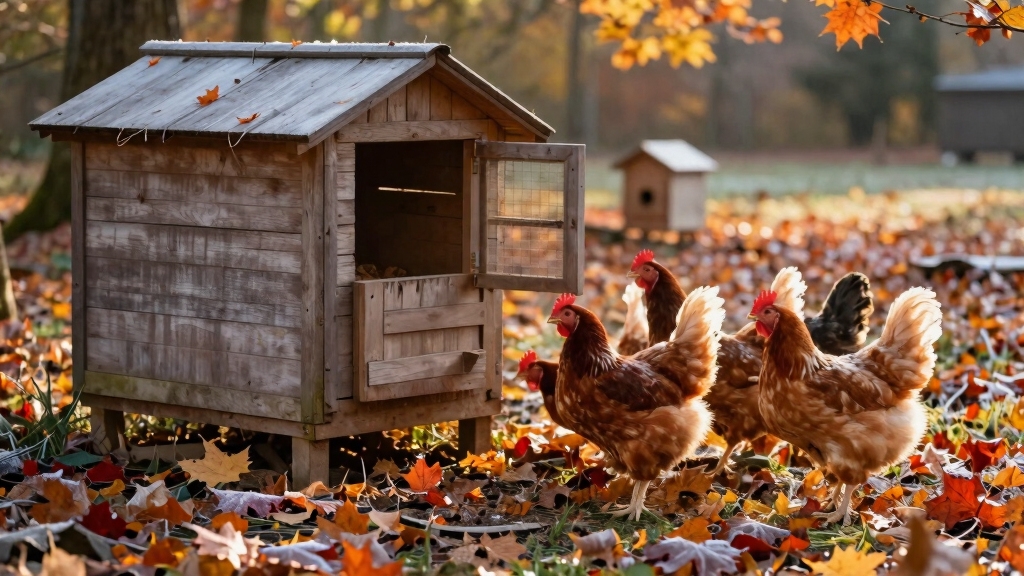
Most chickens significantly reduce or stop laying eggs in October due to decreasing daylight hours, which trigger hormonal changes that pause egg production. This autumn slowdown is a natural biological response, not a health problem. The drop typically begins in late September or early October when daylight falls below 14 hours per day, and many hens won’t resume normal laying until late winter or early spring.
Key Takeaways
- Daylight drives egg production: Chickens need 14-16 hours of light daily to maintain consistent laying; October’s shorter days naturally reduce output.
- Molting compounds the slowdown: Many hens molt (shed and regrow feathers) in autumn, diverting protein and energy away from egg production for 8-12 weeks.
- Breed matters: Heritage and dual-purpose breeds stop laying more completely in fall, while commercial hybrids may continue at reduced rates.
- Artificial light works but has trade-offs: Supplemental lighting can maintain winter production but may shorten a hen’s overall laying lifespan.
- First-year pullets often continue: Young hens that started laying in summer may keep producing through their first autumn before following seasonal patterns.
- The slowdown is temporary: Most hens naturally resume laying in February or March as daylight increases, without intervention.
- Nutrition matters during the pause: High-protein feed (16-20%) supports molting and prepares hens for spring production.
- Forcing year-round production isn’t necessary: Allowing natural rest periods supports long-term hen health and sustainable backyard flock management.
Why Do Chickens Stop Laying Eggs in Fall?
Chickens stop or reduce laying in fall because their reproductive system responds directly to photoperiod (day length). When daylight drops below 14 hours, the hen’s pituitary gland reduces production of reproductive hormones, particularly luteinizing hormone, which triggers ovulation and egg formation. This biological mechanism evolved to prevent hens from raising chicks during winter when food is scarce and temperatures are harsh.
The process works like this:
- Light receptors in the eye detect decreasing daylight and signal the pineal gland
- The pineal gland adjusts melatonin production, which regulates reproductive hormones
- Reduced hormone levels slow or stop the ovulation cycle
- Egg production drops from daily or near-daily to sporadic or completely halted
This isn’t a malfunction. Wild jungle fowl (the ancestors of domestic chickens) follow the same pattern, concentrating reproduction during spring and summer when chicks have the best survival odds. Domestic chickens retain this ancient programming even though backyard coops provide year-round shelter and food.
Common mistake: New chicken keepers often panic when October egg production drops, assuming their flock is sick or stressed. In most cases, the hens are simply following their natural biological calendar.
How Many Hours of Daylight Do Chickens Need to Lay Eggs?
Chickens require a minimum of 14 hours of light per day to maintain consistent egg production, with optimal laying occurring at 16 hours of light. Below 12 hours, most hens will stop laying entirely until daylight increases again.
Here’s how different light levels affect laying:
- 16+ hours: Peak production (5-7 eggs per week for good layers)
- 14-16 hours: Normal production (4-6 eggs per week)
- 12-14 hours: Reduced production (1-3 eggs per week)
- Below 12 hours: Minimal to no production for most breeds
In October, natural daylight varies by latitude:
- Northern U.S. (45°N): Approximately 11 hours by late October
- Mid-latitude U.S. (35°N): Approximately 11.5 hours by late October
- Southern U.S. (30°N): Approximately 11.8 hours by late October
All these locations fall well below the 14-hour threshold, explaining why October marks the beginning of the autumn egg drought across most of North America.
Choose artificial lighting if: You need consistent egg supply for your household and are willing to accept potentially shorter total laying years per hen. Skip supplemental light if you prioritize hen welfare and can manage with fewer winter eggs.
Do All Chicken Breeds Stop Laying in October?
Not all breeds respond identically to autumn’s shorter days. Heritage and dual-purpose breeds typically stop laying almost completely in October, while modern commercial hybrids may continue at 30-50% of their summer rate. Individual variation within breeds also plays a significant role.
Breeds most likely to stop in October:
- Rhode Island Reds (heritage strains)
- Plymouth Rocks
- Wyandottes
- Orpingtons
- Brahmas
- Cochins
Breeds that may continue at reduced rates:
- ISA Browns (commercial hybrid)
- Golden Comets
- Red Stars
- Black Stars
- Production Reds (commercial strains)
- Leghorns (especially white varieties)
Why the difference? Commercial hybrids have been selectively bred for decades to maintain production despite environmental cues. They’re essentially “programmed” to ignore some seasonal signals. Heritage breeds retain stronger wild-type responses to photoperiod because they weren’t selected primarily for year-round production.
Age factor: First-year pullets (young hens) that began laying in summer often continue through their first autumn regardless of breed, because their reproductive system is still in its initial high-production phase. They’ll typically follow normal seasonal patterns starting in their second fall.
Is It Normal for Hens to Stop Laying in Autumn?
Yes, it is completely normal and biologically appropriate for hens to stop or dramatically reduce laying in autumn. This seasonal pause is not a sign of poor health, inadequate care, or flock problems. It’s an adaptive strategy that allows hens to conserve energy during the resource-scarce winter months.
In fact, the autumn slowdown serves several beneficial purposes:
Reproductive system rest: Continuous egg production is metabolically demanding. The autumn break allows the hen’s reproductive tract to recover and repair, potentially extending her productive lifespan.
Molting support: Most hens molt (replace all their feathers) in autumn, a process that requires enormous amounts of protein and energy. Stopping egg production frees up resources for feather regrowth.
Energy conservation: Winter requires more calories for body heat maintenance. Pausing egg production reduces total energy needs when food would historically be harder to find.
Natural flock management: In sustainable backyard flocks, allowing this natural cycle prevents burnout and supports hens living productive lives for 5-7 years rather than being “spent” after 2-3 years of forced year-round production.
For first-time chicken owners: If your hens laid well all summer and suddenly stopped in late September or October, they’re almost certainly responding to shorter days, not experiencing a health crisis. Monitor for other symptoms (lethargy, loss of appetite, abnormal droppings), but don’t worry about the egg pause alone.
Do Chickens Molt in October and Stop Laying?
Most adult chickens molt in October or November, and molting hens stop laying eggs entirely during the process. Molting is the annual shedding and replacement of feathers, typically triggered by the same decreasing daylight that reduces egg production. The two processes often overlap, compounding the autumn egg shortage.
Molting timeline:
- Week 1-2: Feather loss begins, usually starting at the head and neck
- Week 3-6: Heavy feather loss; hens look ragged and may have bare patches
- Week 6-10: New pin feathers emerge and grow
- Week 10-16: Full feather coverage returns; laying may gradually resume
During molt, a hen redirects protein and nutrients from egg production to feather growth. A single feather is approximately 80-85% protein, and a hen replaces thousands of feathers during a complete molt. This makes simultaneous egg production biologically impractical.
Molting patterns by age:
- First-year pullets: Often skip molting entirely or have a very light molt
- Second-year hens: First full molt, typically 10-12 weeks
- Mature hens (3+ years): May molt faster (8-10 weeks) or slower (12-16 weeks) depending on individual variation
What to feed during molt: Increase protein to 18-20% (compared to the standard 16% layer feed). Options include:
- Game bird or flock raiser feed (higher protein than layer feed)
- Supplemental protein sources: mealworms, black soldier fly larvae, scrambled eggs, fish
- Continue offering calcium free-choice (oyster shell) even though laying has stopped
Common mistake: Trying to force hens to lay during molt by adding artificial light. This can prolong molt, stress the hen, and result in poor-quality feather regrowth that won’t adequately insulate her through winter.
How to Keep Chickens Laying Eggs in Winter
You can maintain winter egg production by providing 14-16 hours of total light (natural plus artificial) daily, but this approach has both benefits and drawbacks that every chicken keeper should understand before implementing.
Artificial lighting method:
- Install a timer-controlled light in the coop (LED bulbs work well and stay cool)
- Add light in the morning, not evening (turning lights off abruptly at night stresses chickens who can’t see to roost)
- Aim for 14-16 total hours of light (natural daylight + supplemental)
- Start in late September before production drops, not after (sudden light changes are less effective)
- Use gradual transitions (15-minute increments per week) if adjusting light duration
Example schedule for 40°N latitude in December:
- Natural sunrise: 7:15 AM
- Natural sunset: 4:45 PM
- Natural daylight: ~9.5 hours
- Supplemental light on: 4:00 AM
- Supplemental light off: 7:15 AM (when natural light is sufficient)
- Total light: ~14.5 hours
Pros of supplemental lighting:
- Consistent egg supply through winter
- Useful if you sell eggs or depend on them for household use
- Can prevent complete production shutdown in commercial hybrids
Cons and considerations:
- May shorten total laying lifespan (hens have a finite number of eggs)
- Prevents natural rest period for the reproductive system
- Doesn’t address molting (hens still won’t lay while regrowing feathers)
- Requires electricity and equipment maintenance
- Some evidence suggests increased health issues in older hens
Alternative approach: Accept reduced winter production and adjust expectations. Most backyard flocks can provide adequate eggs with 4-6 good layers even if each hen only produces 2-3 eggs per week during winter.
Choose supplemental light if: You need consistent production, keep commercial hybrids, or sell eggs. Skip it if you prioritize natural cycles, keep heritage breeds, or can manage with fewer winter eggs.
Can I Use Artificial Light to Make Chickens Lay in October?
Yes, you can use artificial light to maintain October egg production, but it must be implemented correctly and started before production drops. Simply adding a light after hens have already stopped laying is much less effective than maintaining consistent light levels from late summer onward.
Critical timing: Install and begin using supplemental light in mid-to-late September, before the autumn slowdown begins. Once hens have shut down production and begun molting, artificial light won’t restart laying until the molt completes (8-16 weeks).
Proper implementation:
- Bulb type: LED bulbs (40-60 watt equivalent) provide adequate light without fire risk
- Placement: Position to illuminate the entire coop evenly, not just one corner
- Timer: Essential for consistency; manual operation leads to irregular schedules that stress birds
- Morning addition: Set lights to turn on before dawn, not extend evening (chickens need to roost at natural dusk)
- Gradual changes: Never change light duration by more than 30 minutes per week
What won’t work:
- Adding light only on days you remember (inconsistency confuses hormonal cycles)
- Using motion-activated lights (irregular patterns don’t maintain hormone levels)
- Extremely bright lights (unnecessary and can cause stress; aim for 10-20 lumens per square foot)
- Starting supplemental light after production has already stopped
Reality check: Even with perfect lighting, October production will likely be 60-80% of summer levels, not 100%. Cooler temperatures, natural hormonal cycles, and individual hen variation all play roles beyond just photoperiod.
How Long Does the Autumn Egg Laying Slowdown Last?
The autumn egg laying slowdown typically lasts 3-5 months, from late September or October through January or February, with production naturally resuming in late winter as daylight increases. The exact duration depends on latitude, breed, individual hen age, and whether molting occurs.
Typical timeline without intervention:
- Late September: Production begins declining (5-7 eggs/week drops to 3-4)
- October: Sharp drop (1-2 eggs/week or complete stop)
- November-January: Minimal to no production for most hens
- Late January-February: Gradual increase as daylight reaches 11-12 hours
- March: Return to normal production (4-6 eggs/week)
- April-May: Peak spring production
Factors that extend the slowdown:
- Molting: Adds 8-16 weeks of zero production regardless of daylight
- Northern latitudes: Shorter winter days mean longer natural slowdown
- Heritage breeds: More sensitive to photoperiod; longer pause
- Older hens (4+ years): Slower to resume production in spring
Factors that shorten the slowdown:
- Commercial hybrid breeds: May maintain 30-50% production throughout
- First-year pullets: Often continue through their first autumn
- Southern latitudes: Shorter, less severe slowdown
- Artificial lighting: Can eliminate slowdown entirely (with trade-offs)
Planning tip: If you keep 6-8 hens and want eggs year-round without artificial light, stagger your flock ages. Add 2-3 new pullets each spring. First-year birds will lay through autumn while older hens rest, providing some eggs even during the natural slowdown.
What to Feed Chickens When They Stop Laying in Fall
When chickens stop laying in fall, switch from layer feed (16% protein) to a higher-protein option (18-20%) to support molting and prepare hens for winter. Egg production requires calcium, but feather regrowth requires protein, so autumn nutrition should prioritize protein while still offering calcium free-choice.
Best feed options for autumn:
- Flock raiser or all-flock feed (18-20% protein): Designed for mixed flocks and non-laying periods
- Game bird feed (20-24% protein): Excellent for molting support, though more expensive
- Grower feed (18% protein): Acceptable alternative if flock raiser isn’t available
Supplemental protein sources:
- Mealworms (50% protein)
- Black soldier fly larvae (40% protein)
- Scrambled or hard-boiled eggs (yes, chickens can eat eggs)
- Canned fish (mackerel, sardines) in small amounts
- Sunflower seeds (moderate protein, high fat for winter energy)
Calcium management: Continue offering oyster shell or crushed eggshells free-choice in a separate container. Non-laying hens need less calcium than layers, but they’ll self-regulate intake. Never remove calcium entirely, as some hens may lay sporadically even during the slowdown.
What to avoid:
- Continuing high-calcium layer feed when hens aren’t laying (excess calcium can stress kidneys)
- Scratch grains as a primary feed (low protein, mostly carbohydrates)
- Sudden feed changes (transition over 7-10 days to prevent digestive upset)
Feeding schedule:
- Weeks 1-4 of slowdown: Transition from layer feed to higher-protein option
- During active molt: Maintain 18-20% protein feed
- Late winter (January-February): Transition back to layer feed as production resumes
Common mistake: Assuming non-laying hens need less food. Molting and winter body heat maintenance require substantial calories. Don’t reduce feed quantity, just adjust the protein-to-calcium ratio.
Chicken Laying Eggs in Summer vs Winter: What’s the Difference?
Summer egg production typically runs at 80-100% of a hen’s genetic potential (5-7 eggs per week for good layers), while winter production drops to 0-30% (0-2 eggs per week) for most breeds without supplemental lighting. This dramatic difference stems from photoperiod, temperature, and metabolic demands.
Summer laying characteristics:
- Frequency: Daily or near-daily for most breeds
- Egg size: Consistent, normal size for the breed
- Shell quality: Strong, well-formed shells
- Yolk color: Bright orange (if hens have access to greens and insects)
- Energy requirement: High, but offset by abundant food and warm temperatures
Winter laying characteristics (without supplemental light):
- Frequency: Sporadic to none (0-2 eggs per week)
- Egg size: Sometimes larger (longer time between eggs allows larger yolks)
- Shell quality: Can be variable; occasional thin shells or shell abnormalities
- Yolk color: Paler (less access to fresh greens)
- Energy requirement: Competing demands (body heat vs. egg production)
Key differences explained:
| Factor | Summer | Winter |
|---|---|---|
| Daylight | 14-16 hours | 9-10 hours |
| Temperature | Optimal (60-75°F) | Cold stress (below 40°F) |
| Food availability | Fresh greens, insects | Limited forage |
| Metabolic priority | Reproduction | Survival, body heat |
| Molt status | Not molting | Often molting or recovering |
Why winter eggs are “better”: Many chicken keepers report that the few eggs laid in winter have richer yolks and firmer whites. This may be because only the healthiest, most robust hens continue laying, and those eggs represent peak nutrition rather than daily production.
Age interaction: The summer-winter difference becomes more pronounced as hens age. First-year pullets show minimal difference, while third-year hens might lay 6 eggs/week in summer but zero in winter.
What Age Do Chickens Stop Laying Eggs Seasonally?
Chickens begin following seasonal laying patterns (stopping in autumn/winter) starting in their second year of life, around 18-24 months old. First-year pullets that begin laying in spring or summer often continue through their first autumn and winter, then adopt seasonal patterns afterward.
Laying patterns by age:
Year 1 (0-12 months):
- Pullets start laying at 18-24 weeks (4-6 months)
- High production through first autumn (if they started in spring/summer)
- May skip first molt or have very light molt
- Production: 250-300 eggs in first year for good breeds
Year 2 (12-24 months):
- First full seasonal cycle
- Noticeable autumn slowdown or stop
- First complete molt (10-12 weeks)
- Production: 200-250 eggs
Year 3-4 (24-48 months):
- Clear seasonal patterns established
- Autumn/winter break becomes standard
- Annual molt continues
- Production: 150-200 eggs per year
Year 5+ (48+ months):
- Seasonal patterns continue
- Overall production declines
- Longer molts, slower spring restart
- Production: 100-150 eggs per year, declining further with age
Why first-year pullets are different: Young hens have high reproductive hormone levels when they first start laying. This initial surge often overrides photoperiod signals for several months. By their second autumn, hormonal patterns have normalized and seasonal responses kick in.
Breed variation: Commercial hybrids may maintain some winter production even in year 2-3, while heritage breeds typically show strong seasonal patterns starting in year 2.
Planning implication: To maintain year-round eggs without artificial light, add new pullets to your flock each spring. The young birds will lay through autumn while older hens rest, providing continuous household egg supply.
Common Mistakes Forcing Chickens to Lay in Winter
The biggest mistake chicken keepers make when trying to force winter laying is adding artificial light after production has already stopped and molting has begun. This doesn’t restart laying, stresses hens, and can prolong molt. Other common errors include inconsistent lighting schedules, inadequate nutrition, and ignoring individual hen health.
Top mistakes to avoid:
1. Starting supplemental light too late
- The error: Adding lights in November after eggs have stopped
- Why it fails: Hens already in molt won’t lay regardless of light; hormonal shutdown takes weeks to reverse
- Correct approach: Begin supplemental light in mid-September before production drops
2. Inconsistent lighting schedules
- The error: Manually turning lights on/off, forgetting some days
- Why it fails: Irregular photoperiods confuse hormonal cycles; hens need consistent signals
- Correct approach: Use a timer for 100% consistency
3. Adding light in the evening instead of morning
- The error: Extending daylight after natural sunset
- Why it fails: Sudden darkness while hens are active prevents proper roosting; causes stress
- Correct approach: Add light before dawn, let natural sunset occur
4. Continuing layer feed during molt
- The error: Feeding 16% protein layer feed when hens aren’t laying
- Why it fails: Insufficient protein for feather regrowth; excess calcium without egg production
- Correct approach: Switch to 18-20% protein feed during molt
5. Expecting 100% summer production in winter
- The error: Assuming artificial light will restore full summer laying rates
- Why it fails: Temperature, age, and natural cycles still affect production
- Correct approach: Expect 60-80% of summer rates at best
6. Ignoring individual hen health
- The error: Assuming all production drops are seasonal
- Why it fails: Illness, parasites, or injury can also stop laying
- Correct approach: Monitor each hen for other symptoms; check for lice, mites, weight loss
7. Forcing production in older hens
- The error: Using artificial light on hens 4+ years old
- Why it fails: Older hens benefit most from seasonal rest; forcing production may shorten lifespan
- Correct approach: Allow natural cycles in mature hens; focus supplemental light on younger birds if needed
Should I Supplement Light for Backyard Chickens in Fall?
Whether to supplement light for backyard chickens in fall depends on your priorities: if you need consistent egg supply and keep commercial hybrid breeds, supplemental lighting is reasonable; if you prioritize natural hen welfare and can manage with fewer winter eggs, allowing the seasonal rest is better for long-term flock health.
Supplement light if:
- You depend on eggs for household use or small-scale sales
- You keep commercial hybrid breeds (ISA Browns, Red Stars, etc.)
- You have a small flock (3-4 hens) where zero production creates real hardship
- You’re willing to accept potentially shorter total laying lifespan per hen
- You can commit to consistent, timer-controlled lighting
Skip supplemental light if:
- You keep heritage breeds that benefit from natural cycles
- You have a larger flock (8+ hens) where some production continues naturally
- You prioritize hen welfare and sustainable long-term management
- You can purchase eggs during winter or adjust recipes/eating habits
- Your hens are 4+ years old (older birds benefit most from rest)
Middle-ground approach: Supplement light for half your flock (younger hens, commercial breeds) while allowing the other half (older hens, heritage breeds) to follow natural cycles. This provides some winter eggs while still honoring natural rest periods for part of your flock.
What the research suggests: Studies on commercial laying operations show that continuous production without seasonal breaks can reduce total lifetime egg production and increase health issues in years 3-4. However, most research focuses on intensive commercial conditions, not backyard flocks with better welfare standards.
Ethical consideration: Backyard chicken keeping often emphasizes animal welfare over maximum production. Many keepers view the autumn slowdown as a feature, not a bug, allowing hens to live longer, healthier lives as part of a sustainable homestead ecosystem rather than production units.
Practical reality: Most backyard chicken keepers with 6-8 hens can get through winter without supplemental light by adjusting expectations, eating fewer eggs, and enjoying the spring production surge when it returns naturally.
Frequently Asked Questions
Why did my chickens suddenly stop laying in October?
Your chickens stopped laying in October because daylight dropped below 14 hours, triggering hormonal changes that pause egg production. This is normal seasonal behavior, not a health problem. Most hens resume laying in late winter when daylight increases.
Can chickens lay eggs without a rooster in autumn?
Yes, chickens lay eggs without a rooster year-round (the eggs are simply unfertilized). Autumn egg reduction is caused by decreasing daylight, not the absence of a rooster. Hens don’t need a male present to produce eggs in any season.
How many eggs do chickens lay in October compared to summer?
Most chickens lay 50-80% fewer eggs in October compared to summer. A hen producing 6 eggs per week in July might drop to 1-2 per week in October, or stop entirely. Commercial hybrids may maintain 30-50% of summer production.
Will my chickens start laying again after winter?
Yes, chickens naturally resume laying in late winter (February-March) as daylight increases past 12 hours. Production gradually increases through spring, typically reaching peak levels again by April or May without any intervention needed.
Do chickens need heat lamps to lay eggs in winter?
No, chickens don’t need heat lamps to lay eggs in winter. Egg production is controlled by daylight, not temperature. Most cold-hardy breeds tolerate winter temperatures well without supplemental heat, which can actually create health and fire risks.
What’s the minimum temperature for chickens to lay eggs?
There’s no minimum temperature for egg laying; chickens can lay in freezing weather if daylight is adequate. However, cold stress increases calorie needs, so hens may naturally reduce laying in extreme cold even with sufficient light to prioritize survival.
Can I give my chickens vitamins to make them lay in October?
Vitamins won’t override the photoperiod response that stops October laying. While good nutrition supports overall health, egg production in autumn is controlled by daylight hours, not nutritional supplements. Focus on high-protein feed during molt instead.
How do I know if my hen stopped laying or is hiding eggs?
Check for hidden eggs in corners, under structures, or in vegetation outside the coop. If you find none after thorough searching and it’s October-November, your hen likely stopped laying seasonally. Hidden eggs are more common in spring/summer when production is high.
Is it cruel to use artificial light to make chickens lay in winter?
Using artificial light isn’t inherently cruel if done correctly (consistent schedule, morning addition, gradual changes), but it does prevent natural rest periods. Many backyard keepers view allowing seasonal cycles as better long-term welfare, though opinions vary.
Do free-range chickens stop laying in October too?
Yes, free-range chickens follow the same photoperiod response as confined chickens. Access to outdoor space doesn’t change the biological response to decreasing daylight. Free-range hens may have slightly better nutrition from foraging, but they still reduce or stop laying in autumn.
Can stress cause chickens to stop laying in October?
Stress can stop laying any time of year, but if multiple hens stop simultaneously in October, it’s almost certainly seasonal response, not stress. Look for other stress symptoms (lethargy, loss of appetite, feather pecking) to distinguish stress from normal autumn slowdown.
How long after molting will my chickens start laying again?
Chickens typically resume laying 2-4 weeks after completing molt (when full feather coverage returns). Since most hens molt in October-November and molt lasts 8-16 weeks, many won’t restart until January-March, coinciding with increasing daylight.
Conclusion
The autumn egg slowdown is one of the most natural and predictable patterns in backyard chicken keeping. When your hens reduce or stop laying in October, they’re following ancient biological programming that prioritizes survival and long-term health over continuous production. Understanding that this pause is triggered by decreasing daylight below 14 hours per day, often compounded by the energy demands of molting, helps you make informed decisions about your flock management.
You have options: supplement artificial light to maintain winter production, accept the seasonal cycle and adjust your household egg consumption, or take a middle path by lighting for some birds while allowing others to rest. Each approach has merit depending on your priorities, breed choices, and flock size.
Action steps for autumn egg management:
- Expect the slowdown: Mark your calendar for late September to prepare mentally and practically for reduced eggs
- Assess your flock: Note which hens are molting, which are first-year pullets, and which breeds you keep
- Adjust nutrition: Switch to 18-20% protein feed to support molting and winter body condition
- Decide on lighting: If you’ll supplement light, install timers and begin in mid-September, not after production drops
- Monitor health: Distinguish normal seasonal slowdown from illness by watching for other symptoms
- Plan for spring: Order new chicks in late winter if you want to add young layers for next autumn
Remember that chickens laying fewer eggs in October doesn’t mean you’re doing anything wrong. In fact, allowing this natural rest period may mean you’re doing something very right, supporting your hens’ long-term health and honoring the seasonal rhythms that sustainable homesteading celebrates. Whether you choose to intervene with artificial light or embrace the winter egg scarcity, you’re now equipped to make that decision with full understanding of the biology, trade-offs, and practical implications for your backyard flock.



![How Many Chickens for a Dozen Eggs a Week? [2026 Guide]](https://chickencoopguide.com/storage/2026/07/how-many-chickens-for-a-dozen-eggs-a-week-2026-guide-870x570.jpg)


![How Many Chickens for a Dozen Eggs a Week? [2026 Guide]](https://chickencoopguide.com/storage/2026/07/how-many-chickens-for-a-dozen-eggs-a-week-2026-guide.jpg)