
Quick Answer: Most backyard chickens don’t legally require vaccines, but vaccination can prevent devastating diseases like Marek’s disease and Newcastle disease that spread rapidly through flocks. Whether chickens need vaccines depends on flock size, local disease prevalence, biosecurity practices, and whether you plan to show birds or introduce new chickens regularly.
Key Takeaways
- Backyard chickens are rarely required by law to be vaccinated, though some states mandate Newcastle disease vaccines during outbreaks
- Marek’s disease vaccine is the most common for small flocks and must be given to day-old chicks for effectiveness
- Commercial operations vaccinate extensively, while small backyard flocks often rely on biosecurity instead
- You can vaccinate chickens yourself at home with proper supplies, technique, and refrigeration
- Unvaccinated chickens face higher risk of contagious diseases that can wipe out entire flocks
- Vaccines cost $0.20,$2.00 per dose, but minimum order quantities make small-flock vaccination expensive
- Organic certification allows certain vaccines, including Marek’s and Newcastle, under USDA organic standards
- Free-range chickens may benefit more from vaccines due to increased exposure to wild birds and environmental pathogens
- Common mistakes include improper storage, wrong dosage, and vaccinating sick birds
- Natural alternatives exist but provide less reliable protection than vaccines against viral diseases
What Vaccines Do Backyard Chickens Need?
Backyard chickens typically benefit most from Marek’s disease vaccine, which prevents a highly contagious herpesvirus that causes tumors and paralysis. Beyond Marek’s, the necessity of other vaccines depends on your location, flock management, and risk tolerance.
Core vaccines to consider:
- Marek’s disease, Administered at hatch (day 1), protects against the most common fatal disease in backyard flocks
- Newcastle disease, Required in some outbreak zones, protects against a reportable respiratory virus
- Fowl pox, Useful if mosquitoes are prevalent in your area, as they transmit this virus
- Infectious bronchitis, More common in commercial settings but relevant if you frequently add new birds
- Coccidiosis, Technically a medicated feed additive rather than a vaccine, prevents intestinal parasites in chicks
Choose vaccines based on these factors:
- Flock size, Flocks under 10 birds with no new additions may skip most vaccines
- Biosecurity, Closed flocks with strong quarantine practices face lower disease pressure
- Local disease history, Ask nearby poultry keepers or extension agents what diseases are common
- Bird source, Hatchery chicks often come pre-vaccinated for Marek’s; check before ordering
- Show participation, Birds attending shows need broader protection due to disease exposure
Common mistake: Vaccinating chickens older than 3 days for Marek’s disease. The vaccine only works if given before chicks are exposed to the virus, which is nearly everywhere in the environment.
Are Chicken Vaccines Required by Law?
No federal law requires backyard chicken vaccination in the United States, and most states don’t mandate vaccines for small hobby flocks. However, during disease outbreaks, state veterinarians can issue emergency orders requiring vaccination or quarantine.
Legal requirements vary by situation:
- Commercial operations, Many states require Newcastle disease vaccination for flocks over 1,000 birds
- Poultry shows and fairs, Event organizers often mandate proof of vaccination or negative disease tests
- Interstate transport, Moving birds across state lines may trigger testing or vaccination requirements
- Outbreak zones, Temporary mandatory vaccination orders during avian influenza or Newcastle outbreaks
- Organic certification, USDA organic standards allow vaccines but prohibit routine antibiotics
When vaccination becomes mandatory:
If a reportable disease like highly pathogenic avian influenza or virulent Newcastle disease appears in your region, state animal health officials can declare a control area. Within these zones, all poultry may require vaccination, testing, or even depopulation depending on outbreak severity.
Check your local rules: Contact your state’s Department of Agriculture or poultry extension office to learn current requirements. Laws change rapidly during disease emergencies, and what’s optional today may become mandatory tomorrow.
How Much Does Marek’s Disease Vaccine Cost for Chickens?
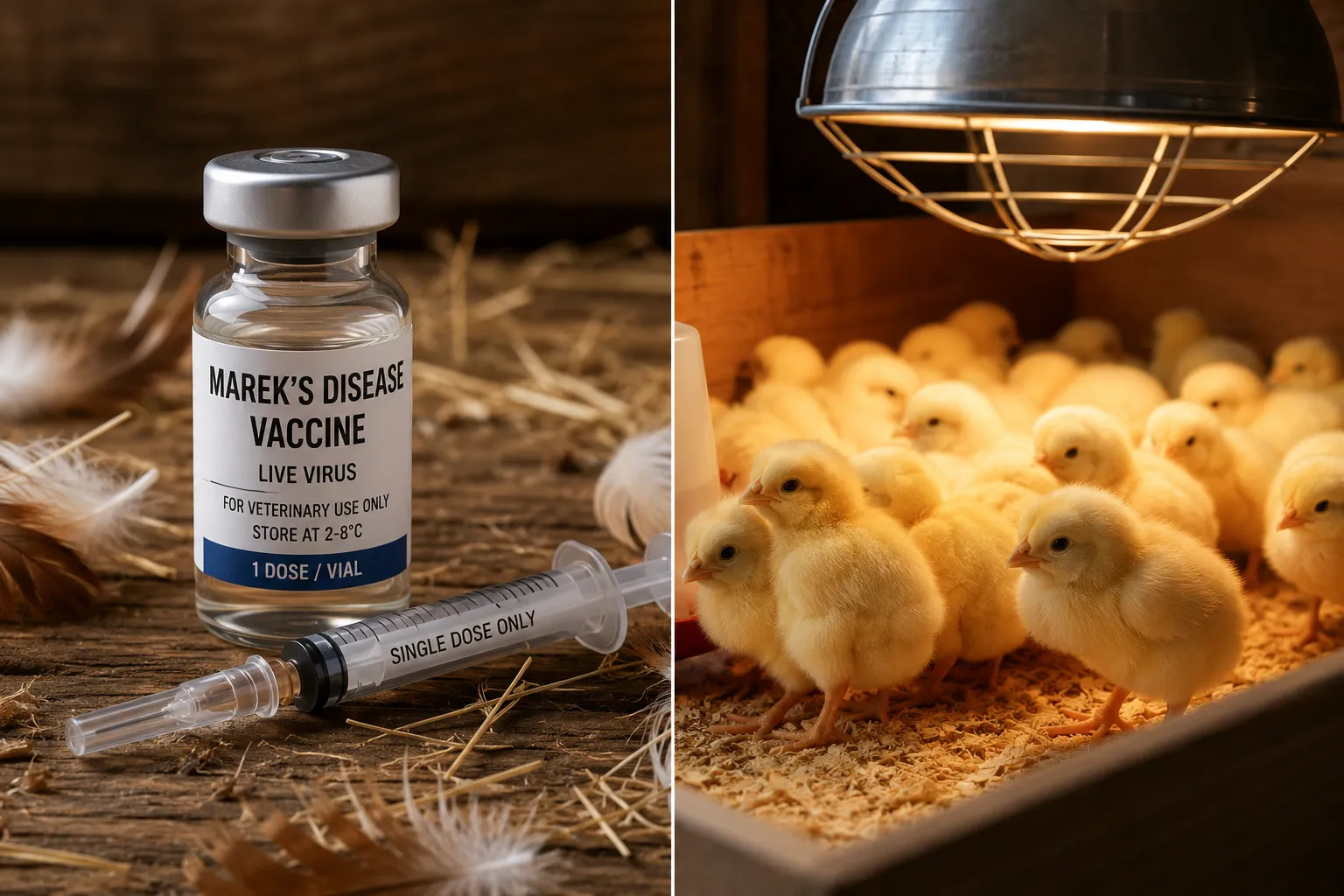
Marek’s disease vaccine costs $0.20 to $0.50 per dose when purchased in bulk, but minimum order quantities of 1,000 doses make it expensive for small flock owners. Most backyard chicken keepers either buy pre-vaccinated chicks from hatcheries (adding $0.25,$0.50 per chick) or skip Marek’s vaccination entirely.
Cost breakdown for small flocks:
| Purchase Method | Cost Per Bird | Minimum Order | Total Investment |
|---|---|---|---|
| Pre-vaccinated hatchery chicks | $0.25,$0.50 | 1 bird | $0.25,$0.50 |
| Vaccine vial (1,000 doses) | $0.20,$0.50 | 1,000 doses | $200,$500 |
| Veterinary service | $5,$15 | 1 bird | $5,$15 |
| Group buy with other keepers | $1,$3 | 10-50 birds | $10,$150 |
Why the high minimum? Marek’s vaccine contains live virus that dies quickly once mixed. Manufacturers package it in commercial quantities because it must be used within hours of reconstitution, making single-dose vials impractical.
Budget-friendly options:
- Buy vaccinated chicks, The simplest solution for flocks under 25 birds
- Organize a group buy, Split a vaccine vial with other local chicken keepers on the same hatch day
- Skip it strategically, Closed flocks with excellent biosecurity and no new bird introductions face lower Marek’s risk
- Find a mobile poultry vet, Some rural vets offer vaccination clinics for small flocks at reasonable rates
Hidden costs: You’ll also need syringes ($10,$20 per 100), needles ($5,$15 per 100), a cooler with ice packs for transport ($20,$40), and diluent solution ($15,$30) if not included with the vaccine.
Do Free-Range Chickens Need Vaccinations?
Free-range chickens face higher disease exposure than confined flocks and generally benefit more from vaccination, especially against diseases transmitted by wild birds, insects, or contaminated soil. The open environment increases contact with disease vectors that biosecurity measures can’t fully control.
Why free-range birds face more risk:
- Wild bird contact, Migratory waterfowl and songbirds carry Newcastle disease and avian influenza
- Insect vectors, Mosquitoes transmit fowl pox, more common in outdoor flocks
- Soil pathogens, Marek’s virus survives in dirt and dust for months, easily picked up while foraging
- Rodent exposure, Mice and rats spread diseases and attract predators that stress immune systems
- Weather stress, Temperature extremes and wet conditions lower immunity, making infections more severe
Recommended vaccines for free-range flocks:
- Marek’s disease, Essential, as the virus is environmentally persistent
- Fowl pox, Strongly recommended in areas with mosquitoes
- Newcastle disease, Consider if wild birds frequent your property
- Coccidiosis prevention, Use medicated starter feed for chicks that will free-range
Biosecurity still matters: Even vaccinated free-range chickens benefit from basic precautions like quarantining new birds for 30 days, controlling rodents, and preventing contact with wild waterfowl.
Exception: Small, closed free-range flocks on properties with no nearby poultry and minimal wild bird traffic may reasonably skip vaccination if owners accept the risk. Monitor for disease signs and have a plan for veterinary care if illness appears.
Chicken Vaccines for Small Flocks vs Commercial Operations
Commercial operations vaccinate for 8-15 diseases, while small backyard flocks typically vaccinate for 0-3 diseases or none at all. The difference comes down to economics, disease pressure, and regulatory requirements rather than bird health needs.
Commercial vaccination programs include:
- Marek’s disease (in-ovo or day 1)
- Newcastle disease (multiple boosters)
- Infectious bronchitis (multiple strains)
- Infectious bursal disease (Gumboro)
- Fowl pox
- Avian encephalomyelitis
- Mycoplasma gallisepticum
- Salmonella (in some countries)
- Coccidiosis (via feed or spray)
- Laryngotracheitis (in endemic areas)
Why commercial flocks vaccinate extensively:
- High density, Thousands of birds in close quarters spread disease rapidly
- Economic stakes, A disease outbreak can cost hundreds of thousands of dollars
- Regulatory compliance, Export markets and processors require vaccination records
- Biosecurity limits, Impossible to fully isolate large operations from disease introduction
- Genetic uniformity, Commercial breeds are less genetically diverse and may be more susceptible
Small flock approach:
Backyard keepers often rely on low stocking density, genetic diversity, and biosecurity instead of vaccines. A flock of 6-12 chickens with ample space, varied breeds, and no new bird introductions faces dramatically lower disease risk than 10,000 identical birds in a barn.
Choose the small-flock approach if:
- Your flock stays under 25 birds
- You rarely or never add new chickens
- No other poultry live within a quarter mile
- You don’t attend shows or swap meets
- You’re willing to accept some disease risk
Choose the commercial approach if:
- You regularly hatch or buy new birds
- You sell eggs, meat, or breeding stock
- Other flocks are nearby
- You show birds or participate in poultry events
- You want maximum disease protection
Can I Vaccinate Chickens Myself at Home?
Yes, you can vaccinate chickens at home with proper supplies, technique, and attention to vaccine storage requirements. Most poultry vaccines are available without a prescription, and subcutaneous or intramuscular injection is straightforward once you learn the technique.
What you need to vaccinate at home:
- Vaccine vials, Purchased from poultry supply companies or farm stores
- Syringes and needles, 1cc syringes with 20-22 gauge needles for most vaccines
- Cooler with ice packs, Vaccines must stay cold (35-45°F) until use
- Diluent or sterile water, For reconstituting freeze-dried vaccines
- Alcohol wipes, For cleaning injection sites
- Record-keeping supplies, Log vaccination dates, vaccine lot numbers, and which birds received doses
- Proper restraint, A helper or towel to safely hold birds during injection
Step-by-step vaccination process:
- Prepare the vaccine, Mix freeze-dried vaccine with diluent according to package directions, keep cold
- Restrain the bird, Hold firmly but gently, supporting the body and controlling wings
- Choose injection site, Subcutaneous: loose skin at back of neck; Intramuscular: breast muscle
- Clean the site, Wipe with alcohol and let dry
- Insert needle, At a 45-degree angle for subcutaneous, 90 degrees for intramuscular
- Inject slowly, Deliver the full dose, withdraw needle, release bird
- Record the vaccination, Note date, vaccine type, and bird identification
Common mistakes when vaccinating at home:
- Using expired vaccine, Check dates before purchase and use promptly
- Improper storage, Vaccines exposed to heat or freezing lose effectiveness
- Wrong dosage, Follow label directions exactly; more is not better
- Vaccinating sick birds, Only vaccinate healthy chickens; vaccines don’t treat active disease
- Reusing needles, Use a fresh needle for each bird to prevent disease transmission
- Injecting air bubbles, Tap syringe and expel air before injection
When to call a vet instead: If you’re uncomfortable with injections, have a large flock requiring multiple vaccines, or need vaccines only available through veterinarians (like some Salmonella vaccines), professional help is worth the cost.
What Happens If Chickens Aren’t Vaccinated?
Unvaccinated chickens face higher risk of contracting contagious diseases, some of which cause high mortality rates, permanent disability, or require flock depopulation. However, many backyard flocks remain healthy without vaccines if biosecurity is strong and disease pressure is low.
Potential consequences of skipping vaccines:
Marek’s disease (unvaccinated):
- 10-50% mortality in infected flocks
- Paralysis, tumors, and wasting in affected birds
- Virus sheds in feather dander, contaminating the environment permanently
- No treatment available once birds show symptoms
Newcastle disease (unvaccinated):
- Up to 100% mortality in virulent strains
- Respiratory distress, nervous system signs, sudden death
- Reportable disease requiring quarantine and possible depopulation
- Can spread to humans (causes mild conjunctivitis)
Fowl pox (unvaccinated):
- Scabby lesions on combs, wattles, and feet
- Respiratory form can cause death in severe cases
- Spreads slowly, usually self-limiting in small flocks
- Mosquito-borne, so risk varies by region and season
Infectious bronchitis (unvaccinated):
- Respiratory disease with coughing and nasal discharge
- Permanent damage to egg-laying ability in hens
- Multiple strains, so vaccine protection is incomplete
- Usually not fatal but reduces productivity
Real-world outcomes:
Many small, closed backyard flocks never experience serious disease even without vaccination. Success depends on isolation from other poultry, preventing wild bird contact, quarantining new birds, and maintaining clean coops. Flocks that frequently add birds, attend shows, or live near other poultry face much higher risk.
Risk assessment: If losing your entire flock would be devastating emotionally or financially, vaccination is cheap insurance. If you view chickens as livestock with expected losses and can accept disease risk, strong biosecurity without vaccines is a reasonable choice.

Is Newcastle Disease Vaccine Necessary for Backyard Chickens?
Newcastle disease vaccine is not necessary for most backyard chickens in the United States unless you live in an outbreak area, show birds, or frequently introduce new chickens. The disease is rare in small hobby flocks with good biosecurity, though it remains a serious threat to commercial operations.
When Newcastle vaccine is recommended:
- Outbreak zones, State veterinarians may mandate vaccination during active outbreaks
- High-risk areas, Southern California and border regions with endemic Newcastle disease
- Show birds, Many exhibitions require proof of Newcastle vaccination or negative testing
- Frequent bird additions, Flocks that regularly buy or trade birds face higher exposure
- Near commercial operations, Living within a mile of large poultry farms increases risk
Newcastle disease basics:
This viral respiratory disease spreads through respiratory secretions, feces, and contaminated equipment. Virulent strains cause high mortality, nervous system signs, and sudden death. Mild strains cause respiratory symptoms and temporary egg production drops. The disease is reportable to state animal health officials, and outbreaks trigger quarantines.
Vaccine options:
- Live vaccines, Given in drinking water or as eye drops, require boosters every 3-6 months
- Killed vaccines, Injected, provide longer immunity but cost more
- Combination vaccines, Often paired with infectious bronchitis protection
Why many backyard keepers skip it:
Newcastle disease is uncommon in well-managed small flocks in most U.S. regions. The vaccine requires regular boosters, and the disease risk doesn’t justify the cost and effort for isolated backyard flocks. Commercial operations vaccinate because the economic stakes are enormous and disease pressure is constant.
Check local status: Contact your state poultry extension office or Department of Agriculture to learn whether Newcastle disease is present in your area. If there hasn’t been a case within 50 miles in the past five years, vaccination is probably unnecessary for a small backyard flock.
Where to Buy Chicken Vaccines for Small Flocks
Chicken vaccines are available from farm supply stores, online poultry suppliers, and veterinarians, though finding small quantities suitable for backyard flocks can be challenging. Most vaccines are sold in commercial quantities of 1,000+ doses, requiring creative solutions for small-flock owners.
Best sources for small-flock vaccines:
Online poultry suppliers:
- Jeffers Pet
- Stromberg’s Chickens
- Murray McMurray Hatchery
- First State Vet Supply
- PBS Animal Health
These companies sell vaccines in various quantities, though minimum orders are still often 500-1,000 doses. Some offer smaller vials during spring chick season.
Local farm stores:
- Tractor Supply Co.
- Rural King
- Fleet Farm
- Local feed mills
Availability varies by season and location. Call ahead to check stock, especially for Marek’s vaccine during spring hatching season.
Hatcheries:
- Most hatcheries offer vaccination at time of purchase
- Adds $0.25,$0.75 per chick
- Simplest option for small orders
Veterinarians:
- Can order vaccines in smaller quantities
- May offer vaccination services
- More expensive but includes professional administration
Group buying strategies:
Since most vaccines come in large quantities, coordinate with other local chicken keepers to split orders. Post in local Facebook groups, 4-H clubs, or farm supply store bulletin boards to find others hatching chicks on the same schedule. Marek’s vaccine must be used within hours of mixing, so timing is critical.
Storage requirements:
All vaccines require refrigeration at 35-45°F from purchase until use. Never freeze vaccines unless specifically labeled as freeze-stable. Transport in a cooler with ice packs, and use within the expiration date printed on the vial. Improper storage destroys vaccine effectiveness even if the product looks normal.
What to check before buying:
- Expiration date (at least 6 months out)
- Storage requirements and shipping method
- Dosage and number of doses per vial
- Whether diluent is included
- Return policy for temperature-compromised shipments
Common Mistakes When Vaccinating Chickens
The most common vaccination mistakes are improper storage, wrong timing, and vaccinating unhealthy birds, all of which result in vaccine failure and wasted money. Understanding these errors helps backyard chicken keepers achieve better protection with less frustration.
Top vaccination mistakes:
1. Vaccinating too late for Marek’s disease
Marek’s vaccine only works if given before exposure to the virus, which happens within the first few days of life. Vaccinating chicks older than 3 days is usually pointless because they’ve already encountered the virus in the environment.
2. Breaking the cold chain
Vaccines exposed to temperatures above 45°F or below freezing lose potency. This happens during shipping, storage in warm vehicles, or sitting out during vaccination sessions. Always use coolers with ice packs and work quickly.
3. Using expired vaccine
Vaccine potency declines over time, and expired products provide little to no protection. Check expiration dates before purchase and use vaccines promptly after opening.
4. Incorrect dosage
Giving too little vaccine provides inadequate immunity; giving too much wastes product and can cause adverse reactions. Measure carefully and follow label directions exactly.
5. Vaccinating sick or stressed birds
Vaccines stimulate the immune system, which requires energy and resources. Sick, injured, or stressed chickens may not respond properly to vaccination and can become sicker. Only vaccinate healthy birds.
6. Reusing needles between birds
This spreads disease from bird to bird, defeating the purpose of vaccination. Use a fresh needle for each chicken, or at minimum change needles every 5-10 birds.
7. Poor injection technique
Injecting into the wrong location, going too deep or too shallow, or injecting too quickly can cause tissue damage, vaccine leakage, or inadequate immunity. Practice proper technique or get help from experienced poultry keepers.
8. Mixing incompatible vaccines
Some vaccines can be given together; others cannot. Read labels carefully and don’t mix vaccines unless specifically approved by the manufacturer.
9. No record keeping
Without records of vaccination dates, vaccine lot numbers, and which birds were vaccinated, you can’t track immunity, investigate vaccine failures, or prove vaccination status for shows or sales.
10. Assuming vaccination replaces biosecurity
Vaccines reduce disease risk but don’t eliminate it. Continue practicing good biosecurity: quarantine new birds, control rodents, prevent wild bird contact, and maintain clean housing.
How to avoid these mistakes:
- Read vaccine labels completely before starting
- Prepare all supplies in advance
- Work with a helper to restrain birds safely
- Keep vaccines cold throughout the process
- Record everything immediately
- Start with a small number of birds to practice technique
- Consider buying pre-vaccinated chicks for your first flock
Do Organic Chickens Get Vaccines?
Yes, organic chickens can receive vaccines under USDA organic standards, and most organic poultry operations do vaccinate for common diseases. The National Organic Program allows vaccines but prohibits routine antibiotics, making disease prevention through vaccination even more important for organic flocks.
USDA organic rules on vaccines:
The National Organic Program (NOP) explicitly permits vaccination of organic livestock, including poultry. Vaccines are considered preventive health care rather than synthetic treatments, so they don’t violate organic standards. However, antibiotics (except for treating diagnosed illness) are prohibited, making vaccines the primary disease prevention tool.
Common vaccines in organic poultry:
- Marek’s disease
- Newcastle disease
- Fowl pox
- Infectious bronchitis
- Coccidiosis (via vaccine, not medicated feed)
What organic standards prohibit:
- Routine antibiotics, Cannot be used preventively, only to treat diagnosed disease
- Medicated feed, Conventional coccidiosis prevention via medicated starter feed is not allowed
- Hormones and growth promoters, Never used in poultry anyway (illegal since 1950s)
- Synthetic parasiticides, Must use approved natural alternatives for parasite control
Why organic operations often vaccinate more:
Without antibiotics as a backup, organic farmers rely heavily on vaccination, biosecurity, and management to prevent disease. Many organic operations have more comprehensive vaccination programs than conventional farms because they can’t treat outbreaks with antibiotics.
Certification requirements:
Organic certifiers review health management plans, including vaccination protocols. Farmers must document all vaccines used, maintain records, and demonstrate that vaccination is part of a comprehensive preventive health program. Some certifiers require specific vaccines based on regional disease risks.
For backyard organic flocks:
If you’re raising chickens for personal use and want to follow organic principles, you can vaccinate without compromising your goals. Focus on preventive care, good nutrition, and biosecurity while using vaccines to protect against serious diseases that have no effective treatment.
Chicken Vaccination Schedule for Beginners
A basic vaccination schedule for backyard chickens includes Marek’s disease at day 1, optional fowl pox at 8-12 weeks, and Newcastle disease boosters if needed. Most small flocks require minimal vaccination compared to commercial operations, making the schedule simple and manageable for beginners.
Basic backyard chicken vaccination timeline:
Day 1 (at hatch):
- Marek’s disease vaccine, Must be given before exposure, ideally in the first 24 hours
- Usually administered by the hatchery; request when ordering chicks
- If vaccinating at home, prepare everything in advance as timing is critical
Week 8-12 (2-3 months old):
- Fowl pox vaccine, Optional, recommended in mosquito-prone areas
- Given as a wing-web stab with a two-pronged needle
- Provides lifetime immunity after a single dose
Week 12-16 (3-4 months old):
- Newcastle disease vaccine, Optional, only if required by local regulations or for show birds
- Live vaccine given in drinking water or as eye drops
- Requires boosters every 3-6 months for continued protection
Ongoing (as needed):
- Newcastle boosters, Every 3-6 months if you’re vaccinating for this disease
- Coccidiosis prevention, Use coccidiosis vaccine at hatch OR medicated starter feed (not both)
Simplified schedule for minimal vaccination:
Many backyard chicken keepers follow this approach:
- Buy Marek’s-vaccinated chicks from a hatchery, Handles the most critical vaccine
- Skip other vaccines, Rely on biosecurity and low flock density
- Monitor for disease signs, Watch for symptoms and consult a vet if problems appear
When to vaccinate more extensively:
Consider a fuller vaccination schedule if you:
- Live in an area with known poultry disease problems
- Plan to show birds or attend poultry events
- Regularly add new birds to your flock
- Have nearby neighbors with chickens
- Want maximum disease protection regardless of cost
Record-keeping for beginners:
Create a simple vaccination log with these details:
- Date of vaccination
- Bird identification (leg band number, breed, or name)
- Vaccine name and manufacturer
- Lot number and expiration date
- Person who administered the vaccine
- Any reactions or problems
Keep records for at least three years. They’re essential for troubleshooting vaccine failures, proving vaccination status for shows, and tracking flock health over time.
Natural Alternatives to Chicken Vaccines
Natural alternatives to chicken vaccines include herbs, probiotics, apple cider vinegar, and strong biosecurity practices, but these methods provide less reliable protection against viral diseases than vaccination. While natural approaches support overall health and may reduce disease severity, they cannot prevent infection with viruses like Marek’s disease or Newcastle disease.
Popular natural disease prevention methods:
Herbs and supplements:
- Garlic, Antimicrobial properties, may support immune function
- Oregano, Contains carvacrol, which has antibacterial effects
- Turmeric, Anti-inflammatory, supports general health
- Probiotics, Beneficial bacteria for gut health and immunity
- Apple cider vinegar, Added to water, claimed to support digestion (1 tablespoon per gallon)
Management-based prevention:
- Low stocking density, More space per bird reduces disease transmission
- Excellent ventilation, Fresh air dilutes pathogens and reduces respiratory disease
- Deep litter method, Builds beneficial microbes that compete with pathogens
- Rotational ranging, Moving chickens to fresh ground reduces parasite loads
- Stress reduction, Calm, comfortable birds have stronger immune systems
Biosecurity as a natural alternative:
- Closed flock, Never adding new birds eliminates disease introduction
- Quarantine, Isolating new birds for 30 days before flock introduction
- Wild bird exclusion, Netting or housing prevents contact with disease carriers
- Rodent control, Eliminating mice and rats removes disease vectors
- Clean water and feeders, Preventing fecal contamination reduces pathogen exposure
What natural methods can and cannot do:
✅ Natural methods CAN:
- Support overall immune function
- Reduce bacterial infections (to some degree)
- Lower parasite loads
- Decrease stress-related illness
- Improve general flock health
❌ Natural methods CANNOT:
- Prevent viral diseases like Marek’s or Newcastle
- Provide specific immunity to pathogens
- Protect birds during disease outbreaks
- Replace vaccines for show birds or high-risk flocks
- Guarantee disease-free status
The evidence gap:
Most natural chicken remedies lack rigorous scientific testing. While herbs and supplements are generally safe and may provide modest benefits, no natural product has demonstrated effectiveness comparable to vaccines for preventing specific viral diseases. Anecdotal success stories often reflect good biosecurity rather than the natural remedy itself.
Combining approaches:
The most effective strategy combines vaccination for serious viral diseases with natural methods for overall health. Vaccinate for Marek’s disease and other high-risk diseases in your area, then use herbs, probiotics, and excellent management to support immune function and reduce other health problems.
When natural alternatives make sense:
- Small, closed flocks with no disease history
- Owners philosophically opposed to vaccines who accept higher risk
- As supplements to vaccination, not replacements
- For general health support rather than specific disease prevention
- In conjunction with exceptional biosecurity practices
When vaccines are necessary:
- High-risk flocks (shows, frequent additions, nearby poultry)
- Areas with endemic poultry diseases
- When local regulations require vaccination
- For birds intended for sale or breeding
- When disease prevention is critical to your operation
Frequently Asked Questions
Can you vaccinate chickens after they’re already grown?
Most chicken vaccines work best when given to young birds, but some vaccines can be administered to adult chickens. Newcastle disease and fowl pox vaccines are effective in adults, while Marek’s disease vaccine only works if given before exposure (typically day 1). Adult birds may need higher doses or boosters to achieve immunity.
How long does Marek’s vaccine take to become effective?
Marek’s disease vaccine requires 10-14 days to provide full protection after administration. During this period, chicks remain vulnerable to infection, so keep vaccinated chicks isolated from older birds and contaminated environments until immunity develops. This is why hatcheries often keep vaccinated chicks separate for two weeks.
Can vaccinated chickens still get sick?
Yes, vaccinated chickens can still contract diseases, though usually with milder symptoms and lower mortality. Vaccines reduce disease severity and transmission but don’t provide 100% protection. Vaccine effectiveness depends on proper storage, correct administration, vaccine-strain match, and individual bird immune response.
Do I need to vaccinate chickens if I buy them as adults?
Adult chickens purchased from unknown sources may or may not be vaccinated, and their disease history is uncertain. Quarantine new adult birds for 30 days and watch for disease signs. Consider vaccinating for Newcastle disease and fowl pox if you plan to integrate them with your existing flock, though Marek’s vaccination won’t help adults.
Are chicken vaccines safe for humans handling the birds?
Yes, chicken vaccines are safe for humans with normal handling precautions. Wear gloves when vaccinating, wash hands afterward, and avoid needle sticks. Some vaccines (like Newcastle) contain live virus that can cause mild conjunctivitis in humans if splashed in the eyes, so wear safety glasses when administering eye-drop or spray vaccines.
Can I eat eggs from vaccinated chickens?
Yes, eggs from vaccinated chickens are completely safe to eat. Vaccines don’t transfer to eggs, and there are no withdrawal periods for vaccination like there are for antibiotics. Organic and conventional egg operations routinely vaccinate laying hens, and the eggs are safe for consumption.
What’s the difference between vaccines and antibiotics for chickens?
Vaccines prevent disease by training the immune system to recognize specific pathogens before exposure. Antibiotics treat bacterial infections after they occur but don’t work on viruses and don’t provide future protection. Vaccines are preventive; antibiotics are therapeutic. Organic standards allow vaccines but restrict antibiotics.
Do heritage breed chickens need vaccines?
Heritage breed chickens have the same vaccination needs as commercial breeds, though some keepers believe heritage birds have stronger natural immunity. While heritage breeds may be hardier overall, they’re still susceptible to viral diseases like Marek’s and Newcastle. Base vaccination decisions on disease risk, not breed type.
Can I vaccinate chickens in winter?
Yes, you can vaccinate chickens year-round, but cold weather creates challenges. Vaccines must not freeze during storage or administration, and stressed birds (from extreme cold) may not respond well to vaccination. If possible, vaccinate during mild weather when birds are healthy and comfortable. Keep vaccines in insulated coolers during winter vaccination sessions.
How do I know if a vaccine worked?
Vaccine success is difficult to confirm without laboratory testing (antibody titers). Practical indicators include: no disease outbreaks in your flock when neighboring flocks are affected, normal growth and productivity, and absence of disease symptoms. If you vaccinated correctly and maintained proper storage, assume the vaccine worked unless evidence suggests otherwise.
Do chickens need booster shots?
Some vaccines require boosters; others provide lifetime immunity. Marek’s disease vaccine is a single dose with no boosters needed. Newcastle disease vaccine requires boosters every 3-6 months for continued protection. Fowl pox vaccine provides lifetime immunity after one dose. Check vaccine labels for specific booster requirements.
Can I vaccinate chickens that are molting?
Avoid vaccinating chickens during molting if possible. Molting is stressful and energy-intensive, and birds may not respond well to vaccination during this period. Wait until molting is complete and birds have regrown feathers before vaccinating, unless there’s an urgent disease threat requiring immediate protection.
Conclusion
Whether chickens need vaccines depends on your specific situation: flock size, biosecurity practices, local disease prevalence, and risk tolerance. Most backyard flocks benefit from Marek’s disease vaccination at hatch, while other vaccines become important for show birds, high-risk areas, or operations that frequently introduce new chickens.
Key decisions for your flock:
Start by assessing your disease risk. Small, closed flocks with strong biosecurity and no nearby poultry may reasonably skip most vaccines. Flocks that attend shows, add new birds regularly, or live in areas with known poultry diseases should vaccinate more comprehensively. The simplest approach for beginners is buying Marek’s-vaccinated chicks from hatcheries and relying on good management for other disease prevention.
Take action:
- Contact your state poultry extension office to learn what diseases are common in your area
- Decide on your vaccination strategy based on risk assessment and management style
- Source vaccines or vaccinated chicks before your next hatch or purchase
- Implement strong biosecurity regardless of vaccination decisions
- Keep detailed records of all vaccinations, sources, and flock health events
- Monitor your flock regularly for signs of disease and address problems promptly
Remember that vaccination is just one tool in a comprehensive poultry health program. Combine vaccines with excellent nutrition, clean housing, low stress, and biosecurity practices to keep your chickens healthy and productive for years to come.


