Quick Answer
No, chickens do not need a rooster to lay eggs. Hens will produce eggs regularly without any male bird present, just as human females ovulate without fertilization. The eggs you collect from a rooster-free flock are unfertilized and perfectly safe to eat, in fact, they’re identical to most store-bought eggs.
Key Takeaways
- Hens lay eggs without a rooster,egg production is a natural biological cycle that happens regardless of mating
- Unfertilized eggs are completely safe to eat and taste identical to fertilized eggs
- Roosters are only needed if you want to hatch chicks,fertilization requires mating with a male bird
- Most backyard chicken keepers don’t need roosters unless they want to breed their flock or enjoy the benefits roosters provide
- Hens lay at the same frequency whether a rooster is present or not, typically 5-7 eggs per week during peak production
- Store-bought eggs are almost always unfertilized because commercial operations rarely keep roosters with laying hens
- You can identify fertilized eggs by looking for a small white spot (germinal disc) on the yolk, though it requires practice
- Roosters offer flock protection and social structure but come with noise, aggression risks, and local ordinance considerations
- Egg production depends on breed, age, nutrition, and daylight,not the presence of a rooster
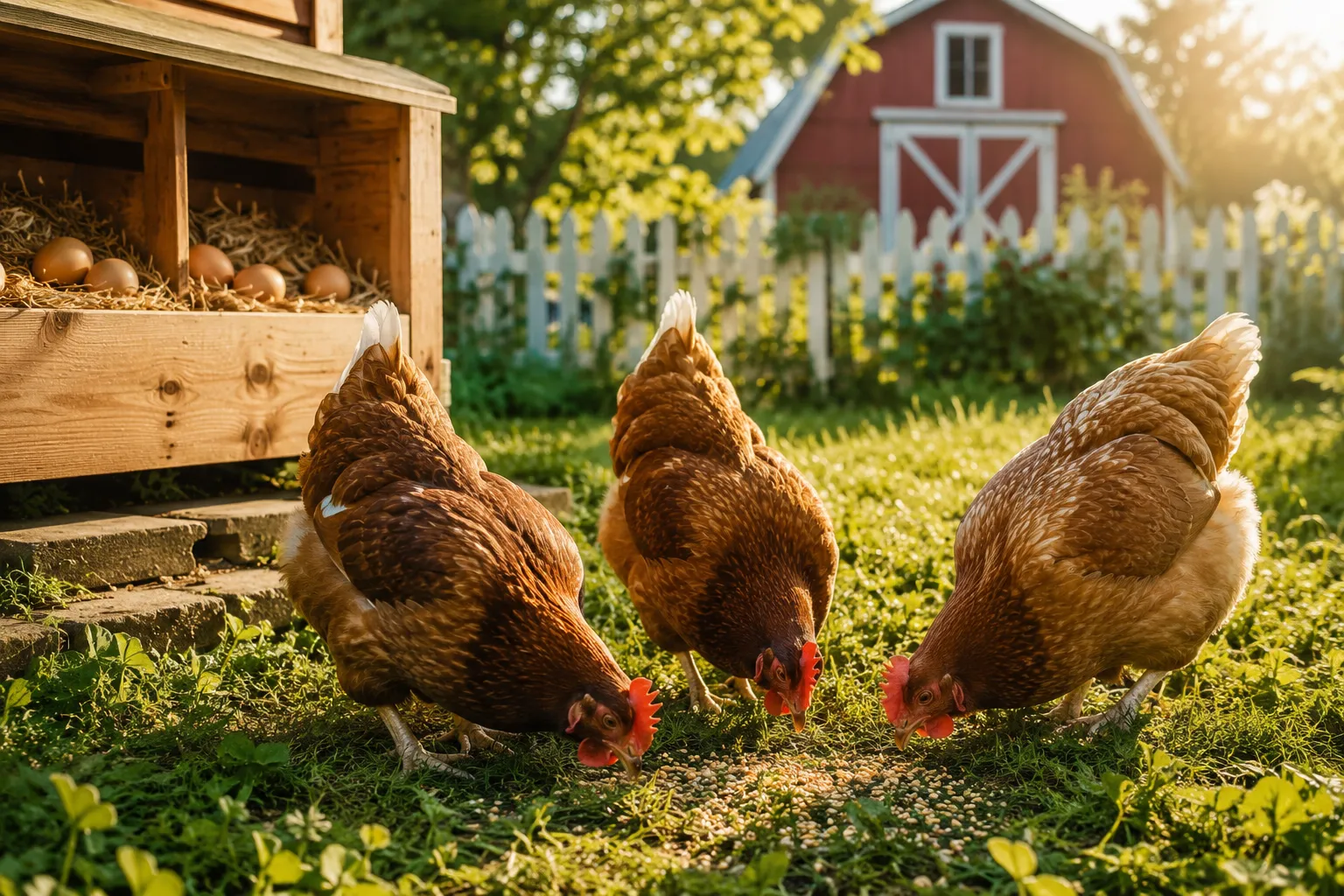
Do Hens Lay Eggs Without a Rooster?
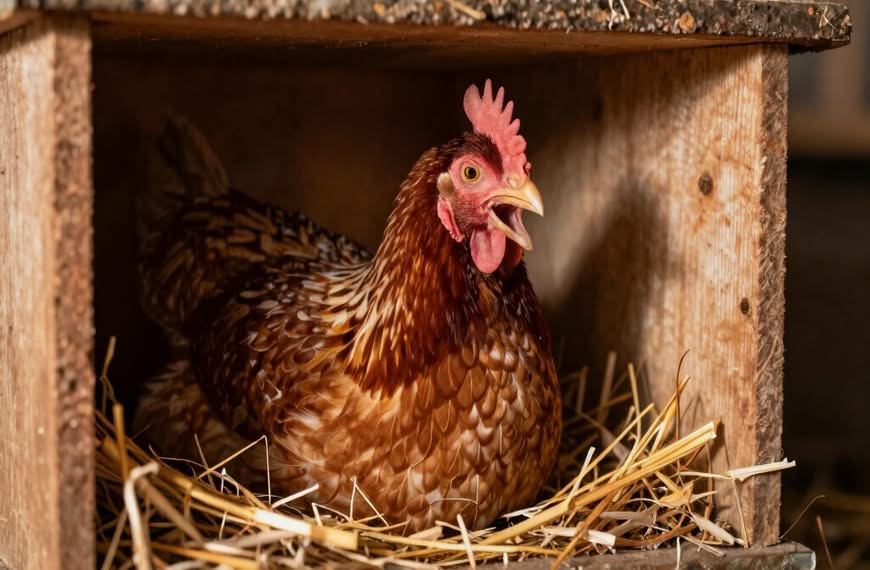
Yes, hens lay eggs without a rooster present. Egg laying is a hen’s natural reproductive cycle that occurs independently of fertilization, similar to how mammals ovulate. A healthy hen will begin laying eggs around 18-24 weeks of age and continue producing eggs regularly throughout her productive years, regardless of whether she has ever encountered a male bird.
The biological process works like this: hens are born with thousands of tiny ova (egg yolks) in their ovaries. As the hen matures, her body releases one ovum approximately every 24-26 hours. This ovum travels through the oviduct, where it gets coated with albumen (egg white), membranes, and finally a hard shell before being laid. This entire process happens whether or not a rooster has mated with the hen.
Key factors that affect egg production:
- Breed: Some breeds like Leghorns and Rhode Island Reds lay 250-300 eggs per year, while ornamental breeds may lay only 100-150
- Age: Peak production occurs in the first 2 years, then gradually declines
- Daylight hours: Hens need 14-16 hours of light daily for optimal laying
- Nutrition: A balanced layer feed with adequate calcium is essential
- Stress levels: Predators, overcrowding, or sudden changes reduce laying
- Season: Many hens slow down or stop laying during winter months
The common misconception that roosters are necessary for egg production likely stems from confusion about fertilization and reproduction. While roosters are absolutely required to create fertile eggs that can hatch into chicks, they play no role in the egg-laying process itself.
What Is the Difference Between Fertilized and Unfertilized Chicken Eggs?
The difference between fertilized and unfertilized eggs lies in whether the egg contains genetic material from both a hen and a rooster. An unfertilized egg contains only the hen’s genetic material and will never develop into a chick, while a fertilized egg has been combined with rooster sperm and has the potential to become a baby chicken if incubated properly.
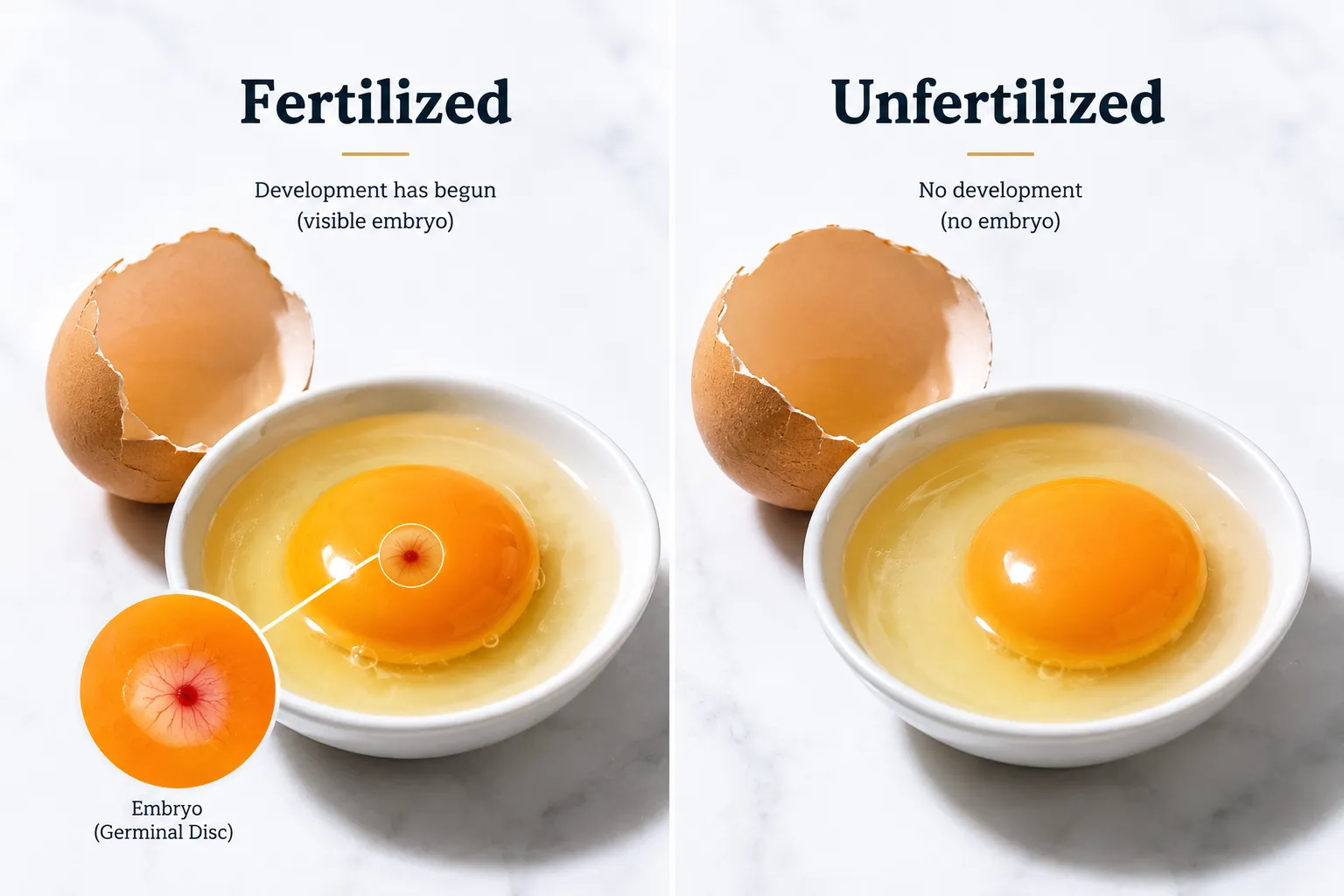
Visual and practical differences:
When you crack open an egg, fertilized and unfertilized eggs look nearly identical to the untrained eye. However, there are subtle differences:
- Germinal disc: On the yolk of a fertilized egg, you’ll see a small white spot (blastoderm) that looks like a tiny bullseye with concentric rings. On an unfertilized egg, this spot (blastodisc) appears as a solid white dot without rings
- Taste and nutrition: There is no detectable difference in taste, texture, or nutritional value between fertilized and unfertilized eggs
- Shelf life: Both types have the same refrigerated storage life (3-5 weeks)
- Safety: Both are equally safe to eat when fresh and properly stored
Development potential:
The critical difference emerges only under incubation conditions. A fertilized egg kept at approximately 99-102°F with proper humidity will begin developing into an embryo within 24 hours. Cell division starts, blood vessels form, and after 21 days of incubation, a chick hatches. An unfertilized egg will simply rot under these same conditions because there’s no embryo to develop.
For backyard chicken keepers who collect eggs daily and refrigerate them, even fertilized eggs never begin development because the cold temperature prevents cell division. This is why you can safely eat eggs from a flock that includes a rooster.
Can You Eat Eggs From Chickens Without a Rooster?
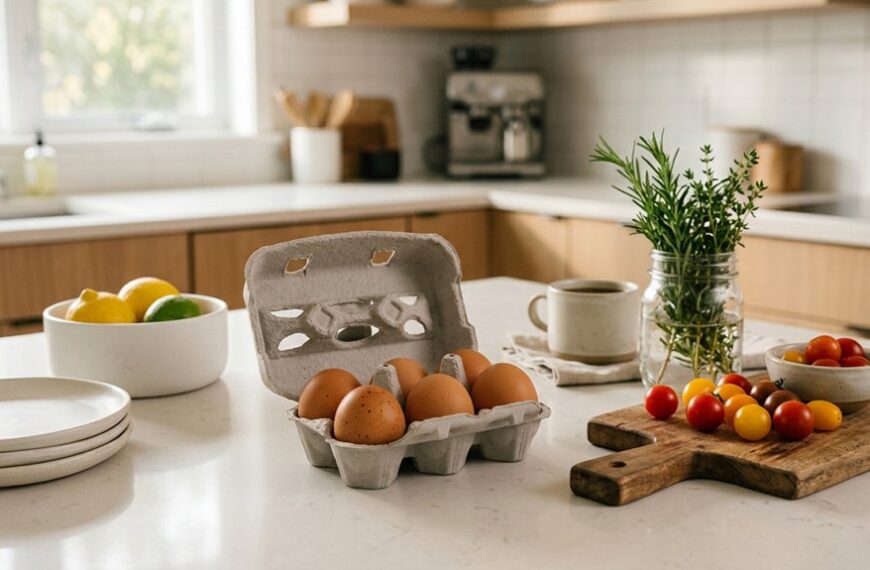
Absolutely yes, eggs from chickens without a rooster are completely safe, nutritious, and delicious to eat. These unfertilized eggs are identical in every way to the eggs you buy at the grocery store and contain the same protein, vitamins, minerals, and healthy fats.
In fact, most commercial egg operations deliberately avoid keeping roosters with their laying hens specifically because unfertilized eggs are the industry standard. There’s no food safety, nutritional, or culinary reason to prefer one over the other.
Benefits of rooster-free eggs:
- No risk of embryo development: You’ll never accidentally crack open an egg with a developing chick
- Identical nutrition: Same protein (6g per egg), vitamins A, D, E, B12, and minerals
- Same cooking properties: Identical performance in baking, frying, boiling, and all other cooking methods
- Longer perceived freshness: Some people feel more comfortable knowing their eggs were never fertilized
The only scenario where you might want fertilized eggs is if you’re planning to incubate and hatch chicks. For eating purposes, unfertilized eggs from a rooster-free flock are the standard choice for backyard chicken keepers who want fresh eggs without the complications that come with keeping a male bird.
How Often Do Chickens Lay Eggs Without Mating?
Chickens lay eggs at the same frequency whether they mate or not, typically one egg every 24-26 hours during their productive laying cycle. A healthy hen in her prime (first 2 years) will lay approximately 5-7 eggs per week, or 250-300 eggs per year, depending on her breed, regardless of rooster presence.
The laying cycle is controlled by hormones and light exposure, not by mating behavior. Here’s what to expect:
Typical laying patterns:
- High-production breeds (Leghorns, Golden Comets, ISA Browns): 280-320 eggs per year
- Dual-purpose breeds (Rhode Island Reds, Plymouth Rocks, Orpingtons): 200-280 eggs per year
- Heritage and ornamental breeds (Silkies, Polish, Sebrights): 100-180 eggs per year
- Laying schedule: Most hens lay in the morning, typically within 6 hours after sunrise
Factors that affect frequency:
The presence or absence of a rooster has zero impact on how often a hen lays. What does matter:
- Daylight: Hens need 14-16 hours of light daily; production drops significantly in winter without supplemental lighting
- Age: Peak production in year 1-2, then declines 10-20% each subsequent year
- Molting: Hens stop laying for 2-3 months during their annual feather molt
- Broodiness: Some breeds go broody (wanting to hatch eggs) and stop laying for weeks
- Nutrition: Inadequate protein or calcium reduces production
- Stress: Predator pressure, illness, or environmental changes interrupt laying
A common mistake is expecting daily eggs from every hen. Even the best layers take occasional days off, and older hens may lay only 2-3 times per week. Track your flock’s production over weeks, not days, for accurate assessment.
Do I Need a Rooster for My Backyard Chickens?
No, you do not need a rooster for backyard chickens if your primary goal is egg production. Most backyard chicken keepers successfully maintain healthy, productive flocks of hens without any male birds. Roosters are optional additions that serve specific purposes beyond egg laying.
When you DON’T need a rooster:
- Your goal is fresh eggs for eating
- You live in an area with noise restrictions or close neighbors
- You have a small flock (under 6 hens)
- You’re new to chicken keeping and want to start simple
- Local ordinances prohibit roosters
- You have young children who visit the coop frequently
When you MIGHT want a rooster:
- You want to hatch your own chicks and maintain a self-sustaining flock
- You have a large free-range flock that needs protection from aerial predators
- You want to preserve a heritage breed through breeding
- You appreciate the aesthetic and behavioral completeness of a natural flock structure
- You have acreage where crowing won’t disturb neighbors
Practical considerations before adding a rooster:
Check your local zoning laws first, many suburban and urban areas prohibit roosters due to noise complaints. Roosters crow throughout the day (not just at dawn), with some individuals crowing 15-30 times daily starting as early as 4 AM.
Roosters can also become aggressive, especially during breeding season. They may attack children, pets, or even their owners if they perceive a threat to their hens. This territorial behavior varies by breed and individual temperament, but it’s a real consideration for family-friendly backyard flocks.
The general rule: choose hens only if you want eggs, add a rooster only if you have a specific reason and the space to accommodate one.
Why Do Some People Keep Roosters If Hens Lay Eggs Anyway?
People keep roosters for flock protection, breeding purposes, natural flock dynamics, and pest control, not for egg production. While roosters don’t contribute to the number of eggs laid, they serve several valuable functions that some chicken keepers consider worth the extra noise and management challenges.
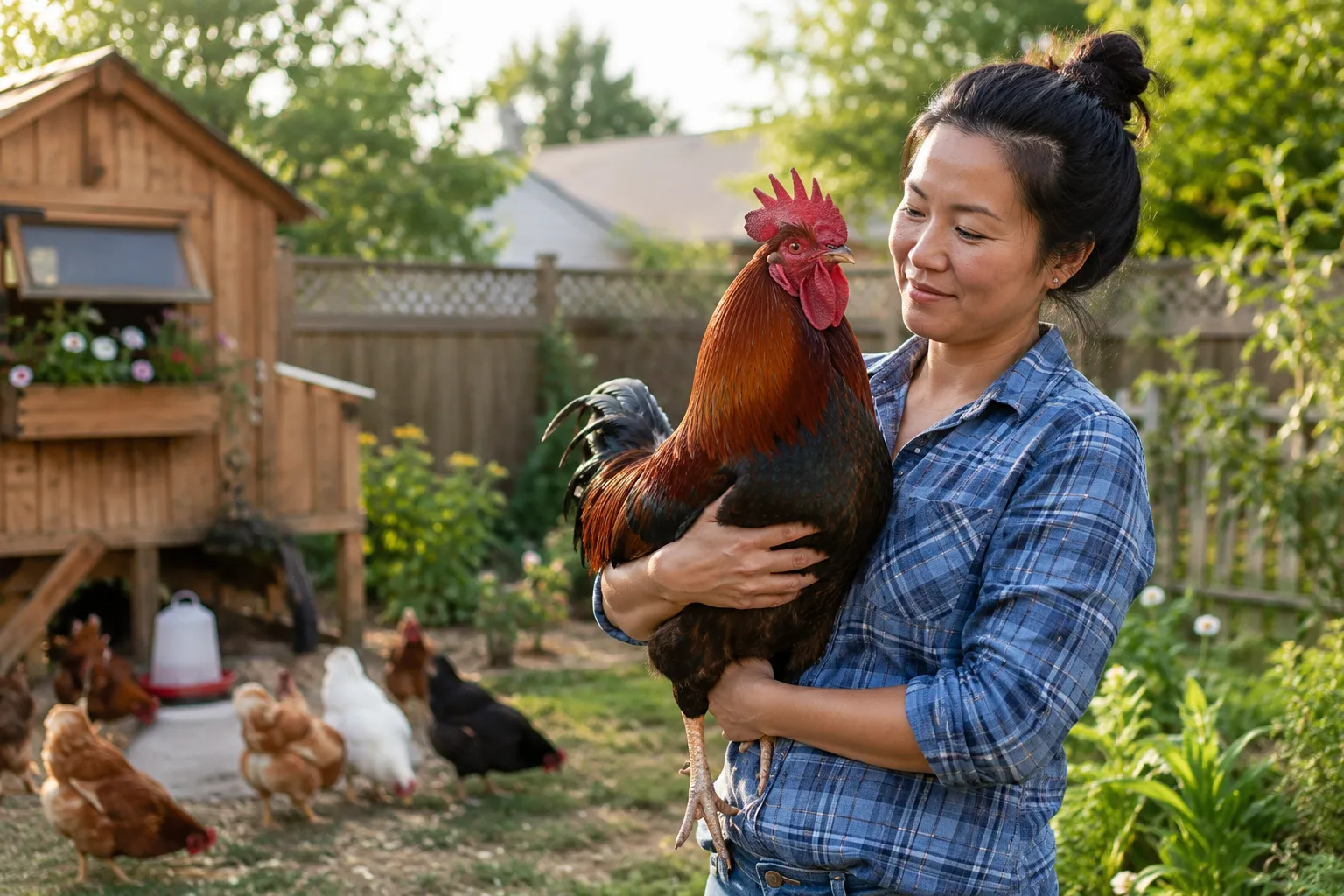
Primary reasons to keep a rooster:
1. Flock protection and vigilance
Roosters are naturally protective and serve as guardians for their hens. They watch for aerial predators like hawks and owls, sound alarm calls when danger approaches, and will physically defend hens against threats. Many free-range flock owners report fewer predator losses when a rooster is present. The rooster typically eats last, allowing hens to feed first, and will call hens over when he finds food.
2. Breeding and chick production
If you want to hatch your own chicks, maintain a heritage breed, or create a self-sustaining flock, a rooster is essential. This is particularly important for homesteaders pursuing food independence or breed conservationists working to preserve rare chicken varieties.
3. Natural flock behavior and hierarchy
Roosters provide social structure and reduce hen-on-hen aggression by establishing clear pecking order. They break up fights between hens, mediate disputes, and create a more natural social dynamic. Some chicken keepers simply enjoy observing complete, natural flock behavior.
4. Pest control
Roosters are often more aggressive hunters than hens, actively seeking out mice, small snakes, and large insects. In garden settings, they can provide additional pest management.
5. Aesthetic and cultural value
Many people appreciate the beauty of a rooster’s plumage, the traditional farm ambiance of crowing, and the cultural heritage of keeping a complete flock. For some, a farm doesn’t feel complete without a rooster.
The trade-off:
These benefits come with noise, potential aggression, wear-and-tear on hens from frequent mating, and the need for a higher hen-to-rooster ratio (typically 8-12 hens per rooster). Each keeper must weigh whether these benefits justify the challenges for their specific situation.
Will My Chickens Stop Laying If I Don’t Have a Rooster?
No, your chickens will not stop laying if you don’t have a rooster. The absence of a male bird has absolutely no effect on a hen’s egg production cycle. Hens will continue laying eggs at their normal frequency, determined by breed, age, season, and health, whether or not a rooster is present in the flock.
This misconception likely arises from confusion about reproduction. While mammals typically require mating to trigger ovulation or pregnancy, chickens operate differently. A hen’s reproductive system releases eggs on a regular hormonal cycle that functions independently of fertilization.
What actually causes hens to stop laying:
- Insufficient daylight: Production drops when days shorten below 14 hours of light
- Molting: Annual feather replacement causes a 2-3 month laying break
- Age: Laying declines naturally after the first 2-3 years
- Broodiness: Some hens stop laying when they want to hatch eggs
- Stress: Predators, illness, poor nutrition, or environmental changes
- Winter dormancy: Many breeds naturally reduce or stop laying in cold months
If your hens suddenly stop laying, investigate these factors rather than assuming you need a rooster. In fact, adding a rooster to a previously all-hen flock can temporarily reduce egg production due to the stress of social hierarchy disruption and increased mating activity.
The bottom line: Roosters don’t stimulate, increase, or maintain egg production. They only fertilize eggs that would be laid anyway.
How to Tell If a Chicken Egg Is Fertilized
You can tell if a chicken egg is fertilized by examining the germinal disc on the yolk or by candling the egg after several days of incubation. For fresh eggs, crack one open and look at the small white spot on the yolk, a fertilized egg shows a bullseye pattern with concentric rings (blastoderm), while an unfertilized egg has a solid white dot (blastodisc).
Method 1: Visual inspection of cracked eggs
When you crack open a fresh egg:
- Unfertilized: Look for a small, irregular white spot (2-3mm) on the yolk surface with no distinct pattern
- Fertilized: The white spot appears as a defined circle with a clear center and ring structure, resembling a tiny target
This method requires practice and good lighting. The difference is subtle in fresh eggs, and many people can’t reliably distinguish between the two without experience.
Method 2: Candling (for incubated eggs)
Candling involves shining a bright light through the egg in a dark room to see internal development:
- Day 3-4: Fertilized eggs show a dark spot with spider-like blood vessels radiating outward
- Day 7-10: Clear embryo development with visible movement
- Unfertilized: The egg remains clear with only the yolk shadow visible, no veining or dark spots
You’ll need a bright LED flashlight or dedicated egg candler. Hold the egg up to the light in a dark room and look for the telltale blood vessel network.
Method 3: Float test (unreliable for fertilization)
The float test only indicates egg age and air cell size, not fertilization status. Don’t rely on this method to determine if an egg is fertile.
Important note: If you collect eggs daily and refrigerate them immediately, even fertilized eggs will never begin developing. The cold temperature prevents cell division, so fertilization status becomes irrelevant for eating purposes.
Are Store-Bought Eggs Fertilized or Unfertilized?
Store-bought eggs are almost always unfertilized because commercial egg operations keep hens in rooster-free environments. Large-scale egg producers separate male chicks from females shortly after hatching, raising only females for egg production. This ensures 100% unfertilized eggs, which is the industry standard for food safety and consumer preference.
Why commercial operations avoid roosters:
- No fertilization needed: Hens lay eggs without mating, so roosters add no production value
- Cost efficiency: Roosters consume feed but produce no sellable product
- Reduced aggression: All-hen flocks are calmer and easier to manage in confined spaces
- Consumer preference: Most consumers prefer knowing their eggs were never fertilized
- Consistent product: Eliminates any possibility of embryo development during transport or storage
Rare exceptions:
Some small-scale farms, farmers markets, or specialty producers who keep mixed flocks may sell fertilized eggs. These are typically labeled as “fertile eggs” or come from farms that advertise breeding programs. If you’re buying eggs from a small homestead or local farm, you can ask the producer whether they keep roosters with their laying hens.
Organic and free-range labels:
Even organic, free-range, or pasture-raised eggs are usually unfertilized. These labels refer to how hens are housed and fed, not whether roosters are present. Most certified operations still maintain rooster-free flocks for the reasons listed above.
If you specifically want fertilized eggs for incubation purposes, you’ll need to purchase from a breeder or hatchery that explicitly sells “hatching eggs” rather than “eating eggs.”
Do Roosters Make Hens Lay More Eggs?
No, roosters do not make hens lay more eggs. Egg production is controlled by a hen’s hormones, breed genetics, age, nutrition, and light exposure, not by the presence of a male bird. A hen will lay the same number of eggs whether she mates with a rooster or never encounters one.
This myth may persist because people observe complete flocks (with roosters) producing eggs and assume the rooster is contributing to production. In reality, the rooster’s only contribution is fertilizing eggs that would be laid anyway.
What roosters actually do:
- Fertilize eggs: The only reproductive role, turning unfertilized eggs into fertile ones
- Protect the flock: Alert hens to danger and defend against predators
- Maintain social order: Reduce hen-on-hen aggression through hierarchy
- Find food: Call hens to food sources and allow them to eat first
What roosters DON’T do:
- Increase the number of eggs laid
- Improve egg quality, size, or nutrition
- Make hens start laying earlier in life
- Extend a hen’s productive laying years
- Stimulate laying in non-productive hens
In fact, excessive mating activity from an overly aggressive rooster or poor hen-to-rooster ratio can actually stress hens and temporarily reduce egg production. The ideal ratio is 8-12 hens per rooster to prevent over-mating.
The science: Egg production is triggered by the hen’s pituitary gland responding to daylight hours, which stimulates hormone release that causes ovulation. This process happens on a roughly 24-26 hour cycle and is completely independent of mating behavior.
If you want to increase egg production, focus on proven factors: provide 14-16 hours of light daily, feed high-quality layer feed with adequate calcium, reduce stress, choose high-production breeds, and maintain young hens in their peak laying years.
Can a Hen Hatch Eggs Without a Rooster?
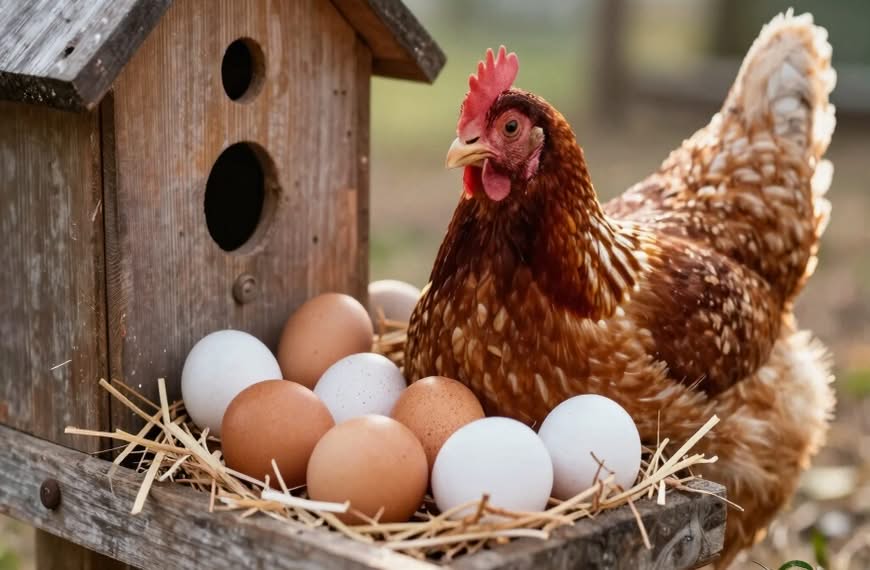
A hen can sit on and attempt to hatch eggs without a rooster, but those unfertilized eggs will never develop into chicks. Only fertilized eggs, which require mating with a rooster, contain the genetic material necessary to create an embryo. A broody hen sitting on unfertilized eggs will simply be wasting her time and energy on eggs that will eventually rot.
What happens when a hen goes broody on unfertilized eggs:
Broodiness is a hormonal state where a hen becomes determined to hatch eggs. She’ll sit on a clutch of eggs for 21 days (the normal incubation period), leaving the nest only briefly for food and water. Her body temperature rises slightly, and she’ll aggressively defend her nest.
If the eggs are unfertilized:
- Days 1-7: The hen sits faithfully, but no embryo development occurs inside the eggs
- Days 8-14: The eggs begin to deteriorate internally without refrigeration
- Days 15-21: The hen continues sitting, expecting chicks that will never hatch
- Day 21+: The hen may eventually abandon the rotten eggs, or continue sitting indefinitely
How to handle a broody hen without a rooster:
If you don’t have a rooster and don’t want to hatch chicks, you have several options:
- Break the broodiness: Remove the hen from the nest multiple times daily, place her in a wire-bottom cage to cool her body temperature, or use other broody-breaking techniques
- Provide fertile eggs: Purchase fertilized hatching eggs from a breeder and let her hatch them
- Provide day-old chicks: Some hens will accept and raise purchased chicks if introduced at night
- Let her sit it out: She’ll eventually give up after 3-4 weeks, though she’ll lose weight and stop laying during this time
The bottom line: A hen’s instinct to hatch eggs is independent of whether those eggs are fertile. She can’t tell the difference, so she’ll sit on unfertilized eggs just as devotedly as fertile ones, but only fertile eggs will produce chicks.
What Happens to Eggs If There Is No Rooster?
If there is no rooster, eggs remain unfertilized and are perfectly safe to collect and eat. These eggs are identical to fertilized eggs in appearance, taste, nutrition, and cooking properties. The only difference is that unfertilized eggs will never develop into chicks, even if incubated under perfect conditions.
The lifecycle of unfertilized eggs:
Fresh collection (Days 1-7):
Collect eggs daily from nesting boxes. Unfertilized eggs can be stored at room temperature for up to 2 weeks or refrigerated for 3-5 weeks. They maintain the same quality as any store-bought egg.
If left in the nest:
If you don’t collect eggs and a hen goes broody, she may sit on unfertilized eggs for weeks. Without an embryo to develop, the eggs will simply age and eventually rot. The hen will waste energy and stop laying new eggs during this time.
If incubated:
Placing unfertilized eggs in an incubator at 99-102°F with proper humidity will not create chicks. The eggs will spoil after several days because there’s no embryo to consume the nutrients and develop. Candling on day 7 would show no blood vessels or development, just a clear egg with a yolk shadow.
Nutritional and culinary use:
Unfertilized eggs from a rooster-free flock are the standard for:
- Breakfast cooking: Scrambled, fried, poached, or boiled
- Baking: Cakes, cookies, breads, and pastries
- Binding and coating: Meatballs, breading, and sauces
- Raw applications: Mayonnaise, hollandaise, and meringue
There is no nutritional or safety reason to prefer fertilized over unfertilized eggs for eating. The vast majority of eggs consumed worldwide, including virtually all commercial eggs, are unfertilized.
Pros and Cons of Having a Rooster With Laying Hens
Having a rooster with laying hens offers benefits like flock protection and breeding capability but comes with challenges including noise, aggression, and local restrictions. The decision depends on your goals, space, neighbors, and local ordinances.
Pros of keeping a rooster:
✅ Flock protection: Roosters watch for predators, sound alarm calls, and physically defend hens against threats like hawks, foxes, and dogs
✅ Breeding capability: Essential if you want to hatch chicks, maintain a self-sustaining flock, or preserve heritage breeds
✅ Social structure: Reduces hen-on-hen aggression, breaks up fights, and establishes clear pecking order
✅ Food finding: Calls hens to food sources and allows them to eat first, improving flock nutrition
✅ Natural behavior: Provides complete, natural flock dynamics that many keepers find satisfying to observe
✅ Pest control: Actively hunts mice, snakes, and large insects more aggressively than hens
Cons of keeping a rooster:
❌ Noise: Crowing starts as early as 4 AM and continues throughout the day, potentially disturbing neighbors and violating local ordinances
❌ Aggression: Some roosters attack humans, especially children, and can cause injuries with spurs and beaks
❌ Hen wear: Frequent mating can damage hens’ backs and feathers, requiring saddles or aprons for protection
❌ Local restrictions: Many suburban and urban areas prohibit roosters due to noise complaints
❌ Extra feed cost: Roosters consume feed but produce no eggs, increasing your cost per dozen
❌ Fertilized eggs: Some people are uncomfortable eating fertile eggs, though there’s no practical difference
❌ Flock disruption: Introducing a rooster to an established hen flock causes temporary stress and hierarchy reshuffling
Decision framework:
Choose a rooster if you:
- Have at least 8-12 hens (proper ratio)
- Live on acreage away from close neighbors
- Want to breed and hatch chicks
- Have free-range birds vulnerable to aerial predators
- Are experienced with chicken behavior management
Skip the rooster if you:
- Only want eggs for eating
- Have close neighbors or noise restrictions
- Keep a small backyard flock (under 6 hens)
- Have young children frequently in the coop area
- Are new to chicken keeping
Many successful backyard chicken keepers maintain productive, healthy flocks for years without ever adding a rooster. The decision should be based on your specific circumstances, not on any misconception that roosters are necessary for egg production.
Frequently Asked Questions
Do chickens lay eggs without a rooster?
Yes, hens lay eggs without a rooster. Egg production is a natural biological cycle that occurs independently of mating or fertilization. A healthy hen will lay 5-7 eggs per week during her peak years regardless of whether a male bird is present.
Can you eat eggs that are not fertilized?
Absolutely. Unfertilized eggs are completely safe, nutritious, and delicious to eat. They’re identical to fertilized eggs in taste, texture, and nutrition, in fact, nearly all store-bought eggs are unfertilized.
How can I tell if my chicken eggs are fertilized?
Crack an egg and examine the small white spot on the yolk. A fertilized egg shows a bullseye pattern with concentric rings (blastoderm), while an unfertilized egg has a solid white dot (blastodisc). You can also candle eggs after 3-4 days of incubation to look for blood vessel development.
Will my hens lay more eggs if I get a rooster?
No, roosters do not increase egg production. Hens lay the same number of eggs whether a rooster is present or not. Egg production is controlled by breed, age, nutrition, and daylight hours, not by mating.
What’s the point of having a rooster if hens lay eggs anyway?
Roosters serve several purposes beyond egg production: they protect the flock from predators, fertilize eggs for hatching chicks, maintain social order, and provide natural flock dynamics. However, they’re optional for backyard flocks focused solely on egg production.
Do I need a rooster for backyard chickens?
No, you don’t need a rooster for backyard chickens if your goal is fresh eggs. Most backyard keepers successfully maintain healthy, productive hen-only flocks. Roosters are only necessary if you want to hatch chicks or breed your flock.
Are store-bought eggs fertilized?
No, store-bought eggs are almost always unfertilized. Commercial egg operations keep hens in rooster-free environments to ensure all eggs are unfertilized, which is the industry standard for food safety and consumer preference.
Can a hen hatch eggs without a rooster?
A hen can sit on eggs without a rooster, but unfertilized eggs will never hatch into chicks. Only fertilized eggs, which require mating with a rooster, contain the genetic material necessary to develop into baby chickens.
How often do chickens lay eggs?
Most hens lay one egg every 24-26 hours during their productive cycle, resulting in 5-7 eggs per week. High-production breeds can lay 280-320 eggs per year, while heritage breeds typically lay 150-200 eggs annually.
Do fertilized eggs taste different from unfertilized eggs?
No, there is no detectable difference in taste, texture, or nutritional value between fertilized and unfertilized eggs. Both are equally safe and delicious to eat when fresh and properly stored.
What happens if you don’t collect chicken eggs?
Uncollected eggs will accumulate in nesting boxes and may trigger broodiness in some hens, causing them to stop laying and sit on the clutch. Unfertilized eggs left in the nest will eventually spoil. It’s best to collect eggs daily for freshness and to prevent broodiness.
Can you keep just one rooster with one hen?
This is not recommended. One rooster with only one hen will over-mate her, causing feather loss, back injuries, and stress. The ideal ratio is 8-12 hens per rooster to distribute mating activity and prevent hen injury.
Conclusion
The answer to “Do chickens need a rooster to lay eggs?” is a definitive no. Hens are perfectly capable of producing abundant, nutritious eggs without any male bird present. Egg laying is a natural biological cycle controlled by hormones, daylight, and genetics, not by fertilization or mating.
For most backyard chicken keepers, a rooster-free flock is the practical choice. You’ll enjoy fresh eggs daily without the noise, potential aggression, or local ordinance issues that come with keeping a male bird. The eggs from your hen-only flock are identical in every way to store-bought eggs and perfectly safe for your family to enjoy.
Roosters serve valuable purposes, flock protection, breeding capability, and natural social dynamics, but these benefits are optional extras, not requirements for successful egg production. If you want to hatch chicks or maintain a heritage breed, a rooster becomes essential. Otherwise, your hens will happily provide eggs for years without one.
Next steps for your flock:
- Focus on proven production factors: Ensure your hens receive 14-16 hours of light daily, high-quality layer feed with adequate calcium, clean water, and a stress-free environment
- Choose high-production breeds: If egg quantity is your priority, select breeds like Rhode Island Reds, Leghorns, or Golden Comets
- Collect eggs daily: Prevent broodiness and ensure maximum freshness by gathering eggs each morning
- Track production: Monitor your flock’s laying patterns to identify health issues or seasonal changes early
- Research local laws: Before considering a rooster, verify whether your municipality allows them and what restrictions apply
Whether you keep a rooster or not, your hens will continue their natural egg-laying cycle, providing you with fresh, delicious eggs straight from your backyard. The choice is yours, based on your goals, space, and circumstances, not on any biological necessity for egg production.