Quick Answer: Chickens can free-range unsupervised for several hours during daylight, but success depends on your property’s predator pressure, fencing quality, and chicken breed temperament. Most backyard flocks handle 4-8 hours of unsupervised foraging safely if you’ve established secure boundaries, trained them to return to the coop at dusk, and assessed local predator risks. Complete 24/7 unsupervised free-ranging is rarely advisable due to predation, but daytime independence is achievable with proper preparation.
Key Takeaways:
- Daytime unsupervised free-ranging works for most backyard flocks when predator risks are managed and chickens are trained to return at dusk
- Free-range means chickens have outdoor access to forage naturally, but doesn’t specify supervision level or space size
- Predators remain the biggest risk including hawks, foxes, raccoons, and neighborhood dogs, even in suburban areas
- Chickens naturally return to their coop at sunset when properly trained, making evening lock-up predictable
- Perimeter fencing (4-6 feet tall) helps contain chickens and deter ground predators, though it won’t stop aerial threats
- Breed temperament matters: docile breeds like Orpingtons and Wyandottes stay closer to home than flighty Mediterranean breeds
- Garden damage is likely without protective barriers around prized plants, as chickens scratch and dust-bathe instinctively
- Start with short supervised sessions before transitioning to longer unsupervised periods
- Flock size of 3-6 chickens provides safety in numbers through better predator awareness
- Missing chickens require immediate action: search hiding spots, check with neighbors, and assess for predator signs
What Does Free-Range Chickens Mean?
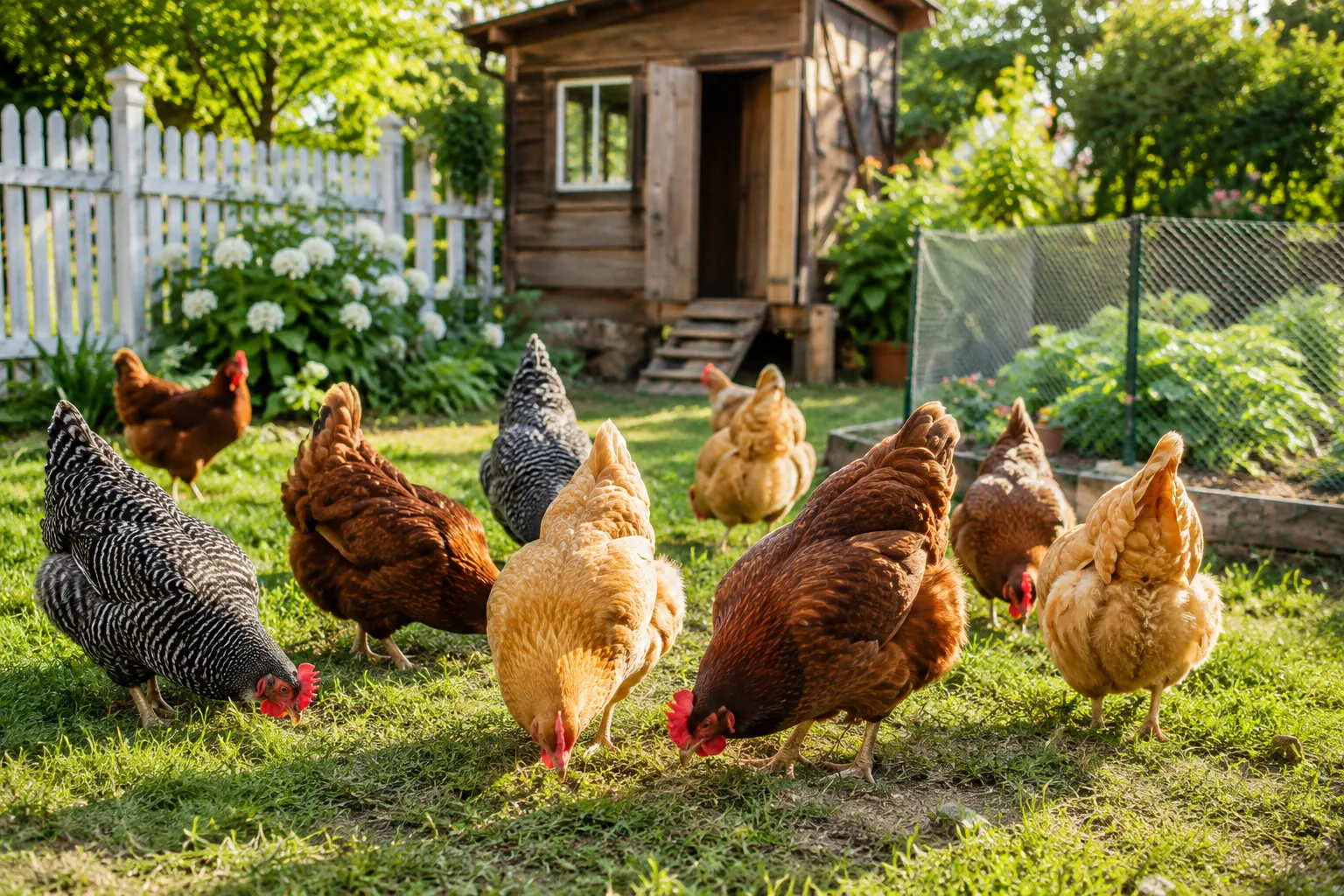
Free-range chickens have regular access to outdoor space where they can forage, scratch, dust-bathe, and exhibit natural behaviors, as opposed to being confined to a coop or run full-time. The term doesn’t specify how much space, how many hours per day, or whether supervision is required, it simply means the birds aren’t permanently enclosed.
In backyard chicken keeping, free-range typically means:
- Outdoor access during daylight hours with freedom to roam your property
- Natural foraging opportunities for insects, grass, seeds, and plants
- Voluntary return to the coop for roosting, laying, and shelter
- Minimal physical barriers compared to enclosed runs or tractors
Free-range differs from “pastured” (which implies rotational grazing on grass) and “confined” (permanent enclosure). Many backyard keepers use a hybrid approach: free-ranging during safe daylight hours and locking chickens in a secure coop at night.
Common misconception: Free-range doesn’t mean zero boundaries. Most successful free-range setups include perimeter fencing to keep chickens on your property and provide a first line of defense against predators.
Is It Safe to Let Chickens Roam Without Supervision?
Letting chickens roam unsupervised carries moderate risk that varies dramatically based on your location, predator population, and property setup. In low-predator suburban areas with good fencing, daytime unsupervised free-ranging is relatively safe. In rural areas with active predator populations or properties bordering woods, the risk increases significantly.
Safety factors that reduce risk:
- Perimeter fencing (4-6 feet) that keeps chickens contained and deters dogs and coyotes
- Clear sightlines with minimal dense brush where predators can hide
- Proximity to human activity since predators avoid areas with regular human presence
- Daytime-only access when most ground predators are less active
- Secure coop for nighttime lock-up when predation risk peaks
- Flock size of 3+ so chickens can alert each other to threats
Higher-risk scenarios:
- Properties bordering forests, fields, or waterways where predators travel
- Areas with known hawk, eagle, or owl populations
- Neighborhoods with free-roaming dogs or cats
- Properties without perimeter fencing
- Leaving chickens out after dusk
Most experienced chicken keepers consider supervised free-ranging safest, but acknowledge that daytime unsupervised access is practical and reasonably safe when you’ve mitigated major risks. The key is honest assessment of your specific property’s threats.
How Long Can Chickens Be Left Alone Outside?
Chickens can safely be left alone outside for 4-8 hours during daylight in a properly secured environment. This timeframe allows them to forage, exercise, and behave naturally while you’re at work or running errands, provided they have access to shade, water, and shelter from weather.
Recommended unsupervised timeframes:
- 4-6 hours: Safe for most suburban backyards with moderate predator pressure
- 6-8 hours: Acceptable in low-predator areas with good fencing and nearby human activity
- 8+ hours: Requires excellent predator management, automatic coop doors, and established routines
- Overnight unsupervised: Not recommended due to dramatically increased predation risk
Essential provisions for extended unsupervised time:
- Multiple water sources in case one tips over
- Shaded areas to prevent heat stress
- Access to coop or covered shelter for weather protection
- Automatic feeders if you’ll be gone during normal feeding times
- Secure perimeter to prevent wandering into dangerous areas
Choose shorter unsupervised periods if:
- You’re new to chicken keeping and still learning your flock’s behavior
- Predator activity has increased recently (tracks, sightings, neighbor reports)
- Weather is extreme (heat waves, storms, high winds)
- You have young chickens still learning boundaries
The goal is building up to longer unsupervised periods gradually as you observe how your specific flock handles independence and as you refine your property’s security measures.
Can Chickens Free-Range Unsupervised vs. Supervised Time: Which Is Better?
Supervised free-ranging is safer and allows immediate intervention during threats, while unsupervised free-ranging offers practical convenience for working chicken keepers and allows birds more natural, relaxed behavior without human presence. Most successful backyard setups blend both approaches based on daily schedules and risk tolerance.
Supervised free-ranging advantages:
- Immediate response to predator threats
- Ability to redirect chickens away from gardens or forbidden areas
- Opportunity to observe health issues, injuries, or behavioral problems
- Training reinforcement for boundaries and coop return
- Peace of mind, especially for new chicken keepers
Unsupervised free-ranging advantages:
- Practical for people who work full-time
- Chickens exhibit more natural foraging behavior without human interference
- Less stressful for flighty or nervous breeds
- Allows extended outdoor time (6-8 hours) that’s impractical to supervise
- Builds flock independence and self-sufficiency
Hybrid approach (recommended):
Many experienced keepers use supervised time for morning and evening routines (feeding, health checks, training) and unsupervised time during mid-day work hours. This provides safety benefits of supervision during peak predator activity times (dawn and dusk) while allowing practical daytime independence.
Choose primarily supervised if: You have high predator pressure, young chickens still learning boundaries, or valuable heritage breeds. Choose primarily unsupervised if: You have established routines, low predator pressure, and confident, experienced birds.
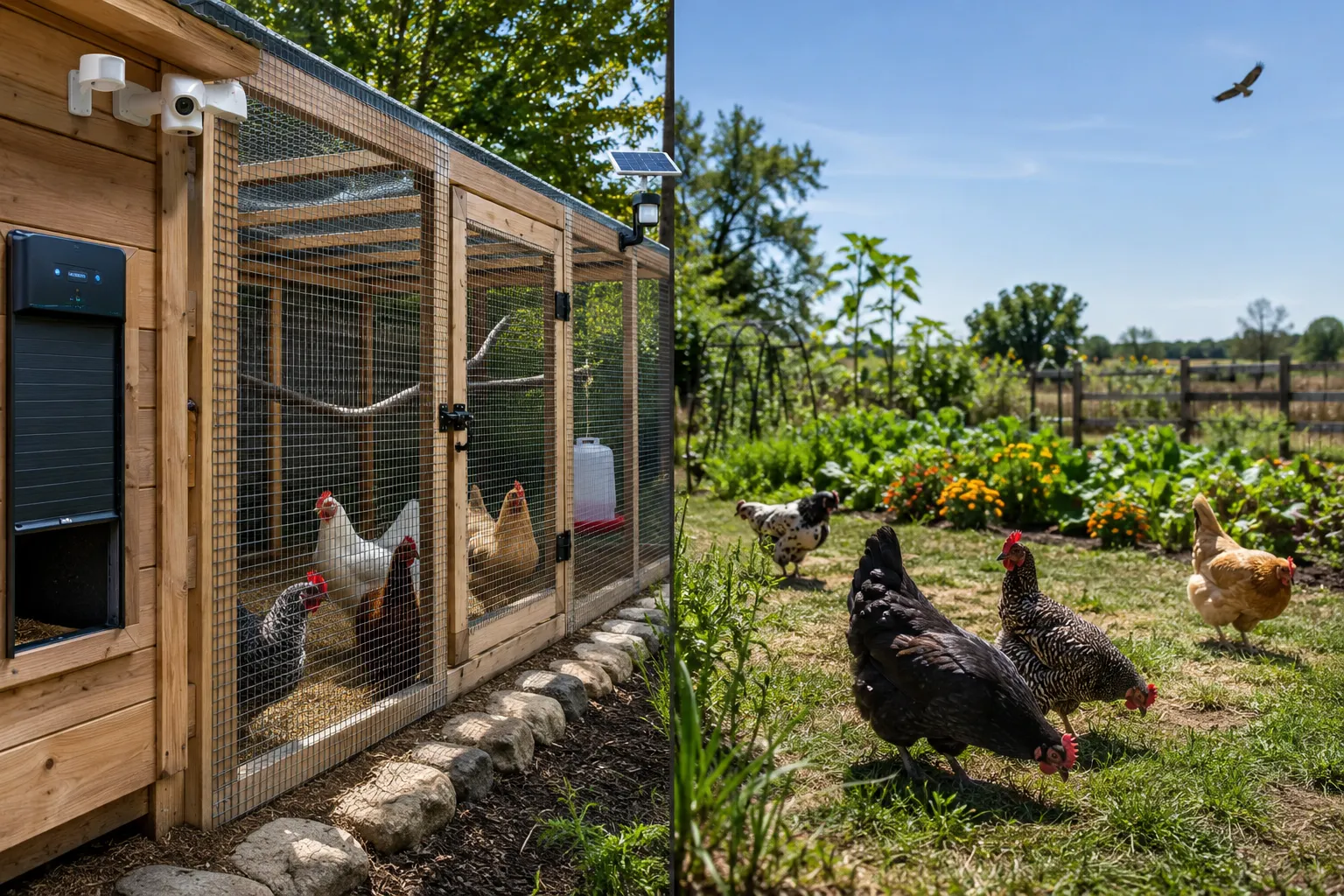
What Are the Dangers of Unsupervised Free-Range Chickens?
The primary dangers include predation by hawks, foxes, raccoons, coyotes, and dogs; accidental poisoning from toxic plants or chemicals; injuries from getting stuck or trapped; and loss from wandering off property. Predation accounts for the majority of unsupervised free-range chicken deaths, with aerial predators (hawks and owls) being particularly difficult to prevent.
Top predator threats by region:
Urban/Suburban:
- Hawks (daytime aerial threat)
- Neighborhood dogs
- Raccoons (nighttime, but occasionally bold during day)
- Domestic cats (threat mainly to chicks)
Rural:
- Foxes (dawn and dusk)
- Coyotes (increasingly bold during day)
- Hawks, eagles, and owls
- Weasels, mink, and fisher cats
- Bears (in some regions)
Non-predator dangers:
- Toxic plants: Azalea, rhododendron, foxglove, nightshade, yew, oleander
- Chemical exposure: Lawn treatments, pesticides, antifreeze, rat poison
- Physical hazards: Getting trapped in fencing, falling into window wells, drowning in uncovered water features
- Vehicle strikes: If chickens access driveways or roads
- Heat stress: Lack of shade during summer months
- Aggressive roosters: Injuring hens or each other when unsupervised
Warning signs of predator activity:
- Missing feathers or scattered feathers in yard
- Chickens suddenly reluctant to leave coop
- Tracks near coop or in soft soil
- Unusual behavior like constant alertness or huddling
- Neighbors reporting predator sightings
Understanding your specific property’s threat profile is essential before committing to unsupervised free-ranging.
Do Chickens Come Back to the Coop on Their Own at Night?
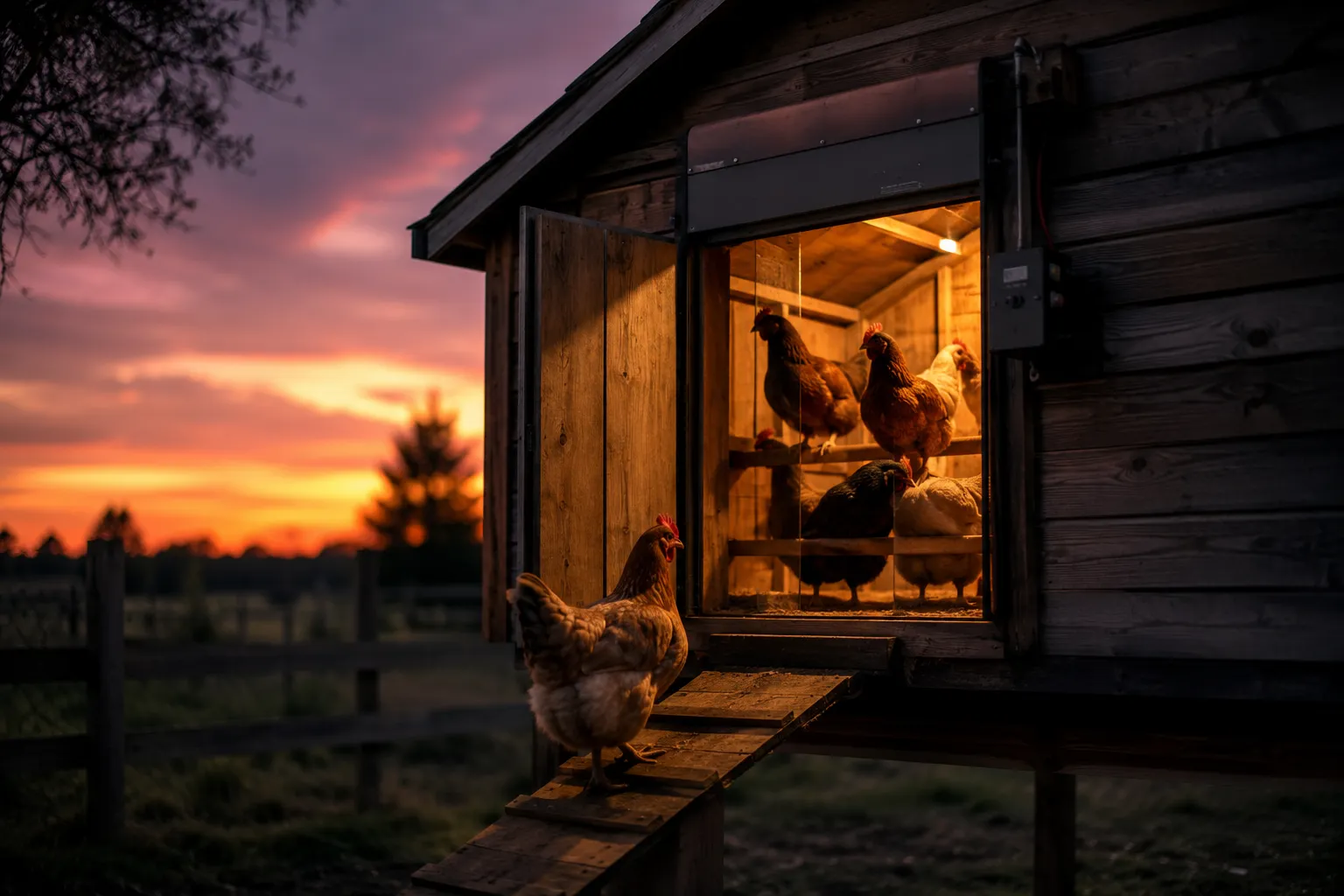
Yes, chickens naturally return to their coop at dusk due to strong roosting instincts that drive them to seek elevated, enclosed shelter before dark. This behavior is deeply ingrained and makes evening lock-up predictable once chickens are properly trained to recognize their coop as home.
Why chickens return automatically:
- Roosting instinct: Wild jungle fowl (chicken ancestors) roosted in trees at night to avoid ground predators
- Light sensitivity: Decreasing light triggers hormonal changes that prompt shelter-seeking
- Flock behavior: Chickens follow each other to established roosting spots
- Safety association: They learn the coop provides protection and comfort
Training chickens to return reliably:
- Keep new chickens confined to the coop for 3-7 days so they imprint on it as home
- Start with short free-range sessions (1-2 hours before dusk) and gradually extend
- Use treats to reinforce coop entry during training period
- Maintain consistent roosting spots inside the coop (don’t rearrange frequently)
- Lock them in nightly so they learn the routine
Troubleshooting chickens that won’t return:
- Roosting elsewhere: Check trees, sheds, or other structures and block access
- Bullying in coop: Ensure adequate roosting space (8-10 inches per bird)
- Predator fear: Inspect coop for signs of nighttime intrusions
- Lighting confusion: Bright outdoor lights can delay return; use dim red lights if needed
Most chickens establish reliable return patterns within 2-3 weeks of starting free-range routines. Stragglers can be gently herded or carried to the coop until they learn.
How to Protect Free-Range Chickens from Predators
Protecting unsupervised free-range chickens requires layered defenses including perimeter fencing, overhead protection in high-risk areas, secure nighttime housing, and environmental modifications that reduce predator cover. No single solution eliminates all risk, but combining multiple strategies significantly improves safety.
Perimeter fencing (first defense layer):
- Height: 4-6 feet to contain chickens and deter jumping predators
- Material: Welded wire, chain link, or wooden privacy fence
- Buried barrier: Extend 12 inches underground or bend outward to prevent digging
- Gate security: Self-closing latches that predators can’t manipulate
Overhead protection options:
- Netting: Lightweight bird netting over high-risk areas (15-20 feet coverage)
- Wire roof: Hardware cloth or welded wire over smaller runs
- Shade structures: Solid roof panels that double as hawk deterrents
- Visual deterrents: Reflective tape, old CDs, or predator decoys (move regularly)
Secure coop essentials:
- Hardware cloth (not chicken wire) on all openings including ventilation
- Automatic coop door with timer or light sensor for reliable dusk closing
- Predator-proof latches (raccoons can open simple hooks)
- Elevated floor or buried wire apron to prevent digging entry
Environmental modifications:
- Clear brush and debris within 20 feet of coop to eliminate hiding spots
- Motion-activated lights to startle nocturnal predators
- Remove attractants: Secure feed storage, clean up spilled grain
- Livestock guardian animals: Dogs, geese, or guinea fowl (requires training)
Behavioral strategies:
- Lock chickens in coop from dusk to dawn (highest predation risk period)
- Keep flock size at 4+ birds for better predator awareness
- Introduce roosters for flock protection and alertness (if allowed in your area)
Common mistake: Relying solely on one defense method. Predators are persistent and adaptable, layered protection is essential for unsupervised free-ranging success.
Can Chickens Free-Range in My Backyard All Day?
Chickens can free-range in your backyard all day (dawn to dusk) if you have adequate space, predator protection, and accept potential garden damage. A minimum of 250-300 square feet per bird supports healthy all-day foraging without destroying vegetation, though smaller yards work if you rotate access areas or accept a more barren landscape.
Space requirements for all-day ranging:
- Minimum: 250 sq ft per bird to maintain some grass coverage
- Ideal: 400-500 sq ft per bird for sustainable vegetation
- Small yards (under 1,000 sq ft): Consider part-time free-ranging or rotational access
Backyard suitability checklist:
✅ Good candidates for all-day ranging:
- Fenced perimeter keeping chickens contained
- Low to moderate predator pressure
- Established lawn that can handle scratching
- Acceptance of some bare patches and dust-bathing craters
- Protected or sacrificial garden areas
❌ Poor candidates for all-day ranging:
- Unfenced yards near busy roads
- Pristine landscaping you want to preserve
- High hawk activity with no overhead protection
- Neighbors close enough to be bothered by noise or wandering birds
- HOA restrictions on free-range poultry
Managing all-day backyard ranging:
- Rotate access areas using temporary fencing to rest vegetation
- Provide designated dust-bathing spots to concentrate that behavior
- Use mulch or gravel in high-traffic areas that become bare
- Plant chicken-resistant landscaping: rosemary, lavender, ornamental grasses
- Protect gardens with 3-4 foot fencing or chicken wire cloches
Time-of-day considerations:
- Morning (6-10 AM): Peak foraging activity, highest energy
- Midday (10 AM-3 PM): Often rest in shade, less active
- Afternoon (3-7 PM): Second foraging peak before roosting
- Dusk: Natural return to coop begins 30-60 minutes before dark
All-day backyard ranging works best when you accept that your yard will look “lived in” rather than manicured, and when you’ve honestly assessed your property’s predator risks.
What Kind of Fencing Do I Need for Unsupervised Chickens?
For unsupervised chickens, install 4-6 foot perimeter fencing made from welded wire, chain link, or wooden privacy fence with a buried barrier or ground skirt to prevent digging predators. The fencing should contain chickens within your property boundaries and provide a first line of defense against ground predators, though it won’t stop aerial threats like hawks.
Fencing specifications:
Height:
- 4 feet minimum: Adequate for heavy breeds (Orpingtons, Brahmas)
- 5-6 feet recommended: Necessary for lighter, flighty breeds (Leghorns, Hamburgs)
- 6+ feet: Required if you have dogs or coyotes that can jump
Materials ranked by effectiveness:
- Welded wire (2×4 inch mesh): Durable, predator-resistant, good visibility
- Chain link: Very durable, predator-proof, but more expensive
- Wooden privacy fence: Excellent containment, blocks predator view, but costly
- Chicken wire: Only suitable for containment, NOT predator protection
- Electric poultry netting: Good for temporary or rotational setups
Ground-level protection:
- Buried barrier: Dig 12-inch trench and bury fence bottom
- Ground skirt: Bend 12-18 inches of fence outward at ground level and cover with soil or rocks
- Hardware cloth apron: Attach 2-foot wide hardware cloth horizontally at fence base
Gate considerations:
- Self-closing hinges to prevent accidental openings
- Predator-proof latches (carabiners, slide bolts, or complex mechanisms)
- Adequate width for wheelbarrows and maintenance access
Fencing for different property types:
Small suburban lot (under 5,000 sq ft):
- Complete perimeter fence, 4-5 feet tall
- Privacy fence if neighbors are close
- Focus on aesthetics and HOA compliance
Large suburban/rural (5,000-20,000 sq ft):
- Perimeter fence around chicken ranging area (not necessarily entire property)
- Welded wire or chain link for cost-effectiveness
- Electric wire addition at top if predator pressure is high
Acreage (20,000+ sq ft):
- Fence smaller “home zone” around coop (2,000-5,000 sq ft)
- Electric poultry netting for rotational ranging
- Livestock guardian animals for broader property protection
Budget-friendly option: Start with a smaller fenced area and expand as budget allows, rather than attempting inadequate fencing over a large area.
Common Mistakes When Letting Chickens Free-Range Alone
The most common mistakes include underestimating predator threats, failing to train chickens before unsupervised ranging, leaving chickens out after dark, and not providing adequate water or shelter during extended unsupervised periods. These errors account for most free-range chicken losses and are easily preventable with proper preparation.
Top mistakes and solutions:
1. Rushing unsupervised ranging with new chickens
- Mistake: Letting chickens free-range immediately after getting them
- Solution: Confine new birds to coop for 5-7 days, then start with supervised 1-2 hour sessions
2. Ignoring predator signs
- Mistake: Dismissing tracks, scat, or neighbor warnings about predators
- Solution: Take all predator evidence seriously and increase protection measures immediately
3. Inadequate fencing
- Mistake: Using chicken wire as primary predator protection
- Solution: Use welded wire or hardware cloth; chicken wire only contains birds, doesn’t stop predators
4. No backup water sources
- Mistake: Single water container that can tip, freeze, or run dry
- Solution: Provide 2-3 water stations in different locations
5. Leaving chickens out after dark
- Mistake: Assuming chickens are safe once roosted, even if coop door is open
- Solution: Install automatic coop door or commit to manual dusk lock-up every night
6. Unprotected gardens
- Mistake: Expecting chickens to avoid vegetable gardens or flower beds
- Solution: Fence gardens before starting free-range, not after damage occurs
7. Solo chickens
- Mistake: Free-ranging a single chicken without flock protection
- Solution: Keep minimum of 3 birds for predator awareness and social structure
8. Inconsistent routines
- Mistake: Random free-range schedules that confuse chickens
- Solution: Establish consistent daily timing for release and lock-up
9. Overlooking toxic plants
- Mistake: Not identifying poisonous plants in ranging area
- Solution: Walk property and remove or fence off toxic species before first free-range
10. No emergency plan
- Mistake: Not knowing what to do if a chicken goes missing or is injured
- Solution: Prepare contact list (vet, experienced keeper), first aid kit, and search protocol
Beginner’s progression: Start with 1-2 hours of supervised free-ranging, gradually increase duration while observing flock behavior, then transition to unsupervised time once chickens reliably return to coop and you’ve addressed all visible risks.
Are Certain Chicken Breeds Better for Free-Ranging Unsupervised?
Yes, docile, ground-focused heritage breeds like Orpingtons, Wyandottes, Australorps, and Sussex are better suited for unsupervised free-ranging because they stay closer to home, are less flighty when startled, and have better predator awareness than high-strung production breeds. Mediterranean breeds like Leghorns tend to roam farther and fly more readily, making them harder to contain and more vulnerable to predators.
Best breeds for unsupervised free-ranging:
Excellent choices:
- Buff Orpingtons: Calm, stay close to coop, good foragers, cold-hardy
- Australorps: Excellent foragers, friendly, good egg production
- Wyandottes: Alert to predators, cold-hardy, stay in defined areas
- Sussex: Docile, efficient foragers, good flock cohesion
- Brahmas: Large size deters some predators, calm temperament
Good choices:
- Rhode Island Reds: Hardy, good foragers, slightly more independent
- Plymouth Rocks: Reliable, adaptable, moderate ranging distance
- Cochins: Very docile, though less active foragers
- Marans: Good foragers, alert, moderate temperament
Challenging for unsupervised ranging:
- Leghorns: Flighty, roam far, harder to contain
- Hamburgs: Excellent flyers, wander extensively
- Andalusians: Nervous, fly readily when startled
- Polish: Poor vision (head feathers), vulnerable to aerial predators
- Silkies: Poor flyers, can’t escape ground predators effectively
Breed characteristics that improve unsupervised success:
✅ Heavier body weight (6-8+ lbs) makes them less appealing to hawks ✅ Calm temperament reduces panic flying into danger ✅ Strong flock cohesion keeps birds together for mutual protection ✅ Good foraging instinct without excessive wandering ✅ Alert but not nervous personality for predator awareness
Mixed flock considerations:
When keeping multiple breeds, the most adventurous breed will often lead others to roam farther. If you mix a docile Orpington with a flighty Leghorn, expect the Leghorn to push boundaries and potentially lead the flock into riskier areas.
Roosters for protection: Adding a rooster (if allowed in your area) significantly improves unsupervised free-range safety. Roosters actively watch for predators, sound alarms, and sometimes defend the flock. Breeds with protective rooster reputations include Rhode Island Reds, Brahmas, and Wyandottes.
Will My Chickens Destroy My Garden If Left Alone?
Yes, unsupervised chickens will damage unprotected gardens by scratching up seedlings, eating vegetables and fruits, dust-bathing in soft soil, and stripping leaves from plants. Chickens are indiscriminate foragers with strong scratching instincts, so any accessible garden will suffer damage unless you install physical barriers before allowing free-range access.
Typical garden damage patterns:
Vegetable gardens:
- Scratching destroys young seedlings and exposed roots
- Eating tomatoes, berries, leafy greens, and squash
- Dust-bathing creates large craters in prepared beds
- Pecking holes in ripening fruits
Flower beds:
- Scratching mulch onto lawns and paths
- Eating flower petals and buds
- Crushing plants by dust-bathing
- Digging up bulbs
Landscaping:
- Creating bare patches in high-traffic areas
- Stripping lower leaves from shrubs
- Dust-bathing craters near foundations
- Scratching mulch away from plant bases
Effective garden protection methods:
Physical barriers (most reliable):
- 3-4 foot fencing around vegetable gardens (chicken wire adequate for this purpose)
- Raised beds with wire covers or hinged lids
- Individual plant cloches for high-value specimens
- Garden fabric or netting over seedlings until established
Chicken-resistant plants:
- Herbs: Rosemary, lavender, oregano, thyme (strong scents deter chickens)
- Ornamental grasses: Most varieties too tough for chickens to damage
- Established perennials: Hostas, daylilies, irises (mature plants withstand some pecking)
- Thorny plants: Roses, barberry, holly (chickens avoid)
Strategic garden placement:
- Locate vegetable gardens away from coop and main ranging areas
- Use chickens’ favorite ranging zones for pathways or mulched areas
- Create “sacrifice zones” with plants you don’t mind losing
Timing strategies:
- Restrict free-range access during critical growing periods (spring seedling time)
- Allow access after harvest to clean up pests and debris
- Use temporary fencing during vulnerable plant stages
Realistic expectations: Even with protection, expect some garden impact. Chickens will find ways to access edges, squeeze through gaps, or fly over low barriers. The trade-off is natural pest control (chickens eat slugs, beetles, and grubs) and fertilization from their droppings.
Common mistake: Trying to train chickens to avoid gardens. Chickens lack the cognitive ability to understand property boundaries or “off-limits” areas, physical barriers are the only reliable solution.
How Many Chickens Can Free-Range Together Safely?
A flock of 4-8 chickens free-ranges together most safely, providing enough birds for effective predator awareness and flock cohesion without creating excessive competition or making the group too large to move quickly to safety. Flocks smaller than 3 birds lack adequate predator vigilance, while groups larger than 12-15 may split into subgroups that reduce collective safety benefits.
Optimal flock sizes by scenario:
Small backyard (under 2,000 sq ft):
- 4-6 chickens: Adequate for space, good flock dynamics
- Provides predator awareness without overcrowding
Medium property (2,000-10,000 sq ft):
- 6-10 chickens: Ideal balance of safety and manageability
- Enough space to prevent vegetation destruction
Large property (10,000+ sq ft):
- 8-15 chickens: Can spread out while maintaining flock cohesion
- Consider multiple smaller flocks if exceeding 15 birds
Why flock size matters for safety:
Too few chickens (1-2):
- Limited predator awareness (fewer eyes watching)
- No flock alarm system
- Increased stress and vulnerability
- Solo chickens are significantly more vulnerable
Optimal size (4-8):
- Multiple birds scanning for threats
- Effective alarm calls that trigger group response
- Strong flock cohesion for coordinated movement
- Manageable for evening coop return
Too many chickens (15+):
- Flock may split into subgroups, reducing collective awareness
- Harder to move all birds to safety quickly
- Increased competition for prime foraging spots
- More difficult to monitor individual health
Flock composition considerations:
All hens: Calm, cohesive, easier to manage Hens + 1 rooster: Rooster provides active predator watch and protection (best for unsupervised ranging) Multiple roosters: Can create fighting and flock disruption (not recommended unless very large property)
Introducing new birds: Quarantine and gradually integrate new chickens to maintain flock cohesion. Disrupted flock dynamics can lead to birds wandering alone, increasing vulnerability.
Special situations:
- Broody hens with chicks: Keep separated from main flock until chicks are 6-8 weeks old
- Injured or sick birds: Isolate for recovery; vulnerable birds attract predators
- Aggressive individuals: Remove bullies that disrupt flock cohesion
The sweet spot for most backyard unsupervised free-ranging is 5-7 chickens: enough for safety and social structure, but small enough to manage easily and fit comfortably in a standard backyard coop.
What to Do If a Chicken Goes Missing While Free-Ranging
Immediately conduct a systematic property search checking hiding spots, bushes, and structures where chickens may be roosting or trapped, then expand to neighbors’ yards while looking for predator evidence like feather piles or tracks. Time is critical, most chickens found alive are located within the first 2-3 hours of going missing.
Immediate action steps (first 30 minutes):
Search property systematically:
- Check inside coop, nest boxes, and under structures
- Look in bushes, under decks, and behind sheds
- Search trees where chickens may have flown to escape predators
- Check window wells, drainage areas, or anywhere a chicken could be trapped
Look for predator evidence:
- Scattered feathers indicate predator attack
- Feather pile with no body suggests hawk or owl
- Tracks in soft soil near last known location
- Disturbed ground or broken fencing
Listen carefully:
- Injured or trapped chickens often make distress calls
- Check areas where you hear unusual sounds
Extended search (30 minutes to 3 hours):
Alert neighbors:
- Knock on doors and ask permission to search yards
- Provide description and your contact information
- Ask if they’ve seen predators or heard unusual sounds
Use food to lure:
- Shake treat container and call chickens
- Place favorite treats in visible locations
- Return to coop area, missing chickens often return on their own
Check with local resources:
- Call animal control about found chickens
- Post on neighborhood social media groups
- Check local “found pet” listings
Predator attack assessment:
Hawk/owl kill signs:
- Feather pile with breast meat eaten
- Body often left partially intact
- Attack typically in open areas
Fox/coyote kill signs:
- Chicken completely missing or buried nearby
- Tracks leading away from scene
- Attack often at dawn/dusk
Dog attack signs:
- Chicken killed but not eaten
- Multiple injuries, shaking damage
- Often occurs during day
Prevention after a loss:
- Increase predator deterrents immediately
- Reduce free-range hours temporarily
- Add overhead protection in attack area
- Consider livestock guardian animal
- Review and strengthen fencing
When to stop searching:
If no evidence is found after 3-4 hours of thorough searching and no predator signs are visible, the chicken likely fell victim to a predator that removed the body completely (fox, coyote, or large dog). Focus efforts on preventing future losses rather than extended searching.
Record keeping: Document the incident including time of day, weather, and any evidence found. Patterns often emerge that help identify specific predators and their hunting schedules.
Frequently Asked Questions
How do I start free-ranging chickens for the first time? Keep new chickens confined to their coop for 5-7 days to establish it as home, then begin with 1-2 hour supervised free-range sessions in late afternoon. Gradually extend time and reduce supervision over 2-3 weeks as chickens learn boundaries and reliably return at dusk.
Can I free-range chickens in winter? Yes, chickens can free-range in winter as long as they have access to shelter from wind and precipitation. They’re cold-hardy and will forage even in snow, though they may choose to stay in the coop during extreme weather. Provide unfrozen water and clear paths to the coop entrance.
Do I need a rooster for free-range chickens? No, hens free-range successfully without roosters, but a rooster significantly improves flock safety by watching for predators, sounding alarms, and sometimes defending against threats. Roosters are beneficial but not required, and many urban areas prohibit them due to noise.
Will free-range chickens fly away? Chickens rarely fly away permanently because they lack sustained flight ability and strong homing instincts keep them near their coop. Most chickens fly only to escape immediate threats or reach roosting spots, then return to familiar territory. Heavier breeds barely fly at all.
How do I keep free-range chickens out of my neighbor’s yard? Install perimeter fencing at least 4 feet tall to contain chickens on your property. Clip one wing’s flight feathers on flighty breeds to prevent flying over fences. Maintain good neighbor relations by addressing escapes immediately and offering fresh eggs as goodwill.
Can chickens free-range with dogs? Some dogs coexist peacefully with free-range chickens after careful introduction and training, but many dogs have strong prey drive that makes them dangerous to chickens. Supervise all initial interactions, train solid “leave it” commands, and never leave high-prey-drive dogs unsupervised with chickens.
What time should I let chickens out to free-range? Release chickens 1-2 hours after sunrise once morning predators (foxes, coyotes) have returned to dens and before daytime hawks become active. Many keepers let chickens out around 8-9 AM and lock them in at dusk, avoiding peak predation times at dawn and dusk.
Do free-range chickens need supplemental feed? Yes, free-range chickens still need quality layer feed as their primary nutrition source. Foraging provides beneficial variety, insects, and greens but doesn’t supply complete nutrition. Provide free-choice layer feed and supplement with calcium (oyster shell) for strong eggshells.
How do I train chickens to return to the coop? Confine new chickens to the coop for 5-7 days to establish it as home, then start free-ranging only in late afternoon so they naturally return at dusk. Use treats and consistent calling to reinforce coop entry. Most chickens learn the routine within 2-3 weeks.
Can I free-range chickens in a small yard? Yes, chickens can free-range in yards as small as 1,000 square feet, though you’ll need to accept significant vegetation loss and may need to rotate access areas. Provide 250-300 square feet per bird minimum, or use part-time free-ranging to preserve some grass coverage.
What’s the biggest mistake new chicken keepers make with free-ranging? Underestimating predator threats is the most common and costly mistake. New keepers often assume suburban or urban locations are safe, but hawks, raccoons, and neighborhood dogs kill free-range chickens even in cities. Always implement predator protection before starting unsupervised free-ranging.
Should I clip my chickens’ wings for free-ranging? Wing clipping is optional and depends on your fencing and breed. Clip one wing’s flight feathers on light, flighty breeds (Leghorns, Hamburgs) if they’re flying over fences. Heavy breeds (Orpingtons, Brahmas) rarely need clipping. Wing clipping doesn’t hurt chickens and feathers grow back after molting.
Conclusion
Chickens can successfully free-range unsupervised during daylight hours when you’ve honestly assessed predator risks, installed appropriate fencing, and trained your flock to return at dusk. The key to safe unsupervised ranging isn’t eliminating all risk, that’s impossible, but rather implementing layered protections that reduce risk to acceptable levels for your situation and risk tolerance.
Start conservatively with short supervised sessions, gradually building to longer unsupervised periods as you observe your specific flock’s behavior and refine your property’s security measures. Choose docile, ground-focused breeds like Orpingtons or Wyandottes for easier management, maintain flock sizes of 4-8 birds for optimal predator awareness, and commit to reliable evening lock-up routines.
Your next steps:
- Assess your property for predator signs, fencing needs, and toxic plants before first free-range
- Install perimeter fencing (4-6 feet) with buried barriers or ground skirts
- Confine new chickens to coop for 5-7 days to establish home base
- Start with supervised sessions of 1-2 hours in late afternoon
- Gradually extend time while observing flock behavior and return patterns
- Implement automatic coop door or commit to manual dusk lock-up every night
- Monitor and adjust based on your flock’s specific needs and any predator activity
Free-ranging unsupervised offers chickens natural behavior opportunities and provides practical convenience for working chicken keepers. With proper preparation and realistic expectations, most backyard flocks thrive with daytime independence while remaining safe from the majority of threats.