
Quick Answer
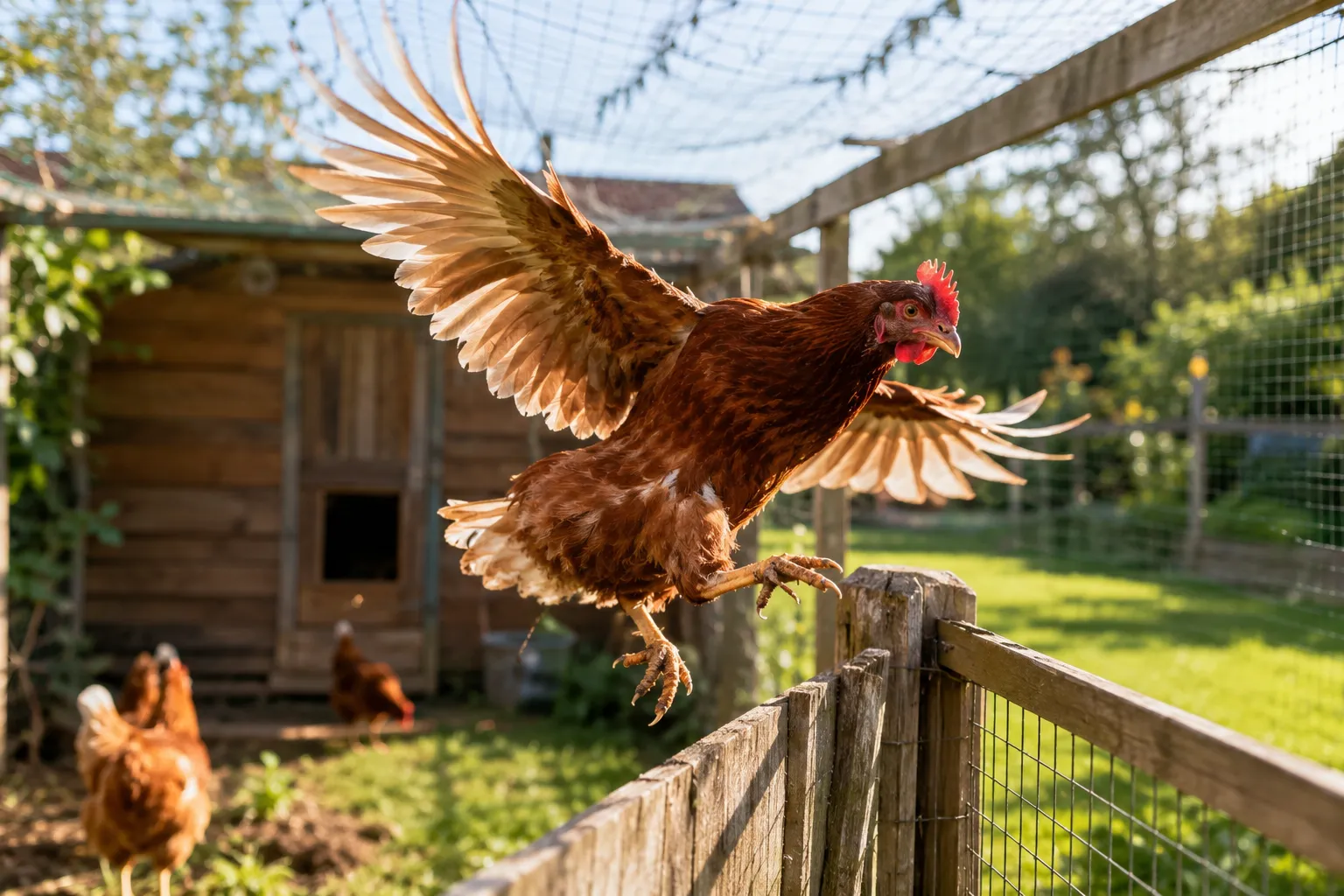
Yes, chickens can fly, but not like wild birds. Most backyard chickens can fly 3-10 feet high and cover distances of 40-50 feet in short bursts, which is enough to clear standard fences and escape their runs. The ability varies widely by breed, with lighter breeds like Leghorns flying much better than heavy breeds like Brahmas or Cochins.
Key Takeaways
- Chickens are capable flyers for short distances, typically reaching heights of 3-10 feet and covering 40-50 feet horizontally
- Breed matters significantly: bantams and light breeds fly well, while heavy breeds struggle to get airborne
- Wing clipping is painless when done correctly and only affects the primary flight feathers on one wing
- Fence height of 6 feet with overhead netting prevents most escape attempts effectively
- Chickens rarely fly away permanently if they escape, as they’re domesticated and prefer to stay near their flock
- Older chickens lose flying ability gradually due to weight gain and reduced muscle strength
- Common mistakes include clipping both wings (causes imbalance) and cutting too close to the blood feathers
- Training and environmental enrichment can reduce escape attempts without physical modifications
- Netting is more practical than solid roofing for most backyard setups and allows natural light
- Regular monitoring of wing feather regrowth is necessary since feathers grow back after molting
How High Can Chickens Actually Fly?

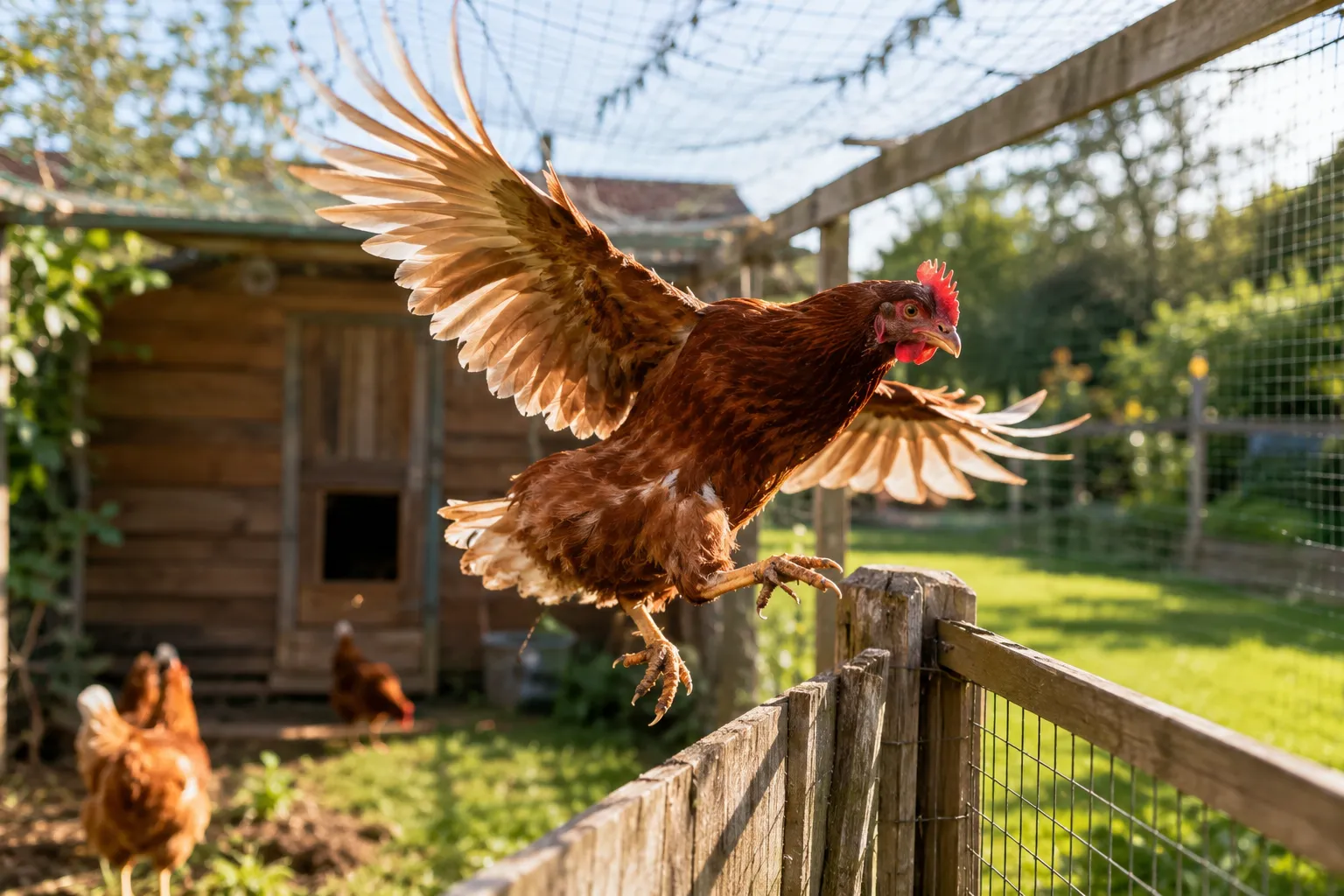
Most backyard chickens can fly between 3 and 10 feet high, depending on their breed, age, and motivation. This height is sufficient to clear most standard backyard fences, which typically stand 4-5 feet tall. Lighter breeds and younger birds can reach the upper end of this range, while heavier breeds struggle to get more than a few feet off the ground.
The flight capability of chickens is best described as “assisted jumping” rather than sustained flight. They use rapid wing flapping to gain altitude quickly, but they cannot maintain flight for extended periods like wild birds. Here’s what affects their maximum height:
- Body weight: Heavier chickens have less lift capacity
- Wing size relative to body: Larger wings provide more lift
- Fitness level: Active, free-ranging chickens fly better than confined birds
- Motivation: Predator threats or desirable perches can push chickens to fly higher than normal
- Age: Young pullets (4-8 months) are the most capable flyers
In practice, a motivated chicken can reach a 6-foot fence top with a running start and strong flap. Some particularly athletic individuals have been observed reaching tree branches 10-12 feet high, though this is uncommon.
Why Do Chickens Fly Over Fences?
Chickens fly over fences primarily to access food, escape perceived threats, or explore new territory. The behavior is instinctive rather than planned, triggered by curiosity, boredom, or the sight of something appealing on the other side. A chicken that spots fresh grass, insects, or treats beyond the fence will often attempt to fly over without considering the consequences.
Common triggers for fence-flying include:
- Boredom and lack of enrichment in the run area
- Overcrowding that creates stress and competition for space
- Visible food sources like gardens, compost piles, or bird feeders outside the run
- Predator scares that cause panic and flight responses
- Following flock mates who have already escaped
- Inadequate food or water inside the enclosure
- Roosting instinct driving them to seek higher perches at dusk
Choose prevention based on the trigger: If chickens are escaping due to boredom, add enrichment like dust baths, perches, and hanging treats before resorting to wing clipping. If the issue is predator pressure, address security first. For persistent flyers motivated by external attractions, physical barriers (netting or taller fences) work better than behavioral modifications.
Can All Chicken Breeds Fly the Same Distance?
No, flying ability varies dramatically between chicken breeds based on body weight, wing size, and body structure. Light Mediterranean breeds like Leghorns and Andalusians can fly 50-60 feet horizontally and easily clear 6-foot fences, while heavy dual-purpose breeds like Orpingtons and Brahmas struggle to fly more than 10-20 feet and rarely clear 4-foot barriers.
Flight capability by breed category:
Excellent flyers (require secure containment):
- Leghorns
- Hamburgs
- Andalusians
- Most bantam breeds
- Game birds (Old English Game, Modern Game)
Moderate flyers (can clear standard fences with effort):
- Rhode Island Reds
- Plymouth Rocks
- Wyandottes
- Australorps
- Sussex
Poor flyers (rarely escape standard enclosures):
- Brahmas
- Cochins
- Orpingtons
- Jersey Giants
- Silkies (cannot fly due to feather structure)
Decision rule: Choose heavy breeds like Brahmas or Cochins if you want chickens that naturally stay grounded and require minimal escape prevention. Select light breeds only if you’re prepared to install tall fences with overhead netting or commit to regular wing clipping.
Do Bantam Chickens Fly More Than Standard Chickens?
Yes, bantam chickens are significantly better flyers than standard-sized chickens because they weigh 50-75% less while having proportionally similar wing sizes. This favorable weight-to-wing ratio gives bantams exceptional lift and maneuverability, making them the most escape-prone chickens in backyard flocks. A bantam can easily fly 6-8 feet high and cover 60+ feet horizontally.
Bantams are miniature versions of standard breeds, typically weighing 1-2 pounds compared to 5-8 pounds for full-sized chickens. Their light bodies and strong flight muscles allow them to:
- Fly into trees and onto roofs regularly
- Clear 6-foot fences without difficulty
- Sustain flight for longer distances than standard breeds
- Take off from ground level without a running start
Common mistake: Assuming that a fence height adequate for standard breeds will contain bantams. If you keep bantams, plan for 6-foot fences with full overhead netting, or commit to regular wing clipping. Mixed flocks require containment designed for the most capable flyer.
How to Clip Chicken Wings to Prevent Flying

Wing clipping involves trimming the primary flight feathers on one wing to create imbalance that prevents sustained flight. Clip only one wing, cutting the 10 primary flight feathers (the long feathers at the wing tip) to about half their length, leaving the secondary feathers intact. This procedure is painless when done correctly and lasts until the next molt.
Step-by-step wing clipping process:
- Catch and secure the chicken calmly, ideally with a helper to hold the bird
- Extend one wing fully to expose the flight feathers
- Identify the primary feathers: the 10 longest feathers at the wing tip
- Check for blood feathers: new feathers with dark, blood-filled shafts (avoid cutting these)
- Cut primaries only with sharp scissors, removing about half the feather length
- Cut below the covert feathers (the shorter feathers that overlap the primaries when the wing is folded)
- Release the chicken and observe that it can still flap but cannot gain altitude
Critical points:
- Clip only ONE wing to create imbalance; clipping both wings allows balanced flight
- Never cut into the blood feathers (growing feathers with visible blood supply)
- Trim conservatively on your first attempt; you can always cut more if needed
- Repeat after each molt (typically once or twice per year) when feathers regrow
Choose wing clipping if: You have a small flock, need a temporary solution, or want to avoid permanent infrastructure changes. Skip clipping if you have many chickens (labor-intensive), if birds need flight ability to escape ground predators, or if you prefer not to handle birds regularly.
Does Clipping Wings Hurt Chickens?
No, clipping wings does not hurt chickens when done properly because feathers are dead tissue made of keratin, similar to human hair or fingernails. The procedure causes no pain, bleeding, or lasting discomfort if you cut only the mature primary flight feathers and avoid the blood feathers near the base. Chickens typically show no distress after clipping and resume normal behavior immediately.
What makes wing clipping painless:
- Mature feathers have no nerve endings or blood supply in the shaft
- The cut is made through dead keratin tissue only
- No skin, muscle, or living tissue is involved
- The process takes 30-60 seconds per bird
The only way wing clipping causes pain is if you:
- Cut into blood feathers (new feathers still growing with visible blood in the shaft)
- Accidentally cut skin or living tissue at the feather base
- Pull feathers out instead of cutting them
What to watch for: Blood feathers appear darker and thicker at the base with a visible blood supply. If you accidentally cut a blood feather, it will bleed. Apply styptic powder or cornstarch to stop bleeding, and the feather will heal normally. This is rare when you cut at mid-feather length.
Behavioral impact: Some chickens may seem frustrated initially when they attempt to fly and cannot, but they adapt within hours. The inability to fly does not cause stress or behavioral problems in domestic chickens, which are ground-dwelling birds by nature.
Best Fence Height to Keep Chickens From Escaping
A 6-foot fence with overhead netting is the most effective height to prevent chicken escapes across all breeds, including light breeds and bantams. Standard 4-foot fences work only for heavy breeds like Brahmas and Cochins, while 5-foot fences contain most dual-purpose breeds but not light Mediterranean breeds or bantams. For complete security without wing clipping, combine fence height with overhead coverage.
Fence height recommendations by breed type:
| Breed Category | Minimum Fence Height | Recommended Height | Overhead Netting Needed? |
|---|---|---|---|
| Heavy breeds (Brahma, Cochin, Orpington) | 4 feet | 5 feet | Optional |
| Dual-purpose (Rhode Island Red, Plymouth Rock) | 5 feet | 6 feet | Recommended |
| Light breeds (Leghorn, Andalusian) | 6 feet | 6 feet | Required |
| Bantams (all types) | 6 feet | 6 feet | Required |
Additional containment factors:
- Fence material: Solid wood or privacy fencing reduces escape attempts by blocking views of the outside
- Top rail design: Avoid horizontal rails that provide landing spots for chickens
- Ground-level security: Bury fencing 6-12 inches deep or use hardware cloth aprons to prevent digging predators
- Corner reinforcement: Chickens often test corners and gates for weak points
Decision rule: If you’re building new infrastructure, install 6-foot fencing with overhead netting from the start. This accommodates any breed, eliminates the need for wing clipping, and provides predator protection from aerial threats. For existing 4-5 foot fences, add overhead netting rather than replacing the entire fence.
Chicken Run Netting vs Solid Roof for Flyers
Netting is more practical and cost-effective than solid roofing for preventing chicken escapes in most backyard situations. Netting allows natural light and rain to enter the run, costs significantly less to install, and provides adequate protection from both escapes and aerial predators. Solid roofing is necessary only in extreme weather climates or when protection from heavy snow loads is required.
Netting advantages:
- Cost: 1/5 to 1/10 the price of solid roofing materials
- Natural light: Chickens benefit from sunlight exposure for vitamin D synthesis
- Rain access: Chickens can forage in wet conditions and access natural water
- Ventilation: No heat buildup or humidity issues
- Easy installation: Can be attached to existing fence posts without structural reinforcement
- Flexibility: Easy to remove or adjust as needed
Solid roof advantages:
- Complete weather protection: Keeps run dry during rain and snow
- Snow load capacity: Prevents collapse in heavy snow regions
- Shade provision: Protects from intense summer sun
- Longer lifespan: Metal or shingle roofs last 20+ years vs. 5-10 years for netting
- Predator deterrence: Provides additional barrier against climbing predators
Netting specifications for chicken runs:
- Mesh size: 2-inch or smaller to prevent hawks and owls from entering
- Material: UV-resistant polypropylene or nylon for durability
- Installation: Pull taut and secure every 3-4 feet to prevent sagging
- Maintenance: Inspect annually for tears and replace damaged sections
Choose solid roofing if: You live in areas with heavy snow, want a covered outdoor space for all-weather use, or have significant hawk/owl predation. Choose netting if you want cost-effective escape prevention, natural light exposure, and easier installation.
Heavy Chicken Breeds That Can’t Fly Well
Heavy chicken breeds weighing 8-12 pounds have minimal flying ability and rarely escape standard enclosures. Brahmas, Jersey Giants, Cochins, and Orpingtons are the most grounded breeds, typically unable to fly higher than 2-3 feet or sustain flight for more than a few feet horizontally. These breeds are ideal for keepers who want to minimize escape risks without wing clipping or extensive fencing.
Top heavy breeds with poor flight capability:
Brahma (10-12 lbs)
- Largest standard chicken breed
- Can barely clear a 3-foot obstacle
- Calm temperament reduces escape motivation
- Excellent for open-range setups with minimal fencing
Jersey Giant (10-13 lbs)
- Heaviest chicken breed
- Flight limited to short hops onto low perches
- Requires sturdy roosts due to weight
- Slow-maturing but extremely docile
Cochin (8-11 lbs)
- Heavily feathered legs add weight
- Prefers ground-level activities
- Excellent cold-weather breed
- Minimal escape attempts due to calm nature
Orpington (8-10 lbs)
- Fluffy feathering adds bulk
- Friendly and easy to contain
- Popular dual-purpose breed
- Rarely attempts fence-flying
Australorp (7-9 lbs)
- Moderate-heavy weight
- Better layers than other heavy breeds
- Calm disposition reduces escape behavior
- Can fly 3-4 feet with effort but rarely tries
Trade-offs of heavy breeds:
- Slower maturity: Take 6-9 months to reach laying age vs. 4-6 months for light breeds
- Lower egg production: Typically 150-200 eggs/year vs. 250-300 for light breeds
- Higher feed consumption: Require more food to maintain body weight
- Less foraging range: Cover less ground when free-ranging
- Roost requirements: Need stronger, lower perches to accommodate weight
Decision rule: Choose heavy breeds if escape prevention is a priority and you’re willing to accept lower egg production and slower growth. These breeds are perfect for suburban settings with standard 4-foot fencing or for keepers who prefer not to clip wings.
Mistakes People Make When Trying to Stop Chickens From Flying
The most common mistake is clipping both wings instead of just one, which maintains balance and still allows chickens to fly, defeating the purpose of clipping. Other frequent errors include cutting too close to the feather base (risking blood feathers), using inadequate fence height for the breed, and failing to address the underlying causes of escape behavior like boredom or overcrowding.
Critical mistakes to avoid:
1. Clipping both wings equally
- Creates balanced flight capability
- Chickens can still fly, just with more effort
- Correct approach: Clip only one wing to create imbalance
2. Cutting blood feathers
- Causes bleeding and pain
- Can lead to infection if not treated
- Correct approach: Identify mature feathers (light, hollow shafts) and avoid dark, thick new feathers
3. Underestimating breed flight capability
- Using 4-foot fences for light breeds or bantams
- Assuming all chickens fly similarly
- Correct approach: Match containment to your specific breed’s capabilities
4. Ignoring escape motivations
- Focusing only on physical barriers without addressing boredom
- Not providing adequate food, water, or space
- Correct approach: Ensure run has enrichment, proper space (4 sq ft per bird minimum), and resources
5. Inconsistent wing clipping maintenance
- Forgetting that feathers regrow after molting
- Not checking wing feathers seasonally
- Correct approach: Inspect and re-clip after each molt (typically spring and fall)
6. Installing netting too loosely
- Sagging netting creates landing spots
- Chickens can push through loose sections
- Correct approach: Pull netting taut and secure every 3-4 feet with zip ties or clips
7. Clipping wings on young chicks
- Chicks need flight feathers for balance and warmth
- Flight feathers don’t fully develop until 8-12 weeks
- Correct approach: Wait until birds are at least 12 weeks old before first clipping
8. Using dull scissors or improper tools
- Causes feather crushing instead of clean cuts
- Makes the process more stressful for the bird
- Correct approach: Use sharp poultry shears or fabric scissors
Will Chickens Fly Away If They Escape the Coop?
Chickens rarely fly away permanently if they escape because they are domesticated birds with strong flock bonds and limited survival instincts. Most escaped chickens stay within 100-200 feet of their coop, return on their own by dusk when seeking a safe roost, or can be easily herded back with food. Unlike wild birds, domestic chickens lack the navigation skills and survival behaviors needed for long-distance travel.
Why chickens don’t fly away:
- Flock bonding: Chickens are social and reluctant to leave their group
- Territorial behavior: They recognize their coop as home and safe territory
- Limited flight endurance: Can only fly short distances before tiring
- Roosting instinct: Seek familiar, elevated roosting spots at night
- Food dependency: Accustomed to regular feeding and will return for meals
- Poor navigation: Lack homing instincts of wild birds
What escaped chickens typically do:
- Explore the immediate area (gardens, yards, nearby properties)
- Forage for insects and plants within sight of the coop
- Return to the coop entrance by late afternoon or dusk
- Call to flock mates and respond to flock calls
- Seek shelter under bushes or structures if frightened
How to recover escaped chickens:
- Wait until dusk: Chickens naturally return to roost as darkness approaches
- Use food: Shake a treat container or scatter favorite foods near the coop entrance
- Herd gently: Use a long stick or arms to guide them toward the coop without chasing
- Enlist help: Multiple people can create a “funnel” to direct chickens
- Set up temporary barriers: Use portable fencing to narrow their movement options
Exceptions (when chickens may not return):
- Predator attacks that scatter the flock in panic
- Extremely frightened birds that hide and won’t emerge
- Chickens that find an alternative food source (neighbor’s feeder, compost pile)
- Roosters that establish territory away from the coop
- Birds that get disoriented in unfamiliar areas beyond their normal range
Prevention tip: If a chicken repeatedly escapes and explores the same area, it’s seeking something not available in the run (food variety, dust bathing spots, or interesting terrain). Address the deficiency rather than just improving containment.
How to Train Chickens to Stay in Yard Without Clipping Wings
Training chickens to stay in a yard without wing clipping requires establishing strong location associations through consistent feeding schedules, environmental enrichment, and boundary reinforcement. While chickens cannot be trained like dogs, they learn through routine and positive associations, making them more likely to stay near the coop voluntarily. This approach works best with calm breeds and requires 2-4 weeks of consistent reinforcement.
Training methods that work:
1. Establish feeding routines
- Feed at the same times daily (morning and late afternoon)
- Use a distinct sound (bell, shaker, call) before feeding
- Chickens learn to associate the location with reliable food
- They’ll stay closer to the feeding area throughout the day
2. Create an enriched environment
- Install dust bathing areas with sand or fine dirt
- Provide perches at varying heights for roosting practice
- Add hanging treats (cabbage, treat blocks) for entertainment
- Plant chicken-safe herbs and greens inside the run
- Result: Chickens have less motivation to explore beyond boundaries
3. Use boundary markers
- Install low decorative fencing (2-3 feet) as visual boundaries
- Chickens learn to recognize these as territory edges
- Not physical barriers but psychological boundaries
- Works best after chickens establish the area as home territory
4. Supervised free-ranging
- Allow chickens out for 1-2 hours before dusk initially
- Gradually increase free-range time as they learn boundaries
- Always present during free-range time to redirect wanderers
- Chickens naturally return to coop at dusk, reinforcing the home base
5. Flock dynamics
- Keep a calm, non-flighty breed as flock leaders
- Younger chickens follow older birds’ behavior patterns
- Remove or isolate persistent escape artists that influence others
- Larger flocks (6+ birds) stay together better than pairs or trios
Realistic expectations:
- Training reduces but doesn’t eliminate escape attempts
- Works better with heavy, calm breeds than light, active breeds
- Requires consistent daily reinforcement for 2-4 weeks minimum
- Not effective for bantams or highly motivated flyers
- Environmental distractions (gardens, other animals) can override training
Choose training over clipping if: You have heavy or moderate breeds, can commit to daily routines, want chickens to retain full flight capability for predator evasion, and have time to supervise free-ranging periods. Skip training if you have light breeds, bantams, or cannot maintain consistent daily schedules.
Do Chickens Lose Ability to Fly as They Get Older?
Yes, chickens gradually lose flying ability as they age due to weight gain, reduced muscle strength, and decreased motivation to fly. Most chickens show noticeably reduced flight capability after 2-3 years of age, with heavy breeds becoming nearly flightless by age 4-5. Older hens focus energy on ground-level activities and rarely attempt fence-flying even if they were escape artists as pullets.
Age-related flight changes:
Pullets (4-12 months)
- Peak flying ability
- Lightest body weight relative to adult size
- High energy and curiosity drive escape attempts
- Most likely age group to clear fences
Young adults (1-2 years)
- Maintained flight capability but less frequent attempts
- Slight weight gain reduces maximum height
- More settled behavior and established routines
- Still capable of clearing 5-6 foot fences if motivated
Mature adults (2-4 years)
- Noticeable decline in flight frequency and height
- Weight gain from continued growth and fat deposition
- Reduced muscle tone if not free-ranging regularly
- Typically limited to 3-5 foot flights
Senior chickens (4+ years)
- Minimal flight capability, mostly short hops
- Significant weight gain and muscle loss
- Arthritis and joint issues limit takeoff ability
- Rarely attempt fence-flying even without wing clipping
Factors that accelerate flight loss:
- Obesity: Overfeeding or high-calorie diets
- Confinement: Lack of exercise weakens flight muscles
- Breed: Heavy breeds lose ability faster than light breeds
- Health issues: Respiratory problems, leg problems, or general poor health
- Molting stress: Temporary flight reduction during feather regrowth
Factors that preserve flight ability longer:
- Free-ranging: Regular exercise maintains muscle strength
- Lean body condition: Proper diet without excess weight
- Light breeds: Naturally maintain better flight capability
- Active lifestyle: Chickens that regularly use perches and roosts
- Good health: Disease-free birds with strong respiratory systems
Practical implication: If you have young pullets that are escape artists, the problem often resolves naturally within 1-2 years as they mature and settle. Temporary containment measures (netting, wing clipping) may be sufficient until age reduces their flight motivation and capability.
FAQ
How often do I need to clip chicken wings?
Clip chicken wings after each molt, typically once or twice per year (spring and fall). Feathers regrow during molting, so previously clipped wings will regain flight capability. Inspect wings every 3-4 months to check for regrowth and re-clip if necessary.
Can chickens fly with clipped wings?
Chickens with properly clipped wings (one wing only) cannot achieve sustained flight but can still flap and make short, uncontrolled hops of 1-2 feet. The imbalance prevents them from gaining altitude or flying over fences, but they retain enough wing function for balance and short movements.
What is the easiest chicken breed to keep contained?
Brahmas and Cochins are the easiest breeds to contain due to their heavy weight (10-12 lbs) and minimal flight capability. They rarely attempt to fly over fences and are content with standard 4-foot enclosures, making them ideal for keepers who want low-maintenance containment.
Do I need to clip wings on all my chickens?
No, only clip wings on chickens that attempt to escape or have demonstrated flight over your fences. Heavy breeds and chickens that stay grounded naturally don’t require clipping. Focus on light breeds, bantams, and individual escape artists within your flock.
Will chickens fly into trees?
Yes, chickens naturally fly into trees to roost, especially at dusk when seeking elevated sleeping spots. Light breeds and bantams can reach branches 8-12 feet high. This behavior is instinctive and provides safety from ground predators, but can make it difficult to return chickens to their coop.
Can Silkie chickens fly?
No, Silkie chickens cannot fly due to their unique feather structure. Their feathers lack the barbicels that hold feather strands together, resulting in fluffy, hair-like plumage that provides no lift. Silkies can barely hop onto low perches and are completely flightless.
How high should a fence be for free-range chickens?
For free-range chickens, a 6-foot fence with overhead netting provides reliable containment for all breeds. If you’re free-ranging without full enclosure, expect chickens to wander 100-300 feet from the coop, and use training methods rather than fencing to establish boundaries.
Do roosters fly better than hens?
Roosters and hens of the same breed have similar flight capabilities, though roosters are typically slightly heavier and may fly marginally less well. The difference is minimal, and both sexes require the same containment measures. Breed and age matter far more than sex for flight ability.
What happens if I cut a blood feather?
If you cut a blood feather, it will bleed from the shaft. Apply styptic powder, cornstarch, or flour directly to the cut end and apply pressure for 1-2 minutes. The bleeding typically stops quickly, and the feather will heal normally. Monitor the bird for signs of infection over the next few days.
Can chickens fly in the rain?
Chickens can fly in light rain but avoid flying in heavy rain because wet feathers lose insulation and become heavier, reducing lift capability. Chickens typically seek shelter during rain and are less likely to attempt escape flights when wet. Their flight capability returns once feathers dry.
How do I stop chickens from flying onto my roof?
Trim wing feathers on one wing to prevent the altitude needed to reach the roof, or install barriers (netting, angled boards) on lower structures they use as launching points. Remove attractants like food or water sources on the roof, and ensure adequate elevated roosts inside the coop to satisfy their height-seeking behavior.
Will chickens fly over an electric fence?
Yes, chickens can fly over electric fences if the fence is only 3-4 feet high and they’re motivated to escape. Electric fences deter ground-level crossing but don’t prevent aerial escape. Combine electric fencing with overhead netting or use electric fencing primarily for predator deterrence rather than chicken containment.
Conclusion
Chickens can indeed fly, but their abilities vary dramatically based on breed, age, and individual characteristics. Most backyard chickens can clear standard 4-5 foot fences with ease, making escape prevention an important consideration for any chicken keeper. The good news is that multiple effective solutions exist, from choosing naturally grounded heavy breeds to installing proper fencing with overhead netting, or using humane wing clipping techniques.
The best approach depends on your specific situation. If you’re just starting with chickens, consider heavy breeds like Brahmas or Cochins that naturally stay grounded. For existing flocks with escape artists, a combination of 6-foot fencing with netting provides permanent, maintenance-free containment. Wing clipping offers a temporary, cost-effective solution that requires regular maintenance but no infrastructure changes.
Remember that chickens rarely fly away permanently even when they escape. Their strong flock bonds and dependence on familiar territory mean most escapees return by dusk. Focus on creating an enriched environment inside your run with dust baths, perches, and varied terrain to reduce the motivation to escape in the first place.
Next steps: Assess your current flock’s flight capability by breed and age, evaluate your existing fencing height, and choose the containment method that best fits your setup, budget, and management style. Whether you opt for infrastructure improvements or regular wing maintenance, consistent application of your chosen method will keep your flock safe and contained.


