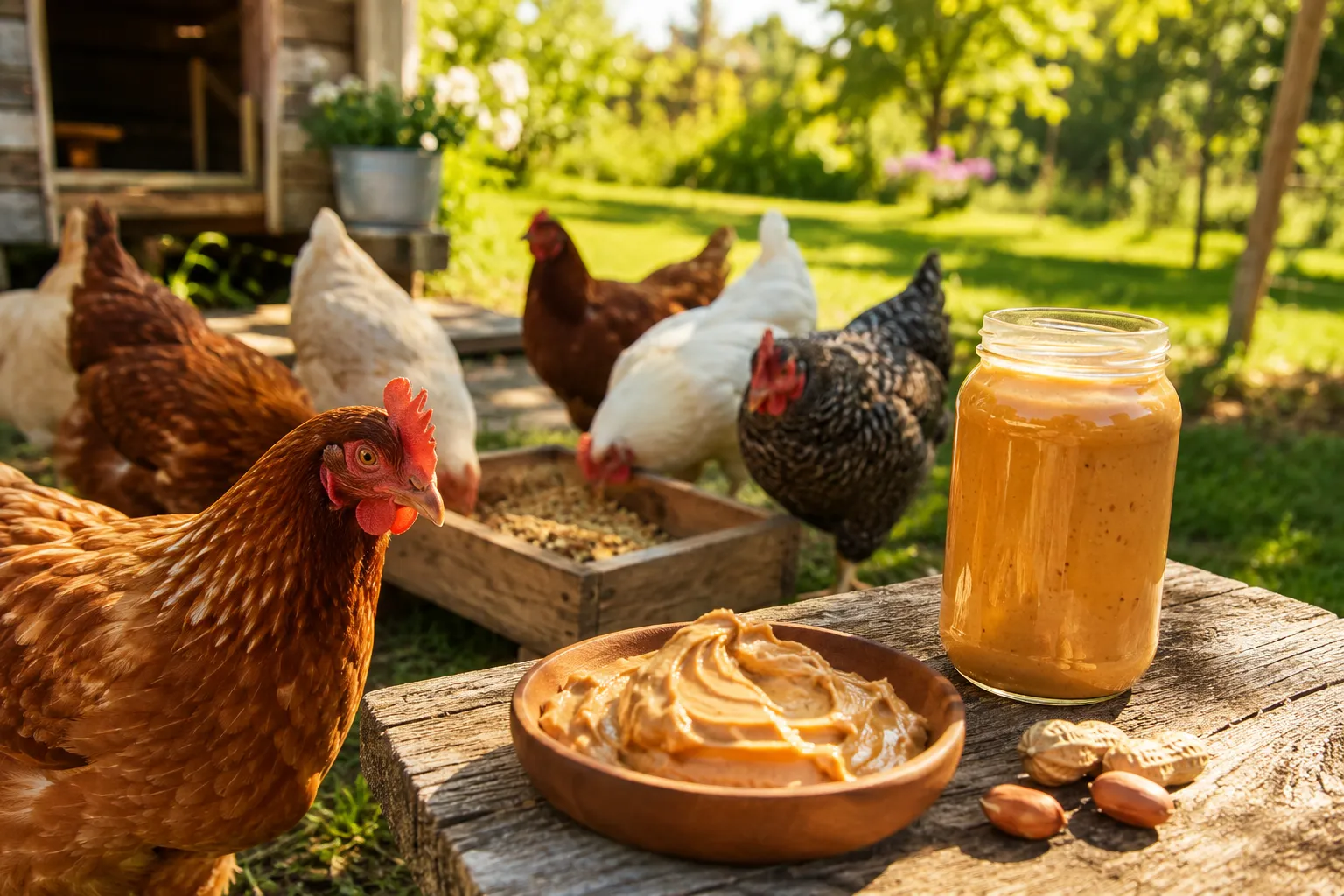
Quick Answer: Yes, chickens can eat peanut butter in small amounts as an occasional treat. Peanut butter provides protein and healthy fats, but its sticky texture and high calorie content mean it should be fed sparingly, no more than a teaspoon per chicken once or twice a week. Always choose natural, unsweetened varieties without added salt, sugar, or xylitol, and mix it with other foods or spread it thinly to prevent choking.
Key Takeaways
- Chickens can safely eat peanut butter in moderation as an occasional protein-rich treat
- Limit portions to about one teaspoon per chicken, offered no more than 1-2 times weekly
- Choose natural, unsweetened peanut butter without added salt, sugar, or artificial sweeteners (especially xylitol)
- The sticky texture poses a choking risk, so always dilute with water, mix with feed, or spread thinly
- Baby chicks under 8 weeks should not eat peanut butter due to their delicate digestive systems
- Excessive peanut butter can cause obesity, crop impaction, and nutritional imbalances
- Creamy peanut butter is safer than crunchy varieties for chickens
- Healthier alternatives include sunflower seeds, mealworms, and scrambled eggs
- Never feed chickens chocolate, avocado, raw beans, or moldy foods
- Treats should make up no more than 10% of a chicken’s total diet
Is Peanut Butter Safe for Chickens to Eat?
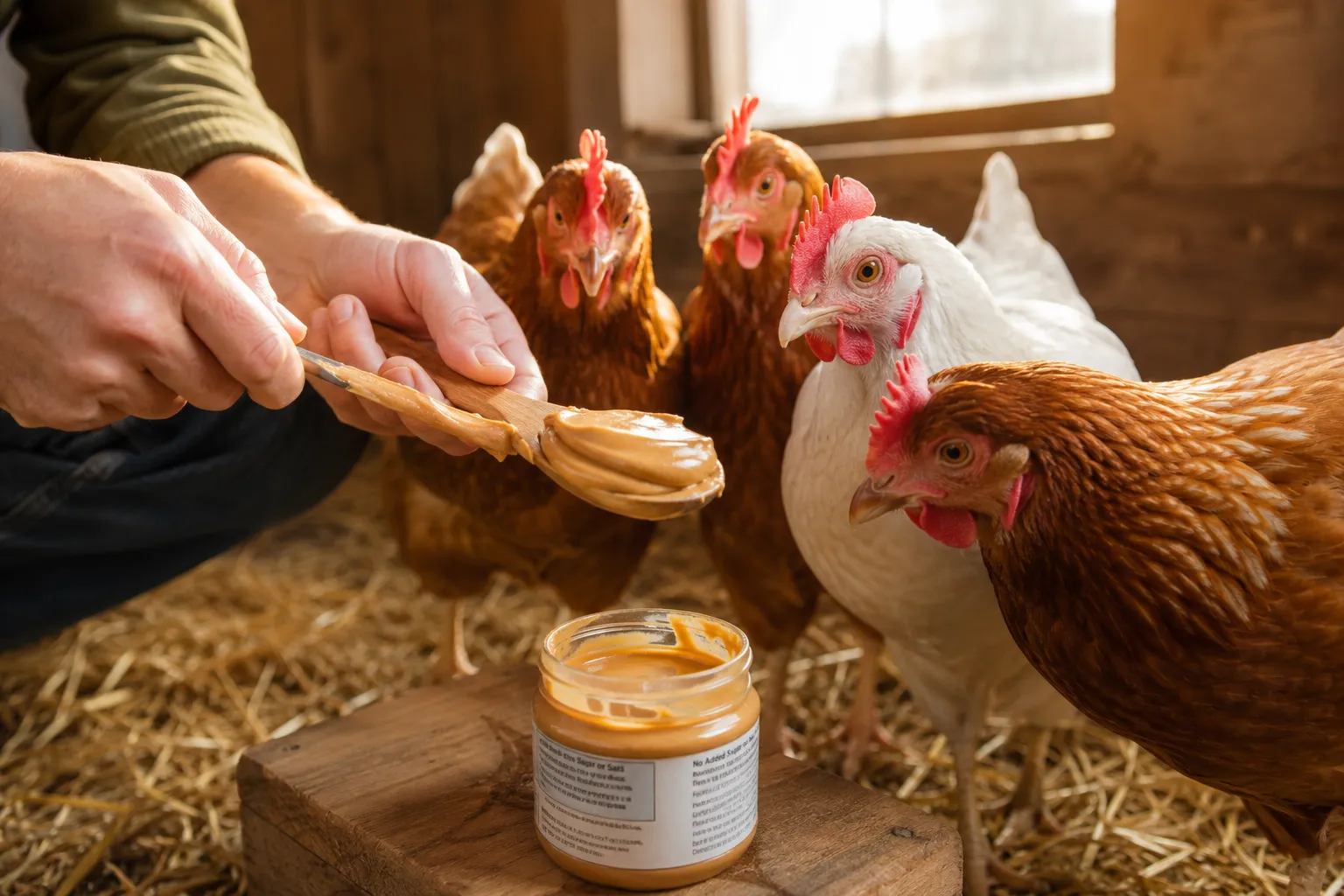
Peanut butter is generally safe for chickens when offered in small quantities and prepared properly. The main safety concern is its sticky, dense texture, which can adhere to a chicken’s beak, throat, or crop and potentially cause choking or blockages. Natural peanut butter without additives is the safest choice.
What makes peanut butter safe:
- Natural protein source: Contains about 25% protein, which supports feather growth and egg production
- Healthy fats: Provides energy and helps chickens absorb fat-soluble vitamins
- No toxic compounds: Pure peanuts are not toxic to chickens (unlike chocolate or avocado)
Safety precautions to follow:
- Always dilute or mix peanut butter with other ingredients
- Avoid brands with xylitol (an artificial sweetener toxic to many animals)
- Skip varieties with added chocolate, which is toxic to chickens
- Never feed moldy peanut butter, as aflatoxins from mold can be deadly
- Provide fresh water immediately after feeding peanut butter
Common mistake: Many chicken keepers offer peanut butter straight from the jar, which creates a serious choking hazard. Always thin it out or spread it on something else first.
How Much Peanut Butter Can I Give My Chickens?
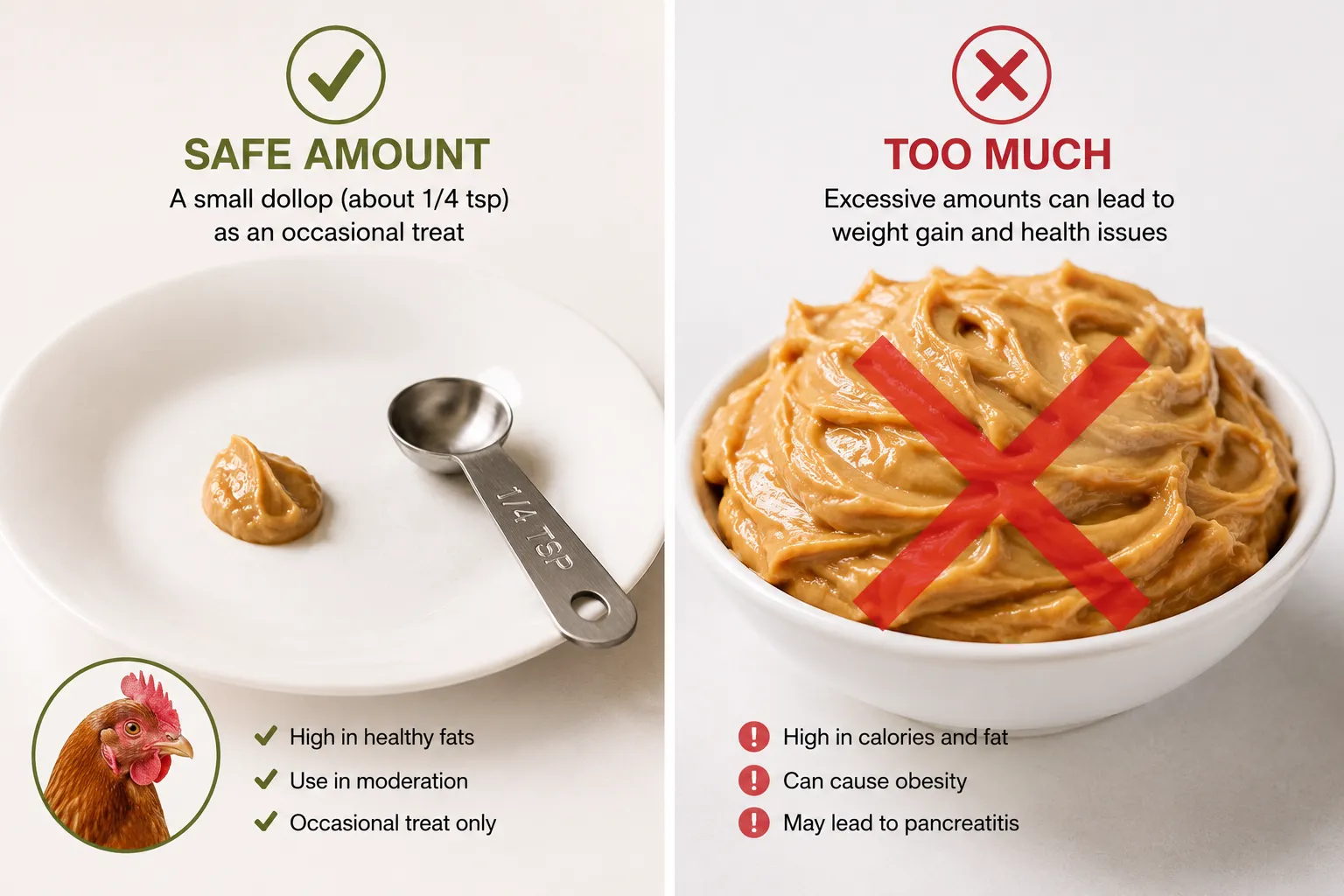
A safe portion is approximately one teaspoon of peanut butter per standard-sized chicken, offered no more than once or twice per week. This amount provides nutritional benefits without displacing their regular balanced feed or causing digestive issues.
Portion guidelines by flock size:
- 1-3 chickens: 1 teaspoon total, divided among them
- 4-6 chickens: 1-2 tablespoons total
- 7-10 chickens: 2-3 tablespoons total
- Bantam breeds: Half the amount for standard chickens
The 10% treat rule: All treats combined (including peanut butter, fruits, vegetables, and other snacks) should make up no more than 10% of your chickens’ daily caloric intake. The remaining 90% should come from quality layer feed that provides complete nutrition.
Choose peanut butter if: You want to add extra protein during molting season, need to administer medication mixed with something tasty, or want to keep chickens occupied during cold weather when they’re confined indoors.
Skip it if: Your chickens are overweight, have a history of crop problems, or you’re already feeding multiple high-fat treats.
What Happens If Chickens Eat Too Much Peanut Butter?
Excessive peanut butter consumption can lead to obesity, crop impaction, diarrhea, and nutritional imbalances in chickens. The high fat and calorie content (about 190 calories per 2 tablespoons) can quickly cause weight gain, especially in less active birds.
Immediate effects of overfeeding:
- Crop impaction: The sticky texture can form a dense mass in the crop that doesn’t pass through properly
- Diarrhea: High fat content can overwhelm the digestive system
- Reduced appetite: Chickens may feel too full to eat their nutritious layer feed
- Messy feathers: Excess peanut butter can coat beaks and feathers, attracting dirt and pests
Long-term consequences:
- Obesity: Overweight hens lay fewer eggs and face increased health risks
- Fatty liver disease: Excessive fat intake can damage liver function
- Nutritional deficiencies: Filling up on treats means less room for balanced feed
- Reduced egg production: Poor nutrition directly impacts laying frequency and egg quality
Warning signs to watch for: If you notice a chicken with a swollen, hard crop that doesn’t empty overnight, lethargy, or watery droppings after eating peanut butter, reduce or eliminate the treat and monitor closely. Severe crop impaction may require veterinary intervention.
Can Baby Chicks Eat Peanut Butter?
Baby chicks under 8 weeks old should not eat peanut butter. Their digestive systems are still developing, and the sticky texture poses an even greater choking risk for their small beaks and throats. Additionally, chicks need specialized starter feed with precise nutrient ratios for proper growth.
Why chicks should avoid peanut butter:
- Choking hazard: Their tiny beaks and throats are easily blocked by sticky substances
- Nutritional interference: Chicks need 18-20% protein from balanced starter feed, not random treats
- Digestive sensitivity: Young digestive systems can’t handle high-fat foods well
- Crop development: Their crops are small and still learning to process food properly
Safe treat alternatives for chicks 2-8 weeks old:
- Finely chopped hard-boiled egg (excellent protein source)
- Tiny pieces of leafy greens like spinach or lettuce
- Small amounts of plain yogurt (supports gut health)
- Chick grit if offering anything other than starter feed
When to introduce peanut butter: Wait until chickens are at least 8-10 weeks old and fully transitioned to grower or layer feed. Even then, start with very small amounts (a few drops mixed into feed) to test tolerance.
Best Way to Feed Peanut Butter to Chickens
The safest method is to dilute peanut butter with water or mix it with other foods to reduce its sticky consistency. Spreading a thin layer on safe surfaces or combining it with grains creates an enriching treat that minimizes choking risk.
Recommended feeding methods:
- Diluted spread: Mix 1 part peanut butter with 1 part warm water, then spread on a flat rock or wooden board
- Peanut butter balls: Combine peanut butter with oats, seeds, and a bit of flour, then roll into small balls
- Stuffed treats: Spread thinly inside a halved apple or on a corn cob
- Mixed with scratch grains: Stir a small amount into scratch grains or cracked corn
- Frozen summer treats: Mix with plain yogurt and freeze in ice cube trays for hot days
Step-by-step safe feeding:
- Choose natural, unsweetened peanut butter
- Measure the appropriate amount (1 tsp per chicken maximum)
- Mix with equal parts water or combine with dry ingredients
- Offer in a shallow dish or spread on a clean surface
- Supervise the first feeding to ensure no choking
- Provide fresh water nearby
- Remove any uneaten portions after 30 minutes
Common mistake: Leaving peanut butter treats out too long in warm weather can cause them to spoil or attract pests. Always remove uneaten portions promptly.
Can Peanut Butter Cause Crop Problems in Chickens?
Yes, peanut butter can cause crop impaction if fed in large amounts or too frequently. The thick, sticky texture can form a dense mass in the crop that doesn’t break down or pass through the digestive system properly, leading to a condition called impacted crop or sour crop.
How crop problems develop:
The crop is a pouch in a chicken’s throat that stores food before it moves to the stomach. When sticky substances like undiluted peanut butter enter the crop, they can:
- Clump together and harden
- Block the passage to the stomach
- Ferment if they sit too long, creating sour crop
- Prevent the chicken from eating or drinking normally
Signs of crop impaction:
- Swollen, hard crop that doesn’t empty overnight
- Foul smell from the beak
- Lethargy and loss of appetite
- Difficulty breathing
- Regurgitation
Prevention strategies:
- Always dilute peanut butter before feeding
- Offer only small amounts infrequently
- Ensure chickens have access to grit (helps grind food)
- Provide plenty of fresh water
- Feed peanut butter early in the day so crops can empty before roosting
Choose peanut butter if: You’re mixing it thoroughly with other ingredients and feeding appropriate portions. Skip it if: Your flock has a history of crop issues or you’ve noticed slow crop emptying in any birds.
Do Chickens Like Peanut Butter as a Treat?
Most chickens enthusiastically enjoy peanut butter, often competing for every last bit. The rich, nutty flavor and high fat content make it highly palatable, though individual preferences vary, some chickens may be hesitant at first while others dive right in.
Why chickens find it appealing:
- High energy content: Chickens instinctively seek calorie-dense foods
- Novel flavor: Different from their regular feed, which creates excitement
- Rich texture: The creamy consistency is interesting to explore
- Protein content: Chickens naturally crave protein sources
Behavioral observations:
When offered peanut butter, chickens typically:
- Peck eagerly and repeatedly at the treat
- Vocalize excitedly to flock mates
- Return multiple times until it’s gone
- May squabble over access to the treat
- Show increased activity and interest
Individual variation: Just like people, chickens have personal preferences. Some may prefer crunchy textures, while others favor smooth foods. A few chickens might ignore peanut butter entirely, especially if they’re not used to treats or are naturally cautious eaters.
Using peanut butter for training: Because most chickens love it, peanut butter (properly diluted) can be useful for hand-taming skittish birds, administering medication, or encouraging chickens into their coop at night.
Is Crunchy or Creamy Peanut Butter Better for Chickens?
Creamy peanut butter is the safer choice for chickens because it has a more uniform texture without hard peanut chunks that could cause choking. While some chickens can handle crunchy varieties, the smooth consistency of creamy peanut butter is easier to dilute and poses less risk of airway obstruction.
Creamy peanut butter advantages:
- Easier to mix with water or other ingredients
- No hard pieces that could lodge in the throat
- More consistent texture throughout
- Simpler to spread thinly
- Better for mixing with medications if needed
Crunchy peanut butter considerations:
- Peanut chunks add extra choking risk
- Harder to dilute evenly
- May be more difficult for smaller chickens to manage
- Can still be offered if mixed thoroughly with wet ingredients
Best practice: If you only have crunchy peanut butter available, mix it thoroughly with warm water, oats, or yogurt to break down the chunks and create a safer consistency. Never offer crunchy peanut butter straight from the jar.
Edge case: For chickens that need extra jaw exercise (rare), very small amounts of crunchy peanut butter mixed into feed might provide enrichment, but this is not necessary for most backyard flocks.
What Foods Should Chickens Never Eat?
Chickens should never eat chocolate, avocado, raw or dried beans, green potatoes, onions, garlic in large amounts, moldy or spoiled food, salty snacks, sugary treats, or anything containing caffeine or alcohol. These foods contain compounds that are toxic to chickens or can cause serious health problems.
Highly toxic foods (never feed):
- Chocolate: Contains theobromine, which is toxic to chickens and can cause death
- Avocado: Skin and pit contain persin, which causes heart damage and respiratory distress
- Raw or dried beans: Contain phytohaemagglutinin, a toxin that can be fatal (cooked beans are safe)
- Green potatoes: Contain solanine, which causes neurological problems
- Moldy food: Can contain deadly aflatoxins and mycotoxins
Foods to avoid or limit:
- Onions and garlic: Large amounts can cause anemia (small amounts are generally safe)
- Salty foods: Excess salt can cause salt poisoning and kidney damage
- Sugary treats: Lead to obesity and nutritional imbalances
- Citrus fruits: May reduce calcium absorption in large quantities (small amounts are fine)
- Raw meat: Risk of bacterial contamination and can encourage aggressive behavior
Surprising safe foods:
Many chicken keepers worry unnecessarily about certain foods. These are actually safe in moderation:
- Cooked rice and pasta
- Plain popcorn (unsalted, unbuttered)
- Most fruits and vegetables
- Cooked eggs (excellent protein source)
- Plain yogurt and cottage cheese
- Pumpkin and squash (including seeds)
Decision rule: When in doubt about a new food, research it specifically or skip it. Chickens thrive on their balanced layer feed, and treats are optional extras, not necessities.
Can Chickens Eat Peanut Butter with Added Sugar or Salt?
Chickens should not eat peanut butter with added sugar or salt. These additives provide no nutritional benefit and can harm chicken health, potentially leading to obesity, kidney problems, and metabolic issues. Always choose natural peanut butter with only peanuts (and perhaps a small amount of oil) in the ingredient list.
Why added sugar is problematic:
- Chickens don’t need refined sugars in their diet
- Causes rapid weight gain and obesity
- Can lead to fatty liver disease
- Disrupts the balance of their gut bacteria
- May reduce consumption of nutritious layer feed
Why added salt is dangerous:
- Chickens are highly sensitive to sodium
- Can cause salt poisoning (lethargy, excessive thirst, neurological symptoms)
- Leads to kidney damage over time
- Increases water consumption and watery droppings
- Even small amounts can be harmful with repeated exposure
Reading labels carefully:
Safe ingredients: Peanuts, peanuts and salt (minimal), peanuts and oil
Avoid these ingredients:
- Sugar, corn syrup, honey, molasses
- Salt (or choose brands with less than 50mg per serving)
- Xylitol or other artificial sweeteners (highly toxic)
- Palm oil (not toxic but unnecessary)
- Hydrogenated oils
Best choice: Look for natural or organic peanut butter where oil separation occurs (you have to stir it). This indicates minimal processing and no stabilizers or additives.
Mixing Peanut Butter with Chicken Feed: Good or Bad?
Mixing small amounts of diluted peanut butter with chicken feed can be acceptable as an occasional enrichment activity, but it should not become a regular practice. While it can make feed more appealing during times of stress or illness, frequent mixing can cause feed to spoil faster, create mess, and lead to selective eating where chickens pick out the tasty bits and ignore nutritious pellets.
Potential benefits:
- Makes feed more appealing for sick or stressed chickens
- Can help administer powdered medications or supplements
- Provides mental stimulation and foraging enrichment
- May encourage eating during extreme cold when chickens need extra calories
Drawbacks to consider:
- Feed spoilage: Peanut butter causes feed to go rancid faster, especially in warm weather
- Selective eating: Chickens may eat only peanut butter-coated pieces and waste the rest
- Mess: Creates sticky clumps that are harder to clean from feeders
- Pest attraction: Sweet, fatty mixture attracts rodents and insects
- Nutritional imbalance: Reduces the precision of their balanced diet
Best practice approach:
If you want to mix peanut butter with feed:
- Use only a tiny amount (1 teaspoon per cup of feed maximum)
- Dilute the peanut butter with water first
- Mix thoroughly so it coats evenly rather than clumping
- Offer only what will be eaten within 2-3 hours
- Do this no more than once per week
- Clean feeders thoroughly afterward
Better alternative: Offer peanut butter separately as a distinct treat rather than mixing it with their complete feed. This preserves the nutritional integrity of their main diet while still providing enrichment.
Healthy Alternatives to Peanut Butter for Chickens
Several alternatives provide similar nutritional benefits to peanut butter without the sticky texture and choking risk. Sunflower seed butter, mealworms, scrambled eggs, and pumpkin seeds all offer protein and healthy fats in safer, more chicken-friendly forms.
Top protein-rich alternatives:
Mealworms (dried or live)
- 50% protein content
- Chickens love them
- No choking risk
- Easy to store and feed
- Great for training and bonding
Scrambled eggs (plain, no butter or oil)
- Complete protein source
- Highly digestible
- Supports feather growth
- Safe texture
- Can be fed warm in winter
Sunflower seeds (unsalted, shelled)
- Similar fat content to peanuts
- Rich in vitamin E
- No sticky texture
- Supports immune health
- Chickens can crack shells themselves for enrichment
Black soldier fly larvae
- Excellent calcium and protein
- More nutritious than mealworms
- Sustainable option
- Easy to digest
- Growing in popularity
Other nutritious treats:
- Plain Greek yogurt (probiotics for gut health)
- Cooked oatmeal (warming winter treat)
- Pumpkin and squash (fiber and nutrients)
- Leafy greens like kale and spinach (vitamins and minerals)
- Berries (antioxidants, though lower in protein)
Comparison table:
| Treat | Protein Content | Choking Risk | Ease of Feeding |
|---|---|---|---|
| Peanut Butter | 25% | Moderate-High | Requires dilution |
| Mealworms | 50% | Low | Very easy |
| Scrambled Eggs | 12-13% | Very Low | Easy |
| Sunflower Seeds | 20% | Low | Very easy |
Choose alternatives if: You want to avoid the mess and risk of peanut butter while still providing high-value treats, or if your chickens have shown any signs of crop problems in the past.
Peanut Butter vs Sunflower Butter for Chickens
Both peanut butter and sunflower seed butter are safe for chickens in moderation, but sunflower butter has a slight edge due to its higher vitamin E content and lower allergy risk (though chicken allergies are rare). Nutritionally, they’re quite similar, and the choice often comes down to availability and price.
Nutritional comparison:
Peanut butter:
- 25% protein
- 50% fat
- Rich in niacin and folate
- More affordable
- Widely available
Sunflower seed butter:
- 20% protein (slightly lower)
- 50% fat (similar)
- Higher in vitamin E (antioxidant)
- More expensive
- May be harder to find
Practical considerations:
Both have the same sticky texture, so the same safety precautions apply, always dilute or mix with other foods. Neither is inherently safer in terms of choking risk.
Decision rule:
- Choose peanut butter if: You want the most affordable option with slightly higher protein
- Choose sunflower butter if: You prefer the extra vitamin E, want variety, or already have it on hand
- Rotate both if: You like offering diverse treats and want to maximize nutritional variety
Edge case: Some chicken keepers avoid peanut products entirely due to concerns about aflatoxin contamination in peanuts. While this is rare in commercial peanut butter (which is tested), sunflower butter eliminates this concern completely.
Can Chickens Choke on Sticky Peanut Butter?
Yes, chickens can choke on undiluted peanut butter due to its thick, sticky consistency. The dense texture can adhere to the roof of the mouth, throat, or crop opening, blocking airways or preventing normal swallowing. This risk is why peanut butter should never be fed straight from the jar and must always be diluted or mixed with other ingredients.
How choking occurs in chickens:
Chickens don’t chew food like mammals, they swallow pieces whole and rely on their crop and gizzard to break things down. When sticky substances like peanut butter enter the mouth:
- It can coat the beak and tongue, making it hard to manipulate food
- May stick to the throat opening, blocking airflow
- Can form a plug at the crop entrance
- Prevents the chicken from drinking water to wash it down
Warning signs of choking:
- Gasping or open-mouth breathing
- Head shaking or neck stretching
- Pawing at the beak with feet
- Distressed vocalizations
- Inability to swallow
Emergency response:
If you suspect a chicken is choking on peanut butter:
- Gently open the beak and look for visible blockages
- Offer water immediately (may help wash it down)
- Massage the throat and crop gently downward
- If breathing is severely compromised, seek veterinary help immediately
- Do not attempt to pull out material unless it’s clearly visible and accessible
Prevention is key:
- Always mix peanut butter with equal parts water minimum
- Spread very thinly on surfaces rather than offering globs
- Supervise the first time you offer it
- Start with tiny amounts to test how your flock handles it
- Keep fresh water available at all times
Choose peanut butter if: You’re committed to proper preparation and supervision. Skip it if: You have young chickens, birds with crop issues, or prefer lower-risk treats.
Frequently Asked Questions
Can chickens eat peanut butter every day?
No, chickens should not eat peanut butter daily. Limit it to once or twice per week maximum to prevent obesity, nutritional imbalances, and digestive issues. Daily feeding would provide excessive calories and fat while displacing their balanced layer feed.
Is organic peanut butter better for chickens?
Organic peanut butter offers no significant advantage for chickens over conventional natural peanut butter. The most important factor is choosing varieties without added sugar, salt, or artificial ingredients, regardless of organic certification.
Can chickens eat peanut butter with honey?
Chickens can eat small amounts of peanut butter with honey, but plain peanut butter is preferable. Honey adds unnecessary sugar and calories. If you do offer it, limit portions even more strictly, about half a teaspoon per chicken.
Will peanut butter help chickens gain weight?
Yes, peanut butter’s high calorie and fat content can help underweight chickens gain weight when fed in controlled amounts. However, scrambled eggs or higher-protein feeds are more effective and safer options for weight gain.
Can roosters eat peanut butter?
Yes, roosters can eat peanut butter following the same guidelines as hens, small amounts, properly diluted, and offered infrequently. The same portion sizes and safety precautions apply regardless of gender.
Does peanut butter improve egg production?
Peanut butter does not directly improve egg production. While the protein content supports overall health, balanced layer feed with 16-18% protein is far more effective for maintaining consistent laying. Treats should never replace quality feed.
Can chickens eat almond butter instead?
Yes, chickens can eat almond butter in the same small amounts as peanut butter. It has similar nutritional value and the same sticky texture, so all the same preparation and safety rules apply.
How do I remove peanut butter stuck in a chicken’s crop?
If peanut butter is stuck in the crop, offer plenty of water and gently massage the crop downward toward the stomach. If the crop remains hard and swollen after 24 hours, consult a veterinarian, as manual crop emptying may be necessary.
Can chickens eat peanut butter crackers?
Chickens can eat plain peanut butter crackers occasionally, but they’re not ideal due to added salt, sugar, and refined flour. If offering them, break into small pieces and limit to a few crackers per chicken as a rare treat.
Is powdered peanut butter safe for chickens?
Yes, powdered peanut butter (PB2 or similar) is safe for chickens and actually easier to use. Mix it with water to desired consistency, which gives you better control over texture. Ensure it has no added sugar or artificial sweeteners.
Can peanut butter help with molting?
Peanut butter can provide extra protein during molting, but it’s not the best choice. Mealworms, scrambled eggs, or higher-protein feed (20-22%) are more effective for supporting feather regrowth during this demanding time.
Will chickens eat peanut butter if they don’t like peanuts?
Most chickens that refuse whole peanuts will still eat peanut butter due to its different texture and concentrated flavor. However, individual preferences vary, and some chickens may reject both forms.
Conclusion
Peanut butter can be a safe, protein-rich treat for chickens when offered responsibly. The key is moderation, limit portions to about one teaspoon per chicken, feed it no more than once or twice weekly, and always dilute or mix it with other foods to prevent choking. Choose natural varieties without added sugar, salt, or artificial sweeteners, and never feed it to chicks under 8 weeks old.
While chickens generally love peanut butter, it should never replace their balanced layer feed, which provides the complete nutrition they need for health and egg production. Think of peanut butter as an occasional enrichment activity rather than a dietary staple. When prepared safely, it can strengthen your bond with your flock, provide mental stimulation, and deliver a boost of protein during demanding times like molting or winter.
Action steps for chicken keepers:
- Check your pantry for natural, unsweetened peanut butter
- Measure appropriate portions (1 tsp per chicken maximum)
- Mix with equal parts water or combine with oats or seeds
- Offer during morning hours so crops can empty before roosting
- Supervise the first feeding to ensure all birds handle it well
- Keep fresh water available at all times
- Monitor your flock for any signs of crop issues or digestive upset
Remember that treats are extras, not essentials. Your chickens will thrive on quality layer feed, fresh water, and appropriate grit. Peanut butter and other treats simply add variety and enrichment to their lives. By following the guidelines in this article, you can safely share this tasty treat with your flock while keeping them healthy and happy in 2026 and beyond.