
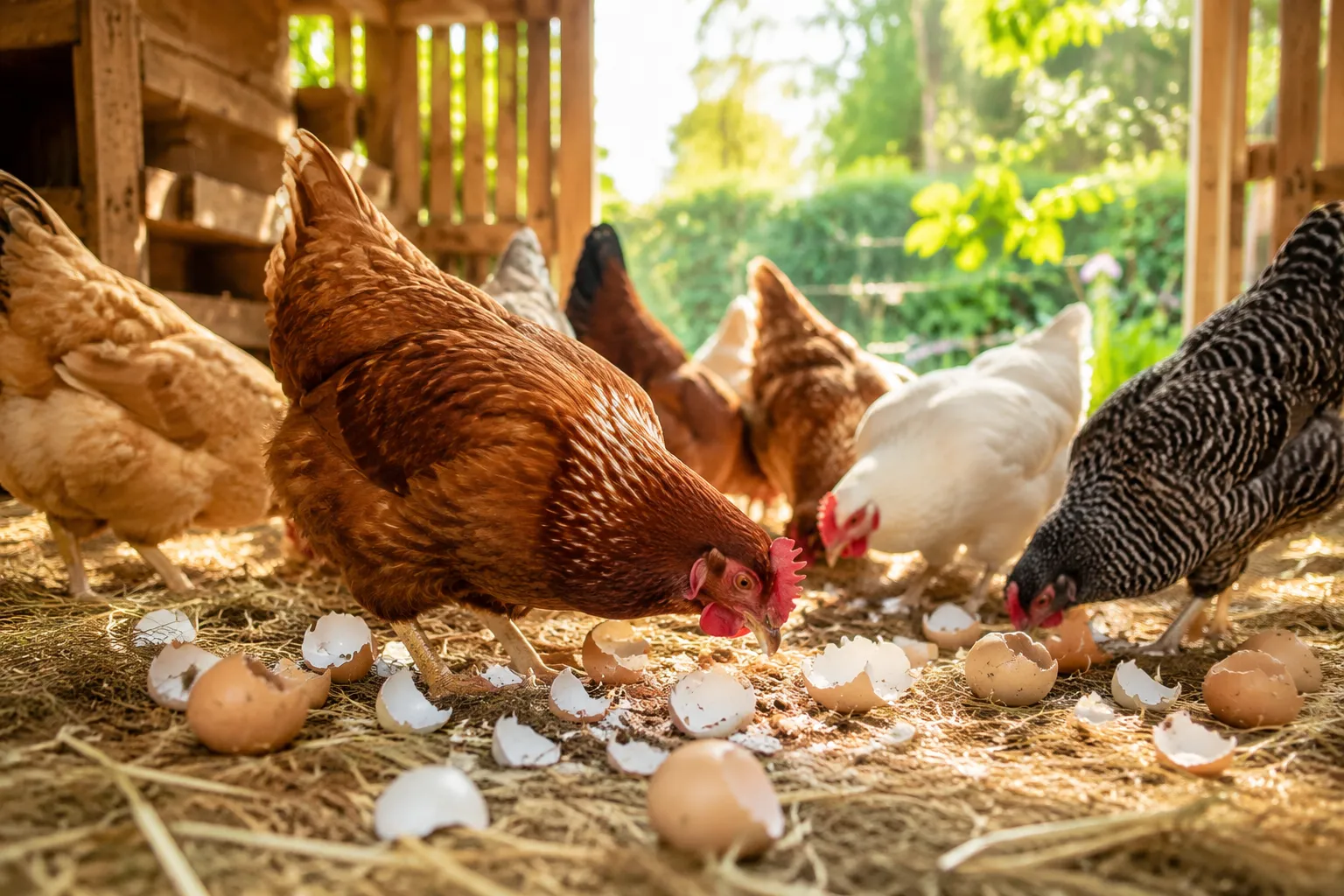
Quick Answer: Yes, chickens can safely eat eggshells, and doing so provides an excellent source of calcium that supports strong bones and quality egg production. When properly prepared by crushing or baking, eggshells offer a natural, cost-effective calcium supplement that most backyard flocks benefit from, especially laying hens.
Key Takeaways
- Chickens can and should eat eggshells as a valuable calcium source for bone health and egg production
- Properly prepared eggshells (crushed or baked) are safe and won’t encourage egg-eating behavior
- Laying hens need approximately 4 grams of calcium daily, which eggshells help provide
- Crushing eggshells into small pieces prevents chickens from recognizing them as eggs
- Baking eggshells at 250°F for 10 minutes kills bacteria and makes them easier to crush
- Eggshells and oyster shells both work well, though oyster shells release calcium more slowly
- Baby chicks under 8 weeks don’t need supplemental calcium and shouldn’t receive eggshells
- Calcium deficiency leads to soft-shelled eggs, weak bones, and reduced laying
- Offer eggshells free-choice in a separate container so chickens self-regulate intake
- Other calcium sources include oyster shells, limestone grit, and crushed cuttlebone
Why Do Chickens Eat Their Own Eggshells?
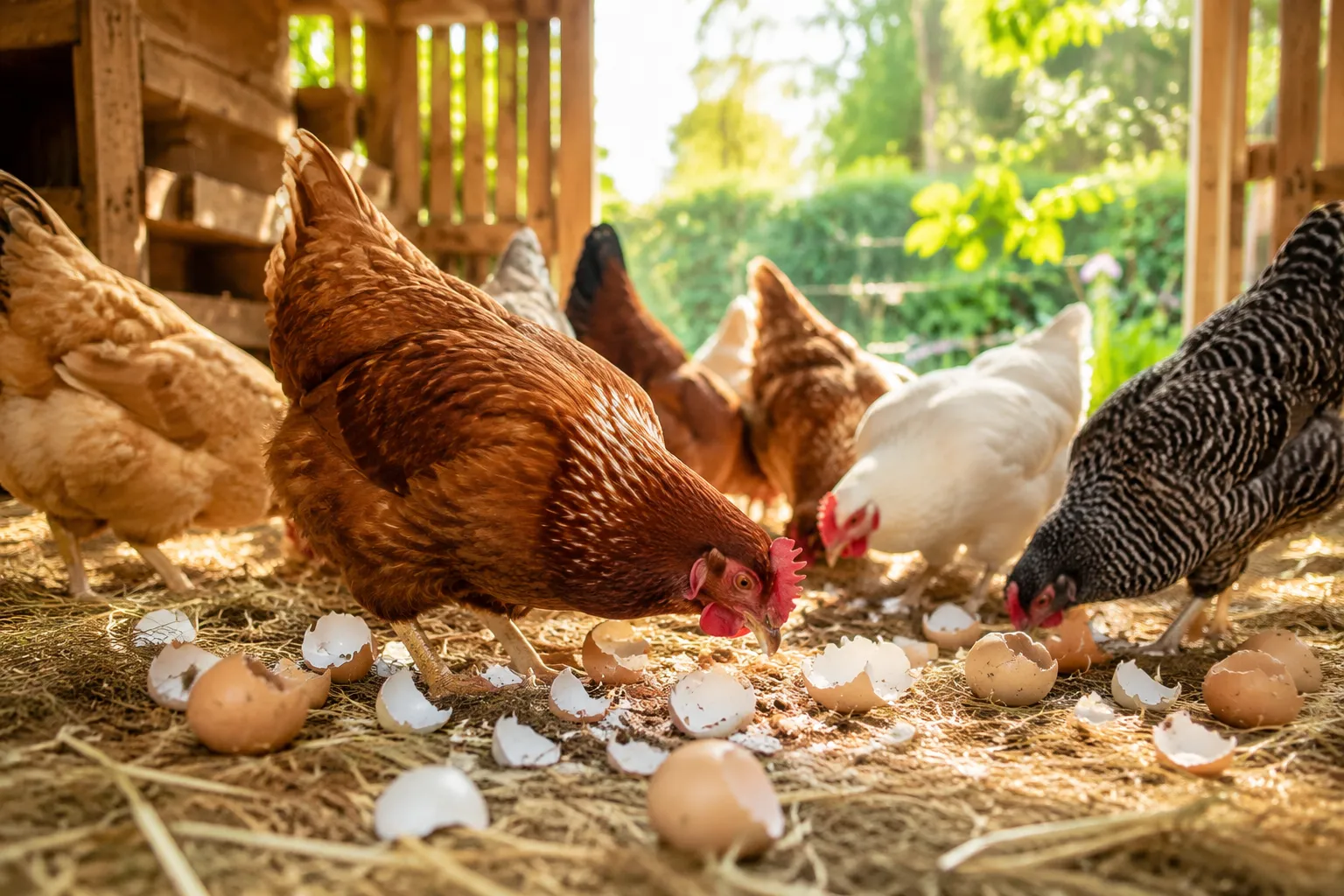
Chickens instinctively eat eggshells because their bodies recognize the need for calcium, an essential mineral for producing strong eggshells and maintaining bone health. A laying hen deposits significant calcium into each egg she produces, depleting her body’s reserves and triggering a natural drive to seek calcium-rich foods.
In nature, chickens would consume calcium from insects, small bones, and mineral-rich soil. Domestic chickens eating their own eggshells is simply their way of reclaiming lost nutrients. This behavior is completely normal and beneficial when the eggshells are offered properly.
Key reasons chickens seek eggshells:
- Each egg requires about 2 grams of calcium carbonate to form the shell
- Laying hens can produce 250-300 eggs annually, creating enormous calcium demand
- Chickens lack the ability to store large calcium reserves like mammals do
- Their bodies pull calcium from bones if dietary sources are insufficient
- The instinct to consume calcium-rich materials is hardwired for survival
Common mistake: Assuming chickens eating eggshells means they’re deficient. While deficiency can drive the behavior, healthy chickens also eat eggshells simply because they’re a readily available calcium source.
Is It Safe for Chickens to Eat Eggshells?
Yes, it is completely safe for chickens to eat eggshells when properly prepared through crushing or baking. The calcium carbonate in eggshells is identical to what chickens need for their own egg production, making it a natural and appropriate supplement with no harmful substances.
The only safety concern involves bacterial contamination from raw eggs, which is easily addressed through proper preparation. Salmonella and other bacteria can survive on unwashed eggshells, but simple heat treatment eliminates this risk entirely.
Safety guidelines:
- Crush eggshells into small pieces (pea-sized or smaller) to prevent recognition as whole eggs
- Bake at 250°F for 10 minutes to kill bacteria if you prefer extra precaution
- Never feed whole or large shell pieces that look like intact eggs
- Store prepared eggshells in a dry container to prevent mold growth
- Offer in a separate dish rather than mixing with regular feed
Choose eggshells if: You want a free, sustainable calcium source and don’t mind the minimal preparation time.
How to Prepare Eggshells for Chickens
Preparing eggshells for chickens involves three simple steps: collecting, drying or baking, and crushing into small pieces. This process takes only a few minutes and ensures the shells are safe, unrecognizable as eggs, and easy for chickens to consume.
Step-by-step preparation method:
- Collect shells: Save eggshells from your kitchen in a container as you use eggs
- Rinse briefly: Give shells a quick rinse to remove any remaining egg white (optional but reduces smell)
- Dry or bake: Either air-dry for 24-48 hours OR bake at 250°F for 10 minutes
- Crush thoroughly: Use a rolling pin, food processor, or mortar and pestle to break into pea-sized or smaller pieces
- Store: Keep crushed shells in an airtight container until ready to feed
- Offer free-choice: Place in a separate dish or hopper so chickens can eat as needed
Baking benefits: Heat treatment kills potential bacteria, makes shells more brittle and easier to crush, and removes any remaining membrane. However, many chicken keepers successfully feed air-dried shells without issues.
Time-saving tip: Process a week’s worth of shells at once rather than preparing them daily. A dozen eggshells typically yield about one cup of crushed supplement.
Do Eggshells Provide Calcium for Chickens?
Eggshells provide excellent calcium for chickens, containing approximately 95% calcium carbonate by weight. One large eggshell contains roughly 2 grams of elemental calcium, which is about half of a laying hen’s daily requirement.
The calcium in eggshells is highly bioavailable, meaning chickens can efficiently absorb and use it for bone maintenance and egg production. This makes recycled eggshells one of the most effective and economical calcium supplements available to backyard flock owners.
Calcium content comparison:
| Source | Calcium Content | Cost |
|---|---|---|
| Eggshells | ~40% elemental calcium | Free |
| Oyster shells | ~38% elemental calcium | $15-25 per 50 lbs |
| Limestone grit | ~35% elemental calcium | $10-20 per 50 lbs |
Daily calcium needs by chicken type:
- Laying hens: 4-5 grams per day
- Non-laying hens: 1-2 grams per day
- Roosters: 1-2 grams per day
- Growing pullets: 2-3 grams per day
Important note: While eggshells are calcium-rich, they should supplement, not replace, a balanced layer feed that already contains calcium. Think of eggshells as an extra calcium bar chickens can access when their bodies need more.
Eggshells vs Oyster Shells for Chickens: Which Is Better?
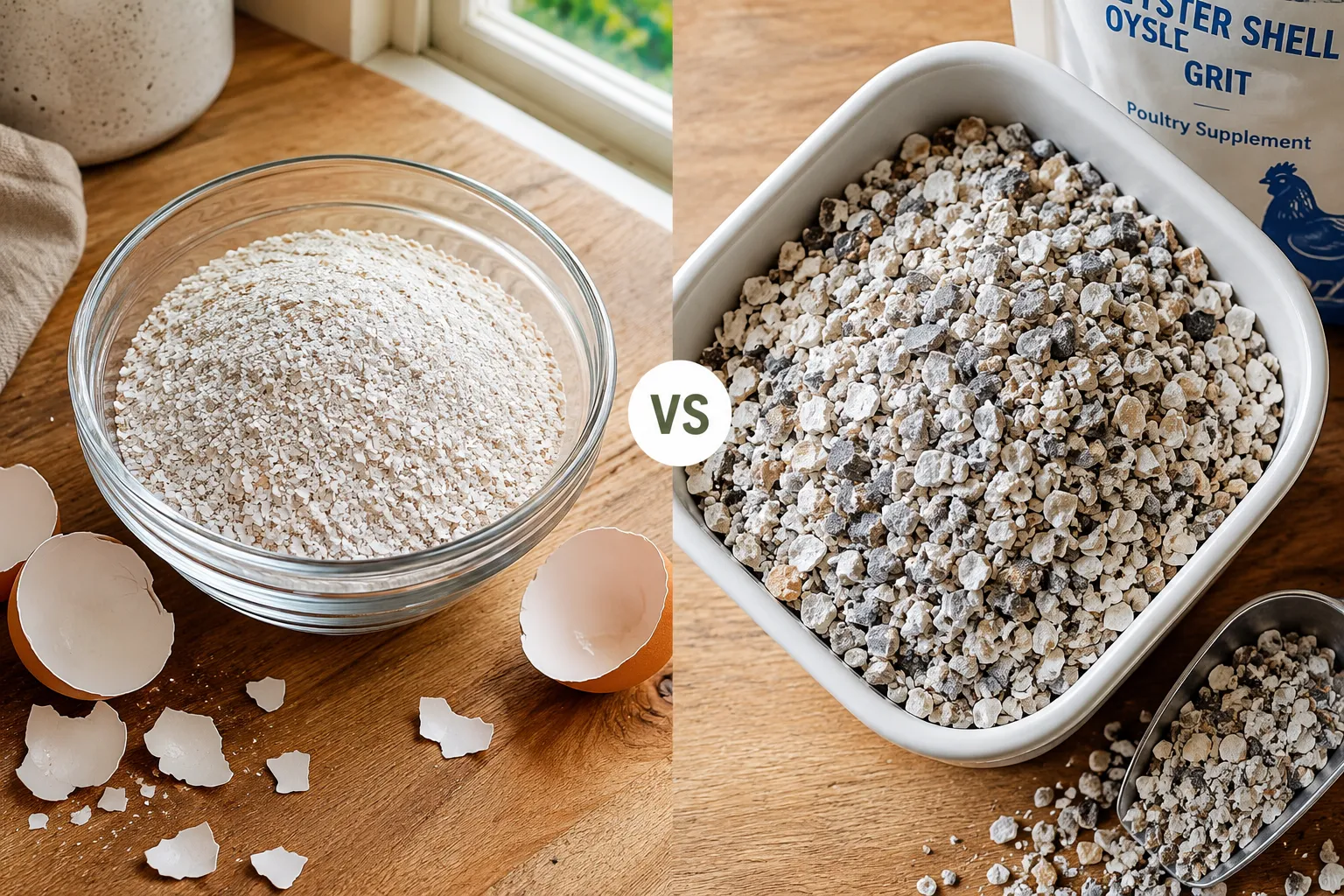
Both eggshells and oyster shells effectively provide calcium for chickens, but oyster shells release calcium more slowly due to their larger particle size and denser structure. Eggshells dissolve faster in the digestive system, providing quicker calcium availability, while oyster shells offer sustained release over several hours.
For most backyard flocks, using both sources together provides optimal calcium supplementation. The quick-release calcium from eggshells helps during active egg formation, while the slow-release calcium from oyster shells maintains baseline levels throughout the day.
Eggshells advantages:
- Completely free if you already keep chickens
- Finer texture when crushed, easier for smaller breeds
- Faster calcium absorption
- Zero waste solution
- No transportation or packaging waste
Oyster shells advantages:
- Consistent particle size and calcium content
- Longer-lasting calcium release (6-8 hours)
- No preparation time required
- Commercially available year-round
- Preferred by some chickens for texture
Choose eggshells if: You want to minimize costs and environmental impact, don’t mind minimal preparation, and have enough eggs to generate sufficient shells.
Choose oyster shells if: You prefer convenience, have a large flock that consumes more calcium than your household generates in eggshells, or want guaranteed slow-release calcium.
Best practice: Offer both options free-choice and let your chickens self-select based on their individual needs and preferences.
Will Feeding Eggshells Make Chickens Eat Their Eggs?
Feeding properly prepared eggshells will not cause chickens to start eating their eggs. Egg-eating behavior develops from entirely different causes, including accidental egg breakage, boredom, overcrowding, or nutritional deficiencies, not from recognizing crushed eggshells as food.
The key to preventing any connection between eggshells and whole eggs is thorough crushing. When eggshells are broken into small, unrecognizable pieces, chickens perceive them as grit or mineral supplement rather than as eggs.
Why this myth persists:
- Logical but incorrect assumption that chickens will connect crushed shells to whole eggs
- Coincidental timing when egg-eating starts around the same time eggshells are introduced
- Misunderstanding of chicken cognition and food recognition
Actual causes of egg-eating behavior:
- Accidentally broken eggs that chickens taste and find appealing
- Calcium or protein deficiency leading chickens to seek nutrients
- Insufficient nesting boxes (less than one box per 4-5 hens)
- Boredom from lack of space or enrichment
- Eggs left in boxes too long, increasing breakage risk
- Bright lighting in nesting areas that draws attention to eggs
Prevention strategy: Crush eggshells thoroughly, collect eggs frequently (twice daily), provide adequate nesting boxes, ensure proper nutrition, and address any egg-eating immediately by isolating the culprit and using fake eggs to break the habit.
How Often Should I Give My Chickens Eggshells?
Chickens should have access to crushed eggshells or other calcium supplements free-choice at all times, allowing them to self-regulate their calcium intake based on individual needs. Rather than scheduled feeding, offer eggshells in a separate container that chickens can visit whenever their bodies require additional calcium.
Laying hens naturally consume more calcium during active egg production, with peak intake occurring in the afternoon and evening when eggshell formation happens overnight. Free-choice availability ensures chickens can access calcium during these critical windows.
Free-choice feeding guidelines:
- Keep a dedicated dish or hopper filled with crushed eggshells
- Refill when the container is half-empty or weekly, whichever comes first
- Place the calcium dish near (but not mixed with) regular feed
- Expect laying hens to consume 1-2 tablespoons of crushed shells daily
- Monitor consumption patterns, increased intake may signal dietary calcium deficiency
Quantity guidelines by flock size:
- 3-5 hens: 1/4 to 1/2 cup crushed shells weekly
- 6-10 hens: 1/2 to 1 cup crushed shells weekly
- 11-20 hens: 1 to 2 cups crushed shells weekly
Seasonal variation: Expect higher consumption during peak laying season (spring and summer) and reduced intake during molting or winter when egg production naturally decreases.
Common mistake: Mixing crushed eggshells directly into feed, which prevents chickens from self-regulating and may lead to excess calcium consumption by non-laying birds.
Can Baby Chicks Eat Eggshells?
Baby chicks under 8 weeks old should not eat eggshells or receive any supplemental calcium beyond what’s provided in their starter feed. Young chicks require a different nutritional balance than laying hens, and excess calcium can damage developing kidneys and interfere with proper bone formation.
Chick starter feed is specifically formulated with approximately 1% calcium, which is sufficient for growth without the higher levels needed for egg production. Introducing calcium supplements too early disrupts this carefully balanced nutrition.
Age-based calcium guidelines:
- 0-8 weeks (chicks): Chick starter only, no calcium supplements
- 8-16 weeks (pullets): Grower feed, minimal calcium supplements acceptable
- 16-20 weeks (point-of-lay): Transition to layer feed with calcium supplements
- 20+ weeks (laying hens): Full access to layer feed plus free-choice calcium
When to start offering eggshells: Begin providing crushed eggshells when pullets lay their first egg or reach 20 weeks of age, whichever comes first. Some keepers start at 18 weeks as pullets approach laying age.
Exception: If you have a mixed-age flock with both chicks and laying hens, place calcium supplements in locations only adult birds can access, such as higher perches or separate feeding areas.
Do I Need to Bake Eggshells Before Giving to Chickens?
You do not strictly need to bake eggshells before feeding them to chickens, though baking at 250°F for 10 minutes provides extra safety by killing potential bacteria and makes crushing easier. Many chicken keepers successfully feed air-dried eggshells without any heat treatment and experience no health issues.
The decision to bake depends on your risk tolerance and preparation preferences. Baking adds an extra step but offers peace of mind regarding bacterial contamination, particularly if your flock has experienced health issues or if you’re concerned about salmonella.
Benefits of baking:
- Eliminates bacteria including salmonella and E. coli
- Makes shells more brittle and easier to crush into fine powder
- Removes remaining membrane that can be difficult to crush
- Extends storage life by removing all moisture
- Creates a more uniform, professional-looking supplement
Air-drying method (no baking):
- Spread rinsed shells on a tray or paper towel
- Allow to dry completely for 24-48 hours
- Crush when fully dry and brittle
- Store in an airtight container
Choose baking if: You want maximum safety assurance, prefer easier crushing, or live in a humid climate where air-drying is difficult.
Choose air-drying if: You want to save energy, don’t have concerns about bacteria, and don’t mind slightly more effort when crushing.
Reality check: Chickens naturally have robust digestive systems and regularly consume bacteria from soil, insects, and their environment. The bacterial risk from eggshells is relatively low, especially if shells are from your own healthy flock.
What Happens If Chickens Don’t Get Enough Calcium?
Chickens that don’t receive adequate calcium develop soft-shelled or shell-less eggs, weakened bones that fracture easily, and reduced egg production as their bodies prioritize survival over reproduction. Severe calcium deficiency can lead to egg binding (eggs stuck in the reproductive tract), a life-threatening emergency requiring immediate veterinary care.
A laying hen experiencing calcium deficiency will first pull calcium from her bones to maintain egg production, gradually weakening her skeletal system. Eventually, even bone calcium reserves become insufficient, resulting in thin, fragile, or missing eggshells.

Visible signs of calcium deficiency:
- Soft, rubbery, or shell-less eggs
- Thin shells that crack easily
- Rough, bumpy, or misshapen eggshells
- Decreased egg production
- Lethargy and weakness
- Difficulty walking or standing
- Leg bones that feel soft or bend
- Increased susceptibility to fractures
- Egg binding (hen straining without producing an egg)
Timeline of deficiency:
- Week 1-2: Eggshell quality begins declining, shells become thinner
- Week 3-4: Soft-shelled or shell-less eggs appear regularly
- Week 4-8: Bone density decreases, mobility issues develop
- Week 8+: Severe skeletal weakness, high fracture risk, potential egg binding
Long-term consequences: Chronic calcium deficiency causes permanent bone damage, reduced lifetime egg production, and shortened lifespan. Hens may develop osteoporosis-like conditions that never fully recover even after calcium is restored.
Prevention: Provide layer feed (which contains 3.5-4.5% calcium), offer free-choice calcium supplements like crushed eggshells or oyster shells, and ensure adequate vitamin D3 through sunlight exposure or supplementation to support calcium absorption.
Can Chickens Eat Raw Eggshells or Do They Need to Be Crushed?
Chickens can physically eat raw eggshells, but they should always be crushed into small pieces before feeding to prevent chickens from recognizing them as whole eggs and to make consumption easier. Crushing breaks the visual connection between the supplement and intact eggs, reducing any risk of encouraging egg-eating behavior.
Small, crushed pieces also allow chickens to consume appropriate amounts more easily and enable better portion control. Whole or large shell pieces are difficult for chickens to break down and may be ignored entirely.
Optimal crushing sizes:
- Fine powder: Best for mixing with treats or for smaller breeds
- Pea-sized pieces: Ideal general-purpose size for most flocks
- Larger chunks (up to dime-sized): Acceptable for larger breeds but less preferred
Crushing methods ranked by effectiveness:
- Food processor or blender: Creates uniform, fine powder in seconds
- Mortar and pestle: Produces consistent medium-to-fine texture with control
- Rolling pin in a sealed bag: Simple, effective for small batches
- Hands or fork: Works but time-consuming and produces uneven pieces
Raw vs. cooked consideration: The term “raw” refers to whether shells are baked, not whether they came from raw or cooked eggs. Shells from hard-boiled eggs are just as nutritious as shells from raw eggs, both should be crushed before feeding.
Texture preference: Some chickens prefer finer powder they can easily consume, while others enjoy slightly larger pieces they can peck at. Offer a mix of sizes initially to determine your flock’s preference.
Are There Any Risks of Feeding Chickens Eggshells?
The primary risks of feeding chickens eggshells are minimal when shells are properly prepared, but include potential bacterial contamination from unwashed shells, possible encouragement of egg-eating if shells aren’t crushed sufficiently, and rare cases of calcium overconsumption in non-laying birds if eggshells are mixed into regular feed rather than offered free-choice.
These risks are easily managed through proper preparation and feeding practices, making eggshells one of the safest supplements available for backyard flocks.
Specific risks and mitigation:
Bacterial contamination:
- Risk: Salmonella or E. coli on unwashed shells
- Solution: Bake at 250°F for 10 minutes or ensure thorough drying
Egg-eating behavior:
- Risk: Large shell pieces resembling whole eggs
- Solution: Crush thoroughly into pea-sized or smaller pieces
Calcium excess in non-layers:
- Risk: Roosters or young pullets consuming too much calcium
- Solution: Offer free-choice in separate container, never mix with feed
Choking hazard:
- Risk: Very large, sharp shell pieces
- Solution: Crush into appropriate sizes, avoid jagged edges
Nutritional imbalance:
- Risk: Using eggshells as sole calcium source without proper base diet
- Solution: Ensure chickens receive quality layer feed as primary nutrition
Reality check: Thousands of chicken keepers feed eggshells daily without incident. The risks are theoretical rather than common, and proper preparation eliminates nearly all concerns.
What Other Calcium Sources Can I Give My Chickens Besides Eggshells?
Besides eggshells, chickens can receive calcium from oyster shells, crushed limestone, aragonite, cuttlebone, and calcium-rich foods like plain yogurt, kale, and broccoli. Commercial layer feeds also contain calcium, typically providing 3.5-4.5% calcium content as the nutritional foundation.
Offering multiple calcium sources allows chickens to self-select based on preference and need, ensuring adequate intake across the entire flock.
Calcium supplement options:
Oyster shells:
- Calcium content: ~38%
- Form: Coarse grit
- Release rate: Slow (6-8 hours)
- Cost: $15-25 per 50 lbs
- Best for: Sustained calcium availability
Crushed limestone (calcium carbonate):
- Calcium content: ~35%
- Form: Fine to medium grit
- Release rate: Medium
- Cost: $10-20 per 50 lbs
- Best for: Budget-conscious keepers
Aragonite:
- Calcium content: ~40%
- Form: Fine powder to small chunks
- Release rate: Fast to medium
- Cost: $20-30 per 50 lbs
- Best for: Maximum bioavailability
Cuttlebone:
- Calcium content: ~35%
- Form: Whole bone or crushed
- Release rate: Medium
- Cost: $5-15 per bone
- Best for: Small flocks, provides entertainment
Food-based calcium sources:
- Plain yogurt: 10-15% calcium, also provides probiotics
- Kale: Moderate calcium, excellent for treats
- Broccoli: Moderate calcium, high in vitamins
- Spinach: High calcium but also contains oxalates that reduce absorption
- Cheese: High calcium but feed sparingly due to fat content
Combination strategy: Use layer feed as the base (provides 60-70% of calcium needs), offer crushed eggshells or oyster shells free-choice (provides 20-30%), and supplement with occasional calcium-rich treats (provides 5-10%).
Warning: Avoid calcium supplements designed for humans, as these often contain additives, vitamin D levels inappropriate for chickens, or forms of calcium chickens can’t efficiently absorb.
Frequently Asked Questions
Can I feed eggshells from store-bought eggs to my chickens?
Yes, eggshells from store-bought eggs are safe and nutritious for chickens when properly prepared through crushing and optional baking. The calcium content is identical to eggs from backyard flocks, making them an equally effective supplement.
How long can I store crushed eggshells before feeding them?
Properly dried and crushed eggshells can be stored in an airtight container for several months without losing nutritional value. Keep them in a cool, dry location and discard if you notice any mold or off odors.
Will chickens eat eggshells if they don’t need calcium?
Chickens naturally self-regulate calcium intake when offered free-choice, consuming more during active laying and less during molting or non-laying periods. Roosters and non-laying hens typically ignore calcium supplements unless deficient.
Can I give my chickens too much calcium?
Excess calcium is rare when offered free-choice but can occur if calcium is mixed into feed. Too much calcium may cause kidney damage in non-laying birds and can interfere with absorption of other minerals like phosphorus and magnesium.
Do brown and white eggshells have different calcium content?
No, brown and white eggshells contain identical calcium levels. Shell color comes from pigment deposited during egg formation and doesn’t affect nutritional composition or calcium availability.
Should I remove the membrane from eggshells before feeding?
The membrane is safe and nutritious, containing protein and collagen that chickens can digest. However, removing it makes crushing easier and creates a more uniform texture if you prefer.
Can chickens eat eggshells from duck or quail eggs?
Yes, eggshells from duck, quail, goose, or any other poultry eggs are safe and provide the same calcium benefits. Duck eggshells are slightly thicker and may require more effort to crush.
What if my chickens won’t eat crushed eggshells?
Some chickens are picky about texture or simply don’t need additional calcium if their layer feed is adequate. Try different crushing sizes, mix with favorite treats, or switch to oyster shells as an alternative.
Can I compost eggshells instead of feeding them to chickens?
Yes, eggshells make excellent compost additions, adding calcium to garden soil. However, feeding them to chickens first provides immediate nutritional benefit and allows the calcium to be used twice (once by chickens, then in manure for the garden).
Do I need to supplement calcium in winter when chickens lay fewer eggs?
Continue offering free-choice calcium year-round, but expect reduced consumption during winter. Chickens will naturally eat less calcium when laying decreases, but maintaining availability ensures they can access it when needed.
How do I know if my chickens are getting enough calcium?
Strong, thick eggshells with no soft spots or thin areas indicate adequate calcium. Healthy bone structure, normal mobility, and consistent egg production also signal sufficient calcium intake.
Can I use eggshells from eggs that were refrigerated?
Yes, refrigeration doesn’t affect the calcium content or safety of eggshells. Prepare refrigerated shells the same way as fresh shells through crushing and optional baking.
Conclusion
Feeding eggshells to chickens is not only safe but highly beneficial, providing a free, sustainable calcium source that supports strong bones and quality egg production. By crushing shells into small pieces and offering them free-choice, you create a zero-waste system that meets your flock’s nutritional needs while reducing your environmental footprint.
The key to success lies in proper preparation: crush shells thoroughly to prevent recognition as whole eggs, consider baking for extra safety, and always offer calcium supplements separately from regular feed so chickens can self-regulate intake. Whether you choose eggshells, oyster shells, or a combination of both, ensuring adequate calcium availability protects your hens from deficiency-related health issues and maintains consistent, high-quality egg production.
Take action today:
- Start collecting eggshells from your kitchen in a dedicated container
- Prepare your first batch by baking at 250°F for 10 minutes and crushing into pea-sized pieces
- Set up a separate calcium dish near your chickens’ regular feeding area
- Monitor eggshell quality and consumption patterns over the next few weeks
- Adjust the amount and frequency based on your flock’s needs and preferences
Remember that calcium supplementation works best as part of a complete nutrition program that includes quality layer feed, fresh water, and appropriate treats. By incorporating crushed eggshells into your flock management routine, you’re taking a simple but powerful step toward healthier, more productive chickens.


