

Quick Answer: Yes, chickens can safely eat corn in moderation as a treat or supplement to their regular feed. Corn provides energy and warmth but lacks complete nutrition, so it should make up no more than 10-15% of a chicken’s daily diet to prevent nutritional imbalances and weight gain.
Key Takeaways
- Chickens can eat corn safely in multiple forms: whole kernels, cracked corn, corn on the cob, and even raw corn
- Corn should be treated as a snack or supplement, not a complete feed, comprising only 10-15% of daily intake
- Cracked corn is easier for chickens to digest than whole kernels, especially for smaller breeds and younger birds
- Baby chicks under 8 weeks should avoid corn or receive only finely cracked corn in very small amounts
- Feeding too much corn can lead to obesity, reduced egg production, and nutritional deficiencies in laying hens
- Corn is an excellent winter treat because it generates body heat during digestion
- Raw corn is perfectly safe; cooking is unnecessary and reduces some nutritional value
- Better alternatives include mealworms, vegetables, fruits, and high-protein treats that support egg production
Is Corn Safe for Chickens to Eat?
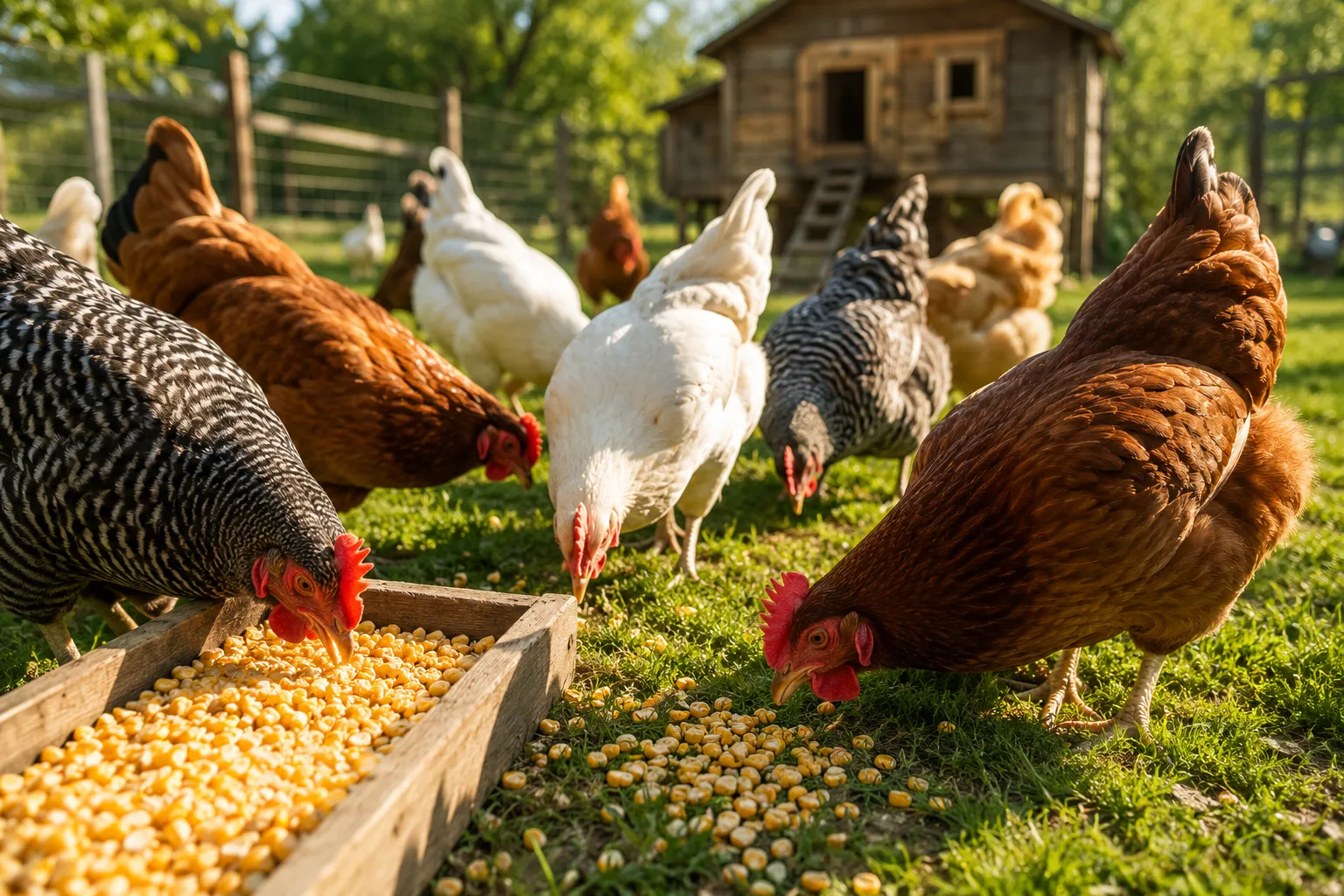
Corn is completely safe for chickens to eat and has been a traditional poultry feed ingredient for generations. Chickens naturally enjoy pecking at corn kernels, and their digestive systems handle corn without difficulty when fed appropriately.
The safety concerns around corn don’t stem from toxicity but from nutritional balance. Corn is high in carbohydrates and energy but relatively low in protein (about 8-9% protein content) compared to what laying hens need (16-18% protein). When corn replaces too much of a balanced feed, chickens may develop deficiencies in essential amino acids, vitamins, and minerals.
Key safety considerations:
- Always provide corn as part of a varied diet, not as the sole food source
- Ensure chickens have access to grit (small stones) to help grind corn in their gizzards
- Avoid moldy or spoiled corn, which can contain harmful aflatoxins
- Monitor your flock’s body condition to prevent obesity from overfeeding
Common mistake: New chicken keepers often assume that because chickens love corn, it must be good for them in unlimited quantities. Think of corn like candy for chickens, enjoyable and safe in moderation, but problematic as a dietary staple.
Can Chickens Eat Corn on the Cob or Just Kernels?

Chickens can eat both corn on the cob and loose kernels, and many chicken keepers find that offering whole cobs provides entertainment and enrichment for their flock. A corn cob becomes a natural toy that chickens will peck at for hours, reducing boredom and aggressive behaviors.
When offering corn on the cob, chickens will naturally strip the kernels themselves, which provides mental stimulation and mimics natural foraging behavior. This method works especially well for multiple chickens, as they can share the cob without competition.
Corn on the cob benefits:
- Keeps chickens occupied and reduces feather pecking
- Slows down consumption, preventing gorging
- Can be hung from a string for added entertainment
- Works well in both fresh and dried forms
Loose kernel advantages:
- Easier to measure and control portions
- Better for mixing with other feeds
- Suitable for smaller or weaker birds who struggle with cobs
- Less waste if chickens don’t finish it
Choose corn on the cob if you want to provide enrichment and have space to hang or secure it. Choose loose kernels if you need precise portion control or are feeding a small number of chickens.
How Much Corn Should I Feed My Chickens Per Day?
The recommended amount of corn for chickens is approximately 1-2 tablespoons per bird per day, which should represent no more than 10-15% of their total daily food intake. For a standard-sized laying hen consuming about 1/4 to 1/3 pound of feed daily, this translates to roughly 0.5-1 ounce of corn.
This guideline ensures chickens receive corn’s energy benefits without compromising their nutritional needs. During winter months, you might increase this slightly to help chickens maintain body temperature, but never let corn exceed 20% of their diet.
Portion guidelines by flock size:
- 3-5 chickens: 1/4 cup of corn total per day
- 6-10 chickens: 1/2 cup of corn total per day
- 11-20 chickens: 3/4 to 1 cup of corn total per day
Timing matters: Many experienced chicken keepers feed corn in the late afternoon or evening, especially in winter. Corn digestion generates heat, helping chickens stay warm overnight. Morning feeding of high-protein layer feed supports egg production, while evening corn provides warmth.
Warning signs you’re feeding too much corn:
- Chickens ignore their regular layer feed
- Decreased egg production or smaller eggs
- Visible weight gain or fatty deposits
- Pale egg yolks (corn alone doesn’t provide enough pigmentation)
Does Feeding Corn to Chickens Make Them Fat?
Yes, feeding excessive amounts of corn can make chickens fat because corn is calorie-dense and high in carbohydrates. A chicken that fills up on corn instead of balanced feed will gain weight while potentially becoming malnourished in other nutrients.
Obesity in chickens leads to serious health problems including fatty liver disease, reduced egg production, difficulty walking, and shortened lifespan. Overweight hens may also experience egg-laying complications such as prolapse or egg binding.
How corn contributes to weight gain:
- Contains approximately 365 calories per 100 grams
- High starch content converts readily to body fat
- Low protein means chickens eat more to feel satisfied
- Highly palatable, so chickens overeat when given free access
Preventing corn-related obesity:
- Stick to the 10-15% guideline for treats
- Offer corn only after chickens have eaten their layer feed
- Increase foraging opportunities and exercise space
- Monitor body condition monthly by feeling the keel bone
- Reduce corn immediately if you notice weight gain
Body condition check: A healthy chicken should have a prominent but not sharp keel bone (breastbone) with a thin layer of fat. If you can’t feel the keel bone easily, your chicken is overweight.

Cracked Corn vs Whole Corn for Chickens: Which Is Better?
Cracked corn is generally better for most backyard flocks because it’s easier to digest, reduces choking risk, and allows chickens to consume it more efficiently. Cracked corn has been mechanically broken into smaller pieces, increasing surface area for digestive enzymes and making nutrients more accessible.
Whole corn kernels are harder and require more work from a chicken’s gizzard to grind down. While adult chickens with access to proper grit can handle whole corn, cracked corn offers advantages for mixed-age flocks and smaller breeds.
Cracked corn advantages:
- Faster digestion and nutrient absorption
- Suitable for bantams and smaller breeds
- Less risk of crop impaction
- Mixes well with other feed ingredients
- Better for older chickens with reduced gizzard function
Whole corn advantages:
- Longer-lasting entertainment value
- Slightly better nutrient retention (less surface oxidation)
- Often cheaper per pound
- Provides more gizzard exercise
- Less dusty than cracked varieties
Choose cracked corn if you have bantams, young pullets, or elderly chickens, or if you want to mix corn into a custom feed blend. Choose whole corn if you have large, healthy adult birds and want to maximize cost-effectiveness and enrichment.
Middle ground: Some chicken keepers offer both types, whole corn on the cob for entertainment and cracked corn for daily supplementation.
Can Baby Chicks Eat Corn or Only Adult Chickens?
Baby chicks under 8 weeks old should not eat corn as a regular treat, and if offered at all, it must be very finely cracked or ground and given in minimal amounts. Young chicks have specific nutritional requirements for rapid growth, and corn can disrupt the carefully balanced starter feed they need.
Chick starter feed contains 18-20% protein, which supports proper bone development, feather growth, and organ formation. Corn’s low protein content (8-9%) means that even small amounts can dilute this critical nutrition during a vulnerable growth phase.
Age-based corn guidelines:
- 0-8 weeks (chicks): Avoid corn entirely or offer only as rare treats (a pinch of finely ground corn)
- 8-16 weeks (pullets): Introduce small amounts of cracked corn (1/2 tablespoon per bird weekly)
- 16+ weeks (adults): Can handle regular corn treats following adult guidelines
Why chicks shouldn’t eat corn:
- Displaces essential starter feed nutrients
- Can cause impacted crop in small digestive systems
- Slows growth rate and development
- May lead to leg problems from calcium/phosphorus imbalance
- Increases risk of coccidiosis by disrupting gut health
Safe first treats for chicks: If you want to offer treats to young chicks, better options include finely chopped hard-boiled egg, tiny pieces of leafy greens, or commercial chick treats specifically formulated for their age.
Will Feeding Too Much Corn Cause Problems in Chickens?
Yes, excessive corn consumption causes multiple health and productivity problems in chickens, ranging from nutritional deficiencies to behavioral issues. The most common problems include obesity, reduced egg production, poor egg quality, and increased aggression due to nutritional imbalances.
When corn comprises more than 20% of a chicken’s diet, the bird cannot consume enough balanced feed to meet its nutritional requirements. Laying hens particularly suffer because egg production demands high levels of protein, calcium, and specific vitamins that corn doesn’t provide.
Problems from too much corn:
- Protein deficiency: Leads to feather pecking, cannibalism, and poor feather quality
- Calcium deficiency: Results in soft-shelled or shell-less eggs
- Vitamin deficiencies: Causes pale egg yolks, reduced immunity, and poor growth
- Fatty liver disease: Can be fatal in severe cases
- Reduced laying: Hens may drop from 5-6 eggs weekly to 2-3 eggs
- Crop impaction: Especially with whole corn and insufficient water
Real-world example: A chicken keeper who feeds a 50/50 mix of corn and layer feed might see their hens’ egg production drop by 30-40% within weeks, with eggs becoming noticeably smaller and paler.
Reversing corn-related problems:
- Immediately reduce corn to recommended levels
- Ensure constant access to quality layer feed
- Provide calcium supplements (oyster shell)
- Add protein-rich treats like mealworms or scrambled eggs
- Monitor for improvement over 2-3 weeks
Edge case: Meat chickens (broilers) have different nutritional needs than layers and can tolerate slightly more corn, but even they require balanced feed for optimal growth.
What Are Better Alternatives to Corn for Chicken Feed?
Better alternatives to corn include high-protein treats like mealworms, black soldier fly larvae, scrambled eggs, and vegetables such as leafy greens, squash, and cucumbers. These options provide superior nutrition while still offering the treat experience chickens enjoy.
The best corn alternatives support egg production, provide essential nutrients, and promote natural foraging behaviors without the calorie density that leads to obesity.
Top corn alternatives ranked by nutritional value:
- Mealworms/Black Soldier Fly Larvae: 50%+ protein, supports feather growth and laying
- Scrambled or Hard-Boiled Eggs: Complete protein source, excellent for molting hens
- Leafy Greens (kale, spinach, lettuce): Vitamins A, K, and minerals with minimal calories
- Pumpkin and Squash: Vitamins, natural deworming properties, and fiber
- Berries (blueberries, strawberries): Antioxidants and vitamins without excess calories
- Sunflower Seeds: Healthy fats, protein, and vitamin E (feed in moderation)
- Cooked Oatmeal: Warming winter treat with better protein than corn
- Cucumbers and Zucchini: Hydrating, low-calorie, good for hot weather
Comparison: Corn vs. Better Alternatives
| Treat | Protein | Key Benefits | Best Season |
|---|---|---|---|
| Corn | 8-9% | Energy, warmth | Winter |
| Mealworms | 50%+ | Egg production, feathers | Year-round |
| Leafy Greens | 2-3% | Vitamins, minerals, hydration | Spring/Summer |
| Pumpkin | 1-2% | Digestive health, deworming | Fall |
| Berries | 1% | Antioxidants, immune support | Summer |
Cost consideration: While mealworms cost more than corn, you need far less to provide nutritional value. A small handful of mealworms (1-2 tablespoons) per chicken weekly costs about $0.50-1.00 but delivers significantly better nutrition than daily corn.
Can Chickens Eat Corn in the Winter for Warmth?
Yes, corn is an excellent winter treat for chickens because its high carbohydrate content generates metabolic heat during digestion, helping birds maintain body temperature during cold nights. Many experienced chicken keepers specifically increase corn portions during winter months as part of their cold-weather management strategy.
The digestion process, particularly of whole grains like corn, creates thermogenesis, heat production within the body. Feeding corn in the late afternoon or early evening gives chickens a “slow-burn” energy source that keeps them warm through the coldest overnight hours.
Winter corn feeding strategy:
- Feed corn 1-2 hours before roosting time
- Increase portion to 2-3 tablespoons per bird (still not exceeding 20% of diet)
- Combine with other whole grains like wheat or oats for sustained warmth
- Ensure chickens still consume adequate layer feed during daylight hours
Why corn works for winter warmth:
- Complex carbohydrates digest slowly, releasing heat over several hours
- Provides concentrated calories when chickens need extra energy
- Encourages chickens to roost together while digesting
- Helps maintain body condition during cold stress
Important winter feeding rule: Morning and midday meals should still focus on high-protein layer feed. Corn is a supplemental evening treat, not a replacement for balanced nutrition. Cold weather actually increases protein requirements because chickens need amino acids to maintain feather quality and body condition.
Don’t rely solely on corn: Proper winter care includes insulated (not heated) coops, draft-free roosting areas, unfrozen water access, and adequate body fat going into winter. Corn helps but isn’t a substitute for good housing.
Does Corn Provide Enough Nutrition for Laying Hens?
No, corn does not provide adequate nutrition for laying hens and should never be used as a primary feed source. Laying hens require 16-18% protein, high calcium levels (3-4%), and specific vitamins and minerals that corn cannot supply in sufficient quantities.
A laying hen produces approximately 250-300 eggs per year, each requiring significant nutritional resources. Corn’s 8-9% protein content is less than half what laying hens need, and it contains minimal calcium, the most critical nutrient for shell formation.
What laying hens need vs. what corn provides:
- Protein requirement: 16-18% | Corn provides: 8-9%
- Calcium requirement: 3-4% | Corn provides: 0.02%
- Lysine (essential amino acid): Critical for eggs | Corn: Deficient
- Methionine (essential amino acid): Critical for eggs | Corn: Deficient
Consequences of corn-based diets for layers:
- Egg production drops dramatically (potentially 50-70% reduction)
- Soft-shelled or shell-less eggs become common
- Egg size decreases significantly
- Yolk color fades to pale yellow
- Hens may develop osteoporosis from calcium depletion
- Increased risk of egg binding and prolapse
Real-world scenario: A hen fed primarily corn might lay only 2-3 eggs per week instead of 5-6, with thin shells that crack easily and pale yolks that consumers find unappealing.
Proper layer nutrition: Quality layer feed should form 80-90% of a laying hen’s diet, with treats (including corn) comprising only 10-20%. Free-choice calcium supplements (oyster shell or crushed eggshells) should always be available.
Can Chickens Eat Raw Corn or Does It Need to Be Cooked?
Chickens can safely eat raw corn and actually prefer it in its natural state; cooking is unnecessary and may reduce some nutritional value. Raw corn kernels, whether fresh from the cob or dried, are perfectly digestible for chickens and provide the same energy benefits without the extra preparation time.
The misconception that corn must be cooked likely stems from human food safety concerns, but chickens have different digestive systems designed to process raw grains and seeds. Their muscular gizzards, aided by grit, grind raw corn effectively.
Forms of raw corn chickens can eat:
- Fresh corn kernels straight from the cob
- Dried whole corn kernels
- Cracked corn (raw)
- Corn on the cob (fresh or dried)
- Field corn (the variety grown for animal feed)
Why raw corn is preferable:
- Retains full vitamin content (cooking destroys some B vitamins)
- Maintains natural texture that chickens enjoy
- Requires no preparation time or energy costs
- Provides better gizzard exercise than soft cooked corn
- Stores longer without spoilage risk
When cooking might be considered: The only scenario where cooking corn makes sense is if you’re mixing it into a warm mash for sick or elderly chickens who need easily digestible food. Even then, it’s optional rather than necessary.
Food safety note: Avoid feeding chickens corn that has been seasoned, buttered, or prepared with salt and other additives intended for human consumption. Plain raw or cooked corn only.
Why Do Some People Say Not to Feed Chickens Corn?
Some people advise against feeding chickens corn because of legitimate concerns about nutritional imbalance, obesity, and reduced egg production when corn is overfed. These warnings are valid when corn becomes a dietary staple rather than an occasional treat, but they’ve sometimes been misinterpreted as “never feed corn.”
The “no corn” advice typically comes from experienced chicken keepers who have witnessed problems in flocks where owners used cheap corn as a primary feed to save money, or from those who’ve seen backyard chickens become obese from well-meaning but excessive treating.
Valid reasons behind corn warnings:
- Cost-cutting temptation: Corn costs less than layer feed, tempting budget-conscious keepers to over-rely on it
- Treat addiction: Chickens prefer corn’s taste and may refuse balanced feed
- Seasonal misunderstanding: Some keepers feed heavy corn year-round instead of just winter
- Beginner mistakes: New chicken keepers often don’t understand the 10-15% treat rule
Myths vs. facts about corn:
Myth: “Corn is toxic to chickens”
Fact: Corn is safe; only moldy corn with aflatoxins is dangerous
Myth: “Corn causes crop binding”
Fact: Insufficient water or grit causes crop issues, not corn itself
Myth: “Chickens can’t digest corn”
Fact: Chickens digest corn easily with proper grit
Myth: “Corn has zero nutritional value”
Fact: Corn provides energy, some B vitamins, and beneficial carotenoids
The balanced perspective: Corn is neither a superfood nor a poison. It’s a useful supplemental feed that serves specific purposes (energy, warmth, enrichment) when used appropriately. The problems arise from overfeeding, not from corn itself.
How Often Can I Give My Chickens Corn as a Treat?
You can safely give chickens corn as a treat 3-5 times per week in appropriate portions, or even daily if you carefully measure amounts to stay within the 10-15% guideline. The frequency matters less than the total quantity, what’s important is that corn never displaces the balanced nutrition from layer feed.
Many successful chicken keepers establish a treat schedule that includes corn on some days and other treats on others, ensuring dietary variety while maintaining excitement around treat time.
Sample weekly treat schedule:
- Monday: Cracked corn (1-2 tablespoons per bird)
- Tuesday: Leafy greens or vegetable scraps
- Wednesday: Mealworms or protein treat
- Thursday: Corn on the cob (shared among flock)
- Friday: Fruit treats (berries, melon)
- Saturday: Scratch grains mix (includes corn)
- Sunday: No treats or minimal treats
Frequency guidelines by season:
- Winter: 5-7 times per week (evening feeding for warmth)
- Spring/Summer: 3-4 times per week (focus on protein for laying)
- Fall: 4-5 times per week (building body condition for winter)
- Molting season: 2-3 times per week (prioritize protein treats)
Daily corn feeding rules:
If you prefer daily corn treats, measure carefully:
- Use a measuring spoon, not handfuls
- Feed corn after chickens have eaten layer feed
- Reduce corn if you notice decreased feed consumption
- Monitor body condition and egg production monthly
Signs you’re treating too frequently:
- Chickens run to you expecting treats instead of foraging
- Layer feed consumption drops noticeably
- Egg production or size decreases
- Weight gain becomes visible
- Chickens become aggressive during treat time
Frequently Asked Questions
Can chickens eat popcorn?
Yes, chickens can eat plain, air-popped popcorn in small amounts as an occasional treat. Avoid popcorn with butter, salt, or seasonings, and never feed unpopped kernels, which can cause crop impaction.
Is cracked corn the same as chicken scratch?
No, chicken scratch is a mixed grain blend that typically includes cracked corn along with wheat, oats, barley, and sometimes seeds. Scratch provides more nutritional variety than cracked corn alone but should still be limited to 10-15% of the diet.
Can chickens eat corn husks and silk?
Yes, chickens can safely eat corn husks and silk. Many chickens enjoy pecking at the husks, which provide fiber and entertainment, though they offer minimal nutritional value.
Does corn make egg yolks darker?
Corn contains some carotenoids that can contribute to yolk color, but not as effectively as leafy greens, marigold petals, or commercial yolk-enhancing feeds. A corn-heavy diet actually produces paler yolks than a varied diet with greens.
Can chickens eat moldy or spoiled corn?
No, never feed moldy corn to chickens. Moldy corn can contain aflatoxins, dangerous compounds that cause liver damage, reduced immunity, and potentially death. Always inspect corn for mold, especially in humid storage conditions.
Is sweet corn different from field corn for chickens?
Sweet corn (the type humans eat) and field corn (animal feed variety) are both safe for chickens. Field corn is drier and stores longer, while sweet corn is more perishable but equally nutritious. Chickens enjoy both types.
Can corn replace layer feed if I add supplements?
No, even with supplements, corn cannot replicate the complex nutritional profile of formulated layer feed. Commercial feeds are scientifically balanced with specific amino acid ratios, vitamins, and minerals that are difficult to replicate through supplementation.
Will feeding corn at night really keep chickens warmer?
Yes, feeding corn in the evening does generate metabolic heat during digestion, providing measurable warmth during cold nights. However, the effect is modest, proper housing and body condition are more important for winter survival.
How long does cracked corn stay fresh?
Properly stored cracked corn (in airtight containers in cool, dry conditions) stays fresh for 3-6 months. Whole corn lasts longer (6-12 months) because the intact kernel protects nutrients from oxidation. Discard any corn that smells musty or shows signs of mold.
Can I grow corn specifically for my chickens?
Yes, growing field corn for chickens is cost-effective if you have space. Plant corn in spring, allow it to dry on the stalk in fall, then harvest and store in a dry location. Homegrown corn ensures quality and freshness.
Do different chicken breeds need different amounts of corn?
Larger breeds (Jersey Giants, Brahmas) can handle slightly more corn by volume, while bantams need smaller portions. However, the 10-15% guideline applies to all breeds as a percentage of total diet, automatically adjusting for size differences.
Can corn help chickens gain weight before winter?
Yes, strategically increasing corn in late fall (while maintaining balanced feed) can help chickens build fat reserves for winter. Aim for gradual weight gain over 4-6 weeks rather than rapid fattening, which stresses the liver.
Conclusion
Corn is a safe, enjoyable, and useful treat for chickens when fed in moderation as part of a balanced diet. The key to success lies in treating corn as a supplement rather than a staple, limiting it to 10-15% of daily intake ensures chickens receive the protein, calcium, and vitamins they need for health and egg production while still enjoying corn’s energy benefits and entertainment value.
Your action plan for feeding corn to chickens:
- Establish portion control: Measure 1-2 tablespoons of corn per bird daily, or offer corn on the cob as shared enrichment
- Prioritize layer feed: Ensure chickens consume their balanced feed before offering corn treats
- Choose the right type: Use cracked corn for easier digestion, especially for mixed-age flocks or smaller breeds
- Time it strategically: Feed corn in late afternoon or evening during winter months for warmth benefits
- Monitor your flock: Watch for signs of obesity, reduced egg production, or decreased feed consumption
- Vary treats: Rotate corn with high-protein alternatives like mealworms and nutrient-rich vegetables
- Avoid corn for chicks: Wait until birds are at least 8 weeks old before introducing corn treats
Remember that every flock is different. Start with conservative amounts, observe your chickens’ response, and adjust accordingly. When used thoughtfully, corn becomes a valuable tool in your chicken-keeping toolkit, providing warmth in winter, entertainment year-round, and a special treat that strengthens the bond between you and your flock.


