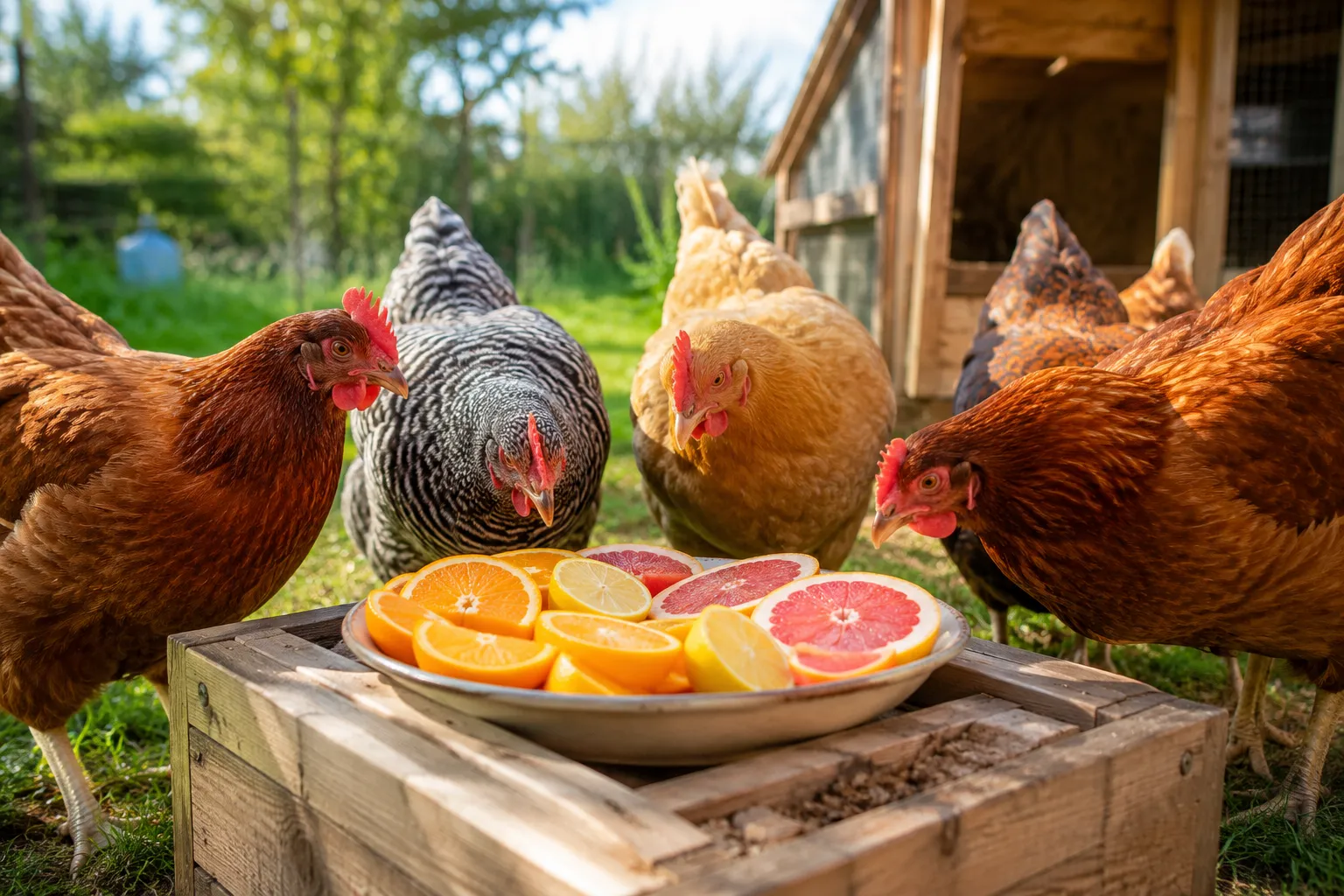
Citrus fruits are safe for chickens to eat in small amounts, but most chickens naturally avoid them due to their strong acidic taste. While oranges, lemons, limes, and grapefruits won’t poison your flock, they offer minimal nutritional benefit and should only be given occasionally as a treat, not as a dietary staple.
Key Takeaways
- Citrus is safe but not preferred: Chickens can eat citrus fruits without harm, though most will avoid them due to the sour taste
- Moderation is essential: Limit citrus to less than 5% of your flock’s diet to prevent digestive upset
- Orange peels are edible: Chickens can eat citrus peels, but they rarely choose to because of the bitter oils
- No impact on egg production: Small amounts of citrus won’t affect laying patterns or egg quality
- Baby chicks should avoid citrus: Wait until chicks are at least 3-4 months old before introducing any citrus
- Better fruit alternatives exist: Berries, melons, and apples are more nutritious and better accepted by chickens
- The citrus myth persists: Old claims about citrus blocking calcium absorption have been debunked by poultry nutritionists
- Watch for digestive issues: Too much citrus can cause loose droppings due to high acidity and water content
Is Citrus Safe for Chickens to Eat?
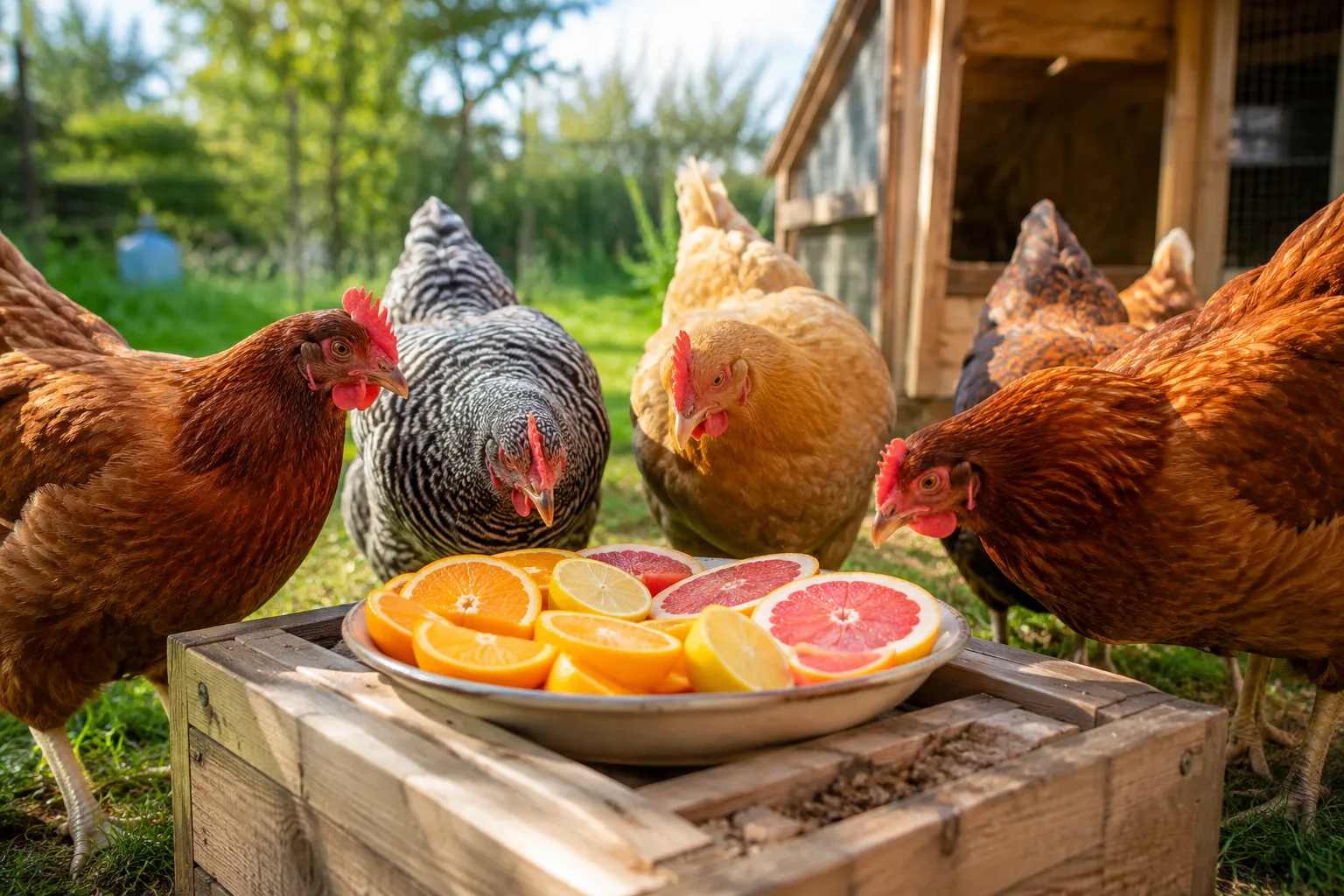
Yes, citrus fruits are safe for chickens to eat and are not toxic to poultry. Despite persistent myths in backyard chicken communities, oranges, lemons, limes, and grapefruits pose no serious health risk to your flock when offered in reasonable amounts.
The confusion about citrus safety stems from outdated information that circulated in the 1990s and early 2000s. Some chicken keepers believed that citrus fruits interfered with calcium absorption, potentially leading to thin eggshells or bone problems. This claim has no scientific backing and has been contradicted by poultry nutritionists.
Here’s what actually happens when chickens eat citrus:
- The high acidity can cause mild digestive upset if consumed in large quantities
- The strong flavor naturally limits how much chickens will eat
- Vitamin C content provides a minor nutritional boost (though chickens produce their own vitamin C)
- The water content helps with hydration, especially in hot weather
Choose citrus as an occasional treat if your chickens show interest, you have excess citrus from your garden, or you want to add variety to their diet. Skip citrus if your chickens consistently refuse it or if you notice loose droppings after feeding it.
The most common mistake is forcing citrus on chickens who clearly don’t want it. Unlike dogs or cats, chickens have excellent taste discrimination and will self-regulate their intake of foods they find unpleasant.
What Happens If Chickens Eat Oranges or Lemons?
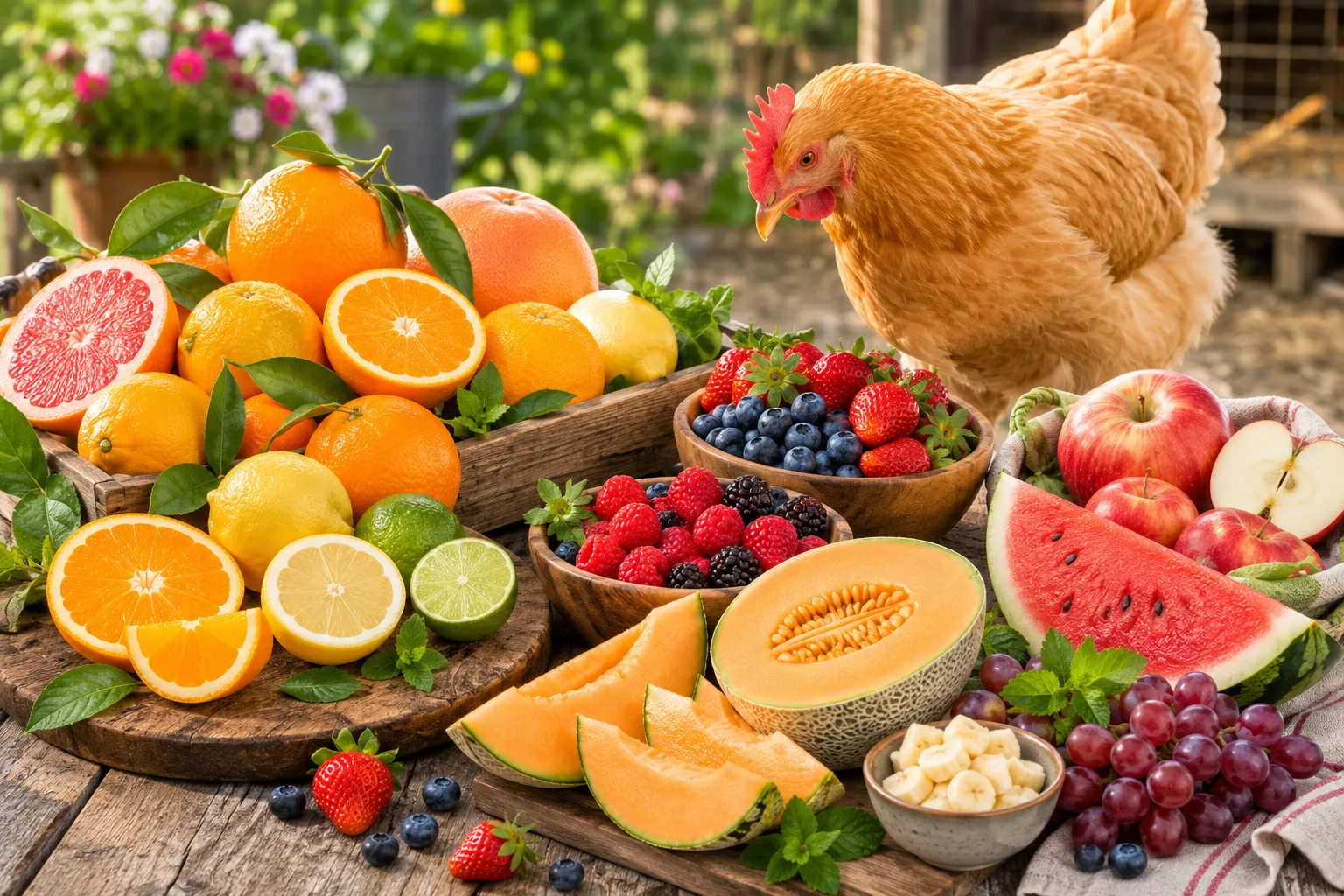
When chickens eat oranges or lemons, they typically experience no adverse effects beyond the immediate sensory experience of tasting something sour. Most chickens will take one or two pecks, shake their heads, and walk away.
If a chicken does consume a significant amount of orange or lemon:
Immediate effects:
- Increased water intake due to the fruit’s acidity
- Possible head-shaking or beak-wiping behavior
- Temporary loss of interest in the citrus
Within 12-24 hours:
- Droppings may become slightly looser or more watery
- No change in behavior or energy levels
- Normal appetite for regular feed continues
Long-term (with repeated feeding):
- No documented health problems in chickens fed moderate citrus amounts
- No impact on feather quality, egg production, or overall health
- Chickens may develop a slight tolerance or continued avoidance
The key difference between oranges and lemons is intensity. Lemons are significantly more acidic (pH 2-2.6) compared to oranges (pH 3.4-4.2), so chickens are even less likely to eat lemons voluntarily.
Common mistake: Assuming that because citrus is healthy for humans, chickens need it too. Chickens synthesize their own vitamin C, unlike humans, so they don’t require dietary sources.
Can Chickens Eat Orange Peels?
Chickens can physically eat orange peels, but they rarely choose to because the peels contain concentrated essential oils that taste bitter and unpleasant to poultry. The thick, tough texture also makes peels difficult for chickens to break down.
Orange peels are not toxic, but they offer little nutritional value to chickens:
- High in limonene: This compound gives citrus peels their distinctive smell and bitter taste
- Difficult to digest: The thick cellulose structure passes through chickens largely undigested
- Low palatability: Even chickens that tolerate citrus flesh typically ignore the peels
If you want to offer orange peels to your flock, here’s how to improve acceptance:
- Chop peels into small pieces (less than 1 inch) to make them easier to handle
- Mix with more appealing foods like scratch grains or mealworms
- Offer only fresh peels (moldy citrus can contain harmful mycotoxins)
- Remove uneaten peels within 2-3 hours to prevent spoilage
Better alternative: Compost citrus peels instead of feeding them to chickens. The peels break down slowly in compost but eventually add valuable nutrients to your garden soil, which can then grow chicken-friendly vegetables.
How Much Citrus Can I Give My Chickens?
Limit citrus to no more than 5% of your chickens’ total diet, which translates to roughly one or two small citrus segments per chicken per week. Treats of all kinds, including citrus, should never exceed 10% of daily food intake.
Here’s a practical feeding guide:
For a small backyard flock (4-6 chickens):
- Half an orange, divided among the flock, once or twice per week
- 2-3 lemon slices total (if they’ll eat them at all)
- One grapefruit, quartered, as an occasional treat
For a larger flock (12+ chickens):
- 1-2 whole oranges, cut into segments, once or twice per week
- A handful of citrus segments mixed with other fruit scraps
- Always provide citrus alongside their regular layer feed
Signs you’re feeding too much citrus:
- Watery or unusually loose droppings
- Chickens leaving their regular feed uneaten
- Decreased interest in other treats
- Wet bedding in the coop from excess liquid in droppings
The 90/10 rule applies to all chicken feeding: 90% of their diet should be complete layer feed formulated for their age and purpose, while 10% can be treats, scraps, and supplemental foods.
Decision rule: If your chickens ignore citrus after 15-20 minutes, remove it and don’t offer it again for at least a week. Forcing unwanted food creates waste and can attract pests.
Do Chickens Like the Taste of Citrus Fruits?
Most chickens do not like the taste of citrus fruits and will actively avoid them when other food options are available. The strong acidic flavor and sour taste are naturally off-putting to poultry, whose taste preferences lean toward grains, seeds, insects, and sweeter fruits.
Chicken taste preferences are influenced by several factors:
Biological factors:
- Chickens have only about 240-360 taste buds (humans have roughly 10,000)
- They can detect sweet, salty, sour, and umami flavors
- Sour tastes often signal unripe or spoiled food in nature, triggering avoidance
- Strong flavors are generally rejected in favor of milder options
Individual variation:
- Some chickens are more adventurous eaters than others
- Younger chickens may be slightly more willing to try new foods
- Chickens raised with diverse treats may tolerate citrus better
- Breed doesn’t significantly affect citrus preference
Environmental factors:
- Hungry chickens may eat citrus when nothing else is available
- Hot weather increases interest in juicy, water-rich foods
- Bored chickens may peck at citrus for entertainment rather than nutrition
In observational reports from backyard chicken keepers, approximately 70-80% of flocks show little to no interest in citrus fruits, while 15-20% will eat small amounts, and fewer than 5% actively seek out citrus.
What chickens prefer instead: Watermelon, berries, grapes, cucumber, tomatoes, and cooked squash consistently rank as favorite treats across most flocks.
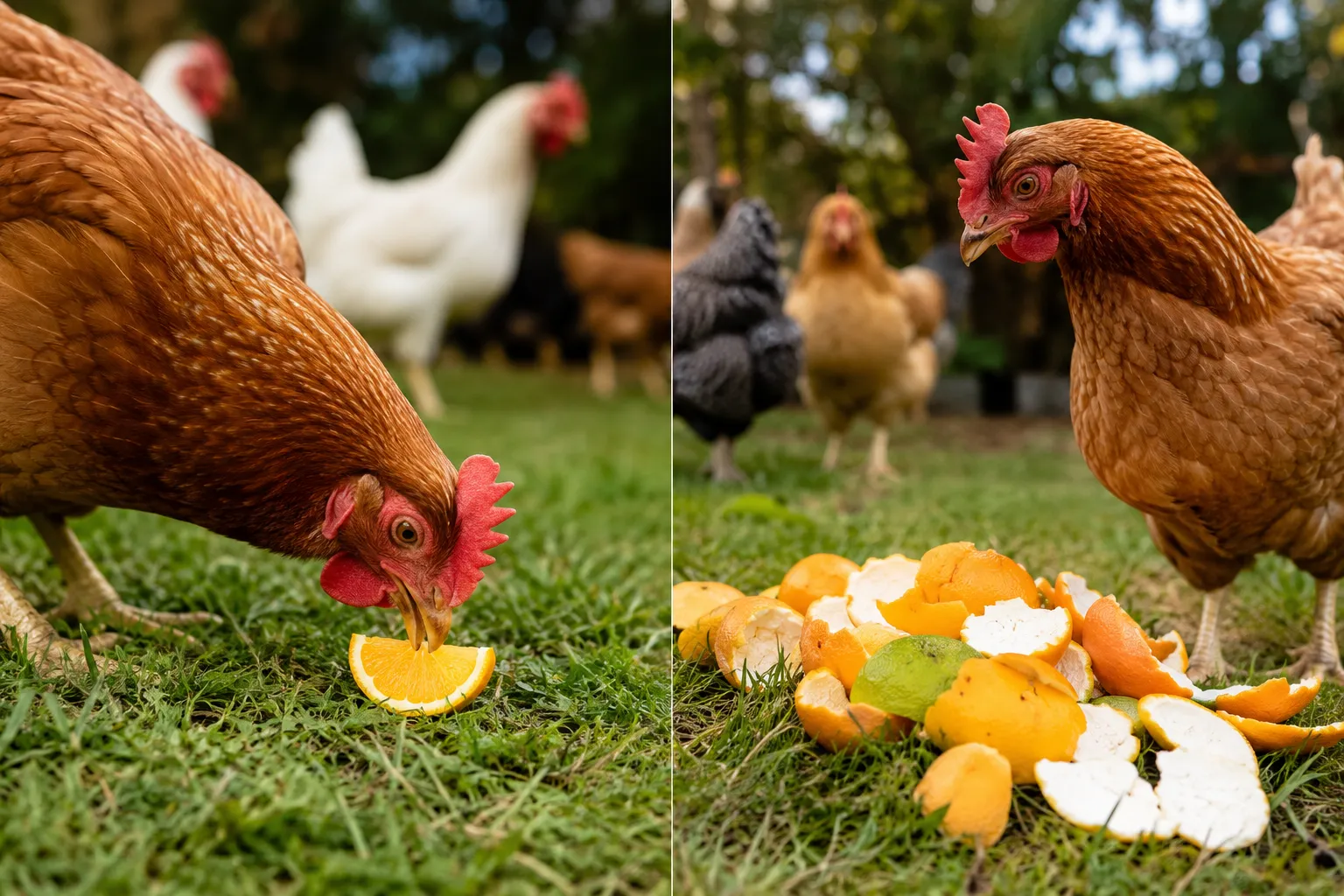
Citrus vs Other Fruits for Chickens: Which Is Better?
Other fruits are significantly better choices for chickens than citrus in terms of palatability, nutritional value, and acceptance. Berries, melons, and apples provide more beneficial nutrients while being far more appealing to your flock.
Here’s how citrus compares to top chicken-friendly fruits:
| Fruit | Palatability | Nutritional Value | Hydration | Ease of Feeding |
|---|---|---|---|---|
| Citrus | Low | Moderate (vitamin C) | High | Moderate |
| Watermelon | Very High | Moderate (vitamins A, B6) | Very High | Easy |
| Berries | Very High | High (antioxidants) | Moderate | Very Easy |
| Apples | High | Moderate (fiber) | Moderate | Easy (remove seeds) |
| Grapes | Very High | Moderate (vitamins K, C) | High | Very Easy |
| Pumpkin | High | High (vitamins A, E) | Moderate | Easy |
Why other fruits win:
- Better acceptance: Chickens eagerly eat watermelon, berries, and grapes without hesitation
- More practical nutrients: Beta-carotene from pumpkin and vitamin A from melons support egg yolk color
- Less waste: Popular fruits get eaten completely, while citrus often sits untouched
- Easier preparation: Most preferred fruits require minimal cutting or preparation
When citrus might be the better choice:
- You have excess citrus from your own trees that would otherwise go to waste
- You’re specifically trying to add variety for enrichment purposes
- Your particular flock happens to enjoy citrus (rare but possible)
- You want to test your chickens’ preferences for educational purposes
Best practice: Rotate through a variety of chicken-preferred fruits rather than pushing citrus. Offer seasonal fruits like berries in summer, apples in fall, and save citrus as an occasional experiment rather than a regular treat.
Can Baby Chicks Eat Citrus or Only Adult Chickens?
Baby chicks should not eat citrus until they reach at least 3-4 months of age. Young chicks have sensitive digestive systems that are still developing, and the high acidity of citrus fruits can cause digestive upset, diarrhea, and potential dehydration.
Age-based citrus guidelines:
0-8 weeks (brooder stage):
- No citrus whatsoever
- Feed only starter feed formulated for chicks
- Treats should be limited to tiny amounts of finely chopped hard-boiled egg or chick grit
- Focus on establishing healthy gut flora
8-16 weeks (grower stage):
- Still avoid citrus
- Begin introducing mild treats like small pieces of melon or berries
- Keep treats under 5% of total diet
- Ensure access to chick grit for digestion
16+ weeks (adult/layer stage):
- Citrus can be offered in small amounts if desired
- Digestive system is mature enough to handle acidic foods
- Continue limiting all treats to 10% of diet
Why chicks are more vulnerable:
- Their crop and gizzard are still developing proper pH balance
- Beneficial gut bacteria colonies are not yet established
- Smaller body size means acidic foods have proportionally greater impact
- Diarrhea in chicks can quickly lead to pasty butt and death
Common mistake: Thinking that because adult chickens can handle citrus, smaller amounts are safe for chicks. The issue isn’t quantity but digestive maturity.
Better treats for chicks: Finely chopped lettuce, tiny pieces of scrambled egg, oatmeal, or commercial chick treats specifically formulated for young birds.
Why Do Some People Say Citrus Is Bad for Chickens?
Some people claim citrus is bad for chickens based on an old myth that citrus interferes with calcium absorption and causes thin eggshells or feather picking. This belief has been passed down through backyard chicken communities but lacks scientific evidence.
Origins of the citrus myth:
The misconception likely started from a misunderstanding of vitamin C’s role in calcium metabolism. In some animals, excessive vitamin C can affect mineral absorption, but this doesn’t apply to chickens because:
- Chickens synthesize their own vitamin C internally
- They don’t rely on dietary vitamin C like humans do
- The amount of vitamin C in a few citrus segments is negligible compared to what chickens produce naturally
- No peer-reviewed poultry science studies support the calcium-blocking claim
Other reasons for the persistent myth:
- Anecdotal observations: Someone noticed thin shells after feeding citrus and assumed causation without considering other factors (age, heat stress, poor layer feed)
- Confusion with other animals: Citrus restrictions for some pets (like birds in the parrot family) got incorrectly applied to chickens
- Overgeneralization: Because chickens don’t like citrus, people assumed there must be a health reason
- Internet echo chamber: The myth gets repeated on forums and social media without fact-checking
What actually causes thin eggshells:
- Insufficient calcium in layer feed (should be 3.5-4.5%)
- Lack of oyster shell or calcium supplements
- Heat stress reducing feed intake
- Aging hens (shell quality naturally declines after 2-3 years)
- Certain diseases or parasites
- Inadequate vitamin D3
The real concern with citrus is simply that it’s not a preferred food for chickens and can cause loose droppings if overfed. It’s not dangerous, just not particularly useful.
Will Citrus Affect Egg Production in Chickens?
Citrus will not affect egg production in chickens when fed in small, occasional amounts. There is no evidence that citrus fruits reduce laying frequency, change egg size, alter shell quality, or impact yolk color in any meaningful way.
What the research shows:
- Poultry nutrition studies focus on feed efficiency and egg quality
- No commercial or academic research has identified citrus as a factor in egg production
- Vitamin C supplementation studies (using much higher doses than citrus provides) show no negative effects on laying
Factors that actually impact egg production:
Positive influences:
- Complete layer feed with 16-18% protein
- Consistent access to calcium (oyster shell)
- 14-16 hours of light per day
- Clean water available at all times
- Low-stress environment
Negative influences:
- Inadequate nutrition or protein deficiency
- Extreme temperatures (below 32°F or above 90°F)
- Molting season (natural pause in laying)
- Illness, parasites, or stress
- Aging (production declines after 2-3 years)
What might happen with excessive citrus:
- Chickens fill up on low-nutrition treats instead of layer feed
- Reduced protein intake leads to fewer or smaller eggs
- This is true of ANY treat fed in excess, not specific to citrus
Decision rule: If your hens are laying consistently and you offer citrus as less than 5% of their diet, egg production will remain unaffected. If you notice a drop in eggs, look first at feed quality, daylight hours, and health issues rather than blaming occasional citrus treats.
Can Chickens Eat Grapefruit and Limes?
Yes, chickens can eat both grapefruit and limes, though they are even less likely to eat these citrus varieties compared to oranges due to their more intense bitterness and acidity. Both fruits are safe but offer minimal appeal to most flocks.
Grapefruit for chickens:
- Contains higher levels of bitter compounds (naringin) than oranges
- The thick, tough membrane between segments is difficult for chickens to eat
- Pink and red varieties are slightly sweeter but still generally rejected
- Safe to offer in small amounts, but expect most of it to be ignored
Limes for chickens:
- More acidic than lemons (pH 2.0-2.4)
- Strong sour taste makes them the least appealing citrus option
- Smaller size means less flesh and more peel ratio
- Rarely eaten even by adventurous chickens
Preparation tips if you want to try:
- Remove all seeds (citrus seeds aren’t toxic but can be a choking hazard)
- Cut into small, manageable pieces
- Remove the thick outer peel for grapefruit
- Mix with more palatable fruits to increase acceptance
- Offer only fresh fruit (never moldy or fermented citrus)
Other citrus varieties:
- Tangerines/mandarins: Slightly more accepted due to sweeter taste
- Clementines: Similar to tangerines, marginally better than oranges
- Kumquats: Too small and too sour for most chickens
- Meyer lemons: Less acidic than regular lemons but still generally avoided
Reality check: If regular oranges don’t interest your flock, grapefruit and limes almost certainly won’t either. Save these fruits for your own consumption or composting rather than offering them to chickens who won’t appreciate them.
What Fruits Should Chickens Never Eat?
Chickens should never eat avocado (especially the skin and pit), unripe tomatoes, or raw dried beans, as these contain compounds that are toxic to poultry. Most common fruits are safe, but a few pose serious health risks.
Toxic fruits and parts to avoid:
Avocado ⚠️
- Contains persin, which is toxic to chickens
- All parts (flesh, skin, pit, leaves) are dangerous
- Can cause heart damage, respiratory distress, and death
- Even small amounts can be harmful
Unripe tomatoes and tomato plants ⚠️
- Green tomatoes contain solanine (toxic alkaloid)
- Tomato leaves, stems, and vines are poisonous
- Ripe red tomatoes are safe and enjoyed by chickens
- Remove any green parts before feeding
Apple seeds ⚠️
- Contain cyanogenic compounds that release cyanide
- A few seeds won’t harm chickens, but avoid feeding cores
- Apple flesh is excellent for chickens
- Remove seeds as a precaution
Stone fruit pits ⚠️
- Peach, plum, cherry, and apricot pits contain cyanide compounds
- The flesh is safe and nutritious
- Always remove pits before offering these fruits
Moldy or rotten fruit ⚠️
- Can contain mycotoxins that damage liver and kidneys
- Causes digestive upset and potential poisoning
- Remove uneaten fruit within 2-3 hours to prevent mold growth
Safe fruits chickens love:
- Watermelon, cantaloupe, honeydew
- Strawberries, blueberries, raspberries, blackberries
- Grapes (cut in half for smaller chickens)
- Ripe tomatoes
- Apples (without seeds)
- Pears
- Peaches, plums, cherries (without pits)
- Bananas
- Pumpkin and squash
Moderation matters: Even safe fruits should be limited to 10% of total diet to ensure chickens consume enough complete layer feed for proper nutrition.
My Chicken Ate a Lot of Orange: What Should I Do?
If your chicken ate a large amount of orange, monitor for loose droppings and ensure access to fresh water, but don’t panic. Oranges are not toxic, and the most likely outcome is temporary digestive upset that resolves within 24 hours.
Immediate steps (first 2-4 hours):
- Provide unlimited fresh water – The acidity and high water content of oranges may increase thirst
- Observe droppings – Check for watery or unusually loose stools
- Watch behavior – Look for signs of distress, lethargy, or loss of appetite
- Offer regular feed – Ensure the chicken has access to normal layer feed to balance the treat
What to expect in the next 24 hours:
Normal reactions:
- Slightly looser droppings than usual
- Increased water consumption
- Normal energy levels and behavior
- Regular appetite for layer feed
Signs that warrant concern (rare):
- Severe diarrhea lasting more than 24 hours
- Lethargy or inability to stand
- Refusal to eat or drink
- Labored breathing or distress
When to call a vet:
- Symptoms persist beyond 48 hours
- The chicken shows signs of dehydration (sunken eyes, pale comb)
- Multiple chickens are affected (suggests contamination rather than citrus)
- Any signs of choking or crop impaction
Prevention for next time:
- Limit citrus to 1-2 small segments per chicken
- Remove uneaten citrus after 15-20 minutes
- Don’t leave whole oranges where chickens can gorge unsupervised
- Mix citrus with other treats to limit consumption
Reality check: Chickens have survived eating far worse things than excess oranges. The self-limiting nature of citrus (most chickens stop eating it due to taste) means true overconsumption is rare. Your chicken will almost certainly be fine.
Do Backyard Chickens Need Citrus in Their Diet?
No, backyard chickens do not need citrus in their diet at all. Chickens synthesize their own vitamin C internally and receive all necessary nutrients from a complete layer feed, making citrus nutritionally unnecessary.
Why citrus isn’t required:
Vitamin C production:
- Chickens produce vitamin C in their liver and kidneys
- Unlike humans, guinea pigs, and primates, chickens don’t require dietary vitamin C
- Stress or illness may increase vitamin C needs, but chickens upregulate their own production
- Supplemental vitamin C from citrus provides no proven benefit
Complete nutrition from layer feed:
- Commercial layer feed contains all essential vitamins, minerals, and amino acids
- Formulated specifically for egg production and chicken health
- Provides optimal calcium-to-phosphorus ratio for strong eggshells
- Includes vitamin D3, which chickens cannot synthesize in sufficient amounts
What chickens actually need:
Essential dietary components:
- Complete layer feed (16-18% protein) as 90% of diet
- Calcium supplement (oyster shell or crushed eggshells) free-choice
- Fresh, clean water available at all times
- Grit (insoluble granite grit) for chickens without free-range access
- Occasional treats (10% or less) for enrichment and variety
Optional but beneficial:
- Protein-rich treats like mealworms or scrambled eggs
- Leafy greens for additional nutrients and entertainment
- Scratch grains in cold weather for extra calories
- Seasonal produce for variety and foraging behavior
The role of treats:
Treats like citrus serve primarily as enrichment rather than nutrition. They provide mental stimulation, encourage natural foraging behavior, and strengthen the bond between chickens and their keepers. But no single treat, including citrus, is necessary for chicken health.
Best practice: Focus on high-quality layer feed as the foundation of your flock’s diet. Use treats strategically for training, boredom relief, or bonding, but don’t stress about including any specific fruit or vegetable.
Frequently Asked Questions
Can chickens eat orange juice?
Chickens can drink small amounts of orange juice, but it’s not recommended. The concentrated acidity can cause digestive upset more quickly than whole fruit, and the sugar content offers no nutritional benefit. Stick to fresh water as the primary beverage.
Will citrus keep chickens from getting sick?
No, citrus does not prevent illness in chickens. While vitamin C supports immune function in humans, chickens produce their own vitamin C and don’t benefit from dietary sources. Proper nutrition, clean housing, and biosecurity prevent illness, not citrus.
Can I compost citrus peels in my chicken coop?
It’s better to compost citrus peels separately from your coop. While not harmful to chickens, citrus peels break down slowly and can attract fruit flies. They also may inhibit some beneficial composting bacteria due to their acidity and essential oils.
Do citrus fruits help with chicken parasites?
No scientific evidence supports citrus as a parasite treatment or preventive. Some people believe citrus creates an inhospitable gut environment for worms, but this is not proven. Use veterinary-approved dewormers for parasite control.
Can I feed my chickens citrus every day?
You can, but you shouldn’t. Daily citrus feeding may lead to digestive issues and could displace more nutritious foods from their diet. Limit citrus to once or twice per week at most, and only if your chickens actually eat it.
Will citrus change the taste of eggs?
No, feeding small amounts of citrus will not change egg taste. The flavor of eggs is primarily influenced by the hen’s overall diet, with strong-flavored foods like fish or garlic being more likely to affect taste than citrus.
Can chickens eat dried citrus or citrus zest?
Chickens can eat dried citrus, but they’re even less likely to than fresh citrus. Drying concentrates the bitter oils and sour flavor. Citrus zest is safe but contains the highest concentration of essential oils, making it the least palatable part.
Is citrus safe for roosters?
Yes, citrus is equally safe for roosters as it is for hens. The same feeding guidelines apply: small amounts occasionally, with most roosters showing little interest due to the sour taste.
Can I use citrus to train my chickens?
Citrus is a poor choice for training treats because most chickens don’t find it rewarding. Use high-value treats like mealworms, scratch grains, or berries for training purposes instead.
Will citrus help chickens in hot weather?
The high water content in citrus can provide minor hydration benefits in hot weather, but watermelon, cucumber, or frozen berries are far more effective and better accepted. Always ensure unlimited fresh water is the primary hydration source.
Can chickens eat citrus if they have diarrhea?
No, avoid giving citrus to chickens with existing digestive issues. The acidity can worsen diarrhea. Focus on bland foods and ensure the chicken is eating regular feed while you identify and treat the underlying cause.
Do heritage breed chickens like citrus more than modern breeds?
There’s no evidence that heritage breeds have different citrus preferences than modern breeds. Individual personality and early food experiences have more influence on treat preferences than breed type.
Conclusion
Citrus fruits are safe for chickens but unnecessary and generally unappreciated by most flocks. While oranges, lemons, limes, and grapefruits won’t harm your chickens when offered in moderation, they provide minimal nutritional value and are typically rejected due to their sour, acidic taste. The persistent myth that citrus interferes with calcium absorption has been debunked, but the reality remains that citrus simply isn’t a practical or beneficial treat for poultry.
Your action plan for feeding citrus to chickens:
- Test your flock’s interest by offering a few small citrus segments and observing their reaction
- Limit citrus to less than 5% of diet if your chickens do eat it, offering it no more than once or twice per week
- Remove uneaten citrus within 2-3 hours to prevent spoilage and pest attraction
- Focus on preferred fruits like watermelon, berries, and grapes that provide better nutrition and acceptance
- Prioritize complete layer feed as 90% of your flock’s diet for optimal health and egg production
- Skip citrus entirely if your chickens show no interest or if you notice digestive upset
The bottom line: citrus won’t hurt your chickens, but it won’t help them much either. Save your citrus for your own consumption or compost pile, and treat your flock to foods they actually enjoy and benefit from. A well-fed chicken with access to quality layer feed, fresh water, and occasional high-value treats will thrive without ever tasting an orange.