
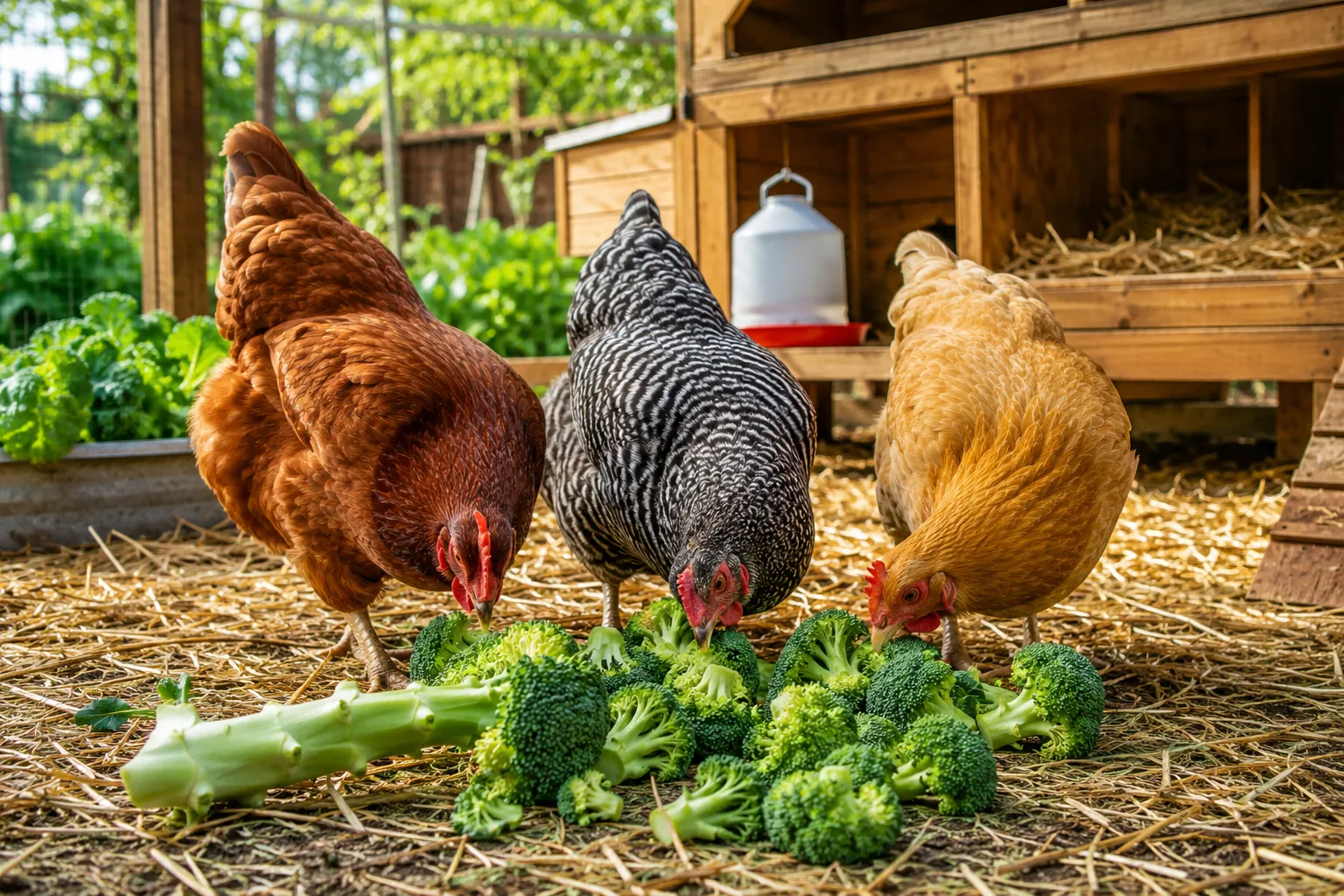
Quick Answer: Yes, chickens can safely eat broccoli, including the florets, stems, and leaves. Broccoli is a nutritious treat packed with vitamins A, C, and K, plus calcium and fiber that support egg production and overall health. Feed it raw or cooked in moderation as part of a balanced diet, ensuring treats make up no more than 10% of their daily food intake.
Key Takeaways
- Chickens can safely eat all parts of broccoli: florets, stems, and leaves
- Broccoli provides vitamins A, C, K, calcium, and antioxidants that support immune health and egg quality
- Feed broccoli as a treat, limiting all treats to 10% of daily diet to maintain proper nutrition
- Both raw and cooked broccoli are safe; raw retains more nutrients but cooked is easier to digest
- Baby chicks can eat small amounts of finely chopped broccoli starting around 3-4 weeks old
- Never feed moldy or spoiled broccoli, as it can cause digestive issues and illness
- Broccoli won’t negatively affect egg taste when fed in appropriate amounts
- Excessive broccoli (over 10% of diet) may cause digestive upset or interfere with thyroid function
- Hang whole broccoli heads in the coop to provide entertainment and natural foraging behavior
- Broccoli and kale are both excellent choices; rotate various greens for nutritional variety
Is Broccoli Safe for Chickens to Eat?
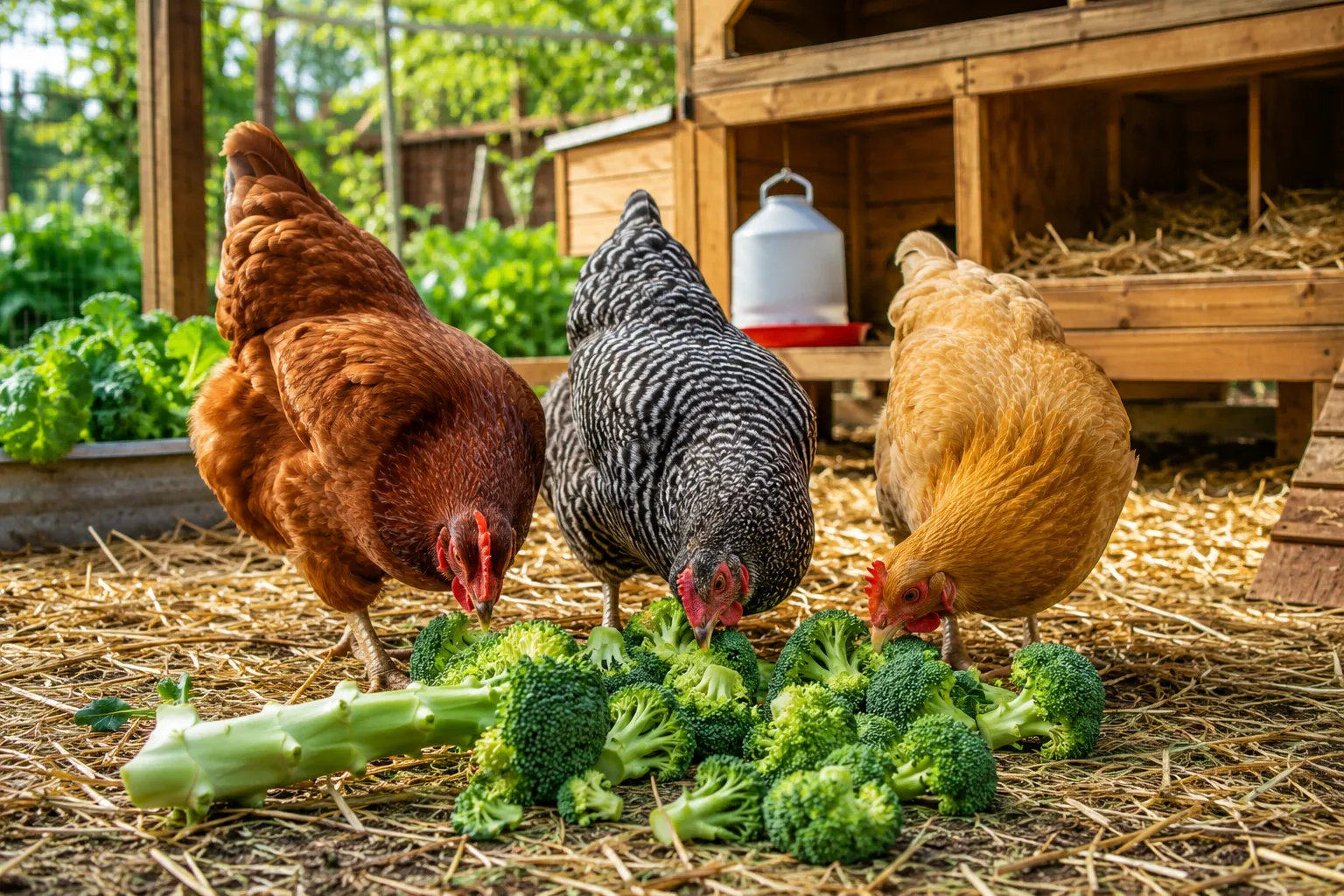
Broccoli is completely safe for chickens and offers significant nutritional benefits. This cruciferous vegetable contains no toxic compounds that harm poultry, making it an excellent addition to their diet when fed appropriately.
The nutritional profile of broccoli makes it particularly valuable for laying hens:
- Vitamin A: Supports eye health, immune function, and reproductive health
- Vitamin C: Boosts immune response, especially during stress or hot weather
- Vitamin K: Essential for blood clotting and bone health
- Calcium: Supports strong eggshells and skeletal structure
- Fiber: Aids digestion and promotes healthy gut bacteria
- Antioxidants: Protect cells from damage and support overall wellness
Common concern addressed: Some chicken keepers worry about goitrogens in broccoli, compounds that can interfere with thyroid function. While broccoli does contain goitrogens, they only become problematic when chickens consume excessive amounts over extended periods. At recommended treat levels (10% of diet or less), goitrogens pose no risk to healthy chickens.
Choose broccoli if you want to provide a nutrient-dense treat that supports egg production and keeps your flock engaged with natural foraging behavior.
Can Chickens Eat Broccoli Stems and Leaves?
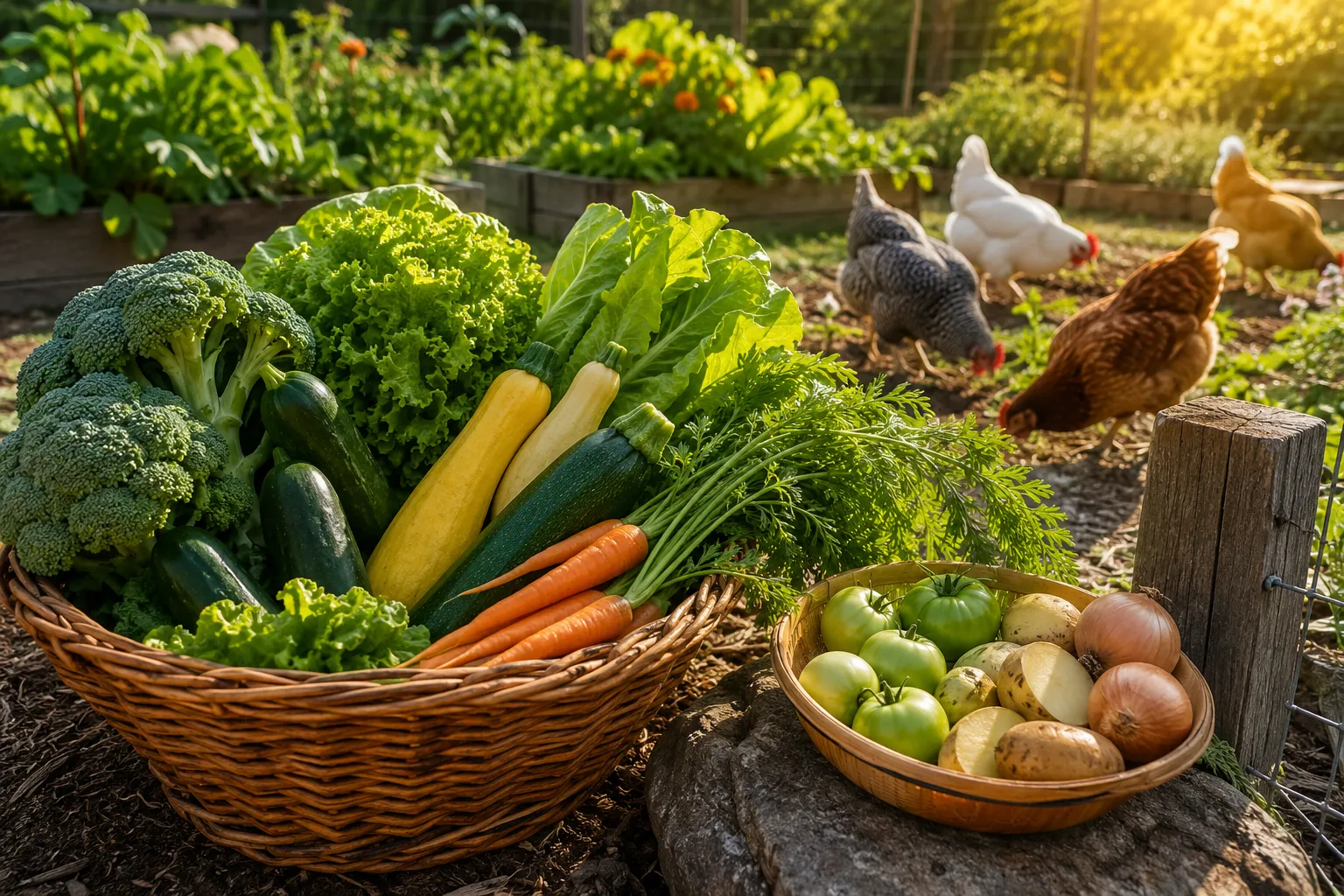
Yes, chickens can eat every part of the broccoli plant, including the thick stems and leafy greens. In fact, the stems and leaves contain similar nutrients to the florets, and many chickens enjoy the variety of textures.
Stems: The thick, fibrous stalks are safe and nutritious. Chickens may need stems chopped into smaller pieces to make them easier to peck and digest. Older hens with strong beaks can often tackle whole stems, while younger birds benefit from 1-2 inch chunks.
Leaves: Broccoli leaves are tender, nutrient-rich, and often a favorite among chickens. They contain high levels of vitamins A and K, plus beneficial plant compounds. Feed leaves whole or torn into pieces.
Preparation tips by part:
- Florets: Can be fed whole or broken apart; chickens will peck them to pieces naturally
- Stems: Chop into 1-2 inch pieces for easier consumption, or hang whole for entertainment
- Leaves: Feed fresh and whole; chickens will tear them apart themselves
Common mistake: Discarding stems and leaves while only feeding florets wastes nutritious food. The entire plant is edible and beneficial, reducing food waste while maximizing nutrition.
How Much Broccoli Can I Give My Chickens?
Broccoli should make up no more than 10% of your chickens’ total daily diet, with their primary nutrition coming from quality layer feed. For a standard backyard flock of 6 chickens, this translates to roughly one medium broccoli head 2-3 times per week.
Portion guidelines:
- Per chicken: Approximately 1-2 ounces of broccoli per bird, 2-3 times weekly
- Small flock (3-6 chickens): One medium broccoli head every 2-3 days
- Large flock (12+ chickens): Two to three broccoli heads per week
The 90/10 rule is critical for chicken health. Layer feed is formulated to provide complete nutrition with the right balance of protein (16-18%), calcium, and essential nutrients. Treats like broccoli, while healthy, lack the complete nutritional profile chickens need for optimal egg production and health.
Signs you’re feeding too much broccoli:
- Decreased egg production
- Soft or thin eggshells
- Loose droppings or diarrhea
- Chickens ignoring their layer feed
- Weight loss or poor feather condition
Decision rule: If your chickens stop eating their layer feed or show any of the above symptoms, reduce treat portions immediately and ensure they have constant access to quality feed.
Raw Broccoli vs Cooked Broccoli for Chickens
Both raw and cooked broccoli are safe for chickens, but each preparation method offers different advantages. Raw broccoli retains maximum nutrients, while cooked broccoli is softer and easier to digest.
Raw broccoli benefits:
- Preserves heat-sensitive vitamins like vitamin C
- Provides natural crunch that chickens enjoy
- Offers entertainment as chickens work to peck it apart
- Requires no preparation time
- Can be hung whole in the coop for foraging enrichment
Cooked broccoli benefits:
- Softer texture easier for young or elderly chickens to eat
- Slightly easier to digest
- Reduces goitrogen content (though not necessary at treat levels)
- Good way to use leftover cooked vegetables
Preparation methods:
- Raw: Rinse thoroughly, feed whole or chopped
- Steamed: Steam for 3-5 minutes until slightly tender but still firm
- Boiled: Boil for 2-3 minutes; avoid overcooking which destroys nutrients
- Never fried or seasoned: Avoid butter, oils, salt, or seasonings
Best practice: Rotate between raw and cooked to provide variety. Most chicken keepers prefer raw broccoli for its convenience and higher nutrient retention. Reserve cooked broccoli for using up kitchen scraps or helping chickens with digestive sensitivities.
Common mistake: Feeding broccoli cooked with butter, garlic, or salt. Chickens should only receive plain, unseasoned vegetables. Excess salt and fats can harm their health.
Can Baby Chicks Eat Broccoli?
Baby chicks can eat small amounts of finely chopped broccoli starting around 3-4 weeks of age, but it should be introduced gradually and in very limited quantities. Chicks under 3 weeks should focus exclusively on starter feed to ensure proper growth and development.
Age-based guidelines:
- 0-3 weeks: Starter feed only (18-20% protein); no treats
- 3-8 weeks: Introduce finely minced broccoli in tiny amounts (less than 5% of diet)
- 8+ weeks: Gradually increase to standard treat levels (up to 10% of diet)
Preparation for chicks:
- Chop broccoli into very small pieces (smaller than a pea)
- Start with just a pinch per chick
- Offer once or twice weekly maximum
- Always provide chick grit if feeding anything other than starter feed
Why the caution? Chicks have delicate digestive systems still developing beneficial gut bacteria. Their nutritional needs are also more precise than adult chickens, requiring higher protein levels for rapid growth. Too many treats can displace essential nutrients from starter feed, leading to developmental problems.
Critical rule: If you feed chicks anything other than starter feed (including broccoli), you must provide chick-sized grit. Grit helps them grind food in their gizzard since they lack teeth. Without it, they cannot properly digest fibrous foods like broccoli.
Choose to wait until chicks are fully feathered (around 8 weeks) if you want to avoid any risk. The nutritional benefit of broccoli for young chicks is minimal compared to quality starter feed.

What Vegetables Are Toxic to Chickens?
While chickens can safely eat many vegetables including broccoli, several common garden plants and kitchen scraps are toxic and should never be fed to your flock. Understanding which foods to avoid is just as important as knowing which treats are safe.
Toxic vegetables and plants:
- Green potatoes and potato skins: Contain solanine, which causes neurological problems
- Raw or dried beans: Contain phytohaemagglutinin (lectin) that can be fatal
- Onions and garlic: Cause anemia by damaging red blood cells (small amounts occasionally are debated, but best avoided)
- Avocado: Skin and pit contain persin, toxic to chickens
- Tomato and pepper leaves/stems: Contain solanine (ripe fruit is safe)
- Rhubarb leaves: High in oxalic acid, which is toxic
- Raw green tomatoes: Contain tomatine, a toxic compound
Moderately problematic foods:
- Citrus fruits: May reduce calcium absorption; feed sparingly
- Asparagus: Can cause off-flavored eggs if fed in large amounts
- Dried or undercooked beans: Must be fully cooked to destroy toxins
Safe vegetable alternatives to broccoli:
- Leafy greens (lettuce, kale, spinach, cabbage)
- Squash and pumpkin
- Cucumbers
- Carrots
- Peas
- Sweet peppers (not leaves)
- Zucchini
Emergency signs of poisoning:
- Lethargy or weakness
- Difficulty breathing
- Paralysis or inability to stand
- Severe diarrhea
- Sudden death
If you suspect poisoning, remove the food source immediately and contact a veterinarian experienced with poultry. Prevention is key: when in doubt about a food’s safety, don’t feed it.
Can Chickens Eat Broccoli Every Day?
Chickens should not eat broccoli every day. While broccoli is nutritious and safe, feeding it daily can lead to nutritional imbalances, digestive issues, and potential thyroid problems due to goitrogen accumulation.
Recommended feeding frequency:
- Ideal: 2-3 times per week
- Maximum: Every other day in small portions
- Rotate with other treats: Alternate broccoli with other vegetables, fruits, and protein-rich treats
Why daily feeding is problematic:
- Nutritional imbalance: Displaces complete nutrition from layer feed
- Goitrogen buildup: Daily consumption of cruciferous vegetables may interfere with iodine absorption over time
- Digestive upset: Too much fiber can cause loose droppings
- Reduced diet variety: Chickens benefit from diverse nutrients from different sources
Better approach: Create a treat rotation schedule. For example:
- Monday: Broccoli
- Tuesday: Layer feed only
- Wednesday: Mealworms or other protein treat
- Thursday: Layer feed only
- Friday: Leafy greens (kale, lettuce)
- Saturday: Fruits (berries, melon)
- Sunday: Broccoli
This rotation ensures chickens receive varied nutrients while maintaining their primary nutrition from layer feed.
Exception: During extreme heat, you can offer small amounts of cool, water-rich vegetables (including broccoli) daily to help with hydration, but keep portions minimal and prioritize their regular feed.
Do Chickens Like Broccoli or Is It Just Healthy?
Most chickens genuinely enjoy broccoli, though individual preferences vary by bird and flock. Broccoli offers both nutritional value and entertainment, making it a favorite treat among many backyard chicken keepers.
Why chickens are attracted to broccoli:
- Texture variety: The combination of crunchy florets, fibrous stems, and tender leaves appeals to their natural foraging instincts
- Bright color: Chickens are attracted to green foods, which signal fresh vegetation in nature
- Interactive feeding: Whole broccoli heads hung in the coop provide entertainment as chickens jump and peck
- Natural behavior: Tearing apart broccoli mimics foraging for plants in the wild
Flock preferences vary:
Some chickens devour broccoli immediately, while others may be hesitant at first, especially if they’ve never encountered it. Younger chickens raised with varied treats typically accept new foods more readily than older birds with limited dietary experience.
Tips to increase acceptance:
- Introduce broccoli when chickens are hungry (morning feeding time)
- Chop it into smaller pieces initially
- Mix with familiar favorite treats
- Hang whole heads at chicken eye-level for curiosity
- Be patient; it may take several offerings for cautious birds to try it
Signs your chickens love broccoli:
- They rush toward it when you bring it out
- The broccoli disappears within minutes
- Chickens compete for the best pieces
- They vocalize excitedly when they see you carrying it
If your chickens refuse broccoli: Don’t force it. Offer alternative healthy treats like leafy greens, squash, or berries. Every flock has different preferences, and that’s perfectly normal.
Broccoli vs Kale for Chickens: Which Is Better?
Both broccoli and kale are excellent, nutrient-dense treats for chickens, and neither is definitively “better.” The ideal approach is to rotate both vegetables to provide varied nutrients and prevent dietary monotony.
Nutritional comparison:
| Nutrient | Broccoli | Kale | Winner |
|---|---|---|---|
| Vitamin A | High | Very High | Kale |
| Vitamin C | Very High | High | Broccoli |
| Vitamin K | High | Extremely High | Kale |
| Calcium | Moderate | High | Kale |
| Fiber | High | High | Tie |
| Protein | Moderate | Moderate | Tie |
Broccoli advantages:
- Higher vitamin C content supports immune function
- More textural variety (florets, stems, leaves)
- Can be hung whole for entertainment
- Slightly lower goitrogen content than kale
Kale advantages:
- Higher calcium supports stronger eggshells
- Extremely high vitamin K for blood and bone health
- More vitamin A for eye and reproductive health
- Hardier leaves that chickens can tear apart easily
Choose broccoli if:
- You want to provide foraging enrichment (whole heads)
- Your flock needs immune support during stress or illness
- You have broccoli readily available from your garden or store
Choose kale if:
- Your hens are producing eggs with thin shells (need more calcium)
- You want maximum vitamin A for breeding season
- Your chickens prefer tender, leafy greens
Best practice: Alternate between broccoli, kale, and other greens (cabbage, lettuce, spinach) throughout the week. This rotation ensures chickens receive a full spectrum of nutrients while keeping their diet interesting.
Common mistake: Feeding only one type of green vegetable exclusively. Variety is key to optimal nutrition and preventing boredom.
Can Chickens Eat Moldy or Spoiled Broccoli?
No, chickens should never eat moldy or spoiled broccoli. While chickens have more robust digestive systems than humans, mold produces mycotoxins that can cause serious illness, digestive upset, and even death in poultry.
Dangers of moldy broccoli:
- Mycotoxins: Toxic compounds produced by mold that damage the liver and kidneys
- Aspergillosis: A respiratory disease caused by inhaling mold spores
- Digestive problems: Vomiting, diarrhea, and crop impaction
- Reduced egg production: Toxins interfere with reproductive function
- Weakened immunity: Makes chickens susceptible to other diseases
What counts as spoiled:
- Visible mold (white, black, or fuzzy growth)
- Slimy texture
- Strong, unpleasant odor
- Yellowing or browning beyond normal aging
- Soft, mushy spots
Safe vs. unsafe broccoli:
✅ Safe to feed:
- Slightly wilted but still firm
- Minor browning on cut edges (oxidation)
- Fresh smell
- Crisp texture
❌ Never feed:
- Any visible mold
- Slimy or mushy texture
- Foul smell
- Stored improperly for extended periods
Storage tips to prevent spoilage:
- Refrigerate fresh broccoli in a perforated bag
- Use within 5-7 days of purchase
- Check regularly for signs of spoilage
- Compost questionable broccoli rather than feeding it
What to do if chickens eat moldy food: Monitor for signs of illness (lethargy, reduced appetite, abnormal droppings). Remove all contaminated food immediately. Contact a veterinarian if symptoms appear. Prevention is always better than treatment.
Will Feeding Broccoli to Chickens Affect Egg Taste?
Feeding broccoli to chickens in appropriate amounts (10% of diet or less) will not negatively affect egg taste. When fed as an occasional treat, broccoli contributes to overall hen health without altering egg flavor.
The science behind egg flavor:
Egg taste is primarily influenced by what chickens eat in large quantities over extended periods. Foods that make up the majority of their diet (layer feed) have the most impact. Treats like broccoli, fed in moderation, have minimal effect.
Foods that DO affect egg taste (when overfed):
- Fish or fish meal (fishy taste)
- Onions and garlic (strong, pungent flavor)
- Excessive amounts of cruciferous vegetables (slightly sulfurous)
- Wild garlic or onion grass (if free-ranging)
Broccoli’s minimal impact:
At recommended treat levels, broccoli’s mild flavor doesn’t transfer to eggs. The nutrients from broccoli may actually improve egg quality by enhancing yolk color (more orange due to vitamin A) and supporting overall hen health, which produces better-tasting eggs.
When broccoli might affect taste:
If chickens eat excessive amounts of broccoli daily (over 20-30% of diet) for weeks, eggs might develop a slightly sulfurous or “green” taste. This is rare and only occurs with significant overfeeding.
Tips for best-tasting eggs:
- Maintain the 90/10 rule (90% layer feed, 10% treats)
- Rotate treats to prevent any single food from dominating
- Provide fresh, clean water daily
- Collect eggs frequently to maintain freshness
- Store eggs properly (refrigerated, pointed end down)
Bottom line: Feed broccoli confidently as a healthy treat. Your eggs will taste great and may even have richer, more colorful yolks thanks to the added nutrients.
How to Prepare Broccoli for Chickens
Preparing broccoli for chickens is simple and requires minimal effort. The key is making it accessible while maximizing entertainment and nutritional value.
Basic preparation methods:
1. Whole head (most popular):
- Rinse thoroughly under cold water
- Hang from a string or wire at chicken chest height
- Chickens will jump, peck, and tear it apart naturally
- Provides hours of entertainment and exercise
- Best for flocks of 4+ chickens
2. Chopped pieces:
- Cut florets, stems, and leaves into 1-2 inch pieces
- Place in a shallow dish or scatter on clean ground
- Easier for smaller flocks or individual chickens
- Good for mixing with other treats
3. Broccoli “piñata”:
- Thread whole broccoli head onto a sturdy rope
- Hang at varying heights to encourage jumping
- Creates a fun foraging challenge
- Prevents dominant birds from monopolizing food
Step-by-step preparation:
- Rinse thoroughly: Remove dirt, pesticides, and debris
- Inspect for quality: Discard any moldy or slimy portions
- Choose presentation: Whole, chopped, or hung
- Serve at appropriate time: Morning when chickens are hungry
- Remove uneaten portions: Take away after 2-3 hours to prevent spoilage
Creative serving ideas:
- Frozen broccoli treats: Freeze broccoli pieces in water for hot summer days
- Mixed veggie bowl: Combine chopped broccoli with other safe vegetables
- Foraging layer: Hide small broccoli pieces in straw or leaves
- Treat kabob: Thread broccoli pieces with other vegetables on a stick
Tools you might need:
- Sharp knife for chopping
- String or wire for hanging
- Shallow dish for serving
- Vegetable brush for cleaning
Common preparation mistakes:
- Cutting pieces too large for small chickens to manage
- Hanging too high or too low (chest height is ideal)
- Leaving uneaten broccoli out overnight (attracts pests)
- Feeding without rinsing (pesticide exposure)
Time-saving tip: Prep a week’s worth of broccoli at once. Chop and store in an airtight container in the refrigerator for quick daily feeding.
Can Chickens Eat Broccoli Florets and Stalks?
Yes, chickens can safely eat both broccoli florets and stalks. Both parts are nutritious, safe, and enjoyed by most chickens, though they offer slightly different textures and may require different preparation methods.
Florets (the flowering head):
Florets are the most popular part among chickens due to their tender texture and easy-to-peck structure. They contain high concentrations of vitamins C and K, plus beneficial antioxidants.
- Texture: Soft, easy to break apart
- Preparation: Can be fed whole or broken into smaller pieces
- Chicken preference: Usually the first part eaten
- Nutritional density: Highest concentration of vitamins
Stalks (the thick stem):
Stalks are equally nutritious but tougher and more fibrous. They contain similar vitamins and minerals to florets, plus additional fiber for digestive health.
- Texture: Firm, crunchy, fibrous
- Preparation: Best chopped into 1-2 inch pieces for easier consumption
- Chicken preference: Some chickens love them; others ignore them initially
- Nutritional benefit: High fiber supports healthy digestion
Feeding both together:
The ideal approach is to feed the entire broccoli plant, allowing chickens to choose their preferred parts. This reduces waste and maximizes nutritional variety.
Preparation tips by part:
- Tender stalks (near florets): Feed whole or in large chunks
- Thick stalks (bottom portion): Chop into smaller pieces or peel the tough outer layer
- Florets: Feed whole; chickens will naturally peck them apart
What if chickens ignore the stalks?
Some chickens are picky and prefer florets. Try these strategies:
- Chop stalks into smaller, more manageable pieces
- Peel the tough outer layer to reveal the tender inner core
- Mix chopped stalks with favorite treats
- Grate thick stalks for easier consumption
Zero-waste approach: If your chickens consistently refuse stalks, chop them finely and add to compost, or cook and puree them into a mash mixed with other vegetables. Never force chickens to eat parts they consistently reject.
What Happens If Chickens Eat Too Much Broccoli?
If chickens eat too much broccoli, they may experience digestive upset, nutritional imbalances, and potential thyroid issues due to excessive goitrogen intake. While broccoli is healthy in moderation, overfeeding can cause several problems.
Immediate effects (within 24-48 hours):
- Loose droppings or diarrhea: Excess fiber and water content overwhelm the digestive system
- Crop impaction: Large pieces of fibrous stalk can block the crop
- Reduced appetite for layer feed: Chickens fill up on treats instead of nutritious feed
- Green-tinted droppings: Normal but indicates high vegetable consumption
Short-term effects (days to weeks):
- Decreased egg production: Nutritional imbalances affect laying
- Thin or soft eggshells: Insufficient calcium from displaced layer feed
- Weight loss: Broccoli is less calorie-dense than layer feed
- Pale egg yolks: Lack of balanced nutrients affects yolk color
Long-term effects (weeks to months):
- Thyroid dysfunction: Excessive goitrogens interfere with iodine absorption
- Poor feather quality: Protein deficiency from inadequate layer feed
- Weakened immunity: Nutritional imbalances compromise immune function
- Reproductive problems: Severe malnutrition affects fertility and laying
How much is “too much”?
- Occasional overfeeding: One day of excessive broccoli (20-30% of diet) rarely causes lasting harm
- Regular overfeeding: Daily broccoli exceeding 10-15% of diet for weeks causes problems
- Extreme overfeeding: Broccoli making up 30%+ of diet for extended periods causes serious health issues
What to do if you’ve overfed broccoli:
- Stop immediately: Remove all broccoli and treats
- Return to layer feed only: Feed only quality layer feed for 3-5 days
- Monitor droppings: Watch for return to normal consistency
- Check egg quality: Observe shell thickness and production rates
- Provide calcium: Offer oyster shell free-choice to support eggshell production
- Consult a vet: If symptoms persist beyond a week
Prevention strategy:
- Measure treat portions (1-2 ounces per chicken, 2-3 times weekly)
- Ensure layer feed is always available
- Rotate treat types to prevent overfeeding any single food
- Monitor flock behavior and egg production regularly
Recovery time: Most chickens recover from temporary overfeeding within 3-7 days once returned to a proper diet. Severe cases may take 2-3 weeks for full recovery.
Frequently Asked Questions
Can chickens eat broccoli rabe?
Yes, chickens can eat broccoli rabe (rapini). It’s a nutritious leafy green related to broccoli and turnips. Feed it in the same moderation as regular broccoli (10% of diet), as it also contains goitrogens. Most chickens enjoy the tender leaves and small florets.
Is frozen broccoli safe for chickens?
Yes, frozen broccoli is safe and nutritious for chickens. Thaw it before feeding, or offer frozen pieces as a cooling treat during hot weather. Frozen broccoli retains most nutrients and is convenient for year-round feeding. Avoid broccoli frozen with sauces, butter, or seasonings.
Can chickens eat broccoli sprouts?
Yes, chickens can eat broccoli sprouts in small amounts. Sprouts are nutrient-dense but should be fed sparingly as they contain higher concentrations of certain compounds. Offer a small handful per chicken once or twice weekly. Ensure sprouts are fresh and not moldy.
Will broccoli help chickens lay more eggs?
Broccoli supports overall hen health with vitamins and minerals that contribute to egg production, but it won’t dramatically increase laying rates. Quality layer feed (16-18% protein) is the primary factor in egg production. Broccoli is a beneficial supplement, not a production booster.
Can roosters eat broccoli?
Yes, roosters can eat broccoli following the same guidelines as hens. The nutritional benefits support their immune system, feather quality, and overall health. Feed roosters broccoli as part of the 10% treat allowance, just like laying hens.
How long does broccoli last in the chicken coop?
Fresh broccoli should be removed from the coop after 2-3 hours, especially in warm weather. Uneaten broccoli can spoil, attract pests, and develop mold. In cold weather, it may last slightly longer, but it’s best practice to remove uneaten portions by evening.
Can chickens eat broccoli seeds?
Yes, chickens can eat broccoli seeds in small amounts. The seeds are safe and nutritious but very small, so they’re not a practical treat. If you’re growing broccoli and it goes to seed, chickens can forage on the seed pods, but they’re not a significant food source.
Does broccoli make chickens gassy?
Broccoli can cause mild gas in chickens when fed in large amounts, similar to its effect on humans. At recommended treat levels (10% of diet), gas is minimal and not harmful. If you notice excessive gas or bloating, reduce broccoli portions.
Can chickens eat purple or Romanesco broccoli?
Yes, chickens can eat all broccoli varieties, including purple broccoli and Romanesco (the fractal-patterned variety). These varieties offer the same nutritional benefits as green broccoli and are equally safe. Feed them using the same portion guidelines.
Will broccoli change the color of egg yolks?
Broccoli may slightly enhance yolk color, making it more orange due to vitamin A and carotenoids. This is a positive effect that indicates good nutrition. The change is subtle and contributes to richer, more appealing yolks.
Can chickens eat broccoli stems raw?
Yes, chickens can eat raw broccoli stems. Raw stems are crunchy and nutritious, though they’re tougher than florets. Chop thick stems into 1-2 inch pieces for easier consumption, or peel the outer layer to reveal the tender inner core.
Is organic broccoli better for chickens?
Organic broccoli reduces pesticide exposure, which is beneficial for chickens, but conventionally grown broccoli is also safe when thoroughly rinsed. If budget allows, organic is preferable, but don’t avoid feeding broccoli if only conventional is available. Always wash thoroughly regardless of source.
Conclusion
Broccoli is a safe, nutritious, and entertaining treat for chickens when fed in moderation. All parts of the plant, florets, stems, and leaves, provide valuable vitamins, minerals, and antioxidants that support immune health, egg production, and overall wellness. The key to successful broccoli feeding is maintaining the 90/10 rule: 90% quality layer feed and no more than 10% treats, including broccoli.
Feed broccoli 2-3 times per week, rotating with other healthy vegetables to provide nutritional variety. Both raw and cooked broccoli are safe, though raw retains more nutrients and offers foraging enrichment when hung whole in the coop. Avoid feeding moldy or spoiled broccoli, and never offer broccoli cooked with butter, salt, or seasonings.
Your next steps:
- Start small: Introduce broccoli gradually if your flock hasn’t tried it before
- Observe preferences: Note which parts your chickens prefer and adjust preparation accordingly
- Create a treat schedule: Rotate broccoli with other vegetables, fruits, and protein treats
- Monitor flock health: Watch egg production, shell quality, and droppings to ensure balanced nutrition
- Make it fun: Hang whole broccoli heads for entertainment and natural foraging behavior
By incorporating broccoli thoughtfully into your chickens’ diet, you’ll provide them with nutritious variety while supporting their health and happiness. Remember that quality layer feed remains the foundation of good nutrition, with broccoli serving as a beneficial and enjoyable supplement to their daily meals.


