Quick Answer
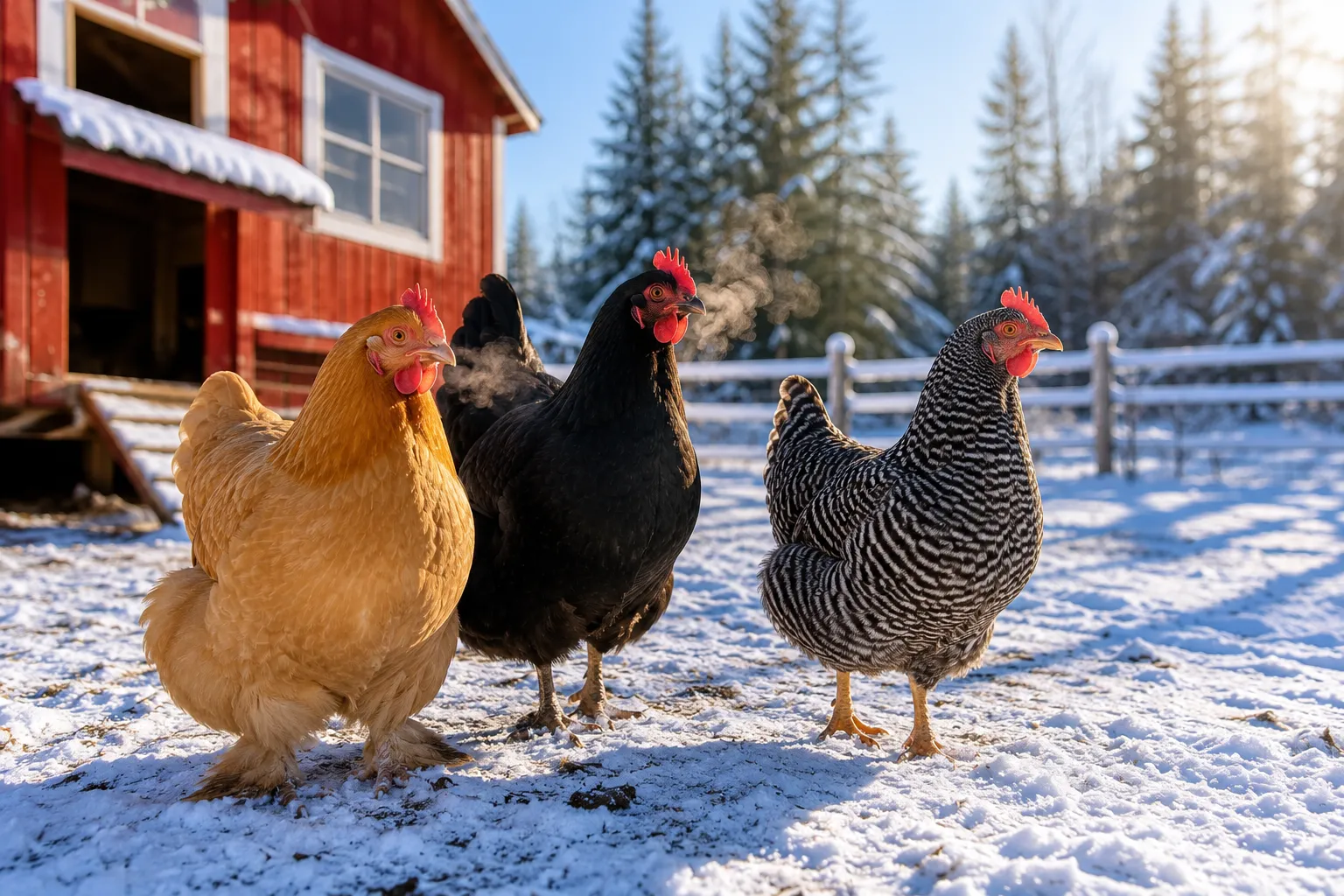
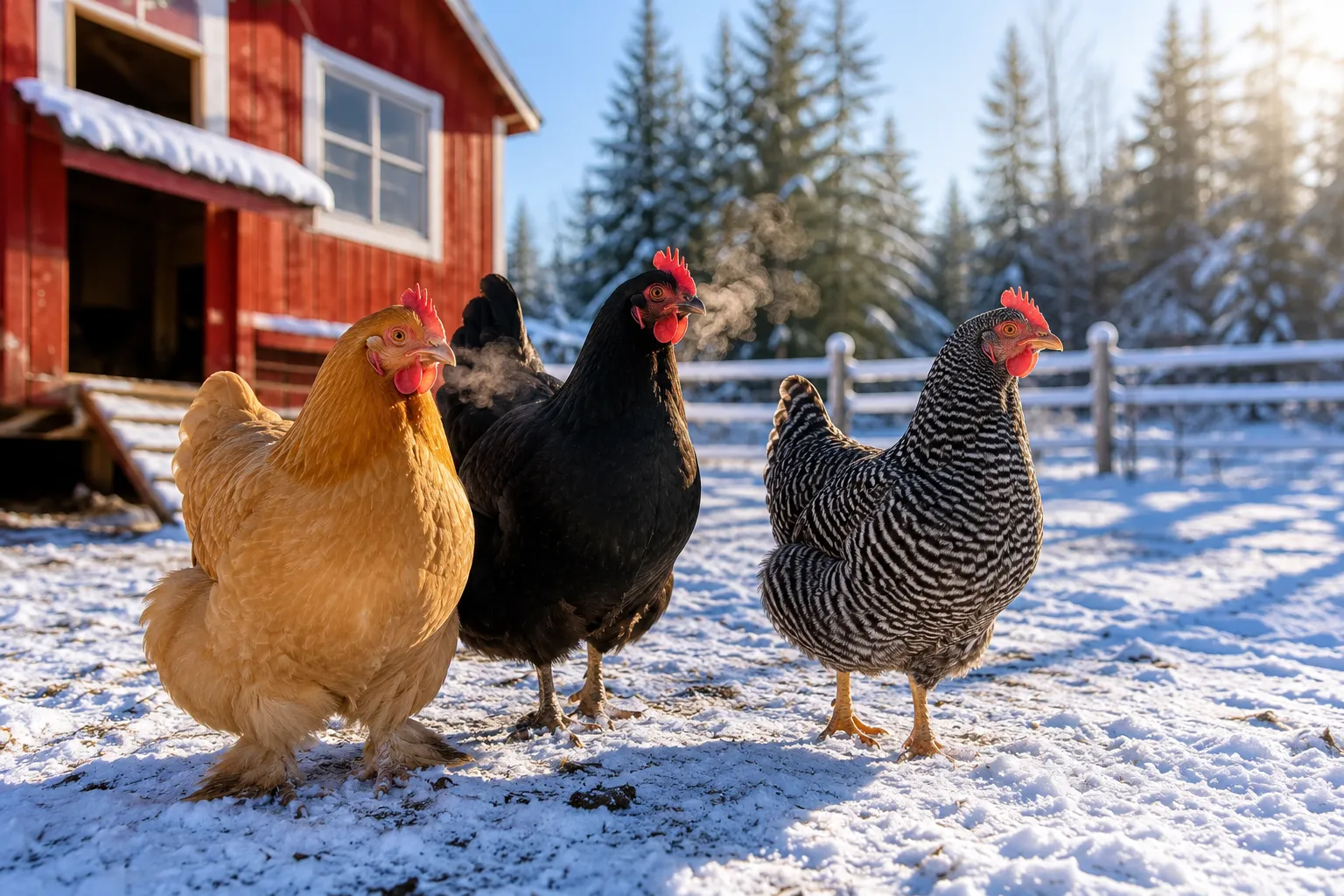
The best cold-hardy chicken breeds include Orpingtons, Plymouth Rocks, Wyandottes, Rhode Island Reds, and Australorps, all of which can thrive in temperatures well below freezing without supplemental heat. These breeds share physical traits like small combs, dense feathering, and heavy body mass that help them conserve heat and prevent frostbite. Choosing cold-hardy breeds is essential for backyard flocks in northern climates, as they maintain egg production through winter and require less intervention than Mediterranean or ornamental breeds.
Key Takeaways
- Cold-hardy breeds feature small combs, thick plumage, and heavy bodies that naturally insulate against freezing temperatures
- Top performers include Orpingtons, Wyandottes, Plymouth Rocks, Rhode Island Reds, and Australorps for reliable winter egg production
- No heated coop required – properly housed cold-hardy chickens can handle temperatures down to -20°F or lower without supplemental heat
- Beginners should start with dual-purpose breeds like Buff Orpingtons or Barred Plymouth Rocks that are docile and forgiving
- Frostbite prevention depends more on coop ventilation and dry conditions than breed selection alone
- Mediterranean breeds (Leghorns, Andalusians) struggle in cold climates due to large combs and lighter body mass
- Cost ranges from $3-5 for day-old chicks to $25-40 for started pullets, with cold-hardy breeds priced similarly to other varieties
- Silkies need extra protection despite their fluffy appearance because their feather structure lacks insulating properties
- Winter mistakes include over-insulating coops (causing moisture buildup) and applying petroleum jelly to combs (which can worsen frostbite)
- Extreme cold climates (below -30°F regularly) benefit from mixing several cold-hardy breeds to ensure flock resilience
What Makes a Chicken Breed Cold Hardy
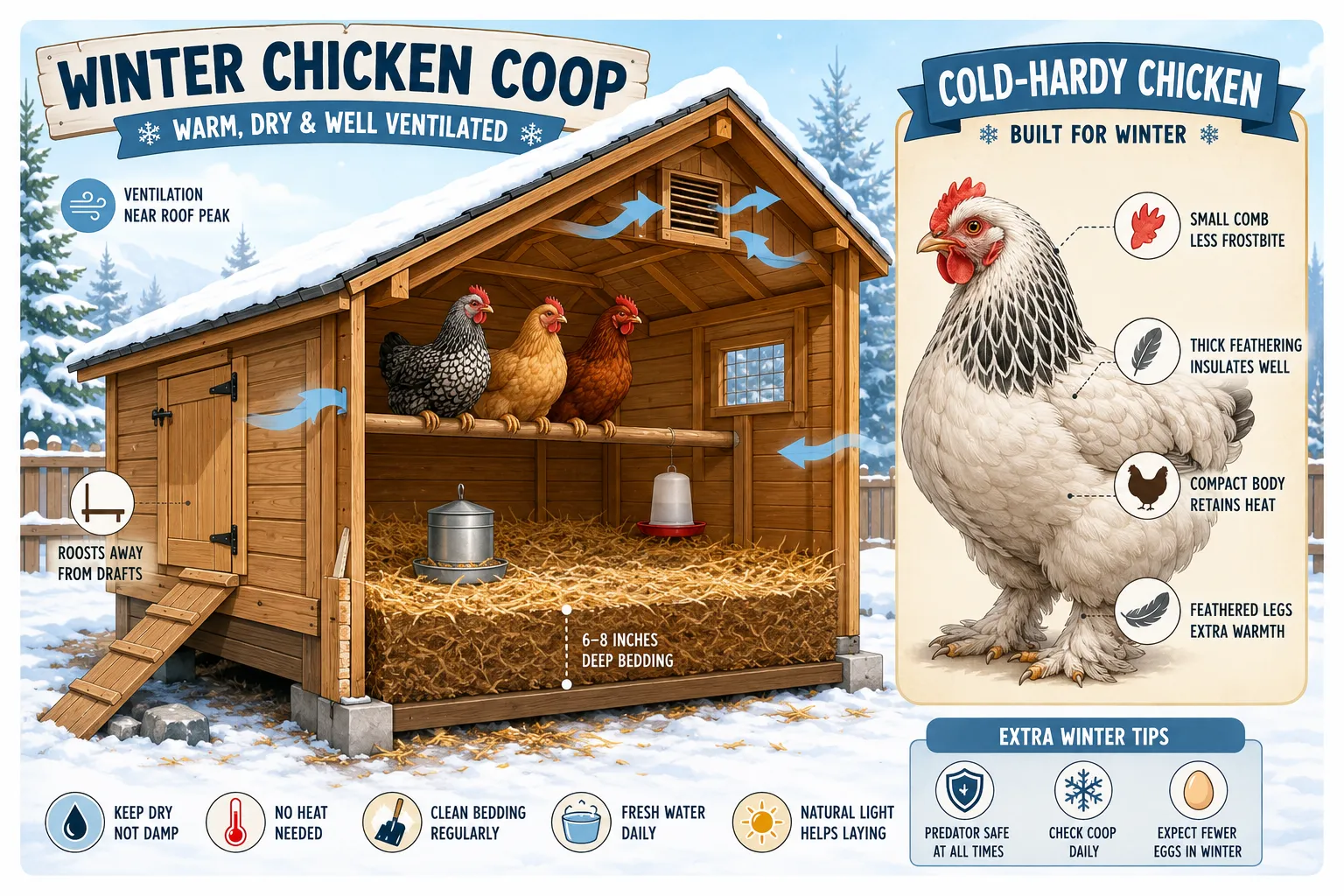
A chicken breed is considered cold hardy when it possesses physical traits that help it regulate body temperature and prevent frostbite in freezing conditions. The three most important features are small or rose-type combs (which have less surface area exposed to cold), dense feathering with thick down layers, and a heavier body mass that generates and retains more metabolic heat.
Key cold-hardy characteristics:
- Comb type: Pea, rose, or cushion combs are less prone to frostbite than large single combs
- Feather density: Breeds with fluffy, abundant plumage trap warm air close to the body
- Body size: Heavier breeds (6-8 pounds) generate more body heat than bantams or lightweight layers
- Feathered legs: Some breeds like Brahmas have feathered shanks that provide extra insulation
- Behavior: Cold-hardy breeds tend to remain active in winter rather than becoming lethargic
Common mistake: Assuming all fluffy breeds are cold hardy. Silkies have abundant feathering but lack the interlocking barbules that create insulating air pockets, making them surprisingly vulnerable to cold despite their appearance.
Best Cold Hardy Chickens for Beginners
Buff Orpingtons and Barred Plymouth Rocks are the best cold-hardy chicken breeds for beginners because they combine winter resilience with calm temperaments, consistent egg production, and forgiving care requirements. Both breeds tolerate handling well, adapt to confinement or free-ranging, and rarely develop behavioral problems.
Top beginner-friendly cold-hardy breeds:
- Buff Orpington – Extremely docile, 200+ brown eggs per year, 7-8 pounds, goes broody occasionally
- Barred Plymouth Rock – Friendly and curious, 200-280 brown eggs per year, 7-8 pounds, excellent foragers
- Black Australorp – Calm and quiet, 250-300 brown eggs per year, 6-8 pounds, world-record layers
- Easter Egger – Variable temperament but generally friendly, 200-280 colored eggs per year, 5-6 pounds, pea combs prevent frostbite
Choose Orpingtons if: You want the gentlest breed that tolerates children and frequent handling, and you don’t mind slightly lower egg production.
Choose Plymouth Rocks if: You want a more active, curious bird that balances friendliness with independence and higher egg output.
Avoid as a first breed: Brahmas (too slow to mature), Chanteclers (harder to source), or any bantam variety (requires more precise winter management despite cold hardiness).
Rhode Island Red vs Orpington for Cold Weather
Rhode Island Reds and Orpingtons are both excellent cold-hardy chicken breeds, but Rhode Island Reds produce 20-50 more eggs per year (250-300 vs 200-250) while Orpingtons offer superior meat quality and calmer temperaments. Rhode Island Reds have rose combs that resist frostbite better than Orpingtons’ single combs, but Orpingtons’ heavier feathering provides slightly better insulation in extreme cold.
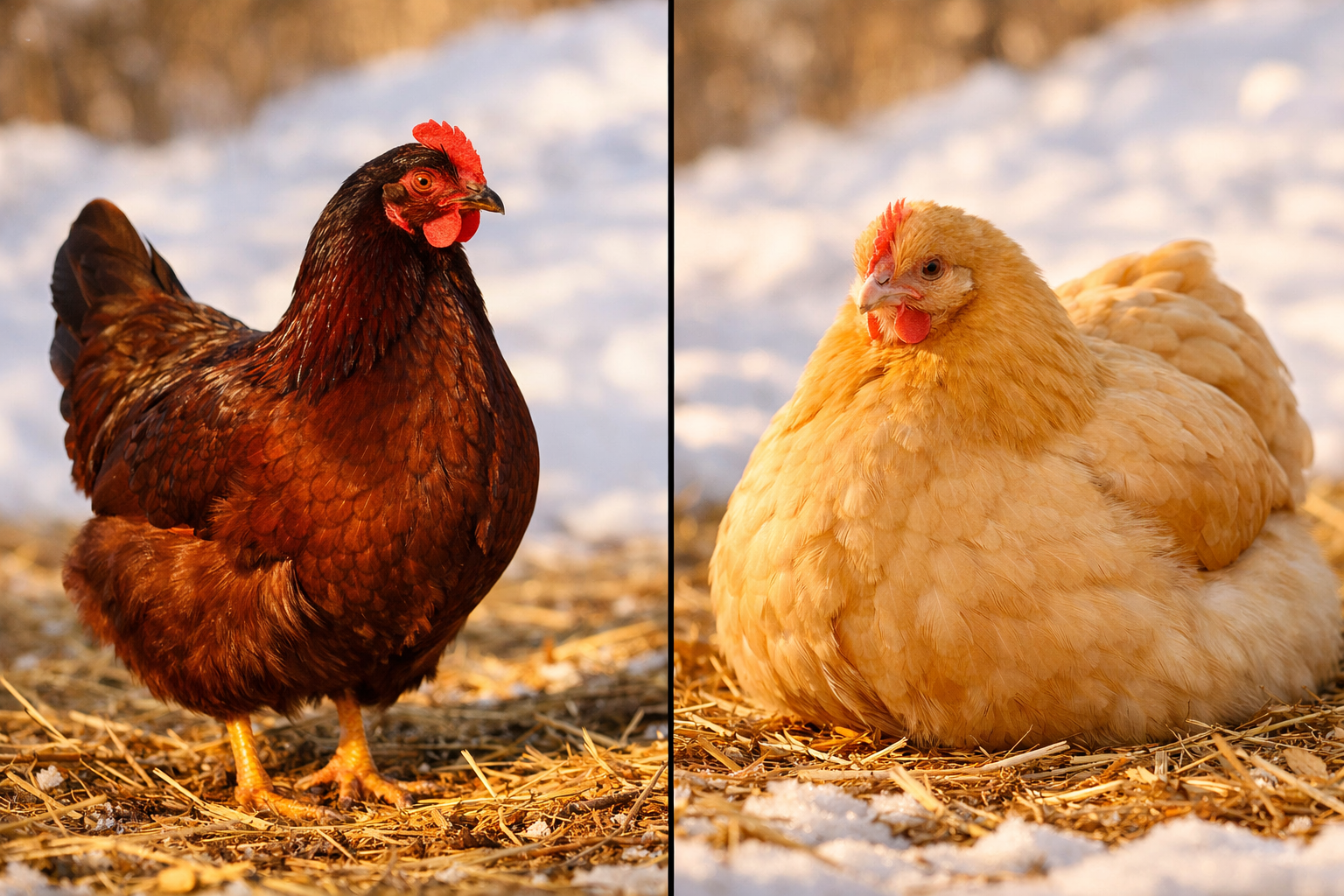
Rhode Island Red advantages:
- Higher egg production throughout winter
- More active foragers that find supplemental food
- Rose comb variety offers maximum frostbite protection
- Leaner body type requires less feed per egg
Orpington advantages:
- Significantly calmer and easier to handle
- Better dual-purpose meat bird (8-10 pounds dressed)
- Fluffier feathering creates better wind protection
- Less aggressive toward other flock members
Decision rule: Choose Rhode Island Reds if egg production is your primary goal and you have limited space (they tolerate confinement better). Choose Orpingtons if you want a family-friendly flock, plan to process older hens for meat, or live in areas with extreme wind chill where extra feathering matters.
Edge case: In climates that regularly drop below -20°F, the Orpington’s extra body mass and feathering provide a meaningful survival advantage over the leaner Rhode Island Red.
Cold Hardy Chickens That Are Also Good Egg Layers
Australorps, Wyandottes, and Plymouth Rocks are the best cold-hardy chicken breeds that maintain strong egg production through winter, averaging 200-280 eggs annually even in northern climates. These breeds continue laying through shorter daylight hours better than most cold-hardy varieties, though production typically drops 20-40% from summer peaks.
Top cold-hardy layers ranked by winter production:
| Breed | Annual Eggs | Winter Production | Egg Color | Cold Tolerance |
|---|---|---|---|---|
| Black Australorp | 250-300 | Excellent | Brown | Very high |
| Rhode Island Red | 250-300 | Excellent | Brown | Very high |
| Barred Plymouth Rock | 200-280 | Very good | Brown | Very high |
| Silver Laced Wyandotte | 200-240 | Very good | Brown | Extremely high |
| Buff Orpington | 200-250 | Good | Brown | Very high |
| Brahma | 150-200 | Moderate | Brown | Extremely high |
Factors affecting winter laying:
- Daylight hours (12-14 hours needed for consistent production)
- Protein intake (increase to 18-20% in winter)
- Stress levels (cold stress reduces laying even in hardy breeds)
- Age (first-year pullets lay better in winter than older hens)
Choose Australorps if: Maximum egg production is your priority and you want a breed that lays consistently year-round without supplemental lighting.
Choose Wyandottes if: You face extreme cold (below -30°F) and need a breed that prioritizes survival over maximum production.
How Much Do Cold Hardy Chicken Breeds Cost
Cold-hardy chicken breeds cost $3-5 per day-old chick, $15-25 per 8-week-old pullet, or $25-40 per point-of-lay hen (16-20 weeks old), with prices similar to other chicken varieties since cold hardiness doesn’t significantly affect breeding costs. Rare color varieties or show-quality birds from specialized breeders can cost $50-100+ per bird, but standard hatchery stock of Orpingtons, Plymouth Rocks, and Wyandottes remains affordable.
Typical pricing by source (2026):
- Large hatcheries (minimum orders 15-25 chicks): $3-4 per straight-run chick, $5-6 per sexed pullet
- Local feed stores (spring only): $4-6 per unsexed chick, $6-8 per sexed pullet
- Small breeders: $8-15 per chick, $30-50 per started pullet, often better quality
- Craigslist/farm sales: $10-25 per laying hen, variable quality and age
Additional first-year costs:
- Coop and run: $500-2,000 (or DIY for $200-500)
- Feeders and waterers: $50-100
- Feed (per bird annually): $50-80
- Bedding: $100-200 annually for small flock
- Health supplies: $50-100
Money-saving tip: Buy day-old chicks in spring and raise them to laying age yourself. The $20-30 savings per bird adds up quickly for a flock of 6-10 hens, and spring chicks reach laying age by fall, giving you winter eggs in their first year.
Do Cold Hardy Chickens Still Need a Heated Coop
Cold-hardy chickens do not need a heated coop and actually thrive better without supplemental heat, as they can safely handle temperatures down to -20°F or lower when provided with proper ventilation, dry bedding, and draft-free roosting areas. Adding heat creates dependency, increases fire risk, and causes dangerous temperature shocks when chickens go outside or during power outages.
What cold-hardy chickens actually need in winter:
- Ventilation above roost level to remove moisture (prevents frostbite more than heat does)
- Deep litter bedding (6-12 inches) that composts and generates mild warmth
- Draft-free roosting bars positioned away from windows and vents
- Adequate roost space (10-12 inches per bird) so chickens can huddle
- Unfrozen water (heated base or frequent changes, not a heated coop)
When to consider supplemental heat:
- Temperatures regularly below -30°F for extended periods
- You keep Mediterranean breeds or Silkies (not truly cold hardy)
- Chicks under 6 weeks old (need brooder heat regardless of breed)
- Sick or injured birds recovering in isolation
Common mistake: Heating the coop to 40-50°F, which prevents chickens from developing their full winter plumage and creates a dangerous temperature differential. A chicken that’s comfortable at 35°F inside will suffer when it steps into -10°F air outside.
Fire safety note: Heat lamps cause hundreds of coop fires annually. If you must add warmth, use a flat-panel radiant heater mounted securely away from bedding and feathers.
Are Silkies Cold Hardy or Do They Need Extra Heat
Silkies are not cold hardy despite their fluffy appearance because their feathers lack barbicels (the hooks that zip feather strands together), preventing them from creating insulating air pockets and repelling moisture. Silkies need extra protection in winter, including draft-free housing, supplemental heat below 20°F, and careful monitoring for hypothermia after snow or rain exposure.
Why Silkies struggle in cold:
- Feather structure absorbs water instead of shedding it
- Wet Silkies lose body heat rapidly and can develop hypothermia
- Walnut combs are cold-resistant, but feathered feet collect ice balls
- Smaller body mass (3-4 pounds) generates less metabolic heat
Winter care for Silkies:
- Keep them confined during snow, freezing rain, or temperatures below 15°F
- Provide a heated area (40-50°F) they can access voluntarily
- Check feathered feet daily and remove ice accumulation
- Increase protein to 18-20% to support heat generation
- House separately from cold-hardy breeds that will go outside in all weather
Better alternatives: If you want a fluffy, docile breed that handles cold, choose Cochins or Orpingtons. Both have proper feather structure that insulates effectively while maintaining the gentle temperament Silkie owners love.
Common Mistakes Keeping Chickens in Winter
The most common mistake keeping chickens in winter is over-insulating the coop and blocking ventilation, which traps moisture from chicken respiration and droppings, leading to frostbite, respiratory disease, and ammonia buildup. Proper winter chicken care prioritizes dry air over warm air, as cold-hardy breeds handle cold temperatures far better than they handle humidity.
Critical winter mistakes to avoid:
- Sealing all vents – Moisture causes more frostbite than cold air; maintain ventilation above roost level
- Using heat lamps – Creates fire risk and prevents natural cold acclimation
- Applying petroleum jelly to combs – Traps moisture and can worsen frostbite; only use if combs are already damaged
- Keeping chickens confined – Cold-hardy breeds need outdoor access even in winter for exercise and mental health
- Switching to warm water – Causes chickens to drink more, then suffer when they can’t find water outside
- Reducing protein – Winter requires more protein (18-20%) for heat generation and feather maintenance
- Letting water freeze repeatedly – Dehydration is more dangerous than cold; check water 2-3 times daily
Edge case – when petroleum jelly helps: If a chicken already has frostbite damage (black tissue on comb or wattles), a thin layer of petroleum jelly protects the damaged area from further injury while it heals. Don’t apply preventatively to healthy tissue.
Quick check for adequate ventilation: On a cold morning, open the coop door. If you see condensation on walls or smell strong ammonia, you need more ventilation immediately.
What Temperature Is Too Cold for Chickens
Healthy cold-hardy chickens can safely tolerate temperatures down to -20°F without supplemental heat, and many breeds handle brief periods of -30°F or lower when provided with proper shelter, dry conditions, and adequate nutrition. The dangerous threshold varies by breed, with cold-hardy varieties like Wyandottes and Orpingtons managing much colder temperatures than Mediterranean breeds like Leghorns, which struggle below 20°F.
Temperature guidelines by breed category:
- Extremely cold hardy (Wyandottes, Chanteclers, Brahmas): Safe to -30°F
- Very cold hardy (Orpingtons, Plymouth Rocks, Australorps): Safe to -20°F
- Moderately cold hardy (Rhode Island Reds, Sussex): Safe to -10°F
- Not cold hardy (Leghorns, Andalusians, Silkies): Struggle below 20°F
Factors more important than temperature alone:
- Wind chill – A draft-free coop at -20°F is safer than a drafty coop at 0°F
- Humidity – Damp conditions at 20°F cause more frostbite than dry conditions at -10°F
- Duration – Chickens handle brief cold snaps better than weeks of sustained cold
- Nutrition – Well-fed chickens generate more body heat than underfed birds
Warning signs of dangerous cold stress:
- Lethargy and refusal to leave the coop
- Huddling in corners instead of roosting normally
- Black or purple discoloration on combs or wattles (frostbite)
- Reduced feed and water intake
- Sudden drop in egg production beyond normal winter decrease
Emergency intervention: If temperatures will drop below -30°F for extended periods, provide a heated area (40-50°F) that chickens can access voluntarily, but leave the main coop unheated so they can choose their comfort level.
Cold Hardy Chickens for Small Backyard Flocks
Buff Orpingtons, Australorps, and Easter Eggers are the best cold-hardy chicken breeds for small backyard flocks because they combine winter resilience with quiet temperaments, minimal space requirements, and consistent egg production in confined areas. These breeds tolerate close quarters better than more active varieties and rarely develop noise or aggression issues that cause neighbor complaints.
Best breeds for urban/suburban winter flocks:
- Buff Orpington – Quietest breed, tolerates confinement well, 200+ eggs, extremely docile
- Black Australorp – Calm and quiet, highest egg production (250-300), adapts to small runs
- Easter Egger – Variable but generally quiet, colorful eggs, pea combs prevent frostbite
- Barred Plymouth Rock – Friendly and quiet, good layers (200-280 eggs), entertaining to watch
Avoid in small spaces:
- Rhode Island Reds (can become aggressive in confinement)
- Leghorns (flighty and noisy, not cold hardy)
- Brahmas (too large for small coops, 10-12 pounds)
- Any rooster (noise complaints, unnecessary for egg production)
Space requirements for cold-hardy breeds:
- Minimum 4 square feet per bird inside the coop
- Minimum 10 square feet per bird in the run
- Add 25% more space in cold climates where chickens spend more time confined
Choose Easter Eggers if: You want colorful eggs (blue, green, pink) and maximum cold hardiness in the smallest package (5-6 pounds vs 7-8 for Orpingtons).
Do I Need Different Breeds for Extreme Cold Climates
You don’t need different breeds for extreme cold climates if you choose from the most cold-hardy varieties (Chanteclers, Wyandottes, Brahmas, or Buckeyes), but mixing 2-3 breeds in your flock provides insurance against breed-specific vulnerabilities and creates a more resilient winter flock. Chanteclers were specifically developed in Canada for extreme cold and represent the gold standard for sub-zero performance.
Best breeds for extreme cold (regularly below -20°F):
- Chantecler – Developed in Quebec, cushion comb, 200 eggs, extremely rare in US
- Wyandotte (all varieties) – Rose comb, dense feathering, 200-240 eggs, widely available
- Buckeye – Pea comb, active foragers, 200 eggs, dual-purpose meat bird
- Brahma – Feathered legs, massive size (10-12 pounds), 150-200 eggs, slow to mature
Benefits of mixing breeds:
- Different comb types (some birds avoid frostbite even if others are affected)
- Varied egg production patterns (some breeds lay better in winter than others)
- Behavioral diversity (active foragers plus calm homebodies)
- Genetic resilience (if one breed struggles with local conditions, others may thrive)
Recommended mix for extreme cold: 3 Wyandottes + 3 Orpingtons + 2 Australorps creates a balanced flock with maximum cold tolerance, consistent winter eggs, and varied temperaments.
Single-breed approach works if: You can source Chanteclers (difficult in most of US) or you’re willing to accept slightly lower egg production from Brahmas in exchange for maximum cold tolerance.
Can Mediterranean Breeds Survive Cold Winters
Mediterranean breeds like Leghorns, Minorcas, and Andalusians can survive cold winters with extra care but are not considered cold hardy because their large single combs are highly prone to frostbite, their lightweight bodies (4-5 pounds) generate less metabolic heat, and their active temperaments make them difficult to confine during dangerous weather. These breeds were developed in warm climates and lack the physical adaptations that make northern breeds winter-resilient.
Why Mediterranean breeds struggle in cold:
- Large single combs – Massive surface area loses heat and freezes easily
- Light body weight – Less thermal mass to generate and retain heat
- Sparse feathering – Sleek plumage prioritizes cooling over insulation
- High metabolism – Burn energy quickly, require more feed in winter
- Flighty temperament – Difficult to keep confined during storms
Mediterranean breeds in cold climates require:
- Heated coop space (40-50°F minimum) or insulated shelter
- Daily comb checks and frostbite treatment
- 25-30% more feed than cold-hardy breeds
- Confinement during temperatures below 20°F
- Significantly more hands-on management
Better alternatives: If you want white eggs (Leghorn’s main advantage), choose Delaware or Chantecler breeds that lay white or light-colored eggs while maintaining cold hardiness. If you want high production, Australorps and Rhode Island Reds match or exceed Leghorn output in cold climates.
Exception: Leghorns can work in mild-winter climates (rarely below 20°F) where their high egg production (280-320 eggs annually) outweighs their cold sensitivity.
Why Did My Cold Hardy Chickens Get Frostbite
Cold-hardy chickens get frostbite when moisture accumulates on their combs and wattles in poorly ventilated coops, not from cold temperatures alone. The combination of high humidity from chicken respiration, inadequate ventilation, and sub-zero temperatures causes tissue to freeze, even in breeds with small combs. Frostbite appears as black or purple discoloration on comb tips, wattles, or toes and indicates a coop ventilation problem rather than a breed selection issue.
Primary causes of frostbite in cold-hardy breeds:
- Poor ventilation – Trapped moisture condenses on combs overnight (most common cause)
- Wet bedding – Increases humidity and ammonia, both worsen frostbite risk
- Overcrowding – More birds generate more moisture in confined space
- Waterers inside coop – Spills and evaporation add humidity
- Roosting near vents – Direct drafts on wet combs cause freezing
- Sudden temperature drops – Chickens don’t acclimate fast enough
Frostbite treatment:
- Do NOT rub or massage affected tissue (causes more damage)
- Move bird to warmer area (40-50°F) to thaw slowly
- Apply antibiotic ointment once tissue is thawed
- Separate from flock if other birds peck at damaged areas
- Damaged tissue will turn black and eventually fall off (normal healing)
Prevention checklist:
- Install ventilation openings above roost level (not at bird level)
- Use deep litter method (6-12 inches) and turn weekly
- Keep waterers outside coop or use heated bases to minimize spills
- Ensure 10-12 inches of roost space per bird
- Position roosts away from windows and vents
Edge case: Chickens with even small single combs (like Rhode Island Reds) are more vulnerable than rose or pea comb varieties (like Wyandottes or Buckeyes) in identical conditions. If frostbite is recurring despite good ventilation, switch to breeds with smaller comb types.
Cold Hardy Meat Birds vs Egg Layers
Cold-hardy meat birds like Brahmas, Jersey Giants, and Orpingtons grow to 8-12 pounds and tolerate winter conditions well but take 6-8 months to reach processing weight, while cold-hardy egg layers like Australorps and Rhode Island Reds reach 5-7 pounds and prioritize egg production over meat yield. Dual-purpose breeds like Plymouth Rocks and Wyandottes offer the best compromise, providing 200+ eggs annually while producing respectable 6-8 pound carcasses when processed.
Best cold-hardy meat breeds:
| Breed | Dressed Weight | Time to Process | Eggs/Year | Cold Tolerance |
|---|---|---|---|---|
| Brahma | 10-12 lbs | 8-10 months | 150-200 | Extremely high |
| Jersey Giant | 10-13 lbs | 8-10 months | 150-200 | Very high |
| Orpington | 8-10 lbs | 6-8 months | 200-250 | Very high |
| Plymouth Rock | 7-8 lbs | 5-6 months | 200-280 | Very high |
| Wyandotte | 6-8 lbs | 5-6 months | 200-240 | Extremely high |
Meat bird considerations:
- Heritage breeds grow slower than Cornish Cross but are healthier and cold-hardier
- Roosters dress 1-2 pounds heavier than hens of the same breed
- Winter processing is easier (natural refrigeration, fewer flies)
- Older laying hens (2+ years) make excellent stewing birds
Choose dual-purpose breeds if: You want eggs now and meat later, or you’re processing excess roosters from straight-run chick purchases.
Choose dedicated meat breeds if: You’re raising specifically for meat production and can wait 8-10 months for maximum carcass size.
Avoid: Cornish Cross in cold climates – they’re not cold hardy, have health issues, and must be processed by 8-10 weeks regardless of season.
Frequently Asked Questions
What is the most cold-hardy chicken breed? Chanteclers and Wyandottes are the most cold-hardy chicken breeds, both featuring rose or cushion combs that resist frostbite, dense feathering, and heavy body mass. Chanteclers were specifically developed in Quebec for extreme cold but are rare in the US, making Wyandottes the most practical choice for maximum cold tolerance.
Can chickens stay outside in winter? Yes, cold-hardy chickens should go outside in winter whenever they choose, even in sub-zero temperatures. Confining chickens indoors causes stress, behavioral problems, and reduced health. Provide a draft-free coop for nighttime and shelter from wind, but allow daytime outdoor access in all but the most extreme weather.
How many chickens do I need for a family of four? A family of four needs 4-6 laying hens to provide enough eggs year-round, accounting for reduced winter production and occasional broody periods. Cold-hardy breeds averaging 200-250 eggs per year will produce 3-4 eggs daily from a six-bird flock during peak season and 1-2 daily in winter.
Do chickens need light in winter? Chickens don’t need supplemental light in winter for health, but adding light to extend day length to 14 hours increases winter egg production by 30-50%. Many backyard keepers skip supplemental lighting to allow hens a natural rest period, accepting lower winter egg production in exchange for longer productive lifespan.
What do you feed chickens in winter? Feed chickens 18-20% protein layer feed in winter (up from 16% in summer) plus scratch grains in the evening to generate overnight body heat through digestion. Provide constant access to feed, unfrozen water, and calcium supplements (oyster shell) to support continued egg production and feather maintenance.
How do I keep chicken water from freezing? Keep chicken water from freezing using heated water bases (most reliable), changing water 2-3 times daily, using insulated containers, or adding a small amount of sugar (1 tablespoon per gallon) to lower the freezing point slightly. Heated bases are the most practical solution for sustained cold weather.
Can you mix different chicken breeds? Yes, you can and should mix different chicken breeds in a backyard flock. Mixed flocks are more resilient, provide varied egg colors and sizes, and allow you to match different breeds to your specific priorities (egg production, meat, temperament). Introduce all chicks together or use proper integration techniques for adding adults.
How long do cold-hardy chickens live? Cold-hardy chickens live 5-8 years on average, with some individuals reaching 10-12 years. Egg production peaks in years 1-2, remains good in years 3-4, then declines significantly. Many backyard keepers maintain older hens as pets after their productive years or process them as stewing birds at 2-3 years.
Do roosters help keep hens warm in winter? Roosters don’t significantly help keep hens warm in winter. Chickens roost individually rather than huddling, and a rooster provides no more body heat than another hen would. Roosters are unnecessary for egg production and often create more problems (noise, aggression, over-mating) than benefits in backyard flocks.
What bedding is best for chickens in winter? Pine shavings 6-12 inches deep using the deep litter method are best for winter chicken bedding. The composting process generates mild heat, absorbs moisture, and provides insulation. Add fresh shavings weekly and turn the litter monthly. Avoid cedar (toxic fumes) and straw (molds easily when damp).
Can chickens get too cold to lay eggs? Chickens don’t get too cold to lay eggs if they’re healthy and well-fed, but cold stress, reduced daylight, and energy diverted to staying warm naturally reduce winter egg production by 20-50%. This is normal and healthy. Extreme cold (below -20°F for extended periods) may stop laying temporarily until conditions improve.
Should I insulate my chicken coop? Insulating your chicken coop is optional and often counterproductive because insulation can trap moisture if ventilation isn’t excellent. Cold-hardy breeds don’t need insulation in most climates. If you insulate, prioritize the ceiling (heat rises) and maintain even better ventilation to prevent condensation and ammonia buildup.
Conclusion
Choosing the best cold-hardy chicken breeds transforms winter chicken keeping from a challenging chore into a rewarding experience. Breeds like Orpingtons, Wyandottes, Plymouth Rocks, Australorps, and Rhode Island Reds combine natural cold tolerance with consistent egg production, requiring minimal intervention even in harsh northern winters.
The key to success isn’t supplemental heat or expensive equipment but rather selecting breeds with the right physical traits (small combs, dense feathering, heavy bodies) and providing proper housing fundamentals: excellent ventilation, dry bedding, draft-free roosts, and unfrozen water. Most winter chicken problems stem from too much insulation and too little ventilation, not from cold temperatures themselves.
Your next steps:
- Choose 2-3 breeds from the cold-hardy options that match your priorities (eggs, meat, temperament, or appearance)
- Source chicks in spring (February-April) so they reach laying age by fall and have full winter plumage by their first cold season
- Prepare your coop with ventilation above roost level, 4+ square feet per bird, and deep litter bedding
- Plan your winter routine for checking water 2-3 times daily and maintaining dry, well-ventilated housing
- Skip the heat lamp and trust your cold-hardy breeds to do what they were bred to do
Start small with 4-6 birds of proven cold-hardy breeds, master the basics of winter care, and expand your flock as you gain confidence. Your chickens will reward you with fresh eggs, entertainment, and surprising resilience even on the coldest winter mornings.