
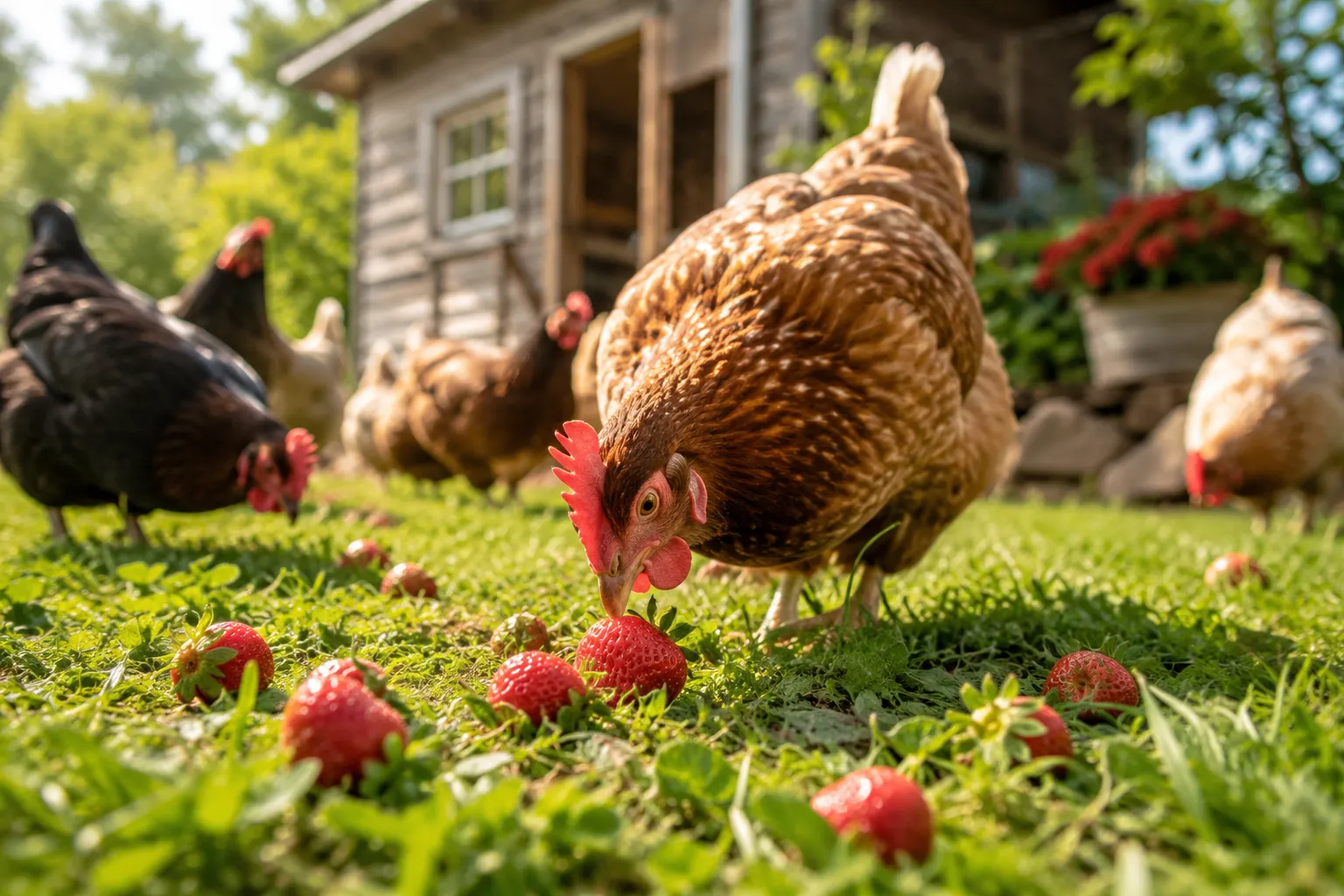
Quick Answer: Yes, chickens can safely eat strawberries, including the fruit, tops, and leaves. Strawberries are a healthy, nutritious treat that most chickens love, providing vitamin C, antioxidants, and natural sugars. However, they should be fed in moderation as treats (no more than 10% of daily diet) rather than as a staple food, and always ensure the strawberries are fresh, not moldy or rotten.
Key Takeaways
- Strawberries are completely safe for chickens to eat, including the fruit, green tops, and leaves
- Feed strawberries as treats only, making up no more than 10% of your chickens’ daily diet
- Adult chickens can have 1-2 strawberries per bird per day, while baby chicks should wait until 3-4 weeks old
- Fresh or frozen strawberries work well, but never feed moldy or rotten berries to your flock
- Strawberries provide vitamin C, antioxidants, and fiber that support immune health and digestion
- No preparation required, chickens can eat whole strawberries, though chopping helps smaller birds
- Strawberries won’t affect egg taste when fed in appropriate amounts
- Both strawberries and blueberries are excellent treats, each offering different nutritional benefits
- Common mistakes include overfeeding fruit and leaving uneaten portions to spoil in the coop
- Avoid feeding citrus fruits, avocado, and raw beans, these can harm chickens
Are Strawberries Safe for Chickens to Eat?
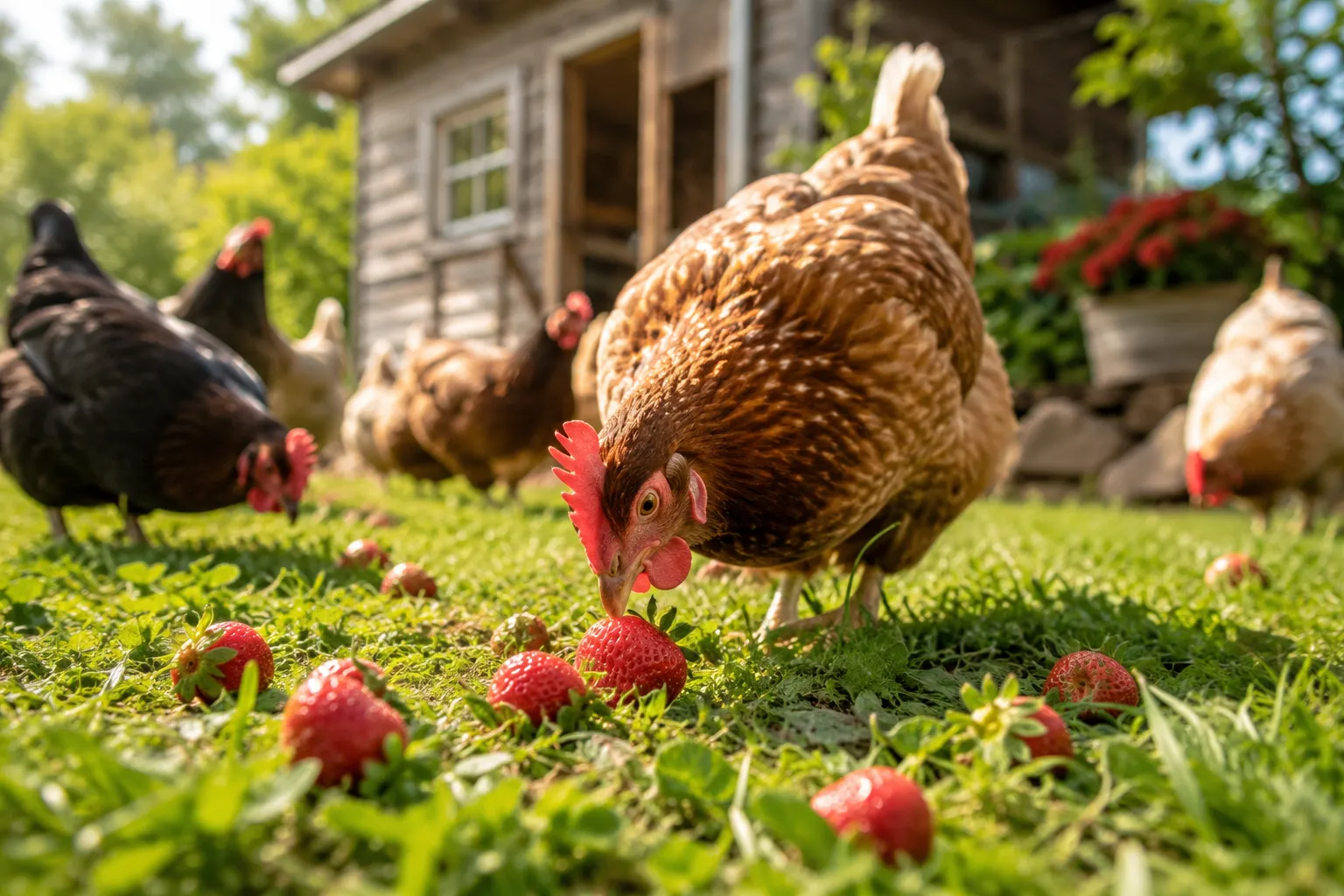
Strawberries are completely safe for chickens to eat and are among the best fruit treats you can offer your flock. Unlike some foods that contain compounds toxic to poultry, strawberries pose no health risks when fed fresh and in appropriate quantities.
Chickens can safely consume every part of the strawberry plant:
- The red fruit, packed with natural sugars and nutrients
- Green leafy tops, contain additional fiber and minerals
- Seeds on the outside, tiny and easily digestible
- Leaves from the plant, safe if your chickens have access to strawberry plants
The natural sugars in strawberries provide quick energy, while the high water content (about 91%) helps keep chickens hydrated, especially during hot summer months. The fruit’s soft texture makes it easy for chickens of all ages to peck and consume.
One important safety note: Only feed fresh or properly frozen strawberries. Moldy, fermented, or rotten strawberries can cause digestive upset and should always be discarded.
How Many Strawberries Can I Give My Chickens Per Day?
A healthy adult chicken can safely eat 1-2 medium strawberries per day as part of a balanced treat regimen. This amount provides nutritional benefits without displacing the complete layer feed that should make up 90% of their diet.
Feeding guidelines by flock size:
- Single chicken: 1-2 strawberries per day
- Small flock (3-5 birds): 4-8 strawberries total
- Medium flock (6-10 birds): 8-15 strawberries total
- Large flock (10+ birds): 1-2 strawberries per bird, distributed evenly
The 10% treat rule is essential for maintaining proper nutrition. Chickens need a balanced layer feed that provides the right ratios of protein (16-18%), calcium, and other nutrients for egg production and overall health. Too many treats, even healthy ones like strawberries, can lead to nutritional imbalances.
Choose smaller portions if: Your chickens are receiving other treats the same day, you’re feeding during winter when they’re less active, or you notice softer eggshells (indicating too many treats and not enough calcium-rich feed).
You can increase slightly if: It’s a hot summer day and the extra hydration helps, you’re using strawberries for training or enrichment activities, or you have excess ripe berries that would otherwise go to waste (but still stay within reason).
Can Chickens Eat Strawberry Tops and Leaves?
Yes, chickens can safely eat strawberry tops (the green leafy caps) and leaves from strawberry plants. In fact, many chickens enjoy the greens as much as the fruit itself, and the tops provide additional nutritional value including fiber, vitamins, and minerals.
The green parts of strawberries contain:
- Fiber for healthy digestion
- Vitamin K for blood clotting and bone health
- Trace minerals including iron and manganese
- Chlorophyll which supports detoxification
Feeding strawberry tops: Simply leave the green caps attached when you toss strawberries to your flock. Chickens will either eat them along with the fruit or peck them off and consume them separately. There’s no need to remove the tops unless you prefer to compost them.
Strawberry plant leaves: If you grow strawberries in your garden, chickens can safely nibble on the leaves. However, be aware that chickens may damage or destroy strawberry plants if given unlimited access, so consider fencing your berry patch if you want to harvest fruit for yourself.
Do Strawberries Cause Diarrhea in Chickens?
Strawberries typically do not cause diarrhea in chickens when fed in appropriate amounts (1-2 berries per bird per day). However, overfeeding strawberries or any high-water-content fruit can lead to loose droppings due to the excess moisture and natural sugars.
Normal vs. concerning droppings after strawberries:
- Normal: Slightly softer or more colorful droppings (reddish tint from berry pigments)
- Overfeeding sign: Watery droppings, increased frequency, or droppings that don’t form at all
- Concerning: Persistent diarrhea lasting more than 24 hours, blood in droppings, or lethargy
The high water content in strawberries (91%) means that excessive consumption essentially floods the digestive system. The natural sugars can also draw additional water into the intestines, creating looser stools.
To prevent digestive upset:
- Introduce strawberries gradually if your flock hasn’t had them before
- Stick to the 1-2 berry per bird guideline
- Avoid feeding strawberries daily, rotate with other treats
- Ensure constant access to quality layer feed
- Remove uneaten strawberries within a few hours to prevent gorging
If your chickens develop diarrhea after eating strawberries, simply stop offering fruit treats for 2-3 days and ensure they have plenty of fresh water and their regular feed. The issue should resolve quickly.
Strawberries vs Blueberries for Chickens: Which Is Better?
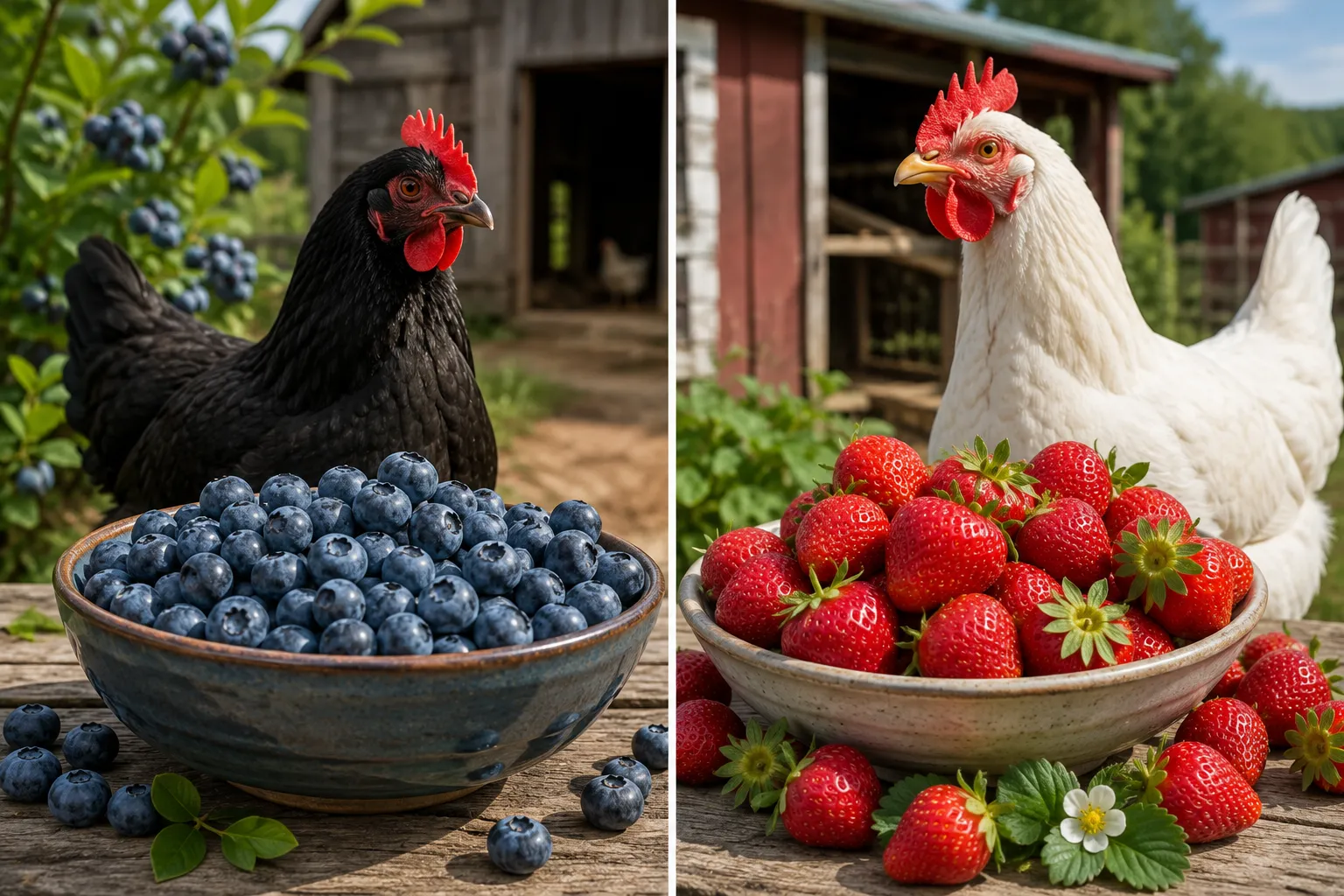
Both strawberries and blueberries are excellent, safe treats for chickens, and neither is definitively “better”, they simply offer different nutritional profiles and practical advantages. The best choice depends on your specific situation, budget, and what your flock prefers.

Nutritional comparison:
| Nutrient | Strawberries | Blueberries |
|---|---|---|
| Vitamin C | Higher (58.8 mg per 100g) | Lower (9.7 mg per 100g) |
| Antioxidants | High (anthocyanins) | Very high (highest of common fruits) |
| Water content | 91% | 84% |
| Natural sugars | 4.9g per 100g | 10g per 100g |
| Fiber | 2g per 100g | 2.4g per 100g |
Choose strawberries if:
- You want maximum vitamin C for immune support
- Your chickens need extra hydration (hot weather)
- You have larger birds that can easily handle bigger fruit
- You’re growing strawberries and have excess harvest
- Cost is a factor (strawberries are often cheaper per pound)
Choose blueberries if:
- You want maximum antioxidant content
- You prefer a less messy treat (no red juice stains)
- You have bantams or smaller breeds (easier to swallow whole)
- You’re buying frozen (blueberries freeze better)
- You want a treat that’s easier to scatter for foraging enrichment
The practical solution: Rotate between both fruits to provide nutritional variety and keep your flock interested. Many chicken keepers offer strawberries in spring and summer when they’re in season and affordable, then switch to frozen blueberries during fall and winter.
Can Baby Chicks Eat Strawberries or Only Adult Chickens?
Baby chicks can eat strawberries, but only after they reach 3-4 weeks of age and have access to chick grit. Before this age, chicks should eat only starter feed formulated specifically for their rapid growth and development needs.
Age-based strawberry feeding guidelines:
- 0-3 weeks: No treats, only chick starter feed and water
- 3-4 weeks: Introduce tiny pieces of strawberry (pea-sized), maximum once per week
- 5-8 weeks: Small strawberry pieces (2-3 times per week)
- 8+ weeks: Can eat strawberries like adult chickens (1-2 berries per bird)
Why wait until 3-4 weeks? Young chicks have delicate digestive systems that need to establish healthy gut bacteria. Their primary nutritional needs are met by high-protein starter feed (18-20% protein). Introducing treats too early can cause digestive upset and displace the critical nutrition they need for proper bone, muscle, and feather development.
Preparation for chicks: Always chop strawberries into very small pieces for young birds. Their beaks are tiny, and large chunks can cause choking. Mash or finely dice the berries so pieces are no larger than the chick’s eye.
Grit is essential: Once you introduce any treats (including strawberries), chicks need access to chick grit, tiny stones that help grind food in their gizzard. Without grit, they cannot properly digest anything other than their powdered starter feed.
What Fruits Should Chickens Never Eat?
While chickens can safely enjoy most fruits, several should be avoided entirely or fed with caution due to toxic compounds, choking hazards, or digestive issues.
Never feed these fruits:
- Avocado, Contains persin, which is toxic to chickens and can cause heart damage and respiratory distress
- Unripe tomatoes, Green tomatoes and tomato leaves contain solanine, a toxic alkaloid (ripe red tomatoes are safe)
- Citrus fruits (limit severely), Oranges, lemons, limes, and grapefruit can interfere with calcium absorption and reduce egg production; small amounts occasionally are okay, but avoid regular feeding
- Rhubarb leaves, Contain high levels of oxalic acid, which is toxic (rhubarb stalks in small amounts are safe)
Feed with caution:
- Apple seeds, Contain cyanide compounds; remove seeds before feeding apples
- Stone fruit pits, Peach, plum, cherry, and apricot pits contain cyanogenic compounds and are choking hazards; always remove pits
- Dried fruits, High sugar concentration can cause digestive upset; if feeding, soak in water first and offer sparingly
Safe fruit alternatives to strawberries:
- Blueberries, raspberries, blackberries
- Watermelon (excellent for hydration)
- Cantaloupe and honeydew melon
- Apples (seeds removed)
- Grapes (cut in half for smaller birds)
- Bananas (high sugar, feed sparingly)
- Pumpkin and squash
The general rule: If a fruit is safe for humans to eat (excluding the specific exceptions above), it’s likely safe for chickens in moderation. Always introduce new foods gradually and watch for any adverse reactions.
Will Feeding Strawberries to Chickens Affect Egg Taste?
Feeding strawberries to chickens in appropriate amounts (1-2 berries per bird per day) will not noticeably affect the taste of their eggs. The flavor compounds in strawberries are not concentrated enough to transfer to eggs when fed as occasional treats within the 10% guideline.
What actually affects egg taste:
- Strong-flavored foods fed in excess, Garlic, onions, fish meal, or excessive amounts of any single food
- Diet composition, Free-range chickens eating diverse forage produce richer-tasting eggs
- Freshness, Egg flavor degrades with age; fresh eggs taste better regardless of diet
- Breed and individual variation, Some hens naturally produce richer or milder eggs
What strawberries DO affect:
- Yolk color, A varied diet including colorful fruits and vegetables can deepen yolk color to a richer orange, which many people find more appealing
- Nutritional content, Antioxidants from strawberries may slightly enhance the nutritional profile of eggs
- Chicken happiness, Treats provide enrichment and variety, which contributes to overall flock health
If you’re concerned about egg flavor, simply maintain the 90/10 rule: 90% complete layer feed, 10% treats and forage. This ensures eggs maintain their natural flavor while your chickens enjoy dietary variety.
Exception: If you feed massive quantities of strawberries daily (which you shouldn’t), you might notice a subtle sweetness or off-flavor in eggs. This is a sign you’re overfeeding treats and should cut back immediately.
Can Chickens Eat Moldy or Rotten Strawberries?
No, chickens should never eat moldy or rotten strawberries. While chickens have more robust digestive systems than humans, moldy fruit can contain mycotoxins that cause serious health problems including digestive upset, liver damage, and compromised immune function.
Dangers of moldy strawberries:
- Mycotoxins, Toxic compounds produced by mold that can accumulate in tissues
- Bacterial contamination, Rotten fruit harbors harmful bacteria like Salmonella and E. coli
- Digestive upset, Causes diarrhea, vomiting, and crop impaction
- Reduced egg production, Sick chickens lay fewer eggs or stop laying entirely
What about slightly overripe strawberries? Soft, very ripe strawberries that are past their prime for human consumption but show no signs of mold are perfectly safe for chickens. In fact, chickens often prefer softer fruit because it’s easier to peck and eat.
Safe vs. unsafe strawberries:
✅ Safe to feed:
- Fresh, firm strawberries
- Soft, overripe berries without mold
- Bruised or slightly damaged berries
- Frozen strawberries (thawed or frozen)
❌ Never feed:
- Strawberries with any visible mold (white, gray, or black fuzzy growth)
- Strawberries with a fermented or alcoholic smell
- Slimy or decomposing berries
- Strawberries stored with moldy berries (mold spreads via spores)
Best practice: Inspect all strawberries before feeding. When in doubt, throw it out. The small cost of discarding questionable berries is far less than veterinary bills or losing birds to illness.
How to Prepare Strawberries for Chickens
Strawberries require minimal preparation for chickens, making them one of the easiest treats to offer your flock. Most chickens can handle whole strawberries, but a few simple preparation steps can make feeding easier and reduce waste.
Basic preparation methods:
Whole strawberries (easiest): Simply toss fresh, rinsed strawberries to your flock. Adult chickens will peck them apart naturally. Best for larger breeds and when you have time to supervise.
Halved or quartered: Cut strawberries into smaller pieces for bantams, younger birds, or to help multiple chickens share. This also exposes the juicy interior, making them more enticing.
Mashed or chopped: Finely chop or mash strawberries for chicks (3+ weeks old) or to mix with other foods. This prevents choking and makes portion control easier.
Frozen (summer treat): Offer whole frozen strawberries on hot days as a cooling treat. Chickens will peck at them as they thaw, providing entertainment and hydration.
Washing strawberries: Rinse strawberries under cool water to remove dirt, pesticides, and potential contaminants. Pat dry or feed wet, chickens don’t mind either way.
Feeding strategies for different situations:
- Scatter feeding: Toss strawberries around the run to encourage natural foraging behavior and exercise
- Treat bowl: Place strawberries in a shallow dish to keep them clean and make monitoring consumption easier
- Hanging treat: Thread strawberries on a string or use a suet feeder to create an enrichment activity
- Training tool: Hand-feed strawberry pieces to build trust with shy or new chickens
Timing matters: Feed strawberries in the morning or early afternoon, not right before roosting time. This ensures chickens have time to digest treats and fill up on their layer feed before night.
Clean-up: Remove any uneaten strawberry pieces after 2-3 hours, especially in hot weather. Rotting fruit attracts flies, rodents, and can harbor bacteria.
Are Frozen Strawberries Okay for Chickens?
Yes, frozen strawberries are completely safe and often more practical than fresh strawberries for chicken keepers. Frozen berries retain most of their nutritional value and can be fed either frozen or thawed, depending on the weather and your chickens’ preferences.
Benefits of frozen strawberries:
- Year-round availability, Enjoy strawberry season prices all year
- Longer storage, Keep for months without spoilage
- Cost-effective, Often cheaper per pound than fresh, especially off-season
- Cooling treat, Frozen berries help chickens regulate body temperature in summer heat
- Less waste, Use only what you need, store the rest
Feeding frozen strawberries:
- Summer: Offer frozen or partially thawed for maximum cooling effect
- Winter: Thaw completely before feeding to avoid lowering body temperature
- Any season: Fully thawed strawberries work just like fresh
Nutritional comparison: Freezing preserves most vitamins and antioxidants. Vitamin C content may decrease slightly (10-20%) during freezing and storage, but frozen strawberries still provide excellent nutrition for chickens.
What to avoid: Don’t buy frozen strawberries with added sugar, syrups, or other ingredients. Plain frozen strawberries are best. Also avoid refreezing thawed strawberries, as this degrades quality and increases bacterial risk.
Practical tip: Buy large bags of frozen strawberries from warehouse stores for the best value. Portion out what you need for each feeding and return the bag to the freezer immediately.
Common Mistakes When Feeding Chickens Fruit
Even experienced chicken keepers can fall into common traps when offering fruit treats. Avoiding these mistakes ensures your flock stays healthy while enjoying their strawberries and other fruits.
Top mistakes to avoid:
1. Overfeeding treats (most common mistake)
Feeding too much fruit displaces essential layer feed, leading to nutritional deficiencies, soft-shelled eggs, and reduced egg production. Stick to the 10% rule: treats should never exceed 10% of daily food intake.
2. Leaving uneaten fruit in the coop
Rotting fruit attracts flies, rodents, and pests while creating unsanitary conditions. Remove uneaten fruit within 2-3 hours, especially in warm weather.
3. Feeding fruit without adequate layer feed
Some keepers mistakenly think chickens can thrive on kitchen scraps and treats alone. Chickens need complete layer feed (16-18% protein, proper calcium levels) for health and egg production.
4. Not providing grit
Chickens need grit (small stones) to grind food in their gizzard. Without grit, they cannot properly digest treats like strawberries. Always ensure free-choice grit access.
5. Introducing too many new foods at once
Adding multiple new treats simultaneously makes it impossible to identify which food caused problems if digestive upset occurs. Introduce one new food at a time, waiting 2-3 days before adding another.
6. Feeding moldy or spoiled fruit
Never assume chickens can safely eat anything. Moldy fruit contains dangerous mycotoxins that cause serious health issues.
7. Ignoring individual chicken needs
Broody hens, molting chickens, and birds recovering from illness need higher protein and fewer treats. Adjust treat feeding based on your flock’s current needs.
8. Creating competition and aggression
Tossing a single strawberry into a flock of 10 chickens creates fighting. Provide enough treats for all birds or scatter them widely to prevent bullying.
9. Feeding fruit as a meal replacement
Fruit is a snack, not a meal. Never skip or reduce layer feed to “make room” for treats.
10. Forgetting about water
Sugary fruits increase thirst. Always ensure fresh, clean water is available when feeding treats.
Can Chickens Eat Strawberries Every Day or Just as Treats?
Chickens should eat strawberries as occasional treats, not as a daily staple food. While strawberries are safe and nutritious, feeding them every day can create nutritional imbalances and reduce the consumption of complete layer feed that chickens need for optimal health and egg production.
Recommended feeding frequency:
- Ideal: 2-3 times per week as part of a varied treat rotation
- Maximum: Daily in very small amounts (half a strawberry per bird) if part of a diverse diet
- Best practice: Rotate strawberries with other healthy treats like vegetables, mealworms, and other fruits
Why not daily? Chickens need a balanced diet with specific ratios of protein (16-18%), calcium (3-4% for layers), phosphorus, vitamins, and minerals. Layer feed is scientifically formulated to provide these nutrients in correct proportions. Even healthy treats like strawberries lack this balance.
Daily strawberries can lead to:
- Reduced layer feed consumption
- Soft or thin eggshells (calcium deficiency)
- Decreased egg production
- Weight gain from excess sugars
- Nutritional deficiencies over time
The treat rotation approach: Instead of feeding strawberries daily, create a weekly treat schedule that provides variety:
- Monday: Leafy greens (kale, lettuce)
- Tuesday: Mealworms or other protein
- Wednesday: Strawberries or other berries
- Thursday: Layer feed only (no treats)
- Friday: Vegetables (squash, cucumber)
- Saturday: Watermelon or other fruit
- Sunday: Mixed treat day or feed-only day
This approach ensures chickens receive diverse nutrients while maintaining their primary diet of complete layer feed.
Do Strawberries Provide Any Nutritional Benefits for Chickens?
Yes, strawberries offer several valuable nutritional benefits for chickens beyond just being a tasty treat. While they shouldn’t replace layer feed, strawberries contribute vitamins, antioxidants, and other compounds that support overall flock health.
Key nutritional benefits:
Vitamin C (58.8 mg per 100g)
Chickens synthesize their own vitamin C, but supplemental vitamin C from strawberries supports immune function during stress (heat, cold, illness, or molting). It acts as an antioxidant and helps with collagen formation.
Antioxidants (anthocyanins and ellagic acid)
These compounds fight free radicals, reduce inflammation, and may support cardiovascular health. Antioxidants help chickens cope with environmental stressors and may improve overall longevity.
Hydration (91% water content)
Strawberries provide significant moisture, especially valuable during hot weather when chickens need extra hydration to regulate body temperature and maintain egg production.
Fiber (2g per 100g)
Dietary fiber supports healthy digestion and gut motility, helping prevent crop impaction and promoting beneficial gut bacteria.
Folate (vitamin B9)
Important for cell division and DNA synthesis, folate supports healthy feather growth and overall cellular health.
Manganese
This trace mineral supports bone development, enzyme function, and reproductive health.
Potassium
Helps regulate fluid balance, muscle function, and nerve signaling.
Natural sugars (4.9g per 100g)
Provide quick energy, particularly useful for active free-range chickens or during cold weather when chickens need extra calories.
Practical benefits beyond nutrition:
- Enrichment: Pecking at strawberries provides mental stimulation and reduces boredom-related behaviors like feather pecking
- Training: Strawberries make excellent training treats for building trust with chickens
- Flock bonding: Treat time creates positive social interactions
Important context: While strawberries offer these benefits, they cannot replace the complete nutrition of layer feed. Think of strawberries as a beneficial supplement to an already balanced diet, not as a nutritional cornerstone.
Frequently Asked Questions
Can chickens eat strawberry jam or preserves?
No, chickens should not eat strawberry jam or preserves. These products contain high amounts of added sugar and often preservatives that aren’t appropriate for chickens. Stick to fresh or frozen plain strawberries without added ingredients.
Will strawberries make my chickens’ poop red?
Yes, strawberries can temporarily tint chicken droppings with a reddish color due to natural pigments in the fruit. This is completely normal and harmless, typically lasting 12-24 hours after eating strawberries.
Can chickens eat wild strawberries?
Yes, wild strawberries are safe for chickens to eat and are actually more nutrient-dense than cultivated varieties. If your chickens free-range in areas with wild strawberries, they’ll naturally forage them without harm.
How do I know if my chicken is allergic to strawberries?
Chicken food allergies are extremely rare. Signs of intolerance would include persistent diarrhea, lethargy, or refusal to eat after consuming strawberries. If you notice these symptoms, discontinue strawberries and consult a veterinarian.
Can roosters eat strawberries too?
Yes, roosters can eat strawberries following the same guidelines as hens (1-2 berries per day as treats). Roosters don’t have different dietary restrictions than hens regarding fruit treats.
Should I remove strawberry seeds before feeding chickens?
No, strawberry seeds are tiny, soft, and completely safe for chickens to eat. Unlike apple seeds, strawberry seeds contain no harmful compounds and require no removal.
Can chickens eat strawberry plants and runners?
Yes, chickens can safely eat strawberry plant leaves, stems, and runners. However, they may destroy your strawberry patch if given unlimited access, so fence berry gardens if you want to harvest fruit yourself.
Do strawberries help chickens lay more eggs?
Strawberries don’t directly increase egg production. However, the vitamin C and antioxidants may support overall health during stressful periods, indirectly helping maintain consistent laying. Proper layer feed is what actually supports egg production.
Can I grow strawberries specifically for my chickens?
Yes, growing strawberries for your flock is cost-effective and rewarding. Choose ever-bearing varieties for continuous harvest, and plant enough to share between your family and your chickens.
What should I do if my chicken chokes on a strawberry?
Choking is rare with soft fruits like strawberries. If a chicken appears to be choking (gasping, head shaking, distress), gently open the beak and remove any visible obstruction. For young chicks, always chop strawberries into small pieces to prevent this issue.
Can chickens eat chocolate-covered strawberries?
Absolutely not. Chocolate is toxic to chickens and can cause serious illness or death. Never feed chickens any chocolate products, even if combined with safe foods like strawberries.
Will feeding strawberries attract pests to my coop?
Uneaten strawberries left in the coop can attract flies, ants, and rodents. Prevent pest problems by removing uneaten fruit within 2-3 hours and feeding only appropriate portions your flock will consume quickly.
Conclusion
Strawberries make an excellent, nutritious treat for chickens when fed properly. Your flock can safely enjoy fresh or frozen strawberries, including the fruit, tops, and leaves, as part of a balanced diet that prioritizes complete layer feed. By following the 10% treat rule and offering 1-2 strawberries per bird 2-3 times per week, you’ll provide valuable vitamins, antioxidants, and enrichment without compromising your chickens’ nutritional needs or egg production.
Key actions to take:
- Start small, Introduce strawberries gradually if your flock hasn’t had them before, watching for any digestive changes
- Maintain the 90/10 balance, Ensure layer feed remains the foundation of your chickens’ diet, with all treats (including strawberries) making up no more than 10% of daily intake
- Prepare appropriately, Chop strawberries for young chicks, offer whole or halved for adults, and always inspect for mold before feeding
- Rotate treats, Create a varied treat schedule that includes strawberries alongside other fruits, vegetables, and protein sources
- Monitor your flock, Watch for soft eggshells or reduced laying, which signal too many treats and not enough layer feed
- Practice good hygiene, Remove uneaten strawberries within 2-3 hours to prevent pest attraction and bacterial growth
Remember that happy, healthy chickens come from a foundation of quality layer feed, fresh water, and appropriate housing, with treats like strawberries serving as the enjoyable extras that provide enrichment and variety. Your chickens will thank you with enthusiastic clucking, vibrant health, and delicious eggs.


