
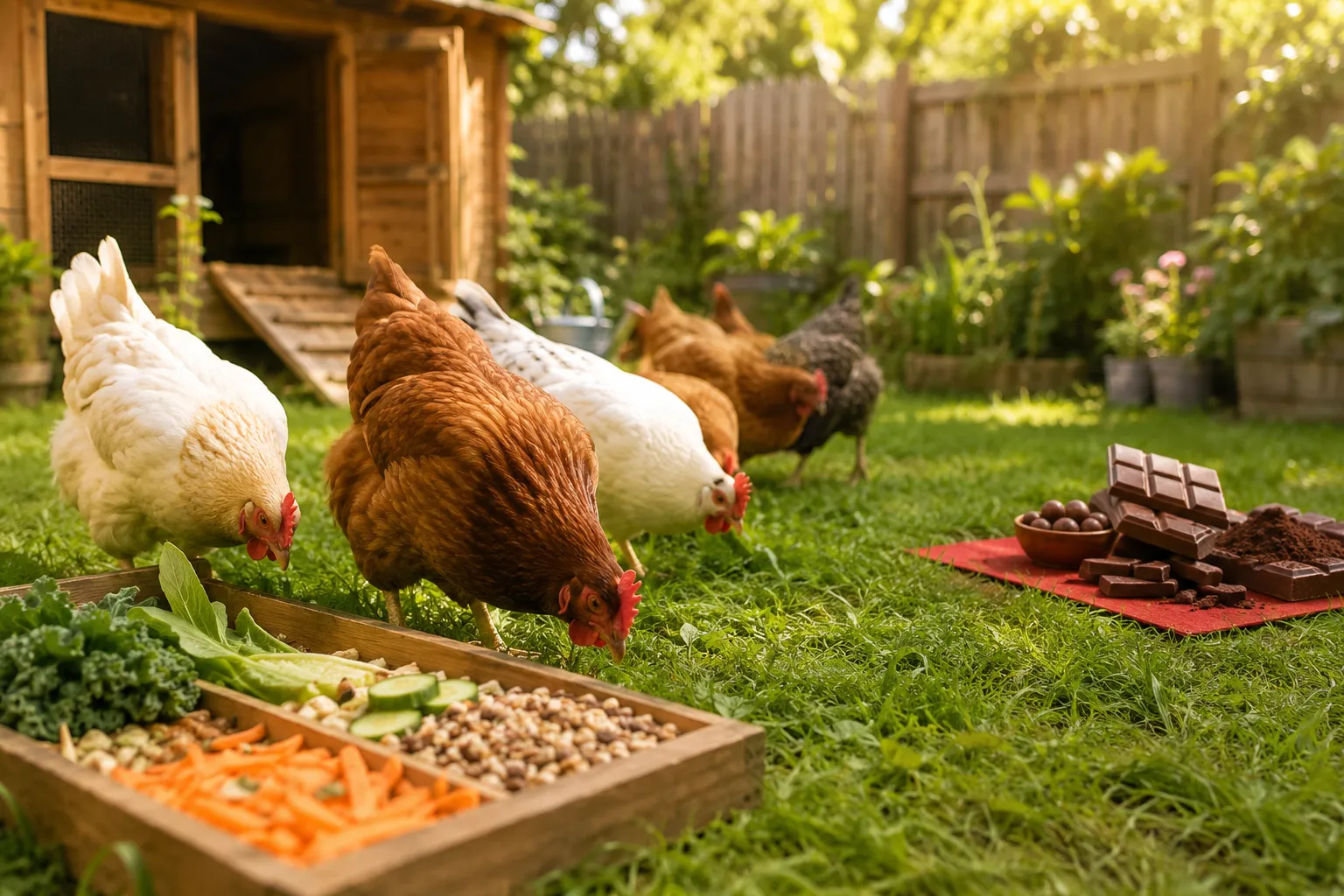
Chocolate is toxic to chickens and should never be fed to them under any circumstances. The compound theobromine found in chocolate cannot be properly metabolized by chickens, leading to serious health complications and potentially death even in small amounts.
Key Takeaways
- Chocolate contains theobromine, a stimulant that chickens cannot process, making it highly toxic to them
- All types of chocolate are dangerous to chickens, with dark chocolate and cocoa powder being the most lethal
- Even small amounts can cause serious harm; there is no safe quantity of chocolate for chickens
- Symptoms appear within 4-6 hours and include weakness, tremors, increased heart rate, and seizures
- Immediate veterinary care is essential if a chicken consumes chocolate
- Many common foods are toxic to chickens beyond chocolate, including avocado, raw beans, and moldy feed
- Safe treat alternatives include fruits, vegetables, mealworms, and scratch grains in moderation
Why Is Chocolate Toxic to Chickens?
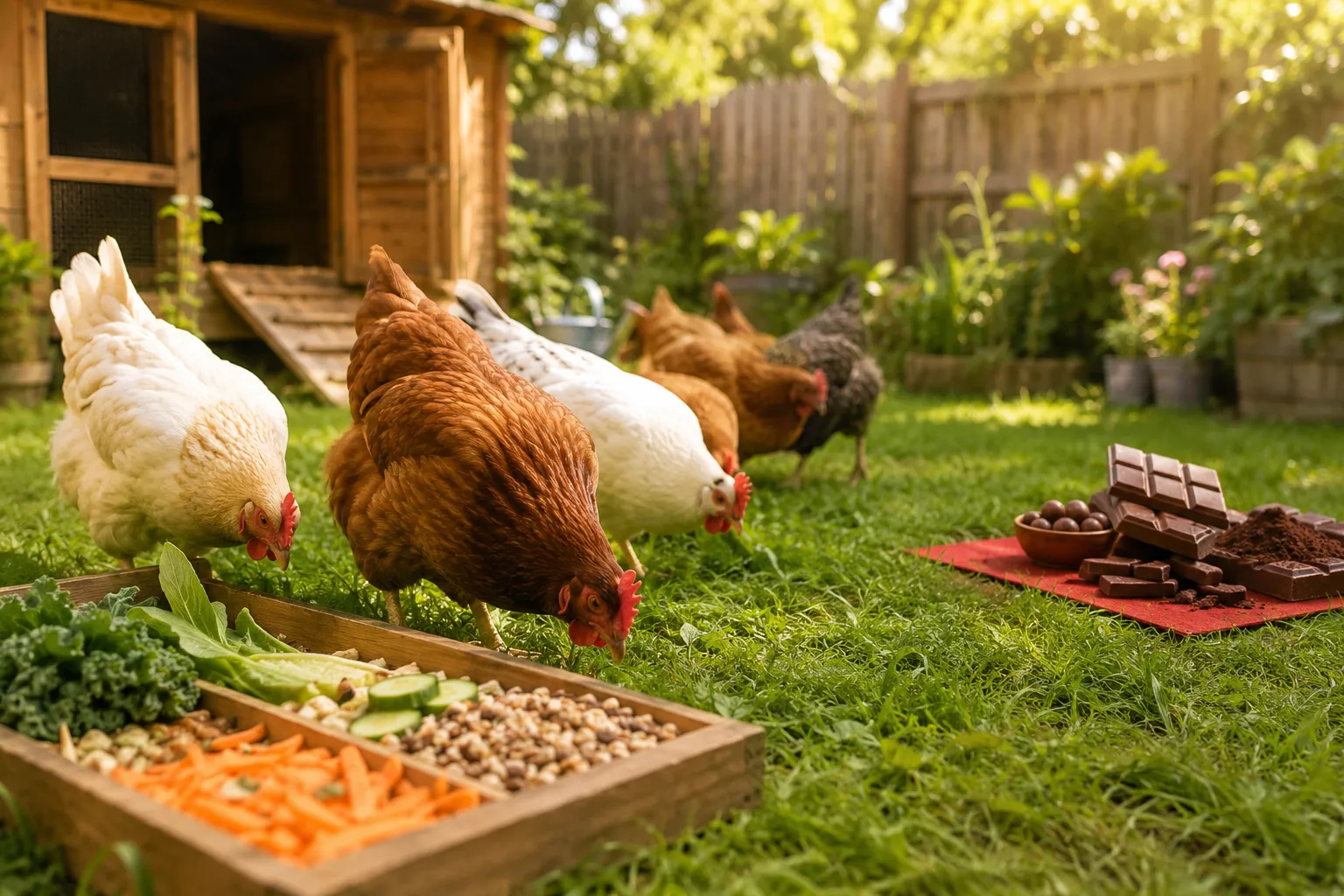
Chocolate contains two methylxanthine compounds that are toxic to chickens: theobromine and caffeine. Chickens lack the enzymes needed to metabolize theobromine efficiently, causing it to build up in their system and reach toxic levels quickly. While humans can process and eliminate theobromine within a few hours, chickens metabolize it much more slowly, allowing the compound to accumulate and damage their cardiovascular and nervous systems.
Theobromine acts as a stimulant that affects multiple organ systems in chickens:
- Cardiovascular system: Increases heart rate to dangerous levels, causes irregular heartbeat, and can lead to cardiac arrest
- Nervous system: Triggers hyperactivity, tremors, seizures, and loss of coordination
- Digestive system: Causes vomiting, diarrhea, and severe gastrointestinal distress
- Respiratory system: Leads to rapid breathing and respiratory failure in severe cases
The concentration of theobromine varies by chocolate type, but all forms pose a serious threat. Dark chocolate contains 130-450 mg of theobromine per ounce, milk chocolate has 44-60 mg per ounce, and even white chocolate contains trace amounts that can be harmful to small birds.
Common mistake: Some chicken keepers assume that if wild birds occasionally peck at chocolate without immediate death, it must be safe in tiny amounts. This is false reasoning. Wild birds may not consume enough to show immediate symptoms, but any exposure causes internal damage, and chickens are particularly sensitive due to their unique metabolism.
What Happens If a Chicken Eats Chocolate?
If a chicken eats chocolate, the theobromine begins affecting their system within 4-6 hours, though symptoms can appear as quickly as 2 hours depending on the amount consumed and the type of chocolate. The chicken will initially show signs of hyperactivity and restlessness, followed by more severe neurological and cardiovascular symptoms as the toxin spreads through their bloodstream.
The progression typically follows this pattern:
Early stage (2-6 hours after ingestion):
- Increased thirst and excessive drinking
- Restlessness and agitation
- Rapid breathing
- Diarrhea
Middle stage (6-12 hours):
- Muscle tremors and twitching
- Loss of coordination and balance
- Weakness in legs
- Increased heart rate
- Vomiting or regurgitation
Severe stage (12-24 hours):
- Seizures
- Collapse
- Irregular heartbeat
- Respiratory distress
- Coma
- Death
The severity depends on the chicken’s size, overall health, and the amount and type of chocolate consumed. A bantam chicken weighing 1-2 pounds is at much higher risk than a large breed weighing 6-8 pounds, but no chicken is safe from chocolate toxicity.
“Theobromine poisoning in poultry is a medical emergency. Unlike mammals that might survive with supportive care, chickens have a much narrower window for intervention due to their rapid metabolism and smaller body mass.”
Without immediate veterinary intervention, chocolate poisoning is often fatal in chickens. There is no antidote for theobromine poisoning, so treatment focuses on supportive care and preventing further absorption.
How Much Chocolate Is Dangerous for Chickens?
There is no safe amount of chocolate for chickens. Even a small piece can cause serious health problems or death, particularly in smaller breeds or bantams. As little as 0.1 ounces (roughly 3 grams) of dark chocolate can be lethal to a standard-sized chicken weighing 5-6 pounds, while the same amount of milk chocolate could cause severe symptoms requiring emergency care.
To put this in perspective:
| Chocolate Type | Theobromine Content | Potentially Lethal Amount for 5-lb Chicken |
|---|---|---|
| Cocoa powder | 400-800 mg/oz | Less than 0.05 oz (1-2 teaspoons) |
| Dark chocolate (70-85%) | 200-450 mg/oz | 0.1-0.2 oz (small square) |
| Milk chocolate | 44-60 mg/oz | 0.5-1 oz (2-3 small pieces) |
| White chocolate | 0.25-1 mg/oz | Still dangerous due to fat and sugar content |
Critical point: These amounts represent potentially lethal doses, but any amount can cause harm. Sub-lethal doses still damage the heart, nervous system, and kidneys, potentially causing long-term health problems even if the chicken survives the initial poisoning.
Bantam chickens and young chicks are at even greater risk. A bantam weighing just 1-2 pounds could be killed by a single chocolate chip. The smaller the bird, the less chocolate it takes to reach toxic levels in the bloodstream.
Choose immediate action if: Your chicken has consumed any amount of chocolate, regardless of how small it seems. Do not wait for symptoms to appear before seeking help.
Can Chickens Eat White Chocolate vs Dark Chocolate?
Neither white chocolate nor dark chocolate is safe for chickens, though dark chocolate poses a more immediate and severe threat due to its higher theobromine content. Dark chocolate contains 5-10 times more theobromine than milk chocolate and up to 100 times more than white chocolate, making it the most dangerous form. However, white chocolate still contains trace amounts of theobromine plus high levels of fat and sugar that can cause serious digestive problems and pancreatitis in chickens.
Dark chocolate dangers:
- Highest theobromine concentration (200-450 mg per ounce)
- Fastest onset of symptoms
- Most likely to cause fatal poisoning
- Even tiny amounts are extremely dangerous
Milk chocolate risks:
- Moderate theobromine levels (44-60 mg per ounce)
- Still highly toxic to chickens
- Larger amounts needed for lethal dose but still very dangerous
- Contains additional dairy that chickens cannot digest properly
White chocolate concerns:
- Very low theobromine (0.25-1 mg per ounce)
- High fat content causes digestive distress
- Sugar content disrupts gut bacteria
- Can lead to obesity and fatty liver disease
- Still contains trace toxins
The bottom line: all chocolate is off-limits. The difference in theobromine content only affects how quickly and severely symptoms appear, not whether the chocolate is safe. A chicken that eats white chocolate may not show immediate neurological symptoms, but will still suffer digestive damage and potential long-term health consequences.
Symptoms of Chocolate Poisoning in Chickens
Chocolate poisoning symptoms in chickens typically appear within 2-6 hours of ingestion and progress rapidly. The most common early signs include increased thirst, restlessness, and diarrhea, followed by more severe neurological symptoms like tremors, loss of coordination, and seizures as the theobromine concentration builds in their system.
Watch for these warning signs:
Behavioral changes:
- Unusual hyperactivity or agitation
- Inability to settle or rest
- Separation from the flock
- Disorientation or confusion
- Reduced appetite or refusal to eat
Physical symptoms:
- Excessive drinking and urination
- Watery or bloody diarrhea
- Panting or rapid breathing
- Increased heart rate (visible chest movement)
- Muscle tremors, especially in legs and wings
- Weakness or inability to stand
- Loss of balance and coordination
Severe symptoms requiring immediate emergency care:
- Seizures or convulsions
- Collapse or inability to move
- Blue-tinged comb or wattles (indicating oxygen deprivation)
- Gasping for air
- Unconsciousness
- Sudden death
Timeline matters: If you know your chicken consumed chocolate, do not wait for symptoms to appear. The earlier you intervene, the better the chance of survival. Once severe neurological symptoms like seizures begin, the prognosis becomes very poor even with aggressive treatment.
Edge case: Some chickens may show only mild symptoms initially, leading keepers to believe the bird is recovering. However, theobromine continues to circulate and accumulate, and symptoms often worsen suddenly after an apparent improvement. Never assume a chicken is “fine” after chocolate exposure without veterinary assessment.
What to Do If My Chicken Ate Chocolate
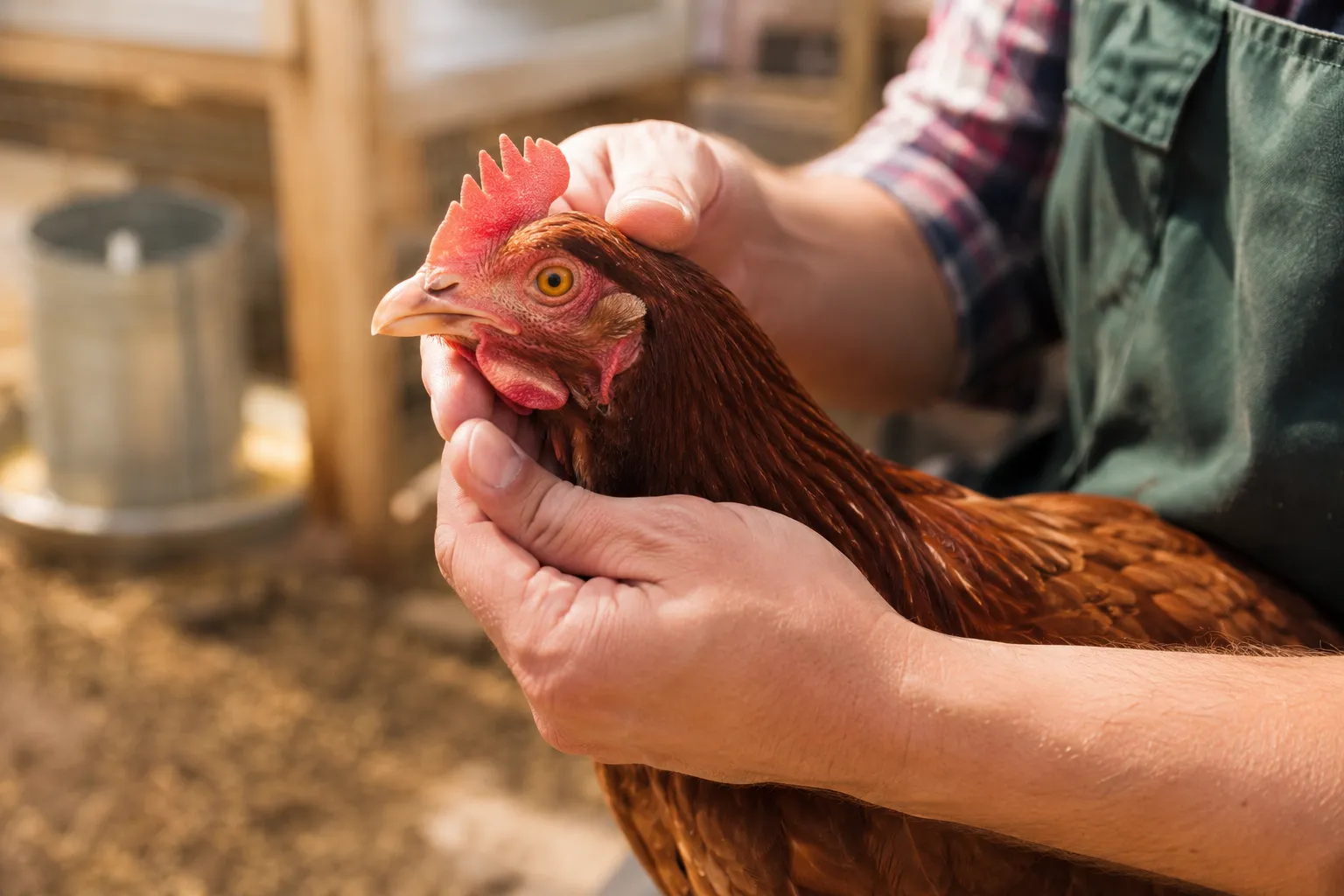
If your chicken ate chocolate, contact an avian veterinarian or emergency animal clinic immediately, even if the bird is not yet showing symptoms. Time is critical in chocolate poisoning cases, and early intervention significantly improves survival chances. Do not attempt home remedies or wait to see if symptoms develop.
Immediate steps to take:
- Remove the chicken from the flock and place it in a quiet, warm, well-ventilated space where you can monitor it closely
- Note the details: What type of chocolate, approximately how much, and when the chicken consumed it
- Call your veterinarian or an emergency animal clinic right away with this information
- Do not induce vomiting unless specifically instructed by a veterinarian (chickens have different anatomy than mammals)
- Provide fresh water but do not force-feed anything
- Keep the chicken calm and minimize stress, as excitement can worsen cardiovascular symptoms
What the veterinarian may do:
- Administer activated charcoal to bind remaining chocolate in the digestive system
- Provide intravenous fluids to help flush toxins and support kidney function
- Give medications to control seizures, heart rate, or other symptoms
- Monitor vital signs and provide oxygen support if needed
- Keep the chicken hospitalized for observation during the critical 24-48 hour period
Common mistake: Some keepers try to make the chicken vomit by giving salt water or other substances. This is dangerous and can cause additional harm. Chickens have a different digestive system than dogs or cats, and inducing vomiting can lead to aspiration pneumonia or salt toxicity.
If veterinary care is not immediately available: Contact a poultry poison control hotline or an avian veterinarian via telemedicine for guidance. Keep the chicken warm, quiet, and hydrated while arranging transport to the nearest facility that can provide care.
Prevention is key: After this incident, review your coop security and treat-feeding practices to ensure chocolate and other toxic foods cannot reach your flock.
Is Cocoa Powder Bad for Chickens Too?
Cocoa powder is extremely dangerous for chickens and is actually more toxic than solid chocolate due to its concentrated theobromine content. Pure cocoa powder contains 400-800 mg of theobromine per ounce, which is roughly double the amount found in dark chocolate and 10-15 times more than milk chocolate. Just 1-2 teaspoons of cocoa powder can be lethal to a standard-sized chicken.
Cocoa powder poses additional risks because:
- Higher concentration: The removal of cocoa butter during processing leaves behind concentrated theobromine
- Easier to consume: The powder form can be accidentally mixed into feed or inhaled
- Faster absorption: Fine powder is absorbed more quickly through the digestive tract
- Hidden in baked goods: Many treats contain cocoa powder that isn’t immediately visible
Baking chocolate warning: Unsweetened baking chocolate and cocoa powder are the most dangerous forms of chocolate products. A single square of baker’s chocolate (1 ounce) contains enough theobromine to kill multiple chickens.
Real-world scenario: If you’re composting kitchen scraps near your coop, be extremely careful about cocoa-containing items. Chickens are curious and will peck at compost piles. Even dried cocoa powder residue on a mixing bowl or baking pan can be dangerous if chickens have access to it.
Never use cocoa powder, cocoa hulls, or cocoa shell mulch anywhere chickens can access. Some garden mulches contain cocoa bean shells, which also have high theobromine content and have caused poisoning in backyard flocks.
What Foods Are Toxic to Chickens Besides Chocolate?
Many common foods are toxic to chickens and should be kept away from your flock. Beyond chocolate, the most dangerous items include avocado (all parts contain persin, which causes heart damage), raw or dried beans (contain phytohaemagglutinin, which is fatal), green potatoes and tomatoes (contain solanine), onions and garlic in large amounts (cause anemia), and moldy or spoiled food (produces deadly mycotoxins).
Highly toxic foods to avoid completely:
- Avocado: Skin, pit, leaves, and flesh all contain persin; causes respiratory distress and heart failure
- Raw or undercooked beans: Kidney beans, black beans, and lima beans contain hemagglutinin; causes severe digestive damage
- Green potatoes and potato leaves: Contain solanine; causes neurological problems and paralysis
- Rhubarb leaves: High oxalic acid content; causes kidney failure
- Apple seeds and stone fruit pits: Contain cyanide compounds; causes respiratory failure
- Moldy or spoiled food: Produces aflatoxins and other mycotoxins; causes liver damage and death
Foods to limit or avoid:
- Onions and garlic: Small amounts are debated, but large quantities cause hemolytic anemia
- Salty foods: Chickens are very sensitive to salt; can cause salt poisoning and death
- Sugary treats: Disrupt gut bacteria and cause obesity and fatty liver disease
- Processed foods: Contain preservatives, artificial ingredients, and excessive salt
- Caffeinated beverages: Contain caffeine, which affects chickens similarly to theobromine
- Alcohol: Even small amounts are toxic to chickens
Moderately safe in small amounts but not recommended:
- Citrus fruits (may reduce calcium absorption)
- Raw eggs (can encourage egg-eating behavior)
- Dairy products (chickens lack lactase enzyme)
Choose safe treats instead: Stick to vegetables like lettuce, cucumbers, and squash; fruits like berries, melons, and apples (without seeds); grains like oats and wheat; and protein sources like mealworms and cooked eggs.
Can Chickens Eat Chocolate Chip Cookies or Baked Goods?
Chickens should not eat chocolate chip cookies or any baked goods containing chocolate, cocoa powder, or chocolate chips. Even though the chocolate is diluted by other ingredients, the theobromine content remains dangerous, and a cookie containing just a few chocolate chips can harm or kill a chicken. Additionally, baked goods typically contain sugar, butter, and salt in amounts that are unhealthy for chickens even without the chocolate.
Why baked goods with chocolate are dangerous:
- Theobromine persists through baking: Cooking does not break down or neutralize theobromine
- Multiple chocolate pieces: A single cookie may contain several chocolate chips, multiplying the toxic dose
- Hidden cocoa: Many recipes include cocoa powder in the dough itself, not just chocolate chips
- Additional harmful ingredients: Butter, sugar, salt, and artificial flavors all cause problems for chickens
Common scenarios to avoid:
- Tossing leftover cookies or brownies to chickens as “treats”
- Allowing chickens to clean up crumbs after outdoor parties or picnics
- Composting chocolate-containing baked goods where chickens can access them
- Giving chickens “stale” baked goods to avoid waste
What about chocolate-free baked goods? Plain bread, crackers, or baked goods without chocolate, excessive salt, or artificial ingredients can be given occasionally in very small amounts, but they provide little nutritional value. Chickens need protein, vitamins, and minerals, not empty carbohydrates. Better treat options include:
- Fresh vegetables and fruits
- Cooked grains like oatmeal or rice
- Mealworms or other insects
- Scratch grains in moderation
- Leafy greens
Edge case: If a chicken accidentally consumes a small crumb of a chocolate chip cookie (for example, pecking at a dropped piece before you can remove it), monitor the bird closely for 24 hours and contact your veterinarian if any symptoms appear. While a tiny crumb may not cause obvious symptoms, it’s still not safe, and repeated small exposures can cause cumulative damage.
How Long Does It Take for Chocolate to Affect Chickens?
Chocolate typically begins affecting chickens within 2-6 hours after ingestion, though the exact timing depends on the amount consumed, the type of chocolate, and the individual chicken’s size and metabolism. Initial symptoms like increased thirst and restlessness may appear as early as 2 hours, while more severe neurological symptoms like tremors and seizures usually develop within 6-12 hours as theobromine accumulates in the bloodstream.
Symptom timeline:
- 0-2 hours: Chocolate is being digested and theobromine is entering the bloodstream; chicken may appear normal
- 2-6 hours: Early symptoms emerge (increased drinking, restlessness, diarrhea, rapid breathing)
- 6-12 hours: Moderate to severe symptoms develop (tremors, weakness, loss of coordination, increased heart rate)
- 12-24 hours: Critical period for severe symptoms (seizures, collapse, cardiac arrest)
- 24-48 hours: If the chicken survives the first 24 hours with treatment, prognosis improves but monitoring continues
Factors that affect timing:
- Type of chocolate: Dark chocolate and cocoa powder cause faster, more severe symptoms than milk chocolate
- Amount consumed: Larger doses produce symptoms more quickly
- Chicken’s size: Smaller birds reach toxic blood levels faster
- Empty vs. full crop: Chocolate consumed on an empty crop is absorbed more quickly
- Individual metabolism: Some chickens may be more sensitive than others
Critical window for intervention: The first 2-4 hours after ingestion offer the best opportunity for treatment. If you know your chicken ate chocolate, contact a veterinarian immediately rather than waiting for symptoms. Once severe symptoms appear, treatment becomes much more difficult and the survival rate drops significantly.
Long-term effects: Chickens that survive chocolate poisoning may experience lasting damage to their heart, kidneys, or nervous system. Some birds develop chronic health problems or reduced egg production even after apparent recovery.
Are There Any Safe Treats Similar to Chocolate for Chickens?
There are no treats that taste like chocolate that are safe for chickens, but there are many nutritious and enjoyable alternatives that chickens love just as much. The best treats provide protein, vitamins, and minerals while satisfying chickens’ natural foraging instincts. Mealworms, fresh fruits like berries and melon, vegetables like leafy greens and squash, and scratch grains are all excellent options that chickens find exciting and rewarding.
Top safe treat alternatives:
High-protein treats (chickens love these):
- Mealworms (dried or live)
- Black soldier fly larvae
- Crickets
- Cooked eggs (scrambled or hard-boiled)
- Cooked fish or shrimp in small amounts
Fruits (natural sweetness):
- Berries (strawberries, blueberries, raspberries)
- Watermelon (including rind)
- Cantaloupe and honeydew
- Apples (remove seeds)
- Grapes (cut in half for smaller birds)
- Pumpkin and squash
Vegetables (nutrient-rich):
- Leafy greens (kale, lettuce, spinach, cabbage)
- Cucumbers
- Zucchini and summer squash
- Broccoli and cauliflower
- Peas
- Cooked sweet potatoes
Grains and seeds:
- Scratch grains (corn, wheat, oats)
- Cooked oatmeal
- Cooked rice
- Sunflower seeds (unsalted)
- Pumpkin seeds
Treat-feeding best practices:
- Limit treats to 10% of diet: The majority of nutrition should come from quality layer feed
- Offer variety: Rotate different treats to provide diverse nutrients
- Use treats for training: Hand-feeding treats builds trust and makes handling easier
- Scatter treats: Encourage natural foraging behavior by spreading treats in the run
- Remove uneaten treats: Don’t let fresh foods spoil in the coop
Fun treat ideas chickens love:
- Frozen fruit chunks on hot days
- “Flock block” or suet cakes made for poultry
- Sprouted grains or seeds
- Hanging cabbage or lettuce heads (creates entertainment)
- Treat puzzles or foraging toys

Do Backyard Chickens Know to Avoid Chocolate Naturally?
Chickens do not instinctively know to avoid chocolate and will readily eat it if given the opportunity. Unlike some animals that can detect and avoid toxic substances through taste or smell, chickens lack the sensory mechanisms to identify theobromine as dangerous. They are opportunistic eaters with limited taste receptors and will peck at almost anything that resembles food, including chocolate, which may even be attractive to them due to its fat and sugar content.
Why chickens don’t avoid chocolate:
- Limited taste receptors: Chickens have only about 240-360 taste buds compared to humans’ 10,000, making them poor at detecting potentially harmful substances
- Opportunistic feeding behavior: Chickens evolved to eat a wide variety of foods and will try almost anything
- No evolutionary exposure: Chocolate is not a natural substance chickens would encounter in the wild, so they haven’t developed avoidance behaviors
- Attractive components: The fat and sugar in chocolate may actually make it appealing to chickens
Real-world evidence: Backyard chicken keepers frequently report chickens eagerly eating chocolate when accidentally exposed to it. Chickens will fight over chocolate chips, peck at chocolate bars, and consume cocoa-containing compost without hesitation.
This means you must be vigilant:
- Never assume chickens will “know better” than to eat something harmful
- Keep all chocolate products securely stored away from chicken areas
- Educate family members and visitors about what not to feed chickens
- Check the ground and coop area for dropped food after outdoor gatherings
- Secure compost bins and trash cans that might contain chocolate waste
Compare to other animals: While dogs also cannot metabolize theobromine well, many dogs will avoid extremely bitter dark chocolate due to taste. Chickens lack even this basic deterrent and will consume any form of chocolate without hesitation.
Can a Small Amount of Chocolate Kill a Chicken?
Yes, a small amount of chocolate can kill a chicken, especially if it’s dark chocolate, baking chocolate, or cocoa powder. As little as 0.1 ounces (about 3 grams) of dark chocolate, roughly the size of a single square from a chocolate bar, can be lethal to a standard 5-6 pound chicken. Smaller breeds, bantams, and young chickens are at even greater risk and can be killed by amounts as small as a single chocolate chip.
Lethal dose examples:
- Bantam chicken (1-2 lbs): 1-2 chocolate chips of dark chocolate can be fatal
- Standard chicken (5-6 lbs): One small square of dark chocolate (0.1-0.2 oz) can be lethal
- Large breed (8-10 lbs): 2-3 small squares of dark chocolate can cause death
Why such small amounts are dangerous:
- High theobromine concentration: Dark chocolate contains 200-450 mg per ounce
- Rapid absorption: Chickens’ fast metabolism means toxins reach critical levels quickly
- Small body mass: Chickens weigh much less than dogs or cats, so the same amount represents a much higher dose per pound
- No tolerance: Unlike humans who regularly consume chocolate, chickens have zero tolerance for theobromine
- Cumulative effect: Even if one exposure doesn’t kill, repeated small exposures cause organ damage
Milk chocolate comparison: While milk chocolate contains less theobromine, it’s still highly dangerous. A chicken would need to consume about 0.5-1 ounce (2-3 small pieces) for a potentially lethal dose, but smaller amounts still cause serious harm.
The bottom line: There is no safe amount of chocolate for chickens. Any exposure is a medical emergency. Even if a chicken survives a small exposure, the theobromine causes damage to the heart, kidneys, and nervous system that may shorten the bird’s lifespan or reduce its quality of life.
Choose prevention: The only safe approach is complete avoidance. Never test whether your chicken can “handle” a small amount, the risk far outweighs any perceived benefit.
Frequently Asked Questions
Can chickens eat carob instead of chocolate?
Yes, carob is safe for chickens in small amounts. Unlike chocolate, carob does not contain theobromine or caffeine, making it non-toxic. However, carob is high in sugar and should only be offered occasionally as a treat, not as a regular part of their diet.
What should I do if I don’t know how much chocolate my chicken ate?
Treat any chocolate exposure as a potential emergency. Contact your veterinarian immediately and describe what type of chocolate was available and approximately when the chicken may have consumed it. It’s better to seek care for a false alarm than to wait and risk the chicken’s life.
Will activated charcoal from the pet store work for chocolate poisoning in chickens?
Do not administer activated charcoal without veterinary guidance. The dosage, timing, and administration method are critical, and incorrect use can cause aspiration or other complications. Only a veterinarian should administer activated charcoal to a chicken.
Can I give my chicken milk to dilute the chocolate?
No, do not give milk or any other home remedy. Chickens cannot properly digest dairy products, and milk will not neutralize theobromine. It may cause additional digestive distress. Provide only fresh water and seek immediate veterinary care.
How long after chocolate exposure is my chicken safe?
The critical period is 24-48 hours after ingestion. If your chicken survives this period with veterinary treatment and shows no symptoms, the prognosis improves significantly. However, continue monitoring for several days and follow your veterinarian’s recommendations for follow-up care.
Are chocolate-flavored treats made for chickens safe?
There are no legitimate chocolate-flavored treats made specifically for chickens from reputable poultry supply companies. If you encounter a product claiming to be chocolate-flavored for chickens, avoid it. Stick to treats specifically formulated for poultry from trusted manufacturers.
Can chickens eat chocolate cake or chocolate ice cream?
No, chickens should not eat any food containing chocolate, including cake, ice cream, pudding, or other desserts. These items contain theobromine plus additional ingredients like sugar, dairy, and artificial additives that are harmful to chickens.
Is chocolate more dangerous to laying hens than roosters?
Chocolate is equally dangerous to all chickens regardless of sex or whether they’re laying. However, the stress of chocolate poisoning may cause laying hens to stop producing eggs temporarily or permanently, even if they survive the initial poisoning.
What if my chicken only licked chocolate frosting?
Even licking chocolate frosting exposes the chicken to theobromine. Monitor the bird closely for 24 hours and contact your veterinarian if any symptoms appear. The amount may be small enough not to cause obvious symptoms, but it’s still not safe.
Can I prevent chocolate poisoning by mixing chocolate with other foods?
No, diluting chocolate with other foods does not make it safe. The total amount of theobromine remains the same, and chickens will still absorb it through their digestive system. Never intentionally feed chocolate to chickens in any form or combination.
Do heritage breed chickens have better tolerance for chocolate?
No chicken breed has any tolerance for chocolate. All chickens, regardless of breed, age, or heritage, are equally susceptible to theobromine poisoning. Never assume any chicken can safely consume chocolate.
How do I chicken-proof my yard against chocolate exposure?
Store all chocolate products in secure containers inside your home, never compost chocolate-containing items, supervise outdoor gatherings where chocolate might be present, educate family and visitors about not feeding chickens, and regularly inspect your yard for dropped food items before allowing chickens to free-range.
Conclusion
Chocolate is one of the most dangerous foods you can expose your chickens to, and there is no safe amount for any chicken to consume. The theobromine in chocolate cannot be metabolized by chickens, leading to rapid and often fatal poisoning that affects their heart, nervous system, and other vital organs. Whether it’s a single chocolate chip or a piece of chocolate cake, any exposure requires immediate veterinary attention.
Take these steps to protect your flock:
- Store all chocolate products securely away from areas where chickens can access them
- Educate everyone who interacts with your chickens about toxic foods
- Inspect your yard regularly for dropped food items, especially after gatherings
- Never compost chocolate or chocolate-containing items where chickens can reach them
- Keep emergency contact information for your avian veterinarian readily available
- Offer safe alternatives like mealworms, fruits, vegetables, and appropriate scratch grains
Remember that chickens don’t instinctively know to avoid chocolate, they will eagerly eat it if given the chance. Your vigilance is the only thing standing between your flock and a potentially fatal poisoning. By understanding the serious risks chocolate poses and taking proactive prevention measures, you can keep your chickens healthy, safe, and thriving for years to come.
If you suspect any chocolate exposure, don’t wait for symptoms to appear. Contact your veterinarian immediately. Quick action can mean the difference between life and death for your feathered friends.


