
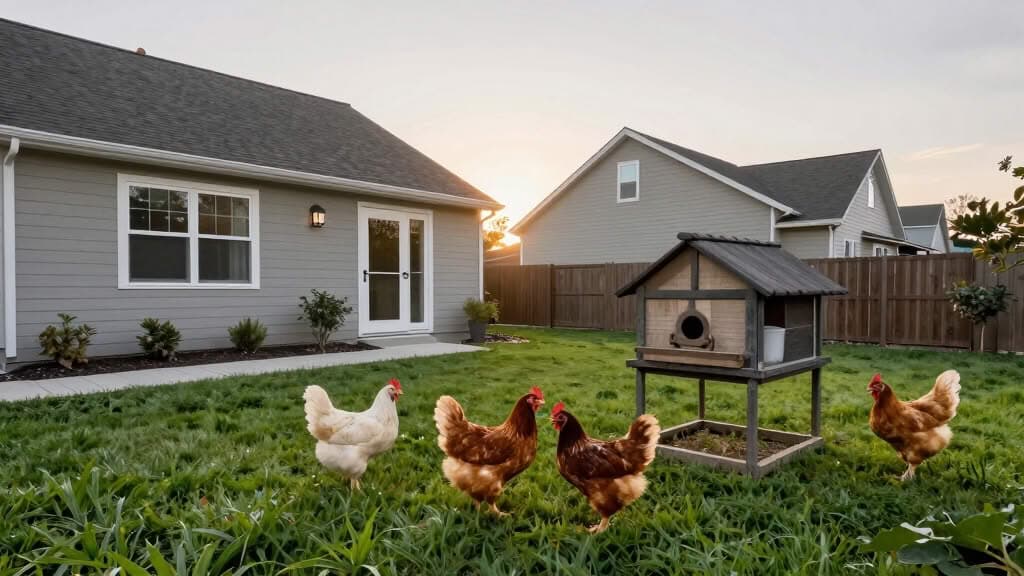
Quick Answer: Backyard chickens typically do not decrease property value in most markets, but their impact depends heavily on local zoning laws, neighborhood type, coop quality, and buyer preferences. In rural and semi-rural areas, chickens often have neutral or even positive effects, while in upscale suburban neighborhoods they may narrow your buyer pool by 10-30%. The condition and presentation of the coop matters more than the chickens themselves.
Key Takeaways
- Backyard chickens rarely decrease actual appraised property value, but may affect marketability and time-on-market
- Rural and agricultural areas see little to no negative impact from backyard chickens
- Suburban properties may experience a smaller buyer pool, but not necessarily lower offers from interested buyers
- Well-maintained coops can be presented as premium amenities rather than liabilities
- HOA restrictions and local zoning laws have more impact on value than the chickens themselves
- Most real estate agents recommend removing or offering to remove chickens before listing
- Appraisers typically do not deduct value for backyard chickens unless structures violate codes
- Proper disclosure and presentation strategy can minimize any negative perception
- The chicken setup’s cleanliness and integration with landscaping matters more than its existence
- Buyers who want chickens will often pay a premium for move-in-ready setups
Do Backyard Chickens Actually Lower Home Resale Value?
Backyard chickens do not automatically lower home resale value in most cases. The actual appraised value of your property is based on comparable sales, square footage, condition, and location, not on whether you keep a few hens. However, chickens can affect marketability, which means they might reduce the number of interested buyers or increase your time on market.
The distinction matters because value and marketability are different concepts. Your home’s value is what it’s worth based on objective factors. Marketability is how quickly and easily you can sell it. A property with chickens might still appraise at the same price as your neighbor’s identical home, but it could take longer to find the right buyer.
Key factors that determine impact:
- Location type: Rural properties see virtually no negative effect; suburban properties face more buyer resistance
- Coop quality: Professional, attractive coops can be assets; makeshift structures hurt perception
- Neighborhood norms: If several neighbors have chickens, yours won’t stand out negatively
- Local regulations: Legal chicken-keeping areas face less stigma than places where it’s uncommon
- Buyer demographics: Younger, sustainability-minded buyers often view chickens positively
One common mistake is assuming all buyers will react negatively. In reality, the market is segmented. Some buyers will immediately reject a property with chickens, while others actively seek them out. Your goal is to present the setup in a way that appeals to the second group while not alienating the first.
How Much Does Property Value Drop With Chickens in the Yard?
Property value typically does not drop at all due to backyard chickens, according to most real estate professionals. There is no standard percentage deduction that appraisers apply for chicken-keeping. The financial impact, when it exists, shows up as slightly longer market time or occasionally lower offers, not as a reduction in appraised value.
In suburban markets where chickens are less common, you might see:
- 0-5% reduction in final sale price if the coop is poorly maintained or violates aesthetic standards
- 5-15 extra days on market compared to similar properties without chickens
- 10-30% smaller buyer pool of interested parties who will even view the property
In rural or semi-rural areas, the impact is usually:
- No measurable difference in sale price or time on market
- Potential premium of $500-$2,000 if the coop is high-quality and move-in ready
- Broader appeal to buyers seeking self-sufficiency or hobby farming
The real cost isn’t in the property value itself but in opportunity cost. If your home sits on the market three weeks longer because of chickens, you’re paying three extra weeks of mortgage, utilities, and maintenance. For many sellers, that’s a bigger concern than a small reduction in offer price.
Choose to keep chickens visible during sale if:
- You’re in a rural area where livestock is common
- Your coop is professionally built and visually attractive
- Multiple neighbors also keep chickens
- You’re targeting buyers interested in sustainable living
Choose to remove chickens before listing if:
- You’re in an upscale suburban neighborhood
- Your setup looks temporary or cluttered
- Local HOA or zoning makes chicken-keeping unusual
- You need to sell quickly
What Do Real Estate Agents Say About Selling a House With Chickens?
Real estate agents generally recommend removing chickens and their coops before listing, or at minimum offering to remove them as part of the sale negotiation. Most agents view chickens as a “polarizing feature” that narrows the buyer pool without adding compensating value for the majority of buyers.
Agents report that chickens trigger three main buyer concerns:
- Odor and cleanliness: Even well-maintained coops carry a perception of smell
- Maintenance burden: Buyers worry about inheriting an unwanted responsibility
- Neighbor relations: Concerns about complaints or HOA issues
However, agent opinions vary significantly by market. In areas where backyard chickens are common and legal, agents may advise keeping the setup if it’s attractive. The key is professional presentation.
What agents recommend:
- Deep clean the coop and surrounding area before any showings
- Remove chickens temporarily during open houses to eliminate odor concerns
- Take high-quality photos of the coop as a “bonus feature” rather than highlighting it prominently
- Offer in writing to remove all chicken-related structures if the buyer prefers
- Emphasize the coop’s quality construction and potential alternative uses (storage, playhouse, garden shed)
One agent strategy that works well is the “optional amenity” approach. List the property without mentioning chickens in the main description, but include professional photos of the coop in the gallery with a caption like “Custom-built garden structure with multiple uses.” This allows interested buyers to inquire while not immediately turning off others.
The biggest mistake sellers make is being defensive about their chickens. Emotional attachment to your flock can come across as inflexibility, which makes buyers nervous about negotiating other aspects of the sale.
Backyard Chickens vs Other Pets: Impact on Home Value
Backyard chickens have a different impact on property value compared to traditional pets like dogs and cats. Dogs and cats leave no permanent structures and are removed when you move, so they affect property condition but not features. Chickens come with coops, runs, and modified landscaping that remain after you leave.
Comparison of pet impacts on property:
| Pet Type | Structural Changes | Odor Concerns | Buyer Perception | Typical Value Impact |
|---|---|---|---|---|
| Dogs | Fencing, worn grass, scratched doors | Minimal if cleaned | Neutral to positive | 0% if damage repaired |
| Cats | Minimal | Minimal if cleaned | Neutral | 0% if damage repaired |
| Chickens | Coop, run, fencing | Moderate concern | Mixed/polarizing | 0% to -5% in suburbs |
| Rabbits/Guinea Pigs | Hutches, small runs | Low | Neutral | 0% |
| Goats/Sheep | Significant fencing, shelters | High concern | Negative in suburbs | -5% to -15% in suburbs |
The key difference is permanence and scale. A dog door can be replaced in an afternoon. A chicken coop is a structure that may require permits, and removing it leaves behind a patch of bare ground that needs landscaping.
However, chickens have one advantage over dogs: they don’t cause interior damage. Buyers won’t find scratched hardwood floors, chewed baseboards, or pet odors embedded in carpets. All chicken-related concerns are exterior and therefore easier to address.
Choose chickens over other livestock if:
- You want animals but have limited space
- You’re concerned about interior property damage
- You want a setup that can be completely removed before sale
- You live in an area where chickens are more accepted than larger animals
Are Backyard Chickens Considered a Nuisance by Homebuyers?
Some homebuyers do consider backyard chickens a nuisance, but the percentage varies dramatically by location and buyer demographics. In suburban areas where chickens are uncommon, roughly 40-60% of buyers view them negatively. In rural areas or neighborhoods with urban farming culture, only 10-20% of buyers see them as problematic.
The nuisance perception centers on three concerns:
Noise: Roosters are the main issue here. Hens are generally quiet, producing about 60-70 decibels when laying (similar to normal conversation). Roosters crow at 90+ decibels and can start before dawn. Properties with roosters face significantly more buyer resistance than hen-only setups.
Smell: Even clean coops have a distinctive odor that intensifies in warm weather. Buyers touring properties in summer are more likely to notice and object to chicken smells than those viewing in winter.
Pests: Chicken feed and droppings can attract rodents, flies, and other pests if not managed properly. Buyers worry about inheriting a pest problem, even if none currently exists.
Interestingly, younger buyers (millennials and Gen Z) are significantly more open to backyard chickens than older generations. Buyers interested in sustainability, organic food, and self-sufficiency often view chickens as a positive feature rather than a nuisance.
Red flags that make buyers see chickens as a nuisance:
- Visible rodent activity near the coop
- Strong odor detectable from the street or neighboring properties
- Presence of a rooster (especially in suburban settings)
- Chickens free-ranging into neighboring yards
- Complaints documented in HOA records
- Coop visible from the front of the house
Factors that reduce nuisance perception:
- Hens only, no roosters
- Coop located in back corner of property, away from neighboring homes
- Professional construction with proper ventilation and drainage
- Landscaping that screens the coop from view
- Spotlessly clean conditions during showings
- Written confirmation that setup meets all local codes
How to Remove a Chicken Coop Before Selling Your House
Removing a chicken coop before selling takes 1-3 days depending on size and construction method. Most sellers can complete removal for $200-$800 if doing it themselves, or $500-$2,000 if hiring professionals. The process involves dismantling the structure, removing fencing, disposing of materials, and restoring the ground.
Step-by-step removal process:
- Rehome the chickens (2-4 weeks before listing): Find new homes through local chicken groups, farms, or sanctuaries
- Empty and clean the coop (1 day): Remove all bedding, feeders, and equipment; deep clean to eliminate odor
- Dismantle the structure (1-2 days): Remove roofing, walls, and framing; separate materials for disposal or donation
- Remove fencing and posts (half day): Pull fence posts and roll up wire fencing
- Dispose of materials (half day): Haul to dump or arrange pickup; some coops can be sold or donated intact
- Restore the ground (1-2 days): Remove compacted bedding, till soil, add topsoil, seed or sod the area
- Landscape integration (1-3 days): Add plants, mulch, or features to make the area blend with the rest of the yard
Cost breakdown for DIY removal:
- Dump fees: $50-$150
- Topsoil and seed: $50-$200
- Tool rental (if needed): $50-$100
- Landscaping materials: $50-$350
When to hire professionals:
- Coop is larger than 100 square feet
- Structure is permanently attached to a concrete foundation
- You lack time or physical ability to do heavy work
- Electrical or plumbing connections need professional disconnection
- You want guaranteed completion before listing date
One mistake sellers make is removing the coop but leaving obvious evidence of its location. A bare patch of dirt or dead grass where the coop stood looks worse than a well-maintained coop. If you remove the structure, budget time and money to fully restore that area of the yard.
Alternatively, consider a “removal contingency” in your listing. Offer to remove the coop after sale if the buyer requests it, but leave it in place during showings. This gives you flexibility and may appeal to buyers who actually want the setup.
Do Appraisers Deduct Value for Backyard Chickens?
Appraisers typically do not deduct value for backyard chickens or coops when determining a property’s market value. Appraisals are based on comparable sales, and since most comparable properties don’t have chickens, appraisers treat coops as they would any other outbuilding, assessing whether it adds, subtracts, or has neutral impact based on quality and condition.
A well-built coop may add $500-$1,500 to appraised value as an outbuilding, similar to a shed or gazebo. A poorly constructed or unpermitted coop may result in a note about deferred maintenance or code compliance, but rarely a specific dollar deduction.
What appraisers actually evaluate:
- Structural quality: Is the coop well-built and maintained?
- Permit compliance: Was it built with required permits (if applicable)?
- Integration with property: Does it fit the overall property aesthetic?
- Functional utility: Could it serve other purposes (storage, workshop)?
- Market expectations: Is it typical for the neighborhood?
Appraisers are more likely to note concerns than to make specific deductions. For example, an appraiser might write: “Property includes unpermitted chicken coop in rear yard. Buyer should verify compliance with local zoning.” This note can affect buyer confidence and lender approval more than the actual appraised value.
Situations where appraisers might reduce value:
- Coop violates setback requirements or other zoning codes
- Structure is in poor condition or poses safety hazards
- Odor or pest issues are evident during appraisal visit
- Coop occupies space that would otherwise be usable yard (reducing functional outdoor space)
- Property is in a high-end neighborhood where chickens are inconsistent with market standards
How to ensure positive appraisal treatment:
- Obtain permits retroactively if your coop was built without them
- Make any needed repairs before the appraisal
- Clean thoroughly and eliminate odors
- Provide documentation of construction quality and materials
- Have photos ready showing the coop’s best presentation
The bottom line: appraisers focus on objective property characteristics. If your coop is legal, well-built, and maintained, it won’t hurt your appraisal. If it’s a code violation or eyesore, the appraiser will note it, which can create problems even without a specific dollar deduction.
What Neighborhoods Allow Backyard Chickens Without Affecting Value?
Neighborhoods where backyard chickens don’t affect property value share common characteristics: rural or semi-rural location, agricultural zoning or history, community culture that embraces sustainability, and existing prevalence of chicken-keeping among residents.
Best neighborhood types for chicken-keeping:
Rural and agricultural areas: Properties on 1+ acre lots in unincorporated areas face virtually no value impact from chickens. These areas often have no restrictions, and buyers expect to see livestock.
Established urban farming communities: Neighborhoods in cities like Portland, Seattle, Austin, and Denver with strong urban agriculture movements view chickens as normal and even desirable.
Transitional suburban areas: Older suburbs with larger lots (half-acre+) that are transitioning toward more sustainable practices often accept chickens without stigma.
Planned communities with agricultural themes: Some newer developments specifically allow and encourage chickens as part of their identity.
Worst neighborhood types for chicken-keeping:
- Upscale suburban subdivisions with small lots and strict HOAs
- Gated communities with extensive covenants
- Dense urban areas with tiny yards
- Neighborhoods where chickens are illegal but some residents keep them anyway
How to assess your neighborhood’s chicken-friendliness:
- Check local zoning laws and HOA covenants
- Walk or drive around to see if other properties have visible coops
- Ask neighbors about their awareness of chicken-keeping nearby
- Review local real estate listings to see if any mention chickens positively
- Contact a local real estate agent for market-specific insight
If you’re considering buying a property specifically to keep chickens, research the neighborhood thoroughly first. A legal right to keep chickens doesn’t guarantee they won’t affect your resale value. Community acceptance matters as much as legal permission.
Green flags for chicken-friendly neighborhoods:
- Multiple visible coops on your street or nearby
- Local farmers markets and community gardens
- Zoning that explicitly allows chickens (not just fails to prohibit them)
- Newer residents moving in for sustainable lifestyle reasons
- Local Facebook groups or forums discussing chicken-keeping positively
Common Mistakes When Disclosing Chickens to Home Buyers
The biggest mistake sellers make when disclosing chickens is failing to disclose them at all. While chickens themselves may not require disclosure in most states, any related code violations, neighbor complaints, or HOA issues absolutely do. Failing to disclose known problems can lead to post-sale lawsuits and rescinded sales.
Critical disclosure mistakes:
Hiding active violations: If you’ve received citations for zoning violations, HOA complaints, or neighbor disputes related to your chickens, you must disclose these. Removing the chickens before sale doesn’t erase the history.
Misrepresenting legality: Telling buyers “chickens are allowed” when you actually have a variance, grandfather clause, or are operating in a gray area is misrepresentation. Be specific about the legal status.
Omitting structural issues: If your coop was built without required permits, disclose this. Buyers have the right to know about unpermitted structures.
Downplaying neighbor relations: If neighbors have complained (even informally), mention it. Buyers need to assess whether they’ll face similar issues.
Overstating amenity value: Describing a basic coop as a “premium agricultural facility” or similar exaggeration can constitute misrepresentation if the buyer relies on that description.
Best practices for disclosure:
- Provide written documentation of zoning compliance and any permits
- Include a simple fact sheet about the coop (age, size, construction, permits)
- Offer to remove the setup or leave it based on buyer preference
- Disclose any past complaints or issues, even if resolved
- Let buyers inspect the coop thoroughly during due diligence
- Provide contact information for local zoning office so buyers can verify regulations
What you must disclose vs. what’s optional:
Must disclose:
- Code violations or citations
- Neighbor complaints or disputes
- HOA violations or warnings
- Unpermitted structures
- Known pest problems related to chickens
Optional but recommended:
- Presence of chickens and coop (if no issues)
- Maintenance requirements
- Positive aspects (fresh eggs, educational for kids)
- Removal options and costs
One effective approach is proactive transparency. Include a “Chicken Coop Information” sheet with your disclosure packet that covers construction details, permits, maintenance, and removal options. This demonstrates good faith and reduces buyer anxiety about hidden problems.
Will Chickens Hurt Property Value in Suburban vs Rural Areas?
Chickens have dramatically different impacts on property value in suburban versus rural areas. In rural settings, chickens typically have zero negative impact and may even add value. In suburban areas, the impact ranges from neutral to moderately negative depending on neighborhood characteristics and presentation quality.
Rural area impact (properties on 1+ acres, agricultural zoning):
- Value impact: 0% to +2% for quality setups
- Marketability impact: Neutral to positive
- Buyer perception: Expected and normal
- Time on market: No difference
- Best strategy: Highlight as a functional amenity
Rural buyers often expect properties to accommodate animals. A well-built coop signals that the property is set up for self-sufficiency, which appeals to the target market. Some rural buyers will specifically search for properties with existing chicken infrastructure.
Suburban area impact (properties under 1 acre, residential zoning):
- Value impact: 0% to -5% depending on neighborhood
- Marketability impact: Reduces buyer pool by 10-30%
- Buyer perception: Mixed; polarizing feature
- Time on market: Potentially 1-3 weeks longer
- Best strategy: Offer removal or emphasize quality and cleanliness
Suburban buyers have more varied reactions. Younger, sustainability-focused buyers may view chickens positively. Traditional suburban buyers focused on curb appeal and low maintenance often view them negatively. The key is not alienating the second group while appealing to the first.
Factors that reduce suburban impact:
- Larger lot size (half-acre or more)
- Coop located in rear corner, not visible from street
- Professional construction that matches home’s aesthetic
- Neighborhood where several other properties have chickens
- Strong local urban farming culture
- Hen-only setup (no roosters)
Factors that increase suburban impact:
- Small lot (under quarter-acre)
- Coop visible from street or neighboring properties
- Makeshift or cluttered appearance
- Presence of roosters
- Odor or pest issues
- HOA that barely tolerates chickens or recently changed rules to allow them
The suburban-rural divide isn’t absolute. Some inner-ring suburbs with large lots and agricultural history function more like rural areas for chicken-keeping purposes. Conversely, some rural areas transitioning to bedroom communities may have suburban attitudes toward chickens.
Decision rule: If most properties on your street are under half an acre and fewer than 20% of neighbors have visible chickens, treat your property as suburban for marketing purposes. If properties average over an acre and agricultural uses are common, treat it as rural.
How to Make Your Chicken Coop Appeal to Potential Buyers
Making your chicken coop appeal to buyers requires treating it as an attractive outbuilding rather than a livestock facility. Focus on aesthetics, cleanliness, versatility, and professional presentation. The goal is to make buyers see possibilities rather than problems.
Visual appeal strategies:
Match your home’s style: Paint the coop to coordinate with your house colors. If your home is craftsman style, add craftsman details to the coop. Architectural consistency makes the coop look intentional rather than afterthought.
Landscape integration: Surround the coop with attractive plants, mulch, and hardscaping. A coop in a garden setting looks like a charming feature. A coop in bare dirt looks like a problem.
Professional construction details: Add window boxes, decorative hardware, quality roofing materials, and trim details. These signal that the structure is valuable, not disposable.
Lighting: Install solar path lights leading to the coop or a small exterior light on the structure. This makes evening showings more attractive and signals that the space is used and maintained.
Cleanliness standards for showings:
- Remove all chickens temporarily during showings
- Deep clean interior and remove all bedding
- Pressure wash exterior and surrounding hardscaping
- Eliminate all odor (use enzyme cleaners, not just masking sprays)
- Remove feed, waterers, and other equipment
- Sweep and organize interior to show usable space
- Repair any damage, loose boards, or worn areas
Versatility messaging:
Present the coop as a multi-purpose structure. In your listing or showing notes, mention alternative uses:
- “Custom garden shed with electricity and ventilation”
- “Children’s playhouse with character and charm”
- “Potting shed or workshop with built-in storage”
- “Studio space for hobbies or crafts”
- “Storage for lawn equipment and tools”
This approach lets chicken-interested buyers see the obvious use while giving other buyers permission to imagine different purposes.
Photography tips:
- Photograph the coop in morning light when it looks freshest
- Include wide shots showing landscape integration
- Take interior shots showing clean, organized space
- Capture detail shots of quality construction elements
- Avoid photos with chickens visible (unless targeting rural market)
- Show the coop from the most attractive angle only
Staging the coop for showings:
Instead of leaving it empty and obviously a chicken coop, stage it for an alternative use:
- Add a potting bench and garden supplies
- Set up a small workbench with tools
- Include children’s outdoor toys and a small table
- Display it as organized storage with shelving
This staging helps buyers visualize non-chicken uses and reduces the “what do I do with this?” concern.
Do HOA Restrictions on Chickens Affect Resale Value More?
HOA restrictions on chickens affect resale value more than the chickens themselves in most cases. Properties in HOAs that recently changed rules to allow chickens, or that allow them with strict conditions, face more value uncertainty than properties in areas with no HOA where chickens are clearly permitted.
The issue is buyer confidence. When chickens are clearly legal and accepted, buyers can make informed decisions. When the legal status is complicated or recently changed, buyers worry about future rule changes, enforcement actions, or neighbor conflicts.
HOA scenarios and their impact:
Strict prohibition (chickens not allowed): If you have chickens in violation of HOA rules, this creates serious liability. You must disclose the violation, and most buyers will either demand removal or walk away. Value impact: -5% to -15% due to violation status, not the chickens themselves.
Recent allowance (rules changed in last 2-3 years): Buyers worry that rules could change back or that enforcement will become stricter. Value impact: -2% to -5% due to uncertainty.
Established allowance with conditions: If chickens have been allowed for 5+ years with clear rules, impact is minimal. Value impact: 0% to -2%.
No HOA: Chickens are subject only to municipal zoning. If legal, impact depends on neighborhood norms rather than rules. Value impact: 0% to -3% in suburban areas, 0% in rural areas.
Why HOA restrictions matter more:
- Enforcement risk: HOAs can fine you, force removal, or even place liens. Buyers inherit this risk.
- Rule changes: HOA boards can change rules, creating uncertainty about long-term chicken-keeping.
- Neighbor dynamics: HOAs often reflect neighbor complaints, so chicken restrictions signal potential conflict.
- Resale concerns: Buyers worry about their own resale difficulty if they keep chickens.
How to minimize HOA-related value impact:
- Provide complete documentation of HOA rules regarding chickens
- Include letters or emails from HOA management confirming compliance
- Show history of rule stability (if chickens have been allowed for years)
- Demonstrate that your setup exceeds HOA requirements
- Provide contact information for HOA board members who can verify status
- If possible, get written confirmation that your specific setup is approved
Red flags that increase HOA-related value impact:
- Recent rule changes (within 2 years)
- Conditional approval that could be revoked
- History of neighbor complaints to HOA
- Vague or ambiguous rule language
- HOA board turnover or conflict about chicken rules
- Your setup barely meets requirements (suggests future problems)
If you’re in an HOA with chicken restrictions, your best strategy is often to remove the chickens and coop before listing. The HOA complication creates more buyer concern than the chickens themselves, and removal eliminates all associated risks.
What Percentage of Buyers Are Turned Off by Backyard Chickens?
Approximately 40-60% of suburban homebuyers are turned off by backyard chickens, while only 10-20% of rural buyers react negatively. These percentages vary significantly based on location, buyer demographics, and how the chicken setup is presented.
The data comes from real estate agent surveys and buyer feedback rather than formal studies, so treat these as informed estimates rather than precise statistics. However, the pattern is consistent across markets: chickens are polarizing in suburbs and neutral to positive in rural areas.
Buyer segments and their reactions:
Strongly negative (20-30% of suburban buyers):
- Concerned about odor, noise, and pests
- Prioritize low-maintenance properties
- Worried about neighbor complaints
- View chickens as incompatible with suburban lifestyle
- Will not even view properties with visible chickens
Mildly negative (20-30% of suburban buyers):
- Open to viewing but concerned about removal costs
- Worried about time and effort to maintain
- Concerned about property appearance
- Will consider property if chickens can be easily removed
Neutral (30-40% of suburban buyers):
- No strong feelings either way
- Decision based on overall property appeal
- Willing to remove chickens if they buy
- Not a deal-breaker but not a selling point
Positive (10-20% of suburban buyers, 40-50% of rural buyers):
- Interested in sustainable living
- Want fresh eggs and food security
- View chickens as educational for children
- Actively seeking properties with chicken infrastructure
- May pay premium for quality setup
Demographic patterns:
Younger buyers (under 40) are significantly more open to chickens than older buyers. Buyers with children often view chickens positively as educational. Urban transplants moving to suburbs or rural areas are more accepting than long-time suburban residents.
How presentation affects these percentages:
A well-presented chicken setup can shift 10-15% of “mildly negative” buyers into the “neutral” category. Professional photos, cleanliness, and offering removal can reduce the strongly negative percentage by 5-10%.
Conversely, a poorly maintained setup can shift neutral buyers into the negative categories. Visible odor, pests, or clutter can increase the “strongly negative” percentage to 40-50%.
Strategic implications:
With 40-60% of suburban buyers reacting negatively, you’re cutting your potential buyer pool nearly in half. This doesn’t mean your home won’t sell or will sell for less, it means you’ll wait longer to find the right buyer from the remaining 40-60%.
In hot markets with low inventory, this may not matter much. Buyers have fewer choices and may overlook chickens to get the property. In slow markets with high inventory, chickens become a bigger competitive disadvantage.
Decision framework:
- If you need to sell quickly (job relocation, financial pressure), remove chickens to maximize buyer pool
- If you can wait for the right buyer, keep chickens and target the positive/neutral segments
- If your market is very hot, chickens matter less than in slow markets
- If comparable properties are sitting on market, remove chickens to gain competitive advantage
Can You Sell a House Faster Without Mentioning the Chickens?
You cannot ethically or legally sell a house without mentioning chickens if there are any related violations, complaints, or material facts that affect property value. However, you’re not required to prominently feature chickens in marketing materials if they’re legal and problem-free.
The distinction is between disclosure (legally required for material facts) and marketing (your choice of what to emphasize). You must disclose anything that affects value or desirability. You don’t have to advertise features that might reduce your buyer pool.
What you must mention:
- Any code violations related to chickens or coop
- HOA complaints or violations
- Neighbor disputes or complaints
- Unpermitted structures
- Known pest problems
- Any material fact that affects property value
What you can choose not to emphasize:
- Presence of chickens if legal and problem-free
- Coop details in main listing description
- Chicken-keeping in property highlights
- Photos prominently featuring chickens
Effective marketing strategies:
The “optional amenity” approach: Don’t mention chickens in the main listing description, but include photos of the coop in the gallery without explanation. Interested buyers will ask; uninterested buyers won’t be immediately turned off.
The “garden structure” approach: Describe the coop as a “custom outbuilding” or “garden shed” in listings, with full disclosure of current use in showing notes or disclosures.
The “removal offered” approach: Mention chickens but immediately note that “seller will remove all chicken-related structures if buyer prefers.”
Timing of disclosure:
You can structure your disclosure timing to maximize interest:
- Initial listing: Emphasize property’s best features; include coop photos without explanation
- Showing appointment: Mention chickens when scheduling so buyers aren’t surprised
- In-person showing: Discuss chickens openly and offer removal options
- Written disclosure: Provide complete information during due diligence
This approach gets buyers to the property based on its overall appeal, then addresses chickens in context rather than leading with a potentially negative feature.
Will this sell faster?
Properties that don’t prominently feature chickens in listings typically receive more showing requests and initial interest. However, if buyers discover chickens during showings and feel misled, you may lose those buyers entirely.
The fastest sales come from clear, honest marketing that attracts the right buyers from the start. If you’re in a rural area where chickens are positive, mention them. If you’re in a suburb where they’re polarizing, use the optional amenity approach.
Common mistake: Trying to hide chickens until after an offer is made. This creates distrust and often leads to renegotiation or cancelled contracts. Buyers who feel deceived will walk away even if they wouldn’t have minded chickens disclosed upfront.
Best practice: Disclose chickens before or during first showing, but don’t lead with them in marketing materials unless you’re specifically targeting chicken-interested buyers.
Frequently Asked Questions
Do I have to tell buyers about my chickens when selling?
You must disclose any material facts related to your chickens, including violations, complaints, or unpermitted structures. If your chickens are legal and problem-free, you’re not required to feature them prominently in marketing, but you should mention them before or during showings to avoid buyer distrust.
Will a chicken coop lower my home appraisal?
A chicken coop typically will not lower your home appraisal if it’s well-built, legal, and maintained. Appraisers may add $500-$1,500 for a quality coop as an outbuilding. Poorly built or unpermitted coops may result in notes about code compliance but rarely specific dollar deductions.
Should I remove my chickens before listing my house?
Remove your chickens before listing if you’re in a suburban area where they’re uncommon, if your setup is makeshift or cluttered, or if you need to sell quickly. Keep them if you’re in a rural area, have a high-quality setup, or can wait for buyers who appreciate chickens.
How long does it take to remove a chicken coop?
Removing a chicken coop takes 1-3 days for most setups, including dismantling the structure, removing fencing, and restoring the ground. Budget an additional 1-3 days for landscaping to integrate the area back into your yard. Total cost ranges from $200-$2,000 depending on size and whether you hire professionals.
Do chickens smell bad enough to hurt home sales?
Chickens can produce noticeable odor that hurts home sales if the coop isn’t properly maintained. Deep clean the coop, remove all bedding, and eliminate chickens during showings to minimize odor concerns. Well-maintained hen-only setups produce minimal smell that most buyers won’t notice.
Are backyard chickens illegal in most suburbs?
Backyard chickens are legal in many suburbs but with restrictions on number, coop location, and roosters. Check your local zoning code and HOA rules. Legality varies widely by city and neighborhood, with urban areas increasingly allowing hens but prohibiting roosters.
Will buyers pay more for a house with a chicken coop?
Buyers interested in chickens may pay $500-$2,000 more for a quality, move-in-ready coop setup, particularly in rural areas. In suburban areas, most buyers view coops as neutral or negative, so premium pricing is rare. The best strategy is to offer the coop as a bonus rather than pricing it into your asking price.
How do I make my chicken coop look good for showings?
Make your chicken coop look good by removing chickens during showings, deep cleaning all surfaces, eliminating odor, painting to match your home, adding landscaping around it, and staging it for alternative uses like a garden shed or workshop. Professional presentation can shift buyer perception from negative to neutral or positive.
Do roosters hurt property value more than hens?
Roosters hurt property value significantly more than hens because of noise concerns. Roosters crow at 90+ decibels starting before dawn, which creates neighbor complaints and buyer resistance. Hen-only setups face much less buyer resistance and are legal in more areas.
Can I sell my house with unpermitted chicken coop?
You can sell your house with an unpermitted chicken coop, but you must disclose the lack of permits. Many buyers will require you to either obtain permits retroactively, remove the coop, or reduce the price to account for the risk. Unpermitted structures can also cause appraisal and lending issues.
What do I do with my chickens when I sell my house?
Rehome your chickens 2-4 weeks before listing through local chicken groups, farms, feed stores, or animal sanctuaries. Some sellers negotiate to leave chickens for buyers who want them. Plan ahead because finding good homes takes time, and you don’t want chickens present during showings.
Do buyers care about chickens in rural areas?
Buyers in rural areas typically don’t care about chickens and often view them positively. Rural properties commonly accommodate livestock, so chickens are expected and normal. A quality chicken setup may even add value in rural markets by signaling the property is ready for self-sufficient living.
Conclusion
Backyard chickens typically don’t decrease property value in measurable dollars, but they do affect marketability differently depending on your location and buyer pool. In rural areas, chickens are a non-issue or even an asset. In suburban neighborhoods, they narrow your buyer pool by 40-60% but don’t necessarily reduce offers from interested buyers.
The key factors that determine impact are location type, coop quality, local regulations, and presentation. A well-maintained, legal chicken setup in an appropriate neighborhood creates minimal problems. A makeshift coop in violation of HOA rules in an upscale suburb creates significant challenges.
Your action plan:
- Assess your market: Determine whether your property is truly rural, suburban, or somewhere in between based on lot size and neighborhood norms
- Evaluate your setup: Honestly assess whether your coop is an asset or liability based on construction quality and cleanliness
- Check compliance: Verify that your setup meets all zoning, HOA, and permit requirements; address any violations before listing
- Decide on strategy: Choose whether to remove chickens, keep them, or offer removal based on your market and timeline
- Prepare for sale: Deep clean, landscape, and present your coop professionally if keeping it; fully restore the area if removing it
- Disclose properly: Provide complete, honest information about chickens, compliance, and any related issues
- Market strategically: Emphasize chickens in rural markets; use the optional amenity approach in suburban markets
- Be flexible: Offer removal options and be willing to negotiate with buyers who have concerns
The bottom line: chickens are a feature that appeals to some buyers and deters others. Your goal is to present them in the best possible light while being honest about their presence. With proper preparation and realistic expectations, you can sell your property successfully without significant value loss due to your backyard flock.