
Quick Answer
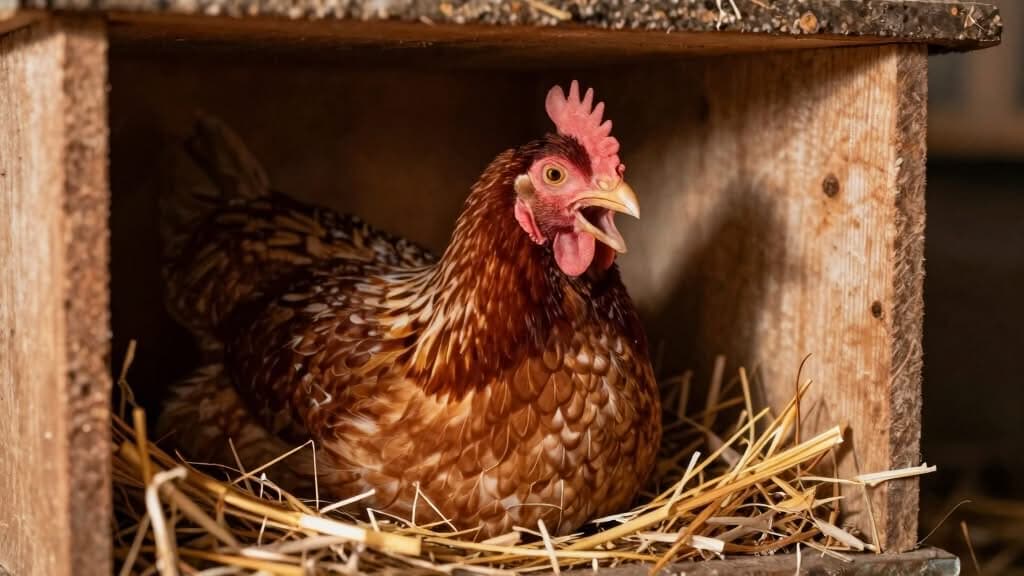
Chickens don’t actually scream when laying eggs. What sounds like screaming is typically the “egg song,” a loud, repetitive cackling vocalization that most hens make immediately after laying an egg. This behavior is normal, instinctive, and serves multiple purposes including announcing the accomplishment, distracting predators from the nest location, and communicating with the flock. True distress calls sound distinctly different and may indicate a problem like egg binding or injury.
Key Takeaways
- The loud noise chickens make after laying is called the “egg song,” not screaming, and it’s completely normal behavior
- Most hens cackle loudly for 1-15 minutes after laying, though some breeds and individual birds are quieter than others
- The egg song likely evolved to distract predators from nest locations and to communicate with flock members
- True distress calls sound different from the egg song: sharper, more frantic, and accompanied by obvious signs of distress
- First-time layers often make louder, longer egg songs as they adjust to the new experience
- Egg binding (a stuck egg) causes genuine distress vocalizations along with straining, lethargy, and a penguin-like stance
- Quieter breeds for urban settings include Buff Orpingtons, Cochins, and Australorps
- You can reduce egg-laying stress by providing comfortable nesting boxes, proper nutrition, and a calm coop environment
- Chickens rarely lay eggs at night, so nighttime screaming usually indicates a predator threat or other emergency
Why Do Chickens Make Loud Noises When Laying Eggs?
Chickens make loud noises after laying eggs primarily as an instinctive behavior called the “egg song.” This vocalization serves several evolutionary purposes: it may distract predators from the vulnerable nest location by drawing attention to the hen herself, it announces the accomplishment to the flock, and it helps the hen relocate her flock after spending time alone in the nest.
The egg song is a series of loud, repetitive cackles that can sound alarming to new chicken keepers. Here’s what makes this behavior so common:
Evolutionary advantages:
- Predator distraction – By making noise away from the nest, the hen draws potential threats toward herself rather than her eggs
- Flock communication – Chickens are social animals; the egg song helps a hen reconnect with her flock after the solitary act of laying
- Territory announcement – The vocalization may signal to other hens that a nesting box is now available
Physical relief component:
- Laying an egg requires significant physical effort, and the vocalization may be partly a release of tension
- The process involves muscular contractions and hormonal changes that can trigger vocal responses
Most hens will cackle whether or not other chickens are present, suggesting the behavior is deeply instinctive rather than purely communicative.
Is It Normal for Hens to Scream During Egg Laying?
Yes, loud vocalizations during and immediately after egg laying are completely normal for most chickens. However, the timing matters: hens typically make the loudest noises after the egg is laid, not during the actual laying process. If a hen is making frantic, distressed sounds while actively laying, this may indicate a problem.
Normal egg-laying behavior includes:
- Quiet nesting and settling into the box (10-30 minutes before laying)
- Minimal or no vocalization during the actual egg passage
- Loud, rhythmic cackling immediately after the egg is laid (1-15 minutes)
- Calm return to normal activities afterward
Signs that vocalization might indicate a problem:
- Continuous screaming or shrieking while in the nesting position
- Straining with distressed calls for more than 30 minutes
- Blood visible around the vent area
- The hen appearing lethargic or unable to stand properly
- Repeated visits to the nest box without producing an egg
The vast majority of hens lay eggs without any genuine distress. The loud cackling that follows is simply their way of announcing the event, not a sign of pain.
What Does It Mean When a Chicken Cackles After Laying an Egg?
When a chicken cackles after laying an egg, she’s performing the “egg song,” a normal post-laying announcement behavior. This cackling is a sign of a successful laying event and indicates that your hen is healthy and following her natural instincts. The behavior is so common that experienced chicken keepers use it as an audible signal to collect fresh eggs.
What the egg song communicates:
- “I laid an egg!” – A simple announcement of accomplishment
- Location signal – Helps the hen find her way back to the flock after being isolated in the nest
- Social bonding – Other hens may join in with sympathetic cackling, reinforcing flock cohesion
- Stress release – The vocalization may help the hen transition from the focused state of laying back to normal activity
Variations in the egg song:
- Some hens have a distinctive “signature” cackle that keepers learn to recognize
- The volume and duration can vary based on the hen’s personality, breed, and experience level
- Younger hens often have longer, more enthusiastic egg songs than experienced layers
- Environmental factors like time of day and flock dynamics can influence the intensity
The egg song is one of the most charming aspects of keeping chickens, and many backyard keepers enjoy the daily concert as a sign that their flock is healthy and productive.
Do All Chickens Scream When They Lay Eggs or Just Some Breeds?
Not all chickens vocalize loudly when laying eggs; the volume and frequency of the egg song vary significantly by breed, individual personality, and environmental factors. Some breeds are naturally quieter, making them better choices for urban or suburban settings where noise might be a concern.
Quieter chicken breeds:
- Buff Orpingtons – Known for gentle, docile temperaments and softer vocalizations
- Cochins – Large, fluffy birds with calm personalities and minimal egg songs
- Australorps – Excellent layers that tend to be quieter than many other breeds
- Wyandottes – Generally moderate in volume with less dramatic egg songs
- Faverolles – Friendly birds with relatively subdued vocalizations
Louder chicken breeds:
- Leghorns – Highly productive layers known for enthusiastic, loud egg songs
- Rhode Island Reds – Vocal birds with strong personalities and pronounced cackling
- Plymouth Rocks – Active, chatty birds that often have extended egg songs
- Welsummers – Known for their distinctive, loud post-laying announcements
Individual variation matters:
Even within a breed, individual hens have unique personalities. Some birds are naturally more vocal regardless of their breed, while others may be quieter. Environmental factors like flock size, coop design, and daily routine also influence how much noise your hens make.
How to Tell If My Chicken Is in Pain While Laying Eggs
A chicken in genuine pain while laying will display distinct behaviors that differ significantly from the normal egg song. Look for physical signs of distress, abnormal posture, and vocalizations that sound panicked rather than celebratory.
Signs of normal, pain-free laying:
- Hen settles calmly into the nesting box
- Quiet concentration during the actual laying process
- Brief pushing or straining (less than 5-10 minutes)
- Loud but rhythmic cackling after the egg appears
- Hen stands up, inspects the egg, and leaves the box normally
Warning signs that indicate pain or difficulty:
- Prolonged straining – More than 30 minutes of visible effort without producing an egg
- Penguin stance – Standing upright with tail down and body vertical, indicating possible egg binding
- Frantic or sharp vocalizations – High-pitched, irregular screams rather than rhythmic cackling
- Lethargy – Remaining in the box without moving or appearing weak
- Visible blood – Any bleeding around the vent area
- Repeated unsuccessful attempts – Returning to the nest box multiple times without laying
- Panting or labored breathing – Indicates significant stress or pain
Common laying problems that cause pain:
- Egg binding – When an egg becomes stuck in the reproductive tract
- Prolapsed vent – When internal tissue protrudes from the vent opening
- Internal laying – Eggs deposited inside the body cavity rather than being laid externally
- Vent gleet – A fungal infection that can make laying uncomfortable
If you observe any warning signs, isolate the hen in a quiet, warm space and consult a veterinarian experienced with poultry. Egg binding in particular is a medical emergency that requires prompt intervention.
Difference Between Egg Song and Distress Call in Chickens
The egg song and distress calls are distinctly different vocalizations that serve separate purposes. Learning to distinguish between them helps you identify when your chickens need help versus when they’re simply announcing their daily egg production.
Egg song characteristics:
- Timing – Occurs immediately after laying, not during
- Pattern – Rhythmic, repetitive cackling with a predictable cadence
- Duration – Typically 1-15 minutes, then stops
- Body language – Hen appears alert, proud, and moves normally
- Pitch – Loud but not shrill; sounds almost celebratory
- Context – Happens during daylight hours when laying is expected
Distress call characteristics:
- Timing – Can occur at any time, especially when threatened
- Pattern – Irregular, frantic, and continuous
- Duration – Continues until the threat is removed or help arrives
- Body language – Hen appears frightened, frozen, or trying to escape
- Pitch – Sharp, high-pitched, and urgent
- Context – Often accompanied by visible threats (predators, aggressive flock members, injury)
Other chicken vocalizations to recognize:
- Contentment sounds – Soft purring or murmuring while foraging
- Alarm calls – Sharp, single-note warnings when a hawk or other predator is spotted
- Broody growls – Low, rumbling sounds from hens sitting on eggs
- Roosting chatter – Quiet conversation as the flock settles for the night
Understanding these vocal differences allows you to respond appropriately. An egg song means everything is fine and you have a fresh egg to collect. A distress call means you need to investigate immediately.
Can I Do Anything to Make Egg Laying Less Stressful for My Hens?
Yes, you can significantly reduce egg-laying stress by optimizing your coop environment, providing proper nutrition, and maintaining consistent routines. While you can’t eliminate the egg song entirely (it’s instinctive), you can ensure the laying process itself is as comfortable as possible.
Nesting box optimization:
- Provide one nesting box for every 3-4 hens to prevent competition
- Use soft, clean bedding like straw, wood shavings, or hemp
- Position boxes in the darkest, quietest area of the coop
- Ensure boxes are at least 12×12 inches for standard breeds
- Add curtains or partial covers to create a sense of privacy
- Keep boxes elevated 2-3 feet off the ground
Nutritional support:
- Feed a quality layer feed with 16-18% protein
- Provide free-choice calcium (oyster shell or crushed eggshells)
- Ensure constant access to fresh, clean water
- Avoid sudden diet changes that can disrupt laying
- Supplement with greens and appropriate treats in moderation
Environmental factors:
- Maintain consistent lighting (14-16 hours of light for optimal laying)
- Keep the coop clean to prevent infections
- Ensure adequate ventilation without drafts
- Minimize disturbances during peak laying hours (morning)
- Provide enough space (4 square feet per bird inside, 10 outside)
Flock management:
- Introduce new birds carefully to avoid stress
- Remove aggressive birds that bully others away from nests
- Collect eggs regularly to prevent egg eating behavior
- Handle hens gently to build trust
When to expect louder egg songs:
- First eggs from young pullets
- After a break in laying (molting, winter)
- When a hen uses an unfamiliar nesting location
- In smaller flocks where individual voices are more prominent
By creating a comfortable, safe laying environment, you help your hens complete the process efficiently and with minimal genuine stress, even if they still celebrate loudly afterward.
Do Chickens Scream More with Their First Egg?
Yes, chickens typically make louder, longer, and more dramatic vocalizations when laying their first egg compared to subsequent eggs. First-time layers (pullets) are experiencing a completely new physical sensation and often seem surprised or confused by the process, leading to more pronounced egg songs.
Why first eggs are noisier:
- Novelty – The hen doesn’t know what’s happening to her body
- Discomfort – First eggs can be slightly more uncomfortable as the reproductive tract adjusts
- Confusion – Young hens may not immediately understand what they’ve produced
- Excitement – The hormonal surge associated with first laying can intensify vocalizations
- Learning curve – Pullets haven’t yet established a routine or efficient laying pattern
What to expect from first-time layers:
- Extended time in the nesting box (30-60 minutes or more)
- Pacing, entering and exiting the box multiple times
- Louder and longer egg songs (sometimes 20-30 minutes)
- Smaller eggs that gradually increase in size
- Occasional soft-shelled or oddly shaped eggs
- More frequent vocalizations throughout the day as they adjust
First egg timeline:
- Most pullets begin laying between 18-24 weeks of age
- Breed matters: production breeds start earlier, heritage breeds later
- The first few weeks of laying may be irregular
- Egg songs typically become shorter and more routine within 2-4 weeks
Supporting first-time layers:
- Ensure nesting boxes are accessible and inviting before laying begins
- Provide extra calcium as young hens adjust to shell production
- Be patient with irregular laying schedules
- Avoid disturbing pullets during their first laying experiences
- Use fake eggs or golf balls in boxes to show them where to lay
The dramatic first-egg announcement usually settles into a more predictable pattern as hens mature. By their second or third month of laying, most hens have developed their individual egg song routine.
Why Is My Chicken Screaming But Not Laying an Egg?
If your chicken is making distressed vocalizations but not producing an egg, she may be experiencing egg binding, internal laying problems, or another health issue. This situation requires careful observation and potentially veterinary intervention, as it differs from the normal post-laying egg song.
Possible causes of screaming without laying:
Egg binding (most common):
- An egg is stuck in the reproductive tract
- Hen assumes a penguin-like vertical posture
- Visible straining and abdominal contractions
- Lethargy and loss of appetite
- Swollen abdomen or visible egg outline
- Requires immediate intervention (warm bath, lubrication, veterinary care)
Internal laying:
- Eggs are deposited inside the body cavity instead of being laid externally
- Can cause infection (egg yolk peritonitis)
- Hen appears unwell, with a swollen abdomen
- May have a history of irregular laying
- Requires veterinary diagnosis and treatment
Reproductive tract infection:
- Inflammation or infection of the oviduct
- May produce abnormal discharge
- Hen appears uncomfortable and may vocalize frequently
- Requires antibiotics or other veterinary treatment
Other causes:
- Predator stress – A recent scare can disrupt laying and cause vocalizations
- Broody behavior – Broody hens may vocalize when disturbed but aren’t laying
- Vent prolapse – Tissue protrusion that causes discomfort
- Impacted crop – Can cause general distress and vocalization
Immediate steps to take:
- Isolate the hen in a quiet, warm space
- Examine the vent area for visible eggs, prolapse, or injury
- Provide water and easily digestible food
- For suspected egg binding, try a warm bath (15-20 minutes) and gentle abdominal massage
- Contact an avian veterinarian if symptoms persist beyond 2-3 hours
Never attempt to manually extract an egg unless you have experience, as this can cause serious injury. When in doubt, seek professional help.
Is Loud Cackling a Sign of Egg Binding in Chickens?
Loud cackling alone is not typically a sign of egg binding; in fact, egg binding usually produces distressed, irregular vocalizations rather than the rhythmic egg song. However, if loud vocalizations are accompanied by prolonged straining, a penguin stance, and no egg production, egg binding should be suspected.
Normal egg song vs. egg binding vocalizations:
| Normal Egg Song | Egg Binding Distress |
|---|---|
| Rhythmic, repetitive cackling | Sharp, irregular screams |
| Occurs after egg is laid | Occurs during prolonged straining |
| Hen appears alert and proud | Hen appears lethargic or distressed |
| Lasts 1-15 minutes | Continues for extended periods |
| Hen moves normally afterward | Hen remains in abnormal posture |
Definitive signs of egg binding:
- Penguin stance – Upright posture with tail pointed down
- Visible straining – Repeated abdominal contractions without results
- Lethargy – Weakness, sitting with fluffed feathers, closed eyes
- Swollen abdomen – May feel hard or see egg outline
- Lack of droppings – The stuck egg blocks normal elimination
- Loss of appetite – Refusing food and water
- Labored breathing – Panting or open-mouth breathing
Risk factors for egg binding:
- Young pullets laying their first eggs
- Hens laying unusually large eggs
- Calcium or vitamin D deficiency
- Obesity or lack of exercise
- Cold weather (muscles contract less efficiently)
- Older hens with weakened muscles
- Previous history of egg binding
Emergency treatment for egg binding:
- Warm bath – Soak the hen’s lower body in warm water (100-102°F) for 15-20 minutes to relax muscles
- Lubrication – Apply water-based lubricant or mineral oil around the vent
- Warm, dark isolation – Place hen in a quiet, warm space (85-90°F)
- Calcium supplement – Offer liquid calcium or crushed Tums if she’ll eat
- Veterinary care – If no egg within 2-3 hours, seek professional help
Egg binding is a medical emergency. Without treatment, it can lead to infection, internal damage, or death within 24-48 hours. If you suspect egg binding, act quickly.
Which Chicken Breeds Are Quieter When Laying Eggs?
Several chicken breeds are known for quieter egg-laying behavior, making them ideal for urban or suburban environments where noise restrictions apply. These breeds tend to have calmer temperaments overall, which translates to less dramatic egg songs.
Top quiet chicken breeds:
Buff Orpington:
- Gentle, docile temperament
- Soft, brief egg songs
- Excellent for families and beginners
- Lays 200-280 brown eggs per year
- Large, fluffy birds that are easy to handle
Cochin:
- Extremely calm and friendly
- Minimal vocalizations overall
- More ornamental than productive (150-180 eggs/year)
- Excellent broody hens
- Fluffy feathering makes them cold-hardy
Australorp:
- Quiet despite being excellent layers (250-300 eggs/year)
- Calm, friendly disposition
- Good for both eggs and temperament
- Black plumage with green sheen
- Adapts well to confinement
Wyandotte:
- Moderate vocalization levels
- Hardy, cold-tolerant breed
- Lays 200-240 eggs per year
- Beautiful laced feather patterns
- Good dual-purpose breed
Brahma:
- Gentle giants with quiet personalities
- Minimal egg songs despite large size
- Lays 150-200 eggs per year
- Excellent cold-weather breed
- Slow to mature but long-lived
Breeds to avoid for quiet coops:
- Leghorns – Highly vocal and active
- Rhode Island Reds – Loud egg songs and assertive personalities
- Welsummers – Known for particularly loud announcements
- Ancona – Active, noisy Mediterranean breed
Other factors affecting noise levels:
- Flock size – Smaller flocks tend to be quieter
- Rooster presence – Roosters amplify overall flock noise (and crow loudly)
- Coop location – Distance from neighbors matters more than breed
- Individual personality – Even quiet breeds have occasional loud individuals
If noise is a primary concern, choose 2-3 hens from quiet breeds, skip the rooster, and provide a well-designed coop that buffers sound. Most municipalities that allow chickens prohibit roosters specifically because of noise.
How Long Does the Egg Song Last After a Chicken Lays?
The egg song typically lasts between 1 and 15 minutes after a chicken lays an egg, though individual hens vary considerably. Most hens cackle for 3-5 minutes on average, with younger or more excitable birds sometimes extending the performance to 20-30 minutes.
Factors that influence egg song duration:
Individual personality:
- Some hens are naturally more vocal and dramatic
- Quiet individuals may skip the egg song entirely
- Personality is often consistent throughout a hen’s laying life
Age and experience:
- First-time layers often have longer egg songs (15-30 minutes)
- Mature hens develop shorter, more efficient announcements
- Very old hens may reduce or eliminate the egg song
Breed characteristics:
- Mediterranean breeds (Leghorns, Anconas) tend toward longer songs
- Asiatic breeds (Cochins, Brahmas) have shorter or absent songs
- Production breeds vary widely
Flock dynamics:
- Hens in larger flocks may join in sympathetic cackling, extending the chorus
- Dominant hens often have more pronounced egg songs
- Isolated hens may have shorter songs with no audience
Time of day:
- Morning layers (most common) often have more enthusiastic songs
- Afternoon layers may be quieter
- Consistent laying times lead to more predictable song patterns
Environmental factors:
- Disturbances during laying can shorten or interrupt the song
- Comfortable, familiar nesting areas promote normal egg songs
- Stressful conditions may eliminate the song entirely
Typical egg song timeline:
- Pre-laying (0-30 minutes before): Quiet nesting behavior
- Laying (5-15 minutes): Silence or soft sounds
- Immediate post-laying (0-2 minutes): Brief pause, then cackling begins
- Peak cackling (2-10 minutes): Loudest, most rhythmic phase
- Wind-down (10-15 minutes): Decreasing volume and frequency
- Return to normal (15+ minutes): Hen rejoins flock activities
Most chicken keepers learn to recognize their individual hens’ egg songs and use them as a signal to collect fresh eggs. The consistency of the pattern makes it a reliable indicator of laying activity.
Do Chickens Scream at Night When Laying Eggs?
Chickens very rarely lay eggs at night because egg production is triggered by daylight and follows a circadian rhythm. If you hear screaming or distressed vocalizations from your coop at night, it almost certainly indicates a predator threat, injury, or other emergency rather than egg laying.
Why chickens don’t lay at night:
- Circadian rhythm – Egg production is controlled by light exposure
- Hormonal timing – Ovulation typically occurs in the morning
- Roosting behavior – Chickens are inactive and resting at night
- Biological efficiency – Laying during daylight allows hens to return to the flock safely
Normal laying schedule:
- Most hens lay in the morning (6 AM – 12 PM)
- Some hens lay in early afternoon (12 PM – 3 PM)
- Laying later than 3 PM is uncommon
- Hens typically lay every 24-26 hours, gradually shifting later each day until they skip a day
What nighttime screaming actually indicates:
Predator attack:
- Raccoons, opossums, weasels, or owls
- Frantic, continuous screaming from multiple birds
- Sounds of struggle or commotion
- Requires immediate investigation with a flashlight and secure weapon
Injury or illness:
- A hen in distress from sudden health crisis
- Usually a single bird vocalizing
- May be accompanied by labored breathing
Broody hen disturbance:
- Another hen or predator bothering a broody
- Defensive growling or sharp alarm calls
- Less frantic than predator attack
Roosting disputes:
- Rare, but hens may squabble over prime roosting spots
- Brief, localized noise that resolves quickly
Immediate response to nighttime screaming:
- Grab a flashlight and check the coop immediately
- Look for signs of predator entry (holes, disturbed birds)
- Count your birds to ensure none are missing
- Check for injuries or distressed individuals
- Secure any breaches in coop security
- Consider adding predator deterrents (hardware cloth, electric fencing, motion lights)
If nighttime disturbances are frequent, review your coop security. Predators are persistent and will return if they’ve identified your flock as a food source. Reinforce all openings with 1/4-inch hardware cloth, ensure doors latch securely, and consider adding an automatic coop door that closes at dusk.
Frequently Asked Questions
Is it normal for chickens to be loud when laying eggs?
Yes, it’s completely normal for chickens to make loud cackling noises (the egg song) immediately after laying an egg. This behavior is instinctive and serves to announce the laying event and help the hen reconnect with her flock.
How can I tell if my chicken is in pain when laying?
A chicken in pain will show prolonged straining (over 30 minutes), a penguin-like vertical stance, frantic or irregular vocalizations, lethargy, and may have visible swelling or blood around the vent. Normal laying involves brief effort followed by rhythmic, celebratory cackling.
Do all chickens make noise after laying eggs?
No, not all chickens vocalize after laying. While most hens perform some version of the egg song, quieter breeds like Buff Orpingtons and Cochins may have minimal or silent post-laying behavior. Individual personality also plays a significant role.
What’s the difference between an egg song and a distress call?
The egg song is rhythmic, repetitive, and occurs after laying, with the hen appearing alert and proud. A distress call is sharp, irregular, continuous, and accompanied by obvious signs of fear or pain like frozen posture or attempts to escape.
Can I stop my chickens from making noise when they lay eggs?
You cannot completely eliminate the egg song as it’s instinctive behavior, but you can choose quieter breeds, maintain smaller flocks without roosters, and ensure comfortable nesting conditions that reduce stress-related vocalizations.
Why is my hen screaming but not producing an egg?
This may indicate egg binding (a stuck egg), internal laying problems, or reproductive tract infection. Look for signs like prolonged straining, penguin stance, lethargy, and swollen abdomen. Seek veterinary care if symptoms persist beyond 2-3 hours.
At what age do chickens start making the egg song?
Chickens begin making the egg song when they lay their first egg, typically between 18-24 weeks of age depending on breed. First-time layers often have longer, louder egg songs that become more routine within a few weeks.
Are some chicken breeds quieter than others when laying?
Yes, breeds like Buff Orpingtons, Cochins, Australorps, and Wyandottes are notably quieter than Mediterranean breeds like Leghorns or active breeds like Rhode Island Reds. Asiatic breeds tend to be the quietest overall.
How long should the egg song last?
The egg song typically lasts 1-15 minutes, with most hens cackling for 3-5 minutes on average. First-time layers and more vocal breeds may extend this to 20-30 minutes, while quiet individuals may skip it entirely.
Do chickens ever lay eggs at night?
Chickens very rarely lay eggs at night because egg production follows a circadian rhythm triggered by daylight. If you hear distressed vocalizations at night, investigate immediately as this usually indicates a predator threat or emergency.
What should I do if I suspect egg binding?
Immediately isolate the hen in a warm, quiet space, provide a warm bath (100-102°F) for 15-20 minutes, apply lubricant around the vent, and offer liquid calcium. If no egg is produced within 2-3 hours, contact an avian veterinarian as egg binding is a medical emergency.
Can stress make chickens louder when laying eggs?
Yes, environmental stress, predator threats, overcrowding, or uncomfortable nesting conditions can intensify vocalizations. However, severe stress may also suppress laying entirely. Providing a calm, secure environment helps normalize egg-laying behavior and associated vocalizations.
Conclusion
Understanding why chickens make loud noises when laying eggs helps you distinguish between normal, healthy behavior and genuine distress. The egg song is a natural, instinctive vocalization that most hens perform after successfully laying an egg, serving evolutionary purposes like predator distraction and flock communication. While the volume can be surprising, especially for new chicken keepers, it’s typically a sign that everything is working as it should.
The key is learning to recognize the difference between the rhythmic, celebratory egg song and the sharp, irregular distress calls that indicate problems like egg binding or injury. Pay attention to your hens’ body language, timing, and overall health status alongside their vocalizations. Normal egg songs occur after laying, last 1-15 minutes, and are accompanied by alert, proud behavior. Distress calls are frantic, prolonged, and paired with visible signs of pain or fear.
Take these steps to support healthy, stress-free laying:
- Provide comfortable, private nesting boxes with soft bedding
- Ensure proper nutrition with quality layer feed and free-choice calcium
- Choose quieter breeds if noise is a concern in your neighborhood
- Learn each hen’s individual egg song pattern to quickly identify abnormalities
- Respond immediately to genuine distress calls with appropriate intervention
- Maintain consistent routines and a calm coop environment
By creating optimal conditions and understanding normal chicken behavior, you’ll enjoy the daily egg song as the charming announcement it’s meant to be rather than a source of worry. Your hens will thrive, and you’ll have the confidence to recognize when something truly needs your attention.