
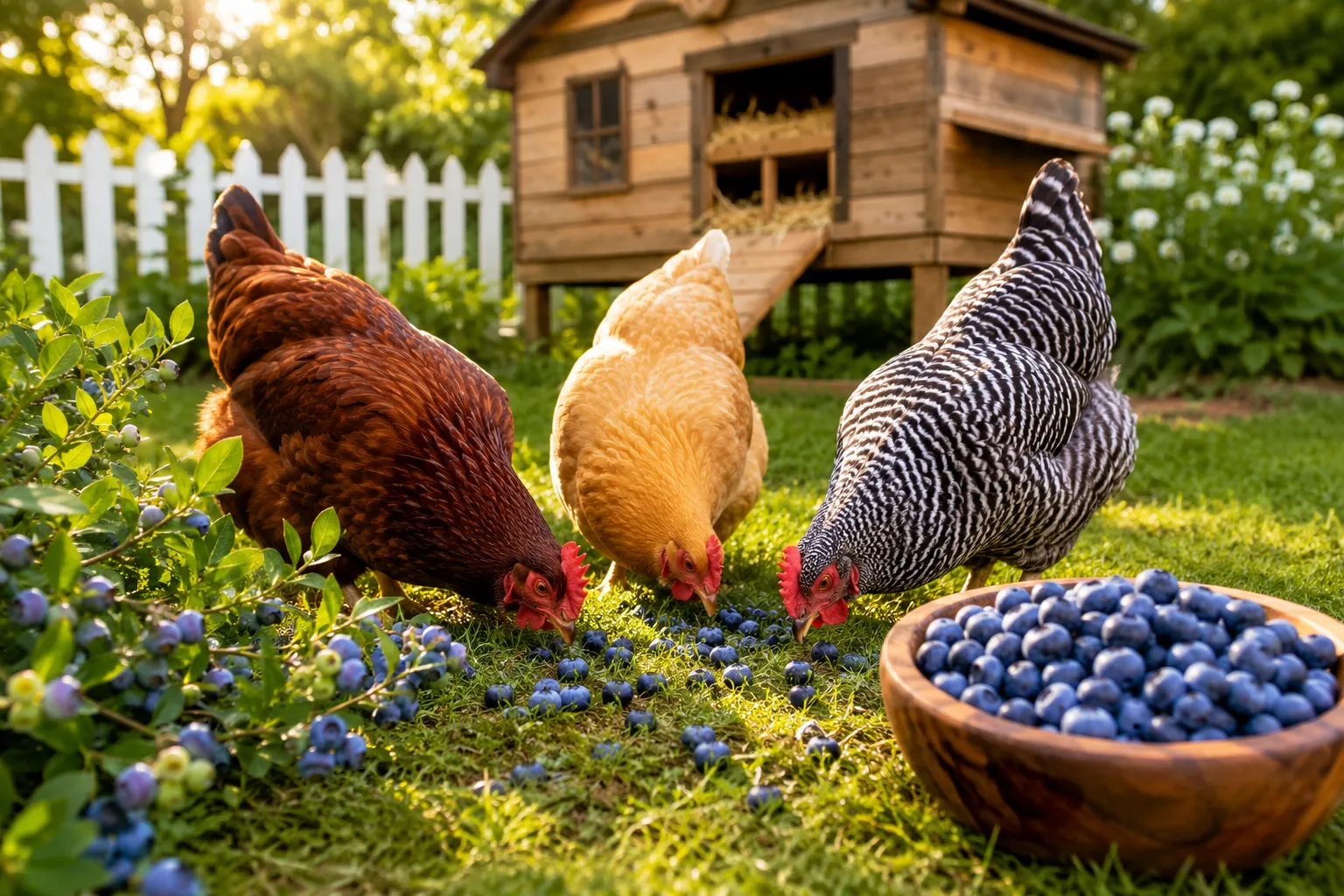
Quick Answer: Yes, chickens can safely eat blueberries. These nutrient-rich berries make an excellent treat for backyard flocks, providing antioxidants, vitamins, and natural sugars that chickens love. Feed blueberries in moderation as part of a balanced diet, ensuring treats don’t exceed 10% of their total daily food intake.
Key Takeaways
- Blueberries are completely safe for chickens and provide valuable antioxidants, vitamins C and K, and fiber
- Limit blueberry treats to about 1-2 tablespoons per chicken per day to maintain nutritional balance
- Both fresh and frozen blueberries are safe; frozen berries can be especially refreshing in hot weather
- Baby chicks can eat blueberries starting around 3-4 weeks old, but berries should be chopped into smaller pieces
- Blueberries won’t significantly change egg yolk color, unlike treats high in carotenoids
- Never feed moldy or rotten blueberries to chickens, as mold toxins can cause serious health problems
- Wild and store-bought blueberries are both safe, though wild berries may offer higher antioxidant levels
- Most berries are chicken-safe, but avoid feeding any fruit with pits, seeds from stone fruits, or avocado
Are Blueberries Safe for Chickens to Eat?
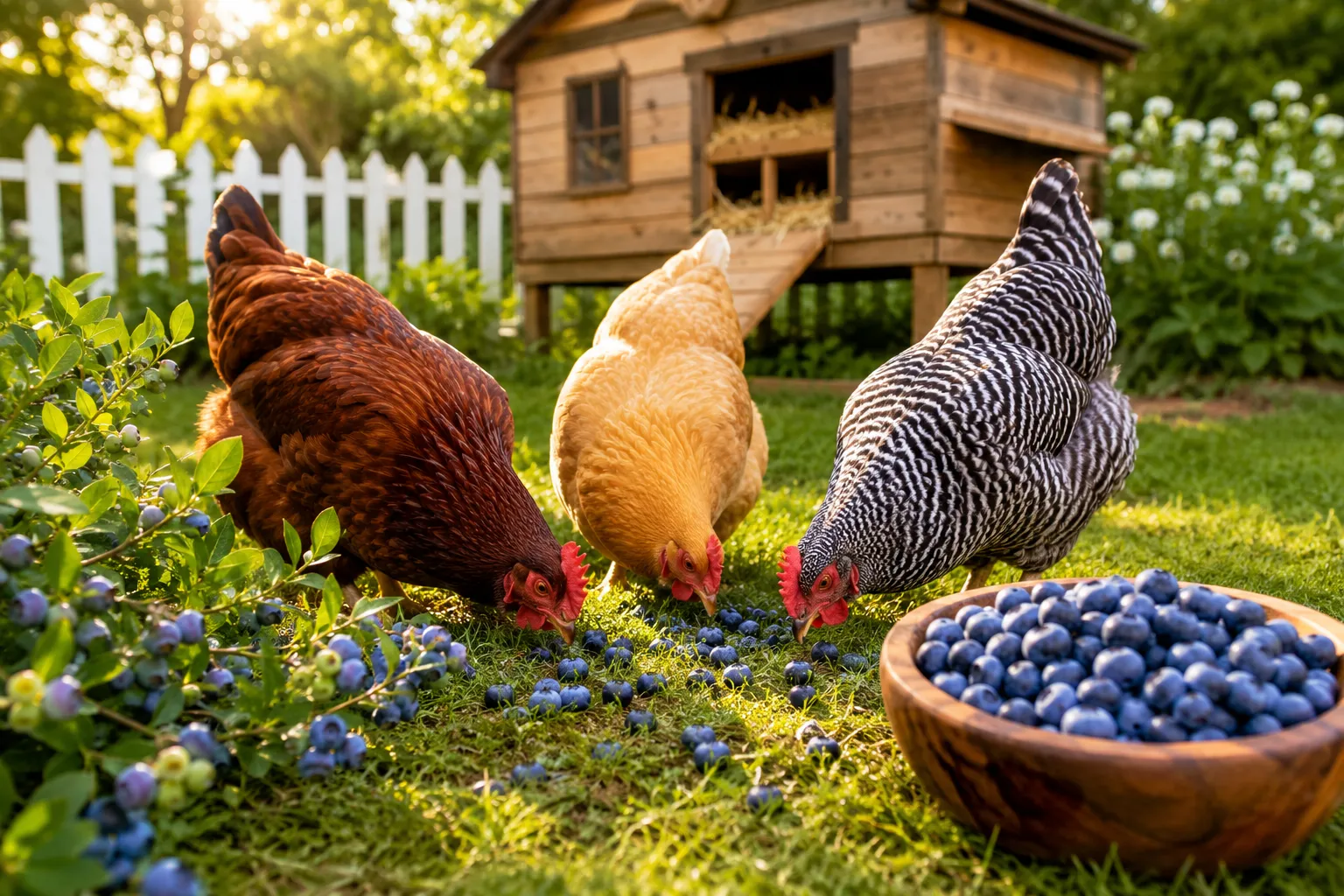
Blueberries are completely safe for chickens and rank among the healthiest treats you can offer your flock. These small berries contain no toxic compounds that harm poultry, and their soft texture makes them easy for chickens to eat and digest.
The nutritional profile of blueberries benefits chickens in several ways:
- Antioxidants (particularly anthocyanins) support immune system health
- Vitamin C helps with stress response and overall wellness
- Vitamin K contributes to proper blood clotting
- Fiber aids digestive health
- Natural sugars provide quick energy without processed additives
Chickens instinctively recognize blueberries as food and typically show immediate interest when offered these treats. The berries’ size makes them perfect for chickens to pick up and swallow whole or peck into smaller pieces.
Important context: While blueberries are safe, they should complement, not replace, a complete layer feed or grower feed that provides the protein, calcium, and balanced nutrition chickens need for egg production and growth.
How Many Blueberries Can I Give My Chickens Per Day?
Limit blueberries to approximately 1-2 tablespoons per chicken per day, which equals roughly 10-15 berries depending on size. This portion keeps treats within the recommended 10% of total daily food intake while allowing chickens to enjoy the benefits without nutritional imbalance.
Practical feeding guidelines:
- Standard-sized chickens (5-7 lbs): 1-2 tablespoons of blueberries
- Bantam breeds (2-3 lbs): ½-1 tablespoon of blueberries
- Large breeds (8-10 lbs): 2-3 tablespoons maximum
The 10% treat rule exists because chickens need their primary nutrition from formulated feed that contains the right balance of protein (16-20% for layers), calcium (3-4% for egg-laying hens), and essential vitamins. Too many treats can lead to:
- Reduced egg production due to inadequate protein
- Thin or soft eggshells from insufficient calcium
- Obesity in less active chickens
- Nutritional deficiencies over time
Choose this approach if: You’re feeding multiple treat types throughout the week. In that case, reduce blueberry portions to make room for variety while staying within the 10% guideline.
Can Chickens Eat Frozen Blueberries or Only Fresh?
Chickens can safely eat both frozen and fresh blueberries with equal nutritional benefit. Frozen blueberries actually offer advantages in hot weather, providing a cooling treat that helps chickens regulate body temperature while delivering the same vitamins and antioxidants as fresh berries.
Frozen blueberry benefits:
- Serve as a refreshing treat during summer heat (chickens don’t sweat and rely on behavioral cooling)
- Often more affordable and available year-round
- Retain nutritional value when properly frozen
- Create entertainment as chickens chase rolling berries while they thaw
Feeding tips for frozen berries:
- Scatter frozen blueberries on the ground for foraging enrichment
- Mix with other frozen treats like corn or peas for variety
- Allow partial thawing in extreme cold weather to prevent potential crop issues
- Store in freezer-safe containers to prevent freezer burn
Fresh blueberries work equally well and may be slightly easier for chickens to eat immediately. The choice between fresh and frozen typically comes down to availability, cost, and seasonal considerations rather than nutritional differences.
Common mistake: Some chicken keepers worry that frozen treats will harm chickens in winter. Chickens can handle frozen treats year-round, though partially thawed options may be more appealing in very cold weather.
Do Blueberries Have Any Health Benefits for Chickens?
Blueberries provide significant health benefits for chickens beyond basic nutrition, particularly supporting immune function and reducing oxidative stress. The high antioxidant content in blueberries may help chickens cope with environmental stressors like heat, disease exposure, and the physical demands of egg production.
Key health benefits:
Immune system support: Antioxidants and vitamin C help chickens fight off infections and recover from stress. This becomes especially valuable during molting season or when introducing new flock members.
Anti-inflammatory properties: The anthocyanins that give blueberries their blue color have natural anti-inflammatory effects that may support joint health in older chickens or heavy breeds prone to leg issues.
Digestive health: Fiber content promotes healthy gut function and supports beneficial bacteria in the digestive tract, which is crucial for nutrient absorption and disease resistance.
Hydration: Blueberries contain about 85% water, contributing to overall hydration, particularly important during hot weather when chickens need extra moisture.
Mental stimulation: Offering blueberries as a treat provides enrichment and reduces boredom-related behaviors like feather pecking or aggression.
While these benefits are real, remember that blueberries work best as a supplement to complete feed rather than a primary health intervention. Chickens with specific health issues should receive appropriate veterinary care alongside a balanced diet.
Can Baby Chicks Eat Blueberries?
Baby chicks can eat blueberries starting around 3-4 weeks of age, but the berries must be chopped into small, manageable pieces to prevent choking. Wait until chicks are eating starter feed reliably and have access to chick grit before introducing any treats, including blueberries.
Age-appropriate guidelines:
- 0-2 weeks: No treats; focus exclusively on starter feed and water
- 3-4 weeks: Introduce finely chopped blueberries (quarter-sized pieces)
- 5-8 weeks: Offer slightly larger pieces as chicks grow
- 8+ weeks: Whole blueberries are safe for most breeds
Preparation for chicks:
- Chop blueberries into quarters or smaller pieces
- Offer only 1-2 small pieces per chick initially
- Ensure chick grit is available to help grind food in the gizzard
- Monitor to confirm all chicks can access treats without bullying
Why wait until 3-4 weeks? Young chicks have delicate digestive systems that need time to develop. Their primary nutrition must come from high-protein starter feed (18-20% protein) to support rapid growth. Introducing treats too early can cause digestive upset or nutritional imbalances during critical development periods.
Edge case: If raising chicks with a broody hen, she may introduce small food items earlier. In this natural setting, chicks learn from the hen and typically handle treats better than brooder-raised chicks.

Blueberries vs Strawberries for Chickens: Which Is Better?
Both blueberries and strawberries are excellent, safe treats for chickens with similar nutritional profiles, making neither definitively “better.” The choice comes down to availability, cost, and your specific flock’s preferences, though blueberries offer slightly higher antioxidant content while strawberries provide more vitamin C.
Nutritional comparison:
| Feature | Blueberries | Strawberries |
|---|---|---|
| Antioxidants | Very high (anthocyanins) | High (ellagic acid) |
| Vitamin C | Moderate | High |
| Sugar content | ~10g per 100g | ~5g per 100g |
| Fiber | Good | Good |
| Size/convenience | Perfect bite-size | Requires chopping for small birds |
| Cost (typical) | Moderate to high | Moderate |
Choose blueberries if:
- You want maximum antioxidant benefits
- You prefer a no-prep treat (whole berries work for all chickens)
- Your flock includes bantams or smaller breeds
- You’re buying frozen for year-round availability
Choose strawberries if:
- You want higher vitamin C content
- You have strawberries growing in your garden
- You prefer lower sugar content
- Your chickens enjoy larger treats they can peck apart
Best approach: Rotate both berries throughout the week for variety. Chickens benefit from dietary diversity, and offering different treats prevents boredom while exposing your flock to a broader range of nutrients.
Practical tip: Many chicken keepers find that blueberries create less mess than strawberries, which can stain beaks and feathers temporarily with their red juice.
What Fruits Should Chickens Never Eat?
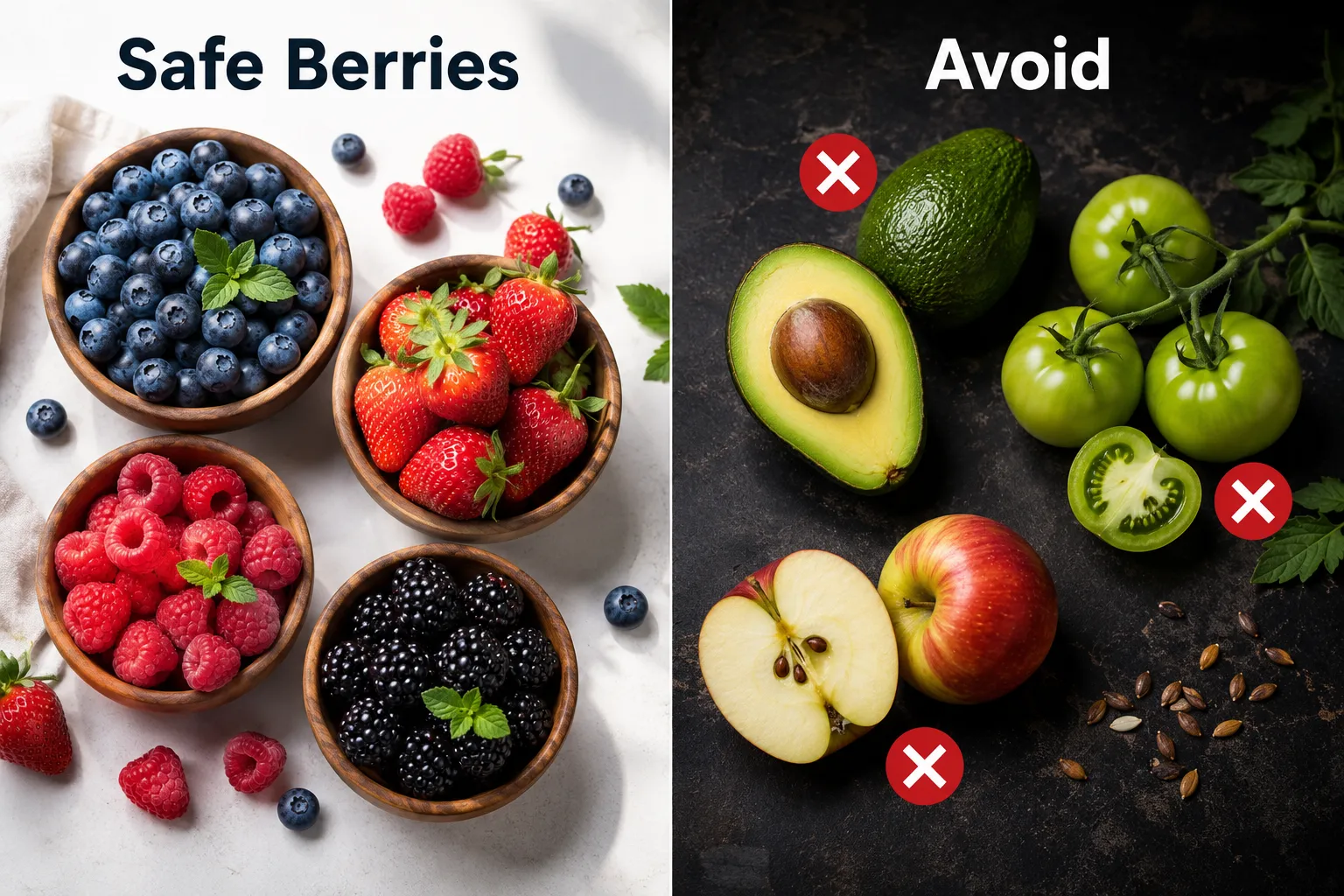
Chickens should never eat avocado (any part), raw or dried beans, chocolate, apple seeds, stone fruit pits, unripe tomatoes, or moldy fruit of any kind. These foods contain compounds that are toxic to poultry and can cause serious illness or death even in small amounts.
Dangerous fruits and parts:
Avocado: Contains persin, a toxin that causes heart damage, respiratory distress, and death in chickens. All parts (flesh, skin, pit, leaves) are dangerous.
Apple seeds and stone fruit pits: Contain cyanogenic compounds that release cyanide when digested. While apple flesh is safe, always remove the core and seeds. Avoid pits from cherries, peaches, plums, and apricots.
Unripe tomatoes and green parts: Green tomatoes and tomato leaves/stems contain solanine, which causes digestive upset and neurological issues. Ripe red tomatoes are safe.
Citrus fruits (controversial): While not toxic, large amounts of citrus may interfere with calcium absorption. Offer sparingly if at all, and monitor for thin eggshells.
Rhubarb leaves: Contain oxalic acid that causes kidney damage. Rhubarb stalks in small amounts are generally safe, but most chicken keepers avoid rhubarb entirely.
Safe fruit alternatives:
- Berries (blueberries, strawberries, raspberries, blackberries)
- Melons (watermelon, cantaloupe, honeydew)
- Apples (flesh only, no seeds)
- Grapes (whole or halved)
- Bananas and peels
- Pears (flesh only, no seeds)
- Pumpkin and squash
Common mistake: Assuming that because chickens will eat something, it must be safe. Chickens are curious and will peck at many things, including toxic items. Always research before offering new foods.
Can Chickens Eat Moldy or Rotten Blueberries?
Never feed moldy or rotten blueberries to chickens. Mold produces mycotoxins that can cause serious health problems including liver damage, reduced egg production, immune suppression, and in severe cases, death. Even if chickens will eat spoiled berries, the health risks far outweigh any nutritional value.
Why moldy fruit is dangerous:
- Mycotoxins persist even if visible mold is removed
- Aflatoxins (from certain molds) cause liver damage and cancer
- Weakened immune system makes chickens vulnerable to disease
- Reduced egg production and poor egg quality
- Neurological symptoms in severe poisoning cases
Signs of spoiled blueberries:
- Visible fuzzy mold (white, green, or black)
- Mushy or leaking texture
- Fermented or sour smell
- Shriveled or dried appearance with mold
- Slimy coating
Safe handling practices:
- Inspect all berries before feeding
- Discard any container with even one moldy berry (spores spread)
- Store fresh berries in the refrigerator and use within 5-7 days
- Keep frozen berries properly sealed to prevent freezer burn
- Remove any uneaten berries from the coop after a few hours
Edge case: Slightly overripe but not moldy berries are generally safe. If berries are soft but show no mold, smell fresh, and have been properly stored, chickens can eat them. When in doubt, compost questionable berries rather than risk your flock’s health.
Will Feeding Blueberries Change the Color of Egg Yolks?
Feeding blueberries will not significantly change egg yolk color. Yolk color comes primarily from carotenoid pigments (yellow and orange compounds) found in foods like corn, marigolds, and leafy greens, while blueberries contain anthocyanins (blue-purple pigments) that don’t transfer to egg yolks in meaningful amounts.
What actually affects yolk color:
High-carotenoid foods that deepen yolk color:
- Corn (yellow)
- Marigold petals (deep orange)
- Kale, spinach, and dark leafy greens (golden)
- Pumpkin and squash (orange)
- Carrots (orange)
Foods with minimal yolk impact:
- Blueberries and other blue/purple berries
- Most grains (wheat, oats, barley)
- White vegetables
- Most protein sources
Egg yolk color ranges from pale yellow to deep orange depending on diet, but this variation doesn’t indicate nutritional differences in the egg itself. Both pale and dark yolks can be equally nutritious, though many consumers prefer deeper-colored yolks for aesthetic reasons.
What you might notice: If your chickens eat a varied diet including blueberries alongside carotenoid-rich foods, you may see rich, golden-orange yolks. This comes from the complete diet, not the blueberries specifically.
Marketing note: Some commercial egg producers add marigold extract or other carotenoid supplements to feed specifically to achieve the deep orange yolks that command premium prices. Backyard flocks eating diverse diets often produce naturally colorful yolks without supplementation.
How to Prepare Blueberries for Chickens
Blueberries require minimal preparation for adult chickens, simply scatter whole fresh or frozen berries in the run or coop for immediate feeding. For baby chicks or to maximize engagement, chop berries into smaller pieces, but whole berries work perfectly for standard-sized chickens who can easily swallow or peck them apart.
Preparation methods:
Whole berries (easiest):
- Rinse fresh berries to remove pesticides or debris
- Scatter on clean ground or in a shallow dish
- Allow frozen berries to sit for 5-10 minutes if chickens prefer slightly thawed treats
Chopped berries (for chicks or enrichment):
- Cut into halves or quarters
- Mix with other chopped fruits or vegetables
- Combine with scratch grains for a treat mix
Frozen treat blocks (summer enrichment):
- Place blueberries in a bundt pan or large container
- Add water and other safe treats (corn, peas, herbs)
- Freeze overnight
- Unmold and place in the run on hot days
Feeding locations:
- Ground scatter: Encourages natural foraging behavior
- Hanging treat holders: Provides entertainment and exercise
- Shallow dishes: Keeps treats clean and easy to monitor
- Mixed with feed: Not recommended (reduces feed consumption)
Washing considerations: Rinse conventionally-grown berries to remove pesticide residues. Organic berries need less washing but should still be rinsed to remove dirt. Frozen berries from the store are typically pre-washed.
Common mistake: Overthinking preparation. Chickens are natural foragers who can handle whole berries easily. Simple is often best, rinse and scatter.
Can Chickens Eat Too Many Blueberries and Get Sick?
Yes, chickens can experience health problems from eating too many blueberries, though toxicity is not the concern. Overconsumption leads to nutritional imbalances, digestive upset, obesity, and reduced egg production because treats displace the complete feed that provides essential protein, calcium, and vitamins.
Problems from excessive blueberry consumption:
Nutritional imbalance: Blueberries lack the protein (16-20%) and calcium (3-4%) that laying hens need. A chicken that fills up on berries won’t eat enough layer feed, leading to:
- Thin or soft eggshells
- Reduced egg production
- Poor feather quality during molting
- Weakened immune system
Digestive issues: Too many berries at once can cause:
- Diarrhea or loose droppings (due to high water and sugar content)
- Crop impaction if chickens gorge on treats without adequate grit
- Temporary digestive discomfort
Obesity: The natural sugars in blueberries provide calories without the protein chickens need. Overweight chickens face:
- Reduced mobility and exercise
- Increased risk of egg binding
- Fatty liver disease
- Shorter lifespan
Behavioral problems: Chickens that receive too many treats may:
- Refuse to eat their regular feed
- Become aggressive when treats appear
- Develop picky eating habits
Safe consumption signs: Chickens eating appropriate amounts of blueberries will maintain normal droppings, consistent egg production, healthy weight, and good feather condition. If you notice changes in any of these areas, reduce treat portions.
Recovery approach: If you’ve been overfeeding treats, gradually reduce portions over 3-5 days while ensuring unlimited access to quality layer feed and fresh water. Most chickens bounce back quickly once proper nutrition resumes.
Are Wild Blueberries Safe for Chickens or Only Store-Bought?
Both wild and store-bought blueberries are safe for chickens, and wild berries often contain higher concentrations of antioxidants due to their smaller size and adaptation to natural growing conditions. The key consideration is ensuring wild berries come from areas free of pesticides, herbicides, and environmental contamination.
Wild blueberry advantages:
- Higher antioxidant density (smaller berries = more skin per volume)
- No commercial pesticides if foraged from clean areas
- Free food source for chicken keepers with access
- Natural variety in size and flavor
Safety considerations for wild berries:
Check the foraging location:
- Avoid areas near roads (lead and exhaust contamination)
- Stay away from agricultural fields (pesticide drift)
- Skip areas treated with herbicides or lawn chemicals
- Verify the area hasn’t been sprayed for mosquitoes or other pests
Confirm identification: Ensure berries are actually blueberries and not toxic look-alikes. True blueberries have:
- Five-pointed star or crown on the bottom
- Multiple small seeds inside
- Blue-purple flesh (not just blue skin)
- Growth on woody shrubs, not vines
Store-bought berry considerations:
- Organic: Lower pesticide exposure, higher cost
- Conventional: More affordable, rinse thoroughly before feeding
- Frozen: Often picked at peak ripeness, good year-round option
- Imported: Check country of origin if concerned about pesticide regulations
Best practice: If you have access to wild blueberries in clean areas, they make excellent free treats for your flock. Otherwise, store-bought berries (organic or conventional, properly rinsed) work perfectly well and are available year-round.
What Other Berries Are Good Treats for Chickens?
Most berries are safe and nutritious treats for chickens, including strawberries, raspberries, blackberries, cranberries, elderberries (cooked only), and mulberries. These berries provide similar antioxidant benefits to blueberries while adding dietary variety that chickens enjoy.
Safe berries for chickens:
Strawberries: High in vitamin C, easy to grow, chickens love them. Chop for smaller birds or offer whole for entertainment.
Raspberries: Excellent antioxidants, soft texture, easy to digest. Both red and black raspberries are safe.
Blackberries: Similar benefits to raspberries, slightly larger. Watch for thorns when harvesting from wild plants.
Cranberries: Safe fresh or dried (unsweetened only). Tart flavor means some chickens may be less enthusiastic. May support urinary tract health.
Mulberries: Safe and nutritious, often abundant on mulberry trees. Can stain temporarily but harmless.
Elderberries: Must be cooked; raw elderberries contain compounds that cause digestive upset. Cooked elderberries are safe and nutritious.
Currants and gooseberries: Safe in moderation. Some varieties are quite tart.
Berries to avoid or use cautiously:
- Holly berries: Toxic, never feed
- Yew berries: Extremely toxic, fatal to chickens
- Pokeweed berries: Toxic, avoid entirely
- Juniper berries: Generally safe in tiny amounts but not recommended
Feeding tips for berry variety:
- Rotate different berries weekly for nutritional diversity
- Combine berries with other treats (melons, greens, grains)
- Offer seasonal berries when available and affordable
- Freeze excess garden berries for winter treats
Practical consideration: Berries are among the safest treat categories for chickens. If you’re unsure about a specific berry, research that variety specifically, but common garden and grocery store berries are almost always safe.
Frequently Asked Questions
Can chickens eat blueberry leaves and stems?
Yes, blueberry leaves and stems are safe for chickens to eat. The leaves contain some of the same beneficial compounds as the berries, though chickens typically prefer the fruit itself. If you’re pruning blueberry bushes, you can offer the trimmings to your flock.
Do blueberries help chickens lay better eggs?
Blueberries don’t directly improve egg production, but the antioxidants and vitamins support overall health, which indirectly benefits laying performance. Consistent egg production depends primarily on proper layer feed with adequate protein (16-20%) and calcium (3-4%), not treats.
Can chickens eat blueberry muffins or baked goods with blueberries?
Avoid feeding chickens baked goods containing blueberries. Muffins and pastries contain sugar, salt, butter, and other ingredients that aren’t healthy for chickens. Offer plain fresh or frozen blueberries instead.
Will blueberries attract pests to my chicken coop?
Fresh berries left in the coop overnight can attract rodents, ants, and flies. Feed blueberries in the morning or early afternoon, and remove any uneaten berries after a few hours to prevent pest problems.
Can roosters eat blueberries too?
Yes, roosters can eat blueberries with the same guidelines as hens. The 1-2 tablespoon per bird limit applies to roosters as well, and they receive the same health benefits from the antioxidants and vitamins.
Are dried blueberries safe for chickens?
Dried blueberries are safe if they contain no added sugar, preservatives, or sulfites. Check ingredient labels carefully. Dried berries are more concentrated in sugar than fresh, so reduce portion sizes accordingly, about 1 tablespoon per chicken maximum.
Can chickens eat blueberries every day?
Yes, chickens can eat small amounts of blueberries daily as long as the total treat intake stays within 10% of their diet. However, rotating different treats throughout the week provides better nutritional variety and prevents boredom.
Do chickens prefer fresh or frozen blueberries?
Chicken preferences vary by individual and flock. Many chickens enjoy both equally, though some prefer fresh berries while others find frozen berries more entertaining to chase. Try both and observe your flock’s reaction.
Can chickens eat blueberries with their regular feed?
It’s better to offer blueberries separately from regular feed rather than mixing them together. Chickens may pick out the berries and ignore the nutritionally complete feed, leading to imbalanced nutrition.
Will blueberries help chickens during molting?
The antioxidants in blueberries may provide mild support during the stress of molting, but protein is far more important for feather regrowth. Ensure molting chickens receive 18-20% protein feed, and consider blueberries a minor supplement rather than a molting solution.
Can chickens eat blueberry jam or preserves?
No, avoid feeding chickens blueberry jam, jelly, or preserves. These products contain high amounts of added sugar and sometimes preservatives that aren’t appropriate for chickens. Stick to fresh or frozen whole berries.
How long do fresh blueberries last before I need to feed them to chickens?
Fresh blueberries last 5-7 days in the refrigerator before quality declines. Freeze extras if you can’t use them within a week. Always inspect berries for mold before feeding, and discard any questionable ones.
Conclusion
Blueberries make an excellent, nutritious treat for backyard chickens when fed in appropriate amounts. These antioxidant-rich berries support immune health, provide natural enrichment, and give chickens a food they genuinely enjoy, all while being completely safe for your flock.
The key to successful blueberry feeding is moderation and balance. Stick to 1-2 tablespoons per chicken per day, ensure treats don’t exceed 10% of total diet, and maintain unlimited access to quality layer feed that provides the protein and calcium your chickens need for health and egg production.
Action steps for feeding blueberries to your flock:
- Start with small portions (a few berries per chicken) to introduce the treat
- Observe your flock’s response and adjust portions based on individual preferences
- Rotate blueberries with other safe fruits and vegetables for dietary variety
- Monitor egg production and shell quality to ensure treats aren’t displacing essential nutrition
- Store berries properly and inspect for mold before every feeding
- Remove uneaten berries after a few hours to prevent pest attraction
Whether you choose fresh or frozen, wild or store-bought, organic or conventional (rinsed), blueberries offer a simple way to enhance your chickens’ diet and well-being. Your flock will thank you with enthusiastic pecking, and you’ll enjoy watching them forage for these nutritious treats.
Remember that the foundation of chicken health is always complete, balanced feed appropriate for their life stage. Blueberries and other treats are the enjoyable extras that make chicken keeping rewarding for both you and your birds.


