
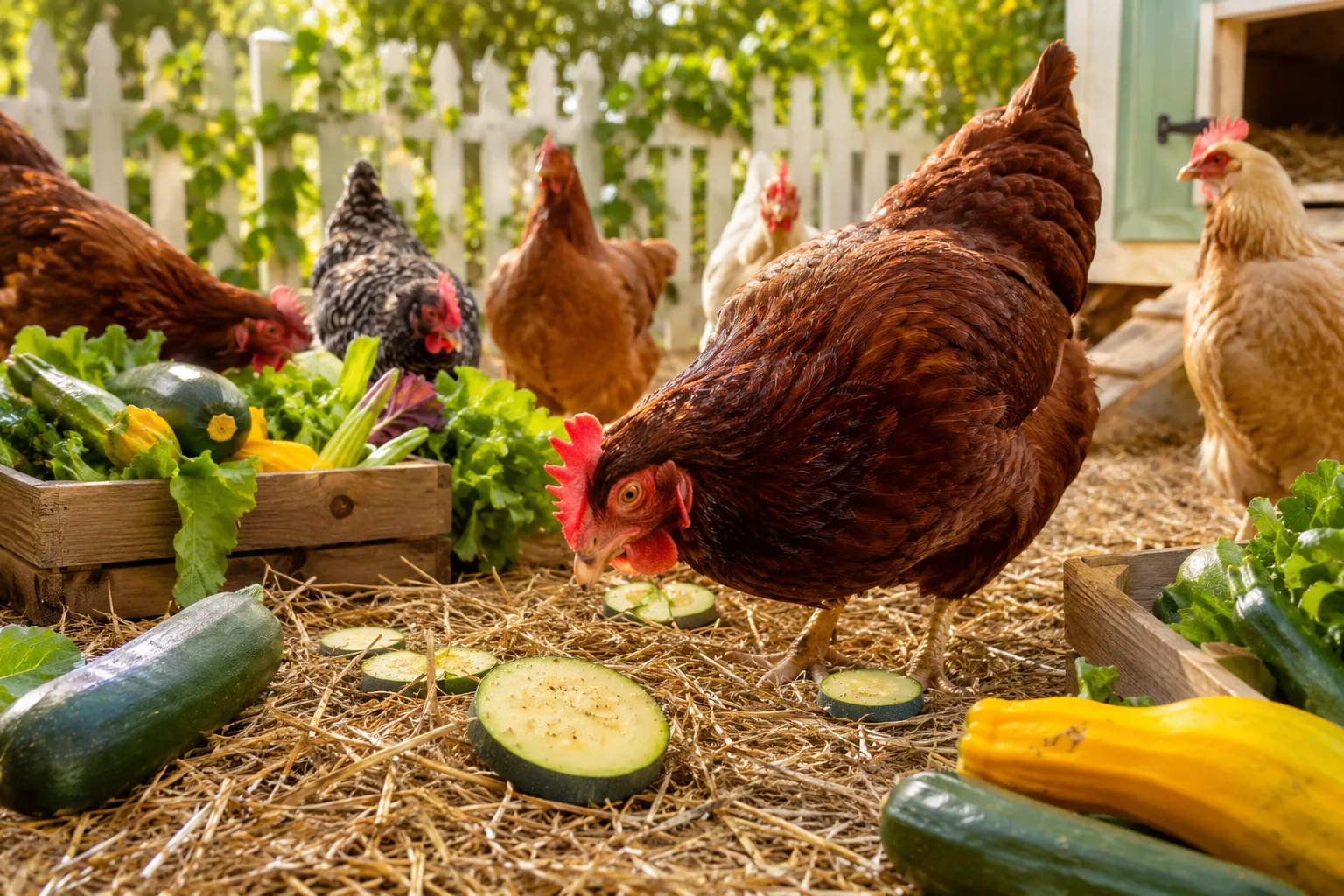
Quick Answer: Yes, chickens can safely eat zucchini, including the flesh, seeds, skin, and even the leaves. Zucchini is a nutritious, hydrating treat that most chickens enjoy, and it can be fed raw or cooked. However, it should be offered in moderation as part of a balanced diet, with treats making up no more than 10% of their daily food intake.
Key Takeaways
- Chickens can eat all parts of zucchini safely, including seeds, skin, flesh, and leaves
- Raw zucchini is perfectly safe and often preferred by chickens over cooked
- Adult chickens can eat zucchini daily in moderation (10% of diet), while baby chicks should wait until 3-4 weeks old
- Zucchini provides hydration, vitamins A and C, potassium, and fiber with very few calories
- Cut zucchini into manageable pieces to prevent choking and encourage eating
- Never feed moldy or rotten zucchini, as it can cause serious digestive issues
- Excessive zucchini can cause watery droppings due to its high water content (95%)
- Most chickens love zucchini, though individual preferences vary by flock
Is Zucchini Safe for Chickens to Eat?
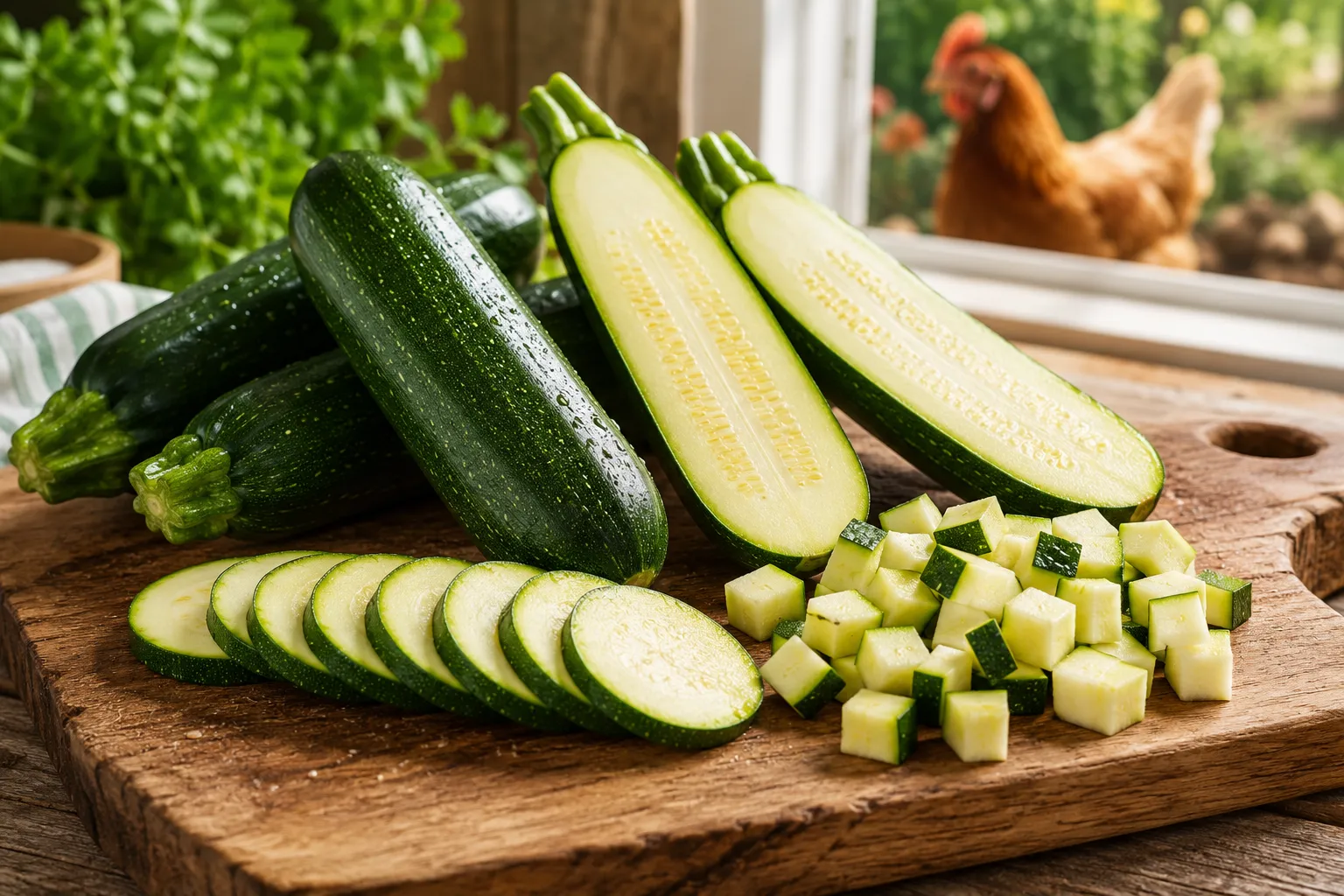
Zucchini is completely safe for chickens and offers several nutritional benefits. This summer squash contains no toxic compounds and provides vitamins A and C, potassium, manganese, and dietary fiber while being low in calories.
The vegetable’s high water content (approximately 95%) makes it especially valuable during hot weather, helping chickens stay hydrated. Zucchini also contains antioxidants like lutein and zeaxanthin, which support overall health.
Key safety points:
- No toxic compounds or harmful substances for poultry
- Safe for all chicken breeds and ages (with age-appropriate sizing)
- Can be fed fresh from the garden without washing off natural bloom
- Organic or homegrown zucchini eliminates pesticide concerns
The only safety concern arises when zucchini becomes moldy or rotten, which applies to any food. Fresh or slightly overripe zucchini poses no risk to your flock.
Can Chickens Eat Raw Zucchini or Does It Need to Be Cooked?
Chickens can eat raw zucchini, and most actually prefer it that way. Raw zucchini retains more nutrients, has a firmer texture that chickens enjoy pecking at, and requires no preparation time for busy chicken keepers.
Cooking zucchini isn’t necessary and may reduce some water-soluble vitamins. However, cooked zucchini is also safe if you have leftovers from your own meals. Many chicken keepers report their flocks show more enthusiasm for raw zucchini because of its crunchy texture.
Raw vs. cooked considerations:
- Raw: Maximum nutrients, satisfying texture, zero prep time, better for hot weather hydration
- Cooked: Softer for older chickens with beak issues, convenient for leftovers, slightly easier to digest
Choose raw if you’re cutting fresh zucchini specifically for your chickens. Use cooked only when repurposing kitchen scraps, and avoid heavily seasoned preparations with salt, butter, or spices.
How Much Zucchini Can I Give My Chickens Per Day?
Chickens should receive zucchini as a treat, making up no more than 10% of their daily diet. For an average laying hen, this translates to roughly 1-2 ounces of zucchini per bird per day, or about one small zucchini shared among 4-6 chickens.
The 90/10 rule ensures chickens get most of their nutrition from complete layer feed, which contains the balanced protein, calcium, and nutrients needed for egg production and overall health. Too much zucchini can displace essential nutrients and lead to nutritional imbalances.
Practical feeding guidelines:
- Small flock (3-5 chickens): One medium zucchini every other day
- Medium flock (6-12 chickens): One large zucchini daily or two medium ones
- Large flock (12+ chickens): Two to three large zucchinis daily
Monitor your chickens’ droppings. If they become consistently watery after introducing zucchini, reduce the amount. Chickens with access to free-range foraging may need less supplemental treats overall.
Can Chickens Eat Zucchini Leaves and Plants?
Yes, chickens can safely eat zucchini leaves, stems, flowers, and vines. The entire zucchini plant is non-toxic to poultry, and many chickens enjoy the variety these plant parts provide.
Zucchini leaves are particularly nutritious, containing more protein and fiber than the fruit itself. The slightly fuzzy texture doesn’t deter most chickens, though some may prefer the tender young leaves over mature, tougher ones.
What chickens can eat from zucchini plants:
- Leaves: High in fiber and protein, best when young and tender
- Flowers: Delicate and often a favorite treat, both male and female blooms
- Stems: Tougher but edible, chickens will peck at softer portions
- Vines: Can be fed after harvest or when pruning plants
If you’re growing zucchini, consider this a bonus food source. However, protect young plants if chickens free-range in your garden, as they may damage productive plants. Harvest excess leaves and flowers to feed separately, or allow chickens to clean up plants after the growing season ends.
Do Chickens Like Zucchini or Will They Ignore It?
Most chickens love zucchini and will eagerly eat it, though individual flock preferences vary. The mild flavor, high water content, and satisfying texture make zucchini a popular treat among backyard chickens.
That said, chickens have distinct personalities and taste preferences. Some flocks devour zucchini immediately, while others may need time to recognize it as food, especially if they’ve never encountered it before.
Tips to encourage zucchini consumption:
- Cut it open: Expose the seeds and moist interior, which chickens find most appealing
- Hang it: Suspend a halved zucchini at pecking height for entertainment and engagement
- Mix with favorites: Combine diced zucchini with known treats like mealworms or scratch grains
- Start small: Introduce gradually so chickens can develop a taste for it
If your chickens initially ignore zucchini, try different presentations. Some prefer it grated, others like large chunks they can peck at. Remove uneaten portions after a few hours to prevent spoilage, and try again another day. Most chickens eventually accept zucchini once they realize it’s edible.
Can Baby Chicks Eat Zucchini?
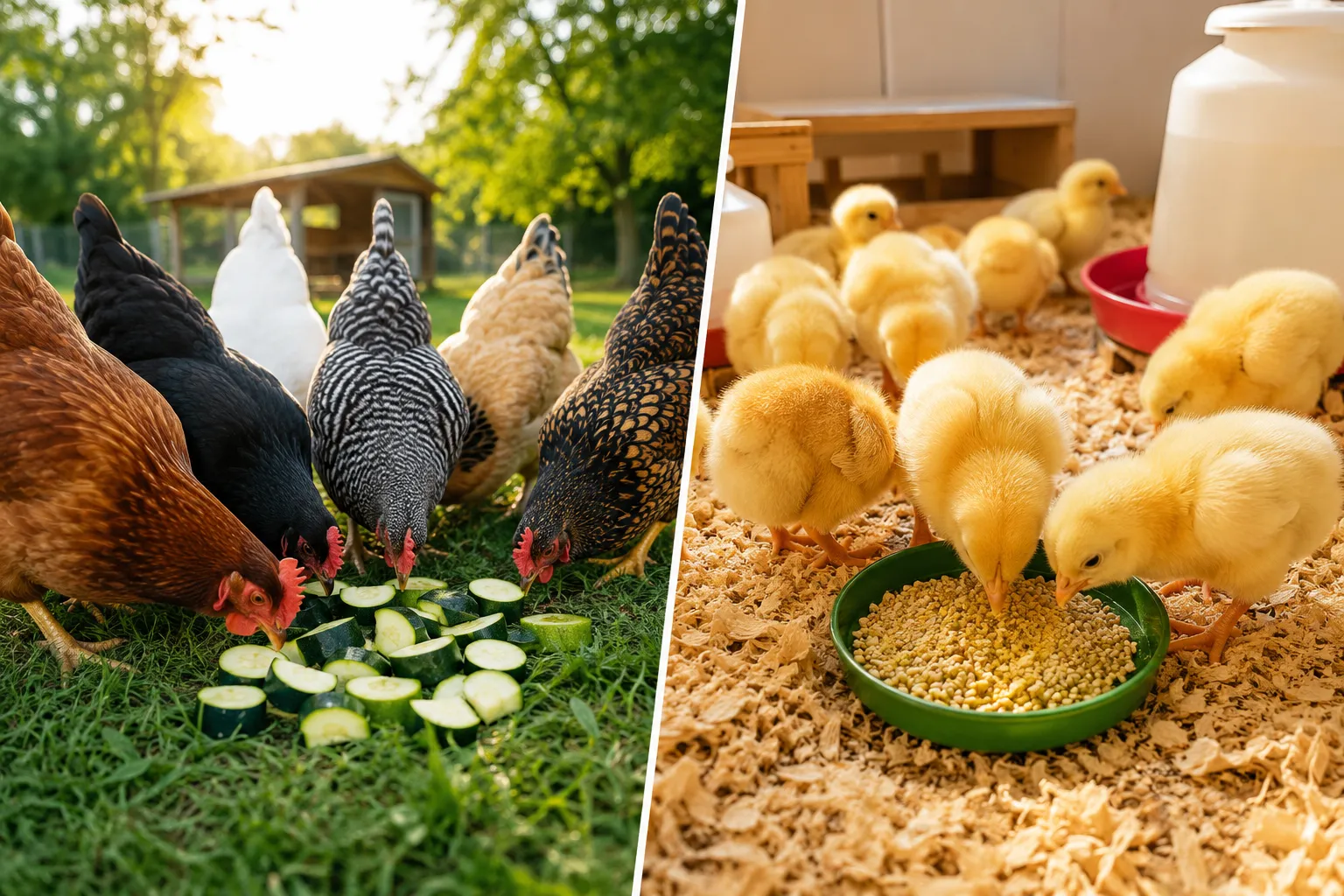
Baby chicks can eat small amounts of finely chopped or grated zucchini starting around 3-4 weeks of age. Before this age, chicks should eat only starter feed to ensure proper growth and development.
When introducing zucchini to young chicks, preparation is critical. Their small beaks and developing digestive systems require softer, smaller pieces than adult chickens need.
Guidelines for feeding zucchini to chicks:
- Age 0-3 weeks: Starter feed only, no treats
- Age 3-6 weeks: Finely grated or minced zucchini, 1-2 times per week, tiny portions
- Age 6+ weeks: Small diced pieces, gradually increasing to adult-sized portions
Always provide chick grit when offering any treats, including zucchini. Grit helps their gizzards break down food properly. Keep treats to less than 5% of a chick’s diet, as they need concentrated nutrition for rapid growth.
Watch for digestive upset. If chicks develop watery droppings after eating zucchini, wait another week or two before trying again.
Should I Cut Zucchini Into Small Pieces for Chickens?
Cutting zucchini into manageable pieces is recommended, though the ideal size depends on your flock’s size and preferences. Chickens can peck at whole zucchini, but cutting it makes the food more accessible and reduces waste.
For most flocks, halving or quartering zucchini lengthwise works well. This exposes the seeds and soft interior that chickens love while providing enough surface area for multiple birds to eat simultaneously.
Recommended cutting methods:
- Halves: Best for small flocks (3-5 chickens), exposes interior, easy to hang
- Quarters: Ideal for medium flocks (6-10 chickens), good surface area
- Thick slices (1-inch rounds): Works for all flock sizes, easy to distribute
- Diced (½-inch cubes): Best for mixing with other foods or for bantam breeds
- Grated: Useful for picky eaters or young birds
Avoid pieces smaller than ¼-inch unless feeding chicks, as they may be ignored. Chickens don’t have teeth and swallow food whole or in chunks, so they don’t need tiny pieces. The goal is to make the zucchini easy to access and peck at, not to pre-chew it for them.
Can Chickens Eat Zucchini Seeds and Skin?
Chickens can safely eat both zucchini seeds and skin, and these parts are often their favorite. The seeds are soft and easy to digest, while the skin provides additional fiber and nutrients.
Unlike some squash varieties with tough rinds, zucchini skin is tender and poses no choking hazard. In fact, the skin contains much of the vegetable’s vitamin A and antioxidants, making it one of the most nutritious parts.
Nutritional benefits:
- Seeds: Contain healthy fats, protein, and minerals; chickens often eat these first
- Skin: Rich in fiber, vitamin A, and antioxidants; provides satisfying texture
There’s no need to peel zucchini before feeding it to chickens. The only exception might be store-bought zucchini with wax coating, though even this is generally safe in small amounts. Homegrown or organic zucchini can be fed whole, halved, or sliced with complete confidence.
Some chicken keepers save overripe zucchini specifically for their flocks. As zucchini ages, the seeds grow larger and the flesh becomes slightly less appealing to humans, but chickens don’t mind and will happily consume the entire vegetable.
Will Feeding Chickens Too Much Zucchini Hurt Egg Production?
Excessive zucchini can negatively impact egg production by displacing the protein and calcium chickens need for laying. While zucchini itself doesn’t harm egg production, feeding too much causes chickens to eat less of their balanced layer feed.
Laying hens require approximately 16-18% protein and 3-4 grams of calcium daily to produce quality eggs. Zucchini contains less than 2% protein and minimal calcium, so overconsumption creates nutritional deficiencies that manifest as reduced laying, thin shells, or smaller eggs.
Signs you’re feeding too much zucchini:
- Decreased egg production or frequency
- Thin or soft eggshells
- Chickens ignoring their layer feed
- Consistently watery droppings
- Weight loss or reduced energy
Stick to the 10% treat rule. If you notice any production issues, reduce or eliminate treats for a week and monitor improvement. Provide free-choice oyster shell or crushed eggshells to ensure calcium availability, especially during peak laying season.
Zucchini makes an excellent summer treat precisely because it’s low-calorie and hydrating, but it should never replace complete nutrition from quality layer feed.
What Other Squash Can Chickens Eat Besides Zucchini?
Chickens can safely eat most squash varieties, including yellow squash, butternut squash, acorn squash, pumpkin, spaghetti squash, and cucumber (technically a squash family member). All provide similar nutritional benefits with slight variations.
Summer squashes like yellow squash and pattypan are nearly identical to zucchini in nutrition and can be fed the same way. Winter squashes like butternut and acorn are denser, higher in calories, and contain more vitamin A, making them excellent cold-weather treats.
Chicken-safe squash varieties:
| Squash Type | Preparation | Best Season | Special Notes |
|---|---|---|---|
| Yellow squash | Raw or cooked, halved or sliced | Summer | Nearly identical to zucchini |
| Butternut squash | Cooked (raw is too hard), cubed | Fall/Winter | High in vitamin A, more calories |
| Pumpkin | Raw or cooked, seeds especially loved | Fall | Seeds are a natural dewormer |
| Acorn squash | Cooked, halved | Fall/Winter | Dense and filling |
| Spaghetti squash | Cooked, shredded texture | Fall/Winter | Fun texture variety |
| Cucumber | Raw, sliced or whole | Summer | Most hydrating option |
All squash seeds are safe and nutritious. Pumpkin seeds, in particular, are believed to have natural deworming properties, though scientific evidence for chickens is limited. Winter squash should be cooked before feeding, as the raw flesh is too hard for chickens to eat comfortably.
Can Zucchini Cause Diarrhea in Chickens?
Zucchini can cause watery droppings in chickens when fed in excessive amounts, though this isn’t true diarrhea. The vegetable’s 95% water content means overconsumption leads to loose, watery stools that are usually temporary and harmless.
True diarrhea in chickens involves illness, infection, or parasites and typically includes other symptoms like lethargy, reduced appetite, or abnormal behavior. Watery droppings from too much zucchini resolve quickly once you reduce the amount offered.
Distinguishing watery droppings from illness:
- From excess zucchini: Watery but otherwise normal color, chickens remain active and eating, resolves in 24-48 hours after reducing treats
- From illness: Unusual color (green, yellow, bloody), foul odor, accompanied by lethargy or reduced appetite, persists despite diet changes
If your chickens develop watery droppings after eating zucchini, cut back to smaller portions or offer it less frequently. Ensure they have constant access to fresh water and quality feed. The issue should resolve within a day or two.
If watery droppings persist beyond 48 hours after eliminating zucchini, or if you notice other symptoms, consult a veterinarian. The problem likely isn’t the zucchini but rather an underlying health issue.
Can Chickens Eat Moldy or Rotten Zucchini?
No, chickens should never eat moldy or rotten zucchini. Mold produces mycotoxins that can cause serious illness in poultry, including digestive upset, liver damage, and in severe cases, death.
While chickens have robust digestive systems and can handle some foods humans avoid, mold is dangerous for all animals. Even if chickens seem willing to eat moldy zucchini, the risk far outweighs any nutritional benefit.
Why moldy zucchini is dangerous:
- Mycotoxins: Toxic compounds produced by mold that damage organs
- Aspergillosis: Respiratory infection from inhaling mold spores
- Digestive upset: Vomiting, diarrhea, and crop impaction
- Liver damage: Cumulative toxin exposure affects liver function
Slightly overripe zucchini with soft spots is fine, but discard any with visible mold (fuzzy growth, discoloration, or slimy texture). When in doubt, throw it out. Compost moldy produce away from your chicken area, or dispose of it in sealed trash.
Fresh or slightly past-prime zucchini is perfectly safe. The line is drawn at active decay and mold growth.
Are There Any Chickens That Shouldn’t Eat Zucchini?
Nearly all chickens can safely eat zucchini, but a few situations warrant caution or modification. Chickens with specific health conditions, very young chicks, and birds on medicated feed may need special consideration.
Chickens requiring special consideration:
- Chicks under 3 weeks: Digestive systems too immature for treats; stick to starter feed only
- Chickens with chronic diarrhea: High water content may worsen symptoms; wait until resolved
- Birds on medicated feed: Treats can dilute medication effectiveness; limit to 5% of diet or avoid entirely
- Overweight chickens: Zucchini is actually beneficial due to low calories, but ensure it doesn’t displace protein
- Chickens with crop issues: Large pieces may cause impaction; offer only finely chopped if feeding at all
Bantam breeds and smaller chickens benefit from smaller pieces but can otherwise eat zucchini normally. Older chickens with beak deformities or injuries may prefer softer, cooked zucchini or grated raw zucchini.
If you’re unsure whether your chicken should eat zucchini due to a specific health condition, consult an avian veterinarian. For healthy adult chickens, zucchini is universally safe and beneficial.
What Vegetables Are Better Than Zucchini for Chickens?
While zucchini is excellent, several vegetables offer superior nutritional profiles for chickens. Leafy greens like kale, collards, and Swiss chard provide more protein, calcium, and vitamins. Pumpkin offers deworming benefits, and sprouted grains deliver concentrated nutrition.
“Better” depends on your goals. For hydration in summer, zucchini excels. For calcium and protein, leafy greens win. For entertainment and enrichment, whole cabbage or hanging treats work best.
Top vegetables for chickens (compared to zucchini):
- Kale and collard greens: Higher protein (3-4%), excellent calcium source, more vitamins A and K
- Pumpkin (especially seeds): Natural dewormer, higher in calories for winter, more vitamin A
- Broccoli: More protein (2.8%), higher calcium, contains sulforaphane for immune support
- Cabbage: Longer-lasting entertainment, more fiber, good for pecking behavior
- Sprouted grains: Highest protein (up to 15%), concentrated nutrients, excellent for molting
Zucchini remains valuable for its hydration, low calories, and palatability. The best approach is variety. Rotate different vegetables throughout the week to provide diverse nutrients and prevent boredom.
Consider seasonal availability. Zucchini shines in summer when gardens overflow and chickens need hydration. Winter squash and root vegetables are better cold-weather options.
Frequently Asked Questions
Can chickens eat zucchini every day?
Yes, chickens can eat zucchini daily as long as it remains within the 10% treat limit of their diet. Rotate with other vegetables for nutritional variety, but daily zucchini in moderation is perfectly safe and healthy.
Do I need to remove zucchini seeds before feeding chickens?
No, zucchini seeds are completely safe and nutritious for chickens. Most chickens actually prefer the seeds and will eat them first. The seeds contain healthy fats and protein.
Can chickens eat giant overgrown zucchini?
Yes, chickens can eat oversized zucchini that have grown too large for human consumption. The flesh may be less flavorful to humans, but chickens don’t mind. The seeds will be larger but remain safe.
Will zucchini change the taste of eggs?
No, feeding zucchini to chickens does not affect egg taste. Unlike some strong-flavored foods (garlic, onions, fish), zucchini’s mild flavor doesn’t transfer to eggs.
Can chickens eat zucchini bread or cooked zucchini dishes?
Plain cooked zucchini is fine, but avoid zucchini bread or heavily seasoned dishes. Sugar, salt, butter, and spices aren’t healthy for chickens. Stick to plain, simply prepared zucchini.
How do I store zucchini for my chickens?
Store whole zucchini in a cool, dry place for up to a week, or refrigerate for two weeks. Cut zucchini should be fed immediately or refrigerated and used within 2-3 days to prevent spoilage.
Can chickens eat zucchini flowers?
Yes, zucchini flowers are safe and often considered a delicacy by chickens. Both male and female flowers can be fed fresh. They’re tender and usually eaten quickly.
Will chickens eat zucchini if they have other food available?
Most chickens will eat zucchini even when other food is available, though they’ll typically eat their layer feed first if hungry. Zucchini is usually consumed as a snack or treat throughout the day.
Can I freeze zucchini for my chickens?
Yes, you can freeze zucchini to feed chickens later. Frozen zucchini becomes mushy when thawed, but chickens don’t mind the texture. It makes a refreshing cold treat in summer.
Is yellow squash the same as zucchini for chickens?
Yes, yellow squash and zucchini are nutritionally nearly identical and can be fed interchangeably. Chickens typically enjoy both equally and they provide the same health benefits.
Can chickens with bumblefoot eat zucchini?
Yes, zucchini is safe for chickens with bumblefoot or other health conditions. The vitamin A in zucchini may even support immune function during recovery. It won’t interfere with treatment.
How long can cut zucchini sit in the chicken coop?
Remove uneaten zucchini after 3-4 hours in warm weather or 6-8 hours in cool weather. Zucchini spoils quickly, especially when cut, and can attract flies or develop harmful bacteria.
Conclusion
Zucchini is a safe, nutritious, and hydrating treat that most chickens love. You can confidently feed your flock raw zucchini, including the seeds, skin, leaves, and flowers, as long as you keep portions moderate and maintain the 90/10 feed-to-treat ratio. Cut zucchini into manageable pieces, introduce it gradually to young chicks after 3-4 weeks of age, and never offer moldy or rotten pieces.
The key to successful zucchini feeding is balance. While your chickens may eagerly devour this summer squash, remember it should complement, not replace, their complete layer feed. Monitor droppings for excess water content, rotate zucchini with other vegetables for nutritional variety, and adjust portions based on your flock’s size and response.
Take action today: If you have zucchini in your garden or kitchen, slice one in half and offer it to your flock. Watch which chickens eat it first, how they approach it, and whether they prefer the seeds or flesh. This simple observation will help you understand your flock’s preferences and guide future feeding decisions. Your chickens will thank you with enthusiastic pecking, and you’ll enjoy watching them relish this healthy, garden-fresh treat.


