
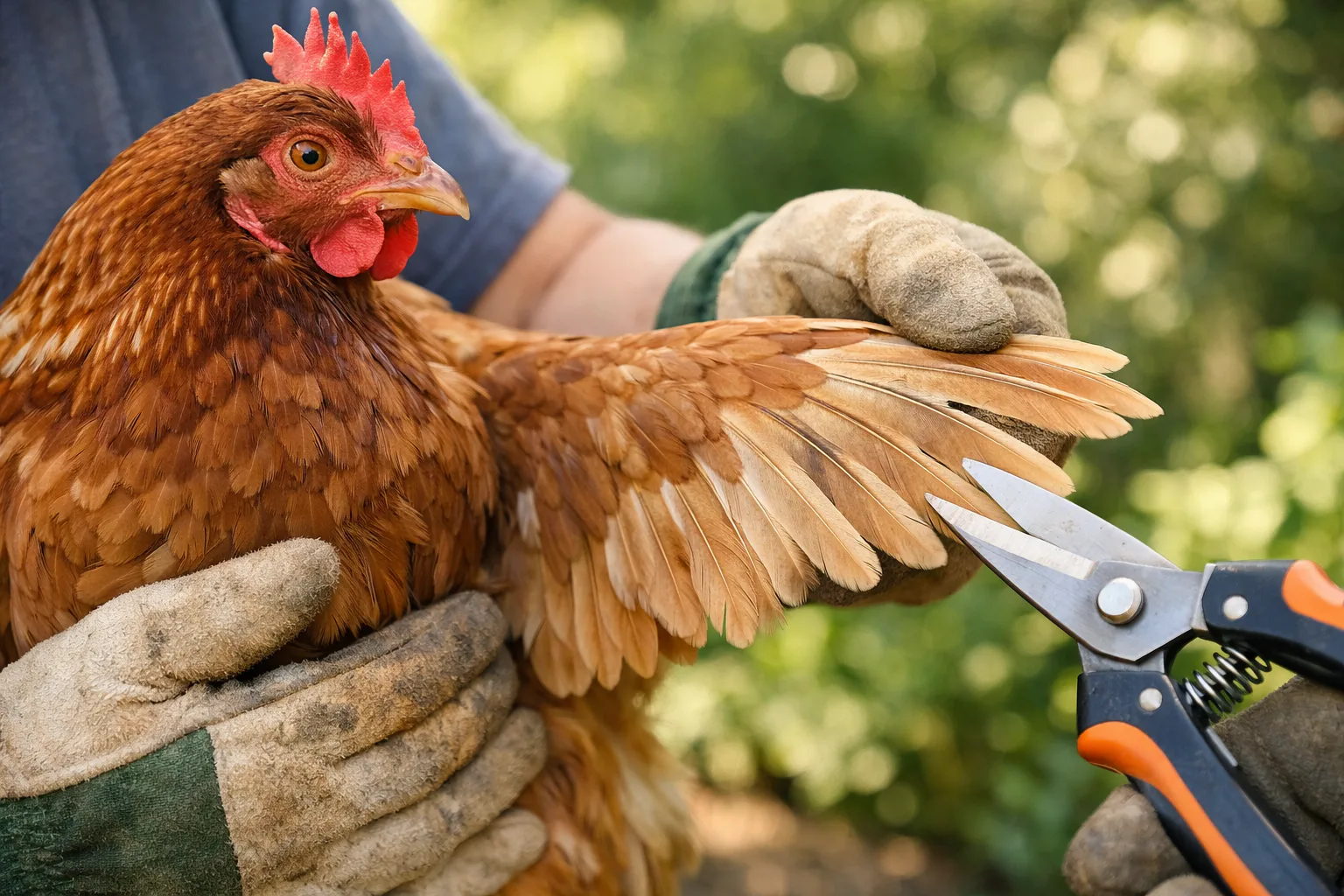
Quick Answer: Clipping chicken wings safely involves cutting only the primary flight feathers on one or both wings using sharp poultry shears, avoiding the blood feathers near the base, and holding the bird calmly to prevent injury. When done correctly, the process is painless and simply prevents your chickens from flying over fences while allowing them to flutter short distances for balance and predator evasion.
Key Takeaways
- Wing clipping is a temporary, painless procedure that trims only the dead feather shafts (similar to cutting hair or nails)
- You only need to cut the 10 primary flight feathers on one or both wings, leaving secondary feathers intact
- Sharp poultry shears or heavy-duty scissors are the essential tools; dull blades can damage feathers
- Clip feathers about halfway down their length, well above where blood vessels end
- Most chickens need re-clipping every 6-12 months after molting when new feathers grow in
- The procedure does not hurt when done correctly, but cutting into blood feathers causes bleeding and pain
- Clipping one wing creates imbalance and is more effective than clipping both wings symmetrically
- Chickens can still flutter to low perches and escape ground predators after proper clipping
- Not all breeds require clipping; heavy breeds like Orpingtons rarely fly, while light breeds like Leghorns are persistent flyers
What Does Clipping Chicken Wings Mean?
Clipping chicken wings means trimming the primary flight feathers on one or both wings to prevent chickens from flying over fences or escaping their designated area. This procedure removes enough feather length to disrupt the aerodynamics needed for sustained flight without causing pain or permanent damage.
The process targets only the primary flight feathers, which are the long, stiff feathers at the wing tip that provide lift. These feathers are made of keratin (the same protein as your fingernails) and contain no nerve endings in the shaft once fully grown. When you clip wings, you’re essentially giving your chicken a haircut that temporarily grounds them.
Wing clipping is different from other procedures:
- Temporary solution: Feathers grow back after each molt (usually annually)
- Cosmetic only: Does not affect the wing structure or bones
- Reversible: Chickens regain full flight ability once feathers regrow
- Humane: Causes no pain when performed on mature feathers
Most backyard chicken keepers clip wings to keep their flock contained in a specific yard or garden area, protect chickens from wandering into dangerous territory, and prevent them from roosting in trees where predators can reach them at night.
How to Clip Chicken Wings Without Hurting Them
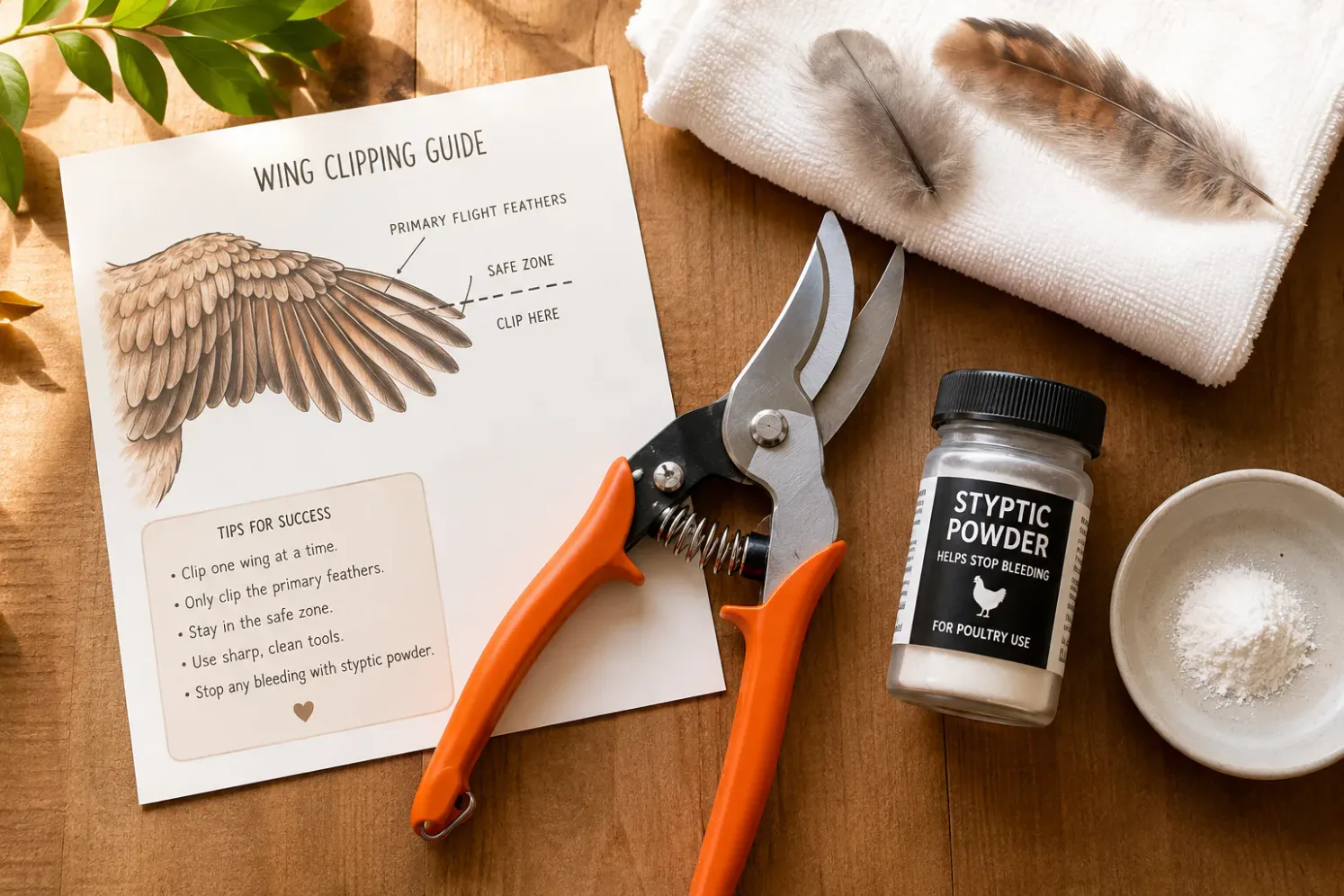
To clip chicken wings without causing pain or injury, wait until feathers are fully mature (no blood supply visible), use sharp cutting tools, and trim only the outer half of the primary flight feathers while avoiding the feather base where blood vessels may still be present.
Step-by-step safe clipping process:
Choose the right time: Clip during daylight when you can see clearly, and avoid clipping brand-new feathers that are still growing (these appear darker at the base and may have visible blood supply)
Catch and calm the chicken: Approach calmly, scoop the bird from behind, and tuck her securely under your arm with wings against your body to reduce stress
Extend one wing fully: Gently spread the wing to expose all feathers, identifying the 10 primary flight feathers (the longest ones at the wing tip)
Identify safe cutting zones: Look for the clear, hollow feather shafts; avoid any feathers with dark centers or visible blood vessels near the base
Cut decisively: Trim each primary feather about halfway down its length (typically 4-6 inches from the tip) with one clean cut per feather
Check for bleeding: Inspect each cut feather; if you see any bleeding, apply styptic powder immediately and do not cut any shorter
Common mistake to avoid: Cutting too close to the feather base is the primary cause of injury. Always leave at least 2-3 inches of feather shaft attached to the wing. If you’re unsure, cut less rather than more, you can always trim more later, but you can’t undo a cut that’s too short.
The entire process takes 2-3 minutes per chicken once you’re comfortable with the technique. Chickens may squawk or struggle initially, but this is a stress response to being restrained, not pain from the clipping itself.
What Tools Do I Need to Clip Chicken Wings?
You need sharp poultry shears or heavy-duty scissors as your primary tool, plus styptic powder or cornstarch for emergencies, and optionally a towel for wrapping nervous birds. Quality cutting tools make the difference between clean cuts and ragged feathers that can split or fray.
Essential tools:
- Poultry shears or sharp scissors: Heavy-duty kitchen shears or dedicated poultry scissors work best; they should cut through multiple feather shafts cleanly in one motion
- Styptic powder or cornstarch: Stops bleeding immediately if you accidentally cut a blood feather (keep this on hand even if you don’t expect to need it)
- Clean towel or cloth: Helps wrap and calm anxious birds during the process
Optional but helpful:
- Gardening gloves: Protect your hands from scratches if you’re handling flighty or aggressive birds
- Helper: A second person can hold the chicken while you focus on identifying and cutting the correct feathers
- Good lighting: Natural daylight or a bright flashlight helps you see feather structure clearly
Tool quality matters: Dull scissors crush feather shafts instead of cutting them cleanly, which can cause the feather to split up the shaft and potentially damage the follicle. Test your scissors on a piece of cardboard first, if they cut cleanly without bending the material, they’re sharp enough for feathers.
Choose poultry shears if: You’re clipping multiple birds regularly or have large-breed chickens with thick feather shafts. Choose heavy-duty kitchen scissors if you’re only clipping a few backyard hens occasionally and want to use tools you already own.
Clipping Chicken Wings vs Pinioning: What’s the Difference?
Clipping is a temporary, painless trimming of feather shafts that grows back after molting, while pinioning is a permanent surgical amputation of the wing tip performed on day-old chicks that prevents wing feathers from ever growing. The two procedures are fundamentally different in permanence, invasiveness, and ethical considerations.
Key differences:
| Aspect | Wing Clipping | Pinioning |
|---|---|---|
| Permanence | Temporary (6-12 months) | Permanent (lifetime) |
| Procedure | Trimming feather shafts | Amputating wing bone |
| Age performed | Any age after feathers grow | First 24-48 hours of life only |
| Pain level | None (like cutting hair) | Painful if done after 48 hours |
| Reversibility | Fully reversible | Irreversible |
| Legal status | Legal everywhere | Banned in some regions |
When each is used:
- Clipping is the standard choice for backyard chicken keepers who want a humane, reversible solution to contain their flock
- Pinioning is primarily used in commercial waterfowl operations or ornamental bird collections where permanent flight prevention is required
Most backyard chicken enthusiasts and animal welfare advocates prefer clipping because it preserves the chicken’s natural anatomy and allows the bird to regain flight ability if circumstances change (such as rehoming to a larger property or needing better predator evasion).
Ethical consideration: Pinioning removes the chicken’s ability to ever fly or flutter, which affects their natural behaviors including escaping ground predators, reaching elevated roosts, and expressing normal movement patterns. Clipping allows chickens to still flutter short distances for balance and safety.
How Much of the Wing Feathers Should I Cut Off?
Cut approximately half the length of each primary flight feather, typically 4-6 inches from the tip, leaving at least 2-3 inches of feather shaft still attached to the wing. This removes enough feather surface area to prevent sustained flight while keeping cuts well away from blood vessels at the feather base.
Visual guide for cutting length:
- Primary flight feathers are usually 8-12 inches long when fully grown
- Safe cutting zone is the outer 50-60% of the feather (the clear, hollow portion)
- Danger zone is the inner 2-3 inches near the wing where blood vessels may be present
- Target cut line should be roughly aligned with the tips of the secondary feathers (the shorter feathers closer to the body)
When you extend the wing, you’ll notice the primary feathers are significantly longer than the secondary feathers behind them. A good rule of thumb is to trim the primaries so they’re approximately the same length as the secondaries, this creates a more uniform wing edge and removes just enough flight surface.
Decision rule: If you can see any darkness or opacity in the feather shaft near where you plan to cut, move your cut line farther toward the feather tip. Mature, safe-to-cut feathers have completely clear, hollow shafts that look almost translucent when held up to light.
Common mistake: Cutting too conservatively (removing only 1-2 inches) often leaves enough flight surface for determined chickens to still clear fences. If your chicken can still fly after clipping, you can safely trim another inch or two off the primaries during your next session.
Can Chickens Still Fly After Clipping Wings?
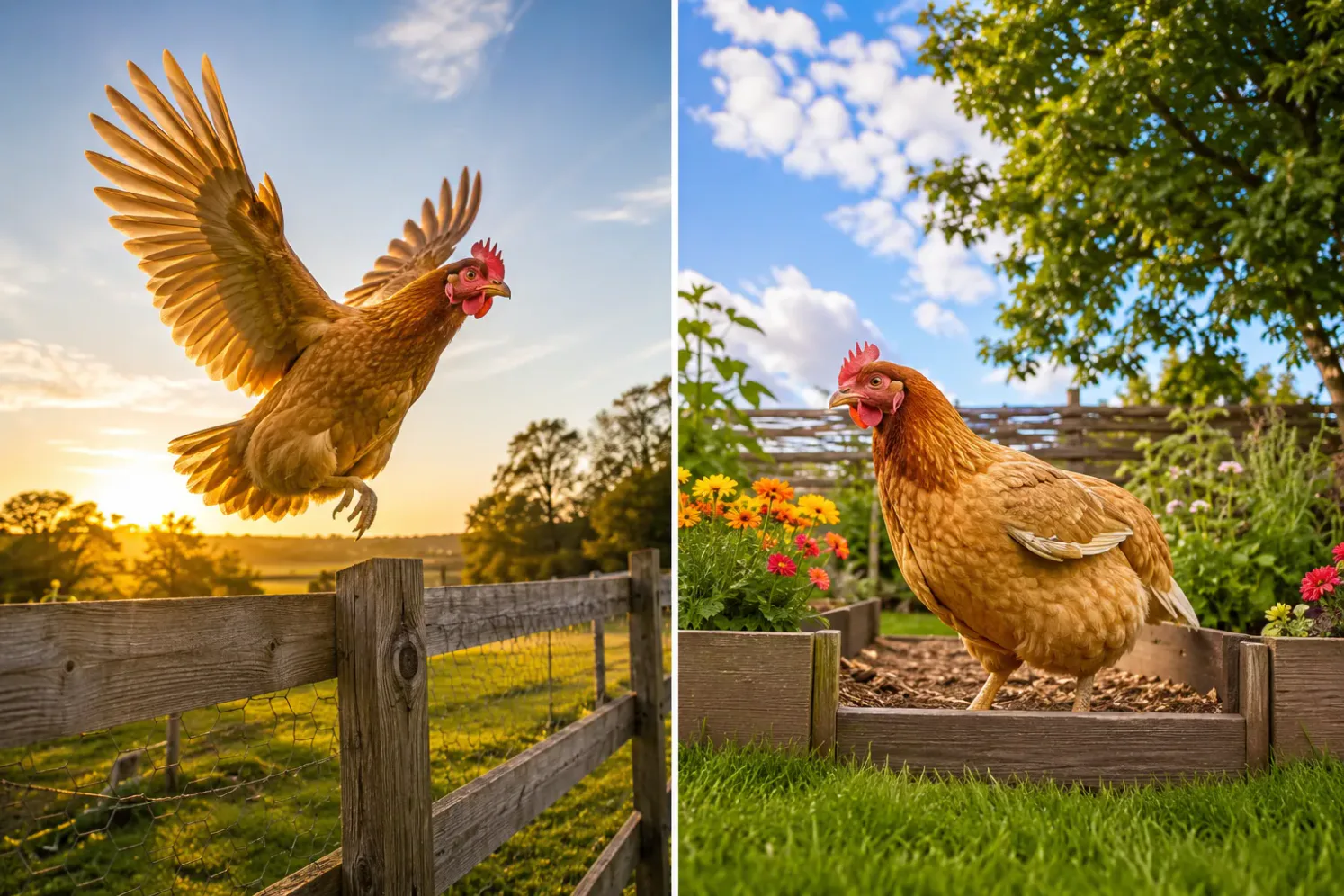
Chickens cannot achieve sustained flight after proper wing clipping, but they can still flutter 2-3 feet off the ground to reach low roosts, escape immediate ground threats, and maintain balance. The goal is to prevent them from clearing fences (typically 4-6 feet high), not to eliminate all wing function.
What clipped chickens can do:
- Flutter up to low roosts 1-2 feet high
- Hop-fly short distances of 3-4 feet horizontally
- Use wings for balance when running or jumping
- Escape from ground predators by gaining a few feet of height
- Land safely when jumping down from elevated positions
What clipped chickens cannot do:
- Fly over fences 4 feet or taller
- Sustain flight for more than a few seconds
- Gain significant altitude (more than 3 feet)
- Roost in trees or on high structures
- Fly long distances across yards
Effectiveness varies by method:
- One wing clipped: Creates imbalance that makes controlled flight nearly impossible; most effective method
- Both wings clipped symmetrically: Reduces lift but maintains balance; some athletic birds may still clear low barriers
- Breed differences: Light, active breeds (Leghorns, Hamburgs) may still achieve short flights even when clipped; heavy breeds (Brahmas, Cochins) are fully grounded
If your chicken can still fly over your fence after clipping, you have three options: trim the feathers slightly shorter (if you left them long initially), clip the second wing to remove all lift capacity, or increase fence height by 1-2 feet.
How Often Do You Need to Clip Chicken Wings?
Most chickens need their wings re-clipped every 6-12 months, typically after their annual molt when new flight feathers grow in to replace the old ones. The exact timing depends on your individual bird’s molting schedule, which usually occurs in late summer or fall.
Molting and feather regrowth:
Chickens naturally shed and replace all their feathers once per year during molting season. This process takes 8-16 weeks, and the new flight feathers that grow in will be full-length and functional. Once molting is complete and new primaries have fully grown, you’ll need to clip again if you want to maintain flight restriction.
Signs it’s time to re-clip:
- You notice your chickens flying higher or farther than before
- New, long primary feathers are visible on the wings
- Chickens are escaping over fences they couldn’t clear previously
- The wing tips look fuller and longer than they did after the last clipping
Monitoring schedule:
Check your chickens’ wings every 2-3 months, especially during and after molting season. Some individual birds molt earlier or later than the rest of the flock, so you may need to clip birds on different schedules rather than doing the entire flock at once.
Exception: If you clip very conservatively (removing only the feather tips), you may need to re-clip mid-season as feathers continue growing. More aggressive initial clipping (removing half the feather length) typically lasts until the next full molt.
Choose to clip before molting if: You want to maintain flight restriction year-round. Choose to skip clipping if your chickens have proven they stay within boundaries during certain seasons or if predator pressure is high and you want them to have full escape capability.
What Happens If You Cut Chicken Wing Feathers Too Short?
Cutting feathers too short can sever blood feathers that are still growing, causing immediate bleeding, pain, and potential infection if not treated promptly. Blood feathers contain an active blood supply running through the feather shaft and appear darker or opaque at the base compared to mature feathers.
Immediate consequences of cutting too short:
- Bleeding: Blood flows from the cut feather shaft, sometimes profusely
- Pain: The chicken will vocalize and show distress (blood feathers have nerve endings)
- Panic: The bird may thrash or try to escape, making bleeding worse
- Infection risk: Open feather follicles can become infected if contaminated
Emergency response steps:
- Apply styptic powder immediately to the bleeding feather shaft, pressing firmly for 30-60 seconds
- If bleeding continues, pack cornstarch or flour into the feather shaft opening
- As a last resort, you may need to pull the entire damaged feather out from the follicle (grasp firmly at the base and pull straight out with one quick motion)
- Isolate the bird in a quiet, clean space for 30-60 minutes to allow clotting
- Monitor for 24 hours for signs of continued bleeding or infection (swelling, heat, lethargy)
Long-term effects:
Most chickens recover fully from accidentally cut blood feathers with no lasting damage. The feather will either finish growing (if only partially damaged) or fall out during the next molt and be replaced. However, severe or repeated trauma to feather follicles can occasionally cause permanent follicle damage that prevents future feather growth in that spot.
Prevention is key: Always examine feathers closely before cutting. Mature feathers have clear, hollow shafts with no dark coloring at the base. When in doubt, cut farther from the base than you think necessary, you can always trim more, but you can’t undo a cut that’s too short.
Do All Chicken Breeds Need Wing Clipping?
Not all chicken breeds require wing clipping; heavy breeds like Orpingtons, Brahmas, and Cochins rarely fly more than a few feet even with full wings, while light, active breeds like Leghorns, Hamburgs, and Araucanas are persistent fliers that almost always need clipping to stay contained. Your decision should be based on breed characteristics, individual bird behavior, and your specific fencing setup.
Breeds that rarely need clipping:
- Heavy dual-purpose breeds: Orpingtons, Wyandottes, Plymouth Rocks, Australorps (typically 7-9 pounds)
- Giant breeds: Brahmas, Cochins, Jersey Giants (9-12 pounds)
- Silkies: Their fluffy feather structure prevents effective flight regardless of weight
Breeds that usually need clipping:
- Light egg layers: Leghorns, Minorcas, Anconas, Andalusians
- Active Mediterranean breeds: Hamburgs, Sicilian Buttercups
- Game breeds: Old English Game, Modern Game
- Some heritage breeds: Araucanas, Ameraucanas, Campines
Moderate breeds (assess individually):
- Rhode Island Reds, Sussex, Barnevelders, and Marans fall in the middle, some individuals fly readily while others stay grounded
Decision factors beyond breed:
- Fence height: If you have 6-foot fences, even light breeds may stay contained; 3-4 foot fences require clipping for most breeds
- Individual personality: Some chickens are adventurous and test boundaries constantly; others never attempt to fly even when capable
- Age: Young pullets (4-8 months) are lighter and more energetic, often flying more than mature hens
- Motivation: Chickens fly more when stressed, chased, or when they see something appealing (like a garden) on the other side of a fence
Test first approach: If you’re unsure whether your specific birds need clipping, observe them for a week or two after they’re settled in their space. If they’re clearing fences or roosting where you don’t want them, then clip. If they stay grounded naturally, save yourself the effort.
Is It Cruel to Clip Chicken Wings?
Wing clipping is not cruel when performed correctly because it causes no pain, does not damage the wing structure, and is comparable to trimming hair or nails. The procedure removes only dead keratin shafts and allows chickens to retain enough wing function for balance, short flutters, and predator evasion while preventing escape over fences.
Animal welfare perspective:
Major poultry welfare organizations and veterinarians consider wing clipping a humane management practice when done properly. The procedure:
- Causes no pain to mature feathers (no nerve endings in the shaft)
- Does not restrict natural behaviors like dust bathing, foraging, or socializing
- Allows chickens to still use wings for balance and short-distance movement
- Prevents injuries from escaping into dangerous areas (roads, neighbor’s yards, predator territory)
Potential welfare concerns:
Wing clipping can negatively impact welfare if:
- Done incorrectly (cutting blood feathers causes pain and bleeding)
- Performed too aggressively (removing all wing function eliminates predator escape ability)
- Used as a substitute for adequate fencing (chickens should have secure, spacious enclosures regardless)
- Applied to birds in high-predator areas where flight is their primary defense
Ethical considerations:
Some chicken keepers prefer not to clip wings on philosophical grounds, believing chickens should retain their natural abilities. This is a valid choice if you can provide:
- Taller fencing (6-8 feet) or covered runs
- Adequate space so chickens don’t feel motivated to escape
- Supervision during free-range time
- Acceptance that some birds may occasionally fly where you don’t want them
Choose to clip if: Your primary concern is keeping chickens safe within boundaries and you have adequate ground-level predator protection. Choose not to clip if you have secure tall fencing and want to preserve full flight capability for predator evasion.
The procedure itself is not cruel, but the decision should be made based on your specific situation, fencing, predator pressure, and management style.
How to Hold a Chicken Safely While Clipping Wings
Hold the chicken securely against your body with one arm supporting her breast and legs while tucking her wings against her sides, then use your free hand to gently extend one wing for clipping. Proper restraint keeps both you and the bird safe while minimizing stress during the procedure.
Step-by-step holding technique:
- Approach calmly: Move slowly and speak in a quiet voice; sudden movements trigger panic
- Catch from behind or above: Scoop the bird up with both hands around her body, pinning wings against her sides immediately
- Tuck under your arm: Position the chicken under your dominant arm (right arm if you’re right-handed) with her body facing backward and her head near your elbow
- Support the breast: Your arm should support her breast and keel bone, with her legs dangling or tucked against your body
- Pin the wings: Keep both wings pressed gently but firmly against her body with your arm and side
- Extend one wing: Use your free hand to gently pull one wing away from the body, spreading it fully to expose all feathers
For nervous or flighty birds:
- Wrap the chicken in a towel before beginning, leaving only the wing you’re working on exposed
- Work in a quiet, enclosed space where the bird can’t escape if she breaks free
- Have a helper hold the bird while you focus on identifying and cutting feathers
- Clip in the evening when chickens are naturally calmer
Body language to watch:
- Calm chicken: Relaxed body, quiet or soft clucking, not struggling
- Stressed chicken: Rigid body, loud squawking, thrashing or kicking (take a break and try again in a few minutes)
- Overheated chicken: Panting with open beak (chickens can’t sweat; release immediately if you see this)
Common holding mistakes:
- Gripping too tightly around the chest (restricts breathing)
- Holding by the wings or legs only (causes injury and panic)
- Positioning the bird facing forward (gives her leverage to push away from you)
- Working in a standing position (if she escapes, she falls from height; sit down instead)
Most chickens calm down significantly once they’re securely held and realize they can’t escape. The entire clipping process takes only 1-2 minutes per bird once you have her properly positioned.
When Is the Best Age to Start Clipping Chicken Wings?
The best age to start clipping chicken wings is around 8-12 weeks old, once the primary flight feathers have fully grown in and the chicks begin attempting to fly out of brooders or over barriers. Wait until feathers are completely mature (clear, hollow shafts with no blood supply) before clipping to avoid injuring growing feathers.
Age-based guidelines:
- 0-6 weeks: Chicks have only downy fluff and short pin feathers; no clipping needed or possible
- 6-8 weeks: Flight feathers are growing but still contain blood supply; wait to clip
- 8-12 weeks: Primary feathers are usually mature enough for safe clipping; clip if birds are flying out of enclosures
- 12+ weeks: All flight feathers are fully mature; safe to clip anytime
How to tell feathers are ready:
Examine the primary flight feathers closely. Mature feathers ready for clipping have:
- Clear, hollow shafts that look almost translucent
- No dark coloring or opacity at the base
- Hard, fully-formed structure (not soft or pliable)
- No visible blood vessels when held up to light
Growing feathers (blood feathers) that are NOT ready for clipping have:
- Dark, opaque shafts (often blue-gray or purple-tinted)
- Waxy coating on the feather shaft
- Soft, pliable structure
- Visible blood supply in the shaft
Practical timing considerations:
Many backyard chicken keepers wait until pullets are moved from the brooder to their permanent coop (usually 6-8 weeks) and then assess whether clipping is necessary based on the birds’ behavior and the coop’s fencing. If your young birds are staying contained naturally, you can wait until they demonstrate they need clipping rather than doing it preemptively.
Exception: If you have a secure, covered brooder or grow-out pen, you may not need to clip at all during the juvenile stage. Wait until birds are in their permanent housing and assess based on whether they’re clearing fences.
Common Mistakes When Clipping Chicken Wings for the First Time
First-time wing clippers commonly cut too close to the wing base (risking blood feathers), clip the wrong feathers (secondaries instead of primaries), use dull scissors that crush rather than cut, or fail to restrain the bird properly, leading to uneven cuts or injury. Knowing these pitfalls in advance helps you avoid them.
Top mistakes and how to avoid them:
1. Cutting blood feathers
- Mistake: Not checking feather maturity before cutting
- Solution: Always examine the feather shaft for darkness or opacity; only cut clear, hollow feathers
2. Clipping secondary feathers instead of primaries
- Mistake: Cutting the shorter feathers closer to the body instead of the long wing-tip feathers
- Solution: Extend the wing fully and identify the 10 longest feathers at the very tip, these are your targets
3. Using dull scissors
- Mistake: Scissors that crush and tear rather than cut cleanly
- Solution: Test your scissors on cardboard first; they should cut crisply without bending the material
4. Cutting too conservatively
- Mistake: Removing only 1-2 inches from feather tips, leaving enough surface area for flight
- Solution: Cut approximately half the feather length; you can always trim more if needed
5. Poor bird restraint
- Mistake: Holding the chicken loosely or in an awkward position, causing her to struggle and making clean cuts impossible
- Solution: Tuck the bird firmly under your arm with wings pinned before you begin; consider using a helper for your first few birds
6. Clipping both wings identically
- Mistake: Assuming both wings need clipping for effectiveness
- Solution: Clipping just one wing creates imbalance and is often more effective than clipping both symmetrically
7. Rushing the process
- Mistake: Trying to clip quickly, leading to mistakes and uneven cuts
- Solution: Take your time, especially with your first bird; 5 minutes of careful work is better than 30 seconds of rushed cutting
8. Not having styptic powder ready
- Mistake: Discovering you cut a blood feather but having no way to stop bleeding
- Solution: Always have styptic powder, cornstarch, or flour within arm’s reach before you start
First-timer tip: Practice on a calm, docile bird first rather than starting with your flightiest chicken. Success with an easy bird builds your confidence and technique before you tackle more challenging personalities.
Does Wing Clipping Hurt the Chicken or Cause Bleeding?
Wing clipping does not hurt chickens or cause bleeding when performed correctly on fully mature feathers, which contain no nerve endings or blood supply in the shaft. Pain and bleeding only occur if you accidentally cut a blood feather (a feather still growing with an active blood supply) or cut too close to the feather base where vessels may be present.
Why proper clipping is painless:
Mature flight feathers are made of keratin, the same protein that forms your hair and fingernails. Once a feather has finished growing, the blood supply recedes and the shaft becomes a hollow, dead structure. Cutting this shaft is exactly like cutting hair, the chicken feels pressure from being held but no pain from the actual cutting.
When bleeding occurs:
Bleeding happens only if you cut:
- Blood feathers: Actively growing feathers with blood vessels running through the shaft (appear dark or opaque at the base)
- Too close to the base: Even mature feathers have blood vessels in the follicle and very base of the shaft (the first 1-2 inches)
- Damaged or broken feathers: Previously injured feathers may have exposed follicles
Signs you’ve cut correctly (no pain):
- No blood visible on cut feather shafts
- Chicken remains calm or only mildly annoyed
- Clean, dry cuts that look like trimmed hair
- Bird resumes normal behavior immediately after release
Signs you’ve cut incorrectly (pain/injury):
- Blood dripping from feather shafts
- Chicken vocalizing loudly or thrashing
- Visible distress that continues after you stop cutting
- Dark or wet appearance at cut sites
Stress vs. pain:
Most chickens squawk and struggle during wing clipping, but this is a stress response to being restrained, not pain from the procedure. Chickens dislike being held and will protest even during completely painless procedures like health checks or nail trims. Once released, a properly clipped chicken will immediately return to normal foraging and socializing with no signs of discomfort.
Bottom line: If you follow the guidelines in this article, waiting for mature feathers, cutting only the outer half of primaries, and checking for blood supply before cutting, wing clipping will be completely painless for your chickens.
Frequently Asked Questions
How long does it take for clipped chicken wings to grow back? Clipped wing feathers grow back during the chicken’s annual molt, which typically occurs in late summer or fall and takes 8-16 weeks to complete. Once molting is finished, the new flight feathers will be full-length and functional, requiring re-clipping if you want to maintain flight restriction.
Can you clip a chicken’s wings too much? Yes, cutting more than half the primary feather length or clipping so aggressively that the chicken cannot flutter even short distances removes important safety functions like predator evasion and balance. Always leave at least 2-3 inches of feather shaft attached to the wing.
Should I clip one wing or both wings on a chicken? Clipping one wing is generally more effective because it creates imbalance that makes controlled flight nearly impossible, while clipping both wings symmetrically still allows some chickens to achieve short flights. Most experienced chicken keepers clip only one wing.
Do I need to clip my rooster’s wings? Roosters should be clipped using the same criteria as hens, if your rooster is flying over fences or roosting where you don’t want him, clip his wings. Roosters of light breeds are often more persistent fliers than hens and may need clipping even when hens of the same breed stay grounded.
Will clipping wings stop my chickens from roosting? No, properly clipped chickens can still flutter up to roosts 1-2 feet high and will continue their normal roosting behavior at night. If your roosts are higher than 3 feet, you may need to provide a ramp or ladder to help clipped birds reach them safely.
Can I clip chicken wings in winter? Yes, you can clip wings any time of year as long as you’re cutting mature feathers with no blood supply. However, many chicken keepers prefer to clip in spring or summer when they can work outdoors in good lighting and chickens are more active and easier to catch.
What if my chicken can still fly after clipping? If your chicken still clears fences after clipping, you can trim the feathers slightly shorter (if you initially cut conservatively), clip the second wing to eliminate all lift, or check that you clipped the primary flight feathers rather than the shorter secondary feathers.
Do baby chicks need their wings clipped? Baby chicks do not need wing clipping until their primary flight feathers are fully grown and mature, typically around 8-12 weeks of age. Younger chicks have only downy fluff or growing pin feathers that should not be cut.
How do you know if you cut a blood feather? You’ll know immediately if you cut a blood feather because blood will appear at the cut site, often dripping from the feather shaft. The chicken will also show signs of pain such as loud vocalizing or thrashing. Apply styptic powder immediately if this occurs.
Is there an alternative to clipping chicken wings? Yes, alternatives include building taller fences (6-8 feet), installing netting or covers over runs, using chicken saddles with wing straps (less common), or choosing heavy breeds that don’t fly. Each alternative has trade-offs in cost, effort, and effectiveness.
Can chickens feel their feathers being cut? Chickens cannot feel mature feather shafts being cut because the shafts contain no nerve endings, similar to how you can’t feel your hair being cut. They do feel the pressure of being held and may feel vibration from the scissors, which can cause stress, but the cutting itself is painless.
Do you need to clip wings on free-range chickens? Whether to clip free-range chickens depends on your property boundaries and goals. Clip if you need to keep chickens within a specific area of your property; don’t clip if you have secure perimeter fencing and want chickens to have full flight capability for predator evasion.
Conclusion
Learning how to clip chicken wings safely is a valuable skill for any backyard chicken keeper who needs to keep their flock contained within specific boundaries. When performed correctly, using sharp tools, cutting only mature primary flight feathers, and avoiding blood feathers near the base, wing clipping is a painless, temporary procedure that prevents escape while preserving your chickens’ ability to flutter short distances for balance and safety.
Your next steps:
- Assess your flock’s needs: Observe your chickens for a week to determine which individuals (if any) actually need clipping based on their flying behavior and your fence height
- Gather your tools: Acquire sharp poultry shears or heavy-duty scissors and styptic powder before you begin
- Start with one bird: Choose your calmest chicken for your first attempt to build confidence and refine your technique
- Clip conservatively: Cut approximately half the primary feather length on one wing, checking carefully for blood supply before each cut
- Monitor and adjust: Watch your chickens over the next few days to confirm they’re staying contained; trim slightly more if needed
Remember that wing clipping is reversible and temporary, if you’re unsure about the procedure or your chickens’ needs change, feathers will grow back during the next molt. The goal is to keep your flock safe and contained while maintaining their quality of life and natural behaviors. With practice, you’ll be able to clip wings quickly and confidently, giving both you and your chickens peace of mind.


