
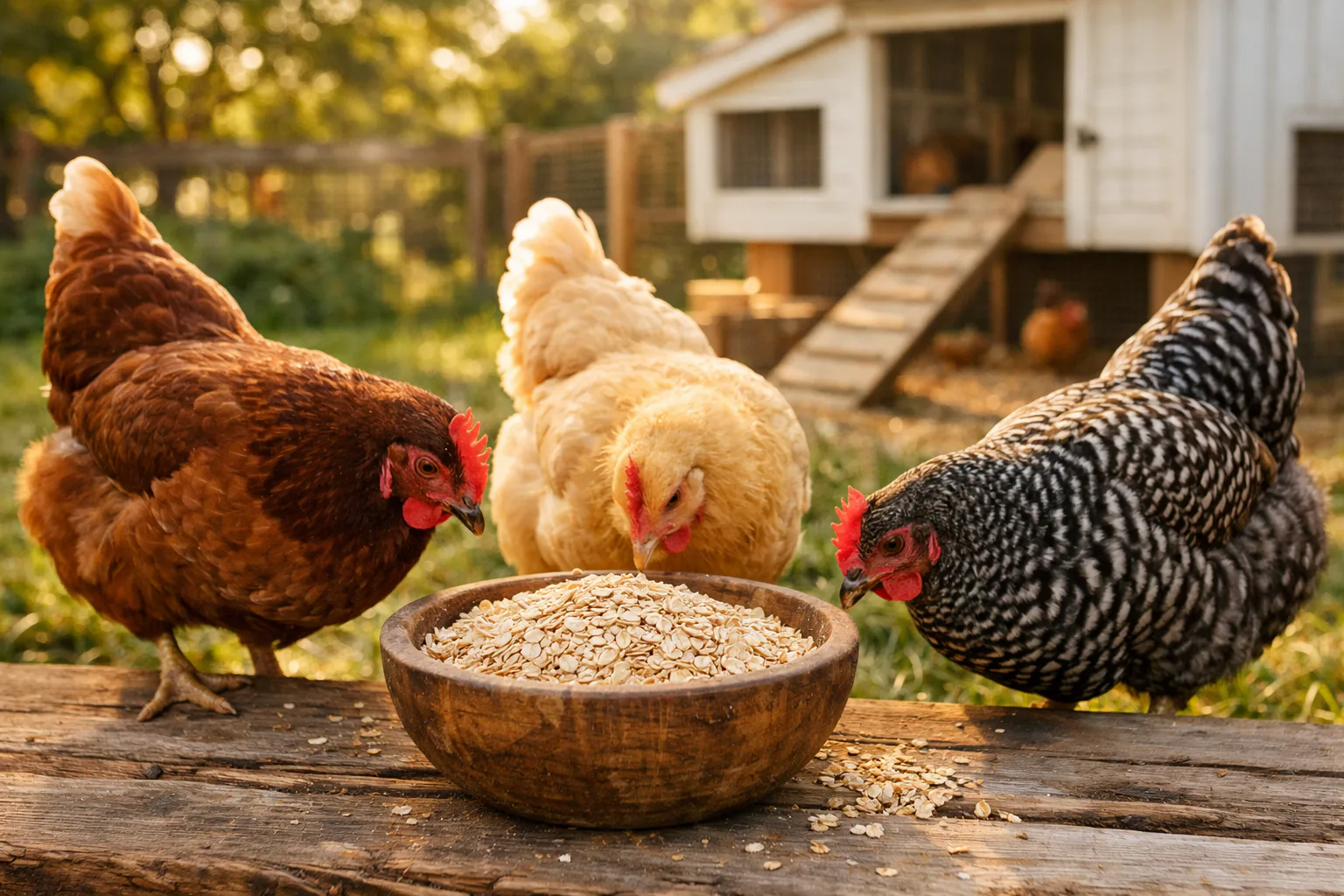
Quick Answer: Yes, chickens can safely eat oatmeal in both raw (dry oats) and cooked forms. Oatmeal provides beneficial nutrients including protein, fiber, and B vitamins, and works well as an occasional treat or supplement to their regular feed. Feed oatmeal in moderation, no more than 10% of their total diet, to avoid nutritional imbalances, and avoid flavored or sweetened varieties that contain additives harmful to chickens.
Key Takeaways
- Chickens can eat both raw oats and cooked oatmeal safely, with each form offering different benefits
- Oatmeal should make up no more than 10% of a chicken’s diet to maintain proper nutrition
- Plain, unflavored oatmeal is best, avoid instant oatmeal packets with sugar, salt, or artificial flavors
- Warm oatmeal can help chickens maintain body temperature during cold winter months
- Baby chicks under 8 weeks should not eat oatmeal as their primary food source
- Oatmeal provides approximately 13-17% protein and beneficial fiber for digestive health
- Overfeeding oatmeal can lead to crop impaction or nutritional deficiencies
- Raw oats are generally preferred over cooked oatmeal for everyday feeding
- Oatmeal works better as a treat than as a staple grain compared to cracked corn or wheat
- Common mistakes include feeding flavored varieties, giving too much at once, or replacing complete feed
Is Oatmeal Safe for Chickens to Eat?
Oatmeal is completely safe for chickens when fed appropriately. Chickens can digest both the raw oat grain and cooked oatmeal without any toxic effects, and oats contain no compounds harmful to poultry.
The safety of oatmeal for chickens stems from its simple composition of whole grain oats, which align well with a chicken’s natural omnivorous diet. Wild and feral chickens regularly consume various grass seeds and grains, making oats a natural fit for their digestive system.
What makes oatmeal safe:
- Contains no toxic compounds like theobromine (found in chocolate) or solanine (found in green potatoes)
- Easily digestible when offered in appropriate portions
- Free from common poultry allergens
- Provides beneficial nutrients without harmful additives (when plain)
Important safety considerations:
- Only feed plain, unsweetened oatmeal without added flavors, sugar, or salt
- Avoid instant oatmeal packets that contain artificial sweeteners like xylitol
- Ensure oatmeal doesn’t replace complete layer feed, which provides essential calcium and balanced nutrition
- Monitor portion sizes to prevent crop issues
The main safety concern isn’t the oatmeal itself but rather how much and how often chickens consume it. Like any treat, oatmeal should complement, not replace, a nutritionally complete chicken feed.
Can Chickens Eat Raw Oats vs Cooked Oatmeal?
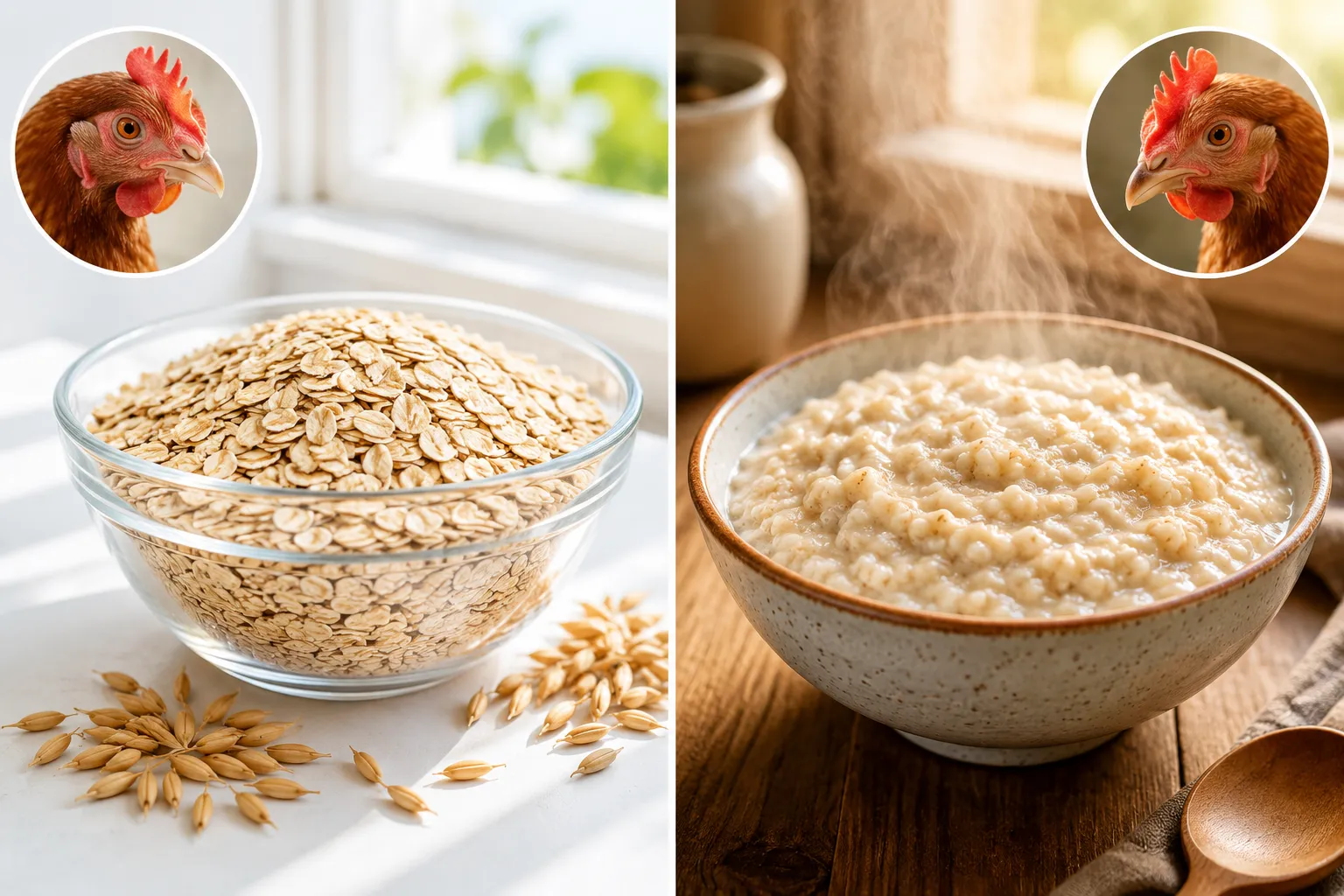
Chickens can eat both raw oats and cooked oatmeal, though raw oats are generally the better everyday option. Raw oats (rolled oats, steel-cut oats, or whole oat groats) provide more nutritional value per volume and don’t pose the moisture-related risks that cooked oatmeal can present.
Raw oats advantages:
- Higher nutrient density since water hasn’t diluted the grain
- Easier to store and scatter without creating mess
- Less risk of crop impaction from sticky, wet feed
- Chickens can peck at them throughout the day
- Better for mixing with other grains or scratch
Cooked oatmeal advantages:
- Easier for chickens to digest, especially older birds
- Provides warmth during cold weather
- Can be mixed with supplements or medications when needed
- More appealing to picky eaters
- Softer texture for chickens with beak injuries
Choose raw oats if you’re adding oats to regular feeding routines, want a shelf-stable option, or need something chickens can free-feed on throughout the day.
Choose cooked oatmeal if you’re offering a special winter treat, need to administer medication, or have chickens that struggle with harder grains.
One common mistake is making cooked oatmeal too thick or sticky. If you cook oatmeal for chickens, keep it on the thinner side (more like porridge than paste) and let it cool to room temperature before serving. Hot oatmeal can burn their crops and mouths.
How Much Oatmeal Should I Feed My Chickens?
Feed chickens no more than 10% of their total daily diet in oatmeal or oat-based treats. For an average laying hen eating about 1/4 pound (120 grams) of feed daily, this translates to roughly 1-2 tablespoons of dry oats or a small handful per bird, 2-3 times per week maximum.
Portion guidelines by flock size:
- 1-3 chickens: 1/4 cup dry oats total, 2-3 times weekly
- 4-6 chickens: 1/2 cup dry oats total, 2-3 times weekly
- 7-10 chickens: 3/4 to 1 cup dry oats total, 2-3 times weekly
- 11+ chickens: 1-1.5 cups dry oats total, 2-3 times weekly
These amounts assume oatmeal is the only treat being offered. If you’re also giving vegetables, fruits, or other supplements, reduce oatmeal portions accordingly to stay within the 10% treat guideline.
Signs you’re feeding too much oatmeal:
- Decreased egg production or smaller eggs
- Chickens ignoring their layer feed
- Soft or thin eggshells (calcium deficiency)
- Weight gain or obesity
- Loose droppings
Signs you’re feeding the right amount:
- Chickens eagerly eat their regular feed first
- Consistent egg production continues
- Healthy body condition and active behavior
- Oatmeal is consumed within 20-30 minutes
The 10% rule exists because layer feed is specifically formulated to provide the calcium, protein, vitamins, and minerals laying hens need. Oatmeal, while nutritious, lacks adequate calcium (only about 50 mg per 100g compared to the 3-4 grams hens need daily) and can’t support egg production as a primary food source.
Benefits of Feeding Oatmeal to Chickens
Oatmeal offers several nutritional and practical benefits when incorporated appropriately into a chicken’s diet. The grain provides quality protein, beneficial fiber, and essential B vitamins that support overall health.
Nutritional benefits:
- Protein content: Oats contain 13-17% protein, supporting feather growth and egg production
- Fiber: Soluble fiber (beta-glucan) aids digestive health and helps regulate blood sugar
- B vitamins: Thiamine, riboflavin, and niacin support metabolism and nervous system function
- Minerals: Provides manganese, phosphorus, magnesium, and iron
- Healthy fats: Contains beneficial unsaturated fats for energy
Practical benefits:
- Winter warmth: Warm cooked oatmeal helps chickens maintain body temperature in cold weather
- Boredom relief: Provides mental stimulation and reduces pecking behavior
- Molting support: Extra protein during feather regrowth periods
- Bonding opportunity: Hand-feeding oatmeal helps socialize chickens with their keeper
- Cost-effective: Oats are typically less expensive than specialized poultry treats
Digestive health benefits:
The soluble fiber in oats supports beneficial gut bacteria and helps maintain healthy crop function. Some chicken keepers report that regular small amounts of oats help prevent impacted crops, though this should never replace proper grit availability.
Energy provision:
Oats provide slow-release carbohydrates that give chickens sustained energy throughout the day, unlike simple sugars that cause energy spikes and crashes.
One benefit often overstated is oatmeal’s warming effect. While warm oatmeal does provide temporary warmth, the metabolic process of digesting any food generates body heat. The psychological comfort of warm food in winter may be as valuable as the physical warmth itself.
Can Baby Chicks Eat Oatmeal?
Baby chicks under 8 weeks old can eat small amounts of finely ground or rolled oats as an occasional treat, but oatmeal should never replace their starter feed. Chicks have specific nutritional requirements for rapid growth that oatmeal cannot meet, particularly the need for 18-20% protein and precise calcium-to-phosphorus ratios.
Guidelines for feeding oats to chicks:
- Age 0-2 weeks: Avoid oatmeal entirely; focus exclusively on chick starter feed
- Age 3-4 weeks: Introduce tiny amounts (1/4 teaspoon per chick) of finely ground oats once or twice weekly
- Age 5-8 weeks: Can offer small amounts of rolled oats (1/2 teaspoon per chick) 2-3 times weekly
- Age 8+ weeks: Treat as adult chickens with the 10% treat rule
Why chicks need caution with oatmeal:
Young chicks have underdeveloped digestive systems that require easily digestible, nutrient-dense food. Oatmeal, while nutritious, is less nutrient-dense than formulated chick starter and can fill their small crops without providing adequate nutrition for growth.
Safe introduction method:
If you choose to offer oats to older chicks (4+ weeks), mix a tiny amount of finely ground oats into their regular starter feed rather than offering it separately. This ensures they still consume their complete feed while getting a taste of variety.
Grit requirement:
Chicks eating any whole grains, including oats, need access to appropriately sized chick grit. Without grit, they cannot properly grind the grain in their gizzards, potentially leading to digestive issues.
Better treat options for young chicks:
- Finely chopped hard-boiled egg (excellent protein source)
- Tiny pieces of leafy greens
- Mealworms cut into small pieces
- Commercial chick treats formulated for their age
The common mistake is treating chicks like miniature adult chickens. Their nutritional needs are dramatically different, and even small deviations from proper starter feed can impact growth rates, immune system development, and long-term health.
Oatmeal vs Cracked Corn for Chickens: Which Is Better?
Oatmeal is nutritionally superior to cracked corn for chickens in most situations, providing more protein, fiber, and vitamins, though cracked corn offers higher energy content. The best choice depends on your climate, season, and specific flock needs.
Nutritional comparison:
| Nutrient | Oats | Cracked Corn |
|---|---|---|
| Protein | 13-17% | 8-10% |
| Fiber | 10-11% | 2-3% |
| Fat | 5-7% | 4-5% |
| Carbohydrates | 66% | 75% |
| Metabolizable Energy | Lower | Higher |
When oatmeal is better:
- During molting season (higher protein supports feather regrowth)
- For laying hens needing protein for egg production
- In moderate climates where extreme energy isn’t needed
- For chickens prone to obesity (lower calorie density)
- When digestive health is a concern (higher fiber content)
When cracked corn is better:
- During extreme cold weather (higher energy helps maintain body temperature)
- As an evening treat in winter (metabolizing corn generates body heat overnight)
- For underweight chickens needing to gain condition
- When cost is a primary concern (corn is typically cheaper)
The ideal approach:
Rather than choosing one over the other, many experienced chicken keepers use both strategically. A common practice is feeding oats during spring, summer, and fall, then switching to cracked corn for evening treats during winter months when chickens need extra calories to stay warm.
Common mistake to avoid:
Don’t assume cracked corn is a complete feed just because chickens love it. Corn is essentially “chicken candy”, high in energy but low in protein and other essential nutrients. Chickens will often eat corn preferentially over more nutritious options, potentially leading to nutritional imbalances if overfed.
Combination feeding strategy:
Mix oats and cracked corn together in a 2:1 or 3:1 ratio (more oats than corn) to provide both protein and energy. This combination works well as a scratch grain supplement to layer feed.

Can Chickens Eat Oatmeal Every Day or Just as a Treat?
Chickens should eat oatmeal as an occasional treat rather than a daily staple, with 2-3 times per week being the recommended maximum frequency. Daily oatmeal feeding can create nutritional imbalances and reduce consumption of complete layer feed that provides essential nutrients for egg production and overall health.
Why oatmeal should remain a treat:
Layer feed is scientifically formulated to provide the precise balance of calcium (3.5-4%), protein (16-18%), vitamins, and minerals that laying hens require. Oatmeal, while nutritious, contains insufficient calcium (only about 0.05%) and can’t support the demands of egg production when fed as a primary food source.
What happens with daily feeding:
- Chickens may fill up on oatmeal and eat less layer feed
- Calcium deficiency leads to thin-shelled or soft eggs
- Reduced egg production over time
- Potential for nutritional deficiencies in vitamins A, D, and E
- Possible weight gain from excess carbohydrates
Appropriate feeding schedule:
- 2-3 times weekly: Ideal frequency for healthy treats
- Small portions: 1-2 tablespoons per bird per serving
- Morning or midday: Avoid evening feeding that might displace layer feed consumption
- Rotation: Alternate oatmeal with other healthy treats like vegetables or mealworms
Exception for daily feeding:
The only scenario where daily oats might be appropriate is when mixing a very small amount (1 teaspoon or less per bird) into their regular feed as a supplement during molting season or extreme cold. Even then, this should be temporary and monitored closely.
Signs oatmeal has become too frequent:
- Chickens rush to oatmeal but show less interest in layer feed
- Egg production drops or eggs have thin shells
- Weight gain or changes in body condition
- Picky eating behavior develops
Think of oatmeal like dessert for humans, enjoyable and offering some nutritional value, but not suitable as a meal replacement. The treat status keeps chickens excited about oatmeal while ensuring their nutritional needs are met through complete feed.
Do I Need to Cook Oatmeal Before Giving It to Chickens?
You do not need to cook oatmeal before giving it to chickens. Raw, dry oats (rolled oats, steel-cut oats, or whole oat groats) are perfectly safe and often preferable to cooked oatmeal for regular feeding purposes.
Advantages of feeding raw oats:
- No preparation time required
- Can be scattered or mixed with other grains easily
- Less messy than cooked oatmeal
- Won’t spoil quickly in feeders or on the ground
- Maintains full nutrient density without water dilution
- Provides natural foraging activity as chickens peck individual oats
When cooking makes sense:
- Cold weather treats: Warm oatmeal provides comfort and temporary warmth during winter
- Sick or elderly chickens: Softer texture is easier to eat for birds with health issues
- Medication delivery: Cooked oatmeal can mask the taste of supplements or medications
- Special occasions: Chickens often find warm oatmeal especially appealing
How to prepare cooked oatmeal for chickens:
- Use plain rolled oats or steel-cut oats
- Cook with water only (no milk, sugar, salt, or flavorings)
- Make it thinner than human oatmeal, more like a thick soup
- Let it cool completely to room temperature before serving
- Serve in shallow dishes chickens can easily access
- Remove any uneaten portions within 2-3 hours to prevent spoilage
Temperature warning:
Never feed hot or warm oatmeal directly to chickens. Their crops are sensitive, and hot food can cause burns or crop damage. Always test the temperature yourself before offering it to your flock.
Texture considerations:
If you cook oatmeal for chickens, avoid making it too thick or sticky. Overly thick oatmeal can clump in the crop and potentially contribute to impaction issues. Aim for a consistency that flows easily but isn’t completely liquid.
Storage tip:
Dry oats can be stored in airtight containers for months, making them a convenient treat to keep on hand. Cooked oatmeal must be used immediately and shouldn’t be stored for later feeding due to rapid bacterial growth in cooked grains.
Can Oatmeal Cause Crop Problems in Chickens?
Oatmeal can potentially cause crop problems in chickens if fed improperly, particularly when cooked oatmeal is too thick, sticky, or fed in excessive quantities. However, when fed appropriately, oatmeal is generally safe and doesn’t pose significant crop risks.
How oatmeal might contribute to crop issues:
Thick, sticky cooked oatmeal can form a paste-like mass in the crop that’s difficult to pass through to the gizzard. This is especially problematic if chickens eat large amounts quickly or if the oatmeal is very dense. The sticky texture can also trap other foods, creating a compacted mass.
Risk factors for crop problems:
- Feeding very thick, paste-like cooked oatmeal
- Offering large quantities at once instead of small portions
- Chickens lacking access to grit (needed to grind grains)
- Insufficient water availability while eating oatmeal
- Pre-existing crop issues or slow crop emptying
- Feeding instant oatmeal that becomes gummy when wet
Prevention strategies:
- Feed raw oats instead: Dry oats pose minimal crop risk compared to cooked
- Thin cooked oatmeal: Make it soupy rather than thick if you cook it
- Small portions: Limit to 1-2 tablespoons per bird
- Ensure grit access: Chickens need grit to properly grind any whole grains
- Provide fresh water: Always offer water alongside oatmeal
- Monitor consumption: Watch that no single bird gorges on oatmeal
Signs of crop impaction:
- Crop feels hard, doughy, or doesn’t empty overnight
- Chicken appears lethargic or stops eating
- Sour smell from the beak
- Regurgitation or head shaking
- Swollen or pendulous crop
What to do if you suspect crop issues:
If a chicken develops crop problems after eating oatmeal, withhold food (but not water) for 12-24 hours to allow the crop to empty. Gently massage the crop to help break up any compacted material. If the crop doesn’t empty or the chicken shows distress, consult a veterinarian experienced with poultry.
Reality check:
While crop impaction from oatmeal is possible, it’s relatively uncommon when oatmeal is fed as an occasional treat in appropriate amounts. Raw oats pose very little risk, and most crop problems stem from feeding large amounts of thick, sticky cooked oatmeal or from chickens eating inappropriate items like long grass or string.
What Happens If Chickens Eat Too Much Oatmeal?
If chickens eat too much oatmeal, they may experience nutritional imbalances, reduced egg production, digestive upset, and potential weight gain. The most significant concern is that excessive oatmeal displaces nutritionally complete layer feed, leading to deficiencies in calcium and other essential nutrients.
Short-term effects of overfeeding oatmeal:
- Crop fullness: Chickens may appear bloated or have distended crops
- Reduced appetite: Too full to eat their regular layer feed
- Loose droppings: Excess carbohydrates can cause temporary digestive upset
- Lethargy: Feeling overly full can reduce activity levels
Long-term effects of regular overfeeding:
- Calcium deficiency: Leads to thin-shelled, soft, or shell-less eggs
- Decreased egg production: Insufficient protein and nutrients reduce laying
- Poor egg quality: Smaller eggs, weak shells, pale yolks
- Weight gain: Excess carbohydrates convert to fat, especially in less active birds
- Vitamin deficiencies: Lack of vitamins A, D, E, and K from reduced layer feed consumption
- Weakened immune system: Nutritional imbalances compromise overall health
How much is “too much”:
Any amount exceeding 10% of daily diet is too much. For context, if oatmeal makes up 20-30% or more of what a chicken eats, problems will likely develop within weeks. If oatmeal becomes 50% or more of the diet, serious health issues can emerge within days to weeks.
Specific risks by excess amount:
- 15-20% of diet: Mild egg production decrease, slight shell quality reduction
- 25-35% of diet: Noticeable egg production drop, thin shells, possible weight gain
- 40%+ of diet: Severe calcium deficiency, significant production loss, health problems
Recovery from overfeeding:
If you realize you’ve been overfeeding oatmeal, simply return to appropriate portions (10% or less of diet). Most chickens will recover normal egg production and health within 2-4 weeks once their diet is corrected, assuming no permanent damage occurred.
Vulnerable populations:
Young laying hens (under 1 year) and high-production breeds are most vulnerable to nutritional imbalances from overfeeding treats. These birds have the highest nutritional demands and show problems more quickly than older or lower-production chickens.
The calcium problem explained:
A laying hen needs approximately 4 grams of calcium daily to produce an eggshell. Oatmeal contains only about 50 mg of calcium per 100 grams, meaning a chicken would need to eat 8 kilograms (17+ pounds) of oatmeal to get enough calcium for one egg. This impossibility illustrates why oatmeal can never replace layer feed for laying hens.
Can Chickens Eat Instant Oatmeal with Flavoring?
Chickens should not eat instant oatmeal with flavoring, sugar, or additives. Flavored instant oatmeal packets typically contain ingredients harmful or unnecessary for chickens, including sugar, salt, artificial sweeteners, dried fruits with preservatives, and artificial flavors.
Problematic ingredients in flavored instant oatmeal:
- Sugar: Contributes to obesity, provides empty calories, can promote harmful bacteria growth
- Salt (sodium): Chickens have low sodium requirements; excess can cause toxicity
- Artificial sweeteners: Xylitol and other sweeteners can be toxic to birds
- Cinnamon and spices: While small amounts of cinnamon are generally safe, concentrated amounts in flavored oatmeal may cause irritation
- Dried fruits with sulfites: Preservatives used in dried fruits can be harmful
- Artificial flavors and colors: No nutritional value and potential for adverse reactions
Why plain oatmeal is essential:
Chickens have different metabolic systems than humans and can’t process many additives safely. Their small body size means even small amounts of harmful ingredients can have significant effects.
Safe oatmeal options for chickens:
- Plain rolled oats (old-fashioned oats)
- Steel-cut oats
- Whole oat groats
- Plain instant oats (unflavored, no additives)
- Scottish oats or Irish oats
What about “lightly sweetened” varieties:
Even lightly sweetened or “low sugar” instant oatmeal should be avoided. The sugar content, while lower than heavily flavored varieties, still provides no benefit to chickens and can contribute to health problems over time.
If you only have flavored oatmeal:
If flavored instant oatmeal is all you have available, it’s better to skip the treat entirely rather than risk exposing your chickens to potentially harmful additives. Plain oats are inexpensive and widely available, making them easy to keep on hand specifically for your flock.
Reading labels:
When buying oats for chickens, check the ingredient list. It should contain exactly one ingredient: oats (or rolled oats, or steel-cut oats). Any additional ingredients mean the product isn’t suitable for chickens.
Common mistake:
Some chicken keepers assume that if a food is safe for humans, it’s safe for chickens. This isn’t true, chickens have different nutritional needs and sensitivities. Always err on the side of caution and stick with plain, whole foods.
Best Grains to Feed Backyard Chickens Besides Oatmeal
Beyond oatmeal, several grains provide excellent nutritional value for backyard chickens when offered as supplements to complete layer feed. The best options include wheat, barley, millet, and quinoa, each offering different nutritional profiles and benefits.
Top grain alternatives to oatmeal:
Wheat (whole or cracked):
- Protein: 12-14%
- High in energy and easily digestible
- Good source of B vitamins
- Less expensive than oats in many regions
- Can be sprouted for added nutrition
Barley:
- Protein: 10-12%
- Excellent fiber content
- Good for digestive health
- Lower energy than corn, better for preventing obesity
- Can be fed whole or cracked
Millet:
- Protein: 11-12%
- Small seeds perfect for chickens to peck
- Rich in B vitamins and minerals
- Highly palatable, chickens love it
- Good for encouraging foraging behavior
Quinoa:
- Protein: 14-16%
- Complete protein with all essential amino acids
- Rich in iron and magnesium
- More expensive but highly nutritious
- Feed cooked or raw
Amaranth:
- Protein: 13-14%
- High in lysine (often deficient in grains)
- Good calcium content for a grain
- Tiny seeds that chickens enjoy
Comparison of grain options:
| Grain | Protein % | Best For | Cost |
|---|---|---|---|
| Oats | 13-17% | Molting, winter warmth | Moderate |
| Wheat | 12-14% | Daily scratch, sprouting | Low |
| Barley | 10-12% | Weight management | Low-Moderate |
| Millet | 11-12% | Foraging enrichment | Moderate |
| Quinoa | 14-16% | High nutrition needs | High |
Grains to avoid or limit:
- Rice: Low protein (7%), mostly empty calories, better options available
- Corn: High energy but low protein, can cause obesity if overfed
- Rye: Can contain ergot fungus, less palatable to chickens
Creating a custom scratch mix:
Many chicken keepers create their own scratch grain mix combining several grains. A balanced mix might include:
- 40% wheat
- 30% oats
- 20% barley
- 10% millet or sunflower seeds
Feeding guidelines remain the same:
Regardless of which grain you choose, maintain the 10% treat rule. All grains should supplement, not replace, complete layer feed that provides the calcium and balanced nutrition laying hens require.
Will Oatmeal Help Chickens Stay Warm in Winter?
Warm cooked oatmeal provides temporary comfort and a slight warming effect for chickens in winter, but the metabolic heat generated from digesting any food, including cold feed, contributes more significantly to maintaining body temperature. The psychological comfort and energy from oatmeal may be as valuable as any direct warming effect.
How oatmeal helps in winter:
Immediate warmth: Warm (not hot) cooked oatmeal provides temporary internal warmth when consumed, similar to how humans feel warmer after eating hot soup. This effect lasts 30-60 minutes.
Metabolic heat: The process of digesting food generates body heat through metabolism. This effect works with any food, but complex carbohydrates like oats provide sustained energy release over several hours.
Caloric energy: Oats provide calories that chickens convert to energy for maintaining body temperature throughout cold days and nights.
The science of chicken cold tolerance:
Chickens are remarkably cold-hardy birds. Their normal body temperature is 105-107°F (40-42°C), and they have excellent insulation from their feathers. The primary way chickens stay warm is through:
- Fluffing feathers to trap air for insulation
- Metabolizing food to generate internal heat
- Huddling together for shared warmth
- Reducing exposed surface area by tucking heads and feet
Better winter feeding strategies:
- Evening feeding: Offer higher-calorie treats (including oats or cracked corn) before roosting so chickens metabolize food overnight
- Increased feed access: Ensure unlimited access to layer feed so chickens can eat more to generate body heat
- Cracked corn at night: Higher energy density than oats makes corn more effective for overnight warmth
- Protein maintenance: Don’t reduce protein in winter; chickens need it for feather maintenance
When warm oatmeal makes sense:
Warm oatmeal works well as a morning treat on extremely cold days (below 20°F / -7°C) to give chickens a comfort boost and energy start to the day. It’s more about morale and bonding with your flock than essential cold protection.
What matters more than oatmeal:
- Dry, draft-free coop: Protection from wind and moisture is critical
- Adequate roosting space: Chickens need room to fluff feathers without crowding
- Unfrozen water: Dehydration is more dangerous than cold
- Sufficient calories: Increased access to complete feed matters more than treats
Common misconception:
Some chicken keepers believe warm food is essential for winter chicken care. In reality, chickens in properly managed coops with adequate feed handle cold weather well without any warm food. Warm oatmeal is a nice extra, not a necessity.
Climate considerations:
In mild winter climates (above 32°F / 0°C), special winter feeding isn’t necessary at all. In extreme cold (below 0°F / -18°C), focus on increasing overall feed availability rather than relying on occasional warm treats.
Common Mistakes When Feeding Oatmeal to Chickens
Chicken keepers frequently make several preventable mistakes when feeding oatmeal to their flocks. Understanding these errors helps ensure oatmeal remains a healthy treat rather than a source of problems.
Mistake 1: Replacing layer feed with oatmeal
The most serious error is allowing oatmeal to displace complete layer feed. Some keepers, seeing how much chickens enjoy oatmeal, begin offering it daily in large quantities. This leads to calcium deficiency, reduced egg production, and nutritional imbalances within weeks.
Solution: Strictly limit oatmeal to 10% of diet, offered 2-3 times weekly maximum.
Mistake 2: Feeding flavored or instant oatmeal packets
Many people assume instant oatmeal packets are convenient and safe. These products contain sugar, salt, artificial flavors, and sometimes toxic sweeteners like xylitol.
Solution: Only feed plain, unflavored oats, rolled oats, steel-cut oats, or whole oat groats.
Mistake 3: Making cooked oatmeal too thick
Thick, paste-like oatmeal can contribute to crop impaction, especially if chickens eat large amounts quickly.
Solution: If cooking oatmeal, make it thin and soupy. Let it cool completely before serving.
Mistake 4: Feeding hot oatmeal directly
Hot oatmeal can burn a chicken’s crop and mouth, causing serious injury.
Solution: Always cool cooked oatmeal to room temperature. Test it yourself before offering it to chickens.
Mistake 5: Offering oatmeal without available grit
Chickens need grit to grind whole grains in their gizzards. Without grit, they can’t properly digest oats.
Solution: Ensure free-choice grit is always available, especially when feeding whole grains.
Mistake 6: Feeding oatmeal to very young chicks
Chicks under 3-4 weeks have specific nutritional needs that oatmeal can’t meet. Early introduction of treats can imprint poor eating habits.
Solution: Wait until chicks are at least 3-4 weeks old, then introduce tiny amounts gradually.
Mistake 7: Not providing water alongside oatmeal
Dry oats absorb water in the crop. Without adequate water intake, this can contribute to crop issues.
Solution: Always ensure fresh water is available when feeding any grains.
Mistake 8: Leaving uneaten oatmeal in the coop
Cooked oatmeal spoils quickly, attracting pests and potentially causing illness if chickens eat spoiled food.
Solution: Remove any uneaten cooked oatmeal within 2-3 hours. Dry oats can remain longer but should still be cleaned up daily.
Mistake 9: Using oatmeal as a complete winter feed
Some keepers mistakenly believe warm oatmeal can replace regular feed in winter for warmth.
Solution: Oatmeal is a supplement only. Chickens need their complete layer feed year-round.
Mistake 10: Ignoring individual chicken behavior
Dominant chickens may eat most of the oatmeal, leaving subordinate birds with little access.
Solution: Scatter oatmeal widely or use multiple feeding stations to ensure all chickens get some.
Mistake 11: Feeding moldy or old oats
Expired or improperly stored oats can develop mold, which produces toxins harmful to chickens.
Solution: Store oats in airtight containers in cool, dry locations. Discard any oats that smell musty or show visible mold.
Mistake 12: Assuming all oats are equal
Steel-cut oats, rolled oats, and instant oats have different textures and processing levels. Instant oats become gummy when wet and are less ideal than whole or rolled oats.
Solution: Choose rolled oats or steel-cut oats for best results. Avoid instant oats when possible.
Frequently Asked Questions
Can chickens eat uncooked oats?
Yes, chickens can safely eat uncooked oats. Raw rolled oats, steel-cut oats, and whole oat groats are all safe and often preferable to cooked oatmeal for regular feeding. Raw oats maintain full nutrient density and don’t pose the moisture-related risks that thick cooked oatmeal can present.
Is oatmeal good for chickens in summer?
Oatmeal is safe for chickens in summer but offers less benefit than in cold weather. During hot weather, chickens need fewer calories and may appreciate cooler treats like watermelon or cucumbers instead. If you feed oatmeal in summer, offer it in the morning when temperatures are cooler and keep portions small.
Can chickens eat oatmeal with raisins?
Plain raisins in very small amounts are safe for chickens, but avoid commercial oatmeal products with raisins that may contain added sugar, sulfites, or other preservatives. If you want to offer raisins, add a few plain, unsweetened raisins to plain oatmeal rather than using pre-mixed products.
How do I know if my chicken has eaten too much oatmeal?
Signs include a distended or hard crop that doesn’t empty overnight, reduced interest in regular feed, decreased egg production, thin eggshells, lethargy, or loose droppings. If you notice these symptoms, reduce or eliminate oatmeal and ensure unlimited access to complete layer feed.
Can roosters eat oatmeal?
Yes, roosters can eat oatmeal following the same guidelines as hens, no more than 10% of their diet, 2-3 times weekly. Since roosters don’t lay eggs, they don’t have the same calcium requirements as hens, but they still need balanced nutrition from complete poultry feed.
What’s the best time of day to feed oatmeal to chickens?
Morning or midday is best for feeding oatmeal. This ensures chickens have time to digest it and still eat their regular layer feed later in the day. Some keepers prefer evening feeding in winter (especially with cracked corn) for overnight warmth, but morning feeding is generally safer for preventing nutritional imbalances.
Can chickens eat steel-cut oats?
Yes, chickens can eat steel-cut oats either raw or cooked. Steel-cut oats are simply whole oat groats cut into pieces, making them nutritionally similar to rolled oats but with a chewier texture. Chickens handle the texture well and may enjoy the variety.
Will oatmeal help chickens during molting?
Oatmeal can provide beneficial protein (13-17%) during molting when chickens need extra protein for feather regrowth. However, higher-protein options like mealworms (50%+ protein), black soldier fly larvae, or game bird feed (20-24% protein) are more effective for molt support.
Can I mix oatmeal with chicken feed?
You can mix small amounts of dry oats into chicken feed, but keep the ratio low (no more than 10% oats to 90% feed) to maintain nutritional balance. Avoid mixing cooked oatmeal with dry feed, as the moisture can cause the feed to spoil quickly.
Is oatmeal safe for chickens with digestive issues?
Plain oatmeal in small amounts may help chickens with minor digestive upset due to its soluble fiber content. However, if a chicken has serious digestive problems, crop impaction, or sour crop, consult a veterinarian before offering any treats. In some cases, withholding all food except water is the appropriate first step.
Can chickens eat oat bran or oat flour?
Chickens can eat oat bran and oat flour, but these products are less ideal than whole oats. The fine texture can become pasty when wet, potentially contributing to crop issues. If you have these products available, mix very small amounts into regular feed rather than offering them separately.
How long does it take for chickens to digest oatmeal?
Chickens typically digest oatmeal within 12-24 hours, with most food passing from the crop to the gizzard within 4-6 hours. The crop should feel empty or nearly empty each morning before chickens eat breakfast. If the crop remains full overnight, it may indicate overfeeding or digestive issues.
Conclusion
Oatmeal serves as a nutritious, safe, and enjoyable treat for backyard chickens when offered appropriately. Both raw oats and cooked oatmeal provide beneficial protein, fiber, and B vitamins that support overall health, with raw oats being the more practical everyday option and warm cooked oatmeal offering comfort during cold weather.
The key to successfully incorporating oatmeal into your flock’s diet lies in moderation and balance. Limit oatmeal to no more than 10% of your chickens’ total diet, offer it 2-3 times weekly at most, and always ensure unlimited access to complete layer feed that provides the calcium and balanced nutrition essential for egg production and health.
Action steps for feeding oatmeal to your chickens:
- Purchase plain oats: Choose rolled oats, steel-cut oats, or whole oat groats, avoid flavored instant oatmeal packets
- Start small: Introduce oatmeal gradually with 1-2 tablespoons per bird to observe how your flock responds
- Establish a schedule: Designate 2-3 days per week for oatmeal treats rather than daily feeding
- Ensure grit availability: Provide free-choice grit so chickens can properly digest whole grains
- Monitor your flock: Watch for signs of overfeeding like reduced layer feed consumption or decreased egg production
- Adjust seasonally: Consider warm oatmeal for winter comfort and raw oats for other seasons
- Maintain variety: Rotate oatmeal with other healthy treats like vegetables, mealworms, and different grains
Remember that oatmeal, regardless of how much your chickens enjoy it, is a supplement to, not a replacement for, their nutritionally complete feed. By following the guidelines in this article, you can safely share this wholesome grain with your flock while supporting their health, happiness, and productivity throughout the year.


