
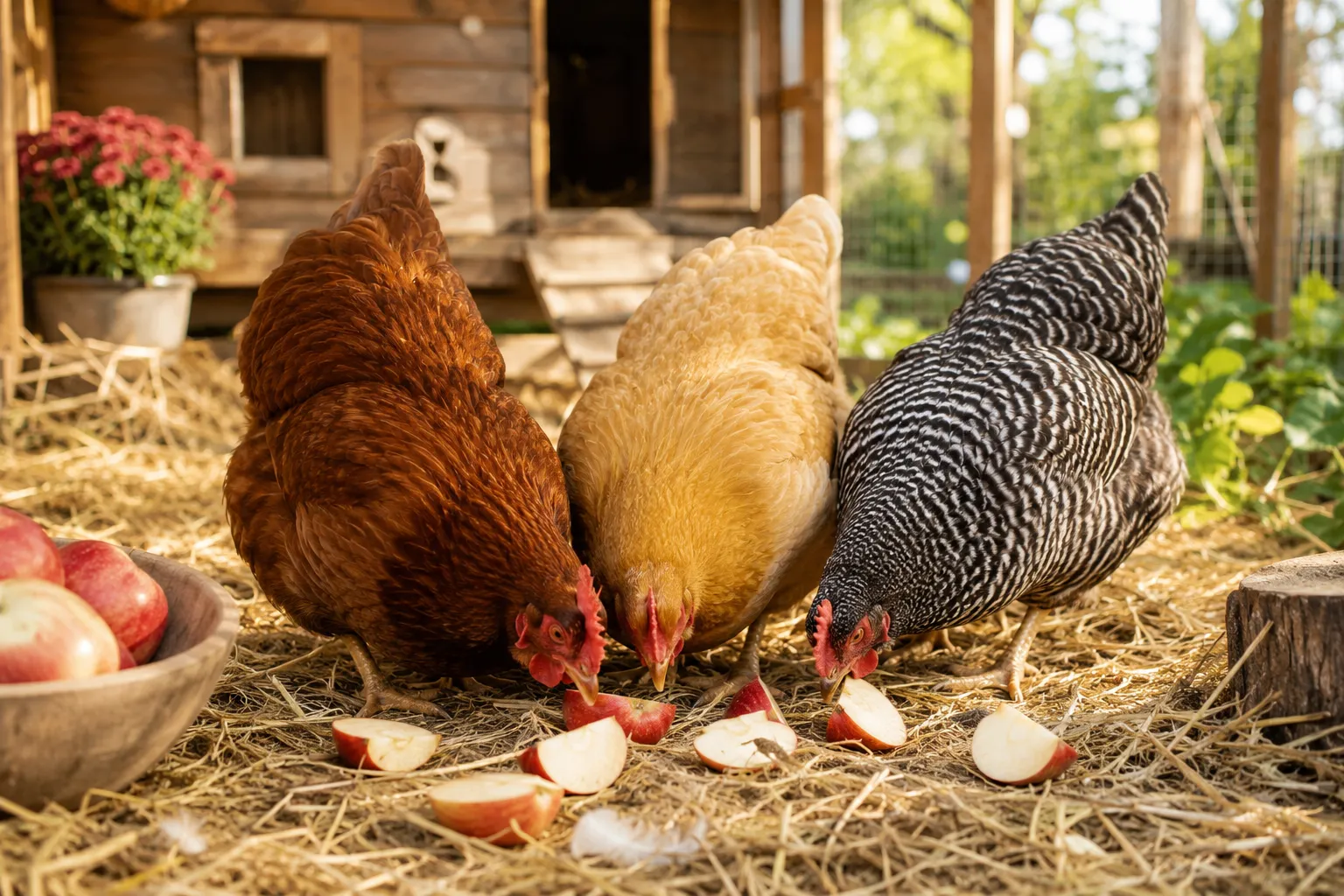
Quick Answer: Yes, chickens can safely eat apples as a healthy treat. Apples provide vitamins, hydration, and enrichment for your flock, but you should remove the seeds (which contain trace amounts of cyanide) and feed apples in moderation as part of a balanced diet, not as a primary food source.
Key Takeaways
- Apples are safe and nutritious for chickens when prepared properly and fed in moderation
- Remove apple seeds before feeding, as they contain small amounts of cyanide that can accumulate over time
- Apple peels and flesh are perfectly safe and contain beneficial vitamins A and C
- Limit apple treats to 10% of daily diet to prevent nutritional imbalances and digestive issues
- Baby chicks under 3-4 weeks old should not eat apples; stick to starter feed
- Never feed moldy or rotten apples as they can cause serious digestive problems and fungal infections
- Chop apples into small pieces to prevent choking and make eating easier for all flock members
- Apples won’t increase egg production but contribute to overall health and happiness
- Cooked apples and unsweetened applesauce are safe alternatives to fresh apples
- Chickens may ignore apples if they’re unfamiliar with the fruit or prefer other treats
Are Apples Safe for Chickens to Eat?
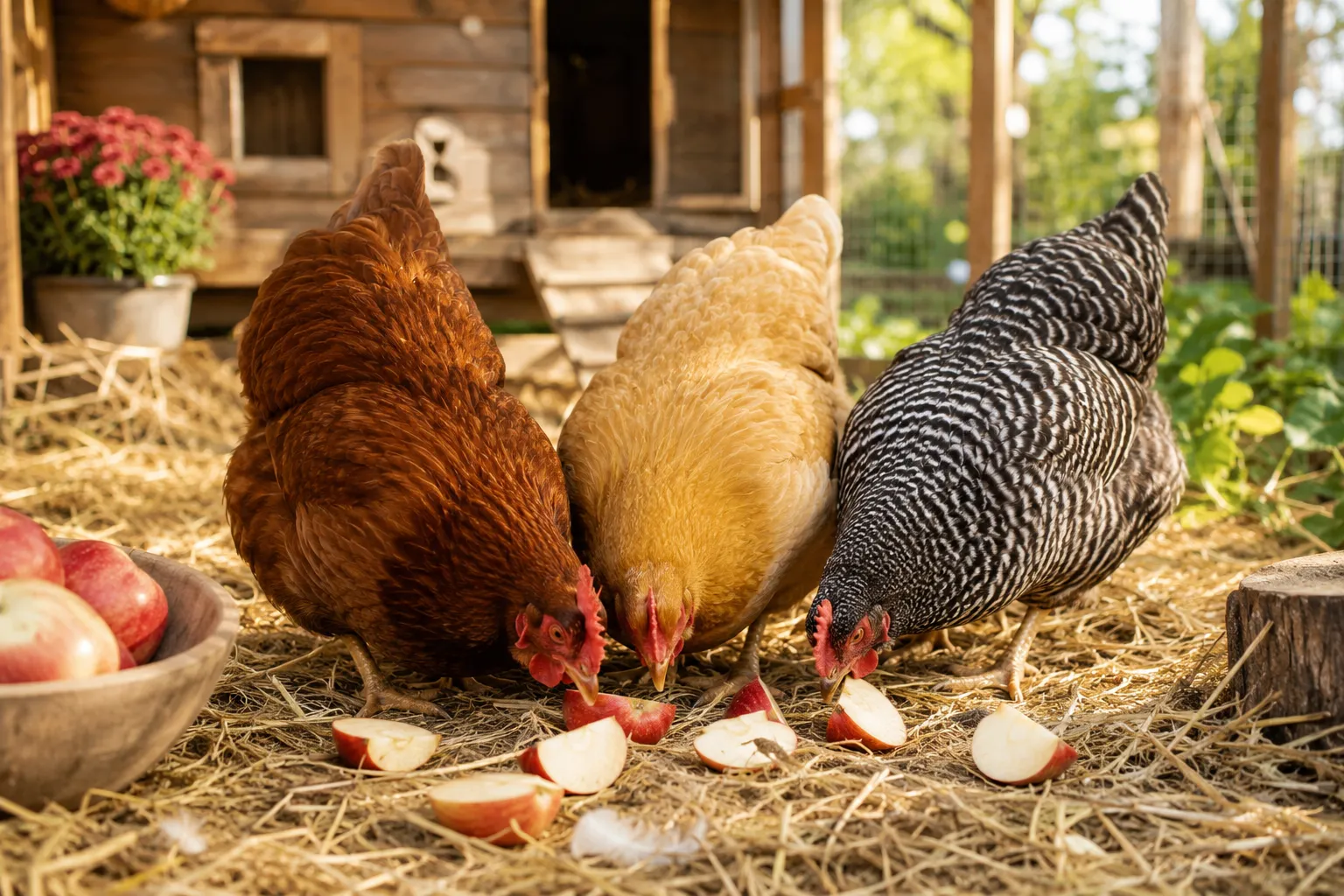
Apples are completely safe for chickens to eat and make an excellent occasional treat. The flesh and skin of apples contain vitamin C, vitamin A, fiber, and antioxidants that support immune function and overall health in your flock.
Chickens can digest apples easily because their gizzards grind down the fruit effectively. The natural sugars in apples provide quick energy, while the water content (about 86% of an apple’s weight) helps keep chickens hydrated, especially during hot weather.
What makes apples particularly good for chickens:
- High water content for hydration
- Natural pectin supports digestive health
- Low in fat and protein, making them a light snack
- Provides mental stimulation and reduces boredom
- Contains antioxidants that may reduce inflammation
The only safety concern involves apple seeds, which we’ll cover in detail below. As long as you prepare apples correctly, they’re one of the safest fruit treats you can offer your flock.
Can Chickens Eat Apple Seeds and Cores?

Apple seeds contain amygdalin, a compound that releases cyanide when digested, so you should remove seeds before feeding apples to chickens. While a few seeds likely won’t harm a full-grown chicken due to their small size and the trace amounts of cyanide involved, repeated exposure can allow toxins to accumulate in their system over time.
The core itself (the fibrous center without seeds) is safe for chickens to eat, though many chickens find it tough and less appealing than the softer flesh. If you’re feeding whole apples, chickens will typically eat around the seeds naturally, but it’s better to remove them as a precaution.
How much cyanide is actually dangerous? A single apple contains only 1-4 seeds, each with roughly 1-4 mg of amygdalin. A chicken would need to consume and fully digest dozens of seeds in a short period to experience acute poisoning. However, chronic low-level exposure is the real concern, making seed removal a simple preventive measure worth taking.
Common mistake: Some chicken keepers toss whole apples into the run without preparation. While chickens often avoid seeds instinctively, smaller or hungrier birds may consume them, and the risk isn’t worth the convenience.
How to Prepare Apples for Chickens
Preparing apples for chickens takes just a few minutes and ensures safe, enjoyable eating. Cut apples into quarters or smaller chunks, remove the seed core, and scatter the pieces in your run or place them in a feeder.

Step-by-step preparation method:
- Wash the apple to remove any pesticide residue or dirt
- Cut into quarters using a sharp knife
- Remove the seed core from each quarter with a paring knife or by cutting around it
- Chop into bite-sized pieces (roughly 1-2 inch chunks for adult chickens)
- Scatter or hang the pieces for your flock to discover
Hanging method for enrichment: Thread apple chunks onto a string or wire and hang them at chicken head-height. This creates a “chicken piñata” that provides entertainment and prevents the fruit from getting dirty on the ground. Chickens will peck at the swinging apples, which mimics natural foraging behavior.
Choose organic when possible: Conventional apples are often heavily treated with pesticides. If you use conventional apples, wash them thoroughly or peel them to reduce chemical exposure.
Can Chickens Eat Apple Peels and Skin?
Apple peels are completely safe for chickens and actually contain higher concentrations of fiber and antioxidants than the flesh. Chickens can easily digest apple skin, and many prefer the slightly different texture it provides.
The peel contains quercetin, an antioxidant that may support respiratory health, plus additional fiber that aids digestion. There’s no nutritional reason to remove the peel unless you’re concerned about pesticide residue on conventionally grown apples.
Texture consideration: Some older chickens or those with beak injuries may struggle with tougher peels from varieties like Granny Smith. If you notice flock members leaving peels behind, try softer varieties like Gala or Fuji, or chop the pieces smaller.
How Much Apple Can I Give My Chickens Per Day?
Limit apple treats to about 10% of your chickens’ total daily diet, which translates to roughly one-quarter to one-half of a medium apple per chicken per day. Treats should never replace their primary layer feed, which provides the balanced nutrition they need for health and egg production.
For a small backyard flock of 6 chickens, one or two whole apples (prepared and seeds removed) makes an appropriate treat portion. Offer apples 2-3 times per week rather than daily to maintain dietary variety and prevent over-reliance on treats.
Why the 10% rule matters: Chickens need specific ratios of protein (16-18% for layers), calcium, and other nutrients found in formulated feed. Too many treats dilute this nutrition, potentially leading to:
- Reduced egg production
- Thin or soft eggshells
- Weight gain or loss
- Nutritional deficiencies
- Digestive upset
Decision rule: If your chickens start ignoring their layer feed in favor of waiting for treats, you’re feeding too many apples and other snacks. Healthy chickens should eagerly eat their regular feed first thing in the morning.
Are Apple Seeds Toxic to Chickens Because of Cyanide?
Yes, apple seeds contain cyanogenic glycosides that release hydrogen cyanide when digested, but the amount in a few seeds is unlikely to cause acute poisoning in a full-grown chicken. The real concern is cumulative exposure over time, which is why removing seeds is the safest practice.
A chicken’s body can process small amounts of cyanide through natural detoxification, but this system can be overwhelmed with repeated exposure. Symptoms of cyanide toxicity in chickens include difficulty breathing, weakness, bright red combs, and in severe cases, seizures or death.
The math on toxicity: Research suggests a lethal dose of cyanide for chickens is approximately 11-17 mg per kilogram of body weight. An average laying hen weighs about 2 kg, meaning she’d need roughly 22-34 mg of cyanide for a lethal dose. Since each apple seed contains only about 0.6 mg of cyanide (and not all of it is released during digestion), a chicken would need to consume and fully digest 40-60 seeds at once for acute poisoning.
However, chronic low-level exposure is harder to measure and may cause subclinical health problems before obvious symptoms appear. The simple solution: spend 30 seconds removing seeds and eliminate the risk entirely.
Can Baby Chicks Eat Apples?
Baby chicks under 3-4 weeks old should not eat apples or any treats. Their digestive systems are still developing, and they need the complete nutrition found in chick starter feed to support rapid growth and immune system development.
After 3-4 weeks, you can introduce tiny amounts of finely chopped apple (seeds removed) as an occasional treat, but only if you also provide chick grit. Grit helps their gizzards grind food, and young chicks don’t develop this ability fully until several weeks old.
Safe introduction timeline:
- 0-3 weeks: Chick starter feed only, no treats
- 3-6 weeks: Tiny amounts of finely minced apple (pea-sized pieces), with grit available
- 6+ weeks: Gradually increase treat size and frequency, maintaining the 10% rule
Why wait? Chicks grow at an astonishing rate, sometimes doubling their weight in the first week. This growth requires precise nutrition ratios found only in starter feed. Even healthy treats like apples can disrupt this balance and slow development.
Common mistake: Well-meaning chicken keepers often want to “spoil” adorable chicks with treats. Resist this urge during the critical first month when nutritional needs are highest.
What Happens If Chickens Eat Too Many Apples?
Chickens that eat too many apples may experience diarrhea, crop impaction, reduced egg production, and nutritional deficiencies. The high sugar and water content in apples can disrupt normal digestion when consumed in excess, leading to loose, watery droppings.
Specific problems from apple overconsumption:
- Diarrhea and watery droppings: Excess sugar and water overwhelm the digestive system
- Crop issues: Large pieces of apple can form a blockage in the crop, especially if chickens gorge quickly
- Reduced laying: Hens need 16-18% protein for consistent egg production; too many low-protein treats decrease output
- Thin eggshells: Inadequate calcium intake when treats replace layer feed
- Weight problems: Sugar content can cause weight gain, reducing mobility and health
- Nutritional imbalances: Vitamins and minerals in layer feed get diluted
What to do if your chickens overindulge: Remove all treats for 24-48 hours and provide only layer feed and fresh water. Monitor droppings for return to normal consistency (firm, with white urate cap). If a chicken shows signs of crop impaction (swollen, hard crop that doesn’t empty overnight), consult a veterinarian.
Prevention tip: Scatter apple pieces widely across your run rather than piling them in one spot. This encourages natural foraging behavior and prevents dominant birds from gorging while others get nothing.
Can Chickens Eat Rotten or Moldy Apples?
Never feed rotten or moldy apples to chickens. Moldy fruit contains mycotoxins that can cause serious digestive illness, liver damage, and even death in poultry. What looks like a small spot of mold on the surface often indicates extensive fungal growth throughout the fruit.
Chickens have relatively sensitive digestive systems despite their reputation for eating anything. Mycotoxins from mold can accumulate in their tissues and may even pass into eggs, creating food safety concerns for your family.
Signs an apple is unsafe:
- Visible mold (fuzzy white, green, or black spots)
- Soft, mushy texture with brown discoloration
- Fermented or alcoholic smell
- Visible insect infestation or larvae
Slightly bruised vs. rotten: A fresh apple with a small bruise from being dropped is fine to feed (just cut away the bruised part). An apple that’s been sitting in your compost pile for a week is not.
What about fermented apples? Some chicken keepers ask about naturally fermented apples that have begun to produce alcohol. While small amounts likely won’t harm chickens, there are documented cases of chickens becoming intoxicated from fermented fruit, leading to poor coordination and vulnerability to predators. It’s not worth the risk.
Do Apples Help Chickens Lay More Eggs?
Apples do not directly increase egg production. Egg laying depends primarily on protein intake (16-18% in layer feed), calcium availability, daylight hours, and the hen’s age and breed. Apples contain minimal protein and no significant calcium, so they don’t provide the specific nutrients needed for egg formation.
However, apples contribute to overall health and happiness, which indirectly supports consistent laying. A healthy, stress-free chicken with a varied diet is more likely to maintain regular egg production than a bored or nutritionally deficient bird.
What actually increases egg production:
- High-quality layer feed with 16-18% protein
- Calcium supplementation through oyster shell or crushed eggshells
- 14-16 hours of light per day (natural or supplemented)
- Fresh, clean water available at all times
- Stress reduction through adequate space and flock management
- Proper hen age (peak laying occurs in years 1-2)
The enrichment factor: Apples and other treats provide mental stimulation that reduces stress and boredom-related behaviors like feather pecking. This indirect benefit may help maintain laying consistency, but the effect is small compared to proper nutrition and lighting.
Decision rule: If you’re experiencing reduced egg production, address layer feed quality, calcium availability, and lighting before adding more treats. Apples are a supplement to good management, not a solution to laying problems.
Apples vs Other Fruits for Chickens: Which Is Better?
Apples rank among the best fruit treats for chickens due to their safety, availability, and nutritional balance, but other fruits offer different benefits. Berries provide more antioxidants, melons offer superior hydration, and bananas deliver more potassium.
| Fruit | Benefits | Drawbacks | Best For |
|---|---|---|---|
| Apples | High fiber, vitamin C, widely available, long shelf life | Seeds must be removed, moderate sugar | Year-round treat, digestive health |
| Berries | High antioxidants, no prep needed, low sugar | Expensive, short season, stain droppings red | Immune support, special treats |
| Watermelon | 92% water, excellent for hot weather, low calorie | Very high water content can cause diarrhea, seasonal | Summer hydration, heat stress |
| Bananas | High potassium, easy to mash for chicks, no prep | High sugar, can cause constipation in excess | Quick energy, molting support |
| Grapes | High water, fun to chase, good training treat | Choking hazard if not halved, high sugar | Entertainment, training rewards |
Variety is key: Rotate different fruits throughout the week to provide diverse nutrients and prevent boredom. A good rotation might include apples on Monday, berries on Wednesday, and melon on Friday during summer months.
Choose apples if: You want a reliable, affordable, year-round treat that stores well and provides good nutritional value with minimal preparation time.
What Fruits Should Chickens Never Eat?
Chickens should never eat avocados, which contain persin, a toxin that causes heart damage and respiratory distress in poultry. Even small amounts of avocado flesh, skin, or pit can be fatal, making it the most dangerous common fruit for chickens.
Fruits to avoid completely:
- Avocado (all parts): Contains persin, which is highly toxic to chickens and can cause death within 24-48 hours
- Unripe tomatoes and tomato leaves: Contain solanine, though ripe tomato flesh is safe
- Rhubarb leaves: High in oxalic acid, which can cause kidney failure
- Citrus fruits (controversial): Some sources claim citrus interferes with calcium absorption, though evidence is limited; feed sparingly if at all
Fruits to feed with caution:
- Cherries and stone fruit pits: Contain cyanide compounds similar to apple seeds; remove all pits
- Dried fruits: Extremely high in concentrated sugar; feed only tiny amounts
- Fruit with visible mold: Mycotoxins can cause serious illness
Symptoms of fruit poisoning: If a chicken accidentally consumes toxic fruit, watch for lethargy, difficulty breathing, diarrhea, loss of coordination, or sudden death. Contact an avian veterinarian immediately if you suspect poisoning.
The avocado rule is absolute: Unlike apple seeds where a few might not cause immediate harm, even a small amount of avocado can be lethal. Never compost avocado near your chicken run, and educate family members about this danger.
Can Chickens Eat Cooked Apples or Applesauce?
Chickens can safely eat cooked apples and unsweetened applesauce. Cooking breaks down the cell walls, making apples easier to digest, which can be helpful for older chickens or those recovering from illness. However, avoid any applesauce or cooked apples with added sugar, cinnamon, or other spices.
Benefits of cooked apples:
- Softer texture for chickens with beak injuries or older birds
- Easier to mix with supplements or medications if needed
- Can be warmed slightly in winter for a comforting treat
- No choking hazard from large pieces
Preparation guidelines:
- Use plain, unsweetened applesauce with no additives
- If cooking apples yourself, steam or bake without sugar, butter, or spices
- Cool to room temperature before feeding (never feed hot food)
- Mix with their regular feed for picky eaters or sick chickens
What about apple pie filling or sweetened applesauce? Avoid these products. The added sugar provides no nutritional benefit and can contribute to obesity and digestive upset. Cinnamon and nutmeg, common in apple desserts, may irritate chickens’ digestive systems in large amounts.
Practical use: Unsweetened applesauce works well for administering liquid medications or supplements. Mix the medicine into a small amount of applesauce and offer it separately to ensure the chicken consumes the full dose.
Why Are My Chickens Not Eating the Apples I Gave Them?
Chickens may ignore apples because they’re unfamiliar with the fruit, the pieces are too large, they’re already full from layer feed, or they simply prefer other treats. Chickens can be surprisingly picky eaters and often need multiple exposures to new foods before accepting them.
Common reasons chickens refuse apples:
- Neophobia (fear of new things): Chickens are naturally cautious about unfamiliar foods as a survival instinct
- Size issues: Whole or large pieces may be intimidating; try smaller chunks
- Variety preference: Your flock may prefer other fruits, vegetables, or protein-rich treats
- Already satiated: If they’ve just eaten their fill of layer feed, they may not be interested in treats
- Temperature: Some chickens prefer room-temperature fruit over cold apples straight from the refrigerator
- Texture sensitivity: Certain breeds or individual birds may dislike the texture
How to encourage apple consumption:
- Start small: Offer tiny pieces mixed with familiar treats like mealworms or scratch grains
- Chop finely: Mince apples into small pieces that resemble their regular feed
- Hang them: Create a swinging apple treat that triggers their prey drive
- Be patient: Offer apples several times over a week or two without forcing
- Try different varieties: Some chickens prefer sweeter apples (Fuji, Gala) over tart ones (Granny Smith)
- Demonstrate: Chickens learn from each other; if one brave bird tries it, others often follow
When not to worry: If your chickens are healthy, laying well, and eating their layer feed enthusiastically, they don’t need apples. Treats are optional enrichment, not nutritional requirements. Some flocks simply prefer vegetables like lettuce or cabbage over fruit.
Decision rule: If your chickens consistently refuse apples after multiple attempts with different preparation methods, respect their preference and offer alternative treats they enjoy. Forcing the issue creates stress without benefit.
Frequently Asked Questions
Can chickens eat apple cores? Yes, chickens can eat apple cores as long as you remove the seeds first. The fibrous core is safe but tougher to eat, so many chickens prefer the softer flesh. Chop cores into smaller pieces to make them more appealing.
How often should I feed apples to my chickens? Feed apples 2-3 times per week as part of a varied treat rotation. Daily apple feeding can lead to nutritional imbalances and digestive issues due to the high sugar and water content.
Can chickens eat green apples? Yes, chickens can eat green apples like Granny Smith. The tart flavor and firmer texture are safe, though some chickens may prefer sweeter varieties. Remove seeds as you would with any apple variety.
Will apples change the taste of my chicken eggs? No, apples will not noticeably affect egg flavor when fed in appropriate amounts (10% of diet or less). Egg taste is primarily influenced by the hen’s primary feed, not occasional treats.
Can chickens eat apple tree leaves or branches? Apple tree leaves and small branches are safe for chickens to nibble and provide enrichment. However, wilted leaves from stone fruit trees (cherry, peach, plum) contain higher levels of cyanide compounds and should be avoided.
Do I need to peel apples before giving them to chickens? No, apple peels are safe and nutritious for chickens. Only peel if you’re concerned about pesticide residue on conventionally grown apples, or if your chickens consistently refuse to eat the peels.
Can chickens eat frozen apples? Yes, frozen apple chunks make an excellent cooling treat during hot summer weather. Chickens will peck at them as they thaw, providing extended entertainment and hydration. Ensure pieces are small enough to prevent choking as they soften.
What’s the best apple variety for chickens? Softer, sweeter varieties like Fuji, Gala, and Golden Delicious are generally most popular with chickens. However, any apple variety is nutritionally appropriate, so use whatever is affordable and available in your area.
Can roosters eat apples too? Yes, roosters can eat apples following the same guidelines as hens. The same preparation methods, portion sizes, and safety precautions apply to all adult chickens regardless of sex.
How long can I leave apple pieces in the chicken run? Remove uneaten apple pieces after 2-4 hours, especially in warm weather when they can spoil quickly. Rotting fruit attracts flies, rodents, and can develop harmful bacteria or mold.
Can chickens eat apple cider vinegar? While not the same as apples, raw apple cider vinegar can be added to chickens’ water (1 tablespoon per gallon) and may support digestive health. However, scientific evidence for its benefits in poultry is limited, and it should never replace proper nutrition or veterinary care.
Will apples help with molting? Apples provide some vitamins that support overall health during molting, but chickens need high-protein foods (16-20% protein) to regrow feathers effectively. Focus on protein-rich treats like mealworms, scrambled eggs, or game bird feed during molt rather than fruit.
Conclusion
Apples make a safe, nutritious, and enriching treat for your backyard flock when prepared correctly and fed in moderation. By removing the seeds, chopping the fruit into manageable pieces, and limiting treats to 10% of your chickens’ daily diet, you can safely incorporate this popular fruit into your flock’s routine.
Remember that apples supplement but never replace a balanced layer feed, which provides the protein, calcium, and nutrients your chickens need for health and egg production. Use apples as an enrichment tool to reduce boredom, provide hydration during hot weather, and strengthen your bond with your flock through positive interactions.
Your next steps:
- Inspect your apple supply: Choose fresh, mold-free apples and wash them thoroughly
- Prepare safely: Cut apples into quarters, remove all seeds and the seed core, then chop into bite-sized pieces
- Start small: Offer a few pieces to gauge your flock’s interest before preparing larger quantities
- Observe your chickens: Watch for any digestive issues or changes in droppings after introducing apples
- Rotate treats: Combine apples with other safe fruits, vegetables, and protein sources for dietary variety
- Maintain the 90/10 rule: Ensure layer feed remains the primary food source, with all treats (including apples) comprising no more than 10% of daily intake
By following these guidelines, you’ll provide your chickens with a treat they’ll love while maintaining their health and productivity for years to come.


