
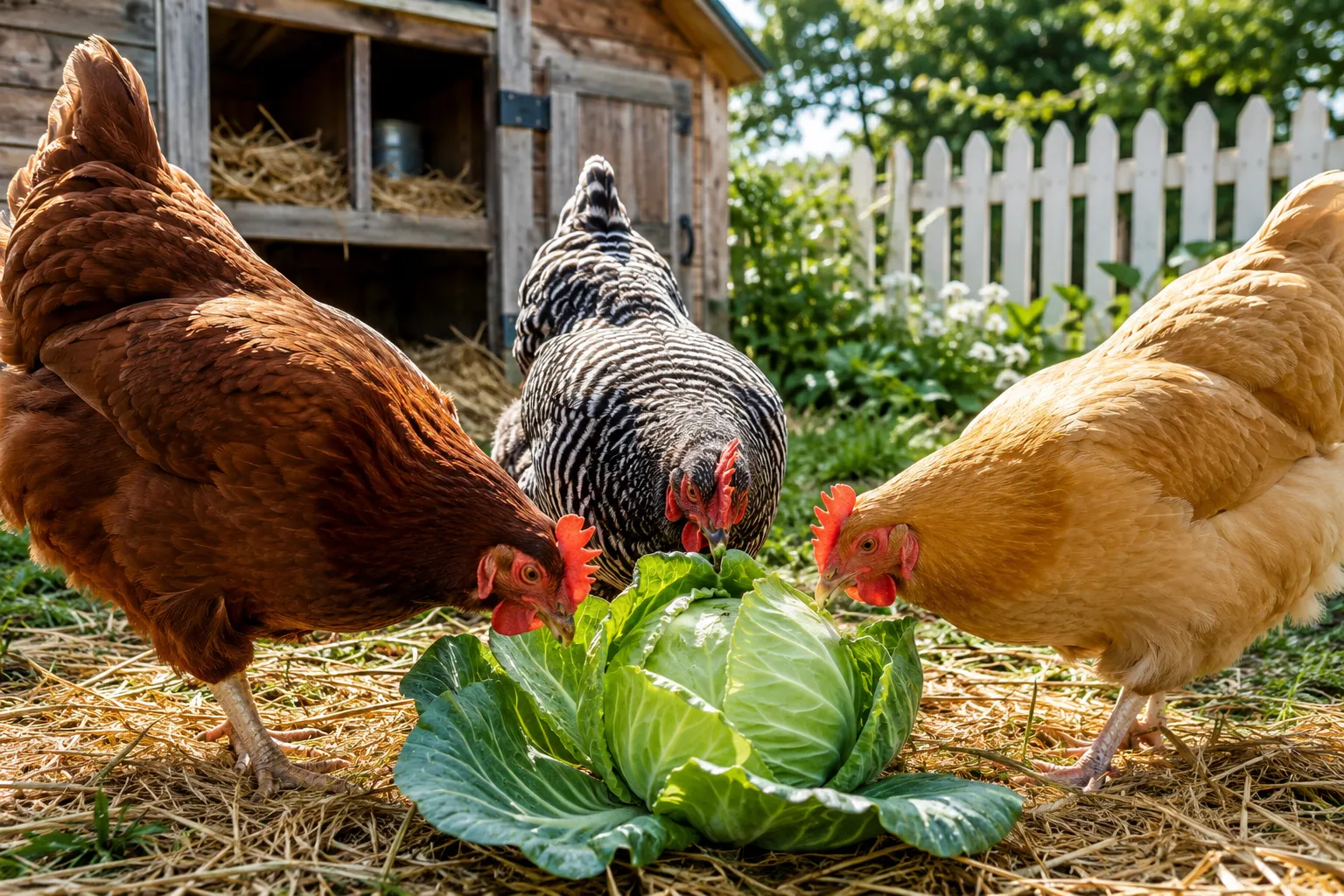
Quick Answer: Yes, chickens can safely eat cabbage in moderation. Both raw and cooked cabbage are safe for adult chickens and provide valuable nutrients like vitamins C and K, fiber, and antioxidants. Feed cabbage as a treat (no more than 10% of their daily diet) alongside a balanced layer feed to avoid nutritional imbalances.
Key Takeaways
- Cabbage is safe for chickens when fed in moderation as part of a varied diet
- All cabbage varieties (green, red, purple, savoy) are safe for chickens to eat
- Limit portions to 10% of daily intake to prevent digestive issues and nutritional imbalances
- Raw cabbage is preferred over cooked, as it retains more nutrients and provides enrichment
- Baby chicks should wait until 3-4 weeks old before trying cabbage
- Hanging whole cabbages creates excellent boredom-busting entertainment for flocks
- Never feed moldy or rotten cabbage as it can cause serious health problems
- Both leaves and cores are safe, though cores are tougher and harder to digest
- Cabbage does not cause harmful bloating in chickens when fed appropriately
Is Cabbage Safe for Chickens to Eat?
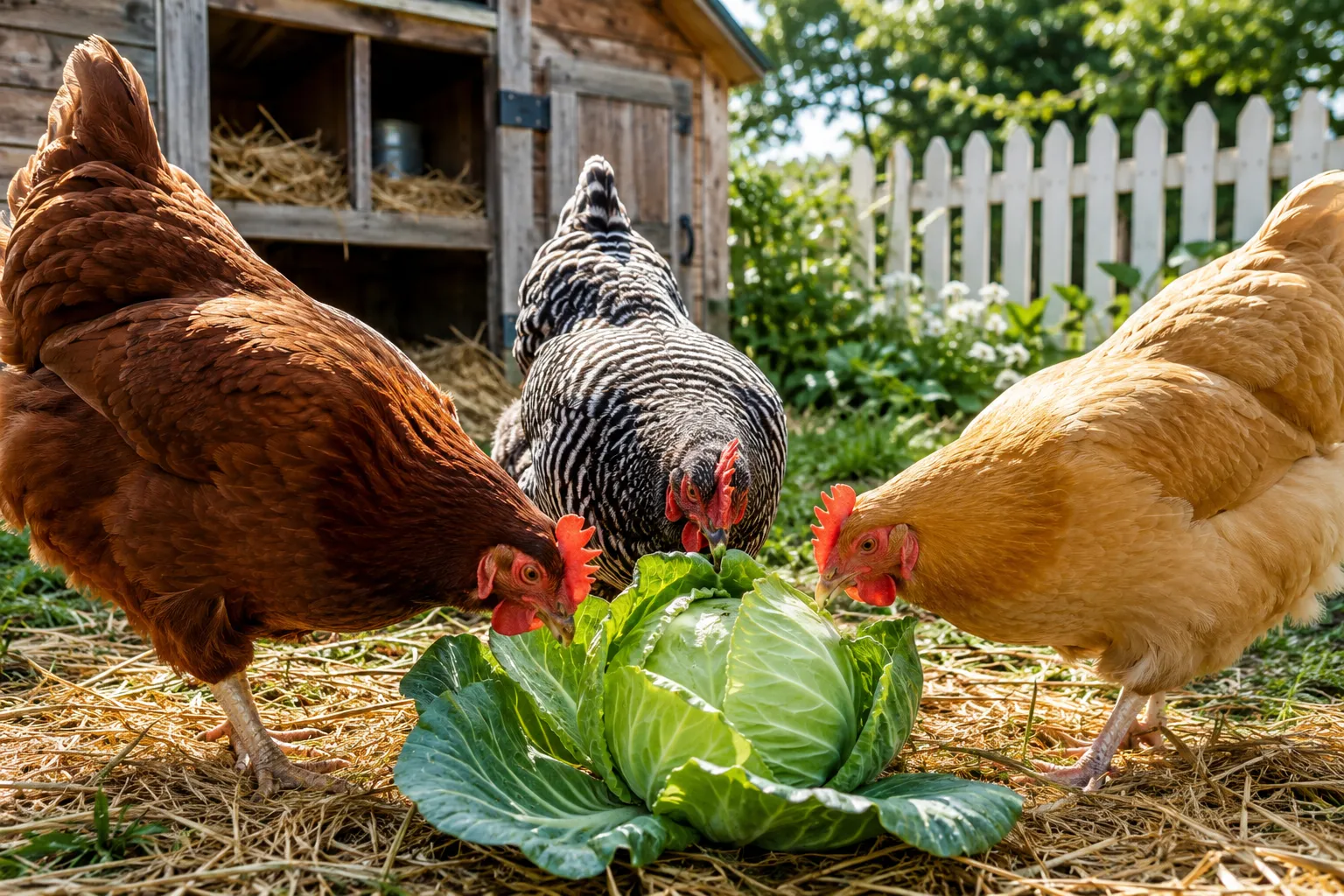
Cabbage is completely safe for chickens to eat and offers several nutritional benefits. Chickens can digest cabbage without toxic effects, and it provides vitamins, minerals, and fiber that support overall health. However, cabbage should be treated as a supplemental treat rather than a staple food.
The key to safe cabbage feeding is moderation. While cabbage contains beneficial nutrients, it also has compounds called goitrogens that can interfere with thyroid function if consumed in excessive amounts over long periods. For backyard flocks eating a balanced commercial feed, this is rarely a concern.
What makes cabbage safe:
- No toxic compounds harmful to chickens
- Rich in vitamins C, K, and B6
- Contains beneficial antioxidants and fiber
- Provides hydration (about 92% water content)
- Supports immune system health
Important safety note: Always provide fresh, clean cabbage. Moldy, rotten, or pesticide-treated cabbage can cause illness. Wash store-bought cabbage thoroughly before offering it to your flock.
Can Chickens Eat Raw Cabbage vs Cooked Cabbage?
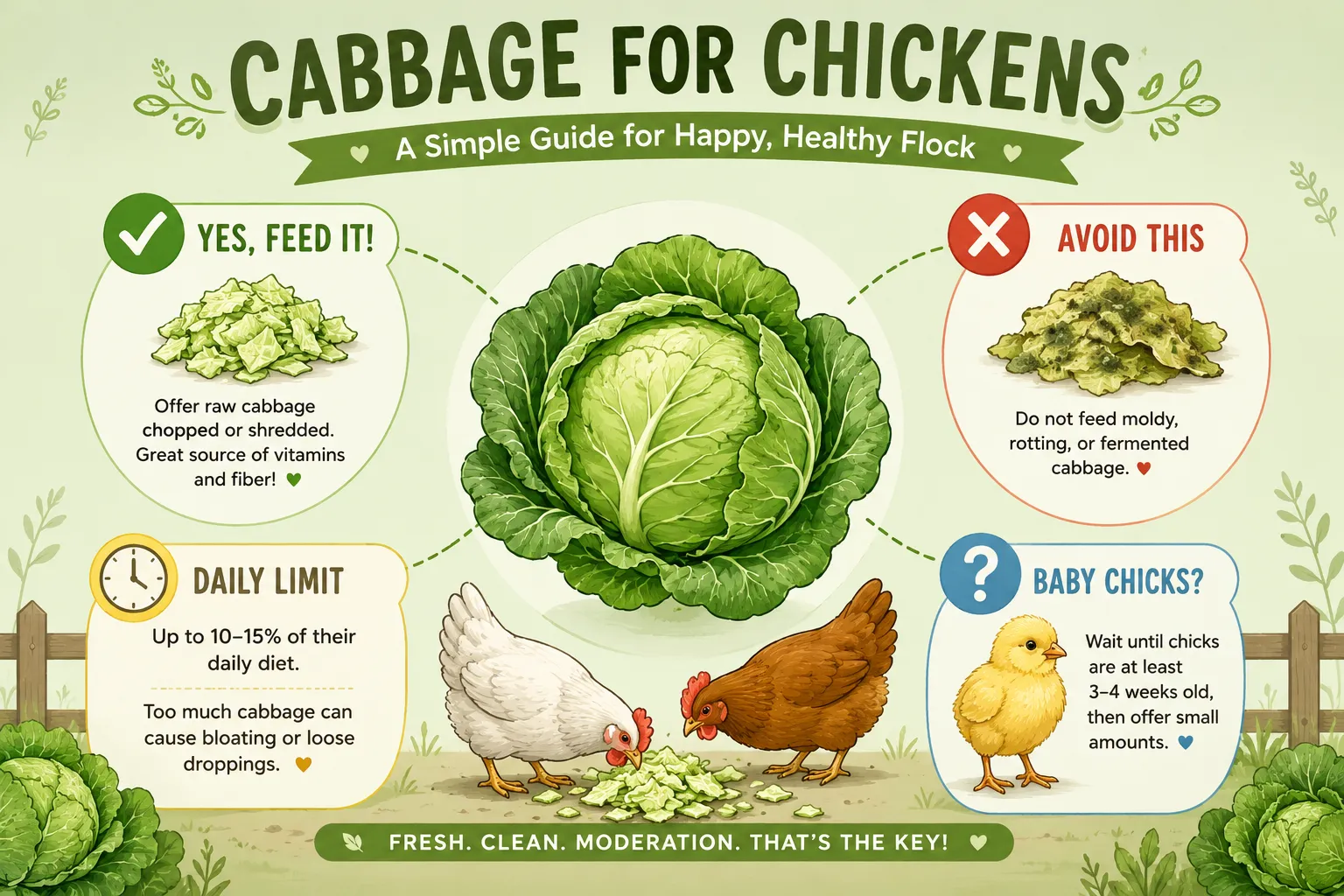
Chickens can eat both raw and cooked cabbage, but raw cabbage is the better choice for most situations. Raw cabbage retains more nutrients, provides better enrichment through pecking activity, and requires no preparation time. Cooked cabbage loses some vitamin content during the heating process and becomes softer, making it less engaging for chickens.
Raw cabbage advantages:
- Full nutrient retention (vitamins don’t degrade from heat)
- Provides natural foraging behavior and mental stimulation
- Crunchier texture keeps chickens engaged longer
- No preparation required
- Can be hung as an interactive toy
Cooked cabbage considerations:
- Easier to digest for chickens with digestive sensitivities
- Softer texture may be preferred by older hens
- Loses 25-50% of vitamin C during cooking
- Still safe and nutritious, just less optimal
Choose raw cabbage for healthy adult flocks. Reserve cooked cabbage for chickens recovering from illness or those with proven digestive issues. Never add salt, butter, or seasonings to cooked cabbage intended for chickens.
How Much Cabbage Can I Give My Chickens Per Day?
Limit cabbage to no more than 10% of your chickens’ daily food intake, which translates to roughly one cup of chopped cabbage per four adult chickens per day. The remaining 90% should come from a nutritionally complete layer feed that provides the protein, calcium, and balanced nutrients chickens need for egg production and health.
Practical feeding guidelines:
- Small flock (4-6 chickens): One small cabbage head per week
- Medium flock (10-12 chickens): One large cabbage head per week
- Large flock (20+ chickens): Two to three cabbage heads per week
Common mistake: Overfeeding treats like cabbage can lead to reduced egg production because chickens fill up on low-protein foods instead of their layer feed. If you notice soft-shelled eggs or decreased laying, reduce treat portions immediately.
Decision rule: If your chickens ignore their layer feed in favor of cabbage, you’re feeding too much. They should eagerly eat their regular feed first, with cabbage serving as an afternoon snack or enrichment activity.
What Are the Benefits of Feeding Cabbage to Chickens?
Feeding cabbage to chickens provides nutritional benefits, mental enrichment, and cost-effective flock management. Cabbage delivers vitamins C and K, supports immune function, and offers a low-calorie treat that won’t contribute to obesity in less active birds.
Nutritional benefits:
- Vitamin C: Supports immune system and stress response
- Vitamin K: Essential for blood clotting and bone health
- Fiber: Promotes healthy digestion and gut function
- Antioxidants: Protect cells from damage and support overall health
- Hydration: High water content helps in hot weather
Behavioral and enrichment benefits:
- Reduces boredom and associated vices (feather pecking, aggression)
- Encourages natural foraging and pecking behaviors
- Provides flock entertainment for hours when hung
- Helps establish pecking order through shared activity
- Keeps chickens active during winter confinement
Economic benefits:
- Inexpensive treat option (often under $2 per head)
- Long shelf life when stored properly
- Can use outer leaves from your own kitchen prep
- Reduces feed waste by keeping chickens occupied
Cabbage works particularly well during winter months when fresh greens are scarce and chickens spend more time in the coop.
Can Baby Chicks Eat Cabbage or Only Adult Chickens?
Baby chicks should not eat cabbage until they reach 3-4 weeks of age, and even then, it should be introduced gradually in very small amounts. Young chicks have delicate digestive systems that require specialized starter feed with higher protein content (18-20%) to support rapid growth and development.
Age-based feeding guidelines:
- 0-3 weeks: No cabbage; chick starter feed only
- 3-4 weeks: Tiny amounts of finely chopped cabbage (test introduction)
- 5-8 weeks: Small portions of chopped cabbage (1-2 times per week)
- 8+ weeks: Regular cabbage treats following the 10% rule
Why wait until 3-4 weeks:
- Chicks need maximum nutrition from starter feed for growth
- Immature digestive systems struggle with fibrous vegetables
- Treats can cause nutritional imbalances during critical development
- Risk of crop impaction increases with tough, stringy foods
How to introduce cabbage to young birds: Start with finely minced cabbage leaves (not the tough core) mixed with their regular feed. Offer only a tablespoon for a small group of chicks. Monitor droppings for 24 hours to ensure normal digestion before offering more.
If chicks show signs of digestive upset (watery droppings, lethargy, crop issues), remove cabbage immediately and wait another week before trying again.

Why Is My Chicken Not Eating the Cabbage I Gave Them?
Chickens may refuse cabbage due to unfamiliarity, presentation method, temperature preferences, or individual taste preferences. Chickens are creatures of habit and often need multiple exposures to new foods before accepting them. Some chickens simply don’t like cabbage, just as humans have food preferences.
Common reasons for refusal:
- Never seen it before: Chickens are naturally cautious about unfamiliar foods
- Wrong presentation: Whole cabbage may be too large or intimidating
- Temperature: Cold cabbage straight from the refrigerator may be unappealing
- Competing foods: They’re already full from other treats or feed
- Individual preference: Some chickens genuinely don’t like cabbage
Solutions to try:
- Chop it smaller: Cut cabbage into bite-sized pieces instead of offering whole heads
- Mix with favorites: Combine chopped cabbage with mealworms or scratch grains
- Hang it differently: Suspend cabbage at beak height for easier access
- Warm it slightly: Room temperature cabbage is more aromatic and appealing
- Be patient: Offer cabbage multiple times over several weeks
- Lead by example: Chickens learn from each other; one brave bird may encourage others
When to stop trying: If your flock consistently refuses cabbage after 4-5 attempts over two weeks, they simply may not like it. Offer alternative greens like lettuce, kale, or Swiss chard instead. Not every treat works for every flock.
Can Chickens Eat Cabbage Leaves and Cabbage Core?
Chickens can safely eat both cabbage leaves and the cabbage core, though leaves are easier to digest and more nutritious. The outer leaves contain the highest concentration of vitamins and are tender enough for chickens to tear apart easily. The core is tougher and more fibrous, making it harder for chickens to consume, but it’s not harmful.
Cabbage leaves:
- Easiest part for chickens to eat
- Highest nutrient concentration in outer green leaves
- Tender texture requires less effort to peck apart
- Preferred by most chickens
- Can be fed whole or chopped
Cabbage core:
- Safe but very tough and fibrous
- Lower nutrient density than leaves
- Chickens may ignore it in favor of softer parts
- Can be chopped into smaller pieces to improve accessibility
- Takes much longer for chickens to consume
Best practice: Offer the entire cabbage head by hanging it, allowing chickens to naturally eat the leaves first. They’ll work on the core if they’re interested, or you can remove and compost it once the leaves are gone. Alternatively, chop the core into small chunks and mix it with other treats to make it more appealing.
What to avoid: Don’t force chickens to eat the core by removing other food options. If they consistently leave it, simply compost it rather than letting it rot in the coop.
Does Cabbage Cause Bloating or Gas in Chickens?
Cabbage does not cause harmful bloating or gas in chickens when fed in appropriate amounts. While cabbage belongs to the brassica family and can produce gas during digestion in humans, chickens have a different digestive system that processes vegetables differently. Chickens lack the same gas-producing bacteria in their digestive tract that mammals have.
Why the myth exists:
- Confusion with mammalian digestion (dogs, humans)
- Misunderstanding of chicken digestive anatomy
- Overfeeding symptoms mistaken for gas
- Anecdotal reports without scientific basis
What actually happens: Chickens digest cabbage through their crop, proventriculus, gizzard, and intestines. The fibrous material is broken down mechanically and chemically without producing significant gas. Any minor gas production is normal and not harmful.
Real concerns with overfeeding cabbage:
- Crop impaction: Too much fibrous material can slow crop emptying
- Nutritional imbalance: Filling up on cabbage reduces layer feed consumption
- Watery droppings: High water content can temporarily loosen stools
- Reduced egg production: Insufficient protein from too many treats
Decision rule: If your chickens show signs of discomfort after eating cabbage (lethargy, standing hunched, refusing food), the issue is likely overfeeding or crop impaction, not gas. Reduce portion sizes and ensure they’re eating their regular feed first.
What Vegetables Are Better Than Cabbage for Chickens?
No single vegetable is universally “better” than cabbage for chickens, but several alternatives offer different nutritional profiles or practical advantages depending on your goals. Leafy greens like kale and Swiss chard provide more calcium, while squash offers higher vitamin A content. The best approach is rotating multiple vegetables for nutritional variety.
High-calcium alternatives (better for laying hens):
- Kale: 2-3 times more calcium than cabbage
- Collard greens: Excellent calcium and vitamin K
- Turnip greens: High calcium and easy to grow
High-protein alternatives:
- Peas: Higher protein content (5g per cup vs. 1g in cabbage)
- Broccoli: More protein and vitamin C
- Spinach: Higher protein and iron (feed sparingly due to oxalates)
Better for hydration:
- Cucumbers: 96% water content (vs. 92% in cabbage)
- Watermelon: Excellent summer treat with high water content
- Zucchini: High moisture and easy to grow in gardens
Comparison table:
| Vegetable | Calcium | Protein | Best For |
|---|---|---|---|
| Cabbage | Moderate | Low | Entertainment, fiber |
| Kale | High | Moderate | Laying hens, bone health |
| Peas | Low | High | Protein boost, molting |
| Cucumber | Low | Low | Hydration, hot weather |
| Squash | Moderate | Low | Vitamin A, winter storage |
Choose cabbage if: You want an inexpensive, long-lasting treat that provides excellent enrichment through hanging. Choose alternatives if you need specific nutritional boosts (calcium for layers, protein during molting) or have garden surplus to use.
Can Chickens Eat Red Cabbage and Purple Cabbage?
Chickens can safely eat red cabbage and purple cabbage (which are the same vegetable) along with all other cabbage varieties including green, savoy, and Napa cabbage. Red cabbage actually contains higher levels of antioxidants than green cabbage, particularly anthocyanins that give it the purple color, making it a nutritious choice for your flock.
All safe cabbage varieties:
- Green cabbage: Most common, mild flavor, widely available
- Red/purple cabbage: Higher antioxidants, slightly sweeter
- Savoy cabbage: Crinkled leaves, more tender texture
- Napa cabbage: Mild flavor, softer leaves, easier to eat
- Bok choy: Asian cabbage variety, very tender
Nutritional differences: Red cabbage contains up to 10 times more vitamin A and twice the iron of green cabbage. The anthocyanins (purple pigments) provide additional antioxidant benefits that support immune function. However, these differences are minor in the context of treats making up only 10% of diet.
Practical considerations: Red cabbage tends to be more expensive than green cabbage at grocery stores, so save your money unless you’re getting it on sale or have garden surplus. Chickens don’t show a strong preference for one color over another.
Fun observation: Red cabbage may temporarily tint your chickens’ droppings slightly purple or reddish. This is completely normal and harmless, caused by the anthocyanin pigments passing through their digestive system.
Is It Bad to Feed Chickens Too Much Cabbage?
Feeding chickens too much cabbage can cause nutritional imbalances, reduced egg production, and digestive issues, though it won’t cause acute toxicity. The primary risk is that chickens fill up on low-protein, low-calcium cabbage instead of eating their nutritionally complete layer feed, leading to deficiencies over time.
Problems from overfeeding cabbage:
- Reduced egg production: Insufficient protein (16-18% needed for laying)
- Soft or thin eggshells: Inadequate calcium intake
- Crop impaction: Too much fibrous material slows digestion
- Watery droppings: Excessive water content from cabbage
- Goitrogen accumulation: Thyroid interference (rare, requires extreme overfeeding)
- Weight loss: Insufficient calories from low-calorie treats
Warning signs you’re feeding too much:
- Chickens ignore layer feed in favor of cabbage
- Egg production drops by more than 10%
- Eggshells become noticeably thinner or softer
- Droppings remain consistently watery
- Chickens lose body condition or weight
How to fix overfeeding: Immediately reduce cabbage to no more than 10% of diet. Remove cabbage for 3-4 days to reset eating habits, then reintroduce in smaller portions. Ensure layer feed is always available and fresh. Consider adding a calcium supplement (oyster shell) if eggshell quality doesn’t improve within a week.
Safe feeding rule: If you can see cabbage in the coop the next morning, you fed too much the previous day. Chickens should consume all treats within 2-3 hours, then return to their regular feed.
Can Chickens Eat Moldy or Rotten Cabbage?
Never feed chickens moldy or rotten cabbage, as it can cause serious illness and even death. Moldy cabbage contains mycotoxins (toxic compounds produced by fungi) that damage chickens’ liver, kidneys, and immune system. Rotten cabbage harbors harmful bacteria that can cause digestive infections and food poisoning.
Dangers of moldy cabbage:
- Mycotoxins: Liver and kidney damage, even in small amounts
- Aflatoxins: Carcinogenic compounds that accumulate over time
- Immune suppression: Makes chickens vulnerable to other diseases
- Respiratory issues: Mold spores can cause breathing problems
- Death: Severe mycotoxin poisoning can be fatal
Dangers of rotten cabbage:
- Bacterial infections: Salmonella, E. coli, and other pathogens
- Botulism: Rare but deadly toxin from anaerobic bacteria
- Digestive upset: Severe diarrhea and dehydration
- Foul-smelling coop: Rotten vegetables attract pests
How to identify unsafe cabbage:
- Visible mold (white, black, green, or blue fuzzy growth)
- Slimy or mushy texture
- Strong sour or rotten smell
- Brown or black discoloration beyond normal aging
- Liquid pooling around cabbage
What to do instead: Compost moldy or rotten cabbage in a hot compost pile (not accessible to chickens) or dispose of it in trash. The small amount of waste isn’t worth the health risk to your flock. If you accidentally fed moldy cabbage, monitor chickens closely for 48 hours for signs of illness (lethargy, loss of appetite, unusual droppings) and contact a veterinarian if symptoms appear.
Does Hanging Cabbage Keep Chickens Entertained?
Hanging cabbage provides excellent entertainment and enrichment for chickens, keeping them occupied for hours while reducing boredom-related behaviors like feather pecking and aggression. A whole cabbage suspended at beak height creates a natural “pecking toy” that encourages foraging behavior and physical activity.
Benefits of hanging cabbage:
- Reduces boredom: Chickens peck at it for 2-4 hours
- Prevents vices: Less feather pecking and cannibalism
- Encourages exercise: Jumping and reaching for cabbage
- Establishes pecking order: Shared activity reinforces flock hierarchy
- Winter enrichment: Especially valuable during confinement
- Slows consumption: Lasts longer than chopped cabbage on the ground
How to hang cabbage properly:
- Choose the right height: Suspend cabbage at head height or slightly above (chickens should reach up slightly)
- Use strong twine or rope: Thread through the core or use a mesh bag
- Secure attachment: Tie to coop rafters, fence, or a sturdy branch
- Allow swinging: Some movement makes it more challenging and fun
- Hang in the run: Outdoor placement keeps the coop cleaner
Common mistakes:
- Hanging too high (chickens can’t reach)
- Hanging too low (gets dirty from ground contact)
- Using weak string that breaks under pecking
- Leaving it up after chickens lose interest (remove when mostly consumed)
Alternative hanging methods: Use a suet feeder cage, a mesh produce bag, or drill a hole through the core and thread with rope. Some chicken keepers use a “cabbage tetherball” setup with a bungee cord for extra movement.
Decision rule: Hang whole cabbages for entertainment and enrichment. Chop cabbage for quick treats or when introducing it to new chickens who might be intimidated by a large hanging object.
What Parts of Cabbage Should I Avoid Giving to Chickens?
There are no parts of fresh, healthy cabbage that are toxic or dangerous to chickens, but you should avoid giving them the tough outer leaves if they’re damaged, dirty, or treated with pesticides. The core is safe but very fibrous and may be ignored by chickens in favor of more tender parts.
Parts that are completely safe:
- Inner leaves (most tender and nutritious)
- Outer leaves (if clean and undamaged)
- Core (tough but not harmful)
- Stem portions
- All colors and varieties
What to remove or avoid:
- Pesticide-treated outer leaves: Wash thoroughly or remove if store-bought
- Damaged or bruised sections: Can harbor bacteria or mold
- Dirt-covered outer leaves: Rinse well before feeding
- Wilted or slimy portions: Early signs of spoilage
- Any moldy sections: Remove entire cabbage if mold is present
Preparation tips:
- Wash store-bought cabbage: Remove pesticide residue from outer leaves
- Remove damaged leaves: Peel off and compost any questionable outer layers
- Inspect for insects: Check between leaves for slugs or caterpillars (harmless but unappetizing)
- Trim brown edges: Cut away any oxidized or dried portions
Garden cabbage considerations: If you grow your own cabbage, avoid feeding leaves that have been treated with pesticides or insecticides within the recommended waiting period (check product label). Organic, homegrown cabbage is ideal and requires minimal preparation.
Bottom line: Fresh, clean cabbage in its entirety is safe for chickens. Use common sense and remove any parts you wouldn’t feel comfortable eating yourself.
Frequently Asked Questions
Can chickens eat cabbage every day?
Chickens can eat small amounts of cabbage daily as long as it doesn’t exceed 10% of their total diet. Daily feeding is safe, but rotating different vegetables provides better nutritional variety and prevents boredom with any single treat.
Will cabbage change the taste of my eggs?
Cabbage does not typically affect egg taste when fed in moderation (10% of diet or less). Strong-flavored foods like onions or garlic affect egg taste, but cabbage is mild enough that it won’t transfer noticeable flavors to eggs.
Can chickens eat cooked cabbage from my dinner leftovers?
Chickens can eat plain cooked cabbage, but avoid feeding cabbage cooked with salt, butter, oil, garlic, onions, or other seasonings. These additives can be harmful to chickens. Only offer plain, unseasoned cooked cabbage.
How long does a hanging cabbage last with chickens?
A whole cabbage typically lasts 2-4 hours with a small flock (4-6 chickens) and up to 8 hours with less aggressive pecking. Larger flocks may consume it faster. Remove any remaining cabbage after 24 hours to prevent spoilage.
Can chickens eat frozen cabbage?
Chickens can eat thawed frozen cabbage, though it becomes mushy and less appealing after freezing. Frozen cabbage works well as a cooling treat in summer heat. Never feed cabbage that’s still frozen solid, as it can cause crop issues.
Is cabbage good for chickens during molting?
Cabbage provides some nutrients during molting but isn’t ideal because molting chickens need extra protein (20-22%) for feather regrowth. Better molting treats include mealworms, scrambled eggs, or high-protein feeds. Cabbage is fine in small amounts alongside protein sources.
Can roosters eat cabbage too?
Roosters can safely eat cabbage following the same guidelines as hens. All chickens, regardless of sex, benefit from cabbage as a treat in moderation. Roosters don’t have different dietary needs regarding vegetables.
Will cabbage help chickens lay more eggs?
Cabbage won’t increase egg production because it’s low in protein and calcium, the two nutrients most critical for laying. Layer feed (16-18% protein) and calcium supplements are essential for egg production. Cabbage is a healthy treat but not a production booster.
Can chickens eat cabbage stems from the garden?
Chickens can eat fresh cabbage stems and stalks from your garden. Chop thick stems into smaller pieces to make them easier to consume. Avoid stems that have been treated with pesticides or show signs of disease or pest damage.
Do I need to chop cabbage for chickens?
Chopping cabbage isn’t necessary for adult chickens, who can peck apart whole leaves. Chopping makes cabbage easier for young birds (under 12 weeks) or creates faster consumption. Hanging whole cabbage provides better enrichment than chopped pieces.
Can chickens eat cabbage in winter?
Winter is an excellent time to feed cabbage to chickens because fresh greens are scarce and chickens spend more time confined to the coop. Cabbage stores well in cold weather and provides entertainment during long winter days.
What should I do if my chicken ate too much cabbage?
If a chicken ate too much cabbage, monitor for signs of crop impaction (swollen crop that doesn’t empty overnight) or watery droppings. Ensure fresh water is available and withhold treats for 24-48 hours while offering only layer feed. Contact a vet if the chicken shows lethargy or stops eating.
Conclusion
Cabbage is a safe, nutritious, and entertaining treat for chickens when fed properly. Both raw and cooked cabbage provide vitamins, fiber, and mental enrichment, with raw cabbage offering the best nutritional value and longest-lasting entertainment when hung in the coop. The key to success is moderation: limit cabbage to no more than 10% of your chickens’ daily diet, ensuring the remaining 90% comes from a balanced layer feed that provides essential protein and calcium.
Remember that all cabbage varieties (green, red, savoy, and Napa) are safe for adult chickens, though baby chicks should wait until 3-4 weeks old before trying this fibrous vegetable. Never feed moldy or rotten cabbage, and always wash store-bought cabbage to remove pesticide residue. Hanging whole cabbage heads creates excellent enrichment that reduces boredom and prevents behavioral problems in your flock.
Action steps for feeding cabbage to your chickens:
- Start with a small amount to introduce cabbage to your flock
- Hang whole cabbage at beak height for maximum entertainment
- Monitor your chickens’ response and adjust portions as needed
- Rotate cabbage with other vegetables for nutritional variety
- Always ensure layer feed remains the primary food source
- Remove uneaten cabbage after 24 hours to prevent spoilage
By following these guidelines, you’ll provide your chickens with a healthy treat that supports their physical health and mental well-being throughout the year.


