
Quick Answer
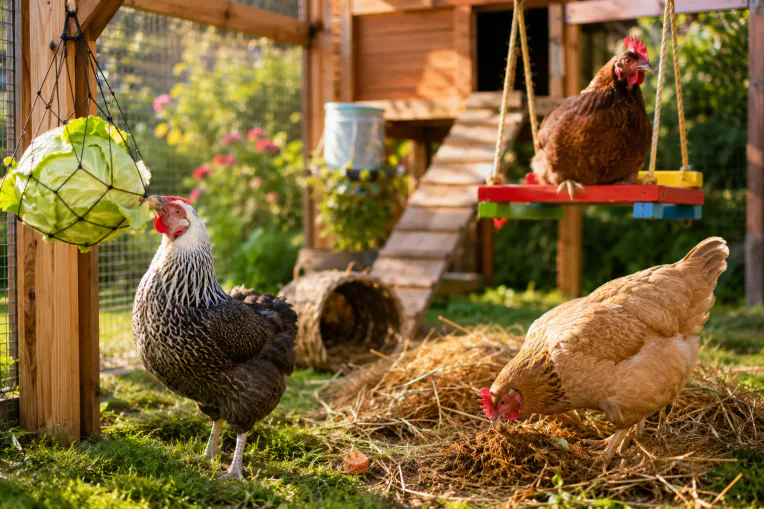
Yes, chickens absolutely get bored, especially when confined to small spaces without mental or physical stimulation. Bored chickens often develop behavioral problems like feather pecking, aggression, and egg eating. Providing enrichment through toys, varied perches, foraging opportunities, and environmental changes keeps chickens mentally engaged and physically healthy.
Key Takeaways
- Chickens are intelligent birds that need mental stimulation and physical activity to stay healthy and happy
- Signs of boredom include feather pecking, aggression, excessive vocalization, and destructive behaviors
- Space matters: chickens need at least 4 square feet per bird inside the coop and 10 square feet in the run
- Simple enrichment works: hanging vegetables, dust baths, varied perches, and foraging opportunities prevent boredom
- DIY solutions are effective: you don’t need expensive toys, kitchen scraps, mirrors, and natural materials work well
- Winter requires extra attention: confined chickens during cold months need more enrichment activities
- Rotate activities regularly: changing enrichment every 1-2 weeks maintains novelty and interest
- Free-range chickens still benefit from supplemental enrichment, especially during bad weather
- Boredom leads to aggression: understimulated chickens often peck each other and establish harsh pecking orders
- Prevention is easier than correction: establishing enrichment routines early prevents behavioral problems
What Are Signs That Chickens Are Bored?
Bored chickens display several clear behavioral indicators that signal they need more stimulation. The most common signs include aggressive feather pecking (pulling out other birds’ feathers), excessive preening or self-pecking, egg eating, loud repetitive vocalizations, and pacing along fence lines.
Common boredom behaviors to watch for:
- Feather pecking and plucking: targeting other birds’ tail or back feathers, often leading to bare patches
- Aggression and bullying: chasing flock mates excessively, blocking access to food or water
- Destructive pecking: attacking coop walls, nesting boxes, or feeders
- Listlessness: standing in one spot for extended periods with little movement
- Egg eating: breaking and consuming eggs shortly after laying
- Excessive dust bathing: spending hours in the same dust bath spot
- Repetitive pacing: walking the same path along fencing repeatedly
Choose enrichment immediately if you notice multiple birds engaging in feather pecking or if you see blood from aggressive encounters. These behaviors escalate quickly and become harder to correct once established in the flock.
A common mistake is assuming feather loss is always due to molting. If you see active pecking behavior or feathers with blood on the shaft, boredom or stress is the likely culprit, not seasonal molting.
Do Chickens Need Toys or Entertainment?
Chickens absolutely need toys and entertainment, though not in the traditional pet sense. These birds are descended from jungle fowl that spent their days foraging through diverse terrain, scratching for insects, and exploring their environment, activities that provided constant mental and physical engagement.
Why chickens need enrichment:
- Natural foraging instinct: chickens are hardwired to spend 60-90% of their waking hours searching for food
- Social complexity: they maintain hierarchies and relationships that require space and activities to manage peacefully
- Intelligence: chickens can solve puzzles, recognize over 100 individual faces, and demonstrate self-control
- Physical health: active chickens maintain better weight, stronger bones, and healthier cardiovascular systems
Without enrichment, chickens redirect their natural behaviors toward harmful outlets. A bored chicken doesn’t simply rest, it finds something to peck, and that something is often a flock mate.
The enrichment rule: if your chickens have access to their food and water but spend more than 30 minutes standing idle or repeatedly pecking the same non-food object, they need more stimulation.
How Much Space Do Chickens Need to Stay Happy?
Chickens need a minimum of 4 square feet per bird inside the coop and 10 square feet per bird in an outdoor run to maintain good mental health. However, these are bare minimums, more space always improves welfare and reduces boredom-related behaviors.
Space requirements by housing type:
| Housing Type | Minimum Space per Bird | Recommended Space per Bird |
|---|---|---|
| Indoor coop (sleeping area) | 4 square feet | 6-8 square feet |
| Covered run | 10 square feet | 15-20 square feet |
| Free-range access | 250+ square feet | Unlimited |
Space becomes critical when:
- Chickens are confined during winter or bad weather
- You keep larger breeds (Jersey Giants, Brahmas need 20-30% more space)
- Your flock includes roosters (who need more territory)
- Birds are confined for biosecurity reasons
A common mistake is calculating space based on floor area alone. Chickens are three-dimensional creatures that use vertical space extensively. Adding multiple perch levels, hanging feeders, and elevated platforms effectively increases usable space without expanding the coop footprint.
Edge case: bantam breeds can thrive in slightly smaller spaces (3 square feet indoors, 8 square feet in runs), but never reduce space below these thresholds regardless of breed size.
Best Enrichment Toys for Backyard Chickens
The best enrichment toys for chickens are those that engage their natural foraging, scratching, and pecking instincts. Effective toys don’t need to be expensive, chickens respond better to novelty and food-based challenges than to elaborate structures.
Top-performing enrichment items:
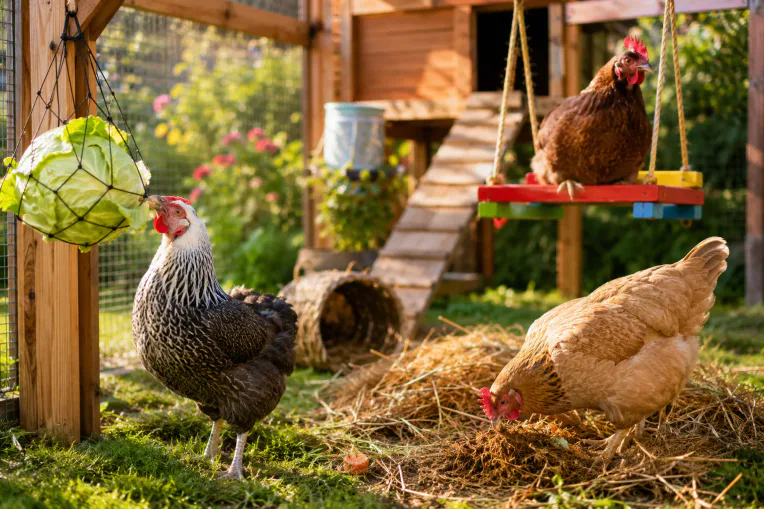
- Hanging treats: whole cabbages, lettuce heads, or corn cobs suspended at head height encourage jumping and pecking
- Treat balls and puzzle feeders: rolling dispensers that release grain or mealworms as chickens push them
- Mirrors: chickens are fascinated by their reflections and will interact with mirrors for extended periods
- Xylophone or chime toys: chickens peck at colorful keys, creating sounds that stimulate curiosity
- Perches at varied heights: natural branches, ladders, and platforms create climbing opportunities
- Dust bath stations: shallow containers filled with sand, wood ash, and diatomaceous earth
- Scratch boxes: containers filled with leaves, straw, or wood shavings hiding treats
Choose commercial toys if you want durability and weather resistance. Choose DIY options if you plan to rotate enrichment frequently (chickens lose interest in the same toy after 1-2 weeks).
Common mistake: buying toys designed for parrots or other birds. Chickens are ground foragers, not climbers, so toys requiring fine motor skills or complex manipulation often go unused.
DIY Chicken Boredom Busters on a Budget

DIY enrichment for chickens costs almost nothing and often works better than commercial products because you can create variety and rotate items frequently. Most effective DIY enrichment uses kitchen scraps, yard waste, and household items you already own.
Budget-friendly enrichment ideas:
Food-based activities:
- Scatter scratch grains in deep bedding or leaf piles (forces foraging behavior)
- Freeze berries or corn in ice blocks for summer cooling and entertainment
- String popcorn or cheerios on twine and hang at pecking height
- Fill cardboard tubes with hay and treats, then hang or scatter them
- Toss whole pumpkins or squash into the run (chickens will peck them open over days)
Environmental enrichment:
- Pile logs, stumps, or large rocks to create climbing structures
- Hang old CDs or reflective tape that moves in the breeze
- Create a compost pile in the run (chickens love turning compost for bugs)
- Add branches with leaves still attached for pecking and stripping
- Place a small kiddie pool filled with sand for dust bathing
Sensory enrichment:
- Plant chicken-safe herbs (oregano, thyme, basil) around the run perimeter
- Add fresh grass clippings or weeds daily
- Introduce new bedding types (straw one week, wood chips the next)
- Hang bunches of dried herbs from the ceiling
The rotation strategy: keep 5-7 different enrichment items and rotate 2-3 into the coop every few days. Store the others out of sight. This creates constant novelty without constant spending.
Can Bored Chickens Become Aggressive or Peck Each Other?
Yes, bored chickens frequently become aggressive and engage in harmful pecking behaviors. Feather pecking, cannibalism, and bullying are directly linked to insufficient environmental stimulation and overcrowding. Once these behaviors start, they spread rapidly through the flock as other birds learn by observation.
How boredom triggers aggression:
- Redirected foraging behavior: without proper outlets, chickens peck at the most interesting moving objects, other chickens
- Stress amplification: boredom increases cortisol levels, making birds more reactive and aggressive
- Hierarchy conflicts: insufficient space and activities force constant proximity, leading to more dominance disputes
- Learned behavior: once one chicken discovers feather pecking, others often imitate it
Warning signs of boredom-related aggression:
- Multiple birds with missing feathers on back, tail, or vent area
- Blood on feathers or skin (requires immediate intervention)
- Birds hiding in corners or refusing to leave nesting boxes
- Constant chasing and preventing access to resources
- Increased noise levels and distress calls
Immediate intervention steps:
- Separate any bleeding birds immediately (chickens are attracted to blood and will peck wounds)
- Add 3-5 new enrichment items to the coop within 24 hours
- Increase space if possible or reduce flock size
- Ensure multiple feeding and watering stations to reduce competition
- Apply anti-pecking sprays or pinless peepers to aggressive birds as a last resort
Edge case: some aggression is normal pecking order behavior, especially when introducing new birds. Boredom-related aggression differs because it’s persistent, targets multiple victims, and occurs even in established flocks.
What Vegetables Can I Hang for Chicken Entertainment?
Hanging vegetables provide excellent enrichment because they combine food rewards with physical activity and problem-solving. The best vegetables for hanging are sturdy, large enough to last several hours, and safe for chickens to consume in quantity.
Best vegetables for hanging:
- Cabbage: the gold standard, lasts 1-2 days, encourages jumping and pecking
- Lettuce heads: lighter option for smaller or older birds
- Broccoli: chickens love the florets and will work to strip the entire head
- Cauliflower: similar to broccoli, provides extended entertainment
- Corn on the cob: hang vertically for maximum challenge
- Cucumber: especially good in summer for hydration
- Zucchini and squash: can be hung whole or cut in half
- Swiss chard or kale bunches: tie stems together and hang
Hanging methods:
- Use twine or rope to suspend vegetables at head height (chickens should jump slightly to reach)
- Hang from coop ceiling, run rafters, or sturdy branches
- Create a “vegetable tetherball” by hanging from a spring or bungee cord (adds movement challenge)
- Thread multiple items on a rope to create a “vegetable garland”
Avoid hanging: onions, raw potatoes, avocado, or dried beans (toxic to chickens), and tomato or pepper leaves (nightshade family, toxic).
Pro tip: hang vegetables in the afternoon when chickens are naturally less active. This creates an activity boost during their typical low-energy period and helps prevent evening boredom behaviors.
Do Chickens Get Bored in Winter When Stuck Inside?
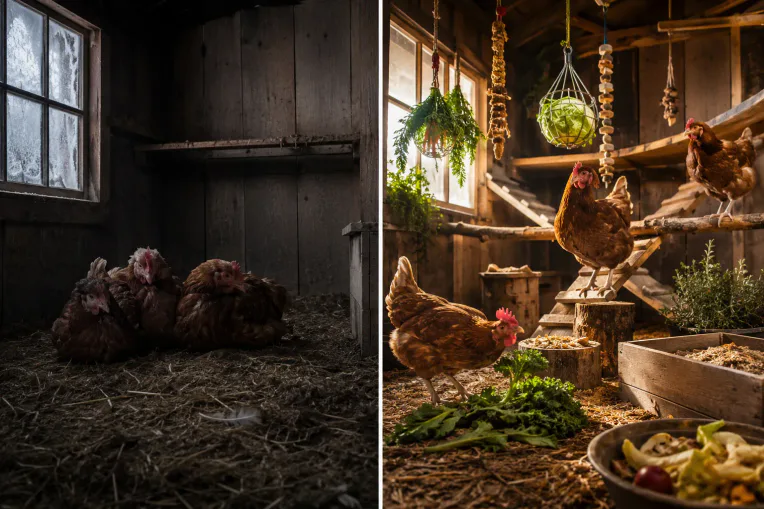
Chickens absolutely get bored during winter confinement, often more severely than any other time of year. Reduced daylight, cold temperatures, and limited outdoor access combine to create the perfect conditions for boredom-related behavioral problems.
Winter boredom factors:
- Reduced foraging time: frozen ground eliminates natural scratching and bug hunting
- Longer confinement periods: chickens spend 16-18 hours in the coop versus 10-12 hours in summer
- Less environmental variety: snow cover eliminates access to grass, weeds, and natural features
- Decreased activity levels: cold weather naturally reduces movement and exploration
Winter-specific enrichment strategies:
Indoor activities:
- Hang cabbage or treat balls inside the coop (not just the run)
- Create deep litter bedding (6-8 inches) and scatter scratch grains for indoor foraging
- Install additional perches at varied heights for climbing
- Provide dust bath stations indoors using large plastic tubs
- Hang dried herb bundles or seed heads from the ceiling
Weather-permitting outdoor time:
- Shovel paths in the snow so chickens can access bare ground
- Spread straw or wood chips over snow to encourage outdoor exploration
- Create windbreaks using tarps or plywood to shelter outdoor areas
- Offer warm treats (cooked oatmeal, warm rice) to encourage outdoor feeding
Light management:
- Consider supplemental lighting to extend active hours (14-16 hours of light total)
- Use red or white bulbs (avoid blue light which disrupts sleep)
Common mistake: completely sealing the coop for warmth. Chickens tolerate cold well but need ventilation and some outdoor access even in winter. Boredom from total confinement causes more health problems than cold exposure in most cases.
How Often Should I Change Chicken Enrichment Activities?
Change chicken enrichment activities every 1-2 weeks to maintain novelty and interest. Chickens habituate quickly to their environment, what excites them on day one becomes invisible background by day ten. Regular rotation prevents habituation and keeps enrichment effective.
Rotation schedule guidelines:
Weekly rotation (ideal):
- Remove 2-3 enrichment items
- Introduce 2-3 different items
- Keep 1-2 permanent fixtures (like primary perches or dust baths)
Bi-weekly rotation (minimum):
- Complete refresh of hanging treats and food-based enrichment
- Rearrange physical structures (move perches, relocate feeders)
- Introduce seasonal items (fall leaves, spring grass clippings)
Daily additions:
- Fresh kitchen scraps or garden waste
- Scattered scratch grains in new locations
- Fresh bedding or foraging material
Items that don’t need rotation:
- Primary roosting perches
- Nesting boxes
- Main dust bath area
- Water and primary feed stations
The novelty principle: chickens respond more strongly to the introduction of enrichment than to its constant presence. A cabbage that appears every Monday generates more excitement than a cabbage that hangs permanently.
Edge case: if you notice chickens ignoring enrichment within 2-3 days of introduction, your rotation schedule is too slow. Some highly intelligent or active flocks need new activities every 3-4 days.
Are Chicken Swings and Perches Worth Buying?
Chicken swings and varied perches are absolutely worth buying or building, they’re among the most consistently used enrichment items and provide both physical exercise and mental stimulation. Unlike food-based enrichment that gets consumed, perches and swings offer permanent value.
Benefits of swings and perches:
- Physical exercise: jumping, balancing, and climbing strengthen leg muscles and improve coordination
- Vertical space utilization: adds usable space without expanding coop footprint
- Pecking order management: multiple perch levels give lower-ranking birds escape routes
- Natural behavior: mimics roosting on tree branches (chickens’ ancestral behavior)
- Entertainment value: chickens genuinely enjoy swinging and will use swings daily
Perch specifications:
- Diameter: 2-4 inches (chickens should grip with toes, not balance flat-footed)
- Material: natural wood branches (rough bark provides grip and foot health)
- Height variation: install perches at 1 foot, 2 feet, and 3+ feet heights
- Spacing: 12-18 inches apart horizontally, 8-12 inches between vertical levels
- Avoid: dowels or perfectly round perches (cause foot problems), plastic perches (too slippery)
Swing specifications:
- Size: 12-18 inches wide, 1-2 inches thick
- Height: 6-12 inches off the ground for easy access
- Material: wood planks or sturdy natural branches
- Hanging method: rope or chain that allows gentle swinging (not spinning)
DIY vs. commercial: A simple swing costs $15-30 commercially but can be built for under $5 using a wood plank and rope. Commercial swings offer weather-resistant hardware and attractive designs. DIY swings work identically but may need replacement after 1-2 years of outdoor exposure.
Common mistake: installing only one perch level at maximum height. This creates competition and prevents lower-ranking birds from roosting comfortably. Always provide more linear feet of perching space than you have birds.
What Happens If Chickens Don’t Get Enough Stimulation?
Chickens without adequate stimulation develop serious behavioral, physical, and psychological problems that affect both individual welfare and flock dynamics. The consequences of chronic boredom extend beyond simple restlessness to genuine health issues.
Behavioral consequences:
- Feather pecking and cannibalism: can result in severe injury or death
- Egg eating: once established, this habit is extremely difficult to break
- Aggression and bullying: creates chronic stress for victimized birds
- Vent pecking: targeting the cloaca area, often fatal if not stopped immediately
- Reduced egg production: stress from boredom decreases laying rates by 10-30%
Physical health impacts:
- Obesity: inactive chickens gain excess weight, leading to fatty liver disease
- Weak bones and muscles: lack of exercise causes deterioration
- Foot problems: standing in one position for hours increases bumblefoot risk
- Compromised immune function: chronic stress from boredom suppresses immunity
- Shortened lifespan: understimulated chickens typically live 1-2 years less than enriched birds
Psychological effects:
- Learned helplessness: chickens stop exploring or responding to new stimuli
- Increased fearfulness: bored chickens become more reactive to changes
- Depression-like symptoms: lethargy, reduced vocalization, social withdrawal
- Stereotypic behaviors: repetitive, purposeless movements like pacing
Flock-level impacts:
- Unstable pecking order with frequent conflicts
- Reduced overall productivity
- Higher mortality rates
- Increased disease susceptibility
The prevention principle: providing enrichment is always easier, cheaper, and more effective than treating the consequences of boredom. A $20 investment in enrichment materials prevents hundreds in veterinary costs and lost productivity.
Enrichment Ideas for Chickens in Small Coops
Chickens in small coops need creative enrichment solutions that maximize limited space while still providing mental and physical stimulation. Focus on vertical space, rotation, and multi-functional items that serve multiple enrichment purposes.
Space-efficient enrichment strategies:
Vertical enrichment:
- Install perches at multiple heights using wall-mounted brackets
- Hang treat dispensers and vegetables from the ceiling
- Mount mirrors or pecking toys on walls at chicken eye level
- Use corner-mounted dust bath boxes to save floor space
Rotating enrichment:
- Keep only 2-3 enrichment items in the coop at once
- Rotate items every 3-4 days to maintain novelty
- Store unused items completely out of sight (chickens have good memories)
Multi-functional items:
- Perches that double as roosting bars and climbing structures
- Dust bath areas that also serve as scratching zones
- Hanging feeders that swing and move (adds challenge to eating)
- Nesting boxes with varied bedding materials for sensory variety
Outside-the-coop enrichment:
- Maximize run space with climbing structures
- Create a “chicken garden” with safe plants they can forage
- Use portable fencing to rotate access to different yard areas
- Provide supervised free-range time when possible
Small-space enrichment schedule:
- Morning: scatter scratch grains in bedding
- Midday: hang fresh vegetable or treat ball
- Afternoon: supervised outdoor time or run access
- Evening: remove used enrichment, prepare tomorrow’s rotation
The density rule: in coops under 32 square feet (8 birds at minimum space), prioritize food-based and hanging enrichment over floor structures. In coops 32-64 square feet, add one climbing structure. Only coops over 64 square feet can accommodate multiple permanent structures without crowding.
Do Free-Range Chickens Still Need Enrichment?
Free-range chickens still benefit from supplemental enrichment, though they need less than confined birds. Even with outdoor access, chickens return to the coop for extended periods and face weather conditions that limit ranging time, making coop-based enrichment valuable.
Why free-range birds need enrichment:
- Weather limitations: rain, extreme heat, and cold keep chickens in the coop for hours or days
- Predator pressure: some chickens are too fearful to range far from the coop
- Seasonal variation: winter reduces outdoor foraging opportunities dramatically
- Evening hours: chickens return to roost 2-3 hours before dark, creating idle time
- Habitat quality: not all “free-range” areas offer diverse foraging opportunities
Appropriate enrichment for free-range flocks:
Minimal daily enrichment:
- Scattered scratch grains in coop bedding (morning)
- One hanging vegetable or treat (rotated weekly)
- Varied perch heights for roosting choices
- Dust bath station (especially important if soil is wet or frozen)
Supplemental enrichment during confinement:
- Increase enrichment items when weather keeps birds inside
- Provide extra treats and activities during predator lockdowns
- Add novel items during winter months
Outdoor range enrichment:
- Create brush piles for cover and bug habitat
- Plant chicken-safe shrubs and ground covers
- Add logs, stumps, or rock piles for climbing
- Establish multiple dust bath locations
- Rotate ranging areas if possible (allows vegetation recovery and maintains novelty)
The free-range assessment: observe your chickens during ranging time. If they stay within 20 feet of the coop, rarely scratch or forage, or return to the coop within an hour, they’re not truly utilizing their range and need the same enrichment as confined birds.
Common mistake: assuming free-range access eliminates all enrichment needs. Even chickens with acres of access spend 40-50% of their time in or near the coop and benefit from structured activities during those hours.
Common Mistakes When Trying to Entertain Chickens
Many well-intentioned chicken keepers make predictable mistakes when implementing enrichment programs. Understanding these pitfalls helps you create more effective and sustainable enrichment strategies.
Top enrichment mistakes:
1. Too much, too soon:
- Introducing 10 new items at once overwhelms chickens
- They ignore most items and you can’t identify what works
- Fix: introduce 2-3 items at a time, observe usage, then adjust
2. Never rotating enrichment:
- Permanent items become invisible to chickens within days
- Reduces effectiveness to near zero after 2 weeks
- Fix: establish a rotation schedule and stick to it
3. Focusing only on food-based enrichment:
- Creates overweight chickens without addressing behavioral needs
- Doesn’t provide physical exercise or environmental complexity
- Fix: balance food treats with climbing structures, dust baths, and sensory enrichment
4. Ignoring individual preferences:
- Not all chickens like the same activities
- Some breeds are more active than others
- Fix: offer variety and observe which birds use which items
5. Unsafe enrichment choices:
- Toxic plants, small parts that cause impaction, sharp edges
- Strings or ropes that tangle legs
- Fix: research safety before introducing any new item
6. Inadequate space for enrichment:
- Adding items to an already crowded coop increases stress
- Fix: address space issues before adding enrichment, or focus on vertical and hanging options
7. Expecting immediate results:
- Chickens may take 1-3 days to investigate new items
- Shy birds need time to observe others using enrichment first
- Fix: give new enrichment at least one week before judging effectiveness
8. Neglecting basic needs first:
- Enrichment doesn’t compensate for inadequate food, water, space, or health care
- Fix: ensure all basic welfare needs are met before adding enrichment
9. Buying expensive commercial toys without testing:
- Many commercial products go unused by chickens
- Fix: start with DIY versions to test concepts before investing
10. Forgetting seasonal adjustments:
- Summer enrichment (cooling treats) differs from winter needs (indoor activities)
- Fix: adjust enrichment strategy quarterly
The success formula: Start simple, observe carefully, rotate regularly, and adjust based on your specific flock’s behavior. Effective enrichment is about consistency and appropriateness, not expense or complexity.
Frequently Asked Questions
How can I tell if my chickens are happy or bored?
Happy chickens actively forage, dust bathe, vocalize softly, and interact peacefully with flock mates. Bored chickens stand idle, peck at each other, vocalize loudly or repetitively, and engage in destructive behaviors. Watch for active scratching and exploration, these are the clearest signs of contentment.
Can I give my chickens toys meant for parrots or other birds?
Most parrot toys don’t work well for chickens because they’re designed for climbing and manipulation with beaks and feet, while chickens are ground foragers who peck and scratch. Mirrors, bells, and simple hanging toys can work, but avoid anything requiring fine motor skills or small parts that chickens might swallow.
Do chickens get bored of the same food every day?
Chickens appreciate food variety and will show more excitement for novel treats, but they don’t get “bored” of their regular feed the way humans might. However, varied treats (vegetables, fruits, mealworms) provide enrichment through the foraging and eating process itself, making variety valuable beyond nutrition.
How many enrichment items should I have in the coop at once?
For a standard backyard flock of 4-8 chickens, keep 3-5 enrichment items active at any time: varied perches (permanent), one hanging treat, one ground-level activity (scratch box or dust bath), and 1-2 rotating novelty items. More items create clutter; fewer items provide insufficient variety.
Will enrichment stop my chickens from pecking each other?
Enrichment significantly reduces feather pecking and aggression but may not eliminate it entirely if space is inadequate or if the behavior is already established. Enrichment works best as prevention. For existing pecking problems, combine enrichment with increased space, flock size adjustment, and potentially separating aggressive individuals.
Can I use chicken enrichment to increase egg production?
Enrichment indirectly supports egg production by reducing stress, maintaining healthy body condition, and promoting natural behaviors. While enrichment alone won’t dramatically increase laying rates, stressed and bored chickens lay 10-30% fewer eggs, so enrichment helps maintain optimal production levels.
What’s the cheapest way to keep chickens entertained?
Kitchen scraps (vegetable tops, fruit peels), yard waste (grass clippings, leaves, weeds), and natural materials (logs, branches, dirt for dust baths) provide free or nearly free enrichment. Scattering regular chicken feed in bedding instead of using a feeder creates instant foraging enrichment at zero additional cost.
Do chickens need different enrichment at different ages?
Yes. Chicks need safe, simple items like small mirrors and scattered feed. Pullets (adolescents) benefit from climbing structures and more challenging activities. Adult chickens need varied enrichment that addresses foraging, dust bathing, and social behaviors. Senior chickens appreciate lower perches and easier-to-access treats.
How do I know if an enrichment item is safe for my chickens?
Safe enrichment is non-toxic, has no sharp edges, contains no small parts that could cause choking or impaction, and doesn’t create entanglement hazards. Avoid treated wood, toxic plants (nightshades, avocado, raw beans), and anything with loose strings or loops that could trap legs.
Can too much enrichment be bad for chickens?
Excessive enrichment can create a cluttered, stressful environment where chickens can’t move freely or establish normal social patterns. Focus on quality over quantity, 3-5 well-chosen, rotated items work better than 15 permanent fixtures. Ensure enrichment doesn’t reduce usable floor space below minimum requirements.
Do roosters need different enrichment than hens?
Roosters benefit from the same basic enrichment as hens but may need additional space and vertical structures to establish and patrol their territory. They’re often more active and exploratory than hens, so they particularly benefit from varied perches and climbing opportunities.
Will my chickens use a chicken swing, or is it just for looks?
Most chickens will use swings once they learn they’re safe, though it may take several days to a week for the first brave bird to try it. Younger chickens typically adopt swings faster than older birds. Once one chicken uses it regularly, others usually follow. Position swings low (6-12 inches) for easier initial access.
Conclusion
Chickens are intelligent, active birds that need mental stimulation and physical activity to thrive. Boredom isn’t just an inconvenience for chickens, it’s a welfare issue that leads to aggression, health problems, and reduced productivity. The good news is that preventing boredom doesn’t require expensive equipment or extensive time investment.
Start with these actionable steps:
- Assess your current setup: measure your coop space, count enrichment items, and observe your flock for boredom signs
- Implement three core enrichment types: food-based (hanging vegetables, scattered grains), physical (varied perches, dust bath), and environmental (novel items, sensory variety)
- Establish a rotation schedule: change 2-3 items weekly to maintain novelty
- Monitor and adjust: watch which enrichment your chickens actually use and eliminate items they ignore
- Prioritize winter planning: prepare extra enrichment strategies before cold weather confines your flock
Remember that enrichment works best as prevention. Starting an enrichment program with healthy, unstressed chickens is far easier than correcting behavioral problems in a bored, aggressive flock. Even simple additions like daily scattered scratch grains and a weekly hanging cabbage make measurable differences in chicken welfare and happiness.
Your chickens will reward your enrichment efforts with better health, more consistent egg production, peaceful flock dynamics, and the simple pleasure of watching active, engaged birds doing what chickens do best, foraging, exploring, and enjoying their environment.


