
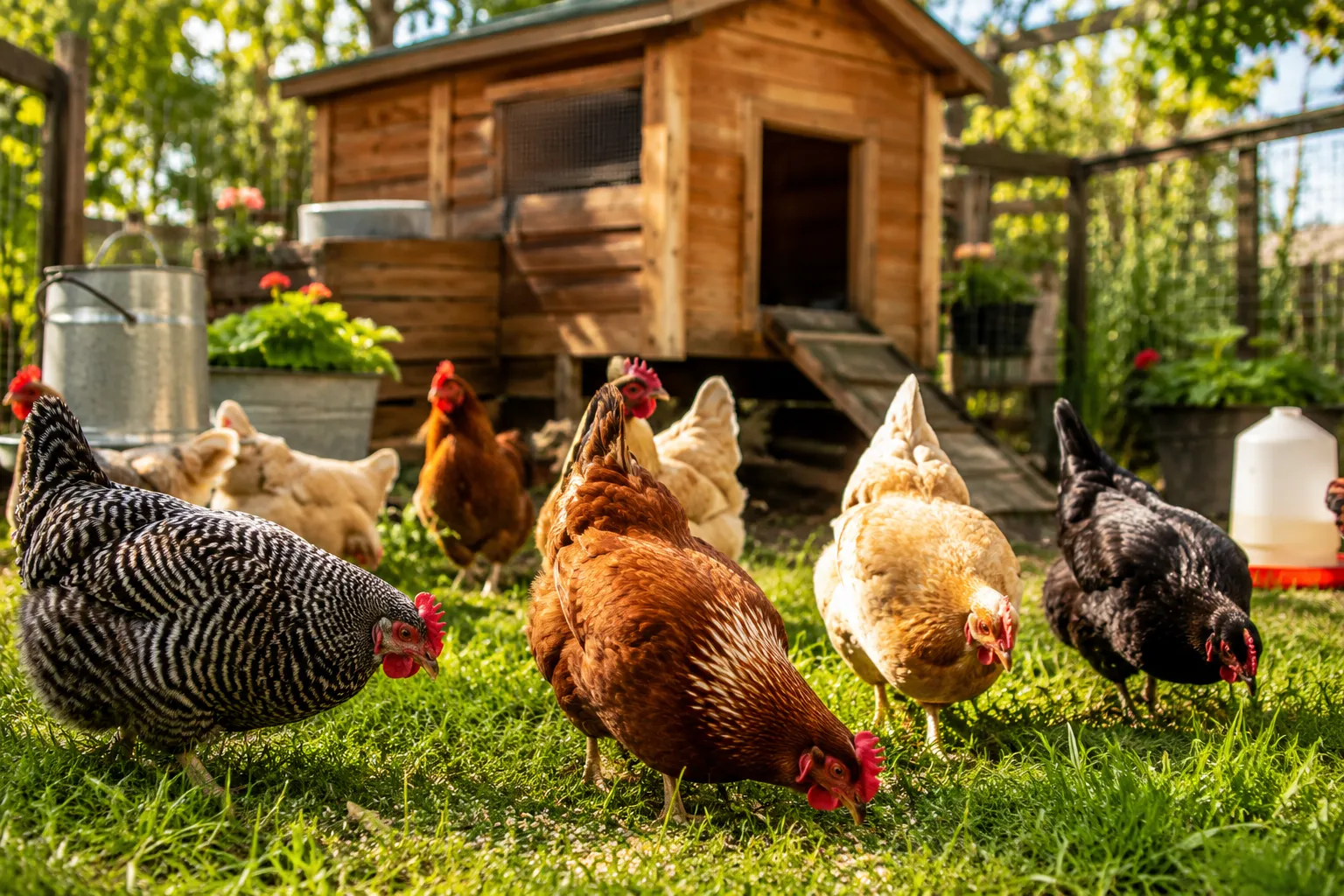
Quick Answer: The most common chicken keeping mistakes beginners make include underestimating space requirements (chickens need 3-4 square feet per bird inside the coop and 8-10 square feet in the run), skipping predator-proofing, overfeeding treats while neglecting proper nutrition, and expecting immediate egg production without understanding the 18-24 week maturity period for most breeds.
Key Takeaways
- Space matters more than you think: Each chicken needs 3-4 square feet inside the coop and 8-10 square feet of outdoor run space to stay healthy and reduce aggression
- Predator-proofing is non-negotiable: Hardware cloth (not chicken wire) and buried barriers prevent raccoons, foxes, and weasels from killing your flock
- Heat lamps cause more harm than good: Adult chickens handle cold weather naturally; heat lamps create fire hazards and prevent proper cold acclimation
- Not all food is chicken-safe: Avocado, chocolate, raw beans, and moldy feed can poison your birds
- Roosters are optional: Hens lay eggs without a rooster present; you only need males for fertile eggs
- Starting with pullets beats chicks: Beginners succeed more often with 16-20 week old pullets rather than day-old chicks that require intensive brooding
- Egg production isn’t instant: Most hens start laying at 18-24 weeks old and need 14+ hours of daylight to maintain production
- Flock size affects behavior: Keeping at least 3-4 chickens prevents loneliness and establishes healthy pecking order dynamics
- Daily egg collection prevents problems: Leaving eggs in nests encourages broodiness and egg-eating habits
- Coop cleaning schedules prevent disease: Deep litter method requires monthly stirring and quarterly full cleanouts; traditional bedding needs weekly spot-cleaning
What Are the Most Common Mistakes New Chicken Owners Make
New chicken owners most frequently fail at three critical areas: providing adequate space, protecting against predators, and understanding chicken nutrition. These mistakes stem from underestimating chickens as livestock rather than low-maintenance pets, leading to health problems, behavioral issues, and flock losses within the first year.
The top chicken keeping mistakes beginners make include:
- Building coops that are too small (less than 3 square feet per bird)
- Using chicken wire instead of hardware cloth for predator protection
- Feeding too many treats and table scraps (more than 10% of diet)
- Expecting hens to lay eggs immediately after bringing them home
- Adding new birds without proper quarantine periods
- Skipping regular health checks until problems become severe
- Overcrowding waterers and feeders, creating competition
- Choosing breeds poorly suited to local climate conditions
The financial impact of these mistakes adds up quickly. Replacing birds lost to predators, treating preventable diseases, and rebuilding inadequate coops can cost hundreds to thousands of dollars in the first year alone.
How Much Space Do Chickens Actually Need in a Coop
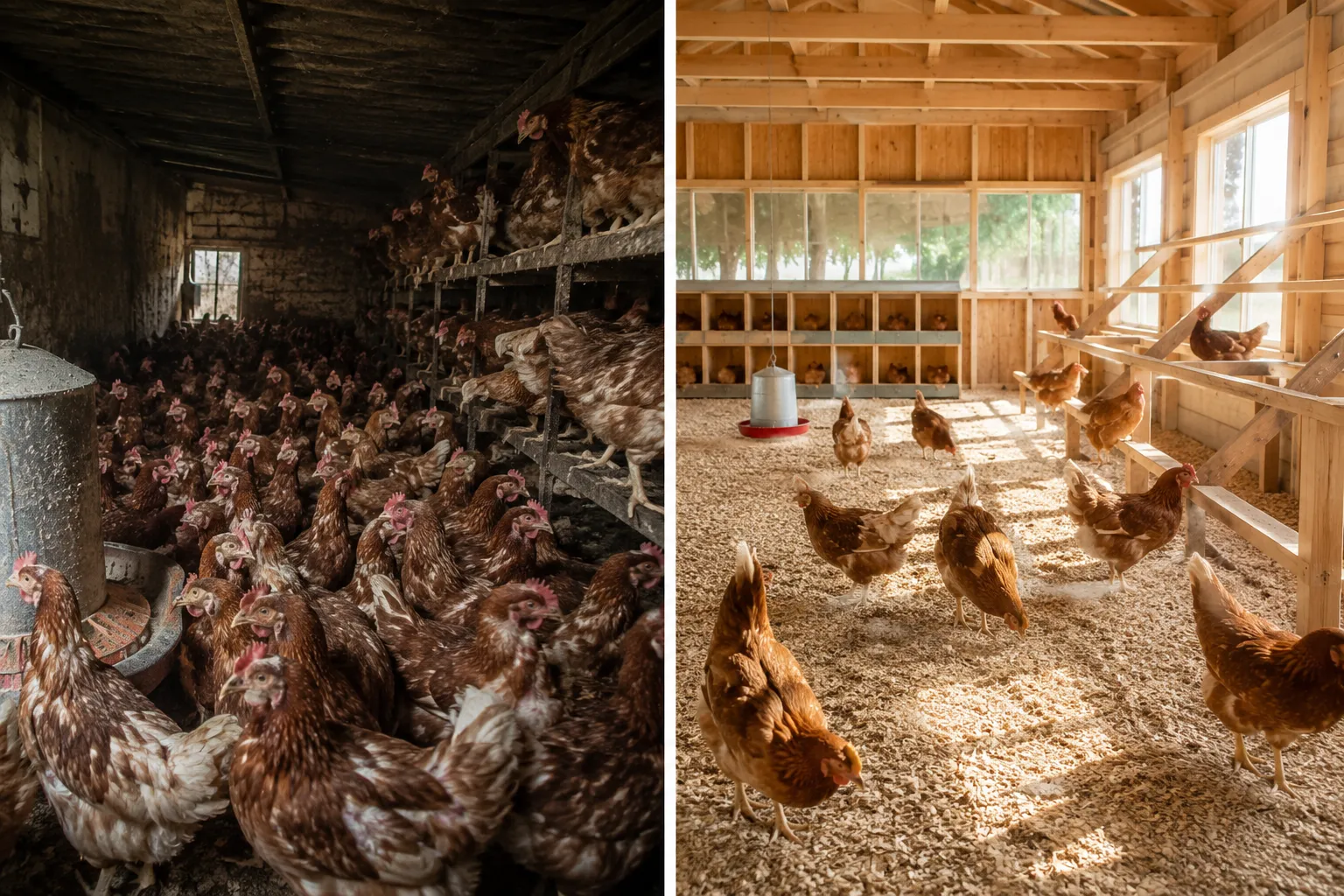
Chickens need a minimum of 3-4 square feet per bird inside the coop and 8-10 square feet per bird in the outdoor run. Bantam breeds can manage with slightly less (2-3 square feet indoors), while larger breeds like Jersey Giants require 4-5 square feet each to prevent stress, aggression, and health problems.
Space requirements break down by flock size:
| Flock Size | Indoor Coop Space | Outdoor Run Space |
|---|---|---|
| 4 chickens | 12-16 sq ft | 32-40 sq ft |
| 6 chickens | 18-24 sq ft | 48-60 sq ft |
| 10 chickens | 30-40 sq ft | 80-100 sq ft |
| 15 chickens | 45-60 sq ft | 120-150 sq ft |
Overcrowding triggers feather pecking, cannibalism, and increased disease transmission. Chickens establish a pecking order, and insufficient space intensifies bullying behavior. Lower-ranking birds need room to escape dominant flock members.
Additional space considerations:
- Roosting bars need 8-10 inches of linear space per chicken
- Nesting boxes require one box per 3-4 hens
- Ventilation improves with higher ceilings (minimum 6 feet for human access)
- Winter confinement requires more indoor space in cold climates where birds stay inside for weeks
Choose larger dimensions if your flock will be confined during bad weather or if you plan to expand your flock later. Building too small is the most expensive mistake because you’ll need to rebuild or add on within a year.
Can Chickens Survive Winter Without a Heat Lamp
Adult chickens survive winter without heat lamps in most climates, even when temperatures drop below freezing. Chickens generate body heat naturally and their feathers provide excellent insulation when they fluff them up. Heat lamps actually create more problems than they solve, including fire hazards, sudden temperature shock if the lamp fails, and preventing chickens from developing proper cold tolerance.
What chickens need for winter survival instead of heat:
- Draft-free ventilation: Openings near the roof allow moisture to escape while preventing cold wind from blowing directly on roosting birds
- Deep litter bedding: A 6-12 inch layer of wood shavings or straw creates composting warmth and insulates the floor
- Dry conditions: Moisture and dampness cause frostbite more than cold temperatures alone
- Adequate food: Chickens burn more calories staying warm; increase feed by 10-15% in winter
- Unfrozen water: Check waterers twice daily or use heated bases to prevent ice
Exceptions where supplemental heat makes sense:
- Chicks under 6 weeks old still developing feathers
- Sick or injured birds with compromised health
- Tropical breeds (Serama, Sumatra) in extreme cold climates
- Temperatures consistently below -10°F combined with high winds
If you must use heat, a flat panel radiant heater mounted away from bedding is safer than a heat lamp. Set it to maintain 40-45°F, not tropical temperatures. Chickens with access to gradual temperature zones self-regulate better than those kept artificially warm.
The biggest winter danger is frostbite on combs and wattles, not hypothermia. Apply petroleum jelly to exposed skin on extremely cold nights and choose cold-hardy breeds with smaller combs if you live in harsh winter climates.
What Should I Not Feed My Backyard Chickens
Never feed chickens avocado, chocolate, raw or dried beans, green potatoes, rhubarb leaves, moldy or spoiled food, or anything high in salt or sugar. These foods contain compounds toxic to chickens or create digestive problems that can kill birds within hours to days of consumption.
Dangerous foods and why they harm chickens:
- Avocado: Contains persin, which causes heart damage and respiratory distress
- Chocolate: Theobromine is toxic to chickens, affecting their nervous system
- Raw/dried beans: Contain hemagglutinin, which is deadly until beans are thoroughly cooked
- Green potatoes and tomato leaves: Solanine causes neurological problems
- Onions and garlic in large amounts: Damage red blood cells, causing anemia
- Moldy or spoiled food: Produces mycotoxins that cause liver damage and death
- Salty snacks: Chickens can’t process excess sodium; causes water retention and kidney failure
- Sugary treats: Disrupts gut bacteria and causes sour crop
The 90/10 rule for chicken feeding:
90% of a chicken’s diet should be complete layer feed formulated with proper protein (16-18%), calcium, and nutrients. The remaining 10% can include healthy treats like vegetables, fruits, mealworms, or scratch grains. Exceeding this ratio causes nutritional imbalances that reduce egg production and weaken immune systems.
Safe treat options include:
- Leafy greens (kale, lettuce, spinach)
- Berries and melon
- Cooked eggs (yes, chickens can eat eggs)
- Pumpkin and squash
- Cooked rice or oatmeal
- Mealworms and other insects
Always provide grit (small stones) when feeding anything other than commercial feed. Chickens need grit in their gizzards to grind food since they have no teeth.
How Often Do I Need to Clean a Chicken Coop
Clean chicken coops require weekly spot-cleaning to remove wet bedding and droppings from high-traffic areas, plus a complete deep clean every 3-4 months. The deep litter method extends this to quarterly full cleanouts by maintaining a composting bedding layer that you stir weekly and top with fresh material monthly.
Weekly maintenance tasks (15-20 minutes):
- Remove droppings from under roosting bars
- Replace soiled bedding in nesting boxes
- Scrape droppings boards if installed
- Check for wet spots and replace damp bedding
- Refill feeders and clean waterers
Monthly tasks (30-45 minutes):
- Stir deep litter bedding to promote composting
- Add 2-3 inches of fresh bedding material
- Inspect coop structure for damage or gaps
- Check ventilation openings for blockages
Quarterly deep cleaning (2-4 hours):
- Remove all bedding down to bare floor
- Scrape walls, roosts, and nesting boxes
- Wash surfaces with vinegar solution or poultry-safe disinfectant
- Allow coop to dry completely before adding fresh bedding
- Inspect and repair any damage
- Check for signs of mites or lice
Skipping regular cleaning leads to ammonia buildup from decomposing droppings, which damages chickens’ respiratory systems and increases disease risk. High ammonia levels smell sharp and burn your eyes when you enter the coop.
Signs you’re not cleaning often enough:
- Strong ammonia smell
- Wet, compacted bedding
- Flies or maggots present
- Chickens with dirty feet or vent feathers
- Respiratory symptoms (wheezing, nasal discharge)
Choose bedding that matches your cleaning schedule. Pine shavings work well for weekly cleaning, while straw or hemp bedding suits the deep litter method better.
Is It Better to Start With Chicks or Adult Chickens for Beginners
Beginners succeed more often starting with pullets (young hens aged 16-20 weeks) rather than day-old chicks or adult hens. Pullets cost more upfront but require less intensive care than chicks, start laying eggs within weeks, and adapt to new environments better than older birds.
Comparison of starting options:
| Option | Cost per Bird | Time to Eggs | Care Level | Mortality Risk |
|---|---|---|---|---|
| Day-old chicks | $3-8 | 18-24 weeks | High (brooding) | 10-20% |
| Pullets (16-20 weeks) | $20-35 | 2-8 weeks | Moderate | 2-5% |
| Adult hens (1+ years) | $15-30 | Immediate* | Low | 5-10% |
*Adult hens often stop laying for weeks after moving due to stress
Why pullets work best for beginners:
- No brooder setup required (heat lamps, temperature monitoring)
- Past the fragile chick stage with high mortality
- Vaccinations already completed by hatchery or farm
- Easier to identify gender (no surprise roosters)
- Adapt to new coops faster than older birds
- Start laying soon, providing quick return on investment
When to choose chicks instead:
- You want specific rare breeds only available as chicks
- Budget is extremely tight
- You want the full experience of raising chickens from day one
- You have brooding equipment from previous flocks
When to choose adult hens:
- You need eggs immediately
- You’re rescuing hens from commercial operations
- You have experience with chicken health issues
Avoid buying adult hens from unknown sources without health history. Older birds may carry diseases, have poor laying records, or be near the end of their productive years. Pullets from reputable hatcheries or local breeders offer the best balance of cost, care requirements, and success rates for first-time chicken keepers.
Why Are My Chickens Not Laying Eggs
Chickens stop laying eggs due to age (under 18 weeks or over 3 years), insufficient daylight (less than 14 hours daily), molting, stress from environmental changes, poor nutrition, illness, or being egg-bound. Most laying problems in backyard flocks stem from seasonal light changes or nutritional deficiencies rather than serious health issues.
Common causes and solutions:
Age and maturity: Most breeds start laying at 18-24 weeks old. Larger breeds like Orpingtons and Brahmas take longer (24-28 weeks). If your pullets haven’t started laying, wait another month before worrying.
Daylight hours: Hens need 14-16 hours of light daily to maintain egg production. Egg laying naturally decreases in fall and winter as days shorten. Add supplemental lighting on a timer to extend “daylight” to 14 hours if you want winter eggs.
Molting: Chickens shed and regrow feathers annually, usually in fall. Molting lasts 8-16 weeks, during which most hens stop laying completely. This is normal and healthy. Increase protein to 18-20% during molts to support feather regrowth.
Stress factors that stop laying:
- Moving to a new coop or location
- Predator attacks or scares
- Adding new flock members
- Loud noises or construction nearby
- Inconsistent feeding schedules
Nutritional problems:
- Insufficient protein (needs 16-18% for layers)
- Lack of calcium (provide oyster shell free-choice)
- Poor quality or old feed (loses nutrients after 3 months)
- Too many treats diluting complete feed nutrition
Health issues to check:
- Parasites (mites, lice, worms) drain energy
- Egg-bound hens (egg stuck in oviduct)
- Vent prolapse
- Respiratory infections
- Obesity from overfeeding treats
Check for hidden eggs before assuming hens aren’t laying. Chickens often find secret nesting spots in bushes, corners, or under structures if they don’t like their nesting boxes.
Do I Need a Rooster for Hens to Lay Eggs
Hens lay eggs without a rooster present. Roosters are only necessary if you want fertile eggs that can hatch into chicks. Unfertilized eggs from hen-only flocks are identical in nutrition, taste, and appearance to fertilized eggs and are perfectly safe to eat.
Reasons to keep a rooster:
- You want to hatch chicks and raise your own replacements
- Roosters provide flock protection by alerting hens to predators
- Some breeds have stunning roosters worth keeping for appearance
- Roosters help maintain pecking order in large flocks
Reasons to skip the rooster:
- Many urban and suburban areas ban roosters due to noise
- Roosters crow loudly starting at dawn (and throughout the day)
- Aggressive roosters can attack people, especially children
- Roosters may over-mate hens, causing feather loss and injuries
- You don’t need the stress of managing rooster behavior
One rooster can service 8-12 hens comfortably. More than one rooster in a small flock creates fighting, noise, and excessive mating pressure on hens. If you keep multiple roosters, you need separate pens or a ratio of at least 10-12 hens per rooster.
Rooster behavior management:
- Handle roosters frequently from chick stage to reduce aggression
- Never tolerate aggressive behavior toward people
- Provide adequate hens to prevent over-mating
- Cull or rehome aggressive roosters immediately
Most beginners should start with an all-hen flock. You can always add a rooster later if you decide you want fertile eggs or natural flock dynamics.
What Happens If I Don’t Collect Chicken Eggs Every Day
Leaving eggs uncollected for multiple days encourages hens to go broody (wanting to hatch eggs), increases the risk of eggs cracking or getting dirty, and can trigger egg-eating behavior where chickens peck and consume their own eggs. Eggs also lose freshness and quality when left in nests, especially in hot weather.
Problems from infrequent egg collection:
Broodiness: When eggs accumulate in nests, hens’ hormones trigger brooding behavior. Broody hens stop laying, sit on nests constantly, and become aggressive. Breaking broodiness takes 3-7 days of isolation in a wire-bottom cage.
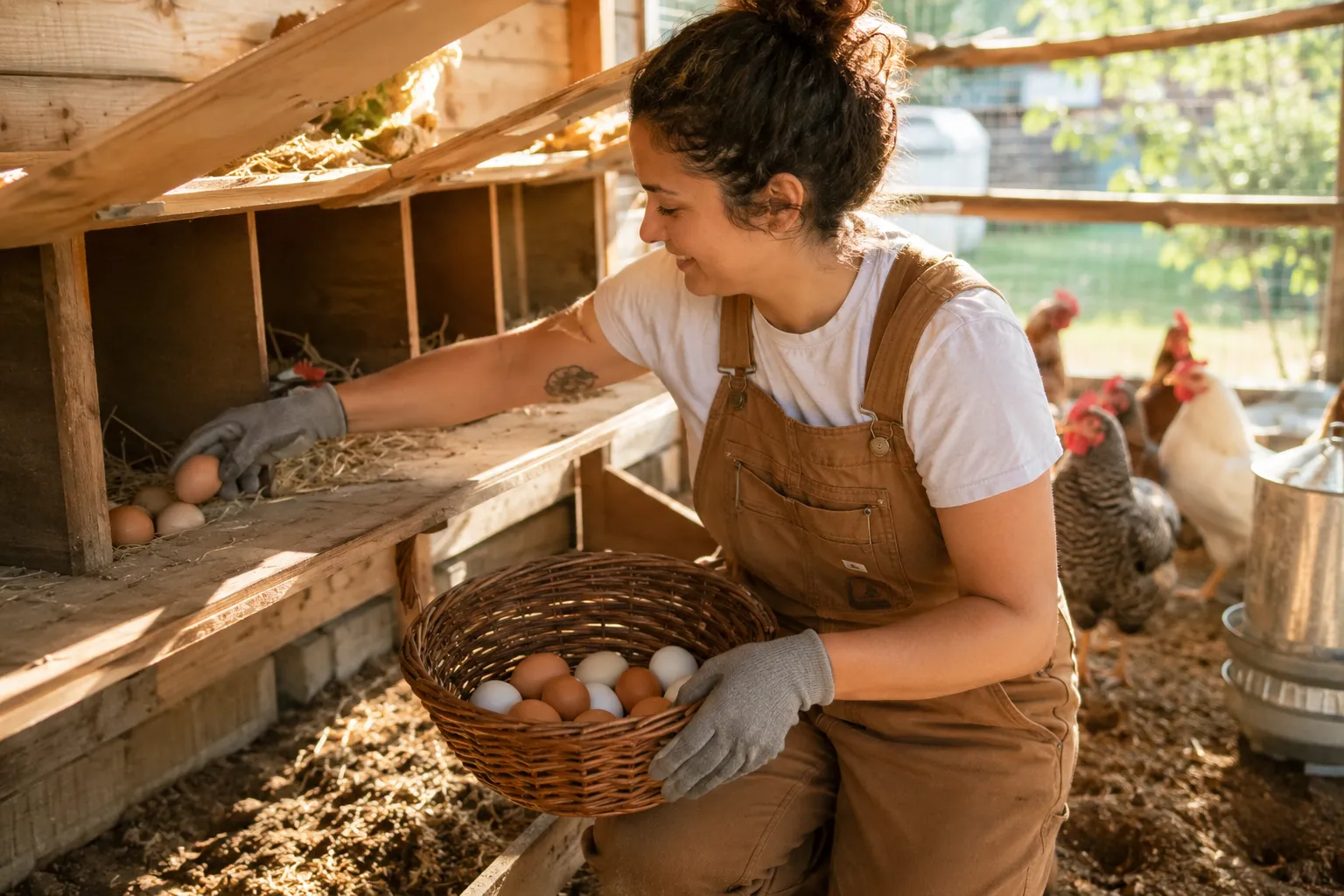
Egg eating: Chickens are curious and will peck at eggs. Once they discover eggs taste good, the behavior spreads through the flock and becomes extremely difficult to stop. Collecting eggs promptly removes the temptation.
Cracked and dirty eggs: More eggs in a nest means more chances for breakage. Broken eggs attract pests and make other eggs dirty. Dirty eggs require washing, which removes the protective bloom and reduces shelf life.
Reduced freshness: Eggs lose quality daily, especially in warm weather. Internal temperature fluctuations cause the air cell to expand and the white to thin.
Pest attraction: Accumulated eggs attract snakes, rats, and other predators that will enter coops to steal eggs.
Best practices for egg collection:
- Collect eggs at least once daily, preferably twice (morning and evening)
- Check nests more frequently in hot weather (above 85°F)
- Use clean hands or a basket to avoid contamination
- Store eggs pointed-end down in a cool location
- Don’t wash eggs until just before use (washing removes protective coating)
Fresh unwashed eggs can sit at room temperature for 2-3 weeks or refrigerated for 2-3 months. The bloom (natural protective coating) keeps bacteria out as long as you don’t wash it off.
How Do I Know If My Chicken Is Sick
Sick chickens show changes in behavior, appearance, or droppings including lethargy, isolation from the flock, ruffled feathers, reduced appetite, labored breathing, discharge from eyes or nostrils, limping, or abnormal droppings. Healthy chickens are alert, active, and have smooth feathers held close to their bodies.
Daily health check signs:
Normal healthy chicken:
- Alert and active, foraging and scratching
- Smooth, glossy feathers
- Bright eyes with no discharge
- Clean nostrils and beak
- Upright posture
- Normal droppings (formed with white urate cap)
- Eating and drinking regularly
Warning signs of illness:
- Lethargy: Standing still, sleeping during the day, reluctance to move
- Isolation: Separating from flock (chickens hide illness to avoid predation)
- Ruffled feathers: Puffed up appearance, feathers standing out
- Respiratory symptoms: Wheezing, coughing, nasal discharge, open-mouth breathing
- Eye problems: Swelling, discharge, cloudiness, or keeping eyes closed
- Digestive issues: Watery diarrhea, bloody droppings, or no droppings
- Physical injuries: Limping, wing drooping, swelling, or wounds
- Comb changes: Pale, purple, or black-tipped combs indicate circulation or respiratory problems
Common chicken illnesses:
- Respiratory infections: Caused by bacteria, viruses, or mycoplasma
- Coccidiosis: Parasitic infection causing bloody diarrhea, common in young birds
- Marek’s disease: Viral disease causing paralysis, prevented by vaccination
- Bumblefoot: Bacterial infection in foot pad, appears as black scab
- Egg binding: Egg stuck in oviduct, causes straining and lethargy
- Parasites: Mites, lice, and worms cause feather loss, pale combs, and weight loss
When to isolate a sick bird:
Immediately separate any chicken showing illness signs. Sick birds need a warm, quiet space away from the flock to reduce stress and prevent disease spread. Provide easy access to food and water.
Consult a veterinarian experienced with poultry if symptoms persist beyond 24 hours or worsen. Many chicken illnesses progress rapidly, and early treatment improves survival rates.
Can I Keep Just Two Chickens or Do I Need More
You can legally keep two chickens in most areas, but three to four chickens create a healthier, more stable flock dynamic. Chickens are social animals that suffer from loneliness and stress when kept alone or in pairs. A minimum of three chickens allows for normal pecking order establishment and provides companionship if one bird dies.
Why three is better than two:
- Pecking order stability: With only two birds, the dominant hen may bully the subordinate constantly with no escape or buffer
- Social needs: Chickens naturally live in groups and display distress behaviors when isolated
- Backup companionship: If one bird dies, a single remaining chicken experiences severe stress
- Better egg production: Less stressed chickens lay more consistently
Flock size recommendations by goal:
- Minimum viable flock: 3-4 chickens
- Egg production for family of 2-3: 4-6 chickens (expect 3-5 eggs daily)
- Egg production for family of 4-5: 6-8 chickens (expect 5-7 eggs daily)
- Hobby flock with variety: 8-12 chickens allows multiple breeds
Considerations for small flocks:
Smaller flocks work well for limited space but require more attention to individual bird health. Losing one bird represents a larger percentage of your flock. Plan for replacement birds or accept that your flock may eventually dwindle.
Breed selection for small flocks:
Choose friendly, docile breeds that get along well in close quarters. Good options include Buff Orpingtons, Australorps, Plymouth Rocks, and Silkies. Avoid aggressive breeds like Rhode Island Reds or Leghorns in very small flocks.
Never keep a single chicken alone. If you must reduce to one bird, rehome it to another flock or find it a companion immediately. Solitary chickens show depression-like symptoms including reduced eating, constant vocalization, and self-destructive behaviors.
What Predators Can Get Into a Chicken Coop at Night
Raccoons, foxes, weasels, opossums, owls, hawks, coyotes, dogs, and snakes all attack chickens, with raccoons being the most dangerous because they have dexterous paws that can open latches, tear through chicken wire, and dig under barriers. Nighttime predators kill multiple birds in a single attack, often leaving carcasses behind after eating only choice parts.
Most dangerous chicken predators:
Raccoons: Intelligent and persistent, they open simple latches, reach through wire to grab birds, and return night after night. They often kill multiple chickens and eat only heads and crops.
Foxes: Dig under fences and can jump 6-foot barriers. They typically kill one bird per visit and carry it away. Active at dawn and dusk.
Weasels and minks: Small enough to squeeze through 1-inch openings. They kill entire flocks in “surplus killing” frenzies, biting necks and drinking blood.
Hawks and owls: Attack during the day (hawks) or night (owls). They carry off smaller chickens or eat them on-site, leaving only feathers.
Dogs: Domestic and feral dogs kill for sport, often leaving mutilated birds. Even friendly family dogs may attack chickens due to prey drive.
Essential predator-proofing measures:
- Hardware cloth, not chicken wire: Use 1/2-inch hardware cloth on all openings. Chicken wire keeps chickens in but doesn’t keep predators out
- Buried barriers: Bury hardware cloth 12-18 inches deep around the coop perimeter or create an apron extending 2 feet outward
- Secure latches: Use carabiner clips or padlocks. Raccoons can open hook-and-eye latches and simple slide bolts
- Covered run: Protect from aerial predators with hardware cloth or netting over the top
- Automatic doors: Timed coop doors close chickens in safely at dusk
- Solid flooring: Predators dig under coops with dirt floors. Use wood, concrete, or hardware cloth flooring
Signs of predator activity:
- Tracks around coop perimeter
- Digging at fence lines or under walls
- Missing birds with no remains (foxes, coyotes)
- Headless birds (raccoons)
- Multiple dead birds with neck bites (weasels)
- Piles of feathers (hawks, owls)
Check your coop for gaps and weak points monthly. Predators test defenses constantly and exploit any weakness. A single small hole can allow weasels to enter and kill your entire flock in one night.
Is Chicken Keeping Worth It for Beginners or Too Much Work
Chicken keeping requires 15-30 minutes of daily care plus 2-4 hours monthly for maintenance, making it manageable for beginners willing to commit to a consistent routine. The work is worth it if you value fresh eggs, enjoy animal care, have adequate space, and can afford the $500-1,500 initial setup cost plus $20-40 monthly per bird in feed and supplies.
Realistic time commitment:
Daily tasks (15-30 minutes):
- Let chickens out in morning (or use automatic door)
- Refill food and water
- Collect eggs
- Quick health check
- Lock coop at night
Weekly tasks (30-60 minutes):
- Clean waterers thoroughly
- Spot-clean coop
- Check feed supply
- Inspect fencing and coop structure
Monthly tasks (2-4 hours):
- Deep clean waterers and feeders
- Add fresh bedding
- Trim overgrown vegetation around run
- Inventory supplies and restock
Quarterly tasks (4-8 hours):
- Complete coop deep clean
- Inspect and repair infrastructure
- Treat for parasites if needed
Financial reality check:
Initial costs:
- Coop and run: $300-1,000 (DIY) or $1,000-3,000 (purchased)
- Chickens: $15-35 each for pullets
- Feeders, waterers, bedding: $100-200
- Fencing and hardware: $100-300
Ongoing monthly costs (per bird):
- Feed: $15-25 per bird annually ($1.25-2 monthly)
- Bedding: $10-20 monthly for small flock
- Supplements and treats: $5-10 monthly
- Veterinary care fund: Budget $50-100 annually per bird
Break-even analysis:
A hen laying 250 eggs per year produces about $75-100 worth of eggs (compared to $4-6/dozen organic eggs at stores). With feed costs of $15-25 per bird annually, you’ll save $50-75 per bird per year after the first year. Initial setup costs take 2-3 years to recoup through egg savings alone.
Non-financial benefits:
- Fresh eggs with superior taste and nutrition
- Natural pest control in gardens
- High-quality compost from coop cleanings
- Educational experience for children
- Stress relief and entertainment (chickens have distinct personalities)
- Food security and self-sufficiency
Chicken keeping is NOT worth it if:
- You travel frequently without reliable chicken-sitters
- Your local regulations prohibit chickens
- You have limited outdoor space (less than 100 square feet)
- You’re extremely budget-conscious (buying eggs is cheaper short-term)
- You’re not prepared for predator losses and chicken deaths
- You expect chickens to be completely self-sufficient
Chicken keeping IS worth it if:
- You value knowing where your food comes from
- You enjoy daily animal interaction
- You have space and time for consistent care
- You’re willing to learn and adapt
- You want a productive hobby with tangible rewards
Most beginners underestimate the work in the first month but find the routine becomes quick and easy after establishing habits. The biggest challenge is arranging care during vacations, not the daily routine itself.
Frequently Asked Questions
How long do backyard chickens live?
Chickens typically live 5-10 years, with some breeds reaching 12-15 years. Egg production peaks in years 1-3, then gradually declines. Most backyard keepers maintain mixed-age flocks, adding new pullets every 2-3 years to maintain consistent egg production while keeping older hens as pets.
Can chickens live in my garage or basement?
Chickens need outdoor access for health and natural behaviors. Keeping chickens permanently indoors leads to vitamin D deficiency, behavioral problems, and poor air quality from ammonia buildup. Garages or basements work only as temporary housing during extreme weather or for short-term brooding of chicks.
Do chickens attract rats and mice?
Chicken feed attracts rodents, not the chickens themselves. Prevent rodent problems by storing feed in metal containers, using treadle feeders that close when chickens aren’t eating, collecting spilled feed daily, and setting traps at the first sign of rodents. Properly managed coops don’t have rodent problems.
How much does it cost to raise chickens for a year?
Expect $200-400 annually for a small flock of 4-6 chickens, including feed ($150-250), bedding ($30-50), supplements ($20-30), and miscellaneous supplies ($20-50). This doesn’t include initial setup costs or veterinary care for sick birds. Costs per bird decrease slightly with larger flocks due to bulk feed purchases.
Can I let my chickens free-range in my yard?
Free-ranging chickens enjoy better health and richer egg yolks but face higher predator risk and may damage gardens. Supervised free-ranging for a few hours daily offers a good compromise. Install fencing around gardens and flower beds you want to protect. Never free-range if you have frequent hawk activity or roaming dogs.
What’s the best chicken breed for beginners?
Buff Orpingtons, Australorps, and Plymouth Rocks are ideal beginner breeds due to their docile temperaments, consistent egg production (250-280 eggs annually), cold and heat tolerance, and forgiving nature. Avoid high-strung breeds like Leghorns or aggressive breeds like Rhode Island Reds for your first flock.
Do chickens need vaccinations?
Marek’s disease vaccination is highly recommended and typically administered at hatcheries before shipping day-old chicks. Other vaccines are optional for backyard flocks but may be necessary if you show birds or live in areas with disease outbreaks. Consult a poultry veterinarian about your specific risk factors.
Can chickens and dogs live together safely?
Some dogs coexist peacefully with chickens after proper training, while others never overcome their prey drive. Introduce dogs to chickens gradually on-leash, reward calm behavior, and never leave them unsupervised until you’re certain the dog won’t chase or attack. Herding and guardian breeds typically do better than terriers or hounds.
How do I introduce new chickens to my existing flock?
Quarantine new birds for 30 days in a separate area to prevent disease transmission. After quarantine, use a “see but don’t touch” introduction for 1-2 weeks with wire fencing between groups. Finally, introduce new birds at night when chickens are calmer. Expect some pecking order scuffles for 3-7 days as hierarchy reestablishes.
What do I do with chickens when I go on vacation?
Arrange for a chicken-sitter to visit daily for feeding, watering, egg collection, and coop locking. Friends, neighbors, or professional pet sitters can handle basic care with simple instructions. Automatic feeders, waterers, and coop doors reduce daily tasks but don’t eliminate the need for human checks.
Why do my chickens’ eggs have thin or soft shells?
Thin shells indicate calcium deficiency or vitamin D3 shortage. Provide oyster shell free-choice (separate from feed), ensure layer feed contains 16-18% protein and adequate calcium, and allow outdoor access for natural vitamin D production. Young hens just starting to lay often produce thin-shelled eggs that improve with maturity.
Can I keep chickens if I rent my home?
Check your lease agreement and local zoning laws before getting chickens. Some landlords allow chickens with written permission, especially if you use a portable coop that doesn’t damage property. Urban areas increasingly permit small backyard flocks, but many still have restrictions or require permits.
Conclusion
The chicken keeping mistakes beginners make are predictable and preventable with proper planning and realistic expectations. Success comes down to providing adequate space (3-4 square feet per bird indoors, 8-10 square feet in runs), protecting against predators with hardware cloth and secure latches, maintaining proper nutrition with quality layer feed, and committing to daily care routines.
Start with 3-4 pullets from a reputable source rather than day-old chicks. Choose cold-hardy, docile breeds suited to your climate. Build or buy a coop larger than your immediate needs to allow for flock expansion. Budget for both initial setup costs ($500-1,500) and ongoing monthly expenses ($20-40 for a small flock).
Remember that chickens are livestock, not low-maintenance pets. They require daily attention, predator-proof housing, and consistent care regardless of weather or your schedule. The reward is fresh eggs, natural pest control, rich compost, and the satisfaction of producing your own food.
Your next steps:
- Check local zoning laws and HOA regulations for chicken-keeping restrictions
- Calculate space requirements and identify where your coop will go
- Research breeds suited to your climate and egg production goals
- Budget for complete setup costs before purchasing birds
- Build or purchase a predator-proof coop with adequate ventilation
- Find a local chicken-keeping mentor or join online communities for ongoing support
The learning curve is steep in the first few months, but most beginners find chicken keeping becomes a quick, enjoyable routine once systems are in place. Start small, learn from inevitable mistakes, and expand your flock as your confidence grows. With proper preparation and commitment, backyard chicken keeping provides years of fresh eggs, entertainment, and connection to your food sources.


