
Quick Answer
Sour crop is a fungal or bacterial infection in a chicken’s crop (the pouch where food is stored before digestion) that causes the crop to fill with foul-smelling liquid and gas instead of emptying normally. Treatment involves emptying the crop, administering antifungal medication, withholding food temporarily, and providing supportive care like probiotics and apple cider vinegar. Most cases resolve within 3-7 days with proper treatment, but untreated sour crop can be fatal.
Key Takeaways
- Sour crop is a yeast or bacterial infection that prevents the crop from emptying, causing it to fill with fermented, foul-smelling fluid
- Main symptoms include a swollen, squishy crop that doesn’t empty overnight, sour smell from the beak, lethargy, and loss of appetite
- Immediate treatment requires withholding food for 12-24 hours, gently massaging the crop to encourage emptying, and administering antifungal medication
- Apple cider vinegar (1 tablespoon per gallon of water) helps restore healthy pH but won’t cure an active infection alone
- Prevention focuses on providing proper grit, avoiding moldy feed, limiting bread and treats, and ensuring clean water
- Sour crop is not contagious to other chickens, but environmental factors that caused it may affect the whole flock
- Veterinary care is needed if the chicken shows severe distress, the crop won’t empty after 48 hours of treatment, or you’re uncomfortable treating at home
- Recovery time typically ranges from 3-7 days with consistent treatment
- Untreated sour crop can lead to aspiration pneumonia, starvation, or death within 1-2 weeks
What Causes Sour Crop in Chickens
Sour crop develops when a chicken’s crop fails to empty properly, allowing food to ferment and creating an environment where yeast (usually Candida) and harmful bacteria thrive. The crop normally empties within 4-6 hours during the day and should be completely flat by morning.
Common causes include:
- Long fibrous materials like grass clippings, hay, or long strings that create a blockage
- Moldy or spoiled feed that introduces fungal spores directly into the crop
- Excessive bread, pasta, or starchy treats that form a doughy mass
- Lack of grit preventing proper grinding of food in the gizzard, which backs up into the crop
- Stress or illness that slows down the digestive system
- Impacted crop that partially blocks food passage, leading to fermentation
- Contaminated water sources harboring yeast or bacteria
- Antibiotic use that kills beneficial gut bacteria and allows yeast overgrowth
Chickens with weakened immune systems, those recovering from other illnesses, or birds kept in damp, unsanitary conditions face higher risk. The condition develops gradually over 2-4 days as the crop becomes increasingly distended and the contents begin to ferment.
Sour Crop vs Impacted Crop: What’s the Difference
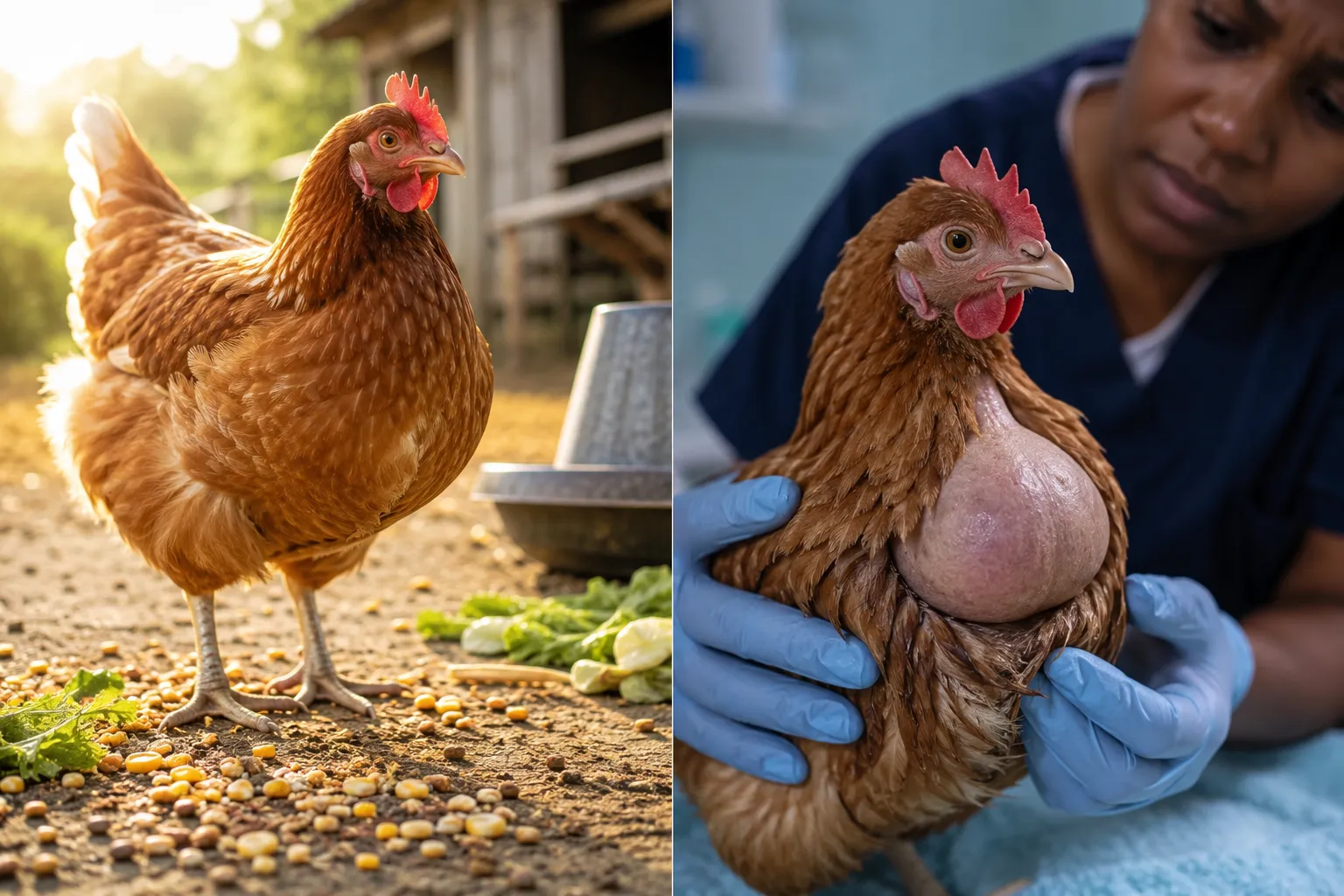
Sour crop and impacted crop are both crop disorders but have different causes and require different treatments. An impacted crop is a physical blockage where the crop is packed solid with food material, grass, or foreign objects and feels hard like a tennis ball. Sour crop involves infection and fermentation, making the crop feel squishy, fluid-filled, and balloon-like.
Key differences:
| Feature | Sour Crop | Impacted Crop |
|---|---|---|
| Feel | Soft, squishy, fluid-filled | Hard, firm, solid mass |
| Smell | Strong sour or yeasty odor from beak | Little to no odor |
| Contents | Fermented liquid and gas | Compacted food or fiber |
| Primary cause | Yeast/bacterial infection | Physical blockage |
| Treatment focus | Antifungal medication, emptying | Massage, oil, physical removal |
Choose sour crop treatment if: the crop feels like a water balloon, smells sour when you open the beak, and the chicken has liquid in the crop that sloshes when moved.
Choose impacted crop treatment if: the crop feels rock-hard, doesn’t change size throughout the day, and the chicken is straining to swallow or regurgitate.
Some chickens develop sour crop as a secondary complication of impacted crop when food sits too long and begins to ferment. In these cases, you’ll need to address both the blockage and the infection.
What Does Sour Crop Smell Like
Sour crop produces a distinctly unpleasant odor that smells like fermented yeast, spoiled milk, or sour bread dough. When you gently open the chicken’s beak or when the bird burps or regurgitates, you’ll notice a strong yeasty, alcoholic, or vinegary smell that’s immediately recognizable as “off.”
The smell comes from the fermentation process happening inside the crop, where yeast and bacteria break down food and produce gases and acids. Some chicken keepers describe it as smelling like:
- Sourdough starter gone bad
- Stale beer or wine
- Rotten fruit
- Vomit or stomach acid
- Moldy bread
Important distinction: A healthy chicken’s breath has virtually no smell or a mild grain-like scent. If you need to get close to smell anything unusual, that’s a red flag. With sour crop, the odor is often noticeable from a foot or two away when the bird opens its beak.
The intensity of the smell correlates with the severity of the infection. A mild case might have a faint sour note, while an advanced case will have an overpowering, gag-inducing odor that lingers on your hands after handling the bird.
How to Massage a Chicken with Sour Crop
Crop massage helps move fluid and gas out of the crop and encourages the crop to empty naturally. Hold the chicken upright (not upside down, which risks aspiration) with the head slightly lower than the body, supporting the bird securely against your body or on your lap.
Step-by-step massage technique:
- Position the chicken so its head is pointing slightly downward (about 30-45 degrees) to prevent fluid from going into the lungs
- Locate the crop at the base of the neck, just above the breastbone, it will feel like a soft, fluid-filled balloon
- Use gentle, upward strokes with your fingers, massaging from the bottom of the crop toward the throat
- Apply light pressure as if you’re encouraging toothpaste out of a tube, never squeeze hard or press aggressively
- Work for 2-3 minutes at a time, allowing the chicken to rest between sessions
- Watch for liquid coming up into the mouth, tilt the head down immediately so the bird can expel it rather than inhale it
- Repeat 3-4 times daily until the crop begins to empty and shrink
Critical safety rule: Never hold a chicken upside down or tip it backward during massage. This position forces crop contents toward the windpipe and can cause aspiration pneumonia, which is often fatal.
Some fluid may come out of the beak during massage. This is normal and helpful, but make sure the chicken’s head is positioned so gravity helps the liquid exit rather than enter the lungs. If large amounts of liquid come up, you may need to manually empty the crop (a procedure best done by a vet or experienced keeper).
Can Apple Cider Vinegar Cure Sour Crop
Apple cider vinegar (ACV) alone cannot cure an active sour crop infection, but it’s a valuable supportive treatment that helps restore healthy pH levels in the crop and digestive system. ACV creates a more acidic environment that discourages yeast overgrowth and supports beneficial bacteria.
How to use ACV for sour crop:
- Add 1 tablespoon of raw, unfiltered apple cider vinegar per gallon of drinking water
- Provide this as the only water source during treatment
- Continue for 5-7 days, then use 2-3 days per week for prevention
- Use ACV with “the mother” (cloudy strands of beneficial bacteria)
What ACV does:
- Lowers pH to make the environment less hospitable to Candida yeast
- Provides beneficial acids that support digestion
- Helps prevent future infections when used regularly
- Supports overall gut health and immune function
What ACV doesn’t do:
- Kill an established yeast or bacterial infection on its own
- Empty an impacted or fluid-filled crop
- Replace antifungal medication in moderate to severe cases
For mild cases caught very early (crop slightly full, faint odor, chicken still eating), ACV combined with withholding food for 24 hours and crop massage may be sufficient. For established infections with a severely distended crop, strong odor, and lethargic bird, you’ll need antifungal medication (like Nystatin or fluconazole) in addition to ACV.
Common mistake: Relying on ACV alone for too long while the infection worsens. If you don’t see improvement within 24-48 hours of starting ACV and supportive care, escalate to antifungal medication or veterinary care.
Home Remedies for Sour Crop in Backyard Chickens
Several home remedies can effectively treat mild to moderate sour crop when combined with proper crop management. These treatments work best when started early and used consistently for 5-7 days.
Effective home treatment protocol:
Withhold food for 12-24 hours
- Allows the crop to empty completely
- Prevents additional fermentation
- Give water with ACV only during this period
- Resume food gradually with small amounts of plain layer feed
Coconut oil (1/2 teaspoon twice daily)
- Contains caprylic acid, a natural antifungal
- Helps lubricate the crop and soothe irritation
- Administer directly into the beak using a syringe (no needle)
Plain yogurt with live cultures (1 teaspoon twice daily)
- Provides beneficial probiotics
- Helps restore healthy gut bacteria
- Use unsweetened, unflavored yogurt only
- Sugar feeds yeast, so avoid sweetened varieties
Epsom salt flush (for severe cases)
- Mix 1 teaspoon Epsom salt in 2 ounces warm water
- Administer 2-3 ml with a syringe to encourage crop emptying
- Use only once, as repeated use can cause dehydration
- Follow with probiotics after the crop empties
Garlic water
- Crush 1-2 cloves of fresh garlic in drinking water
- Natural antimicrobial properties
- Some keepers report good results, though evidence is anecdotal
Probiotic powder
- Sprinkle poultry-specific probiotics on moistened feed
- Helps reestablish healthy gut flora
- Especially important after any antibiotic use
When home remedies aren’t enough: If the chicken shows no improvement after 48 hours, becomes weaker, stops drinking, or develops respiratory symptoms (gurgling, open-mouth breathing), veterinary care with prescription antifungals is necessary.
How Long Does It Take to Treat Sour Crop
Most cases of sour crop improve within 3-7 days with consistent treatment, though complete recovery may take up to 2 weeks. The timeline depends on the severity of the infection, how quickly treatment begins, and the chicken’s overall health.
Typical treatment timeline:
Days 1-2:
- Withhold food for 12-24 hours
- Begin crop massage 3-4 times daily
- Start ACV water and antifungal medication
- Crop should begin to feel less tense and start emptying
Days 3-4:
- Crop should be noticeably smaller each morning
- Sour smell should decrease significantly
- Chicken may start showing interest in food
- Continue all treatments without interruption
Days 5-7:
- Crop should be emptying normally overnight
- Chicken’s energy and appetite should return
- Gradually reintroduce normal diet
- Continue ACV water and probiotics
Days 8-14:
- Monitor for any relapse
- Crop should remain flat each morning
- Chicken should be back to normal behavior
- Continue preventive measures
Factors that extend recovery time:
- Severe or long-standing infections (may take 10-14 days)
- Concurrent health problems or weak immune system
- Impacted crop in addition to sour crop
- Inadequate or inconsistent treatment
- Continued access to problematic foods or moldy feed
Red flags that treatment isn’t working:
- Crop continues to fill with fluid despite treatment
- Chicken becomes weaker or more lethargic
- Respiratory symptoms develop (gurgling, labored breathing)
- Chicken stops drinking water
- No reduction in crop size after 48 hours of treatment
If you see these signs, the infection may be too severe for home treatment, or there may be an underlying blockage preventing the crop from emptying. Veterinary intervention with stronger antifungals or crop surgery may be necessary.

Can a Chicken Die from Sour Crop If Untreated
Yes, untreated sour crop can be fatal, typically within 1-2 weeks of symptom onset. The condition kills through multiple mechanisms: starvation (the chicken can’t eat when the crop is full), aspiration pneumonia (fluid enters the lungs), toxicity from bacterial overgrowth, and severe dehydration.
How sour crop becomes life-threatening:
Aspiration pneumonia (most common cause of death)
- Fluid from the overfull crop backs up into the throat
- Chicken inhales crop contents into the lungs
- Develops into severe respiratory infection
- Often fatal within 3-5 days once pneumonia sets in
Starvation and malnutrition
- Crop stays full, preventing the chicken from eating
- Body begins breaking down muscle and fat for energy
- Immune system weakens, making infection worse
- Death occurs within 10-14 days without nutrition
Systemic infection
- Bacteria or yeast can enter the bloodstream
- Causes sepsis (blood infection)
- Leads to organ failure
Crop rupture (rare but catastrophic)
- Severely distended crop can tear or rupture
- Spills contents into the body cavity
- Almost always fatal without emergency surgery
Survival statistics: Chickens with mild sour crop caught early and treated appropriately have a 90%+ survival rate. Moderate cases treated at home have roughly 70-80% survival. Severe cases that reach the aspiration pneumonia stage have less than 30% survival even with veterinary care.
Time matters: The difference between a treatable case and a fatal one is often just 3-4 days. Early intervention dramatically improves outcomes, which is why checking your flock’s crops regularly (especially in the morning when they should be empty) is critical for backyard chicken keepers.
Is Sour Crop Contagious to Other Chickens
No, sour crop itself is not contagious from chicken to chicken. The yeast and bacteria that cause sour crop (primarily Candida species) are already present in every chicken’s digestive system and environment. Sour crop develops when individual factors disrupt a specific bird’s crop function, not from transmission between birds.
Why you might see multiple cases:
Even though sour crop isn’t contagious, you may notice several chickens developing it around the same time. This happens because they share the same environmental risk factors:
- Contaminated feed source (moldy grain affecting multiple birds)
- Poor coop conditions (damp bedding harboring fungal spores)
- Shared water source with high yeast counts
- Same dietary mistakes (everyone got too much bread or grass clippings)
- Flock-wide stress (predator attack, extreme weather, coop changes)
- Lack of grit affecting the entire flock’s digestion
Isolation considerations:
You don’t need to quarantine a chicken with sour crop to protect other birds from infection. However, separating the affected bird can be helpful for:
- Easier treatment administration and monitoring
- Preventing competition for food during the fasting period
- Reducing stress on the sick bird
- Keeping the bird warm and quiet during recovery
When to worry about your whole flock:
If multiple chickens develop sour crop simultaneously, investigate environmental causes immediately:
- Check all feed for mold or spoilage
- Clean and disinfect waterers
- Improve coop ventilation and reduce moisture
- Review recent dietary changes or treats
- Ensure grit is available and being consumed
Addressing these underlying factors protects the rest of your flock from developing the same problem, even though they can’t “catch” sour crop from the affected bird.
What Foods Should I Avoid Giving Chickens with Sour Crop
During active sour crop treatment, avoid all food for the first 12-24 hours to allow the crop to empty completely. Once you resume feeding, stick to easily digestible foods and avoid anything that could worsen the condition or slow recovery.
Foods to avoid during treatment and recovery:
Bread, pasta, and baked goods
- Form a doughy, sticky mass in the crop
- Difficult to digest and slow to pass
- High in simple carbohydrates that feed yeast
- Can re-trigger fermentation
Long grass clippings or hay
- Create tangles that prevent crop emptying
- Can cause secondary impaction
- Difficult for the compromised digestive system to process
Scratch grains and corn
- Too rich and heavy during recovery
- Can overwhelm the healing digestive system
- Save these treats until the chicken is fully recovered
Dairy products (except plain yogurt in small amounts)
- Chickens lack enzymes to digest lactose properly
- Can cause additional digestive upset
Sugary treats (fruit, sweetened foods)
- Sugar feeds yeast and bacteria
- Can worsen the infection
- Avoid until 1-2 weeks after recovery
Moldy or questionable feed
- Introduces more fungal spores
- Can restart the infection cycle
- Discard any suspect feed immediately
Safe foods during recovery:
- Plain layer pellets (moistened slightly for easier digestion)
- Small amounts of plain yogurt with live cultures
- Scrambled eggs (plain, no butter or milk)
- Cooked oatmeal (plain, well-cooked)
- Finely chopped leafy greens (small amounts)
Reintroduce normal diet gradually over 3-4 days once the crop is emptying normally each morning and the chicken shows normal appetite and energy.
When to Take a Chicken to the Vet for Sour Crop
Seek veterinary care if the chicken shows severe symptoms, doesn’t improve within 48 hours of home treatment, or if you’re uncomfortable performing crop massage and administering medication. An avian veterinarian can provide prescription antifungals, manually empty the crop if needed, and rule out other conditions.
Situations requiring veterinary care:
Immediate emergency (same day):
- Chicken is gasping, gurgling, or showing respiratory distress
- Crop is so distended the skin appears stretched and shiny
- Chicken is completely unresponsive or can’t stand
- Fluid is continuously leaking from the beak
- Crop feels hard in some areas and soft in others (possible rupture)
Urgent care (within 24 hours):
- No improvement after 48 hours of home treatment
- Crop continues to refill with fluid despite fasting and massage
- Chicken stops drinking water entirely
- Significant weight loss or extreme lethargy
- You suspect the crop may be impacted as well as infected
Scheduled appointment (within a few days):
- First-time dealing with sour crop and want professional guidance
- Recurring sour crop in the same bird
- Uncertain about diagnosis or treatment
- Want prescription antifungals for faster recovery
- Chicken has other health issues complicating treatment
What the vet can provide:
- Prescription antifungals (Nystatin, fluconazole) more effective than home remedies
- Crop flush to remove fermented contents safely
- Tube feeding if the chicken is too weak to eat
- Injectable medications for severe infections
- Crop surgery in extreme cases where the crop won’t empty
- Diagnostic tests to identify specific pathogens or underlying conditions
Cost considerations: Basic avian vet visit typically runs $50-150 for examination, plus $20-80 for medications. Crop flush or more intensive treatment may cost $150-300. Emergency after-hours care can exceed $300-500. Many chicken keepers find that learning to treat mild cases at home and reserving vet visits for severe or complicated cases strikes the right balance between animal welfare and cost management.
How to Prevent Sour Crop from Happening Again
Prevention focuses on maintaining proper crop function and minimizing conditions that allow yeast and bacteria to overgrow. Most cases of sour crop are preventable with good flock management and dietary practices.
Essential prevention strategies:
Provide constant access to grit
- Insoluble grit (granite or flint) helps grind food in the gizzard
- Prevents food from backing up into the crop
- Offer free-choice in a separate container
- Especially important if chickens don’t free-range on gravel
Maintain clean, fresh water
- Change water daily, more often in hot weather
- Scrub waterers weekly to prevent biofilm buildup
- Add ACV (1 tablespoon per gallon) 2-3 days per week as prevention
Feed management
- Store feed in airtight containers in cool, dry locations
- Discard any feed that smells musty or shows mold
- Don’t buy more feed than you’ll use in 4-6 weeks
- Keep feeders covered and protected from rain
Limit treats and table scraps
- Treats should be no more than 10% of total diet
- Avoid bread, pasta, and starchy foods
- Cut long grass or greens into short pieces (under 2 inches)
- Never give lawn clippings from a mower (too long and tangled)
Coop environment
- Ensure good ventilation to reduce moisture and mold
- Keep bedding dry and clean
- Prevent feed from getting wet or contaminated
- Control rodents that can contaminate feed
Regular crop checks
- Feel each chicken’s crop in the morning before feeding
- It should be completely flat and empty
- A full morning crop is an early warning sign
- Address any abnormality immediately before it worsens
Stress reduction
- Minimize flock disruptions and changes
- Provide adequate space (4 square feet per bird in coop minimum)
- Ensure enough feeders and waterers to prevent competition
- Protect from predators and extreme weather
After recovery:
- Continue ACV water for 2 weeks
- Monitor the recovered bird’s crop daily for a month
- Some chickens are prone to recurrence and need ongoing management
- Consider whether the bird has an underlying condition (slow crop, anatomical issue)
Chickens that have had sour crop once are at slightly higher risk for recurrence, so maintaining these preventive measures is especially important for previously affected birds.
Can Baby Chicks Get Sour Crop
Yes, baby chicks can develop sour crop, though it’s less common than in adult chickens. Chicks are most vulnerable between 2-8 weeks of age when they’re transitioning from starter feed to more varied diets and their digestive systems are still developing.
Why chicks develop sour crop:
- Inappropriate foods too early (treats, grass, kitchen scraps before their system is ready)
- Bedding ingestion (eating wood shavings, especially pine shavings that can compact)
- Contaminated water or feeders in the brooder
- Lack of grit when given anything other than chick starter
- Stress from temperature fluctuations, overcrowding, or shipping
- Weak or ill chicks with compromised immune systems
Special considerations for treating chicks:
Chicks are more fragile than adult birds, so treatment requires extra care:
- Smaller doses: Use 1/4 to 1/2 the adult dose of any medication based on body weight
- Gentler massage: Their crops are tiny and delicate, use very light pressure
- Shorter fasting: Withhold food for only 4-6 hours, not 24 hours (chicks can’t go as long without food)
- Temperature critical: Keep sick chicks at 90-95°F as they can’t regulate body temperature well
- Hydration priority: Dehydration happens faster in chicks, ensure they’re drinking
Prevention in chicks:
- Feed only chick starter for the first 4-6 weeks
- Provide chick-sized grit if offering any treats
- Use shallow waterers that stay clean
- Avoid bedding they might eat (use paper towels for first week)
- Don’t give long grass, bread, or adult chicken treats
- Maintain proper brooder temperature and cleanliness
When to seek help: Because chicks decline rapidly, consult an avian vet or experienced poultry keeper within 12-24 hours if you suspect sour crop in a chick. What might be a manageable home treatment in an adult can become life-threatening in a chick within a day.
Sour Crop Treatment Cost at Avian Vet
Veterinary treatment for sour crop typically costs between $100-400 depending on the severity of the condition, your location, and what procedures are needed. Basic cases requiring only examination and medication are on the lower end, while complicated cases needing crop flushing, hospitalization, or surgery cost significantly more.
Typical cost breakdown:
Initial examination: $50-150
- Physical exam and health assessment
- Crop palpation and evaluation
- Discussion of treatment options
- Basic advice on home care
Diagnostic tests (if needed): $50-200
- Crop swab and culture to identify specific pathogens
- Fecal test to check for parasites or other issues
- Blood work if systemic infection is suspected
Medications: $20-80
- Nystatin oral suspension (most common antifungal): $25-40
- Fluconazole tablets: $30-60
- Probiotics and supportive supplements: $15-30
Crop flush procedure: $100-250
- Manual emptying of crop contents
- Flushing with saline solution
- Usually performed in-office
- May require light sedation
Hospitalization (if needed): $150-300 per day
- For severely ill birds requiring intensive care
- Includes tube feeding, injectable medications, monitoring
- Typically 1-3 days for sour crop cases
Crop surgery (rare, severe cases): $500-1,500+
- Required if crop is ruptured or won’t respond to other treatment
- Includes anesthesia, surgical repair, post-op care
- Success rate varies; often a last resort
Follow-up visit: $40-100
- Recheck to ensure crop is functioning normally
- Usually scheduled 7-10 days after initial treatment
Geographic variation:
- Rural areas and farm vets: typically lower costs ($100-200 total for standard case)
- Urban specialty avian vets: higher costs ($200-400 total for standard case)
- Emergency after-hours care: add 50-100% to standard fees
Cost-saving strategies:
- Learn to treat mild cases at home (most backyard chicken keepers do this)
- Establish a relationship with a farm vet who sees poultry (often less expensive than exotic animal specialists)
- Ask about medication compounding to get the exact dose needed
- Join local chicken-keeping groups to learn from experienced members
When the cost is worth it: For a beloved pet chicken, breeding stock, or show bird, veterinary care is usually worthwhile. For a production bird in a large flock, many keepers opt for home treatment unless the case is severe. The decision depends on your budget, the chicken’s role in your flock, and your comfort level with home treatment.
FAQ
How do I know if my chicken has sour crop or just a full crop?
A full crop from eating should be firm but soft, like a partially filled water balloon, and should empty completely overnight. Sour crop feels squishy and fluid-filled, produces a sour smell from the beak, and remains distended in the morning before the chicken eats. Check the crop first thing in the morning, if it’s still full, that’s abnormal.
Can I use human antifungal medication for sour crop?
Yes, many chicken keepers successfully use human antifungals like Monistat (miconazole) or fluconazole tablets. Typical dose is 1/4 to 1/2 of a human dose depending on the chicken’s size, given twice daily for 5-7 days. However, Nystatin suspension designed for poultry is generally safer and more effective because it’s formulated for the avian digestive system.
Should I isolate a chicken with sour crop from the flock?
Isolation isn’t necessary to prevent spread (sour crop isn’t contagious), but separating the bird can make treatment easier and reduce stress. If the chicken is eating and drinking normally and just needs medication and monitoring, it can often stay with the flock. If it’s weak, being bullied, or needs to fast, isolation is better.
Can sour crop resolve on its own without treatment?
Very mild cases occasionally resolve if the chicken stops eating for a day and the crop empties naturally, but this is rare and risky. Most cases worsen without intervention as the infection proliferates and the crop becomes more distended. Waiting to see if it resolves on its own usually results in a more severe infection that’s harder to treat.
What’s the white stuff that comes out when I massage the crop?
The white or yellowish liquid is fermented crop contents mixed with yeast, bacteria, mucus, and partially digested food. It often has a cottage cheese-like consistency and a strong sour smell. This material needs to come out for the crop to heal, but be very careful to prevent the chicken from inhaling it.
How often should I give apple cider vinegar for prevention?
For prevention, add 1 tablespoon of raw apple cider vinegar per gallon of water 2-3 days per week. During treatment, provide ACV water continuously for 5-7 days. Don’t use ACV water constantly year-round as the acidity can potentially affect calcium absorption, though this is debated among chicken keepers.
Can I prevent sour crop by giving probiotics regularly?
Regular probiotics support healthy gut bacteria and may reduce sour crop risk, especially after stress, illness, or antibiotic use. Sprinkle poultry probiotics on feed 2-3 times per week or provide plain yogurt as an occasional treat. Probiotics are most beneficial as part of a comprehensive prevention strategy, not as a standalone solution.
Is it normal for the crop to make gurgling sounds?
Occasional soft gurgling as food and water move through the crop is normal. Loud, persistent gurgling, especially accompanied by a distended crop or respiratory sounds, indicates a problem, either sour crop, impacted crop, or respiratory infection. Healthy crops are generally quiet.
Can cold weather cause sour crop?
Cold weather doesn’t directly cause sour crop, but it creates conditions that increase risk: chickens may drink less water (leading to dehydration and slow digestion), eat more to stay warm (potentially overloading the crop), and spend more time in damp coops with poor ventilation (increasing mold exposure). Maintain good coop conditions and ensure water doesn’t freeze.
How long after treatment should I wait before eating eggs from a chicken that had sour crop?
If you used only natural remedies (ACV, coconut oil, yogurt), eggs are safe to eat immediately. If you used antifungal medication, check the product label for withdrawal times, typically 7-14 days for Nystatin and similar drugs. When in doubt, wait 14 days after the last dose before consuming eggs.
Can roosters get sour crop?
Yes, roosters develop sour crop at the same rate as hens. The condition affects both sexes equally and is treated the same way. Any chicken with a crop can develop sour crop regardless of sex, age (beyond chick stage), or breed.
What should I do if my chicken keeps getting sour crop repeatedly?
Recurring sour crop suggests an underlying issue: chronic slow crop (a motility disorder), anatomical abnormality, persistent environmental contamination, or immune system weakness. Work with an avian vet to identify the root cause. Some chickens need ongoing management with regular ACV water, probiotics, and dietary restrictions to prevent recurrence.
Conclusion
Sour crop is a serious but treatable condition that every chicken keeper should know how to recognize and manage. The key to successful treatment lies in early detection, checking your flock’s crops each morning and acting immediately when you find one that hasn’t emptied overnight. Most cases respond well to a combination of crop massage, withholding food temporarily, antifungal medication, and supportive care with apple cider vinegar and probiotics.
Take these steps today to protect your flock:
- Check crops every morning before feeding to catch problems early when they’re easiest to treat
- Ensure grit is always available to support proper digestion and prevent crop backup
- Review your feed storage and discard anything that’s damp, old, or questionable
- Add ACV to water 2-3 days per week as a preventive measure
- Limit treats to no more than 10% of diet and avoid bread, pasta, and long grass clippings
- Establish a relationship with an avian vet before you need emergency care
Remember that sour crop is not contagious but often signals environmental or management issues that could affect your entire flock. When one bird develops sour crop, use it as an opportunity to evaluate your coop conditions, feed quality, and flock management practices. With proper prevention and prompt treatment when needed, you can keep your chickens healthy and minimize the risk of this uncomfortable and potentially dangerous condition.
If you’re currently treating a chicken for sour crop, stay consistent with the treatment protocol for the full 5-7 days even if the bird seems better after a few days. Complete recovery takes time, and stopping treatment too early often leads to relapse. Your diligence and care make all the difference in your chicken’s recovery and long-term health.


