
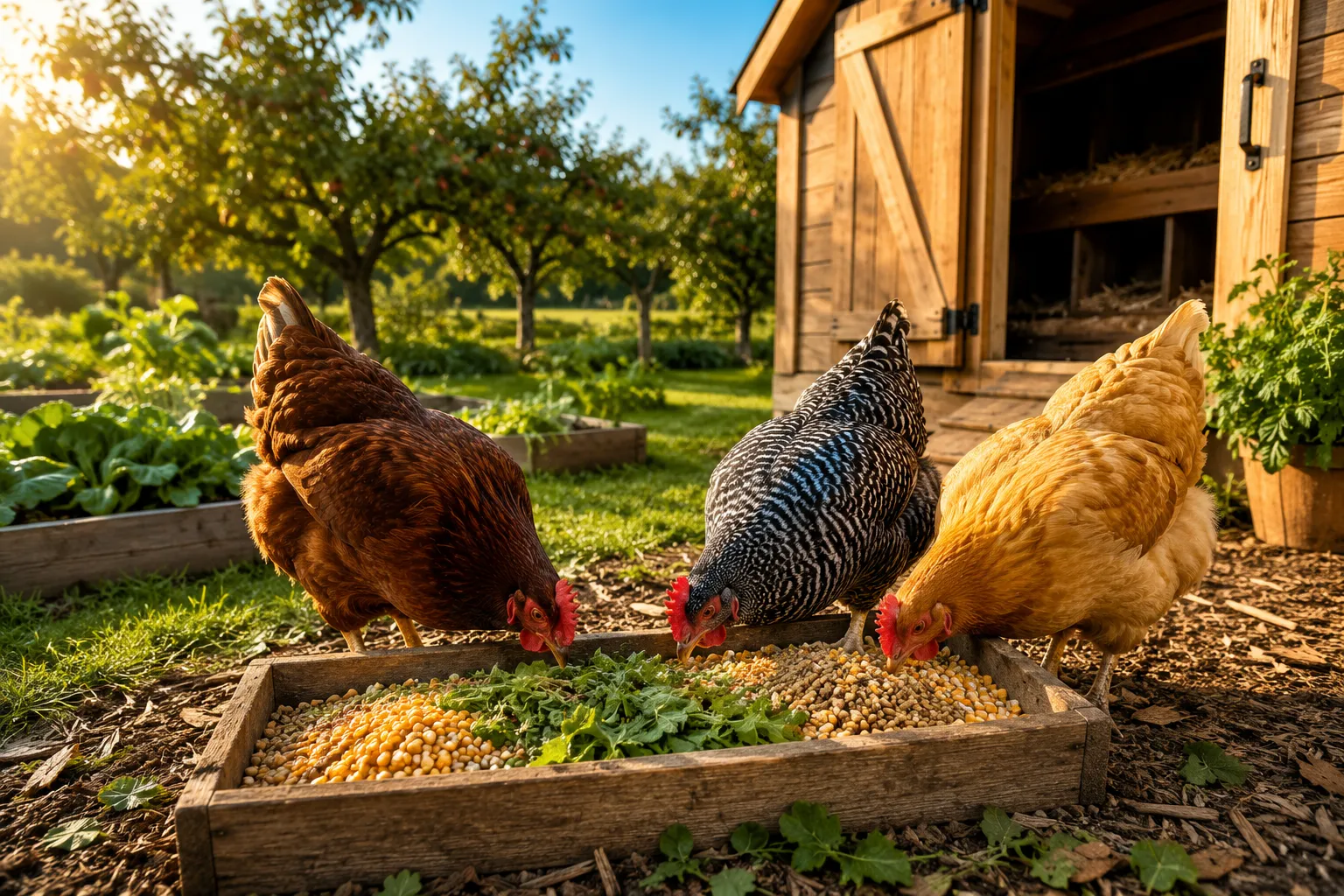
Quick Answer: Chickens need a balanced diet of commercial feed (layer pellets, crumbles, or mash containing 16-20% protein), supplemented with kitchen scraps, fresh greens, grains, and calcium sources like oyster shell. Adult laying hens typically consume 1/4 to 1/3 pound of feed daily, while avoiding toxic foods like chocolate, avocado, raw beans, and moldy items.
Key Takeaways
- Commercial feed forms the foundation: Layer pellets, crumbles, or mash provide complete nutrition with the right protein percentage for your flock’s life stage
- Protein needs vary by purpose: Laying hens need 16-18% protein, meat birds require 20-24%, and baby chicks need 18-20% for proper growth
- Daily feed quantity: Each adult chicken eats approximately 1/4 to 1/3 pound (110-150 grams) of feed per day, varying by breed, season, and activity level
- Kitchen scraps are beneficial: Chickens can safely eat most vegetable scraps, fruits, cooked grains, and leftover meats in moderation (up to 10% of diet)
- Toxic foods must be avoided: Never feed chocolate, avocado, raw or dried beans, green potatoes, moldy food, or anything high in salt or sugar
- Supplements are essential: Chickens need insoluble grit for digestion and oyster shell or calcium supplements for strong eggshells
- Free-ranging alone isn’t enough: Even with access to pasture, backyard chickens need supplemental feed to meet nutritional requirements
- Feed changes affect laying: Sudden diet switches, poor-quality feed, or nutritional deficiencies can cause hens to stop laying eggs temporarily
What Do Chickens Eat Naturally in the Wild
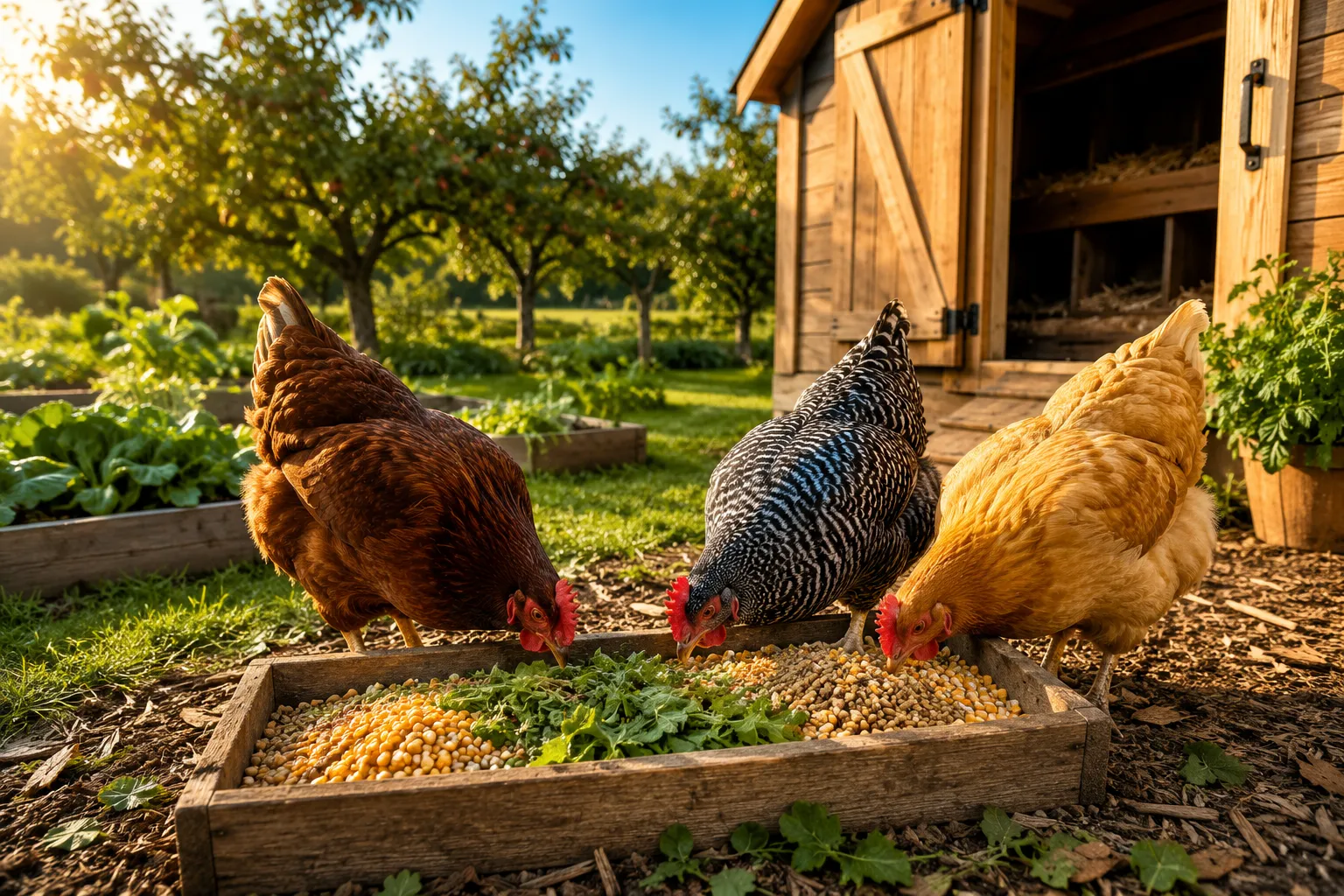
Wild chickens (jungle fowl) are omnivorous foragers that eat seeds, grasses, insects, worms, small reptiles, and fallen fruits throughout the day. Their natural diet is incredibly diverse, changing with seasons and available food sources in their forest habitat.
In their native Southeast Asian jungle environment, wild chickens spend most daylight hours scratching through leaf litter and soil. They consume:
- Insects and invertebrates: Beetles, grasshoppers, termites, earthworms, snails, and spiders provide essential protein
- Plant matter: Seeds from grasses and weeds, tender shoots, leafy greens, berries, and fallen fruit
- Small animals: Occasionally lizards, small frogs, or even mice when the opportunity arises
- Grit and minerals: Small stones for digestion and mineral-rich soil
This natural foraging behavior explains why backyard chickens are happiest when they can scratch, peck, and explore. However, domesticated chickens have been bred for centuries to produce far more eggs or meat than their wild ancestors, creating nutritional demands that foraging alone cannot meet.
Common mistake: Assuming chickens can meet all their needs by free-ranging. Modern laying hens produce 250-300 eggs per year compared to the wild hen’s 10-15 eggs, requiring significantly more calcium and protein than foraging provides.
Best Chicken Feed for Laying Hens vs Meat Birds
Laying hens need 16-18% protein feed with added calcium for strong eggshells, while meat birds (broilers) require 20-24% protein for rapid muscle growth and reach market weight in 6-8 weeks. The nutritional requirements differ dramatically based on whether you’re raising chickens for eggs or meat.
Layer Feed Specifications
For laying hens (18 weeks and older):
- Protein: 16-18%
- Calcium: 3.5-4.5% (crucial for shell formation)
- Energy: Moderate levels to maintain body weight without excess fat
- Form: Pellets, crumbles, or mash
Choose layer feed if: Your hens are actively laying eggs or have reached laying age (around 18-20 weeks).
Broiler Feed Specifications
For meat chickens:
- Starter feed (0-3 weeks): 22-24% protein for rapid early growth
- Grower feed (3-6 weeks): 20-22% protein to continue muscle development
- Finisher feed (6 weeks to processing): 18-20% protein with higher energy for weight gain
Choose broiler feed if: You’re raising Cornish Cross or other meat breeds intended for the table within 8-12 weeks.
Dual-Purpose Breeds
For heritage breeds raised for both eggs and meat, use an all-flock or flock raiser feed (18-20% protein) and offer free-choice oyster shell on the side so laying hens can self-regulate calcium intake.
Edge case: Never feed layer feed to young chicks or roosters. The high calcium content can damage developing kidneys in birds not actively producing eggs.
Layer Pellets vs Crumbles vs Mash: Which Is Better
All three forms (pellets, crumbles, and mash) contain identical nutrition, but pellets reduce waste and are easiest for adult chickens to eat, while crumbles work better for young birds and mash is the most economical but messiest option. Your choice depends on your flock’s age, your feeding setup, and personal preference.
Pellets
- Best for: Adult chickens (16 weeks and older)
- Advantages: Minimal waste, chickens can’t selectively pick out ingredients, stays fresh longer, less dust
- Disadvantages: Too large for young chicks, some picky eaters may refuse them initially
Crumbles
- Best for: Young chickens (4-16 weeks) and smaller bantam breeds
- Advantages: Easier for smaller beaks, good transition from chick starter, less waste than mash
- Disadvantages: Slightly more expensive than mash, can still create some dust
Mash
- Best for: Budget-conscious keepers, mixing with supplements or treats
- Advantages: Most economical, easiest to mix with other ingredients, suitable for all ages
- Disadvantages: Creates dust, chickens waste 20-30% by billing (scooping and dropping), can get wet and moldy in damp conditions
Decision rule: Start chicks on crumbles, transition to pellets at 16-18 weeks for laying hens. If you notice significant waste with pellets, switch to crumbles. Avoid mash unless you’re on a tight budget or need to mix medications or supplements into feed.
Can Chickens Eat Kitchen Scraps and Table Leftovers
Chickens can safely eat most kitchen scraps including vegetable peels, fruit scraps, cooked rice, pasta, bread, and leftover meats, but these treats should comprise no more than 10% of their total diet to maintain proper nutrition. Kitchen scraps are an excellent way to reduce food waste while providing enrichment for your flock.
Safe Kitchen Scraps
Vegetables and fruits:
- Leafy greens (lettuce, kale, spinach, cabbage)
- Vegetable peels and ends (carrot tops, broccoli stems, squash rinds)
- Fruits (berries, melons, apples, pears, bananas)
- Cooked vegetables of any kind
Grains and proteins:
- Cooked rice, pasta, oatmeal, or quinoa
- Bread and baked goods (in moderation)
- Cooked eggs (yes, chickens can eat eggs!)
- Cooked meat scraps, fish, and seafood
- Plain yogurt and cottage cheese
Foods to Feed Sparingly
- Citrus fruits: Some evidence suggests large amounts may reduce egg production
- Onions and garlic: Strong flavors may affect egg taste if fed in large quantities
- High-salt foods: Chips, processed foods, and salty leftovers should be avoided
- Sugary treats: Candy, cookies, and desserts offer no nutritional value
Common mistake: Filling feeders with only kitchen scraps. While chickens love treats, they need the balanced nutrition of commercial feed to lay consistently and stay healthy. Think of scraps as dessert, not dinner.
What Foods Are Toxic to Chickens and Should Never Be Fed

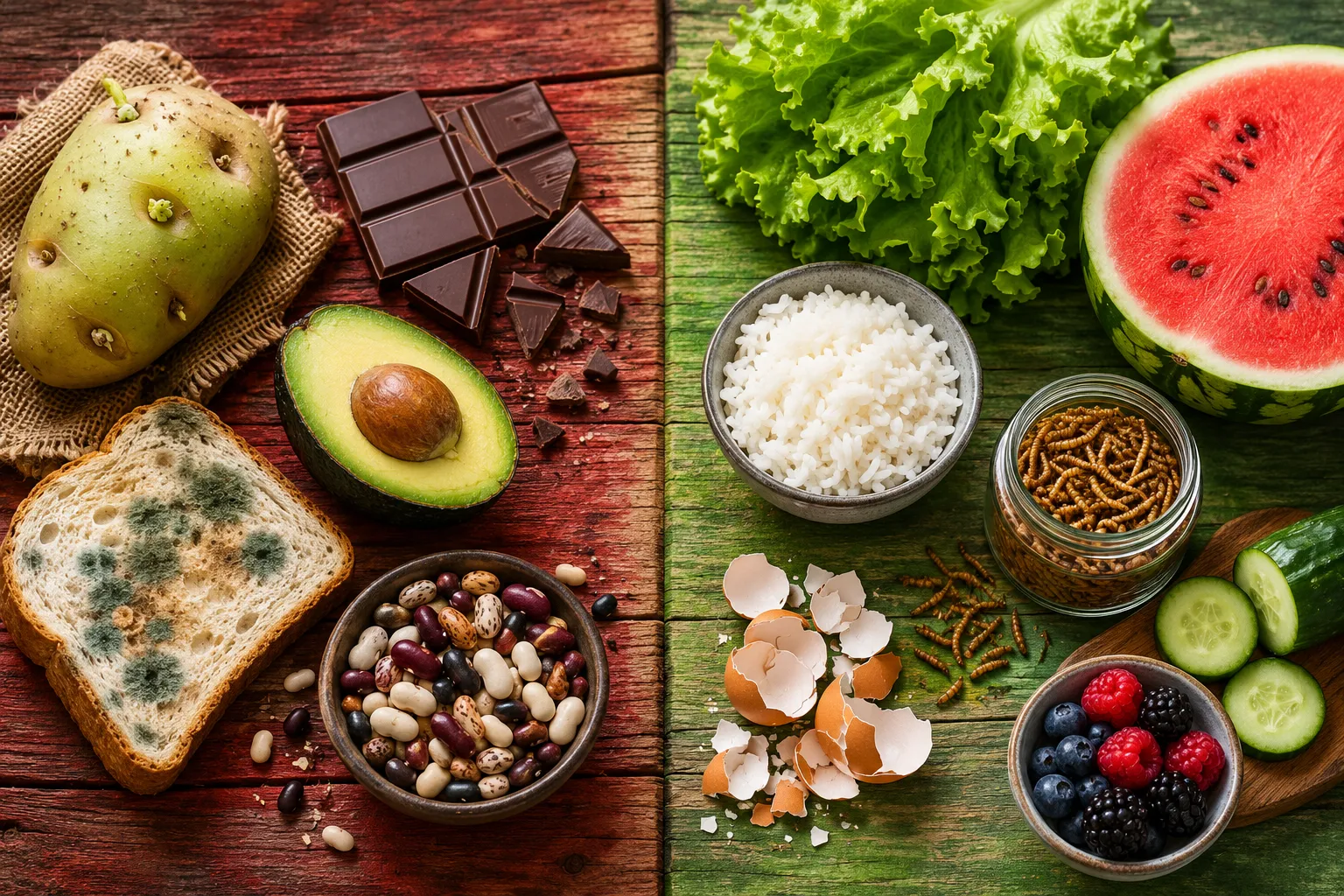
Never feed chickens chocolate, avocado (especially the pit and skin), raw or dried beans, green potatoes, moldy food, or anything containing caffeine, as these contain compounds that are toxic to poultry and can cause serious illness or death. Knowing what to avoid is just as important as knowing what to feed.
Highly Toxic Foods
Chocolate and caffeine: Contains theobromine and caffeine, which chickens cannot metabolize. Even small amounts can cause heart problems, seizures, and death.
Avocado: Contains persin, particularly concentrated in the pit, skin, and leaves. Causes heart damage, respiratory distress, and sudden death in chickens.
Raw or dried beans: Contain phytohaemagglutinin (kidney bean lectin), which is toxic to chickens. Cooked beans are safe because cooking destroys the toxin.
Green potatoes and tomatoes: Green parts of nightshade plants contain solanine. Ripe tomatoes are safe, but avoid green tomatoes, potato skins with green patches, and all potato and tomato leaves.
Dangerous Foods
- Moldy or spoiled food: Contains mycotoxins that damage liver and kidneys
- Salty foods: Chickens have low salt tolerance; excess causes dehydration and kidney failure
- Raw meat: Risk of bacterial contamination and encouraging aggressive behavior
- Dried or undercooked rice: Myth that it expands in their stomach (false), but uncooked rice is hard to digest
- Candy and junk food: No nutritional value and high sugar content disrupts gut health
Edge case: Small amounts of onion or garlic won’t harm chickens, but large quantities can cause hemolytic anemia. A few onion scraps mixed with other foods are fine; a pile of onion peels is not.
How Much Feed Does a Chicken Need Per Day
An adult chicken eats approximately 1/4 to 1/3 pound (110-150 grams) of feed daily, though consumption varies based on breed size, weather, activity level, and whether they’re laying eggs. Larger breeds like Jersey Giants eat more, while bantams eat significantly less.
Factors Affecting Feed Consumption
Breed and size:
- Bantam breeds: 1/8 to 1/4 pound (60-110 grams) daily
- Standard breeds: 1/4 to 1/3 pound (110-150 grams) daily
- Large breeds: 1/3 to 1/2 pound (150-225 grams) daily
Seasonal variations:
- Winter: Chickens eat 10-20% more to maintain body heat
- Summer: Consumption drops as chickens eat less in hot weather
- Molting season: Increased protein needs for feather regrowth
Production status:
- Laying hens need more feed than non-layers
- Broody hens eat very little while sitting on eggs
- Growing chicks and pullets eat more relative to body weight
Practical Feeding Guidelines
For a flock of 6 standard laying hens: Expect to use approximately 9-12 pounds of feed per week, or roughly one 50-pound bag per month.
Decision rule: Fill feeders in the morning and check before dusk. If feeders are empty hours before bedtime, increase the amount. If significant feed remains at bedtime, reduce the amount to prevent waste and pests.
Do Chickens Need Grit and Oyster Shell Supplements
Chickens need insoluble grit (small stones) to grind food in their gizzard since they lack teeth, and laying hens require supplemental calcium from oyster shell or crushed eggshells to produce strong eggshells without depleting their own bone calcium. Both supplements should be offered free-choice in separate containers.
Grit: Essential for Digestion
What it does: Chickens swallow small stones that lodge in their gizzard (muscular stomach), where they grind food into digestible particles.
Types of grit:
- Chick grit: Fine granite particles for birds under 8 weeks
- Grower/layer grit: Larger granite pieces for adult chickens
When it’s needed:
- Essential for chickens eating whole grains, kitchen scraps, or anything fibrous
- Less critical for chickens eating only commercial pellets or crumbles (which are pre-ground)
- Absolutely necessary for free-ranging chickens eating grass, seeds, and insects
Oyster Shell: Calcium for Eggshells
What it does: Provides supplemental calcium that laying hens use to form eggshells. Each egg requires about 2 grams of calcium.
How to offer it: Place crushed oyster shell in a separate container (not mixed with feed) so hens can eat it as needed. Hens self-regulate calcium intake remarkably well.
When it’s needed:
- Essential for all laying hens from point of lay onward
- Not needed for chicks, pullets under 18 weeks, or roosters
- Critical if you notice thin shells, soft shells, or shell-less eggs
Alternative: Crushed, baked eggshells work as well as oyster shell. Bake shells at 250°F for 10 minutes, then crush into small pieces.
Common mistake: Mixing oyster shell into feed. This forces all chickens (including those who don’t need extra calcium) to consume it, potentially causing kidney problems in roosters and young birds.
What to Feed Baby Chicks vs Adult Chickens
Baby chicks need starter feed with 18-20% protein for the first 8 weeks, then transition to grower feed (16-18% protein) until 18 weeks, while adult laying hens require layer feed with 16-18% protein and added calcium. The protein and calcium requirements change dramatically as chickens mature.
Chick Starter (0-8 weeks)
- Protein: 18-20%
- Form: Fine crumbles (never pellets)
- Calcium: Low (around 1%)
- Purpose: Supports rapid early growth and feather development
Medicated vs. non-medicated: Medicated starter contains amprolium to prevent coccidiosis, a common intestinal disease in young chicks. Use medicated feed unless chicks have been vaccinated for coccidiosis.
Grower Feed (8-18 weeks)
- Protein: 16-18%
- Form: Crumbles or small pellets
- Calcium: Low to moderate (1-2%)
- Purpose: Supports continued growth without forcing early egg production
Layer Feed (18+ weeks)
- Protein: 16-18%
- Form: Pellets, crumbles, or mash
- Calcium: High (3.5-4.5%)
- Purpose: Maintains body weight and supports egg production
Transition Timeline
| Age | Feed Type | Protein | Calcium | Notes |
|---|---|---|---|---|
| 0-8 weeks | Starter | 18-20% | 1% | Fine crumbles only |
| 8-18 weeks | Grower | 16-18% | 1-2% | Can introduce treats |
| 18+ weeks | Layer | 16-18% | 3.5-4.5% | When first egg appears |
Critical rule: Never feed layer feed to chicks or young pullets. The high calcium content can cause permanent kidney damage in birds not actively laying eggs.
Treats for chicks: After 1 week old, chicks can have tiny amounts of finely chopped greens, scrambled egg, or mealworms. Always provide chick grit if offering anything other than starter feed.
Can Backyard Chickens Survive on Free-Ranging Alone
Backyard chickens cannot meet their complete nutritional needs through free-ranging alone, especially laying hens that produce 250-300 eggs annually and require consistent protein and calcium levels that foraging cannot reliably provide. Free-ranging is an excellent supplement but not a replacement for commercial feed.
What Free-Ranging Provides
Benefits:
- Fresh insects (protein and entertainment)
- Greens and plant matter (vitamins and minerals)
- Seeds and grains (energy)
- Exercise and mental stimulation
- Reduced feed costs (typically 10-30% savings)
Limitations:
- Seasonal availability (little forage in winter)
- Inconsistent nutrition day-to-day
- Insufficient calcium for laying hens
- Variable protein levels
- Competition among flock members
The Math on Free-Ranging
A laying hen producing 5-6 eggs per week needs approximately:
- 16-18 grams of protein daily
- 4 grams of calcium daily
- 2,800-3,000 calories weekly
Even on excellent pasture with abundant insects, free-ranging typically provides only 20-40% of these requirements. The rest must come from supplemental feed.
Choose free-ranging plus supplemental feed if: You want healthier, happier chickens with richer egg yolks and lower feed bills while ensuring complete nutrition.
Choose feed-only if: You have limited space, predator concerns, or want maximum control over nutrition and egg production.
Real-world example: Heritage breed chickens on a farm with excellent pasture, mature compost piles, and diverse forage still need 1/8 to 1/4 pound of supplemental feed daily to maintain consistent laying and body condition.
Why Did My Chickens Stop Laying Eggs After Changing Feed
Chickens may stop laying temporarily after a feed change due to stress from dietary disruption, nutritional imbalances in the new feed, or insufficient protein and calcium levels that don’t support egg production. Sudden feed switches shock their digestive system and metabolism.
Common Feed-Related Causes
Insufficient protein: Laying requires 16-18% protein. If new feed contains less, egg production drops within days.
Calcium deficiency: Without adequate calcium (3.5-4.5%), hens may stop laying to prevent depleting bone calcium.
Poor feed quality: Expired, improperly stored, or contaminated feed lacks nutritional value.
Abrupt transition: Switching feed brands overnight can cause digestive upset and stress.
How to Transition Feed Properly
- Week 1: Mix 75% old feed with 25% new feed
- Week 2: Mix 50% old feed with 50% new feed
- Week 3: Mix 25% old feed with 75% new feed
- Week 4: Switch completely to new feed
This gradual transition allows digestive systems and gut bacteria to adjust without shock.
Other Factors to Check
- Age: Hens over 3 years lay less frequently
- Molting: Annual feather replacement stops laying for 8-16 weeks
- Daylight: Hens need 14-16 hours of light daily to lay consistently
- Stress: Predators, new flock members, or coop changes disrupt laying
- Health: Parasites, illness, or obesity affect production
Troubleshooting tip: If hens stopped laying after a feed change, immediately offer free-choice oyster shell and check the protein percentage on the feed bag. If protein is below 16%, switch to proper layer feed using the gradual transition method.
Common Feeding Mistakes That Harm Chicken Health
The most harmful feeding mistakes include offering only treats or scraps without balanced feed, failing to provide clean water, storing feed improperly so it becomes moldy, and feeding layer feed to young chicks or roosters. These errors lead to malnutrition, disease, and reduced lifespan.
Top Feeding Mistakes
1. Treating chickens like garbage disposals
- The mistake: Feeding unlimited kitchen scraps as the primary diet
- The harm: Nutritional deficiencies, poor egg production, obesity
- The fix: Limit treats to 10% of diet; make commercial feed the foundation
2. Inconsistent or empty feeders
- The mistake: Letting feeders run empty for hours or days
- The harm: Stress, fighting, egg eating, reduced production
- The fix: Check feeders twice daily; ensure constant access to feed
3. Moldy or contaminated feed
- The mistake: Storing feed in damp conditions or using old, expired feed
- The harm: Mycotoxins cause liver damage, respiratory issues, death
- The fix: Store feed in airtight containers in cool, dry locations; use within 3 months
4. No access to clean water
- The mistake: Dirty waterers or allowing water to freeze/evaporate
- The harm: Dehydration stops egg production within 24 hours; can be fatal
- The fix: Provide fresh water daily; use heated waterers in winter
5. Wrong feed for life stage
- The mistake: Feeding layer feed to chicks or grower feed to laying hens
- The harm: Kidney damage in young birds; poor egg production in layers
- The fix: Match feed to age and purpose; transition gradually
6. Feeding from the ground
- The mistake: Scattering feed on dirt or coop floor
- The harm: Contamination with feces, parasites, and pathogens
- The fix: Use elevated feeders that chickens can’t scratch dirt into
7. No grit or calcium supplements
- The mistake: Assuming commercial feed is enough
- The harm: Poor digestion, thin eggshells, bone depletion
- The fix: Offer free-choice grit and oyster shell in separate containers
Cheap Alternatives to Commercial Chicken Feed
The most cost-effective alternatives include buying feed in bulk (50-pound bags instead of small bags), sprouting grains to increase nutritional value, fermenting feed to improve digestibility, and maximizing free-range time to reduce feed consumption by 20-30%. However, completely replacing commercial feed risks nutritional deficiencies.
Budget-Friendly Strategies
Bulk purchasing:
- 50-pound bags cost 30-40% less per pound than 5-10 pound bags
- Split orders with other chicken keepers
- Store properly in metal trash cans to prevent pests
Fermented feed:
- Soak feed in water for 3-5 days before feeding
- Increases nutrient absorption by 10-15%
- Reduces feed consumption by up to 25%
- Improves gut health and egg quality
Sprouted grains:
- Sprout whole grains (wheat, barley, oats) for 3-4 days
- Increases vitamin content and digestibility
- Costs 40-60% less than commercial feed per pound
- Requires daily attention and space
Maximize foraging:
- Free-range in diverse areas (lawn, garden, compost)
- Rotate grazing areas to prevent overgrazing
- Plant chicken-friendly gardens (sunflowers, comfrey, clover)
- Can reduce feed costs by 20-30%
Grow your own:
- Plant fodder crops (corn, sunflowers, pumpkins)
- Raise mealworms or black soldier fly larvae
- Compost for insect production
- Requires land, time, and planning
What NOT to Do
Don’t eliminate commercial feed entirely: Homemade diets rarely provide complete nutrition, especially for laying hens. Deficiencies develop slowly but cause serious health problems.
Don’t buy expired or damaged feed: “Bargain” feed that’s moldy, infested, or past expiration is dangerous and wasteful.
Don’t rely on bread and grain alone: These are low in protein and calcium, leading to malnutrition and poor laying.
Decision rule: Use commercial layer feed as the foundation (at least 70-80% of diet) and supplement with cost-saving strategies like fermentation, sprouting, and free-ranging.
How to Make Homemade Chicken Feed Recipe
A basic homemade chicken feed recipe combines 40% whole corn, 20% wheat, 20% oats, 10% field peas or soybeans (for protein), and 10% mixed seeds, but this mixture lacks the vitamins, minerals, and calcium that commercial feeds provide through fortification. Homemade feed requires careful supplementation to prevent deficiencies.
Basic Homemade Layer Feed Recipe
Grain base (per 100 pounds):
- 40 lbs whole corn (energy)
- 20 lbs wheat (protein and energy)
- 20 lbs oats (fiber and nutrients)
- 10 lbs field peas or roasted soybeans (protein)
- 5 lbs sunflower seeds (fat and protein)
- 5 lbs flax seeds (omega-3 fatty acids)
Required supplements (per 100 pounds of grain mix):
- 10 lbs crushed oyster shell (calcium)
- 2 lbs kelp meal (minerals and iodine)
- 1 lb nutritional yeast (B vitamins)
- 0.5 lb salt (sodium)
Nutritional Considerations
Protein target: This recipe provides approximately 14-16% protein, which is on the low end for layers. Consider adding:
- Fish meal (60% protein)
- Dried mealworms (50% protein)
- Alfalfa meal (15-18% protein)
Calcium: Laying hens need 3.5-4.5% calcium. Always offer free-choice oyster shell in addition to what’s mixed in feed.
Vitamins: Homemade feed lacks vitamins A, D, and E found in commercial feeds. Add a poultry vitamin supplement or ensure chickens get plenty of sunshine (vitamin D) and fresh greens (vitamins A and E).
Practical Challenges
- Cost: Homemade feed often costs the same or more than commercial feed when properly supplemented
- Storage: Whole grains require pest-proof containers and cool, dry storage
- Consistency: Nutritional content varies by grain source and season
- Time: Mixing, storing, and supplementing takes significant effort
- Risk: Nutritional deficiencies develop slowly and may not be obvious until serious
Honest assessment: Unless you have access to cheap grains, enjoy the process, or have specific dietary goals (organic, GMO-free), commercial feed is more convenient, consistent, and often more economical.
What Protein Percentage Should Chicken Feed Be
Chicken feed protein requirements vary by life stage and purpose: chicks need 18-20%, growing pullets need 16-18%, laying hens need 16-18%, and meat birds need 20-24% protein for optimal health and production. Protein percentage is the single most important number on a feed bag.
Protein Requirements by Category
Baby chicks (0-8 weeks): 18-20% protein
- Supports rapid growth and feather development
- Higher protein prevents developmental issues
- Use chick starter specifically formulated for this stage
Growing pullets (8-18 weeks): 16-18% protein
- Maintains steady growth without forcing early maturity
- Grower feed balances development with cost
- Too much protein can cause early laying (undesirable)
Laying hens (18+ weeks): 16-18% protein
- Supports egg production and body maintenance
- Lower protein than chicks but higher calcium
- Most layer feeds fall in this range
Meat birds (broilers): 20-24% protein
- Starter: 22-24% for weeks 0-3
- Grower: 20-22% for weeks 3-6
- Finisher: 18-20% for weeks 6+
- High protein supports rapid muscle growth
Molting hens: 18-20% protein
- Temporary increase during feather regrowth
- Switch to higher protein feed or add protein supplements
- Return to regular layer feed after molt completes
Signs of Protein Deficiency
- Reduced or stopped egg production
- Feather loss or poor feather quality
- Slow growth in young birds
- Increased cannibalism or feather pecking
- Dull, pale combs and wattles
Signs of Excess Protein
- Increased water consumption and wet droppings
- Higher feed costs with no production benefit
- Potential kidney stress in older birds
- Wasted nutrients (chickens can’t store excess protein)
Decision rule: Check the guaranteed analysis panel on your feed bag. If protein is below 16% for layers or 18% for chicks, choose a different feed. More protein isn’t always better; match the percentage to your flock’s life stage and purpose.
Frequently Asked Questions
Can chickens eat rice?
Yes, chickens can eat both cooked and uncooked rice safely. The myth that uncooked rice expands and harms chickens is false. However, cooked rice is easier to digest and more nutritious.
How long can chickens go without food?
Chickens should not go more than 12-24 hours without food. Extended periods without feed cause stress, fighting, and can trigger egg-eating behavior. Always ensure feeders are full.
Do chickens need food at night?
No, chickens don’t eat at night because they can’t see well in darkness. They roost and sleep from dusk to dawn. Ensure feeders are full before dark and available at first light.
Can chickens eat banana peels?
Yes, chickens can eat banana peels, though many prefer the soft fruit inside. Chop peels into small pieces to make them easier to eat. Bananas provide potassium and vitamins.
What can I feed chickens to make them lay more eggs?
Feed high-quality layer feed (16-18% protein), ensure 14-16 hours of daylight, provide free-choice oyster shell, offer fresh water constantly, and supplement with protein-rich treats like mealworms or scrambled eggs.
Is bread bad for chickens?
Bread isn’t toxic but offers little nutrition and fills chickens up without providing protein or calcium. Feed bread only as an occasional treat (less than 5% of diet) and never moldy bread.
Can chickens eat grass clippings?
Fresh grass clippings are fine in small amounts, but avoid large piles of clippings from lawn mowers, which can ferment quickly and cause crop impaction. Let chickens graze on growing grass instead.
How do I know if my chicken feed is bad?
Bad feed smells musty or sour, shows visible mold, contains insects or webs (indicating moths), feels damp or clumpy, or is past the expiration date. Discard any questionable feed immediately.
Can chickens eat tomatoes?
Yes, chickens can eat ripe tomatoes safely. Avoid green tomatoes and all tomato leaves and stems, which contain toxic solanine. Ripe tomatoes are a favorite treat for most flocks.
What treats are best for chickens?
The best treats include mealworms (high protein), scratch grains (energy), fresh greens (vitamins), berries (antioxidants), and cooked eggs (complete protein). Limit all treats to 10% of total diet.
Do chickens need water with their food?
Yes, chickens need constant access to clean, fresh water. They drink 1-2 cups daily, more in hot weather or when laying. Chickens can’t digest food properly without adequate water.
Can I feed chickens dog or cat food?
Occasionally, yes. Dry dog or cat food provides protein in emergencies, but it’s not formulated for chickens and lacks proper calcium. Use only as a temporary supplement, not a regular feed.
Conclusion
Feeding chickens properly combines commercial feed as the nutritional foundation with thoughtful supplementation through kitchen scraps, free-ranging, and appropriate treats. The key is matching feed type and protein percentage to your flock’s life stage, starter for chicks, grower for pullets, and layer feed for adult hens, while avoiding toxic foods and providing essential supplements like grit and oyster shell.
Take action now: Evaluate your current feeding program against this guide. Check the protein percentage on your feed bag, ensure you’re offering free-choice calcium and grit, and audit your treat-to-feed ratio to keep it under 10%. Set up a simple feeding schedule with morning and evening feeder checks, and store feed properly in airtight containers to maintain freshness.
Remember that healthy chickens start with proper nutrition. Whether you’re raising hens for eggs, meat birds for the table, or keeping a backyard flock for enjoyment, understanding what to feed chickens and when creates the foundation for productive, happy birds that reward you with fresh eggs and years of entertainment.


